How-To Guides
Accessing Your Things in Vaulted Storage: How Appointment Retrieval Works and the Honest Trade-Off vs 24/7 Units
Key Takeaways
- Vaulted storage keeps household goods in sealed wooden crates inside a warehouse, with staff pulling your container by appointment.
- Appointment retrieval typically needs 24 to 48 hours of notice, and you can choose a warehouse visit or redelivery to your home.
- Vaults often cost less per month for long holds, while 24/7 drive-up units charge a premium for anytime access.
- Enclosed warehouse vaults protect goods from LA heat, Santa Ana dust, and pests better than many open drive-up units.
- A detailed inventory list plus front-loading access items keeps future pickups fast and lowers retrieval fees.
- Eastside hillside streets and small Westside apartments make vaulted storage a practical fit across many LA neighborhoods.
- Retrieval cost depends on warehouse access versus delivery, vault count, and drive distance across the city.
- Frequent-access users fit 24/7 units, while long-term storers between homes fit vaulted storage best.
In This Article
A Silver Lake renter called our team last spring in a mild panic. She had moved her late grandmother's dining set and a dozen boxes into vaulted storage before a kitchen remodel, and now she needed exactly one box back - the one with the family photo albums for a memorial gathering that weekend. She had never used vaulted storage before, so she did not know how to get a single box back without hauling out the whole apartment's worth of furniture.
Her question is one we hear across Los Angeles every week. Vaulted storage keeps household goods safe and out of the way, but access works differently than a self-storage locker you can walk into anytime. Getting your things back means booking an appointment and letting warehouse staff pull the right vault for you.
What Vaulted Storage Actually Is?
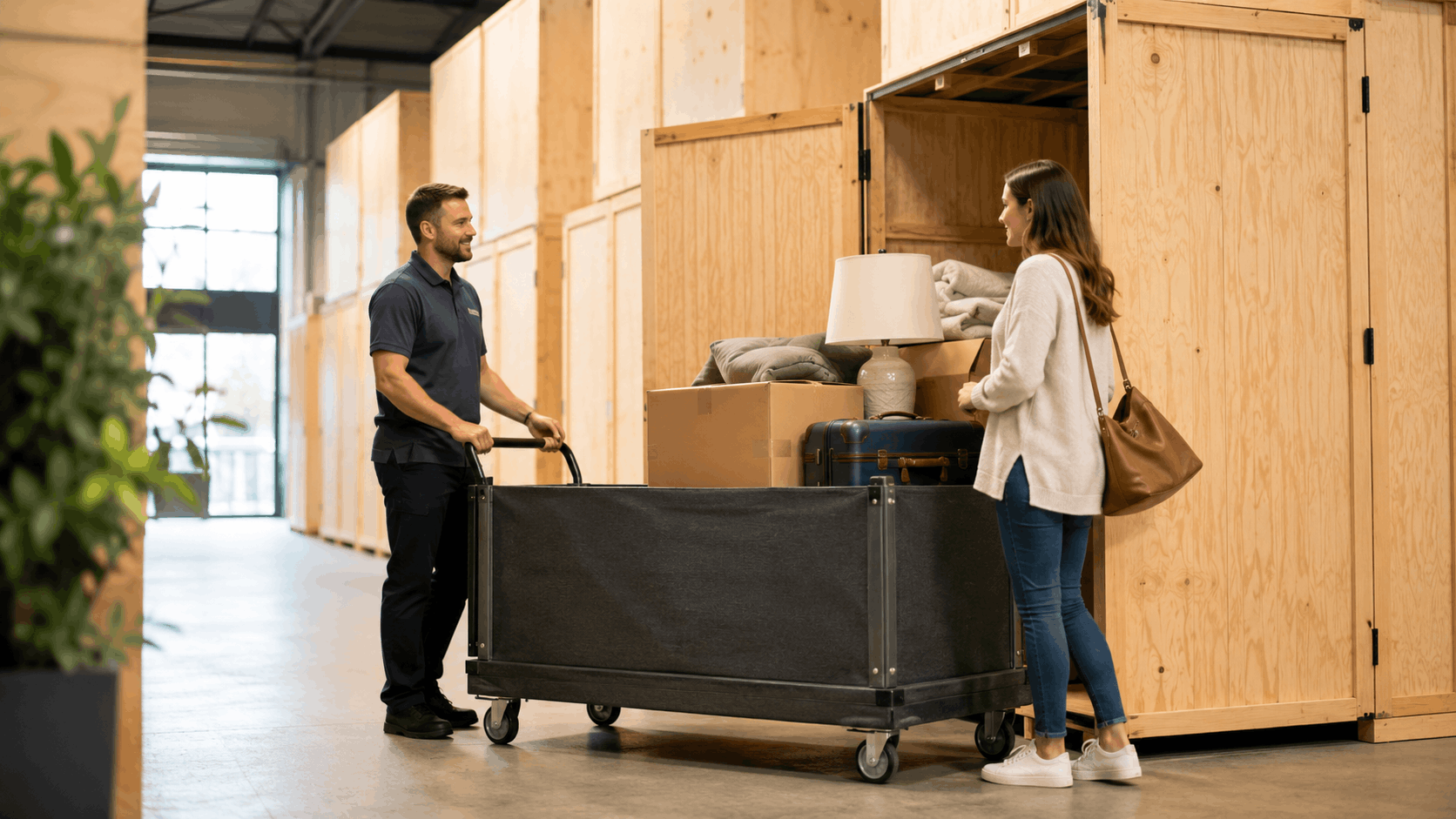
Vaulted storage is a system where your belongings live inside large sealed containers - called vaults - that sit stacked inside a secure warehouse. Instead of renting a room you enter, you rent space inside these containers, and the warehouse crew handles the heavy lifting. It is the standard way most local movers store household goods across Los Angeles.
The concept is simple. Movers load your furniture and boxes into wooden or steel vaults at your home, seal them, and truck them back to the warehouse. From there, container storage keeps everything stacked, labeled, and protected until you want it back. This is different from warehouse storage where loose items sit on open shelves, and it is very different from a self-storage locker.
Because movers can pack and store in one motion, vaulted storage has become the go-to method for people between homes, mid-remodel, or waiting out a long escrow. Our vaulted storage service is built around exactly this workflow.
How a Storage Vault Is Built and Sealed
A standard storage vault is a wooden crate, usually around 5 feet by 7 feet by 7 feet, giving roughly 250 cubic feet of space inside. Some warehouses use steel or containerized vaults, but the wooden crate remains the most common design for household goods in LA. The walls are thick plywood over a sturdy frame, built to be stacked several units high without crushing what is inside.
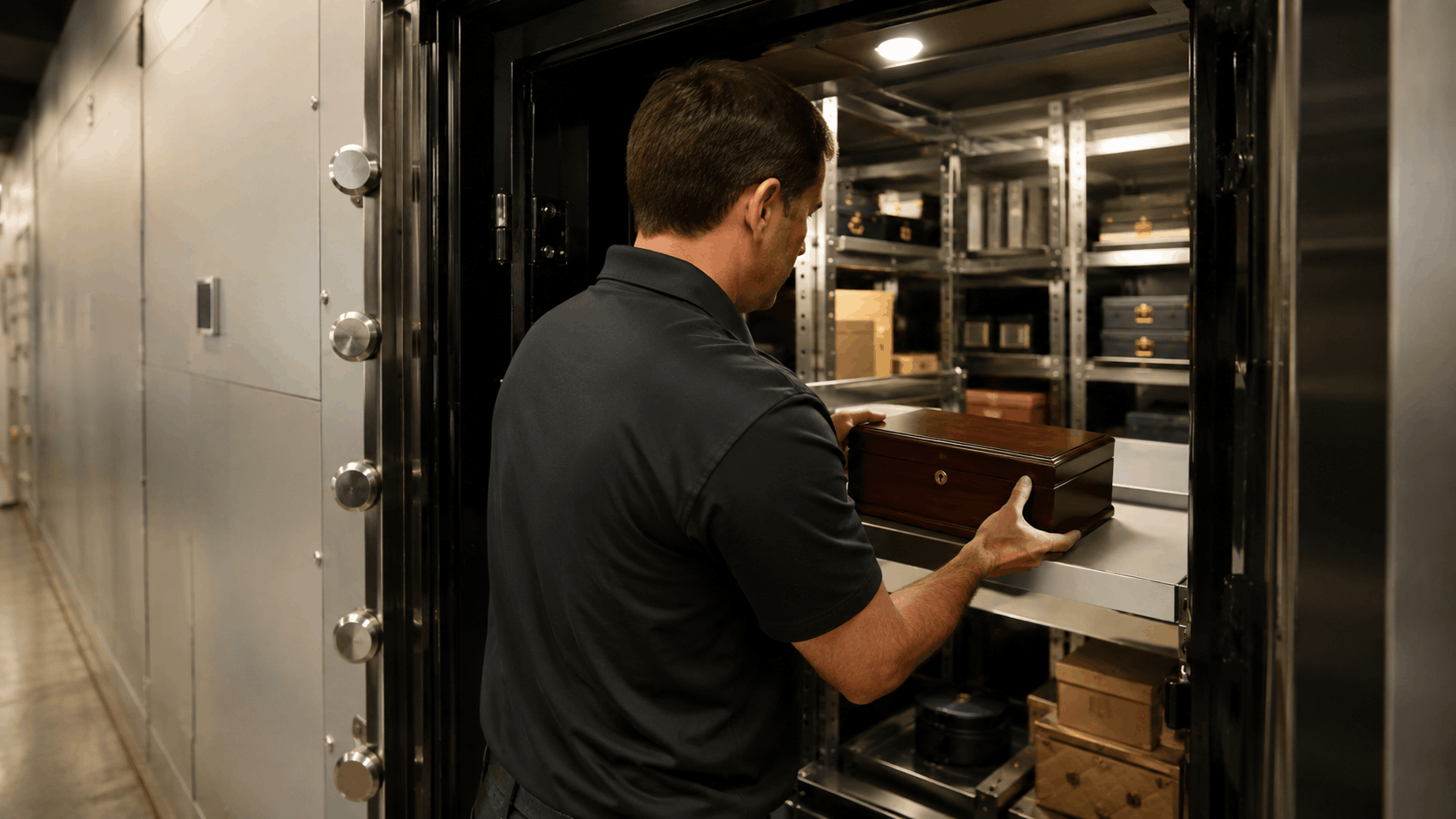
Once your movers load a vault, they close the lid and seal it, often with a tag or lock that stays in place until you request access. That seal matters. It means no one opens your container between the day it is packed and the day you ask for it, which keeps your inventory honest and your goods untouched.
Storage vault size drives how many crates you need. As a rough guide, a studio or one-bedroom apartment fills about one to two vaults, a two-bedroom home runs three to four, and a full three-bedroom house often needs five to seven. Bulky items like sofas, mattresses, and dining tables eat space fast, so the count can climb with heavy furniture.
Because each wooden crate is a self-contained unit, staff can move a single vault with a forklift without disturbing the ones around it. That design is what makes appointment retrieval possible in the first place.
Vaulted Storage vs a Self-Storage Locker
The self-storage vs vault question comes down to one thing: who does the handling. With a self-storage locker, you rent a room, drive up, unlock the door, and carry your own boxes in and out on your own schedule. With a vault, the warehouse team moves and opens your container for you by appointment.
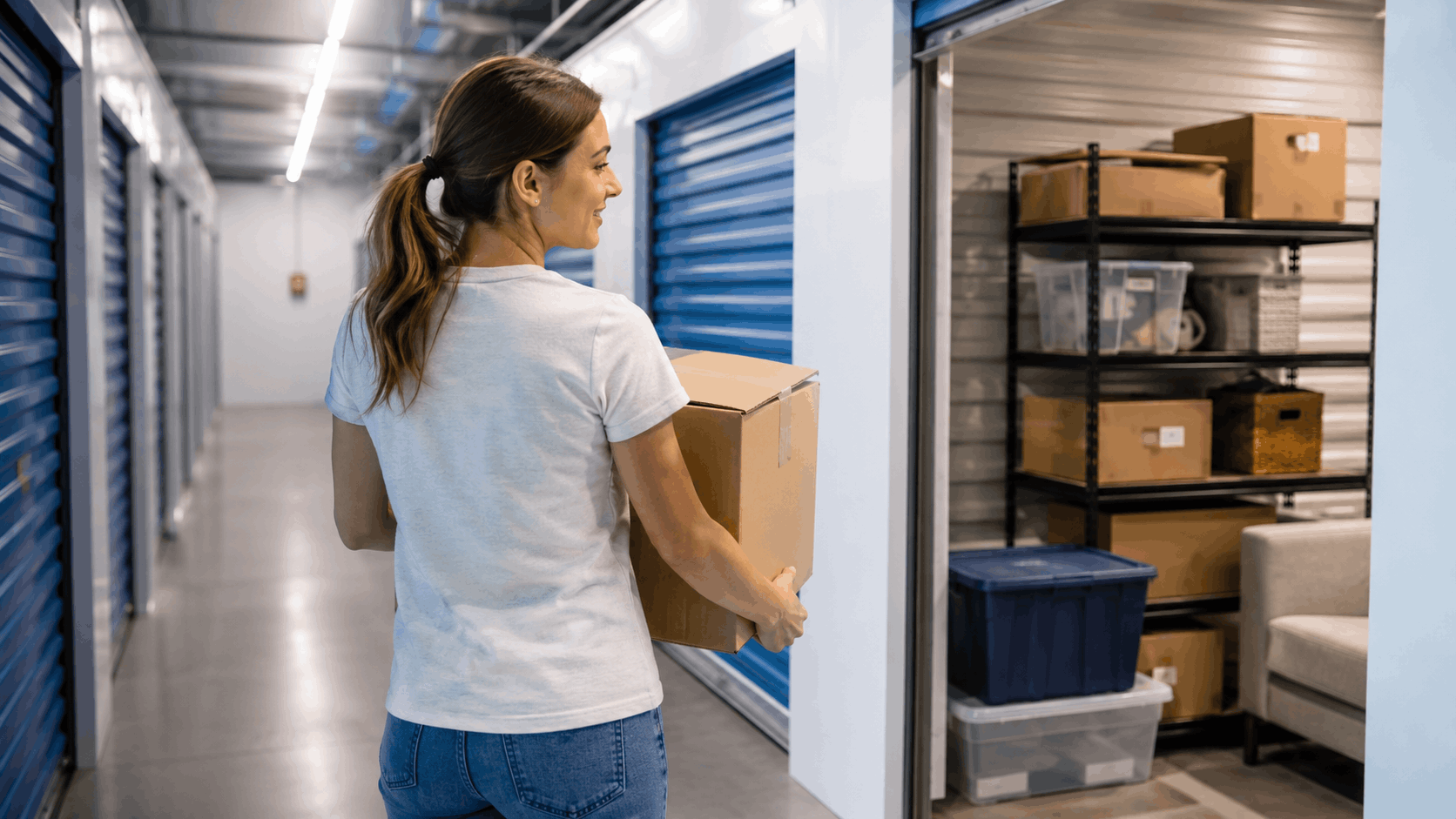
A storage comparison also shows a difference in how goods are protected. Self-storage lockers usually sit in a row with a roll-up door, sometimes exposed to outside air, dust, and temperature swings. Vaults sit stacked inside an enclosed warehouse, shielded from weather and foot traffic.
Cost structures differ too. Self-storage charges you for the room whether you visit daily or never, and the price reflects the anytime access. Vaulted storage often costs less per month for the same volume because you are not paying for a walk-in unit you can enter at midnight.
Neither one is better across the board. They are simply different products with different access rules, and the right pick depends on how often you actually need to touch your things.
Why LA Households Choose Vaulted Storage
Los Angeles storage needs tend to cluster around a few life events, and vaulted storage fits most of them. Home remodels near Los Feliz and Los Angeles top the list, where owners clear out a house so contractors can gut a kitchen or refinish floors without dust settling into the furniture.
Out-of-state and long distance moves are another big driver. When someone leaves for a job in another state but has not locked in a new place, storing household goods in vaults bridges the gap. Our long distance moving and moving storage crews often pack a home into vaults, hold it, then ship it once the new address is set.
Downsizing from a Westside condo is common too. People trading a larger place for a smaller one rarely part with everything at once, so they park the overflow in vaults while they decide. The same goes for long escrow gaps, where a sold home closes weeks before the new one is ready.
In each case, the customer does not need daily access. They need safe storage for a defined stretch, which is exactly what vaulted storage does well.
Get Your Free Quote
Tell us about your move and we'll get back to you fast.
How Appointment Retrieval Works Step by Step
Appointment retrieval is the process of getting your items out of storage on a scheduled basis. Because vaults are stacked and sealed inside a warehouse, staff need lead time to locate, pull, and open the right container before you arrive or before a delivery goes out.
The process is straightforward once you know the steps. Here is how storage access and warehouse pickup work from your first call to the moment your items are in hand.
| Step | What Happens | Typical Timing |
|---|---|---|
| 1. Request | You call or email with your name, account, and items needed | Same day |
| 2. Locate | Staff match your inventory list to the right vault | Within a few hours |
| 3. Pull | Forklift moves your vault to the access bay | Before your appointment |
| 4. Access | You visit the warehouse or a truck redelivers items | 24 to 48 hours out |
Placing the Retrieval Request
A retrieval request starts with a phone call or email to our team. We ask for your name, your storage account or job number, and a clear description of what you need - whether it is the whole vault, a few specific boxes, or one item like a nightstand.
The more detail you give, the faster we work. If you tell us the box is labeled "kitchen - small appliances" and sits near the vault door, staff can grab it without digging. Vague requests like "the box with the paperwork" take longer because someone has to search.
Advance notice usually runs 24 to 48 hours for standard retrievals. That window covers locating the vault, scheduling a forklift operator, and booking a delivery truck if you want redelivery. During busy stretches like end of month or peak moving season, we may ask for a bit more lead time.
Booking early always helps. If you know you will need holiday decorations by mid-December, a call in late November locks in a slot before the calendar fills.
How Warehouse Staff Locate and Open Your Vault
Every vault gets logged the day it enters our warehouse. We build an inventory list at pack-out, noting what went into each crate, and each vault carries a label tied to your account. That vault labeling system is how we find your container among hundreds.
When your request comes in, staff cross-check your name against the inventory list and pull the location of your specific vaults. Crates are stacked by account and position, so we know which stack and which level holds your goods before anyone touches a forklift.
Then the physical work begins. An operator uses a forklift to lift the vaults above yours, sets them aside, and brings your container down to a ground-level access bay. This is why appointments matter - shuffling stacked vaults safely takes planning and space.
Once your vault is in the bay, staff break the seal in front of you or before a scheduled delivery. From there you either take what you need or we load items for redelivery, then reseal and restack the vault if you are keeping the rest in storage.
On-Site Access vs Delivery to Your Door
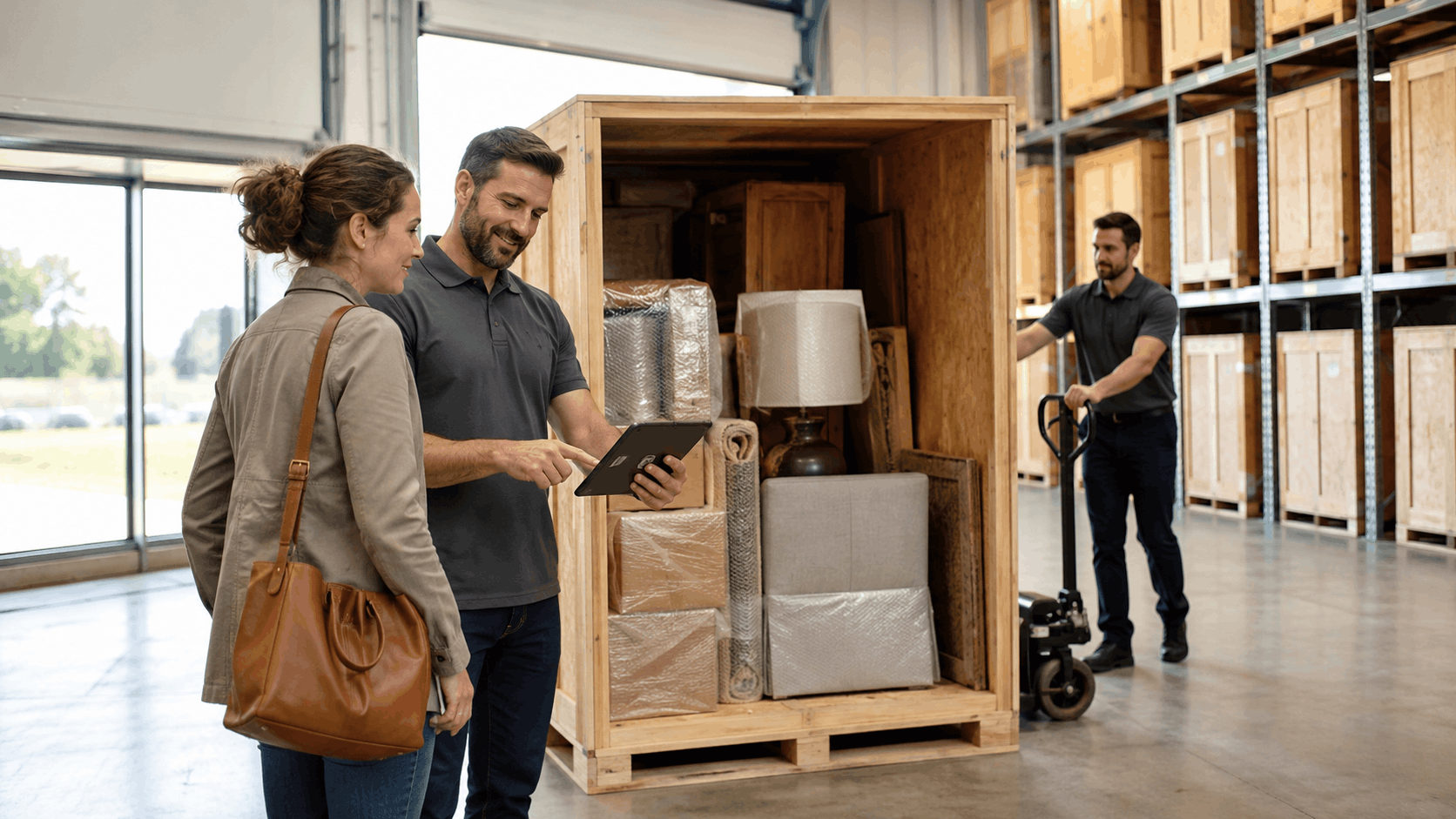
You have two ways to get your items once the vault is pulled. The first is a warehouse visit, where you come to our facility at your appointment time and collect what you need directly from the open vault. This works well for a box or two you can fit in your own car.
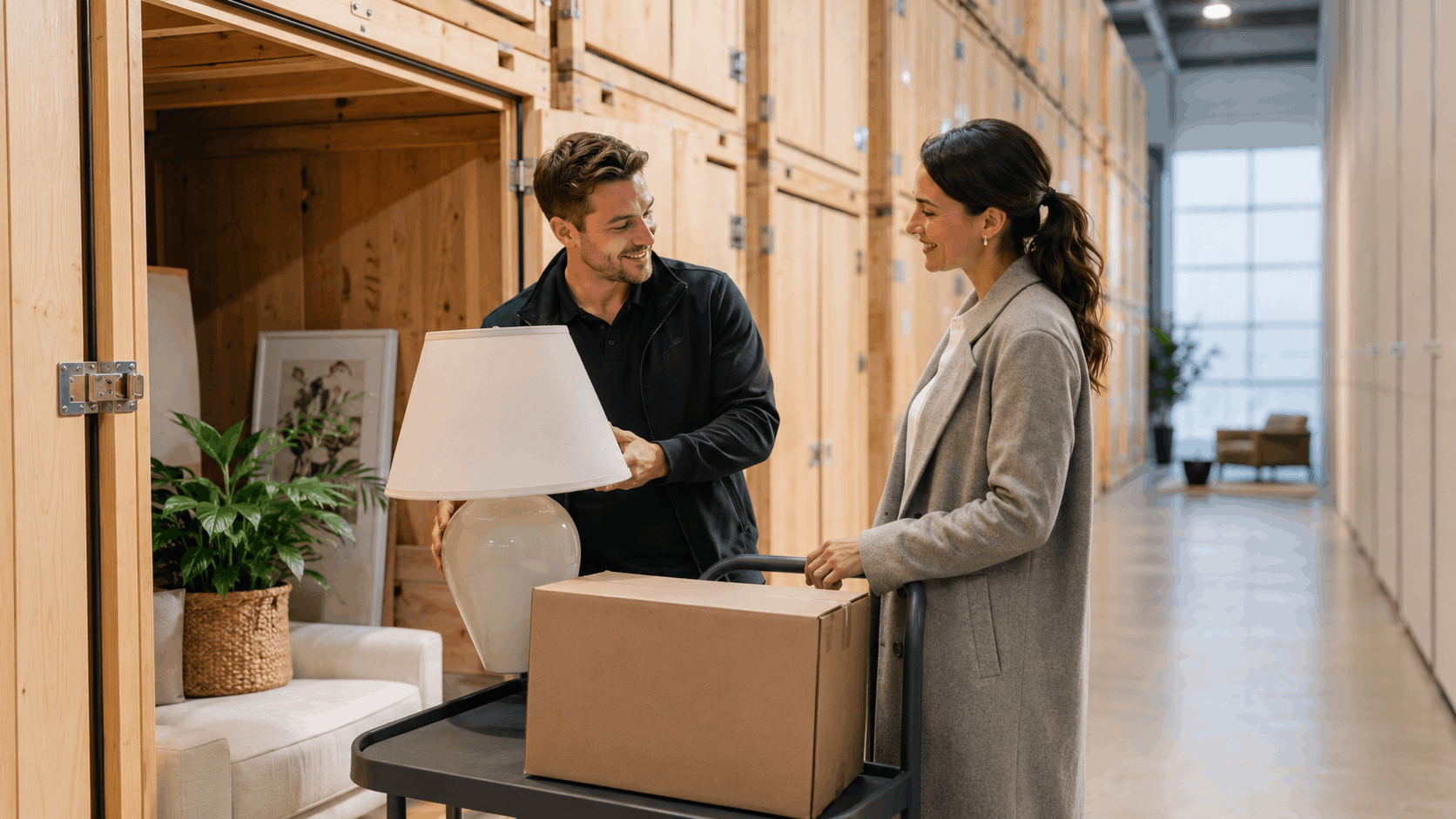
The second option is redelivery, where our crew loads your items onto a truck and brings them to your home or job site anywhere in the LA area. This is the better choice for furniture, multiple boxes, or anything too heavy to move yourself.
Redelivery costs more because it involves labor and truck time, but it saves you the drive and the lifting. For a Silver Lake remodel that just finished, having the dining set delivered back and carried inside beats renting a van and wrangling it up the stairs.
Many customers mix both. They swing by the warehouse for small seasonal items during the year, then book a full redelivery when the vault comes out of storage for good.
Timing and Scheduling Around LA Traffic
Scheduling in Los Angeles means planning around traffic as much as around the calendar. A redelivery from our warehouse to the Westside can take 30 minutes at 10 a.m. or 90 minutes if it hits the 405 at rush hour. We build routes to avoid the worst of it.
For a typical retrieval, expect your appointment window to land within 24 to 48 hours of your request. Redeliveries often run in morning or midday slots so trucks miss the heaviest congestion on the 101, the 10, and the 405.
Neighborhood matters for timing too. A DTLA loft delivery off the 110 is quick early in the day but slows once downtown fills up, while a Valley run over the 101 to Sherman Oaks moves best before mid-afternoon.
When you book, we give you a realistic window rather than a promise we cannot keep. Los Angeles traffic is unpredictable, so a two-hour arrival window is more honest than a single exact minute.
Need Help in Los Angeles?
Popeye Moving & Storage serves Los Angeles and all of Los Angeles County.
The Honest Trade-Off: Appointment Vaults vs 24/7 Units
Neither vaulted storage nor a 24/7 drive-up unit wins on every count. The right choice depends on how you plan to use your storage, so here is a straight look at the storage trade-off without pushing you one way.
| Factor | Appointment Vault | 24/7 Drive-Up Unit |
|---|---|---|
| Access | By appointment, 24-48 hr notice | Anytime, day or night |
| Monthly cost | Often lower for long holds | Higher for constant access |
| Protection | Enclosed warehouse | Often exposed to outside air |
| Handling | Staff move your vault | You do the lifting |
| Best for | Long-term storers | Frequent-access users |
Convenience: Grab-Anytime Access vs Planned Pickups
The honest downside of vaults is simple: you cannot pop in at midnight. If you suddenly want a tool at 9 p.m. on a Sunday, a vault will not give it to you until the next business appointment. That planned-pickup rhythm is the trade you make.
A 24/7 drive-up unit flips that. You get anytime access, drive up to your door, unlock it, and grab whatever you want on your own schedule with no notice. For people who dip into storage often, that freedom is worth a lot.
The flip side is that vaults spare you the work. With drive-up access you carry every box yourself, in whatever weather, up whatever ramp. With a vault, staff handle the heavy container and you just take what you need.
So the convenience question splits in two. Vaults are less convenient for spontaneous access but more convenient for the muscle work of moving heavy goods.
Cost Differences Over Short and Long Terms
Storage cost is where vaults often pull ahead. Because you are not paying for a walk-in room with round-the-clock access, the monthly rate for the same volume of goods tends to run lower in vaulted storage, especially over long holds.
For a short-term hold of a month or two with frequent visits, a 24/7 unit can make sense because you avoid retrieval fees each time you stop by. The math changes when you visit rarely and store for many months.
Consider a full two-bedroom home stored for a year. In vaults, the low monthly rate adds up to real savings, and you might only pay a retrieval fee once or twice. In a large 24/7 unit, you pay the premium monthly rate every month whether you visit or not.
Our long-term storage options are priced with these long holds in mind, so households between homes are not overpaying for access they never use.
Protection From LA Heat, Dust, and Pests
Climate protection is one area where enclosed warehouse storage clearly helps. Vaults sit inside a closed building, away from direct sun, and away from the fine grit that Santa Ana winds blow across the LA basin every fall.
Many 24/7 drive-up units open straight to the outside. Every time the door rolls up, outside air, dust, and the occasional pest get a chance to enter. Over a long hold, that exposure shows up as dusty surfaces and musty smells.
Temperature swings matter too. A metal drive-up unit baking in an El Segundo parking lot can get very hot inside during summer, which is hard on wood furniture, electronics, and anything with glue joints. An enclosed warehouse holds a steadier range.
Sealed wooden vaults add another layer. Because each crate stays closed between appointments, your grandmother's dining set is not sitting open to the room - it is boxed inside its own container, protected from both the warehouse and the world outside.
Who Each Option Is Best For
The best storage option lines up with your habits. A hobbyist who visits storage weekly - a woodworker rotating tools, a reseller pulling inventory, a surfer swapping boards - is a natural fit for a 24/7 drive-up unit where anytime access saves constant appointment booking.
Long-term storers between homes fit vaulted storage. If you are mid-remodel in Los Feliz, waiting out escrow, or holding a household during an international move, you rarely need daily access and you benefit from lower cost and better protection.
Customer fit also depends on what you store. Heavy furniture and fragile heirlooms lean toward vaults because staff handle the lifting and the enclosed space guards against damage. Light, frequently rotated goods lean toward drive-up units.
When customers are unsure, we ask how often they truly expect to visit. The honest answer usually points to the right product on its own.
Planning Ahead So Retrieval Never Slows You Down
A little storage planning at pack-out makes every future pickup faster. The goal is to set up your vault so staff can find and reach what you need without emptying the whole container, which saves both time and money.
Good packing strategy and clear labeling do most of the work. Here is how to organize a vault so retrieval stays quick months down the road.
Building a Detailed Inventory List
A box-by-box inventory is the single best thing you can do for fast retrieval. When each box has a number and a short contents note, staff can match your request to the exact crate and pull it without guesswork.
Our crews build a basic inventory at pack-out, but you can make it sharper. Number your boxes and keep a matching list on your phone that says what is inside each one, from "box 12 - winter coats" to "box 27 - tax documents 2020-2023."
That box list also protects you. If anything ever comes up missing or damaged, a detailed inventory is your record of what went into storage and where.
When you call for a retrieval, reading off the box number and contents turns a long search into a two-minute pull. It is the difference between same-day scheduling and a delayed appointment.
Packing Front-Access Items Near the Door
Access packing means loading the vault with a plan. Items you are likely to need first - seasonal gear, a few kitchen basics, documents - should go near the vault door rather than buried at the back behind the couch.
Think about what you might want mid-storage. Holiday decorations, a suitcase, or a box of paperwork are common mid-hold pulls, so those belong up front where staff can reach them without unpacking the whole crate.
Heavy furniture and rarely needed items go deep. A stored dining set or off-season clothing you will not touch until the vault comes out for good can sit at the back, since disturbing them mid-hold is unlikely.
When we pack for you, just tell the crew which items you expect to retrieve early. They will stage those near the door so a future appointment is quick.
Grouping Items You Might Need Together
Item grouping cuts your trips. If your documents, tools, and holiday gear are scattered across three vaults, one retrieval turns into three pulls and three fees. Cluster related things and a single appointment covers them.
A common tactic is a partial-access vault. You keep one lightly packed crate near the front holding everything you expect to touch during the hold, while the rest of your goods stay sealed in deeper vaults you will not open until the end.
Group by likelihood of use, not by room. Put the "probably need this" items together - a few tools, important papers, seasonal clothes - even if they came from different parts of the house.
This planning pays off most on long holds. A year of storage with two or three quick front-vault pulls beats repeatedly digging through fully packed crates, and it keeps your storage costs down.
Serving Storage Customers Across Los Angeles Neighborhoods
Los Angeles storage customers come from every corner of the county, and each area brings its own quirks. Knowing the streets and the traffic patterns lets us plan pickups and deliveries that actually work, whether it is a beach apartment or a hillside home.
Our local moving and delivery routes stretch from the coast to the Valley, and we schedule around the real conditions of each neighborhood.
Westside and Coastal Moves
Westside storage demand runs high because apartments are small and closets fill fast. Renters in Santa Monica, Venice, and Culver City often have nowhere to put seasonal or overflow items, so off-site vaults become the natural answer.
Coastal air adds a reason to store indoors. Salt and moisture near the beach are hard on furniture and electronics, and an enclosed warehouse vault keeps those goods away from the damp better than a garage or a drive-up unit near the water.
Our crews handle apartment storage throughout Santa Monica and Culver City, where tight parking and building elevators make professional loading the practical route.
Because Westside streets clog quickly, we time coastal pickups for early windows before the beach traffic and the 10 back up.
Eastside and Hillside Homes
Eastside storage in Silver Lake, Echo Park, and Los Feliz runs into a specific problem: the streets. Narrow, winding roads and steep driveways make dropping an on-site storage pod in front of the house nearly impossible in many spots.
Vaulted storage sidesteps that entirely. Our crew loads a truck at the curb, or as close as the street allows, then hauls the vaults back to the warehouse rather than parking a container that blocks a tight hillside road.
Hillside access also means stairs. Homes perched above the street in these neighborhoods often have long staircases, and having trained movers carry goods down beats wrestling them into a pod yourself.
For the Silver Lake renter with her grandmother's dining set, vaults were the only realistic option - there was simply no room for a pod on her block.
Valley and Downtown Retrieval Runs
Valley storage customers in Sherman Oaks and Studio City sit just over the hill, and redelivery timing depends heavily on the 101. Morning runs move well, but the afternoon crawl through the Cahuenga Pass can add an hour to a return trip.
Downtown LA lofts are their own puzzle. DTLA buildings often require freight elevator reservations and loading dock time slots, so we coordinate those before a retrieval so the truck is not circling the block.
The 110 and 101 corridors shape our downtown scheduling. We aim early-day windows for DTLA deliveries so trucks reach the loft district before downtown congestion sets in.
Whether the run is to the Valley or a downtown high-rise, we build delivery routes that respect each area's access rules and traffic reality.
Need Help in Los Angeles?
Popeye Moving & Storage serves Los Angeles and all of Los Angeles County.
What Retrieval Costs and What Affects the Price
Retrieval cost surprises no one when it is explained up front. Fees tie to how you get your items back and how much work is involved, so here is a clear breakdown of storage fees and what moves the number.
The two big drivers are whether you visit the warehouse or want redelivery, and how many vaults have to be pulled and how far they travel.
Warehouse Access Fees vs Delivery Fees
A warehouse access fee covers the labor of locating your vault, pulling it with a forklift, and having staff ready when you arrive to grab your items. It is the lower-cost path because you provide the transport and do the light carrying yourself.
A delivery fee is larger because it adds a truck and a crew. Redelivery means loading your items, driving across LA, and carrying them into your home or job site, so you pay for labor hours and truck time on top of the pull.
For a single box, a warehouse visit is usually the cheaper move. For furniture or a full vault coming out of storage, redelivery is worth the added cost since you avoid renting a van and lifting heavy pieces.
We quote both options when you call so you can pick based on your budget and what you are retrieving.
How Distance and Vault Count Change the Bill
Vault count matters because each crate pulled adds labor. Retrieving from one vault is quick, but if your items are spread across four vaults, staff shuffle and open all four, and the cost climbs accordingly.
Distance pricing applies to redelivery. A drop to Culver City near our routes costs less than a run out to Malibu or over the hill to the far Valley, since the fee reflects drive time and mileage across LA.
Traffic-heavy corridors can nudge labor hours up too. A delivery that ties up a crew for three hours in 405 gridlock naturally costs more than a smooth early-morning run.
When we estimate a retrieval, we factor both the number of vaults and the destination so the quote matches the actual work.
Ways to Keep Retrieval Costs Down
The best way to save money is to batch your pickups. Instead of three separate trips for documents, then tools, then holiday gear, combine them into one appointment so you pay for a single pull and one delivery.
Giving advance notice helps too. A request placed several days out lets us schedule your retrieval on a run already heading your direction, which can trim delivery cost compared to a rushed same-day pull.
Organizing the vault before storing pays off later. A clear inventory and front-loaded access items mean staff spend less time searching, and less labor means a lower bill on every retrieval.
Batch retrieval plus smart packing is the reliable formula. Customers who plan their vaults spend far less over a long hold than those who call for one item at a time.
Choosing the Right Storage Setup With Popeye Moving & Storage Co.
Picking a storage type is easier once you answer a few honest questions about your habits and timeline. Our storage consultation is advice-first - we would rather point you to the right product than sell you access you will never use.
| Your Situation | Better Fit | Why |
|---|---|---|
| Between homes, long hold | Vaulted storage | Lower cost, strong protection |
| Visit storage weekly | 24/7 unit | Anytime access |
| Storing heavy furniture | Vaulted storage | Staff handle lifting |
| Frequent small pulls | 24/7 unit or front vault | Fast repeat access |
Questions to Ask Before You Store
Start with how often you truly expect to need your items. If the honest answer is once or twice over many months, vaults fit. If it is every week, anytime access is worth paying for.
Next, think about how long the hold will run. A few weeks with heavy visits leans one way, while a year-long hold between homes leans strongly toward vaulted storage and its lower monthly rate.
Budget is the third question on the storage checklist. Weigh the monthly rate against likely retrieval fees, because a low monthly cost with occasional pulls often beats a high monthly rate you pay every single month.
Answering these three storage questions honestly points most people to the right setup before we even quote a price.
How the Team Estimates Vault Count and Cost
We start a storage estimate with a walkthrough or a virtual survey. You show us the home in person or over a video call, room by room, and we count furniture and boxes to project how many vaults you will need.
That survey drives the numbers. A one-bedroom filling two vaults gets a very different quote than a four-bedroom needing seven, and seeing the actual goods keeps the estimate accurate instead of a guess.
We also factor access at your home - stairs, parking, hillside streets - since those affect the pack-out. A tight Echo Park block takes more crew time than a flat driveway in the Valley.
The survey is free and comes with no obligation. You get a clear vault count and monthly rate before you decide anything.
Combining Moving and Storage in One Job
Bundling moving and storage cuts handling, and less handling means less risk of damage. When our crew packs your home, loads it into vaults, and stores it in one motion, your goods get touched fewer times than if separate companies split the work.
This bundled service also saves money. One crew and one workflow beat coordinating movers, a storage company, and a truck rental separately, and the single job usually prices better than the parts.
It works for every move type. Whether you are handling a local residential move with a storage gap or a corporate relocation across the country, packing and storing under one roof keeps things simple.
Pairing our packing and crating with vaulted storage is the smoothest path for most households between homes.
Need Help in Los Angeles?
Popeye Moving & Storage serves Los Angeles and all of Los Angeles County.
Final Thoughts
Vaulted storage trades midnight access for lower cost and better protection, and for most people between homes that is a fair deal. Appointment retrieval is simple once you know the rhythm - call ahead, give 24 to 48 hours notice, and let our crew pull the right vault for a warehouse visit or a redelivery.
The Silver Lake renter got her photo albums back the next day because the box was near the vault door and she knew what it was labeled. A little planning at pack-out makes every future pickup that quick.
If you are weighing vaulted storage against a 24/7 unit for a move or a remodel anywhere in Los Angeles, contact our team for a free survey. We will walk your home, count the vaults, quote the cost, and help you choose the setup that actually fits how you live.
Frequently Asked Questions
How much notice do I need to give to retrieve items from a vault?
Standard retrievals need 24 to 48 hours of notice. That window lets our staff match your request to the right vault, schedule a forklift operator to pull it, and book a delivery truck if you want redelivery. During busy stretches like end of month or peak summer moving season, we may ask for a few extra days, so calling early always secures a better appointment slot.
Can I get just one box back instead of the whole vault?
Yes, partial retrieval is common. Whether it is quick depends on how the vault was packed. If your box sits near the door with a clear label, staff grab it fast. If it is buried at the back, they may need to move other items to reach it, which takes longer. A small access or handling fee usually applies, so batching pulls saves money.
Is vaulted storage cheaper than a 24/7 self-storage unit?
For long holds with rare access, vaulted storage usually costs less per month because you are not paying for a walk-in room you can enter anytime. For short holds with frequent visits, a 24/7 unit can win since you avoid repeat retrieval fees. The honest answer depends on how often you visit and how long you store, which we help you calculate before you commit.
What are the trade-offs of not having 24/7 access?
The main loss is spontaneity - you cannot pop in at midnight or on a whim, and you plan pickups around 24 to 48 hour appointments. In exchange, you gain a lower monthly rate and stronger protection inside an enclosed warehouse, plus staff who handle the heavy lifting. For long-term storers, that trade usually favors vaults; for weekly users, anytime access is worth the premium.
Are my belongings protected from LA heat and dust in a vault?
Yes. Sealed vaults sit inside a closed warehouse, away from direct sun, Santa Ana dust, and the temperature swings that hit open drive-up units baking in a parking lot. Each wooden crate stays closed between appointments, so your goods are boxed inside their own container and shielded from both the warehouse air and the outside world. That enclosed setup protects furniture, electronics, and heirlooms far better.
Do you deliver retrieved items to my home in Los Angeles?
We redeliver across every LA neighborhood, from Santa Monica and Venice on the Westside to Silver Lake, Sherman Oaks, and DTLA lofts. Our crew loads your items, drives them to your home or job site, and carries them inside. We schedule redeliveries around traffic on the 405, 101, and 10, usually in morning or midday windows, and give you a realistic arrival window rather than a single exact minute.
How many vaults will my apartment or house need?
As a rough guide, a studio or one-bedroom fills one to two vaults, a two-bedroom runs three to four, and a full three-bedroom house needs five to seven. Heavy furniture pushes the count higher. The most accurate way to know is our free walkthrough or virtual survey, where we count your furniture and boxes room by room and project the exact number before quoting.
What does it cost to retrieve or redeliver my items?
Costs depend on the path and the work involved. A warehouse access fee covers locating and pulling your vault when you come collect items yourself, and it is the lower-cost option. Redelivery adds truck and crew time for driving across LA and carrying goods inside. The number of vaults pulled and the drive distance both affect the final bill, and we quote both options up front.
Can I access the warehouse myself to pick things up?
Yes, warehouse visits are available by appointment. Because vaults are stacked and sealed, staff need lead time to pull your container to the access bay before you arrive, so you cannot simply walk in unannounced. Book your visit 24 to 48 hours ahead, and when you arrive your vault will be open in the bay ready for you to collect what you need.
How do I choose between vaulted storage and a 24/7 unit?
Weigh three things: how often you need access, your budget, and how long the hold runs. Frequent weekly access points to a 24/7 unit, while rare pulls over a long hold point to vaults for their lower cost and better protection. If you are still unsure, our team asks how often you truly expect to visit, and the honest answer usually reveals the right fit on its own.
Frequently Asked Questions
- How much notice do I need to give to retrieve items from a vault?
- Standard retrievals need 24 to 48 hours of notice. That window lets our staff match your request to the right vault, schedule a forklift operator to pull it, and book a delivery truck if you want redelivery. During busy stretches like end of month or peak summer moving season, we may ask for a few extra days, so calling early always secures a better appointment slot.
- Can I get just one box back instead of the whole vault?
- Yes, partial retrieval is common. Whether it is quick depends on how the vault was packed. If your box sits near the door with a clear label, staff grab it fast. If it is buried at the back, they may need to move other items to reach it, which takes longer. A small access or handling fee usually applies, so batching pulls saves money.
- Is vaulted storage cheaper than a 24/7 self-storage unit?
- For long holds with rare access, vaulted storage usually costs less per month because you are not paying for a walk-in room you can enter anytime. For short holds with frequent visits, a 24/7 unit can win since you avoid repeat retrieval fees. The honest answer depends on how often you visit and how long you store, which we help you calculate before you commit.
- What are the trade-offs of not having 24/7 access?
- The main loss is spontaneity - you cannot pop in at midnight or on a whim, and you plan pickups around 24 to 48 hour appointments. In exchange, you gain a lower monthly rate and stronger protection inside an enclosed warehouse, plus staff who handle the heavy lifting. For long-term storers, that trade usually favors vaults; for weekly users, anytime access is worth the premium.
- Are my belongings protected from LA heat and dust in a vault?
- Yes. Sealed vaults sit inside a closed warehouse, away from direct sun, Santa Ana dust, and the temperature swings that hit open drive-up units baking in a parking lot. Each wooden crate stays closed between appointments, so your goods are boxed inside their own container and shielded from both the warehouse air and the outside world. That enclosed setup protects furniture, electronics, and heirlooms far better.
- Do you deliver retrieved items to my home in Los Angeles?
- We redeliver across every LA neighborhood, from Santa Monica and Venice on the Westside to Silver Lake, Sherman Oaks, and DTLA lofts. Our crew loads your items, drives them to your home or job site, and carries them inside. We schedule redeliveries around traffic on the 405, 101, and 10, usually in morning or midday windows, and give you a realistic arrival window rather than a single exact minute.
- How many vaults will my apartment or house need?
- As a rough guide, a studio or one-bedroom fills one to two vaults, a two-bedroom runs three to four, and a full three-bedroom house needs five to seven. Heavy furniture pushes the count higher. The most accurate way to know is our free walkthrough or virtual survey, where we count your furniture and boxes room by room and project the exact number before quoting.
- What does it cost to retrieve or redeliver my items?
- Costs depend on the path and the work involved. A warehouse access fee covers locating and pulling your vault when you come collect items yourself, and it is the lower-cost option. Redelivery adds truck and crew time for driving across LA and carrying goods inside. The number of vaults pulled and the drive distance both affect the final bill, and we quote both options up front.
- Can I access the warehouse myself to pick things up?
- Yes, warehouse visits are available by appointment. Because vaults are stacked and sealed, staff need lead time to pull your container to the access bay before you arrive, so you cannot simply walk in unannounced. Book your visit 24 to 48 hours ahead, and when you arrive your vault will be open in the bay ready for you to collect what you need.
- How do I choose between vaulted storage and a 24/7 unit?
- Weigh three things: how often you need access, your budget, and how long the hold runs. Frequent weekly access points to a 24/7 unit, while rare pulls over a long hold point to vaults for their lower cost and better protection. If you are still unsure, our team asks how often you truly expect to visit, and the honest answer usually reveals the right fit on its own.
P
Popeye Moving & Storage Co. Team Team
Licensed moving and storage professionals serving Los Angeles and Los Angeles County.
Licensed in California · License #PUC: CAL T 189749 | DOT: 1472924 | MC: 498816C
Why trust Popeye Moving & Storage?
Founded in 1994, Popeye Moving & Storage is a licensed and insured moving and storage service serving Los Angeles and Los Angeles County. All content is reviewed by our licensed technicians.

Need Help in Los Angeles?
Popeye Moving & Storage serves Los Angeles and all of Los Angeles County.
Related Articles
Tips & Advice
Storage Near the 405 in West LA: What's Actually Available and Why a Mover-Run Warehouse Beats the Roll-Up Units
A clear guide to storage near the 405 in West LA, comparing roll-up self-storage units with a mover-run warehouse on cost, safety, and hassle for local movers.
Cost Guides
What Vaulted Storage Costs in Los Angeles - and Why It Beats a Self-Storage Unit for Furniture
Vaulted storage in LA runs $75-$150 per vault monthly and protects furniture better than a self-storage unit. See real costs, hidden fees, and when a vault wins.
Cost Guides
Vaulted Storage vs Self-Storage in LA: Why Full-Service Storage Saves You Money
Vaulted full-service storage vs self-storage in LA: see the real costs, hidden fees, and why more Angelenos are switching to vault storage with Popeye Moving.