Storage Near the 405 in West LA: What's Actually Available and Why a Mover-Run Warehouse Beats the Roll-Up Units
Key Takeaways
- Storage near the 405 splits into roll-up self-storage units and mover-run warehouses, and the difference affects cost, safety, and your time.
- Roll-up units look cheap but add truck rental, labor, admin fees, required insurance, locks, and rate increases once you total everything.
- A mover-run warehouse wraps, vaults, tags, and stores your items with one crew handling pickup, storage, and delivery for a hands-off move.
- Warehouses lower theft, pest, and moisture risk with monitored access and controlled conditions, which matters near the coastal marine layer.
- Roll-up units still make sense for frequent access, hobby gear, or very small loads you can move in one trip.
- West LA neighborhoods like Brentwood, Westwood, Sawtelle, and Mar Vista each favor warehouse storage for escrow gaps, student moves, walk-ups, and humidity.
- Prep matters: wrap furniture, disassemble beds, keep an inventory, and never store food, flammables, or valuables.
- Vet any provider by checking CAL-T licensing, valuation coverage, real local reviews, and 405 corridor experience before signing.
In This Article
A young family in Brentwood sold their house on San Vicente sooner than they expected. The new place was not ready for another six weeks. Suddenly they had a full four-bedroom home of furniture and nowhere to put it, and they started searching for storage near the 405 at ten at night.
This happens across West LA every week. Escrow gaps, apartment turnover near UCLA, and downsizing in Westwood all leave people hunting for a place to park their belongings. Most start by looking at the metal roll-up units off Sepulveda Blvd, because those are the signs they see from the freeway.
But there is a second option many people never consider: a mover-run warehouse. The difference between the two matters far more than most folks expect, from cost to condition to how much of your weekend you lose. This guide walks through both, honestly, so you can pick the right one.

What Storage Actually Looks Like Near the 405 in West LA?
Search for storage near the 405 and you get a jumble of results, most of them fitting into one of two camps. There is a real difference in how these places handle your things, and knowing the lay of the land saves you headaches later.
The 405 corridor through West LA runs from Sawtelle up through the Sepulveda Pass. Along that stretch sit dozens of self-storage facilities, plus a smaller number of moving companies that run their own warehouses. Here is what people actually find when they start calling around.
The Roll-Up Self-Storage Facilities Off Sepulveda and Sawtelle
Most West LA storage you see from the road is the roll-up unit type. These are the buildings clustered along Sepulveda Blvd and near Sawtelle, with rows of metal doors you lift like a small garage. You rent a box, you get a code, and the rest is up to you.
The roll-up storage units come in standard sizes, usually 5x5, 5x10, 10x10, and 10x20. A 5x5 holds a closet or a few boxes. A 10x20 can hold most of a two-bedroom apartment if you stack it tight.
These self-storage facilities fit people who want to come and go on their own schedule. If you are a hobbyist storing gear you touch every week, or you just need a spot for seasonal boxes, they make sense. The trade-off is that everything, loading, driving, and stacking, lands on you.
The prices look cheap on the sign. But the sticker rarely tells the whole story once you add trucks, labor, and the fees we cover further down.
Mover-Run Warehouse Storage as a Different Category
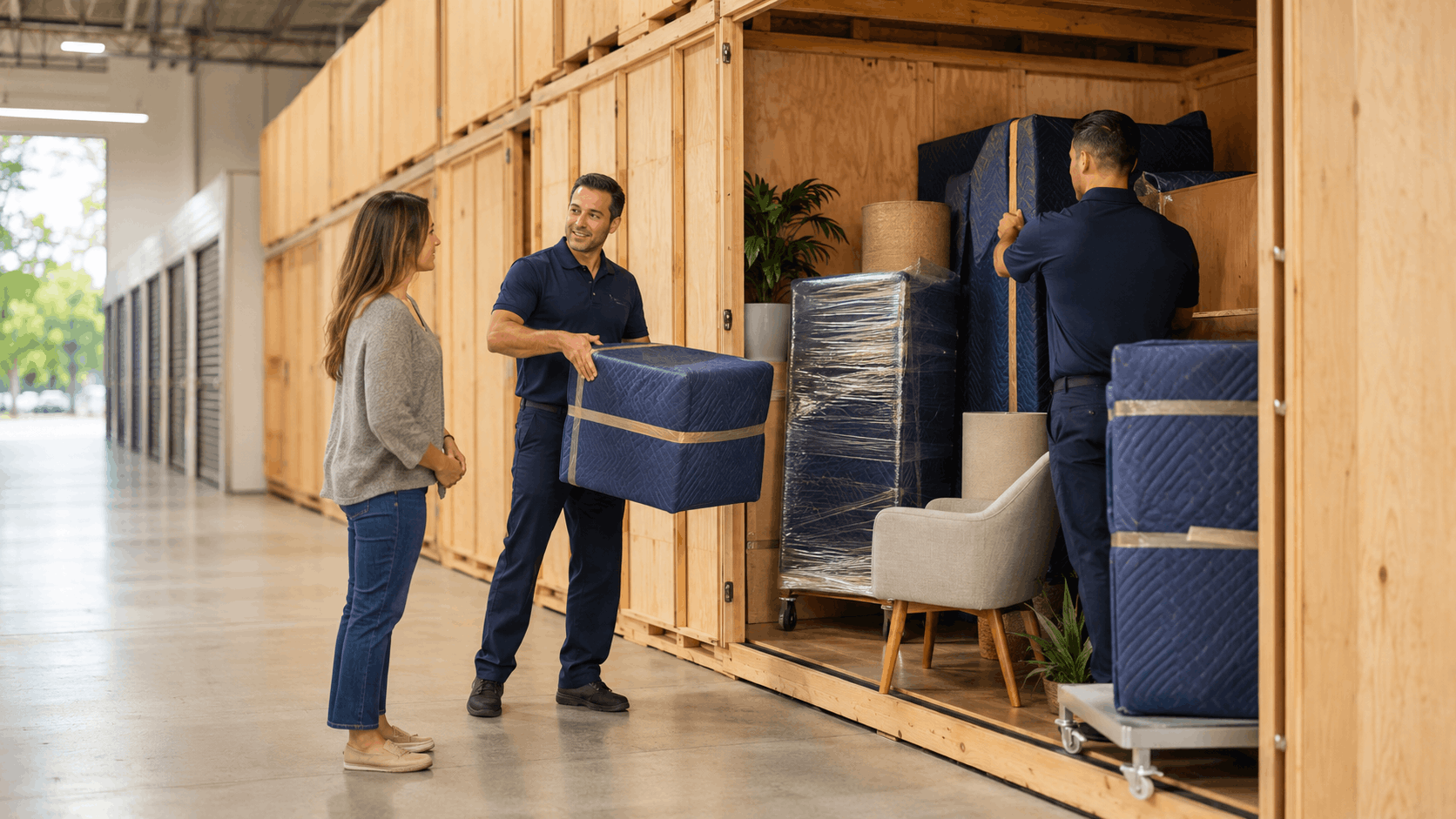
A mover-run warehouse is a different animal. Instead of renting a box you drive to, a moving crew picks up your belongings, brings them to a secured warehouse, and stores them there for you. You never load a thing yourself.
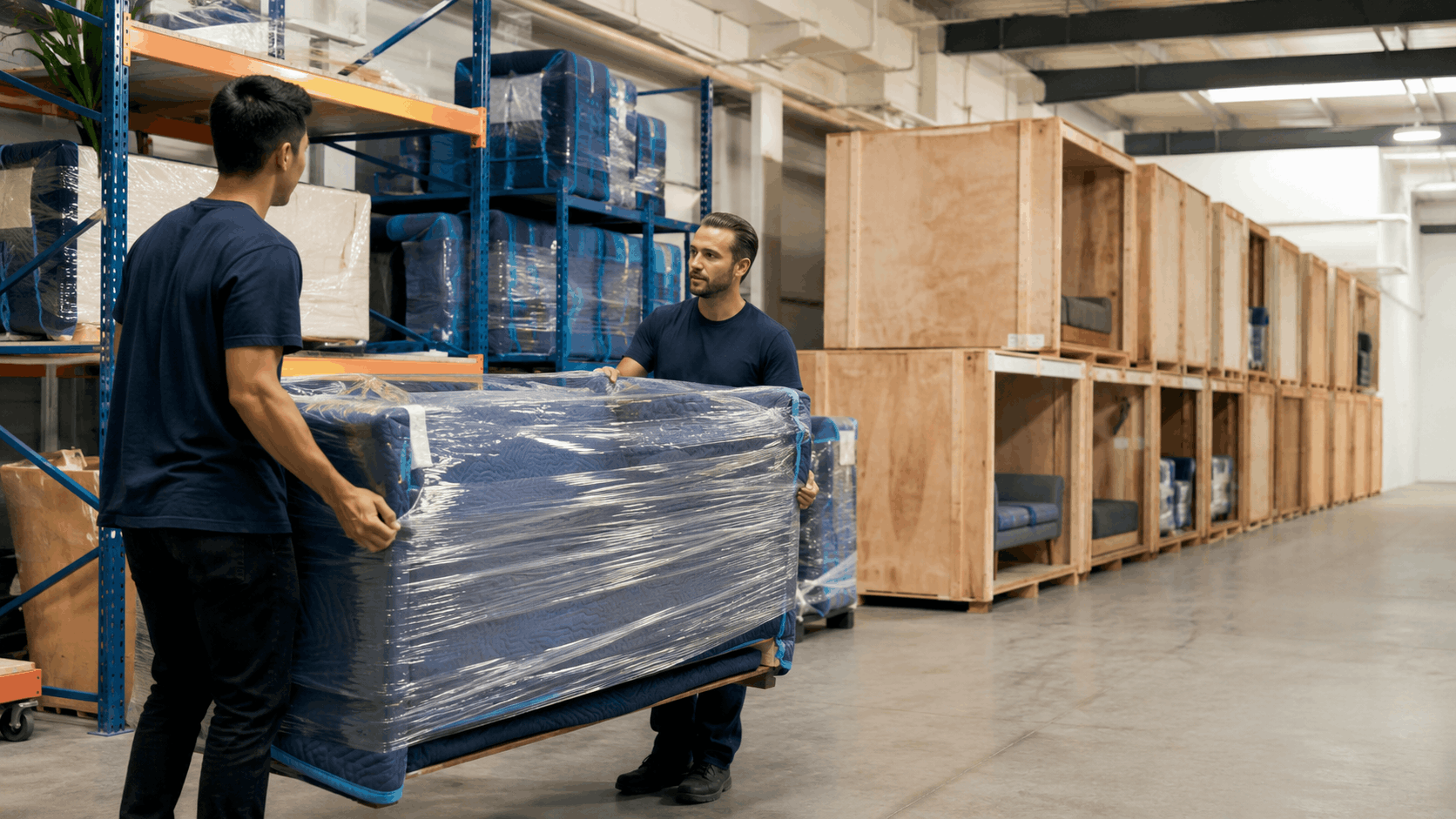
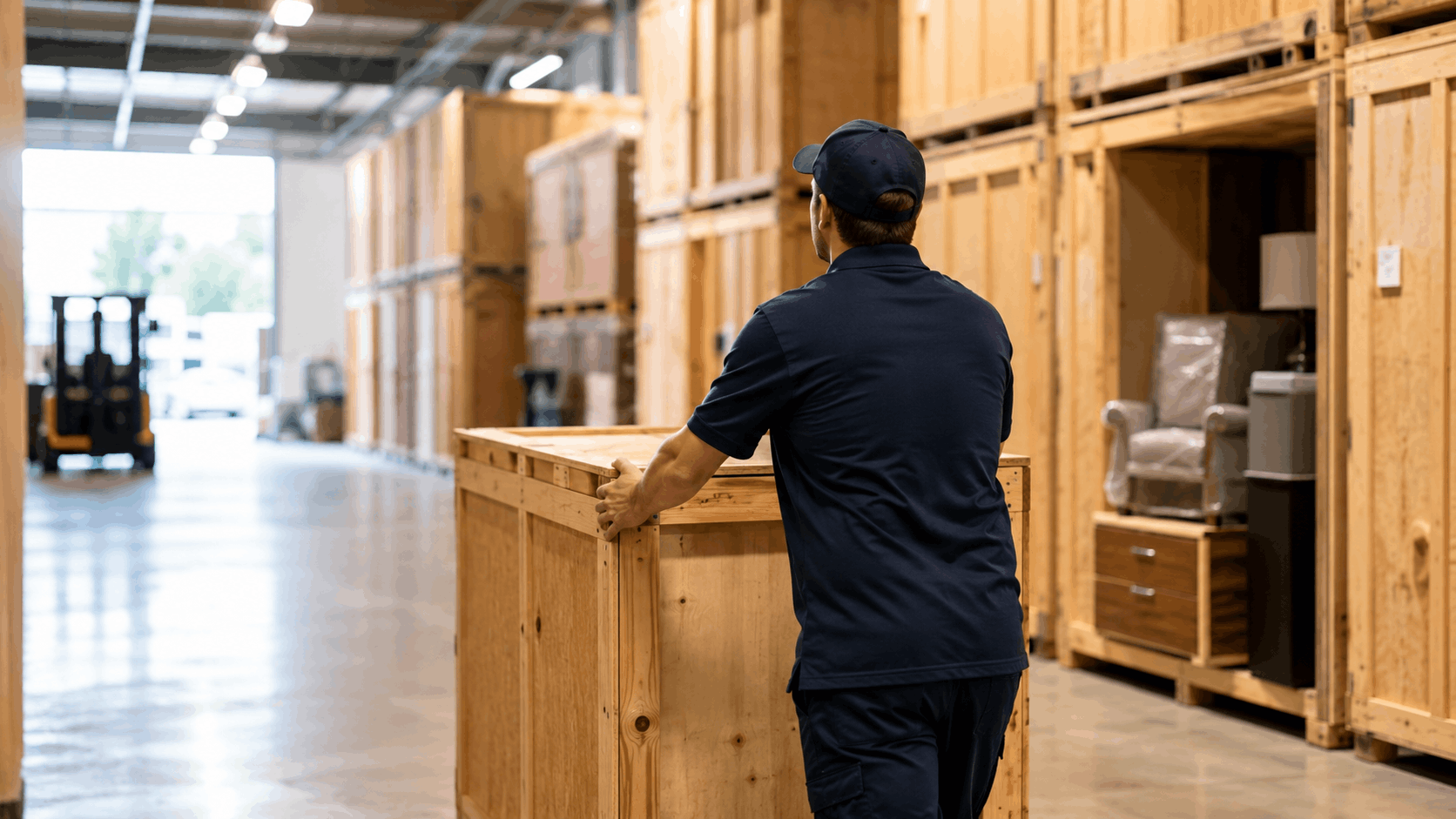
Inside these warehouses, your items usually go into wooden storage vaults. Each vault is roughly 5 feet by 7 feet by 7 feet, holding around 250 to 300 cubic feet. Crews pad and wrap your furniture, load it into the vault, and log it on an inventory list.
This palletized storage stays stacked and sealed until you ask for it back. No public foot traffic wanders past your things. That single difference changes the risk of theft, pests, and damage in a big way.
Our vaulted storage service works exactly this way. It is built for people who want their things protected and handled once, not shuffled in and out of a drive-up unit.
Why West LA Space and Traffic Shape Your Choices
West LA is tight. Lots are small, parking is scarce, and the 405 traffic around the Wilshire and Santa Monica Blvd exits can turn a short errand into an hour. All of this affects storage more than people realize.
At a roll-up facility, you fight for a loading spot, wait on a shared elevator, and haul boxes across a parking lot. On a busy Saturday near Sepulveda, you might lose two hours just to the logistics. West LA parking rules near the units are strict, and rental trucks are hard to maneuver on those blocks.
Storage access sounds simple until you are stuck in 405 congestion with a loaded truck. Every trip to your unit means another drive through that traffic. A mover-run warehouse skips those trips entirely, since the crew handles pickup and delivery.
For people already stressed by a move, cutting out the freeway runs is worth a lot. That is one reason we hear from so many West LA families who tried the roll-up route first and switched.
Common Reasons People in the Area Need Storage
Most storage calls we get in West LA trace back to a handful of situations. An escrow gap in Brentwood is a big one, where a home sells before the next closes and the family needs a place for six weeks.
Apartment turnover near UCLA drives another wave, especially every summer. Students and young renters cycle through leases and need somewhere to park their things between places. Downsizing in Westwood is common too, as longtime residents move to smaller homes and cannot fit everything at once.
Renovations, staging a home for sale, and job relocations round out the list. In each case, the person needs moving storage that bridges a gap without turning into a second job.
Matching the reason to the right option is the whole point. A weekend hobbyist and a family in an escrow gap need very different things.
Get Your Free Quote
Tell us about your move. We'll be in touch soon.
How Roll-Up Self-Storage Units Really Work
Before you sign a monthly rental, it helps to know exactly what you are getting. Roll-up self-storage units are simple, but the details trip people up. Here is how drive-up storage actually works day to day.
| Unit Size | Rough Cubic Feet | What It Holds | Typical West LA Monthly Rate |
|---|---|---|---|
| 5x5 | 200 | Closet, boxes, small furniture | $60 - $110 |
| 5x10 | 400 | Studio or one-bedroom partial | $110 - $180 |
| 10x10 | 800 | One to two-bedroom home | $190 - $320 |
| 10x20 | 1,600 | Two to three-bedroom home | $330 - $500 |
Unit Sizes and What Actually Fits
The storage unit sizes sound straightforward, but people almost always underestimate. A 5x5 unit holds about 200 cubic feet, roughly a hall closet. That covers a few boxes, a chair, and some bins, not much more.
A 5x10 runs around 400 cubic feet and fits a studio load or part of a one-bedroom. The 10x10 unit is the workhorse, at about 800 cubic feet, and it can take a modest one to two-bedroom apartment if you pack smart. Beds get disassembled, boxes get stacked to the ceiling, and there is not much wiggle room.
A 10x20 gives you around 1,600 cubic feet, enough for a two to three-bedroom home. The catch is that reaching items in the back means unstacking half the unit. People often rent one size too small and end up cramming, which is how furniture gets scratched.
When we plan storage for a client, we measure the load first. Guessing at cubic feet is how you end up renting a second unit mid-move.
Access Hours, Gate Codes, and the Move-In Reality
Most facilities give you a gate code and set access hours, often 6 a.m. to 10 p.m. rather than true 24-hour access. You punch in, drive to your unit or building, and get to work. That part sounds easy.
The move-in reality is slower than people plan for. Indoor units mean sharing one or two elevators and a limited loading dock with everyone else moving that day. On summer weekends near Sawtelle, you can wait twenty minutes just to get a cart to the elevator.
Gate access also closes at night, which matters if your move runs long. More than one family has been locked out at 10 p.m. with a half-loaded truck still in the lot. That means paying the movers to come back the next day.
Loading and unloading a roll-up unit twice, once in and once out, doubles all of this. It is the hidden time cost that never shows up on the rate sheet.
Climate Control and West LA Coastal Humidity
West LA sits close enough to the coast that the marine layer matters. Morning fog drifting in from Santa Monica raises humidity, and a non-climate metal unit traps that moisture. Over weeks, that shows up as musty smells, warped wood, and mildew on upholstery.
Climate-controlled storage keeps temperature and humidity steadier, which protects wood furniture, electronics, artwork, and anything paper. The problem is cost. Climate control usually adds 25 to 50 percent to the monthly rate at most West LA facilities.
People storing near Mar Vista or Palms feel this more, since coastal moisture reaches those areas easily. A non-climate unit might be fine for garden tools, but it is a gamble for a leather couch or a piano. The piano moving and specialty items we handle almost always call for controlled conditions.
A mover-run warehouse controls conditions across the whole building, so this is baked in rather than an upsell. That is one reason moisture-sensitive items do better in a warehouse.
Hidden Costs Renters Miss at Signing
The advertised rate is rarely what you pay. Most self-storage facilities add an admin fee at signing, usually $25 to $30. Then there is the required insurance, which many renters do not expect.
Facilities typically require you to carry coverage on your stored goods, either through their plan at $10 to $30 a month or proof of your own policy. On top of that, most require you to buy their specific disc lock, another $15 to $20. These storage fees stack up.
The bigger sting comes later. That attractive first-month rate is often an intro price, and rate increases hit after a few months. It is common to see a unit jump 15 to 25 percent within the first year, sometimes twice.
None of this is hidden on purpose, but it rarely gets explained clearly at signing. When you compare true monthly cost against a bundled warehouse rate, the gap narrows a lot.
Need Help in Los Angeles?
Popeye Moving & Storage serves Los Angeles and all of Los Angeles County.
How a Mover-Run Warehouse Handles Your Belongings Differently
The workflow at a mover-run warehouse looks nothing like renting a box. A trained crew handles your things from the first lift to the final drop-off. The handling and professional packing are what change the outcome for your furniture.
Here is how the process runs when a moving company stores items in its own warehouse, and why it matters for what comes out the other side.
Wooden Storage Vaults and Inventory Tags
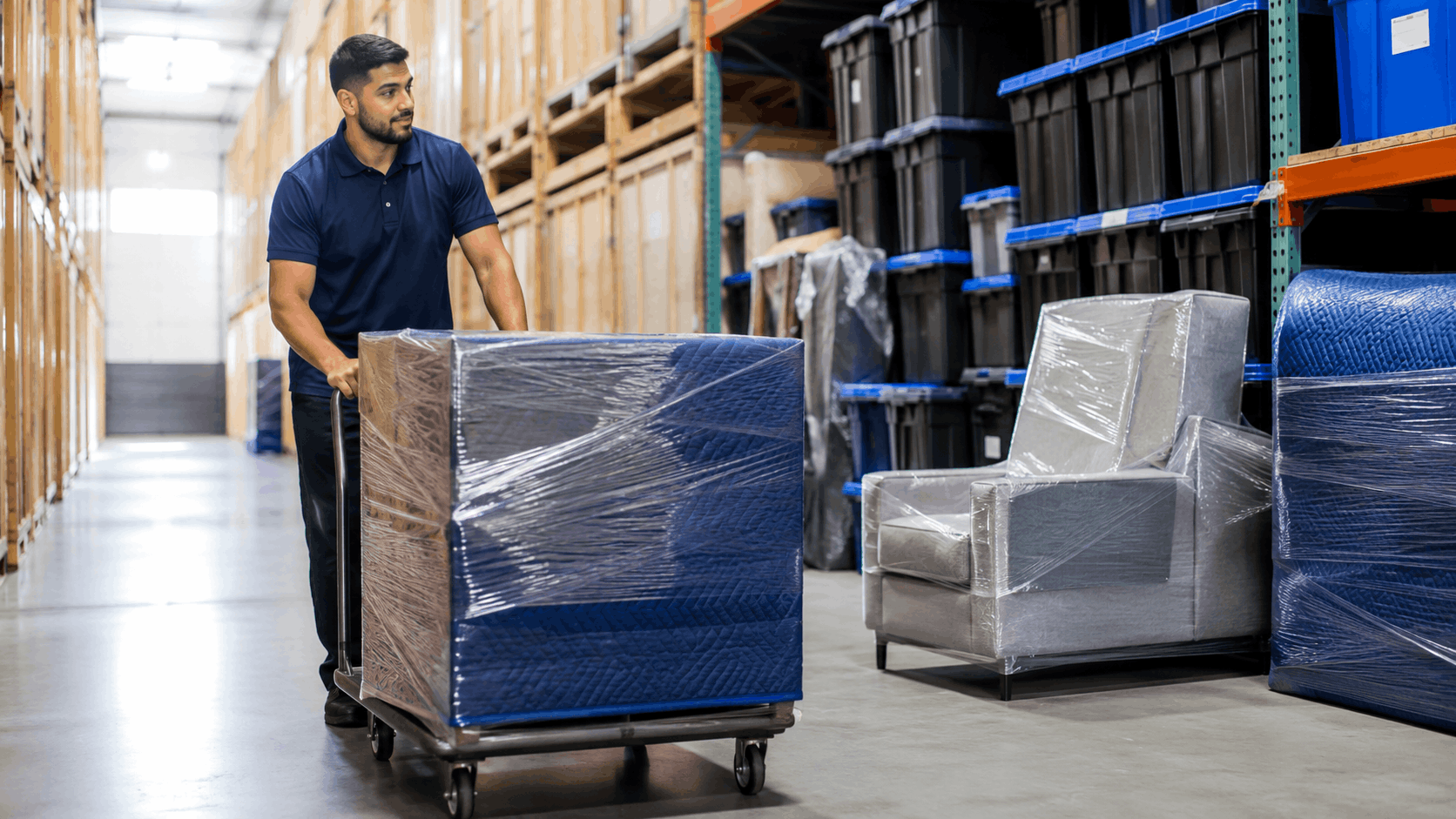
When our crew arrives, we wrap each piece before it ever leaves your home. Furniture gets pads and shrink wrap, mirrors and glass get boxed, and everything gets a numbered tag. Those tags go onto an inventory list you can check.
Back at the warehouse, your items load into wooden storage vaults. Each vault is dedicated to your shipment, not mixed with strangers' belongings. The vaults get sealed and stacked, and the location is logged against your inventory.
Item tagging is the part that saves you later. Every box and every piece is accounted for, so nothing wanders off or gets confused with another customer's load. When you want something back, we know exactly which vault it sits in.
This is a world apart from tossing loose boxes into a metal unit and hoping you remember what is where. The inventory list is your paper trail.
Professional Loading That Prevents Damage
Most storage damage happens during loading, not sitting in storage. A rushed DIY load into a roll-up unit means furniture stacked wrong, no padding between pieces, and heavy boxes crushing light ones. Scratches, dents, and cracked legs follow.
Trained movers pad every surface and stack by weight and shape. Dressers go down first, cushions and fragile items ride on top, and nothing bears more weight than it should. Furniture padding and proper tie-downs keep everything still while it is stored.
Damage prevention is a skill built over years of loading vaults. Our crews know how a sofa sits so its frame does not warp, and how to protect a table so its finish survives months in storage. That experience is hard to match on a Saturday with borrowed muscle.
The result is that items go into storage protected and come out the same way. Our full-service packing team handles the fragile pieces before they ever reach the truck.
One Crew From Pickup to Storage to Delivery
With a mover-run warehouse, the same team handles pickup, storage, and delivery. That door-to-door flow removes the double-handling that damages things. Your belongings get loaded once, stored once, and delivered once.
Compare that to a roll-up unit, where you load a truck, unload into the unit, then later reload and unload again at the new place. Every extra handling is a chance for something to break or go missing. A single crew keeps the chain tight.
Because we log the inventory and control the vault, retrieval is clean. You tell us what you need and when, and the crew delivers. There is no lost afternoon on the 405 with a rented truck.
This single-crew model is the biggest reason people call the warehouse route hands-off. You hand off the problem once and get your things back when you are ready.
How Popeye Moving & Storage Co. Runs Its Warehouse
Popeye Moving & Storage Co. runs its own Los Angeles warehouse serving all of West LA. We pick up from your home, wrap and vault your belongings, and store them in a secured, monitored building. No drive-up trip required on your end.
Our storage service is built for the exact situations West LA throws at people, from escrow gaps to student moves. You schedule a pickup, we handle the rest, and you request delivery when your new place is ready. The whole thing runs on your timeline.
Because we know the streets from Brentwood to Mar Vista, our crews plan around 405 traffic and tight parking before they arrive. That local knowledge keeps the job efficient. You can see the full range of our storage solutions and how they fit different needs.
We also handle both short and long-term storage, so a six-week gap or a two-year hold both work. The warehouse setup does not change based on how long you need it.
Roll-Up Units vs. Mover-Run Warehouse: A Side-by-Side Look
Now for the direct storage comparison. Self-storage vs warehouse comes down to a few points that matter to a West LA resident deciding where to put their moving storage. Here they are laid out plainly.
| Factor | Roll-Up Self-Storage | Mover-Run Warehouse |
|---|---|---|
| True monthly cost | Unit + truck + labor + fees | Bundled pickup, storage, delivery |
| Loading | You do it, twice | Crew does it, once |
| Security | Public access, shared gate | Monitored, no public traffic |
| Moisture protection | Extra cost for climate control | Controlled building |
| Access | Anytime within gate hours | Scheduled retrieval |
| Your time cost | High, repeated 405 trips | Low, hands-off |
Total Cost When You Add Trucks and Labor
The storage cost comparison looks different once you add everything up. A 10x10 unit might run $250 a month, which seems cheaper than a warehouse quote. But that number ignores truck rental and labor.
To fill that unit, you need a truck at $40 to $100 a day plus mileage and fuel, and either your own sweat or hired help at $150 to $300 for a crew. Then you pay all of that again on the way out. Two loads of truck rental and labor cost add up.
A bundled mover-run rate folds pickup, loading, storage, and delivery into one price. When you count both moves and the fees, the gap between the two shrinks or disappears. For a full home during an escrow gap, the warehouse often wins on total cost.
The point is to compare apples to apples. A cheap unit rate plus two DIY moves is not cheaper once your time has any value at all.
Protection Against Theft, Pests, and Moisture
Storage security differs a lot between the two. Roll-up facilities have public access all day, shared gates, and units that anyone with a code can wander past. Break-ins do happen, and a single disc lock is the only barrier.
Pests are another issue. Open-access facilities with people coming and going, propping doors, and storing food attract rodents and insects. A metal unit with a small gap under the door is an easy target for pest control problems.
Moisture damage rounds out the risk. A non-climate unit near the coast collects humidity from the marine layer, warping wood and growing mildew. A monitored, controlled warehouse limits all three risks, with no public foot traffic, pest management, and steady conditions.
For anything you care about, condition matters as much as price. The warehouse route lowers all three of these risks at once.
Time and Hassle for the Person Doing It
Moving time is the cost people forget to price in. A self-storage move means renting the truck, driving the 405, loading in the heat, then repeating it all weeks later. That is easily two full days of your life.
Add the parking hunt near Sepulveda, the elevator wait, and the traffic, and the hassle piles up. If anything runs past gate hours, you lose another day. It is a real chunk of a stressful period spent hauling boxes.
The warehouse process is close to hands-off for convenience. The crew shows up, wraps, loads, and leaves. When you need your things, they deliver. Your weekend stays yours.
For a family already juggling a home sale or a job change, that difference is huge. Time is the cost that never shows on the storage sign but hits the hardest.
When a Roll-Up Unit Still Makes Sense
To be fair, roll-up units win in some cases. If you need frequent access, say you are storing business inventory or gear you grab weekly, a drive-up unit beats scheduled warehouse retrieval. The self-storage benefit there is real.
Hobbyists fit this too. Someone storing a project car, seasonal sports equipment, or tools they use often will find the come-and-go access worth the trade-offs. Long-term storage of low-value, moisture-tough items can also pencil out cheaper in a basic unit.
Small loads favor units as well. If you only have a few boxes, renting a 5x5 and moving it yourself in one car trip is simple and cheap. A full moving crew is overkill for that.
The honest rule is this: frequent access or tiny loads point to a unit, while whole-home moves and moisture-sensitive items point to a warehouse. Match the tool to the job.
Need Help in Los Angeles?
Popeye Moving & Storage serves Los Angeles and all of Los Angeles County.
Neighborhood Notes: Storage Needs Across West LA
Storage choices shift by neighborhood. The living situations across West LA neighborhoods each create different local storage needs during a move. Here is how it breaks down street by street.
| Area | Common Trigger | Best Fit |
|---|---|---|
| Brentwood / Barrington | Escrow gap on home sale | Short-term warehouse |
| Westwood / UCLA | Summer student turnover | Warehouse over crowded units |
| Sawtelle / Palms | Walk-up apartment moves | Warehouse, crew loads |
| Mar Vista | Coastal moisture concern | Controlled warehouse |
Brentwood and Barrington Escrow Gaps
Home sales along San Vicente and Barrington move on short timelines, and closing dates rarely line up. A family sells, but the new place does not close for weeks, leaving a full home with nowhere to go. That escrow gap is a frequent storage call we get from Brentwood.
Short-term storage fits these gaps well. Rather than renting a big unit and moving a whole house twice, a warehouse pickup handles it in one motion. The crew stores everything and delivers when the new home closes.
These are usually four to eight week holds. The bundled warehouse route saves the family from two DIY moves during an already tense stretch. Our Brentwood moving crews know these streets and the building access on that side of the 405.
For higher-value homes, condition matters even more. A controlled warehouse protects fine furniture through the gap far better than a metal box.
Westwood and UCLA Student Turnover
Every summer, the area near Gayley and Weyburn fills with students moving out. UCLA student storage demand spikes, and the roll-up facilities near campus fill up and raise rates. Units get scarce right when everyone needs one.
The crowds make the units worse. Shared elevators back up, loading zones overflow, and finding a spot near Weyburn during the summer move is rough. A warehouse pickup skips that scramble entirely.
For students heading home for the summer or between leases, warehouse storage means no truck, no parking fight, and no lugging boxes up a dorm stairwell. The crew handles it. When the fall lease starts, delivery lines up with the new place.
Parents often coordinate these from out of town, which makes a hands-off warehouse even more appealing. One call sets up pickup and delivery months apart.
Sawtelle and Palms Apartment Moves
Around Olympic and National, the apartments are mostly walk-ups with tight parking and no elevator. Loading a roll-up unit from a third-floor Sawtelle walk-up is punishing work. Palms has the same story on many blocks.
These apartment moves are where a crew earns its keep. Carrying a couch down three flights, across a busy street, into a truck, then into a unit, then out again is a full day of pain. A warehouse crew does the carry once and stores it.
Parking is the other headache. Many of these buildings have no dedicated loading zone, so a rented truck blocks traffic or racks up tickets. Our crews plan the parking and permits before arrival.
For renters in these dense blocks, our local residential moving service pairs naturally with storage. The same crew that clears the walk-up stores the load.
Mar Vista and the Coastal Moisture Factor
Mar Vista sits close enough to the coast that humidity is a real factor. The marine layer rolls in most mornings, and that moisture reaches stored belongings. A non-climate unit in this area is a gamble for anything wood, leather, or electronic.
Coastal humidity warps furniture, fogs electronics, and grows mildew on fabric over a few months. Residents here who store in basic metal units often find musty smells when they retrieve their things. The damage is slow but real.
Controlled storage solves this. A warehouse with steady temperature and humidity protects moisture-sensitive items far better than a metal box near the ocean. For anyone in Mar Vista storing quality furniture, that control is worth it.
We factor the coastal conditions into how we advise clients on this side of town. The closer to the water, the stronger the case for a controlled warehouse.
How to Prepare Belongings Before They Go Into Storage
Good storage preparation protects your things no matter which route you pick. A little work up front saves you from damage and lost items later. These packing tips come from years of protecting belongings across West LA.
Packing Furniture and Electronics the Right Way
Wood furniture needs wrapping. Bare wood rubs and scratches against other pieces, so pad it and cover it before storage. Furniture wrapping with moving blankets and shrink wrap keeps finishes intact through months in a vault.
Disassembly saves space and prevents breaks. Take beds apart, remove table legs, and bag the hardware taped to the piece it came from. A disassembled bed frame stores flat and safe instead of leaning and warping.
Electronics packing needs care too. Back up data, remove batteries, and coil cables in labeled bags. Screens should go in their original boxes when possible, or wrapped and boxed with padding on all sides.
The goal is that everything comes out the way it went in. Our packing and crating team handles the fragile and high-value pieces when clients would rather not risk it.
What Should Never Go Into Storage
Some things simply do not belong in storage. Food is first on the list, since it attracts pests and rots. Even canned goods can leak and draw rodents into your unit or vault.
Flammables and hazardous materials are prohibited items everywhere. Propane tanks, gasoline, paint, aerosols, and cleaning chemicals are all banned for safety reasons. Storage rules exist because these items cause fires and leaks.
Keep important documents and valuables with you. Passports, deeds, jewelry, and cash should never go into storage of any kind. If something is irreplaceable and small, carry it yourself.
Live plants and anything perishable round out the no-go list. When in doubt, ask before you pack it, since the rules protect everyone's belongings in the building.
Making an Inventory You Can Actually Use
A good inventory list is what makes retrieval easy later. Number every box and write its contents and the room it came from. A box marked "12 - kitchen, pots and small appliances" beats a box marked "kitchen stuff."
Box labeling should go on the top and one side, so you can read it however the box is stacked. Keep a master list on your phone or a printed sheet. Cross-reference the numbers with the room list.
For warehouse storage, the crew builds the inventory with tags, but your own box list still helps you find things easily on delivery. The two together mean nothing gets lost. Retrieval becomes a matter of pointing at a number.
This small habit pays off most when you store for months. Future you will thank present you for the labels.
Planning for How Long You Will Store
Match your storage duration to the right option. Short-term storage, under two months, covers escrow gaps and between-lease holds. A warehouse pickup fits these because the hands-off convenience outweighs a slightly higher monthly rate.
Long-term storage, several months to years, changes the math a little. You want controlled conditions to protect items over time, and you want to know retrieval terms upfront. Both units and warehouses handle long holds, but condition matters more the longer you store.
Budget around the true monthly cost, including any fees and the moves in and out. A short hold with two DIY moves can cost more than a longer warehouse stay once you count everything. Plan the whole timeline, not just the first month.
Tell your storage partner your best guess on duration. It helps them recommend the right setup and pricing from the start.
Need Help in Los Angeles?
Popeye Moving & Storage serves Los Angeles and all of Los Angeles County.
Choosing the Right Storage Partner in West LA
Picking a storage or moving-storage provider near the 405 comes down to trust and a few sharp questions. Choosing storage well means checking the signals that separate a solid moving company from a risky one. Here is the framework we would use.
Licensing, Insurance, and Valuation Coverage
Any legitimate mover in California carries a CAL-T license from the state. This number shows the company is registered and regulated. You can verify it through the Bureau of Household Goods and Services before you book.
Valuation coverage is not the same as insurance, and the difference matters. Released value protection is the basic level, often just 60 cents per pound, which barely covers a broken TV. Full-value protection costs more but replaces or repairs items at actual value.
Confirm which coverage applies to your stored goods, not just the move. Ask whether items in the warehouse carry the same protection as items on the truck. Get it in writing before you sign anything.
The federal Protect Your Move resource is a good primer on what movers must disclose. It helps you know what to expect.
Questions to Ask Before You Sign
A short list of questions to ask saves you from surprises. Start with access: how do I retrieve items, how much notice do you need, and is there a fee per retrieval? Scheduled warehouse access works fine, but know the policy.
Ask about fees directly. What is the true monthly cost, are there admin or handling charges, and does the rate increase over time? A clear answer here is a good sign about the storage contract.
Cover warehouse conditions too. Is the building climate controlled, monitored, and pest managed? For West LA coastal moisture, those answers matter a lot.
Finally, ask about retrieval time. If you need a box back on short notice, how soon can they deliver? A straight answer tells you how the operation really runs.
Reading Reviews From Real West LA Customers
Customer reviews tell you what the sales page will not. Look for genuine local reviews that name West LA neighborhoods and specific situations, like an escrow gap in Brentwood or a walk-up on Sawtelle. Those details signal real experiences.
Watch for red flags. A wall of five-star reviews posted the same week, vague praise with no specifics, or repeated complaints about surprise fees and damaged furniture all matter. Reputation shows in the pattern, not one review.
Pay attention to how the company responds to problems. A local mover that answers complaints professionally is a better bet than one that argues or ignores them. That response tells you how they will treat you.
Reviews across a few platforms give a fuller picture. Cross-check before you trust a single source.
Why Local Experience on the 405 Corridor Matters
A crew that knows the 405 corridor moves efficiently and protects your things better. They plan around the Wilshire and Santa Monica Blvd bottlenecks, know which blocks need parking permits, and understand building rules across West LA. That knowledge is time saved on move day.
Local movers also know the buildings. They have loaded the walk-ups near Olympic, dealt with the elevators in Westwood high-rises, and worked the tight lots off Sepulveda. That experience means fewer surprises and less damage.
We have driven these streets for years, from Brentwood to Mar Vista to Palms. Our team plans each job around the real conditions of the corridor. You can read more about our story on our about page.
Experience on these specific streets is the difference between a smooth move and a long day. Local knowledge is not a slogan, it is time and protection.
Final Thoughts
Storage near the 405 in West LA really comes down to two paths. Roll-up units give you come-and-go access and a low sticker price, which suits frequent access and small loads. A mover-run warehouse handles your things once, protects them better, and takes the whole job off your plate.
For most people facing an escrow gap, a student move, or a walk-up apartment, the warehouse route saves time, protects belongings, and often costs the same or less once you count the trucks and labor. Match the option to your real situation, prep your items well, and vet your partner before signing.
If you need storage near the 405, our team at Popeye Moving & Storage Co. can pick up, store, and deliver on your timeline. Call us or reach out through our contact page for a consultation, and we will help you figure out the right fit for your move.
Frequently Asked Questions
- What is a mover-run warehouse and how is it different from self-storage?
- A mover-run warehouse is storage run by a moving company. A crew picks up your belongings, wraps them, loads them into wooden vaults, and stores them in a secured building. You never drive to it or load anything. Self-storage roll-up units are different: you rent a box, get a gate code, and handle all the loading, driving, and stacking yourself.
- How much does storage near the 405 in West LA cost?
- Roll-up units in West LA run about $60 for a 5x5 up to $500 for a 10x20 per month, plus truck rental, labor, and fees. A mover-run warehouse vault bundles pickup, storage, and delivery into one rate. The true cost depends on load size, storage length, and how many moves are involved. Once you count trucks and labor twice, the two options often land close.
- Can I access my belongings anytime in a warehouse?
- Warehouse storage uses scheduled access rather than anytime drive-up. You request the items you need and the crew retrieves or delivers them, usually with a day or two of notice. Roll-up units offer access within gate hours, often 6 a.m. to 10 p.m. If you need to grab things weekly, a unit fits better. For a store-and-forget move, scheduled retrieval works fine.
- Is my stuff safer in a warehouse or a roll-up unit?
- A warehouse is generally safer. It has no public foot traffic, monitored security, pest management, and controlled temperature and humidity. Roll-up units have shared public access, a single lock, gaps that let in pests, and moisture from the coastal marine layer in non-climate units. For anything of value or sensitive to humidity, the warehouse lowers theft, pest, and moisture risk at once.
- How long can I keep items in storage?
- Both options handle short-term and long-term needs. Short-term storage under two months suits escrow gaps and between-lease holds. Long-term storage runs months to years and usually bills monthly. A warehouse works for both, and controlled conditions protect items better over long holds. Tell your provider your expected duration so they can set up the right pricing and plan from the start.
- Do I need my own truck for a mover-run warehouse?
- No. The moving crew handles pickup and delivery with their own truck and equipment. You do not rent a truck, drive the 405, or load anything. That is the main appeal of the warehouse route over a roll-up unit, where you supply the truck and muscle for both the move in and the move out.
- What items are not allowed in storage?
- Perishables and food are not allowed because they attract pests and rot. Flammables and hazardous materials, including propane, gasoline, paint, aerosols, and chemicals, are prohibited for safety. Live plants and anything that can leak or spoil are also off limits. Keep important documents, jewelry, and cash with you rather than in storage. When unsure about an item, ask before packing it.
- Does coastal humidity in West LA damage stored items?
- Yes, it can. The marine layer drifting in from the coast raises humidity, and areas like Mar Vista and Palms feel it strongly. In a non-climate metal unit, that moisture warps wood, fogs electronics, and grows mildew on fabric over time. A controlled warehouse keeps temperature and humidity steady across the building, which protects moisture-sensitive belongings far better.
- How soon can I book storage with Popeye Moving & Storage Co.?
- Booking depends on load size and crew availability, and short-notice West LA pickups can be scheduled when the calendar has room. Goods go into vaults at the warehouse the same day as pickup, so your items are secured right away. Call us early if you have a firm closing or lease date so we can lock in the window that works for you.
- What insurance or valuation coverage applies to stored belongings?
- Valuation coverage comes in two forms. Released value protection is the basic level at about 60 cents per pound. Full-value protection covers repair or replacement at actual value and costs more. Confirm that your stored items carry the same coverage as items in transit, and get it in writing. Ask your provider which option applies and whether you can add extra protection for high-value pieces.
Popeye Moving & Storage Co. Team Team
Licensed moving and storage professionals serving Los Angeles and Los Angeles County.
Licensed in California · License #CAL T 189749 | USDOT 1472924 | MC 498816C
Why trust Popeye Moving & Storage?
Founded in 1994, Popeye Moving & Storage is a licensed and insured moving and storage service serving Los Angeles and Los Angeles County. All content is reviewed by our licensed technicians.

Need Help in Los Angeles?
Popeye Moving & Storage serves Los Angeles and all of Los Angeles County.
Related Articles
Santa Monica Movers North of Montana: Coastal Estate Service
A local guide to estate moving north of Montana Avenue in Santa Monica, covering coastal conditions, fragile crating, neighborhood logistics, storage, and permits.
What Vaulted Storage Costs in Los Angeles - and Why It Beats a Self-Storage Unit for Furniture
Vaulted storage in LA runs $75-$150 per vault monthly and protects furniture better than a self-storage unit. See real costs, hidden fees, and when a vault wins.
Vaulted Storage vs Self-Storage in LA: Why Full-Service Storage Saves You Money
Vaulted full-service storage vs self-storage in LA: see the real costs, hidden fees, and why more Angelenos are switching to vault storage with Popeye Moving.