Cost Guides
Vaulted Storage vs Self-Storage in LA: Why Full-Service Storage Saves You Money
Key Takeaways
- Self-storage in LA costs far more than the advertised rate once truck rental, fuel, packing supplies, insurance, and time are included - often $300 to $585 in month one alone.
- Vaulted full-service storage means a professional crew picks up, wraps, and stores items in individual wooden vaults inside a private warehouse - no truck rental or heavy lifting required.
- For most LA residents storing furniture for more than six weeks, the all-in cost of full-service storage is competitive with or less than the true total cost of self-storage.
- LA-specific conditions - extreme San Fernando Valley heat, coastal humidity, and hillside streets with tight truck access - make professional vaulted storage a practical advantage over a standard metal self-storage unit.
- Self-storage still makes sense for customers who need frequent weekly access or are storing small items they can transport themselves; full-service storage wins for furniture, long-term stays, and anyone without a truck.
- Most furniture damage happens during the move itself, not while in storage - professional wrapping and handling by a trained crew dramatically reduces the risk of scratches, warping, and breakage.
- Popeye Moving and Storage Co. serves neighborhoods across greater Los Angeles including Santa Monica, Silver Lake, Koreatown, Culver City, Sherman Oaks, and Burbank with full-service vaulted storage pickup and delivery.
- A simple cost comparison - adding up every self-storage expense versus getting a full-service quote - is the most reliable way for any Angeleno to determine which option fits their specific situation.
In This Article
A Silver Lake resident recently calculated what her self-storage unit had actually cost over three months. The monthly rent was $180. But when she added up two truck rentals, fuel for four round trips to a Van Nuys facility, boxes, tape, a disc lock, and three lost Saturdays, the real number was closer to $900. That is a common story across Los Angeles, and it catches a lot of people off guard.
Self-storage looks affordable on paper. The advertised rate rarely tells the full story. Once a renter factors in every cost and every hour spent hauling furniture through LA traffic, the math often shifts in favor of a completely different approach - one where a professional crew handles everything from pickup to placement in a secure, individual wooden vault.
What Is Vaulted Storage and How Does It Work in Los Angeles
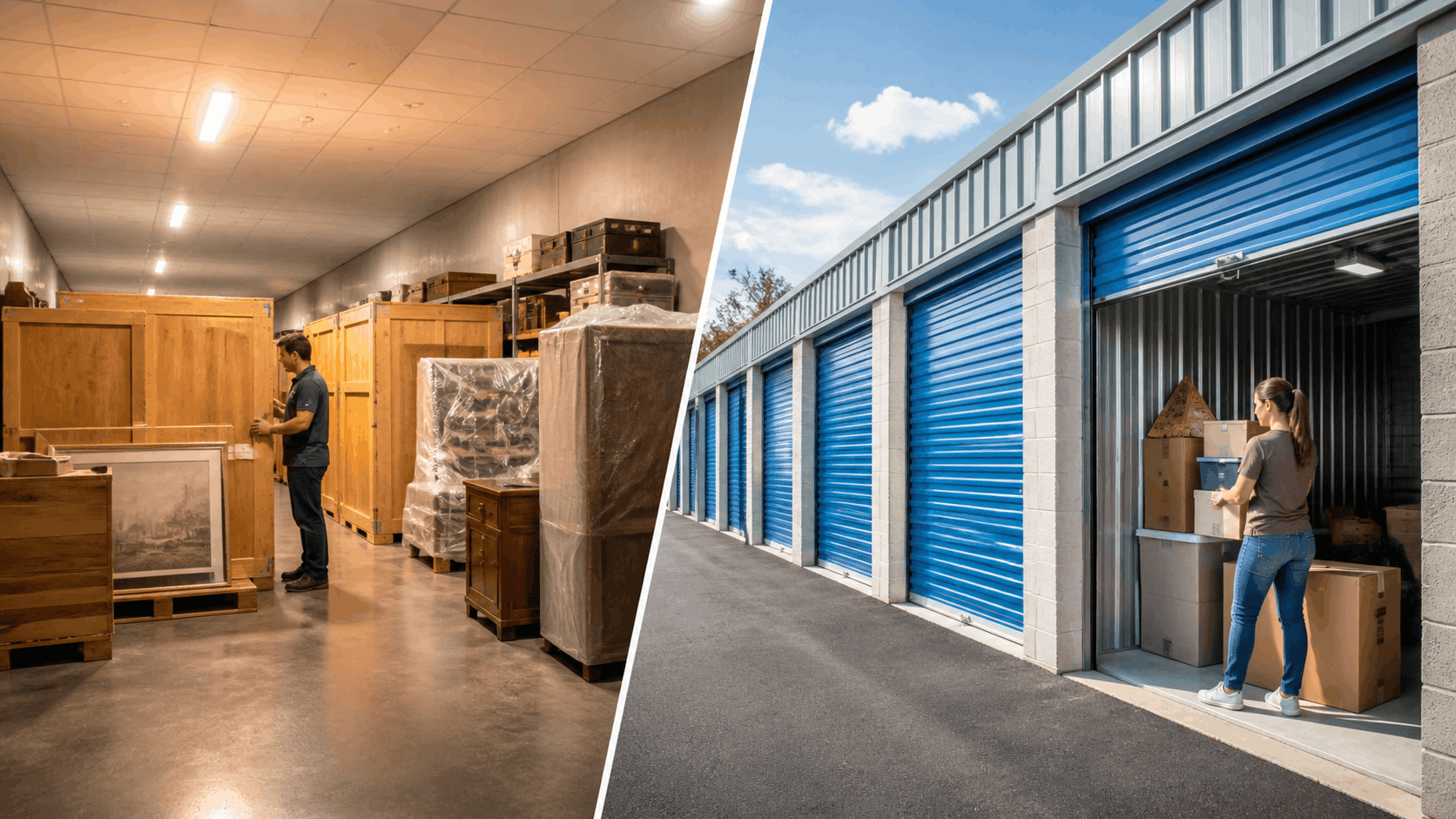
Vaulted storage Los Angeles residents are increasingly asking about is a full-service model where customers never touch a moving truck. A professional crew comes to the home, wraps and pads every item, loads everything into individual wooden storage vaults, and transports those vaults to a secure warehouse facility. The customer does not visit the facility. The facility comes to them.
Popeye Moving & Storage Co. operates this model for customers across Los Angeles, serving neighborhoods from Echo Park and Los Feliz on the east side to West Adams and Leimert Park further south. The process is built around one idea: the customer's job is to be ready when the crew arrives, not to figure out how to move a sectional couch down a narrow Echo Park staircase on their own.
Here is a quick comparison of what each storage model requires from the customer:
| Task | Self-Storage | Vaulted Full-Service Storage |
|---|---|---|
| Rent a truck | Customer's responsibility | Not required |
| Pack and wrap items | Customer's responsibility | Handled by professional crew |
| Transport to facility | Customer drives | Crew transports |
| Load into storage | Customer loads | Crew loads vaults |
| Retrieve items | Customer drives back | Scheduled delivery to home |
| Buy packing supplies | Customer buys separately | Included in service |
How Items Get Picked Up, Wrapped, and Stored
The storage vault process starts with a scheduled pickup window. A crew arrives at the customer's home with furniture pads, stretch wrap, tape, and dollies. Each piece of furniture gets wrapped and padded before it is moved through the home. Nothing slides across floors or scrapes doorframes.
Once everything is loaded into the moving vehicle, items are transferred into individual vaults at the warehouse. The customer does not need to rent a truck, hire day laborers, or call in favors from friends. Professional packing and pickup is the whole point of the model.
For apartment renters in buildings with tight elevators or long hallways - common in neighborhoods like Los Feliz and Silverlake - this matters. A trained crew knows how to navigate those spaces without damage.
What a Storage Vault Actually Looks Like
A wooden storage vault is a freestanding wooden crate, typically around 5 feet wide by 7 feet deep by 7 feet tall. That is roughly the size of a small walk-in closet. Each vault is assigned to a single customer, so belongings are never mixed with anyone else's items.
Individual vault storage means damage from neighboring units is not a concern. There is no risk of another customer's leaking boxes sitting next to a couch. The wooden construction also breathes better than a sealed metal unit baking in the sun, which matters a great deal in LA's climate.
Vault dimensions can vary slightly by provider, but the format is consistent: fully enclosed, clearly labeled, and stacked or stored in a private warehouse rather than a publicly accessible hallway.
Who Uses Vaulted Storage in LA and Why
LA storage customers come from all kinds of situations. The most common are people between leases - someone whose Culver City apartment lease ended two weeks before their new Silver Lake place is available. Full-service storage fills that gap without requiring them to borrow a truck or sleep surrounded by boxes in a friend's living room.
Home renovation storage is another big driver. Homeowners near the 405 corridor in areas like Mar Vista or Palms often need to clear out living rooms and bedrooms while floors are redone or kitchens are gutted. A vault handles that furniture for a few weeks without the homeowner making multiple trips.
Families temporarily relocating from the Valley - say, from Sherman Oaks to Burbank for a job change - also rely on this model. They need storage that is flexible and does not require a moving convoy every time they need a box from the back of the unit.
Get Your Free Quote
Tell us about your move and we'll get back to you fast.
How Traditional Self-Storage Works in Los Angeles
Self-storage Los Angeles residents know well. There are hundreds of facilities scattered across the city, from big-name national chains to smaller independent operators. The basic model has not changed much in decades: a customer rents a unit by the month, gets a gate code, and handles everything else themselves.
LA self-storage facilities are concentrated in specific corridors - Van Nuys Boulevard through the Valley, Sepulveda Boulevard near the 405, and along the 10 Freeway corridor through the mid-city. These locations made sense when land was cheaper, and they still serve a real purpose for certain customers. But the convenience of a nearby facility does not automatically make self-storage the right financial choice.
The Basics of Renting a Self-Storage Unit
A monthly storage rental works simply on paper. The customer picks a unit size, pays a monthly fee, and receives 24-hour or gated access. Common unit sizes run from 5x5 (about the size of a large closet) up to 10x30 (large enough for the contents of a four-bedroom home). For an LA renter comparing options, a 10x10 unit holds roughly a one-bedroom apartment's worth of furniture.
- 5x5 unit - boxes, small items, a bike
- 5x10 unit - studio apartment contents or a few large pieces
- 10x10 unit - one-bedroom apartment contents
- 10x20 unit - two to three bedroom home contents
- 10x30 unit - large home or full household contents
The advertised rate is just the monthly base. Everything else - getting items there, packing supplies, insurance - is separate. That gap between the advertised price and the real cost is where most customers get surprised.
Where Self-Storage Facilities Are Clustered in LA
Van Nuys storage options line Van Nuys Boulevard from Roscoe down toward Sherman Way, making the Valley one of the most self-storage-dense areas in the region. Sepulveda Boulevard in the Valley also has multiple facilities within a few miles of each other.
- Van Nuys Boulevard and Sepulveda Boulevard - high concentration in the San Fernando Valley
- Near the 110 and 105 interchange in South LA - several large facilities in Gardena and Inglewood
- Along the 10 Freeway from Santa Monica to El Monte - major storage corridor
- Reseda and Canoga Park - budget-friendly Valley options
- Near downtown LA on Mission Road and San Fernando Road - industrial district storage
For self-storage near me LA searches, Google will surface plenty of options. The question is whether the closest facility is actually the most practical and affordable when all costs are included.
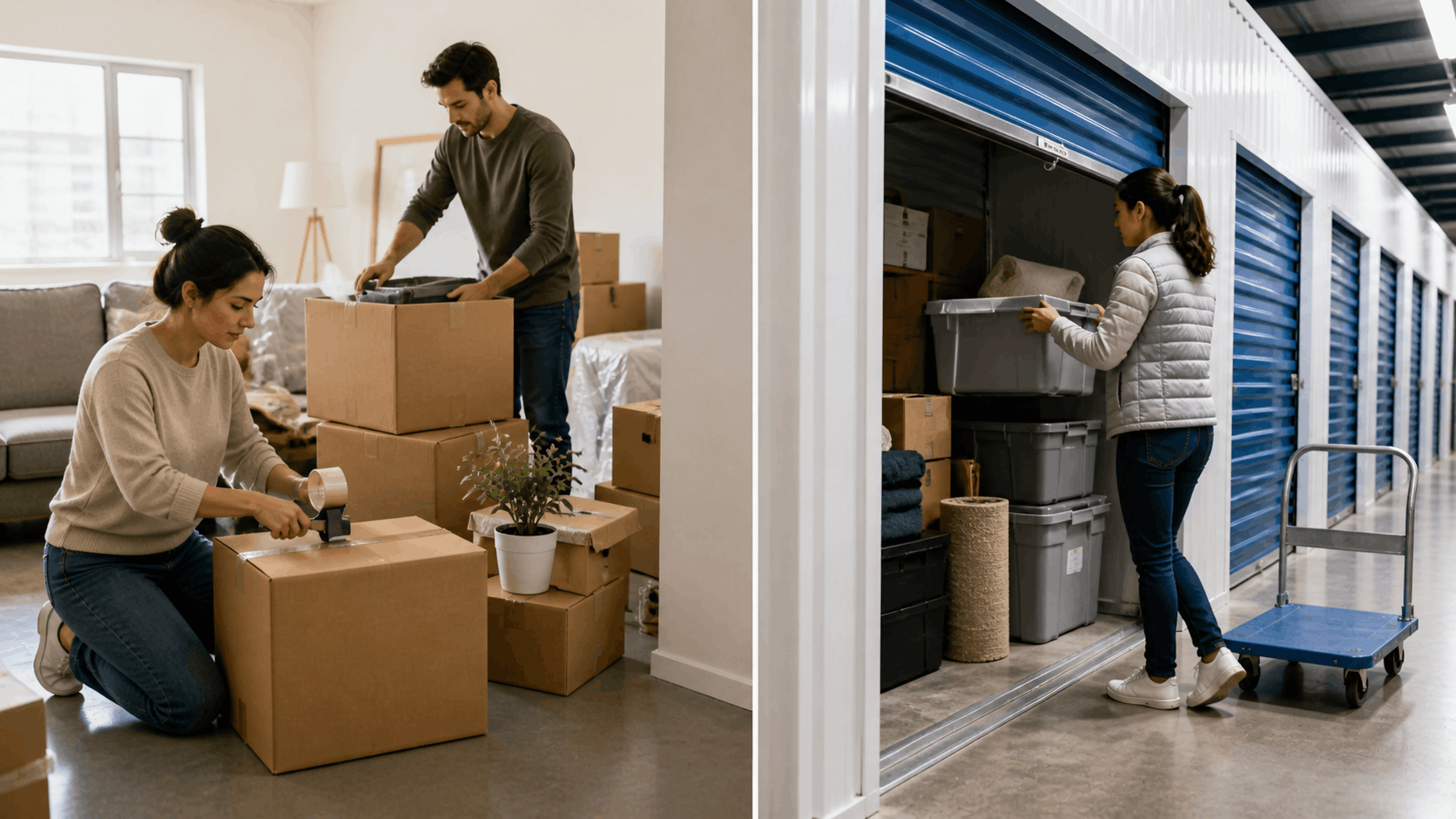
What You Are Responsible for With Self-Storage
Self-storage responsibilities fall entirely on the renter. This is not a criticism - it is just the model. The facility provides the space. The customer provides everything else.
- Renting a moving truck or cargo van
- Buying boxes, tape, bubble wrap, mattress bags, and furniture pads
- Loading all items into the truck at home
- Driving to the facility and unloading into the unit
- Buying a disc lock or padlock for the unit door
- Purchasing separate storage unit insurance (many facilities require it)
- Making return trips every time an item is needed
- Driving back again when the storage period ends to retrieve everything
For someone who already has a truck, strong friends, and experience moving furniture, this works. For most LA renters in second-floor apartments with street parking restrictions and no truck, the list above adds up quickly in both cost and effort.
Need Help in Los Angeles?
Popeye Moving & Storage serves Los Angeles and all of Los Angeles County.
The Real Cost of Self-Storage in Los Angeles When You Add It All Up
Self-storage hidden costs do not show up in the advertised rate. They show up on credit card statements and in lost weekend hours. A 10x10 unit in the Van Nuys or North Hollywood area runs roughly $100 to $200 per month depending on the facility. That number feels manageable. Then the actual moving starts, and the costs multiply.
The cost of storage in LA only tells part of the story when based on unit rent alone. A full accounting includes every truck rental, every gallon of fuel burned in traffic, every hour of a Saturday afternoon, and every piece of equipment purchased for a one-time use. The table below maps out a realistic first-month cost for a typical one-bedroom apartment move into self-storage in Los Angeles.
| Cost Item | Estimated Cost (LA) | Notes |
|---|---|---|
| First month unit rent (10x10) | $120 - $200 | Base rate, often discounted first month |
| Truck rental (one day) | $40 - $85 | Before mileage charges |
| Mileage fees (40-60 miles) | $30 - $60 | $0.59-$0.99 per mile typical in LA |
| Fuel | $25 - $50 | LA gas prices average $4.50-$5.50/gallon |
| Boxes and packing tape | $40 - $80 | For a one-bedroom apartment |
| Mattress bag and furniture pads | $30 - $60 | One-time but necessary |
| Disc lock | $15 - $30 | Required by most facilities |
| Storage unit insurance | $10 - $20/month | Often required by facility |
| Realistic First-Month Total | $310 - $585 | Before any return trips |
Truck Rental and Fuel Costs Add Up Fast in a City This Big
Truck rental Los Angeles pricing starts around $30 to $40 for the base day rate on a cargo van, and $60 to $85 for a larger moving truck. But that base rate does not include mileage. Most rental companies charge $0.59 to $0.99 per mile, and in a city as spread out as LA, miles add up fast.
A round trip from Silver Lake to a Van Nuys storage facility covers roughly 35 to 45 miles depending on the route. In stop-and-go traffic on the 101 or up the 170, a moving truck burns fuel at a poor rate. At current LA gas prices hovering around $4.80 to $5.20 per gallon, a single round trip in a cargo van can cost $25 to $45 in fuel alone.
Most people make at least two trips - one to move in, one to move out. If anything is retrieved in between, that is another truck rental. Self-storage transport costs compound quickly over a three to six month storage period.
Packing Supplies, Locks, and Insurance - The Costs Nobody Talks About
Before a single box goes into the unit, a first-time self-storage renter is already spending $100 to $200 on supplies. Boxes for a one-bedroom apartment run $40 to $70 at a hardware store. Add packing tape, bubble wrap, a mattress bag, and moving blankets, and the total moves past $100 before touching any furniture.
A quality disc lock from a hardware store runs $15 to $30, and most facilities require one. Storage unit insurance is frequently mandatory - facilities in Van Nuys and Inglewood typically require proof of coverage or sell their own policies starting at $10 to $20 per month. Packing materials cost is a real line item, not an afterthought.
All of these expenses show up in the first month and are rarely mentioned in the advertised rate. A $150-per-month storage unit can cost $400 to $500 in month one when all supplies and setup costs are included.
The Cost of Your Time on LA Streets
Time cost self-storage does not show up on any receipt, but it has a real value. For someone in Mar Vista loading a truck, driving to a Culver City facility during weekend traffic on Lincoln Boulevard, unloading, returning the truck, and getting home, the round trip easily runs three to four hours. That is before accounting for the loading and unloading time itself.
LA traffic storage trips on a Saturday or Sunday - the only days many people can move - hit congestion from Santa Monica to the Valley. The 10 Freeway, the 405, and surface streets through Culver City and Palms all slow down on weekends. A quick storage run is rarely quick here.
For a professional earning $40 to $80 an hour, four hours represents $160 to $320 in real economic value. Even for someone not measuring their time that way, a lost Saturday doing heavy lifting has a cost. Weekend storage trips are a recurring tax on time that self-storage renters pay every time they need something from the unit.
What Full-Service Vaulted Storage Actually Costs in LA
Full-service storage cost LA residents actually pay is more straightforward than it looks. There is typically a pickup fee, a monthly per-vault rate, and a delivery fee when items come back. No truck rental, no supplies to buy, no Saturday afternoons burned on the 405.
Vaulted storage pricing through Popeye Moving & Storage Co. is structured to be transparent. The customer pays for what is used, and the all-in nature of the service means there are no surprise line items at the end of month one. The numbers are comparable to self-storage once the full picture is drawn.
How Full-Service Storage Is Typically Priced
Vault storage monthly cost in the Los Angeles market generally runs $75 to $150 per vault per month. A one-bedroom apartment's furniture typically fills one to two vaults. Pickup fees vary but commonly range from $150 to $300 for a local LA pickup, and delivery back to the customer runs a similar range.
Storage pickup fee structures differ by provider. Some charge a flat fee, others price by the hour or by the number of vaults. The honest comparison requires getting an actual quote and stacking it against the self-storage total cost - not just the monthly unit rate. Full-service storage pricing is all-inclusive in a way that self-storage never is.
For most LA customers, the monthly vault rate is comparable to a self-storage unit once the self-storage total is calculated correctly. The pickup and delivery fees are where the comparison gets interesting over time.
When Full-Service Storage Costs Less Than Self-Storage Over Time
The storage cost comparison shifts in favor of full-service storage the longer items are stored. For short stays of two to three weeks, self-storage can be cheaper if the customer already has a truck and supplies. Beyond six weeks, the math almost always favors vaulted storage.
Here is a simple three-month example using real LA-area numbers for a one-bedroom apartment:
- Self-storage (3 months): $150/month x 3 = $450 in rent, plus $300 in first-month setup costs (truck, supplies, lock, insurance) = $750 total, not counting any retrieval trips
- Vaulted full-service (3 months): $120/month x 2 vaults x 3 = $720 in monthly storage, plus $200 pickup and $200 delivery = $1,120 total
The gap is real in this example, but it narrows significantly when retrieval trips, time cost, and any damage from DIY moves are included. For customers storing for six months or more, or storing higher-value furniture, full-service vs self-storage cost often tips in favor of the full-service option when everything is counted. Full-service storage benefits are clear for anyone storing beyond the two-month mark who values their time and their furniture.
What Is Included in Full-Service Storage That You Would Pay Extra for Elsewhere
Full-service storage inclusions at Popeye Moving & Storage Co. cover the items that self-storage customers pay for separately. Furniture wrapping storage - the pads, stretch wrap, and proper techniques that protect a couch or dining table - is part of the service, not an add-on.
- Professional furniture wrapping and padding at pickup
- All packing materials included
- Crew to load and unload (no back injuries on the customer's side)
- Individual vault assignment in a secure warehouse
- Scheduled delivery back to the customer's address
- No truck rental required at any stage
Professional storage pickup is the part that saves the most time and reduces the most risk. A customer who stores a mid-century modern dining set does not need to worry about scratches from a borrowed truck's interior or a dropped corner on the way down the stairs. That kind of care costs extra when hired separately. Here, it comes with the service.
How LA's Climate and Housing Market Make Full-Service Storage Smarter
Los Angeles storage climate challenges are more significant than most renters expect. The city has a reputation for perfect weather, but the conditions that affect stored furniture - heat, moisture near the coast, and temperature swings between night and day - are real. The housing market adds another layer: leases in LA move fast, and storage often has to move faster.
LA housing market storage demand spikes every summer and fall when lease cycles turn over. In neighborhoods like Koreatown, where rental units move within days of listing, tenants sometimes have less than two weeks between signing a new lease and needing to vacate the old one. Full-service storage handles that timeline without requiring the tenant to orchestrate a full move twice in two weeks.
Heat, Humidity, and What They Do to Your Furniture in an Exposed Unit
Storage heat damage LA causes is not hypothetical. A metal self-storage unit in the San Fernando Valley - Chatsworth, Reseda, or Northridge - can reach 120 to 130 degrees Fahrenheit inside during a July or August heat event. Wood furniture warps. Vinyl and leather crack. Electronics overheat even when powered off.
Climate controlled storage in a warehouse environment stays in a regulated range year-round. The difference between a stored wooden dresser that comes back looking perfect and one that comes back with warped drawers often comes down to where it was kept. San Fernando Valley heat storage conditions at a standard self-storage facility represent a real risk to furniture quality.
June gloom along the coast brings its own challenges. Units near Santa Monica or Culver City can experience elevated humidity that promotes mold growth on fabric and wood surfaces over a multi-month storage period. A proper warehouse avoids this exposure.
Tight Streets, Steep Driveways, and Why Getting a Truck to Your Door Is Hard
LA narrow streets moving challenges are something local crews deal with every week. In Beachwood Canyon, streets are barely wide enough for two cars to pass. In Mount Washington, some driveways gain 50 feet of elevation in 30 yards. Laurel Canyon moving access off the main boulevard involves tight switchbacks that a 26-foot moving truck simply cannot navigate.
A professional crew from Popeye Moving & Storage Co. knows these neighborhoods. They arrive with the right-sized vehicles, the right equipment for steep approaches, and the experience to know when a hand-carry from the street is the only option. A first-time U-Haul driver does not have that knowledge or those tools.
Hollywood Hills storage pickup for a hillside property is not a job for someone who rented a truck for the first time that morning. It is a job for a crew that has done it dozens of times in that exact neighborhood.
LA's Rental Market and Why Storage Is Often a Bridge Solution
LA rental market storage demand follows the lease cycle. In Koreatown and West Hollywood, where studio and one-bedroom apartments turn over constantly, tenants often need a gap solution. The new place is not available. The old lease is ending. Something has to hold the furniture for two to six weeks.
Between apartments storage through a full-service provider is built for exactly this moment. The crew picks up when the lease ends. Delivery is scheduled when the new place is ready. The customer stays with family, in a short-term rental, or travels - without managing a self-storage unit in the middle of it all.
A Koreatown storage solution that requires driving to a Van Nuys facility twice a month is not actually convenient. A solution that requires one phone call and two scheduled appointments is. That difference matters when someone is already managing the stress of an LA apartment search.
Need Help in Los Angeles?
Popeye Moving & Storage serves Los Angeles and all of Los Angeles County.
Security and Protection: Comparing What Actually Keeps Your Stuff Safe
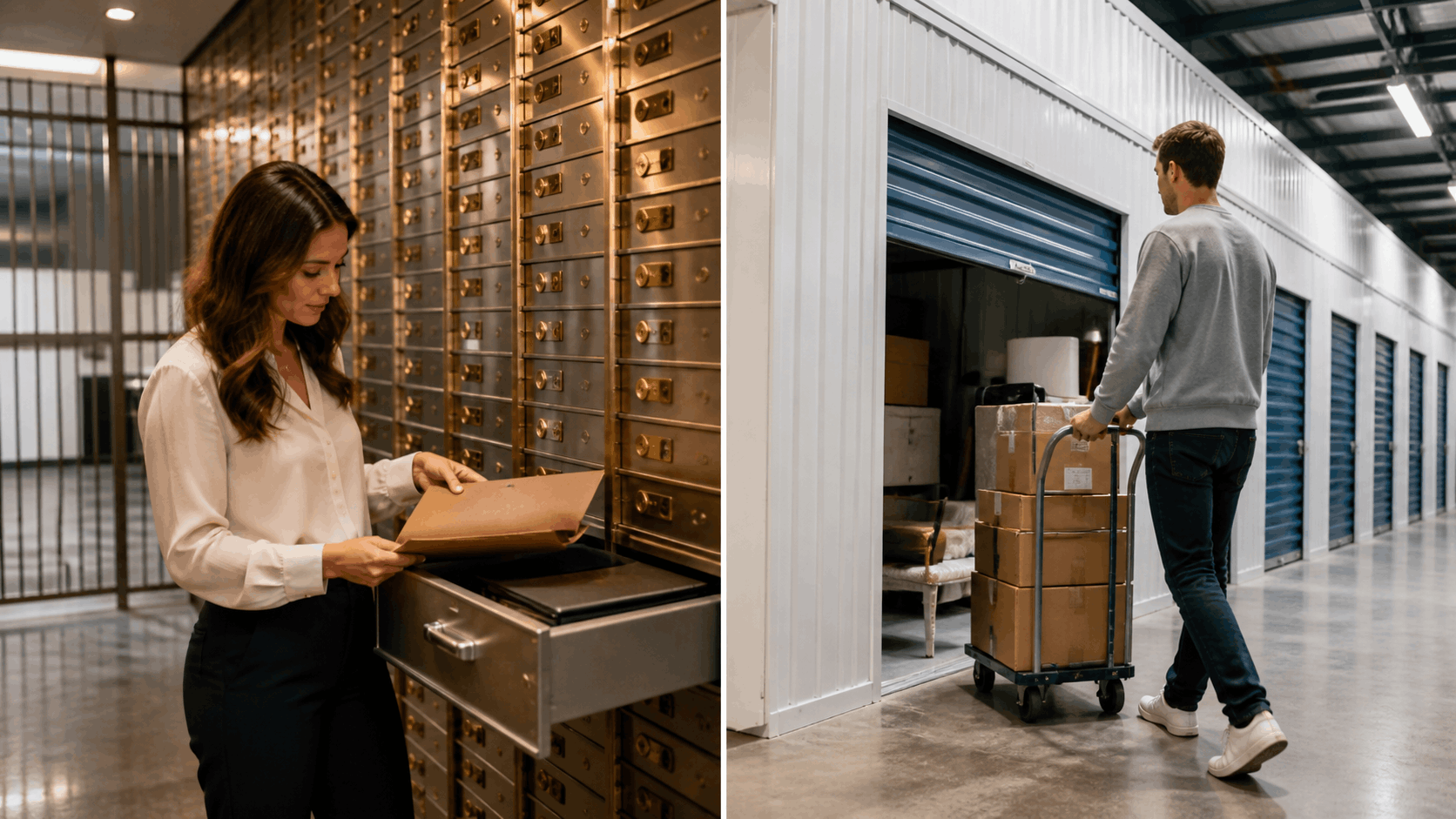
Storage security Los Angeles residents should understand goes beyond a gate code. Both self-storage and vaulted storage offer security features, but they work differently. The question is not which has more cameras - it is which model gives strangers less access to a customer's belongings.
Vault storage protection is built around limited access. A closed warehouse where only staff enter is structurally different from a facility where 500 customers all have gate codes and roam the same hallways. Both have their place, but the risk profiles are genuinely different.
What Self-Storage Security Actually Looks Like
Standard self-storage security includes a perimeter gate with a code, cameras in common areas and hallways, individual unit locks, and sometimes on-site staff during business hours. These are legitimate security measures. They work reasonably well in most circumstances.
Storage unit break-in incidents have been reported at LA-area facilities in Reseda, Inglewood, and Van Nuys - typically involving cut locks or forced roll-up doors in less-trafficked areas of a facility. In a large complex, staff rarely sees who enters individual units or when. LA storage theft is not rampant, but it is not zero either.
Self-storage security risks also include damage from neighboring units - a leaking pipe, a pest issue in an adjacent unit, or condensation from a unit that was improperly sealed. These are facility management issues, but they affect individual renters.
How Individual Vaults in a Closed Warehouse Reduce Risk
Vaulted storage security works on a different model. Items sit in individually sealed wooden vaults inside a warehouse that the public does not enter. There is no gate code handed out to hundreds of customers. Access is controlled by warehouse staff, and items only leave when the customer schedules a retrieval.
Warehouse storage protection comes from the closed-facility model. Even if someone wanted to access a specific customer's belongings, they would need to get into the warehouse, find the correctly labeled vault among many others, and open a sealed wooden crate. The barriers are structural, not just electronic.
Individual vault safety also benefits from the wrapping process. Items arrive at the warehouse already padded and protected. They sit in a contained wooden structure rather than a roll-up metal unit with gaps around the door. The combination of physical barriers reduces both theft exposure and incidental damage risk.
Damage During DIY Moving vs Professional Handling
The honest reality is that most furniture damage happens during the move, not while sitting in storage. A couch that gets scratched on a doorframe, a glass table top that shifts in the back of a truck, or a dresser mirror that vibrates loose on the 101 - these are DIY moving damage risks that happen before anything reaches a storage unit.
Professional packing protection from a trained crew reduces these incidents significantly. The crew from Popeye Moving & Storage Co. uses moving pads thick enough to absorb impact, stretch wrap to keep drawers and doors closed, and corner guards on anything with exposed edges. These are not improvised solutions - they are the same techniques used on fine art and antique moves where damage is simply not acceptable.
Furniture damage during moving is the number one complaint in self-storage. The storage unit itself rarely causes it. The journey there does.
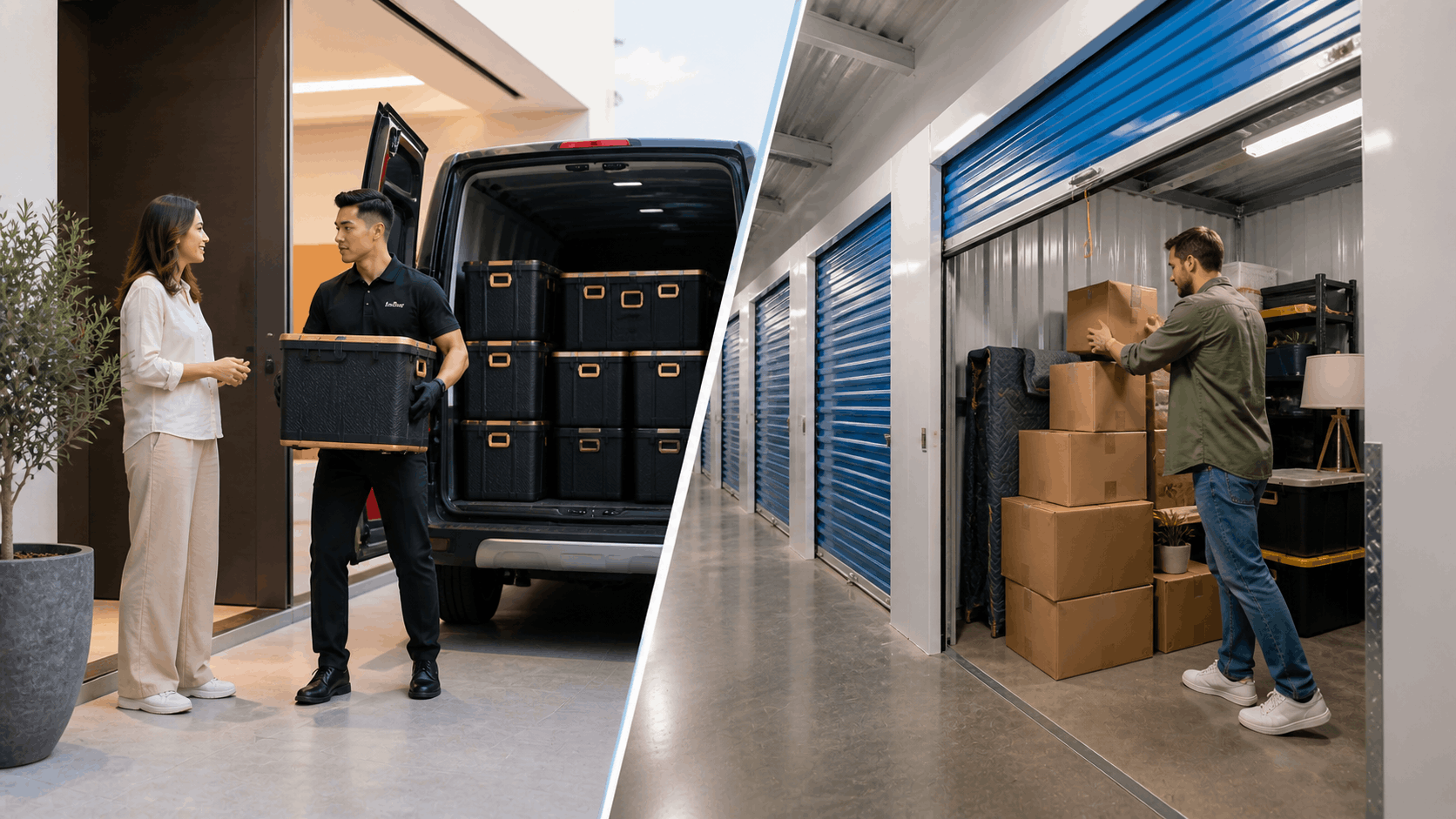
Who Should Choose Self-Storage and Who Should Choose Full-Service Vaulted Storage
Self-storage vs full-service storage is not a one-size-fits-all answer. Both models genuinely serve different customers well. Choosing storage LA residents should do based on their specific situation - not based on what is most advertised or what a friend did. The honest answer is that the right choice depends on frequency of access, what is being stored, how long it stays, and whether the customer has the tools and help to move it themselves.
Most people lean toward self-storage because it is the familiar option. Many of them would save money and effort with vaulted storage. Some genuinely are better served by a self-storage unit. The sections below lay out which is which.
Cases Where Self-Storage Still Makes Sense
Self-storage best use cases are real and specific. A contractor in Chatsworth who needs to access job site equipment twice a week is a good candidate for a self-storage unit near the work site. Daily or near-daily access is something vaulted storage was not designed for, and trying to use it that way would be expensive and impractical.
- Frequent access storage - needing items weekly or more often
- Storing small, easily-moved items like boxes of documents or seasonal decorations
- Already owning a truck and having reliable moving help
- Short-term storage of one to two weeks with minimal furniture
- Contractor storage LA for tools and equipment at a nearby work site
For these specific situations, the self-storage model is genuinely the right fit. A contractor storage LA setup on Van Nuys Boulevard near a Valley job site is practical and cost-effective when access is constant and the items are tools rather than furniture.
Cases Where Full-Service Storage Is the Smarter Call
Full-service storage best cases cover the majority of residential storage situations in Los Angeles. Anyone storing furniture, appliances, or electronics - items that are heavy, awkward, or easily damaged - gets more value from professional handling than from a truck rental and a roll-up door.
- Furniture storage LA for a full apartment or home
- Long-term storage Los Angeles lasting two months or more
- Anyone without a truck or strong moving help
- People relocating from outside LA who need storage before finding a home
- Anyone storing electronics, instruments, or antiques
- Residents in hillside neighborhoods with difficult truck access
- Homeowners doing renovations who need furniture out of the way
For anyone planning to store a bedroom set, a sofa, or a dining table for more than six weeks, the combination of professional wrapping, secure vaulting, and no-truck logistics makes full-service the practical and often cost-competitive choice.
How to Estimate Which Option Costs Less for Your Specific Situation
A simple storage cost calculator framework: add up every self-storage cost, then compare to a full-service quote. Write down truck rental, mileage, fuel, supplies, lock, insurance, monthly rent, and the number of trips expected. Multiply monthly costs by the full storage period. That is the total self-storage cost.
Then get a quote from Popeye Moving & Storage Co.'s storage solutions team and compare the two numbers side by side. For most Angelenos storing a one-bedroom apartment's worth of furniture for more than six weeks, the numbers already favor full-service when everything is counted.
Compare storage options by total cost, not advertised rate. The advertised rate is only part of the story, and usually the smallest part after month one.
How Popeye Moving and Storage Co. Handles Storage for Los Angeles Customers
Popeye Moving Storage Los Angeles is a locally operated moving and storage company serving the greater LA area. As an LA local storage company, the difference from a national chain is real: the crew knows the city's streets, buildings, and neighborhoods the way only a team that works here every day can. The dispatchers know which facilities have freight elevator restrictions in downtown LA. The crew leaders know the streets off Laurel Canyon.
Full-service moving and storage LA through Popeye is built around the idea that the customer's job is to schedule - not to sweat. From the first call to the day items come back home, the process is designed to remove every task that does not need to be the customer's problem. Learn more about how Popeye Moving & Storage Co. operates and what sets a local team apart.
The Service Area: Neighborhoods and Communities Popeye Moving Serves
Popeye Moving service area covers a wide stretch of Los Angeles County. On the Westside, the team regularly picks up and delivers in Santa Monica, Brentwood, and Culver City. Central LA neighborhoods served include Hancock Park, Mid-City, Silver Lake, Echo Park, and Koreatown.
Valley communities are well within the service range. Storage pickup West LA includes Sherman Oaks, Studio City, and Burbank. South Bay and east-side pickups are also handled regularly. Los Angeles moving company neighborhoods served by the team include both the well-known districts and the in-between areas that national chains sometimes skip.
Whether a customer is in a high-rise near West Hollywood or a hillside home in Glassell Park, the team has worked those streets before. That local knowledge is not incidental - it directly affects how smoothly a pickup goes.
What the Pickup and Delivery Process Looks Like
The storage pickup process starts with a scheduled appointment. The customer books a window, and the crew arrives with all wrapping materials, pads, and equipment. No prep work is required on the customer's side beyond having items accessible.
The crew walks through the home, assesses what needs wrapping, and starts protecting furniture before moving a single item. Each piece gets padded, wrapped, and inventoried. Items are loaded into the truck and transferred into individual vaults at the warehouse. The full-service storage delivery process reverses this when the customer is ready - one call, one scheduled window, items back at the door.
A typical one-bedroom pickup takes two to four hours from crew arrival to completion. The Popeye Moving storage experience is designed to require as little of the customer's time and energy as possible.
Why a Local Company Knows This City Better Than a National Chain
Local LA moving company knowledge shows up in practical ways. The Popeye Moving team knows that the 405 through the Sepulveda Pass backs up severely between 3 PM and 7 PM on weekdays, and schedules routes accordingly. That is not something a national dispatch center factors in.
Los Angeles storage expertise also means knowing which downtown LA buildings require advance freight elevator reservations. It means knowing that some Koreatown apartment buildings have shared parking that makes a truck stop impractical without a block permit. It means having contacts and experience to handle those situations before they become problems on moving day.
A national chain assigns a truck and a crew and hopes it works out. A local team anticipates what a specific address in a specific neighborhood requires and plans accordingly. The Sepulveda Pass moving route, the freight elevator rules, the parking logistics - local knowledge resolves these before they become a customer's problem.

Need Help in Los Angeles?
Popeye Moving & Storage serves Los Angeles and all of Los Angeles County.
Final Thoughts
The difference between vaulted full-service storage and traditional self-storage in Los Angeles is not just about convenience. It is about what the real cost looks like once every expense is on the table. For most LA residents storing furniture and household goods for more than a few weeks, the all-in cost of self-storage is significantly higher than the advertised rate suggests.
Vaulted storage removes the truck rental, the supply run, the heavy lifting, and the multiple trips across a city where traffic is never an abstraction. It is a practical solution for people between leases, finishing renovations, or making a move that requires a storage bridge. For the right customer, it is also the more affordable one.
If the storage decision is coming up soon - whether it is a lease transition in Koreatown, a renovation in Palms, or a relocation from outside LA - getting a full-service quote and comparing it to a real self-storage total is worth the ten minutes it takes. Contact Popeye Moving & Storage Co. for an honest, no-pressure quote, or book a storage pickup when ready to move forward.
Frequently Asked Questions
What is vaulted storage and how is it different from a regular storage unit?
Vaulted storage means a professional crew picks up items from the customer's home, wraps and pads everything, and places belongings into individual sealed wooden vaults stored in a private warehouse. The customer never visits a storage facility or rents a truck. A regular self-storage unit gives the customer a rented space and leaves everything else - transport, packing, and loading - as the customer's responsibility. The vaulted model is a fully managed service from start to finish.
How much does full-service vaulted storage cost in Los Angeles?
Vaulted storage cost in Los Angeles typically runs $75 to $150 per vault per month, with pickup fees in the $150 to $300 range and similar delivery fees when items return. For a one-bedroom apartment, one to two vaults usually covers the contents. When compared honestly to the full-service storage price - including truck rental, packing supplies, lock, insurance, and time - vaulted storage is often competitive starting around the six-week mark of storage.
Can I access my items whenever I want with full-service storage?
Full-service vaulted storage does not allow drop-in access the way a self-storage unit does. Item retrieval is scheduled in advance, typically with 24 to 48 hours of lead time. In the LA area, delivery appointments can generally be arranged within a few business days. This trade-off works well for people who rarely need mid-storage access but does not suit someone who needs to visit their unit weekly. Customers should factor in their access frequency when choosing between the two options.
Is full-service storage safe for furniture, electronics, and valuables?
Full-service vaulted storage is among the safest options for furniture, electronics, and valuables because items are professionally wrapped before they go into the vault. The warehouse environment stays at a regulated temperature, unlike a metal self-storage unit in Chatsworth or Van Nuys that can reach 130 degrees in summer. Electronics, wood furniture, and delicate items are protected from heat warping, humidity, and the incidental damage that comes from amateur packing. Professional handling at both pickup and delivery further reduces risk.
How long does it take for Popeye Moving and Storage to pick up my items?
Storage pickup scheduling with Popeye Moving & Storage Co. typically involves booking a window a few days in advance. Day-of, the crew arrives within the scheduled window and works through the home systematically. A one-bedroom apartment pickup generally takes two to four hours from crew arrival to completion, depending on the number of items and the complexity of the home's layout. Customers receive confirmation before the appointment and a heads-up when the crew is en route.
What neighborhoods in Los Angeles does Popeye Moving and Storage serve?
Popeye Moving service area LA covers a wide range of neighborhoods. Westside locations include Santa Monica, Brentwood, and Culver City. Central LA neighborhoods served include Silver Lake, Echo Park, Koreatown, Hancock Park, and Mid-City. Valley communities including Sherman Oaks, Studio City, and Burbank are regularly served. South Bay and beach communities, as well as areas like Glendale and Pasadena, are also within the service area. The team regularly handles pickups across the full range of Los Angeles storage neighborhoods.
Do I need to be home when my items are picked up or delivered?
Yes, someone with authority over the belongings needs to be present at both pickup and delivery. This is standard practice for storage pickup requirements and protects the customer - the crew walks through the home, inventories items, and confirms the condition of each piece before loading. At delivery, the same process applies in reverse. Popeye Moving & Storage Co. works with customers to schedule storage delivery appointments around their availability, including early morning or late afternoon windows when possible.
How does full-service storage work when I am moving from LA to another city?
Storage during relocation is one of the most practical uses of vaulted storage. When someone is moving from LA to the Bay Area, Portland, or out of state, items can be picked up and stored locally while the customer gets settled in the new city. Once a permanent address is ready, items can be delivered locally or transferred as part of a long-distance move. This eliminates the need to move twice or live surrounded by boxes in a temporary space.
What happens if something gets damaged while in vaulted storage?
At pickup, the crew inventories items and notes the pre-existing condition of each piece. This documentation matters if a damage claim is ever needed. Storage insurance LA options and coverage limits vary, so customers should ask specifically about liability coverage and claims procedures when booking. Most reputable providers, including Popeye Moving & Storage Co., carry coverage and can walk customers through what is included and what additional insurance options are available before items are picked up. Storage damage claims are far less common when professional packing and handling are part of the process.
Is vaulted storage a good option for a short-term stay or between leases in LA?
Yes. Short-term storage LA for a gap between leases is one of the most common use cases for vaulted storage. In fast-moving rental markets like Echo Park, West Hollywood, and Koreatown, lease timelines often do not line up perfectly. Temporary storage LA through a full-service provider covers the gap without requiring the tenant to manage a self-storage unit in the middle of an already stressful apartment transition. Most providers offer flexible minimum storage periods, and Popeye Moving & Storage Co. can discuss short-term between leases storage Los Angeles arrangements directly when customers call for a quote.
External references:
Frequently Asked Questions
- What is vaulted storage and how is it different from a regular storage unit?
- Vaulted storage means a professional crew picks up items from the customer's home, wraps and pads everything, and places belongings into individual sealed wooden vaults stored in a private warehouse. The customer never visits a storage facility or rents a truck. A regular self-storage unit gives the customer a rented space and leaves everything else - transport, packing, and loading - as the customer's responsibility. The vaulted model is a fully managed service from start to finish.
- How much does full-service vaulted storage cost in Los Angeles?
- Vaulted storage cost in Los Angeles typically runs $75 to $150 per vault per month, with pickup fees in the $150 to $300 range and similar delivery fees when items return. For a one-bedroom apartment, one to two vaults usually covers the contents. When compared honestly to the full-service storage price - including truck rental, packing supplies, lock, insurance, and time - vaulted storage is often competitive starting around the six-week mark of storage.
- Can I access my items whenever I want with full-service storage?
- Full-service vaulted storage does not allow drop-in access the way a self-storage unit does. Item retrieval is scheduled in advance, typically with 24 to 48 hours of lead time. In the LA area, delivery appointments can generally be arranged within a few business days. This trade-off works well for people who rarely need mid-storage access but does not suit someone who needs to visit their unit weekly. Customers should factor in their access frequency when choosing between the two options.
- Is full-service storage safe for furniture, electronics, and valuables?
- Full-service vaulted storage is among the safest options for furniture, electronics, and valuables because items are professionally wrapped before they go into the vault. The warehouse environment stays at a regulated temperature, unlike a metal self-storage unit in Chatsworth or Van Nuys that can reach 130 degrees in summer. Electronics, wood furniture, and delicate items are protected from heat warping, humidity, and the incidental damage that comes from amateur packing. Professional handling at both pickup and delivery further reduces risk.
- How long does it take for Popeye Moving and Storage to pick up my items?
- Storage pickup scheduling with Popeye Moving & Storage Co. typically involves booking a window a few days in advance. Day-of, the crew arrives within the scheduled window and works through the home systematically. A one-bedroom apartment pickup generally takes two to four hours from crew arrival to completion, depending on the number of items and the complexity of the home's layout. Customers receive confirmation before the appointment and a heads-up when the crew is en route.
- What neighborhoods in Los Angeles does Popeye Moving and Storage serve?
- Popeye Moving service area LA covers a wide range of neighborhoods. Westside locations include Santa Monica, Brentwood, and Culver City. Central LA neighborhoods served include Silver Lake, Echo Park, Koreatown, Hancock Park, and Mid-City. Valley communities including Sherman Oaks, Studio City, and Burbank are regularly served. South Bay and beach communities, as well as areas like Glendale and Pasadena, are also within the service area. The team regularly handles pickups across the full range of Los Angeles storage neighborhoods.
- Do I need to be home when my items are picked up or delivered?
- Yes, someone with authority over the belongings needs to be present at both pickup and delivery. This is standard practice for storage pickup requirements and protects the customer - the crew walks through the home, inventories items, and confirms the condition of each piece before loading. At delivery, the same process applies in reverse. Popeye Moving & Storage Co. works with customers to schedule storage delivery appointments around their availability, including early morning or late afternoon windows when possible.
- How does full-service storage work when I am moving from LA to another city?
- Storage during relocation is one of the most practical uses of vaulted storage. When someone is moving from LA to the Bay Area, Portland, or out of state, items can be picked up and stored locally while the customer gets settled in the new city. Once a permanent address is ready, items can be delivered locally or transferred as part of a long-distance move . This eliminates the need to move twice or live surrounded by boxes in a temporary space.
- What happens if something gets damaged while in vaulted storage?
- At pickup, the crew inventories items and notes the pre-existing condition of each piece. This documentation matters if a damage claim is ever needed. Storage insurance LA options and coverage limits vary, so customers should ask specifically about liability coverage and claims procedures when booking. Most reputable providers, including Popeye Moving & Storage Co., carry coverage and can walk customers through what is included and what additional insurance options are available before items are picked up. Storage damage claims are far less common when professional packing and handling are
- Is vaulted storage a good option for a short-term stay or between leases in LA?
- Yes. Short-term storage LA for a gap between leases is one of the most common use cases for vaulted storage. In fast-moving rental markets like Echo Park, West Hollywood, and Koreatown, lease timelines often do not line up perfectly. Temporary storage LA through a full-service provider covers the gap without requiring the tenant to manage a self-storage unit in the middle of an already stressful apartment transition. Most providers offer flexible minimum storage periods, and Popeye Moving & Storage Co. can discuss short-term between leases storage Los Angeles arrangements directly when
P
Popeye Moving & Storage Co. Team Team
Licensed moving and storage professionals serving Los Angeles and Los Angeles County.
Licensed in California · License #PUC: CAL T 189749 | DOT: 1472924 | MC: 498816C
Why trust Popeye Moving & Storage?
Founded in 1994, Popeye Moving & Storage is a licensed and insured moving and storage service serving Los Angeles and Los Angeles County. All content is reviewed by our licensed technicians.

Need Help in Los Angeles?
Popeye Moving & Storage serves Los Angeles and all of Los Angeles County.
Related Articles

Tips & Advice
Full-Service Packing vs. Self-Packing: What Makes Sense for Your LA Move?
Should you pack yourself or use Full-Service Packing? From time and cost to fragile items and LA logistics, here's how to decide for your Los Angeles move.
Cost Guides
Moving from Silver Lake to the Valley: What the Price Difference Means for Your Move
Discover how much you can save monthly by moving from Silver Lake to Valley neighborhoods, plus moving costs and lifestyle changes to expect during your relocation.
Tips & Advice
Short-Term vs. Long-Term Storage in Los Angeles: Which Option Do You Need?
Between moves, renovating, or downsizing? Learn the difference between short-term and long-term storage in LA—including Vaulted Storage and when Long-Term Storage pays off.