Seasonal
Swapping Storage Contents: Rotating Seasonal Items In and Out of Your Vaults
Key Takeaways
- Rotating off-season items into a storage vault frees up closets, garages, and spare rooms in tight LA homes.
- Holiday decor, beach and camping gear, ski equipment, heavy bedding, and patio furniture are the top items to swap seasonally.
- Clear bins, multi-sided labels, and a current phone-note inventory make every swap fast and prevent duplicate purchases.
- A storage vault is a wooden container kept indoors in a warehouse, often cheaper and better protected than a drive-up self-storage unit.
- Set two swaps a year - spring (March to May) and fall (September to November) - with calendar reminders so clutter never returns.
- Only pack clean, fully dry gear to prevent mildew and pests, and place rotating items near the front of the vault.
- Door-to-door pickup and delivery removes the need to rent a truck or fight LA traffic and parking during swaps.
- Popeye Moving & Storage Co. handles vault storage, scheduling, and careful transport across LA neighborhoods.
In This Article
Every spring, families across Los Angeles hit the same wall. The morning fog burns off, the beach calls, and someone goes digging for the boogie boards - only to find them buried behind winter coats, holiday bins, and a comforter no one has touched since February. The closet is jammed. The garage is worse. And the car still has to fit inside somehow.
This is the seasonal shuffle that plays out from Silver Lake bungalows to Culver City townhomes. LA homes tend to run short on storage, and the mild climate means people keep gear for two very different worlds - surf mornings and chilly coastal nights. Rotating seasonal items in and out of a storage vault solves the problem without adding a single square foot to the house.
At Popeye Moving & Storage Co., we help households across the Los Angeles area swap their off-season belongings in and out of secure vaults so living spaces stay open year-round. This guide walks through what to rotate, how to pack it, how vault storage works, and how to build a swap routine that actually sticks.
Why Seasonal Rotation Makes Sense for LA Homes
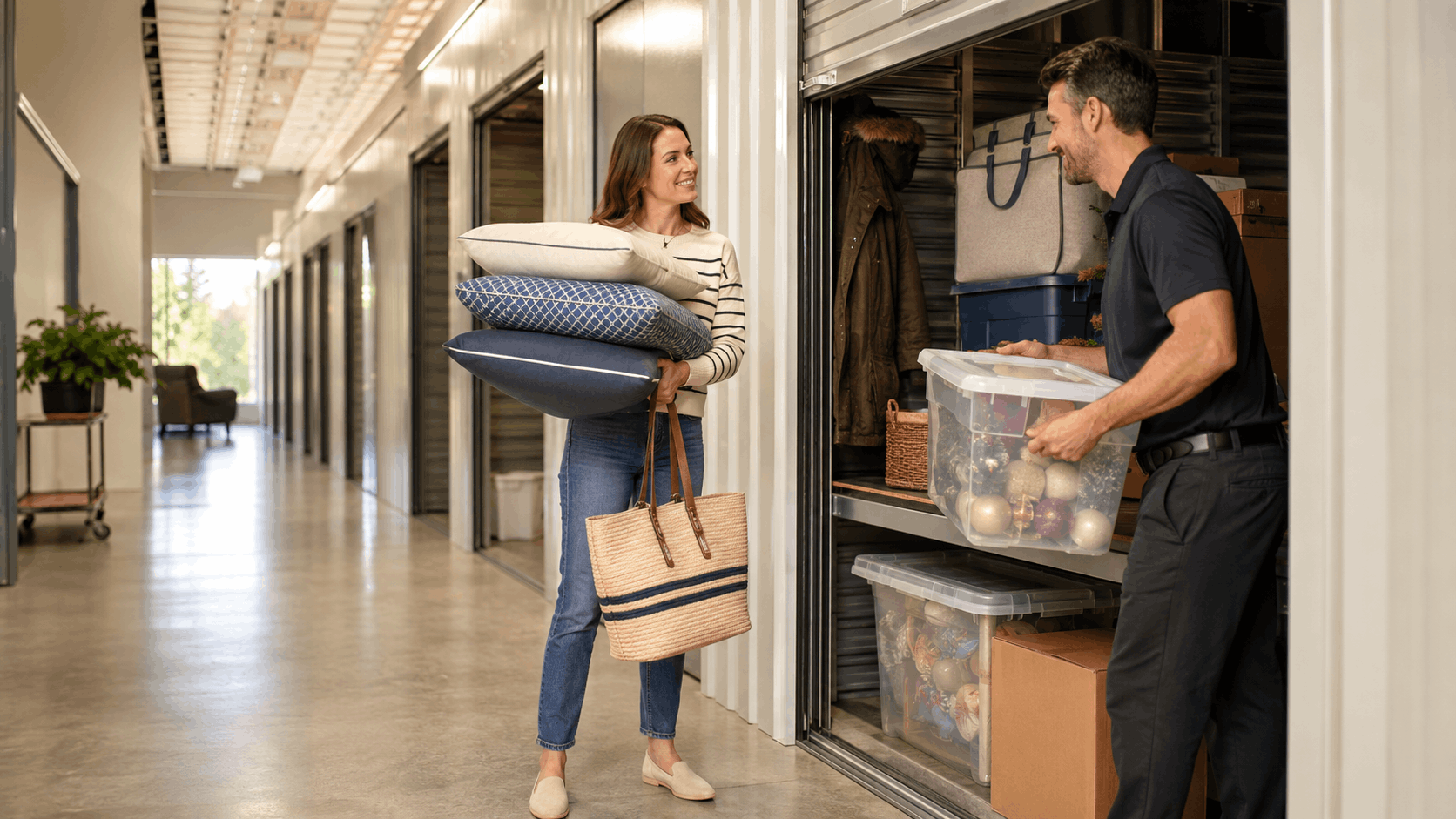
Los Angeles homes rarely have the storage space that matches how much stuff people own. Closets overflow, garages fill up with bins, and spare rooms turn into dumping grounds. Seasonal storage fixes this by giving off-season items a home outside the house.
The idea behind vault rotation is simple. You keep what you use now within reach, and you move the rest into a vaulted storage space until the calendar flips. For anyone dealing with tight square footage, Los Angeles storage that rotates with the seasons keeps a home breathing instead of bursting.
The Small-Closet Reality in Older LA Neighborhoods
Older neighborhoods like Silver Lake, Highland Park, and Echo Park are full of charm and short on closets. Many of these homes were built in the 1920s and 1930s, back when a single narrow reach-in closet per bedroom was the norm. Silver Lake homes with steep hillside lots often have garages that double as workshops, laundry rooms, and storage all at once.
That means small closets fill up fast. A family of four in a two-bedroom Craftsman near York Boulevard runs out of storage space by the time the school-year gear, the holiday bins, and the sports equipment all land in the same spot. There is simply nowhere left to put the seasonal overflow.
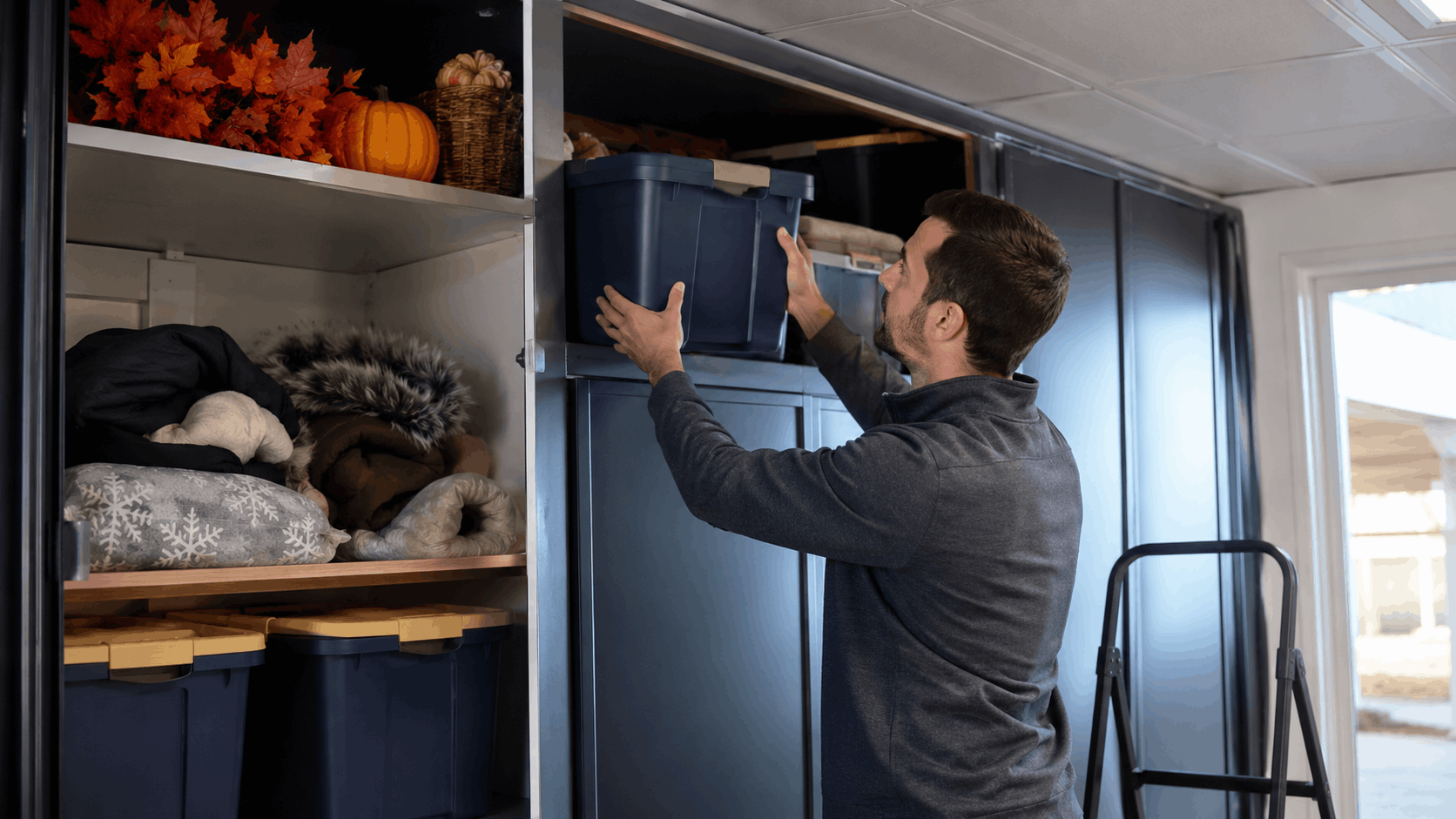
Off-site rotation gives these residents room to move again. Instead of cramming coats above the water heater, they store them in a vault during the warm months and bring them back when the coastal chill returns. The house stays livable, and the garage goes back to holding a car.
We see this constantly with clients on the Eastside. The homes are beautiful, but the storage was designed for a different era. Moving the off-season load out is the fastest way to reclaim the space a modern family needs.
Mild Winters, Big Summers, and What That Means for Your Gear
The LA climate does not swing to extremes, but it does shift enough to change what a household actually uses. Summers pull out surfboards, beach umbrellas, coolers, and shade tents almost every weekend. Those same items sit dead weight in a corner from November through March.
Then the coastal weather flips. Cool mornings in Santa Monica and the marine layer drifting over the Westside bring out heavier bedding, robes, and jackets that felt useless in August. Seasonal gear in Los Angeles tends to split cleanly between warm-weather toys and cool-weather comfort items.
Because the shift is predictable, rotation matches the local calendar well. You are not guessing at a snowstorm - you are working with a rhythm you already know. Beach gear comes home in late spring, and the warm layers go into the vault until fall.
Households that plan around this rhythm avoid the last-minute scramble. When the first heat wave hits and everyone wants the pool floats, the gear is already home and ready instead of buried under a pile of comforters.
Keeping Everyday Space Usable Year-Round
The real payoff of decluttering with seasonal rotation is reclaiming rooms you already pay for. A garage packed with off-season bins is a garage you cannot park in. A spare bedroom stacked with holiday decor is a room no guest can use.
Moving off-season items out changes that math. In the warmer months, people store heavy quilts, space heaters, and holiday bins offsite. In the cooler months, the surfboards, beach chairs, and camping stoves go into the vault instead.
The result is more everyday living space without moving to a bigger home. Families in tight LA neighborhoods often find they gain the equivalent of a whole room just by rotating what they keep at home.
That reclaimed garage space matters in a city where a parked car on the street can mean street-sweeping tickets and a long walk home. Getting the car back inside is often the single biggest reason our clients start rotating in the first place.
Get Your Free Quote
Tell us about your move and we'll get back to you fast.
Which Items Are Worth Rotating In and Out
Not everything belongs in a vault. The trick is knowing which seasonal items sit unused for months and which ones you reach for weekly. Sorting your belongings into storage categories makes the decision about what to store far easier.
Here is a quick reference for common household items and when they tend to rotate:
| Item Category | Peak Use Season | Best Stored During |
|---|---|---|
| Holiday decor | Nov - Dec | Jan - Oct |
| Beach and surf gear | May - Sep | Oct - Apr |
| Ski and mountain gear | Dec - Mar | Apr - Nov |
| Heavy bedding and coats | Nov - Mar | Apr - Oct |
| Patio furniture | Apr - Oct | Nov - Mar (optional) |
Holiday Decor and Party Supplies
Holiday decor is the classic candidate for seasonal storage. String lights, artificial trees, wreaths, and inflatable yard pieces get used for a few weeks and then sit idle for the rest of the year. Most families use these items 10 or 11 months apart.
Party supplies fall into the same bucket. Folding tables, extra chairs, serving trays, and themed decorations only come out for birthdays, graduations, and holidays. Keeping them at home means dedicating shelf space to things you touch a handful of times a year.
Storing these bulky items in a vault frees up the closet and garage shelves that they hog. When December rolls around, you pull the bins back, decorate, and return them right after New Year's. The house goes back to normal without a mountain of boxes in the hallway.
We recommend keeping all holiday bins together and clearly numbered so the whole set moves as one unit. That way a single scheduled swap handles the entire season instead of a dozen separate hunts.
Recreation Gear: Beach, Camping, and Winter Trips
Recreation gear rotates hard with the LA seasons. Surfboards, beach umbrellas, boogie boards, and coolers dominate the summer and then take up huge amounts of space through winter. A single longboard eats a whole wall of garage room.
Camping gear follows the warm months too. Tents, sleeping bags, camp stoves, and coolers get packed for trips to Malibu Creek or the Angeles National Forest, then sit unused once the weather cools. Storing them offsite keeps the garage clear during the off-season.
Ski equipment runs on the opposite calendar. Families who drive up to Big Bear or Mountain High for winter trips need their skis, boards, and heavy gear from December through March. The rest of the year, that gear belongs in a vault, not underfoot.
Rotating recreation gear means the stuff you need is always the stuff that is home. Surfboards live at the house all summer while the ski gear rests in storage, then they trade places when the season turns.
Wardrobes and Bedding
Seasonal clothing is one of the easiest wins for rotation. Heavy coats, wool sweaters, and thick jackets only earn their closet space during the cooler months. In summer they are dead weight taking up prime hanging room.
Bedding storage works the same way. Thick down comforters, flannel sheets, and extra blankets get swapped out for lighter layers once the warm nights arrive. Vacuum bags shrink these items down before they head into the vault.
The trick with wardrobe rotation is keeping a few flexible pieces accessible. LA mornings can be cool even in summer, so one light jacket and a single throw blanket should stay home year-round for the marine-layer days.
Everything else can move on a schedule. When the temperature drops in November, the winter wardrobe comes back and the summer clothes go out. The closet never overflows because only one season lives there at a time.
Patio Furniture and Outdoor Equipment
Patio furniture is a judgment call in LA since outdoor season runs long. Still, cushions, outdoor heaters, and umbrellas benefit from storage during the rainier winter stretch to protect them from moisture and sun damage. Fabric cushions especially fade and mildew if left out through winter rains.
Outdoor equipment shifts with the calendar too. Gardening tools, extra hoses, and planting supplies see heavy use in spring and summer, then slow down as the days shorten. Storing the overflow keeps the shed and garage from turning into a tangle.
Backyard use in LA changes more subtly than in colder cities, but it still changes. Fewer people fire up the grill or lounge by the pool in January, so the accessories can rest in a vault until the weather warms.
Protecting these items during their downtime extends their life. Cushions that spend winter in a dry vault last years longer than ones left to soak on an uncovered patio through the rainy season.
Need Help in Los Angeles?
Popeye Moving & Storage serves Los Angeles and all of Los Angeles County.
Packing and Labeling for Easy Swaps
Good packing tips make or break a rotation routine. If items are dumped in random boxes with no labels, every swap turns into a treasure hunt. A little storage organization up front saves hours down the road.
The goal is a labeling system so clear that anyone could walk into the vault and find the right bin in under a minute. That saves time on every future visit and keeps the whole rotation habit sustainable.
Clear Bins Versus Cardboard Boxes
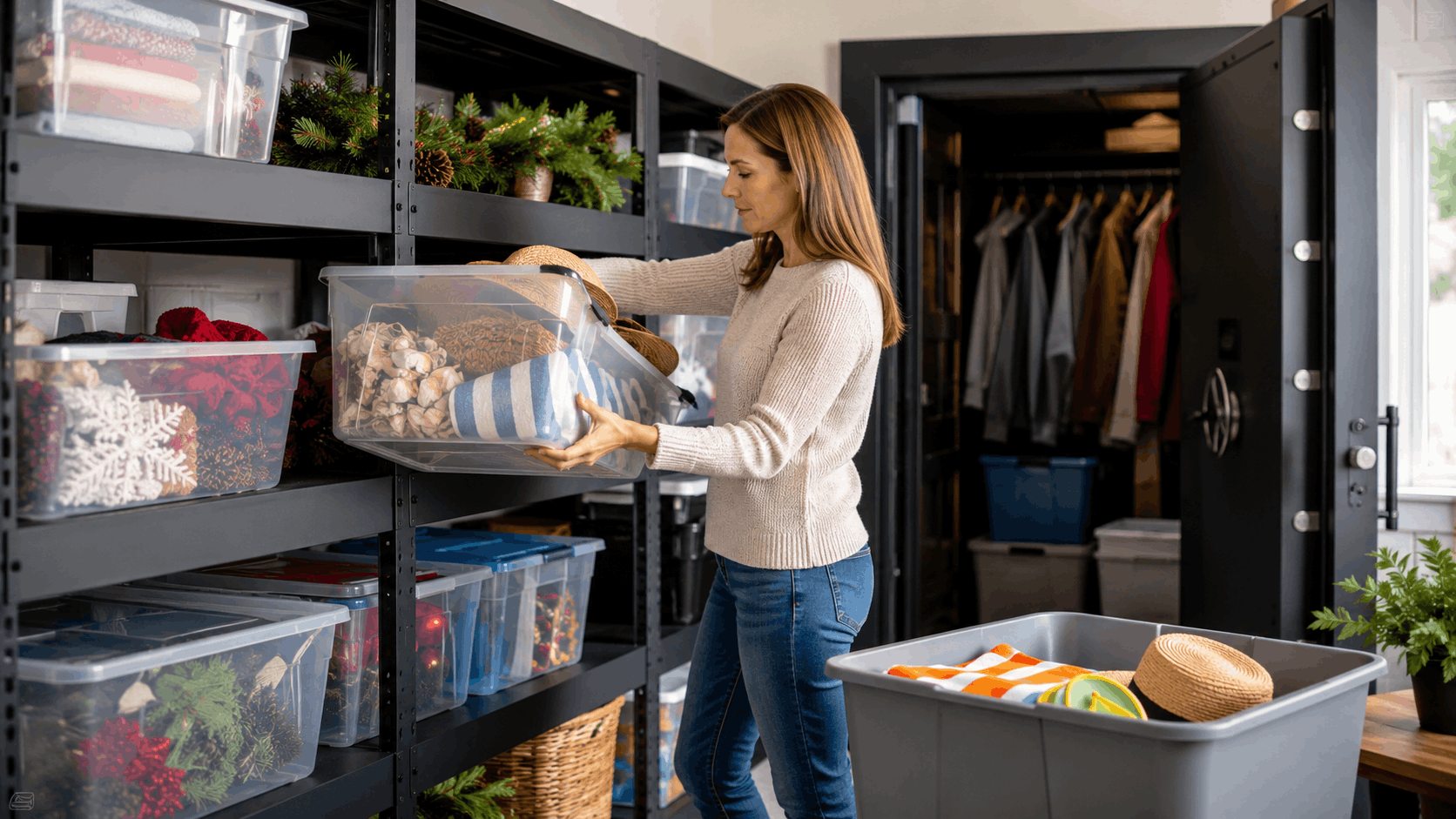
Clear bins are the gold standard for seasonal rotation. You can see the contents at a glance without opening a lid, which makes finding a specific item quick. They also stack cleanly and resist moisture better than cardboard.
Standard storage boxes still have their place. They cost less, work well for books and non-fragile items, and are easier to carry in bulk. For long-term items you rarely open, a well-labeled box is perfectly fine.
The choice often comes down to how often you reach into the bin. Frequently accessed items like holiday decor or beach gear do best in clear bins, while archival items can stay in cardboard. Investing in a set of matching packing supplies also makes stacking safer and neater.
Whatever you choose, keep sizes consistent. Uniform bins stack square and stable inside a vault, which lets you fit more and reduces the chance of a crushed box at the bottom of the pile.
A Simple Labeling and Inventory Method
A numbering or color-coding system takes the guesswork out of swaps. Assign each bin a number, then keep an inventory list that says what is inside each one. Color-coded lids - red for holiday, blue for beach, green for camping - make sorting even faster.
The inventory list does not need to be fancy. A note in your phone or a simple spreadsheet works. List the bin number, a short description of the contents, and the season it belongs to.
Update the list every time you swap. When bin 7 comes home and bin 12 goes into storage, mark it. That five-minute habit prevents the classic problem of buying a second string of lights because no one remembered where the first set went.
Label bins on multiple sides, not just the top. When bins are stacked, you want to read the label from the front of the vault without unstacking the whole tower to check what is buried underneath.
Protecting Fabrics, Wood, and Electronics
LA's dry heat is gentle on most stored goods, but the occasional damp coastal air near the beach can still cause trouble. Fabric protection starts with washing and fully drying anything before it goes in a bin. Sealed bins or vacuum bags keep dust and moisture away from clothing and bedding.
Wood furniture needs a little care too. Wrap table legs and edges in moving blankets or padding to prevent scratches, and avoid sealing bare wood in airtight plastic where trapped moisture can cause warping.
Electronics storage calls for extra attention. Remove batteries to prevent leaks, wrap items in anti-static material where possible, and box them with the original padding if you kept it. Tossing a few silica gel packets into bins with sensitive items helps with moisture control.
Our packing and crating team handles this prep for clients who would rather not fuss with it. Proper wrapping now means your gear comes out of the vault in the same shape it went in.
How Vault Storage Differs From a Self-Storage Unit
Many people picture a drive-up garage when they hear "storage." A storage vault works differently, and for seasonal rotation it often fits better. Understanding the self-storage comparison helps families pick the right option.
Here is how a wood vault stacks up against a traditional walk-in unit:
| Feature | Storage Vault | Self-Storage Unit |
|---|---|---|
| Location | Inside a secure warehouse | Standalone facility |
| Access | By appointment | Drive-up, often 24/7 |
| Climate | More stable indoor conditions | Varies by unit |
| Cost | Often lower for stored volume | Priced by unit size |
| Best for | Long-term and seasonal items | Frequent daily access |
What a Storage Vault Actually Is
A storage vault is a large wooden container, usually around 5 feet by 7 feet by 7 feet, roughly 245 cubic feet of space. Your belongings are loaded inside, the vault is closed, and it is stored inside a secure warehouse alongside other vaults.
First-time users are sometimes surprised that they do not walk in and out of it like a garage. Instead, the wooden vault is a sealed container that keeps everything together and protected. One vault holds the contents of a small apartment or a good chunk of a family's seasonal overflow.
Because container storage sits indoors, the items inside stay cleaner and better protected from weather. There is no direct sun beating on a metal roll-up door and no rain pooling at the threshold.
Most families need one to three vaults depending on how much they rotate. Knowing the vault size up front helps you plan how to pack and how many bins will fit.
Access and Retrieval Basics
Item retrieval from a vault works on a scheduled basis. You let the warehouse know what you need and when, and the team pulls your vault or the specific items for pickup or delivery. This differs from drive-up self-storage where you show up whenever you want.
The trade-off is convenience for protection and price. You give up spontaneous midnight access in exchange for a more secure, weatherproof, and often cheaper storage setup. For seasonal gear you touch twice a year, that trade makes sense.
Warehouse access is usually arranged a day or two ahead. That short lead time is easy to plan around when you know your swap dates. Our storage solutions team coordinates these appointments so the right items are ready when you arrive or when we deliver.
For rotation specifically, this scheduled model actually helps. It nudges you to plan your swaps in advance rather than making a dozen impulsive trips throughout the year.
Cost and Space Trade-Offs
Storage cost is where vaults often win. Because vaults pack efficiently inside a warehouse, you typically pay for the volume you actually use rather than an empty walk-in unit with wasted air space. That space efficiency can lower the monthly bill.
Self-storage units bill by unit size, so a 10-by-10 unit costs the same whether it is full or half empty. If your seasonal load only fills part of it, you are paying for room you do not use.
General storage pricing for vaults in LA depends on how many vaults you need and how often you access them. Rather than quote exact numbers here, we recommend a quick call so we can match the setup to your household. Options like long-term storage can lower costs further for items you rarely touch.
The right choice depends on your access habits. If you need daily access, a self-storage unit may suit you. If you swap twice a year, a vault usually costs less and protects your gear better.
Building a Rotation Schedule That Works
A rotation schedule turns good intentions into a real habit. Most LA families do well with a twice-a-year or quarterly seasonal swap tied to the local calendar. The point is to make the routine predictable so clutter never has a chance to creep back.
Set your storage routine around the weather shifts you already feel. Two well-timed swaps handle most households, and reminders keep them from slipping.
Spring and Summer Swap Timing
The spring swap usually lands somewhere between March and May. As the days warm and the marine layer thins out, bring home the beach chairs, surfboards, umbrellas, and camping gear. At the same time, pack up the heavy coats, thick comforters, and ski equipment.
Timing this around late March works well because school spring breaks and the first warm weekends kick off outdoor season. You want the summer gear home before the first heat wave, not after everyone is already scrambling for it.
Watch the local rhythm for cues. When you notice neighbors pulling out patio sets and the beaches getting busy, it is time. That seasonal timing keeps you ahead of the crowd and ahead of the clutter.
Doing this swap in one coordinated trip saves effort. Load the winter gear out and the summer gear in on the same visit rather than making two separate runs weeks apart.
Fall and Holiday Swap Timing
The fall swap tends to happen between late September and November. Pull out the holiday decor, heavier bedding, and cool-weather clothing, and store away the summer beach and camping gear. Aligning this with the start of the school year and the run-up to the holidays keeps everything on schedule.
Many families time the decor pull to just before Thanksgiving so the house is ready for the holiday stretch. Storage timing around local events - neighborhood tree lightings, school breaks, holiday parties - gives natural anchor points.
The summer gear heads back to the vault during this same swap. Surfboards and pool floats will not see much use until spring, so they free up garage room right when you need it for holiday bins.
Grouping the fall swap into one visit keeps it painless. In and out on the same trip, and the house is set for the cooler months and the holidays at once.
Setting Reminders So You Don't Fall Behind
Calendar reminders are the glue that holds a rotation routine together. Set two recurring alerts - one in early spring and one in early fall - so the swaps never sneak up on you. A phone reminder two weeks out gives time to schedule with the warehouse.
Grouping trips saves the most time. Handle the entire swap in a single coordinated pickup and delivery rather than spreading errands across several weekends. One trip in, one trip out.
These simple storage habits keep clutter from returning. When the swap happens on a set schedule, off-season items never pile up in the garage long enough to become a problem.
Planning ahead also means better warehouse availability. Booking your swap dates early, especially around the busy holiday season, keeps everything running smoothly.
Need Help in Los Angeles?
Popeye Moving & Storage serves Los Angeles and all of Los Angeles County.
Getting Items To and From Storage in Los Angeles
Moving seasonal gear across Los Angeles is its own challenge. LA traffic, tight streets, and strict parking rules can turn a simple swap into a headache. A moving team that knows the city handles the logistics so you do not have to.
Storage transport is where local experience pays off. The right route and the right timing make seasonal delivery smooth instead of stressful.
Dealing With LA Traffic and Parking
Loading gear on the hillside streets of Los Feliz or Silver Lake takes planning. Narrow roads, steep grades, and few places to park a truck mean you cannot just pull up anywhere. Our crews scout access ahead of time so the loading goes fast and safe.
Busy corridors bring their own rules. Along Sunset Boulevard and similar main streets, parking restrictions and rush-hour tow zones can catch an unprepared driver off guard. Planning routes and timing deliveries outside peak traffic avoids tickets and delays.
LA traffic also eats time if you go it alone in a rented truck. A pro team schedules around the worst congestion and knows which side streets to use. That local knowledge shaves hours off a swap.
For hillside and hard-access homes across the Los Angeles area, this planning is the difference between a two-hour job and a half-day ordeal. We handle the parking and access puzzle so you do not have to.
Pickup and Drop-Off Options
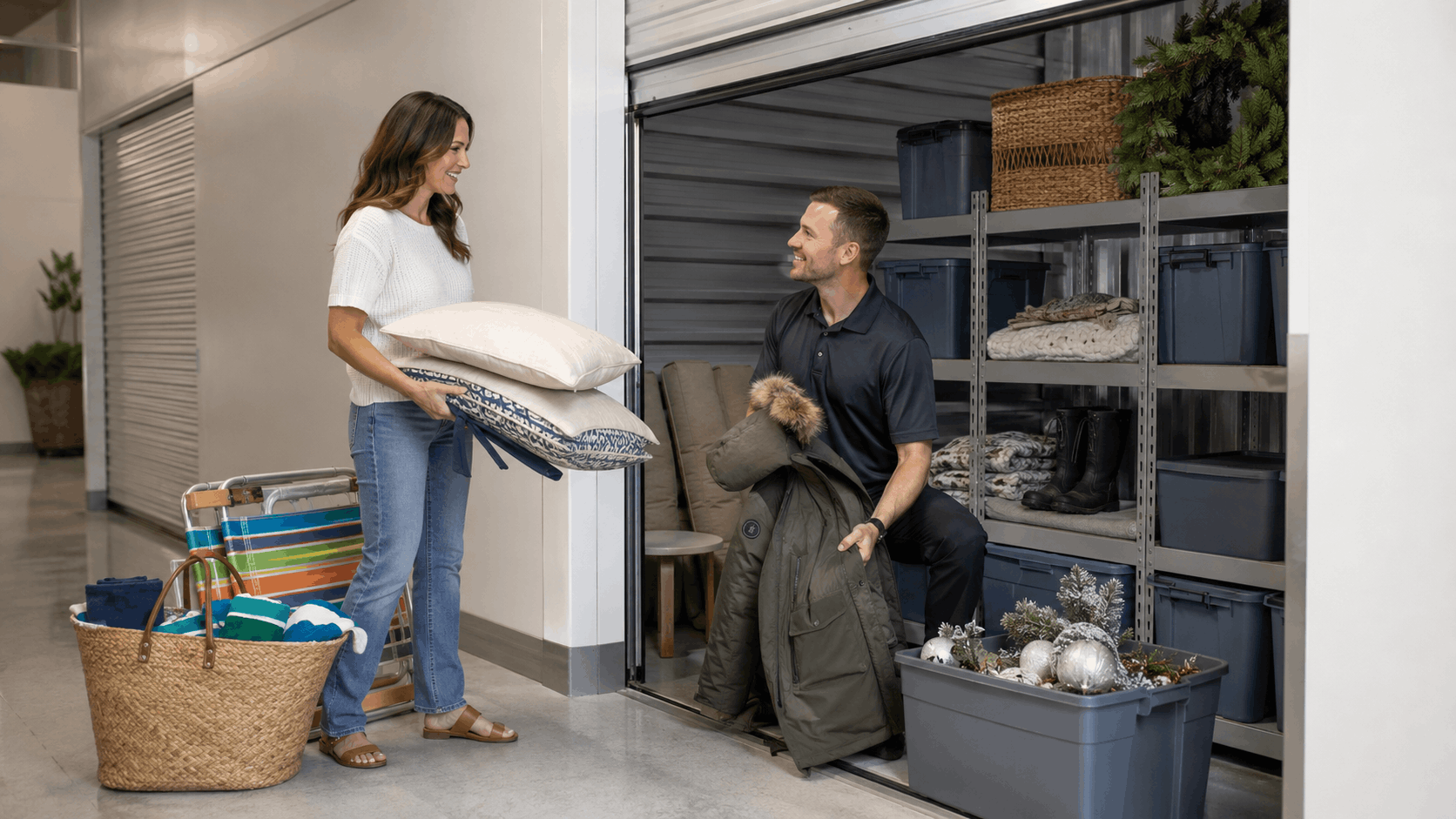
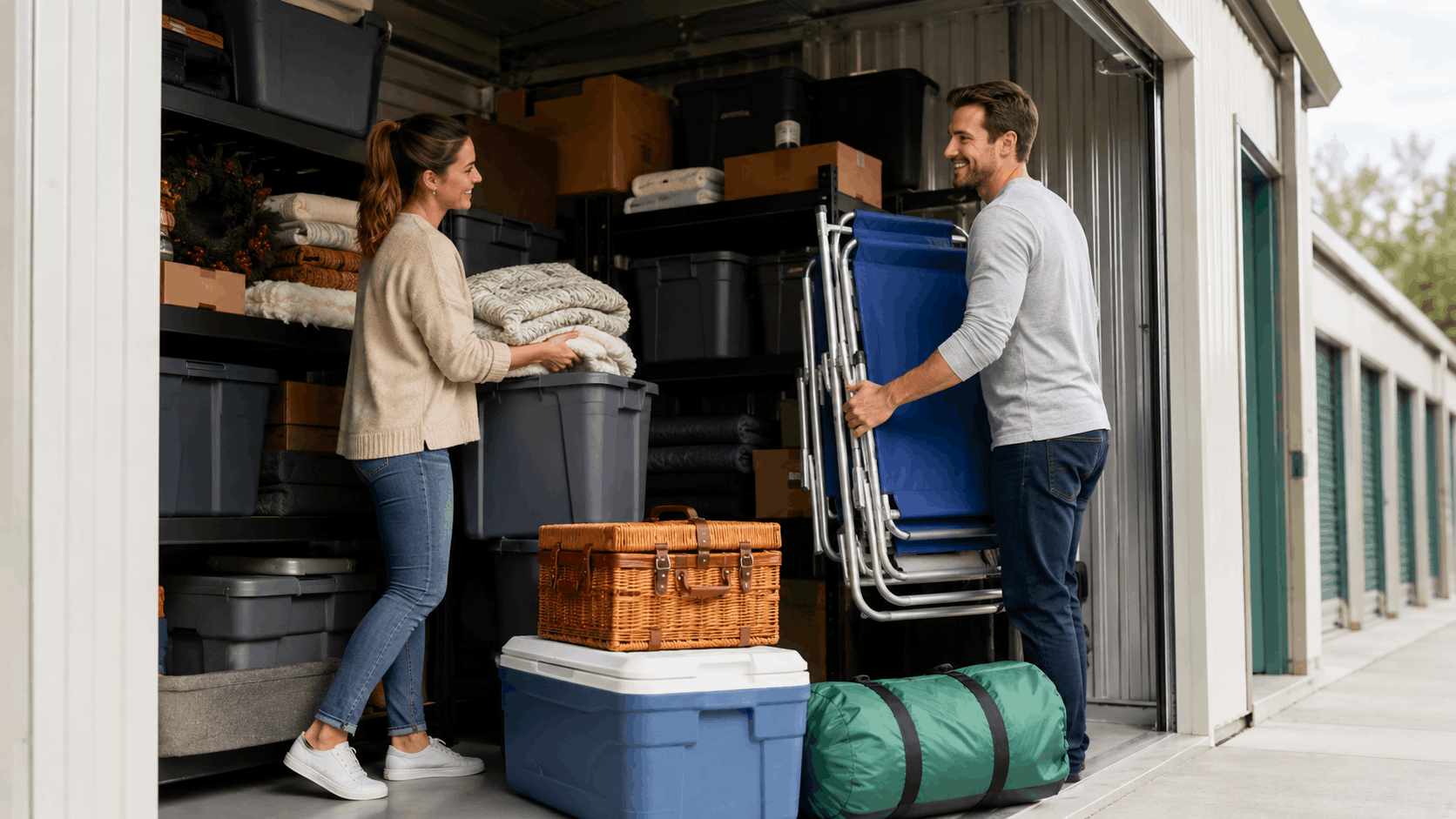
Door-to-door pickup and delivery is the easiest way to rotate seasonal items. The team comes to your home, loads the off-season gear, takes it to the vault, and brings back the items you need. No truck rental, no multiple trips.
This moving service removes the biggest pain points of a swap. You skip the fuel, the mileage fees, and the back-and-forth hauling that eats a weekend. Everything happens in one coordinated visit.
For busy households, pickup and delivery is the whole appeal. You point out what goes and what comes home, and the crew handles the loading, driving, and stacking. Our local residential moving team runs these swaps across the city.
Scheduling is flexible around your rotation dates. Book the spring and fall swaps in advance, and the same crew can handle both ends of the trip on a single day.
Handling Heavy or Awkward Items Safely
Bulky patio furniture, outdoor heaters, and fragile holiday decor are exactly the items people hurt themselves moving alone. Heavy items need proper lifting technique and the right equipment - dollies, straps, and moving blankets - to avoid injury and damage.
Awkward gear like long surfboards, patio umbrellas, and glass-topped tables takes two people and careful padding. A dropped table or a cracked board is an expensive mistake. Trained movers use safe lifting practices that protect both the gear and their backs.
Fragile decor needs its own handling. Ornaments, ceramic figures, and lighting displays crack easily if they shift in transit. Proper wrapping and secure loading keep them intact from garage to vault and back.
Our crews move furniture and heavy items daily, so the technique is second nature. For truly delicate or oversized pieces, our specialty moving team steps in with extra care.
Common Mistakes to Avoid When Rotating Storage
A few common storage mistakes cost people time and money every swap. Most are easy to sidestep once you know what to watch for. Avoiding these packing errors keeps your rotation smooth season after season.
These organization tips come straight from watching how swaps go wrong. A little foresight prevents most of the frustration.
Burying the Items You Use Most
The most frequent mistake is poor item placement inside the vault. If you pack the items you swap most often at the very back, you end up unloading the whole vault twice a year just to reach them. That defeats the purpose of easy rotation.
Smart vault layout puts the rotating bins near the front. Holiday decor, beach gear, and seasonal clothing should sit where you can grab them without moving everything else. Long-term items you rarely touch go toward the back.
Think in terms of front access. Anything on your twice-a-year swap list belongs within easy reach. This single habit saves the most time of any tip in this guide.
When our team loads a vault for rotation clients, we ask which items come and go each season. Then we position them up front so the next swap is quick and simple.
Skipping the Inventory Update
Forgetting to update the inventory is a quiet money-waster. When the list falls out of date, people forget what they own and buy duplicates - a second set of string lights, another beach umbrella, more folding chairs. Those repeat purchases add up.
Record keeping only works if it stays current. After every swap, take five minutes to note what moved where. Mark which bins are home and which are in the vault so nothing gets lost.
Lost items are almost always inventory failures, not storage failures. The gear is safe in the vault - the owner just forgot it was there. A current list solves that completely.
Keep the inventory somewhere you will actually check, like a pinned note on your phone. The easier it is to update, the more likely you are to keep it accurate.
Storing Damp or Dirty Gear
Packing away wet or dirty gear is a recipe for trouble. Damp beach towels, unwashed camping equipment, or salty wetsuits attract mildew and pests once they sit sealed in a bin for months. Mildew prevention starts before the item ever goes in storage.
Clean gear stores safely. Rinse and fully dry beach and surf equipment, wash clothing and bedding, and wipe down camping gear before it goes into a bin. A few minutes of prep prevents a musty, ruined bin.
Pest control matters too. Food crumbs in a cooler or dirty picnic gear can draw insects and rodents. Empty, clean, and dry everything with food contact before it heads to the vault.
The rule is simple: only clean, dry items go into storage. That habit protects everything in the vault and keeps your gear ready to use the moment it comes home.
How Popeye Moving & Storage Co. Supports Seasonal Rotation
Popeye Moving Storage built its services around exactly this kind of seasonal swap. From vault storage LA families rely on to door-to-door transport, the goal is to make rotation effortless. Here is how the seasonal service comes together.
The table below shows how our support maps to each part of a swap:
| Need | How We Help | |
|---|---|---|
| Storage space | Secure indoor vaults sized to your load | |
| Transport | Door-to-door pickup and delivery | |
| Scheduling | Booked swap dates twice a year or quarterly | |
| Protection | Professional wrapping and careful handling |
Local Knowledge Across LA Neighborhoods
Our team knows the routes and access quirks across the city. In Culver City, we know which streets near Sunkist Park allow easy truck access and which do not. In Mid-Wilshire, we plan around the dense parking and one-way streets that trip up outside movers.
On the Eastside, hillside homes in Silver Lake and Los Feliz need careful route planning that only local movers get right. We have driven these streets hundreds of times, so we know where a truck fits and where it does not.
That local experience speeds up every swap. Instead of circling for parking or scouting a blind hillside driveway on the spot, we arrive with a plan. Clients in Culver City and across the Westside see the difference in how fast the job goes.
Knowing the neighborhoods also means fewer surprises. We flag access issues before the swap day so nothing derails the schedule.
Flexible Storage and Retrieval Help
Scheduling swaps is built into how we work. Book your spring and fall rotation dates, and we coordinate pulling the right items in and out on those days. No guessing which vault holds what - the team tracks it for you.
Retrieval help takes the heavy lifting off busy households. You tell us what you need home for the season, and we bring it. The items going into storage get loaded and stored in the same visit.
Flexible storage means the plan bends to your life, not the other way around. Whether you rotate twice a year or quarterly, the schedule fits your household's rhythm. Our vaulted storage service is set up for exactly this back-and-forth.
For families juggling work, school, and everything else, that convenience is the whole point. The swap happens on a set date without eating your weekend.
Careful Handling and Packing Support
Careful handling protects your seasonal items through every trip. Our crews wrap furniture in moving blankets, pad fragile decor, and load bins so nothing shifts in transit. The gear that leaves your home comes back in the same shape.
Packing support is available for anyone who would rather not do the prep. We wrap delicate holiday pieces, bag clothing and bedding, and protect wood and electronics against dust and moisture. Our full-service packing team handles the fussy items.
Awkward gear like surfboards, patio sets, and glass-top tables gets extra attention. Proper padding and secure loading keep these tricky pieces safe from garage to vault and back again.
Item protection is the standard on every swap. The goal is simple - your seasonal belongings come out of storage ready to use, undamaged and clean.
Need Help in Los Angeles?
Popeye Moving & Storage serves Los Angeles and all of Los Angeles County.
Final Thoughts
Rotating seasonal items in and out of a vault is one of the simplest ways to keep an LA home open and livable year-round. Store the off-season gear, keep what you use within reach, and swap on a schedule tied to the local calendar. The garage stays clear, the closets breathe, and the car gets its spot back.
The system works best with clear bins, current inventory, clean gear, and a moving team that handles the transport and heavy lifting. Do those few things well and the twice-a-year swap becomes a quick, painless routine instead of a weekend of hauling.
If your closets and garage are filling up faster than the seasons change, we can help you set up a rotation that sticks. Reach out to Popeye Moving & Storage Co. for a consultation on vault storage and seasonal swaps across the Los Angeles area. Contact our team to talk through your setup and get a quote.
Frequently Asked Questions
What does swapping storage contents mean?
Swapping storage contents means moving your off-season belongings into a storage vault and bringing the items you need back home as the seasons change. In the summer, winter gear and heavy bedding go into the vault while beach and camping gear comes home. In the fall, that seasonal rotation reverses. It keeps only the items you actually use at home, freeing up closets and garage space year-round.
How often should I rotate items in and out of my vault?
Most Los Angeles households do well with a twice-a-year rotation - once in spring and once in fall - tied to the warm and cool periods. Families with more active gear, like frequent campers or skiers, sometimes shift to a quarterly seasonal schedule. Your usage patterns decide the frequency. If items sit unused for months, they belong in the vault until their season returns.
Which items are best kept in a storage vault?
The best storage items are seasonal belongings you use for only part of the year. Holiday decor and party supplies top the list since they sit idle 10 or 11 months. Recreation gear like surfboards, camping equipment, and ski gear rotate well, as do heavy coats, extra bedding, and patio furniture. Anything bulky that you touch only a few times a year is a strong candidate.
How is a storage vault different from a self-storage unit?
A storage vault is a large wooden container, roughly 245 cubic feet, stored inside a secure warehouse. A self-storage unit is a walk-in or drive-up space at a facility you access yourself. The vault vs unit difference comes down to access and cost. Vaults are accessed by appointment and often cost less for the volume stored, while units offer spontaneous drive-up access at a higher price for empty space.
Can Popeye Moving & Storage Co. pick up and deliver seasonal items?
Yes. We offer door-to-door pickup and delivery for seasonal swaps across Los Angeles. Our team comes to your home, loads the off-season gear, transports it to the vault, and brings back the items you need for the current season. This moving service removes the need to rent a truck or make multiple trips, and everything happens in one coordinated visit on your scheduled swap date.
How do I keep my items organized for easy swaps?
Use clear bins so you can see contents at a glance, and label each bin on multiple sides. Keep a simple inventory list in a phone note or spreadsheet with bin numbers and contents, and update it after every swap. Color-code lids by category for faster sorting. Place the bins you rotate most often near the front of the vault so you can reach them without unloading everything.
Will my belongings stay safe from moisture and pests?
Proper packing protects your items in LA's climate. Clean and fully dry all gear before storing, since damp or dirty items attract mildew and pests. Use sealed bins, vacuum bags for fabrics, and silica gel packets for moisture control. Wrap wood and electronics to guard against dust. Our indoor vaults keep conditions more stable than an outdoor unit, adding another layer of moisture protection and pest prevention.
How much does vault storage cost in Los Angeles?
Vault storage cost in Los Angeles depends on a few factors: the number of vaults you need, how often you access them, and whether you add pickup and delivery. Vaults often cost less than self-storage for the volume stored because they pack efficiently in a warehouse. Rather than a flat rate, we recommend requesting a quote so we can match the pricing to your household's needs.
Do I need to be home when items are picked up or delivered?
In most cases, someone should be present to point out which items go into storage and which come home, and to grant access. We coordinate scheduling and access arrangements in advance for pickup and drop-off across LA neighborhoods. For hillside or gated properties, we plan parking and entry ahead of time. If you cannot be there, we can often arrange alternative access details when you book.
What areas of Los Angeles do you serve for storage swaps?
We serve seasonal storage swaps across the greater Los Angeles area, including Silver Lake, Los Feliz, Highland Park, and Echo Park on the Eastside, plus Culver City, Mid-Wilshire, and the Westside. We also cover surrounding cities like Santa Monica, Pasadena, and Burbank. If you are in the LA region and need vault storage or rotation help, reach out and we will confirm coverage for your neighborhood.
Frequently Asked Questions
- What does swapping storage contents mean?
- Swapping storage contents means moving your off-season belongings into a storage vault and bringing the items you need back home as the seasons change. In the summer, winter gear and heavy bedding go into the vault while beach and camping gear comes home. In the fall, that seasonal rotation reverses. It keeps only the items you actually use at home, freeing up closets and garage space year-round.
- How often should I rotate items in and out of my vault?
- Most Los Angeles households do well with a twice-a-year rotation - once in spring and once in fall - tied to the warm and cool periods. Families with more active gear, like frequent campers or skiers, sometimes shift to a quarterly seasonal schedule. Your usage patterns decide the frequency. If items sit unused for months, they belong in the vault until their season returns.
- Which items are best kept in a storage vault?
- The best storage items are seasonal belongings you use for only part of the year. Holiday decor and party supplies top the list since they sit idle 10 or 11 months. Recreation gear like surfboards, camping equipment, and ski gear rotate well, as do heavy coats, extra bedding, and patio furniture. Anything bulky that you touch only a few times a year is a strong candidate.
- How is a storage vault different from a self-storage unit?
- A storage vault is a large wooden container, roughly 245 cubic feet, stored inside a secure warehouse. A self-storage unit is a walk-in or drive-up space at a facility you access yourself. The vault vs unit difference comes down to access and cost. Vaults are accessed by appointment and often cost less for the volume stored, while units offer spontaneous drive-up access at a higher price for empty space.
- Can Popeye Moving & Storage Co. pick up and deliver seasonal items?
- Yes. We offer door-to-door pickup and delivery for seasonal swaps across Los Angeles. Our team comes to your home, loads the off-season gear, transports it to the vault, and brings back the items you need for the current season. This moving service removes the need to rent a truck or make multiple trips, and everything happens in one coordinated visit on your scheduled swap date.
- How do I keep my items organized for easy swaps?
- Use clear bins so you can see contents at a glance, and label each bin on multiple sides. Keep a simple inventory list in a phone note or spreadsheet with bin numbers and contents, and update it after every swap. Color-code lids by category for faster sorting. Place the bins you rotate most often near the front of the vault so you can reach them without unloading everything.
- Will my belongings stay safe from moisture and pests?
- Proper packing protects your items in LA's climate. Clean and fully dry all gear before storing, since damp or dirty items attract mildew and pests. Use sealed bins, vacuum bags for fabrics, and silica gel packets for moisture control. Wrap wood and electronics to guard against dust. Our indoor vaults keep conditions more stable than an outdoor unit, adding another layer of moisture protection and pest prevention.
- How much does vault storage cost in Los Angeles?
- Vault storage cost in Los Angeles depends on a few factors: the number of vaults you need, how often you access them, and whether you add pickup and delivery. Vaults often cost less than self-storage for the volume stored because they pack efficiently in a warehouse. Rather than a flat rate, we recommend requesting a quote so we can match the pricing to your household's needs.
- Do I need to be home when items are picked up or delivered?
- In most cases, someone should be present to point out which items go into storage and which come home, and to grant access. We coordinate scheduling and access arrangements in advance for pickup and drop-off across LA neighborhoods. For hillside or gated properties, we plan parking and entry ahead of time. If you cannot be there, we can often arrange alternative access details when you book.
- What areas of Los Angeles do you serve for storage swaps?
- We serve seasonal storage swaps across the greater Los Angeles area, including Silver Lake, Los Feliz, Highland Park, and Echo Park on the Eastside, plus Culver City, Mid-Wilshire, and the Westside. We also cover surrounding cities like Santa Monica , Pasadena, and Burbank. If you are in the LA region and need vault storage or rotation help, reach out and we will confirm coverage for your neighborhood.
P
Popeye Moving & Storage Co. Team Team
Licensed moving and storage professionals serving Los Angeles and Los Angeles County.
Licensed in California · License #PUC: CAL T 189749 | DOT: 1472924 | MC: 498816C
Why trust Popeye Moving & Storage?
Founded in 1994, Popeye Moving & Storage is a licensed and insured moving and storage service serving Los Angeles and Los Angeles County. All content is reviewed by our licensed technicians.

Need Help in Los Angeles?
Popeye Moving & Storage serves Los Angeles and all of Los Angeles County.
Related Articles
Seasonal
Storage Near LMU and UCLA - Student Summer Storage With Pickup From the Curb
Curbside summer storage near LMU and UCLA lets students skip shipping fees and truck rentals. Learn how pickup, storage, pricing, and fall delivery work.
Tips & Advice
Storage for Playa Vista Apartment Dwellers: Seasonal Gear, Bikes, and the Second-Bedroom Problem
A local guide for Playa Vista renters on storing seasonal gear, bikes, and clearing out the second bedroom with smart off-site storage options.
Cost Guides
What Vaulted Storage Billing Includes - Wrapping, Inventory, and the Line Items Self-Storage Never Shows
A clear breakdown of what vaulted storage billing includes - wrapping, inventory, handling, and coverage - and why self-storage quotes never show these line items upfront.