What Vaulted Storage Costs in Los Angeles - and Why It Beats a Self-Storage Unit for Furniture
Key Takeaways
- Vaulted storage seals your furniture in wooden crates (about 5x7x7 feet, one room each) inside a monitored warehouse instead of an open metal unit.
- In Los Angeles, vaults typically cost $75 to $150 per month each, plus a one-time handling fee of $100 to $300 per vault.
- A sealed vault blocks dust and pests, gets loaded only once to cut scratches, and stays stacked stable instead of shifting like loose piles.
- Self-storage hides real costs: truck rental, your own labor, required insurance, intro-rate hikes, and paying for empty space you never fill.
- Vaults fit remodels, staging, long-distance and overseas moves, downsizing, and any long-term storage where you won't need weekly access.
- Popeye Moving & Storage handles in-home wrapping, tracked warehouse storage, and redelivery anywhere in LA so you never rent a truck.
- Save by paring down before you store, asking for long-term discounts, bundling moving with storage, and booking off-peak instead of summer or month-end.
In This Article
A family in Silver Lake called us last spring with a familiar story. They had crammed their sectional sofa, a walnut dining table, and a few boxes into a rented drive-up unit off Glendale Boulevard, then locked the door and moved on with their remodel. Four months later they opened that roller door and found deep scratches down one arm of the couch, a film of gray dust over everything, and a corner of the table leg gnawed by something small and hungry.
That is the moment a lot of Los Angeles residents realize a metal box on a concrete slab is not really built to protect furniture. It is built to hold stuff. There is a difference, and it shows up on the wood grain months later.
What Vaulted Storage Actually Is?
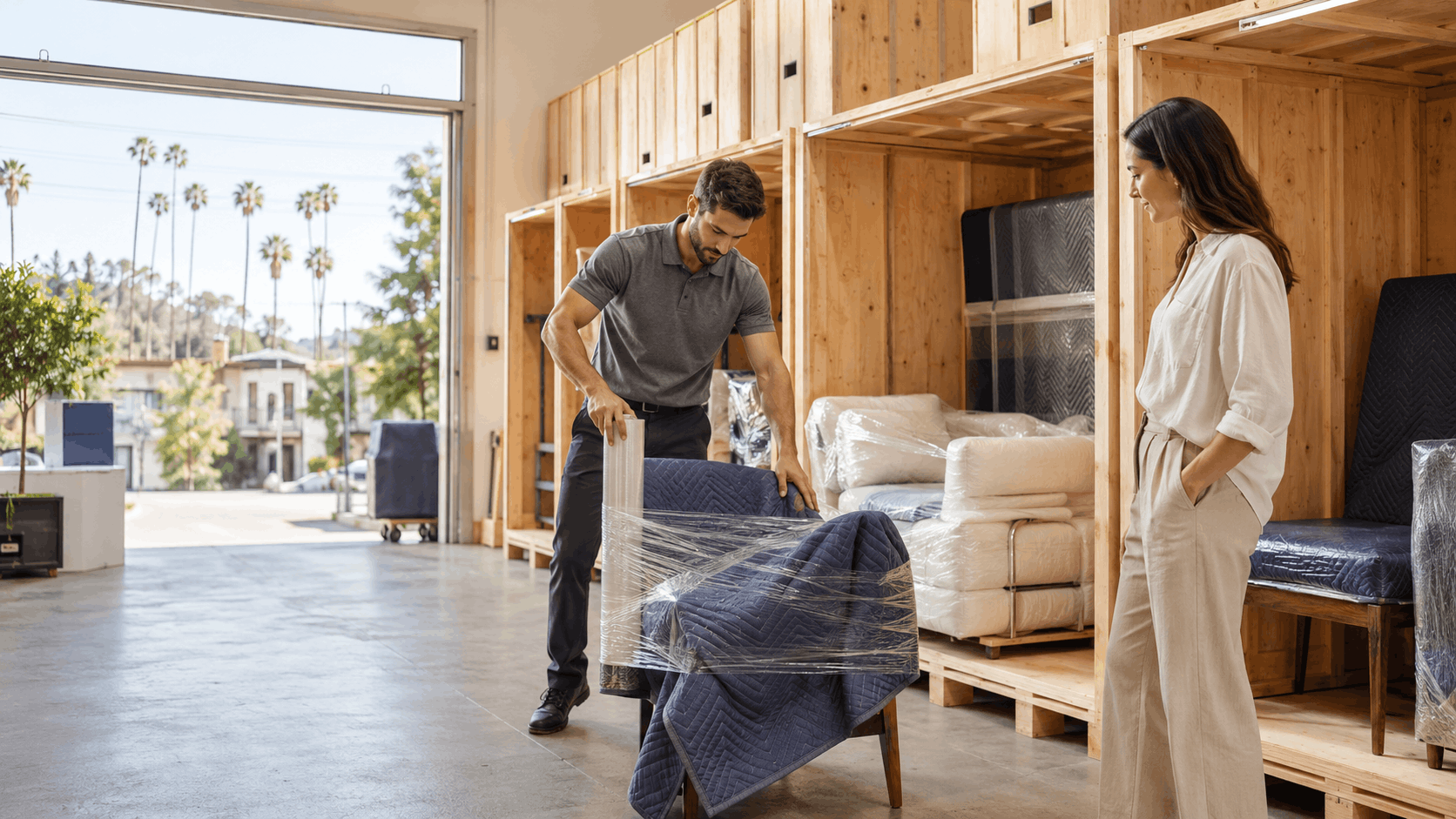
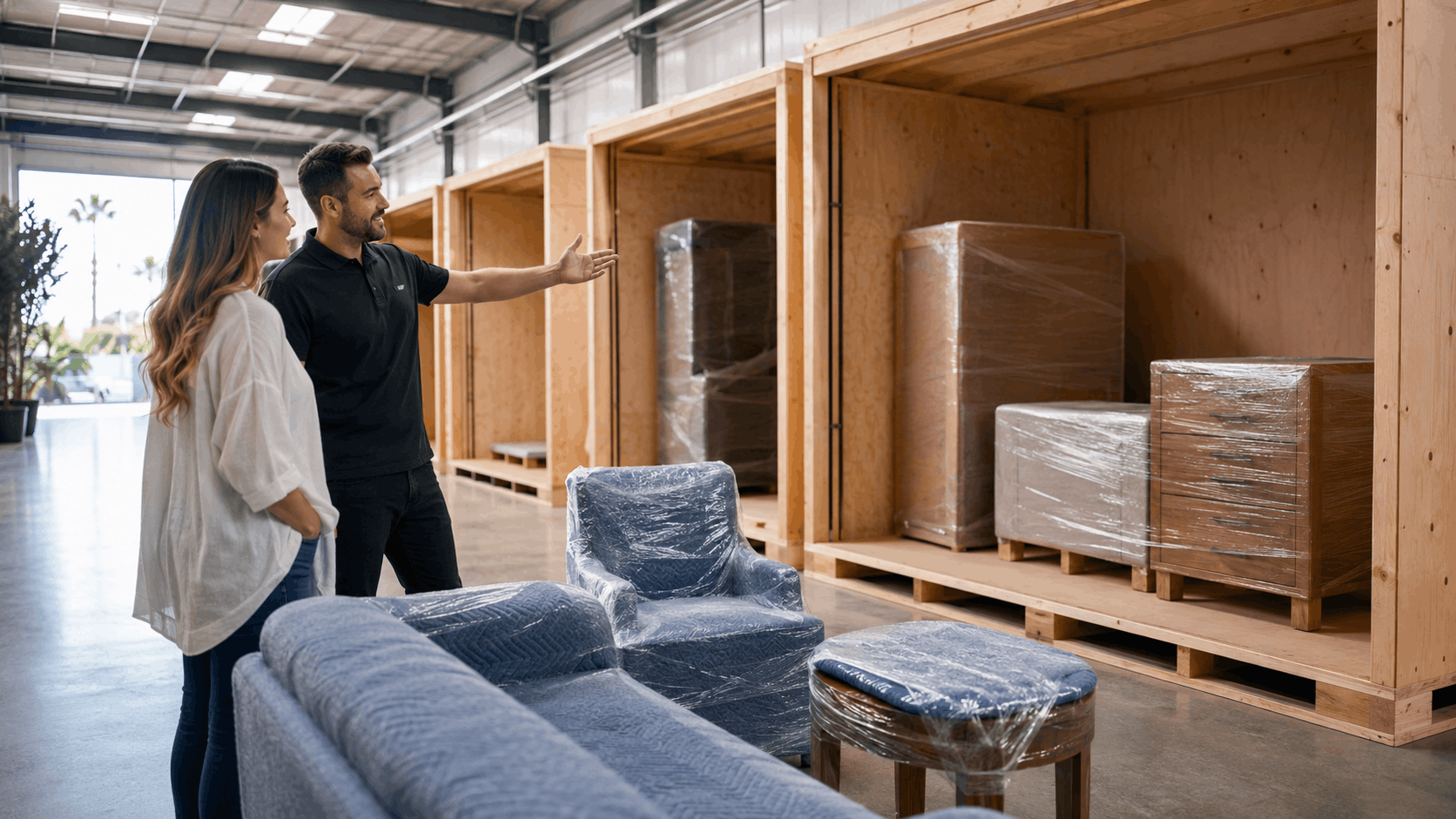
Vaulted storage is a system where your furniture goes into a sealed wooden crate, and that crate lives inside a secured warehouse. You never rent a room you walk into. Instead, our crew loads your belongings into a storage vault, seals it, and stacks it in a controlled building.
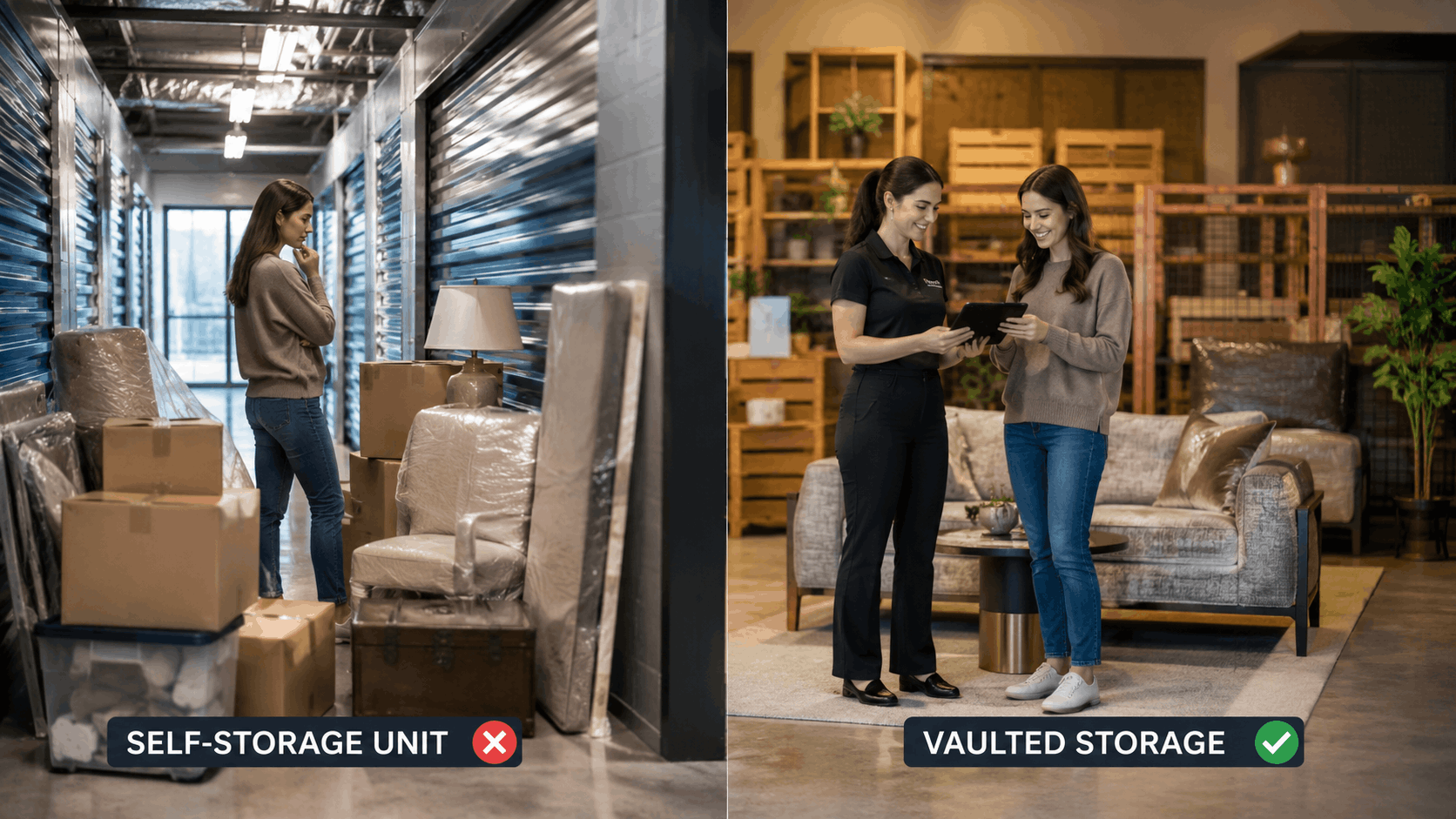
That warehouse storage model is very different from the garage-style rental most people picture. With a self-storage unit, you get an empty metal box and a key. With vaulted storage, trained movers handle the packing and the vault stays closed the whole time it sits with us.
| Feature | Vaulted Storage | Self-Storage Unit |
|---|---|---|
| Container | Sealed wooden crate | Open metal room |
| Setting | Monitored warehouse | Drive-up facility |
| Who loads it | Professional crew | You |
| Daily access | By appointment | Anytime |
The Wooden Vault System Explained
A standard wooden vault runs about 5 by 7 by 7 feet, which holds roughly one room of furniture. That storage crate size fits a bedroom set, a living room grouping, or a dining set with chairs and a few boxes stacked on top.
Each wooden vault is a self-contained box with solid walls and a lid. Once our crew fills it and closes it, it stays sealed until you ask for it back. Nobody opens it, moves through it, or borrows space next to your things.
Because each crate holds about one room, you only pay for the vaults you fill. A one-bedroom apartment near Echo Park might need two vaults, while a four-bedroom house in Pasadena could take six or seven. That per-room math keeps costs honest.
The vaults themselves are built to be stacked and moved with a forklift. That means your furniture is loaded once, sealed once, and left alone. Compare that to a rented room where you drag things in and out yourself, and the difference in handling becomes clear.
How It Differs From a Self-Storage Unit
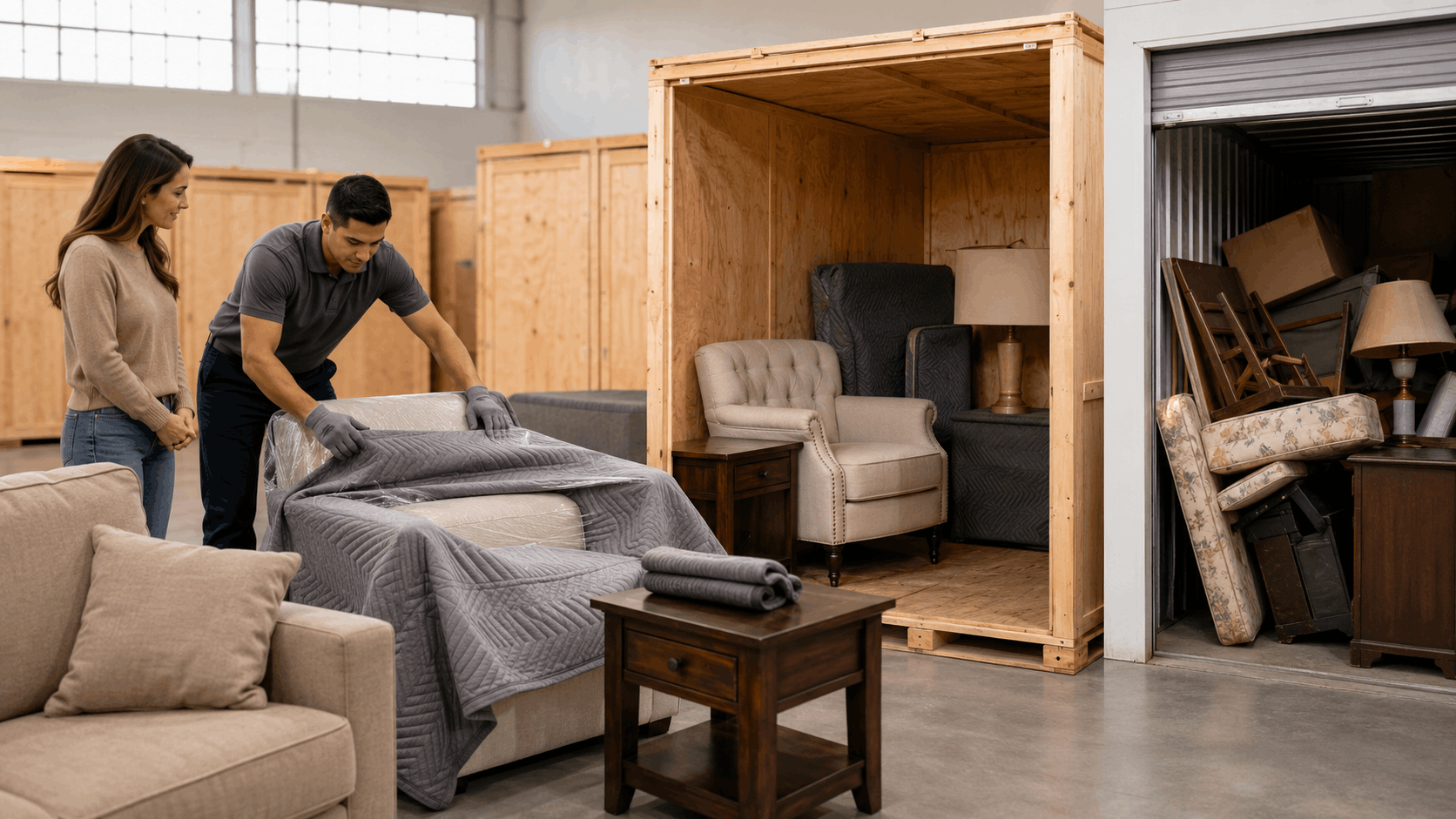
A self-storage unit is a drive-up metal room. You pull up, roll up the door, and haul your own furniture inside. It is convenient for daily access, but that convenience comes with tradeoffs.
Anyone with a code can be in the building next to your unit at 2 a.m. Older LA facilities off the 710 or in the East Valley often have thin walls, shared corridors, and doors that dent easily. Your furniture sits exposed to whatever drifts in.
A storage vault, by contrast, sits inside a warehouse that our team controls and monitors. There is no drive-up unit for a stranger to open beside yours. The only people near your vault are the crew who logged it in.
The other big difference is who does the work. With a drive-up unit, you supply the truck, the muscle, and the packing tape. With vaulted storage, we handle wrapping, loading, and stacking, so your back and your furniture both come out ahead.
How Furniture Gets Loaded and Sealed
The process starts at your home or at our warehouse, depending on what works for you. Our crew arrives with moving blankets, shrink wrap, and padding, and they prep each piece before it moves an inch. Furniture wrapping is done on site so nothing rides unprotected.
Sofas get blanket-wrapped and shrink-sealed. Table legs and glass get padded corners. Dressers get taped shut so drawers do not slide open during the loading process.
Once each item is protected, the crew builds the vault like a puzzle. Heavy items go on the bottom, lighter pieces on top, and everything gets snugged so nothing shifts in transit. When the vault is packed, the lid goes on and it gets sealed.
From there the vault travels to our warehouse and gets stacked in place. That single load is the last time your furniture gets touched until you want it back. Our packing and crating team treats every vault load like it will not be opened for a year, because sometimes it is not.
Get Your Free Quote
Tell us about your move. We'll be in touch soon.
What Vaulted Storage Costs in Los Angeles
Pricing is the first thing everyone asks about, so let us give real numbers instead of vague ranges. The vaulted storage cost in LA depends on how many vaults you fill, where we pick up, and how long you store.
Storage prices in Los Angeles have climbed over the last few years, but vaulted storage often lands cheaper than people expect once you factor in the labor and truck costs you skip.
| Cost Item | Typical LA Range |
|---|---|
| Monthly rate per vault | $75 - $150 |
| Handling fee (load in/out) | $100 - $300 per vault |
| Mid-storage item pull | $50 - $150 |
| Distance charge | Varies by neighborhood |
Monthly Price Ranges Per Vault
The monthly storage rate for a single vault in Los Angeles usually falls between $75 and $150. Where you land depends on the warehouse location and how many vaults you store at once.
Per vault pricing rewards volume. Store one vault and you pay the higher end. Store five or six and the per-unit rate often drops, since the handling and warehouse math spreads across more crates.
For a rough budget, a two-bedroom home usually needs three vaults. At $100 a vault, that is about $300 a month for professionally packed, sealed, warehoused furniture. That figure surprises people who assumed vaulted storage was a luxury service.
Longer commitments also shift the rate. Storing for six months or a year almost always earns a better monthly number than a single month, so it pays to ask about the term when you get a quote.
One-Time Handling and Access Fees
Beyond the monthly rate, there is a one-time handling fee to load your furniture into vaults, move them to the warehouse, and later retrieve them. In LA this typically runs $100 to $300 per vault depending on access and stairs.
This charge covers the crew, the truck, and the labor of building each vault properly. It is the part that a self-storage unit shifts onto you, since with a drive-up room you do all that work yourself.
There is also an access fee if you need to pull a single item mid-storage. Because vaults get stacked, retrieving one means bringing it down and opening it, so most companies charge $50 to $150 for that service.
If you know you will need frequent access, tell us up front. We can position your vault for easier retrieval or suggest whether a long-term storage plan or a different setup fits you better.
How LA Neighborhood and Distance Affect Cost
Where we pick up matters because Los Angeles is spread out and traffic eats hours. A distance charge reflects the drive time between your home, the warehouse, and back.
A pickup in Brentwood versus one in Boyle Heights can mean a very different route to a warehouse near the 710. More miles and more traffic add to the labor hours on the job.
Neighborhoods with tight parking or permit rules also affect the number. Older streets in Silver Lake, hillside homes in Los Feliz, and busy blocks in Santa Monica sometimes need extra time to load safely, and that time shows up in the estimate.
None of this should be a mystery. When we quote a job, we account for the LA neighborhoods involved and the warehouse distance so the price you see is the price you pay.
Comparing Vault Cost to a Self-Storage Unit
A 10x10 unit price in areas like Culver City or the San Fernando Valley often runs $200 to $350 a month before insurance and fees. That sounds close to vault pricing until you add everything else.
With a self-storage unit, you rent a truck, buy gas, spend a weekend hauling, and possibly hire day labor. Add $150 to $400 for a truck and helpers, and the cost comparison shifts.
Vaulted storage bundles the labor and transport into one predictable number. You skip the truck rental, the sore back, and the double trips across town on a Saturday.
Over six months, a self-storage renter who paid for a truck twice and watched their intro rate climb can easily spend more than a vault customer who locked in a per-vault rate on day one.
Need Help in Los Angeles?
Popeye Moving & Storage serves Los Angeles and all of Los Angeles County.
Why Vaulted Storage Protects Furniture Better
The real reason people choose vaulted storage is furniture protection. A sealed wooden crate simply guards your things better than an open metal room.
For solid wood, upholstery, and antiques, the difference between a sealed vault and an exposed unit shows up over months. Here is where furniture storage in a vault pulls ahead.
| Risk | Sealed Vault | Open Unit |
|---|---|---|
| Dust buildup | Blocked | Constant |
| Pests | Sealed out | Common |
| Repeated handling | Loaded once | Every visit |
| Shifting or toppling | Stacked stable | Loose piles |
Sealed Vaults Keep Out Dust and Pests
A closed wooden crate blocks the dust that settles on everything in a drive-up unit. Open a rented room after a few months and you find a gray layer on every surface, because outside air moves through those buildings freely.
Pest protection is the bigger win. Older LA warehouses and self-storage buildings deal with rodents and roaches, and a metal unit with a gap under the door is an open invitation. Mice chew upholstery for nesting material and leave droppings on wood.
A sealed vault gives those pests nothing to enter. The furniture sits inside a closed box, not exposed on an open floor. That barrier keeps your sofa from becoming a mouse condo.
Dust free storage matters most for pieces you plan to use again right away. Nobody wants to unwrap a headboard and immediately clean it before it goes in the bedroom. A vault keeps items ready to move back in.
Less Handling Means Fewer Scratches
Most furniture damage happens during handling, not storage. Every time you drag a dresser in and out of a rented unit, you risk a scratch, a ding, or a torn cushion.
With a vault, your furniture gets loaded once and stays put. Reduced handling means fewer chances for something to go wrong. The couch that got scratched in that Silver Lake unit was damaged because it kept getting shoved aside to reach other things.
In a self-storage room, people restack constantly. They move the table to grab the boxes behind it, then move it back. Each shuffle is another opportunity for a gouge.
Our crew wraps and pads everything before that single load, so even the one time it moves, it moves protected. That is the whole point of professional specialty moving and handling.
Climate Concerns for LA Furniture
Los Angeles heat is hard on furniture, especially in the San Fernando Valley. A metal unit in Van Nuys can hit well over 100 degrees inside on a summer afternoon.
That heat damage warps wood, cracks leather, and loosens glue joints on antiques. A dining table that spent a summer baking in a Valley unit can come out with split boards and lifted veneer.
Climate control changes that. Climate-controlled vault storage holds a steadier temperature and humidity level, which protects wood, leather, and delicate finishes through LA's hot months.
If you own anything with real wood, fine upholstery, or a piano, ask about climate options. For instruments especially, our piano moving team knows how much temperature swings matter to soundboards and finishes.
Stacked and Stable, Not Loose
In a rented unit, people stack furniture in loose piles that shift over time. A tall stack can lean, slide, or topple, especially if the floor is not perfectly level.
Vaults get stacked with forklifts in a stable, engineered arrangement. Each crate holds its own weight and stays stationary. There is no leaning tower of boxes waiting to fall on your grandmother's armoire.
Stable storage matters over long periods. A pile that seems fine on day one can settle and shift by month three, and that pressure cracks frames and bends legs.
Because your things stay inside sealed, stacked vaults, they hold the exact position our crew set. Nothing presses on anything it should not, and nothing crashes down when a neighbor slams their unit door.
The Hidden Costs of a Self-Storage Unit
The sticker rate on a self-storage unit rarely tells the whole story. Once you add up the extras, the drive-up option often costs more than the monthly number suggests.
These hidden storage costs catch a lot of LA renters off guard. Here is what to watch for before you sign.
| Hidden Cost | Typical Impact |
|---|---|
| Truck rental and gas | $100 - $300 per trip |
| Rate hike after intro month | 20% - 50% increase |
| Required insurance | $10 - $30 per month |
| Wasted empty space | Paying for unused air |
Your Own Truck, Time, and Muscle
A self-storage unit means you become the mover. Truck rental cost alone runs $100 to $300 once you add mileage, gas, and insurance for the day.
Then there is your time. Hauling furniture across town from, say, Highland Park to a Valley facility can eat an entire weekend, especially with LA traffic on the 5 or the 101.
Moving labor is the other piece. If you cannot lift a sofa alone, you either recruit friends or hire helpers, and both cost you something. Injuries happen too, and a wrenched back is not free.
Vaulted storage folds all of that into one service. Our crew brings the truck, the labor, and the know-how, so you are not renting a box truck on Lincoln Boulevard and hoping it fits down your alley.
Rate Hikes After the Intro Offer
Watch the intro rate carefully. Many LA self-storage facilities advertise a cheap first month, then raise the price sharply once you are settled in.
A storage rate increase of 20 to 50 percent after a few months is common. That $150 unit becomes a $220 unit, and moving out to chase a better deal means renting another truck all over again.
The trap is that once your furniture is in a unit, moving it again is a hassle. Facilities know this, so they bump rates knowing most people will not bother relocating.
When comparing options, ask what the rate will be in month six and month twelve, not just month one. An honest vault quote should hold steadier over the term you agree to.
Insurance and Damage Risk
Most self-storage facilities require storage insurance, adding $10 to $30 a month. That is a line item people forget when they compare the base rate.
There is also real damage risk in a shared building. A neighbor's leaking waterbed, a roof issue, or a pest problem next door can reach your unit. You are trusting the whole facility, not just your own space.
Break-ins happen too. Drive-up units with roll doors and padlocks are easier targets than a vault inside a monitored warehouse.
With vaulted storage, your items sit sealed and separate inside a controlled building. Ask about coverage options when you get a quote so you know exactly how your furniture is protected.
Wasted Space You Still Pay For
Unit sizing is guesswork for most renters. People rent a 10x10 because they are not sure, then fill only two-thirds of it and pay for the rest as empty air.
That wasted space adds up over a year. You are renting cubic footage you never use, month after month.
Vaults solve this because each crate holds about one room, and you only pay for the vaults you fill. Store three rooms of furniture and you rent three vaults, not a half-empty warehouse bay.
This per-room model is one of the quieter reasons vaulted storage often costs less than it looks. You match the price to your actual belongings instead of a round-number room size.
Need Help in Los Angeles?
Popeye Moving & Storage serves Los Angeles and all of Los Angeles County.
When Vaulted Storage Makes the Most Sense
Vaulted storage is not the right answer for everyone. Knowing when to use vaulted storage helps you pick the right one of your storage options.
Here are the LA scenarios where a vault clearly wins over a drive-up unit.
Home Remodels and Staging
Families remodeling near Los Feliz or Pasadena often need their furniture out of the way for weeks or months. Home remodel storage in a vault keeps everything safe and out of the dust while contractors work.
Staging a home for sale is the other big case. Realtors on the Westside often bring in staging furniture, which means your own pieces need somewhere to go. A vault holds them until the sale closes.
During a remodel you rarely need daily access to that furniture, which makes a vault ideal. You are not running back to a unit every few days, so the appointment-based access is no burden.
When the work is done, we redeliver everything to the same address, wrapped and ready to place. That saves you a second round of truck rental and hauling at the exact moment you are tired of the project.
Long-Distance and Overseas Moves
A long distance move often leaves a gap between your LA move-out date and the day your new place is ready. Temporary storage bridges that gap without forcing a rushed decision.
Expats and renters heading overseas use vaults constantly. If you are leaving LA for a work assignment abroad, storing furniture in a vault is cleaner than shipping everything or dumping it.
Because vaults are sealed and stacked, they suit storage that lasts months without access. You are not popping in weekly, so the warehouse model fits perfectly.
Our team also handles the move itself, whether that is long distance moving or an international relocation. Storing with the same company that moves you cuts down on double handling.
Downsizing and Estate Situations
Downsizing is emotional and slow. When someone moves from a large Westside home to a condo, not every piece fits, but decisions take time.
Estate furniture often lands in the same spot. After a loss, families need to store inherited pieces while they sort out who keeps what. A vault holds those items safely while the family decides.
These situations are common in older neighborhoods like Cheviot Hills, Brentwood, and the flats of Beverly Hills, where homes hold decades of furniture. There is rarely a rush to make final calls.
A sealed vault protects sentimental pieces from dust and damage during that waiting period. When the family is ready, we can redeliver to whichever address wins the armoire.
Long-Term Storage Over Frequent Access
Vaults shine for long-term storage where you will not need weekly access. If you plan to leave furniture untouched for six months or more, a vault is cheaper and safer than a drive-up unit.
The one tradeoff is access frequency. Because vaults get stacked and sealed, pulling an item takes an appointment and a small fee, unlike a unit you can open anytime.
So the honest rule is simple. If you need your things every week, a drive-up unit may suit you better. If you are stashing furniture for months, a vault protects it and often costs less.
For anyone unsure which side they fall on, we walk through your timeline before quoting. There is no point selling you a vault if a different storage solution fits your life better.
How Popeye Moving & Storage Handles Vaulted Storage in LA
Our vaulted storage process is built around doing the heavy lifting so you do not have to. From the first pickup to the final redelivery, Popeye Moving and Storage keeps your furniture in trained hands.
Here is how our Los Angeles storage service works, step by step.
In-Home Wrapping and Pickup Across the City
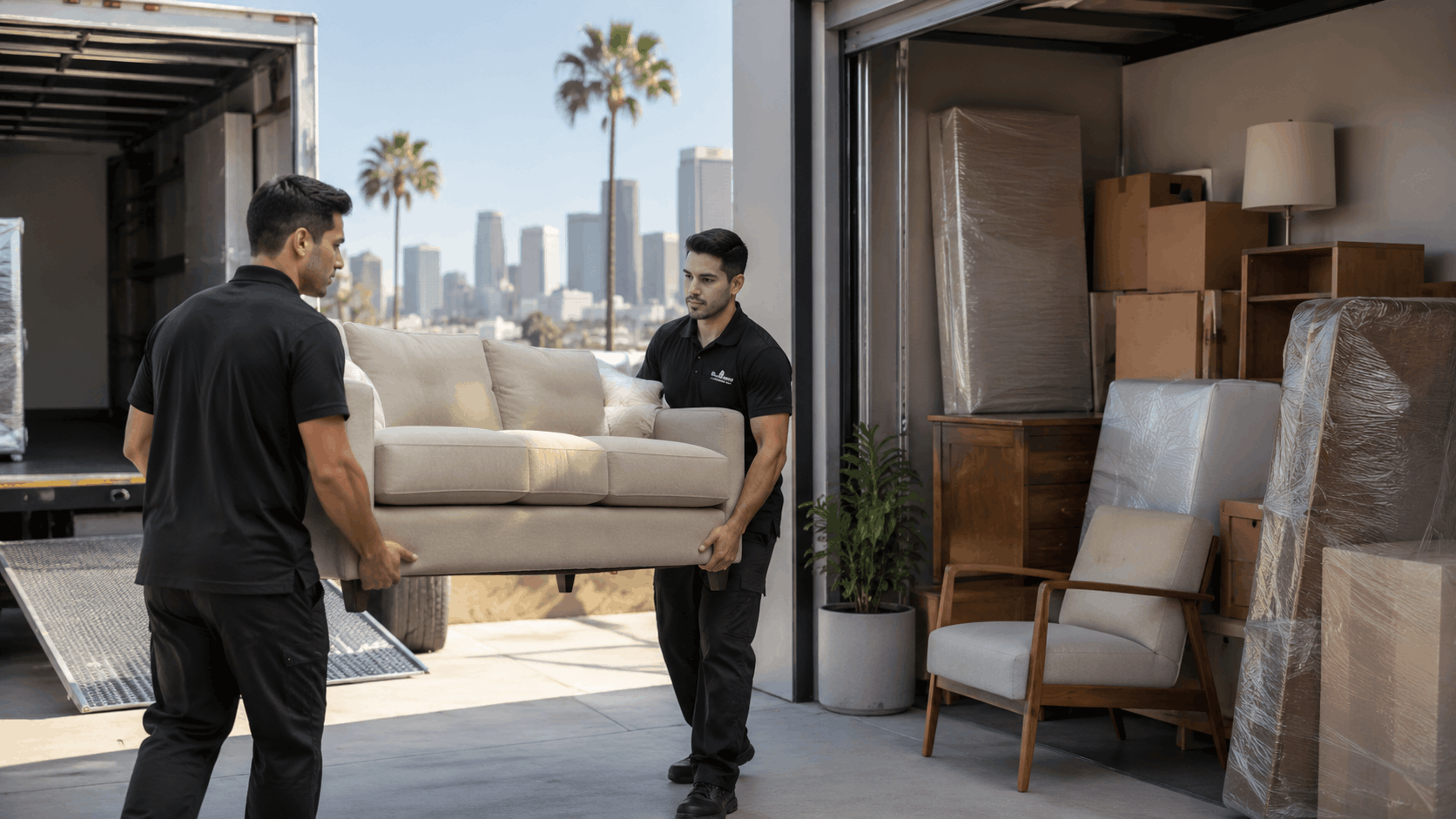
Our crews pick up furniture from homes all over LA, including Sherman Oaks, Highland Park, and Santa Monica. In-home pickup means we come to you, so you never touch a rental truck.
Furniture wrapping happens on site before anything leaves your home. We blanket-wrap sofas, pad table legs, and shrink-seal upholstery right there in your living room.
We know the parking and access quirks of different neighborhoods. A hillside home in Los Feliz needs a different plan than a condo tower in Santa Monica, and our crews plan for both.
Once everything is wrapped, we build the vaults on our truck or at your home, then transport them sealed to the warehouse. You watch it happen and never lift a thing.
Warehouse Storage and Inventory Tracking
Every vault that comes into our warehouse gets logged. Inventory tracking means each crate has a record tied to your name, so nothing gets lost or mixed up with another customer's furniture.
The warehouse itself is monitored and organized, not a free-for-all floor. Vaults are stacked in assigned positions and stay there until you request them.
When you store multiple vaults, we track each one separately. If you only want two of your five vaults back, we can pull exactly those without disturbing the rest.
This system matters most for long stays. A customer storing furniture for a year overseas can trust that their inventory is exactly where we logged it when they return.
Retrieval and Redelivery Anywhere in LA
When storage ends, we bring your furniture back. Redelivery means our crew loads the vaults, drives them to your new address, and unloads everything.
You skip the truck rental entirely on the back end too. That is a real savings, since renting a truck and hiring help at move-in time is exactly when most people are stretched thin.
We redeliver anywhere in the LA area, whether you moved across town to Culver City or into a new home in Pasadena. Furniture delivery includes unwrapping and placing pieces where you want them.
If your move pairs with storage, our residential moving team can handle both ends. One company, one crew, no double handling.
Getting an Honest Quote
A good storage quote starts with volume. We ask how many rooms of furniture you have so we can estimate the number of vaults you need.
Neighborhood and distance factor in next, since a pickup in Malibu routes differently than one downtown. We build those miles into the pricing estimate up front.
The goal is a written quote with no surprise fees. You should know your monthly rate, your handling charge, and any access costs before you commit.
Reach out through our contact page and we will walk through your situation. No pressure, just clear numbers so you can decide.
Need Help in Los Angeles?
Popeye Moving & Storage serves Los Angeles and all of Los Angeles County.
Tips to Save on Storage in Los Angeles
No matter which option you pick, there are smart ways to save on storage. These storage tips apply whether you choose a vault or a rented unit.
Pare Down Before You Store
The cheapest thing to store is nothing at all. Before you book, walk through your furniture and decide what you actually want to keep.
Selling or donating pieces cuts your volume, and less volume means fewer vaults and a lower monthly cost. That old futon nobody uses is not worth paying to store for a year.
Declutter room by room so the count is accurate. If you can drop from three vaults to two, you just cut your monthly bill by a third.
Donation centers around LA, from Goodwill to local charities, will often pick up larger items. The IRS also lets you deduct qualifying donations, and you can review the rules on the IRS charitable contributions page.
Ask About Long-Term Discounts
If you know you will store for six months or longer, ask about a long-term discount. Most storage providers offer a better monthly rate for longer commitments.
The monthly savings add up. Shaving even $20 a vault off a three-vault, twelve-month stay saves you hundreds over the year.
Do not assume the first number is fixed. Tell us your timeline and we will factor the term into the quote, since a longer stay is easier for us to plan around.
Locking a rate also protects you from the rate hikes that plague month-to-month self-storage. A set term means no surprise increase in month four.
Bundle Moving and Storage Together
Combining your move and storage with one company cuts double handling fees. When the same crew that packs your home also stores it, your furniture gets handled fewer times.
Bundle services and you avoid paying two companies for overlapping work. The movers who load your home load the vaults, and the movers who store your vaults redeliver them.
This matters most on long distance and international jobs. Pairing moving and storage means one point of contact and one plan instead of juggling vendors.
Ask whether a bundled rate applies to your job. It often does, and it usually beats hiring a mover and a separate storage facility.
Time Your Storage Around LA Demand
Storage and moving demand spikes in summer and at the end of every month. Those are the busiest windows in LA, and busy usually means pricier.
Off-peak storage booking can help. Mid-month and cooler months tend to have more availability and better flexibility on scheduling.
If your timeline is flexible, aim for a weekday in the middle of the month rather than the last weekend. You may find both better pricing and a crew that is not rushed.
The Federal Motor Carrier Safety Administration also recommends booking movers early and checking credentials, and you can review consumer guidance on the FMCSA Protect Your Move site. Booking ahead gives you both a better rate and a vetted crew.
Final Thoughts
A metal box on a slab holds your furniture, but a sealed vault protects it. For anything you plan to use again, that difference is worth understanding before you sign a self-storage lease.
Vaulted storage in LA runs roughly $75 to $150 a month per vault, plus a one-time handling fee, and it folds in the truck and labor you would otherwise pay for yourself. Once you add up the hidden costs of a drive-up unit, the vault often wins on price and always wins on protection.
If you are facing a remodel, a move, a downsizing, or a long stretch away from LA, our team can walk you through whether vaulted storage fits. Call Popeye Moving & Storage or reach out through our contact page for an honest quote with no surprise fees. We will tell you straight whether a vault or another option is the smarter call for your furniture.
Frequently Asked Questions
- What is vaulted storage?
- Vaulted storage is a system where your furniture goes into sealed wooden crates that live inside a monitored warehouse. A professional crew wraps and loads each piece, then seals the vault, which stays closed until you request it. Unlike a drive-up self-storage unit, you never rent an open room, and nobody handles your belongings except the crew who logged them in.
- How much does vaulted storage cost in Los Angeles?
- In Los Angeles, expect roughly $75 to $150 per vault each month, with the rate dropping as you store more vaults. On top of that is a one-time handling fee of about $100 to $300 per vault to load, transport, and later retrieve your furniture. A two-bedroom home often needs three vaults, so budget around $300 monthly plus handling for professionally packed storage.
- Is vaulted storage cheaper than a self-storage unit?
- Often yes, once you count everything. A 10x10 unit may look cheaper monthly, but add truck rental, gas, moving labor, required insurance, and the common rate hikes after the intro month, and the gap closes. Vaulted storage bundles the truck and labor into one predictable number, so over six months it frequently costs less than the do-it-yourself route.
- How much furniture fits in one vault?
- A standard wooden vault measures about 5 by 7 by 7 feet and holds roughly one room of furniture. That fits a typical bedroom set, a living room grouping, or a dining set with chairs plus a few stacked boxes. A one-bedroom apartment usually needs two vaults, while a four-bedroom house may take six or seven, and you only pay for the vaults you fill.
- Can I access my items while they are in a vault?
- Yes, but access works by appointment rather than anytime drive-up. Because vaults get stacked and sealed in the warehouse, retrieving an item means bringing your vault down and opening it, so most companies charge a small access fee of about $50 to $150. If you expect frequent access, tell us up front and we can position your vault for easier retrieval.
- Is vaulted storage climate controlled?
- Climate-controlled vault storage is available and worth it for LA furniture. Metal units in the San Fernando Valley can exceed 100 degrees in summer, which warps wood, cracks leather, and loosens glue joints. A climate-controlled warehouse holds steadier temperature and humidity, protecting delicate finishes, antiques, and pianos through the hottest months. Ask about climate options when you request your quote.
- Do I need my own truck for vaulted storage?
- No. Our crew brings the truck, blankets, and labor to your home, wraps everything on site, and loads the vaults for you. When storage ends, we redeliver to your new address and unload it, so you skip renting a truck on both ends. Not needing a truck is one of the main reasons vaulted storage saves money compared to a drive-up unit.
- How is my furniture protected inside the vault?
- Each piece gets wrapped and padded before loading. Sofas are blanket-wrapped and shrink-sealed, table legs and glass get padded corners, and dressers are taped shut. The crew then builds the vault so heavy items sit on the bottom and nothing shifts. The sealed wooden crate blocks dust and pests, and because your furniture is loaded once, it faces far fewer chances for scratches.
- What areas of Los Angeles does Popeye Moving & Storage serve?
- We pick up and deliver across the LA area, including Silver Lake, Los Feliz, Highland Park, Sherman Oaks, Brentwood, Santa Monica, Culver City, Pasadena, and the Beverly Hills flats, plus beach cities and the Valley. Our crews know the parking, permit, and access quirks of each neighborhood. Wherever you are in Los Angeles, we handle citywide pickup, warehouse storage, and redelivery.
- How long can I keep furniture in vaulted storage?
- You can store for a single month or for years, whichever fits your situation. Short-term stays cover remodels and move gaps, while long-term storage suits overseas assignments or slow downsizing decisions. Longer commitments usually earn a better monthly rate, so if you plan to store six months or more, ask about a long-term discount when you get your quote.
Popeye Moving & Storage Co. Team Team
Licensed moving and storage professionals serving Los Angeles and Los Angeles County.
Licensed in California · License #CAL T 189749 | USDOT 1472924 | MC 498816C
Why trust Popeye Moving & Storage?
Founded in 1994, Popeye Moving & Storage is a licensed and insured moving and storage service serving Los Angeles and Los Angeles County. All content is reviewed by our licensed technicians.

Need Help in Los Angeles?
Popeye Moving & Storage serves Los Angeles and all of Los Angeles County.
Related Articles
How Much Do Movers Cost in Los Angeles in 2026? A Complete Price Breakdown
Wondering what movers charge in LA? From hourly local moves to white glove and piano moves, here's a clear breakdown of moving costs in Los Angeles County for 2026.
Why LA Moving Costs Spiked 40% Since 2020: Labor, Fuel, and Insurance Math
LA moving costs rose about 40 percent since 2020. Here is the real math behind labor, fuel, and insurance increases, plus tips to lower your moving cost.
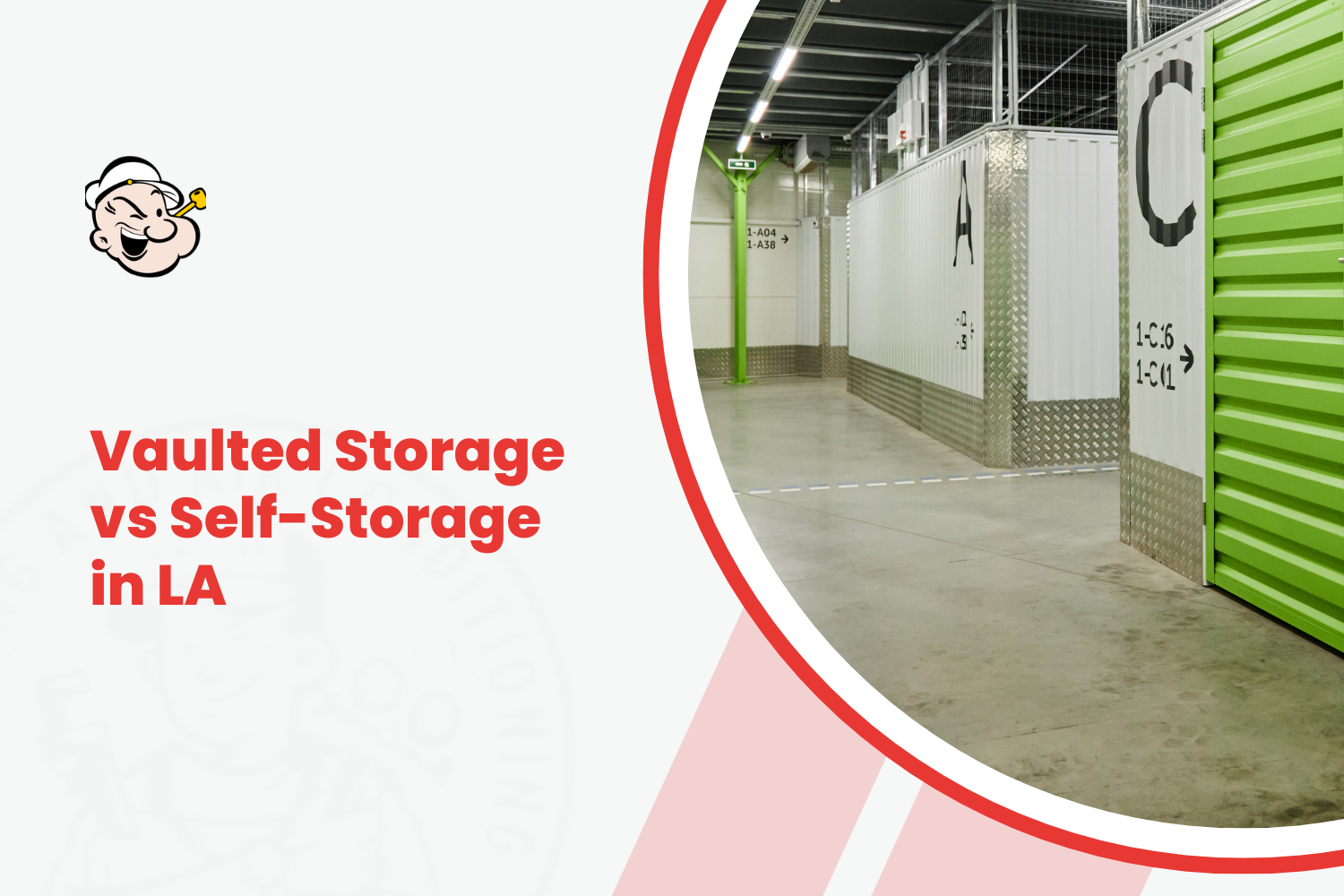
Vaulted Storage vs Self-Storage in LA: Why Full-Service Storage Saves You Money
Vaulted full-service storage vs self-storage in LA: see the real costs, hidden fees, and why more Angelenos are switching to vault storage with Popeye Moving.