Cost Guides
Vaulted Mover Storage vs Self-Storage in LA: Handling, Inventory, and the Loading-Labor Math Nobody Does
Key Takeaways
- Vaulted storage seals your belongings in wooden vaults handled just twice, while self-storage means loading and unloading four or more times.
- The loading-labor math often flips the cost comparison: LA crews run $140 to $200 an hour plus traffic time, which the monthly rent never shows.
- Movers log an itemized inventory of every vault, while self-storage leaves all tracking to you, which fails after months in the unit.
- Professional padding, wrapping, and climate-controlled warehouses protect furniture better than a self-loaded unit exposed to San Fernando Valley heat.
- Self-storage facilities carry limited liability, while a mover's storage stays accountable under valuation coverage.
- Vaulted storage usually wins for short gaps between homes; a neighborhood unit wins for long stays with frequent access.
- Both options carry hidden fees, so compare full totals including labor, admin, insurance, and access charges before signing.
- Popeye Moving uses one crew from pickup to warehouse and gives an itemized inventory and labor quote upfront.
In This Article
A young family in Silver Lake calls us at least once a week with the same problem. They sold their condo, their new place is not ready for six weeks, and they are staring at two options. Either rent a self-storage unit down the block on Sunset, or ask their mover to hold everything until the keys come through.
On paper, the storage unit near their apartment looks cheaper. The monthly rent is right there on the website. But that number leaves out the part that actually costs the most: the labor of moving everything twice, the weekends lost hauling boxes, and the gas burned crawling up the 101.
What Vaulted Mover Storage Actually Is?
Most people picture a storage unit when they think about putting stuff away. Vaulted storage works differently, and the difference matters once you count the labor. It lives inside a moving company warehouse, not in a row of roll-up doors you drive to yourself.
Here is the short version of how vaulted storage stacks up against a self-storage unit:
- Your things get packed into large wooden vaults one time.
- The vaults get sealed and stacked inside a warehouse.
- Nobody opens them until your delivery day.
- The same crew that loads them is trained to move furniture.
How the Wooden Vault System Works
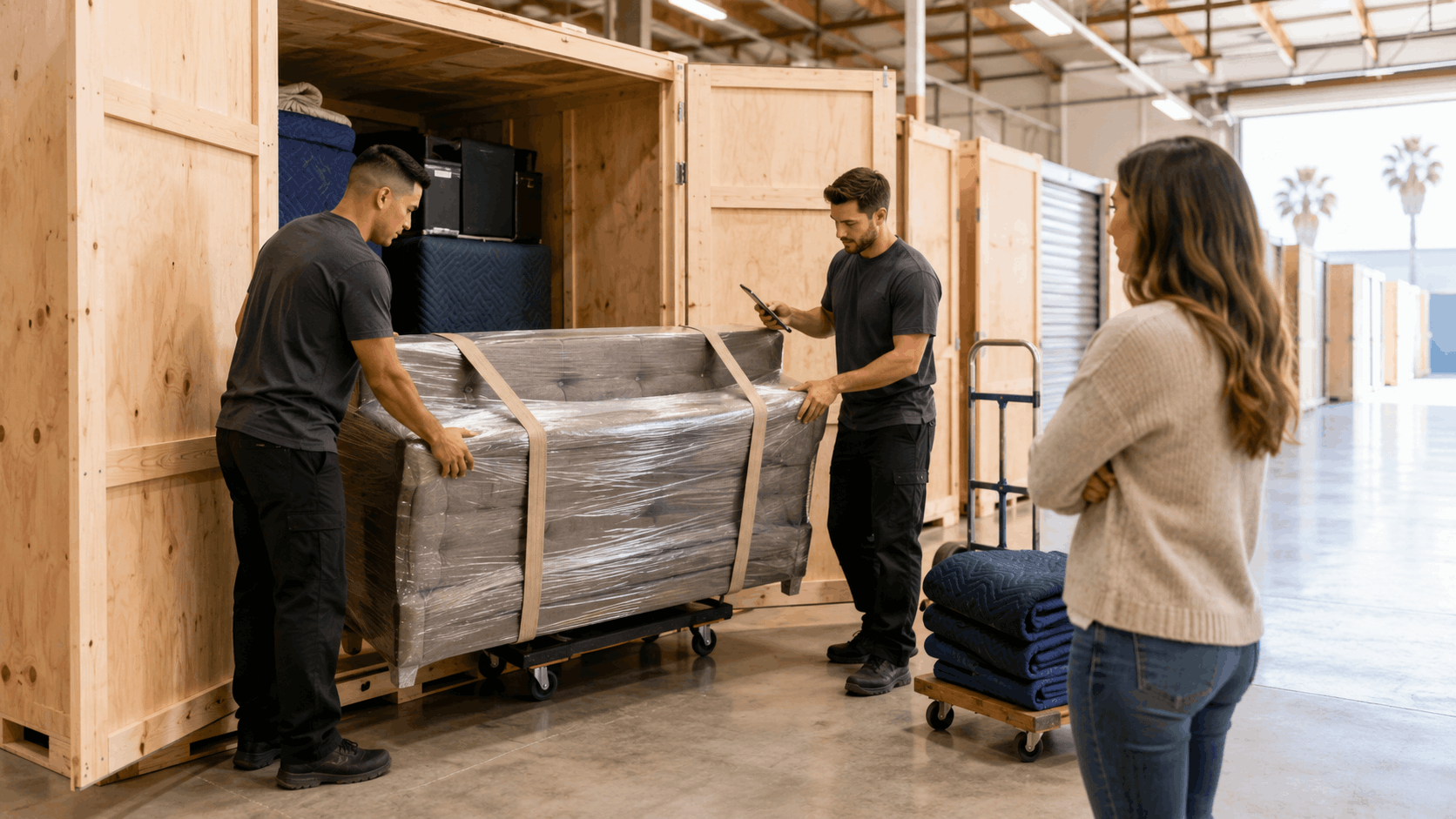
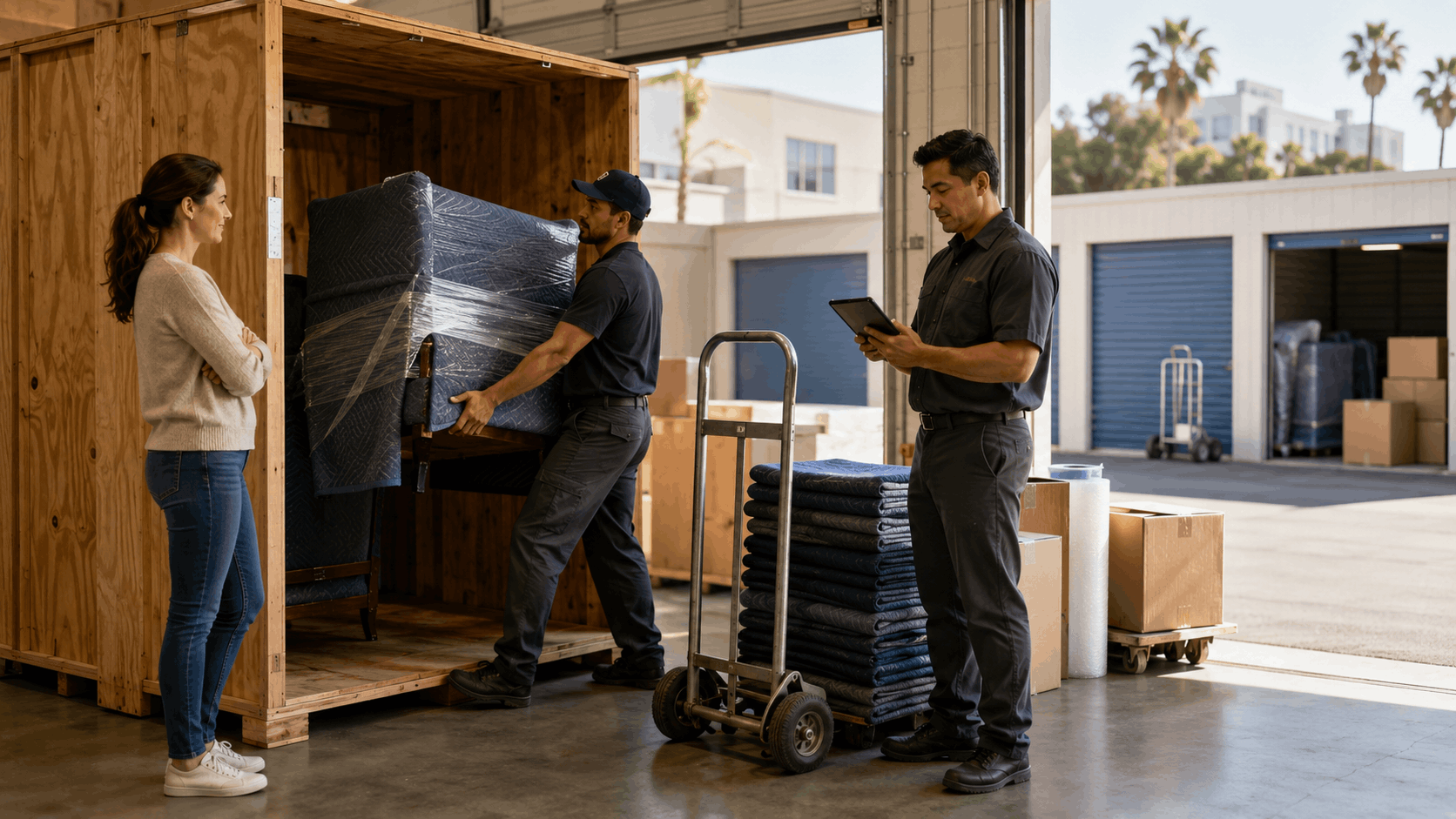
A wooden vault is a sturdy container, usually around 5 feet by 7 feet and about 7 feet tall. Our crew loads your furniture, boxes, and household goods directly into that vault at your home. Each piece gets padded and packed to fill the space without shifting during the stack.
Once a vault is full, it gets sealed. That sealed storage stays closed for the entire time your belongings sit in the warehouse. There is no daily foot traffic, no strangers walking past an open unit, and no chance of things sliding around from repeated in-and-out trips.
Because the wooden vault is a fixed box, it forces careful packing. A crew cannot just toss items in loose the way a renter might on a rushed Saturday. Everything fits together like a puzzle, which is a big reason vaulted goods tend to come out in the same shape they went in.
When delivery day arrives, the whole vault gets pulled off the stack, loaded onto a truck, and driven to your new address. Your things travel as one packed unit. That single-packing approach is the core idea behind our vaulted storage service.
Where These Warehouses Sit in LA
Moving company warehouses in Los Angeles cluster around industrial corridors for a reason. Areas like Vernon, the stretch off the 10, and the zone near the 110 give trucks room to maneuver and dock space that residential neighborhoods never offer. That location keeps storage costs lower and access for large trucks simple.
For a family in Silver Lake or Culver City, the warehouse might sit a few miles away rather than around the corner. That trade-off feels odd at first. But since a vault stays sealed until delivery, most customers never need to visit, so the distance rarely matters.
A proper LA warehouse also offers climate control that a cheap unit off a busy street often lacks. Wood furniture, electronics, and framed art hold up far better when the temperature stays steady. In a city where summer heat climbs fast, that steady environment protects the pieces people care about most.
Warehouse storage near the industrial core also means better security. These buildings run alarm systems, controlled access, and staff on site during business hours. A self-storage row with a keypad gate does not match that level of oversight.
Who Handles Your Items and When
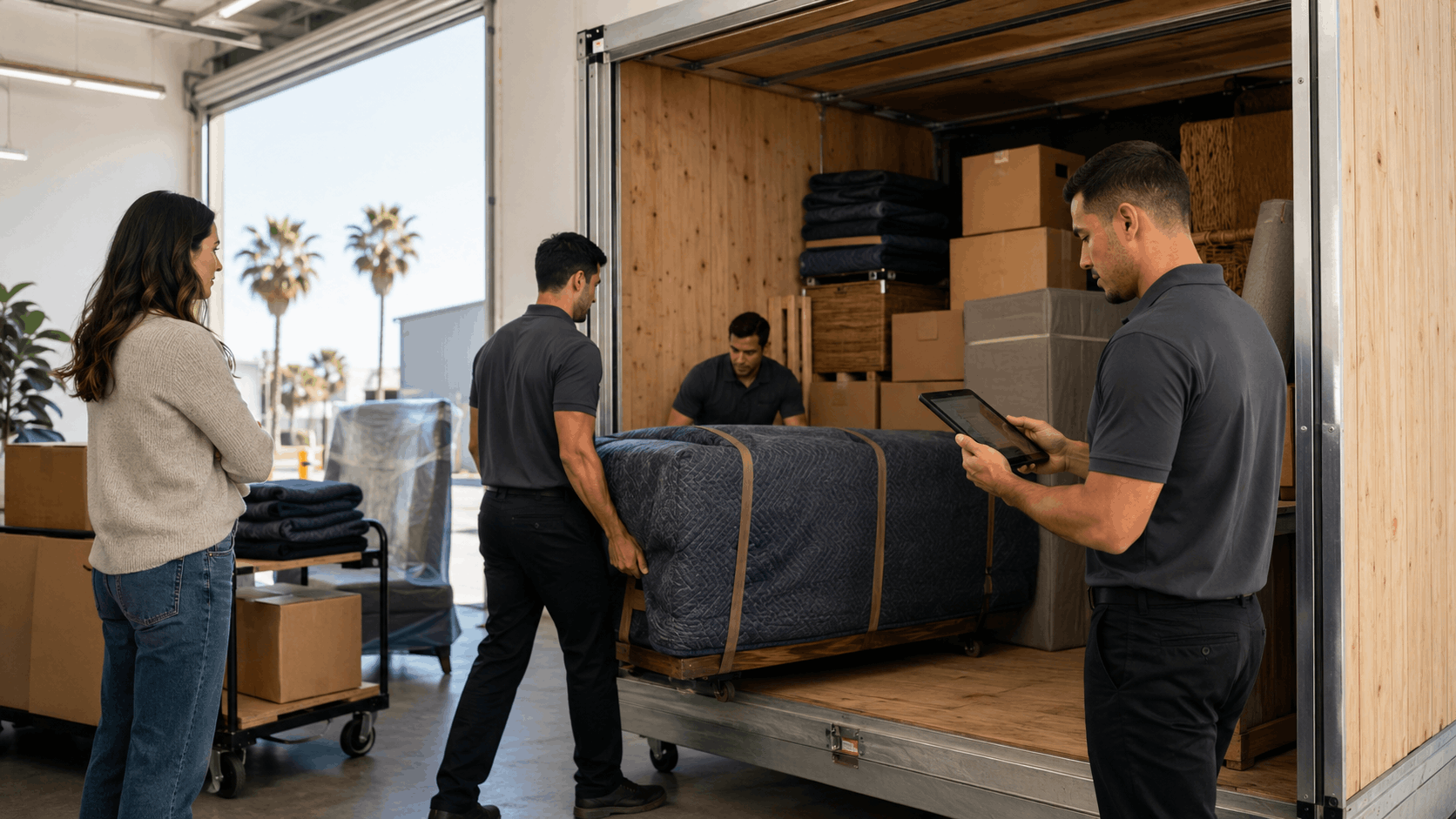
The biggest hidden advantage of vaulted storage is how few times your things get touched. A trained moving crew loads your belongings once at your old home and unloads them once at your new one. That is it. Two touches on each item, start to finish.
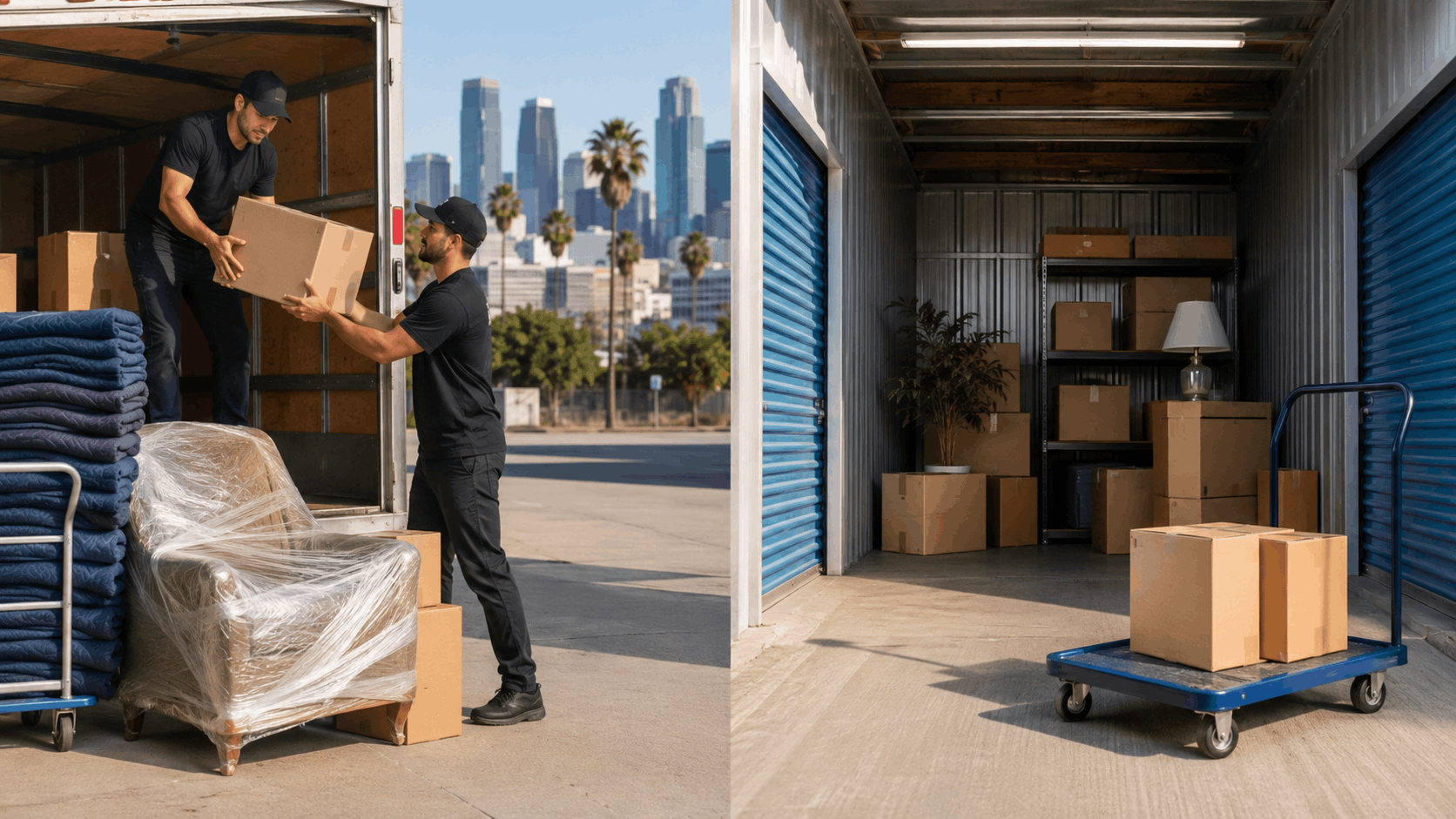
Compare that to self-storage. You load your car or truck at home, unload into the unit, then months later load again out of the unit and unload at the new place. Every one of those steps is a chance for a scratch, a drop, or a lost box.
Our crew handles the heavy lifting with dollies, straps, and padding built for the job. They know how to carry a dresser down a Silver Lake staircase without gouging the wall. That skill is baked into our local residential moving work.
Fewer handoffs also means faster days. When the same team owns the whole process, there is no confusion about what got packed where. The handling stays consistent from pickup to warehouse to final delivery.
Get Your Free Quote
Tell us about your move and we'll get back to you fast.
What Self-Storage Means for LA Renters and Owners
Self-storage is the model everyone knows. You rent a locked space, get a code or a key, and haul your own things in and out whenever you want. In a dense city like Los Angeles, that freedom comes with daily headaches most people do not think about until they are stuck in the loading zone.
Here is how the two models compare at a glance:
| Factor | Self-Storage Unit | Vaulted Mover Storage |
|---|---|---|
| Who loads it | You (or hired help) | Moving crew |
| Times items handled | Four or more | Two |
| Access | Anytime during hours | By appointment |
| Inventory record | You keep it | Crew logs it |
| Climate control | Extra cost, if offered | Usually standard |
Unit Sizes and What They Really Hold
Self-storage units in Los Angeles usually run from 5x5 up to 10x30. A 5x5 holds about the contents of a small closet. A 5x10 fits a studio apartment's worth of boxes and a few small pieces of furniture.
The common mistake is renting too small. People walk into a 10x10, see all that square footage, and assume it will swallow a full one-bedroom. Then they show up with a truck and realize a sofa, mattress, dresser, and 40 boxes need more room than the empty space suggested.
A 10x15 usually handles a two-bedroom apartment, and a 10x20 works for a small house. The catch is that you have to stack it yourself, and most renters do not stack efficiently. Wasted vertical space means you pay for a bigger unit size than you actually needed.
When we give a quote, we measure the real cubic footage of your goods. That number tells you honestly whether a unit or a vault fits, instead of guessing at the counter and paying for the wrong size all year.
Access Hours and Parking Headaches
Access hours sound generous until you factor in the parking. A facility in Hollywood or Koreatown might advertise access from 6 a.m. to 10 p.m., but good luck finding a spot near the loading dock at 5 p.m. on a weekday. The tight streets around these buildings turn a quick trip into an hour of circling.
West LA facilities often share a single loading dock among dozens of renters. You wait for a cart, wait for the elevator, then wait for someone else to finish before you can back your truck in. What should be a 20 minute drop-off becomes a half-day project.
Elevators are their own problem. Many multi-story storage buildings have one small freight elevator, and if a big move is ahead of you, you sit and wait. For anyone moving through busy corridors, our Los Angeles moving team knows exactly which access points jam up and when.
Ground-floor drive-up units solve some of this, but they cost more and rent out fast. In dense neighborhoods, they are rarely available when you need them most, which pushes you upstairs into the elevator line again.
Month-to-Month Flexibility and Its Trade-Offs
The best thing about self-storage is the month-to-month storage contract. You can rent for one month or two years, and you cancel when you are done. That flexibility is real, and for some situations it is the right call.
The downside is that everything becomes your job. You manage the space, track what is inside, buy the lock, and drive over every time you need something. The convenience of open access turns into a chore you own completely.
Rates also creep up. Many facilities offer a low teaser rate for the first few months, then raise it once you are settled in and unlikely to move everything again. That gradual increase adds up over a long stay in ways the intro price never warned you about.
For short gaps between homes, that flexibility can be worth it. For longer stretches, the self-managed model starts costing more in time and money than it looks like on day one.
Need Help in Los Angeles?
Popeye Moving & Storage serves Los Angeles and all of Los Angeles County.
The Loading-Labor Math Nobody Runs
This is the part almost everyone skips. People compare the monthly rent of a storage unit against the monthly rent of vaulted storage and pick the cheaper number. But rent is only half the story. The loading labor is where the real money hides.
Once you count how many times your things get loaded, driven, and unloaded, the math often flips. Let us walk through it the way we do with customers before they decide.
Counting Every Time Your Stuff Gets Touched
Start with the load count. With self-storage, your belongings get handled at least four times. You load at home, unload at the unit, load again out of the unit, and unload at the new place. That is double handling on both ends of the stay.
With a vault, the count drops to two. The crew loads at your home and unloads at your destination. The warehouse stop in the middle happens without you touching anything, because the vault moves as one sealed piece.
Every extra handling round costs money if you hire help, or costs your own back if you do it yourself. It also multiplies the chance of damage. A box that gets carried four times has twice the odds of getting dropped as one carried twice.
When furniture is involved, that difference grows. A dresser loaded and unloaded four times by tired renters takes more dings than the same dresser handled twice by a trained crew with pads and straps.
Hourly Crew Rates and Truck Time in LA Traffic
Professional moving crews in Los Angeles typically run between $140 and $200 an hour for a two- or three-person team with a truck. That hourly rate covers labor, the vehicle, and basic equipment. It is the standard way our industry prices residential moving work.
Now add truck time. If you rent self-storage and hire movers for both the drop-off and the pickup, you pay for two separate crew visits. Each visit includes drive time, and drive time on the 405 or 101 is never short in this city.
A crew stuck in afternoon traffic between your home and a Koreatown facility burns billable hours before a single box moves. Two round trips through that traffic can add several hundred dollars that never shows up in the storage unit's advertised rate.
With vaulted storage, you pay for one loading visit and one delivery visit, and the warehouse leg is on the moving company's own schedule. You skip paying crew rates for the extra self-storage handoffs entirely.
The DIY Labor You Pay With Your Own Time
Maybe you plan to skip the movers and do it yourself. That saves cash, but it is not free. DIY moving trades dollars for weekends, and weekends in LA have real value.
Think about the time cost. Renting a truck, loading it, driving to the unit, unloading, and returning the truck eats a full Saturday. Do that twice, once in and once out, and you have spent two weekends of your life on it.
Then add the hidden costs. Truck rental, gas, moving pads, and a sore back that keeps you off work Monday. If you value your time at even $30 an hour, two full days of hauling is worth more than $500 before you count the rental.
For a family juggling jobs and kids in Culver City, those weekends are not easy to spare. The vault model puts that labor on a trained crew and gives the weekend back, which is worth running the math on before choosing.
Inventory Tracking: Knowing Where Everything Is
Storage that lasts a few weeks is easy to remember. Storage that stretches into months or a year is where inventory tracking becomes the difference between finding your grandmother's china and giving it up for lost. The two models handle this very differently.
One puts the records in professional hands. The other puts them entirely on you, and memory fades faster than most people admit.
How Movers Log and Number Each Item
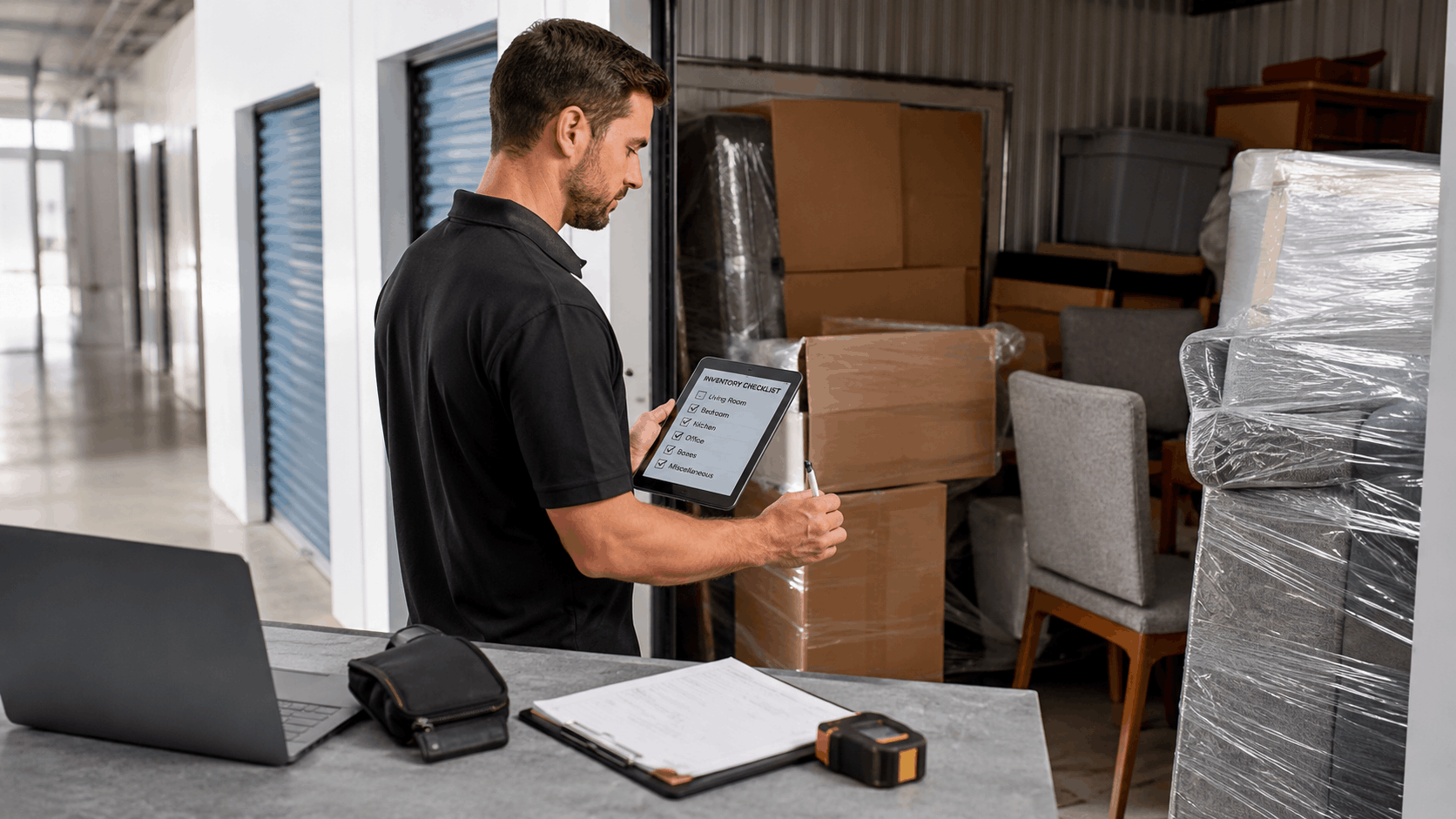
When our crew packs a vault, every item gets logged on an inventory sheet. Furniture gets a numbered tag, and boxes get recorded by room and contents. That sheet becomes the official record of what went into storage.
The tags do double duty. They confirm what got loaded and confirm it all came off the truck at delivery. Nothing gets marked done until every numbered item on the sheet is accounted for at both ends.
This matters more the longer things sit. A year later, you do not have to remember whether the holiday decorations were in the vault. The storage inventory sheet tells you exactly what is there and where it sits in the stack.
Our full-service packing service builds this inventory as the crew works, so the record is done before the truck even leaves your driveway.
The Self-Storage 'You Are the Records' Problem
Self-storage flips all of that onto you. There is no inventory sheet unless you make one, and most people do not. They stack the unit, close the door, and trust their memory to fill in the gaps later.
Self tracking works for a month. After six months, the details blur. Was the winter coat box near the front or buried behind the couch? Did the important paperwork go in a labeled bin or a random box you grabbed at the last minute?
Lost items are the common result. People know something is in the unit but cannot find it without unpacking half the space. Others forget they even own things until they finally clear the unit out and rediscover them.
The longer the stay, the worse this gets. A self-storage unit with no record turns into a mystery box that you pay rent on every month, unsure of what is actually inside.
Retrieving a Single Box vs the Whole Load
Here is where self-storage does win a point. If you need one box, you drive to your unit, open the door, and grab it. That easy item retrieval is the real appeal of keeping a personal space nearby.
Vaulted storage does not offer that instant grab. A sealed vault means partial access requires scheduling. You call ahead, and the warehouse team pulls the vault so you can retrieve what you need.
That appointment step is the trade-off for the sealed protection. For people who dip into their things weekly, it is a real inconvenience. For people storing between homes who rarely need access, it barely registers.
The honest answer is that access frequency should drive your choice. If you visit your things often, the unit's open door earns its keep. If you are just parking everything until the new place is ready, the vault's sealed setup makes more sense.
Handling Damage and How Items Hold Up
Storage is not just about where your things sit. It is about what shape they are in when you get them back. Handling damage, heat, and humidity all take a toll, and the two models protect against them very differently.
Furniture, electronics, and family heirlooms are where the difference shows up most. Nobody wants to open a unit after a year and find a warped table or a moldy mattress.
Padding, Wrapping, and Stacking Inside Vaults
Professional packing inside a vault is built around protection. Our crew wraps furniture in moving pads and stretch wrap, corners get extra padding, and glass gets crated. Every piece is prepped before it goes in the wooden box.
The stacking is deliberate. Heavy items go on the bottom, fragile items get cushioned on top, and nothing is left loose to shift. A packed vault holds its contents snug, so a truck ride to the warehouse does not jostle anything.
Compare that to a renter stacking a unit fast on moving day. Tired and rushed, most people pile boxes and lean furniture without much padding. The result is scratched dressers and crushed boxes discovered months later.
For fragile or high-value pieces, proper crating makes a real difference. Our packing and crating team treats antiques and art the way they would treat their own, which is hard to match on a self-loaded afternoon.
Heat, Humidity, and the LA Climate Factor
LA climate is not gentle on stored goods everywhere. A cheap unit in the San Fernando Valley can hit brutal temperatures in July and August. Wood cracks, candles melt, and electronics suffer when a metal box bakes in valley heat.
Humidity swings add another layer. Coastal moisture near Santa Monica and heat inland create conditions that warp furniture and grow mold on upholstery. A unit without climate control rides those swings all year.
Climate-controlled warehouse storage keeps the temperature and humidity steady. That stable environment protects wood, leather, paper, and electronics far better than an uncontrolled unit off a hot street. For anything you care about, that steadiness earns its cost.
The federal Ready.gov guidance on protecting belongings echoes this point: stable, controlled conditions keep valuables safe far longer than exposed storage. In a city with valley heat and coastal damp, that stability is worth planning around.
Who Is Responsible if Something Breaks
Liability is where a lot of people get a nasty surprise. A self-storage facility carries very limited responsibility for what happens to your goods. Read the contract, and you will usually find they are not liable for damage inside your unit at all.
That means if a pipe leaks or your stack topples, the loss is yours unless you bought separate insurance. The facility rents you a space and locks the gate, but the contents are on you.
A mover's storage works under valuation coverage rules set by the industry. The FMCSA Protect Your Move program explains the valuation options movers must offer. That coverage attaches to your goods while they are in the moving company's care.
The practical difference is accountability. When one company packs, stores, and delivers under a valuation agreement, there is a clear party responsible if something breaks. That single line of responsibility is harder to find when you self-store.
Need Help in Los Angeles?
Popeye Moving & Storage serves Los Angeles and all of Los Angeles County.
Cost Over Time: Which One Wins and When
There is no single winner between these two options. The right choice shifts based on how long you store and how often you need to get in. Run the storage cost over the full timeline, not just month one.
Here is a rough monthly comparison to frame the decision:
| Scenario | Better Fit | Why |
|---|---|---|
| Under 3 months, no access | Vaulted storage | Labor savings beat the rent gap |
| Long-term, frequent access | Self-storage unit | Open door earns its cost |
| Long-term, rare access | Vaulted storage | Protection and no double handling |
| Between homes, one crew | Vaulted storage | Single load and delivery |
Short-Term Storage Under Three Months
For short-term storage during a gap between homes, vaulted storage often wins on total cost. The monthly rent might look higher, but the labor savings tip the balance quickly. You pay one crew to load and one to deliver, with no self-storage handoffs in between.
Picture a family whose new Pasadena home is six weeks out. With a unit, they hire movers twice or lose two weekends doing it themselves. With a vault, the crew loads once and delivers once when the keys arrive.
Over a short window, the extra crew visits and truck time for self-storage add up fast. Those costs often exceed the difference in monthly rent, making the vault cheaper overall for a brief stay.
Short gaps are the sweet spot for vaulted storage. The belongings sit sealed and protected, you touch nothing, and the whole thing wraps up with a single delivery on move-in day.
Long-Term and Frequent-Access Scenarios
Long-term storage changes the picture, especially when you need frequent access. If you plan to visit your things every week or two, a self-storage unit near your neighborhood makes real sense. The open door saves you scheduling every trip.
A small business owner storing seasonal inventory is a good example. They need to pull stock regularly, so a unit's instant access beats a sealed vault. Our commercial business storage options weigh these access needs carefully.
For long-term storage where you rarely need in, though, the vault still competes well. Sealed, climate-controlled, and untouched for a year, it protects goods better than an uncontrolled unit you visit twice. Our long-term storage service covers those extended stays.
The deciding factor is access frequency, not just length. Long plus frequent points to a unit. Long plus rare points back to the vault, where protection and low handling win out.
Hidden Fees on Both Sides
Both options carry hidden fees that the headline price hides. Self-storage often adds an admin fee at signup, a mandatory lock purchase, and insurance you are required to carry. Some facilities charge for after-hours access too.
Then there are the rate hikes. That low intro rate climbs after a few months, and late fees stack up if a payment slips. The advertised price rarely matches what shows up on the bill by month six.
Vaulted storage has its own line items. There may be a warehouse handling fee, a charge for scheduled access visits, and valuation coverage that costs extra beyond the basic level. An honest mover lists these upfront.
The lesson is to ask for the full picture on both sides before signing. Insurance, admin, access, and rate changes all belong in the comparison. Only then does the true cost of each option come into focus.
How Popeye Moving & Storage Handles LA Storage
At Popeye Moving, storage is not a side business bolted onto our moving work. It runs on the same crews and the same care that handle every move. That connection is what lets us cut the handoffs that cause most damage.
Here is how our Los Angeles storage process lines up:
| Step | What Happens | Who Does It |
|---|---|---|
| Quote | Itemized inventory and labor estimate | Estimator |
| Pack | Wrap, pad, and load into vaults | Our crew |
| Store | Sealed vaults in climate warehouse | Warehouse team |
| Deliver | Vaults driven and unpacked | Same crew |
One Crew From Pickup to Warehouse
The single biggest reason our storage protects goods is that one crew owns the process. The team that packs your home is the team that loads the vaults and stores them. No mystery hands touch your things along the way.
Fewer handoffs means fewer chances for damage and fewer chances for a box to go missing. When the same people log, pack, and store, the inventory stays accurate from start to finish. Nothing gets lost in a handoff between separate companies.
That single crew approach also speeds up delivery day. The team already knows how the vaults were packed, so unloading and placement go smoothly. Our warehouse storage is built to keep that continuity intact.
Customers moving under our storage solutions get this consistency from the first box to the last piece of furniture placed in the new home.
Serving Neighborhoods Across the City
We work across the whole map, and route knowledge saves time in a city like this. Our crews know the tight streets of Echo Park, the parking rules in Santa Monica, and the hillside driveways up in the West Side. That familiarity keeps moving days on schedule.
From the beaches to the valley, we cover the neighborhoods people actually live in. Whether it is a condo near Santa Monica or a craftsman in Pasadena, the crew shows up knowing the area.
Local moving in LA is as much about the routes as the boxes. Knowing that a certain stretch of the 10 jams by 4 p.m. or that a Culver City street has a permit zone keeps the day efficient. That knowledge comes from working these neighborhoods for years.
Route knowledge also shapes our scheduling. We time warehouse trips and deliveries around the traffic patterns we know, so trucks spend less time idling and more time getting your things where they belong.
Getting a Clear Inventory and Quote First
Before anything gets loaded, we give you an itemized inventory list and a labor estimate. You see what we counted, how much space it takes, and what the loading labor will cost. No surprises after the truck pulls up.
That upfront moving quote lets you run the real math yourself. You can compare our vaulted number against a self-storage unit's total cost, labor and all, and decide with full information. We would rather you choose with clear numbers than a vague promise.
The inventory list also becomes your record for the whole storage period. You know exactly what went into the vault and can plan your delivery around it. That paper trail protects you and us.
Getting an accurate quote takes a short call or a quick walkthrough. Reach our team through the contact page, and we will build the inventory and estimate that fits your move.
Need Help in Los Angeles?
Popeye Moving & Storage serves Los Angeles and all of Los Angeles County.
Final Thoughts
The choice between vaulted mover storage and a self-storage unit is not about the cheapest monthly rent. It is about the total cost once you count labor, the protection your things get, and how often you truly need access.
For short gaps between homes with little need to get in, vaulted storage usually wins on both money and safety. For long stays where you visit your things often, a neighborhood unit earns its place. Run the loading-labor math before you decide, because that is the number that flips the answer.
If you want help running those numbers for your own move, our team is ready. Call Popeye Moving & Storage or reach out through our contact page for a clear inventory and quote before you commit to either option.
Frequently Asked Questions
What is vaulted mover storage?
Vaulted mover storage is a system where your belongings get packed once into large sealed wooden vaults, then stacked inside a moving company warehouse. The vaults stay closed until delivery day, so your things are handled only twice, at pickup and at drop-off. This differs from a self-storage unit, where you load and unload yourself and keep the space open for regular access anytime.
Is vaulted storage cheaper than a self-storage unit in LA?
For short stays, it often is once you count labor. A self-storage unit's rent may look lower, but you pay to load and unload twice on each end, either in crew hours or lost weekends. Crews in LA run $140 to $200 an hour plus traffic time. Add two round trips and the vault's single load and delivery usually costs less overall for gaps under three months.
Can I access my items in vaulted storage?
Yes, but by appointment rather than anytime. Because the vault stays sealed inside the warehouse, you call ahead and the team pulls it so you can retrieve what you need. This is the main trade-off versus a personal unit, where you drive over and open the door on your own schedule. If you need weekly access, a self-storage unit fits better than a vault.
How much does self-storage cost in Los Angeles?
Monthly rates vary by size and area. A small 5x5 runs roughly $70 to $130, a 5x10 around $110 to $200, and a 10x10 often $180 to $350. Climate control and central neighborhoods like Hollywood or West LA push prices higher. Watch for admin fees, required insurance, and intro rates that climb after a few months, since the advertised price rarely matches the full bill.
Which option protects furniture better?
Vaulted storage typically protects furniture better. A trained crew wraps each piece in pads and stretch wrap, crates fragile items, and stacks everything snug inside the sealed vault so nothing shifts. Self-loaded units usually get packed fast on moving day with little padding, which leads to scratches and dents. The professional wrapping and careful stacking in a vault is hard to match on a rushed afternoon.
Do I need climate-controlled storage in LA?
It depends on what you store and where. San Fernando Valley heat in summer can crack wood, melt candles, and harm electronics in an uncontrolled unit. Coastal humidity near Santa Monica can grow mold on upholstery. If you store wood furniture, leather, art, paper, or electronics for more than a few weeks, climate-controlled storage is worth the extra cost to keep those items safe.
How long can I keep my stuff in vaulted storage?
Vaulted storage works for both short and long terms. Most stays start with a one-month minimum, and you can extend month to month for as long as you need. Many customers use it for a few weeks between homes, while others store for a year or more. For extended stays, the sealed, climate-controlled setup keeps goods protected far longer than an uncontrolled unit.
What happens if something gets damaged in storage?
The responsibility differs sharply. Self-storage facilities carry very limited liability and usually are not responsible for damage inside your unit, so any loss is on you unless you bought separate insurance. A mover's storage operates under valuation coverage rules, meaning the company that packs, stores, and delivers your goods stays accountable for them under the agreed coverage level throughout the stay.
Is my stuff insured while in a moving company warehouse?
Your goods are covered under valuation coverage while in a mover's warehouse, and you can choose the coverage level when you sign. Basic released value is minimal, while full-value protection covers repair or replacement. Many people also carry a separate renters or homeowners policy for extra protection. Ask your mover to explain the valuation options so you know exactly what is covered before storing.
How do I decide between the two for my move?
Weigh three things: length, access needs, and budget. Short stay with no access needs points to a vault, since labor savings beat the rent gap. Long stay with weekly access points to a neighborhood unit. Long stay with rare access points back to a vault for its protection. Get an itemized quote that includes labor from both sides, then compare the full totals, not just monthly rent.
Frequently Asked Questions
- What is vaulted mover storage?
- Vaulted mover storage is a system where your belongings get packed once into large sealed wooden vaults, then stacked inside a moving company warehouse. The vaults stay closed until delivery day, so your things are handled only twice, at pickup and at drop-off. This differs from a self-storage unit, where you load and unload yourself and keep the space open for regular access anytime.
- Is vaulted storage cheaper than a self-storage unit in LA?
- For short stays, it often is once you count labor. A self-storage unit's rent may look lower, but you pay to load and unload twice on each end, either in crew hours or lost weekends. Crews in LA run $140 to $200 an hour plus traffic time. Add two round trips and the vault's single load and delivery usually costs less overall for gaps under three months.
- Can I access my items in vaulted storage?
- Yes, but by appointment rather than anytime. Because the vault stays sealed inside the warehouse, you call ahead and the team pulls it so you can retrieve what you need. This is the main trade-off versus a personal unit, where you drive over and open the door on your own schedule. If you need weekly access, a self-storage unit fits better than a vault.
- How much does self-storage cost in Los Angeles?
- Monthly rates vary by size and area. A small 5x5 runs roughly $70 to $130, a 5x10 around $110 to $200, and a 10x10 often $180 to $350. Climate control and central neighborhoods like Hollywood or West LA push prices higher. Watch for admin fees, required insurance, and intro rates that climb after a few months, since the advertised price rarely matches the full bill.
- Which option protects furniture better?
- Vaulted storage typically protects furniture better. A trained crew wraps each piece in pads and stretch wrap, crates fragile items, and stacks everything snug inside the sealed vault so nothing shifts. Self-loaded units usually get packed fast on moving day with little padding, which leads to scratches and dents. The professional wrapping and careful stacking in a vault is hard to match on a rushed afternoon.
- Do I need climate-controlled storage in LA?
- It depends on what you store and where. San Fernando Valley heat in summer can crack wood, melt candles, and harm electronics in an uncontrolled unit. Coastal humidity near Santa Monica can grow mold on upholstery. If you store wood furniture, leather, art, paper, or electronics for more than a few weeks, climate-controlled storage is worth the extra cost to keep those items safe.
- How long can I keep my stuff in vaulted storage?
- Vaulted storage works for both short and long terms. Most stays start with a one-month minimum, and you can extend month to month for as long as you need. Many customers use it for a few weeks between homes, while others store for a year or more. For extended stays, the sealed, climate-controlled setup keeps goods protected far longer than an uncontrolled unit.
- What happens if something gets damaged in storage?
- The responsibility differs sharply. Self-storage facilities carry very limited liability and usually are not responsible for damage inside your unit, so any loss is on you unless you bought separate insurance. A mover's storage operates under valuation coverage rules, meaning the company that packs, stores, and delivers your goods stays accountable for them under the agreed coverage level throughout the stay.
- Is my stuff insured while in a moving company warehouse?
- Your goods are covered under valuation coverage while in a mover's warehouse, and you can choose the coverage level when you sign. Basic released value is minimal, while full-value protection covers repair or replacement. Many people also carry a separate renters or homeowners policy for extra protection. Ask your mover to explain the valuation options so you know exactly what is covered before storing.
- How do I decide between the two for my move?
- Weigh three things: length, access needs, and budget. Short stay with no access needs points to a vault, since labor savings beat the rent gap. Long stay with weekly access points to a neighborhood unit. Long stay with rare access points back to a vault for its protection. Get an itemized quote that includes labor from both sides, then compare the full totals, not just monthly rent.
P
Popeye Moving & Storage Co. Team Team
Licensed moving and storage professionals serving Los Angeles and Los Angeles County.
Licensed in California · License #PUC: CAL T 189749 | DOT: 1472924 | MC: 498816C
Why trust Popeye Moving & Storage?
Founded in 1994, Popeye Moving & Storage is a licensed and insured moving and storage service serving Los Angeles and Los Angeles County. All content is reviewed by our licensed technicians.

Need Help in Los Angeles?
Popeye Moving & Storage serves Los Angeles and all of Los Angeles County.
Related Articles
Cost Guides
What Vaulted Storage Billing Includes - Wrapping, Inventory, and the Line Items Self-Storage Never Shows
A clear breakdown of what vaulted storage billing includes - wrapping, inventory, handling, and coverage - and why self-storage quotes never show these line items upfront.
Cost Guides
What Vaulted Storage Costs in Los Angeles - and Why It Beats a Self-Storage Unit for Furniture
Vaulted storage in LA runs $75-$150 per vault monthly and protects furniture better than a self-storage unit. See real costs, hidden fees, and when a vault wins.
Cost Guides
Vaulted Storage vs Self-Storage in LA: Why Full-Service Storage Saves You Money
Vaulted full-service storage vs self-storage in LA: see the real costs, hidden fees, and why more Angelenos are switching to vault storage with Popeye Moving.