Cost Guides
Hollywood Hills Move Pricing: Why Steep Driveways Add 1-3 Hours

Key Takeaways
- Steep driveways add 1 to 3 hours to most Hollywood Hills moves because of longer carry distance, slower safe pacing, and extra equipment setup.
- Winding roads near Mulholland Drive and Laurel Canyon often require a smaller shuttle truck since a 26-foot truck cannot fit or turn safely.
- Hillside pricing is hourly, with clear access fees or shuttle charges added only when the terrain requires them.
- An in-person or video survey lets the crew give an accurate time and cost range with no surprise charges on move day.
- Homeowners can cut hours by clearing the driveway, packing and staging boxes early, and reserving curb space with an LADOT permit.
- Each Hills neighborhood has its own access issues, from Beachwood Canyon gates to Bird Streets motor courts to Nichols Canyon fire closures.
- Popeye Moving brings shuttle trucks, trained stair-and-slope crews, protective materials, and local route knowledge to every hillside job.
- Book two to four weeks ahead to allow time for a survey, parking permits, and any HOA approvals.
In This Article
A homeowner off Mulholland Drive called our office last spring with a simple question. She wanted a two-bedroom move quoted, and she assumed it would wrap up in three hours like her friend's move in Mid-City. When our estimator explained the job would likely run four to five hours, she was stunned. The house looked small, so why the extra time?
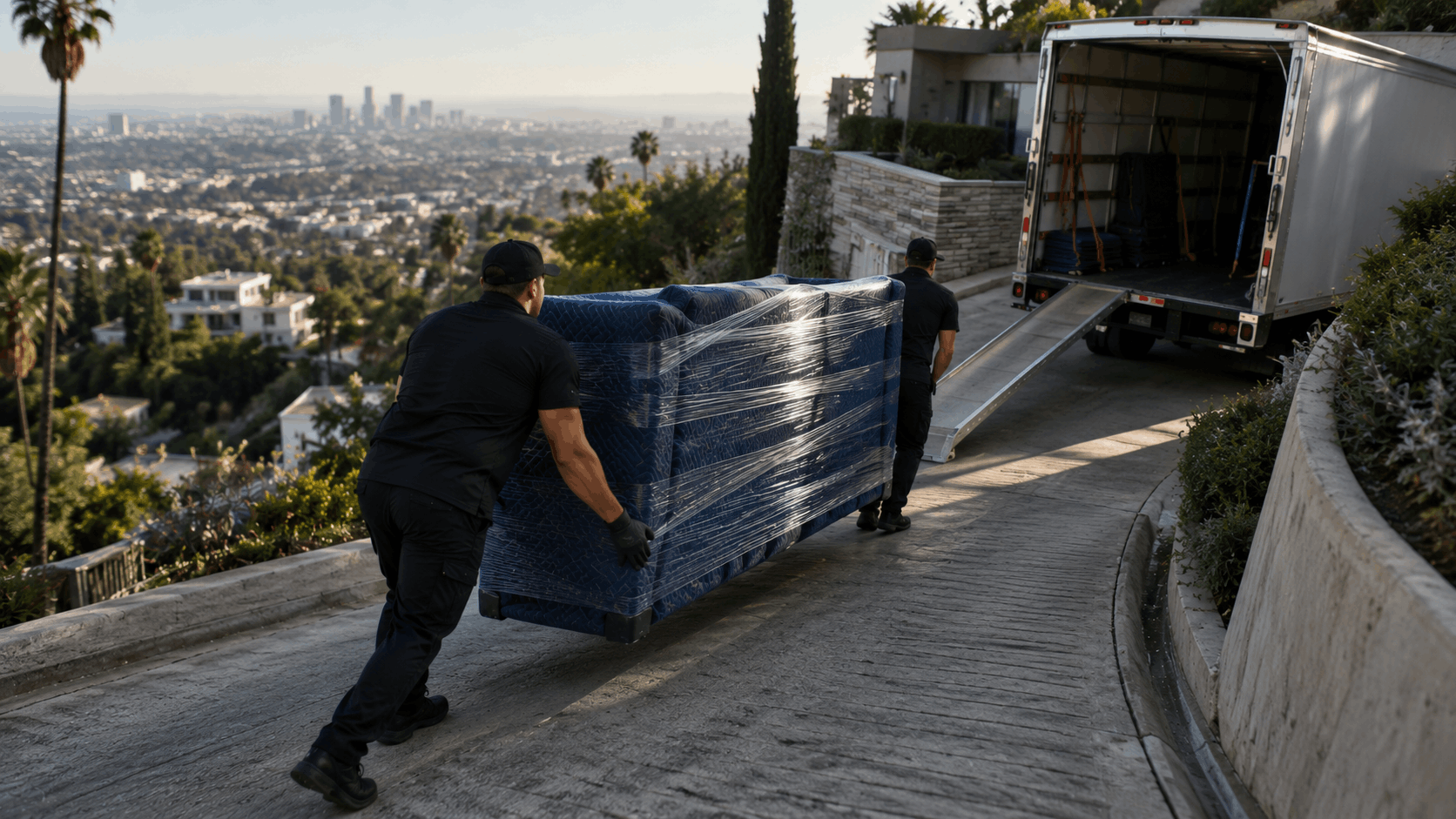
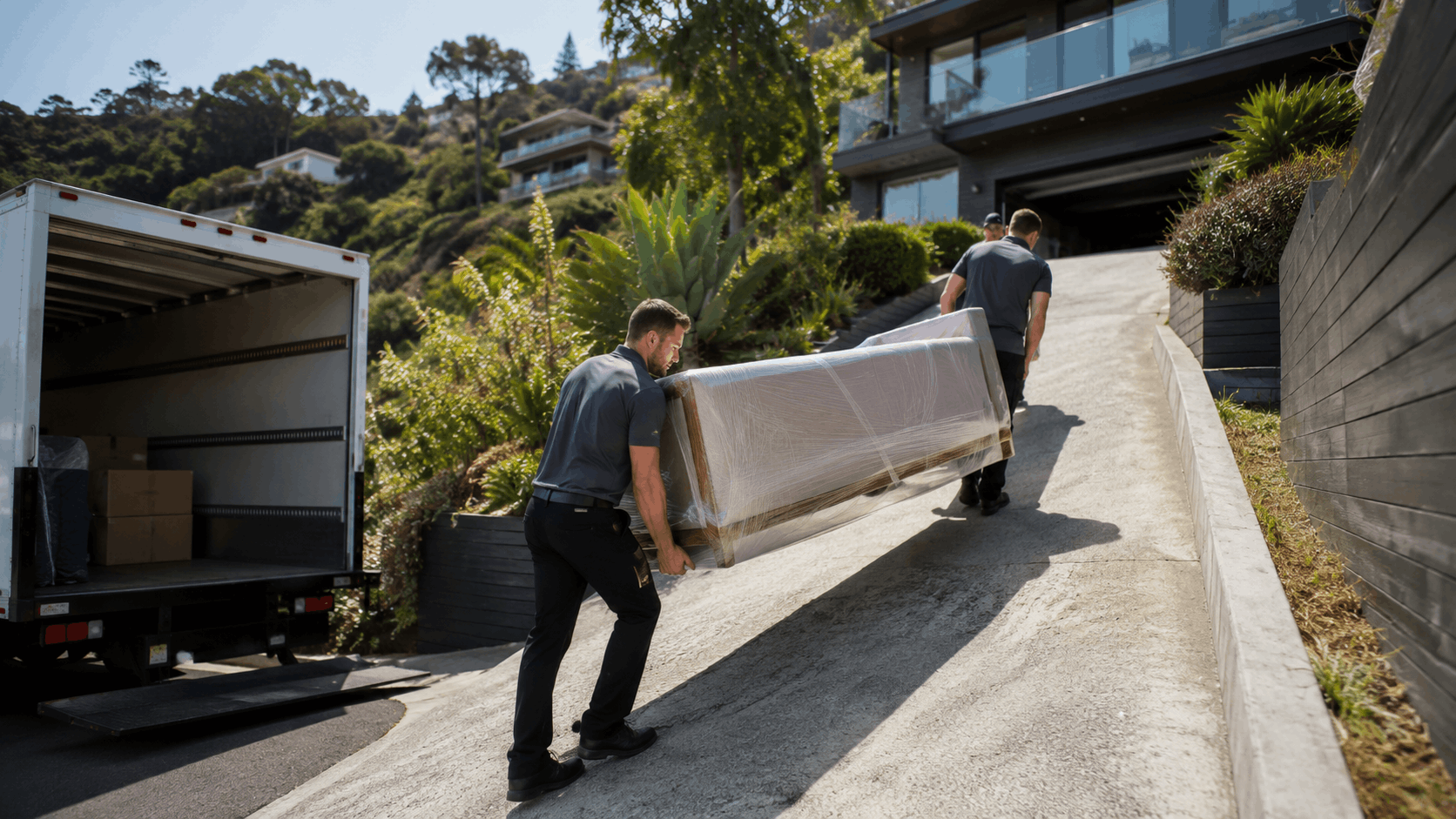
The answer sat right in her own driveway. Her home dropped forty feet below the road, connected by a long staircase and a steep concrete drive too narrow for a full-size truck. Every box, every couch, and every dresser had to travel farther and slower than it would on a flat street.
How Hollywood Hills Terrain Changes a Standard Move
Moving a home in the Hollywood Hills is nothing like moving one on the grid streets of Culver City or Mid-City. Down on the flats, a truck parks at the curb, and crews roll dollies straight to the front door. Up in the hills, the land fights back at every step.
The geography here forces slower work. Homes cling to slopes, roads twist without warning, and there is rarely a flat, open spot to park a 26-foot truck. Before we lift a single box, the terrain has already added time to the day.
- Roads climb and curve, so trucks approach slowly and sometimes cannot fit at all.
- Houses sit above or below the street, adding stairs to nearly every carry.
- Curb space is tight, which often means a shuttle vehicle and extra trips.
Once you understand these three forces, the longer timeline on a Hollywood Hills moving job starts to make sense. Here is how each one plays out on real streets.
Winding Roads Around Mulholland and Laurel Canyon
Mulholland Drive is beautiful to drive on a Sunday afternoon. It is a headache for a moving truck. The tight switchbacks and blind curves mean our drivers crawl through sections that would take seconds on a straight road. A large truck has to swing wide, slow down, and sometimes wait for oncoming cars to pass before creeping forward.
Laurel Canyon Boulevard runs through the heart of the hills, and its side streets are worse. Many of them barely fit two cars side by side. When a moving truck meets a delivery van or a trash pickup on one of these narrow roads, everything stops until someone backs up and finds a wider spot.
Because of this, we often swap a full-size truck for a smaller vehicle on the toughest routes. That decision protects the truck, the crew, and the neighbors' parked cars. It also means we may need more than one trip, which is one of the first places extra hours creep into the day.
Our drivers know which turns on Mulholland and Laurel Canyon are passable and which ones will trap a big rig. That local read saves time before we even arrive, since we plan the approach around the roads that actually work.
Homes Built Into the Hillside
Plenty of hillside homes off streets like Woodrow Wilson Drive sit well above or below the road. From the curb, you might see a mailbox, a gate, and a long flight of stairs disappearing down the slope. The living space could be one, two, or even three levels away from where the truck parks.
That elevation change turns a simple carry into a workout. A crew might climb thirty or forty steps with each load, then climb back up empty to grab the next one. On a flat move, a mover makes that round trip in under a minute. On a staircase carry, the same trip can take three or four times as long.
Heavier items multiply the problem. A sofa, a fridge, or a dresser needs two or three movers working together on a narrow staircase. They pause to reset their grip, check footing, and clear each corner. Every one of those pauses is safe and correct, and every one adds seconds that stack into hours by day's end.
We map out the stair route during our survey so the crew knows the plan before move day. Knowing whether a home sits above or below the road tells us how many crew members to send and how much time to block off for the hillside access.
Limited Truck Parking and Street Width
Near Nichols Canyon, the curbs are thin and the streets are thinner. There is often no legal spot wide enough to hold a full-size moving truck without blocking traffic or a neighbor's driveway. When that happens, the big truck cannot get close, and the whole job changes shape.
The fix is a shuttle service. We park the large truck at a wider spot down the hill, then use a smaller vehicle to run loads back and forth to the home. The shuttle handles the tight street width that a 26-foot truck simply cannot manage.
That extra step works, but it adds trips. Each shuttle run means loading the small truck, driving up, unloading at the door, and driving back down for more. On a large home, the crew might make a dozen shuttle trips over the course of the day.
We always flag truck parking limits early so nobody is surprised on move day. If your street cannot hold a full-size truck, we plan the shuttle into the timeline and the quote from the start.
Get Your Free Quote
Tell us about your move and we'll get back to you fast.
Why Steep Driveways Add 1 to 3 Hours
The single biggest time factor on a hillside job is the driveway itself. A steep, angled drive changes how fast a crew can move and how far each item has to travel. This is the core reason steep driveway moving takes longer than a flat move of the same size.
Homeowners often underestimate this because the house looks manageable. The furniture is the same, and the box count is the same. The driveway grade is what stretches the moving time estimate by one to three hours.
- Longer walking distance from the truck to the door multiplies every trip.
- Crews slow down on inclines to protect furniture and stay safe.
- Extra equipment setup for the grade eats time before loading starts.
Here is a closer look at each factor, plus a real example from a job near Runyon Canyon.
Longer Walking Distance From Truck to Door
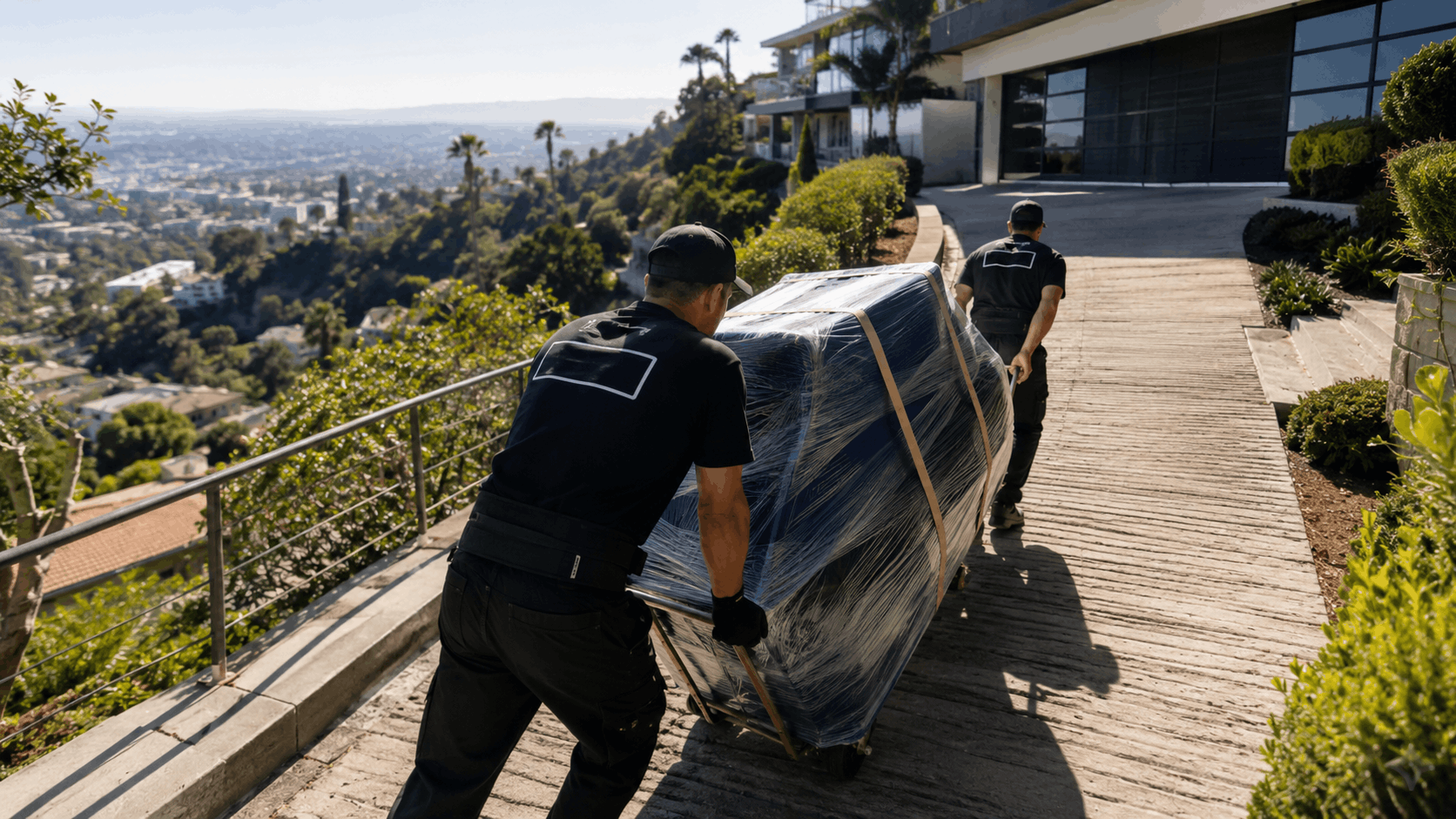
When a truck parks at the bottom of a steep drive, the door might sit a hundred feet up the hill. That distance does not sound like much until you realize every single box travels it. A move with 150 boxes means 150 trips up that slope, plus the walk back down each time.
Carry distance is one of the most overlooked parts of a quote. On a flat driveway, the truck sits a few steps from the door, so a mover makes quick round trips. On a long hillside drive, each round trip might take two or three minutes instead of thirty seconds.
Multiply that gap across an entire home and the moving trips add up fast. Two extra minutes per trip across two hundred trips is nearly seven added hours of walking spread across the crew. Even with a larger team, the math points straight at a longer day.
We size the crew around this carry distance. A longer walk from the truck often means we send an extra mover so the trips overlap and the clock does not run wild.
Slower Pace for Safety on Inclines
A steep driveway is a slip hazard, especially when a mover is carrying a heavy dresser and cannot see their feet. Our crews slow their pace on any angled surface to keep their footing solid. That careful pace protects both the movers and your belongings.
Loose gravel, wet concrete, or a driveway that drops off at the edge all raise the risk. On these surfaces, a mover plants each step before shifting weight. Rushing on an incline is how furniture gets dropped and people get hurt, so we never do it.
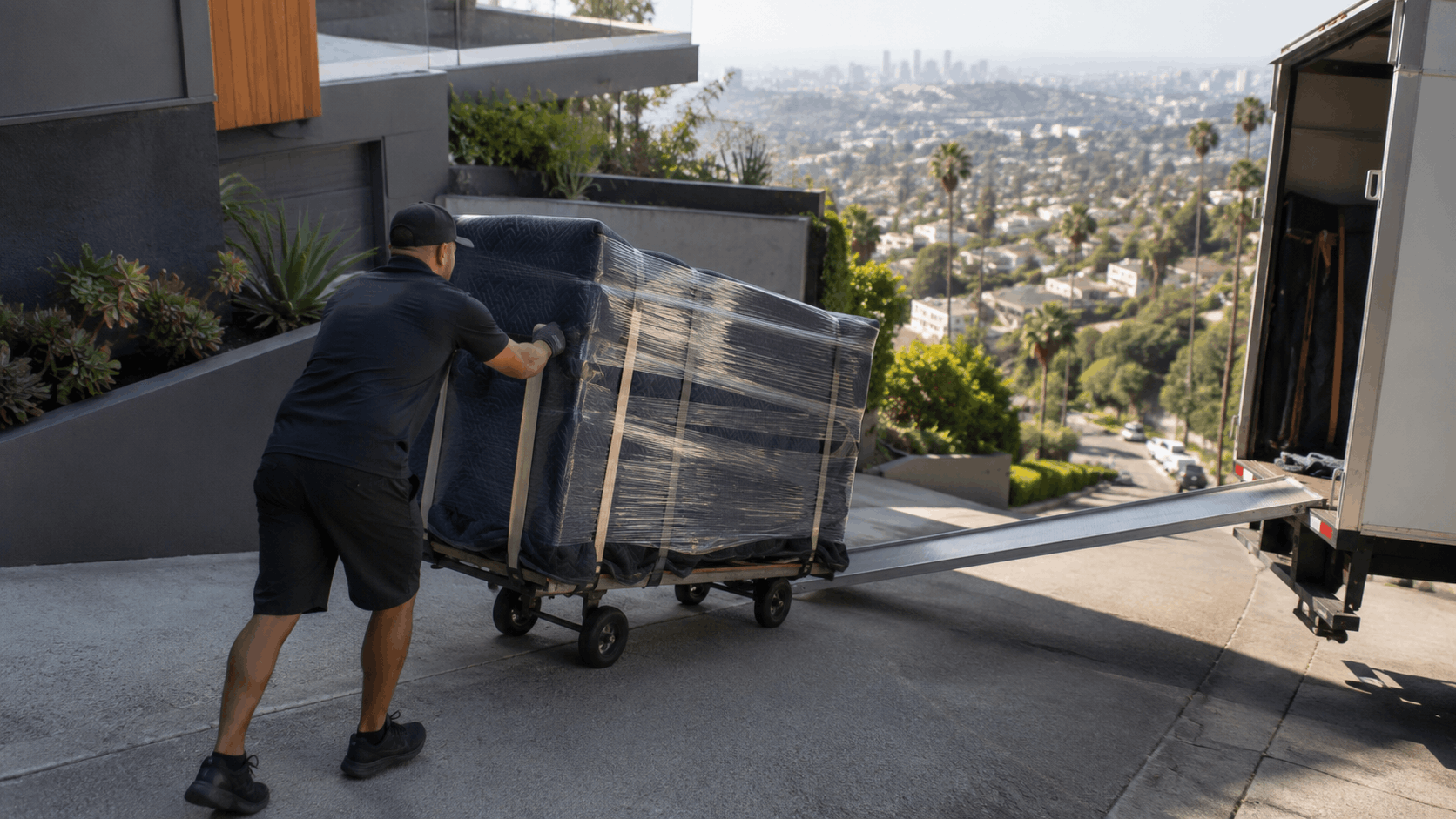
Furniture protection also slows the mover pace on a grade. A dolly loaded with boxes wants to roll downhill on its own, so the crew has to control it every foot of the way. Straps and a firm grip keep it steady, but that control takes time and focus.
The trade-off is worth it. A move that runs thirty minutes longer because of incline safety is far better than one that ends with a damaged antique or an injured crew member. Slow and steady wins on a hillside.
Equipment Setup for Grades and Curves
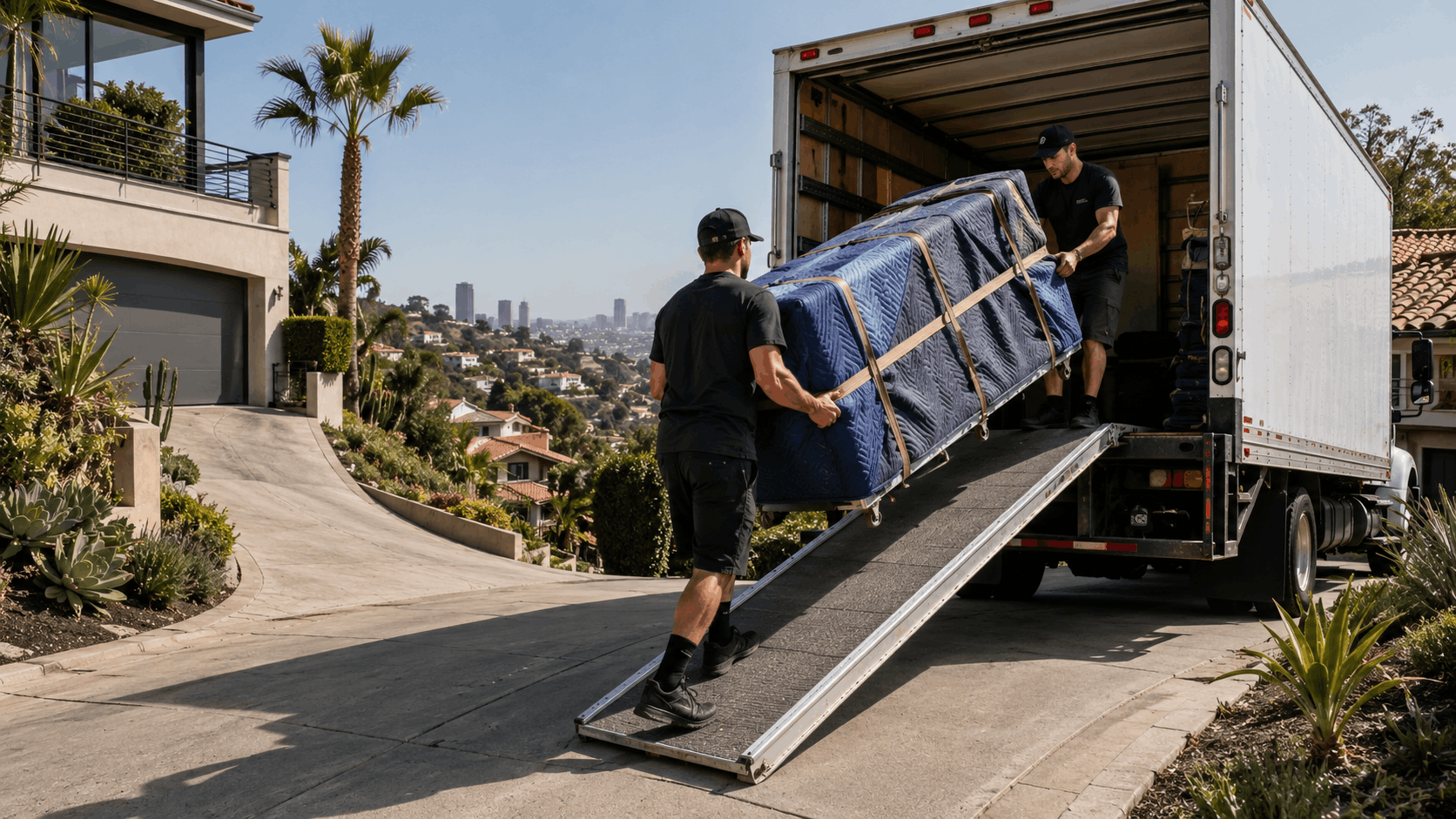
Before the first box moves, a hillside job needs the right gear in place. On a sloped driveway, that means positioning ramps, choosing the correct dollies, and rigging straps that hold a load steady on an angle. This setup happens before loading even begins.
Flat moves need little of this. On a level street, a crew drops the truck ramp, grabs a dolly, and starts working within minutes. On a grade, we take time to secure ramps so they do not shift and to test the footing where the dolly will roll.
Ramps and dollies suited to a curve or incline are different from the standard set. We may use four-wheel dollies for stability, wider straps for heavy pieces, and extra padding at points where a load could bump the ground on a slope. Pulling out and placing that equipment is real setup time.
We factor this setup into the schedule so the crew is not scrambling. A clean setup at the start actually saves time later, because a well-placed ramp and the right moving equipment keep the loading rhythm steady.
Real Examples From Hollywood Hills Jobs
A couple near Runyon Canyon booked us for what looked like a straightforward two-hour job. The apartment was small, the box count was low, and on paper it was quick. Then we saw the driveway, which dropped steeply from the street to a lower entrance with a short staircase.
That job ran four hours instead of two. The truck could not park close, so we carried everything up a long, angled path to the shuttle. The added hours came entirely from the driveway angle and the carry distance, not the amount of stuff.
Another job off a Bird Streets lane looked like a three-hour move by furniture volume. The gated driveway and a tight motor court meant the crew hand-carried pieces the truck could not reach directly. That one landed at five and a half hours.
These examples show why we quote a range for hillside homes. The added hours are real and predictable once we see the property, which is why an honest survey matters so much on these jobs.
Need Help in Los Angeles?
Popeye Moving & Storage serves Los Angeles and all of Los Angeles County.
How Popeye Moving Prices Hillside Moves
We believe in clear, honest pricing, especially on hillside jobs where surprises are easy to hit. Our Hollywood Hills move pricing starts with a straightforward hourly rate, then adds terrain adjustments only when the property calls for them. You should always know why a number is what it is.
The goal is a moving quote with no hidden fees. Below is a simple breakdown of how the pieces fit together on a typical hillside estimate.
| Pricing Component | What It Covers | When It Applies |
|---|---|---|
| Base Hourly Rate | Crew, truck, dollies, basic protection | Every move |
| Access / Hillside Fee | Long carry, stairs, steep driveway grade | Hillside homes with difficult access |
| Shuttle Charge | Smaller truck for tight streets | When a full-size truck cannot reach the home |
| Survey Adjustment | Time range refined after walkthrough | After in-person or video survey |
Our local residential moving team uses this structure on every hillside job in Los Angeles so the final bill matches the estimate closely.
Hourly Rates and What They Include
Every quote starts with a base hourly rate. That rate covers the crew, the truck, fuel within the local area, dollies, and standard moving blankets. For a typical two- or three-person crew, this hourly moving rate is the foundation of the whole estimate.
Crew size drives that rate. A two-mover crew costs less per hour than a four-mover crew, but a bigger crew often finishes faster, which can lower the total. On hillside jobs, a larger crew usually pays off because the carry distance rewards more hands.
The base quote assumes normal access before any terrain factors. It reflects the raw work of loading, driving, and unloading your home under standard conditions. From there, we layer in only the adjustments your specific property needs.
We walk clients through this base rate so they understand what they are paying for. When you see the hourly number, you know it includes the truck, the team, and the basic gear, not a pile of vague extras.
Access Fees and Shuttle Charges
When a street is too narrow for the main truck, we bring a smaller shuttle vehicle. That shuttle shows up as a separate line on the estimate because it takes an extra truck and adds trips. The access fee reflects the real added labor, not a padded markup.
The hillside surcharge covers long carries and heavy staircase work. If your home sits forty feet below the road with a steep driveway, the crew spends far more energy and time per item. The access fee makes that visible instead of hiding it in a fuzzy total.
We only apply a shuttle charge when the terrain requires it. If a full-size truck can safely reach your door, there is no shuttle and no shuttle fee. We would rather use the big truck whenever the street allows, since it is faster and cheaper for everyone.
Being upfront about these charges is how we keep trust. You will hear about any access fee or shuttle charge during the survey, long before move day, so the final number never catches you off guard.
Why Popeye Moving Does In-Person or Video Surveys
Photos rarely capture a steep driveway or a hidden staircase. That is why we offer both in-person and video surveys before quoting a hillside home. A quick walkthrough of a property near Outpost Estates tells us more than a dozen phone questions ever could.
During the survey, we look at the driveway grade, the carry distance, the stairs, and the street width. We check where the truck can park and whether a shuttle is needed. All of that feeds directly into an accurate estimate for your specific home.
A video survey works well when your schedule is tight. You walk your phone through the house and along the driveway while we ask questions in real time. It captures the same details as an in-person visit for most homes.
The payoff is a moving quote you can trust. When we have seen the terrain, the time and cost range reflects reality, and the day tends to run right on schedule. You can start the process anytime through our contact page.
Neighborhood-Specific Challenges Across the Hills
The Hollywood Hills are not one single place. Each pocket has its own roads, gates, and grades, and each one presents different local moving challenges. Knowing these access issues ahead of time is how we keep hillside jobs on track.
Here is a quick look at how the challenges differ across the Hollywood Hills neighborhoods we serve most often.
| Area | Main Access Issue | Common Fix |
|---|---|---|
| Beachwood Canyon | Old stone gates, narrow lanes | Smaller shuttle truck |
| Sunset Plaza | Steep grades, cliff-side lots | Extra crew, slow pacing |
| Bird Streets | Private gates, small motor courts | Early gate coordination |
| Nichols Canyon | Wildfire season closures | Flexible scheduling |
Beachwood Canyon and the Hollywoodland Gates
Beachwood Canyon climbs toward the old Hollywoodland stone gates near Beachwood Drive. Those historic gates are charming, and they are also tight. A full-size truck often cannot pass through or turn around in the narrow lanes above them.
The streets past the gates were laid out generations ago for smaller cars. They wind, they pinch, and they leave little room for a large moving truck to maneuver. Meeting an oncoming car on one of these lanes can bring a move to a standstill.
We usually plan a shuttle for homes above the Hollywoodland gates. The main truck stays at a wider staging spot, and a compact vehicle handles the narrow lanes. It keeps the neighbors happy and the move moving.
Knowing the gate clearance ahead of time saves a wasted trip. We check the route during the survey so we never send a truck that cannot fit through the historic entrance.
Sunset Plaza and Steep Grades Above the Strip
Sunset Plaza Drive rises sharply above the Sunset Strip, and the homes up there sit on some of the steepest lots in the city. Many are cliff-side properties stacked on multiple levels, with garages and entrances tucked at odd angles to the road.
The steep grade on these streets tests both the truck and the crew. Loading uphill and controlling dollies on a sharp incline demands extra care and extra hands. This is exactly the kind of terrain that adds hours to a move.
For cliff-side lots, we send a larger crew and plan a slower, safer pace. The extra movers keep the trips overlapping so the added carry time does not balloon. Careful footing on the grade protects everyone and everything.
Homes near the Strip also share tight access with West Hollywood traffic. Our crews who handle moves around the Sunset Strip know how to time the approach around the busiest hours.
Bird Streets and Gated Driveways
The Bird Streets near Doheny sit among the most exclusive addresses in the hills. Many homes here have private gates and small motor courts rather than open driveways. Those features add a slow, careful entry process to the start of every move.
A gated driveway means someone has to open the gate, and the truck has to fit through it. Some motor courts are barely large enough for a full-size truck to turn, so the crew maneuvers slowly to avoid clipping a wall or a parked car.
We coordinate gate access before move day whenever possible. Knowing the gate code, the turning space, and where the truck can stage keeps the entry from stealing an hour at the front of the job.
These homes often hold high-value furnishings, so we bring our specialty moving gear for delicate pieces. The tight motor courts make careful handling even more important during the carry.
Nichols Canyon Wildfire Season Timing
Nichols Canyon Road runs through dry, brush-covered slopes. During wildfire season, this area faces real fire risk, and road closures can appear with little notice. Those closures can affect both scheduling and access on move day.
Late summer and fall are the driest months here. When conditions spike, authorities may restrict access to canyon roads for safety. A move planned for one of those days might need to shift on short notice.
We watch fire and road conditions closely during the dry season. If a closure threatens your date near Nichols Canyon, we work with you to reschedule or adjust the timing so nobody is caught in a risky situation.
Booking with some flexibility helps during these months. Building a little cushion into your move date makes it easier to work around any wildfire season closures without a scramble.
Preparing Your Hillside Home to Save Time and Money
The good news is that homeowners can cut down the hours a steep driveway adds. A little prep before move day makes a real difference in the final bill. These steps are simple, and they directly lower the labor time on a hillside home.
Here is how to save money moving from a hillside property, based on what we see work again and again.
Clear the Driveway and Reserve Space
The first step is to get your own cars off the driveway. A steep drive is tight enough without personal vehicles blocking the crew's path. Moving your cars down the hill or to a friend's spot opens up the closest staging area.
Driveway clearing also means removing bikes, trash bins, and planters that crowd the walkway. Every obstacle the crew has to step around slows the carry. A clear path lets movers keep a steady rhythm up and down the slope.
If your street is narrow, talk to your neighbors ahead of time. Ask them to leave the nearest curb space open on move day so the truck or shuttle can park as close as possible. A little neighbor coordination can save a shuttle trip or two.
The closer we can park, the shorter the carry distance. That single change often trims thirty minutes to an hour off a hillside job, which shows up directly in a lower total.
Box Early and Stage Near the Exit
Packing early is the best money-saver on any move. When every item is boxed and sealed before the crew arrives, they can load without waiting on you to finish. Half-packed rooms are one of the most common reasons a move runs long.
On a hillside home, staging matters even more. Move your packed boxes to the room closest to the exit door the night before. That way the crew grabs loads from one central spot instead of hunting through the whole house.
Short carry trips inside the home add up just like they do on the driveway. Staging boxes near the exit shrinks the indoor distance so the crew spends their energy on the slope, not on the hallway. It keeps the whole operation efficient.
If packing feels like too much, our full-service packing team can handle it for you. Either way, having everything boxed and staged before move day is the surest path to fewer hours.
Check Permits and HOA Rules
Some tight hillside streets qualify for a temporary no-parking permit. The Los Angeles Department of Transportation issues these permits so a moving truck can hold a spot on a narrow road. Reserving curb space this way can shorten the carry a lot.
An LADOT no-parking permit takes a few days to arrange, so plan ahead. Posting the signs in advance keeps other cars from taking the spot you need on move day. On a crowded canyon street, that reserved space is worth the small permit cost.
Gated communities and some hillside HOAs have their own move rules. They may limit move hours, require a certificate of insurance, or restrict which entrance trucks can use. Check these rules early so nothing blocks your date.
We are happy to help you sort out permits and HOA requirements. Handling this paperwork before move day removes one more source of delay from an already busy morning.
Need Help in Los Angeles?
Popeye Moving & Storage serves Los Angeles and all of Los Angeles County.
What Popeye Moving Brings to Hillside Jobs
Years of working these streets have taught us what a hillside move demands. The right equipment, trained crews, and real local knowledge are what turn a hard job into a smooth one. Here is what we bring to every Hollywood Hills move.
Our residential moving services are built to handle the exact terrain that trips up other companies.
Smaller Shuttle Trucks for Tight Streets
A 26-foot truck cannot make it up roads like Wonderland Avenue. The turns are too sharp and the lanes too thin. For homes on streets like this, we bring a compact shuttle truck that fits where the big rig cannot.
The shuttle truck stages loads from a larger vehicle parked at a wider spot. It runs up and down the hill, delivering furniture and boxes right to the door. This is often the only way to reach the most tucked-away hillside homes.
Using the right size vehicle also protects the neighborhood. A compact truck does not block traffic or scrape parked cars on a narrow lane. It keeps the move courteous as well as efficient.
We decide on the shuttle during the survey, not on the fly. That planning means the smaller truck is ready on move day, and the crew never wastes time discovering a street the main truck cannot handle.
Trained Crews for Stairs and Slopes
Carrying a heavy dresser down forty steps is a skill, not a guess. Our crews train on safe methods for long staircase carries and angled driveways. They know how to share a load, plant their feet, and keep control on a slope.
Safe lifting starts with technique. The team uses their legs, keeps loads close, and communicates every step on a staircase. This training prevents the strains and drops that happen when untrained movers rush a hillside carry.
On a slope, footing and balance matter as much as strength. Our movers test each step and adjust their grip as the grade changes. That steady, practiced approach is why our hillside jobs finish without damage.
Experience across hundreds of hill homes sharpens these skills. A trained crew reads a staircase or a steep drive quickly and picks the safest route without wasting time figuring it out.
Protective Materials for Furniture and Floors
A slower hillside carry gives us more time to protect your belongings, and we use it. Every valuable piece gets wrapped in moving blankets before it leaves the house. Straps hold pieces firmly so nothing shifts on an incline.
Furniture protection matters most on stairs and slopes, where a bump is more likely. Padded corners and blankets guard against scrapes when a crew navigates a tight turn. Wrapping takes a few extra minutes and prevents costly damage.
We also protect your home itself. Floor runners go down over hardwood and tile to shield them from grit tracked in on a busy carry path. Door frames get padded where heavy items pass through.
For fragile or high-value items, we add custom crating. If you own a piano, our piano moving specialists use gear made for stairs and grades so the instrument arrives in perfect shape.
Local Route Knowledge and Timing
Knowing the roads is half the battle in the hills. Our drivers know how Cahuenga Boulevard and Highland Avenue back up at rush hour and which times keep the approach clear. That route planning saves real time before we ever reach your street.
Local knowledge also means knowing shortcuts and staging spots. We know where a large truck can safely park near a canyon road and which side streets connect without a dead end. That saves the crew from wrong turns and backtracking.
Timing the arrival matters too. We schedule hillside moves to dodge the worst traffic on the main arteries feeding the hills. Getting the truck in position early keeps the whole day on schedule.
This local read comes from working these streets constantly. When you hire a crew that already knows the hills, you skip the learning curve that slows down out-of-area movers.
Getting an Accurate Quote Before Move Day
The best way to avoid surprise charges is to get a clear moving estimate up front. On a hillside home, that means sharing the right details and understanding how the terrain shapes the number. Here is how to request and read an accurate quote.
What to Share During the Survey
During the survey, tell us everything about your driveway. Mention its length, its steepness, and whether the truck can reach the door. These survey details are what separate a rough guess from an accurate estimate.
Stairs are the next big factor. Count the steps between the parking spot and the entrance, and note any interior stairs between floors. The more we know about the staircase carry, the tighter your time range will be.
Parking info rounds out the picture. Tell us how wide your street is, whether there is a legal spot for the truck, and if a permit might be needed. Sharing all of this gives us a fair, honest estimate with no blind spots.
Do not downplay the tough parts to get a lower number. A survey that hides a steep drive only leads to a longer day and a higher final bill. Honesty on both sides keeps the quote and the reality aligned.
Reading Time and Cost Ranges
Hillside quotes come as a range, not a single number. That range accounts for the 1 to 3 extra hours a steep drive can add. The low end assumes smooth access, and the high end covers the toughest conditions we might hit.
The cost range follows from the time range because the work is hourly. If the carry goes faster than expected, you land near the low end. If the driveway or stairs slow things down, you land higher, but never above the range we quoted.
Read the range as a promise about the ceiling. A good hillside estimate tells you the most the move should cost, so there are no shocks at the end. That is how we handle every quote in the hills.
Ask us to explain what would push your job to one end or the other. Knowing which factors matter most helps you decide where to focus your prep and how to hold the total down.
Questions to Ask Any Hollywood Hills Mover
Before you book any Hollywood Hills mover, ask a few pointed questions. Ask whether a shuttle truck will be needed and how the shuttle fee is calculated. A mover who has worked the hills will answer clearly and without hesitation.
Ask about moving insurance and what coverage comes standard. Understand how they protect furniture on stairs and slopes, and what happens if something is damaged. A serious company will explain its coverage plainly.
Finally, ask about their hillside experience directly. How often do they work streets like Laurel Canyon or the Bird Streets? A crew that knows these roads will save you time and stress that an inexperienced mover cannot.
You can put these questions to our team anytime, along with anything else on your mind. We would rather answer ten questions before booking than leave you guessing on move day. Reach out through our Los Angeles moving page to get started.
Need Help in Los Angeles?
Popeye Moving & Storage serves Los Angeles and all of Los Angeles County.
Final Thoughts
Steep driveways, winding roads, and hillside homes are simply part of moving in the Hollywood Hills. They add 1 to 3 hours to most jobs because the terrain forces longer carries, slower pacing, and extra equipment. None of that is padding, it is the real work the land demands.
The way to handle it is honest pricing and smart prep. Clear your driveway, box early, sort out permits, and get an accurate survey. Do those things with an experienced local crew, and your hillside move stays smooth and predictable.
Our team has worked these streets for years, from Beachwood Canyon to the Bird Streets. If you are planning a move in the Hollywood Hills, call Popeye Moving & Storage Co. or reach out through our contact page for a clear, honest quote. We will walk your property, explain the numbers, and get you moved right.
Frequently Asked Questions
Why does a steep driveway make my move cost more?
A steep driveway costs more because it adds labor hours, and hillside moves are priced by the hour. The truck often parks farther from your door, so every box and piece of furniture travels a longer carry distance. Crews also slow their pace on inclines to stay safe and protect your belongings. More time on the clock means a higher total, even for a small home.
How much time do steep driveways usually add?
Most steep driveways add 1 to 3 hours to a Hollywood Hills move. The exact figure depends on the driveway length, how far the truck can park from the door, and the number of stairs. A short, moderate slope might add closer to an hour, while a long drive with stairs and a shuttle can push toward three or more. An in-person survey pins down your range.
Do I need a shuttle truck for my Hollywood Hills home?
You may need a shuttle if your street is too narrow for a full-size truck. Roads near Laurel Canyon, Beachwood Canyon, and parts of the Bird Streets often cannot fit a 26-foot truck safely. In those cases, we park the large truck at a wider spot and use a smaller shuttle to reach your door. We confirm whether a shuttle is needed during the survey, so you know before move day.
Can I reduce the extra hours myself?
Yes, and a little prep goes a long way. Pack everything before move day so the crew never waits on you. Clear personal cars, bins, and clutter off the driveway so the path stays open. Stage your boxes in the room closest to the exit door to shorten every carry trip. These simple steps can trim thirty minutes to an hour off a hillside job.
Are hillside moving quotes hourly or flat rate?
Our hillside quotes are hourly, with terrain-based access adjustments layered on top. The base rate covers the crew, truck, and standard gear. When a home has a steep driveway, long stairs, or a narrow street, we add an access fee or shuttle charge to reflect the extra work. You receive a time and cost range up front so you know the ceiling before we start.
Do I need a parking permit for the moving truck?
On many tight hillside streets, a temporary no-parking permit helps a lot. The Los Angeles Department of Transportation issues these permits so the truck can reserve curb space close to your home. Posting the signs a few days early keeps other cars out of the spot. A reserved space shortens the carry distance and can save you real time on move day.
How does wildfire season affect my move date?
During the dry season, usually late summer and fall, canyon roads like Nichols Canyon Road can face fire risk and short-notice closures. If a closure threatens your scheduled date, we work with you to adjust the timing or reschedule for safety. Booking with a little flexibility during these months makes it easier to work around any closures without a stressful scramble.
What happens if the truck cannot reach my driveway?
If the main truck cannot reach your driveway, we use a shuttle process. The large truck stays at a wider staging spot, and a smaller vehicle runs loads up to your door. This adds trips and some time to the day, which shows up as a shuttle charge on your estimate. We plan this in advance during the survey so the cost and timeline are clear from the start.
How far in advance should I book a Hollywood Hills move?
Book two to four weeks ahead for a Hollywood Hills move when you can. That window gives us time for an in-person or video survey and leaves room to arrange any LADOT parking permit or HOA approval. Busy months and weekends fill up faster, so booking early locks in your date. For last-minute needs, contact us and we will do our best to fit you in.
Does furniture get damaged on steep driveways?
Not when it is handled properly. Our crews slow their pace on inclines and wrap every valuable piece in moving blankets and straps before the carry. On stairs and slopes, extra hands keep heavy items steady, and padded corners guard against bumps. The slower hillside pace is exactly what keeps furniture safe, so damage is rare on our jobs.
Frequently Asked Questions
- Why does a steep driveway make my move cost more?
- A steep driveway costs more because it adds labor hours, and hillside moves are priced by the hour. The truck often parks farther from your door, so every box and piece of furniture travels a longer carry distance. Crews also slow their pace on inclines to stay safe and protect your belongings. More time on the clock means a higher total, even for a small home.
- How much time do steep driveways usually add?
- Most steep driveways add 1 to 3 hours to a Hollywood Hills move. The exact figure depends on the driveway length, how far the truck can park from the door, and the number of stairs. A short, moderate slope might add closer to an hour, while a long drive with stairs and a shuttle can push toward three or more. An in-person survey pins down your range.
- Do I need a shuttle truck for my Hollywood Hills home?
- You may need a shuttle if your street is too narrow for a full-size truck. Roads near Laurel Canyon, Beachwood Canyon, and parts of the Bird Streets often cannot fit a 26-foot truck safely. In those cases, we park the large truck at a wider spot and use a smaller shuttle to reach your door. We confirm whether a shuttle is needed during the survey, so you know before move day.
- Can I reduce the extra hours myself?
- Yes, and a little prep goes a long way. Pack everything before move day so the crew never waits on you. Clear personal cars, bins, and clutter off the driveway so the path stays open. Stage your boxes in the room closest to the exit door to shorten every carry trip. These simple steps can trim thirty minutes to an hour off a hillside job.
- Are hillside moving quotes hourly or flat rate?
- Our hillside quotes are hourly, with terrain-based access adjustments layered on top. The base rate covers the crew, truck, and standard gear. When a home has a steep driveway, long stairs, or a narrow street, we add an access fee or shuttle charge to reflect the extra work. You receive a time and cost range up front so you know the ceiling before we start.
- Do I need a parking permit for the moving truck?
- On many tight hillside streets, a temporary no-parking permit helps a lot. The Los Angeles Department of Transportation issues these permits so the truck can reserve curb space close to your home. Posting the signs a few days early keeps other cars out of the spot. A reserved space shortens the carry distance and can save you real time on move day.
- How does wildfire season affect my move date?
- During the dry season, usually late summer and fall, canyon roads like Nichols Canyon Road can face fire risk and short-notice closures. If a closure threatens your scheduled date, we work with you to adjust the timing or reschedule for safety. Booking with a little flexibility during these months makes it easier to work around any closures without a stressful scramble.
- What happens if the truck cannot reach my driveway?
- If the main truck cannot reach your driveway, we use a shuttle process. The large truck stays at a wider staging spot, and a smaller vehicle runs loads up to your door. This adds trips and some time to the day, which shows up as a shuttle charge on your estimate. We plan this in advance during the survey so the cost and timeline are clear from the start.
- How far in advance should I book a Hollywood Hills move?
- Book two to four weeks ahead for a Hollywood Hills move when you can. That window gives us time for an in-person or video survey and leaves room to arrange any LADOT parking permit or HOA approval. Busy months and weekends fill up faster, so booking early locks in your date. For last-minute needs, contact us and we will do our best to fit you in.
- Does furniture get damaged on steep driveways?
- Not when it is handled properly. Our crews slow their pace on inclines and wrap every valuable piece in moving blankets and straps before the carry. On stairs and slopes, extra hands keep heavy items steady, and padded corners guard against bumps. The slower hillside pace is exactly what keeps furniture safe, so damage is rare on our jobs.
P
Popeye Moving & Storage Co. Team Team
Licensed moving and storage professionals serving Los Angeles and Los Angeles County.
Licensed in California · License #PUC: CAL T 189749 | DOT: 1472924 | MC: 498816C
Why trust Popeye Moving & Storage?
Founded in 1994, Popeye Moving & Storage is a licensed and insured moving and storage service serving Los Angeles and Los Angeles County. All content is reviewed by our licensed technicians.

Need Help in Los Angeles?
Popeye Moving & Storage serves Los Angeles and all of Los Angeles County.
Related Articles
Cost Guides
Beverly Hills Moving Cost: 4-Bedroom Estate Move Pricing Breakdown
A clear pricing breakdown for a 4-bedroom estate move in Beverly Hills, covering cost ranges, local fees, packing, storage, and how to compare quotes.
Cost Guides
Movers in Beverly Hills: COI Requirements and Estate Move Pricing
A local guide to COI requirements and estate move pricing in Beverly Hills, covering insurance limits, high-value item handling, and move day planning from Popeye Moving.
Tips & Advice
Moving in the LA Hills: What Steep Streets and Narrow Roads Mean for Your Move
Hillside moves in Los Angeles aren’t like flat-land moves. Here’s what to expect with steep streets, narrow roads, and limited truck access in neighborhoods from Hollywood to Brentwood.