How-To Guides
Contents Storage During an LA Remodel: Pack-Out, Vaulted Hold, and Redelivery Room by Room
Key Takeaways
- Contents storage during a remodel runs in three stages: pack-out, vaulted hold, and room-by-room redelivery.
- Older LA homes in areas like Highland Park and Echo Park create heavy dust and contractor traffic that make onsite storage risky.
- Vaulted hold seals belongings in dedicated wood containers at a climate-controlled warehouse, protecting them better than a self-storage locker.
- Match your storage duration to a realistic contractor timeline and add a buffer for permit and inspection delays.
- Room-by-room redelivery uses inventory tags to return each item to its correct room and reassemble furniture the same day.
- Pack-out labor runs roughly $800 to $3,000 or more, with monthly vault storage around $75 to $150 per vault.
- Local LA experience with neighborhood access, LADOT parking permits, and HOA elevator rules keeps move days on schedule.
- Confirm licensing through the CPUC and valuation coverage before trusting any company with your belongings.
In This Article
A homeowner in Silver Lake signs off on a kitchen remodel. The contractor shows up, tapes off the room, and then asks the obvious question: where is all this furniture going to live for the next three months? The dining table, the china cabinet, the record collection, the guest bed in the room next door that will double as a staging zone - none of it has anywhere to go. That moment catches a lot of people off guard.
We see the same thing in Mar Vista, Highland Park, and half the bungalow blocks across the Eastside. Renovations kick up dust, saw dust, and a steady stream of workers tracking in and out. Belongings left in the middle of that get scratched, coated in grit, or worse. The fix is a proper contents storage plan built around three steps: a professional pack-out, a vaulted hold offsite, and a room-by-room redelivery once the work is done.
What Contents Storage Means During a Home Remodel
Contents storage during a home remodel is the practice of moving your belongings out of the house, holding them in offsite storage while the work happens, and bringing them back when construction wraps. It is different from a regular move because the destination is temporary and the goal is protection, not relocation.
Most homeowners have never done this before, so the language can be confusing. Below is a quick map of the terms you will hear from your crew and how each stage fits together.
| Term | What It Means | When It Happens |
|---|---|---|
| Pack-out | Crew packs, wraps, and loads your belongings | Before demolition starts |
| Vaulted hold | Items sealed in wooden vaults at a warehouse | Throughout the remodel |
| Redelivery | Items returned and placed room by room | After final inspection and cleaning |
| Partial pack-out | Only the rooms under construction get cleared | For single-room projects |
The Three Stages: Pack-Out, Hold, and Redelivery
The whole process breaks into three clear stages. Knowing the arc helps you plan your calendar and your budget from the start. It also keeps surprises to a minimum once the trucks arrive.
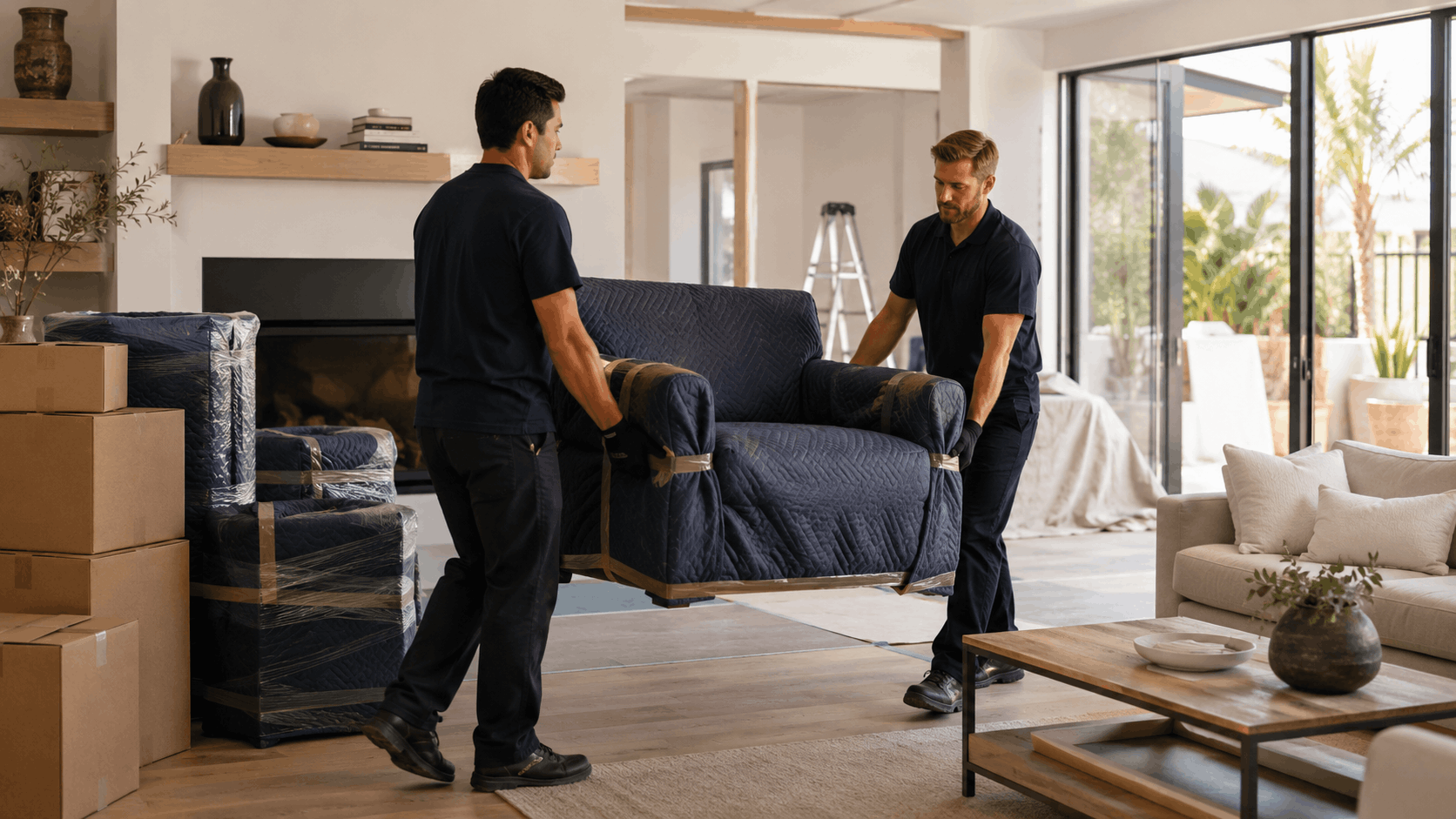
Stage one is the pack-out. A moving crew arrives before demolition, inventories every item, wraps the fragile pieces, disassembles large furniture, and loads it all onto the truck. This usually takes one to two days depending on the size of your home and how much you are storing.
Stage two is the hold. Your belongings sit sealed in vaults at a secure warehouse for the length of the remodel. This might be a few weeks for a bathroom or several months for a full gut renovation.
Stage three is redelivery. Once the work passes inspection and the house is clean, the crew brings everything back and places each item in its correct room. Our storage solutions team handles all three stages so you deal with one company from start to finish.
Why Renovations Near Older LA Homes Create Extra Risk
Older homes carry extra risk during a remodel, and Los Angeles has plenty of them. The Craftsman bungalows around Highland Park and the 1920s homes in Echo Park were not built with modern dust barriers in mind. When walls come down, decades of fine debris go airborne.
That dust does not stay in the work zone. It drifts through vents, under doors, and into rooms far from the actual construction. Fabric furniture, electronics, and books soak it up fast, and cleaning it out later is a headache.
Contractor traffic adds another layer. Workers carry tools, lumber, and drywall through hallways all day long. Anything left in the path gets bumped, scratched, or knocked over.
Onsite storage in a garage or spare room feels convenient, but in an older home it rarely offers real dust protection. Moving belongings offsite removes them from the risk entirely. That is why so many homeowners in these historic neighborhoods choose a full pack-out over trying to shuffle things around the house.
When to Store Everything vs. a Single Room
Not every remodel needs a full home clear. The right call depends on the scope of the work and how much dust and traffic the project will create. We help homeowners make this decision during the walkthrough.
A single-bathroom update or one bedroom refresh usually calls for a partial pack-out. We clear just the rooms under construction and leave the rest of the house intact. This keeps costs down and lets you keep living at home.
A full home clear makes sense for whole-house renovations, open-floor conversions, or projects where you are moving out anyway. When crews are opening ceilings or running new HVAC lines, dust travels everywhere, so protecting the entire contents is the safer play.
Kitchen remodels sit in the middle. The kitchen itself gets cleared, but the adjacent dining and living areas often need protection too because they share open sightlines and air flow. We walk each home and give an honest recommendation rather than pushing the biggest job.
How Storage Fits Your Remodel Timeline
Storage duration should match your contractor's schedule, not a guess. The most common mistake we see is homeowners booking storage for the optimistic timeline instead of the realistic one. Remodels almost always run longer than the first estimate.
Start by getting the projected construction window from your contractor. Add a buffer for permit delays, backordered materials, and inspection scheduling. In Los Angeles, permit windows through LADBS can stretch a project by weeks, so plan for it.
A bathroom might need six to eight weeks of storage. A kitchen often runs three to four months. A full renovation can go six months or longer, especially with structural work.
The good news is that vaulted storage is flexible month to month. If your remodel timeline slips, you extend the hold without repacking anything. We would rather you have room to breathe than scramble to move items back into a house that is not ready.
Get Your Free Quote
Tell us about your move and we'll get back to you fast.
The Pack-Out Process Step by Step
The pack-out is where the whole plan comes together. A professional crew does far more than toss boxes on a truck. Every item gets logged, protected, and tracked so it comes home in the same condition it left.
Here is what a typical pack-out day looks like from arrival to the last box loaded.
| Step | What the Crew Does | Why It Matters |
|---|---|---|
| Inventory | Logs and tags every item by room | Makes redelivery accurate |
| Fragile packing | Wraps art, mirrors, electronics | Prevents breakage in transit |
| Furniture prep | Blankets, wrap, disassembly | Protects finishes and joints |
| Loading | Secures items on the truck | Stops shifting on LA roads |
Room-by-Room Inventory and Labeling
Everything starts with the inventory list. Before a single box is packed, the crew walks through and logs each item, noting its condition and the room it came from. This record becomes the backbone of the entire project.
Each carton and piece of furniture gets a tag tied to a specific room. A bedroom lamp gets a bedroom label, a kitchen mixer gets a kitchen label, and so on. The labeling system means nothing ends up in the wrong place months later.
The inventory also creates a paper trail for accountability. If a question comes up about whether something was stored or damaged, the list settles it fast. Both the homeowner and the crew work from the same document.
For homes with large collections or valuable pieces, we can add photos to the inventory. This extra detail gives you a clear before-and-after reference for redelivery day. Our packing and crating services build this documentation into every pack-out.
Packing Fragile and High-Value Items
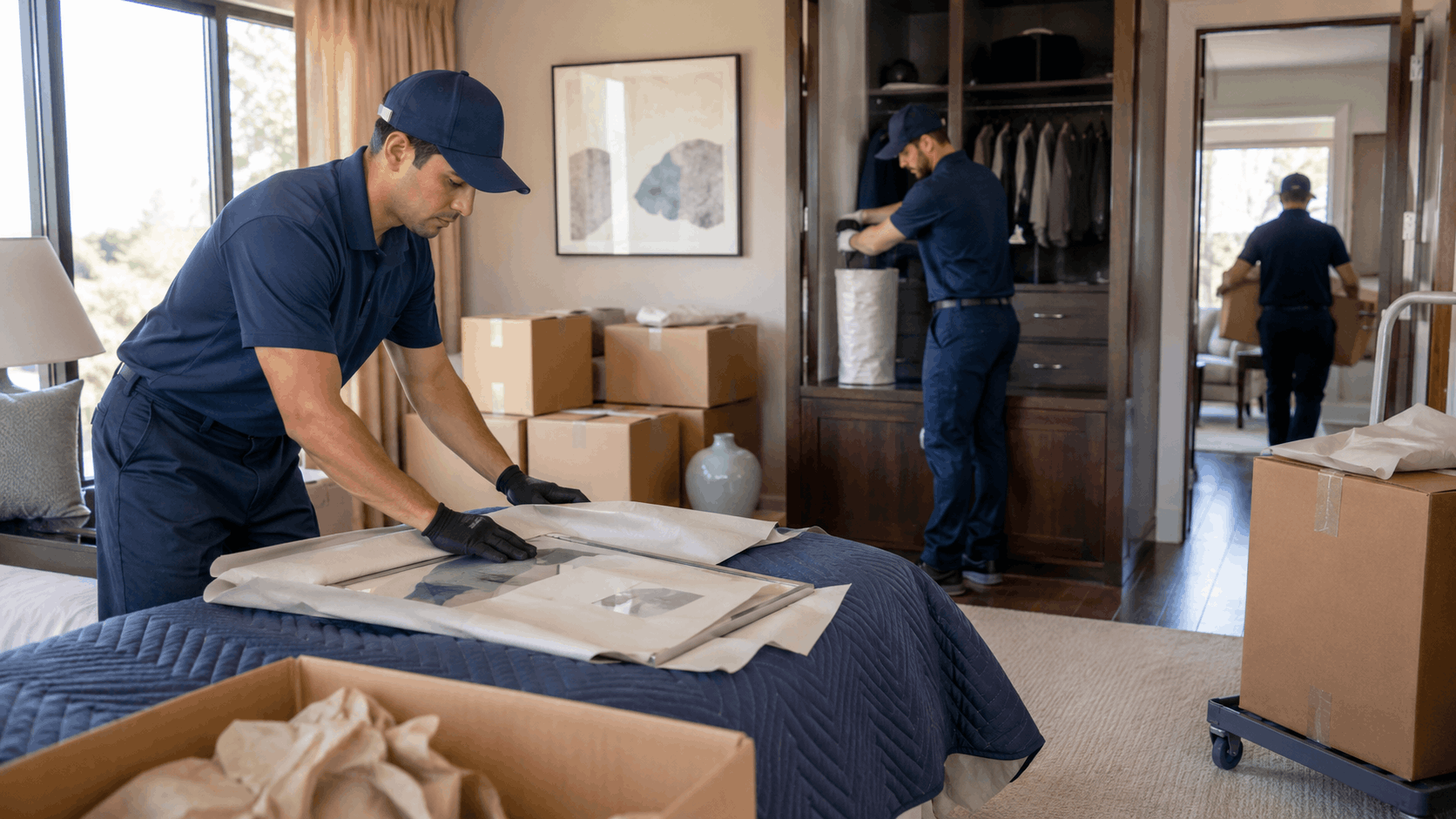
Fragile packing is where experience shows. Homes around Hancock Park and Los Feliz are full of framed art, antique mirrors, and heirloom pieces that cannot be replaced. These items need materials and methods that ordinary moving boxes do not offer.
Framed art and mirrors get corner protectors, glassine over the surface, and custom mirror cartons or crates. Flat-screen televisions ride in their original boxes when possible or in padded TV cartons built for the purpose. Electronics get wrapped against static and cushioned against shock.
High-value items like sculpture, china, and collectibles often get custom crating. A crate built to the exact dimensions of the piece keeps it from shifting at all during transport and storage.
Heirlooms deserve extra attention because their value is personal. We slow down on these pieces, pack them individually, and note them clearly on the inventory. If you own a piano, our piano moving specialists handle it separately with the right equipment.
Protecting Furniture and Large Pieces
Furniture takes the most abuse during a move, so it gets serious protection. Wood surfaces, upholstery, and glass tops each call for a different approach. The goal is zero scratches and zero stress on joints.
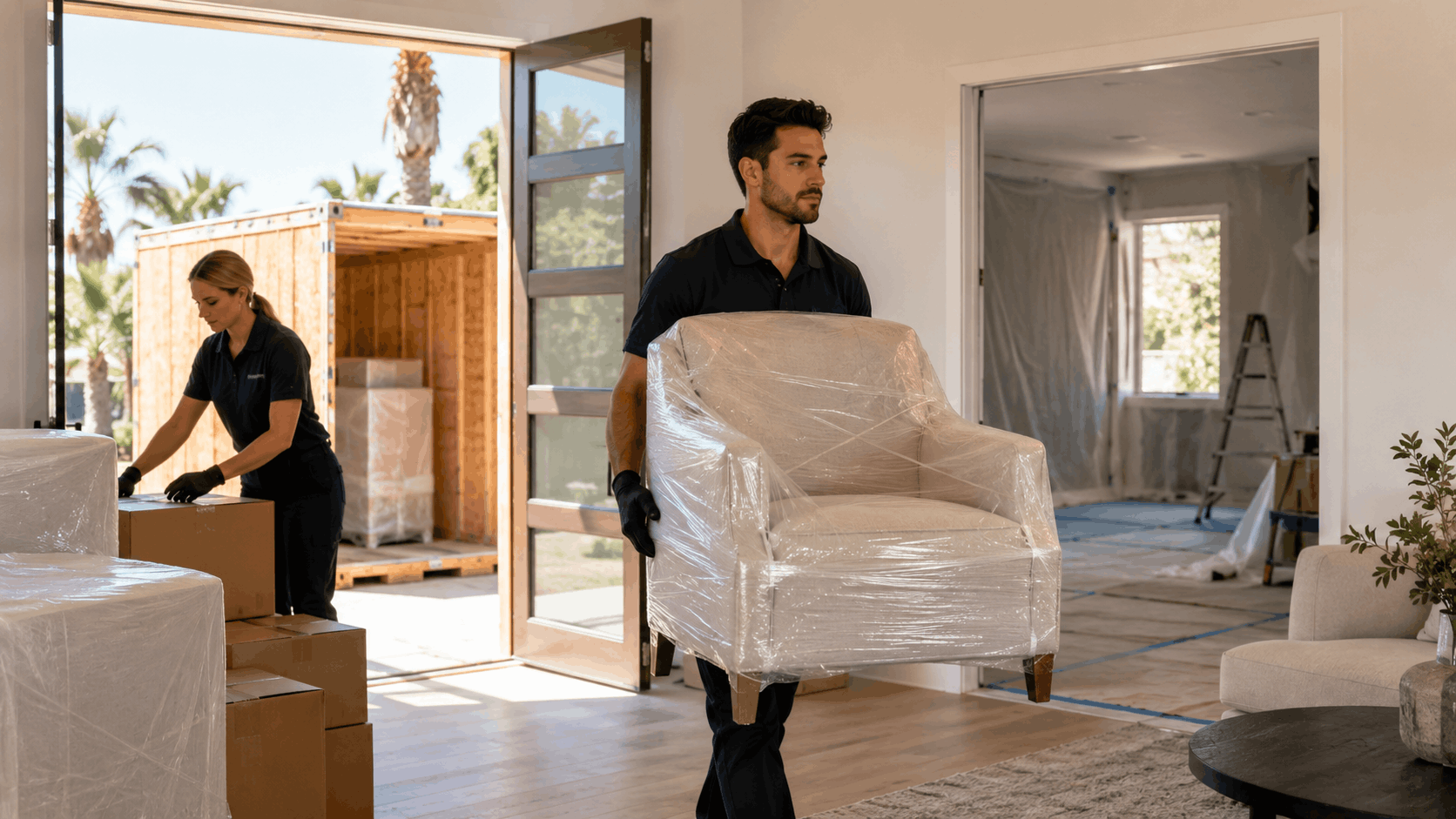
Every piece gets wrapped in moving blankets first, then secured with stretch wrap to hold the padding in place. Upholstered sofas and sectionals get plastic covers to keep dust and moisture out during the hold.
Disassembly protects the parts that break most easily. Bed frames come apart, table legs come off, and sectionals separate into sections. Hardware goes into labeled bags taped to the piece so reassembly is quick and complete.
Large or awkward items like armoires and hutches sometimes need extra hands and equipment to move safely. Our crews carry dollies, straps, and ramps to handle heavy pieces without damaging your floors or the furniture itself.
Loading and Transport From Your LA Neighborhood
Loading is a skill, not just muscle. A well-loaded truck keeps items from shifting on Los Angeles roads, which are rougher than most people admit. Heavy pieces go on the bottom, fragile cartons ride on top, and everything gets strapped in tight.
Access varies wildly by neighborhood, and that shapes the plan. The narrow streets in Venice leave little room for a full-size truck, so we sometimes shuttle with a smaller vehicle. Hillside homes in Silver Lake come with steep driveways and long stair carries that add time.
We scout transport routes ahead of move day. Knowing which streets allow trucks, where the tight turns are, and when traffic clogs the 101 or the 2 saves hours. Local knowledge keeps the job on schedule.
Once loaded, the truck heads straight to our warehouse for the vaulted hold. Fewer touches mean less risk, so we aim to move items from your home into their vaults with minimal handling in between. Our local residential moving crews know these routes cold.
Need Help in Los Angeles?
Popeye Moving & Storage serves Los Angeles and all of Los Angeles County.
How Vaulted Hold Storage Keeps Belongings Safe
Where your belongings live during the remodel matters as much as how they are packed. Vaulted storage protects contents better than a standard self-storage unit, especially for a hold that runs weeks or months. The difference comes down to how items are sealed and where they sit.
Vaulted hold, warehouse storage, and container hold all describe the same core idea: your goods stay enclosed in their own protected space inside a monitored building, not exposed in an open locker.
What a Storage Vault Actually Is
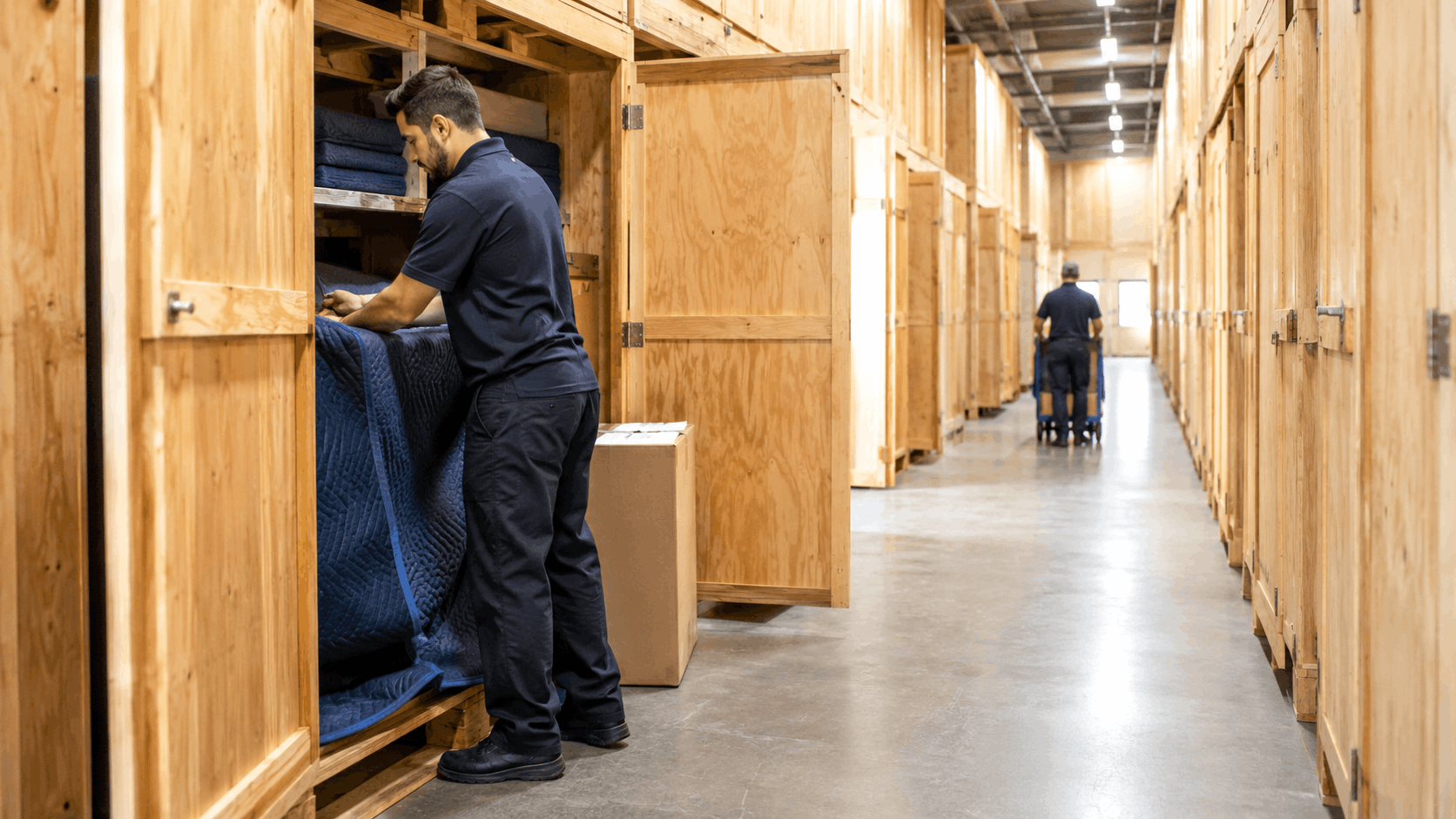
A storage vault is a sturdy wooden container, usually around five feet by seven feet, built to hold the contents of one or more rooms. Your items go inside, the vault gets sealed, and it stays closed for the entire hold. Nothing gets touched until redelivery.
These wood containers stack safely inside a warehouse, which keeps your belongings off the ground and away from foot traffic. Each vault is dedicated to your household, so your things never mix with another customer's goods.
Because the vault is sealed, dust and debris cannot get in. This matters a great deal after a pack-out from a dusty older home. The vault becomes a clean, closed environment for the whole project.
Sealing also limits handling. Once a vault is packed and closed, it does not get reopened for storage reasons, which cuts the chance of damage. Our vaulted storage service is built specifically for this kind of protected hold.
Climate and Humidity Concerns in LA Warehouses
Los Angeles weather is harder on stored goods than people expect. Summer heat can push warehouse temperatures up, coastal humidity near the Westside creeps into fabrics and wood, and Santa Ana winds carry fine dust everywhere. Each of these can quietly damage belongings over a long hold.
Heat warps records, melts candles, and dries out wood furniture until it cracks. Humidity near Marina del Rey and Santa Monica encourages mold and musty smells in upholstery and mattresses. Neither is a problem you want to discover on redelivery day.
Climate control keeps the warehouse within a steady temperature and humidity range. That stability protects wood, leather, electronics, and paper goods across the seasons. For a multi-month remodel, it is worth confirming your storage has it.
The sealed vault adds a second layer of defense against airborne dust from Santa Ana events. Between climate control and enclosed vaults, your belongings ride out the LA weather in far better shape than they would in an open outdoor locker.
Security, Access, and Tracking
Storage security is about more than a padlock. A warehouse hold keeps your belongings behind controlled entry, monitored by cameras and staffed during business hours. That is a different level of protection than a drive-up locker where anyone with a code comes and goes.
Each vault is logged and tracked by location within the facility. Staff know exactly where your household's containers sit, so retrieval is organized rather than a scramble.
Item access is available if you need something mid-project. Because vaults are sealed, retrieving an item takes a little notice so staff can locate and open the right container. A day or two of lead time usually covers it.
This is one area where honesty helps you plan. If you know you will need seasonal clothes or a specific document during the remodel, tell the crew at pack-out. They can pack those items where they are easy to reach.
Vaulted Hold vs. Self-Storage for Remodels
Self-storage has its place, but a remodel is not usually it. The vaulted hold approach wins for renovation projects that run weeks or months, and the reasons stack up quickly. Convenience is not the same as protection.
With self-storage, you rent the truck, load it yourself, drive it, and unload into a unit. Then you repeat all of that in reverse at redelivery. Every load and unload adds a chance for damage, and the labor falls on you.
With a vaulted hold, a professional crew handles pack-out, transport, storage, and redelivery in one coordinated chain. Items are sealed once and stay sealed, which means fewer touches and less risk. The savings in time and stress are real.
Self-storage units also lack the dust sealing and often the climate control that a proper warehouse provides. For a short-term stash of non-fragile items, a locker is fine. For your whole household during a gut renovation, the vaulted comparison favors the warehouse every time. Our long-term storage options cover holds of any length.
Planning Your Pack-Out Around an LA Remodel
A smooth pack-out depends on good timing. Remodel planning means lining up your storage dates with your contractor, your permits, and your own moving-out logistics. When these pieces sync, move day runs like clockwork.
Here are the main areas to coordinate before you book:
- The demolition start date from your contractor
- Permit approval and inspection windows
- Parking and truck access at your home
- Which items you will keep with you
- Any building or HOA move rules
Coordinating With Your Contractor and Designer
Your contractor sets the pace, so start the conversation early. Ask for a firm demolition date and work backward to schedule the pack-out a day or two before. You want the house cleared before the first wall comes down.
Designers often stage materials and deliveries around the same window, so loop them in too. If cabinets or tile are arriving early, the crew needs to know so paths stay clear. Good communication prevents a traffic jam of trucks on move day.
Build in a small buffer between the pack-out and demolition. If the crew finishes packing on a Thursday, starting demo on Monday gives everyone breathing room. Rushing the two together invites mistakes.
We are happy to talk directly with your contractor to nail down the sequence. Contractor coordination is part of the job, and a quick three-way call often saves days of back-and-forth later.
Permits and Parking on LA Streets
Parking is the hidden challenge of any Los Angeles move. In dense areas like Koreatown, finding room for a moving truck is a real problem, and street sweeping rules can turn a legal spot into a ticket. Planning ahead avoids both.
LADOT issues temporary no-parking permits that reserve curb space for a moving truck. These take a few days to process, so request them at least a week out. The permit posts signs that clear the spot on your move day.
Street access matters just as much. Some blocks have overhead wires, low branches, or tight turns that a large truck cannot manage. We scout this during the estimate so there are no surprises.
Street sweeping schedules vary by neighborhood, and the tickets add up fast. We time the pack-out around sweeping days when we can. Learn more about LADOT parking permits directly from the Los Angeles Department of Transportation.
What to Keep With You During Construction
Not everything should go into storage. You will still be living your life while the remodel happens, so hold back the items you use every day. An essentials box saves you from digging through a sealed vault later.
Pack a personal essentials box with medications, chargers, important documents, and a few days of clothes. Keep it with you rather than on the truck. If you are staying at home during a partial remodel, add basic kitchen items so you can still make coffee.
Daily items are easy to forget until you need them. Think about eyeglasses, work laptops, kids' school supplies, and pet gear. Anything you would miss within the first week belongs in your keep pile.
Valuables like jewelry, cash, and passports should never go into storage at all. Keep those on your person or in a bank box. The crew will remind you at pack-out, but it helps to gather them the night before.
HOA and Building Rules for Condos and Townhomes
Condos and townhomes come with their own rulebook. Buildings around Downtown LA and Marina del Rey often require move reservations, certificates of insurance, and specific hours for using the freight elevator. Skipping these steps can stall your whole day.
Check your HOA rules well before the pack-out. Many buildings limit moves to weekdays and require a deposit against damage to common areas. Getting the paperwork in early avoids a locked loading dock on move morning.
Elevator reservation is the big one in high-rises. Most buildings only allow one move at a time and require you to book a window. Reserve the freight elevator as soon as you have a date.
We handle these logistics regularly and can provide the insurance certificate your building manager needs. If you own a condo in a managed community, tell us at booking so we can line up the requirements. It is a routine part of our residential moving service.
Room-by-Room Redelivery When the Work Is Done
Redelivery is the payoff for a well-run pack-out. Instead of dumping every box in the entryway and leaving you to sort it out, an organized redelivery places items room by room using the inventory tags. That saves days of unpacking chaos.
Here is how a proper redelivery unfolds:
- Confirm the house is finished and clean
- Match each tagged item to its room
- Reassemble furniture in place
- Walk through to check for issues
Scheduling Redelivery Around Final Inspections
Timing redelivery too early is a common trap. If your belongings come back before the final inspection passes, they end up in the way of last-minute fixes. Wait until construction and cleaning are both done.
Coordinate with your contractor on the final inspection date. Once the work passes and any punch-list items are handled, the house is ready. Adding a day for post-construction cleaning keeps dust off your returning furniture.
Redelivery scheduling works best with a few days of notice. That lets the warehouse pull your vaults and stage them for loading. A firm date also lets us reserve parking again if your neighborhood needs it.
If the inspection slips, we simply hold your items longer. There is no penalty for the house not being ready. We would rather wait than bring your things back into a home that still has work left.
Unloading and Placing Items Where They Belong
This is where the inventory tags earn their keep. Every carton and piece of furniture carries a room label, so the crew places it exactly where it came from. The kitchen boxes go to the kitchen, the bedroom furniture to the bedroom.
Item placement follows your direction on redelivery day. If your new floor plan changed, just tell the crew where things go now. They work from your instructions, not a rigid map.
Good unloading is careful, not rushed. Heavy furniture comes off the truck first and gets positioned before the lighter cartons pile in. This keeps walkways clear and prevents damage to your new finishes.
The room-by-room approach means you are not left staring at a mountain of boxes wondering which room each belongs to. Everything lands in its right place, ready to unpack. That is the whole point of a tagged inventory.
Reassembly of Furniture and Setup
Furniture that came apart at pack-out gets put back together at redelivery. Beds, tables, shelving, and sectionals go back to their assembled state so your home is functional the same day. The hardware bags taped to each piece make this fast.
Furniture reassembly is included in a full-service redelivery. The crew rebuilds the bed frames, attaches the table legs, and reconnects the sectionals. You should not need to hunt for an Allen wrench.
Setup extends to positioning pieces where you want them. If you rearranged a room's layout during the remodel, the crew adjusts placement accordingly. Large items get set first so smaller pieces can fill in around them.
For homes with complex pieces, we take the same care in reverse that we did during pack-out. A wall unit or platform bed goes back together properly, level and secure. The goal is a home that works the moment we leave.
Final Walkthrough and Damage Check
The job is not done until we walk through together. The final walkthrough compares what came back against the inventory list to confirm nothing is missing. It also gives you a chance to inspect for any damage.
We check each room against the tagged inventory. Every logged item should be present and placed. If something is unaccounted for, we track it down before the crew leaves.
The damage check is a shared look at condition. Because the inventory noted condition at pack-out, comparing is straightforward. Any concern gets documented on the spot so it can be addressed.
This walkthrough is your sign-off. It closes the loop on a process that started weeks or months earlier at pack-out. When you are satisfied that everything is home and in good shape, the project is complete.
Need Help in Los Angeles?
Popeye Moving & Storage serves Los Angeles and all of Los Angeles County.
Costs and What Affects Your Storage Quote
Pricing is the question every homeowner asks first. Storage cost for a remodel depends on how much you store, how long you store it, and the labor involved in the pack-out and redelivery. Here are realistic ranges for Los Angeles projects.
| Cost Factor | Typical Range (LA) | What Affects It |
|---|---|---|
| Pack-out labor | $800 - $3,000+ | Home size, item count, crew hours |
| Monthly vault storage | $75 - $150 per vault | Number of vaults, hold length |
| Redelivery labor | $800 - $3,000+ | Access, reassembly needs |
| Packing materials | $150 - $600+ | Fragile and high-value items |
What Drives the Pack-Out and Labor Cost
Labor cost is the biggest line item for most pack-outs. It comes down to how many crew hours the job takes, which depends on your home's size and how much you are storing. A one-bedroom clears in a few hours while a large house takes a full day or more.
Item count matters as much as square footage. A minimalist home packs faster than one full of books, collections, and furniture. The more there is to wrap and log, the more crew hours the job needs.
Access affects labor too. Stair carries, long walks from the truck, and hillside driveways all add time. A ground-floor home with driveway parking costs less to pack than a third-floor walkup or a hillside property in Silver Lake.
Getting an accurate estimate means an honest walkthrough. We look at everything being stored, note the access, and give a real number. A quick phone quote without seeing the home tends to miss details that change the price.
Monthly Storage Fees and Length of Hold
Monthly storage fees depend on how many vaults your belongings fill and how long they stay. Each vault holds roughly a room or two of contents, priced per month. More vaults and a longer hold mean a higher total.
Storage duration is the variable you control least. A remodel that runs long adds months of fees, which is why matching your hold to a realistic timeline helps your budget. Building in a buffer beats getting caught short.
Most vault storage is billed month to month, so you only pay for the time you use. If your project wraps early, you stop paying sooner. If it runs long, you extend without repacking.
To estimate your fees, count roughly one vault per one to two rooms of contents, then multiply by your expected months. We give an exact vault count during the estimate so the monthly figure is clear before you commit.
Insurance and Valuation Coverage
Valuation coverage protects your belongings while they are in storage and transit. It is not the same as homeowners insurance, and homeowners should confirm coverage before storing anything. Do not assume your policy follows your goods into a warehouse.
Movers offer valuation options at different levels. Basic released value covers a small amount per pound, while full-value protection covers repair or replacement. For a remodel storing valuable pieces, full-value coverage is worth the cost.
Review what is covered and what is excluded. High-value items like art and jewelry sometimes need to be declared separately for full coverage. Ask about limits before pack-out day.
Moving insurance is a topic worth reading up on. The federal government publishes clear guidance on your rights and coverage options at Protect Your Move from the FMCSA. We walk every customer through valuation choices before storing a single item.
How to Avoid Surprise Charges
Nobody likes a bill bigger than the quote. Most surprise charges come from add-ons that were not discussed up front, so the fix is a detailed estimate. Ask what is included and what triggers extra fees.
Common add-on charges include stair carries, long walks from the truck to the door, and elevator fees in condos. Bulky item handling for pianos, safes, and gym equipment can add cost too. None of these should be a surprise if the estimator saw them.
Packing materials are another line that catches people off guard. Boxes, custom crates, and specialty cartons for TVs and mirrors add up. A good quote itemizes materials so you know what you are paying for.
The best defense against hidden fees is a written, itemized estimate after an in-person walkthrough. Read it, ask questions, and confirm there are no blanks. We put everything in writing so the final bill matches the quote.
Choosing the Right Storage Partner in Los Angeles
Trusting a company with your entire household is a big decision. The right moving company for a remodel offers full-service pack-out, secure vaulted hold, and organized redelivery under one roof. Vetting your storage partner up front saves headaches later.
Here is how to separate a solid Los Angeles mover from a risky one.
Questions to Ask Before You Book
The right questions reveal a lot fast. Before booking, ask how the company handles inventory, storage, and redelivery so you know what to expect. Vague answers are a warning sign.
Ask whether they provide a detailed inventory list and how items are tagged. Ask how vaults are stored, whether the warehouse is climate controlled, and how you access items mid-project. These questions show whether the process is organized or improvised.
Ask about redelivery guarantees and scheduling flexibility. What happens if your remodel runs long? How much notice do they need to bring things back? A confident answer means they have done this many times.
Finally, ask for a written estimate after a walkthrough. A company that quotes over the phone without seeing your home is guessing. Booking should follow a clear, itemized proposal you can review.
Why Local LA Experience Matters
Local experience is the difference between a smooth move and a stalled one. A crew that knows Los Angeles neighborhoods handles tight access and parking without drama. That knowledge only comes from working these streets for years.
Take Sherman Oaks, where hillside homes and narrow lanes complicate truck access. Or West Adams, with its historic homes and street parking pressures. A crew familiar with these areas plans around the quirks instead of getting stuck.
Neighborhood knowledge extends to permits and rules. Knowing which blocks need LADOT permits, where street sweeping falls, and how HOA buildings run their elevators keeps the job on track. A newcomer learns these lessons the hard way, on your dime.
We have driven and worked nearly every corner of this city, from the Westside to the Eastside bungalows. That experience shows up in accurate estimates and move days that actually go as planned. Our Los Angeles moving team knows these streets.
Licensing, Reviews, and Track Record
Licensing is your baseline check. In California, movers must be licensed with the state, and interstate movers need federal registration. Verify this before trusting a company with your belongings.
You can confirm a California mover's license through the California Public Utilities Commission, which regulates household movers in the state. A legitimate company will share its license number without hesitation.
Reviews tell you how a company treats real customers. Look for consistent feedback about care, communication, and honoring quotes. A pattern of complaints about damage or surprise charges is a red flag worth heeding.
Track record matters most for a long project. A company that has handled many remodel storage jobs knows the timeline pitfalls and access challenges. Years in business and a steady review history point to a partner you can rely on.
How Popeye Moving & Storage Handles Remodel Projects
Popeye Moving & Storage built its remodel storage service around the three stages this guide covers. We start with a professional pack-out, log and tag every item by room, and protect fragile and high-value pieces with the right materials. Nothing goes on the truck without a plan.
Your belongings then move into vaulted hold at our secure, climate-controlled warehouse. Each household's items stay sealed in dedicated wood vaults for the length of the remodel, safe from dust, weather, and handling. You can access items mid-project with a little notice.
When the work passes inspection, we handle room-by-room redelivery using the inventory tags. Furniture gets reassembled, items land in their correct rooms, and we walk through with you to confirm everything is home and in good shape. For remodel storage in Los Angeles, we manage the whole arc so you deal with one team.
Need Help in Los Angeles?
Popeye Moving & Storage serves Los Angeles and all of Los Angeles County.
Final Thoughts
A remodel is stressful enough without wondering where your belongings will live for the next few months. A proper contents storage plan removes that worry entirely. Pack-out, vaulted hold, and room-by-room redelivery keep your things clean, safe, and organized from demolition through the final walkthrough.
The homeowners who plan ahead have the smoothest experience. Line up your storage with your contractor's schedule, hold back your daily essentials, and pick a partner who knows Los Angeles streets and buildings. Do that, and the storage side of your remodel runs quietly in the background while the real work happens.
If you are starting a renovation anywhere in Los Angeles, from Silver Lake to Mar Vista to the beach cities, our team is ready to help. Call Popeye Moving & Storage or reach out through our contact page for a walkthrough and a clear, written quote. Let us handle the pack-out so you can focus on your new space.

Frequently Asked Questions
How long can my belongings stay in vaulted storage?
Your belongings can stay in vaulted storage as long as you need, from a few weeks for a bathroom to several months for a full renovation. Storage is billed month to month, so there is no fixed end date. If your remodel runs long, you simply extend the hold without repacking anything. Most remodel holds run six weeks to six months.
How much does a pack-out and storage service cost in Los Angeles?
Costs vary with home size and remodel length. Pack-out labor typically runs $800 to $3,000 or more, monthly vault storage runs about $75 to $150 per vault, and redelivery adds a similar labor figure to the pack-out. Packing materials add $150 to $600 depending on fragile items. A walkthrough gives you an exact, itemized number for your specific home.
Can I access my items while they are in storage?
Yes, you can access items mid-project. Because vaults are sealed, retrieval takes a little notice so staff can locate and open the right container, usually a day or two. If you know you will need seasonal clothes, documents, or specific items during the remodel, tell the crew at pack-out and they will pack those where they are easy to reach.
Do you store everything or just the rooms being remodeled?
Both options are available. A partial pack-out clears only the rooms under construction, which keeps costs down and lets you keep living at home during a single-room project. A full home clear makes sense for whole-house renovations or when dust and traffic will affect the entire house. We recommend the right approach during the walkthrough.
How are my items protected from dust and damage?
Items are wrapped in moving blankets and stretch wrap, fragile pieces get specialty cartons or custom crates, and everything is sealed inside wood vaults at the warehouse. The sealed vaults block dust from your remodel and from Santa Ana wind events. Climate-controlled warehouse conditions protect wood, leather, and electronics from LA heat and coastal humidity across the seasons.
What is room-by-room redelivery and why does it matter?
Room-by-room redelivery means each item returns to its correct room instead of getting dumped in one pile. During pack-out, every carton and piece of furniture is tagged by room. At redelivery, the crew uses those tags to place items exactly where they belong. This saves you days of sorting and unpacking, and your home is functional the same day.
How far in advance should I schedule the pack-out?
Book the pack-out as soon as you have a firm demolition date from your contractor, ideally two to four weeks ahead. That leaves time to reserve the date, arrange LADOT parking permits, and coordinate any building or HOA move rules. Scheduling the pack-out a day or two before demolition gives everyone breathing room before walls come down.
Do you handle parking permits for the moving truck?
Yes, we help with LADOT temporary no-parking permits that reserve curb space for the truck. These take a few days to process, so we request them about a week before move day. In dense areas like Koreatown, reserved space makes a real difference. We also scout street access and time the move around street sweeping schedules.
What happens if my remodel runs longer than expected?
Remodels often run long, and vaulted storage is flexible to match. Because storage is billed month to month, you simply extend the hold with no repacking and no penalty. We would rather hold your items longer than bring them back into a house that is not ready. Just let us know the new redelivery target when it firms up.
Which LA neighborhoods do you serve?
We serve all of Los Angeles and surrounding communities, including Silver Lake, Mar Vista, Highland Park, Echo Park, Hancock Park, Los Feliz, Venice, Koreatown, Sherman Oaks, and West Adams. We also cover the beach cities and nearby areas like Santa Monica, Culver City, and Marina del Rey. Reach out to confirm service for your address.
Frequently Asked Questions
- How long can my belongings stay in vaulted storage?
- Your belongings can stay in vaulted storage as long as you need, from a few weeks for a bathroom to several months for a full renovation. Storage is billed month to month, so there is no fixed end date. If your remodel runs long, you simply extend the hold without repacking anything. Most remodel holds run six weeks to six months.
- How much does a pack-out and storage service cost in Los Angeles?
- Costs vary with home size and remodel length. Pack-out labor typically runs $800 to $3,000 or more, monthly vault storage runs about $75 to $150 per vault, and redelivery adds a similar labor figure to the pack-out. Packing materials add $150 to $600 depending on fragile items. A walkthrough gives you an exact, itemized number for your specific home.
- Can I access my items while they are in storage?
- Yes, you can access items mid-project. Because vaults are sealed, retrieval takes a little notice so staff can locate and open the right container, usually a day or two. If you know you will need seasonal clothes, documents, or specific items during the remodel, tell the crew at pack-out and they will pack those where they are easy to reach.
- Do you store everything or just the rooms being remodeled?
- Both options are available. A partial pack-out clears only the rooms under construction, which keeps costs down and lets you keep living at home during a single-room project. A full home clear makes sense for whole-house renovations or when dust and traffic will affect the entire house. We recommend the right approach during the walkthrough.
- How are my items protected from dust and damage?
- Items are wrapped in moving blankets and stretch wrap, fragile pieces get specialty cartons or custom crates, and everything is sealed inside wood vaults at the warehouse. The sealed vaults block dust from your remodel and from Santa Ana wind events. Climate-controlled warehouse conditions protect wood, leather, and electronics from LA heat and coastal humidity across the seasons.
- What is room-by-room redelivery and why does it matter?
- Room-by-room redelivery means each item returns to its correct room instead of getting dumped in one pile. During pack-out, every carton and piece of furniture is tagged by room. At redelivery, the crew uses those tags to place items exactly where they belong. This saves you days of sorting and unpacking, and your home is functional the same day.
- How far in advance should I schedule the pack-out?
- Book the pack-out as soon as you have a firm demolition date from your contractor, ideally two to four weeks ahead. That leaves time to reserve the date, arrange LADOT parking permits, and coordinate any building or HOA move rules. Scheduling the pack-out a day or two before demolition gives everyone breathing room before walls come down.
- Do you handle parking permits for the moving truck?
- Yes, we help with LADOT temporary no-parking permits that reserve curb space for the truck. These take a few days to process, so we request them about a week before move day. In dense areas like Koreatown, reserved space makes a real difference. We also scout street access and time the move around street sweeping schedules.
- What happens if my remodel runs longer than expected?
- Remodels often run long, and vaulted storage is flexible to match. Because storage is billed month to month, you simply extend the hold with no repacking and no penalty. We would rather hold your items longer than bring them back into a house that is not ready. Just let us know the new redelivery target when it firms up.
- Which LA neighborhoods do you serve?
- We serve all of Los Angeles and surrounding communities, including Silver Lake, Mar Vista, Highland Park, Echo Park, Hancock Park, Los Feliz, Venice, Koreatown, Sherman Oaks, and West Adams. We also cover the beach cities and nearby areas like Santa Monica , Culver City , and Marina del Rey. Reach out to confirm service for your address.
P
Popeye Moving & Storage Co. Team Team
Licensed moving and storage professionals serving Los Angeles and Los Angeles County.
Licensed in California · License #PUC: CAL T 189749 | DOT: 1472924 | MC: 498816C
Why trust Popeye Moving & Storage?
Founded in 1994, Popeye Moving & Storage is a licensed and insured moving and storage service serving Los Angeles and Los Angeles County. All content is reviewed by our licensed technicians.

Need Help in Los Angeles?
Popeye Moving & Storage serves Los Angeles and all of Los Angeles County.
Related Articles
How-To Guides
Storage During a Probate-Free Estate Cleanout: The Sort-Later Strategy That Unblocks a Sale
How the sort-later storage method clears a probate-free estate home fast in Los Angeles, unblocking a quicker sale while families sort belongings on their own time.
How-To Guides
Accessing Your Things in Vaulted Storage: How Appointment Retrieval Works and the Honest Trade-Off vs 24/7 Units
How appointment retrieval works for vaulted storage in Los Angeles, plus an honest comparison against 24/7 drive-up units on access, cost, and protection.
Cost Guides
Vaulted Storage vs Self-Storage in LA: Why Full-Service Storage Saves You Money
Vaulted full-service storage vs self-storage in LA: see the real costs, hidden fees, and why more Angelenos are switching to vault storage with Popeye Moving.