How-To Guides
Storing a Wine Fridge, Kegerator, or Bar Build - Drained, Dried, and Protected
Key Takeaways
- Always drain and fully dry a wine fridge or kegerator before storage to prevent mold, rust, and lasting odors.
- Prop appliance doors open 24 to 48 hours with a fan running to remove all hidden moisture before packing.
- Flush and dry beer lines, clean couplers, and store the CO2 tank upright in a cool, separate space.
- Keep cooling units upright during transport and let them settle 24 hours before plugging back in to protect the compressor.
- Photograph and label every bar part, wrap wood and stone tops, and pad glass shelving and stemware separately.
- Choose climate-controlled storage over a hot LA garage to protect seals, electronics, and finishes over long periods.
- Never store a pressurized CO2 tank in a hot garage or closed truck due to the safety hazard from rising pressure.
- Popeye Moving & Storage Co. drains, dries, wraps, moves, and stores these units across Silver Lake, Culver City, and the Valley.
In This Article
A homeowner in Silver Lake called us last spring in the middle of a full entertainment room remodel. Their kegerator, a wine fridge, and a custom bar top all needed a place to live for about four months while contractors tore out drywall and ran new wiring. They asked a simple question that most people never think about: "Do I just unplug it and drop it in the garage?" The answer is no, and skipping the right prep is how a working appliance turns into a moldy, rusted mess by the time the project wraps.
These units hold water in places you cannot see. Drip pans, beer lines, drain tubes, and the folds of door gaskets all trap moisture. Seal that up in a warm space for a few months and mold, rust, and stale odors take over fast. We have hauled out more than a few "ruined" wine fridges that only needed a proper drain and dry before storage.
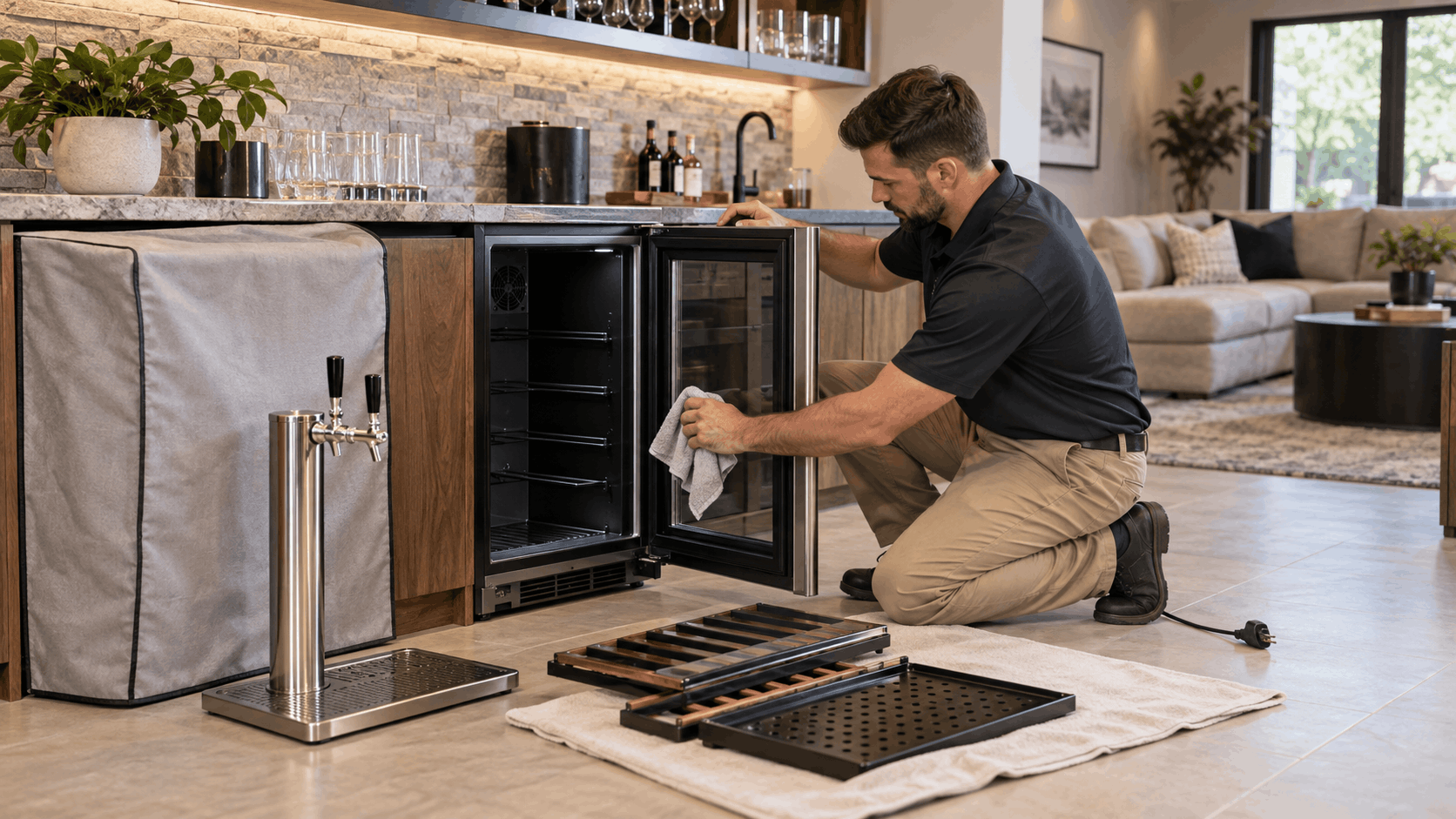
Why Draining and Drying Matters Before Storage?
Most people focus on the outside of an appliance and forget the water hiding inside. A cooling or draft unit that goes into storage wet becomes a sealed container for problems. Warm air, standing water, and zero airflow are exactly what mold and rust need to grow.
Proper mold prevention starts before the unit ever leaves the house. Good appliance storage is really about controlling moisture damage, and that begins with draining and drying every part that touches water. Los Angeles homeowners rarely think about this until they open a stored fridge and get hit with a smell they cannot get rid of.
How Trapped Water Turns Into Mold and Mildew
Every wine fridge and kegerator has a drip pan or drain line that collects condensation. When the unit runs daily, that water evaporates or drains off. Once you unplug it and close the door, that same water just sits there in the dark.
Mold and mildew can take hold within a few days in a closed, warm unit. Beer lines are even worse because sugar residue feeds the growth. We have opened kegerators stored for only two weeks that already had fuzzy buildup coating the inside of the lines.
Coastal humidity makes this happen even faster. Homes near Venice, Marina del Rey, and Playa del Rey pull damp ocean air, and that moisture works its way into any space that is not fully dry. A drip pan with a half inch of water becomes a mildew farm in a matter of days near the water.
The fix is simple but easy to skip. Empty the drip pan, flush the lines, and let the whole thing dry before it goes into any box or unit. Dry surfaces give mold nothing to grow on.
Rust, Corrosion, and Metal Components
Water and metal do not get along, especially over months of storage. Leftover moisture attacks the compressor housing, chrome faucets, and steel keg couplers. Rust does not just look bad; it can seize moving parts and ruin the seal on fittings.
Chrome draft faucets are a common casualty. A few drops of beer and water left inside the faucet body corrode the internal parts, and then the faucet sticks or leaks the next time you use it. Steel couplers and threaded fittings pit and rust when they sit wet in a humid space.
Older units suffer worse damage than newer ones. Aging compressors and thinner metal parts already have wear, so corrosion spreads faster. We have seen 10 year old wine fridges come out of a damp garage with rust streaks running down the back panel and a compressor that would not start.
Drying every metal part and adding a light coat of food-safe protectant on couplers goes a long way. It keeps corrosion off the parts that matter most and saves you from buying replacements.
Odors That Ruin the Unit Long Term
Smell is the one problem that never fully leaves. Spilled wine, stale beer, and standing water soak into the gaskets and plastic liners. Once that odor sets in, no amount of wiping fully removes it.
Gaskets are the worst offenders because they are soft and porous. They absorb liquid and hold it. Open a fridge that sat with a sticky gasket for three months and the sour, musty smell hits you right away.
Stale beer has a particular staying power. The yeast and sugars break down and leave a smell that clings to every plastic surface inside a kegerator. That odor can transfer to the next keg you tap, ruining fresh beer with an old taste.
Odor removal is far easier to prevent than to fix. Clean every surface, wipe the gaskets, dry fully, and toss a box of baking soda inside before you close it up. Prevention beats trying to rescue a unit that already stinks.
Why Los Angeles Climate Adds Extra Risk
LA is not one climate; it is several. That matters because coastal moisture and dry inland heat damage stored appliances in different ways. Where you live changes how you should prep and store.
Coastal humidity near Venice, Santa Monica, and Playa del Rey feeds mold and rust. The damp marine layer keeps everything slightly wet, so any trapped water lingers and metal corrodes faster. Units stored near the beach need extra drying time and a low-humidity space.
The San Fernando Valley flips the problem. Areas like Van Nuys and Woodland Hills bake in summer, with garage temperatures climbing well past 100 degrees. That heat warps plastic seals, cracks gaskets, and stresses electronics even when the unit is off.
The right prep depends on your climate zone. The U.S. Environmental Protection Agency offers good guidance on mold and moisture control that applies to stored goods too. Knowing your local conditions helps you pick the right storage plan.
Get Your Free Quote
Tell us about your move and we'll get back to you fast.
How to Prep a Wine Fridge for Storage
Wine fridge storage is straightforward once you know the order of operations. Rush it and you trap moisture; do it right and the unit comes out ready to run. Good wine cooler prep is mostly about patient cleaning and full drying.
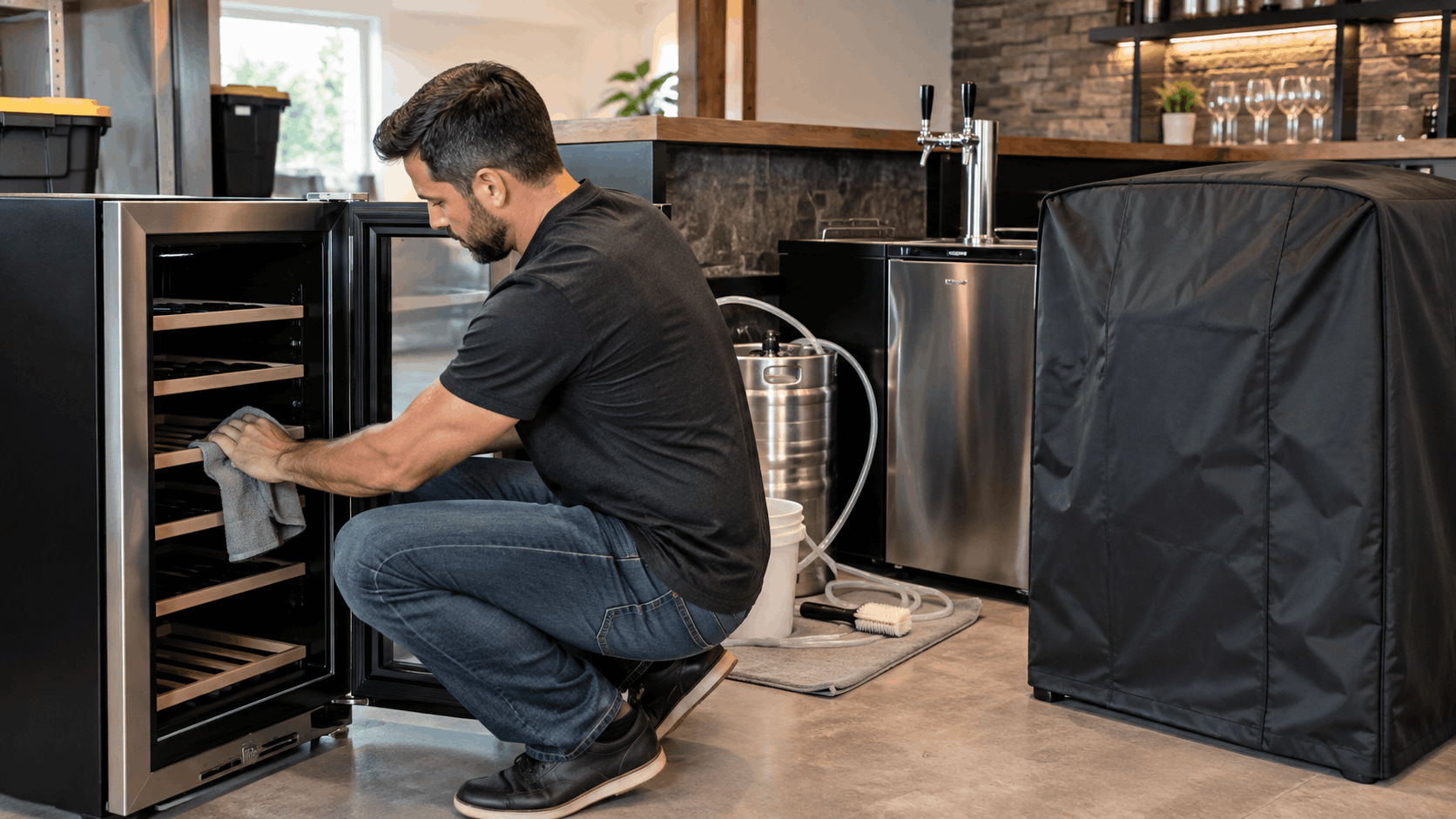
Here is the process our team follows on every job, laid out step by step.
| Step | Action | Time Needed |
|---|---|---|
| 1. Empty | Remove all bottles and racks | 15 minutes |
| 2. Power Down | Unplug and warm to room temp | 2 to 4 hours |
| 3. Clean | Wipe shelves, walls, and gaskets | 30 to 45 minutes |
| 4. Dry | Prop door open with a fan | 24 to 48 hours |
| 5. Settle | Keep upright after transport | 24 hours |
Emptying and Powering Down Safely
Start by pulling every bottle out of the unit. Wine needs its own storage plan away from a warm, non-running fridge, so move those bottles somewhere cool and dark first. An empty fridge is also far lighter and safer to move.
Next, unplug the unit at the wall. Do not just switch it off; pull the cord so nothing draws power during the move. Coil the cord and tape it to the back so it does not drag or snag.
Let the fridge power down and warm up to room temperature before you touch anything inside. A cold interior creates condensation the moment you open it, which defeats the whole drying effort. Give it a few hours to lose the chill.
Only after the unit reaches room temperature should you start cleaning. Wiping down a cold, sweating interior just spreads moisture around. Patience here sets up every step that follows.
Cleaning Racks, Shelves, and Interior Walls
Remove the shelves and racks so you can clean each one on its own. Cork residue, wine drips, and dust collect on the rails and in the corners. A soft cloth and warm water handle most of it.
For interior cleaning, use a mild soap solution on the walls and floor of the unit. Avoid harsh chemicals that leave their own smell behind. Wipe every surface, including the ceiling and the door panel.
Baking soda is the tool of choice for odors. Mix a little into warm water and wipe down the gaskets and any spot that held spilled wine. It neutralizes smells instead of just masking them.
Dry each shelf and rack fully before you set them aside. Wet racks stored in a box grow their own mildew. Lay them out on a towel while the main unit dries.
Drying the Unit Completely
This is the step people skip, and it is the one that saves your fridge. After cleaning, prop the door open and leave it that way for 24 to 48 hours. A door that is even slightly ajar lets moisture escape.
Set a small fan to blow air into the unit during that window. Moving air speeds evaporation and reaches the back corners where water hides. Air drying with a fan cuts the time down and does a more thorough job.
Check the drip pan and any drain channel before you call it done. Even a few drops left in the pan can start mold in a sealed unit. Wipe it dry and confirm the whole interior feels dry to the touch.
Do not rush this to meet a moving deadline. A fridge that feels a little damp inside will smell in storage. Build the drying window into your timeline before the movers arrive.
Protecting the Compressor During Transport
The compressor is the heart of the fridge, and it does not like being tilted. Keep the unit upright during the entire move. Laying it flat lets the compressor oil shift out of place.
If the fridge does end up tilted at any point, that is not the end of the world, but you have to give it time. Let the unit stand upright for a full 24 hours before plugging it back in. That settling time lets the oil return to where it belongs.
Plugging in a fridge too soon after transport is a common way to burn out a compressor. The oil has not resettled, and the pump strains against the imbalance. A day of patience prevents an expensive failure.
Our specialty moving crews keep these units upright on the truck and note the settling time for the customer. It is a small detail that protects a big investment.
Need Help in Los Angeles?
Popeye Moving & Storage serves Los Angeles and all of Los Angeles County.
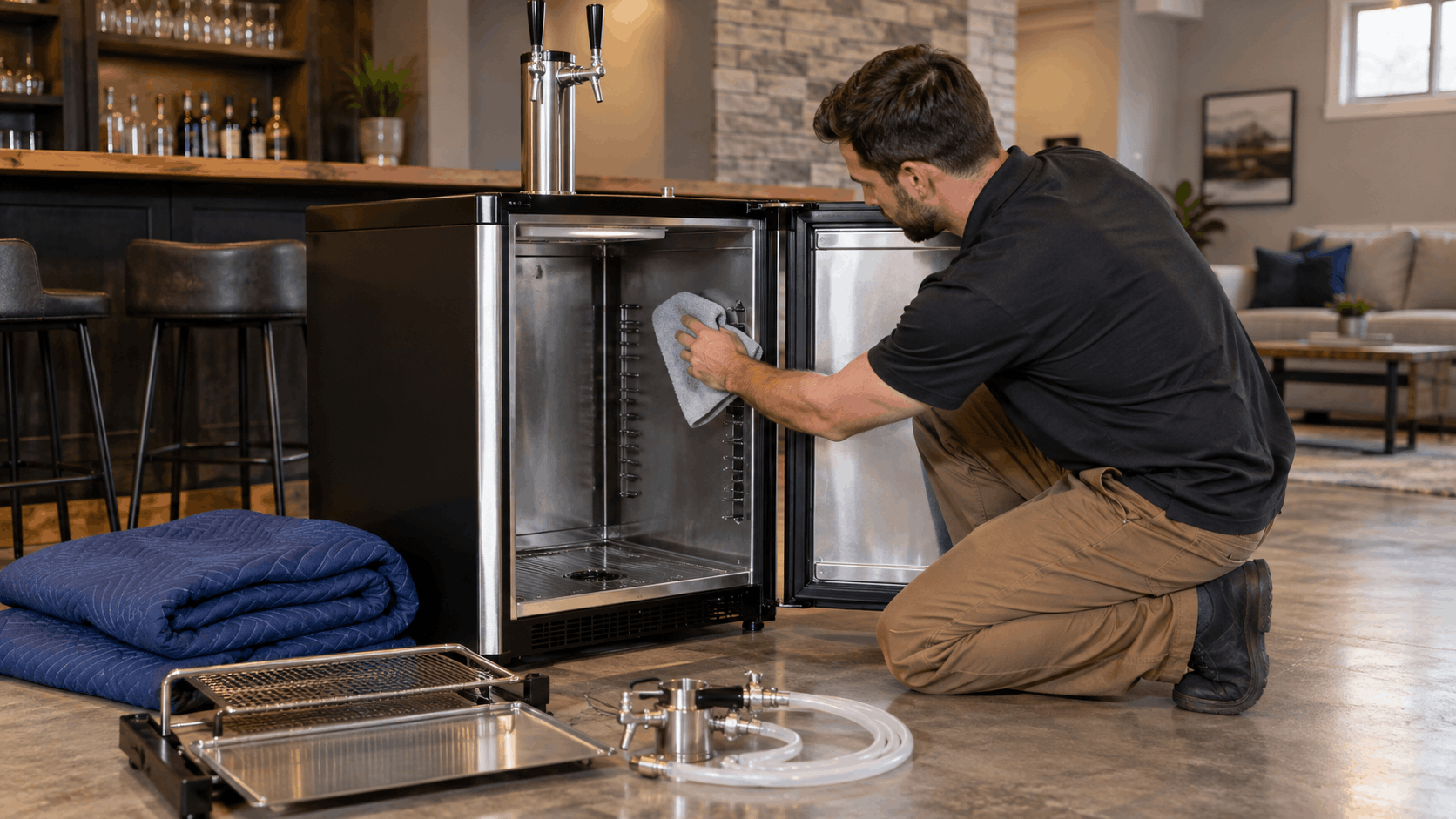
Draining and Storing a Kegerator the Right Way
Kegerator storage takes more work than a plain fridge. You have beer lines, couplers, and a CO2 system to deal with on top of the cooling unit. Skip these and you invite mold, corrosion, and even a safety hazard.
Home bartenders across LA love their draft systems, so let us walk through protecting one properly.
Flushing the Beer Lines and Faucet
Beer lines hold sugar and yeast that turn to sludge fast. Start by running a proper line cleaning solution through the entire draft system. This breaks down the old beer film coating the inside of the tubing.
After the cleaner, flush the lines with clean water until it runs clear. Any leftover cleaning solution can taint the next pour, and any leftover beer feeds mold. Run enough water to be sure the lines are truly clean.
The faucet needs the same attention. Disassemble it, clean each part, and rinse away residue. Chrome faucet bodies corrode from the inside when beer sits in them, so this step protects the hardware too.
Once flushed, blow the lines dry or let them drain fully and air out. Storing wet lines is the fastest way to grow mold inside them. Dry tubing keeps the system fresh for months.
Handling CO2 Tanks and Regulators
The CO2 tank is the part people handle wrong most often. Disconnect the tank from the regulator before storage. A connected tank can slowly leak gas or stress the regulator over time.
Store the CO2 tank upright and secured so it cannot tip over. A falling pressurized tank is a real hazard. Keep it standing in a spot where it will not roll or get knocked.
Never store a pressurized CO2 tank in a hot Los Angeles garage. Heat raises the pressure inside the tank, and Valley garages in summer get dangerously hot. The Compressed Gas Association and general safety guidance from OSHA both warn against exposing pressurized gas cylinders to high heat.
Detach the regulator, wipe it clean, and store it in a padded bag. The gauges are delicate and easy to knock out of calibration. Keeping it separate and protected saves you a replacement later.
Removing Kegs and Cleaning Couplers
Pull any kegs out of the unit before storage. A partial keg left inside goes flat and sour and can leak. Return empties or move full kegs to a cold spot elsewhere.
The keg coupler collects beer and grime where it connects. Take it apart, clean each piece, and rinse it well. Old beer dried onto a coupler turns to a sticky crust that attracts pests.
Dry every metal fitting completely to stop corrosion. Threads, springs, and the coupler probe all rust when stored damp. A quick wipe with a dry cloth and a moment of air drying handles it.
A light coat of food-safe lubricant on the coupler O-rings keeps them from drying out. Rubber parts crack when they sit dry for months. This small step keeps the coupler sealing properly next season.
Draining the Drip Tray and Interior
The drip tray catches every spill and overflow, so empty it first. A full tray sloshing beer during a move makes a sticky mess and feeds mold. Pour it out and wash it in the sink.
Clean the base of the kegerator where drips land. Dried beer on the floor of the unit gets tacky and attracts ants and other pests. LA kitchens deal with ants year round, so a clean base matters.
Wipe the interior walls and dry them the same way you would a wine fridge. Interior cleaning removes the film that causes odors and buildup. A dry, clean interior stores far better.
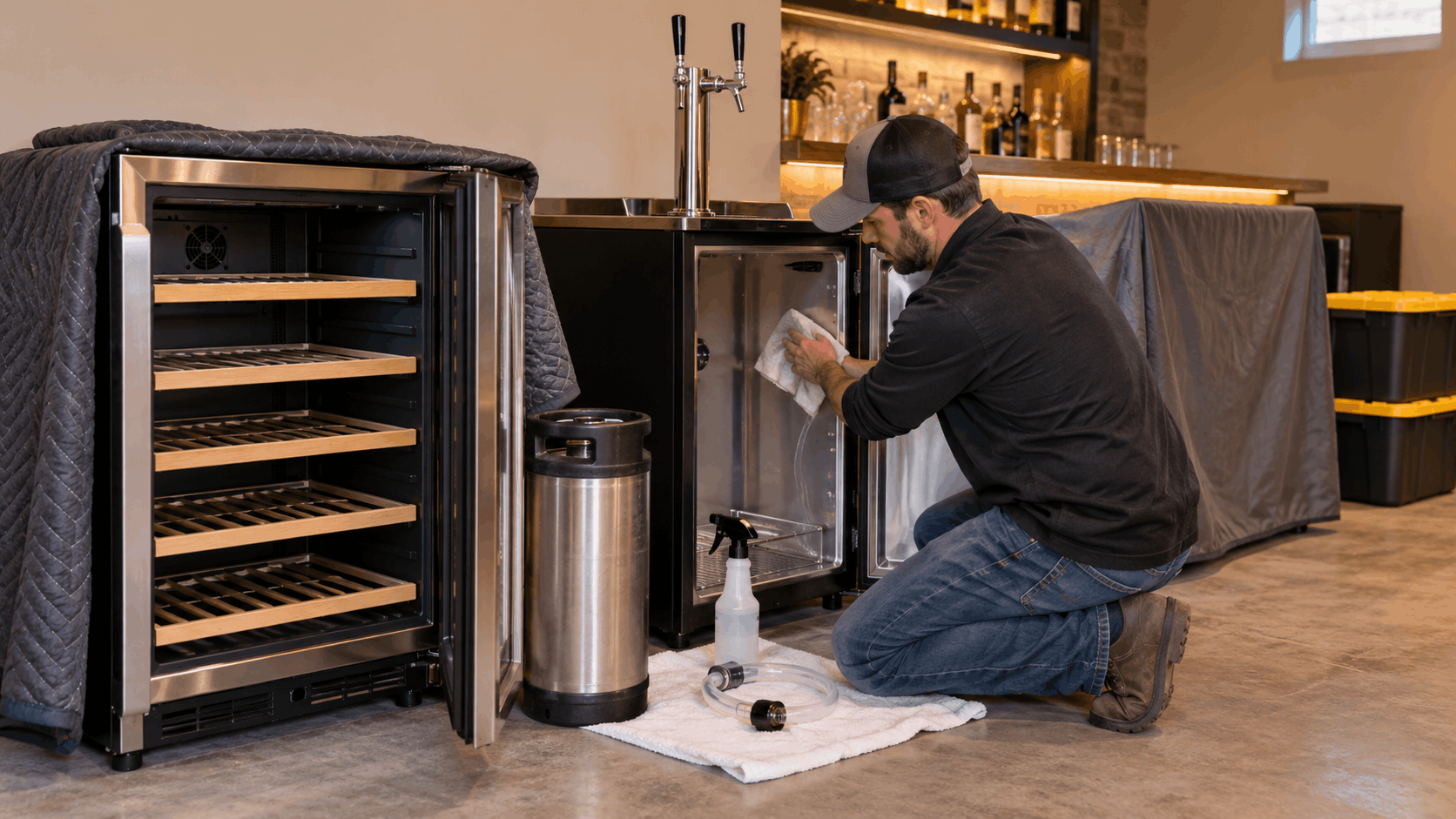
Prop the door open for the drying window before you box it up. The same 24 to 48 hour rule applies here. A kegerator holds even more hidden moisture than a wine fridge, so give it time.
Disassembling and Protecting a Custom Bar Build
Bar build storage is a different animal from an appliance. Custom cabinetry, stone tops, and glass shelving all need careful handling. Take your time on disassembly and label everything as you go.
Whether you have a built-in bar or a portable unit, these steps protect the finishes and make reassembly painless.
Photographing and Labeling Every Part
Before you loosen a single screw, take photos from every angle. Shoot the whole bar, then close-ups of each connection point. Those pictures become your assembly manual months later.
Label each panel, shelf, and piece of hardware as you remove it. Painter's tape and a marker work fine. Note which side faces out and which end goes up.
Bag the hardware for each section separately. Screws, brackets, and cam locks get mixed up fast in a single pile. A labeled bag taped to its matching panel saves hours during reassembly.
Keep a running list or a note on your phone tied to the photos. When the remodel finishes and the bar goes back in, you will thank yourself. Guessing where 40 screws belong is a bad afternoon.
Protecting Wood, Stone, and Countertops
Wood bar tops scratch and dent if you leave them bare. Wrap the wood in moving blankets and secure them with stretch wrap, not tape directly on the finish. Tape pulls off varnish and stain.
Countertop protection matters most on the edges and corners. Granite and quartz chip at the corners if they knock against anything. Add foam corner guards and wrap the whole slab in padding.
Stand stone tops on edge for transport rather than flat. A flat slab flexes and can crack over a bump, while an upright slab is far stronger. Our crews brace stone vertically against the truck wall.
Keep finished surfaces off the concrete floor in storage. Moisture wicks up from a concrete slab and can stain wood or leave a haze on stone. Set everything on pallets or blankets.
Removing Sinks, Faucets, and Plumbing
If the bar has a sink, drain the lines before you disconnect anything. Standing water in supply and drain lines leaks during the move. Open the faucet and let it run dry, then clear the trap.
Cap the fittings once the plumbing is disconnected. Open pipe ends let debris in and let old water smell out. A few dollars of caps keeps the plumbing clean and odor-free.
Dry the bar sink and its drain fully before storage. A wet trap grows the same mold and smell you fight in the appliances. Sponge it out and let it air dry.
Coil and label the supply hoses with the sink parts. Keeping the plumbing together with its fixture makes reinstall simple. Our packing and crating team crates delicate fixtures so nothing bends.
Handling Glass Shelving and Barware
Glass shelving and mirrors need individual attention. Wrap each glass shelf in bubble wrap, then a moving blanket. Never stack bare glass pieces against each other.
Stemware is the most fragile item in any bar. Use cell dividers or wrap each glass in packing paper. Padding around every wine glass and coupe stops the chips and cracks that ruin a set.
Mirrors behind a bar back deserve a mirror box or a custom crate. A flat mirror is one bump away from shattering. Mark the box fragile and glass side out so no one leans anything against it.
Load glass items upright and never on the bottom of a stack. Weight on top of packed glass is asking for breakage. Keep the padding thick and the boxes light.
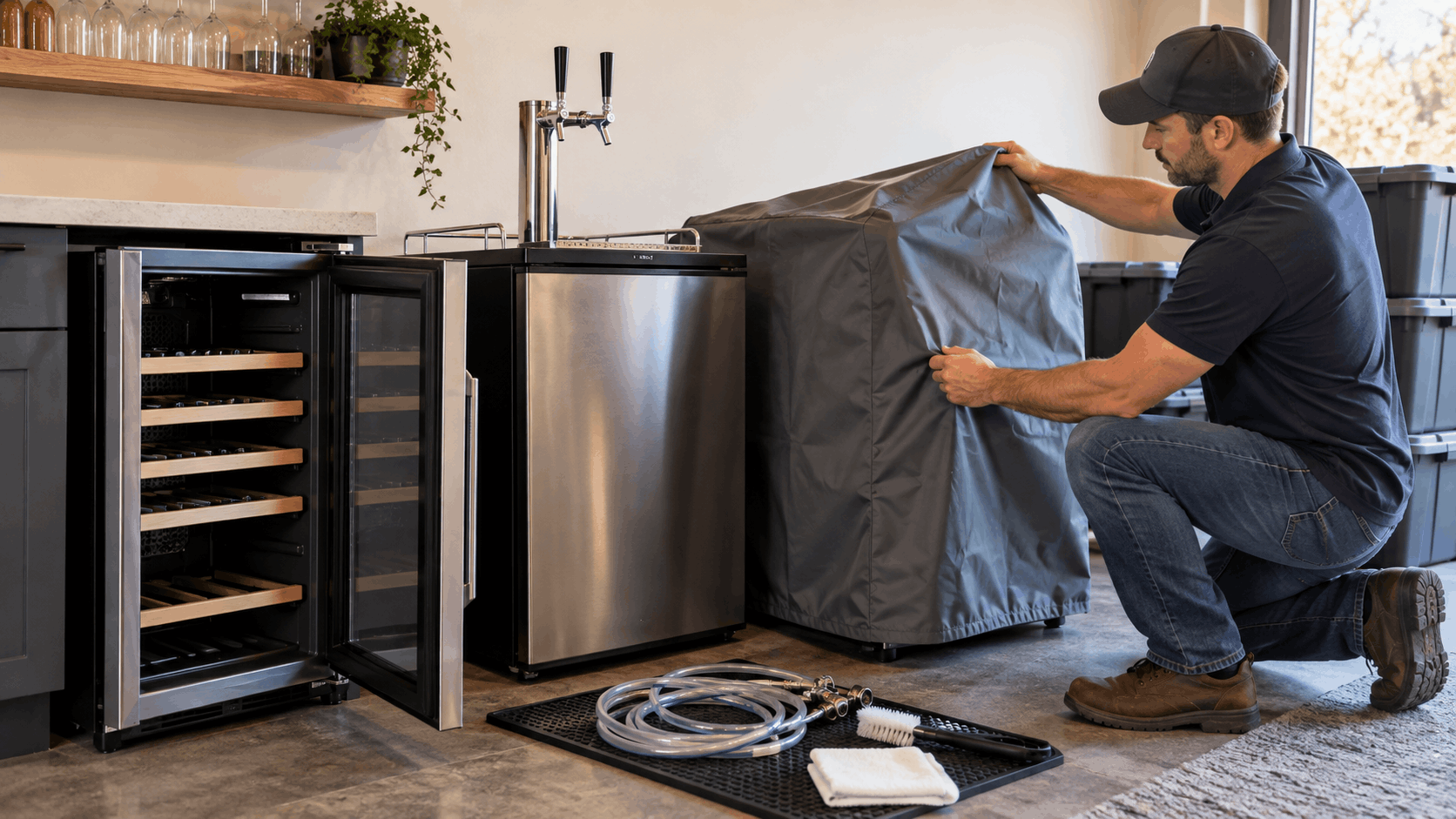
Choosing the Right Storage Environment
Where you store these units decides how they come out. A storage unit that swings from cold to hot damages seals and finishes over months. LA temperature swings are harder on appliances than people realize.
Here is how to weigh a garage against self storage against climate controlled storage.
Why a Hot Los Angeles Garage Is Risky
The garage is the default choice, and often the wrong one. Valley garages in Van Nuys and Woodland Hills routinely top 100 degrees inside during summer. That heat has nowhere to go in a closed garage.
Extreme garage heat warps the rubber seals and gaskets on fridges and kegerators. Once a gasket warps, the door never seals right again. Plastic liners can crack and shelves can bow.
Electronics suffer too, even when the unit is off. Control boards and compressor components sit through daily heat cycles that shorten their life. A summer in a hot garage can age a unit by years.
Add the moisture problem near the coast and the garage looks worse. Whether the risk is heat inland or damp air by the beach, an uncontrolled garage is a gamble with expensive gear.
Benefits of Climate-Controlled Storage
Climate controlled storage holds a stable temperature year round. No triple-digit summer spikes and no cold snaps. That steady range protects wood, electronics, and gaskets over long periods.
Humidity control is the other half of the benefit. A managed space keeps the air dry enough that mold cannot take hold and metal does not corrode. For coastal customers, that dry air is worth a lot.
For long term storage, the math favors climate control. A few extra dollars a month costs far less than replacing a warped wine fridge or a rusted draft system. The gear comes out the way it went in.
Our storage solutions include climate controlled options built for sensitive items. We also offer long term storage for remodels that run longer than planned.
Positioning and Spacing Units for Airflow
How you place the unit in storage matters as much as the space itself. Keep the fridge and kegerator doors slightly open the whole time. A propped door lets air move and stops moisture from building inside.
Leave room around each unit so air can circulate. Packing appliances wall to wall traps stale air against the seals. A few inches of space on each side keeps things breathing.
Do not pile boxes on top of the appliances either. Weight on the lid can stress the housing, and stacked items block airflow. Give the units their own footprint.
Use a small wedge or a rolled towel to hold the door open. A rubber band around the handle works in a pinch. Any gap that keeps the door from sealing does the job.
How Popeye Moving & Storage Co. Helps in LA
Popeye Moving handles the whole process from prep to storage across Los Angeles. Our crews work in Los Feliz, Culver City, Highland Park, and neighborhoods all over the county. We know the streets, the parking rules, and the tight driveways.
We move and store wine fridges, kegerators, and full bar builds every season. From the remodel in Silver Lake to a full home relocation, we handle the delicate items others avoid. Our team drains, dries, wraps, and stores each unit with care.
Local knowledge saves customers time and stress. We know which Culver City streets have permit parking and which hillside homes near Echo Park need extra crew for the stairs. That experience keeps moves smooth.
If you are staring at a remodel and unsure where your bar gear goes, we can help you plan. Reach out and we will walk you through the options for your specific home and timeline.
Need Help in Los Angeles?
Popeye Moving & Storage serves Los Angeles and all of Los Angeles County.
Packing and Moving Fragile Appliances Safely
Appliance moving is where damage happens if the crew rushes. Dents, scratches, and internal harm come from bad wrapping and worse loading. LA adds tight streets and narrow driveways that test every mover.
Here is how our team protects these units from door to truck to storage.
Securing Doors and Loose Parts
A swinging door on a fridge or kegerator is a hazard on a move. Tape the door shut with a strap or painter's tape that will not mar the finish. A closed door cannot slam open on the stairs.
Remove the shelves and racks before the unit goes on the dolly. Loose parts rattle and crack during transport. Wrap and box them separately so they ride safe.
Pad any glass on the unit, like a wine fridge door. Bubble wrap and a blanket over the glass panel prevent cracks. Glass doors are the most common casualty on these moves.
Tuck the power cord and any hoses so nothing dangles. A loose cord catches on door frames and railings. Taping loose parts down keeps the whole unit tidy on the move.
Using Blankets, Straps, and Dollies
Moving blankets are the first layer of defense. Wrap the entire unit and secure the blankets with stretch wrap. This guards the finish from scuffs and dings.
An appliance dolly does the heavy lifting. These dollies have a strap that holds the unit tight and wheels built for stairs. Never try to muscle a full kegerator by hand.
Straps hold the unit steady on ramps and stairs. A well-strapped appliance stays upright and controlled even on a slope. Loose straps let the unit shift, which is how backs and appliances both get hurt.
Our crews carry blankets, straps, and dollies on every job. The right gear makes a heavy, awkward unit manageable. It also keeps the appliance upright, which protects the compressor.
Handling Stairs, Elevators, and Narrow Access
LA access points can be brutal. Older buildings in Koreatown have narrow stairwells and small elevators that were never built for a full kegerator. We measure before we lift.
Hillside homes near Echo Park and Silver Lake come with long stair runs and steep driveways. Getting an appliance up or down those stairs takes planning and enough crew. One person short and the risk jumps.
Elevators need a reservation and a size check in many buildings. A unit that does not fit the elevator means a stair carry, and we plan for that ahead of time. No one wants that surprise on moving day.
We scout narrow access on the walkthrough and bring the right crew size. For tricky local residential moving jobs, planning the path is half the work. It keeps the unit and the walls damage free.
Loading Order and Weight Distribution
Loading order keeps the truck stable and the units safe. Heavy appliances go on low and against the truck walls. A low center of gravity stops tipping on LA's hills and turns.
Placing units against the wall lets us strap them to the truck's anchor points. A strapped appliance stays upright the whole drive. That upright position protects the compressor oil.
Balance the weight side to side so the truck rides level. All the heavy items on one side makes for a tippy, unsafe load. We spread the weight across the floor.
Lighter, fragile boxes ride on top and toward the front. Glass shelving and barware never sit under an appliance. Good weight distribution protects everything from the fridge to the stemware.
Common Mistakes People Make Before Storing These Units
Our team sees the same storage mistakes on LA jobs over and over. Most cause avoidable appliance damage. A few minutes of the right prep prevents the worst prep errors.
Here are the four we catch most often and how to avoid each one.
Storing Units While Still Wet Inside
Wet storage is the number one cause of ruined units. People clean the inside, then close it up before it dries. The trapped water breeds mold within days.
Damp gaskets are the first to go. They absorb the moisture and grow mildew that smells and never fully cleans out. A warped, moldy gasket often means the door will not seal again.
The whole drying window exists to prevent this. Prop the door, run a fan, and wait 24 to 48 hours. That single step saves more units than any other.
Check the drip pan and lines one last time before storage. A little water you forgot is enough to start the problem. Dry means dry, top to bottom.
Sealing Doors Tightly Shut
A closed door feels right but it traps trouble. Sealed doors hold in whatever moisture and odor remain. Even a well-dried unit benefits from airflow over months.
Trapped moisture condenses and pools as temperatures shift. That water then feeds mold in a space you thought was dry. A sealed unit is a sealed problem.
The fix is a small prop that keeps the door ajar. A wedge, a towel, or a strap holds it open a crack. That gap lets air move and moisture escape.
Do this for both wine fridges and kegerators. Any cooling unit going into long storage needs the door propped. It is the cheapest insurance against odor and mold.
Laying a Compressor Unit on Its Side
Tilting a wine fridge or kegerator to fit a car is tempting and risky. Laying it on its side moves the compressor oil out of place. That oil is what keeps the pump running smooth.
Run a unit before the oil resettles and you can burn out the compressor. That is one of the most expensive failures on these appliances. It often means the unit is not worth fixing.
Keep the unit upright through the entire move. If it must tilt briefly, stand it up and wait a full day before power. That settling time lets the oil return home.
Our crews haul these units upright on the dolly and the truck. We would rather plan the path than risk a tilt. It protects the part that costs the most to replace.
Forgetting the CO2 Tank in a Hot Space
The CO2 tank is a safety issue, not just a storage one. A pressurized tank left in a hot garage or truck builds internal pressure as heat rises. That is a genuine hazard.
Never leave a full CO2 tank in a closed vehicle on a warm LA day. The cab of a truck can hit dangerous temperatures fast. A pressurized cylinder does not belong there.
Store the tank upright in a cool, ventilated spot away from heat. Disconnect it from the regulator first. A secured, cool tank is a safe tank.
Treat the CO2 tank with the same care a welding supply shop would. Heat and pressure do not mix. Handle it separately from the appliance every time.
Need Help in Los Angeles?
Popeye Moving & Storage serves Los Angeles and all of Los Angeles County.
Fianl Thoughts
Storing a wine fridge, kegerator, or bar build the right way comes down to three things: drained, dried, and protected. Empty the water, dry every hidden space, and pick a storage environment that will not cook or soak your gear. Skip those steps and you risk mold, rust, and odors that ruin the unit.
LA's mix of coastal damp and Valley heat makes the storage environment matter even more. A climate controlled space protects wood, electronics, and gaskets far better than a hot garage. Prop the doors, space the units, and keep the CO2 tank cool and separate.
Do the prep once and your bar gear comes out of storage ready to pour. Rush it and you are shopping for replacements after the remodel. The few hours of drying and careful packing pay for themselves.
Frequently Asked Questions
How long should a wine fridge dry before storage?
Plan for 24 to 48 hours of drying with the door propped open and a small fan running inside. The fan moves air into the back corners and drip pan where water hides. Check the pan and interior one last time before you close it up. A unit that still feels damp will grow mold in storage, so do not rush the drying time to hit a moving deadline.
Can I store a kegerator in my Los Angeles garage?
You can, but a hot LA garage carries real risk, especially in Valley areas like Van Nuys and Woodland Hills where summer temperatures top 100 degrees inside. That heat warps seals, cracks gaskets, and stresses electronics. For anything longer than a few weeks, climate controlled storage is the safer choice. It holds a steady temperature and lower humidity that keeps the unit ready to run when you get it back.
Do I need to clean the beer lines before storing a kegerator?
Yes, always clean the beer lines before storage. Run a proper line cleaning solution through the system to break down old beer, then flush with clean water until it runs clear. After that, let the lines drain and dry fully. Old beer left in the lines grows mold within days and leaves an odor that taints the next keg you tap. Clean, dry lines store fresh for months.
Should the CO2 tank be stored separately?
Yes. Disconnect the CO2 tank from the regulator and store it upright in a cool, ventilated spot. Never leave a pressurized tank in a hot garage or a closed truck, since heat raises the pressure inside and creates a safety hazard. Secure it so it cannot tip over. Treating the tank separately from the appliance keeps both the tank and everyone around it safe.
How do I keep a stored wine fridge from smelling bad?
Odor prevention starts with a full cleaning and complete drying before storage. Wipe the shelves, walls, and gaskets with a mild soap and baking soda solution, then dry every surface. Prop the door open so air keeps moving during storage. Place an open box of baking soda inside to absorb any lingering smells. A clean, dry, open unit almost never develops that sour, musty odor.
Can I lay a wine fridge or kegerator on its side to move it?
It is best to keep the unit upright the entire time. Laying it flat shifts the compressor oil, and running the unit before the oil resettles can burn out the compressor. If tilting is unavoidable for a moment, stand the unit upright afterward and wait a full 24 hours before plugging it back in. That settling time lets the oil return to place and protects the most expensive part.
How long can these appliances stay in storage?
With proper prep and climate control, a wine fridge, kegerator, or bar build can store safely for months to years. The keys are draining and drying before storage, propping the doors for airflow, and keeping the unit in a stable, low-humidity space. Uncontrolled garages shorten that window fast. Do the prep right and pick the right space, and long term storage causes no lasting harm.
Does Popeye Moving & Storage Co. handle custom bar builds?
Yes. Our team disassembles, protects, moves, and stores custom bar builds across the LA area. We photograph and label every part for easy reassembly, wrap wood and stone tops, cap and drain plumbing, and pad glass shelving and stemware. Whether it is a built-in bar or a portable unit, we handle the delicate finishes and fragile pieces that need careful crating and storage.
What areas of Los Angeles do you serve?
We serve neighborhoods all across Los Angeles, including Silver Lake, Los Feliz, Culver City, Highland Park, Echo Park, and the San Fernando Valley. We also cover coastal communities and cities like Santa Monica, Marina del Rey, and beyond. Our crews know the local streets, parking rules, and tricky access points, which keeps every move smooth.
How much does it cost to store these appliances?
Storage cost depends on a few factors: the size of the unit or units, how long you need storage, and whether you choose climate controlled space. A single wine fridge costs less than a full bar build with cabinetry and stone tops. Longer terms and climate control add to the price but protect sensitive gear. Contact us for a quote based on your exact items and timeline.
Getting your wine fridge, kegerator, or bar build into storage the right way is not complicated, but it does take the right steps in the right order. Drain the water, dry every hidden space, protect the finishes, and choose a storage environment built for sensitive gear. Do that, and your gear comes out ready to use after the remodel.
Our team at Popeye Moving & Storage Co. handles all of it across Los Angeles, from Silver Lake to Culver City to the Valley. We drain, dry, wrap, move, and store these units every season, and we know how to protect them. Contact us today or call for a consultation, and we will help you plan a storage solution that fits your remodel and your timeline.
Frequently Asked Questions
- How long should a wine fridge dry before storage?
- Plan for 24 to 48 hours of drying with the door propped open and a small fan running inside. The fan moves air into the back corners and drip pan where water hides. Check the pan and interior one last time before you close it up. A unit that still feels damp will grow mold in storage, so do not rush the drying time to hit a moving deadline.
- Can I store a kegerator in my Los Angeles garage?
- You can, but a hot LA garage carries real risk, especially in Valley areas like Van Nuys and Woodland Hills where summer temperatures top 100 degrees inside. That heat warps seals, cracks gaskets, and stresses electronics. For anything longer than a few weeks, climate controlled storage is the safer choice. It holds a steady temperature and lower humidity that keeps the unit ready to run when you get it back.
- Do I need to clean the beer lines before storing a kegerator?
- Yes, always clean the beer lines before storage. Run a proper line cleaning solution through the system to break down old beer, then flush with clean water until it runs clear. After that, let the lines drain and dry fully. Old beer left in the lines grows mold within days and leaves an odor that taints the next keg you tap. Clean, dry lines store fresh for months.
- Should the CO2 tank be stored separately?
- Yes. Disconnect the CO2 tank from the regulator and store it upright in a cool, ventilated spot. Never leave a pressurized tank in a hot garage or a closed truck, since heat raises the pressure inside and creates a safety hazard. Secure it so it cannot tip over. Treating the tank separately from the appliance keeps both the tank and everyone around it safe.
- How do I keep a stored wine fridge from smelling bad?
- Odor prevention starts with a full cleaning and complete drying before storage. Wipe the shelves, walls, and gaskets with a mild soap and baking soda solution, then dry every surface. Prop the door open so air keeps moving during storage. Place an open box of baking soda inside to absorb any lingering smells. A clean, dry, open unit almost never develops that sour, musty odor.
- Can I lay a wine fridge or kegerator on its side to move it?
- It is best to keep the unit upright the entire time. Laying it flat shifts the compressor oil, and running the unit before the oil resettles can burn out the compressor. If tilting is unavoidable for a moment, stand the unit upright afterward and wait a full 24 hours before plugging it back in. That settling time lets the oil return to place and protects the most expensive part.
- How long can these appliances stay in storage?
- With proper prep and climate control, a wine fridge, kegerator, or bar build can store safely for months to years. The keys are draining and drying before storage, propping the doors for airflow, and keeping the unit in a stable, low-humidity space. Uncontrolled garages shorten that window fast. Do the prep right and pick the right space, and long term storage causes no lasting harm.
- Does Popeye Moving & Storage Co. handle custom bar builds?
- Yes. Our team disassembles, protects, moves, and stores custom bar builds across the LA area. We photograph and label every part for easy reassembly, wrap wood and stone tops, cap and drain plumbing, and pad glass shelving and stemware. Whether it is a built-in bar or a portable unit, we handle the delicate finishes and fragile pieces that need careful crating and storage.
- What areas of Los Angeles do you serve?
- We serve neighborhoods all across Los Angeles, including Silver Lake, Los Feliz, Culver City, Highland Park, Echo Park, and the San Fernando Valley. We also cover coastal communities and cities like Santa Monica , Marina del Rey, and beyond. Our crews know the local streets, parking rules, and tricky access points, which keeps every move smooth.
- How much does it cost to store these appliances?
- Storage cost depends on a few factors: the size of the unit or units, how long you need storage, and whether you choose climate controlled space. A single wine fridge costs less than a full bar build with cabinetry and stone tops. Longer terms and climate control add to the price but protect sensitive gear. Contact us for a quote based on your exact items and timeline. Getting your wine fridge, kegerator, or bar build into storage the right way is not complicated, but it does take the right steps in the right order. Drain the water, dry every hidden space, protect the finishes, and choose a
P
Popeye Moving & Storage Co. Team Team
Licensed moving and storage professionals serving Los Angeles and Los Angeles County.
Licensed in California · License #PUC: CAL T 189749 | DOT: 1472924 | MC: 498816C
Why trust Popeye Moving & Storage?
Founded in 1994, Popeye Moving & Storage is a licensed and insured moving and storage service serving Los Angeles and Los Angeles County. All content is reviewed by our licensed technicians.

Need Help in Los Angeles?
Popeye Moving & Storage serves Los Angeles and all of Los Angeles County.
Related Articles

How-To Guides
DTLA Loading Dock Access Guide: 30 Major Buildings and Their Rules
A building-by-building guide to loading dock access for 30 major DTLA buildings, covering reservation rules, insurance, elevators, and how to plan a smooth Downtown LA move.
How-To Guides
Moving to Santa Monica: Parking Rules, Street Restrictions, and Building Access
Everything new Santa Monica residents need to know about permit parking zones, moving truck restrictions, building elevator rules, and city permits before moving day.

How-To Guides
West Hollywood Movers: Compact Unit and Narrow Building Access
A local guide to moving into West Hollywood's compact units and narrow buildings, covering measuring, stairwells, parking permits, elevator rules, and expert planning tips.