How-To Guides
Rug Storage Done Right - Cleaning, Rolling, and Wrapping Before the Vault
Key Takeaways
- Most rug storage damage happens during prep, not in the vault - dirt, moisture, and pests are the main culprits.
- Identify your rug type first, since wool, silk, synthetic, and antique rugs each need different cleaning and handling.
- Clean and fully dry a rug before rolling, and give coastal LA rugs extra drying time under the marine layer.
- Always roll a rug around a core tube instead of folding to prevent permanent creases and fiber cracks.
- Wrap rolled rugs in breathable material like Tyvek or cotton, never plastic, and add cedar for moth protection.
- Choose climate-controlled storage kept off the floor to guard against LA's temperature and humidity swings.
- Check stored rugs every few months, re-roll to prevent set creases, and air them out before returning them home.
- Popeye Moving & Storage handles rug pickup, prep, wrapping, and vault storage across the Los Angeles area.
In This Article
A homeowner in Highland Park opens the back of a hallway closet, reaches for a rug they rolled up two summers ago, and gets hit with a musty smell. When they unroll it, the damage is already done. There are bare patches where moth larvae fed, a sour mildew stain along one edge, and creases that will not lie flat no matter how long the rug sits under a couch leg.
We see this all the time across Los Angeles. The rug was fine when it went into storage. The problem was the prep work, or the lack of it. A rug that goes into a vault dirty, damp, or wrapped in the wrong material is a rug that comes out ruined.
Why Rugs Fail in Storage Before They Ever Reach the Vault?
Most people think the vault is where a rug lives or dies. In reality, the damage is usually baked in before the rug ever gets there. The prep work matters more than the storage unit itself.
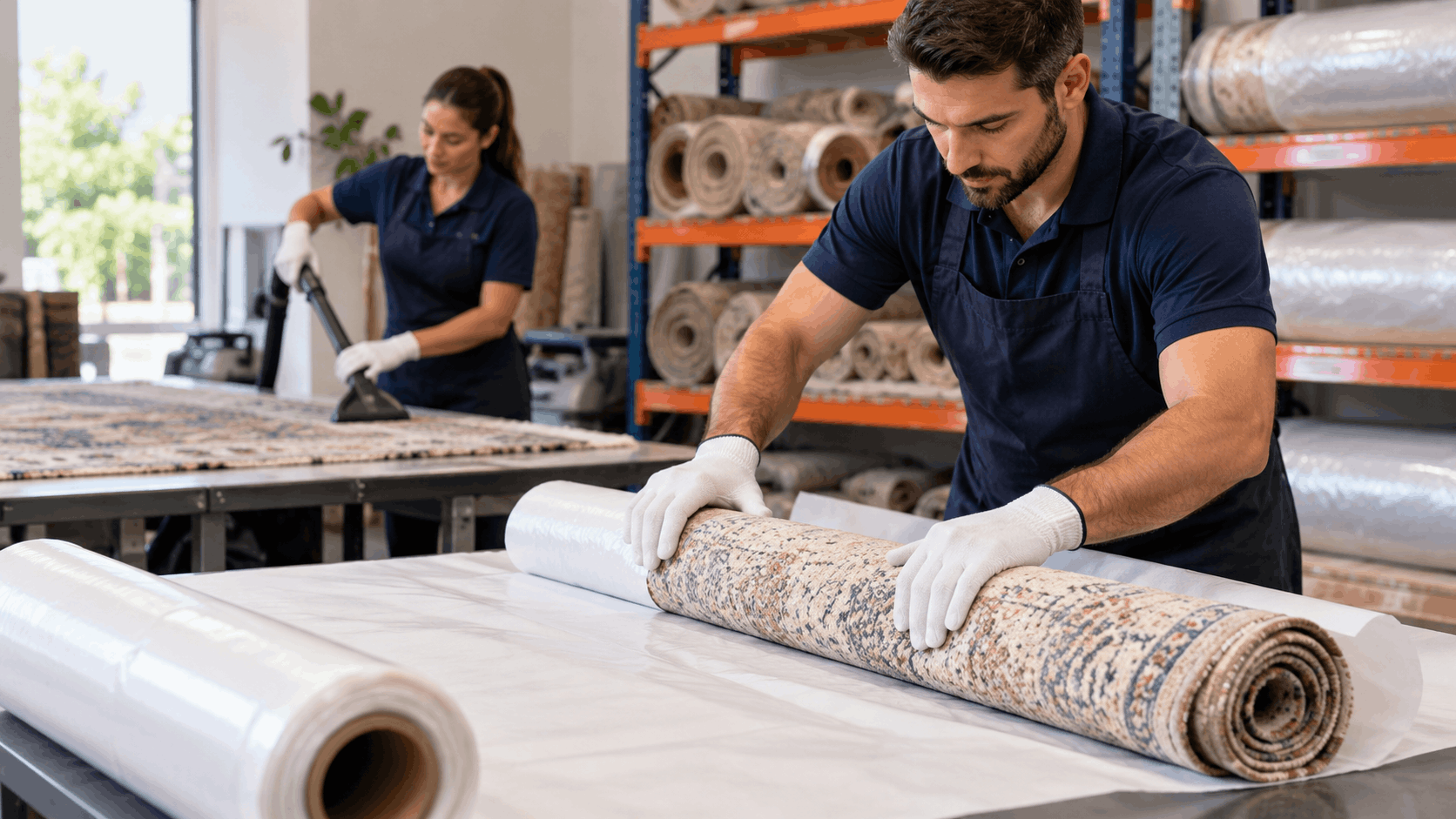
Rug storage damage almost always traces back to three things left unaddressed - dirt in the fibers, moisture that never dried out, and pests that found their way into a poorly wrapped roll. Good rug prep handles all three before the rug goes on the shelf. Skip it, and no vault in the city can save the rug.
Dirt and Oils Left in the Fibers
A rug that looks clean can still be full of trouble. Ground-in dirt sits deep in the pile, below the surface you can see. Foot traffic, pet dander, and body oils from years of use all work their way down toward the foundation of the rug.
Those oils and food particles are exactly what pests want. Moths and carpet beetles are drawn to soiled wool, not clean wool. A dirty rug is basically a buffet sitting in the dark.
Dirt also grinds against the fibers over time. Every particle of grit acts like a tiny blade. During long storage, that abrasion keeps causing fiber damage even when the rug is not being walked on. By the time you unroll it, the pile can feel thin and brittle in the dirtiest spots.
This is why cleaning is the first real step, not an optional one. Storing a dirty rug locks the damage in and lets it keep working for months or years.
Moisture and LA's Marine Layer
Los Angeles feels dry, but the coast tells a different story. Neighborhoods like Santa Monica, Venice, and the streets near the beach in Hermosa Beach sit under the marine layer many mornings. That gray blanket adds humidity that hangs in the air long after the sun burns it off.
That marine layer humidity is a real problem for stored rugs. If a rug goes into storage even slightly damp, the moisture has nowhere to go. Rolled tight and wrapped, it stays wet in the core.
Wet wool plus no airflow equals mildew. Mildew shows up as dark spots, a sour smell, and in bad cases a spreading stain that eats into the dyes. Once mildew sets into natural fibers, it is very hard to fully remove.
Coastal moisture also affects garages and closets in beach-adjacent homes more than most owners realize. A rug that felt dry to the touch in a Venice bungalow can still hold enough water in its foundation to grow mold in a sealed roll.
Pests and Improper Wrapping
The wrong wrapping does two things at once. It traps moisture and it invites pests. Both are bad news for a rug meant to sit for a while.
Carpet beetles and moth larvae do the most damage to wool and silk. The adult moths do not eat the rug - their larvae do. They chew through the pile and leave bald patches and loose threads behind. A rug wrapped loosely or left uncovered gives them an open door.
Rodents are the other threat, especially in older homes and detached garages. Mice will nest in a soft rolled rug and chew through anything in their path. The wrong wrapping - a cheap plastic tarp or nothing at all - does not stop them.
Proper pest defense starts with a clean rug and finishes with breathable wrapping that seals the roll without trapping air. Get this wrong and the vault becomes a nesting ground rather than a safe place.
Get Your Free Quote
Tell us about your move and we'll get back to you fast.
Identifying Your Rug Type Before Anything Else
Before you clean or roll anything, figure out what you actually own. Rug material types matter because each fiber wants different care. Treat a silk rug like a synthetic one and you can destroy it in an afternoon.
Take a few minutes to inspect the rug in good light. Check the back, feel the pile, and look at the fringe. These clues tell you whether you have a wool rug, a silk rug, or a machine-made piece.
Wool, Silk, and Natural Fibers
Wool is the most common natural fiber in quality rugs. It feels slightly springy, resists crushing, and often has small variations in color from hand-dyed yarn. Wool rug care means gentle cleaning and strong pest protection, since moths love wool above almost anything else.
Silk is softer, shinier, and much more delicate. It catches the light and changes shade depending on the angle. A silk or silk-blend rug should almost never get an aggressive DIY wash - too much water or the wrong cleaner can ruin the sheen and weaken the threads.
Other natural fibers like cotton, jute, and sisal show up in flatweaves and casual rugs. These handle moisture poorly and can rot if stored damp. Any natural fiber rug needs full drying and pest deterrents before it goes anywhere near a vault.
A quick test helps. Snip a single fiber from the edge and burn it carefully - natural fibers smell like burnt hair and leave a soft ash, while synthetics melt into a hard bead. When in doubt, treat the rug as natural and handle it gently.
Synthetic and Machine-Made Rugs
Synthetic rugs are made from nylon, polyester, or polypropylene. They are usually machine-made, with a uniform back and even, repeating patterns. The fringe is often sewn on rather than woven as part of the rug.
The good news is that a synthetic rug tolerates more aggressive cleaning. Most handle water, mild soap, and scrubbing without falling apart. They also resist moths, since carpet beetles and moth larvae prefer natural fibers.
Synthetic rugs do handle moisture differently. They do not absorb water the way wool does, so they dry faster on the surface. The catch is that water can hide in the backing and padding, so they still need a real drying check before rolling.
These rugs are more forgiving overall, which makes them a good candidate for DIY prep. Still, the same rules apply - clean, fully dry, roll, and wrap before storage.
Antique, Handmade, and High-Value Pieces
Some rugs are worth far more than the closet they came out of. A handmade rug with a hand-knotted foundation, natural dyes, and fine detail can be worth thousands. An antique rug can be worth much more and can lose value fast if it is handled wrong.
You can spot a hand-knotted rug by flipping it over. The pattern shows clearly on the back, the knots are slightly irregular, and the fringe is part of the rug rather than sewn on. That irregularity is a sign of real craftsmanship, not a flaw.
Los Angeles has a serious market for these pieces. The vintage rug scene near the LA Design District and the dealers along the Arts District trade in rugs that deserve professional handling. If you own something in that class, do not experiment on it.
For any high-value rug, bring in a pro for cleaning and let a trained team handle the wrapping and vault storage. Our specialty moving crew treats these rugs like the investments they are. The cost of professional care is small next to the cost of ruining an heirloom.
Need Help in Los Angeles?
Popeye Moving & Storage serves Los Angeles and all of Los Angeles County.
Cleaning Your Rug the Right Way Before Storage
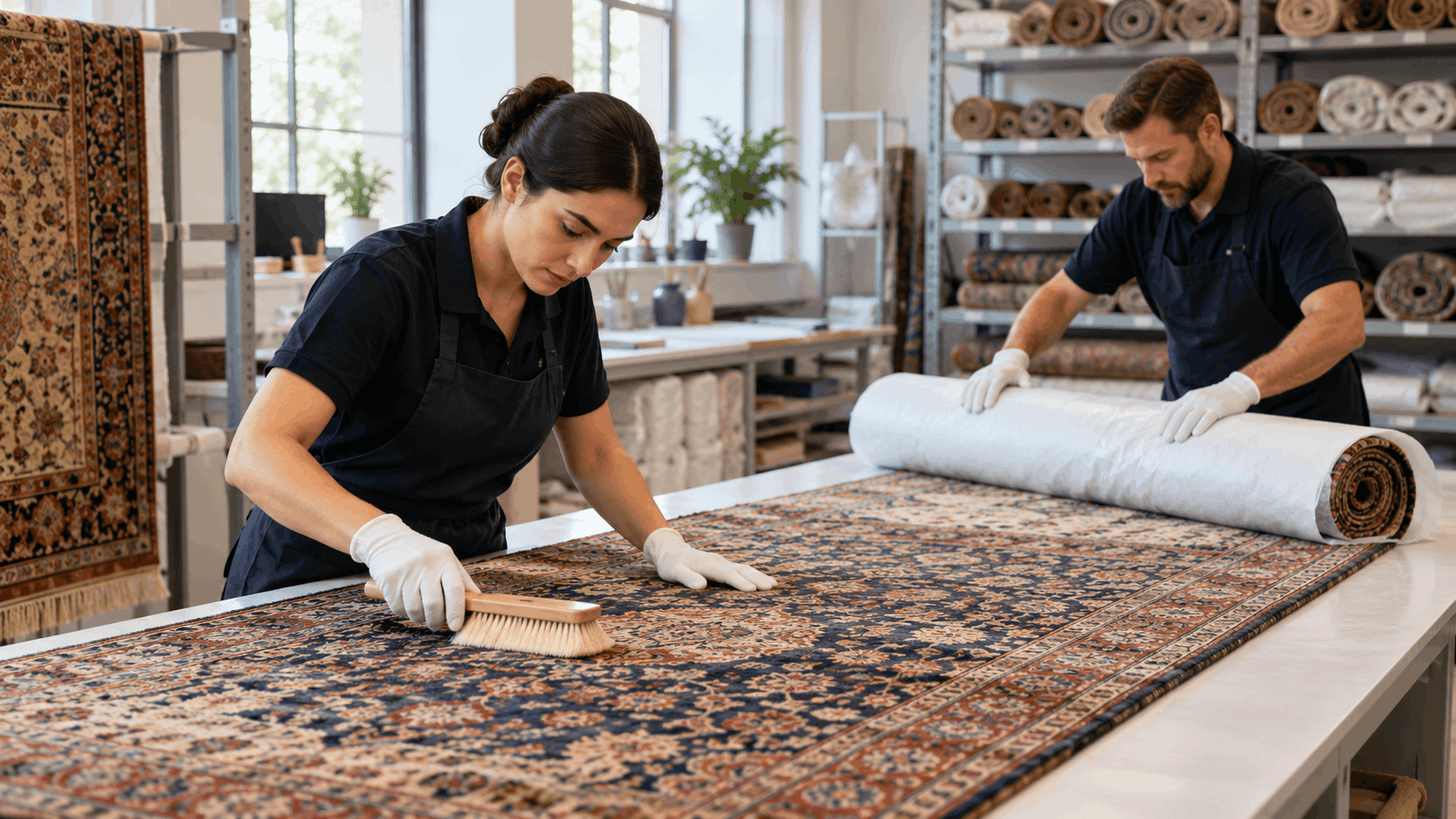
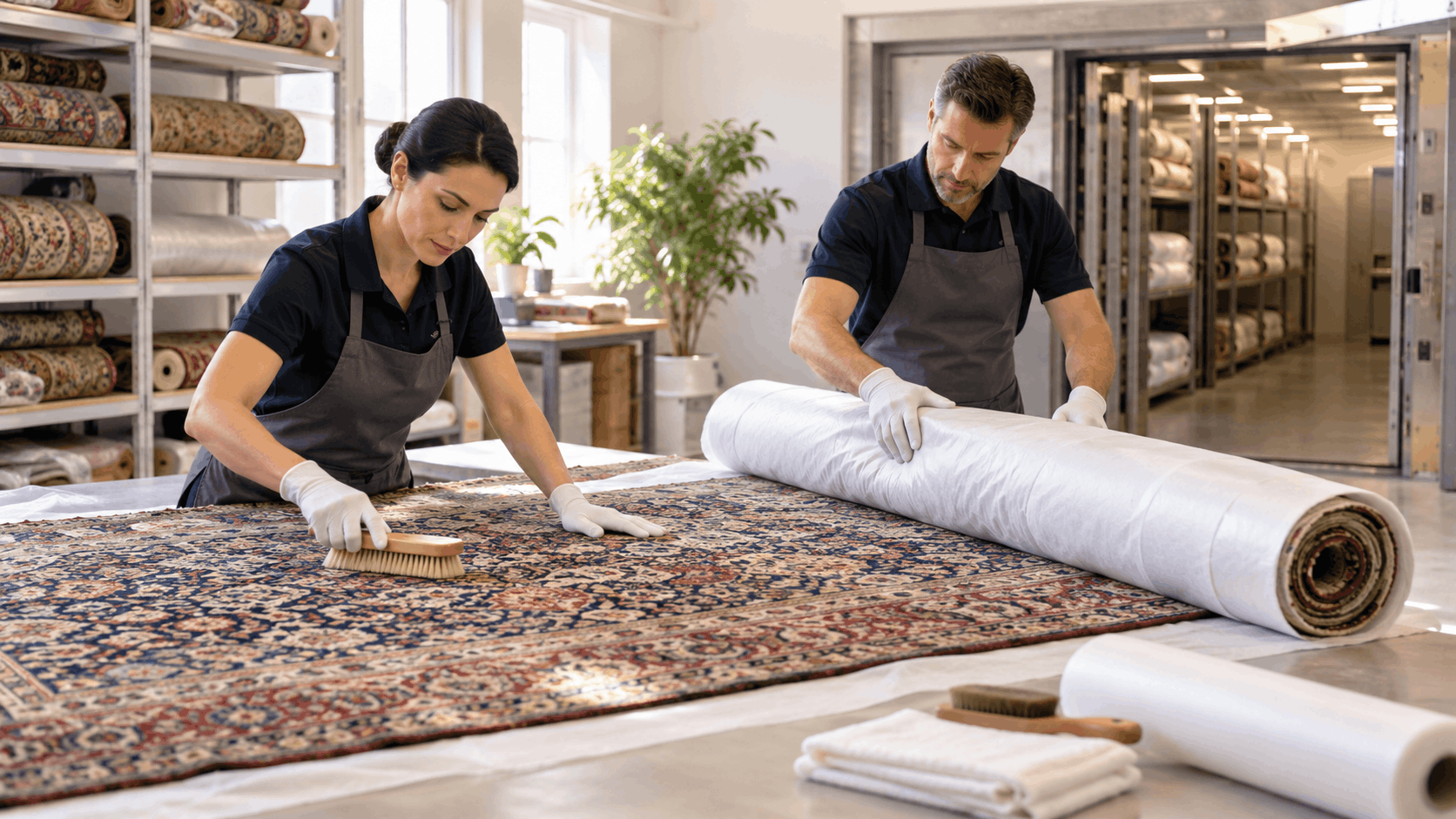
Cleaning is where prep gets real. Pre-storage cleaning removes the dirt and oils that attract pests and break down fibers. Do a proper deep clean and you take away the food source before you seal the rug away.
Rushing this step is the most common mistake we see. A quick surface vacuum is not rug cleaning. The goal is to get grit out of the foundation and moisture out of the pile entirely.
Vacuuming and Beating Out Dust
Start with a thorough vacuum on both sides of the rug. The top gets the loose surface dirt, but the back is where the deep grit hides. Flip the rug and vacuum the underside just as carefully.
LA's dry, dusty air makes this worse than in most cities. Homes near the hills in Bungalow Heaven in Pasadena and along the canyon roads collect a fine layer of dust that settles deep into rugs. Vacuuming alone rarely gets it all.
For older or heavier rugs, take them outside and beat them. Hang the rug over a fence or railing and use a broom handle or a rug beater to knock the dust removal into high gear. You will be shocked at the cloud that comes out of a rug that looked clean.
Do this until beating no longer raises much dust. That is your sign the foundation is finally clean enough to move to the next step.
Spot Treating Stains and Odors
Once the dust is out, deal with any stains. Blot spots gently with a clean white cloth and a mild solution - never scrub hard, which pushes stains deeper and frays the pile. Work from the outside of a stain toward the center to keep it from spreading.
Be careful with cleaners on natural fibers. Harsh chemicals, bleach, and strong spot removers can strip dye and weaken wool or silk. Test any product on a hidden corner first and wait to see how the fiber and color react.
For odor removal, a light sprinkle of baking soda left on the rug for a few hours can absorb smells before you vacuum it back up. Pet odors and mildew smells often need more than that, and a lingering musty smell is a sign of moisture you have not solved yet.
If a stain or odor will not budge, stop and call a professional. It is better to leave a stain for an expert than to set it permanently with the wrong cleaner.
Deep Cleaning vs. Professional Cleaning
A synthetic or sturdy machine-made rug can often handle a DIY deep clean. Rinse it with a hose, use a mild rug shampoo, work it in with a soft brush, and rinse until the water runs clear. Squeegee out the excess water before drying.
Large rugs are another story. A room-size wool rug soaked with water can weigh over a hundred pounds and is nearly impossible to handle or dry at home. That weight also stresses the foundation when you try to move it wet.
Professional rug cleaning is the safer path for wool, silk, antique, and oversized rugs. A pro controls the water, the drying, and the cleaning agents in ways a garage hose cannot match. For anything valuable or delicate, the cost is worth it.
Think of it as a simple test - if the rug is expensive, old, hand-knotted, or too big to lift when wet, hire a pro. If it is a durable synthetic you can manage, a careful DIY deep clean works fine.
Fully Drying Before Rolling
This is the step people skip, and it wrecks more rugs than any other mistake. A rug must be completely dry before rolling. Not almost dry. Fully dry, top, pile, and foundation.
Lay the rug flat or hang it where air moves on both sides. A fan speeds things up and helps the underside dry. Depending on thickness and humidity, drying can take anywhere from a day to several days.
Neighborhoods near the coast take longer. A rug drying in a home near Marina Del Rey or Venice will hold moisture longer than the same rug in the drier Burbank heat. Give coastal rugs extra time.
Do a real moisture check before rolling. Press a paper towel firmly into the pile and into the backing - if it comes away with any dampness, keep drying. Fold the rug in half briefly and feel the crease for cool moisture. Only when it is bone dry is it ready to roll.
Rolling Your Rug So It Stays Straight for Years
Rolling a rug sounds simple, but doing it wrong causes damage the vault can never fix. Bad rolling creates creases, cracks, and permanent set that ruin the way a rug lies. Good rolling keeps a rug straight for years.
The rules here are short but they matter. Roll instead of fold, roll in the right direction for the rug, and give the roll internal support. Get those three right and storage becomes a non-issue.
Roll, Never Fold
Never fold a rug for storage. Folding puts a hard bend in the fibers and foundation. Over months, that bend becomes a permanent crease that will not flatten out.
The risk is worst with older wool and any hand-knotted rug. The foundation threads in an aged rug are brittle, and a fold can crack them straight through. Those fold creases show up as white lines and weak spots that eventually split.
Silk is just as unforgiving. A folded silk rug develops shine lines and permanent marks where the fibers were crushed against each other. Once that damage sets in, no cleaning brings the surface back.
Rolling spreads the bend across a wide curve instead of one sharp line. That gentle curve protects the fibers and the foundation, which is why every quality rug goes into storage rolled and never folded.
Which Direction to Roll
Rolling direction matters more than most owners think. The general rule is to roll with the pile facing inward for most rugs. This protects the surface fibers on the inside of the roll and keeps the sturdier back on the outside.
For some thicker or stiffer rugs, rolling with the pile facing outward reduces stress on the foundation. If the rug fights you and wants to buckle when rolled pile-in, that is a sign to try the other direction. Let the rug tell you what it prefers.
Always roll in the direction of the pile, not against it. Run your hand across the surface to find the way the fibers naturally lay down, then roll that way. Rolling against the grain crushes the pile and builds tension in the roll.
Keep the roll straight and even as you go. A crooked roll puts uneven pressure on the rug and can leave it warped. Take your time and keep the edges aligned from start to finish.
Using a Core Tube for Support
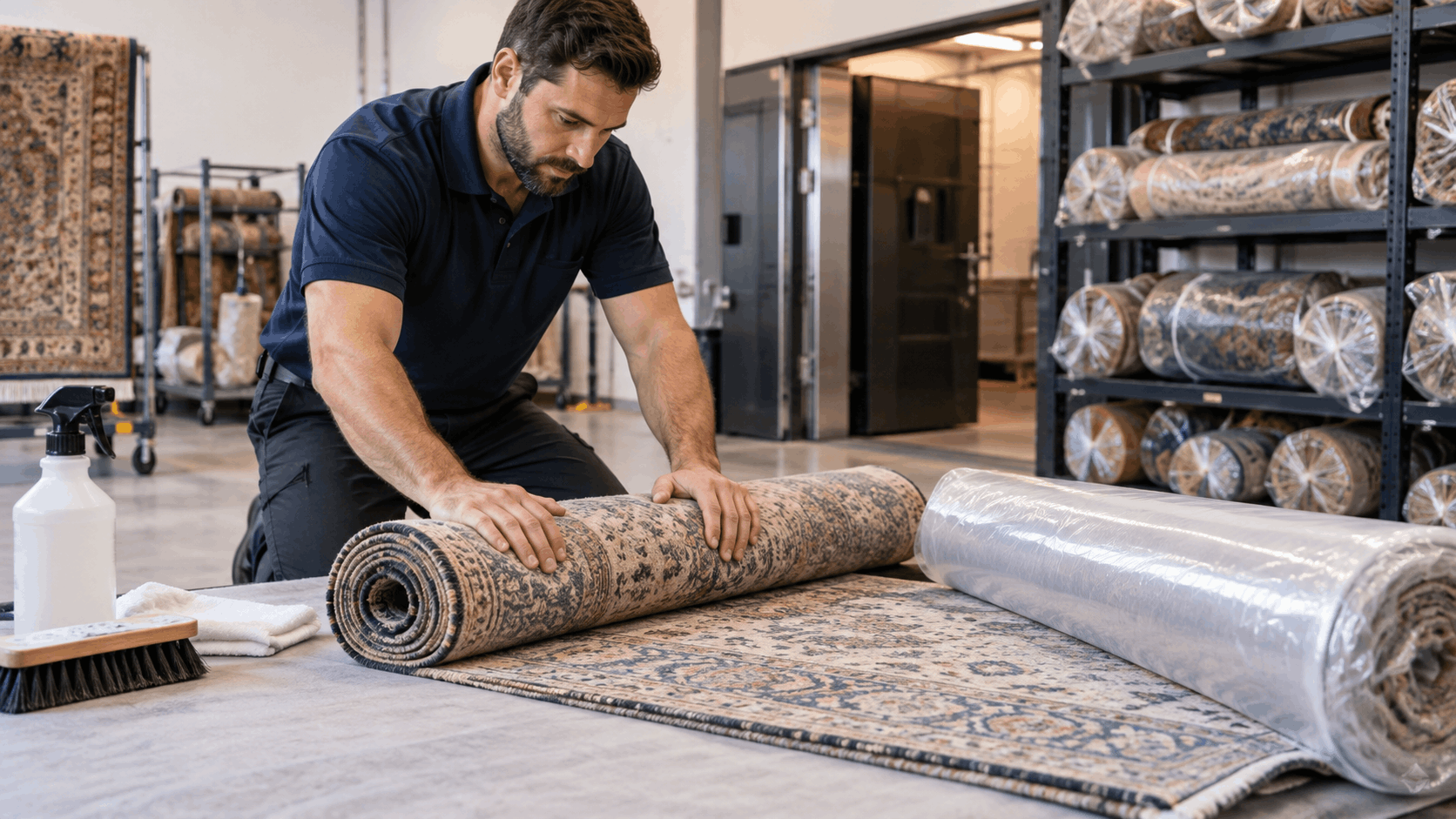
A core tube is the secret to a roll that holds its shape. Rolling the rug around a sturdy cardboard or PVC tube keeps the center from collapsing. Without a core, the roll sags and the inner layers crease under their own weight.
Pick a tube slightly wider than the rug so the edges are protected, not crushed. A PVC tube rug core works well for heavy rugs because it will not bend, while a thick cardboard concrete-form tube handles most household rugs. Wrap the tube in clean paper first so nothing acidic touches the fibers.
The core tube also makes the rug far easier to handle and move. A rug rolled tight around a rigid center can be carried, shelved, and loaded without folding or flexing. That matters in a vault where rugs get moved around other stored items.
For long-term storage, the tube keeps the roll tight so it will not loosen and slump over the months. A tight, supported roll is a rug that comes out straight.
Wrapping and Protecting the Rolled Rug
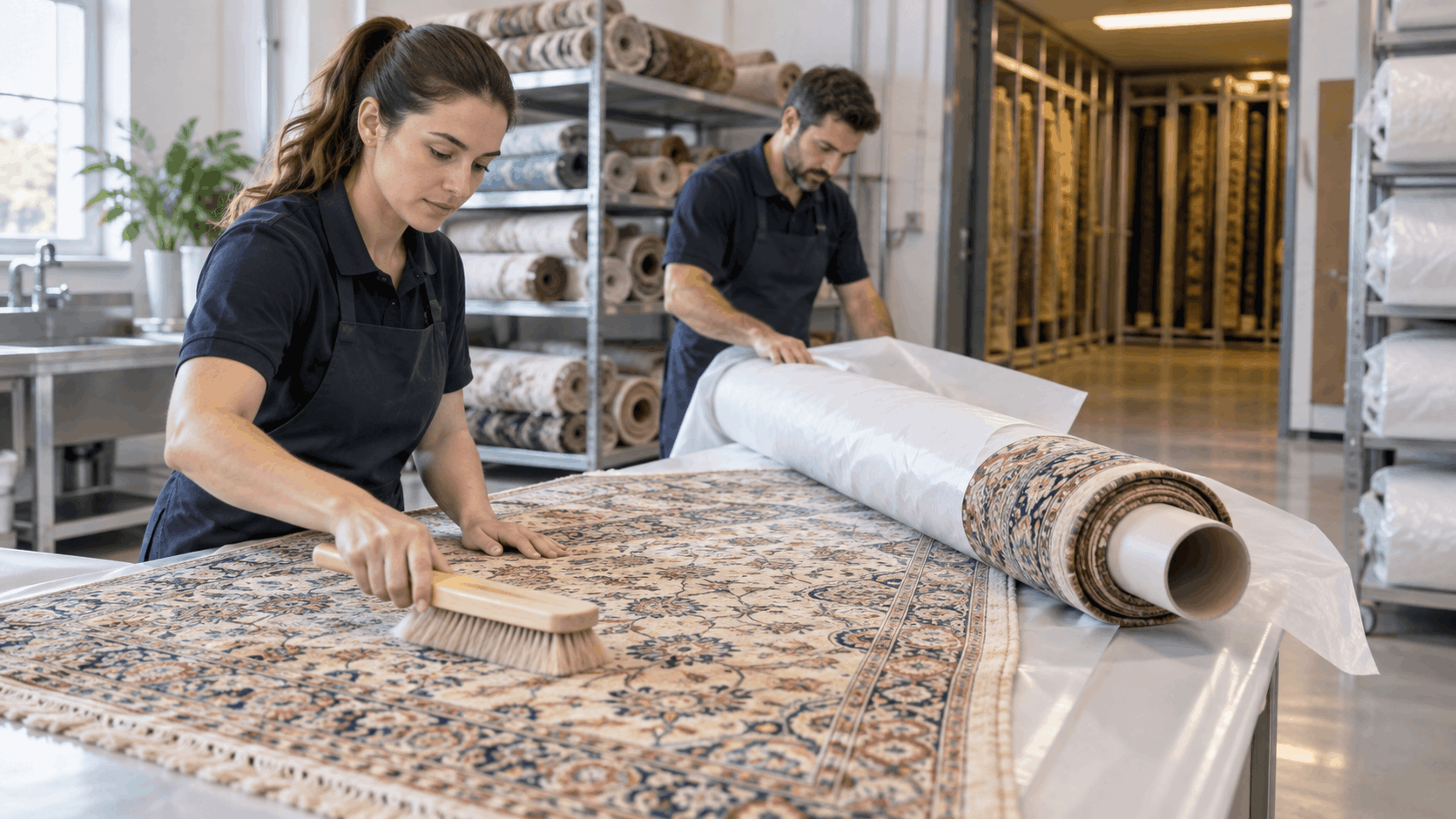
Wrapping is the last line of defense before the vault. Done right, wrapping a rug keeps out pests and dust while letting the fibers breathe. Done wrong, it traps moisture against the rug and creates the exact mildew you worked so hard to avoid.
The choice of material makes or breaks this stage. Breathable wrap plus real pest protection keeps a rug safe for years. Plastic does the opposite.
Breathable Materials vs. Plastic
Plastic is the wrong choice for long-term rug storage. It seals in any leftover moisture and stops the rug from breathing. Under LA's marine layer, a plastic-wrapped rug can sweat inside its own cover and grow mold in the dark.
Breathable material is the answer. Tyvek wrap is a favorite because it blocks dust and pests while still letting air pass through. Its light, tough sheeting is exactly what museums and movers use to protect textiles.
Cotton sheeting and unbleached muslin also work well, especially for wrapping the rug directly before an outer layer. A layer of kraft paper is another breathable option that shields the surface without trapping humidity. All of these let the rug exhale instead of stewing in trapped air.
Whatever you choose, avoid plastic against the rug. If a company ever hands you a rug shrink-wrapped in plastic for long-term storage, that is a red flag worth questioning.
Adding Moth and Pest Barriers
Wool and silk need extra defense from moths. The best protection starts with a truly clean rug, since pests are drawn to soiled fibers. After that, add natural deterrents to the wrapped roll.
Cedar is a classic choice. A few cedar blocks tucked near the roll help repel moths and carpet beetles. Refresh the cedar or sand it lightly every few months, since the scent fades and a faded block does little.
Other natural repellents like lavender sachets can help around the roll as well. Avoid mothballs on rugs you care about - the chemicals leave a smell that clings and can affect certain dyes. A moth repellent that damages the rug is not worth using.
Place these deterrents around the outside of the wrap, not pressed against the fibers. The goal is to create a scent barrier that keeps pests away from the roll without staining the rug.
Sealing and Labeling the Roll
Once wrapped, secure the roll so it stays closed. Use cotton twill tape or soft ties every couple of feet along the length. Avoid tape directly on the rug or on Tyvek in a way that pulls when removed - tape the outer wrap only, and keep a secure wrap that will not loosen in transit.
Labeling saves a lot of frustration later. Write down the rug's size, room, direction it should be unrolled, and any care notes. Attach the label to the outside where you can read it without unwrapping.
For households storing several rugs, a simple numbered list helps you track what is where in the vault. Note which rugs are wool or silk so you know which ones need pest checks. Labeling a rug takes two minutes and pays off every time you retrieve one.
A well-sealed, labeled roll is ready for the vault. Our packing and crating team handles this wrapping step for clients who would rather leave it to trained hands, using the same packing and crating materials we trust on high-value pieces.
Need Help in Los Angeles?
Popeye Moving & Storage serves Los Angeles and all of Los Angeles County.
Choosing the Right Storage Environment in Los Angeles
All the prep in the world means little if the rug goes into the wrong space. Climate controlled storage, proper positioning, and a clean dry environment protect the rug over the long haul. LA's mixed climate makes the choice matter more than in most cities.
The right rug storage in LA balances temperature and humidity control with smart placement. Here is how the pieces fit together.
| Storage Factor | Why It Matters for Rugs | What to Look For |
|---|---|---|
| Temperature control | Prevents fiber stress from heat swings between the Valley and coast | Steady range, no extreme highs |
| Humidity control | Stops mildew from marine layer moisture | Controlled, dry air |
| Off-floor storage | Concrete draws moisture up into rugs | Racks and shelving |
| Pest management | Keeps moths and rodents out of wool | Sealed, monitored facility |
| Access for check-ins | Lets you re-roll and inspect over time | Retrievable vault storage |
Why Climate Control Matters Here
Los Angeles is not one climate - it is many. The Valley bakes in triple-digit heat in summer while the coast stays cool and damp under the marine layer. Those temperature swings are hard on rug fibers over time.
Heat dries out wool and can make older foundations brittle. Damp coastal air pushes the other way toward mildew. A rug stored in an uncontrolled garage rides that whole range and suffers for it.
Climate control holds the temperature and humidity steady. That stability keeps fibers from expanding and contracting with every hot day and cool night. For a rug sitting still for months, steady conditions are what preserve it.
This is why we steer clients toward controlled storage for anything worth keeping. A cheap uncontrolled unit can cost far more in the end when the rug comes out damaged.
Off the Floor and Away From Walls
Where a rug sits inside the unit matters. Rugs should never rest directly on a concrete floor. Concrete wicks moisture upward, and that dampness travels into the rug even in a controlled space.
Store rolled rugs up on storage racks or shelving. Getting them off the floor keeps them out of any water that might reach the ground during a storm or a leak. It also improves airflow around the roll.
Keep rugs a few inches away from walls too. Air needs to move around the entire roll to prevent any pocket of trapped humidity. Rugs crammed against a wall or stacked in a damp corner are the ones that develop musty spots.
Lay rolls horizontally on a rack rather than standing them on end. Standing a heavy roll upright puts pressure on the bottom edge and can crush the fibers there. Flat and elevated is the position that keeps a rug happy.
Neighborhood Storage Challenges Across LA
Every part of the city brings its own storage headaches. Older homes near Highland Park and northeast Los Angeles often have small closets, aging construction, and detached garages that run hot and dusty. Those spaces are rough on rugs left in them.
Down by the water, garages near Long Beach and the streets around Naples Island deal with steady coastal moisture. A rug stored in a beach-area garage faces a much higher mildew risk than one stored inland. The salt air does not help either.
Hillside homes in Malibu and the canyons add fire-season dust and temperature extremes to the mix. Homes in the Valley swing hot in summer and can cook anything stored in an attic or garage. Each of these conditions pushes owners toward proper offsite storage.
The pattern is clear across the region. Home storage varies wildly by neighborhood, and most spaces are not built to protect rugs long term. A controlled facility takes the guesswork out.
How Popeye Moving & Storage Handles Rugs
Our team handles rugs for LA residents from pickup through vault storage. We clean or arrange cleaning, roll each rug around a proper core, and wrap it in breathable material with the right pest barriers. Every step in this guide is a step we do for clients.
The rugs go into a controlled storage vault, kept off the floor and monitored over time. Our vaulted storage keeps each household's items in their own secured unit, which makes rugs easy to retrieve and check. For pieces meant to stay put for years, our long term storage options are built for exactly that.
We work with designers and collectors too, storing rugs alongside other valuables through our designer receiving and consolidation service. That matters for the vintage and high-value pieces the LA design world trades in daily.
From a single family rug to a full collection, the goal is the same. The rug goes in prepped and protected, and it comes out straight, clean, and ready for the floor again.
Long-Term Care While Rugs Sit in Storage
A rug in long-term storage is not a set-and-forget item. Rug maintenance continues while the rug sits on the shelf. A few storage checkups over the months keep small problems from becoming permanent ones.
The idea is simple - visit the rug, inspect it, and reset the roll now and then. That small effort is the difference between a rug that comes out perfect and one that comes out set with creases.
Periodic Check-Ins and Re-Rolling
Plan a storage check-in every few months. Unwrap the roll enough to look it over and refresh any cedar or repellent. This is also your chance to catch any early trouble.
Re-rolling is the main task during these visits. A rug left in the exact same roll for years can develop a set crease where the fibers hold one bend permanently. Unrolling and re-rolling, sometimes starting from the opposite end, spreads the stress and prevents that.
For very long storage, re-rolling every six months or so keeps the fibers relaxed. It takes only a few minutes and undoes any tension that has started to build. Older and hand-knotted rugs benefit the most from this.
If your rug lives in our vault, our team can handle these check-ins for you. Clients who travel or live out of the area lean on us to keep their rugs turned and inspected on schedule.
Watching for Pest and Moisture Signs
During each check-in, look for pest signs. Loose fibers, fine sand-like debris, tiny larvae casings, or bald patches all point to moths or carpet beetles. Catching them early means treating one rug instead of losing it.
Watch for moisture signs too. A musty smell, dark spotting, or any dampness on the wrap means humidity is getting in. If you find any of that, unroll the rug, let it dry fully, and address why moisture reached it.
Check the wrap itself for damage. A torn cover, gnaw marks, or droppings nearby signal a rodent problem in the space. Those signs call for action before the damage spreads to other stored items.
Early detection is the whole point of check-ins. A rug inspected on schedule almost never suffers the total loss that a forgotten rug does.
Bringing a Rug Back Into the Home
When it is time to bring a rug back, do not just unroll it and toss it on the floor. Give it a proper return. Airing out a rug that has been stored lets it breathe and shake off any storage smell.
Unroll the rug in a clean space and let it rest flat for a day or two. Any faint musty scent usually fades once air moves through the fibers again. A gentle vacuum on both sides freshens it up.
Inspect it closely as part of post-storage care. Look for any pest damage, weak spots, or lingering creases before you commit it to a high-traffic room. Small creases often relax once the rug lies flat under normal use.
If the rug needs a refresh, a light professional cleaning after long storage brings it back to life. Then it is ready for the floor, looking much like it did the day you rolled it up.
Need Help in Los Angeles?
Popeye Moving & Storage serves Los Angeles and all of Los Angeles County.
Final Thoughts
A rug survives storage because of what happens before it reaches the vault. Clean out the dirt and oils, dry it completely, roll it around a core, and wrap it in breathable material with pest protection. Add a controlled space and a few check-ins, and even a delicate wool or silk rug can wait years and come out beautiful.
Skip those steps and the vault cannot save you. The musty, moth-eaten rug pulled from a closet is almost always a prep failure, not a storage one.
If you would rather leave the cleaning, rolling, wrapping, and vault storage to a team that does this every week across Los Angeles, our crew is ready to help. Contact Popeye Moving & Storage for a consultation, and explore our full range of storage solutions for rugs and everything else you want kept safe.
Frequently Asked Questions
Do I really need to clean a rug before storing it?
Yes, cleaning is a must. Ground-in dirt, food particles, and body oils sitting in the fibers attract moths and carpet beetles, which feed on soiled wool and silk. Those particles also grind against the fibers and cause damage during long storage. Storing a dirty rug locks the problem in for months or years. A proper clean removes the food source before the rug ever reaches the vault.
How long does a rug take to fully dry after cleaning?
Drying usually takes one to three days for most rugs, though thick wool pieces can need longer. Airflow on both sides and a fan speed things up considerably. Homes near the coast, from Venice to Marina Del Rey, hold more humidity from the marine layer, so give those rugs extra time. Never roll a rug that feels even slightly damp in the pile or backing - trapped moisture leads straight to mildew.
Should I roll my rug with the pile facing in or out?
The general rule is to roll most rugs with the pile facing inward, which protects the surface fibers and puts the sturdier back on the outside. Thicker or stiffer rugs sometimes do better rolled pile-out to reduce stress on the foundation. Always roll in the direction the pile lays, not against it. If the rug buckles or fights the roll one way, try the other direction until it lies smooth.
Can I wrap my rug in plastic for storage?
No, plastic is a poor choice for long-term rug storage. It seals in leftover moisture and stops the rug from breathing, which invites mildew and mold under LA's damp marine layer. Use breathable materials instead - Tyvek wrap, cotton sheeting, unbleached muslin, or kraft paper all block dust and pests while letting air pass through. Keep any plastic away from direct contact with the fibers.
How do I keep moths out of a stored wool rug?
Start with a thoroughly clean rug, since moths and carpet beetles are drawn to soiled wool. Wrap it in breathable material that seals out pests, then add natural deterrents like cedar blocks around the outside of the roll. Refresh or sand the cedar every few months as the scent fades. Skip mothballs, which leave a clinging smell and can affect dyes. Periodic check-ins catch any early activity fast.
Is climate-controlled storage worth it in Los Angeles?
For any rug worth keeping, yes. LA's climate swings from triple-digit Valley heat to cool, damp coastal air under the marine layer, and those temperature and humidity shifts stress rug fibers over time. Controlled storage holds steady conditions that prevent both drying out and mildew. An uncontrolled garage or unit rides the full range and often costs far more in the end when the rug comes out damaged.
How much does professional rug storage cost in LA?
Costs vary with the size of the rug, how many you store, the length of storage, and whether cleaning and wrapping are included. Basic controlled storage often runs modest monthly fees, while full-service prep with cleaning, rolling, and wrapping adds to the total. High-value and oversized rugs cost more to handle properly. The best way to get an accurate number is a quick consultation where we assess your specific rugs and needs.
Can I store a rug flat instead of rolled?
Flat storage works only for short periods and only when the rug can lie truly flat with nothing stacked on top. In practice, that is rare, and folding to fit a space creates permanent creases. Rolling around a core tube is almost always the better choice because it protects the fibers and foundation across a gentle curve. Rolled rugs are also easier to store off the floor and move without damage.
How often should I check on a rug in long-term storage?
Every few months is a good schedule. During each visit, unwrap the roll enough to inspect for pest signs and moisture, refresh any cedar, and re-roll the rug to prevent set creases. For very long storage, re-rolling every six months keeps the fibers relaxed. Older and hand-knotted rugs benefit most from regular attention. If your rug is in our vault, our team can handle these check-ins for you.
Does Popeye Moving & Storage handle rug pickup and wrapping?
Yes. Our team handles the full process for LA residents, from pickup at your home through cleaning coordination, rolling around a proper core, breathable wrapping with pest barriers, and controlled vault storage. We serve neighborhoods across the region, from Highland Park to the beach cities and the Valley. Whether it is one family rug or a designer collection, we prep and protect it the same careful way. Reach out for a consultation to get started.
Your rugs deserve the same care you would give any investment in your home. Clean them right, roll them straight, wrap them to breathe, and store them in a controlled space. Our team lives this process every week across Los Angeles, and we are glad to handle it for you from start to finish. Call Popeye Moving & Storage today to talk through your rugs and set up a consultation.
Frequently Asked Questions
- Do I really need to clean a rug before storing it?
- Yes, cleaning is a must. Ground-in dirt, food particles, and body oils sitting in the fibers attract moths and carpet beetles, which feed on soiled wool and silk. Those particles also grind against the fibers and cause damage during long storage. Storing a dirty rug locks the problem in for months or years. A proper clean removes the food source before the rug ever reaches the vault.
- How long does a rug take to fully dry after cleaning?
- Drying usually takes one to three days for most rugs, though thick wool pieces can need longer. Airflow on both sides and a fan speed things up considerably. Homes near the coast, from Venice to Marina Del Rey, hold more humidity from the marine layer, so give those rugs extra time. Never roll a rug that feels even slightly damp in the pile or backing - trapped moisture leads straight to mildew.
- Should I roll my rug with the pile facing in or out?
- The general rule is to roll most rugs with the pile facing inward, which protects the surface fibers and puts the sturdier back on the outside. Thicker or stiffer rugs sometimes do better rolled pile-out to reduce stress on the foundation. Always roll in the direction the pile lays, not against it. If the rug buckles or fights the roll one way, try the other direction until it lies smooth.
- Can I wrap my rug in plastic for storage?
- No, plastic is a poor choice for long-term rug storage. It seals in leftover moisture and stops the rug from breathing, which invites mildew and mold under LA's damp marine layer. Use breathable materials instead - Tyvek wrap, cotton sheeting, unbleached muslin, or kraft paper all block dust and pests while letting air pass through. Keep any plastic away from direct contact with the fibers.
- How do I keep moths out of a stored wool rug?
- Start with a thoroughly clean rug, since moths and carpet beetles are drawn to soiled wool. Wrap it in breathable material that seals out pests, then add natural deterrents like cedar blocks around the outside of the roll. Refresh or sand the cedar every few months as the scent fades. Skip mothballs, which leave a clinging smell and can affect dyes. Periodic check-ins catch any early activity fast.
- Is climate-controlled storage worth it in Los Angeles?
- For any rug worth keeping, yes. LA's climate swings from triple-digit Valley heat to cool, damp coastal air under the marine layer, and those temperature and humidity shifts stress rug fibers over time. Controlled storage holds steady conditions that prevent both drying out and mildew. An uncontrolled garage or unit rides the full range and often costs far more in the end when the rug comes out damaged.
- How much does professional rug storage cost in LA?
- Costs vary with the size of the rug, how many you store, the length of storage, and whether cleaning and wrapping are included. Basic controlled storage often runs modest monthly fees, while full-service prep with cleaning, rolling, and wrapping adds to the total. High-value and oversized rugs cost more to handle properly. The best way to get an accurate number is a quick consultation where we assess your specific rugs and needs.
- Can I store a rug flat instead of rolled?
- Flat storage works only for short periods and only when the rug can lie truly flat with nothing stacked on top. In practice, that is rare, and folding to fit a space creates permanent creases. Rolling around a core tube is almost always the better choice because it protects the fibers and foundation across a gentle curve. Rolled rugs are also easier to store off the floor and move without damage.
- How often should I check on a rug in long-term storage?
- Every few months is a good schedule. During each visit, unwrap the roll enough to inspect for pest signs and moisture, refresh any cedar, and re-roll the rug to prevent set creases. For very long storage, re-rolling every six months keeps the fibers relaxed. Older and hand-knotted rugs benefit most from regular attention. If your rug is in our vault, our team can handle these check-ins for you.
- Does Popeye Moving & Storage handle rug pickup and wrapping?
- Yes. Our team handles the full process for LA residents, from pickup at your home through cleaning coordination, rolling around a proper core, breathable wrapping with pest barriers, and controlled vault storage. We serve neighborhoods across the region, from Highland Park to the beach cities and the Valley. Whether it is one family rug or a designer collection, we prep and protect it the same careful way. Reach out for a consultation to get started. Your rugs deserve the same care you would give any investment in your home. Clean them right, roll them straight, wrap them to breathe, and
P
Popeye Moving & Storage Co. Team Team
Licensed moving and storage professionals serving Los Angeles and Los Angeles County.
Licensed in California · License #PUC: CAL T 189749 | DOT: 1472924 | MC: 498816C
Why trust Popeye Moving & Storage?
Founded in 1994, Popeye Moving & Storage is a licensed and insured moving and storage service serving Los Angeles and Los Angeles County. All content is reviewed by our licensed technicians.

Need Help in Los Angeles?
Popeye Moving & Storage serves Los Angeles and all of Los Angeles County.
Related Articles
How-To Guides
Contents Storage During an LA Remodel: Pack-Out, Vaulted Hold, and Redelivery Room by Room
A complete guide to contents storage during an LA remodel: how pack-out, vaulted hold, and room-by-room redelivery protect your belongings from demolition to final walkthrough.
How-To Guides
Preparing Furniture for Months in Storage: Wrapping, Moisture, and Pest Prevention Done Professionally
A professional guide to preparing furniture for months in storage in Los Angeles, covering cleaning, breathable wrapping, moisture control, pest prevention, and smart unit loading.
Cost Guides
What Vaulted Storage Billing Includes - Wrapping, Inventory, and the Line Items Self-Storage Never Shows
A clear breakdown of what vaulted storage billing includes - wrapping, inventory, handling, and coverage - and why self-storage quotes never show these line items upfront.