How-To Guides
West Hollywood Movers: Compact Unit and Narrow Building Access
Key Takeaways
- Measure doorways, hallways, and elevator cabs before move day to avoid stuck furniture in compact WeHo units
- Older buildings on Sweetzer and Kings Road have narrow doorways and tight landings that often require furniture disassembly
- Request a City of West Hollywood no-parking permit at least a week ahead to reserve close curb space
- Tight streets off Fountain Avenue and La Cienega often need a smaller box truck or shuttle vehicle
- High-rise condos near the Sunset Strip require freight elevator reservations and a certificate of insurance
- The pivot method, wall padding, and extra crew keep heavy items safe through steep, winding stairwells
- Short-term storage handles overflow items that do not fit on move-in day
- Popeye Moving & Storage Co. plans each WeHo move with a site walkthrough, matched crew, and transparent quote
In This Article
A client on Kings Road called us last spring, standing in her doorway with a brand new sectional half in and half out of the apartment. The couch would not clear the frame, the delivery crew had already left, and her neighbors were starting to stack up in the hallway behind her. She had measured the room but never the doorway, and that one missing number cost her an afternoon.
West Hollywood is full of moments like this. The buildings are older, the units are compact, and the streets stay busy from morning to night. Between tight stairwells, small elevators, and limited curb space along the main corridors, a WeHo move takes real planning to pull off cleanly.
Why West Hollywood Moves Are Different?
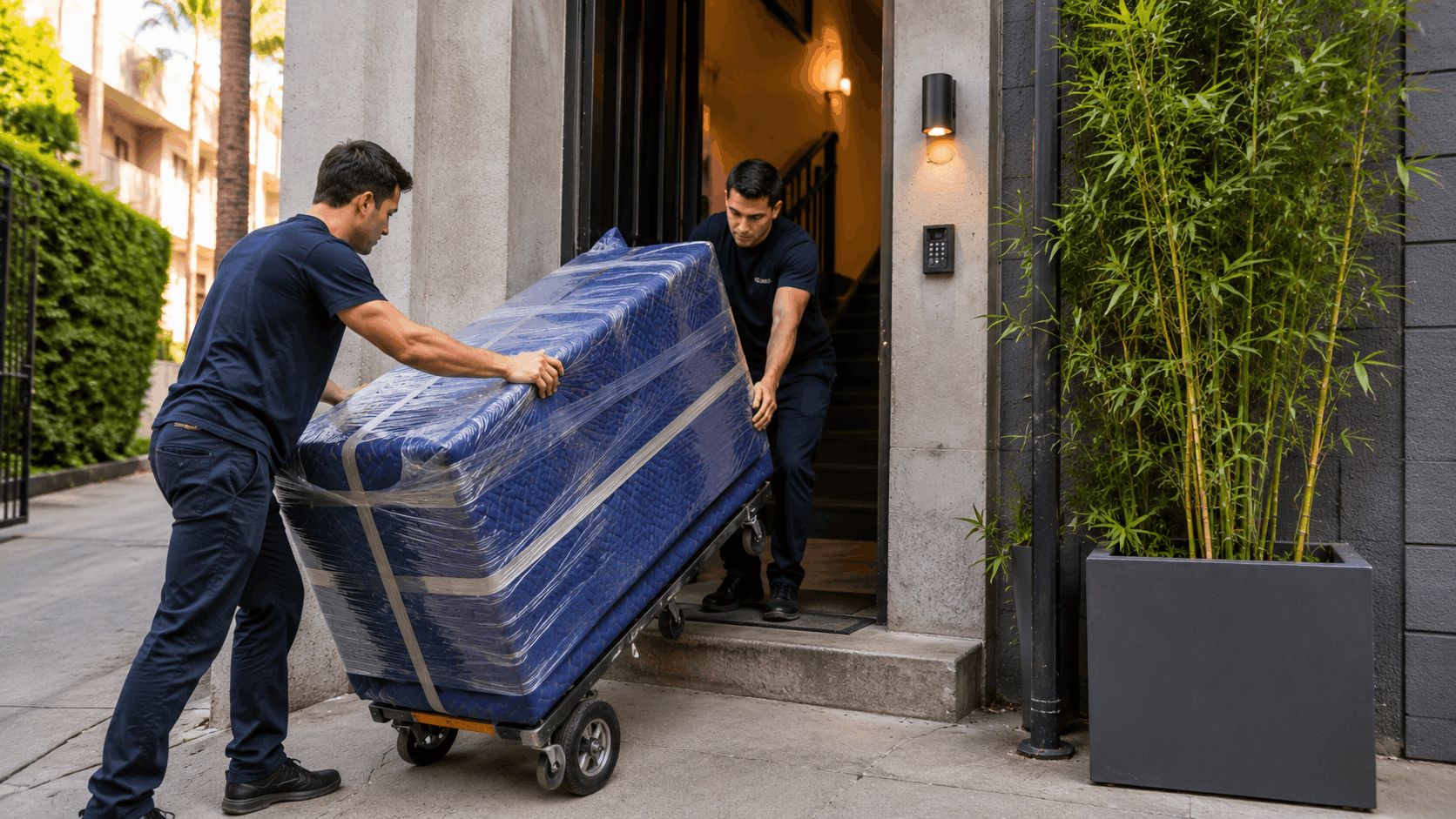
Most WeHo buildings were not built with moving trucks in mind. The city grew up around low-rise apartments packed close together, with streets that fill fast and curbs that rarely have open space. That combination changes how a move gets planned from the first phone call.
Here is what makes moving here its own kind of challenge:
- Older buildings have narrow doorways and small stair landings
- Dense streets leave little room for truck staging
- High-rise condos limit elevator use to reserved windows
- Curb parking is metered or permit-only on many blocks
Experienced West Hollywood movers plan around narrow building access before the truck ever rolls out. Every compact unit gets treated as its own puzzle, because no two buildings on the same street behave the same way.
Older Buildings Along Sweetzer and Kings Road
Walk down Sweetzer Avenue or Kings Road and you will see block after block of low-rise apartments built between the 1920s and the 1960s. These are the charming Spanish and mid-century buildings that give the neighborhood its character. They also come with tight interior spaces that were designed for smaller furniture than people own today.
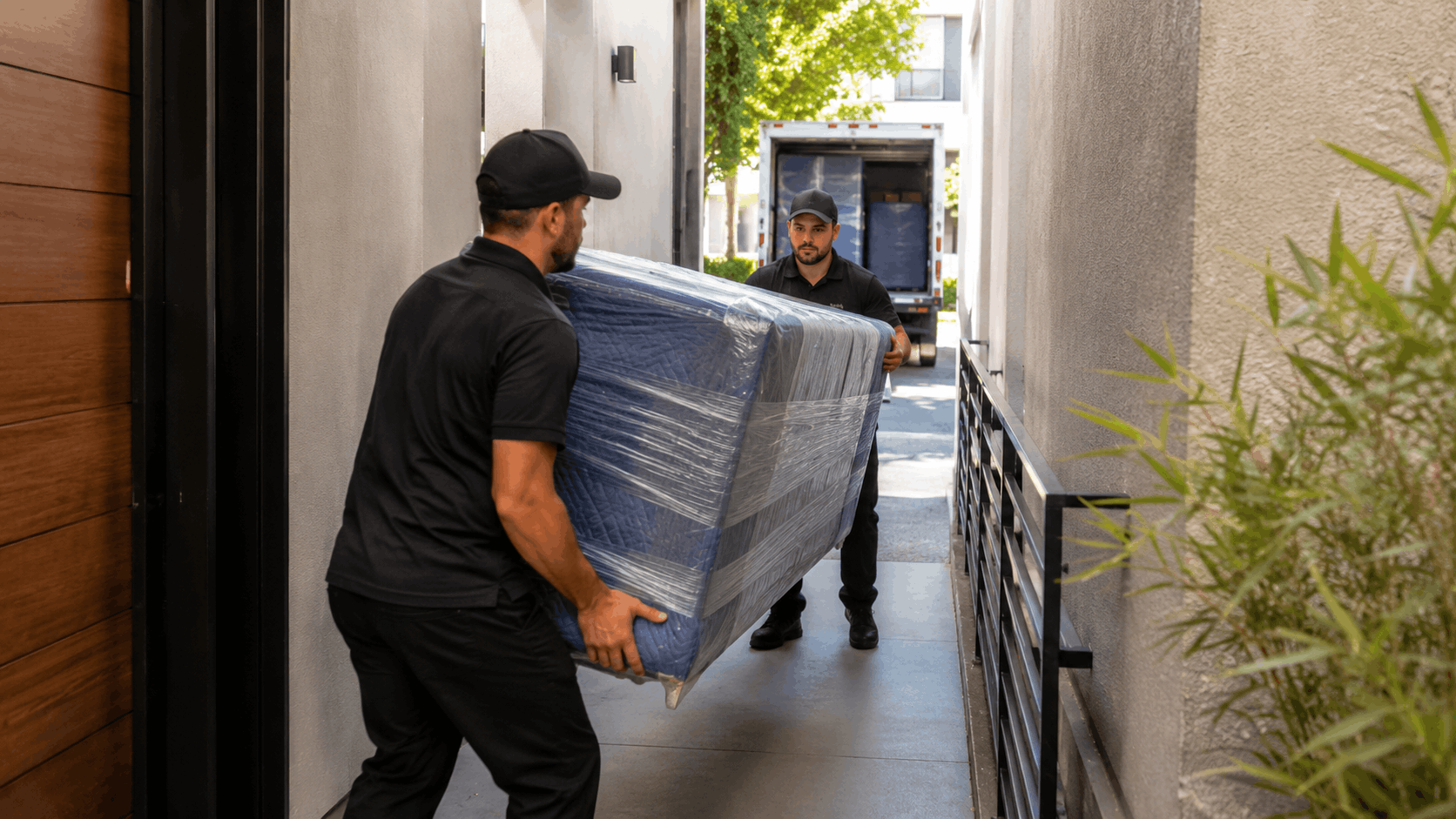
The Kings Road apartments we work in often have doorways under 30 inches wide and stair landings barely big enough to turn a mattress. Original hardware and thick plaster walls shrink the usable opening even more. A sofa that slid easily through a modern condo can stop cold at one of these vintage frames.
These narrow doorways are the single most common reason a move slows down in this part of town. We measure every opening before the crew arrives so we know in advance which pieces need to come apart. That one step saves hours and keeps the couch from getting stuck like our Kings Road client experienced.
Older landings also tend to be dim and short on turning room, which matters when a heavy item needs a full pivot. Our team maps the path from unit to street before lifting anything, noting each corner and step. For a smooth local residential move, that early planning makes all the difference.
Dense Streets Near Santa Monica Boulevard
Traffic along Santa Monica Boulevard rarely lets up. Between commuters, rideshare pickups, and delivery vans, the curb space near this corridor gets claimed early and stays claimed. A moving truck cannot simply park wherever it wants and expect to stay put.
This affects truck staging more than most people realize. If the truck has to park a block away, every item travels a longer carry path, which adds time and effort. We scout the block ahead of time to find the closest legal spot and plan the walk-in route around it.
On the busiest stretches, we sometimes stage the truck on a quieter side street and shuttle items over in smaller loads. It sounds slower, but it keeps the crew moving instead of circling for parking. The goal is always steady progress rather than one giant load that clogs the boulevard.
Timing helps too. Mid-morning on a weekday often beats rush hour or weekend afternoons when the corridor floods with foot traffic. We build the schedule around these windows so the truck spends less time fighting the flow of Santa Monica Boulevard.
High-Rise Units With Small Elevators
Newer condos near the Sunset Strip look modern from the outside, but their elevators often surprise people. Many buildings around the strip have compact cabs that barely fit a loaded dolly, let alone a full-size mattress standing upright. Some buildings only allow moves during set reservation windows.
The Sunset Strip condos we serve usually require a freight elevator booking arranged with the property manager. These slots fill up fast, especially on weekends and the first of the month. Booking early keeps the crew from waiting in the lobby while another tenant finishes their move.
Small elevator cabs also limit how much can go up per trip, which stretches the timeline. We plan the load order so the largest items go in the safest orientation first. If a piece will not fit the elevator at all, we shift to the stairs early instead of losing time testing it repeatedly.
For high-rise buildings along the Sunset Strip corridor, our West Hollywood Sunset Strip moving team knows the common elevator sizes and building rules. That local knowledge means fewer surprises and a schedule that actually holds up on move day.
Get Your Free Quote
Tell us about your move and we'll get back to you fast.
Measuring for Compact Units Before Moving Day
The best move-day surprise is no surprise at all. Most stuck-furniture problems trace back to a measurement nobody took. A tape measure and ten minutes of work can save an entire afternoon of frustration.
Good compact unit moving starts with measuring furniture against every opening it must pass through. That means checking doorway width, hallway turns, stairwell landings, and elevator cabs. We treat these numbers as the blueprint for the whole move.
Doorway and Hallway Clearances
Standard interior doors run about 30 to 32 inches wide, but WeHo vintage buildings often come in narrower. Once you subtract the door stop and any trim, the real opening can drop to 28 inches or less. That is tight for a wide dresser or a boxy armchair.
Door width alone does not tell the whole story though. When a piece is too wide to go straight through, the trick is measuring its diagonal clearance. Tilting a sofa on an angle can add several inches of usable width and get it through an opening that looked impossible.
Hallways matter just as much as doors. A long piece needs room to swing as it turns from the hall into the unit. We measure the hallway depth and the turn radius so the crew knows whether a straight carry works or an angled pivot is needed.
Writing these numbers down and comparing them to each large item removes the guesswork. If a piece clears with an inch to spare, we know to protect the walls closely. If it does not clear at all, we plan for disassembly before the truck arrives rather than in the doorway.
Elevator Cab Dimensions and Weight Limits
Elevators have two limits that both matter: how big the cab is and how much it can hold. Checking elevator dimensions means measuring width, depth, and the diagonal height from floor corner to ceiling corner. That diagonal is what lets a tall item stand at an angle inside the cab.
The weight limit is posted inside most elevators for a reason. Loading a dolly stacked with heavy boxes plus two movers can approach that limit fast. We split heavy loads across trips instead of risking an overloaded cab that stalls between floors.
Many West Hollywood buildings also post specific move rules right by the elevator. Some require padding on the cab walls, others limit which elevator movers can use. Reading these rules first keeps the crew in good standing with the building staff.
When an elevator is clearly too small for a large item, we do not waste time forcing it. We measure the stairwell as a backup path and plan the stair carry from the start. Knowing both routes ahead of time keeps the move flowing instead of stalling at the elevator door.
Which Furniture Needs Disassembly
Some pieces almost always need to come apart in a compact WeHo unit. Bed frames top the list, since a queen or king frame rarely turns a tight corner in one piece. Taking off the headboard and rails makes the carry far easier and safer.
Furniture disassembly also applies to desks with large tops, dining tables, and bookshelves that exceed the doorway width. Removing legs, shelves, or hardware shrinks each piece to a manageable size. We label the hardware in bags so reassembly at the new place goes quickly.
A sectional sofa is one of the most common items that must separate. Most sectionals break into two or three pieces by design, which is exactly what saves them at a narrow doorway. Our Kings Road client learned this the hard way with a one-piece couch that had no give.
Our crew arrives with the tools to handle standard disassembly on site. For custom or specialty pieces, our specialty moving team plans the takedown and rebuild in advance. Knowing which items come apart before move day keeps the whole schedule on track.
Need Help in Los Angeles?
Popeye Moving & Storage serves Los Angeles and all of Los Angeles County.
Handling Narrow Stairwells and Tight Corners
Plenty of WeHo buildings have no elevator at all. That means the stairs become the only path, and those stairs are often steep, winding, or both. Moving a heavy item up a tight walk-up takes technique, not just muscle.
Our approach to narrow stairwell moving centers on control and communication. Every carry through tight corners in a walk-up apartment follows a plan the whole crew agrees on before lifting. That keeps everyone safe and the item damage-free.
Pivoting Large Items Around Landings
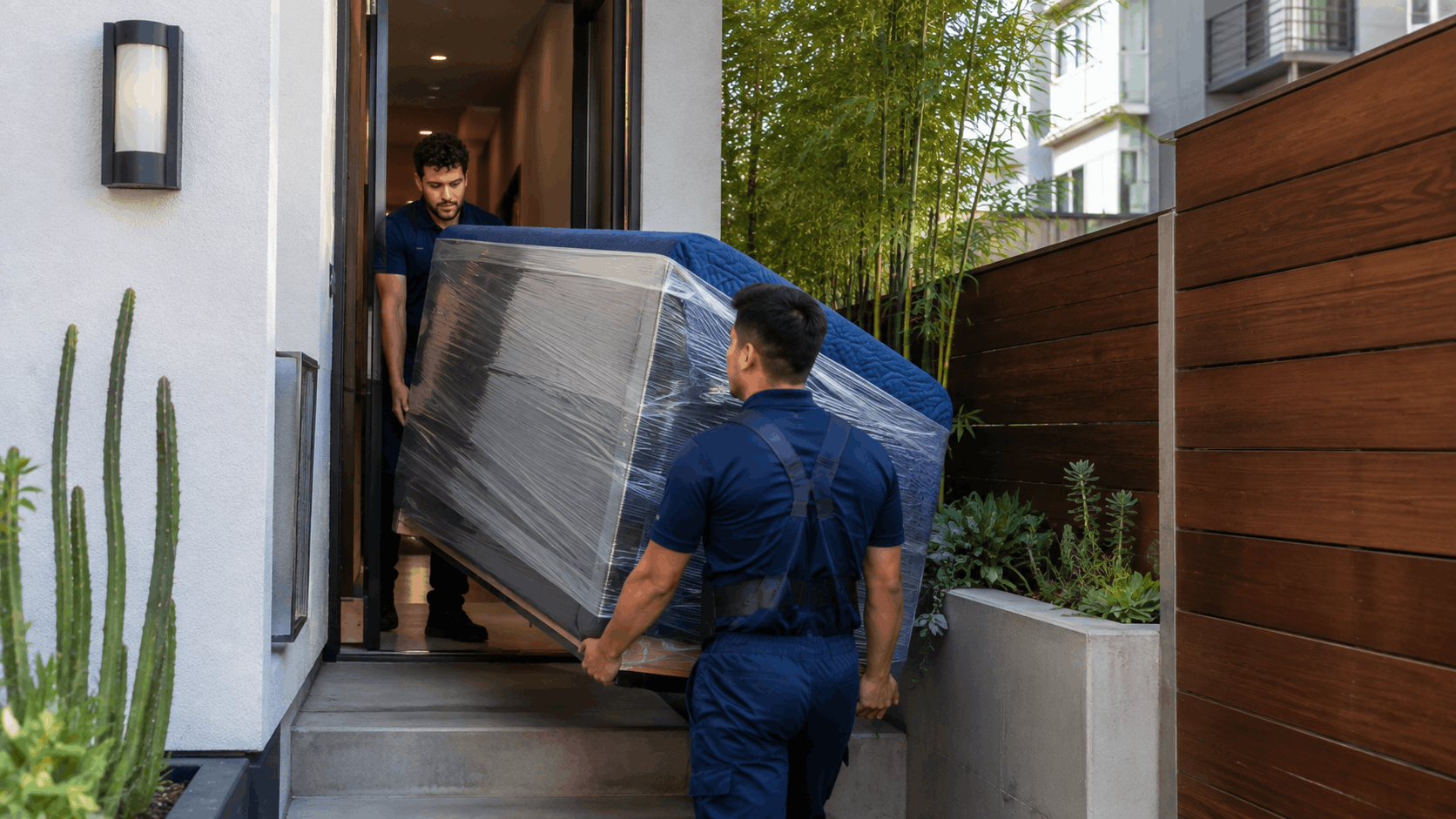
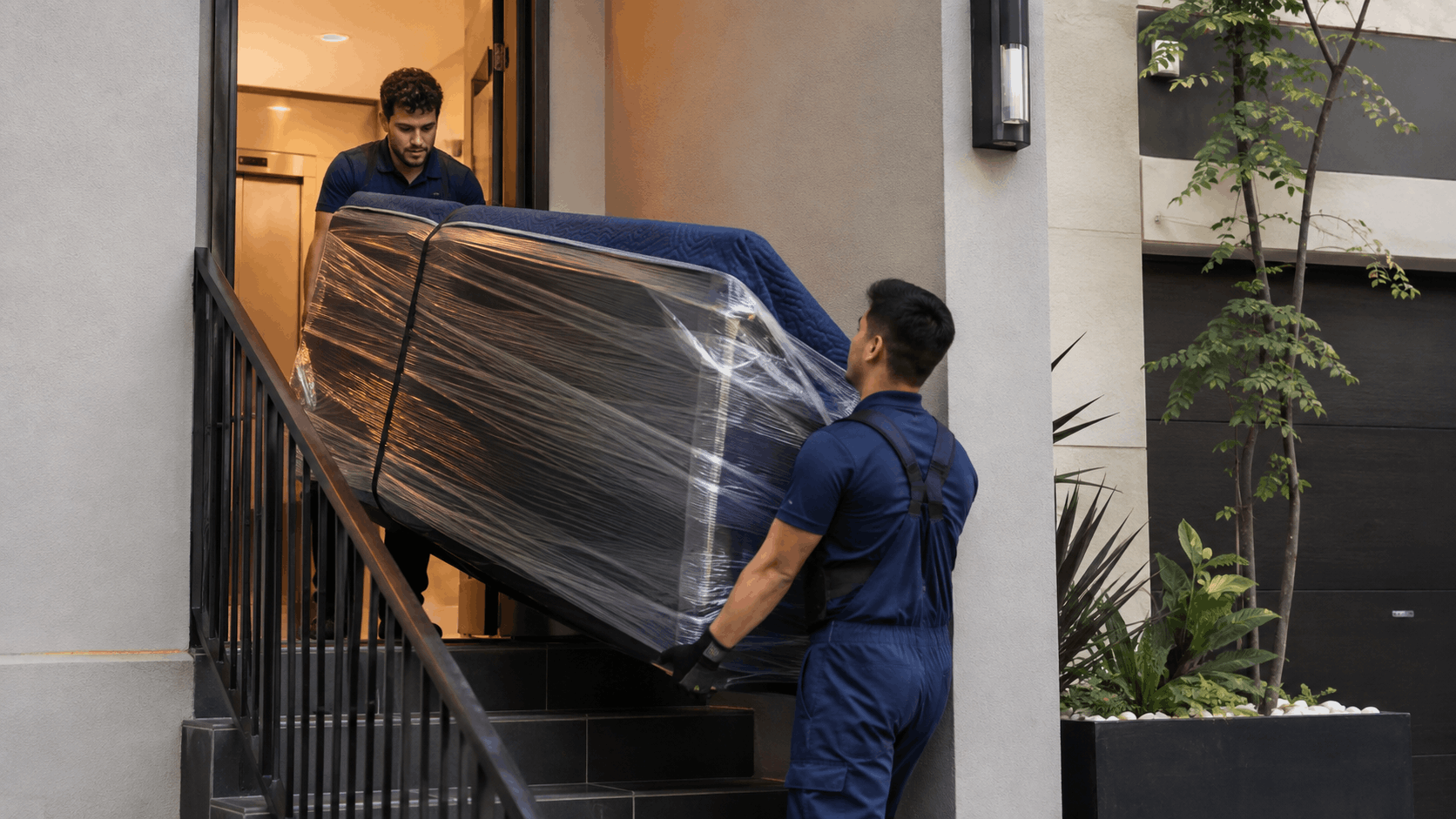
The tight landing at the top of a staircase is where most items get stuck. A mattress or sofa that came up the stairs fine can jam at the turn. The fix is the pivot method, where the crew rotates the item slowly around the corner using the landing as a hinge point.
The mattress carry works best with a firm shoulder hold on both ends. One mover leads while the other guides the trailing end through the turn. Communicating each step out loud keeps the pivot smooth instead of jerky, which protects both the item and the walls.
Sofas take a similar approach but need attention to the arms and back. We often tilt the sofa on its side and walk it around the landing at an angle. That angle uses the open air above the railing to gain clearance the flat carry does not have.
Practice matters here. Our crews have turned thousands of these corners in older WeHo buildings, so they read a landing quickly. That experience is what turns a stuck-couch nightmare into a two-minute pivot.
Protecting Walls and Railings
Stairwell walls take a beating during a move if nobody protects them. Scuffs, dents, and scratches can cost a tenant their deposit or upset a building manager. We prevent that with layered protection before the first item moves.
Wall padding goes up on the tightest turns where contact is most likely. We hang moving blankets on railings and along narrow sections of the stairwell. On stretches where an item could swing into the plaster, the padding takes the hit instead of the wall.
Corner guards protect the sharp edges of doorframes and stair corners that furniture brushes against. These clip on quickly and come off without a trace. Floor runners go down over hardwood and tile to stop scratches from grit and dolly wheels.
This protection matters even more in older buildings with original plaster and vintage railings. Repairs to historic materials cost far more than modern drywall. Taking a few minutes to pad everything up front prevents deposit disputes and keeps the building staff happy.
When Extra Movers Make Sense
Not every move needs a big crew, but stair-heavy jobs often do. Carrying a heavy item up three flights with only two people is slow and risky. Adding a third or fourth mover changes the whole equation.
Extra movers speed up the work in obvious ways, but the real benefit is safety. With more hands, no single person carries too much weight on a steep staircase. Fatigue causes dropped items, and a larger crew spreads the load so nobody wears out early.
The right crew size depends on the number of stairs, the weight of the items, and the tightness of the turns. A studio on the second floor might need just two movers. A one-bedroom with a piano on the fourth floor calls for more.
For heavy specialty items on stairs, our piano moving specialists bring extra crew and gear as a rule. Matching the crew to the building is something we plan during the quote, not on the spot. That way the price is clear and the job stays safe.
Parking and Street Access in West Hollywood
Where the truck parks can make or break the schedule. WeHo streets are tight, metered, and often permit-controlled, so parking is never an afterthought. Getting this right keeps the carry short and the meter maids away.
Here are the parking factors that shape every WeHo move:
- Temporary no-parking permits from the city for curb space
- Metered zones that limit how long a truck can stay
- Narrow residential blocks where big trucks struggle
- Side-street staging when the main street is full
Sorting out a West Hollywood parking permit ahead of time keeps moving truck parking legal and close. Good street access means less carrying and a faster, smoother day for everyone.
Temporary No-Parking Permits From the City
The City of West Hollywood issues temporary curb space permits for moving trucks. These reserve a stretch of curb so the truck has a guaranteed spot right by the building. Without one, a crew can arrive to find every space taken.
Requesting a no-parking permit takes some lead time, so we start early. The city typically needs a few business days to process the request and post the signs. We recommend arranging this at least a week ahead when possible, especially near busy corridors.
The permit covers a set length of curb for a set date and time. Posting the temporary signs a day or two before the move keeps other cars from parking in the reserved spot. That reserved space is often the difference between a 20-foot carry and a full block walk.
You can find permit details on the City of West Hollywood website. Our team can help coordinate this step so nothing falls through the cracks. Handling the paperwork early removes one of the biggest move-day headaches.
Tight Streets Off Fountain Avenue and La Cienega
The residential blocks off Fountain Avenue are famously narrow. Cars park on both sides, leaving barely enough room for two-way traffic, let alone a large moving truck. A full-size truck can block the whole street on some of these blocks.
The same holds true on many side streets near La Cienega Boulevard. The main boulevard moves fast and stays busy, while the residential streets branching off it get cramped quickly. Truck size matters more here than almost anywhere else in the city.
We scout these blocks before the move whenever we can. Knowing the street width and parking pattern in advance tells us whether a full truck fits or a smaller vehicle is smarter. That scouting prevents a truck from getting boxed in on a tight block.
On the narrowest streets, we plan the approach and exit route carefully. Backing a big truck out of a dead-end WeHo street is not something to figure out on the fly. A little planning keeps traffic flowing and neighbors from getting frustrated.
Choosing the Right Truck Size
Bigger is not always better in West Hollywood. A full-size truck holds more, but it cannot always reach the building. On cramped streets, the right truck size is the one that actually gets close to the door.
A smaller box truck often wins on tight blocks near Fountain or the vintage streets off Sweetzer. It fits where a large truck cannot and keeps the carry distance short. Sometimes two smaller trips beat one impossible large one.
For the tightest situations, we use a shuttle vehicle to bridge the gap. The main truck stages on a wider street, and a smaller shuttle ferries items to and from the building. This keeps the big truck out of trouble while still moving everything efficiently.
Choosing the vehicle is part of our planning process, not a last-minute call. We match the truck and any shuttle to the specific streets involved. That way the crew spends time moving your belongings, not wrestling a truck down a street it never fit on.
Building Rules and Elevator Reservations
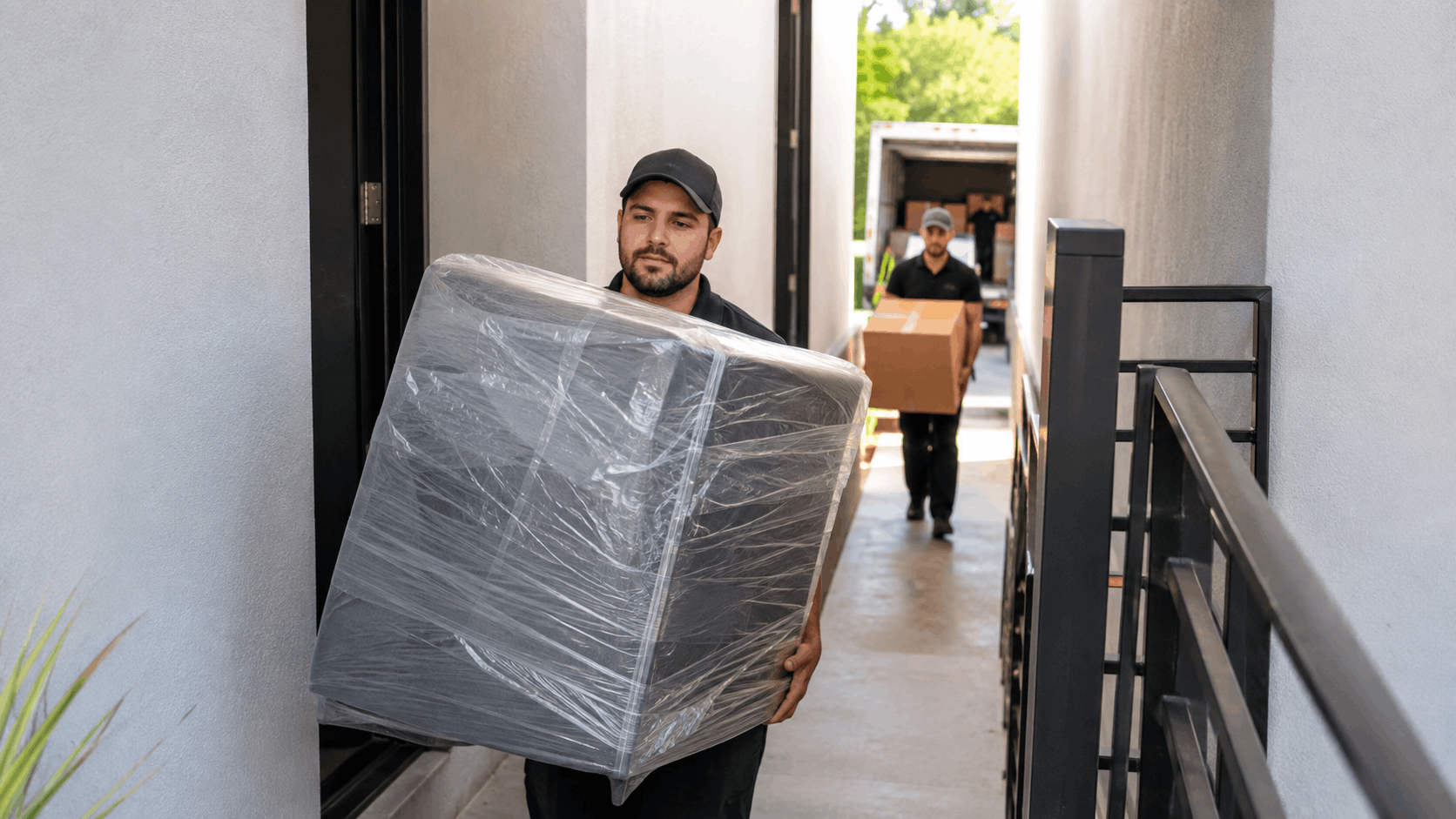
Many WeHo buildings have their own move rules, and skipping them can stop a move before it starts. Condo boards and property managers often require paperwork and scheduling in advance. Handling this early keeps move day smooth.
Common requirements include an elevator reservation, a set of building move rules, and a certificate of insurance from the moving company. We sort these out during planning so nothing blocks the crew at the door.
Reserving the Freight Elevator
High-rise buildings almost always require a freight elevator booking for moves. The building sets aside the elevator for your move so other tenants are not competing for it. Without a reservation, the front desk may simply turn the crew away.
These move time slot windows are usually on weekdays for a reason. Buildings prefer to keep weekends quieter for residents, so weekday mornings and afternoons open up first. Booking a weekday slot often means more flexibility and a smoother experience.
The reservation also locks in how long the crew has the elevator. Knowing that window shapes the whole move plan, so we schedule the load order to make the most of it. Racing against a two-hour elevator window is easier when the crew knows it from the start.
We coordinate with the property manager to confirm the slot before move day. That confirmation keeps the crew from arriving to a booked or unavailable elevator. Locking it down early is one less thing to worry about.
Certificate of Insurance Requirements
Most HOAs and property managers ask movers for a certificate of insurance before allowing a move. This document proves the moving company carries proper coverage in case of damage. Without it, many buildings will not let the crew past the lobby.
The HOA requirements usually spell out exactly what the COI must list. That often includes the building or management company as an additional insured, plus specific coverage amounts. Reading these requirements carefully prevents a last-minute rejection.
We provide certificates of insurance as a standard part of our service. Once we know your building's requirements, we prepare the COI with the correct details listed. Sending it to the property manager ahead of time clears the paperwork before the truck arrives.
Different buildings want different coverage limits, so we ask about this early. A luxury high-rise near the Sunset Strip may require more than a small walk-up. Knowing the requirement up front means the right document is ready when needed.
Move-In and Move-Out Hour Limits
Many West Hollywood buildings limit when moves can happen. Posted move hours often run mid-morning to late afternoon on weekdays. Moving outside these windows can bring a warning or even a stopped move.
Quiet hours also come into play, especially in residential condos. Early morning and evening carries can disturb neighbors and violate building rules. Planning the move to fit inside the allowed window keeps things peaceful and compliant.
These limits shape how we schedule the crew and the truck. A move that must finish by 5 p.m. needs an early enough start to get everything done. We build the timeline around these hours so the crew is never rushing at the deadline.
Checking the building's posted rules early avoids surprises. Some buildings restrict moves on weekends or holidays entirely. Knowing this before booking the date keeps the whole plan realistic and stress-free.
Need Help in Los Angeles?
Popeye Moving & Storage serves Los Angeles and all of Los Angeles County.
Protecting Small Spaces and Fragile Items
Working in a compact unit means less room to maneuver and more chances to bump something. Careful packing and protection matter even more when space is tight. A little extra care up front prevents damage and rework.
Good packing fragile items and smart small space moving go hand in hand. Solid furniture protection keeps pieces safe as they move through narrow paths. Here is how our team handles it in cramped WeHo units.
Wrapping and Padding in Tight Rooms
We wrap items before they leave the unit, not in the hallway or truck. Wrapping inside means the piece is protected the moment it starts moving. It also keeps the crew from crowding a narrow hall with loose blankets and tape.
Furniture wrapping starts with moving blankets secured by stretch wrap or tape. Corners and edges get extra padding since those take the most abuse in tight spaces. A well-wrapped dresser can brush a doorframe without a scratch on either surface.
Moving blankets do double duty as protection and grip. A wrapped item is easier to hold securely during a tricky carry. We keep plenty of blankets on hand so no piece leaves the room unprotected.
In a small studio, we set up a wrapping station in the one open spot we can find. Items get prepped there and then head straight out. That system keeps the workflow moving even when floor space is scarce.
Staging Boxes Without Blocking Exits
Box placement in a compact unit takes real thought. Stack them wrong and the crew cannot get through their own work zone. Good box staging keeps every path clear from the unit to the truck.
In a studio apartment, we stack boxes along walls and away from the door. The main walking path stays open so movers can carry items in and out freely. Blocking an exit with a tower of boxes slows everyone down and creates a hazard.
We also stage boxes in load order when we can. The boxes going on the truck first sit closest to the door. That small bit of organizing saves steps and keeps the crew from digging through a pile mid-move.
Heavy boxes go on the bottom and lighter ones on top, which is standard but matters more in tight rooms. A toppling stack in a small space can block the only exit. Keeping stacks stable and paths clear is part of moving safely in compact units.
Short-Term Storage for Overflow
Sometimes not everything fits on move-in day. A new unit might be smaller than expected, or the timing between places might not line up. That is where storage saves the day.
Short-term storage gives overflow items a safe home until there is room for them. Instead of cramming a small unit or leaving things in a hallway, the extras go to a secure facility. You retrieve them when the space opens up.
Popeye Moving & Storage offers flexible storage options for exactly these situations. Whether it is a few pieces of furniture or a full room's worth of boxes, we hold them safely. Our storage solutions scale to whatever you need.
This option comes up often with WeHo compact units. Renters downsizing into a smaller space frequently need somewhere to keep the overflow. Our short-term storage bridges that gap without forcing hard choices on move day.
How Popeye Moving & Storage Co. Plans a WeHo Move
Every successful WeHo move follows a plan built before the truck leaves our lot. Our Los Angeles team treats compact and narrow-access jobs as their own category. That planning is what separates a smooth move from a stuck-in-the-doorway day.
As a West Hollywood moving company, Popeye Moving handles each step with local knowledge. Here is how our move planning process breaks down:
| Step | What Happens | Why It Matters |
|---|---|---|
| Site Walkthrough | Inspect access points, stairs, and parking | Spots problems before move day |
| Crew and Equipment Match | Pair crew size and dollies to the building | Keeps the move fast and safe |
| Transparent Quote | Price stairs, carries, and shuttle needs up front | No surprise charges later |
The Pre-Move Site Walkthrough
The site walkthrough is where our plan takes shape. We visit or review the unit to inspect the doorways, hallways, stairs, and elevator. Every access point gets checked against the items that need to move.
This access inspection catches the problems that ambush unprepared crews. A doorway too narrow for the sofa, a landing too tight for the mattress, a street with no parking - we find these early. Then we plan around them instead of discovering them mid-carry.
We also check the parking situation and note where the truck can legally stage. If a permit is needed, this is when we flag it. Walking the route from unit to curb tells us exactly how the day will flow.
For clients who cannot meet in person, we work from detailed photos and measurements. Either way, the walkthrough gives us the information to build a real plan. That upfront work is why our WeHo moves stay on schedule.
Custom Crew and Equipment Match
Once we know the building, we match the right crew size to the job. A ground-floor studio needs fewer hands than a fourth-floor walk-up with heavy furniture. Sizing the crew correctly keeps the move both fast and safe.
The moving equipment matters just as much as the crew count. Narrow stairs call for compact dollies and straps, while tight doorways need specific padding and hand tools. We load the truck with the gear the building actually requires.
For specialty items like pianos or fragile antiques, we bring extra crew and specialized equipment. Matching gear to the layout prevents the scramble of realizing mid-move that a tool is missing. Everything the crew needs is on the truck before it leaves.
This matching happens during planning, based on what the walkthrough revealed. Whether it is a residential move or a business relocation, the crew and gear fit the building. That fit is what keeps the day running smoothly.
Transparent Quotes for Tight-Access Jobs
Nobody likes a surprise charge at the end of a move. We price tight-access jobs clearly so you know the cost up front. Stairs, long carries, and shuttle needs all get spelled out in the moving quote.
A long carry fee applies when the truck cannot park close and items travel a long distance. We explain when this might happen based on the building and parking situation. If a shuttle vehicle is needed for a tight street, that gets quoted too.
Being upfront about these factors is how we build trust. A WeHo move has real variables, and hiding them only leads to frustration later. We would rather explain the costs clearly than surprise anyone on move day.
Reach out through our contact page for a quote tailored to your building. We will walk through the access details and give you an honest price. That transparency is part of how we do business across Los Angeles.
Need Help in Los Angeles?
Popeye Moving & Storage serves Los Angeles and all of Los Angeles County.
Final Thoughts
West Hollywood moves reward planning and punish guesswork. Between vintage buildings on Sweetzer and Kings Road, busy corridors near Santa Monica Boulevard, and compact condos by the Sunset Strip, the details add up fast. Measuring early, sorting parking, and handling building paperwork ahead of time turns a tricky move into a smooth one.
Our team has carried furniture up thousands of these stairwells and pivoted around countless tight landings. We know which doorways need a diagonal tilt and which streets a full truck cannot handle. That local experience is what keeps your belongings safe and your day on schedule.
If you are planning a move into a compact WeHo unit, let our team handle the hard parts. Call Popeye Moving & Storage Co. or reach out through our contact page for a consultation. We will scout the access, match the crew, and give you an honest quote so your move goes off without a hitch.
Frequently Asked Questions
How do movers get large furniture into a narrow West Hollywood apartment?
We start by measuring the doorway, hallway, and any turns against the furniture. If a piece is too wide, we tilt it for diagonal clearance or take it apart, since most sofas and bed frames come apart by design. For items that will not fit any path, we consider hoisting through a window or balcony. Planning this before move day prevents the stuck-in-the-doorway problem entirely.
Do I need a parking permit for a moving truck in West Hollywood?
Often yes, especially on metered or permit-only blocks near busy corridors. The City of West Hollywood issues temporary no-parking permits that reserve curb space for your truck. These take a few business days to process, so we arrange them at least a week ahead when possible. A reserved spot keeps the carry short and avoids parking tickets or moving the truck mid-job.
What if the building elevator is too small for my couch?
If the couch will not fit the elevator cab, we move it up the stairs instead. Most sectionals and many sofas come apart, which makes the stair carry far easier. Our crew uses the pivot method to turn large pieces around tight landings. When neither the elevator nor the stairs work, we look at hoisting or alternate access as a last resort.
How much does a compact unit move in West Hollywood cost?
Pricing depends on the size of the unit, the number of stairs, and the carry distance from truck to door. A small studio move usually falls at the lower end, while a multi-floor walk-up with heavy items costs more. Long carries and shuttle vehicles for tight streets can add to the total. We provide a transparent quote up front so there are no surprises.
How far in advance should I book a WeHo move?
We recommend booking at least two to three weeks ahead for most moves. If you need a city parking permit or a building elevator reservation, add extra lead time since those take days to arrange. First-of-the-month and weekend dates fill up fast, so earlier is always better. Booking early gives us time to scout access and lock in the right crew and truck.
Can movers handle steep or winding stairwells?
Yes, stair-heavy moves are common in older WeHo walk-ups and we handle them regularly. Our crews use the shoulder carry and pivot method to turn large items around tight landings safely. We pad the walls and railings to prevent damage and add extra movers when the stairs are steep. Careful technique and the right crew size keep both your items and our team safe.
Will a certificate of insurance be required by my building?
Many HOAs and property managers require a certificate of insurance before allowing a move. The document proves the moving company carries proper coverage and often must list the building as an additional insured. We provide COIs as a standard part of our service. Just share your building's requirements and we will prepare the correct document ahead of move day.
What happens if my items do not fit on move-in day?
If everything does not fit right away, our short-term storage keeps the overflow safe. This comes up often when renters downsize into smaller units or when move timing does not line up. Instead of cramming a small space or leaving items in a hallway, the extras go to a secure facility. You retrieve them whenever the space opens up.
Do you use smaller trucks for tight West Hollywood streets?
Yes, on narrow blocks off Fountain Avenue or near La Cienega, a smaller box truck often works better than a full-size one. When a big truck cannot reach the building, we stage it on a wider street and use a shuttle vehicle to ferry items over. Choosing the right vehicle for the streets involved keeps the carry short and the move efficient.
Frequently Asked Questions
- How do movers get large furniture into a narrow West Hollywood apartment?
- We start by measuring the doorway, hallway, and any turns against the furniture. If a piece is too wide, we tilt it for diagonal clearance or take it apart, since most sofas and bed frames come apart by design. For items that will not fit any path, we consider hoisting through a window or balcony. Planning this before move day prevents the stuck-in-the-doorway problem entirely.
- Do I need a parking permit for a moving truck in West Hollywood?
- Often yes, especially on metered or permit-only blocks near busy corridors. The City of West Hollywood issues temporary no-parking permits that reserve curb space for your truck. These take a few business days to process, so we arrange them at least a week ahead when possible. A reserved spot keeps the carry short and avoids parking tickets or moving the truck mid-job.
- What if the building elevator is too small for my couch?
- If the couch will not fit the elevator cab, we move it up the stairs instead. Most sectionals and many sofas come apart, which makes the stair carry far easier. Our crew uses the pivot method to turn large pieces around tight landings. When neither the elevator nor the stairs work, we look at hoisting or alternate access as a last resort.
- How much does a compact unit move in West Hollywood cost?
- Pricing depends on the size of the unit, the number of stairs, and the carry distance from truck to door. A small studio move usually falls at the lower end, while a multi-floor walk-up with heavy items costs more. Long carries and shuttle vehicles for tight streets can add to the total. We provide a transparent quote up front so there are no surprises.
- How far in advance should I book a WeHo move?
- We recommend booking at least two to three weeks ahead for most moves. If you need a city parking permit or a building elevator reservation, add extra lead time since those take days to arrange. First-of-the-month and weekend dates fill up fast, so earlier is always better. Booking early gives us time to scout access and lock in the right crew and truck.
- Can movers handle steep or winding stairwells?
- Yes, stair-heavy moves are common in older WeHo walk-ups and we handle them regularly. Our crews use the shoulder carry and pivot method to turn large items around tight landings safely. We pad the walls and railings to prevent damage and add extra movers when the stairs are steep. Careful technique and the right crew size keep both your items and our team safe.
- Will a certificate of insurance be required by my building?
- Many HOAs and property managers require a certificate of insurance before allowing a move. The document proves the moving company carries proper coverage and often must list the building as an additional insured. We provide COIs as a standard part of our service. Just share your building's requirements and we will prepare the correct document ahead of move day.
- What happens if my items do not fit on move-in day?
- If everything does not fit right away, our short-term storage keeps the overflow safe. This comes up often when renters downsize into smaller units or when move timing does not line up. Instead of cramming a small space or leaving items in a hallway, the extras go to a secure facility. You retrieve them whenever the space opens up.
- Do you use smaller trucks for tight West Hollywood streets?
- Yes, on narrow blocks off Fountain Avenue or near La Cienega, a smaller box truck often works better than a full-size one. When a big truck cannot reach the building, we stage it on a wider street and use a shuttle vehicle to ferry items over. Choosing the right vehicle for the streets involved keeps the carry short and the move efficient.
P
Popeye Moving & Storage Co. Team Team
Licensed moving and storage professionals serving Los Angeles and Los Angeles County.
Licensed in California · License #CAL T 189749 | USDOT 1472924 | MC 498816C
Why trust Popeye Moving & Storage?
Founded in 1994, Popeye Moving & Storage is a licensed and insured moving and storage service serving Los Angeles and Los Angeles County. All content is reviewed by our licensed technicians.

Need Help in Los Angeles?
Popeye Moving & Storage serves Los Angeles and all of Los Angeles County.
Related Articles
How-To Guides
Hermosa Beach Movers: Narrow Street and Walk Street Access Issues
Hermosa Beach walk streets, tight alleys, and steep grades make moving tricky. Learn access zones, truck options, permits, timing, and costs from local movers.
How-To Guides
Moving to Santa Monica: Parking Rules, Street Restrictions, and Building Access
Everything new Santa Monica residents need to know about permit parking zones, moving truck restrictions, building elevator rules, and city permits before moving day.

How-To Guides
Sunset Strip Movers: West Hollywood High-Rise Building Requirements
A local guide to moving into a Sunset Strip high-rise in West Hollywood, covering COI requirements, elevator bookings, parking permits, building rules, and how Popeye Moving handles it all.