Tips & Advice
Showroom and Sample Storage for Westside Design Trades: The Overflow Room You Rent by the Vault
Key Takeaways
- Small Westside studios near Culver City and Mar Vista fill up fast with samples, staging furniture, and between-project inventory.
- Renting by the vault means paying only for the sealed warehouse containers you use, which is cheaper and more secure than drive-up self-storage.
- Fabric, textiles, glass, art, and stone slabs each need specific wrapping, crating, and support to stay showroom-ready.
- Vaults typically run about $75 to $150 per month in LA, with pickup, delivery, and handling billed separately.
- Retrieval works best with a day or two of notice, though rush and same-day pulls are possible with good inventory records.
- Storage can scale up during market and install seasons, then drop back down when work slows.
- Clear labeling, photo logs, and a shared digital catalog keep a whole studio team able to find any item fast.
- Popeye Moving & Storage handles receiving, vault storage, and Westside install delivery for Los Angeles design clients.
In This Article
A designer we work with runs her studio off Washington Blvd near Culver City. Last spring, she called us because her sample library had taken over the conference table, the hallway, and half the floor. Fabric memos, tile boards, and a client's dining set for an install in Brentwood left no room to actually meet clients.
This is the quiet problem behind a lot of Westside design businesses. The work looks polished, but the back rooms are packed with swatches, stone samples, art, and furniture waiting for the next install. When the studio fills up, the work slows down.
That is where vault-based overflow storage comes in. In this guide, we walk through why design trades run out of room so fast, what renting by the vault actually means, how delicate samples and showroom pieces stay protected, how retrieval and delivery work across the Westside, what it costs, and how to pick the right storage partner. By the end, you will know how to turn an overstuffed studio back into a working space.
Why Westside Design Trades Run Out of Space So Fast?
Design trade storage becomes a problem faster than most owners expect. A studio that felt roomy on move-in day starts feeling cramped within a year. The Westside makes it worse because rent is high and square footage is tight.
Sample storage is the sneaky part. Samples never leave. They accumulate quietly, project after project, until there is no clear floor left. Below we break down the main reasons this happens across the Westside.
Small Studios Near Culver City and Mar Vista
Studio space along Washington Blvd and around Culver City tends to be small and expensive. A lot of designers rent 600 to 1,200 square feet because that is what the budget allows. That footprint fills up fast once client work starts flowing.
In Mar Vista, we see the same thing. Home studios and small storefronts near Venice Blvd get taken over by inventory that has nowhere else to go. Owners end up working around boxes instead of at a clean desk.
Paying for a larger commercial lease to hold overflow is a losing math problem. Westside rent runs high per square foot, and much of that space would just sit under stacked boxes. Off-site storage lets a designer keep a small, sharp studio and park the overflow elsewhere. Our Culver City moving and storage team hears this from designers almost every week.
The result is a clear split: keep the client-facing studio lean, and move the bulk of the sample library and furniture into vault storage. That keeps the good square footage working for design, not warehousing.
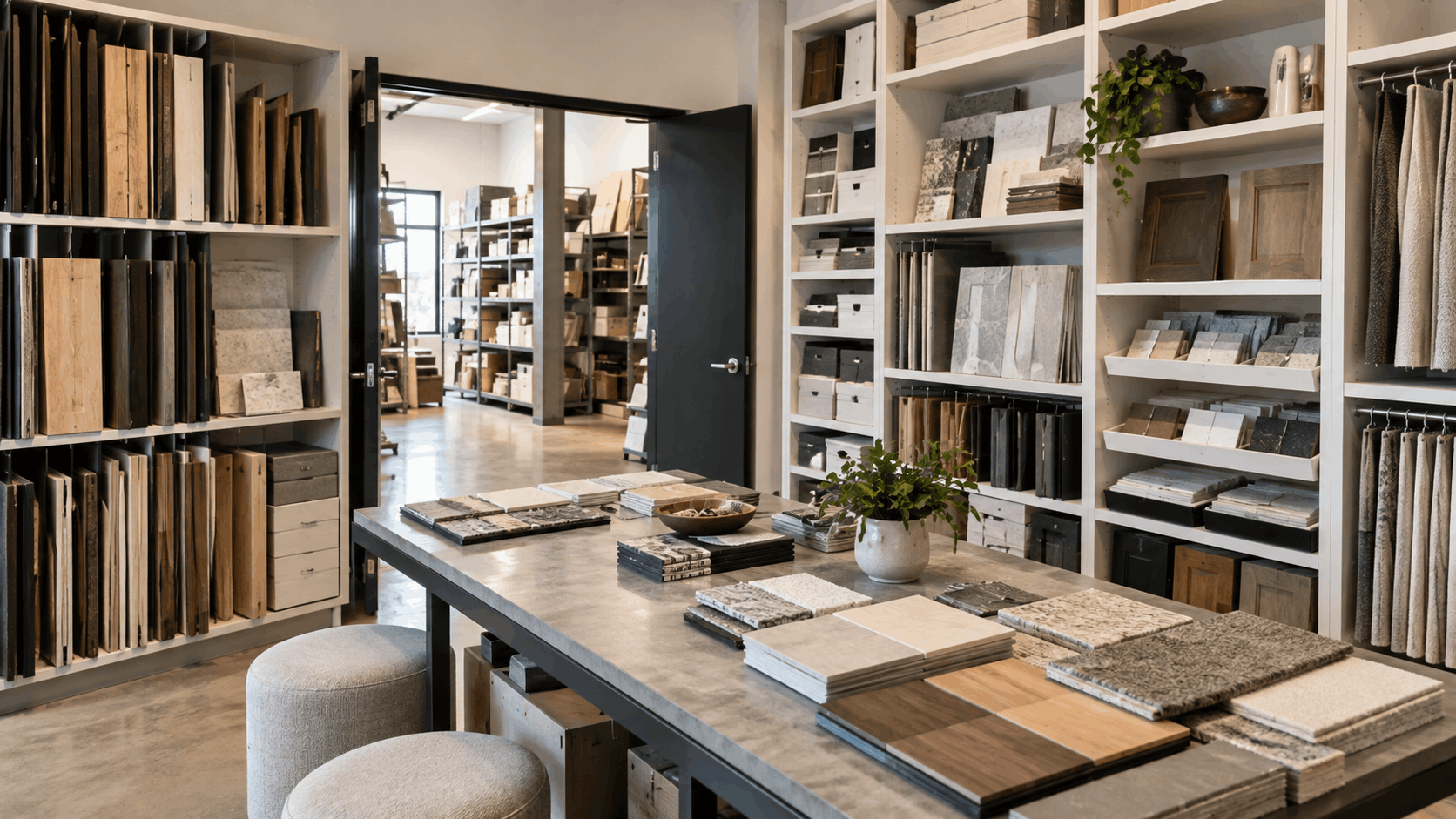
Samples, Swatches, and Tile Boards Add Up
Fabric samples are the classic space eater. A working designer might pull hundreds of memos in a single year, and vendors keep sending more. Stack a few dozen fabric books and you have lost a whole shelf unit.
Tile boards and stone samples are heavier and bulkier. A single tile board can be two feet square, and stone slabs samples add real weight. A designer specifying kitchens and baths across the Westside collects piles of these fast.
Then come the paint decks, hardware sets, wallpaper rolls, and trim samples. Each one is small, but together they eat drawers, bins, and closets. Swatches multiply because designers hate throwing them out in case a client wants that exact color again.
Over a busy year, all of this can fill a small room on its own. That is before any furniture enters the picture. Moving the bulk sample archive into storage frees the studio for the samples tied to active jobs.
Between-Project Furniture and Staging Pieces
Furniture is where studios truly overflow. Staging furniture, client sofas, dining tables, and accent pieces pile up between installs. A stager finishing a Brentwood listing may have a full living room set sitting idle until the next job.
Art, mirrors, lamps, and accessories add to the crowd. These install overflow items are fragile and awkward, so they cannot just stack in a corner. They need padding and space, which a small studio rarely has.
Between projects, this inventory has no home. It sits in the studio, blocks the workspace, and risks getting bumped or scratched. Our designer receiving and consolidation service is built for exactly this cycle.
Holding these pieces off-site means a stager can take on back-to-back jobs without their studio turning into a furniture warehouse. The pieces stay safe and ready to pull when the next install lands.
Seasonal Rushes Around Market and Install Deadlines
Design market season creates sudden spikes. After buying trips and market weeks, new samples and ordered pieces flood in. A studio that was manageable in January can be packed by March.
Holiday install season is its own crunch. Clients want projects done before Thanksgiving or the new year, so furniture and accessories stack up waiting for install dates. Everything lands at once, and the studio cannot hold it.
Seasonal storage smooths out these waves. During a rush, a designer can add vaults to hold the surge, then scale back down when the season slows. That flexibility beats renting permanent space for a few busy months.
We plan around these cycles with our Westside design clients so the extra room is ready before the flood arrives, not after the studio is already buried.
Get Your Free Quote
Tell us about your move and we'll get back to you fast.
What 'Renting by the Vault' Actually Means
Vault storage works differently from the self-storage unit most people picture. Instead of renting a fixed room, you rent sealed wooden containers inside a warehouse. You pay for the vaults you fill, not empty floor space.
For design trades, this model fits the inventory well. Warehouse storage keeps items indoors, protected, and organized. Here is how the vault system actually works.
How a Storage Vault Is Built and Sized
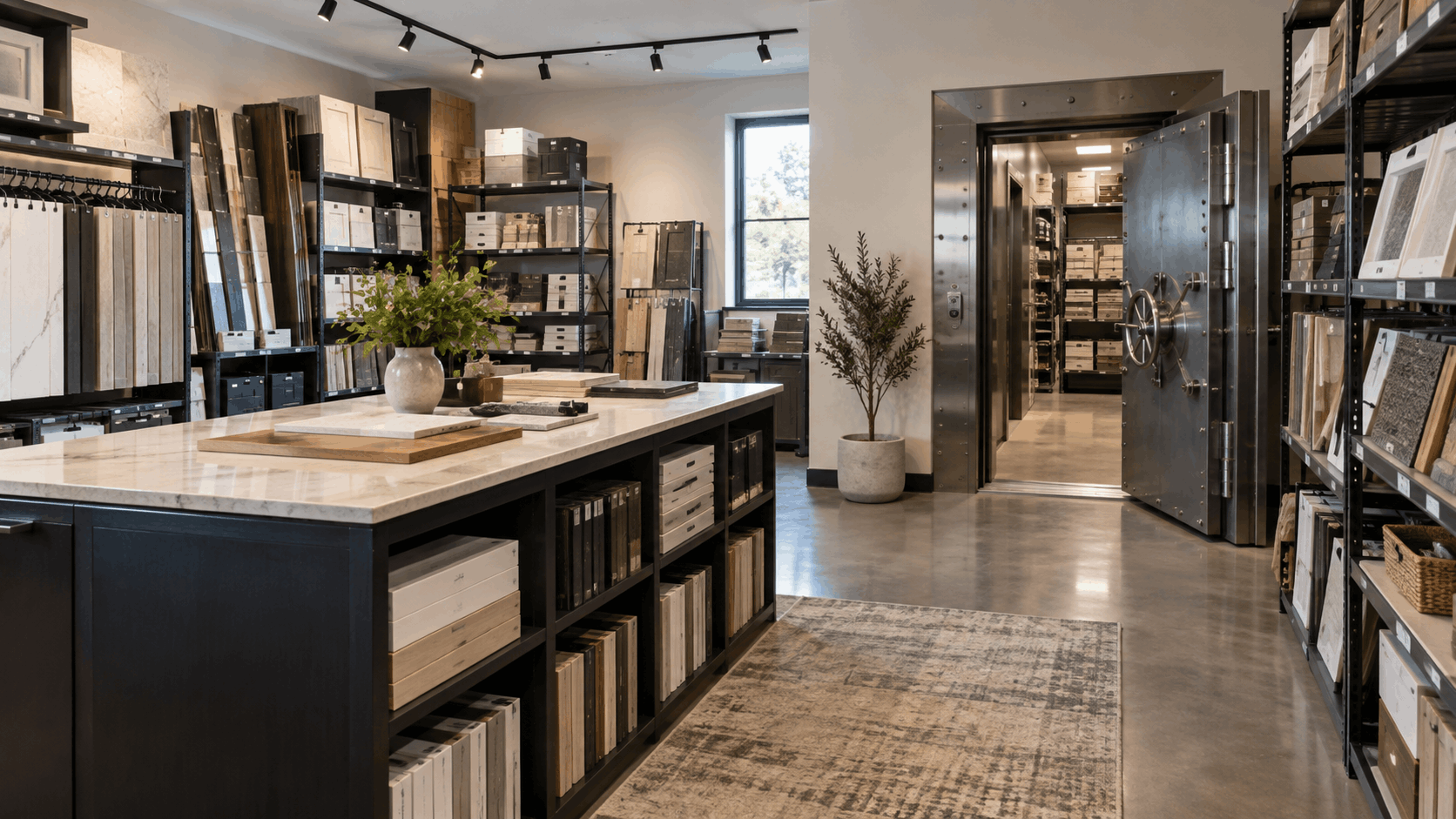
A standard wooden vault runs about 5 feet by 7 feet by 7 feet, which comes out to roughly 245 to 250 cubic feet. That holds the contents of a small room, or a good chunk of a sample library plus a few furniture pieces.
Items get packed and padded inside the vault, then the vault is sealed and stacked in the warehouse. The wood walls give structure and protection that open shelving never does. Each vault stays closed until you need it.
Vault dimensions matter when you plan. Knowing the cubic feet per vault helps a designer estimate how many they need for their sample archive versus their furniture holds. We help clients map this out during the first walk-through.
Because the vaults stack, a warehouse holds far more than a row of drive-up units in the same footprint. That efficiency is part of why vault pricing tends to run lower per cubic foot.
Vaults vs. Self-Storage Units
A drive-up self-storage unit gives you 24-hour access and a door you control. That sounds convenient, but you pay for the full unit even when it is half empty. And a designer rarely needs daily access to a sample archive.
Vaults trade that daily access for lower cost and better security. The warehouse is staffed, monitored, and climate-managed in ways a roadside unit is not. Your inventory sits behind warehouse security, not just a padlock.
The self-storage comparison usually comes down to how often you need to get in. If you pull items a few times a month with notice, vaults win on storage cost and protection. Our vaulted storage service is built around this scheduled-access model.
For design goods that mostly wait between projects, paying warehouse rates instead of retail unit rates adds up to real savings over a year.
Paying Only for the Space You Use
The best part of vault billing is flexibility. You rent by the vault, so if you fill three this month and five next month, you pay for what you use. No locking into a large unit you only half fill.
This scalable space matters for design trades because inventory rises and falls with projects. A big install season might need extra vaults for a few months, then you drop back down. Monthly billing tracks your real needs.
Flexible storage also helps cash flow. Instead of one big fixed lease, storage becomes a variable cost you can plan around each project. That makes it easier to budget and to bill back to clients when it fits.
We review vault counts with clients regularly so nobody pays for empty vaults. If your load shrinks, we consolidate and adjust the bill.
How Popeye Moving & Storage Handles Vault Overflow
Our Los Angeles team treats design inventory differently from a household move. We inventory each item, pack it with proper materials, and log it before it goes into a vault. That record is what lets you find one swatch box later.
We pack fragile and high-value pieces the way they need to be handled, using padding, crates, and dividers. Fabric books get grouped, furniture gets wrapped, and stone samples get supported. Everything is documented as it enters the overflow room.
When you need something back, we pull it from the vault, prep it, and route it to your job site. You do not dig through a unit yourself. Our storage solutions team manages the whole cycle.
The goal is simple. Your studio stays clear, your inventory stays safe, and you always know what is in storage and where.
Need Help in Los Angeles?
Popeye Moving & Storage serves Los Angeles and all of Los Angeles County.
Protecting Delicate Samples and Showroom Pieces
Design inventory is not like storing boxes of files. Fabric fades, textiles mildew, glass cracks, and lighting fixtures bend. Sample protection takes real handling knowledge, not just a dry room.
Climate control and careful packing keep these pieces sellable and usable. Fragile storage is where a design-trained crew earns its value. Here is how we protect each category.
Keeping Fabric, Rugs, and Textiles Safe from Moisture
Coastal humidity from Santa Monica down to Venice is hard on textiles. Damp air breeds mildew and can leave a musty smell that ruins a fabric memo. A sample that smells off is a sample you cannot present.
Textile storage starts with proper wrapping and controlled conditions. We wrap rugs and roll textiles to avoid creasing, then store them off the floor in managed humidity. That keeps moisture from settling into fibers.
Fabric books and swatch sets get grouped and boxed so they stay clean and dry. Keeping them out of temperature swings prevents fading and brittleness. For clients near Santa Monica, coastal moisture is a constant concern we plan around.
The payoff is textiles that look and smell showroom-ready when they come back out, even after months in storage.
Handling Glass, Lighting, and Art
Mirrors, glass tabletops, and framed art need real crating, not a blanket toss. We build or use custom crates and padding so fragile items do not shift or press against each other. One hard bump can crack a mirror or chip a frame.
Light fixtures are awkward and delicate, with arms, shades, and glass that snap easily. We pad and box these carefully, keeping parts secured so nothing rattles loose. Chandeliers and pendants get extra support.
Art storage means keeping frames upright, padded, and separated. Our packing and crating team handles the fragile items most warehouses would rather not touch.
Every fragile piece is logged with its condition so you know exactly what went in and what comes out. That record protects both sides.
Stone Slabs, Tile, and Heavy Materials
Stone slabs and tile samples are heavy and prone to cracking if stacked wrong. Lay them flat without support and they can snap under their own weight. Lean them badly and they slide and chip.
We store stone slabs upright in supported racks or flat with proper bracing, depending on the piece. Heavy materials need weight spread evenly so nothing bears too much load. Tile storage follows the same rule of even support.
Keeping heavy items low and stable also protects everything around them. A shifting slab can damage furniture or art nearby, so placement matters. We map heavy pieces into the vault plan from the start.
Done right, stone and tile samples come back intact, ready to show a client without a single new crack.
Labeling So Nothing Gets Lost
Storage only works if you can find things. We label every box and item with a clear tag tied to your inventory list. A designer should be able to name one swatch box and have us pull it.
A photo log makes this even faster. We photograph contents as they are packed, so you can scan images instead of guessing what is in each box. Item tracking by photo saves hours during a busy install week.
Inventory labeling also prevents the worst outcome: paying to store something you cannot locate. With a tagged system, nothing disappears into a vault forever.
We share the inventory record with your team so everyone sees the same list. No more one person holding all the knowledge in their head.
Access and Pickup When a Client Calls
Storage is only useful if you can get items back fast when a project moves. Storage access and item retrieval need to match the pace of design work. When a client says go, the pieces have to appear.
Delivery across the Westside takes local know-how too. Traffic, parking, and building rules all affect timing. Here is how retrieval and delivery work with us.
Scheduling Retrieval Ahead of an Install
The smoothest installs start with a heads-up. When you know your install date, we schedule the pull a day or two ahead so pieces are prepped and staged. That lead time keeps install day calm.
Retrieval scheduling means we locate the exact vaults and items, unpack them from storage, and get them install-ready. For a full room of furniture, a day or two of notice is ideal. For a single swatch box, less.
Install prep also includes a condition check before anything leaves. We confirm pieces match your list and look right. That way you are not discovering a problem in front of a client.
Planning retrieval around your calendar turns storage into a working extension of your studio, not a bottleneck.
Delivery Routes Across Brentwood, Bel Air, and Beverlywood
We run deliveries all over the Westside, from Brentwood and Bel Air to Beverlywood and beyond. Each area has its own quirks. Bel Air's narrow hillside streets need smaller trucks and careful timing.
The 405 and Sunset Blvd shape every schedule. Midday traffic on the 405 can turn a short hop into an hour, so we route around peak windows when we can. Deliveries into Brentwood often work best mid-morning.
Knowing these routes matters because a late delivery can stall an install crew that bills by the hour. We plan drive times realistically, not optimistically. That keeps job sites on schedule.
Years of driving these streets means we know which blocks are tight, where trucks can park, and how to reach a job site without wasting your install window.
Same-Day and Rush Options
Sometimes a client changes their mind and needs a piece today. Rush delivery is possible when the item is already logged and accessible in a vault. The better your inventory records, the faster we can move.
Same-day pulls depend on warehouse availability and traffic, so we cannot promise every request. But a well-organized account makes last-minute retrieval realistic more often than not. Clear labels are what make speed possible.
We tell clients to flag likely rush items in advance so we can stage them near the front. That small step turns a panic call into a quick pull.
When a designer needs something across town fast, our last-minute moving crew knows how to move without cutting corners on handling.
Coordinating with Contractors and Installers
Not every delivery goes to the designer. Often a contractor or installer needs to receive pieces directly at the job site. We coordinate those handoffs so the right person signs for the right items.
Contractor coordination means confirming site access, gate codes, and who is on site to receive. A dining set delivered to a locked house helps no one. We confirm details before the truck rolls.
Job site delivery also means placing pieces where the installers want them, not just dropping at the curb. Our crew works with installers to stage items in the right rooms.
Clear communication between our team, the designer, and the installers keeps everyone aligned so install day runs without surprises.

What It Costs and How to Budget for It
Cost is the question every designer asks first. Storage cost breaks into vault pricing plus handling and delivery fees. Once you see the pieces, it is easy to fit into a budget.
The numbers below are general ranges for the Los Angeles area. Your actual quote depends on volume, access frequency, and delivery distance.
| Cost Item | Typical Range (LA area) | What Affects It |
|---|---|---|
| Per vault, monthly | $75 - $150 | Vault count, contract length |
| Initial pickup / pack | $120 - $300+ | Volume, fragility, labor hours |
| Delivery per trip | $95 - $250+ | Distance, access, crew size |
| Rush / same-day | Added premium | Notice given, availability |
Typical Vault Monthly Pricing Ranges
Most vaults run in the range of $75 to $150 per month in the Los Angeles area. The monthly cost per vault depends on how many you rent and how long you commit. More vaults or longer terms often lower the per-vault rate.
A designer holding a sample archive plus a few furniture pieces might use two to four vaults. That puts a typical pricing range at a few hundred dollars a month for solid overflow capacity. Compared to a bigger lease, that is modest.
Because you rent per vault, the price scales with your load. A slow season costs less. A busy install season costs a bit more, then drops back.
We give clients a clear per-vault quote up front so there are no mystery charges on the monthly bill.
Pickup, Delivery, and Handling Fees
Transport and labor are billed separately from storage. Handling fees cover the crew time to pack, pad, and load your inventory. Fragile pieces and heavy stone take more time, so they cost a bit more to handle.
Delivery cost depends on distance, access, and crew size. A quick trip into West LA costs less than a hillside delivery in Bel Air with tight parking. We estimate these before the job so you can plan.
Labor is usually charged by the hour or by the job, depending on scope. For recurring design clients, we set up predictable rates so budgeting gets easier over time.
Knowing these fees in advance lets you fold them into project pricing instead of eating surprise costs.
Writing Storage Into Client Project Budgets
Smart designers bill storage into projects rather than absorbing it. When a client's furniture waits in storage before install, that storage is a project cost. It belongs in the budget line.
You can bill it as a pass-through receiving and holding fee, or fold it into project overhead. Either way, tracking the vault time per project keeps client billing clean. Our records make that easy to itemize.
For studios running many projects, spreading storage across active jobs turns a fixed cost into a recovered one. The client whose pieces you are holding pays for that hold.
We can break out storage and handling by project so your invoices show clients exactly what they are paying for.
Saving Money vs. Renting Larger Commercial Space
Compare vault storage against leasing a bigger studio. Commercial rent on the Westside can run several dollars per square foot per month, plus utilities, insurance, and a long lease. That is a heavy fixed cost.
A handful of vaults costs a fraction of that and flexes with your needs. The cost comparison usually favors storage by a wide margin, especially since much of a larger studio would just hold idle inventory.
The savings also come from not signing a multi-year lease for space you may not always need. Vaults let you keep your good studio small and pay only for the overflow.
For most Westside design trades, overflow vaults are the cheaper, smarter path than upsizing the lease.
Need Help in Los Angeles?
Popeye Moving & Storage serves Los Angeles and all of Los Angeles County.
Choosing the Right Storage Partner on the Westside
Not every storage company understands design goods. The right storage partner treats a fabric archive and a client's art like the high-value inventory it is. A generic warehouse may not.
When picking a moving company for design work on the Westside, use this checklist. It covers local knowledge, insurance, handling skill, and design experience.
Local Knowledge of Westside Streets and Buildings
A mover who knows the Westside saves you hours. Loading docks, parking rules, and building access vary block by block. Around Abbot Kinney in Venice, parking is brutal and delivery windows are tight.
Local knowledge means knowing which West LA buildings require freight elevator reservations and which streets ban large trucks at certain hours. That know-how prevents fines, delays, and blocked installs.
A crew that has worked these neighborhoods reads a job site quickly. They know where to stage, where to park, and how to move pieces in without damage. Our West Los Angeles team works these streets daily.
That familiarity turns a tricky delivery into a routine one, which keeps your install crew on schedule and your client happy.
Insurance, Inventory Records, and Accountability
Before handing over valuable inventory, ask about coverage. Storage insurance and clear inventory records protect you if something goes wrong. A partner should document what they hold and stand behind it.
Ask what liability coverage applies while items are in storage and in transit. Understand the limits and whether added valuation coverage is available for high-value pieces. Guidance from the Federal Motor Carrier Safety Administration is a good baseline for what to expect from a mover.
Inventory records are your proof of what went in. A partner who logs and photographs items gives you accountability, not just a promise. That record settles any question fast.
We keep detailed inventory and offer coverage options so design clients know their goods are protected and documented.
Experience with Fine Furniture and Design Goods
Handling fine furniture is a skill, not a default. A crew trained on high-value goods knows how to wrap a lacquer table, crate a mirror, and support a stone slab. A generic warehouse crew may not.
Ask about experience with design goods specifically. Antiques, custom pieces, and delicate finishes need careful hands. One careless move can ruin a piece worth thousands.
Handling experience shows in the details: the right padding, corner protection, and crating for the odd shapes designers deal with. Our specialty moving crew is trained for exactly these items.
When your inventory is high-value, that skill matters more than a cheap rate. Damage costs far more than careful handling.
How Popeye Moving & Storage Serves LA Design Clients
Popeye Moving & Storage works with designers, stagers, and showrooms across Los Angeles and the Westside. We handle receiving, consolidation, vault storage, and install delivery under one roof. That means one partner for the whole cycle.
Our Los Angeles team inventories and packs design goods with care, stores them in managed warehouse conditions, and delivers to job sites on your schedule. Design clients get a system, not just a shelf.
To start, reach our Los Angeles location team or head to the contact page for a quote. We will map out your storage needs first.
The goal is a partner who understands design work and treats your inventory like it belongs in a showroom, because soon it will.
Getting Your Overflow Organized From Day One
Storage that starts organized stays useful. Storage organization from day one means you can pull items fast months later. Skip the setup and the vaults become a black hole.
A little planning at the start pays off all year. Build an inventory system, sort your loads, and set packing standards. Here is how to set it up right.
Sorting Active Projects From Long-Term Holds
Split your inventory into two buckets: active projects and long-term storage. Active items you will need soon should sit near the front, easy to pull. Long-term holds can go deeper.
This sorting saves money and time. You are not paying to shuffle a whole vault to reach one active piece. And you are not treating a discontinued sample like an active one.
As projects finish, items shift from active to long-term or out entirely. We help clients re-sort during regular reviews so the front stays quick to access.
Keeping active work separate means install-week pulls stay fast, even when the archive behind them is large.
Building a Simple Digital Catalog
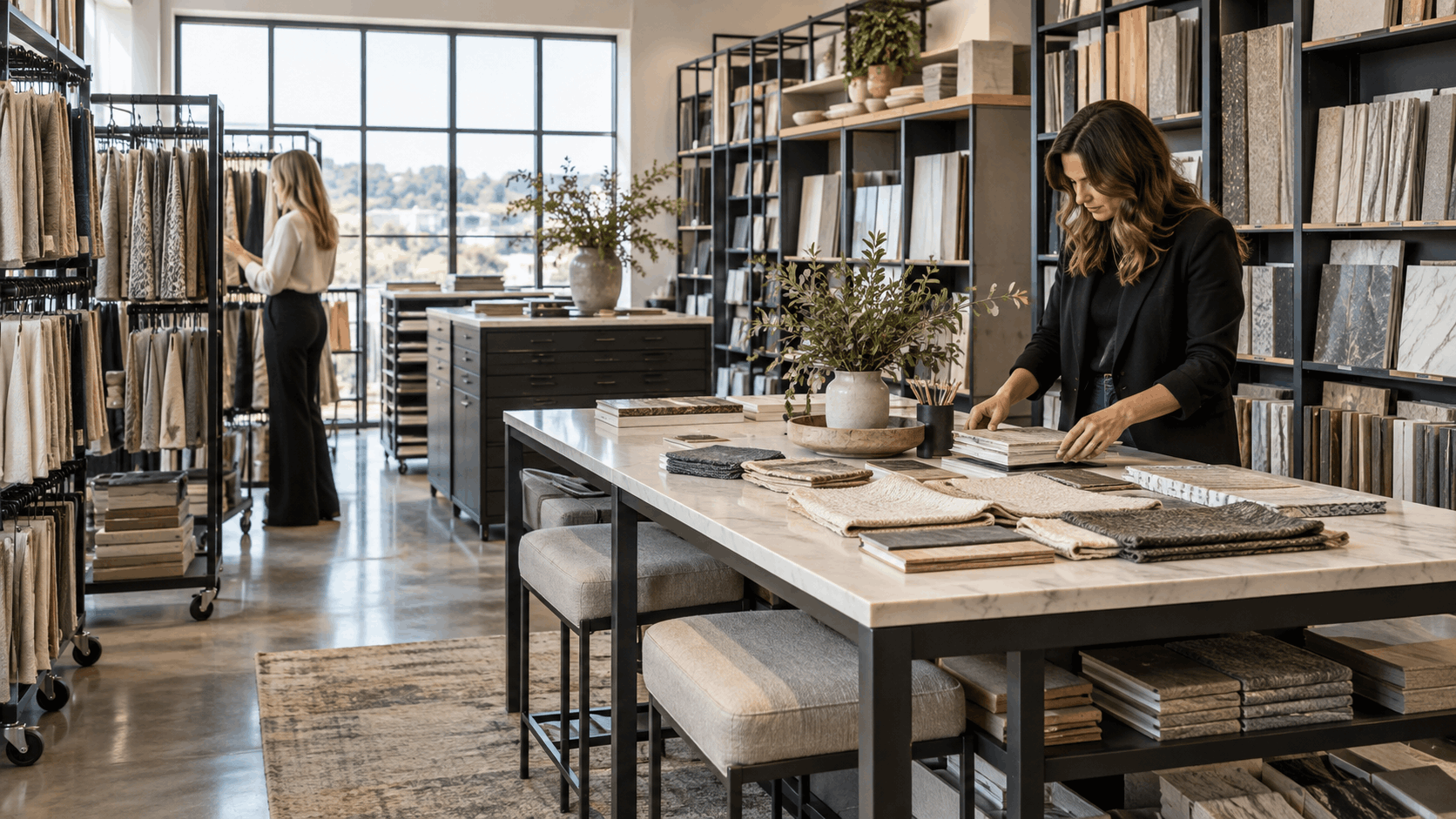
A shared spreadsheet or photo catalog keeps a whole studio on the same page. Inventory tracking in one place means anyone on the team can see what is stored and where. No more guessing.
A digital catalog can be as simple as a spreadsheet with item names, vault numbers, and photo links. Add a photo of each box and you can scan visually. Team access means the intern and the principal both know the inventory.
We provide the inventory records and can hand off a catalog your team maintains. Pair our warehouse log with your studio system and nothing slips.
The best catalog is the one your team actually updates. Keep it simple so it stays current.
Packing Standards That Protect Value
Good packing standards protect value over months in storage. Samples and furniture that sit for a while need real protection, not a quick wrap. Loose packing leads to scratches and crushing.
Use sturdy sample boxes for swatches and memos, sized so they stay full and do not collapse. Wrap furniture in moving blankets and pad the corners. Crate the fragile pieces properly.
Our crew packs to these standards during pickup, and our full-service packing team can handle it all. Consistent packing means consistent protection.
When items are packed right the first time, they come out looking the same as they went in, even after a long hold.
Reviewing and Purging Old Samples
Vaults fill with dead inventory if you never clean out. Discontinued samples and finished-project leftovers pile up and cost you storage. A regular purge keeps that in check.
Schedule a cleanout once or twice a year. Pull discontinued lines, retired samples, and pieces from long-closed projects. If a vendor no longer carries it, it may not be worth storing.
Purging samples frees vault space and lowers your monthly cost. Fewer vaults holding dead stock means real savings. We help clients review and pull what is no longer earning its keep.
A leaner archive is a faster archive. Regular cleanouts keep storage working for your active business, not your history.
Need Help in Los Angeles?
Popeye Moving & Storage serves Los Angeles and all of Los Angeles County.
Final Thoughts
An overstuffed studio slows down a design business. Sample libraries, staging furniture, and fragile showroom pieces need a home that is not your workspace. Vault-based overflow storage gives Westside design trades that room without the cost of a bigger lease.
Rent by the vault, pay for what you use, and keep your inventory protected and documented. When a client calls, the pieces are ready to pull and deliver across the Westside. Your studio stays clean and your work stays sharp.
If your Westside studio is running out of room, our team can help you set up organized, flexible vault storage built for design goods. Call Popeye Moving & Storage or reach out through our contact page for a consultation and quote.
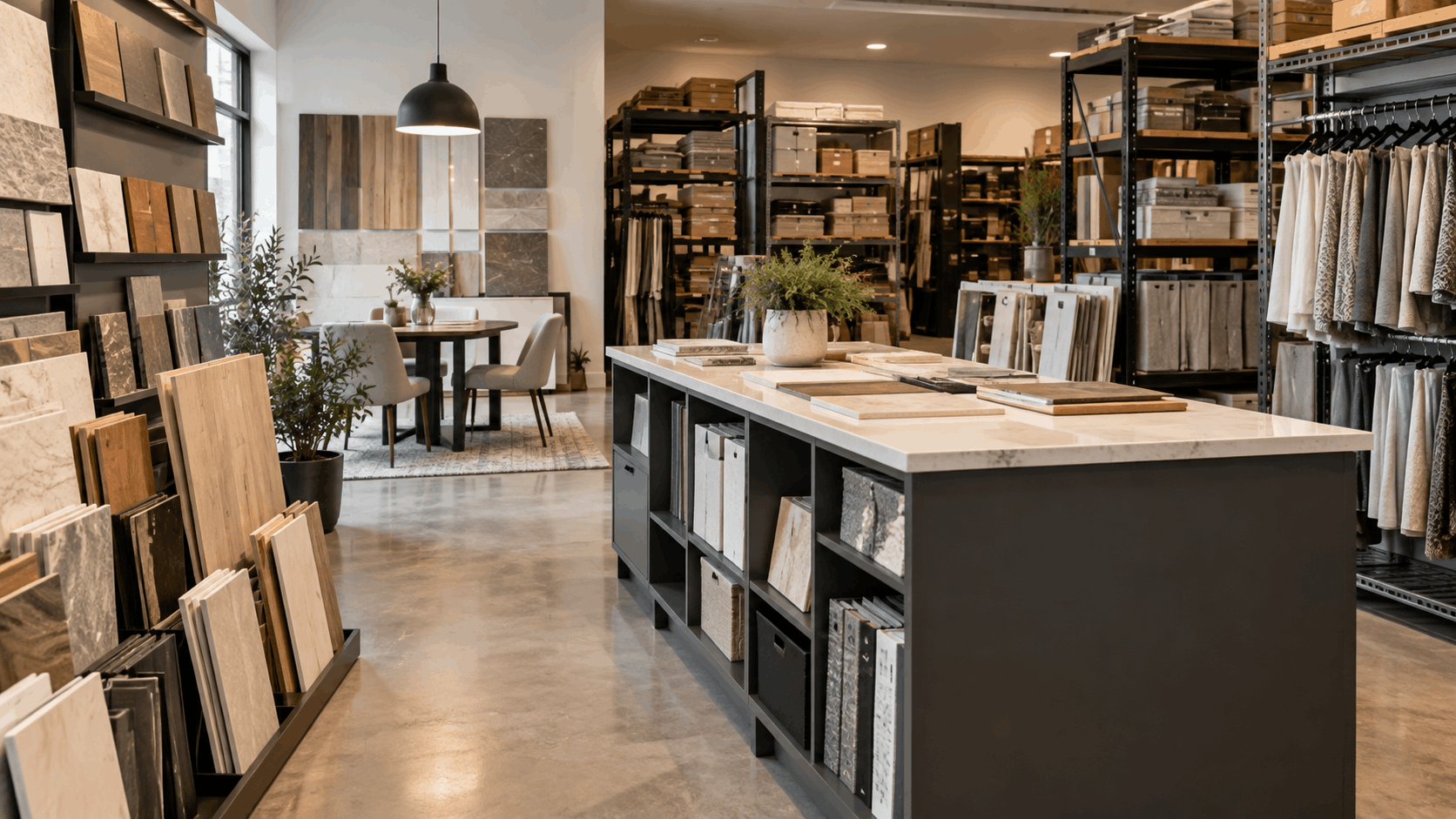
Frequently Asked Questions
What is vault storage for design trades?
Vault storage means renting sealed wooden containers inside a warehouse instead of a drive-up unit. For design trades, it holds overflow samples, fabric libraries, staging furniture, and showroom pieces between projects. Items are packed, padded, and logged, then stored in managed conditions. Designers get their studio back while keeping inventory safe, documented, and ready to pull whenever a project moves forward.
How much does renting a storage vault cost per month?
In the Los Angeles area, a single vault typically runs about $75 to $150 per month. The price depends on how many vaults you rent, your contract length, and how often you need access. A designer holding a sample archive plus some furniture might use two to four vaults. Handling and delivery are billed separately, so ask for a full quote that covers all fees.
Can they store fabric and textile samples safely?
Yes. Fabric samples, rugs, and textiles are wrapped properly and kept in managed humidity to prevent mildew and fading. Coastal moisture from Santa Monica to Venice makes this important, since damp air can leave a musty smell on memos. We roll and pad textiles, group fabric books, and store everything off the floor so it comes back showroom-ready.
How fast can items be pulled for a client install?
With a day or two of notice, we can locate, prep, and stage items for an install. For a single labeled box, retrieval is quicker. Same-day and rush pulls are possible when items are logged and accessible, though they depend on warehouse availability and traffic. Flagging likely rush pieces in advance and keeping clear inventory records makes fast retrieval far more reliable.
Do they deliver to project sites across the Westside?
Yes. We deliver to job sites across Brentwood, Bel Air, Beverlywood, West LA, Culver City, and the wider Westside. We plan routes around the 405 and Sunset Blvd traffic and know the parking and access quirks of each area. Deliveries can go to the designer, a contractor, or installers directly on site, with staging into the correct rooms.
Is stored inventory insured?
Coverage options are available for stored and in-transit inventory. Before handing over valuable pieces, ask about liability limits and whether added valuation coverage is offered for high-value items. We keep detailed inventory and photo records so there is clear documentation of what we hold. Reviewing coverage up front protects both sides and gives design clients confidence their goods are accounted for.
Can heavy items like stone slabs be stored?
Yes. Stone slabs and tile samples are stored upright in supported racks or flat with proper bracing so they do not crack or shift. Heavy materials get their weight spread evenly and placed low and stable, which also protects nearby furniture and art. We map heavy pieces into the vault plan from the start so they stay intact and ready to show clients.
How is inventory tracked so nothing gets lost?
Every box and item is labeled with a tag tied to a written inventory list, and we photograph contents as they are packed. That photo log lets you scan images instead of guessing what is in each box. We share the record with your team so everyone sees the same list. With this system, a designer can name one swatch box and we pull it fast.
Can storage be scaled up or down as projects change?
Yes. Because you rent by the vault, your storage flexes with your workload. Add vaults during a busy market or install season, then drop back down when things slow. Monthly billing tracks your real usage, so you never pay for empty space. We review vault counts regularly and consolidate loads when your inventory shrinks to keep costs matched to your needs.
How do design trades get started with Popeye Moving & Storage?
Getting started is simple. Reach our Los Angeles team through the contact page for a consultation. We walk through your inventory, estimate how many vaults you need, and schedule a pickup from your studio. Our crew packs, logs, and stores your samples and furniture, then delivers to job sites on your schedule. From there, we manage the whole storage and retrieval cycle for you.
Frequently Asked Questions
- What is vault storage for design trades?
- Vault storage means renting sealed wooden containers inside a warehouse instead of a drive-up unit. For design trades, it holds overflow samples, fabric libraries, staging furniture, and showroom pieces between projects. Items are packed, padded, and logged, then stored in managed conditions. Designers get their studio back while keeping inventory safe, documented, and ready to pull whenever a project moves forward.
- How much does renting a storage vault cost per month?
- In the Los Angeles area, a single vault typically runs about $75 to $150 per month. The price depends on how many vaults you rent, your contract length, and how often you need access. A designer holding a sample archive plus some furniture might use two to four vaults. Handling and delivery are billed separately, so ask for a full quote that covers all fees.
- Can they store fabric and textile samples safely?
- Yes. Fabric samples, rugs, and textiles are wrapped properly and kept in managed humidity to prevent mildew and fading. Coastal moisture from Santa Monica to Venice makes this important, since damp air can leave a musty smell on memos. We roll and pad textiles, group fabric books, and store everything off the floor so it comes back showroom-ready.
- How fast can items be pulled for a client install?
- With a day or two of notice, we can locate, prep, and stage items for an install. For a single labeled box, retrieval is quicker. Same-day and rush pulls are possible when items are logged and accessible, though they depend on warehouse availability and traffic. Flagging likely rush pieces in advance and keeping clear inventory records makes fast retrieval far more reliable.
- Do they deliver to project sites across the Westside?
- Yes. We deliver to job sites across Brentwood, Bel Air, Beverlywood, West LA, Culver City, and the wider Westside. We plan routes around the 405 and Sunset Blvd traffic and know the parking and access quirks of each area. Deliveries can go to the designer, a contractor, or installers directly on site, with staging into the correct rooms.
- Is stored inventory insured?
- Coverage options are available for stored and in-transit inventory. Before handing over valuable pieces, ask about liability limits and whether added valuation coverage is offered for high-value items. We keep detailed inventory and photo records so there is clear documentation of what we hold. Reviewing coverage up front protects both sides and gives design clients confidence their goods are accounted for.
- Can heavy items like stone slabs be stored?
- Yes. Stone slabs and tile samples are stored upright in supported racks or flat with proper bracing so they do not crack or shift. Heavy materials get their weight spread evenly and placed low and stable, which also protects nearby furniture and art. We map heavy pieces into the vault plan from the start so they stay intact and ready to show clients.
- How is inventory tracked so nothing gets lost?
- Every box and item is labeled with a tag tied to a written inventory list, and we photograph contents as they are packed. That photo log lets you scan images instead of guessing what is in each box. We share the record with your team so everyone sees the same list. With this system, a designer can name one swatch box and we pull it fast.
- Can storage be scaled up or down as projects change?
- Yes. Because you rent by the vault, your storage flexes with your workload. Add vaults during a busy market or install season, then drop back down when things slow. Monthly billing tracks your real usage, so you never pay for empty space. We review vault counts regularly and consolidate loads when your inventory shrinks to keep costs matched to your needs.
- How do design trades get started with Popeye Moving & Storage?
- Getting started is simple. Reach our Los Angeles team through the contact page for a consultation. We walk through your inventory, estimate how many vaults you need, and schedule a pickup from your studio. Our crew packs, logs, and stores your samples and furniture, then delivers to job sites on your schedule. From there, we manage the whole storage and retrieval cycle for you.
P
Popeye Moving & Storage Co. Team Team
Licensed moving and storage professionals serving Los Angeles and Los Angeles County.
Licensed in California · License #PUC: CAL T 189749 | DOT: 1472924 | MC: 498816C
Why trust Popeye Moving & Storage?
Founded in 1994, Popeye Moving & Storage is a licensed and insured moving and storage service serving Los Angeles and Los Angeles County. All content is reviewed by our licensed technicians.

Need Help in Los Angeles?
Popeye Moving & Storage serves Los Angeles and all of Los Angeles County.
Related Articles
How-To Guides
Contents Storage During an LA Remodel: Pack-Out, Vaulted Hold, and Redelivery Room by Room
A complete guide to contents storage during an LA remodel: how pack-out, vaulted hold, and room-by-room redelivery protect your belongings from demolition to final walkthrough.
Tips & Advice
Staging Storage for LA Home Sellers: Clearing Rooms Fast and Getting Everything Back After Close
How LA home sellers use staging storage to clear rooms fast before an open house, keep belongings safe during the sale, and get everything back after close.
Tips & Advice
Storage for Santa Monica and Brentwood Households: Where Westside Furniture Actually Goes Between Homes
A local guide to furniture storage for Santa Monica and Brentwood households, covering storage types, costs, coastal climate risks, and how Westside families bridge the gap between homes.