How-To Guides
South Park DTLA Movers: High-Rise Building COI and Elevator Reservations

Key Takeaways
- South Park DTLA towers require an approved COI before a moving truck is allowed on site to protect elevators, lobbies, and hallways.
- Most buildings want general liability coverage of one to two million dollars plus additional insured language naming the owner, management company, and HOA.
- COI processing takes 24 to 72 hours, so request it at least a week ahead to fix any wrong entity names or missing endorsements before move day.
- Moves must use the padded freight elevator, and reservations should be booked one to two weeks out because weekend slots fill fast.
- Buildings will not confirm the elevator until the COI is approved, so handle the insurance first when building a two-week move timeline.
- Event days near Crypto.com Arena and L.A. Live often block moves due to street closures and traffic around Figueroa and Olympic.
- Newer towers near 12th and Grand use digital move portals, while older lofts off Hope Street have smaller elevators and tighter hallways.
- Popeye Moving & Storage Co. handles the COI submission, elevator booking, walkthroughs, parking permits, and short-term storage for South Park moves.
In This Article
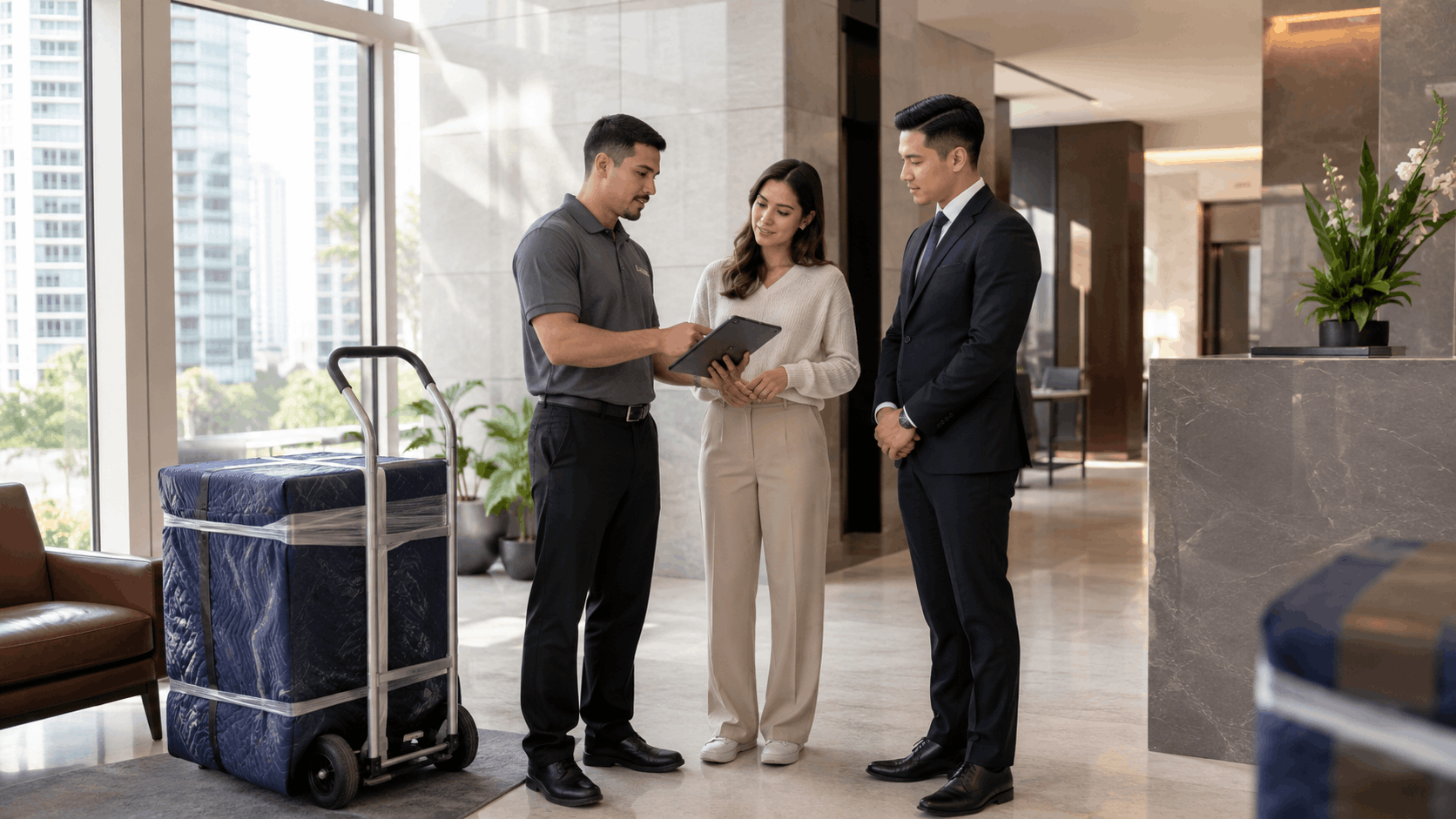
A resident pulls up to their new tower on Figueroa Street, moving truck packed and ready, only to get stopped cold at the loading dock. The security guard asks for the certificate of insurance and the elevator reservation confirmation. Neither one exists yet. The truck sits idling while the crew waits, the clock runs, and the whole day starts to slip away.
This scene plays out more often than most South Park residents expect. Moving into a downtown Los Angeles high-rise near L.A. Live is not like moving into a house in the suburbs. There is a paperwork layer, an elevator booking layer, and a building management layer that all have to line up before a single box goes upstairs.
Our team has worked hundreds of moves through these towers, and we wrote this guide to spare residents the loading-dock standoff. Below we break down COI requirements, elevator reservation rules, and the building-specific quirks that change block by block around South Park.

What South Park DTLA Looks Like for Movers
South Park sits in the southern slice of downtown Los Angeles, packed with glass residential towers, event crowds, and narrow one-way streets. It is one of the densest neighborhoods in the city, and that density shapes every part of a move here.
High-rise moving in this area is a different animal than a standard home move. The buildings stack hundreds of units on a small footprint, and every one of those residents shares the same freight elevator and the same loading dock. That shared access is why rules exist and why timing matters so much.
- Traffic surges hard on game and concert nights near the arena
- Loading docks are small and often shared between multiple towers
- Street parking near Figueroa and Olympic is limited and heavily enforced
- Property managers control move windows, not the moving crew
- Freight elevators book up one to two weeks out during busy seasons
Knowing these conditions ahead of time is the difference between a smooth day and a truck stuck at the curb. Our local residential moving crews plan around all of it before move day arrives.
The Towers Near L.A. Live and Crypto.com Arena
The Metropolis residences on Francisco Street are among the tallest and busiest in South Park. With multiple towers sharing amenities, their move schedules fill quickly, and their management runs a tight approval process. We treat those buildings as book-early jobs from the start.
Circa apartments sit right across from L.A. Live and Crypto.com Arena, which puts them in the thick of event traffic. On a Lakers night or a big concert, the streets around Circa clog for hours before and after the event. Scheduling a move during those windows is asking for trouble.
Ten50 on Grand Avenue is smaller but no less particular about its dock and elevator process. These newer towers were built with move logistics in mind, which is good, but it also means they enforce their rules strictly. Residents cannot just show up and expect access.
The common thread is L.A. Live traffic. When the arena has an event, the whole neighborhood tightens up, and buildings often block moves entirely on those days. We check the event calendar before we ever suggest a move date.
Street Access and Loading Zones Along Figueroa and Olympic
Figueroa Street is the main artery through South Park, and it carries heavy traffic almost all day. The loading dock entrances for many towers sit off Figueroa or on the side streets feeding into it. Getting a full-size truck into those docks takes planning and sometimes a spotter.
Olympic Boulevard and 11th Street add more pressure. Both are busy, both have limited legal parking for large trucks, and both see enforcement from parking officers who ticket quickly. A moving truck parked in the wrong spot can rack up citations fast.
On event days, the situation gets worse. The city and the arena close or restrict streets around L.A. Live, which can cut off the exact routes a truck needs. A dock that was open Tuesday afternoon may be unreachable Friday night before a game.
Because of this, our team studies the loading dock access for each building in advance. We know which entrances are tight, where a truck can legally stage, and how event schedules change the picture.
Why Building Management Controls the Whole Process
In a South Park high-rise, the property management company and the HOA board write the rules, and everyone follows them. The moving company does not set the move-in policy, and neither does the resident. The building does.
That means the resident has to work through their property manager for almost everything. The COI requirements, the elevator hours, the deposit amounts, and the allowed move days all come from management. Skipping that step is the number one cause of a blocked move.
HOA rules can be surprisingly detailed. Some buildings ban moves on Sundays. Others require a building staff member to escort the elevator. A few charge extra if the move runs past the reserved window.
Our advice is simple: treat the property manager as the first call, not the last. Once we know their exact requirements, we build the whole move around them so nothing gets rejected at the door.
Get Your Free Quote
Tell us about your move and we'll get back to you fast.
Certificate of Insurance (COI) Basics for High-Rise Moves
A certificate of insurance, or COI, is a one-page document that proves a moving company carries real insurance coverage. South Park buildings demand it before a truck is allowed anywhere near the property. No COI, no move.
The reason is protection. If a mover scratches the elevator, dents a hallway, or a crew member gets hurt on site, the building wants proof that insurance will cover the damage instead of the HOA. The COI is that proof.
| COI Element | What It Means | Why the Building Cares |
|---|---|---|
| General liability | Covers property damage caused by the mover | Protects lobbies, elevators, and hallways |
| Workers compensation | Covers crew injuries on the job | Keeps injury claims off the building |
| Additional insured | Names the building as a covered party | Extends protection directly to management |
| Certificate holder | The entity receiving the document | Confirms the right party is covered |
Once residents understand what each line means, the process feels far less confusing. Below we break down each part in plain language.
What a COI Actually Proves
At its core, a COI shows the mover carries liability coverage. That coverage pays for damage the crew might cause to the building during the move. A gouged elevator door or a cracked lobby tile would fall under this.
The document also confirms workers compensation coverage. If a mover strains a back or slips on the dock, workers comp handles the medical costs. Without it, the building could be dragged into a claim it had nothing to do with.
Together, these two coverages give the building proof of insurance that a real, insured company is doing the work. That is exactly what the property manager is checking for when they review the paperwork. An uninsured mover is a liability the building will not accept.
Our company carries both coverages at the levels South Park towers expect. When we send a COI, it shows a legitimate operation standing behind the move.
Coverage Amounts South Park Buildings Usually Require
Most South Park high-rises want general liability coverage limits of at least one million dollars. Some of the larger towers, especially the newer luxury buildings, ask for two million. The building's insurance requirements sheet spells out the exact number.
Workers compensation is usually required to match state minimums, which our team already carries. The bigger variable is the liability limit and the additional insured language. Buildings want to see themselves added as an additional insured on the policy.
Additional insured means the building is covered under our policy as if they were part of it during the move. This is a common request and one we handle routinely. Missing this endorsement is a frequent reason a COI gets bounced back.
The takeaway is to get the required limits in writing early. Once we know whether the building wants one million or two million and what additional insured wording they use, we match it exactly.
Who Must Be Named on the Certificate
A COI is only valid if the right parties are named on it. The property owner, the management company, and sometimes the HOA all need to appear as certificate holders or additional insureds. Get one name wrong and the document gets rejected.
The legal entity names matter more than most residents expect. A building might be owned by one LLC, managed by another company, and governed by a separate HOA. Each may need to be listed exactly as it appears in the building's paperwork.
The named insured on the certificate is the moving company itself. The certificate holder is the building party receiving the proof. Confusing these two is a common mistake that slows everything down.
This is why we ask for the building's exact entity names up front. We copy them character for character onto the certificate so management has no reason to reject it.
Common COI Rejections and How to Avoid Them
The most common COI rejection comes from a wrong entity name. If the management company recently changed or the LLC name has a small typo, the building will send it back. We fix this by confirming names directly with the property manager.
Another frequent rejection is a missing endorsement. The building asks for additional insured status, but the certificate does not include it. Our team confirms every requested endorsement before submitting.
Coverage limits that fall short cause rejections too. If the building requires two million and the COI shows one million, it will not be accepted. We match the exact limits listed on the requirements sheet.
Timing is the sneaky one. A COI submitted the morning of the move leaves no room to fix errors. We submit days ahead so any correction can be made calmly, not in a panic at the dock.
Need Help in Los Angeles?
Popeye Moving & Storage serves Los Angeles and all of Los Angeles County.
How to Request a COI From Your Mover the Right Way
Getting a correct COI is not hard when the steps happen in the right order. The trouble starts when residents leave it until moving week. That is when small errors turn into blocked moves.
The right approach is to gather the building's requirements first, request the COI early, and let the mover coordinate directly with management. Handled this way, the paperwork is done long before the truck arrives.
Getting the Building's COI Requirements in Writing First
Before scheduling anything, residents should ask the property manager for the building's insurance requirements sheet. Most towers have a standard move packet that lists everything the mover needs to provide. This document is the roadmap.
Getting it in writing avoids guesswork. Verbal instructions get misremembered, and the wrong coverage amount or entity name creates delays. A written requirements sheet removes that risk entirely.
The move packet usually includes the required coverage limits, the exact names to list, the elevator rules, and the deposit amounts. Having all of it in one place lets us prepare the COI correctly on the first try.
Residents can request this packet as soon as they sign a lease or close on a unit. The earlier it lands in our hands, the smoother the rest of the process runs.
How Long a COI Takes to Process
A COI usually takes 24 to 72 hours to process. The moving company requests it from their insurance carrier, and the carrier issues the document with the correct names and endorsements. That lead time is real and worth respecting.
Waiting until moving week is the classic mistake. If the building rejects the first version, there may not be enough time to reissue before move day. That is how a confirmed move suddenly falls apart.
The insurance carrier controls the actual turnaround. Simple certificates come back fast, but complex ones with multiple additional insured parties take longer. Building that buffer into the timeline keeps everyone calm.
Our rule of thumb is to request the COI at least a week ahead. That leaves plenty of room to catch any error and resubmit without stress.
How Popeye Moving & Storage Co. Handles COI Requests
Our team pulls COIs for South Park buildings all the time, so the process is routine for us. As downtown Los Angeles movers, we know the entity names and requirements for many of the towers already. That familiarity speeds everything up.
Once a resident sends us the building's requirements sheet, we handle the COI processing directly with our carrier. We match the coverage limits, add the requested endorsements, and list the exact certificate holders. Then we send it straight to the property manager.
We also follow up with management to confirm they accepted it. If they want a tweak, we catch it early and reissue quickly. Residents do not have to chase paperwork back and forth.
The goal is to take the insurance burden off the resident entirely. You tell us the building, we handle the certificate. Reach out through our contact page and we will get started.
Elevator Reservations in South Park High-Rises
Every South Park tower has a limited number of freight elevators, and moves can only happen in those. Because so many residents share them, the elevator reservation system is strict and fills up fast. Booking is a step you cannot skip.
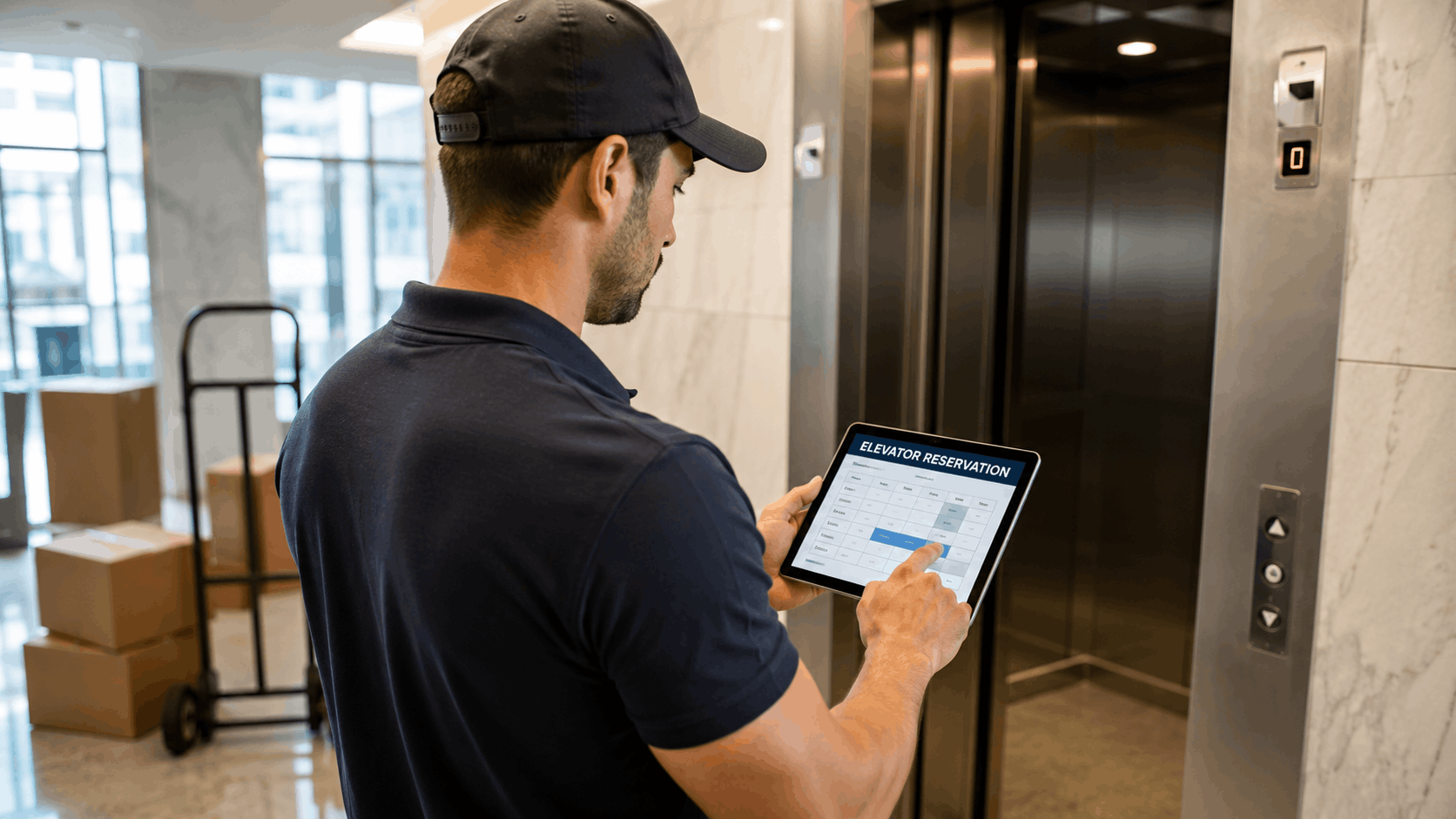
The process usually runs through the property manager or an online portal. Residents pick a date and a time window, pay any deposit, and wait for confirmation. The details vary building to building, but the basic flow is consistent.
Freight Elevators vs. Passenger Elevators
A freight elevator, sometimes called a service elevator, is the larger, sturdier car meant for hauling furniture and boxes. Buildings require moves to use it and never the passenger elevators. This protects the finished passenger cars from damage.
Before a move, building staff install elevator pads inside the freight car. These thick padded covers protect the walls from scratches and dents. No move should happen without them in place.
Passenger elevators are off-limits for moving because they are smaller and more delicate. Trying to squeeze a couch into a passenger car risks damage and an angry property manager. It also blocks other residents.
The freight elevator is the workhorse of any high-rise move. Reserving it is the first logistics step once the COI is handled, and we plan the crew around its size and capacity.
Time Slots and How Early to Book
Most South Park buildings offer move windows of two to four hours. That block is your window to get everything up or down. Running past it can trigger extra fees or force the crew to stop.
Residents should reserve their time slot one to two weeks in advance. Popular buildings and weekend slots go first, so early booking matters. Waiting too long can mean settling for a weekday you did not want.
The size of the move affects the window you need. A studio might fit in two hours, while a large three-bedroom unit needs the full four or more. We help estimate the right window so the reservation matches reality.
Advance booking also gives the COI time to clear. Since the two are linked, reserving the elevator early keeps the whole timeline on track.
Deposits, Fees, and Elevator Holds
Many South Park towers charge a refundable elevator deposit, often several hundred dollars. The building holds it during the move and returns it if there is no damage. A scratched wall or broken pad can cost part or all of it.
Some buildings also charge a nonrefundable reservation fee just to hold the slot. This covers staff time for supervising the move. The amount varies, so the requirements sheet should list it.
The refundable hold is the building's way of keeping movers careful. Since our crews use pads and protect every surface, that deposit almost always comes back in full. Careful work pays off literally.
Residents should budget for these charges ahead of time. Knowing the deposit and fee amounts before move day avoids surprises when management asks for payment.
Weekend and After-Hours Move Rules
Weekend moves are popular, which is exactly why buildings restrict them. Many South Park towers limit Saturday hours and ban Sunday moves entirely. Holiday moves are often off the table too.
After-hours moves are usually not allowed. Freight elevators typically operate for moves only during set daytime hours, and building staff need to be present. A late-night move is rarely an option.
Event days near Crypto.com Arena bring their own restrictions. When a game or concert fills the neighborhood, some buildings block moves entirely to keep the docks and streets clear. We always check the arena calendar first.
The lesson is to confirm allowed move days early. A weekend slot might sound convenient, but if the building bans it, the plan needs to change before it is booked.

Coordinating COI and Elevator Booking Together
The COI and the elevator reservation are not two separate tasks. They are linked, and one usually depends on the other. Getting the order right saves days of frustration.
Building a clear timeline around both keeps the move on track. When residents understand how the pieces fit, nothing gets left to the last minute. This is where high-rise logistics either work or fall apart.
Why Buildings Won't Confirm the Elevator Without a COI
Most South Park property managers will not release an elevator slot until they have an approved COI on file. The insurance is their protection, so they lock the elevator to it. No COI approval, no elevator confirmation.
This means the COI has to come first in the sequence. Residents who try to book the elevator before sorting the insurance often hit a wall. The building simply holds the slot until the paperwork clears.
The dependency is why we push the COI early in the process. Once management approves it, the elevator confirmation usually follows quickly. The two unlock in order.
Understanding this order removes a lot of confusion. The COI is the gate, and the elevator reservation is what waits behind it. Handle the gate first.
Building a Two-Week Move Timeline
A two-week countdown keeps everything from slipping. Here is a sample timeline our team uses for South Park moves. Residents can adapt it to their building's specific rules.
- Day 14: Request the building's move packet and insurance requirements sheet
- Day 12: Send the requirements to us so we can prepare the COI
- Day 10: We submit the COI to the property manager
- Day 8: Management approves the COI
- Day 7: Reserve the freight elevator time slot and pay the deposit
- Day 3: Confirm the move window, crew size, and parking plan
- Day 1: Final check of dock access and event schedule
This countdown builds in buffer at every step. If the COI needs a fix or the elevator slot changes, there is room to adjust. Scheduling this way turns a stressful move into a routine one.
Every building is a little different, so we tune the timeline to match. The point is to never leave the paperwork or the booking to the final days.
Handling Same-Day Changes and Cancellations
Sometimes things change fast. An event near the arena, sudden rain, or a building maintenance issue can force a reschedule. Knowing the cancellation policy ahead of time makes those moments manageable.
Most buildings have a written cancellation policy tied to the elevator deposit. Cancel early enough and the deposit returns. Cancel same-day and part of it may be forfeited. The requirements sheet spells this out.
If a same-day change hits, communication is what saves the day. We contact the property manager immediately to rebook the elevator and adjust the crew. Fast coordination limits the disruption.
Our team keeps flexible options ready for exactly these situations. If the plan has to shift, we work to get a new slot quickly rather than losing the whole move.
Need Help in Los Angeles?
Popeye Moving & Storage serves Los Angeles and all of Los Angeles County.
Building-Specific Quirks Around South Park
No two South Park buildings run their moves the same way. What works at one tower gets rejected at the one next door. The details shift block by block, and local knowledge makes the difference.
Our crews have worked enough of these DTLA towers to know the patterns. From newer luxury high-rises to older converted lofts, each type of building has its own move-in rules. Here is what to watch for.
Newer Towers Near 12th and Grand
The newer luxury buildings near 12th Street and Grand Avenue tend to run the strictest operations. They often use digital move portals where residents book the elevator and upload the COI online. The system is efficient but unforgiving of mistakes.
These towers usually have dedicated loading docks with scheduled slots. Miss your window and you may have to rebook entirely. The dock scheduling is tight because so many units share the same space.
The move portals also track deposits and fees automatically. Everything is logged, which means the paperwork has to be perfect before the system releases the elevator. We prepare accordingly for these buildings.
The upside is predictability. Once the digital steps are done correctly, these newer towers run smoothly on move day. The trick is getting every upload right the first time.
Older Converted Lofts Off Hope Street
The older converted lofts off Hope Street have a different character. Many were industrial or office buildings before the loft conversion, and their elevators reflect that history. Some freight elevators are smaller than in the newer towers.
A narrow elevator changes what can go up. Oversized sofas, tall armoires, and large mattresses may not fit and might need to be hoisted or taken apart. We measure before move day to avoid a surprise at the elevator door.
Hallways in converted buildings can be tight too. Sharp turns and narrow corridors slow the crew and require careful maneuvering. Our team plans the route through the building in advance.
These quirks are why a walkthrough matters so much in older lofts. Knowing the elevator dimensions and hallway turns ahead of time prevents furniture from getting stuck between floors.
Parking and Truck Staging Challenges
Truck staging near South Park is a real puzzle. Around Pico Station and the surrounding blocks, legal spots for a large moving truck are scarce. Parking enforcement is active and quick to ticket.
Some buildings have a designated staging area or a dock the truck can back into. Others expect the truck to park on the street, which may require a temporary parking permit from the city. Sorting this out early avoids fines.
The blocks near Pico Station get busy with transit riders and event crowds. A truck parked in the wrong spot blocks traffic and draws attention fast. We identify the legal staging spot for each building before the truck rolls in.
For moves that need it, we help arrange the parking permit ahead of time. That paperwork, like the COI, is far easier to handle early than on move day. Our residential moving team maps all of this out in advance.

How Popeye Moving & Storage Co. Handles South Park Moves
We have moved residents in and out of South Park towers for years, so the neighborhood's rules are second nature to us. As Los Angeles movers who work these buildings regularly, we take the paperwork and scheduling burden off the resident.
Here is how our high-rise movers handle a South Park move from start to finish:
- We gather the building's move packet and insurance requirements early
- We prepare and submit the COI directly to the property manager
- We coordinate the freight elevator reservation and deposit
- We run a pre-move walkthrough to check access and elevator size
- We handle truck staging and parking permits where needed
- We offer storage when lease dates and elevator slots do not line up
The result is a move where the resident focuses on their new home, not the logistics. We carry the details.
Pre-Move Building Walkthroughs
A pre-move walkthrough, or site survey, is where we catch problems before they cost time. Our team visits the building to check dock access, freight elevator size, and hallway turns. What we learn shapes the whole plan.
Elevator measurement matters most in older buildings. We record the interior dimensions of the freight car so we know which pieces fit and which need to come apart. This is how we avoid a couch stuck sideways in an elevator.
We also study the path from the dock to the elevator to the unit. Tight corners, ramps, and long corridors all affect timing. Mapping the route lets us size the crew correctly.
The walkthrough turns unknowns into a clear plan. By move day, we already know how the building flows, which keeps everything inside the reserved elevator window.
Working Directly With Property Managers
Property manager coordination is where we save residents the most stress. We speak the language of building management and know what they need. That direct line keeps the paperwork moving.
We handle the COI submission ourselves, sending it straight to management with the correct names and endorsements. If they need a change, we deal with it directly. The resident never has to relay messages back and forth.
We also lock in the move scheduling with the building. That includes the elevator hold, the deposit, and the confirmed time window. Everything gets confirmed before move day, not the morning of.
This coordination is what separates a smooth high-rise move from a chaotic one. When the mover and the property manager are already in sync, the resident just shows up to a finished plan.
Storage Options for Delayed Move-Ins
Sometimes the elevator slot and the lease dates do not line up. A building may only have an opening after your old lease ends, leaving a gap. That is where storage bridges the timing.
We offer short-term storage for exactly these delayed move-in situations. Your belongings stay safe with us until the building's elevator window opens. Then we bring everything over on the confirmed date.
Our storage solutions cover both brief holds and longer stays. Whether the gap is a few days or a few weeks, we keep the move flexible. You are not forced to rush or cram belongings somewhere unsafe.
This flexibility takes the pressure off tight timing. If the building cannot fit you in until later, storage keeps the move on your terms instead of the calendar's.
Need Help in Los Angeles?
Popeye Moving & Storage serves Los Angeles and all of Los Angeles County.
Final Thoughts
Moving into a South Park high-rise takes more than a truck and a strong crew. It takes a correct COI, a confirmed elevator reservation, and a plan built around each building's rules. Get those three right and the move goes smoothly.
The residents who struggle are usually the ones who left the paperwork for the last minute. The ones who plan two weeks out, work through their property manager, and hand the details to an experienced mover barely notice the complexity at all.
Our team knows these downtown Los Angeles towers, from the newer buildings near 12th and Grand to the converted lofts off Hope Street. Call Popeye Moving & Storage Co. for a consultation, and we will handle the COI, the elevator booking, and everything in between. Reach out through our contact page to get your South Park move planned right.
Frequently Asked Questions
What is a COI and why does my South Park building require one?
A COI, or certificate of insurance, is a one-page document proving your mover carries liability and workers compensation coverage. South Park towers require it as a building requirement to protect common areas like elevators, lobbies, and hallways. If a crew damages the property or a worker gets hurt, the insurance covers it instead of the HOA. Most buildings will not allow a truck on site without one.
How far in advance should I reserve the freight elevator?
Plan to make your elevator reservation one to two weeks ahead of your move date. Popular buildings and weekend slots fill up first, so advance booking gives you the best choice of times. Reserving early also leaves room for the COI to clear, since most buildings will not confirm the elevator until the insurance is approved. Waiting too long often means settling for a less convenient weekday.
How much coverage does a COI usually need for DTLA high-rises?
Most downtown Los Angeles high-rises require general liability coverage limits of at least one million dollars, and some larger towers ask for two million. Buildings also expect to be listed as an additional insured on the policy. Workers compensation is usually required at state minimums. The exact coverage limits and liability language appear on the building's insurance requirements sheet, which we match precisely.
Can I move on an event day near Crypto.com Arena?
Usually not. On an event day with a game or concert at Crypto.com Arena, the arena traffic clogs the streets around L.A. Live for hours. The city and the venue often restrict roads that trucks need to reach the dock. Many buildings block moves entirely on those days to keep access clear. We always check the arena calendar before suggesting a move date.
How long does it take to get a COI from a mover?
COI processing usually takes 24 to 72 hours, depending on the insurance carrier and how many parties need to be named. Simple certificates come back fast, while ones with multiple additional insured entities take longer. We recommend requesting it at least a week before your move so there is time to correct any errors. Leaving it to moving week is the most common cause of delays.
Is there a deposit for the elevator reservation?
Yes, many South Park buildings charge a refundable elevator deposit, often several hundred dollars, held during the move and returned if there is no damage. Some also charge a separate nonrefundable reservation fee for staff time. The exact amounts appear on the building's move packet. Because our crews use elevator pads and protect every surface, that deposit almost always comes back in full.
What happens if my COI gets rejected at the last minute?
A COI rejection usually comes from a wrong entity name, a missing endorsement, or coverage limits that fall short. When it happens, we contact our insurance carrier and reissue a corrected certificate quickly. This is exactly why we submit the COI days ahead instead of on move day. That buffer lets us fix any problem calmly and resubmit before the building's deadline.
Where can moving trucks park near South Park buildings?
Truck parking depends on the building. Some towers have a dedicated loading dock the truck can back into, while others require staging on the street near a loading zone. Legal spots along Figueroa and Olympic are limited and enforced quickly. Street parking may need a temporary city permit for a large truck. We identify the legal staging spot and arrange any permit before move day.
Do older loft buildings have different move rules?
Yes. Older converted loft buildings off Hope Street often have smaller freight elevators and tighter hallways than newer towers. That affects which furniture fits and may require disassembly or hoisting. Move rules and timing can be stricter too, since these buildings were not originally built for residential moves. We measure the elevator and map the route in a walkthrough before the move to avoid surprises.
Does Popeye Moving & Storage Co. handle the COI and elevator booking for me?
Yes. Once you send us your building's insurance requirements sheet, we prepare the COI, submit it directly to your property manager, and coordinate the freight elevator reservation and deposit. We follow up with management to confirm everything is approved before move day. The goal is to take the paperwork and scheduling entirely off your plate so you can focus on your new home.
Frequently Asked Questions
- What is a COI and why does my South Park building require one?
- A COI, or certificate of insurance, is a one-page document proving your mover carries liability and workers compensation coverage. South Park towers require it as a building requirement to protect common areas like elevators, lobbies, and hallways. If a crew damages the property or a worker gets hurt, the insurance covers it instead of the HOA. Most buildings will not allow a truck on site without one.
- How far in advance should I reserve the freight elevator?
- Plan to make your elevator reservation one to two weeks ahead of your move date. Popular buildings and weekend slots fill up first, so advance booking gives you the best choice of times. Reserving early also leaves room for the COI to clear, since most buildings will not confirm the elevator until the insurance is approved. Waiting too long often means settling for a less convenient weekday.
- How much coverage does a COI usually need for DTLA high-rises?
- Most downtown Los Angeles high-rises require general liability coverage limits of at least one million dollars, and some larger towers ask for two million. Buildings also expect to be listed as an additional insured on the policy. Workers compensation is usually required at state minimums. The exact coverage limits and liability language appear on the building's insurance requirements sheet, which we match precisely.
- Can I move on an event day near Crypto.com Arena?
- Usually not. On an event day with a game or concert at Crypto.com Arena, the arena traffic clogs the streets around L.A. Live for hours. The city and the venue often restrict roads that trucks need to reach the dock. Many buildings block moves entirely on those days to keep access clear. We always check the arena calendar before suggesting a move date.
- How long does it take to get a COI from a mover?
- COI processing usually takes 24 to 72 hours, depending on the insurance carrier and how many parties need to be named. Simple certificates come back fast, while ones with multiple additional insured entities take longer. We recommend requesting it at least a week before your move so there is time to correct any errors. Leaving it to moving week is the most common cause of delays.
- Is there a deposit for the elevator reservation?
- Yes, many South Park buildings charge a refundable elevator deposit, often several hundred dollars, held during the move and returned if there is no damage. Some also charge a separate nonrefundable reservation fee for staff time. The exact amounts appear on the building's move packet. Because our crews use elevator pads and protect every surface, that deposit almost always comes back in full.
- What happens if my COI gets rejected at the last minute?
- A COI rejection usually comes from a wrong entity name, a missing endorsement, or coverage limits that fall short. When it happens, we contact our insurance carrier and reissue a corrected certificate quickly. This is exactly why we submit the COI days ahead instead of on move day. That buffer lets us fix any problem calmly and resubmit before the building's deadline.
- Where can moving trucks park near South Park buildings?
- Truck parking depends on the building. Some towers have a dedicated loading dock the truck can back into, while others require staging on the street near a loading zone. Legal spots along Figueroa and Olympic are limited and enforced quickly. Street parking may need a temporary city permit for a large truck. We identify the legal staging spot and arrange any permit before move day.
- Do older loft buildings have different move rules?
- Yes. Older converted loft buildings off Hope Street often have smaller freight elevators and tighter hallways than newer towers. That affects which furniture fits and may require disassembly or hoisting. Move rules and timing can be stricter too, since these buildings were not originally built for residential moves. We measure the elevator and map the route in a walkthrough before the move to avoid surprises.
- Does Popeye Moving & Storage Co. handle the COI and elevator booking for me?
- Yes. Once you send us your building's insurance requirements sheet, we prepare the COI, submit it directly to your property manager, and coordinate the freight elevator reservation and deposit. We follow up with management to confirm everything is approved before move day. The goal is to take the paperwork and scheduling entirely off your plate so you can focus on your new home.
P
Popeye Moving & Storage Co. Team Team
Licensed moving and storage professionals serving Los Angeles and Los Angeles County.
Licensed in California · License #PUC: CAL T 189749 | DOT: 1472924 | MC: 498816C
Why trust Popeye Moving & Storage?
Founded in 1994, Popeye Moving & Storage is a licensed and insured moving and storage service serving Los Angeles and Los Angeles County. All content is reviewed by our licensed technicians.

Need Help in Los Angeles?
Popeye Moving & Storage serves Los Angeles and all of Los Angeles County.
Related Articles
How-To Guides
Hancock Park Movers: Historic Home Crating and Heritage Property Service
A local guide to moving historic Hancock Park homes, covering custom crating, heritage property care, timing, costs, storage, and how to choose the right LA mover.
How-To Guides
Moving in Downtown LA High-Rises: COI, Elevator Reservations, Loading Docks
A local mover's guide to Downtown LA high-rise moves, covering certificates of insurance, service elevator reservations, and loading dock access in DTLA towers.
How-To Guides
Moving to Santa Monica: Parking Rules, Street Restrictions, and Building Access
Everything new Santa Monica residents need to know about permit parking zones, moving truck restrictions, building elevator rules, and city permits before moving day.