Hancock Park Movers: Historic Home Crating and Heritage Property Service

Key Takeaways
- Hancock Park's 1920s estates have narrow doorways, original plaster, and grand staircases that need specialized moving care.
- Custom crating builds a wood crate sized to each fragile item, with foam padding for art, mirrors, chandeliers, and pianos.
- Book crating services two to three weeks ahead since crates are built to order, and prefer spring or fall over peak summer heat.
- Many Hancock Park streets require parking permits, and the HPOZ protects historic features that movers must work around carefully.
- Full valuation coverage protects antiques at actual value, unlike basic weight-based coverage that undervalues priceless pieces.
- Climate-controlled storage keeps wood, art, and fabric safe from LA heat and humidity during renovations or gaps between homes.
- Choose movers with proven heritage experience, proper licensing, an on-site estimate, and real local knowledge of LA streets.
- An on-site walkthrough gives the most accurate quote and lets the crew plan access, protection, and crating before moving day.
In This Article
The last box was packed, but the family standing in the entryway of their 1920s Hancock Park estate near Windsor Square was not thinking about boxes. They were thinking about the hand-carved oak banister their grandmother polished for decades, the original plaster crown molding, and the oil paintings that had hung in the same spots since the house was built. A standard moving crew would treat those the same as a stack of dishes. That was the problem.
Moving out of a heritage home is not like clearing out a rental apartment. The house itself is fragile, the contents are often irreplaceable, and the streets around Larchmont and Rossmore Avenue were never built for a full-size moving truck. Every step has to be planned.
Why Hancock Park Homes Need Specialized Moving Care
Hancock Park is not a place where a rushed, low-bid crew belongs. The homes here are older, the contents are worth more, and the streets are tighter than almost anywhere in central Los Angeles. Hancock Park movers who know the area plan differently from the first phone call.
A standard LA move might involve a two-bedroom stucco house with wide doorways and easy driveway access. Historic home moving means grand staircases, plaster walls that crack if you bump them, and antique pieces that cannot simply be replaced. The heritage property care needed here is a different level of work.
| Feature | Standard LA Move | Hancock Park Heritage Move |
|---|---|---|
| Home age | Often post-1960 | 1920s and 1930s originals |
| Doorway width | Wide, modern | Narrow, original frames |
| Contents value | Standard furniture | Antiques, art, heirlooms |
| Street access | Driveways, wide roads | Narrow streets, permits |
| Packing method | Boxes and blankets | Custom wood crates |
The Age and Design of Historic Hancock Park Estates
The estates along June Street, Rossmore Avenue, and Muirfield Road were built when craftsmanship meant something. These 1920s homes feature thick plaster walls, formal dining rooms, and staircases that curve rather than run straight. That beauty comes with fragility.
Original plaster does not flex like modern drywall. A dolly bumped against a wall can leave a crack that takes a restoration pro days to repair. Our crews treat every corner, arch, and doorway as if it cannot be replaced, because in most cases it truly cannot.
Narrow doorways are the other challenge. Many of these homes were designed before oversized furniture became common, so getting a modern sectional or a grand armoire through a 1920s door frame takes measuring and patience. We map every tight spot before moving day.
Grand staircases add a third layer of care. Carrying heavy pieces up or down a curved historic staircase requires padded railings and a crew that moves in sync. Rushing here is how banisters get scratched and hands get hurt.
Protecting High-Value Antiques and Heirlooms
Hancock Park homes are full of things that money cannot easily replace. Oil paintings, marble-topped tables, inherited china, and a grand piano in the front room are common sights. Antique moving is a skill, not a side task.
Heirloom protection starts with knowing what you are handling. A 100-year-old veneer chest reacts differently to pressure and temperature than a new dresser. We identify these pieces early and plan custom handling for each one.
A grand piano is often the single most demanding item in the house. It is heavy, awkward, and sensitive to knocks. Our specialty crews use the right equipment and techniques so the instrument arrives in tune and undamaged. You can learn more about our piano moving service and how we handle these pieces.
For everything else, we match the packing to the value. A framed family portrait gets a different wrap than a stack of books. The goal is simple: the heirlooms that make these homes special arrive exactly as they left.
Navigating Narrow Streets and Parking Rules
Anyone who has driven through Larchmont Village during a busy Saturday knows how tight the parking gets. The residential streets around Hancock Park were not built for a 26-foot truck sitting curbside for hours. Moving truck access takes planning.
Street parking near these homes often falls under permit zones or time limits. A truck left in the wrong spot can draw a ticket or block a neighbor. We scout the route and parking situation before the day of the move.
In some cases the city requires a temporary no-parking permit so the truck has a legal, safe spot near the front door. We handle those requests and post the signs in advance. That saves the family from carrying antiques an extra 200 feet down the block.
Local knowledge matters here. Knowing which side of Rossmore Avenue clears out in the morning, or how to stage a truck near Larchmont Boulevard without blocking traffic, comes from years of working these exact streets.
Respecting the Historic Preservation Overlay Zone
Much of Hancock Park sits inside a Historic Preservation Overlay Zone, or HPOZ. These rules protect the historic character of the neighborhood, and they shape how any work on these homes gets done. You can review the city's own HPOZ program details for the specifics.
For a move, the HPOZ matters because protected features cannot be altered or damaged. That original front door, the leaded glass windows, and the entry columns all fall under historic preservation care. We work around them, never through them.
Our crews are trained to spot protected features and adjust the plan. If a piece will not clear the front door safely, we find another route rather than forcing it. Damaging a protected feature is not an option we accept.
Respecting these rules also protects the homeowner. Careless damage to a historic element can lead to costly repairs and permit headaches. Careful movers keep the whole process clean.
Get Your Free Quote
Tell us about your move. We'll be in touch soon.
Custom Crating for Fragile and One-of-a-Kind Items
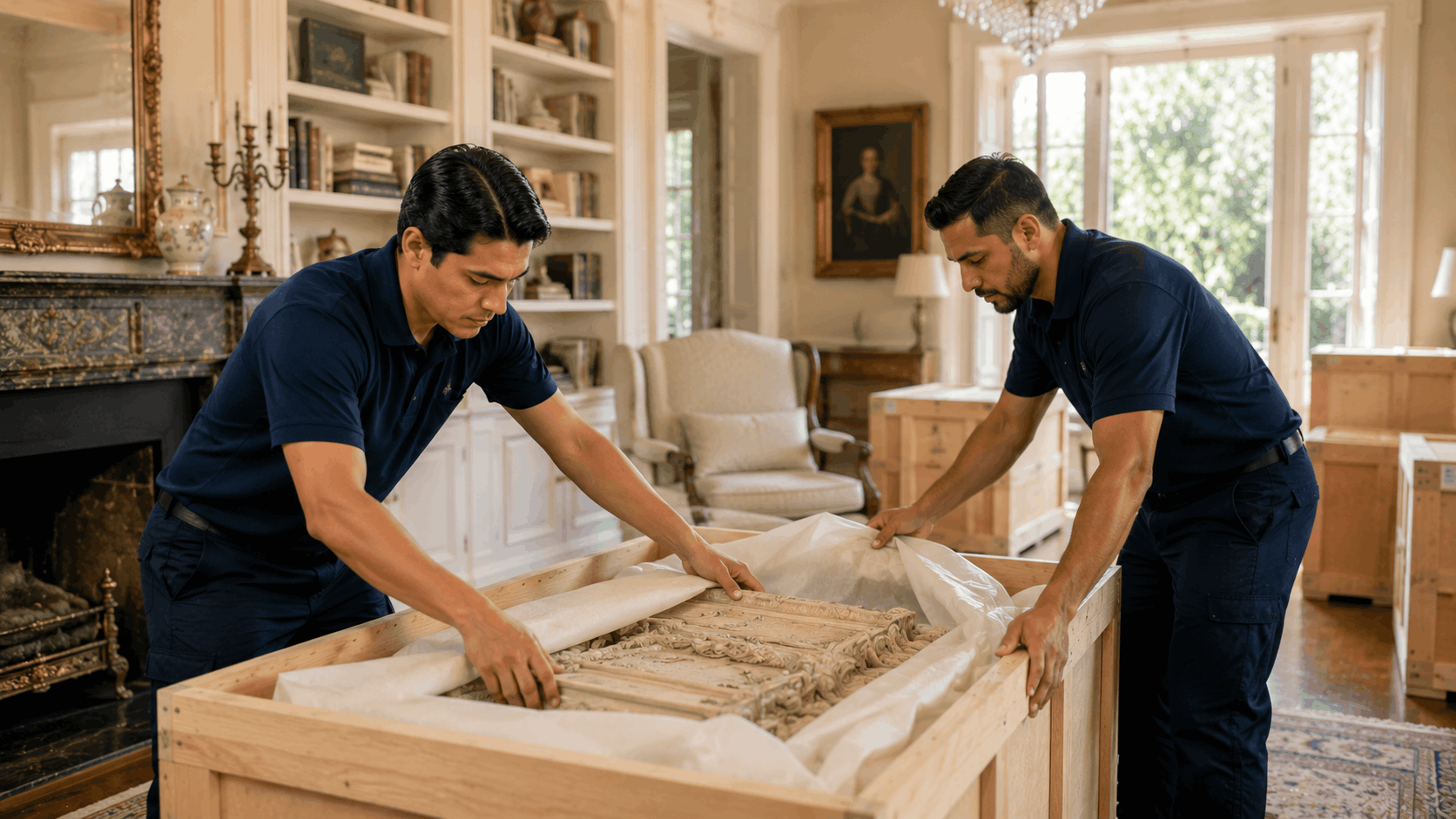
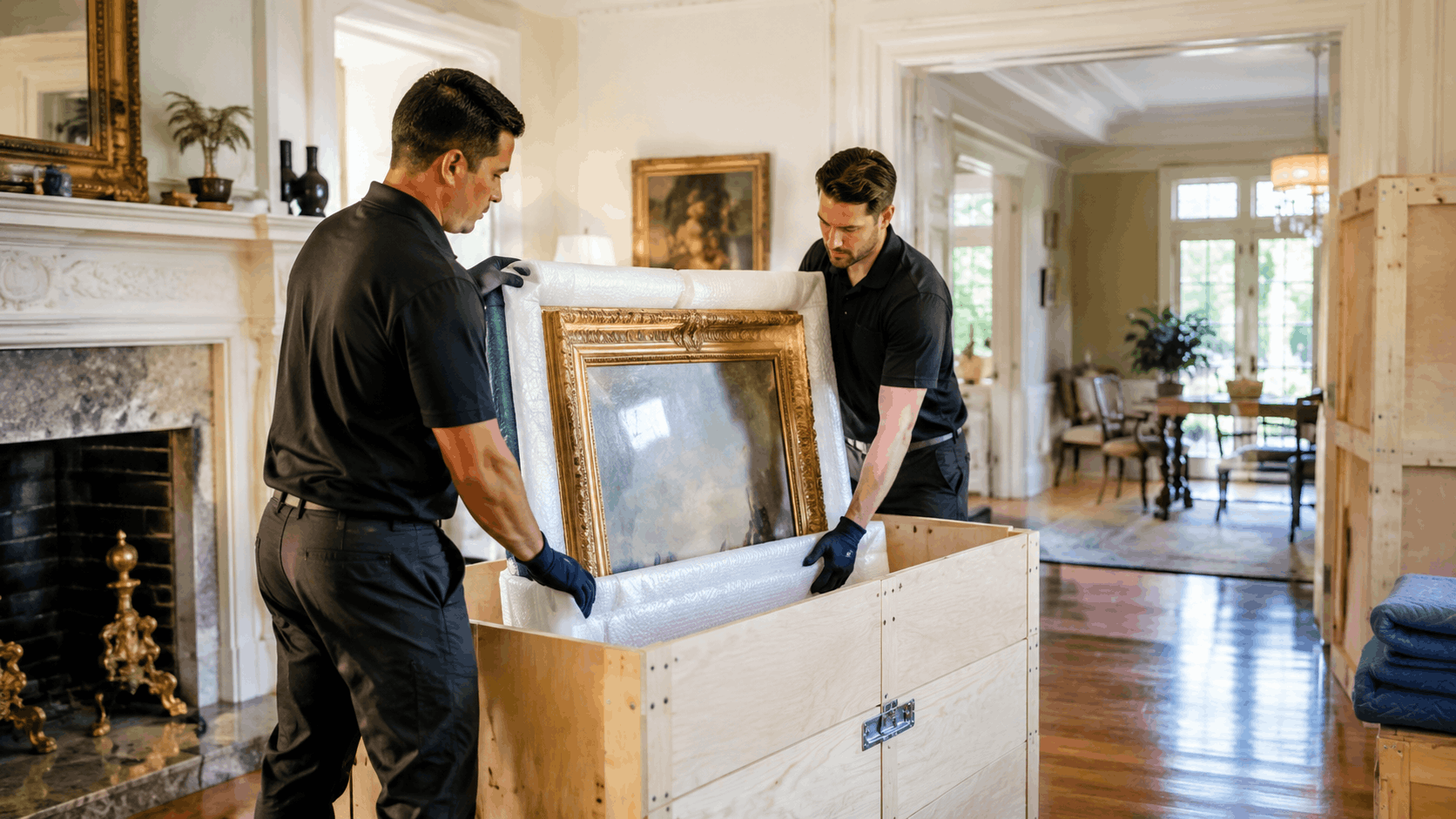
Some belongings are too fragile or too valuable for a cardboard box. That is where custom crating comes in. Instead of forcing an item into a standard container, we build a wood crate around it.
Custom crating protects the pieces that keep families up at night worrying. Fragile item packing done this way costs more than tossing things in boxes, but for the right items it is worth every dollar. Our full packing and crating service covers the whole range.
What Custom Crating Actually Involves
Custom crating begins with measurements. Our crew measures the item on all sides, then designs a wood crate sized to fit it with a small margin for padding. No guessing, no forcing.
Once the measurements are set, the crate is built to order. We use sturdy plywood or lumber depending on the weight and shape of the item. A heavy marble tabletop needs a stronger build than a framed mirror.
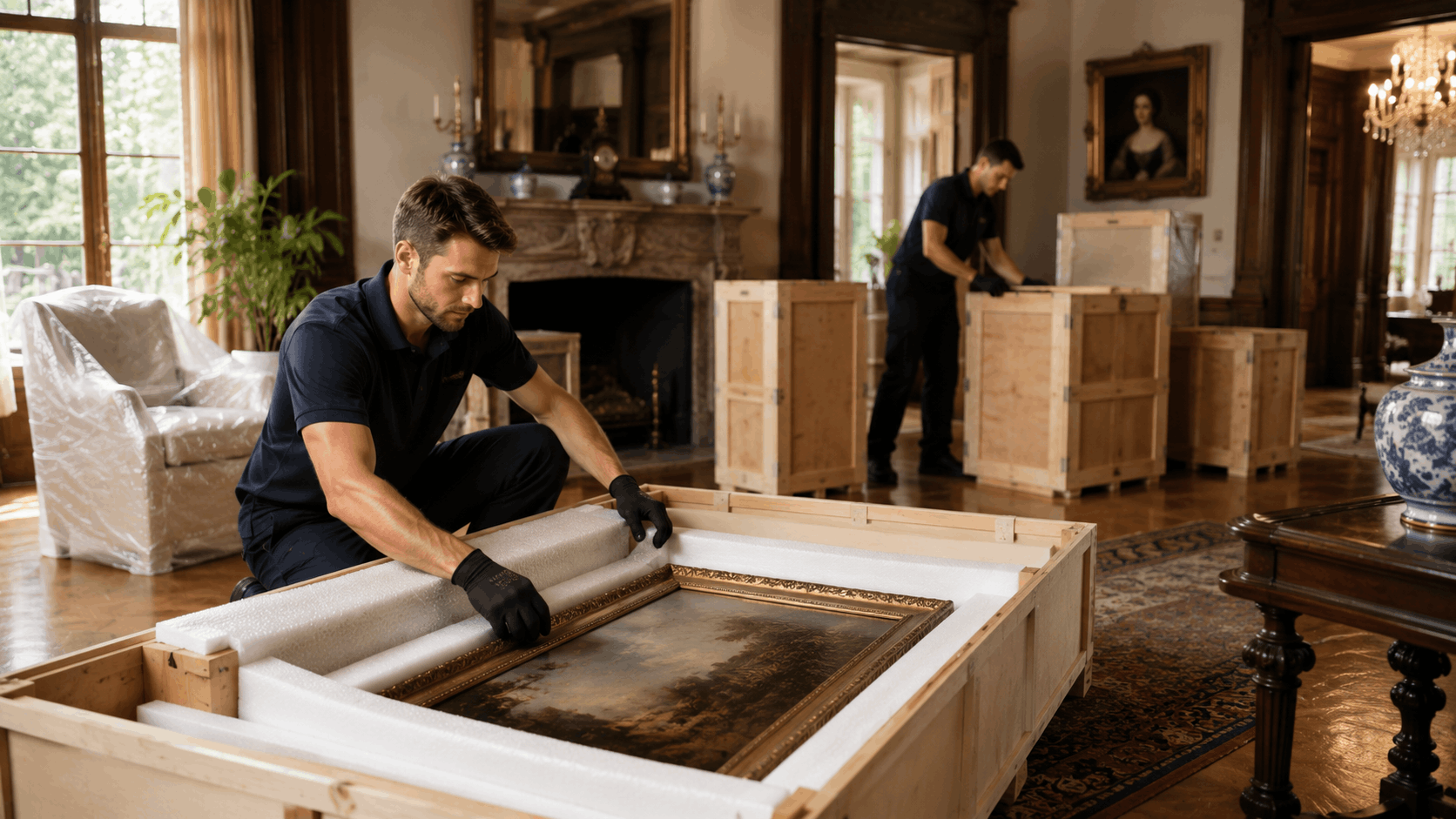
Inside the crate, foam padding and blocking hold the item still. The goal is zero movement during transit. If the piece cannot shift, it cannot bang against the walls of the crate.
This crate building process takes time, which is why we plan it ahead. A rushed crate is a weak crate, so we schedule crating days before the move whenever possible.
Crating Fine Art, Mirrors, and Chandeliers
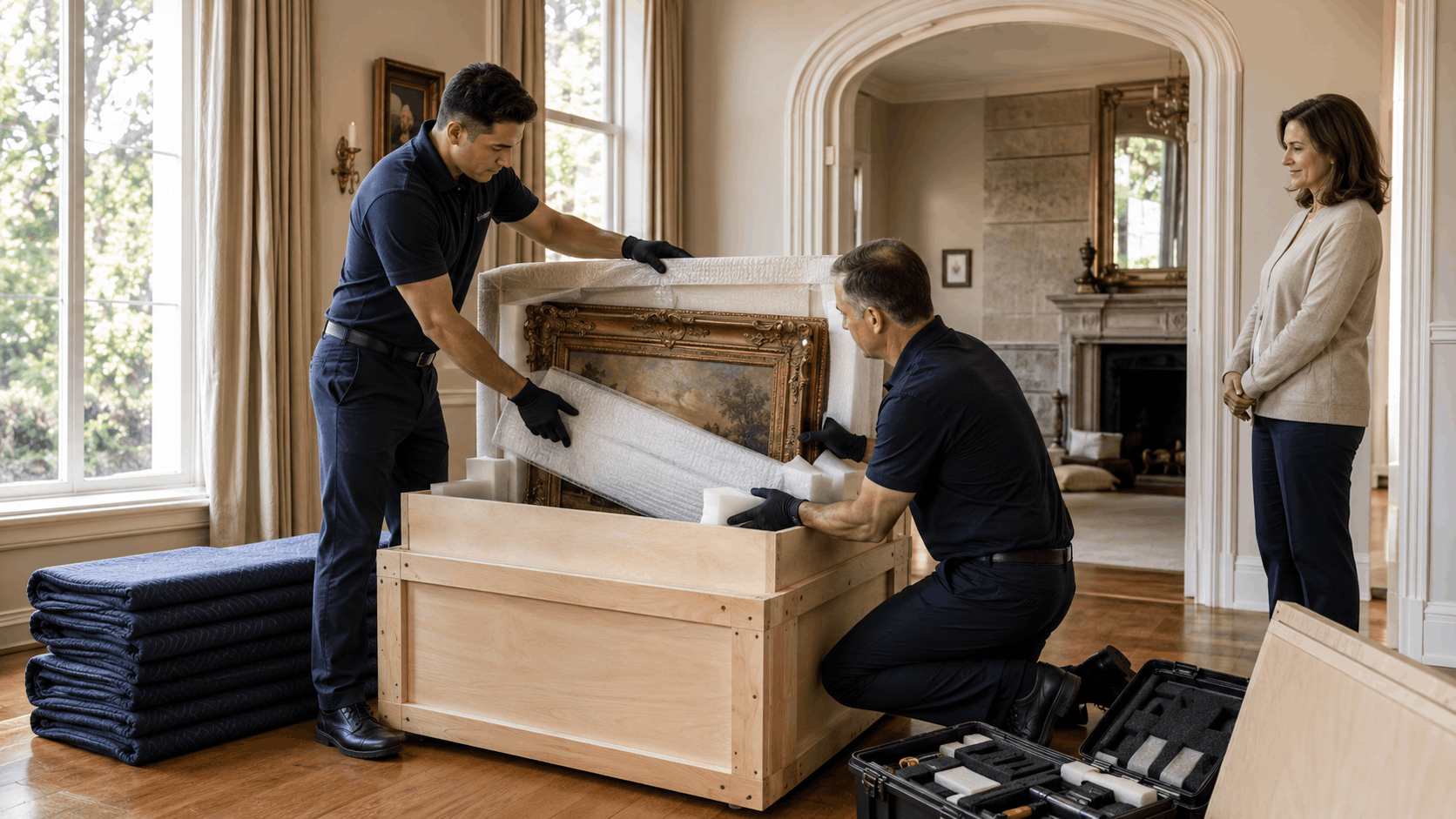
Fine art crating is one of the most frequent requests in Hancock Park. Oil paintings and framed works need protection from pressure, moisture, and impact. We build crates that suspend the piece so nothing touches the surface of the art.
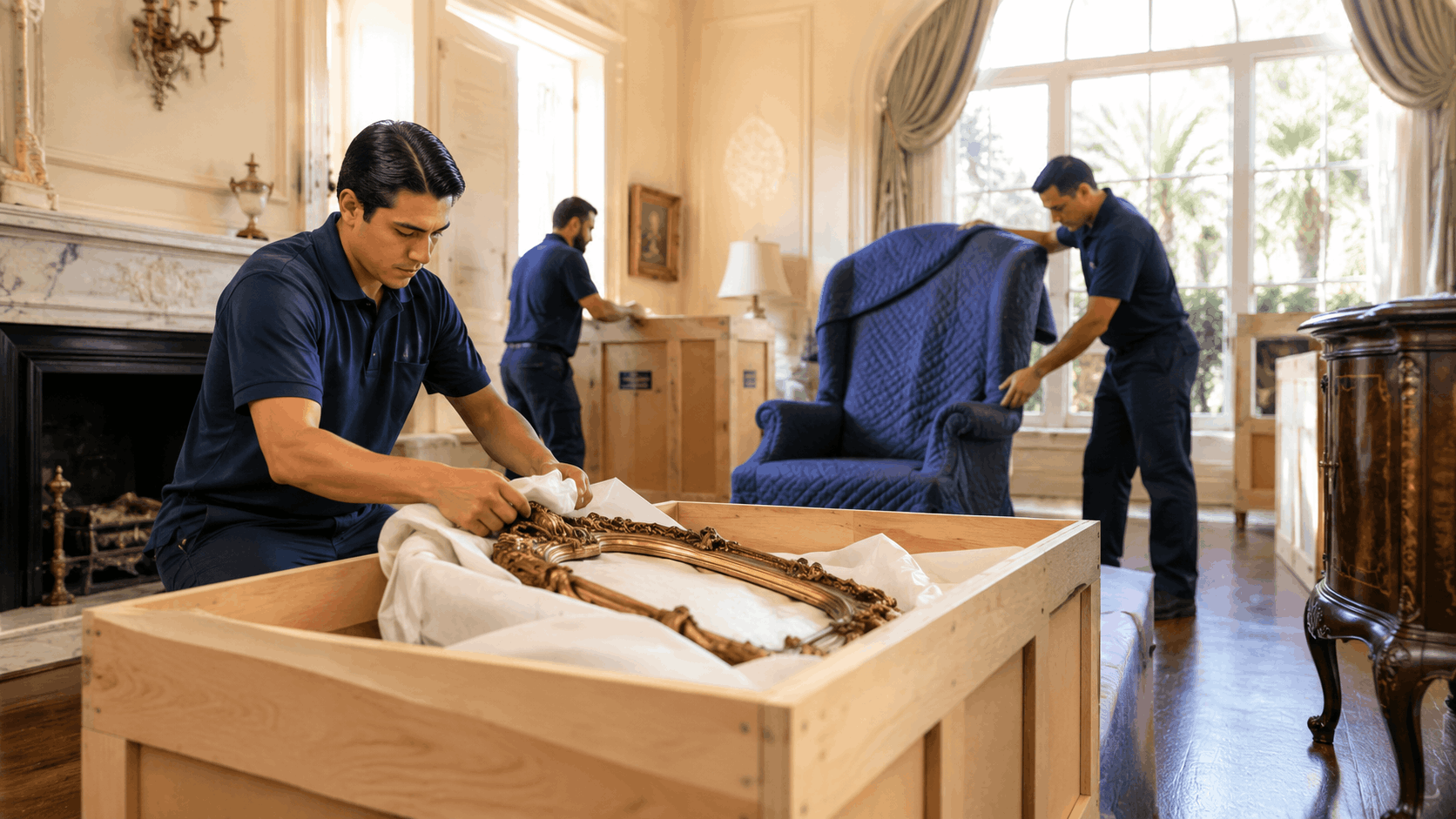
Antique mirror packing follows a similar logic. Large mirrors are heavy and crack easily under stress. We use corner protection, face padding, and a rigid crate so the glass has no room to flex or shatter.
Chandelier moving is its own challenge. These hanging fixtures have delicate arms, crystals, and wiring that break with rough handling. We often remove and wrap individual components, then crate the body with foam blocking around every fragile point.
Each of these items gets logged and labeled so it can be reassembled correctly at the new home. Taking a fixture apart is only half the job. Putting it back together right is the other half.
Handling Grand Pianos and Large Furniture
A grand piano through a narrow 1920s doorway takes real skill. Piano moving requires a piano board, straps, padding, and a crew that has done it many times. We tilt, pivot, and guide the instrument with control at every step.
Oversized furniture presents the same puzzle. An antique wardrobe or a large dining table may not clear the door in one piece. When needed, we carefully disassemble parts and reassemble them on the other side.
Specialized equipment makes the difference. Stair-climbing dollies, hoisting straps, and door-frame protectors let us move heavy pieces without gouging floors or walls. The right tool prevents most damage before it starts.
Our crews also plan the path in advance. Knowing exactly how a piece will turn a corner or clear a landing means fewer surprises on moving day. That planning is what keeps both the furniture and the historic home safe.
Climate Concerns for Wood and Delicate Materials
Los Angeles heat is hard on antiques. Summer temperatures inside a closed truck can climb high enough to damage wood, glue joints, and finishes. Climate protection matters more than people expect.
Wood furniture expands and contracts with temperature and humidity swings. An old veneer can lift or crack when exposed to LA heat during a long day. Crating and proper handling reduce that exposure.
Fabrics, leather, and paper also suffer in extreme conditions. Upholstered antiques and framed documents need to stay out of direct heat. We plan loading times and storage to limit the hours these items spend in warm conditions.
For items sitting in storage between homes, climate control is the safest choice. It keeps temperature and humidity steady so nothing dries out or warps while it waits. More on that below.
Need Help in Los Angeles?
Popeye Moving & Storage serves Los Angeles and all of Los Angeles County.
How Popeye Moving & Storage Approaches Heritage Property Moves
A heritage property service is only as good as the plan behind it. At Popeye Moving, we treat every historic home move as a project with clear steps, not a rushed grab-and-go. The moving process is built around protecting the house and its contents.
Our approach comes from years of working homes across central LA. We know what goes wrong when crews skip steps, so we build safeguards into each stage.
| Stage | What We Do | Why It Matters |
|---|---|---|
| Walkthrough | Inspect items and access | No moving-day surprises |
| Protection | Cover floors and railings | Historic surfaces stay safe |
| Crating | Build custom crates | Fragile items secured |
| Inventory | Label and log everything | Nothing gets lost |
| Transport | Careful loading and routing | Safe arrival |
The In-Home Walkthrough and Assessment
Every heritage move starts with a home walkthrough. We visit the property before moving day to see what we are working with. This is where the real planning happens.
During the moving assessment, our team notes fragile items, oversized pieces, and anything that needs custom crating. We also flag tight doorways, low arches, and staircases that need extra care.
Access routes are mapped at the same time. We figure out how the truck will park, which door works best, and how each large item will travel from room to curb. Planning this early prevents damage later.
The walkthrough also gives the family an accurate quote. Seeing the home in person beats guessing over the phone. It lets us price the job honestly and avoid surprise charges.
Protecting Floors, Doorways, and Staircases
Before a single item moves, we protect the home itself. Floor protection comes first. We lay runners and pads over original hardwood, tile, and any surface a crew will cross repeatedly.
Door padding guards the frames. Those narrow 1920s doorways take the most abuse during a move, so we wrap the jambs and edges. A padded frame shrugs off a bump that would otherwise chip original wood.
Staircase care means covered railings and protected treads. Grand staircases are both beautiful and easy to scratch. We pad the banister and cover the steps so heavy pieces never touch bare wood.
These steps take time to set up, and that is the point. A move that starts with careful protection almost always ends with an undamaged home.
Inventory Tracking and Labeling
Losing track of items is one of the biggest fears families have. Our inventory list solves that. Every crate and box gets logged before it leaves the house.
Labeling keeps unpacking organized. Each container is marked with its contents and destination room, so nothing ends up in the wrong place. Fragile crates get clear handling notes too.
Item tracking matters most for high-value pieces. Antiques and art are logged with detail so their condition and location are always known. Nothing disappears in the shuffle.
When the truck arrives at the new home, the same list guides the unload. Families can check items off as they come in. Our unpacking services take that organization one step further.
Serving Hancock Park and Nearby LA Neighborhoods
We work Hancock Park, but our routes cover the whole area. Windsor Square, Larchmont, and Mid-Wilshire are streets our crews drive week in and week out. That local knowledge saves time and trouble.
Knowing the neighborhood means knowing its quirks. We know which cross streets back up during rush hour and where a truck can stage without blocking traffic near Larchmont Boulevard.
As local movers, we also understand the mix of homes across this part of LA. From historic estates to newer condos, each move gets the right plan. Our local residential moving team handles them all.
Families who want to see our full service area can check the Los Angeles service page. We cover more ground than most crews based outside the city.
Timing Your Historic Home Move in Los Angeles
Timing shapes how smooth a heritage move goes. The right moving timeline gives crating, permits, and crews enough room to do the job right. Rushing a historic home move is where mistakes happen.
Scheduling a move around LA weather and permit rules takes forethought. A little lead time prevents most of the headaches families run into.
How Far Ahead to Book Crating Services
Custom crates are built to order, so they need time. We recommend booking crating services at least two to three weeks ahead for a home with several fragile pieces. That booking window gives our crew time to measure and build.
The more custom crates a home needs, the longer the crating time. A house with a grand piano, several oil paintings, and antique mirrors takes more prep than one with a single item. We plan accordingly.
Advance planning also protects your preferred moving date. Popular dates fill up early, especially at month-end. Booking early locks in both the crating work and the crew.
For families on a tight schedule, we offer more options through our last minute moving service. Even then, crating quality comes first, so we are honest about what is possible.
Best Seasons to Move in Hancock Park
Season matters more in LA than people think. Peak summer heat is hard on antiques and hard on crews. Wood and finishes suffer most during the hottest months.
Spring and fall are the sweet spots for moving season here. Milder temperatures protect delicate items and make the work safer. Off-peak weeks also mean more scheduling flexibility.
The winter holidays bring their own crowding. Streets get busy, schedules tighten, and everyone wants the same few dates. Booking outside those windows usually goes smoother.
If a summer move is unavoidable, we plan around the heat. Early morning loading and climate-controlled handling keep antiques out of the worst conditions.
Coordinating With HPOZ and Permit Timelines
Permits can add days to the schedule, so we plan for them. A temporary no-parking permit for the truck often takes advance notice from the city. We start that process early.
HPOZ timing rarely blocks a move, but it shapes how the work gets done. Any care around protected features is built into the plan from the start. We never improvise around historic rules.
Building access can add time too. Some homes share driveways or have restricted entry points that require coordination with neighbors. We sort those details before the truck rolls up.
The takeaway is simple. A move planned two to four weeks out gives room for permits, crating, and weather. That lead time is what keeps a heritage move calm instead of chaotic.
Need Help in Los Angeles?
Popeye Moving & Storage serves Los Angeles and all of Los Angeles County.
What Historic Home Crating and Moving Costs
Cost is one of the first questions families ask, and they deserve straight answers. A heritage property move costs more than a standard one because it involves more skill, more materials, and more care. Here is how the numbers work.
Every moving cost depends on the specifics of the home. We give an honest crating price and moving quote after seeing the property, not a lowball guess over the phone.
Factors That Change Your Final Price
Several pricing factors move the total up or down. Item count is the biggest one. A home full of antiques needing custom crates costs more than a lightly furnished house.
Crate size and complexity matter too. A large chandelier or a grand piano crate takes more materials and labor than a small framed print. The custom crates cost reflects that work.
Home access changes the price as well. A house with a long carry from the door to the truck, or a tight staircase, takes more time and crew. Difficult access always adds cost.
Distance is the final factor. A local move within LA costs less than a long-haul trip. For moves outside the area, our California long distance service handles the details.
Custom Crating Costs Versus Standard Packing
Custom crating costs more than standard boxes, and that is expected. A wood crate built for one item takes materials and skilled labor. Standard packing is simpler and cheaper.
The crating vs packing question comes down to value. A cardboard box is fine for books and linens. It is not fine for a 1920s oil painting or an antique mirror.
Packing costs stay low when most items can travel in boxes. Custom crating raises the total, but only for the pieces that truly need it. We recommend crates selectively, not for everything.
The value shows up on the other end. A protected heirloom that arrives intact is worth far more than the cost of its crate. For irreplaceable items, the upgrade pays for itself.
Insurance and Valuation Coverage Options
Coverage is where many families do not ask enough questions. Basic moving insurance often covers items by weight, which does little for a lightweight but priceless painting. That is why valuation coverage exists.
Full valuation coverage protects items at their actual value, not just their weight. For antiques and art, this is the coverage that matters. We walk families through the options before the move.
Documenting high-value pieces helps too. Photos, appraisals, and detailed inventory notes support any claim and set the right coverage level. Antique protection starts with good records.
The Federal Motor Carrier Safety Administration explains the two main coverage types in its consumer rights guide. We encourage every family to understand the difference before moving day.
Getting an Accurate Quote
An on-site quote beats a phone estimate every time. Seeing the home lets us count items, spot access issues, and identify what needs crating. That is how the moving estimate becomes reliable.
A rough phone guess often misses the details that drive cost. It might leave out the grand piano, the tight staircase, or the permit needs. Those surprises show up as extra charges later.
During an on-site quote, we walk the home with the family and explain each line. All fees are listed in writing up front, because everything is discussed in advance. Accurate pricing builds trust.
Families can request an estimate through our contact page. A short visit now prevents budget surprises later.
Storage Solutions for Heritage Belongings
Not every move goes straight from one home to the next. Families between homes or mid-renovation often need somewhere safe for their belongings. Heritage storage keeps valuables protected during the gap.
The wrong storage can undo careful packing. Climate storage and good security make the difference for antiques. Our storage solutions cover both.
Climate-Controlled Storage for Antiques
Climate control protects what LA weather threatens. Steady temperature and humidity keep wood from warping and art from degrading. For antiques, this is the standard we recommend.
Humidity swings are the hidden danger. Too much moisture can lift veneer and grow mold, while too little dries out wood and cracks it. Climate-controlled units hold a steady middle ground.
Fabric, leather, and paper items also depend on stable conditions. Upholstered antiques and framed documents last far longer in a controlled space. Antique care means controlling the environment.
For long stays, we offer long term storage built for valuables. Families can store with confidence knowing conditions stay steady month after month.
Short-Term Storage During Renovations
Renovating a historic home near Larchmont often means clearing rooms while work continues. Short-term storage gives those contents a safe home during the project. Nothing sits in a dusty, exposed space.
Renovation work is hard on furniture. Dust, paint, and foot traffic can damage pieces left in the house. Moving them to storage keeps them clean and safe.
Short-term options flex with the project timeline. If the work runs long, storage extends easily. Families are not locked into rigid terms.
When the renovation wraps, we bring everything back. The same crew that packed it out can move it back in, placing each piece where it belongs.
Security and Access to Stored Items
Security is a fair concern for anyone storing valuables. Our facilities use monitored access and secure units to protect stored belongings. Antiques stay safe.
Storage security features guard against theft and damage. Controlled entry and monitoring keep unauthorized hands away from stored items. Peace comes from knowing valuables are watched.
Item access stays convenient too. Families can arrange to retrieve belongings when they need them. Storage should not feel like a black box.
For designers and collectors, our designer receiving and consolidation service adds another layer of handling. High-value items get the care they deserve at every step.
Need Help in Los Angeles?
Popeye Moving & Storage serves Los Angeles and all of Los Angeles County.
How to Choose the Right Hancock Park Mover
Choosing a mover for a historic home is not the same as picking a crew for a small apartment. The stakes are higher. Trusted movers with heritage experience are worth finding.
Here is a simple checklist for spotting historic home pros. It focuses on experience, honesty, and local knowledge.
Questions to Ask Before You Hire
Start with crating experience. Ask any mover how they handle custom crating for art, mirrors, and pianos. A vague answer is a warning sign.
Licensing questions come next. A legitimate mover holds proper licensing and insurance and will share it without hesitation. You can verify a mover's registration through the FMCSA Protect Your Move site.
Experience with heritage property work is the third question. Ask for examples of historic homes the crew has moved. Real experience shows in the details of their answer.
Finally, ask about the process. A good mover explains the walkthrough, protection, and inventory steps clearly. If they cannot describe their method, keep looking.
Red Flags to Watch For
Some warning signs are easy to spot. No on-site estimate is a big one. A mover who quotes a historic home over the phone without seeing it is guessing.
Vague pricing is another red flag. If the quote lacks detail or the fees keep shifting, expect surprises on moving day. Honest movers put the numbers in writing.
No proof of antique moving experience should stop you cold. Historic home contents are too valuable for a crew learning on the job. Ask for specifics and check them.
Watch for pressure tactics and cash-only demands too. These are common signs of moving scams. A trustworthy company keeps everything clear and documented.
Why Local Experience in LA Matters
Local movers bring knowledge that outside crews cannot match. Knowing the streets of Hancock Park, the HPOZ rules, and the layout of these homes saves time and prevents damage.
LA experience shows in the small choices. Where to stage a truck near Rossmore, how to time a move around Larchmont traffic, which doorways need extra care - all of it comes from working here.
Neighborhood knowledge also speeds up planning. A crew that has moved dozens of Windsor Square homes already knows the common challenges. There is less guesswork and fewer delays.
Our team has driven these streets for years. That familiarity is part of what makes a heritage move go smoothly from start to finish.
Final Thoughts
Moving a historic Hancock Park home is a serious job that deserves serious care. The house is fragile, the contents are often irreplaceable, and the streets demand planning. Getting all three right takes a crew that understands heritage property work.
Custom crating, careful protection, honest pricing, and local knowledge are what set a heritage move apart. When those pieces come together, families can move without losing sleep over their treasures or their walls.
If you are planning a move out of or into a historic Hancock Park estate, our team is ready to help. Call Popeye Moving & Storage or reach out through our contact page to schedule a walkthrough and get an honest quote. Let us protect what matters most.
Frequently Asked Questions
- What is custom crating and when do I need it?
- Custom crating means building a wood crate sized to fit one specific item, with foam padding inside to hold it still. You need it for fragile or high-value pieces that a standard box cannot protect. Oil paintings, antique mirrors, chandeliers, marble tops, and grand pianos all call for custom crates. For everyday items like books and linens, standard boxes work fine.
- How much does moving a historic Hancock Park home cost?
- The cost varies with the size of the home, the number of fragile items, and how many custom crates are needed. Access issues like tight staircases and long carries raise the total, and distance matters too. Because heritage moves involve more skill and materials than standard ones, they cost more. The most accurate figure comes from an on-site quote after we see the property in person.
- How far in advance should I book a crating service?
- We recommend booking custom crating at least two to three weeks ahead. Crates are built to order, so our crew needs time to measure each item and construct a proper fit. Homes with several fragile pieces, like a piano plus paintings and mirrors, need the full window. Booking early also locks in your preferred moving date before the calendar fills.
- Can you move a grand piano through narrow historic doorways?
- Yes. Moving a grand piano through a tight 1920s doorway takes a piano board, straps, padding, and a crew trained for it. We tilt and pivot the instrument with control, protecting both the piano and the door frame. When a doorway is too narrow, we plan an alternate route in advance. Our specialty crews do this often, so the piano arrives safe and in tune.
- Do you protect original floors and staircases during the move?
- Absolutely. Before any item moves, we lay floor runners and pads over original hardwood, tile, and other surfaces. We pad door jambs and wrap staircase railings to guard historic wood from bumps and scratches. Treads get covered so heavy pieces never touch bare steps. This setup takes time, but it is why a careful move ends with an undamaged home.
- Are there parking or permit rules for movers in Hancock Park?
- Yes. Many residential streets around Hancock Park have parking limits or permit zones, and a full-size truck cannot simply park anywhere for hours. We scout the route ahead of time and, when needed, arrange a temporary no-parking permit so the truck has a legal, safe spot near your door. Handling this early prevents tickets and long carries on moving day.
- Do you offer climate-controlled storage for antiques?
- Yes. We offer climate-controlled storage that holds steady temperature and humidity, which protects wood, art, and fabric from LA's heat and moisture swings. Antiques are especially sensitive to those changes, so a controlled environment keeps them safe during any gap between homes. Both short-term renovation storage and long-term options are available, with secure, monitored facilities.
- How do you protect fine art and antique mirrors?
- We build custom crates for fine art that suspend the piece so nothing touches its surface, guarding against pressure and impact. Antique mirrors get corner protection, face padding, and a rigid crate so the glass cannot flex or shatter. Each item is wrapped, blocked, and labeled for careful handling. These steps keep delicate pieces intact through loading, transport, and unloading.
- What insurance coverage is available for high-value items?
- Basic coverage often pays by weight, which does little for a lightweight but priceless painting. Full valuation coverage protects items at their actual value instead, which is the right choice for antiques and art. We walk families through both options before the move and recommend documenting high-value pieces with photos and appraisals to support the coverage level and any future claim.
- Which LA neighborhoods do you serve besides Hancock Park?
- We serve much of central and west Los Angeles, including Windsor Square, Larchmont, and Mid-Wilshire. Our crews also cover areas like Brentwood, Holmby Hills, and West Los Angeles, along with nearby cities such as Santa Monica, Culver City, Pasadena, and Burbank. Local knowledge of these routes and neighborhoods helps every move go smoothly. Check our locations page for the full service area.
Popeye Moving & Storage Co. Team Team
Licensed moving and storage professionals serving Los Angeles and Los Angeles County.
Licensed in California · License #CAL T 189749 | USDOT 1472924 | MC 498816C
Why trust Popeye Moving & Storage?
Founded in 1994, Popeye Moving & Storage is a licensed and insured moving and storage service serving Los Angeles and Los Angeles County. All content is reviewed by our licensed technicians.

Need Help in Los Angeles?
Popeye Moving & Storage serves Los Angeles and all of Los Angeles County.
Related Articles
Bel Air Movers: Gated Community Logistics and Custom Estate Service
A local guide to moving in Bel Air, covering gated entry logistics, canyon road challenges, estate handling, storage, and how to choose the right movers.

Holmby Hills Movers: Compound and Estate Property Moving
A complete guide to moving Holmby Hills estates and compounds, covering planning, specialty packing, logistics, security, storage, and costs from experienced local movers.
Pacific Palisades Movers: Bluff and Cliffside Home Logistics
How bluff and cliffside homes in Pacific Palisades change moving logistics - shuttle trucks, long carries, permits, costs, and how Popeye Moving & Storage plans these jobs.