How-To Guides
Los Feliz Movers: Hillside Home and Narrow Street Logistics
Key Takeaways
- Los Feliz splits into flatter streets near Hillhurst and Vermont and steep hillside roads climbing toward Griffith Park, and each area needs a different move plan.
- A pre-move site visit measures street width, turn radius, driveway grade, and overhead wires to decide truck size and prevent day-of problems.
- Narrow streets often call for a shuttle van that ferries loads from a larger truck parked on a wider road.
- LADOT temporary no-parking postings reserve curb space and can override resident permit zones, but they need several business days of lead time.
- Older 1920s Spanish revival and craftsman homes have narrow doorways and steep stairs, so disassembly, hoisting, and floor protection are often required.
- Short-term and climate-controlled storage bridge closing gaps and protect sensitive items, while downsizing reduces the load carried down steep stairs.
- Pianos, safes, and oversized furniture need proper crew size and specialized gear like stair-climbing dollies on hillside lots.
- Booking two to four weeks ahead, especially in summer and at month-end, leaves time for a site visit and permit processing.
In This Article
A young family pulls up to their new hillside home just off Vermont Avenue, boxes stacked in the back of a rental car, ready to start the next chapter. Then the 26-foot moving truck arrives and stops dead at the corner. The street is too narrow to make the turn, parked cars line both sides, and the driveway climbs at an angle that makes loading feel like a gamble.
This scene plays out more often than most people expect in Los Feliz. The neighborhood is one of the most beautiful in Los Angeles, but its winding roads and steep lots create problems that catch homeowners off guard on moving day. What looks simple on a map turns into a real logistics puzzle once the truck shows up.
Why Los Feliz Moves Are Different From the Rest of Los Angeles
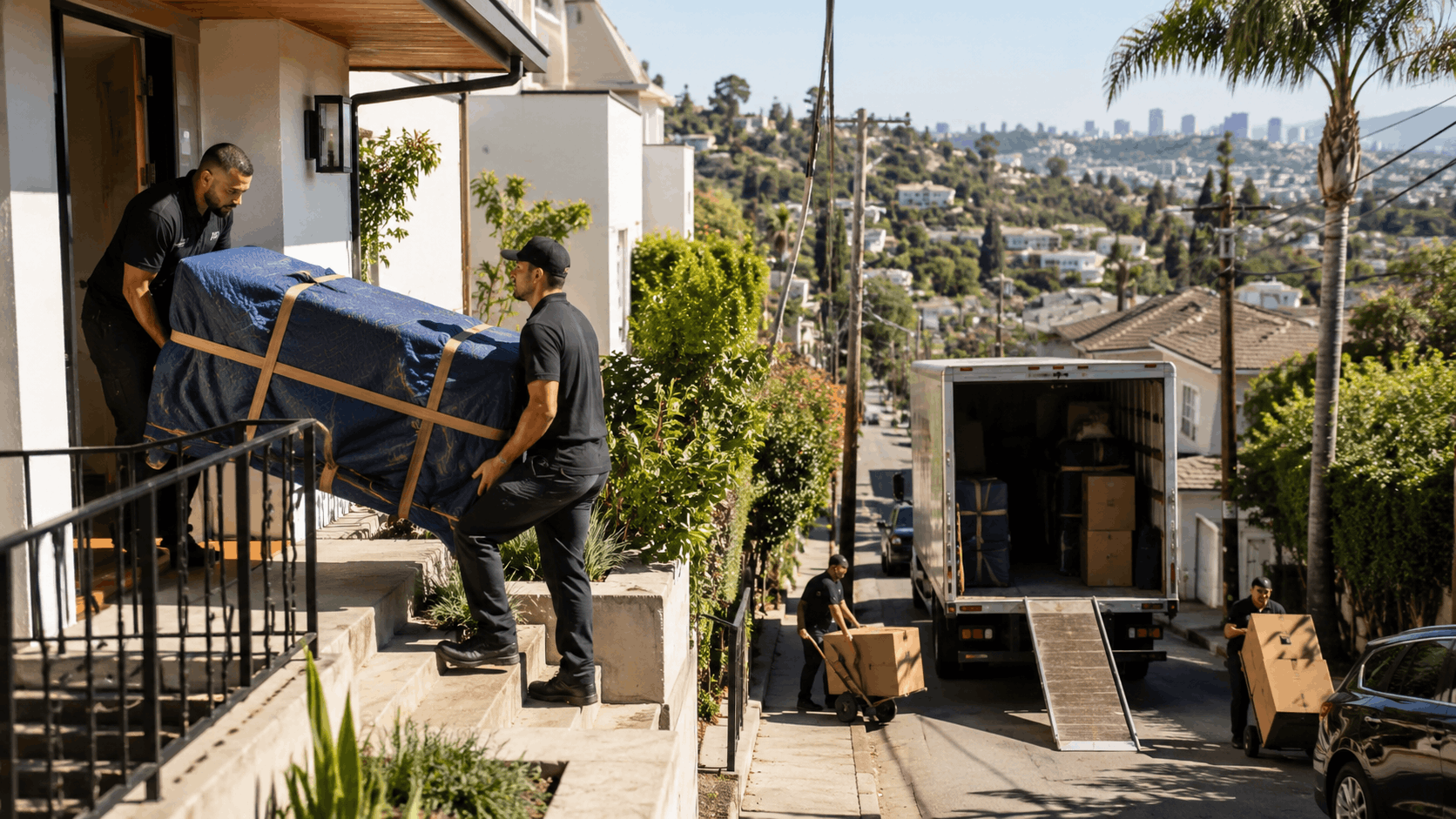
Los Feliz is not a flat grid like much of the city. It sits against the base of Griffith Park, which means the terrain shifts fast from level streets to steep switchbacks in the span of a few blocks. That mix is what makes the area so charming and so tricky to move into.
Local knowledge matters here more than in almost any other part of town. Los Feliz movers who have driven these roads know which streets a truck can handle and which ones will trap it. A few things set the neighborhood apart:
- A sharp split between the flats and the hillside neighborhood climbing toward the observatory
- Older homes with narrow doorways and steep interior stairs
- Winding, narrow streets that leave no room for a full-size truck
- Preferential parking zones that limit where a truck can sit
Understanding these factors before booking a move saves hours of frustration and prevents damage to both the home and the belongings inside it.
The Split Between the Flats and the Hills
The first thing our team looks at is where a home sits. The Los Feliz flats near Hillhurst Avenue and Vermont Avenue offer wider streets, room to park, and level walkways from the truck to the front door. These moves resemble a standard residential job in most of Los Angeles.
Climb a few blocks north and the picture changes completely. The roads start to bend and rise as they head toward Griffith Observatory, and the shoulders disappear. A home on a level flat lot needs one plan, while a house perched on a hillside curve needs another entirely.
We treat these as two different types of jobs from the start. A flat move near Hillhurst Avenue might use a single large truck parked out front. A hillside move often needs a shuttle van, extra crew, and a longer time window to handle the carry.
Getting this split wrong is where most moving-day disasters begin. A crew that shows up expecting a flat job and finds a steep switchback will burn hours improvising, and that costs the homeowner money and stress.
Older Homes and Their Quirks
Los Feliz is full of 1920s homes, from Spanish revival houses with arched entries to craftsman bungalows with built-in cabinetry. These homes are gorgeous, but they were not built for modern furniture or wide sofas. The rooms were laid out for a different era.
Narrow doorways are the most common issue we run into. Many original doors measure under 30 inches wide, which means a standard couch or a queen box spring will not fit through without disassembly or a different angle. We measure these openings before the move so there are no surprises.
Interior stairs add another layer. Older Spanish revival homes often have steep, tight staircases with sharp turns at the landing. Getting a dresser or mattress up or down these stairs takes planning, the right crew size, and sometimes a hoist through a window instead.
Hardwood floors, plaster walls, and original tile also demand extra care. These materials are decades old and crack or scratch easily. Our approach treats every old home as a place worth protecting, not just a set of rooms to empty out.
Street Access Problems Buyers Rarely Notice
Streets like Glendower Avenue and Bonvue look perfectly normal on a map. In person, they tell a different story. Many are barely wide enough for two cars to pass, and a full-size moving truck simply cannot fit or turn around once it commits.
Buyers rarely notice truck access when they fall in love with a view lot. Why would they? Nobody tours a home thinking about how a 26-foot truck will reach the front door. That is exactly the gap our team fills before the move.
We check road width, dead-end turnarounds, and whether the truck can back out safely if needed. On the steepest hillside streets, we also look at whether a truck can hold its brakes on the grade while the crew loads and unloads.
These checks happen before the day arrives, not during it. A quick look at the property up front tells us whether a big truck works or whether we need to plan for a shuttle. That single decision shapes the entire move.
Get Your Free Quote
Tell us about your move and we'll get back to you fast.
Scouting the Route Before Moving Day
The best hillside moves are decided days before the truck ever rolls. A pre-move site visit is where the whole plan comes together. Our team drives the route, walks the property, and spots the problems that would otherwise show up at the worst possible moment.
Hillside logistics come down to details most people never think about. Road width, driveway grade, overhead wires, and traffic timing all shape the plan. Skipping the site visit is the fastest way to turn a smooth move into an all-day struggle. Here is what the team looks for.
Measuring Street Width and Turn Radius
Street width is the first measurement that matters. A standard lane runs about 10 to 12 feet, and a 26-foot moving truck needs room to pass parked cars and swing wide on turns. On many Los Feliz hillside streets, that room does not exist.
Tight switchbacks are the real problem. A truck might fit on a straight stretch but cannot make the turn radius on a hairpin curve heading up toward the observatory. We measure these turns to know for certain before committing a large vehicle.
The difference between a 26-foot truck and a shuttle van is the whole game on narrow streets. The big truck holds far more, but the shuttle van fits where the big one cannot. When a street fails the measurement test, the shuttle becomes the smart choice.
We would rather learn this during a site visit than watch a driver realize it while stuck on a curve with traffic backing up behind him. Measuring up front removes the guesswork and keeps the move on schedule.
Checking Driveway Grade and Parking Spots
Steep driveways off streets like Cromwell Avenue create real loading challenges. When a driveway climbs at a sharp grade, rolling heavy furniture down it becomes dangerous, and setting a ramp at the right angle takes extra care. Grade affects everything about how the crew works.
We look at where a truck can legally and safely park near the home. Sometimes that means parking on a wider cross street and running a shuttle up. Other times a level pad near the house works, as long as the truck can hold position on the slope.
Parking is rarely simple in the hills. Many streets have no shoulder, and stopping a full-size truck on a blind curve puts the crew and passing drivers at risk. Finding the right spot is part of the plan, not an afterthought.
The grade also changes how long the move takes. A long, steep carry from a legal parking spot to the front door adds time, and we account for that in the estimate so the price reflects the real work involved. Our local residential moving team plans around these details for every hillside job.
Spotting Low Branches, Wires, and Blind Curves
Overhead obstacles are easy to miss until a truck clips one. Low branches, power lines, and cable wires hang across many older hillside streets near Ferndell. A 13-foot truck cannot fit under a wire strung at 12 feet, so we map these clearances ahead of time.
Blind curves add a safety concern that has nothing to do with the truck itself. On winding roads, a driver cannot see oncoming traffic around the bend, and a loading crew working in the street becomes a hazard. Sightlines matter as much as clearances.
Spotters solve much of this. We station a crew member to watch for traffic and guide the truck around tight spots and under low wires. A second set of eyes prevents the small mistakes that turn into expensive ones.
Timing plays a role too. Working during quieter hours reduces the number of cars fighting for space on a narrow curve. Combining spotters with smart timing keeps everyone safe and keeps the move flowing.
Timing Around Traffic and School Zones
Los Feliz Boulevard turns into a slow crawl during morning and evening rush hour. A truck stuck in that traffic burns time and fuel, and it throws off the entire schedule. We plan arrival and departure windows to dodge the worst of it.
School zones create their own crunch. Drop-off and pickup times near local schools flood the surrounding streets with cars, and a moving truck in the mix only makes things worse. Those windows are ones we work around whenever possible.
The ideal move-time window usually falls mid-morning, after the school rush and before the lunch and afternoon traffic builds. Starting around 9:30 or 10 a.m. often gives the crew a clear runway to work.
Weekday moves tend to beat weekend ones for parking and street access, though every property is different. During the site visit, we note the local traffic patterns for that exact block and build the timing around them.

Need Help in Los Angeles?
Popeye Moving & Storage serves Los Angeles and all of Los Angeles County.
Handling Narrow Streets With the Right Equipment
The right gear is what makes a tight-street move possible at all. On a wide flat street, almost any crew can get the job done. On a narrow hillside road, the equipment choices decide whether the move goes smoothly or damages the home and the belongings.
Narrow street moving depends on matching the tools to the property. The table below shows how we choose equipment based on the situation.
| Situation | Equipment Used | Why It Works |
|---|---|---|
| Street too narrow for a big truck | Shuttle van and load transfer | Ferries loads from a larger truck parked on a wider road |
| Steep interior or exterior stairs | Stair-climbing dolly | Moves heavy items up and down safely with less strain |
| Long carry from truck to door | Flat dollies and portable ramps | Speeds up repeated trips over distance |
| Old hardwood floors and plaster walls | Floor runners and door jamb padding | Prevents scratches, dents, and cracks |
When a Shuttle Truck Beats a Big Rig
A shuttle truck is a smaller van that carries loads between the home and a larger truck parked on a wider road nearby. When a street cannot handle a 26-foot vehicle, the shuttle becomes the answer. It fits where the big rig fails.
The load transfer works in stages. The large truck parks on a street like Los Feliz Boulevard or a wide cross street, and the small van makes repeated trips up the hill to the home. Each trip carries a portion of the load until the truck is full.
This method saves time in the long run even though it adds steps. Forcing a big truck onto a street it does not fit wastes far more time and risks damage to the truck, parked cars, and the home. The shuttle avoids all of that.
We decide on a shuttle during the site visit, never on the fly. Knowing ahead of time means the right vehicles show up ready, and the homeowner knows what to expect on their estimate. Our specialty moving crews handle these staged transfers regularly.
Dollies, Ramps, and Stair-Climbing Gear
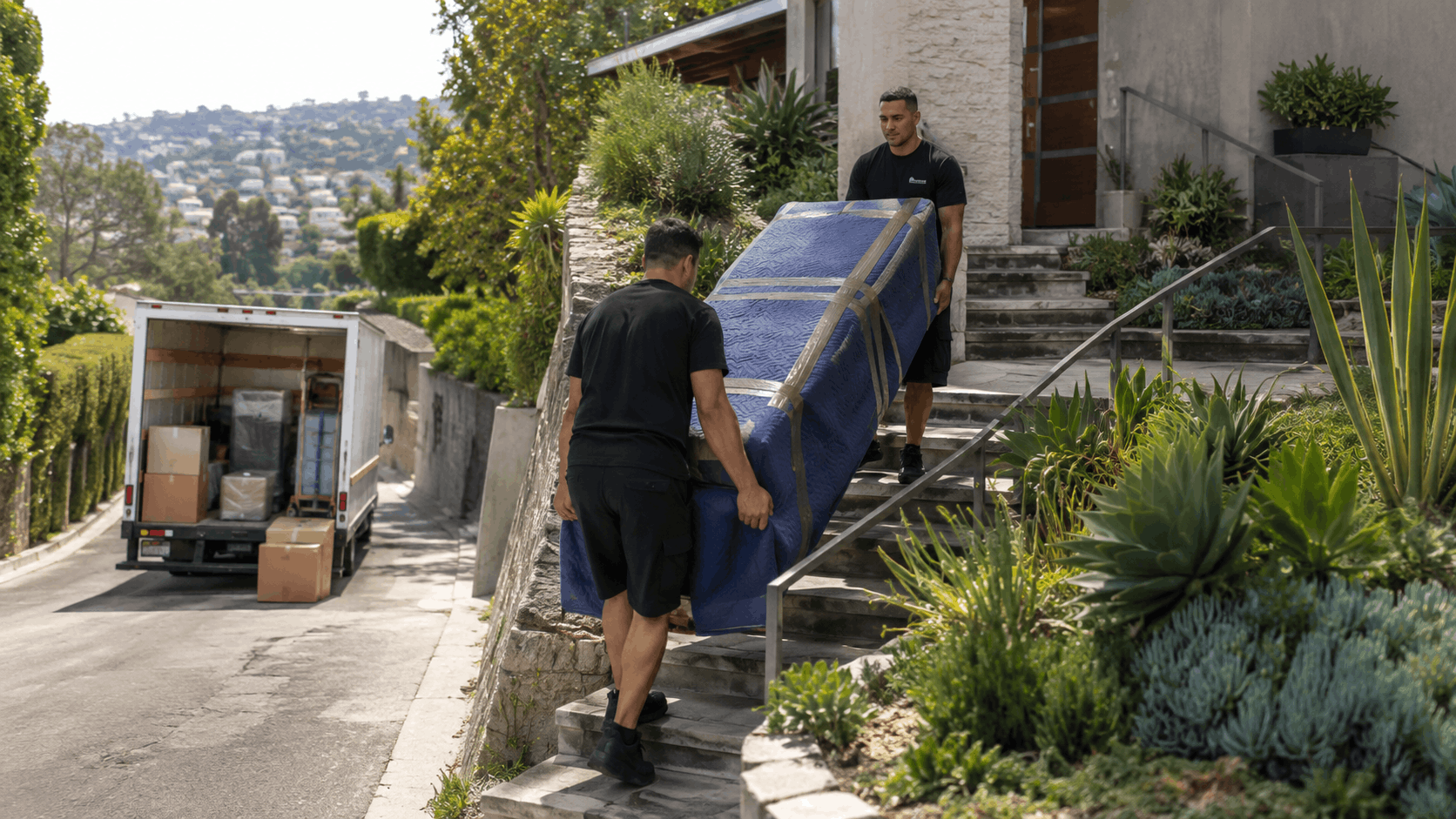
Steep steps are a defining feature of hillside homes, and standard dollies do not cut it. A stair-climbing dolly uses a motorized or geared track to move heavy items up and down stairs without dragging or dropping them. This gear protects both the item and the crew.
Portable ramps bridge the gaps that hillside lots create. A ramp can span a set of steps or smooth out a steep driveway grade so a dolly rolls instead of bounces. Setting ramps at the right angle keeps loads stable and safe.
Long carries call for their own approach. When the truck parks far from the door, the crew uses flat dollies to move boxes and furniture over distance quickly. Fewer trips on foot means a faster move and less wear on everyone.
Matching the tool to the task is what separates a rushed move from a controlled one. On a Glendower Avenue hillside with 40 steps to the door, the right combination of stair dollies and ramps turns a brutal job into a manageable one.
Protecting Floors, Walls, and Landscaping
Old homes deserve protection, and we start with the floors. Floor runners are heavy protective mats laid down along the path the crew walks. They shield original hardwood and tile from grit, scuffs, and the weight of loaded dollies.
Doorways take a beating during any move, especially in homes with narrow openings. Door jamb padding wraps the frames so a dresser corner does not gouge the wood. In a 1920s Spanish revival home, that original trim is not something you can easily replace.
Walls need cover too. Corner guards and moving blankets protect plaster from the bumps that happen when a crew angles a large piece through a tight hall. Plaster cracks are costly and slow to repair, so we avoid them by padding first.
Landscaping is the piece people forget. Hillside lots often have gardens and plantings crowding the walkway, and a careless crew tramples them fast. We plan the carry path to protect the greenery and keep the yard looking the way the owner left it.
Parking and Permit Rules in Los Feliz
Parking is one of the biggest headaches for any move in this part of Los Angeles. The streets are tight, resident permits are common, and a truck that parks in the wrong spot can rack up fines or block a neighbor for hours. Knowing the rules ahead of time prevents both.
The permit process is not complicated once you understand it, but it does take lead time. Here is how parking and permits work for a Los Feliz move.
Temporary No-Parking Signs From LADOT
The Los Angeles Department of Transportation, or LADOT, handles temporary no-parking postings for moves. Requesting these signs reserves curb space in front of the home so the truck has a legal, guaranteed spot on moving day. Without them, a truck may find every space taken.
Lead time is the part people miss. LADOT typically needs several business days to process a request and get the signs posted, so a last-minute call will not work. We recommend starting the process well ahead of the move date. You can review the city rules on the LADOT website.
The signs must be posted a set number of hours before enforcement begins, usually a day or more in advance. That posting window gives neighbors notice to move their cars so the space is clear when the truck arrives.
Getting this right matters most on narrow streets where a single blocked space can stop the whole move. A reserved spot near the door shortens the carry and keeps the crew working instead of circling for parking. We help clients handle this step so nothing falls through the cracks.
Permit Parking Districts and Resident Zones
Los Feliz has several preferential parking districts where only residents with permits can park during posted hours. These resident zones limit where a moving truck can legally sit for the long stretch a move requires. Parking without a permit invites a ticket.
The rules vary block by block, so a street sign one block over may say something entirely different. We check the exact posting for the property during the site visit. Knowing the local rules prevents an expensive surprise.
A temporary no-parking permit from LADOT can override the resident restrictions for the move, which is why the posting process matters so much in these districts. It gives the truck a legal claim to the space for the day.
Truck parking in permit districts is a solvable problem with planning. The city has a process for exactly this situation, and using it keeps the move legal and smooth. Skipping it is what leads to tickets and towed vehicles.
Avoiding Fines and Blocked Neighbors
Parking fines in Los Angeles are not cheap. A street sweeping or permit-zone violation can run from around 70 to over 90 dollars, and blocking a driveway or fire hydrant costs more. Those charges add up fast when a truck sits illegally for hours.
Blocked neighbors are the other cost, and it is a social one. On a tight hillside street, a truck that boxes in a resident for the day starts a feud that outlasts the move. Good neighbor relations are worth protecting, especially in a close community like this.
A few practical steps keep the peace. Reserve the right amount of curb space with a proper permit, avoid blocking driveways, and give neighbors a heads-up when possible. A little courtesy goes a long way on a narrow street.
Our crews work to keep the move contained and considerate. Staying legal on parking and mindful of neighbors is part of how we handle every job. It protects the client from fines and from starting off on the wrong foot in a new home.
Moving Fragile and Bulky Items on Hillside Lots
Big and delicate items are where hillside moves get genuinely hard. A steep stairway or a tight turn that a box handles fine becomes a serious problem with a piano or a glass-front cabinet. These pieces need extra care, the right crew size, and specific handling methods.
Fragile items and bulky furniture both face more risk on a hillside lot than they would on a flat street. Here is how our team handles the toughest pieces.
Pianos, Safes, and Oversized Furniture
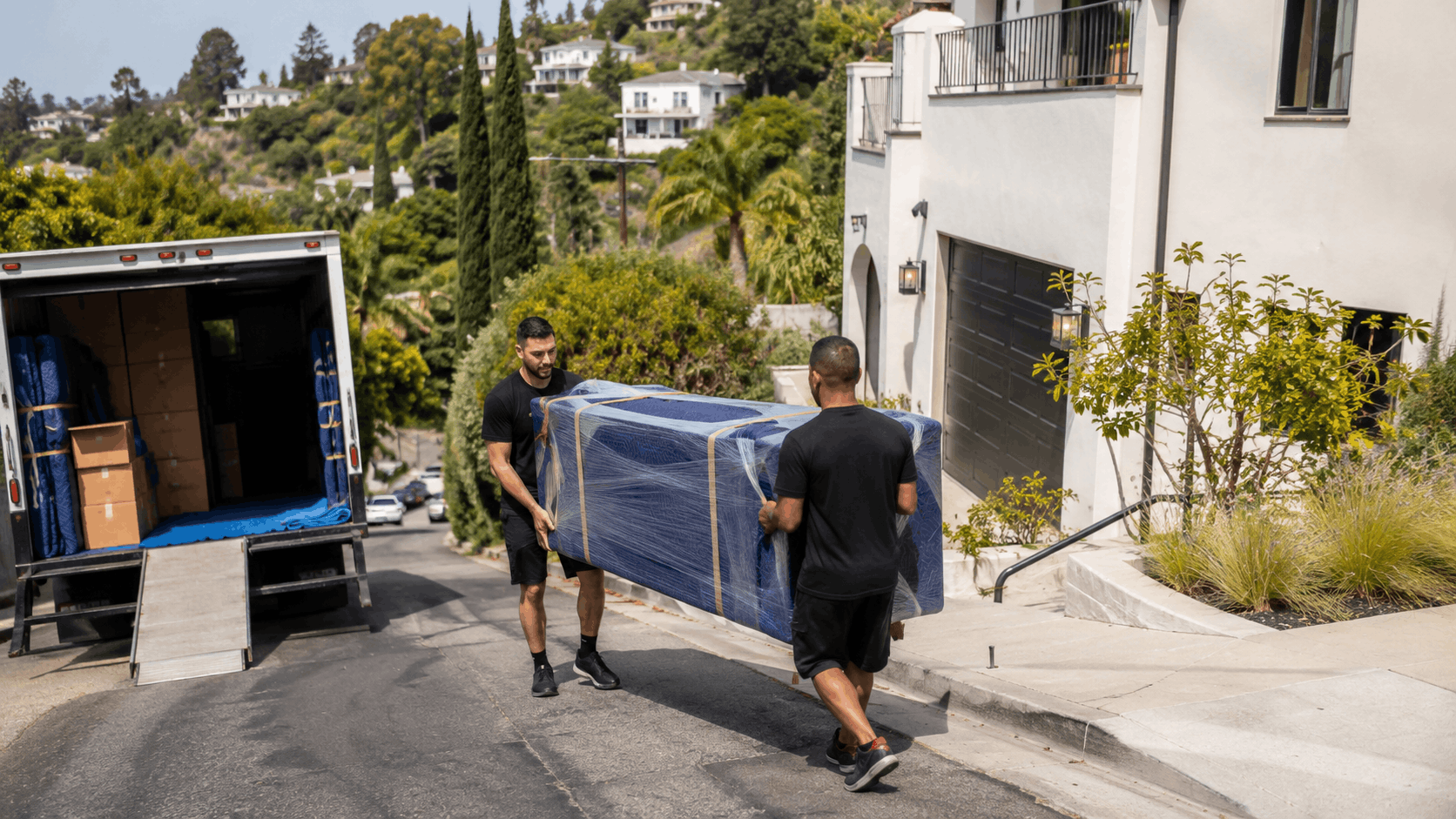
Pianos and safes are the heaviest items in most homes, and moving them down steep hillside stairs takes real planning. A grand piano can weigh over 800 pounds, and gravity works against the crew on a downhill carry. The wrong approach risks injury and damage.
Crew size matters more than anything here. A heavy piece on steep steps needs enough hands to control the weight at every point, not just at the top and bottom. We staff these jobs based on the item and the terrain, never with a bare-minimum crew.
The right gear does the rest. Piano boards, straps, and stair-climbing dollies keep the load controlled through each step and turn. For a job like this, our piano moving specialists bring equipment built for exactly this challenge.
Oversized furniture follows the same logic. A large armoire or sectional sofa on a steep lot needs a planned path, enough people, and often disassembly. Rushing a heavy piece is how floors get gouged and backs get hurt, so we take the time to do it right.
Getting Large Pieces Through Tight Doorways
Old homes and large furniture do not always agree. When a sofa will not fit through a 28-inch doorway, we turn to disassembly first. Removing legs, cushions, and sometimes the frame lets a piece pass through an opening it never could otherwise.
Measuring is where this starts. Before the move, we measure the item and every doorway, stairwell, and hallway on its path. Knowing the numbers up front tells us whether a piece fits, needs to come apart, or needs another route entirely.
Hoisting through windows is the answer when doors simply will not work. In some 1920s homes, the only way to get a large bed or couch upstairs is to lift it through a second-floor window with ropes and a crew. It sounds dramatic, but it is a proven method.
The narrow doorways common in Spanish revival and craftsman homes make these techniques a regular part of the job here. We come prepared to disassemble, angle, or hoist as the home demands, rather than forcing a piece and risking damage.
Packing Art, Glass, and Antiques
Fragile items face extra bumps on a hillside carry, so packing them well is the first line of defense. Art, glass, and antiques need custom protection that goes beyond a standard box. A bumpy trip down 30 steps is no place for a poorly wrapped mirror.
Art and framed pieces get corner protectors, glassine over the surface, and a custom crate or mirror carton. The goal is to keep pressure off the glass and the frame corners, which are the most likely points to crack under stress.
Glass and antiques call for cushioning on every side. We wrap each piece in padding, fill the voids in the box so nothing shifts, and mark the carton so the crew handles it with care. For high-value pieces, our packing and crating team builds custom crates.
The extra time spent packing fragile items pays off on the carry. A well-packed antique can absorb the jostles of a steep, uneven path that would shatter a rushed job. On a hillside lot, that packing quality is what keeps treasured pieces intact.
Need Help in Los Angeles?
Popeye Moving & Storage serves Los Angeles and all of Los Angeles County.
Storage Options for Los Feliz Homeowners
Storage solves problems that come up constantly during a move. Sometimes the dates do not line up. Sometimes there is too much stuff to carry down a steep hillside in one day. Having storage in the plan gives a homeowner options when the timing gets tricky.
Here are the storage situations we see most often with Los Feliz clients:
- A gap between move-out and move-in dates that needs bridging
- Sensitive items that need climate control during warm months
- Extra belongings worth storing to lighten the moving-day load
Short-Term Storage During a Closing Gap
A closing gap happens when the move-out date and the move-in date do not match. In a competitive market like Los Feliz, this is common, and it leaves a family with nowhere to put their belongings for a few days or weeks. Short-term storage bridges that gap.
The setup is simple. The crew loads everything, moves it into a secure storage facility, and holds it until the new home is ready. When the closing finishes and the keys change hands, the same belongings come back out and into the new place.
This spares the homeowner from renting a truck and scrambling for a place to park their whole life for two weeks. It also means the move happens in two clean stages rather than one rushed and stressful day.
Timing flexibility is the real benefit. A closing date can slip at the last minute, and storage absorbs that shock without derailing the whole plan. Our storage solutions cover exactly these short-term needs.
Climate-Controlled Space for Sensitive Items
Los Angeles gets hot, and heat damages certain belongings. Wood furniture can warp, artwork can fade or crack, and electronics can fail when stored in a space that bakes all summer. Climate-controlled storage keeps the temperature and humidity steady.
Sensitive items deserve this protection during warm months. A leather sofa or a vintage record collection left in a hot unit for a season may not survive it. A climate-controlled space holds conditions that keep these items in the shape they went in.
Antiques and fine wood pieces benefit most. The glue joints and finishes on older furniture react badly to heat swings, and steady conditions prevent the slow damage that a standard unit allows. For valuable pieces, the upgrade is worth it.
We help clients decide which items need climate control and which do not. Not everything requires it, and matching the storage type to the contents keeps the cost reasonable while protecting what actually needs protecting.
Downsizing and Decluttering Before the Move
The less a crew has to carry down a steep hillside, the faster and cheaper the move goes. Downsizing before moving day reduces the load, and it is one of the smartest things a homeowner can do on a hillside lot. Every box left behind is one fewer trip.
Decluttering starts weeks ahead. Sorting through belongings and setting aside what will not make the trip cuts the volume and the cost. Items worth keeping but not needed right away can go into storage rather than adding to moving-day chaos.
Storing the extras makes the actual move leaner. A crew carrying only the daily essentials down 40 steps works faster than one hauling everything a family owns. That efficiency shows up directly in the time and the price.
For anyone moving into a smaller hillside home, downsizing is often a necessity anyway. Using storage as a middle step lets a homeowner decide what stays and what goes without the pressure of doing it all on move day.

How Popeye Moving & Storage Co. Handles Los Feliz Jobs
Every Los Feliz move is its own puzzle, and our team treats it that way. We are local movers who have worked these hills for years, and that experience shapes how we plan and run each job. The approach is specific, not generic.
Here is what sets our Los Feliz service apart:
- Crews who know the hillside streets and their quirks firsthand
- A custom move plan built for each individual property
- Clear, upfront pricing with no surprise fees on move day
Local Crews Who Know the Hills
Crews who know the hills are worth more than any single piece of equipment. Our team has driven streets like Glendower Avenue and the winding roads climbing toward Griffith Park many times over. That familiarity means they already know where a truck fits and where it does not.
Local knowledge shows up in the small decisions. A crew that has worked a nearby block knows the traffic patterns, the parking realities, and the tight turns before they even arrive. That head start saves time and prevents the trial-and-error that slows an unfamiliar team.
Hillside experience also builds instinct for safety. Working steep grades and blind curves takes practice, and our crews have that practice. They spot risks a newer team would miss and adjust before a small problem grows.
We serve the wider area too, from the flats of Los Feliz to jobs across Los Angeles. That range keeps our crews sharp on every kind of terrain the city throws at them.
Custom Move Plans for Each Property
A one-size approach fails on hillside lots. That is why we build a move plan around each home's specific access, stairs, and parking. The plan for a flat Hillhurst Avenue home looks nothing like the plan for a steep Glendower lot with 40 steps.
The property assessment drives everything. During the site visit, we note the street width, driveway grade, doorway sizes, and stair counts. Those details tell us the truck size, the crew size, and whether a shuttle is needed.
Custom planning also covers timing and equipment. We schedule the move to dodge traffic and school zones, and we bring the exact gear the property demands. Nothing is left to guesswork on the day of the move.
This tailored approach is why our moves run on schedule. When the plan matches the property, the crew works without surprises, and the homeowner is not left waiting while the team figures things out. Reach out through our contact page to start a property assessment.
Clear Pricing With No Surprise Fees
Nobody likes a bill bigger than the quote. Our estimates account for the real work involved, including shuttle needs, long carries, and stair charges, so the number we give up front is the number that holds. No surprise fees on move day.
Hillside moves have cost factors a flat move does not. A long carry from a legal parking spot, a shuttle van running loads up the hill, and steep interior stairs all add labor. We spell these out in the estimate rather than tacking them on later.
Transparency comes from the site visit. Seeing the property before quoting lets us price the job accurately instead of guessing and adjusting later. That upfront look is what makes an honest estimate possible.
Homeowners deserve to know what a move will cost before it starts. Our pricing reflects the actual conditions of the job, so there are no shocks when the work is done. Clear numbers build the trust that keeps clients coming back.
Need Help in Los Angeles?
Popeye Moving & Storage serves Los Angeles and all of Los Angeles County.
Final Thoughts
Moving into a Los Feliz hillside home is a different challenge than moving anywhere else in the city. The narrow streets, steep grades, old homes, and parking rules all demand planning that a standard move never requires. Getting it right comes down to local knowledge and the right equipment.
A pre-move site visit, the right truck or shuttle, proper permits, and a crew that knows the hills make all the difference. When those pieces come together, a move that could have been a disaster runs smoothly instead.
Our team has handled these jobs across Los Feliz and the surrounding neighborhoods for years. If you are planning a move into or out of a hillside home, call Popeye Moving & Storage Co. for a consultation. We will scout your route, build a plan around your property, and give you a clear estimate before we ever load a box.
Frequently Asked Questions
Can a full-size moving truck reach my hillside home in Los Feliz?
It depends on the street width and the grade. Many Los Feliz hillside streets like Glendower and Bonvue are too narrow or too steep for a 26-foot truck to fit or turn. When that happens, we park the large truck on a wider road and use a shuttle van to ferry loads up to the home. A site visit tells us for certain which approach your property needs.
How much does a Los Feliz hillside move cost?
Cost varies with the home size and the difficulty of access. A flat Los Feliz move prices like a standard job, while a hillside move adds charges for long carries, steep stairs, and shuttle service. These factors add labor and time, which is why hillside moves run higher. We provide a clear estimate after a site visit so the price reflects the real conditions of your property.
Do I need a parking permit for the moving truck?
Often yes, especially in the permit parking districts common around Los Feliz. A temporary no-parking posting from LADOT reserves curb space for the truck and can override resident-only restrictions for the move. LADOT needs several business days of lead time to process and post the signs, so plan ahead. We help clients handle this step so the truck has a legal, guaranteed spot on moving day.
How far in advance should I book a move in Los Feliz?
Book at least two to four weeks ahead for most moves, and earlier during busy periods. Summer months and month-end dates fill up fast because so many leases and closings happen then. Booking early also leaves time for a site visit and the LADOT permit process. For hillside homes especially, that extra lead time lets us plan the shuttle, crew, and equipment your property needs.
What is a shuttle service and will I need one?
A shuttle service uses a smaller van to carry loads between your home and a larger truck parked on a wider road nearby. It is the answer when a street is too narrow or steep for a full-size truck. Many Los Feliz hillside properties need one. We decide during the site visit, so you know ahead of time whether a shuttle is part of your plan and estimate.
Can movers handle steep interior stairs and long carries?
Yes. Steep stairs and long carries are routine on hillside lots, and we come equipped for them. Stair-climbing dollies, portable ramps, and a larger crew size let us move heavy and bulky items safely up and down steep steps. For a long walk from the truck to the door, flat dollies speed up repeated trips. We plan the crew and gear around your home's specific layout.
How are pianos and heavy items moved on hillside lots?
Heavy items like pianos and safes need specialized gear and enough hands to control the weight on steep steps. We use piano boards, straps, and stair-climbing dollies to keep the load steady through every turn and stair. Crew size is set based on the item and the terrain, never bare-minimum. Planning the path and parking ahead of time keeps these heavy pieces and the crew safe throughout the move.
What if my move-out and move-in dates do not match?
Short-term storage bridges the gap. When your closing dates do not line up, we load your belongings, move them into a secure facility, and hold them until the new home is ready. Then the same items come back out and into the new place. This lets your move happen in two clean stages instead of one rushed day, and it absorbs any last-minute date changes.
How does the team protect old floors and walls?
We treat old homes with real care. Floor runners cover hardwood and tile along the crew's path, door jamb padding wraps narrow doorways, and corner guards and blankets protect plaster walls. In 1920s Spanish revival and craftsman homes, this original trim and flooring is hard to replace, so we pad first and move second. Protecting the home is built into how we run every job.
What is the best time of day to move in Los Feliz?
Mid-morning usually works best. Starting around 9:30 or 10 a.m. avoids both the rush-hour crawl on Los Feliz Boulevard and the school drop-off crowds that clog nearby streets. Weekday moves also tend to beat weekends for parking and street access. During the site visit, we note the traffic patterns for your exact block and set the timing to keep the move flowing without delays.
Frequently Asked Questions
- Can a full-size moving truck reach my hillside home in Los Feliz?
- It depends on the street width and the grade. Many Los Feliz hillside streets like Glendower and Bonvue are too narrow or too steep for a 26-foot truck to fit or turn. When that happens, we park the large truck on a wider road and use a shuttle van to ferry loads up to the home. A site visit tells us for certain which approach your property needs.
- How much does a Los Feliz hillside move cost?
- Cost varies with the home size and the difficulty of access. A flat Los Feliz move prices like a standard job, while a hillside move adds charges for long carries, steep stairs, and shuttle service. These factors add labor and time, which is why hillside moves run higher. We provide a clear estimate after a site visit so the price reflects the real conditions of your property.
- Do I need a parking permit for the moving truck?
- Often yes, especially in the permit parking districts common around Los Feliz. A temporary no-parking posting from LADOT reserves curb space for the truck and can override resident-only restrictions for the move. LADOT needs several business days of lead time to process and post the signs, so plan ahead. We help clients handle this step so the truck has a legal, guaranteed spot on moving day.
- How far in advance should I book a move in Los Feliz?
- Book at least two to four weeks ahead for most moves, and earlier during busy periods. Summer months and month-end dates fill up fast because so many leases and closings happen then. Booking early also leaves time for a site visit and the LADOT permit process. For hillside homes especially, that extra lead time lets us plan the shuttle, crew, and equipment your property needs.
- What is a shuttle service and will I need one?
- A shuttle service uses a smaller van to carry loads between your home and a larger truck parked on a wider road nearby. It is the answer when a street is too narrow or steep for a full-size truck. Many Los Feliz hillside properties need one. We decide during the site visit, so you know ahead of time whether a shuttle is part of your plan and estimate.
- Can movers handle steep interior stairs and long carries?
- Yes. Steep stairs and long carries are routine on hillside lots, and we come equipped for them. Stair-climbing dollies, portable ramps, and a larger crew size let us move heavy and bulky items safely up and down steep steps. For a long walk from the truck to the door, flat dollies speed up repeated trips. We plan the crew and gear around your home's specific layout.
- How are pianos and heavy items moved on hillside lots?
- Heavy items like pianos and safes need specialized gear and enough hands to control the weight on steep steps. We use piano boards, straps, and stair-climbing dollies to keep the load steady through every turn and stair. Crew size is set based on the item and the terrain, never bare-minimum. Planning the path and parking ahead of time keeps these heavy pieces and the crew safe throughout the move.
- What if my move-out and move-in dates do not match?
- Short-term storage bridges the gap. When your closing dates do not line up, we load your belongings, move them into a secure facility, and hold them until the new home is ready. Then the same items come back out and into the new place. This lets your move happen in two clean stages instead of one rushed day, and it absorbs any last-minute date changes.
- How does the team protect old floors and walls?
- We treat old homes with real care. Floor runners cover hardwood and tile along the crew's path, door jamb padding wraps narrow doorways, and corner guards and blankets protect plaster walls. In 1920s Spanish revival and craftsman homes, this original trim and flooring is hard to replace, so we pad first and move second. Protecting the home is built into how we run every job.
- What is the best time of day to move in Los Feliz?
- Mid-morning usually works best. Starting around 9:30 or 10 a.m. avoids both the rush-hour crawl on Los Feliz Boulevard and the school drop-off crowds that clog nearby streets. Weekday moves also tend to beat weekends for parking and street access. During the site visit, we note the traffic patterns for your exact block and set the timing to keep the move flowing without delays.
P
Popeye Moving & Storage Co. Team Team
Licensed moving and storage professionals serving Los Angeles and Los Angeles County.
Licensed in California · License #PUC: CAL T 189749 | DOT: 1472924 | MC: 498816C
Why trust Popeye Moving & Storage?
Founded in 1994, Popeye Moving & Storage is a licensed and insured moving and storage service serving Los Angeles and Los Angeles County. All content is reviewed by our licensed technicians.

Need Help in Los Angeles?
Popeye Moving & Storage serves Los Angeles and all of Los Angeles County.
Related Articles
How-To Guides
Hermosa Beach Movers: Narrow Street and Walk Street Access Issues
Hermosa Beach walk streets, tight alleys, and steep grades make moving tricky. Learn access zones, truck options, permits, timing, and costs from local movers.
How-To Guides
Hillside Move Logistics: Why Some LA Streets Need Smaller Trucks
Hillside move logistics in LA require smaller trucks, special permits, and careful planning. Learn why canyon streets demand a different approach and how Popeye Moving handles it.
How-To Guides
Pacific Palisades Movers: Bluff and Cliffside Home Logistics
How bluff and cliffside homes in Pacific Palisades change moving logistics - shuttle trucks, long carries, permits, costs, and how Popeye Moving & Storage plans these jobs.