How-To Guides
Moving in Downtown LA High-Rises: COI, Elevator Reservations, Loading Docks

Key Takeaways
- Downtown LA high-rises require an approved certificate of insurance, a reserved service elevator, and a loading dock plan before move day.
- DTLA buildings typically ask for $1 million to $2 million in general liability coverage with the building named as additional insured.
- Submit your COI five to seven days ahead and reserve the service elevator two to three weeks out to avoid being turned away.
- Many DTLA garages have clearance under 12 feet, so crews scout truck access and dock height before move day.
- Confirm elevator times, dock access, and COI approval in writing to protect yourself if building staff change.
- Midweek moves beat weekends and the first of the month when elevator and dock demand peaks in South Park and the Arts District.
- Hiring movers with real DTLA high-rise experience prevents paperwork errors, parking problems, and missed elevator windows.
- Popeye Moving handles the COI, building paperwork, walkthroughs, and surface protection across Downtown LA towers.
In This Article
A resident shows up to their new apartment near South Park, boxes packed, truck loaded, family ready. Then the front desk stops them cold. No certificate of insurance on file, no elevator reservation, no dock time. The crew waits on the curb while the clock runs and the truck blocks traffic on a one-way street. Hours later, the move gets pushed to another day, and rescheduling fees pile up.
This scene plays out more often than people think across Downtown LA towers. The buildings near the Historic Core, Bunker Hill, and the Figueroa corridor all run on rules that catch first-time movers off guard. The good news is that every one of these problems is avoidable with the right prep.
Why Moving Into a Downtown LA High-Rise Is Different
Moving into a single-family home on a quiet street is simple. You pull the truck into the driveway, carry the boxes inside, and you are done. A Downtown LA high-rise move works nothing like that.
These towers have shared spaces, security desks, and building management teams that control access. Before you bring a single box through the door, you have paperwork to file and time slots to book. The move-in rules exist for a reason, and skipping any of them can stop your move on the spot.
The planning starts weeks before move day, not the night before. Residents who treat a DTLA high-rise like a regular apartment move are the ones who get turned away.
The Buildings That Have the Strictest Rules
The luxury towers in South Park tend to run the tightest ships. Buildings along Figueroa Street and around L.A. Live often require detailed paperwork, fixed elevator windows, and security escorts for every move. Their finishes are expensive, and management protects them hard.
The Bunker Hill area near Grand Avenue holds another cluster of strict buildings. High-rise condos overlooking the Music Center and the Broad museum expect movers to follow exact procedures, down to which entrance crews use and where the truck stages.
Older converted lofts in the Historic Core can be just as demanding in their own way. Many sit in century-old buildings with single small elevators and narrow freight access, so management limits move windows tightly to avoid backups. Knowing which type of building you are dealing with changes how early you need to start.
We have moved residents into towers across all three districts, and no two buildings share the same exact rulebook. That is why we check each building's policy before quoting a job.
Why Building Staff Care So Much About Move Logistics
HOA rules and property manager policies are not there to make life hard. They protect the shared elevators, lobby floors, and wall finishes that every resident pays to maintain. One careless crew can scratch a marble lobby or dent an elevator door, and the repair bill runs into the thousands.
Liability is the other big concern. If a mover gets hurt in the building or damages another unit, the property wants proof that the moving company carries insurance to cover it. Without that proof, the building could end up footing the bill.
Many DTLA towers learned these lessons the hard way. A damaged elevator cab or a flooded hallway from a dropped aquarium shapes the rules for years afterward. Each new restriction usually traces back to a past mistake.
When you understand why the property manager asks for so much, the requests stop feeling like red tape. They are protecting the building and, in turn, your deposit.
Planning Timeline for a Smooth Move
The safest move timeline starts about three to four weeks out. That is when you contact building management, confirm move-in rules, and ask which elevator and dock times are open. Booking ahead matters most for first-of-month and weekend dates.
Aim to reserve your elevator slot two to three weeks before move day. Popular windows in South Park and the Arts District fill fast, so the earlier you lock a time, the better your options.
Submit your certificate of insurance and any move forms five to seven days ahead. Management needs review time, and last-minute paperwork is the top reason moves get denied. Give them a buffer.
Our team builds this advance notice into every DTLA residential move we schedule. We coordinate the dates with the building so nothing slips through the cracks on move day.
Get Your Free Quote
Tell us about your move and we'll get back to you fast.
Understanding the Certificate of Insurance (COI)
The certificate of insurance, or COI, trips up more first-time movers than anything else. Nearly every DTLA tower demands one before they let a crew in the door. If you have never rented or owned in a high-rise, you may not even know what it is.
In plain terms, a COI is a one-page document from the moving company's insurance provider. It proves the mover carries active coverage and lists the building as protected. No COI, no move.
Here is a quick look at what a typical DTLA building asks for on a COI.
| COI Requirement | Typical DTLA Standard |
|---|---|
| General Liability | $1 million to $2 million per occurrence |
| Workers Compensation | Required, statutory limits |
| Additional Insured | Building owner and management company named |
| Submission Lead Time | 5 to 7 days before move |
| Approval Format | Written email or portal confirmation |
What a COI Actually Proves
A COI shows the building that the moving company has two main types of coverage. General liability covers damage to property, like a scratched elevator or a cracked lobby tile. If a crew breaks something, the insurer pays, not the building.
Workers comp is the second piece. It covers the movers themselves if one gets injured on the job inside the building. Without it, an injured worker could try to make a claim against the property owner.
Together, these two coverages tell the building it will not be on the hook for damages or injuries. That is the whole point of the document. It shifts the risk onto the mover's insurance, where it belongs.
The coverage limits on the COI spell out exactly how much protection exists. A building reviews those numbers to make sure they meet its minimum requirements before approving the move.
Coverage Amounts DTLA Buildings Usually Require
Most Downtown LA buildings ask for $1 million to $2 million in general liability coverage. That range covers the cost of repairs to shared finishes if something goes wrong during the move.
The building also wants to be named as an additional insured on the policy. This means the COI specifically lists the building owner and management company as protected parties. A generic certificate without these names usually gets rejected.
Higher-end towers off Figueroa Street and around Bunker Hill often push for more. Some luxury buildings require a $2 million million dollar policy or an umbrella coverage layer on top of the base limits. Their finishes cost more, so they want more protection.
We carry coverage that meets the standards across DTLA towers, and we adjust the additional insured language to match each building's exact wording. That detail alone prevents most COI rejections.
How to Get Your COI Submitted on Time
The process starts when you request the COI from your moving company. You give them the building's name, address, and the exact additional insured wording the management office requires. The mover then orders the certificate from their insurance provider.
Once the COI is ready, it goes to the building management or HOA office for review. Many DTLA buildings use an online portal for COI submission, while others want it emailed directly to the property manager. The building checks the limits and the named parties.
After review, the building sends back written building approval. Keep that confirmation, because it is your proof on move day. Do not assume the move is cleared until you have it in hand.
Our office handles this movers paperwork for clients start to finish. We collect the building requirements, prepare the certificate, submit it, and chase down the approval so you do not have to.
What Happens If the COI Is Wrong or Missing
A wrong or missing COI has real consequences. The most common one is being turned away at the dock. The crew arrives, the front desk checks the file, and there is no approved certificate. The move stops before it starts.
If the COI is rejected for missing the correct additional insured names or low coverage limits, you can lose your elevator slot too. The next resident in line gets the time, and you wait for the next opening, which could be days away.
Then come the rescheduling fees. The moving company may charge for the wasted trip, and the building may charge a fee to rebook the elevator. Those costs add up fast, and they are entirely avoidable.
This is why getting every detail right the first time matters so much. A move denied over a paperwork error is the most frustrating way to lose a day. We double-check the certificate against the building's rules before it ever gets submitted.

Need Help in Los Angeles?
Popeye Moving & Storage serves Los Angeles and all of Los Angeles County.
Reserving the Service Elevator
Shared elevators in high-rises cannot be used freely during a move. They have to be booked in advance and usually padded for protection. In a busy DTLA tower, dozens of residents compete for the same limited slots.
An elevator reservation locks the service elevator for your exclusive use during a set window. Without it, you could be sharing the lift with neighbors and groceries, which no building allows for a full move.
The competition for these slots is real, especially around the start of the month. Booking early is the only way to get the time you want.
Service Elevator vs Passenger Elevator
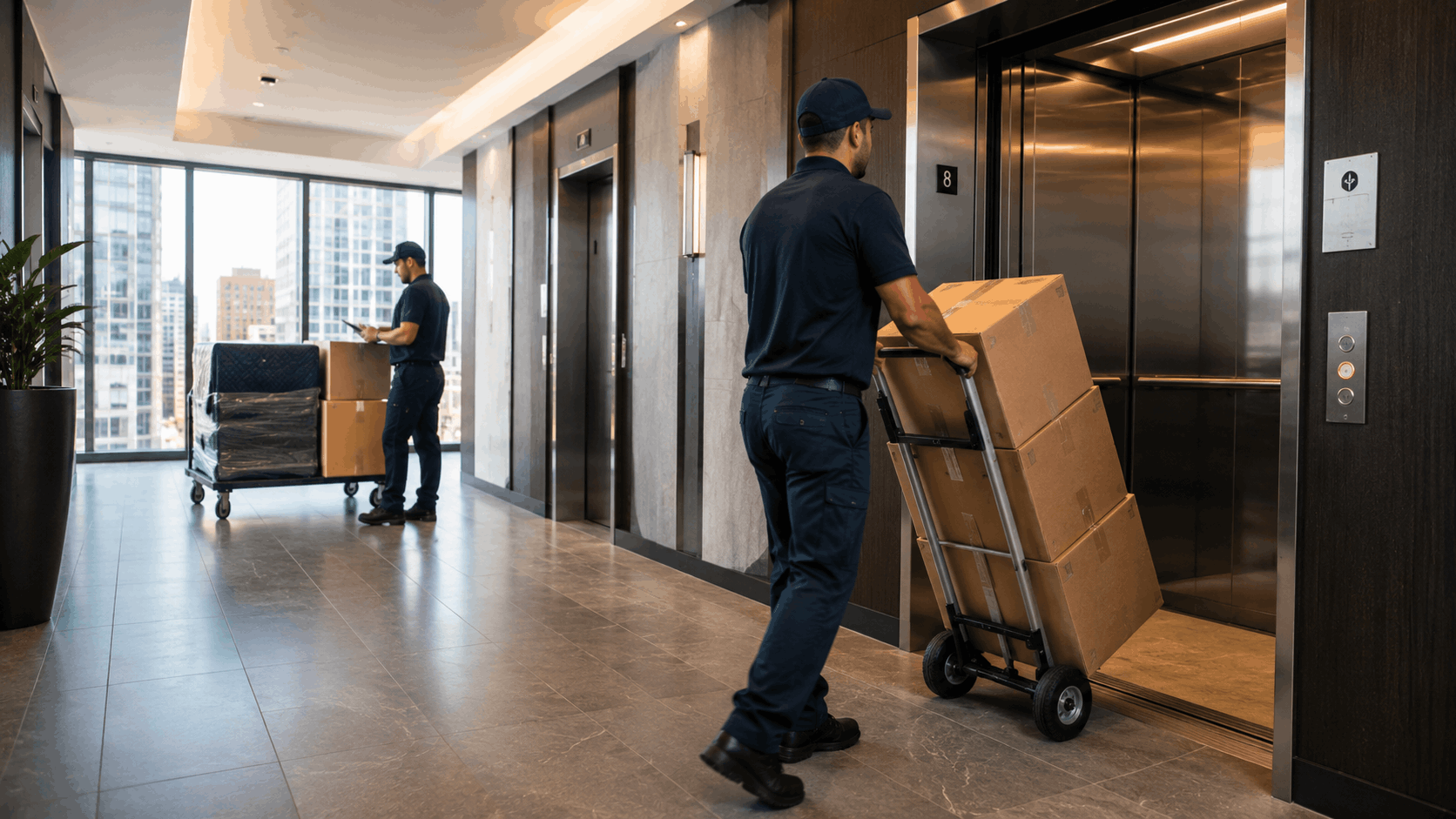
Most buildings require movers to use only the service or freight elevator. The passenger elevator is off-limits for furniture and boxes because it has carpet, mirrors, and finishes that damage easily. The freight elevator is built for heavy loads and rough use.
The freight elevator is also bigger, which matters for large furniture. A standard passenger cab may not fit a sofa or a tall armoire, while the freight car has the height and depth to handle bulky items.
Weight limits come into play with heavy pieces. Freight elevators in DTLA towers often handle 2,500 to 4,000 pounds, but older Historic Core buildings may have lower limits. We check the cab dimensions and weight rating before move day so nothing gets stuck halfway up.
For pianos and other heavy specialty items, the freight elevator rating decides what is possible. Our piano moving crews always confirm the elevator can take the weight before we commit to a route.
How Time Slots and Move Windows Work
Most buildings book the elevator in two to four hour blocks. Your move-in window is the time you have exclusive use of the freight elevator, and the crew has to fit the whole job inside it. Larger homes may need two slots.
Weekday and weekend rules often differ. Many towers allow moves only Monday through Saturday, with no Sunday moves at all. Some restrict moves to business hours so they do not disturb residents in the evening.
Blackout dates are common around holidays and building events. The management office can tell you which dates are closed. Some buildings also hold an elevator deposit, often $500 to $1,000, that you get back if no damage occurs.
We plan the crew size to match your time slot so the job finishes inside the window. Running over your window can shut a move down, which we cover later in this guide.
Booking Around Peak Demand in DTLA
The first of the month is the busiest moving period in Downtown LA. Leases turn over, and everyone wants the same dates. Elevator slots in South Park and the Arts District fill within days of opening.
Weekends bring the same crunch. Saturday is the most requested move day, so those windows go first. If you wait until the last week to book, you may find nothing left at your building.
The fix is to book early and consider a midweek move. A Tuesday or Wednesday move usually has open elevator slots, shorter waits, and sometimes lower demand at the loading dock. Traffic around the building is lighter too.
For loft and creative-space moves in the Arts District, we often steer clients toward weekday dates. The streets are calmer and the buildings less crowded, which keeps the whole move on schedule.
Elevator Padding and Protection Rules
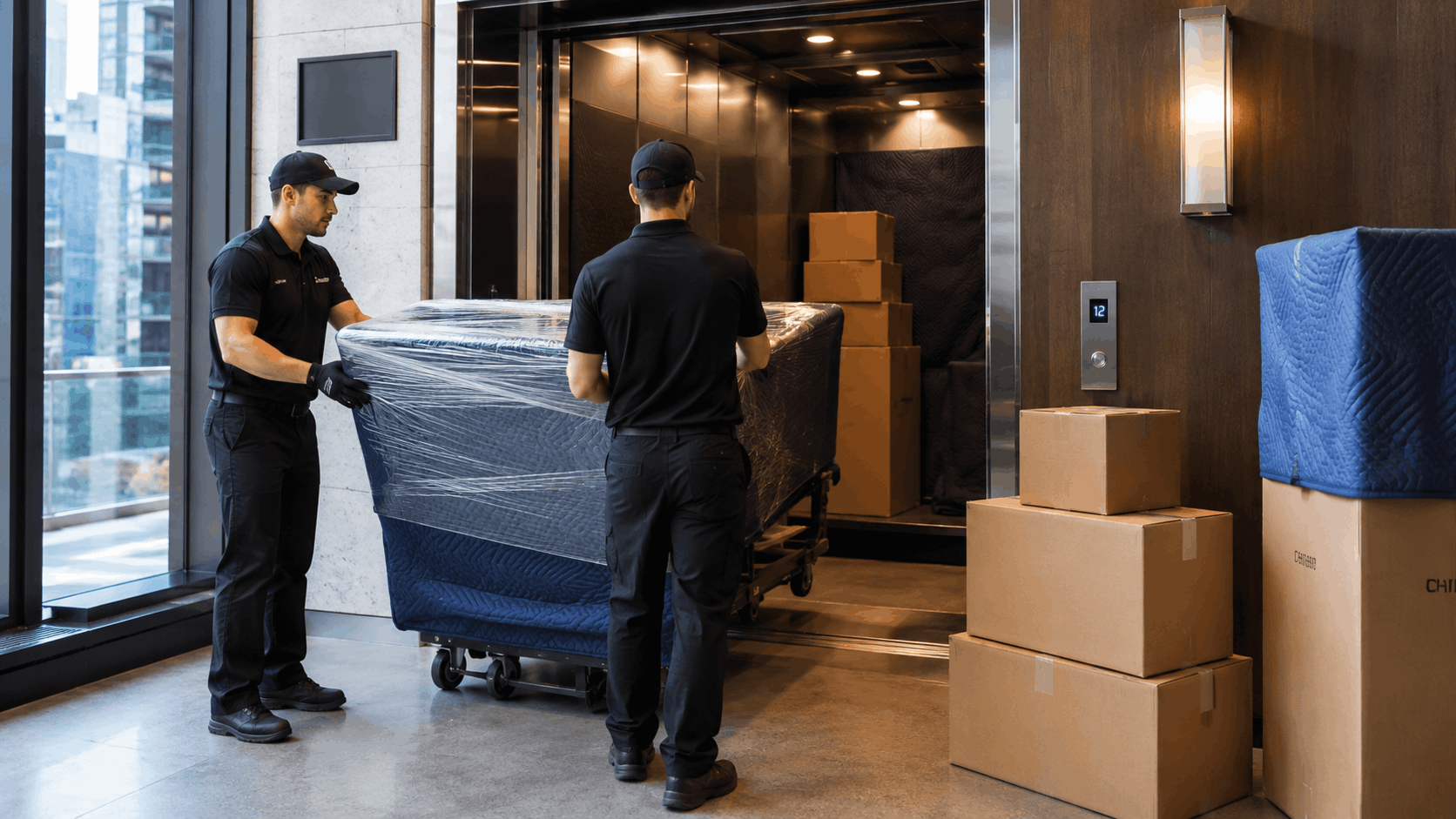
Almost every DTLA tower requires elevator pads before a move begins. These quilted blankets hang inside the cab to protect the walls and doors from scratches and dents. Some buildings install them, while others expect the moving crew to do it.
Floor protection matters just as much. Crews lay down runners or Masonite from the elevator to the unit door so wheels and dollies do not mark the hallway floors. Lobby tile and hardwood are easy to scratch without it.
The point of all this protection is to avoid damage charges against your deposit. If the building inspects after the move and finds a scratched cab or a marked floor, that repair comes out of your held deposit. Pads and runners prevent that.
Our crews carry their own pads and floor protection to every high-rise job. We protect the elevator, the hallways, and the entry so your deposit comes back intact.
Loading Docks and Truck Access in Downtown LA
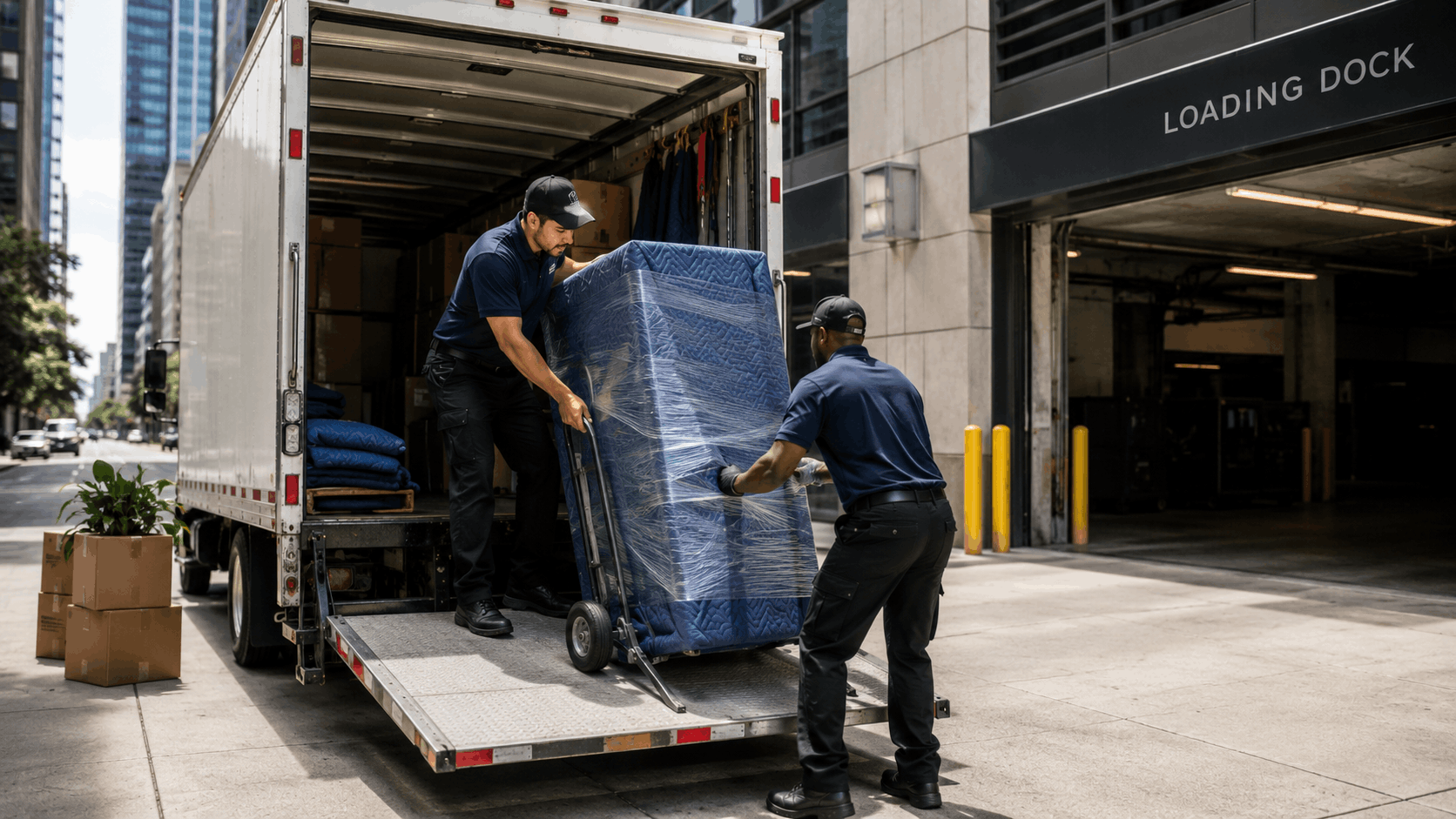
Where the truck parks is one of the trickiest parts of any DTLA move. The streets are narrow, parking is scarce, and many buildings have specific dock rules. Getting furniture from the truck to the elevator can be the hardest leg of the whole job.
Some buildings have a dedicated loading dock. Others have nothing but a metered curb on a busy one-way street. The difference shapes how the move runs and what it costs.
Truck access in DTLA takes planning. A crew that shows up without scouting the dock or parking first can lose an hour just figuring out where to unload.
Loading Dock Height and Clearance Limits
Many DTLA garages and docks have low clearance that blocks standard moving trucks. A typical 26-foot moving truck stands around 12 feet tall, and plenty of downtown garages cap out at 7 to 8 feet. The truck simply will not fit.
Dock clearance signs are easy to miss until it is too late. A driver who pulls into a low ceiling garage risks tearing the top off the box truck. That is a costly mistake and a delayed move.
This is why crews scout ahead. Knowing the truck height against the dock clearance tells us whether we can pull inside or need to stage on the street and shuttle items in with smaller equipment.
For buildings with tight access, we sometimes bring a smaller truck or use a shuttle vehicle to reach the dock. We figure this out during the walkthrough, not on move day.
Street Parking and Loading Zones Near Major Corridors
When a dock is unavailable, crews rely on street parking and loading zones. Streets like Olive Street, Hill, and Flower Street run through the heart of DTLA, and finding a legal spot near your building takes local knowledge. Metered spaces and yellow loading zones each have their own rules.
Loading zone signage spells out the time limits, often 20 to 30 minutes for active loading. A full move needs more than that, so crews work fast and rotate the truck if needed. Meter rules and street cleaning schedules add another layer to watch.
Many DTLA streets are one-way and tight. Backing a large truck onto a corridor like Flower Street during rush hour is not realistic. We time arrivals to avoid the worst traffic and pick the right side of the building for unloading.
Our drivers know which blocks near Olive Street and the surrounding corridors have workable loading zones. That knowledge saves time and avoids parking tickets that would otherwise land on your bill.
When You Need a Permit or Reserved Dock Time
Some moves need a building dock reservation, a city permit, or both. If your building has a shared dock, you reserve a time the same way you book the elevator. Without a dock reservation, you may find another resident's truck already parked there.
On busy blocks near the Financial District, blocking a lane may require a city street permit. The Los Angeles Department of Transportation issues these, and they take a few days to process. You can review the city's parking and permit rules through the LADOT website.
Figuring out who arranges what can be confusing. The dock reservation usually goes through building management, while the street permit is on the resident or the mover. We handle the dock booking and advise clients when a city permit makes sense.
Planning these ahead avoids a scramble on move day. A reserved dock and a clear parking plan mean the crew unloads without circling the block looking for space.
Long Carries and Why They Affect Your Quote
A long carry is the extra distance crews walk from the truck to the elevator. In some DTLA buildings, the loading dock sits far from the residential elevators, or the only parking is half a block away. Every extra foot adds time.
That distance shows up in your moving quote. More carry distance means more labor hours, and labor is the biggest cost in any move. A short carry from a dock next to the elevator is cheap, while a long haul from a street spot is not.
Some buildings are notorious for it. A few South Park towers have docks on a lower level connected by long corridors to the freight elevator, turning a simple move into a marathon. We measure these routes during the walkthrough.
Knowing the carry distance upfront keeps your quote accurate. We would rather tell you the real number ahead of time than surprise you with extra hours after the move starts.
Need Help in Los Angeles?
Popeye Moving & Storage serves Los Angeles and all of Los Angeles County.
Coordinating With Building Management Before Move Day
The smoothest moves come down to good coordination with building management. The concierge, the property manager, and the front desk all play a part in clearing your move. Talking to them early prevents surprises.
Keeping all the paperwork and confirmations in one place makes move day easy. When the crew arrives and everything is already approved, the move flows. Here is how to handle that coordination.
- Start early. Reach out to management three to four weeks before your date.
- Keep records. Save every email and approval in one folder.
- Confirm everything. Do not rely on a verbal okay from the front desk.
Who to Contact and What They Need From You
The first contact is usually the building's HOA office or property manager. For condos, the HOA handles move policies and deposits. For rental towers, the property manager or leasing office sets the rules.
The front desk or concierge is your day-of contact. They check you in, confirm the elevator hold, and direct the crew. Get the name and number of whoever manages moves so you can reach them quickly.
Buildings typically ask for a few things from you:
- A completed move form with your date and time slot
- A refundable deposit, often $500 to $1,000
- A government photo ID for the crew or yourself at check-in
- The approved certificate of insurance on file
Having all of this ready before move day means the front desk clears your crew in minutes instead of hours.
Confirming Rules in Writing
Always get the important details in writing. Ask management to confirm your elevator times, dock access, and COI approval by email. A written record protects you if staff change or someone forgets a verbal agreement.
Email is the simplest way to do this. Send a short message that lists your move date, the reserved elevator window, the dock arrangement, and a request to confirm the COI is approved. Ask them to reply confirming each point.
This email record becomes your proof on move day. If a new front desk attendant questions your reservation, you can show the move approval right there. It settles disputes fast.
We ask our clients to forward us these confirmations too. That way our crew arrives knowing exactly what the building approved and can point to it if anything comes up.
Day-of Check-In and Move Coordination
On move day, the first step is the security check-in at the front desk or dock entrance. The crew presents ID, confirms the move approval, and signs in. Most buildings log every worker who enters.
Next comes the route walk. The crew and a building staff member walk from the dock to the elevator to the unit, confirming the elevator hold and noting where pads and floor protection go. This catches any access issues before the heavy lifting starts.
Confirming the elevator hold matters because a missed hold means sharing the lift or waiting. The crew lead checks that the freight elevator is reserved and keyed for the move window. Crew coordination at this stage sets the pace for the whole day.
Our crews handle this check-in routine on every DTLA high-rise job. We arrive early, sign in, walk the route, and confirm the hold so the lifting starts on time and stays on schedule.
Common Mistakes That Delay or Cancel High-Rise Moves
Most high-rise move problems trace back to a handful of avoidable mistakes. Residents who learn from others' errors save themselves a denied move and extra fees. Here are the slip-ups we see most often.
Submitting the COI Too Late
A late COI is the number one reason moves get denied. Residents assume they can send the certificate the day before, but management needs an approval window to review it. That review can take two to three business days.
If the COI lands in the management inbox the morning of the move, it will not be processed in time. The front desk has no approval on file, and the move stops. The crew waits or leaves.
A safe lead time is five to seven days before move day. That gives management room to review, request corrections if needed, and send back written approval. Building in this buffer removes the biggest risk to your date.
We submit COIs well ahead of the move date for our clients. If the building wants a change to the certificate, there is time to fix it before move day arrives.
Missing the Elevator Window
The elevator window is a hard stop. If your move runs past the reserved time, the next resident may have the slot booked, and your crew has to pause. A move can grind to a halt with half the furniture still on the truck.
This happens when residents underestimate how long a move takes or book too short a window. A two-hour slot does not fit a three-bedroom move. The time overrun then collides with the next reservation.
The fix is a scheduling buffer. Book a window longer than you think you need, and bring enough crew to finish well inside it. A larger crew costs a bit more per hour but finishes faster, which keeps you on time.
We size our crews to the home and the time slot so the job completes within the window. Finishing on schedule is part of how we keep deposits and reservations safe.
Underestimating Parking and Dock Access
Some residents book a move without checking whether the truck can even reach the building. Then the truck shows up and cannot fit the garage or find legal parking on a packed DTLA block. The whole move stalls.
This parking problem is common near busy corridors where loading zones are scarce. A driver circling for a spot wastes time, and that time is on the clock. Tickets and towing add insult to injury.
A pre-move site check prevents all of it. We scout the truck access, the dock clearance, and the parking situation before the move date. If the standard truck will not fit, we plan a smaller vehicle or a shuttle ahead of time.
For commercial moves into office towers downtown, this site check matters even more because the loads are bigger and the access tighter. Either way, scouting first saves the day.
Hiring Movers Without High-Rise Experience
A crew new to DTLA towers stumbles on the paperwork and logistics. They may not know how to fill out a building move form, what a proper COI looks like, or how to reserve an elevator. Small mistakes pile up into a denied move.
Experienced movers know the rhythm of these buildings. They have the COI process down, they know which elevator each tower uses for moves, and they have unloaded on every tight street in the area. That knowledge keeps moves on track.
Local experience also means knowing the buildings by name. A crew that has worked the South Park towers or the Historic Core lofts knows the quirks of each one before they arrive. That familiarity is hard to fake.
Our team has run high-rise moves across Downtown LA for years. We know the buildings, the staff, and the rules, which is the difference between a smooth move and a wasted day.

Need Help in Los Angeles?
Popeye Moving & Storage serves Los Angeles and all of Los Angeles County.
How Popeye Moving & Storage Co. Handles DTLA High-Rise Moves
A local LA crew that knows these towers manages the whole process for you. From the certificate of insurance to the loading dock logistics, our high-rise moving service takes the paperwork and planning off your plate.
We work in Downtown LA every week, so the buildings, the streets, and the rules are familiar ground. Here is how our team handles a DTLA high-rise move from start to finish.
Handling COI and Building Paperwork for Clients
Our office prepares and submits the certificate of insurance for every high-rise client. We collect the building's exact requirements, including the additional insured wording and coverage limits, and order a COI that matches.
COI preparation is detail work. A single wrong name or a low limit gets the certificate rejected, so we check every field against the building's rules before submitting. We send it to the management office and track the approval.
We also handle the rest of the building paperwork. Move forms, deposit instructions, and any extra documents the property requires all get coordinated with the management office. You sign what you need to and we manage the back-and-forth.
By the time move day arrives, all the insurance documents are approved and on file. You do not have to chase the property manager or worry about a missing form at the front desk.
Pre-Move Building Walkthroughs
Before move day, we scout the building. The walkthrough covers the elevator size and weight rating, the loading dock clearance, and the carry route from the truck to the unit. We note every obstacle ahead of time.
This site survey tells us what equipment to bring. If the dock has low clearance, we plan a smaller truck. If the carry is long, we add crew. Route planning during the walkthrough means no surprises when the truck shows up.
The walkthrough also confirms the building's specific move rules. We verify the elevator window, the protection requirements, and the check-in process so the crew arrives ready. Nothing gets discovered for the first time on move day.
For larger jobs and storage needs, this planning step keeps the whole project organized. The more we know before move day, the smoother the day runs.
Local Knowledge of Downtown Streets and Buildings
Years of working Downtown LA gave our drivers a feel for the streets. We know the one-ways, the loading zones, and the traffic patterns along Grand Avenue, Spring Street, and through the Historic Core. That knowledge saves time on every move.
Each corridor has its own quirks. Grand Avenue near Bunker Hill runs busy with Music Center traffic, while Spring Street's older buildings have narrow access. We plan arrivals and parking around these realities.
Knowing the buildings by name matters too. We have moved residents into towers across South Park, the Financial District, and the Arts District, so the staff and procedures are familiar. That cuts down on day-of confusion.
When you need movers in Los Angeles who actually know Downtown, local experience is what keeps the move on schedule. We have driven these streets enough to plan around the traffic and parking before it becomes a problem.
Protecting Floors, Walls, and Elevators
Damage fees come out of your deposit, so we protect every surface. Our crews lay floor protection like runners and Masonite from the entry through the hallways. The lobby tile and unit floors stay clean and unscratched.
Wall protection goes up in tight corners and doorways where furniture corners can gouge. We pad the elevator cab with quilted blankets and cover the door frames where the building requires it. These steps prevent the marks that trigger charges.
Damage prevention is part of every high-rise job we run. The pads, runners, and careful handling protect the building, which protects your deposit. A clean post-move inspection is the goal.
Whether it is a studio loft or a full-floor penthouse, the protection routine stays the same. We treat the building's shared spaces like they were our own, because that is what keeps everyone's costs down.
Final Thoughts
A Downtown LA high-rise move runs on three things: an approved certificate of insurance, a reserved service elevator, and a workable loading dock plan. Get those right, and move day goes smoothly. Miss any one, and you risk being turned away at the door.
The buildings near South Park, Bunker Hill, and the Historic Core each have their own rules, but the prep is the same. Start early, file the paperwork, book the elevator, and confirm everything in writing. A little planning saves a lot of headache.
You can find more moving guides on our blog as you plan your move.
Frequently Asked Questions
- What is a COI and why does my DTLA building require one?
- A certificate of insurance, or COI, is a one-page document proving your moving company carries active coverage. It shows the building that the mover has general liability and workers comp insurance. The COI protects the building from claims if a crew damages shared property or a worker gets hurt. Nearly every Downtown LA tower requires an approved COI on file before letting any crew start a move.
- How much insurance coverage do high-rise buildings usually ask for?
- Most DTLA buildings require $1 million to $2 million in general liability coverage. They also want to be listed as an additional insured, meaning the building owner and management company are named on the certificate. Higher-end towers off Figueroa Street and around Bunker Hill sometimes ask for more, including umbrella coverage. The coverage limits and named parties have to match the building's exact requirements or the COI gets rejected.
- How far in advance should I reserve the service elevator?
- Book your service elevator two to three weeks ahead of move day. First-of-month and weekend slots fill quickly across South Park and the Arts District, so the earlier you reserve, the better your options. Most buildings book the freight elevator in two to four hour blocks. If you wait until the last week, you may find no open windows left at your building for the date you want.
- Can a standard moving truck fit in DTLA parking garages?
- Often not. Many Downtown LA garages have low clearance under 12 feet, while a standard 26-foot moving truck stands around 12 feet tall. Pulling into a low garage risks damaging the truck. That is why our crews scout the garage height and dock clearance ahead of time. When a standard truck will not fit, we use street loading zones or bring a smaller shuttle vehicle.
- Do I need a permit to park the moving truck on the street?
- Sometimes. On busy blocks near the Financial District, blocking a lane or reserving curb space may require a city street permit from LADOT. These permits take a few days to process. Some buildings also require a reserved loading zone or dock time arranged through management. We advise clients when a permit makes sense and handle the dock reservation so the truck has a legal place to unload.
- What is a long carry and how does it affect cost?
- A long carry is the extra distance crews walk from the truck to the building elevator. Some DTLA buildings have docks far from the residential floors or only allow parking half a block away. That distance adds labor time, and since labor is the biggest part of a moving cost, it raises the quote. We measure the carry distance during the walkthrough so your estimate is accurate.
- What happens if my move runs past the reserved elevator window?
- If your move runs past the reserved window, the next resident may have the elevator booked, forcing your crew to pause. A move can stop with furniture still on the truck. To avoid a time overrun, we book a buffer into the elevator window and size the crew so the job finishes inside the reserved slot. Planning enough time keeps the move from stalling.
- Can Popeye Moving handle the building paperwork for me?
- Yes. Our office prepares the certificate of insurance to match your building's exact requirements and submits it to the management office. We coordinate the move forms, deposits, and approvals so everything is on file before move day. Handling the building paperwork is part of our high-rise service, and it means you avoid the surprise of a missing document at the front desk.
- Do buildings require elevator pads and floor protection?
- Most DTLA towers require elevator pads and floor protection during a move. Pads are quilted blankets hung inside the elevator cab to protect the walls, and runners cover the hallway and lobby floors. Some buildings install pads themselves, while others expect the crew to do it. Our crews bring their own pads and runners to every job, protecting the building and keeping your deposit safe from damage charges.
- What days are best for moving into a Downtown LA high-rise?
- Midweek days like Tuesday and Wednesday are best. Weekends and the first of the month bring the heaviest demand, so elevator slots and loading docks fill fast across South Park and the Arts District. A weekday move usually has more open elevator windows, lighter street traffic, and shorter waits at the dock. If your schedule allows, avoid Saturdays and the start of the month. Ready to plan your Downtown LA high-rise move? Our team handles the COI, the elevator reservation, and the dock logistics so you do not have to. Contact Popeye Moving & Storage Co. today for a consultation and a clear quote that fits your building.
P
Popeye Moving & Storage Co. Team Team
Licensed moving and storage professionals serving Los Angeles and Los Angeles County.
Licensed in California · License #CAL T 189749 | USDOT 1472924 | MC 498816C
Why trust Popeye Moving & Storage?
Founded in 1994, Popeye Moving & Storage is a licensed and insured moving and storage service serving Los Angeles and Los Angeles County. All content is reviewed by our licensed technicians.

Need Help in Los Angeles?
Popeye Moving & Storage serves Los Angeles and all of Los Angeles County.
Related Articles
How-To Guides
Beverly Hills Moving Permits and Restrictions: What You Need Before Moving Day
Beverly Hills moving permits, time restrictions, and street-by-street rules explained - what you need before moving day to avoid fines, towing, and delays.
Tips & Advice
Moving Into a Downtown LA High-Rise: Building Rules, Elevators, and Logistics
Moving into a Downtown Los Angeles high-rise? Elevator blocks, COI, loading docks, and move-in fees—here's what to expect and how to plan your DTLA move.
How-To Guides
Moving to Santa Monica: Parking Rules, Street Restrictions, and Building Access
Everything new Santa Monica residents need to know about permit parking zones, moving truck restrictions, building elevator rules, and city permits before moving day.