How-To Guides
Preparing Furniture for Months in Storage: Wrapping, Moisture, and Pest Prevention Done Professionally
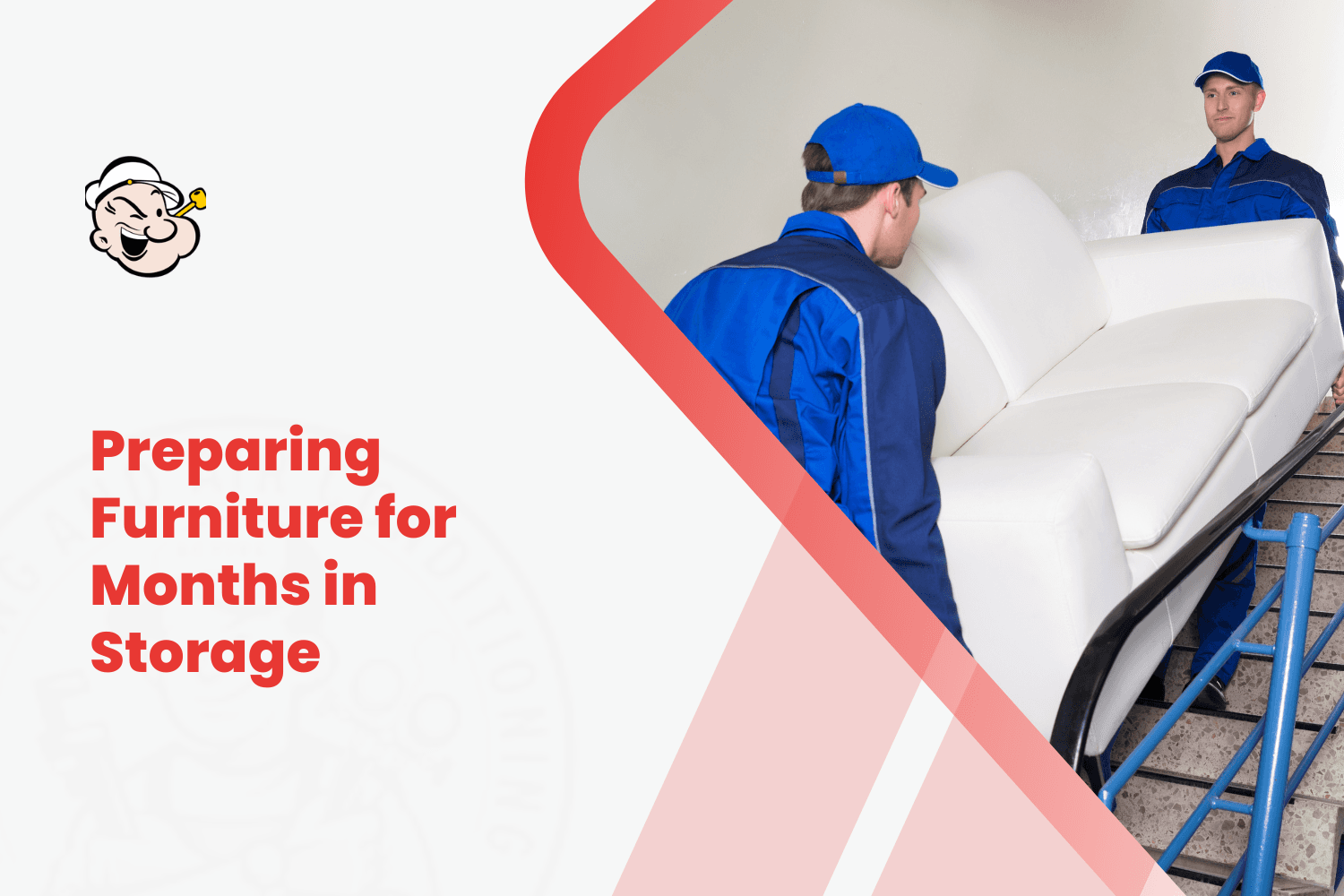
Key Takeaways
- Furniture stored for months faces slow threats like warping, mold, dried leather, and pests that short moves never see.
- LA climate varies - coastal humidity near Santa Monica breeds mold while dry Valley heat cracks wood and leather.
- Clean and fully dry every piece before wrapping, since leftover residue and moisture feed both mold and pests.
- Never seal bare wood or fabric in tight plastic - use breathable covers, blankets, and paper in layers instead.
- Control moisture with climate-controlled units for valuable pieces, silica gel absorbers, pallets, and airflow spacing.
- Deep cleaning removes the food source for moths and rodents, while cedar blocks and traps deter pests safely.
- Load units with heavy pieces on the bottom, aisles for airflow and access, and weight kept off legs and joints.
- Popeye Moving & Storage Co. offers full-service prep, wrapping, and storage across LA from Silver Lake to the Westside.
In This Article
A remodel on a Craftsman bungalow near Silver Lake sounds exciting until the contractor says the whole house needs to be cleared out for four months. Suddenly a family is staring at a dining set that belonged to grandma, a leather sectional, and a solid oak bed frame, wondering where all of it goes and whether it will survive the wait.
That scenario plays out across Los Angeles every week. A move overseas, a home sale that closes before the next place is ready, or a kitchen gut job that stretches from weeks into months. The furniture has to go somewhere, and how it gets prepped decides whether it comes back looking the same or comes back warped, moldy, and chewed.
Why Long-Term Furniture Storage Needs More Than a Blanket and a Box?
A weekend move and a six-month stay are two different jobs. On a short trip, furniture only has to survive a truck ride and a couple of days sitting still. Over months, the same piece sits in changing air, shifting temperatures, and quiet corners where pests and mold get comfortable.
Long-term furniture storage asks the piece to hold up against slow, steady threats instead of one quick bump. Furniture protection over that stretch means thinking about air, humidity, and time - not just padding against scratches. Storage damage that takes months to form is often worse and costs more to fix than a dented corner from moving day.
- Wood keeps reacting to moisture in the air long after it stops moving
- Fabric traps humidity and grows mold in dark, still spaces
- Small pests turn into full infestations when nobody checks for weeks
- Weight resting on the same joint for months causes permanent stress
What Happens to Furniture Over Three, Six, or Twelve Months
Wood is the first thing to change. A table stored in air that swings between damp and dry starts to swell and shrink, and over three to six months that movement shows up as wood warping. A tabletop that was flat can develop a gentle bow, and drawers that once slid smoothly begin to stick and bind.
Finishes crack next. Lacquer and varnish need a little moisture in the wood to stay flexible, and when the air pulls that moisture out, the surface dries and splits into fine lines. On antiques with older shellac finishes, this happens faster because the coating is already brittle from age.
Upholstery has its own timeline. Fabric and foam hold onto humidity, and in a closed unit that trapped moisture feeds upholstery mold within weeks. Sunlight leaks through some units and fades one side of a sofa, while the hidden side stays dark, leaving a two-tone piece that looks ruined.
Leather dries and cracks along the seat and armrests where the hide flexes most. By month six, a sectional that went in soft and supple can come out stiff with hairline splits that no conditioner fully repairs.
How LA Coastal Air and Valley Heat Affect Stored Pieces
Los Angeles is not one climate, it is several. Furniture stored near Santa Monica, Venice, or Marina del Rey sits in coastal humidity that rolls in off the water most mornings. That damp marine layer works its way into fabric and raw wood, and pieces stored close to the beach need more moisture defense than most owners expect.
Drive inland toward Sherman Oaks or Van Nuys and the problem flips. San Fernando Valley heat can push a non-cooled storage unit past 100 degrees on a summer afternoon, and that dry heat bakes the moisture right out of wood and leather.
Both extremes damage furniture, just in opposite ways. The coast grows mold and swells joints, while the Valley dries finishes and cracks glue seams. A family moving from a beach condo to a Valley remodel might not realize their prep needs to guard against both.
Our team looks at where a unit sits before deciding on materials. A piece headed for storage near the water gets more airflow and moisture absorbers, while a Valley-bound antique may push us toward climate-controlled storage options to hold a steady temperature.
The Real Cost of Skipping Proper Preparation
Skipping prep feels cheaper until the unit door opens. Refinishing a warped or cracked wood table runs 300 to 900 dollars, and that assumes the piece can be saved at all. A badly bowed tabletop sometimes cannot be flattened, which turns a repair into a replacement.
Upholstered pieces get expensive fast. Professional mold remediation on a sofa costs 200 to 600 dollars, and if the foam is soaked through, the whole cushion set needs replacing. A mid-range sectional runs 1,500 to 4,000 dollars to replace, so the furniture repair cost of prevention is small next to the loss.
Antiques carry the biggest replacement value gap. A family heirloom dresser has no exact replacement, so once it warps or cracks the sentimental loss is total. Restoration on antiques starts around 500 dollars and climbs into the thousands for serious damage.
Good prep costs a fraction of any of these numbers. A few hours of cleaning, wrapping, and moisture control protects pieces worth far more than the labor and materials involved.
Get Your Free Quote
Tell us about your move and we'll get back to you fast.
Cleaning and Prepping Furniture Before It Goes Into Storage
Every piece that goes into long-term storage should go in clean. Dirt, oils, and food residue do not just sit there - they feed mold and draw pests over the months a piece sits still. A little cleaning up front stops most of the damage that shows up later.
Storage prep is where the whole job succeeds or fails. Furniture cleaning removes the food source for bugs and the moisture that mold loves, and a simple furniture prep checklist keeps the whole process organized so nothing gets missed.
- Wipe every surface and let it dry fully before wrapping
- Vacuum upholstery seams and under cushions
- Empty drawers and cabinets completely
- Label hardware bags and tape them to the piece they belong to
Cleaning Wood, Leather, and Upholstery the Right Way
Each material needs its own approach. Wood cleaning starts with a slightly damp cloth and a mild wood-safe cleaner, never a soaking wet rag that pushes water into the grain. After wiping, the piece has to dry completely, because sealing damp wood inside a cover invites mold and swelling.
Leather asks for gentler handling. A soft cloth and a cleaner made for leather lift dirt without stripping the finish, and once dry the hide is ready for conditioning. Leather conditioning before storage keeps the material from drying out and cracking over the months ahead, which matters most on seats and armrests.
Upholstery needs a deep vacuum and spot treatment on any stains. Food and drink spills left in fabric turn into odors and pest bait, and leftover residue on any surface is exactly what draws moths, silverfish, and rodents.
The rule across all three materials is the same: clean it, then dry it fully. A rushed job that traps even a little moisture undoes everything else the storage prep is meant to protect.
Disassembling Beds, Tables, and Shelving Safely
Big pieces store better in parts. Furniture disassembly takes bed frames, tables, and shelving down to flat components that stack tight and take stress off the joints. A fully assembled bookshelf leaning in a unit for months can rack and loosen at every joint, while the same shelf broken down lies flat and safe.
Taking legs off tables is one of the highest-value moves. Table legs are the first thing to snap when something shifts, and a bare tabletop wrapped and stood on edge takes far less space and risk. The same goes for bed rails and headboards that store flat against a wall.
Hardware labeling is the step people skip and regret. Every screw, bolt, and bracket goes into a labeled bag, and that bag gets taped to the underside of the piece it came from. Four months later, nobody is hunting for the right bolts to rebuild a bed at 9 p.m.
Our crews photograph each piece before taking it apart. Those photos become the reassembly guide, so when the remodel wraps up the furniture goes back together the way it started.
Treating and Conditioning Surfaces to Prevent Cracking
Clean surfaces need one more layer of defense before wrapping. A coat of quality wood wax on tables, dressers, and chairs seals the finish and slows the moisture loss that causes cracking. The wax acts like a raincoat, holding the wood steady through humidity swings.
Leather gets the same treatment with a proper conditioner. Surface conditioning replaces the natural oils that keep leather flexible, and a treated hide resists the dry cracking that ruins stored sectionals and armchairs. This step matters most for Valley-bound pieces facing dry heat.
Timing counts here. Wax and conditioner both need time to soak in and dry before anything covers the piece, usually a few hours to overnight. Wrapping a freshly waxed surface too soon traps the product and can leave a cloudy haze.
Done right, this small step buys big protection. A conditioned antique that would have cracked in month three comes out of a twelve-month stay looking almost untouched.
Need Help in Los Angeles?
Popeye Moving & Storage serves Los Angeles and all of Los Angeles County.
Professional Wrapping Techniques That Actually Protect
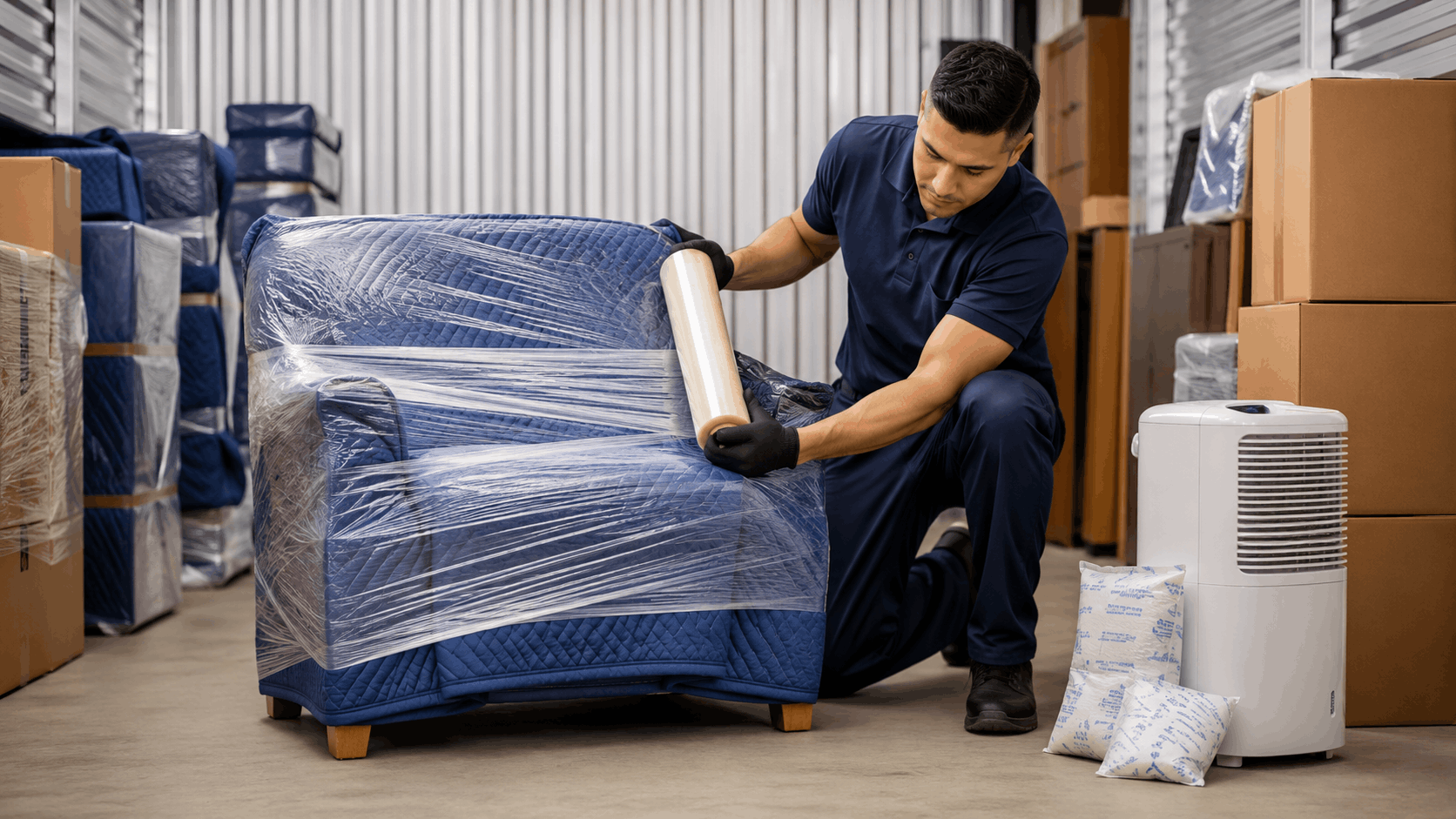
Wrapping looks simple until you see what bad wrapping does. Plastic pulled tight over bare wood, a blanket that slips off in the truck, tape stuck straight to a finish - these mistakes cause the exact damage wrapping is supposed to prevent. Professional furniture wrapping is a layered system, not a quick tarp.
The goal is to guard against scratches and dents while letting the piece breathe. Moving blankets, paper, and the careful use of shrink wrap each play a part, and knowing which to use where is what separates a safe piece from a ruined one.
Choosing the Right Materials: Blankets, Paper, and Bubble Wrap
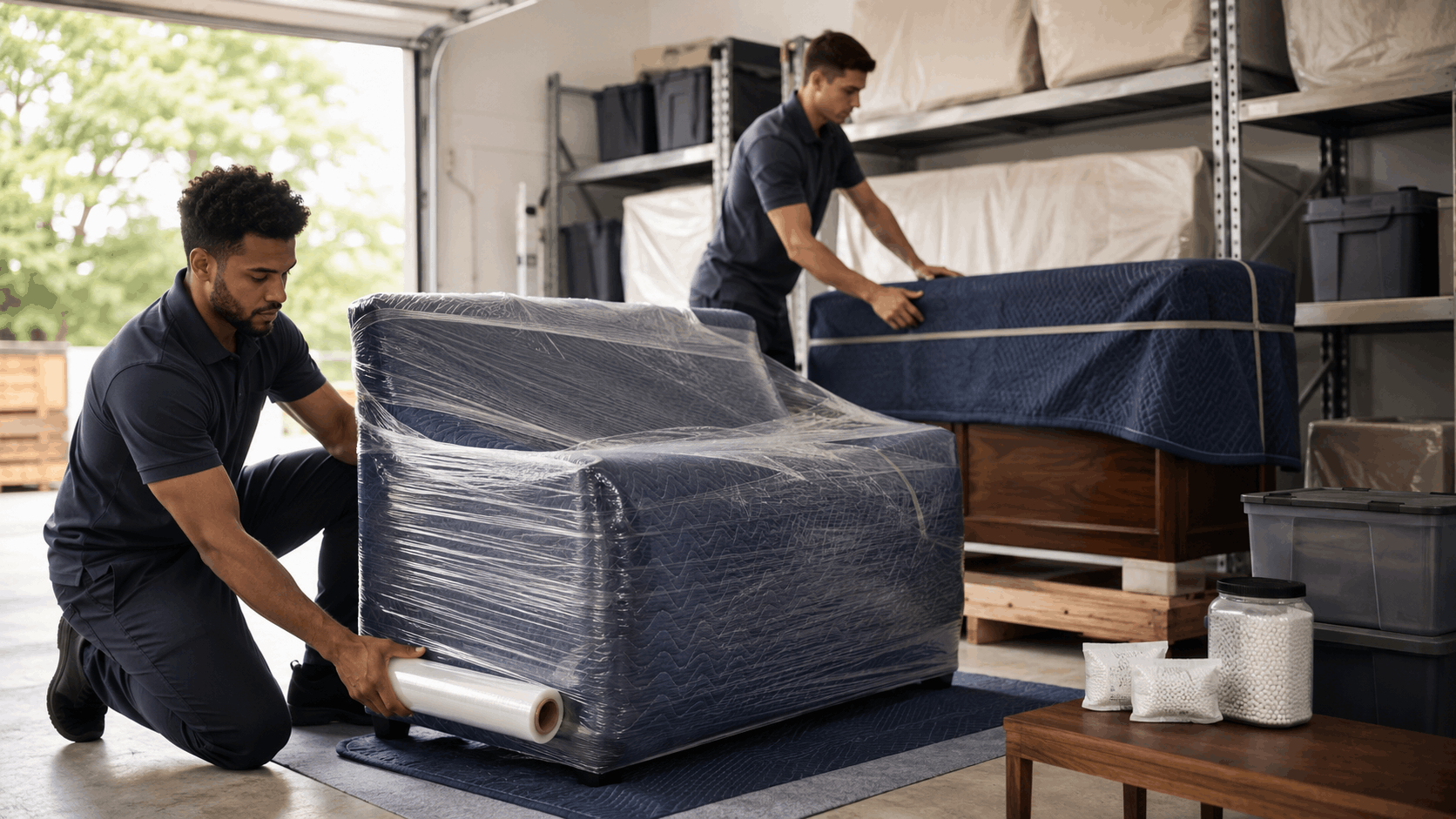
Furniture pads are the workhorse. These thick moving blankets cushion edges and surfaces against knocks, and they breathe, so no moisture gets trapped against the piece. For wood and upholstered furniture, pads are almost always the first layer.
Packing paper handles the softer touch. Clean packing paper wraps around delicate hardware, fills gaps, and protects finished surfaces from rubbing. Unlike newsprint, it leaves no ink behind to stain, which matters on light wood and pale fabric.
Bubble wrap earns its place on the truly fragile. It cushions glass, ceramic accents, and carved details that a flat blanket cannot cradle. The trick is using bubble wrap on the fragile parts only, not shrink-wrapping an entire wood dresser in plastic.
Our team keeps all three on the truck and matches the material to the piece. A carved Victorian side table might get paper on the details, pads on the body, and bubble wrap around the legs, all in one wrap job. This kind of professional packing and crating is what keeps pieces intact over long stays.
Why Plastic Shrink Wrap Can Trap Moisture and Ruin Wood
Shrink wrap is a great tool used wrong all the time. Wrapped tight and direct against wood, plastic seals in whatever moisture is in the air that day. Over months, that trapped humidity has nowhere to go, so it condenses against the finish and breeds mold and white haze.
These shrink wrap mistakes hit solid wood the hardest. A dining table sealed in plastic for six months can come out with a cloudy, moldy finish that needs full refinishing. The plastic that was meant to protect it did the damage.
The fix is breathable covers. We wrap wood in furniture pads or cloth covers that let air move while still blocking dust and scratches. If plastic is used at all, it goes over the pad, never straight on the wood, and never fully sealed on a long-term piece.
Upholstery follows the same logic. Fabric needs to breathe even more than wood, so covered but ventilated is the rule for any sofa or mattress facing months in a unit.
Wrapping Glass, Mirrors, and Fragile Sections
Glass and mirrors demand their own routine. Glass protection starts with a layer of paper, then bubble wrap, then a rigid mirror box or custom crate so nothing can flex or crack the pane. A glass tabletop laid flat in a stack is asking to shatter.
Mirror packing means standing the piece upright, never flat, once it is boxed. Pressure on a flat mirror over months causes stress cracks even without a drop. We mark every glass box clearly so it never ends up on the bottom of a stack.
Painters tape gets used to make an X across large panes. If the glass does take a hit, the tape holds the pieces together and keeps a crack from spreading into a full break.
These fragile sections are where custom crating earns its cost. For a large mirror or a signature glass piece, a built-to-fit wood crate is the only thing that guarantees it survives handling and long storage.
Corner Guards and Padding for Antiques and Heirlooms
Valuable pieces get extra armor. Corner guards - foam or cardboard sleeves that slip over exposed corners - take the hit that would otherwise dent a delicate edge. On antiques, one bumped corner can knock hundreds off the value.
Antique protection often means building a box around the piece. For heirloom dressers, carved chairs, and delicate case pieces, custom crating wraps the whole item in a rigid shell that shrugs off stacking pressure and stray forklifts.
Padding goes on thick for these items. Multiple blanket layers, extra corner guards, and paper on every carved detail add up to a piece that can sit for a year without a mark. Nothing about protecting an heirloom should be rushed.
Families with true antiques often lean on our specialty moving team for the wrap and crate work. When a piece cannot be replaced, the extra padding and a crate are cheap insurance against a loss with no price tag.
Controlling Moisture So Mold and Mildew Never Get a Chance
Moisture is the quiet killer in Los Angeles storage. It does not announce itself - it just settles into fabric and wood and grows into mold before anyone opens the door. Winning the moisture fight means planning for it before the unit is sealed.
Good moisture control combines the right unit, the right absorbers, and the right airflow. Mold prevention is not one product, it is a system, and climate controlled storage is one part of it for the pieces that truly need it.
Climate-Controlled Units vs. Standard Storage in Los Angeles
Not every piece needs climate control, but some really do. Climate controlled storage holds a steady temperature and humidity, usually between 55 and 80 degrees with managed moisture. That stability is what protects wood, leather, and antiques from the swings that cause warping and cracking.
Standard units cost less and work fine for some furniture. Metal patio sets, plastic pieces, and sturdy hardwood in good shape can handle a standard unit if they are wrapped and raised off the floor. The savings are real for the right items.
The dividing line is material and value. Solid wood antiques, leather, upholstered pieces, and anything irreplaceable belong in temperature control, especially near the humid coast or in the baking Valley. A 500-dollar table might ride out a standard unit, but a 5,000-dollar heirloom should not.
Our team helps each family weigh the choice. We look at what the pieces are made of, how long they will sit, and where the unit is, then match them to the right level of protection instead of overselling climate control for everything.
Using Desiccants, Moisture Absorbers, and Silica Gel
Absorbers are the cheap insurance inside every unit. Silica gel packs and larger moisture absorbers pull dampness out of the air before it can settle on furniture. We tuck them into drawers, cabinets, and inside covers where still air likes to collect.
Placement makes the difference. A moisture absorber sitting in the open does less than one placed inside a closed dresser drawer or under a fabric cover where humidity concentrates. We think about where the damp will hide and put the absorber there.
These products have a lifespan. Silica gel and disposable absorbers fill up over months and stop working once saturated, so on a long-term stay they need replacing. That is one reason a periodic check-in on stored furniture matters.
For a coastal unit near Marina del Rey or Venice, we use more absorbers and check them sooner. The marine layer keeps pushing moisture in, so the defense has to keep pace with it.
Raising Furniture Off the Floor and Allowing Airflow
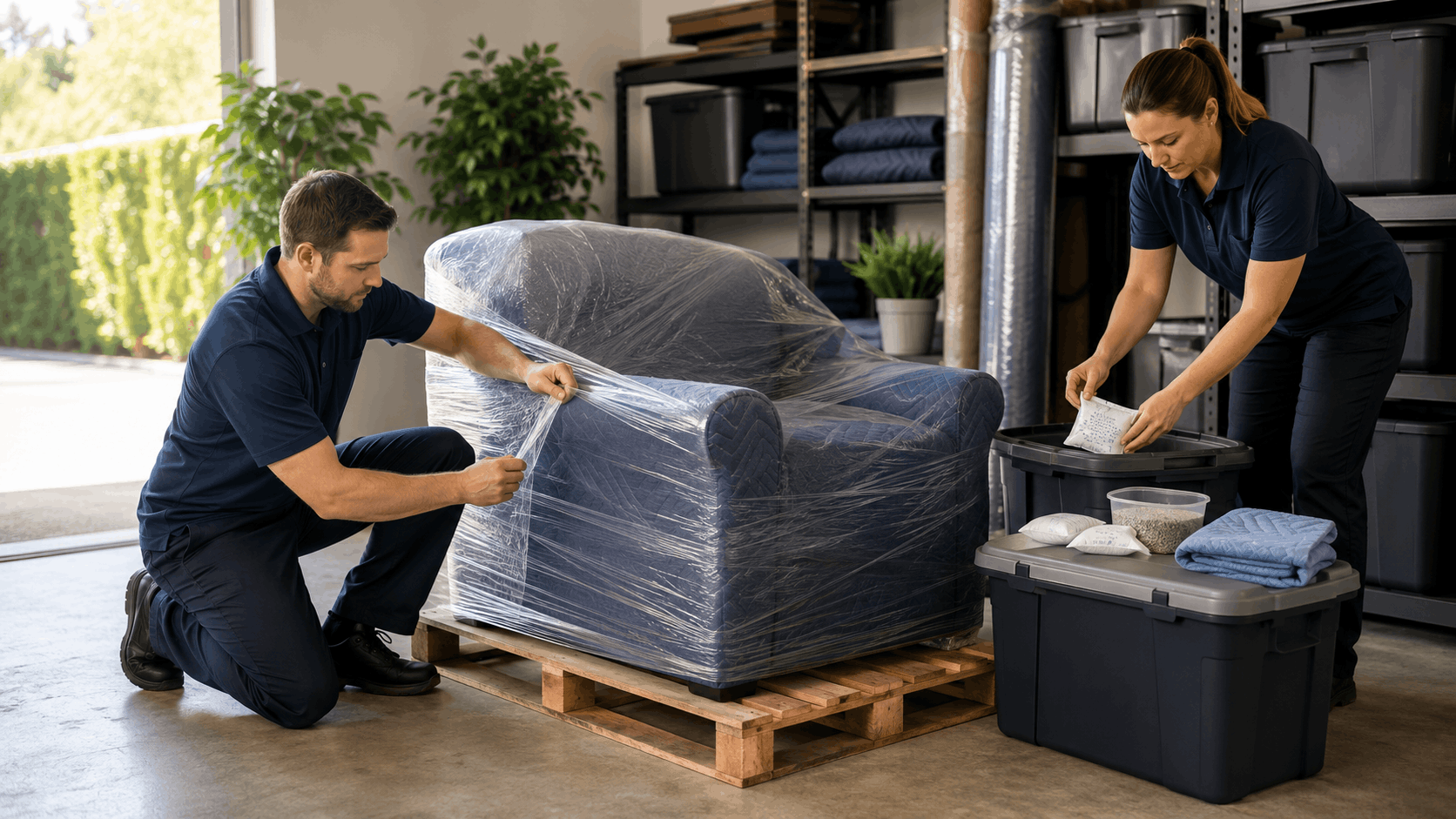
Concrete floors sweat. Cold slabs pull condensation, and any piece sitting flat on the floor wicks that moisture straight up into its legs and base. Setting furniture on pallets or boards lifts it into drier air and breaks that contact.
Airflow between pieces stops the musty smell before it starts. When furniture is jammed wall to wall with no gaps, air goes stale and damp collects in the pockets. A few inches of space between items lets air move and keeps each piece drier.
We arrange units so nothing sits tight against an exterior wall either. Those walls run cooler and can transfer condensation, so a small gap there protects the piece nearest the outside.
The combination of pallets, spacing, and absorbers works as one system. Lift it, space it, and dry the air, and mold rarely gets the foothold it needs over even a year of storage.
Keeping Pests Out of Your Stored Furniture
Pests treat stored furniture like a free hotel. Dark, quiet, and full of fabric and wood, an untended unit is exactly what moths, roaches, and rodents look for. Keeping them out comes down to removing what attracts them and blocking the ways they get in.
Pest prevention starts with cleaning and ends with a well-run facility. Rodent proofing and blocking storage pests protects sofas, mattresses, and wood alike, and none of it works without a clean piece going in.
Common Pests in Los Angeles Storage Units
Moths are the fabric enemy. Clothes moths and their larvae chew through upholstery, wool, and any natural fiber, and they thrive in the dark stillness of a storage unit. A sofa that goes in with food crumbs in the cushions is a moth buffet.
Silverfish and cockroaches come for residue and moisture. They feed on food traces, paper, and glue, and LA units with any dampness draw them fast. Roaches in particular spread quickly once they find a food source in a stored piece.
Rodents are the big threat. Mice and rats gnaw into upholstery and mattresses to nest, shredding fabric and leaving droppings that ruin a piece. They squeeze through gaps smaller than a quarter, so a unit near open fields or older buildings is at real risk.
What draws all of them is the same short list: food residue, moisture, and quiet. Remove those, and a unit stops looking like an invitation.
Sealing, Cleaning, and Removing Food Residue Before Storage
Food residue is the number one pest magnet. Crumbs in couch cushions, spilled juice dried into a high chair, grease on a kitchen table - each one is a meal that keeps pests coming. Deep cleaning removes the food source, and no food means far fewer visitors.
Kitchen and dining pieces need the most attention. These are the items that carry the most residue, so they get a thorough scrub before they ever reach the unit. A clean table stored is a table no roach bothers with.
Sealing helps too. Wrapping cleaned pieces in breathable covers keeps dust and casual pests off the surface. The cover is not airtight, but it removes easy access to the fabric and wood underneath.
The sequence matters: clean deeply, dry fully, then cover. Skip the cleaning and even the best cover just seals a food source inside where pests can still find it.
Safe Deterrents That Won't Damage Fabric or Wood
The right deterrents repel pests without harming the furniture. Cedar blocks give off a scent moths avoid, and they tuck safely into drawers and under cushions without staining fabric or wood. They are a classic for a reason.
Natural repellents like lavender sachets and cedar oil add another layer without harsh chemicals. These work well for families who do not want mothballs, whose strong smell and residue can linger in fabric for months and are not safe near everything.
Traps handle the rodents. Placed around the unit rather than on the furniture, snap traps and monitoring stations catch mice before they nest. We keep them off the pieces themselves so nothing damages a finish or fabric.
The rule is simple: protect the piece without poisoning it. Cedar, natural scents, and well-placed traps guard furniture while keeping it safe to use the day it comes home.
How Facility Cleanliness Protects Every Piece
Individual prep only goes so far without a clean building around it. A well-maintained facility with regular pest monitoring adds a layer no single unit can provide. If the whole building is watched and treated, every piece inside is safer.
Pest monitoring means the facility tracks and treats for bugs and rodents building-wide. Regular inspections catch a problem in one corner before it spreads to the units around it. A clean facility simply does not give pests a place to establish.
Trash control and sealed entry points matter as much as traps. A building that keeps waste out and gaps sealed removes the food and access pests need at the source. That upkeep protects everyone storing there.
When our team recommends storage, facility standards are part of the decision. Good prep on your furniture plus a clean, monitored building is the pairing that keeps pests off your pieces for the long haul.
Need Help in Los Angeles?
Popeye Moving & Storage serves Los Angeles and all of Los Angeles County.
Loading and Arranging the Storage Unit for Months of Safe Keeping
How furniture goes into a unit decides how it comes out. A careless load - heavy on top of fragile, everything crammed tight - crushes and warps pieces over months. Smart storage loading protects each item and keeps the whole unit stable.
Furniture arrangement is planning, not just stacking. A good storage unit layout balances weight, leaves room for air, and takes stress off the parts most likely to break. The layout is as much protection as the wrapping.
Stacking Order: What Goes on the Bottom and Top
Weight distribution sets the whole plan. Heavy, sturdy pieces like dressers and solid tables go on the bottom where they anchor the load. Light and fragile items ride on top where nothing can crush them.
Stacking wrong is how damage happens. A heavy box on a wrapped chair caves the seat, and a dresser stacked on a sofa flattens the cushions permanently. The bottom layer should be able to carry the weight above without deforming.
We build the load like a wall, flat and stable. Flat surfaces stack on flat surfaces, and nothing balances on a curved or delicate top. A load that cannot shift is a load that cannot damage itself.
Mattresses and glass get special placement. Mattresses stand on edge against a wall, and glass stays upright and marked so it never lands under anything heavy. Placing these right the first time avoids months of slow crushing.
Leaving Aisles for Airflow and Access
A packed-solid unit is a mistake for long stays. Airflow spacing between and around pieces lets air move so moisture does not pool and mustiness does not build. Even a few inches of gap changes how the air behaves over months.
Aisles also give unit access. When someone needs one item four months in, a center aisle means they can reach it without unloading the whole unit. That access saves hours and keeps other pieces from being disturbed.
We plan the layout with a path in mind. Frequently needed items go near the front, long-term pieces toward the back, and a clear lane runs down the middle. The unit works like a small room, not a solid block.
This spacing pairs with the moisture plan. The same gaps that let owners reach their things also let air circulate and absorbers do their job. Access and airflow come from the same smart layout.
Protecting Legs, Joints, and Load-Bearing Points
Furniture legs and joints carry stress they were never meant to hold in storage. Joint protection means storing pieces so no single leg or joint bears constant weight for months. A chair stacked upside down on a padded surface takes the load off its legs.
Tables store best with legs removed or upright and unweighted. Leaving a heavy load on table legs for months loosens the joints and can crack the connection points. Removed legs wrap separately and store flat and safe.
Sofas need support along their base, not their arms. We rest them on a flat, padded surface so the frame carries the weight evenly rather than stressing one corner. An arm bearing pressure for months warps and weakens.
The principle holds across every piece: spread the load, never concentrate it. When weight sits evenly on strong points, joints and legs come through a long stay as solid as they went in.
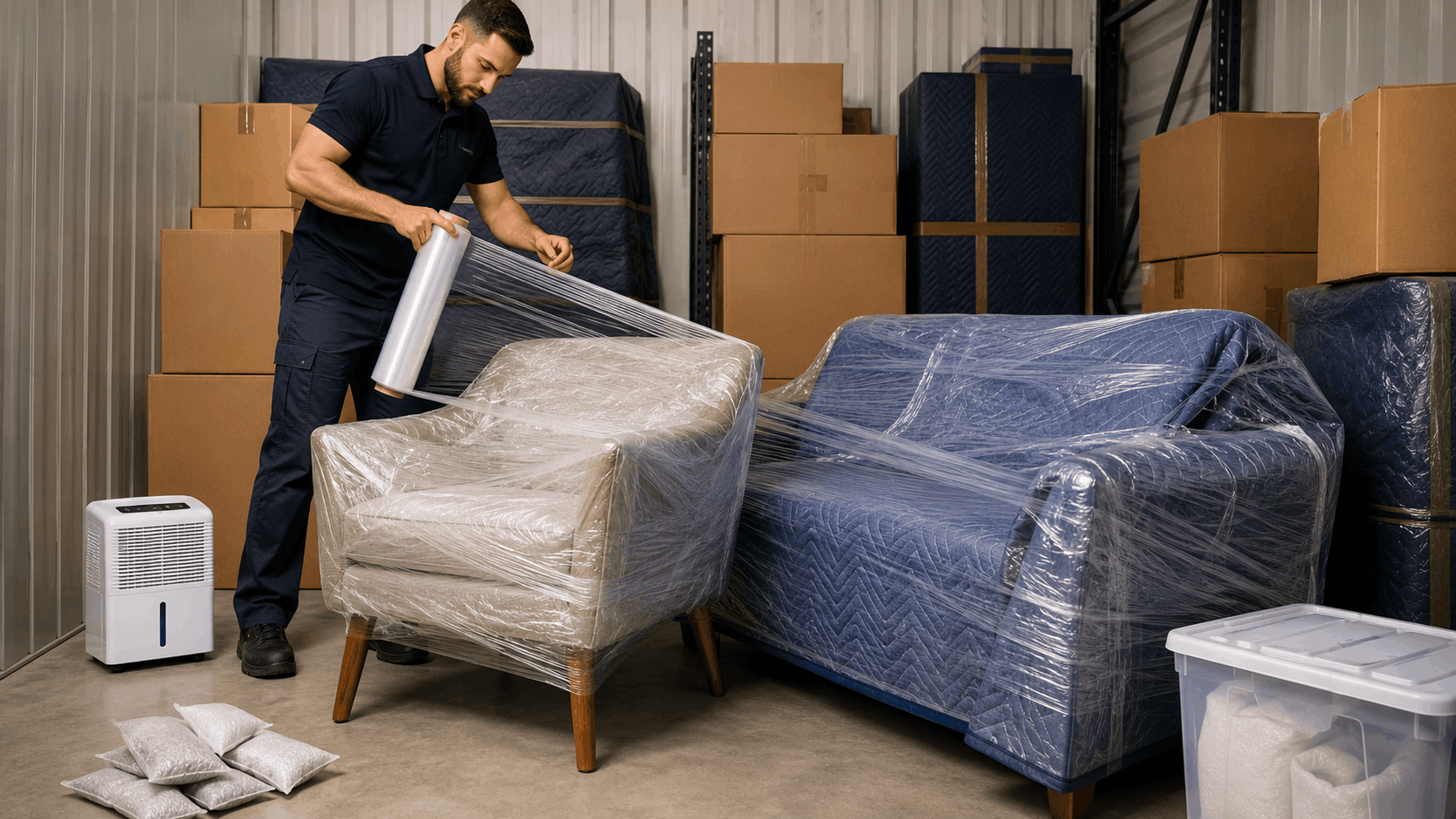
How Popeye Moving & Storage Co. Handles Furniture Storage Across Los Angeles
Every family and every piece is different, and our process reflects that. We have prepped and stored furniture across Los Angeles long enough to know that a beach condo and a Valley bungalow need different plans. That local knowledge shapes how we work.
Popeye Moving and Storage brings a full-service approach to furniture storage service. From the first wipe-down to final placement, we handle the prep, the wrap, and the store so Los Angeles storage does not become a gamble on your furniture.
- Material-specific cleaning and conditioning before wrapping
- Breathable, layered wrapping matched to each piece
- Moisture and pest defense built into every unit
- Flexible plans for short moves and long stays alike
Serving Neighborhoods From Silver Lake to the Westside
We work across the whole LA map, and each area has its own needs. In Silver Lake, older Craftsman and Spanish homes mean tight staircases and antique pieces that need careful disassembly and padding during a remodel. We know those hillside streets and the access challenges they bring.
Over in Culver City, the mix of condos and creative-industry households often means storing office furniture and design pieces between moves. Neighborhoods like Sunkist Park bring their own parking and loading quirks that our crews plan around.
In the Valley, Sherman Oaks families deal with dry summer heat, so we lean toward conditioning surfaces and climate control for wood and leather. The gap between Valley heat and coastal damp is exactly why one storage plan never fits every LA home.
From the West Los Angeles area to Brentwood and beyond, we tailor the prep to the neighborhood and the piece. Local knowledge is what keeps furniture safe from one end of the city to the other.
Our Step-by-Step Prep, Wrap, and Store Process
The process starts at your door. Our professional movers arrive, assess each piece, and photograph anything that gets disassembled. Pickup runs smoothly whether you are off the 405 on the Westside or along the 101 through the Valley, and we plan routes around LA traffic to protect delicate loads.
Next comes cleaning and prep. Each material gets its proper cleaning and conditioning, then dries fully before any cover goes on. Hardware gets bagged, labeled, and taped to its piece so reassembly is simple later.
Then we wrap and load. Blankets, paper, and breathable covers go on based on the piece, fragile items get crated, and the unit gets loaded with weight, airflow, and access all planned out. The storage process ends with moisture absorbers placed and everything raised off the floor.
We keep you informed the whole way. You know what is stored where, and our long-term storage service is built to keep pieces safe for as long as you need them held.
Short-Term Moves vs. Long-Term Storage Plans
Different situations call for different plans. A kitchen remodel that lasts eight weeks needs a short, flexible hold with easy access, while a year abroad calls for a full long-term storage setup with climate control and periodic checks. We build the plan around your timeline.
Renovations and staged home sales are our most common short-term jobs. Furniture comes out of the house, sits safely for a few weeks or months, and comes back the moment the work wraps. Flexible plans mean you are not locked into more than you need.
Overseas assignments and relocations lean long-term. For families heading abroad, we pair storage with our international moving options so the whole move and hold work together. Extended stays get the deeper moisture and pest defense that months demand.
Whatever the length, we scope it honestly. Tell us your timeline and your pieces, and we match you to the right unit, the right prep, and the right plan without padding the bill.
Need Help in Los Angeles?
Popeye Moving & Storage serves Los Angeles and all of Los Angeles County.
Final Thoughts
Furniture that sits for months faces slow threats that a weekend move never sees. Warping wood, mold in upholstery, dried leather, and hungry pests all take time to do their damage, which is exactly why the prep has to be built for the long haul.
The plan is straightforward when it is done right. Clean and condition each piece, wrap it in breathable materials, control the moisture, block the pests, and load the unit with weight and airflow in mind. Do those things, and a piece comes out looking like it went in.
Los Angeles adds its own wrinkles, from coastal damp on the Westside to dry Valley heat, and the right plan accounts for both. That local knowledge, paired with careful prep, is what protects your furniture over any stretch of time.
Frequently Asked Questions
How should furniture be wrapped for long-term storage?
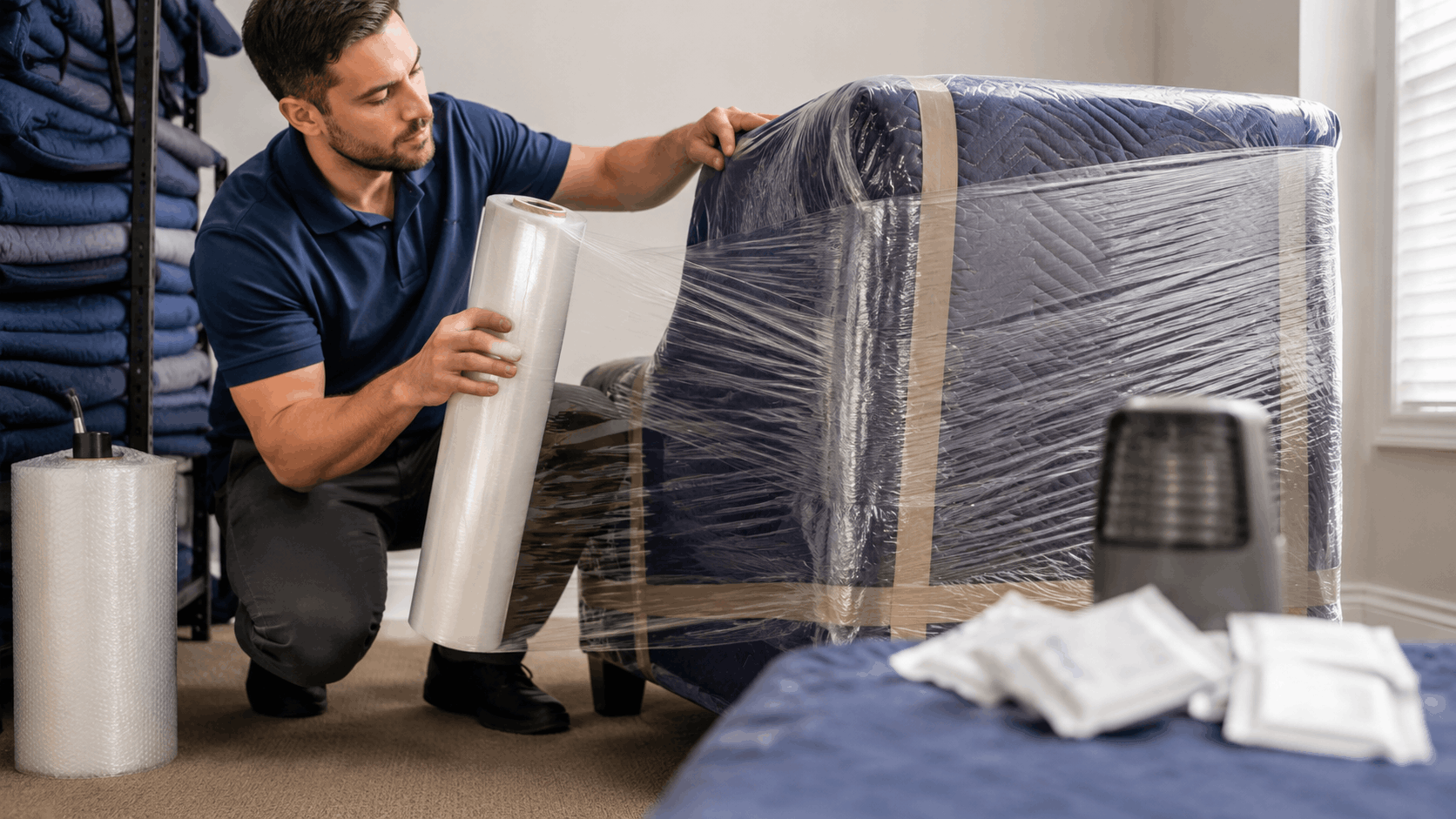
Use a layered approach. Start with clean packing paper on finished surfaces and details, then wrap the body in furniture pads or breathable cloth covers that let air move. Never seal bare wood or fabric directly in plastic, since that traps moisture and breeds mold. Fragile parts like glass and carved edges get bubble wrap and corner guards on top of the base layers for months of protection.
Do I need a climate-controlled unit for furniture in Los Angeles?
It depends on the material and location. Solid wood antiques, leather, and upholstered pieces benefit from climate control, especially near the humid coast around Santa Monica or in the dry Valley heat of Sherman Oaks. Sturdy hardwood, metal, and plastic pieces often ride out a standard unit fine when wrapped and raised off the floor. For anything valuable or irreplaceable, climate control is worth the added cost.
How do I keep mold off furniture in storage?
Mold needs moisture, so remove it at every step. Clean each piece and let it dry completely before wrapping, since even slight dampness sealed inside grows mold. Use breathable covers instead of tight plastic, place silica gel and moisture absorbers in drawers and covers, and raise furniture off the concrete floor. Leave airflow gaps between pieces, and replace absorbers periodically over a long stay.
What keeps pests out of stored sofas and mattresses?
Start with deep cleaning to remove food crumbs and residue that draw moths, roaches, and rodents. Vacuum cushions and seams, dry everything, then cover pieces in breathable material. Add safe deterrents like cedar blocks and lavender sachets that repel pests without staining fabric. Choose a clean, well-maintained facility with pest monitoring, since building-wide upkeep protects your pieces beyond your own prep.
Should I take furniture apart before storing it?
Yes, for large pieces. Beds, tables, and shelving store better disassembled because it takes stress off joints and legs and saves space. Remove table legs, break down bed frames, and take shelves apart. Bag every screw and bracket, label the bag, and tape it to the piece it belongs to. Photograph pieces before disassembly so reassembly is simple when storage ends.
Can I store leather furniture for several months?
Yes, with the right prep. Clean the leather with a product made for it, then apply a conditioner to replace natural oils and prevent cracking during storage. Cover the piece in breathable material rather than plastic, and control humidity to avoid both drying and mildew. Climate control helps most, especially in dry Valley heat or damp coastal air, and a mid-storage check keeps it in shape.
How much does long-term furniture storage cost in LA?
Cost depends on unit size, climate control, and length of stay. A small standard unit often runs 100 to 200 dollars a month, mid-size units 200 to 350, and climate-controlled units add 25 to 50 percent on top. Longer commitments sometimes come with better rates. Full-service prep, wrapping, and transport are separate, so ask for a scoped quote based on your exact pieces and timeline.
Is it safe to store antiques and heirlooms for months?
Yes, when they get extra care. Antiques need conditioning to prevent finish cracking, heavy padding and corner guards, and often custom crating for fragile or carved pieces. They belong in climate-controlled storage to hold steady temperature and humidity, since old finishes and joints react fast to swings. With proper prep and a controlled unit, valuable heirlooms come through long storage safely.
How often should I check on furniture in storage?
Aim to check every one to two months on a long-term stay. During a visit, look for any signs of moisture, mold, or pests, replace saturated moisture absorbers, and confirm nothing has shifted or is bearing stress. A quick inspection catches small problems before they spread. If you cannot visit, ask whether your storage provider offers monitoring on your behalf.
Does Popeye Moving & Storage Co. handle wrapping and pickup?
Yes. Our team offers full-service prep, wrapping, and transport across Los Angeles. We clean and condition each piece, disassemble large items, wrap everything in breathable materials, and handle pickup from Silver Lake to the Westside and throughout the Valley. From there we load and arrange your unit with moisture and pest defense built in. Contact us for a consultation on your furniture storage needs.
Protecting furniture through months in storage comes down to careful prep, smart wrapping, moisture control, pest defense, and a well-loaded unit. Each step matters, and together they keep your pieces safe whether you store them for eight weeks or a full year. For guidance from a team that knows every corner of Los Angeles, reach out to Popeye Moving & Storage Co. today. Call or contact us to schedule a consultation and let our crew handle the prep, wrapping, and storage from start to finish. Learn more about the effects of humidity on stored materials from independent sources, and review guidance on mold prevention from the EPA and rodent control from the CDC.
Frequently Asked Questions
- How should furniture be wrapped for long-term storage?
- Use a layered approach. Start with clean packing paper on finished surfaces and details, then wrap the body in furniture pads or breathable cloth covers that let air move. Never seal bare wood or fabric directly in plastic, since that traps moisture and breeds mold. Fragile parts like glass and carved edges get bubble wrap and corner guards on top of the base layers for months of protection.
- Do I need a climate-controlled unit for furniture in Los Angeles?
- It depends on the material and location. Solid wood antiques, leather, and upholstered pieces benefit from climate control, especially near the humid coast around Santa Monica or in the dry Valley heat of Sherman Oaks. Sturdy hardwood, metal, and plastic pieces often ride out a standard unit fine when wrapped and raised off the floor. For anything valuable or irreplaceable, climate control is worth the added cost.
- How do I keep mold off furniture in storage?
- Mold needs moisture, so remove it at every step. Clean each piece and let it dry completely before wrapping, since even slight dampness sealed inside grows mold. Use breathable covers instead of tight plastic, place silica gel and moisture absorbers in drawers and covers, and raise furniture off the concrete floor. Leave airflow gaps between pieces, and replace absorbers periodically over a long stay.
- What keeps pests out of stored sofas and mattresses?
- Start with deep cleaning to remove food crumbs and residue that draw moths, roaches, and rodents. Vacuum cushions and seams, dry everything, then cover pieces in breathable material. Add safe deterrents like cedar blocks and lavender sachets that repel pests without staining fabric. Choose a clean, well-maintained facility with pest monitoring, since building-wide upkeep protects your pieces beyond your own prep.
- Should I take furniture apart before storing it?
- Yes, for large pieces. Beds, tables, and shelving store better disassembled because it takes stress off joints and legs and saves space. Remove table legs, break down bed frames, and take shelves apart. Bag every screw and bracket, label the bag, and tape it to the piece it belongs to. Photograph pieces before disassembly so reassembly is simple when storage ends.
- Can I store leather furniture for several months?
- Yes, with the right prep. Clean the leather with a product made for it, then apply a conditioner to replace natural oils and prevent cracking during storage. Cover the piece in breathable material rather than plastic, and control humidity to avoid both drying and mildew. Climate control helps most, especially in dry Valley heat or damp coastal air, and a mid-storage check keeps it in shape.
- How much does long-term furniture storage cost in LA?
- Cost depends on unit size, climate control, and length of stay. A small standard unit often runs 100 to 200 dollars a month, mid-size units 200 to 350, and climate-controlled units add 25 to 50 percent on top. Longer commitments sometimes come with better rates. Full-service prep, wrapping, and transport are separate, so ask for a scoped quote based on your exact pieces and timeline.
- Is it safe to store antiques and heirlooms for months?
- Yes, when they get extra care. Antiques need conditioning to prevent finish cracking, heavy padding and corner guards, and often custom crating for fragile or carved pieces. They belong in climate-controlled storage to hold steady temperature and humidity, since old finishes and joints react fast to swings. With proper prep and a controlled unit, valuable heirlooms come through long storage safely.
- How often should I check on furniture in storage?
- Aim to check every one to two months on a long-term stay. During a visit, look for any signs of moisture, mold, or pests, replace saturated moisture absorbers, and confirm nothing has shifted or is bearing stress. A quick inspection catches small problems before they spread. If you cannot visit, ask whether your storage provider offers monitoring on your behalf.
- Does Popeye Moving & Storage Co. handle wrapping and pickup?
- Yes. Our team offers full-service prep, wrapping, and transport across Los Angeles. We clean and condition each piece, disassemble large items, wrap everything in breathable materials, and handle pickup from Silver Lake to the Westside and throughout the Valley. From there we load and arrange your unit with moisture and pest defense built in. Contact us for a consultation on your furniture storage needs. Protecting furniture through months in storage comes down to careful prep, smart wrapping, moisture control, pest defense, and a well-loaded unit. Each step matters, and together they keep
P
Popeye Moving & Storage Co. Team Team
Licensed moving and storage professionals serving Los Angeles and Los Angeles County.
Licensed in California · License #PUC: CAL T 189749 | DOT: 1472924 | MC: 498816C
Why trust Popeye Moving & Storage?
Founded in 1994, Popeye Moving & Storage is a licensed and insured moving and storage service serving Los Angeles and Los Angeles County. All content is reviewed by our licensed technicians.

Need Help in Los Angeles?
Popeye Moving & Storage serves Los Angeles and all of Los Angeles County.
Related Articles
How-To Guides
Electronics and AV Gear in Storage: Moisture, Cables, and the Photo-First Teardown
Protect your electronics and AV gear in Los Angeles storage with moisture control, cable management, and the photo-first teardown method for easy reassembly.
How-To Guides
Office Furniture Storage Between Leases: Decommission Today, Refurnish the Next Space Later
Learn how LA businesses store office furniture between leases, decommission the old space, and refurnish later - with costs, timing, and expert tips from Popeye Moving.
Tips & Advice
Storage for Santa Monica and Brentwood Households: Where Westside Furniture Actually Goes Between Homes
A local guide to furniture storage for Santa Monica and Brentwood households, covering storage types, costs, coastal climate risks, and how Westside families bridge the gap between homes.