Tips & Advice
Receiving Services for Homeowners Mid-Renovation: Where Your Furniture Deliveries Go Before Install Day

Key Takeaways
- Furniture often ships weeks before a remodel is finished, creating a gap between delivery day and install day.
- Storing new pieces in a garage or driveway during construction risks dust damage, heat warping, and theft.
- A receiving service accepts, inspects, logs, and holds deliveries in a climate-controlled warehouse until your home is ready.
- LA neighborhoods bring specific challenges, from tight Silver Lake streets to HOA rules in Marina del Rey and Valley heat.
- On-arrival inspection catches freight damage, wrong items, and missing hardware before vendor return windows close.
- Consolidating deliveries from multiple vendors turns months of random drop-offs into one coordinated install day.
- Receiving fees usually run far less than replacing furniture ruined on an active job site.
- Popeye Moving & Storage Co. handles receiving, storage, and room-by-room delivery across LA County under one roof.
In This Article
A homeowner in Silver Lake calls us on a Tuesday, half-panicked. Her new custom sofa just showed up on a delivery truck, but her living room is stripped to the studs. There is drywall dust everywhere, the floors are not down yet, and the delivery driver is standing on the sidewalk asking where to put it. The remodel is not finished for another six weeks.
This happens more than most people think. Furniture ships on the vendor's schedule, not the contractor's. So a new dining table, a marble console, or a $4,000 sectional lands weeks before the home is ready to hold it. That gap between the delivery date and the finished home is exactly where things go wrong.
Receiving services solve this problem. Instead of your new pieces sitting in a dusty garage or getting sent back, a mover accepts the delivery, checks it, stores it safely, and brings it out on install day. This guide walks through how it works, the local delivery headaches we see across Los Angeles, and where your furniture actually goes before it lands in your finished home.
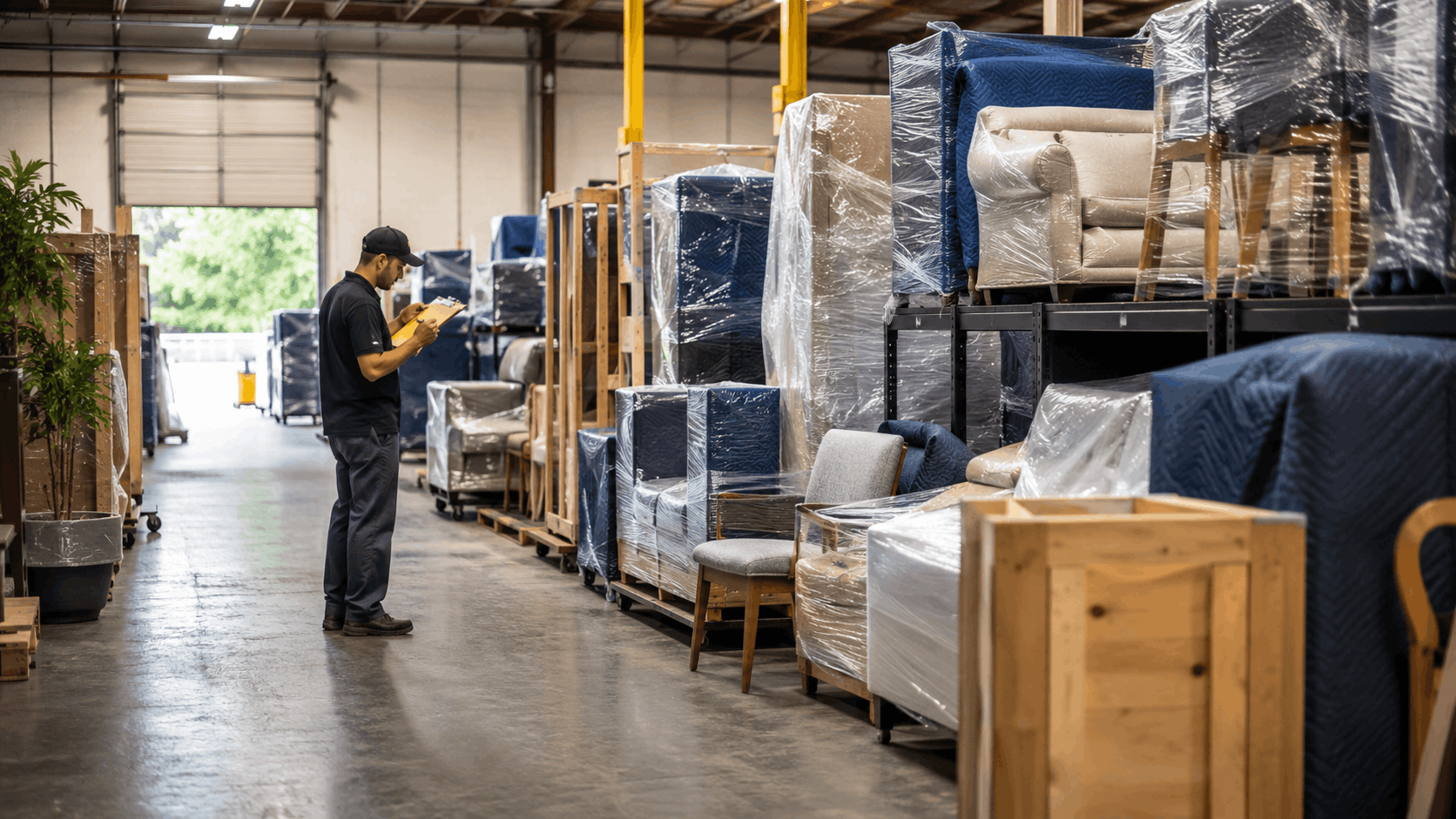
What Receiving Services Actually Mean for a Homeowner
A receiving service is simple in plain terms. A moving and storage company accepts your furniture delivery on your behalf, logs it, holds it in a safe warehouse, and delivers it when your home is ready. You do not have to be home, and your torn-up house does not have to store anything.
Renovating homeowners need this because remodels almost never line up with shipping dates. Here is what receiving services typically handle:
- Accepting deliveries from furniture stores, designers, and freight carriers
- Inspecting each item for damage before the return window closes
- Storing pieces in a climate-controlled warehouse
- Gathering items from multiple vendors in one spot
- Delivering everything on a single install day
The whole point is to remove the pressure of timing. Your designer receiving and consolidation service becomes the middle stop between the vendor and your finished home.
The Gap Between Delivery Day and Install Day
Furniture and fixtures ship on their own clock. A custom sofa from a workroom might take 12 to 16 weeks to build, then ship the moment it is done. Your remodel might still be in the framing stage when that truck rolls up.
This delivery gap catches homeowners off guard constantly. You order everything early so the house is complete on move-in day, but the vendors deliver whenever their production wraps. Nobody coordinates those dates for you unless you ask.
The result is furniture arriving with nowhere to go. On install day, the home is finally clean and finished, but the pieces showed up weeks ago. Without a receiving service, that middle stretch leaves you holding boxes you cannot use yet.
We see this timing mismatch on nearly every renovation project. A kitchen remodel runs long, the flooring gets delayed, and meanwhile the new barstools and pendant lights are already in transit. Something has to hold those items in the meantime.
Why Your Garage or Driveway Is Not the Answer
On-site storage during construction sounds convenient until you see what happens. A garage during a remodel fills up with tools, materials, and foot traffic. New furniture parked in that chaos gets bumped, scratched, and buried under drop cloths.
Construction dust is the bigger enemy. Drywall sanding and demolition send fine particles into every corner of a home. That dust settles into upholstery fibers and sticks to leather, and it grinds into wood finishes the moment anyone wipes it off.
Then there is theft. A driveway or open garage on an active job site sees subcontractors, deliveries, and strangers coming and going all day. A boxed television or a designer chair sitting near the door is an easy target when nobody is watching.
Heat and moisture finish the job. A closed garage in an LA summer can climb past 100 degrees, and that warps wood and cracks leather. Storing new pieces on-site during a build risks the exact damage you paid good money to avoid.
How a Professional Receiving Team Works
Professional receiving starts the moment a delivery is scheduled. The vendor ships to the warehouse address instead of your home. Our team is there during business hours to accept the truck, so you never have to leave work or the job site to sign for anything.
Once the item arrives, it gets logged. Every piece is entered into a delivery log with the vendor name, order number, and date received. That record matches the item to your account so nothing gets mixed up with another homeowner's order.
Then the team opens and inspects each piece. They photograph it, note any freight damage, and confirm it matches your order. If something is broken or wrong, you find out right away instead of on install day.
After inspection, the item goes into safe storage until your home is ready. When you give the green light, the team pulls everything, loads it, and delivers it on your chosen date. The storage and delivery process runs under one roof from start to finish.
Get Your Free Quote
Tell us about your move and we'll get back to you fast.
Common Renovation Delivery Problems Across Los Angeles
Every neighborhood in Los Angeles brings its own delivery headaches. We have driven these streets for years, and the same problems come up again and again when a remodel and a furniture delivery overlap.
The city is not built for large trucks and last-minute drop-offs. Narrow hillside roads, historic homes, strict HOA rules, and brutal summer heat all make renovation deliveries harder than people expect. Here is what we run into most.
Tight Streets and Parking in Silver Lake and Echo Park
Silver Lake and Echo Park sit on steep, winding hills with streets barely wide enough for two cars. When a 26-foot delivery truck tries to reach a home off Micheltorena or Sunset, it often cannot even get close. The driver ends up double-parked, blocking traffic while neighbors honk.
Permit parking makes it worse. Many of these blocks require residential permits, and a delivery truck with no permit risks a ticket or a tow. During a remodel, the contractor's crew already takes up most of the curb space, leaving nowhere for a furniture truck to sit.
Then there are the stairs. Plenty of Echo Park homes sit up a long flight of steps from the street. Hauling a heavy sofa up those stairs into a house full of construction debris is a bad idea for the movers and the furniture.
A receiving service sidesteps all of it. The delivery goes to the warehouse instead, and we plan the final drop-off for a day when the street is clear and the home is ready. We know which blocks in these hills need extra crew and a smaller truck.
Older Homes Near Hancock Park and Larchmont
Historic homes near Hancock Park and Larchmont are beautiful, but they were not built for modern furniture deliveries. Narrow doorways, tight hallways, and steep original staircases turn a simple drop-off into a puzzle. A large sectional might not fit through a 1920s front door at all.
During a remodel, those homes have even less room. Contractors stage materials in the entry, cover floors with protection, and block off rooms mid-work. There is simply no safe spot to set a new dining table or a fragile mirror.
Many of these properties also fall under preservation rules that slow the whole project down. When a remodel drags on, the furniture that already arrived has to wait somewhere. A dusty parlor under construction is the worst place for a new upholstered piece.
We hold those items in the warehouse until the historic home is finished and clean. Then we plan a careful delivery, measuring doorways ahead of time so nothing gets stuck or scratched on the way in.
HOA and Building Rules in Downtown and Marina del Rey
Condo buildings Downtown and in Marina del Rey come with strict delivery rules. Most buildings only allow move-ins and large deliveries during set hours, often 9 a.m. to 4 p.m. on weekdays. Miss that window and you wait for the next available slot.
Elevator reservations add another layer. Many HOA communities require you to book the freight elevator days in advance and pad it before use. A furniture vendor showing up unannounced usually gets turned away at the loading dock.
These rules make timing a nightmare during a remodel. Your unit is still being worked on, but the building will not let deliveries pile up in the hallway or lobby. HOA delivery rules were written to keep the building tidy, not to help a renovating owner.
We handle those logistics for you. The furniture comes to our warehouse first, and we book the elevator and delivery window with the building manager for install day. One coordinated arrival beats a dozen rejected deliveries.
Weather and Heat in the Valley
San Fernando Valley summers are brutal on furniture. Temperatures in Sherman Oaks, Encino, and Van Nuys routinely hit 100 to 105 degrees. A closed garage or a parked delivery truck can push well past that.
That heat destroys nice furniture. Solid wood tables warp and crack as the moisture bakes out of them. Leather dries, stiffens, and splits along the seams. Veneers peel and glue joints let go.
Humidity swings do damage too. Wood swells and shrinks as the air changes, which loosens joints and ruins finishes over time. Leaving new pieces in a hot Valley garage during a summer remodel is a fast way to ruin them.
Our climate-controlled warehouse holds a steady temperature and humidity year-round. That protects the furniture damage-prone materials your new pieces are made from until the home is ready. No garage in the Valley can match that in August.
Need Help in Los Angeles?
Popeye Moving & Storage serves Los Angeles and all of Los Angeles County.
Where Your Deliveries Go Before Install Day
So where does your furniture actually go while your home gets finished? It travels from the vendor straight to our warehouse, gets checked and logged, and waits in climate-controlled holding until install day. Then it comes to your finished home in one trip.
This path keeps your new pieces out of the dust and heat. It also gives you one clean delivery instead of a stream of trucks showing up over months. Here is how the furniture holding process works step by step.
Climate-Controlled Warehouse Storage
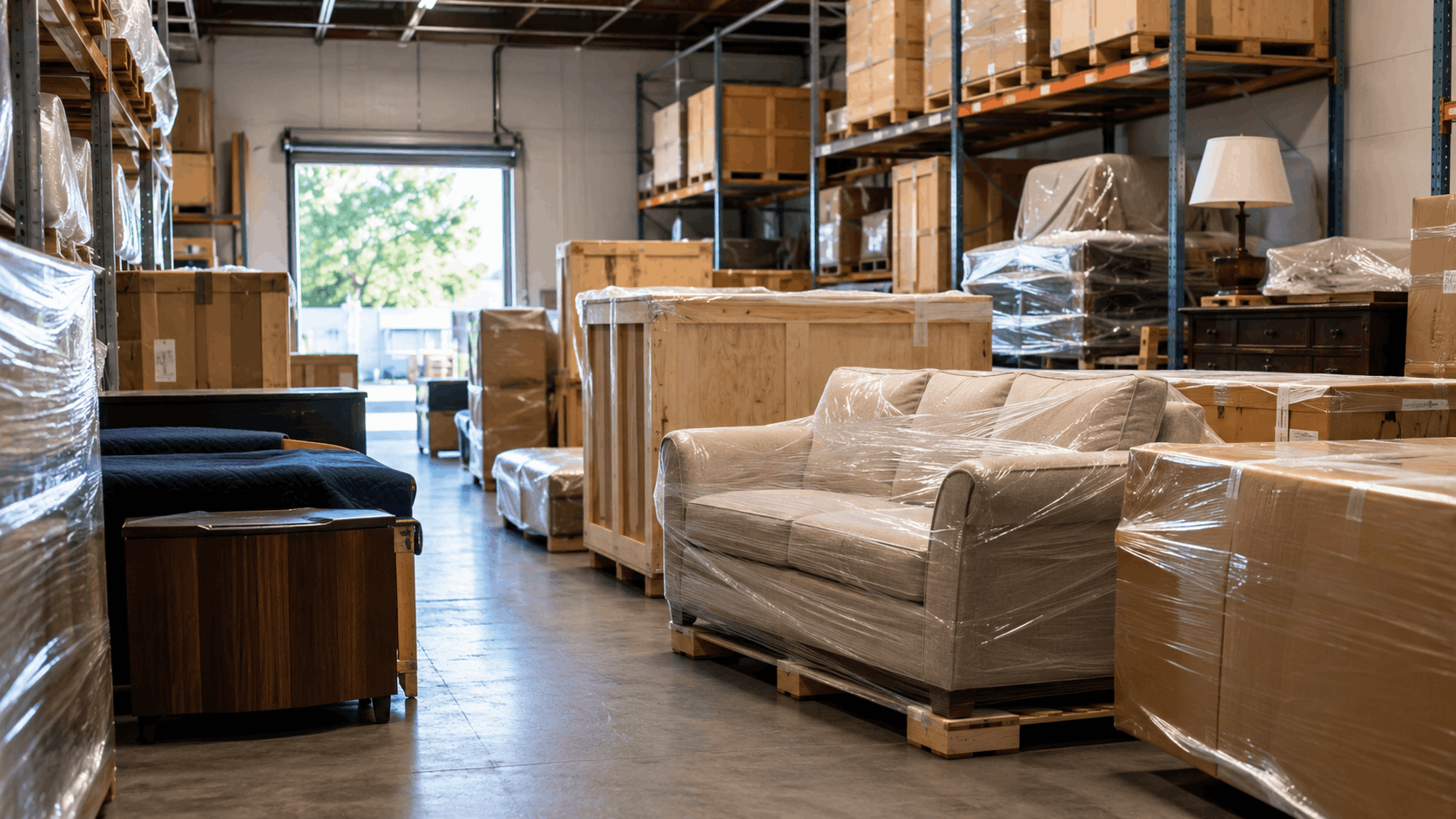
Climate control is the difference between furniture that arrives perfect and furniture that arrives ruined. Our warehouse holds a steady temperature and controlled humidity, usually in the range that keeps wood, fabric, and electronics stable. That protects everything from a French dining table to a flat-screen TV.
Wood pieces need this the most. Solid wood and veneers react to heat and moisture, cracking and warping when conditions swing. A managed facility keeps the air stable so joints stay tight and finishes stay smooth for months.
Upholstery and leather benefit just as much. Fabric holds its shape and color in controlled air, and leather stays supple instead of drying out. Electronics avoid the condensation and heat damage that can fry circuit boards in a hot garage.
Warehouse storage also means clean, dry, and secure. Your pieces sit padded and covered, away from construction dust and away from the theft risk of an open job site. You can find more about our long-term storage options if your remodel runs long.
Inventory Tracking and Photo Records
Every item that comes into the warehouse gets logged the day it arrives. We record the vendor, the order number, the delivery date, and a description of the piece. That inventory tracking ties each item to your personal account so nothing gets lost in the shuffle.
Photos back up the log. Our team photographs each piece on arrival, capturing its condition from multiple angles. If a sofa shows up with a torn cushion or a scratched leg, the photo records prove exactly how it looked when it landed.
This matters when you are managing a big project. You might have 30 or 40 items coming from a dozen sources over several months. A clear inventory list with photos lets you and your designer see what has arrived and what is still in transit.
The records also make install day smooth. We know exactly what we have, where it is, and which room it belongs in. Nothing gets forgotten in a corner of the warehouse when the delivery truck loads up.
Consolidating Deliveries From Multiple Vendors
A single remodel usually pulls furniture from many places. The sofa comes from one showroom, the rug from another, the lighting from a third, and the barstools ship direct from a factory. Each one arrives on a different day over weeks or months.
Delivery consolidation gathers all of it in one spot. Instead of a dozen trucks hitting your street on random days, everything lands at our warehouse and waits together. We track each shipment as it comes in and mark it against your master list.
This saves you the endless coordination. You do not have to be home to sign for every drop-off, and you do not have to store items in a house that is still being built. The warehouse becomes the single address for all your vendors.
When the home is ready, we bring the whole order out at once. Consolidating deliveries from multiple vendors turns a messy, drawn-out process into one clean install day. That is far easier on you and your contractor.
How Inspection and Damage Checks Protect You
Inspecting items on arrival is one of the most useful parts of a receiving service. It catches problems while you can still fix them cheaply. Once a return window closes, a damaged piece becomes your expensive problem.
Our damage inspection process is thorough and documented. Here is what our team checks the moment a delivery arrives:
- Freight damage from shipping, like dents, tears, or cracks
- Missing pieces, hardware, or parts
- Wrong items or mismatched orders
- Finish flaws and manufacturing defects
Every finding gets photographed and noted in your account. That way you have proof for a vendor claim before the clock runs out.
Catching Freight Damage Right Away
Freight damage happens more than vendors admit. A table travels across the country on pallets, gets loaded and unloaded several times, and arrives with a cracked leg or a gouged top. If nobody opens the box for weeks, the damage goes unnoticed.
Our team opens and checks each piece on arrival. We unpack it enough to inspect the surfaces, corners, and joints where shipping damage shows up. A cracked frame or a scuffed finish gets caught the same day the truck drops it off.
Timing is everything with freight claims. Most vendors give you a short return window, sometimes just a few days, to report damage. Miss that window and the vendor can refuse the claim, leaving you stuck with a broken piece.
By inspecting immediately, we protect that window for you. You get the photos and the report while there is still time to demand a replacement or a refund. That single step has saved our clients thousands on ruined pieces.
Documenting Missing or Wrong Items
Orders go wrong all the time. A chair ships in the wrong fabric, a nightstand arrives without its drawer pulls, or a set of six dining chairs shows up with only four. These problems love to surface on install day when it is too late to fix them.
We catch mismatches at the warehouse instead. When a piece arrives, our team confirms it matches your order details, right down to the color and finish. A wrong order gets flagged and documented the same day, not weeks later.
Missing items get the same treatment. If hardware or parts are absent, we note it and let you know so you can request the missing pieces from the vendor. That gives you weeks of lead time instead of a scramble on delivery day.
This documentation keeps install day on track. Nothing derails a finished home faster than opening a box and finding the wrong sofa. Catching it early means the correct piece is on its way long before you need it.
Keeping Manuals, Hardware, and Parts Together
Loose parts disappear during storage if nobody keeps track. A bed frame ships with bolts in a small bag, a media console comes with a manual and cam locks, and a light fixture includes mounting brackets. Separate those from the item and assembly becomes a nightmare.
We keep everything together. Each item's hardware, manual, and small parts stay bagged and attached to that piece in storage. When install day comes, the assembly parts are right there with the furniture they belong to.
This matters for anything that ships flat and needs building. Beds, shelving, tables, and desks all rely on their specific hardware. A missing bag of bolts can stop assembly cold and send you searching hardware stores for a match.
Careful hardware storage keeps your install fast and clean. The team assembles each piece with its own parts and instructions on hand. Nothing gets lost between the warehouse and your finished room.

Planning Install Day With Your Contractor
Install day works best when the mover, the contractor, and the homeowner all talk. The furniture should arrive at the right moment, not too early and not before the messy work is done. Good install day planning keeps your finished home from getting scratched or dusted the day it comes together.
We coordinate with your contractor to pick the right date. Here is how we time and run a smooth install day.
Timing the Final Delivery Around Paint and Flooring
Furniture should arrive after the dusty work is finished. Painting, sanding, and flooring throw dust and fumes into every room. Deliver a new sofa before that work is done and it gets coated before you ever sit on it.
Flooring is the big one. Wood floors, tile, and carpet all need to go down before furniture comes in. Heavy pieces set on an unfinished floor block the crew and risk gouging a surface that is about to be sealed.
Paint needs time to cure too. Fresh walls off-gas and stay soft for days, and furniture pushed against them can smudge or stick. We time the final delivery for after the paint is dry and the floors are protected.
Sequencing this with your renovation timeline is where a receiving service earns its keep. Because your pieces wait safely in the warehouse, we can wait for the exact right day. There is no pressure to rush furniture in before the home is ready.
Scheduling One Coordinated Delivery Window
One coordinated delivery beats a dozen scattered drop-offs. When furniture ships as it is finished, you get trucks arriving randomly for months. Each one interrupts the work and risks damage in a home that is not ready.
We gather everything and deliver it in a single window. You pick a day when the home is clean and finished, and we bring the whole order at once. One truck, one crew, one arrival instead of endless disruptions.
This is far easier on your contractor as well. They can plan the final walkthrough and punch list around one delivery date instead of dodging trucks all month. Everyone knows exactly when the furniture lands.
A single delivery window also lets us plan the details. We reserve the elevator, arrange parking, and staff the right crew size for that one day. The local delivery team shows up ready to place everything in one visit.
Placing Items Room by Room
Delivery is only half the job. On install day, our team unloads, unpacks, and places each piece in the right room. You are not left with boxes and furniture stacked in the entry to sort out yourself.
Room placement follows your plan. We work from your inventory list and any layout the designer provided, setting the bed in the primary suite, the dining table in the dining room, and the office chair upstairs. Everything lands where it belongs.
White glove delivery means we handle the fussy parts. The crew assembles furniture, positions pieces, and hauls away all the packing materials and boxes. You walk into a finished room, not a pile of cardboard.
This turns install day into the moment the whole project comes together. By the time we leave, the home is set up and ready to live in. Our unpacking services can take it further if you want closets and kitchens set up too.
Need Help in Los Angeles?
Popeye Moving & Storage serves Los Angeles and all of Los Angeles County.
What Popeye Moving & Storage Co. Offers Local Homeowners
We are a local Los Angeles moving and storage company, and we handle receiving for renovating homeowners across the region. From the warehouse to your finished door, our team accepts, stores, and delivers your furniture on your schedule.
We know these neighborhoods because we drive them every day. That local knowledge is what makes our Los Angeles storage and moving services work for real remodels, not just easy ones.
Receiving, Holding, and Delivery Under One Roof
Our receiving service handles the full chain. We accept vendor deliveries at the warehouse, inspect and log every piece, and store it in climate-controlled space. When your home is ready, we deliver it on your chosen install date.
Keeping it all under one roof avoids handoffs. There is no third warehouse, no separate delivery company, and no gaps where an item can go missing. The same team that received your sofa is the team that places it in your living room.
That continuity protects your furniture and your schedule. We already know the condition of each piece, where it sits, and which room it belongs in. Nothing gets re-handled by strangers who never saw the original delivery.
It also gives you one point of contact. You call us for the status of any item, the delivery date, or an inspection report. One company owns the whole process from vendor to finished home.
Serving Neighborhoods From Brentwood to Pasadena
Our trucks cover a wide stretch of LA County. We run west to Brentwood and Santa Monica, east to Pasadena and Glendale, and out to the Valley, the South Bay, and the coast. If it is in the region, we can deliver to it.
We know the driving routes that trip up other movers. Getting a truck up the Silver Lake hills, into a Downtown high-rise loading dock, or through the narrow streets near Larchmont takes local experience. We have done all of it.
Coastal areas get the same coverage. From Marina del Rey condos to homes in Malibu and the beach cities, we plan around parking, permits, and building rules for each spot. The route is never a surprise to us.
Whether your remodel is in a Pasadena bungalow or a Brentwood estate, we can time the delivery for your finished home. Our reach across the county means one company handles the whole thing.
Handling Fragile and High-Value Pieces
Renovating homeowners buy nice things. Art, mirrors, glass tables, marble tops, and designer furniture all need careful handling that ordinary movers skip. Our team pads, crates, and transports high-value furniture the way it deserves.
Fragile items get extra protection in storage and transit. We wrap and crate art and glass, secure marble against cracking, and store everything padded and upright. A cracked stone top or a torn canvas is an expensive mistake we work hard to prevent.
Our crews are trained for the delicate stuff. They know how to carry a heavy stone console without stressing the seams and how to move a large mirror through a tight doorway. Our specialty moving experience covers the pieces most movers dread.
For designer and custom orders, that care matters even more. Those items are often one of a kind and impossible to replace quickly. We treat every high-value piece as if it cannot be reordered, because usually it cannot.

What Receiving Services Typically Cost
Cost is the first question most homeowners ask, and the honest answer is that it depends. Receiving service cost varies with how much you have, how long you store it, and how far the final delivery travels. Here is a realistic look at the pricing.
The good news is that storage pricing usually costs far less than replacing a piece ruined on a job site. A little planning protects thousands in furniture.
How Receiving Fees Are Usually Charged
Receiving fees come in a few common models. Many companies charge a per-item receiving fee, often in the range of $25 to $75 per piece, to accept, inspect, and log each delivery. That covers the labor of handling and documenting the item.
Some charge per shipment instead. If several items arrive on one truck, you pay one receiving fee for the whole delivery rather than per piece. This can save money when a vendor ships a full room at once.
Then there is monthly storage. Holding your items in the warehouse usually runs on a monthly rate based on the space you use, often $50 to a few hundred dollars a month depending on volume. Per-item pricing and monthly storage often combine on one bill.
Delivery is usually separate. The final install-day delivery is quoted based on the crew, truck, and distance. We give you a clear breakdown so you know what each part costs before anything ships.
What Drives the Price Up or Down
Volume is the biggest factor. A few boxes and a sofa cost far less to store than a full home of furniture from a whole-house remodel. More items means more space and more handling.
Storage length matters too. Holding items for three weeks costs a fraction of holding them for six months. If your remodel runs long, the monthly storage adds up, so an accurate timeline helps us quote it right.
Delivery distance affects the final number. A drop-off in Culver City is cheaper than a run out to Malibu or Pasadena because of the drive time and crew hours. Item size and weight play in as well, since a piano or a marble table needs more crew and care.
Access at the delivery address also counts. Stairs, tight streets, and high-rise elevators add time and labor. We factor all of it into a quote so there are no surprises on install day.
How It Compares to On-Site Damage Costs
Compare the cost of storage to the cost of replacing ruined furniture. A warped $3,000 dining table left in a hot garage is a $3,000 loss plus the wait to reorder it. A few months of storage costs a small fraction of that.
Damage cost adds up fast on a job site. Dust-ruined upholstery, a scratched veneer, or a stolen TV all mean replacing the item and delaying your finished home. Those losses dwarf a monthly storage bill.
Replacement also costs time you do not have. Custom pieces take months to remake, so a ruined sofa can push your move-in date back an entire season. Storage keeps the original piece safe and ready.
When you add it up, receiving usually pays for itself. You spend a modest amount to protect furniture worth many times more. That math is why designers and renovating homeowners use receiving services on nearly every big project.
Need Help in Los Angeles?
Popeye Moving & Storage serves Los Angeles and all of Los Angeles County.
Final Thoughts
Renovations rarely line up with delivery dates, and that gap is where new furniture gets damaged, dusted, or stolen. A receiving service closes that gap by holding your pieces in a safe, climate-controlled warehouse until your home is ready. Then it all arrives on one clean install day.
Across Los Angeles, from the hills of Silver Lake to the condos of Marina del Rey and the bungalows of Pasadena, we handle the receiving, inspection, storage, and delivery so you do not have to. Your furniture stays protected and your remodel stays on track.
If you are mid-renovation and wondering where your deliveries should go, we can help. Contact Popeye Moving & Storage Co. for a consultation, and we will walk you through receiving, storage, and a coordinated install-day delivery for your home. You can learn more about the U.S. moving industry standards from the FMCSA Protect Your Move program and check general consumer guidance from the Federal Trade Commission.

Frequently Asked Questions
What is a receiving service for furniture?
A receiving service is a place that accepts and holds your furniture deliveries until your home is ready. Instead of shipping to a house that is still under construction, vendors send items to a warehouse. There, a team inspects each piece, logs it, and stores it safely. When your remodel is done, the team delivers everything to you on install day.
How long can my furniture stay in storage before install day?
Furniture can stay in storage as long as your renovation needs, from a few weeks to several months. Most homeowners store items for one to four months while flooring, paint, and finish work wrap up. Longer remodels sometimes run six months or more. Storage is billed monthly, so you only pay for the time you actually need to hold your pieces.
Will someone inspect my items when they arrive?
Yes. Every item is opened, checked, and photographed the day it arrives at our warehouse. Our team looks for freight damage, missing parts, and wrong or mismatched orders, then documents anything they find. This catches problems while there is still time to file a vendor claim or request a replacement, long before install day.
Can you receive deliveries from multiple stores?
Absolutely. Most remodels pull furniture from many vendors, showrooms, and factories that all ship on different dates. We accept deliveries from every source and consolidate them in one warehouse under your account. Instead of a dozen trucks hitting your street over months, everything gathers in one place and arrives together on a single coordinated install day.
Do you deliver and place furniture in each room?
Yes. On install day our crew unloads, unpacks, and places each piece in the correct room based on your list or your designer's layout. We assemble furniture, position it, and haul away the packing materials and boxes. You walk into a finished, set-up home rather than a pile of cardboard and unbuilt furniture.
Is my furniture protected from heat and humidity?
Yes. Our warehouse is climate-controlled, holding steady temperature and humidity year-round. This matters in the LA area, where a garage in the San Fernando Valley can pass 100 degrees in summer. That heat warps wood, cracks leather, and damages electronics. Controlled storage keeps your pieces stable and protected until your home is ready for them.
What LA neighborhoods do you serve?
We cover a wide stretch of LA County. That includes Brentwood, Santa Monica, and West LA on the coast side, Pasadena, Glendale, and Burbank to the east, plus the San Fernando Valley, the South Bay, Culver City, Marina del Rey, and Malibu. If your remodel is in the greater Los Angeles region, we can receive, store, and deliver to it.
How much does a receiving service cost?
Costs vary with volume, storage time, and delivery distance. Per-item receiving fees often run $25 to $75 per piece, and monthly storage typically ranges from $50 to a few hundred dollars depending on how much space you use. Final delivery is quoted separately by crew, truck, and distance. We provide a clear breakdown so you know the numbers upfront.
What happens if an item arrives damaged?
When an item arrives damaged, our team documents it right away with photos and detailed notes in your account. We flag it while your vendor's return or claim window is still open. That documentation gives you proof to demand a replacement or refund. Catching freight damage early is one of the biggest reasons homeowners use a receiving service.
How do I schedule my install-day delivery?
You coordinate the delivery date with our team and your contractor. Once your floors, paint, and dusty work are finished, you pick a day for the final delivery. We confirm the window, arrange parking or elevator access, and staff the right crew. Then we bring your whole order out at once and place each piece room by room.
Frequently Asked Questions
- What is a receiving service for furniture?
- A receiving service is a place that accepts and holds your furniture deliveries until your home is ready. Instead of shipping to a house that is still under construction, vendors send items to a warehouse. There, a team inspects each piece, logs it, and stores it safely. When your remodel is done, the team delivers everything to you on install day.
- How long can my furniture stay in storage before install day?
- Furniture can stay in storage as long as your renovation needs, from a few weeks to several months. Most homeowners store items for one to four months while flooring, paint, and finish work wrap up. Longer remodels sometimes run six months or more. Storage is billed monthly, so you only pay for the time you actually need to hold your pieces.
- Will someone inspect my items when they arrive?
- Yes. Every item is opened, checked, and photographed the day it arrives at our warehouse. Our team looks for freight damage, missing parts, and wrong or mismatched orders, then documents anything they find. This catches problems while there is still time to file a vendor claim or request a replacement, long before install day.
- Can you receive deliveries from multiple stores?
- Absolutely. Most remodels pull furniture from many vendors, showrooms, and factories that all ship on different dates. We accept deliveries from every source and consolidate them in one warehouse under your account. Instead of a dozen trucks hitting your street over months, everything gathers in one place and arrives together on a single coordinated install day.
- Do you deliver and place furniture in each room?
- Yes. On install day our crew unloads, unpacks, and places each piece in the correct room based on your list or your designer's layout. We assemble furniture, position it, and haul away the packing materials and boxes. You walk into a finished, set-up home rather than a pile of cardboard and unbuilt furniture.
- Is my furniture protected from heat and humidity?
- Yes. Our warehouse is climate-controlled, holding steady temperature and humidity year-round. This matters in the LA area, where a garage in the San Fernando Valley can pass 100 degrees in summer. That heat warps wood, cracks leather, and damages electronics. Controlled storage keeps your pieces stable and protected until your home is ready for them.
- What LA neighborhoods do you serve?
- We cover a wide stretch of LA County. That includes Brentwood, Santa Monica, and West LA on the coast side, Pasadena, Glendale, and Burbank to the east, plus the San Fernando Valley, the South Bay, Culver City, Marina del Rey, and Malibu. If your remodel is in the greater Los Angeles region, we can receive, store, and deliver to it.
- How much does a receiving service cost?
- Costs vary with volume, storage time, and delivery distance. Per-item receiving fees often run $25 to $75 per piece, and monthly storage typically ranges from $50 to a few hundred dollars depending on how much space you use. Final delivery is quoted separately by crew, truck, and distance. We provide a clear breakdown so you know the numbers upfront.
- What happens if an item arrives damaged?
- When an item arrives damaged, our team documents it right away with photos and detailed notes in your account. We flag it while your vendor's return or claim window is still open. That documentation gives you proof to demand a replacement or refund. Catching freight damage early is one of the biggest reasons homeowners use a receiving service.
- How do I schedule my install-day delivery?
- You coordinate the delivery date with our team and your contractor. Once your floors, paint, and dusty work are finished, you pick a day for the final delivery. We confirm the window, arrange parking or elevator access, and staff the right crew. Then we bring your whole order out at once and place each piece room by room.
P
Popeye Moving & Storage Co. Team Team
Licensed moving and storage professionals serving Los Angeles and Los Angeles County.
Licensed in California · License #PUC: CAL T 189749 | DOT: 1472924 | MC: 498816C
Why trust Popeye Moving & Storage?
Founded in 1994, Popeye Moving & Storage is a licensed and insured moving and storage service serving Los Angeles and Los Angeles County. All content is reviewed by our licensed technicians.

Need Help in Los Angeles?
Popeye Moving & Storage serves Los Angeles and all of Los Angeles County.
Related Articles

Tips & Advice
Santa Monica Movers North of Montana: Coastal Estate Service
A local expert guide to estate moving north of Montana Avenue in Santa Monica, covering coastal conditions, fragile crating, neighborhood logistics, storage, and permits.
Tips & Advice
Storage for Santa Monica and Brentwood Households: Where Westside Furniture Actually Goes Between Homes
A local guide to furniture storage for Santa Monica and Brentwood households, covering storage types, costs, coastal climate risks, and how Westside families bridge the gap between homes.
Tips & Advice
Storage While House-Hunting in LA: Moving Out Decisively Without Buying Under Pressure
Sold your LA home before finding the next one? Learn how short-term storage lets house-hunters slow down, shop wisely, and move once without buying under pressure.