Storage for Santa Monica and Brentwood Households: Where Westside Furniture Actually Goes Between Homes
Key Takeaways
- Closing gaps, remodels, downsizing, and lease overlaps leave most Westside households needing 2 to 6 weeks or more of temporary furniture storage.
- Full-service, self-storage, portable containers, and vaulted holds each fit different situations based on budget, timeline, and how much you want to handle yourself.
- Coastal humidity, marine layer moisture, and salt air near the pier warp wood, grow mildew, and corrode metal, making climate control worth the cost for valuable pieces.
- Standard Westside units run roughly $60 for a 5x5 up to $425 for a 10x20, with coastal zip codes and climate control adding 25 to 50 percent.
- Clean and dry furniture fully, use breathable covers, keep items off the floor, and load heavy on the bottom with an access aisle for a safe long-term hold.
- Combining moving and storage under one company cuts handling, simplifies scheduling, and keeps one team accountable from pickup through redelivery.
- Match the storage term to your timeline, right-size the unit, declutter first, and book two to four weeks ahead during summer and month-end peaks.
In This Article
A Brentwood family called our team last spring in a familiar bind. They had sold their home off Kenter Avenue, escrow was closing in ten days, and the house they were buying near San Vicente Boulevard would not be ready for another six weeks. That left a four-bedroom household of furniture, art, and a grand piano with nowhere to sit in between.
This gap between homes is one of the frequent situations we see on the Westside. Closing dates rarely line up cleanly. Renovations run long. Leases overlap by a day if you are lucky. When that happens, furniture needs a safe place to wait, and the choice you make affects both your budget and the condition of your belongings when they come out.
Why Santa Monica and Brentwood Homes End Up Between Places
Westside moving almost never runs on a perfect schedule. The market is competitive, homes are older than they look, and the paperwork behind a sale has its own timeline. Temporary storage fills the space that opens up when a family is technically between homes with a truckload of furniture and no address to send it to.
Here are the situations we run into most often across Santa Monica and Brentwood:
- Sale of one home closes before the purchase of the next
- A remodel forces a full clear-out of the house
- Downsizing families need time to sort what stays and what goes
- Renters cannot line up a new lease with the old one ending
- An overseas or long-distance move creates a long holding period
The Gap Between Escrow and Move-In Dates
On the Westside, the escrow gap is the rule, not the exception. A seller wants an early close, a buyer needs time to fund, and the two dates rarely meet in the middle. That leaves most families with a window where they own no home to live in and no place to park their things.
We usually see this gap run 2 to 6 weeks. A short version is a week or two while a new loan funds. The longer version stretches past a month when a family sells right away in a hot market but has to wait on a slower purchase up in the hills.
During that window, furniture has to go somewhere dry and secure. Some families try to cram it into a garage or a relative's spare room, then realize a five-bedroom home does not fit in a one-car garage. Short-term storage bridges the gap without stacking a sofa on top of a dining table for a month.
Planning for the closing dates early gives you room to book the right unit before the truck shows up. When we handle both the move and the hold, we schedule pickup for the day escrow closes and redelivery for the day the new home is ready.
Renovations on Older Homes Near Montana Avenue
North of Montana Avenue, many homes date to the pre-war and mid-century eras. They have real charm and real quirks, and a full remodel on one of these houses almost always means the furniture has to leave. Contractors cannot work around a living room full of covered couches.
Dust is the first reason. Sanding floors, opening walls, and cutting tile throws fine grit everywhere, and that dust settles into upholstery and coats wood finishes. Even sheeted furniture picks up a gray film that is hard to clean out of fabric.
Access is the second reason. Crews need clear paths to carry materials, stage tools, and move around freely. A packed house slows a remodel down and raises the odds of damage to your pieces. Clearing the home out and using home renovation storage keeps the furniture clean and the contractors moving.
These projects often run longer than planned. A three-month kitchen redo becomes five months when a permit stalls or a beam surprise turns up. Month-to-month storage lets you extend without penalty while the work wraps up.
Downsizing and Estate Transitions in Brentwood
Brentwood downsizing is its own kind of move. Families selling a larger home off Sunset or Bundy often own decades of furniture, and deciding what fits the next chapter takes time. Estate transitions after a loss add an emotional weight that no schedule can rush.
In these cases, storage buys the family time to make good decisions. Rather than dumping or selling pieces under pressure, they place everything in estate storage and sort through it at a human pace. Some items go to children, some to a new smaller home, some to donation.
We handled a transition off Rockingham where three siblings needed months to divide their parents' belongings, since they lived in different states. A vaulted storage hold kept the antiques safe while they coordinated visits. Our vaulted storage service works well for this kind of long, careful sorting.
The practical timeline usually runs one to six months. That is enough for appraisals, family meetings, and the slow work of letting go of a home that held a lifetime.
Renters Caught Between Leases in Ocean Park
The rental market near Ocean Park and Main Street stays tight. Good units go early, and landlords rarely give a new tenant a free overlap week to move in early. That means renters often move out on the last of the month with nowhere to be until the first of the next.
A one- or two-day gap sounds small until you are standing on the sidewalk with a truck of furniture and a lease that started at noon tomorrow. Lease gap storage covers that overnight window so nothing sits in a vehicle on the street.
Longer gaps happen too. A renter who lands a new place across town might have a week between move-out and move-in while they paint or clean. Short-term storage handles that stretch without a monthly commitment.
Parking near Ocean Park makes DIY moves harder, since street spots are scarce and permit zones are common. Booking a proper pickup and hold takes the parking scramble off your plate entirely.
Get Your Free Quote
Tell us about your move. We'll be in touch soon.
Types of Storage Westside Households Actually Use
There is more than one way to store a household, and the right pick depends on how busy you are, how long the hold runs, and how much you want to handle yourself. Below are the main storage types Santa Monica and Brentwood families use, with a brief comparison to help you match one to your situation.
| Storage Type | Best For | Handling Level | Typical Term |
|---|---|---|---|
| Full-service storage | Busy professionals, valuable furniture | Movers do everything | Weeks to years |
| Self-storage unit | Hands-on owners, frequent access | You load and unload | Month-to-month |
| Portable container | DIY moves, driveway space | You pack, they haul | Weeks to months |
| Vaulted storage | Long holds, antiques, art | Movers handle it | Months to years |
Full-Service Storage Where the Movers Handle Everything
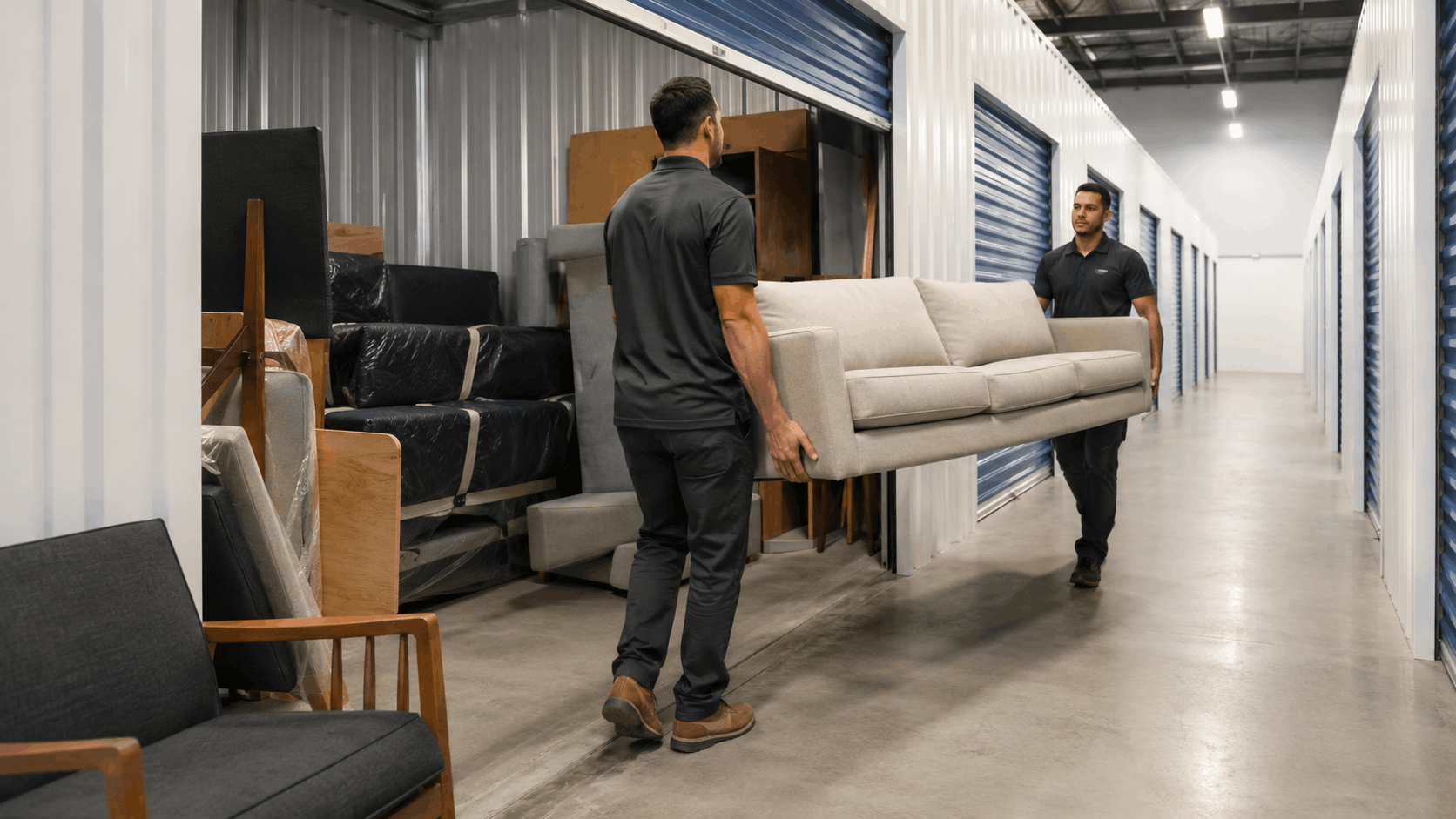
Full-service storage is the option most Westside professionals reach for when time is short. The crew arrives, wraps every piece, loads the truck, and carries it all to a secure facility. The owner never lifts a box or drives a mile.
The furniture pickup happens right at your home, on a schedule that fits your closing or move-out date. Each item gets padded and inventoried before it leaves. When you are ready for it back, the same team delivers and places it in your new home.
This fits the reality of Brentwood and Santa Monica life, where people are working long hours and cannot spend a weekend hauling a couch up stairs. It also cuts handling, since the pieces move fewer times overall. Our storage solutions combine the move and the hold so nothing gets lost between two companies.
The tradeoff is cost. You pay for the labor and the transport on both ends. For households with real furniture value or a packed schedule, that tradeoff is usually worth it.
Traditional Self-Storage Units and What Sizes Hold
Self-storage units give you a locked space you fill and access yourself. They range from small closets to garage-sized rooms, and picking the right unit size saves real money. Too big and you pay for air, too small and you cannot fit the last dresser.
A 5x5 unit holds a few boxes, a mattress set, and small items, roughly a studio's worth of extras. A 5x10 fits the contents of a one-bedroom, including a sofa and a bed frame. A 10x10 handles a full one- or two-bedroom home with furniture and boxes.
Step up to a 10x15 for a two- or three-bedroom household. A 10x20, which is about the size of a one-car garage, holds a three- or four-bedroom home with appliances. Most Brentwood homes land in the 10x15 to 10x20 range once you count everything.
The catch with self-storage is the labor. You rent the truck, load it, drive it, and unload it into the unit. For a short gap on a small home, that can pencil out. For a large house, the physical work adds up.
Portable Containers Dropped at the Curb
Portable storage containers get dropped at your home so you can load them on your own timeline. Once packed, the company hauls the container to a yard or leaves it in place. The flexibility appeals to DIY movers who want to pack over several days.
The problem on the Westside is space and permits. Many Santa Monica streets are narrow, and a container parked at the curb blocks traffic and parking. The city requires street permits for containers left on public roadways, and rules get stricter near the beach.
Parking restrictions near Ocean Park, Main Street, and the pier zone make curbside drops tricky. Some blocks have permit-only parking or street sweeping schedules that a container would violate. A container on a private driveway avoids most of this, but not every home has the room.
Containers also sit outside, exposed to the marine layer and temperature swings, unless they move to a covered yard. For coastal furniture, that exposure is a real concern we cover in the next section.
Short-Term Versus Long-Term Storage Choices
Matching the term to your move keeps you from overpaying or scrambling for an extension. Short-term storage, on a month-to-month basis, fits closing gaps and lease overlaps that run a few weeks. You pay only for the time you use.
Long-term storage suits renovations, estate sorting, and overseas moves that stretch past several months. Facilities often discount longer commitments, and vaulted holds protect items better over many months. Our long-term storage options serve families who need a stable hold for a year or more.
A good rule: if you know the gap is under two months, choose month-to-month and keep flexibility. If the hold runs six months or longer, a longer plan usually saves money and adds better protection.
When you are unsure how long the wait will be, book month-to-month with a facility that lets you convert later. That way a stalled remodel or a delayed close does not force a costly rebooking.
Need Help in Los Angeles?
Popeye Moving & Storage serves Los Angeles and all of Los Angeles County.
The Climate Question: Coastal Air and Your Furniture
The ocean makes the Westside beautiful and hard on stored belongings at the same time. Coastal humidity, salt in the air, and daily temperature swings all work against wood, fabric, and metal. Understanding how the climate affects your furniture helps you choose between climate-controlled storage and a standard unit.
Furniture protection starts with knowing what you are up against. A piece that would sit fine in a dry inland warehouse can warp or grow mildew in a humid coastal unit within a season. Here is how the local air does its damage.
How Marine Layer Moisture Affects Wood and Fabric
The morning marine layer that rolls over Santa Monica and Ocean Park carries moisture inland every day. That humidity soaks into the air inside storage units, especially ones without climate control. Over weeks, it settles into porous materials.
Wood absorbs that moisture and swells, then dries and shrinks when the air changes. This cycle causes warping, split joints, and cracked veneer. We have opened units after a coastal summer to find a solid oak table with a bowed top that never sat flat again.
Fabric and upholstery are worse. Damp air feeds mildew, and a sofa stored in a humid unit can grow spots within a month or two. The musty smell often never comes out, even after cleaning. Leather stiffens and cracks in the same conditions.
The closer the unit sits to the coast, the higher the baseline humidity. A facility in Santa Monica or Marina del Rey deals with more marine moisture than one a few miles inland, which changes the math on climate control.
When Climate-Controlled Storage Is Worth the Cost
Climate-controlled units hold steady temperature and humidity year round. That stability matters most for items that react to moisture and heat. Antiques, solid wood furniture, leather pieces, electronics, musical instruments, and artwork all belong in a controlled space.
Antique storage is the clearest case. Old wood and delicate finishes cannot survive coastal humidity swings, and a valuable piece can lose thousands in value from a single damp season. Fine art and framed pieces face the same risk from moisture and mold.
The cost difference runs roughly 25 to 50 percent above a standard unit of the same size. A standard 10x10 might run $180 to $250 a month on the Westside, while a climate-controlled version runs $250 to $375. For furniture worth protecting, that gap is small insurance.
For a household storing only budget furniture headed for donation anyway, a standard unit is fine. The decision comes down to what your items are worth and how long they will sit.
Protecting Items in Non-Controlled Units
Not every household can justify climate control, and a standard unit works with the right prep. Moisture protection starts with getting items off the floor. Set furniture on pallets or foam blocks so damp does not wick up from the concrete slab.
Drop several moisture absorbers, like desiccant buckets or hanging dehumidifier packs, throughout the unit. These pull water out of the air and need replacing every month or two. They cost little and prevent a lot of mildew.
Use breathable covers instead of plastic. Plastic traps moisture against the surface and creates a sweat chamber that grows mold. Cotton sheets, moving blankets, and canvas covers let furniture breathe while keeping dust off.
Leave a small air gap between items and the unit walls. Walls collect condensation, and furniture pressed against them soaks it up. These simple storage tips let budget-minded households store safely without paying for climate control.
Salt Air Concerns for Homes Near the Pier
Homes near the Santa Monica Pier and the beach deal with salt air on top of humidity. Salt speeds up corrosion on any metal, and it settles onto surfaces even a few blocks inland. Metal furniture, appliances, and hardware all suffer near the coast.
Salt air corrosion shows up as rust on bed frames, patio furniture, and appliance panels. Refrigerators and washers stored close to the beach can develop rust streaks within months. The chrome and steel on modern furniture pits and dulls.
Wiping metal down and coating it with a light protectant before storage slows this. Storing metal items in a controlled or inland facility avoids most of the risk entirely. For clients right by the pier, we often recommend moving valuable metal pieces to a unit set back from the water.
Appliances also hold trapped moisture inside drums and lines. Drying them fully and leaving doors cracked prevents interior rust and odor during a long coastal hold.
What Storage Costs on the Westside
Storage cost on the Westside runs higher than inland Los Angeles, and the coastal zip codes near Santa Monica sit at the top of the range. Knowing the storage pricing and what drives it up or down helps you budget without surprises. Below are honest Westside storage rates from what we see in the market.
| Unit Size | Holds | Standard Monthly | Climate-Controlled Monthly |
|---|---|---|---|
| 5x5 | Studio extras, boxes | $60 - $95 | $90 - $130 |
| 5x10 | One-bedroom | $110 - $160 | $150 - $220 |
| 10x10 | Two-bedroom | $180 - $250 | $250 - $375 |
| 10x15 | Three-bedroom | $240 - $330 | $330 - $475 |
| 10x20 | Four-bedroom home | $300 - $425 | $425 - $600 |
Monthly Rate Ranges by Unit Size
Monthly storage rates scale with the space you rent. A small 5x5 for a few boxes runs $60 to $95 in a standard unit. A large 10x20 that holds a four-bedroom home runs $300 to $425 standard, and more with climate control.
Coastal zip codes push these numbers up. A unit in Santa Monica or Marina del Rey often runs 15 to 30 percent higher than the same size in a facility a few miles east. Land near the beach costs more, and that flows into unit pricing.
Climate-controlled versions add another 25 to 50 percent. When you compare quotes, always match the size and the climate feature so you are looking at true equals. A cheap quote sometimes turns out to be a smaller or non-controlled unit.
Right-sizing matters most here. Paying for a 10x20 when a 10x15 would hold everything wastes $60 or more every month. A simple inventory before you book keeps you in the right size.
Hidden Fees to Watch For
The advertised rate is rarely the full storage cost. Many facilities add an admin or setup fee of $20 to $50 when you sign. Some require you to buy their lock or a specific cover.
Insurance is another line item. Some places require proof of coverage or sell you a policy at $10 to $30 a month on top of rent. Read whether coverage is included or added, since it changes the real monthly number.
Access charges show up at a few facilities too. After-hours entry, gate cards, or elevator use can carry fees. Ask up front so a late-night furniture grab does not cost extra.
Watch for rate hikes after an introductory period. A facility might advertise a low first month then raise the rate sharply in month three. Ask what the standard ongoing rate is before you commit to a long hold.
How Pickup and Delivery Affect the Total
With a moving and storage combo, the transport adds to the total beyond the monthly rent. Pickup, wrapping, and delivery are labor and truck time, priced by crew size and hours. A full four-bedroom pickup on the Westside might run several hundred to over a thousand in labor each way.
Distance from the facility to your home affects delivery cost. A hold near your Brentwood or Santa Monica home keeps drive time short and the bill lower. A cheaper distant facility can cost more once you add the mileage on both ends.
The value of the combo is fewer handling steps and one accountable team. When one crew wraps, stores, and redelivers, your furniture moves fewer times and nobody points fingers over damage. Our local residential moving team pairs the move with the hold so the whole job stays under one roof.
Ask for an itemized quote that separates monthly storage from transport labor. That way you can see exactly what the gap between homes will cost start to finish.
Ways to Keep Storage Bills Reasonable
The best way to save on storage is to store less. Declutter before storing by selling, donating, or tossing anything you will not want in the next home. Every item you cut shrinks the unit size you need.
Right-sizing the unit is the next lever. Do a real inventory and match it to a size chart rather than guessing big. Moving from a 10x20 to a 10x15 can save $60 to $95 a month over a long hold.
Choose month-to-month terms for short gaps so you never pay past the day the furniture leaves. For long holds, ask about a multi-month discount. Facilities often drop the rate for a six-month or annual commitment.
Finally, book off-peak when you can. Storage demand and prices climb during summer and at month-end. A mid-month, off-season start sometimes locks in a better rate.
Getting Furniture From a Westside Home to Storage
Moving furniture out of a Santa Monica or Brentwood property is a logistics puzzle before it is a lifting job. Westside logistics means narrow streets, permit zones, building rules, and traffic that all shape how moving day goes. Our crews work these access points daily, so here is what to plan for.
Narrow Streets and Parking Near San Vicente Boulevard
The tree-lined streets around San Vicente Boulevard look lovely and move trucks poorly. Coral trees on the median and parked cars on both sides leave little room for a 26-foot moving truck. A crew often has to shuttle items a longer distance from the door to the truck.
Moving truck parking is the first thing we scout. On many Brentwood and Santa Monica blocks, we arrange a temporary no-parking permit from the city so the truck can sit close to the home. That permit reserves curb space and saves hours of carrying.
Santa Monica issues temporary parking permits for moves through its permit office, and applying a few days ahead avoids problems. Without one, a truck may get boxed out or ticketed. You can review the city's rules through the City of Santa Monica resources before your move date.
For homes on the steepest or narrowest streets, we sometimes stage a smaller shuttle truck. It ferries furniture from the door to a larger truck parked where it fits legally.
Elevator and Stairwell Access in Santa Monica Condos
Downtown Santa Monica has plenty of condos and apartments with strict move rules. Condo moving usually means reserving a service elevator and a loading dock window in advance. Many buildings only allow moves on weekdays during set hours.
Elevator reservation is the piece people forget. Buildings near Ocean Avenue and Wilshire often require a booking days ahead and a certificate of insurance from the mover. Show up without the reservation and the front desk can turn the crew away.
Loading docks have their own limits. Some fit only one truck, and some cap the time you can occupy the dock. We call the building management ahead of every condo job to confirm dock size, elevator pads, and any freight elevator height limits.
Stairwells matter when the elevator is small or booked. A tight turn in a stairwell can stop a large sofa cold. Measuring the path in advance tells us whether a piece needs to come apart or take a different route.
Wrapping and Padding to Prevent Damage
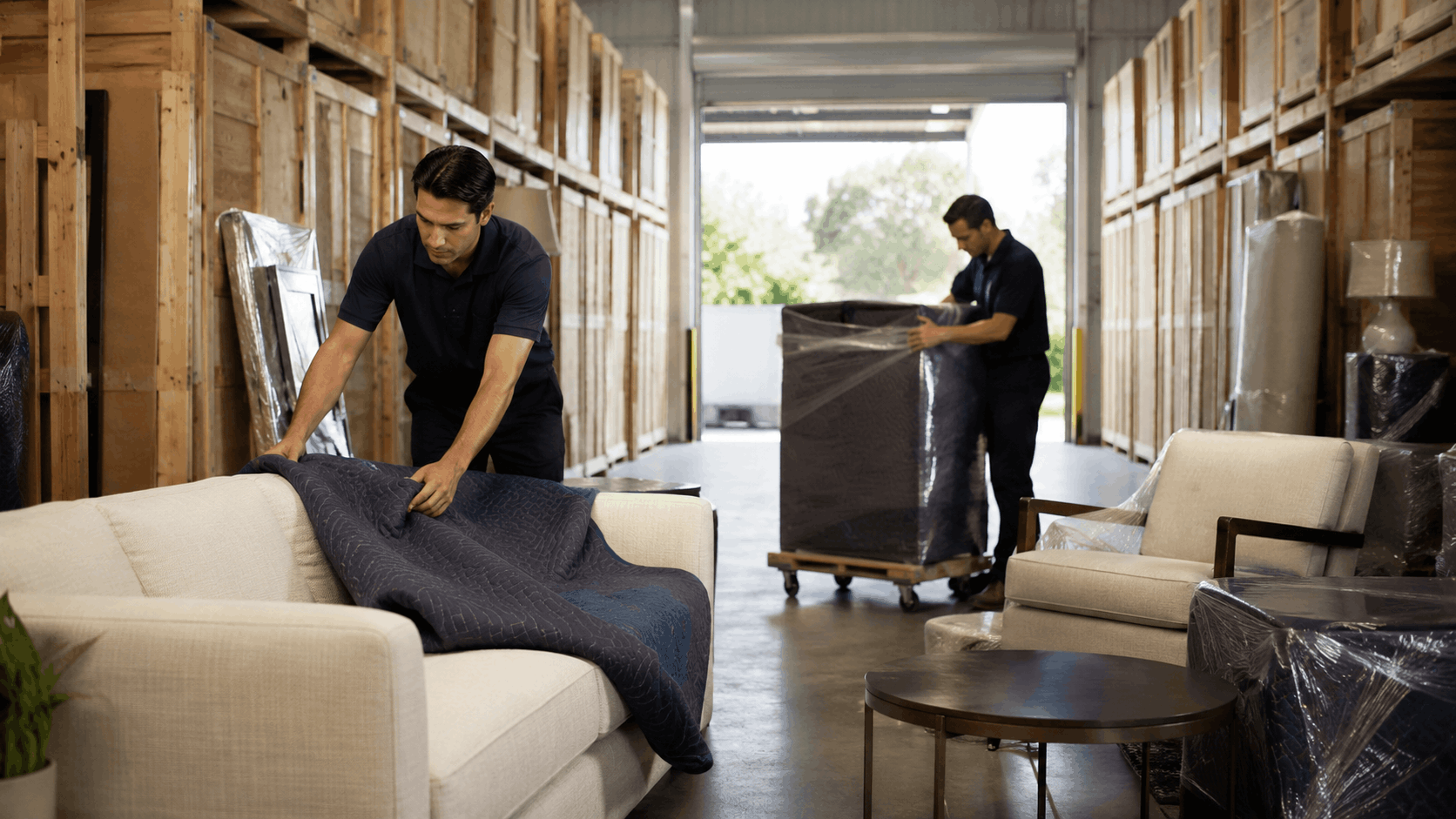
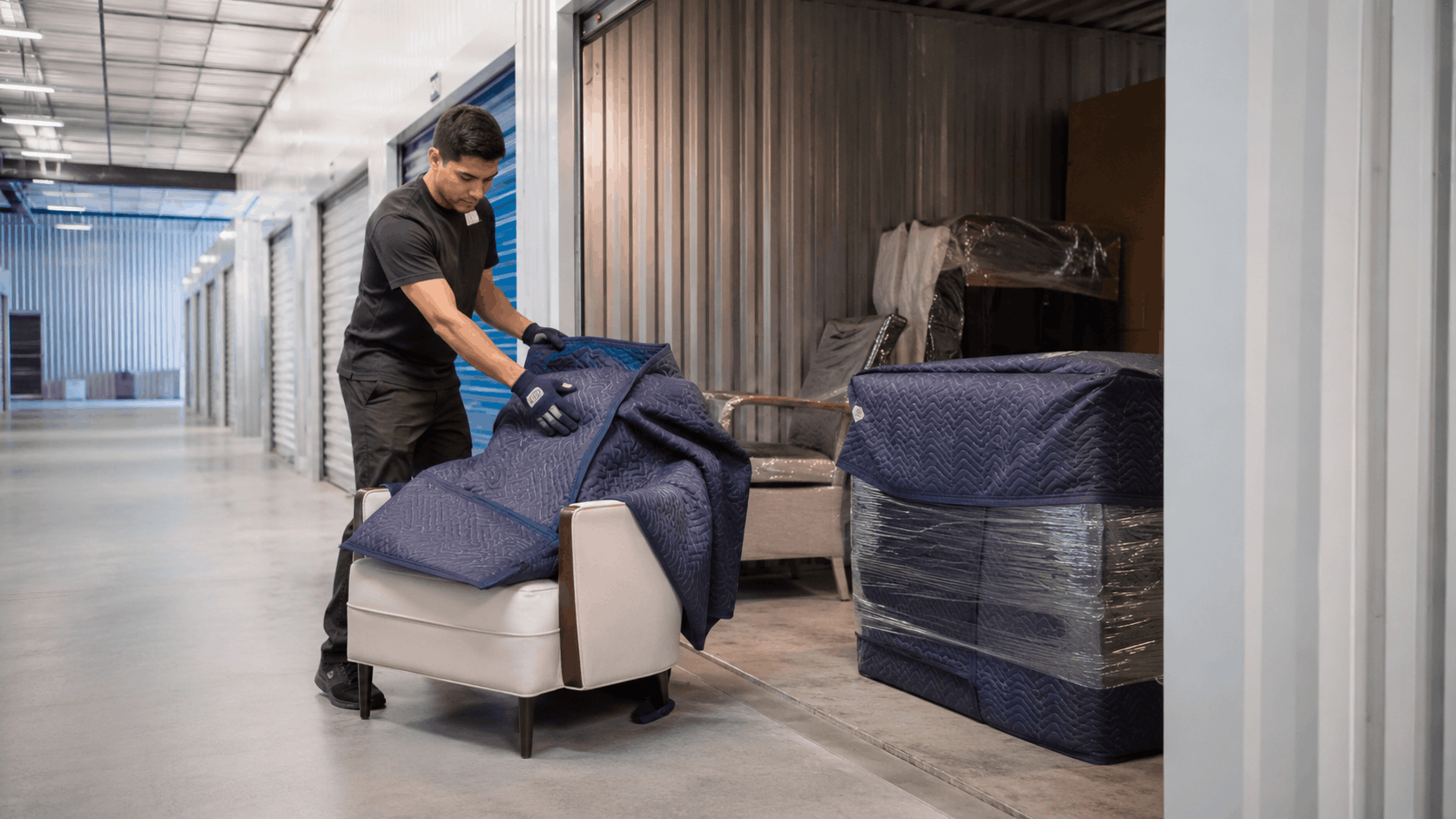
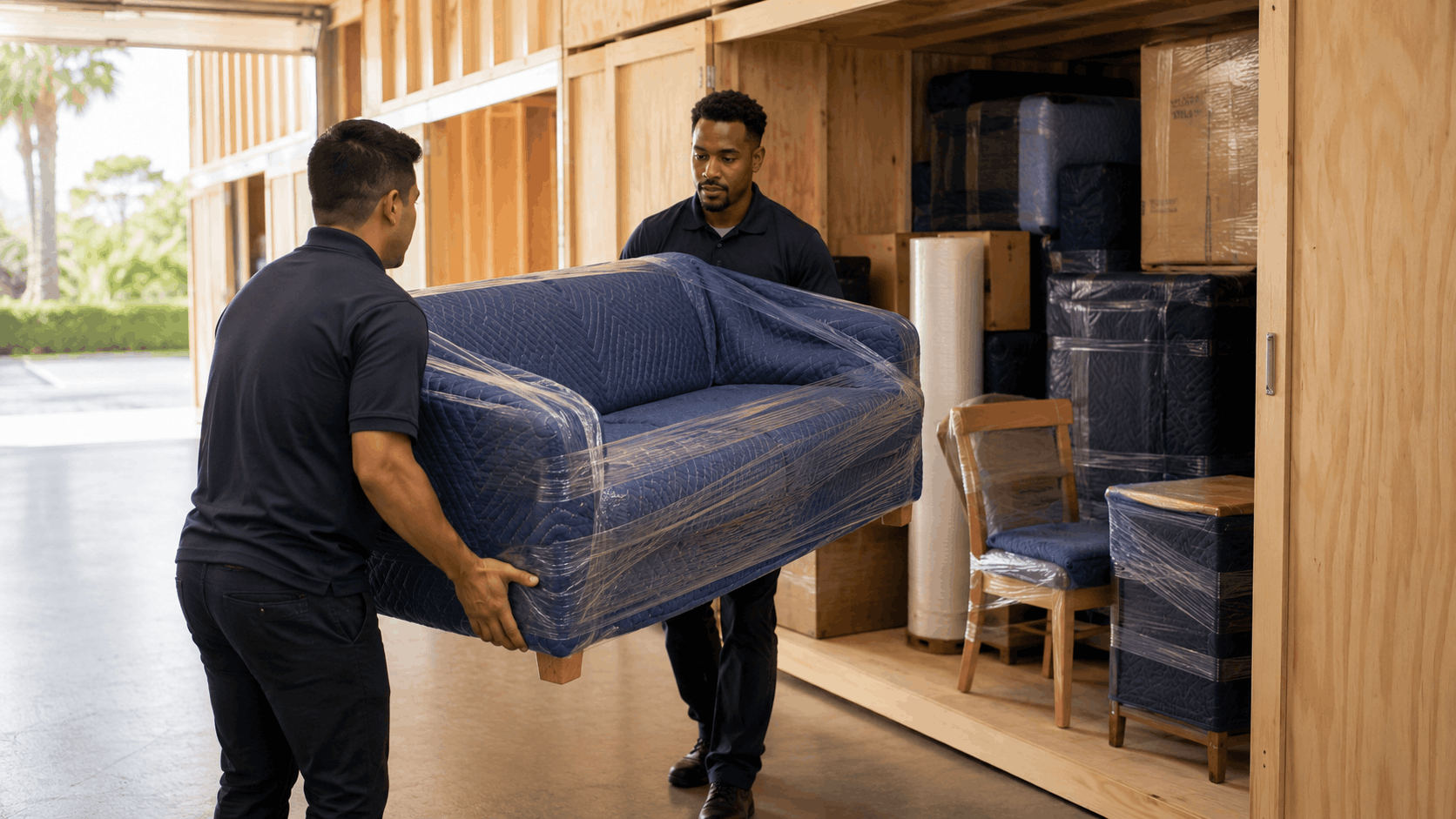
Good furniture wrapping protects pieces both on the trip and during the whole storage stay. Every item gets moving blankets first, secured with tape or straps that never touch the finish. Blankets cushion corners and stop rub marks in transit.
Shrink wrap goes over blankets on upholstered pieces to keep the padding in place and block dust. For long holds, we avoid wrapping wood tightly in plastic, since that traps the coastal moisture we warned about. Wood gets padded and covered with breathable material instead.
Mirrors, glass tops, and art get corner protectors and cardboard or crating. Our packing and crating service builds custom crates for fragile and high-value pieces headed into storage.
The wrapping that survives long-term is different from a short local move. When furniture will sit for months, we pad for both bumps and airflow, which keeps pieces intact from pickup to redelivery.
Timing the Move Around Westside Traffic
Westside traffic can add an hour to a move that should take twenty minutes. The 10 Freeway and Wilshire Boulevard crawl during rush hour, and a truck stuck in traffic burns paid labor time. Timing the move around the worst of it saves money and stress.
We schedule most Westside pickups to start early, before the morning crush builds on the 10. A crew that loads by mid-morning beats the midday and evening jams heading to and from the facility. That keeps the moving schedule tight.
Month-end and summer weekends are the busiest windows. Streets fill with other movers, and parking gets scarce. Booking a mid-week or mid-month slot when possible means a smoother day.
Beach traffic adds another wrinkle near the coast. Weekend crowds heading to the pier and the beach clog the roads around Ocean Park and Main Street. We route trucks to avoid those choke points on busy days.
Need Help in Los Angeles?
Popeye Moving & Storage serves Los Angeles and all of Los Angeles County.
Packing Furniture So It Survives Months in Storage
Furniture storage prep is where a smooth retrieval is won or lost. Packing furniture for a long hold is different from prepping for a short move, and skipping steps ruins pieces. Here is how to get furniture ready for weeks or months in a Westside unit.
Disassembling Beds, Tables, and Large Pieces
Furniture disassembly saves space and prevents breaks. Bed frames, table legs, headboards, and modular sofas should come apart before storage. Flat parts stack tighter and take far less room than assembled pieces.
Bag and label every screw, bolt, and bracket as you go. Tape the labeled bag to the underside of the matching piece so nothing gets lost. Reassembly at the new home goes smoothly when the hardware is right there.
Disassembly also protects joints. A table left standing under other boxes can crack at the legs, while a broken-down top and legs store flat and safe. The same goes for bed frames, which warp under load if left whole.
Photograph complex pieces before taking them apart. A phone photo of how a bed or shelf unit fits together is worth a lot when you rebuild it months later.
Cleaning and Drying Before You Store
Cleaning before storage is not optional on the coast. Food crumbs, body oils, and dust feed mold once a piece sits in a humid unit. Vacuum upholstery, wipe down wood, and clean any spills before anything goes in.
Drying is even more important than cleaning for mold prevention. Any piece that is even slightly damp will grow mildew in a sealed unit within weeks. Let cleaned upholstery and wiped wood dry completely, over a day or two, before wrapping.
Coastal moisture makes this matter more than it would inland. The marine layer keeps humidity high, so a piece that was fine in a dry climate can bloom mold here. A little care up front prevents a ruined sofa later.
Appliances need draining and drying too. Empty and dry refrigerator and washer lines fully, then leave doors propped open to prevent trapped moisture and odor during the hold.
Covering Mattresses, Sofas, and Leather
Soft goods need the right covers or they suffer. Mattress covers keep dust and pests out, but they should be breathable fabric, not sealed plastic. A plastic-wrapped mattress in a humid unit sweats and grows mold inside.
Sofa protection follows the same rule. Cover fabric sofas with cotton sheets or breathable furniture covers so air can move through. Plastic traps the coastal humidity against the fabric and creates the exact damp trap you want to avoid.
Leather needs extra care. Wipe it with a leather conditioner before storage, then cover with a breathable cloth. Leather stored damp or under plastic cracks and grows mold, and the coastal air makes both worse.
Stand mattresses on their long edge only for short holds, and lay them flat for long ones so coils do not settle unevenly. Keep all soft goods off the concrete floor on pallets.
Stacking and Loading the Unit Correctly
Loading a storage unit right protects everything inside for the whole stay. Put heavy, sturdy items on the bottom and lighter, fragile ones on top. A dresser or crated appliance forms a solid base; a lamp or box of dishes rides up high.
Leave an aisle down the middle if you might need access. Stacking furniture wall to wall means digging everything out to reach one item. A center aisle lets you grab what you need without unloading the whole unit.
Keep nothing pressed against the walls. Unit walls collect condensation in coastal weather, and furniture touching them soaks up moisture. A few inches of gap all around lets air circulate and keeps pieces dry.
Balance the stack so nothing leans or teeters. A tall stack that shifts over months can topple and crush what is below. Even weight and stable footing keep your load intact until redelivery.
How Popeye Moving & Storage Co. Handles Westside Households
Our team is based right here in Los Angeles, and we run Santa Monica and Brentwood jobs week in and week out. Combining moving and storage under one company is what makes the gap between homes manageable for the families we serve. Here is how we handle it.
Combined Moving and Storage Under One Roof
Using one company for pickup, storage, and redelivery cuts handling at every step. Instead of a mover loading, a storage crew unloading, and a third team redelivering, one crew handles the whole chain. Fewer hands on your furniture means fewer chances for damage.
It also simplifies scheduling. We time pickup to your closing or move-out date and hold the furniture as long as the gap runs. When the new home is ready, the same team brings everything back.
One point of contact keeps things clear. You call one number for the move, the storage question, and the redelivery date. Popeye Moving handles the Los Angeles storage and the move together so nothing falls through a crack between vendors.
That single accountability matters most when something needs attention. There is no finger-pointing between a mover and a storage company, because it is all our responsibility.
Local Crews Who Know Westside Access Points
Our local movers know the Westside access points cold. They know which Brentwood gated communities need a guard call ahead, which Santa Monica blocks require a parking permit, and which condo buildings hold strict elevator hours. That knowledge saves time on every job.
We handle homes in the Brentwood neighborhood and across the Wilshire Montana area of Santa Monica regularly. The crews have driven San Vicente, worked the streets near Montana Avenue, and staged shuttle trucks on the narrow lanes near Ocean Park.
That familiarity means fewer surprises on moving day. We know where a big truck fits, where it does not, and how to get furniture out of a tricky property without damage. Westside access is not something we learn on the fly; it is our daily route.
We serve the wider coast too, from our Santa Monica work down to Marina del Rey and beyond. The local knowledge carries across every one of those neighborhoods.
Inventory Tracking and Redelivery
Every item that enters storage gets logged with inventory tracking. We tag and record each piece so you know exactly what is being held and where. Nothing gets lost in a warehouse full of other households' goods.
That inventory makes redelivery clean. When you are ready, we pull your items against the list and confirm everything is accounted for before it leaves the facility. You get back exactly what you stored.
Furniture redelivery runs on your schedule. If the new home is ready in three weeks or five months, we deliver when you say. Flexible scheduling means the storage hold ends the day your next place is ready, not before or after.
We place pieces in the right rooms on redelivery too. The crew that knows your inventory sets the furniture where it belongs, so unpacking starts from an organized home rather than a pile in the entry.
Insurance and Protection Options
Higher-value Westside furniture and art deserve real coverage. Moving insurance comes in tiers, and we walk clients through the choices before the job. The basic option protects at a set rate per pound, which is limited for valuable pieces.
Valuation coverage goes further. Full-value protection covers the actual worth of an item if it is damaged or lost, which matters for antiques, fine art, and designer furniture common in Brentwood and Santa Monica homes. The premium is small next to the value it protects.
We explain what each option covers during storage and transport so there are no gaps. A piece is only truly protected if the coverage matches its worth. The federal FMCSA Protect Your Move resource is a good primer on how moving valuation works.
For art and delicate items, we pair the right coverage with proper crating. Protection is both physical and financial, and we set up both before the furniture leaves your home.
Need Help in Los Angeles?
Popeye Moving & Storage serves Los Angeles and all of Los Angeles County.
Choosing the Right Storage Setup for Your Situation
Choosing storage comes down to your move type, your timeline, and your budget. All the detail above points toward one clear storage decision for your specific situation. Here is how to turn it into a moving plan.
Questions to Ask Before Booking a Unit
Before booking storage, ask the right questions so there are no surprises. Start with access: what are the hours, and can you get in after hours or on weekends? Confirm whether elevator or gate use carries a fee.
Ask about climate control next. Find out whether the unit holds steady temperature and humidity, which matters for wood and art near the coast. A facility that dodges the question probably does not offer real control.
Cover insurance and terms too. Ask whether coverage is required, included, or sold separately, and what it protects. Confirm the term, the ongoing rate after any intro period, and the notice needed to move out.
Finally, ask about handling if it is full-service. Find out how items are wrapped, tracked, and redelivered, and who is accountable if something goes wrong. These storage questions separate a solid facility from a risky one.
Matching Storage Length to Your Move Timeline
Match the storage timeline to how long your gap really runs. For a short escrow gap or lease overlap of a few weeks, month-to-month terms with flexible terms keep costs low and options open. You are not locked in past the day the furniture leaves.
For a renovation that could run three to six months, plan for a longer hold and ask about a multi-month rate. Remodels almost always run long, so build in a buffer rather than betting on the contractor's optimistic finish date.
Overseas and long-distance moves need the longest planning. Furniture may sit for many months while you settle abroad or wait on a new home across the country. Our international moving service coordinates storage with shipping timelines so nothing sits unaccounted for.
When the timeline is uncertain, book flexible and convert later. A month-to-month start that can extend beats a rigid contract you have to break.
When to Store Everything Versus Just Some Items
Deciding between full household storage and partial storage depends on your next home and budget. If you are moving between homes of similar size with a clean gap, storing everything and redelivering makes sense. It keeps the household intact for one clean move-in.
Partial storage fits downsizing and renovations. If the next home is smaller, store only the pieces you know you are keeping and deal with the rest now. Paying to store furniture you will donate later wastes money every month.
During a remodel, you might store only the rooms under construction and live around the rest. A kitchen redo does not require emptying the bedrooms. Store what is in the way and keep the rest at home.
Run the numbers on borderline pieces. If storing an item for six months costs more than replacing it, let it go. That math often trims a full load down to a smaller, cheaper unit.
Planning Ahead for Peak Moving Season
Peak moving season on the Westside runs summer and month-end, and demand pushes both availability and prices up. Advance booking locks in your crew, your unit, and a better rate before the rush. Waiting until the last week can leave you with slim options.
Summer is busiest because families move around the school calendar and leases turn over. June through August, good movers and units book out early. Reserve two to four weeks ahead during these months.
Month-end is crowded year round, since most leases end on the last day. If your dates are flexible, a mid-month move is easier to book and often cheaper. Even shifting a few days helps.
For a last-minute gap you did not see coming, we still help. Our last-minute moving service handles the sudden closings and lease surprises that hit Westside households, though booking early always gives you more choice.

Final Thoughts
The gap between homes is a normal part of Westside life, whether it comes from a staggered close, a remodel near Montana Avenue, or a lease overlap in Ocean Park. The right storage plan bridges that gap and returns your furniture in the same shape it left. The coastal climate, the cost ranges, and the access quirks all shape which setup fits your situation.
Getting the details right, from climate control to proper wrapping to the right unit size, is the difference between a smooth transition and a ruined sofa. When one team handles the move and the storage together, the whole process gets simpler and safer.
Our Los Angeles crews know these neighborhoods and handle Santa Monica and Brentwood households every week. If you have furniture that needs somewhere to go between homes, contact Popeye Moving & Storage Co. for a consultation and a straight quote. Call us and we will map out the pickup, the hold, and the redelivery around your timeline.
Frequently Asked Questions
- How much does furniture storage cost in Santa Monica?
- Furniture storage in Santa Monica runs higher than inland Los Angeles because of coastal land costs. A small 5x5 unit runs about $60 to $95 a month, a 10x10 that holds a two-bedroom runs $180 to $250, and a 10x20 for a four-bedroom home runs $300 to $425. Climate-controlled units add 25 to 50 percent. Full-service pickup and delivery are priced separately by labor and distance.
- Do I need climate-controlled storage on the Westside?
- It depends on what you are storing. Antiques, solid wood furniture, leather, electronics, art, and instruments should go in climate-controlled units, since coastal humidity warps wood and grows mildew. Budget furniture headed for donation can sit in a standard unit with moisture absorbers and breathable covers. The closer you are to the coast, the more the marine layer moisture matters and the stronger the case for climate control.
- How long can furniture safely stay in storage?
- Well-prepped furniture can store safely for months or even years. The keys are cleaning and drying pieces fully before storage, using breathable covers, keeping items off the concrete floor, and controlling humidity. On the Westside, moisture absorbers and airflow prevent mold during long holds. Checking on a long-term unit every few months, replacing desiccants, and confirming nothing has shifted keeps everything in good condition.
- Can movers pick up my furniture and store it for me?
- Yes. Full-service moving and storage means our crew arrives, wraps and pads every piece, loads it, and carries it to a secure facility. You never lift a box. We log each item, hold it as long as your gap runs, and redeliver to your new home on your schedule. This fits busy Westside households and cuts handling since one team manages the whole chain.
- What size storage unit do I need for a Brentwood home?
- As a rough guide, a one-bedroom fits a 5x10, a two-bedroom fits a 10x10, a three-bedroom needs a 10x15, and a four-bedroom home fits a 10x20. Most Brentwood homes land in the 10x15 to 10x20 range once you count furniture and appliances. A brief inventory before booking helps you avoid paying for a unit that is too large.
- Do I need a permit to place a storage container on my street?
- In Santa Monica, a storage container left on a public street usually requires a temporary permit from the city, and rules get stricter near the beach and permit-only zones. A container on your private driveway avoids most of this. Check current rules with the City of Santa Monica before scheduling a curbside drop, and apply several days ahead to avoid tickets or removal.
- How do I protect wood furniture from coastal moisture?
- Dry wood pieces fully before storage, then keep them off the concrete on pallets or foam blocks. Cover with breathable material like cotton or moving blankets rather than plastic, which traps moisture. Place desiccant packs or moisture absorbers around the unit and replace them monthly. Leave an air gap between furniture and unit walls, which collect condensation. Climate-controlled storage removes the risk entirely for valuable wood.
- Is my stored furniture covered by insurance?
- Coverage depends on the option you choose. Basic released valuation protects at a set rate per pound, which is limited for valuable pieces. Full-value protection covers the actual worth of a damaged or lost item and is worth it for antiques, art, and designer furniture. We walk clients through the choices before the job so the coverage matches the value of what is being stored.
- How far in advance should I book storage during summer?
- Book two to four weeks ahead during summer and at month-end, when demand and prices on the Westside climb. Good movers and units fill early around the school calendar and lease turnovers. If your dates are flexible, a mid-week, mid-month move is easier to book and often cheaper. For sudden closings, we still help through last-minute service, but early booking gives more choice.
- Can I access my belongings while they are in storage?
- With traditional self-storage, you access your unit on the facility's hours whenever you want. With full-service storage, items sit in a managed warehouse, so you arrange retrieval by contacting us ahead of time and we pull the pieces you need. If you expect to need occasional access, tell us up front so we can store your load in a way that makes retrieval easy.
Popeye Moving & Storage Co. Team Team
Licensed moving and storage professionals serving Los Angeles and Los Angeles County.
Licensed in California · License #CAL T 189749 | USDOT 1472924 | MC 498816C
Why trust Popeye Moving & Storage?
Founded in 1994, Popeye Moving & Storage is a licensed and insured moving and storage service serving Los Angeles and Los Angeles County. All content is reviewed by our licensed technicians.

Need Help in Los Angeles?
Popeye Moving & Storage serves Los Angeles and all of Los Angeles County.
Related Articles
Santa Monica Movers North of Montana: Coastal Estate Service
A local guide to estate moving north of Montana Avenue in Santa Monica, covering coastal conditions, fragile crating, neighborhood logistics, storage, and permits.
Storage Between Escrow Fall-Through and the Next Offer: When the Sale Dies but the Truck Was Booked
Escrow died but the truck was already booked? Learn how LA sellers protect belongings, deposits, and sanity with short-term storage while waiting for the next offer.
Storage Near the 405 in West LA: What's Actually Available and Why a Mover-Run Warehouse Beats the Roll-Up Units
A clear guide to storage near the 405 in West LA, comparing roll-up self-storage units with a mover-run warehouse on cost, safety, and hassle for local movers.