Cost Guides
Antique Furniture Moving Cost LA: Heritage Item Specialists
Key Takeaways
- Moving a single antique piece in LA typically costs $150 to $600, while full estate collections run $2,500 to $12,000 or more.
- Size, weight, material, stairs, building access, distance, and custom crating are the main factors that raise or lower an antique moving quote.
- Heritage specialists protect pieces with blanket wrapping, foam corner guards, custom crates, and careful strapping inside the truck.
- Older LA neighborhoods like Highland Park, Hancock Park, Venice, and Downtown each bring unique access, parking, and elevator challenges.
- Full value protection is far better than basic released value coverage for antiques, and appraisals help set the right declared value.
- Climate-controlled storage prevents old wood from cracking or warping in LA heat and humidity, running roughly $150 to $400 per month.
- An in-home or video survey gives the most accurate quote, and vague lowball estimates with no detail are a major red flag.
In This Article
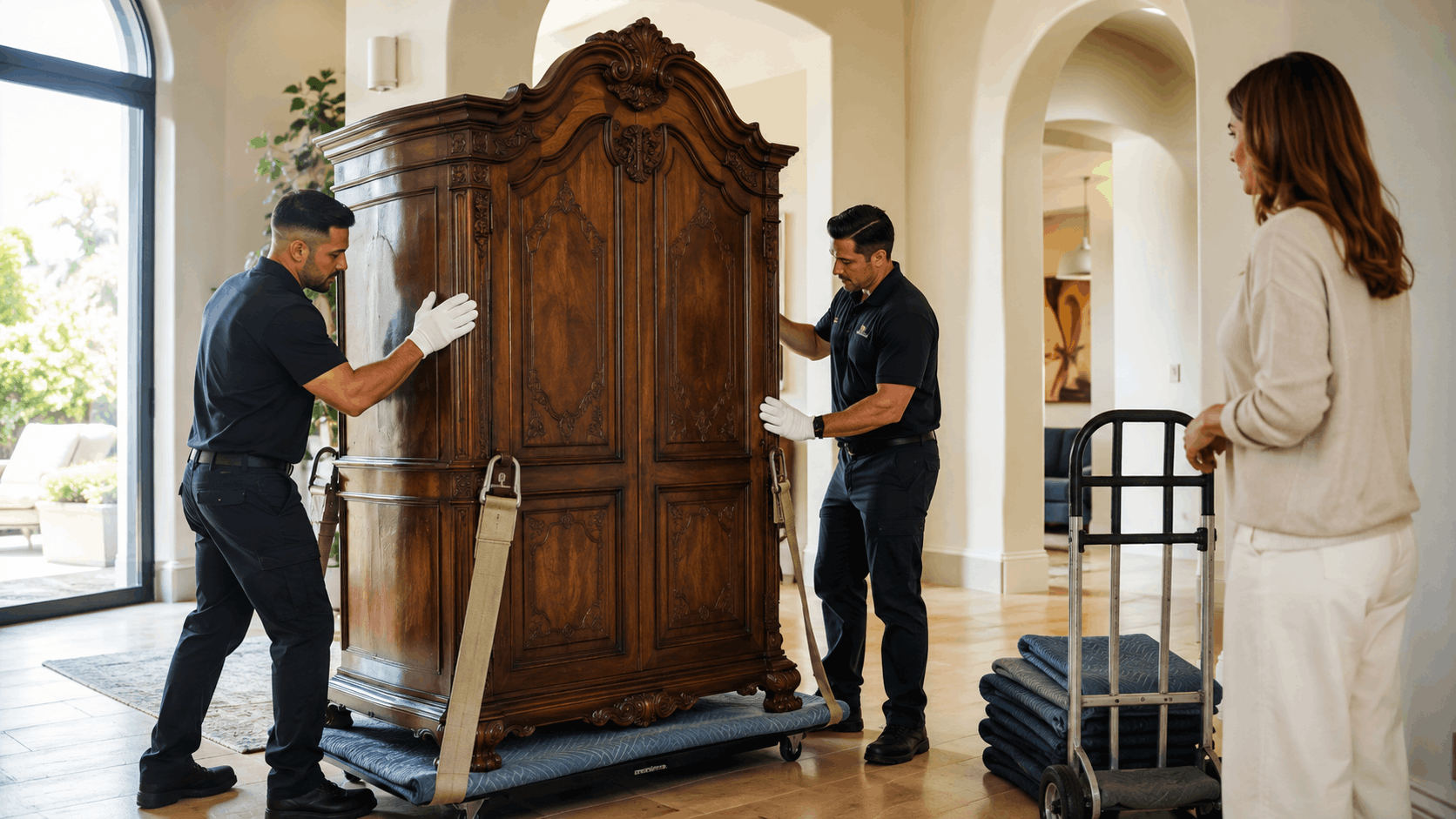
Last spring, a family in Highland Park called our office in a bit of a panic. Their grandmother's hand-carved walnut armoire had lived in the same room since 1952, and now it needed to travel across town to a new home in Santa Monica. They wanted to know one thing first: how much would it cost, and would the piece survive the trip?
That question comes up almost every week. Moving an antique is not like hauling a couch from a big-box store. These pieces carry family history, real dollar value, and finishes that took decades to age into something beautiful. One careless lift down a narrow staircase can crack a joint that no amount of money will truly replace.
What Antique Furniture Moving Costs in Los Angeles
Most people are surprised by how wide the range can be. A single antique chair and a full estate of Victorian pieces sit at very different ends of the price scale. Los Angeles moving rates for heritage work reflect the extra care, padding, and skilled hands these jobs demand.
Here is a plain look at what LA residents typically pay when we handle their treasured pieces:
- Single antique item, local move: roughly $150 to $600
- Hourly crew rate for delicate work: about $120 to $220 per hour for a two- or three-person team
- Custom crating add-on: $200 to $900 per piece depending on size and materials
- Full antique collection or estate move: $2,500 to $12,000 and up
The antique furniture moving cost depends heavily on the piece itself, the building, and the distance. Heritage item pricing is not one flat number, and any honest mover will tell you that up front.
Typical Price Ranges for Single Heritage Pieces
A single item move cost usually starts around $150 for something like a small side table or a wooden rocking chair with easy ground-floor access. These jobs go quickly and need only basic blanket wrapping and a couple of movers to load safely.
Larger pieces push the number higher. A tall oak wardrobe, a marble-topped buffet, or a grandfather clock can run $300 to $600 for a local move. The weight, the height, and the number of stairs all factor into antique piece pricing.
Stairs are the biggest single swing on a one-item job. Carrying a heavy armoire up two flights of a walk-up in Koreatown takes more crew and more time than sliding it into a ground-floor condo. We always ask about stairs before we quote so the price you hear is the price you pay.
For very fragile or high-value pieces, custom crating gets added on top. A gilded mirror or a glass-front curio cabinet may need a built-to-fit crate, which raises the single-item total but keeps the piece intact.
Hourly Rates vs. Flat-Rate Quotes
An hourly moving rate makes sense when the job is simple and predictable. If you have one or two antiques going a short distance with clear access, paying by the hour often costs less than a flat quote. Our crews typically bill $120 to $220 per hour for careful heritage work.
The catch with hourly billing is that traffic, stairs, and surprises can stretch the clock. A move that looked like two hours can turn into four if a doorway is tighter than expected or the freight elevator is booked by another tenant.
A flat rate quote protects you from those surprises. For delicate collections or moves with tricky access, we prefer to quote a fixed price after a survey. You know the cost ahead of time, and the crew is not rushing to beat a clock, which matters a great deal with fragile pieces.
For most single heritage items with straightforward access, hourly works fine. For anything valuable, layered, or spread across a big home, a flat rate almost always gives better protection and clearer budgeting. Our specialty moving team can advise which model fits your situation.
Whole-Collection and Estate Move Pricing
Moving a full antique collection changes the math entirely. Estate move cost depends on total volume, the number of fragile pieces, and how much custom crating is involved. A modest collection might run $2,500 to $5,000, while a large estate with dozens of valuable pieces can climb past $12,000.
Volume works in your favor to a point. When we send a larger crew and a bigger truck, the per-piece labor drops compared to booking single items one at a time. Antique collection moving is more efficient when everything travels together in one well-planned trip.
Estate moves also often need packing, crating, and short-term storage rolled into one project. We handle appraisable pieces, glassware, and framed art with separate care plans, then coordinate the whole move so nothing sits unprotected. Our packing and crating services often pair with these larger jobs.
The best way to price an estate move is a full walkthrough. We look at every piece, note the fragile ones, and build a line-item quote so the family sees exactly where the money goes.
Get Your Free Quote
Tell us about your move and we'll get back to you fast.
What Drives the Price Up or Down
Two antique moves that sound identical can have very different prices. The reason comes down to a handful of antique moving factors that any experienced crew watches closely. Once you understand the moving cost drivers, your estimate makes a lot more sense.
Here are the biggest factors that shift a quote:
- Size, weight, and material of each piece
- Stairs, doorways, and building access
- Distance and traffic across the city
- Custom crating and specialty packing materials
- Total number of fragile items
Furniture weight and fragility usually matter more than distance for a local job. A short move with three marble tables can cost more than a long haul with a few light chairs.
Size, Weight, and Material of the Piece
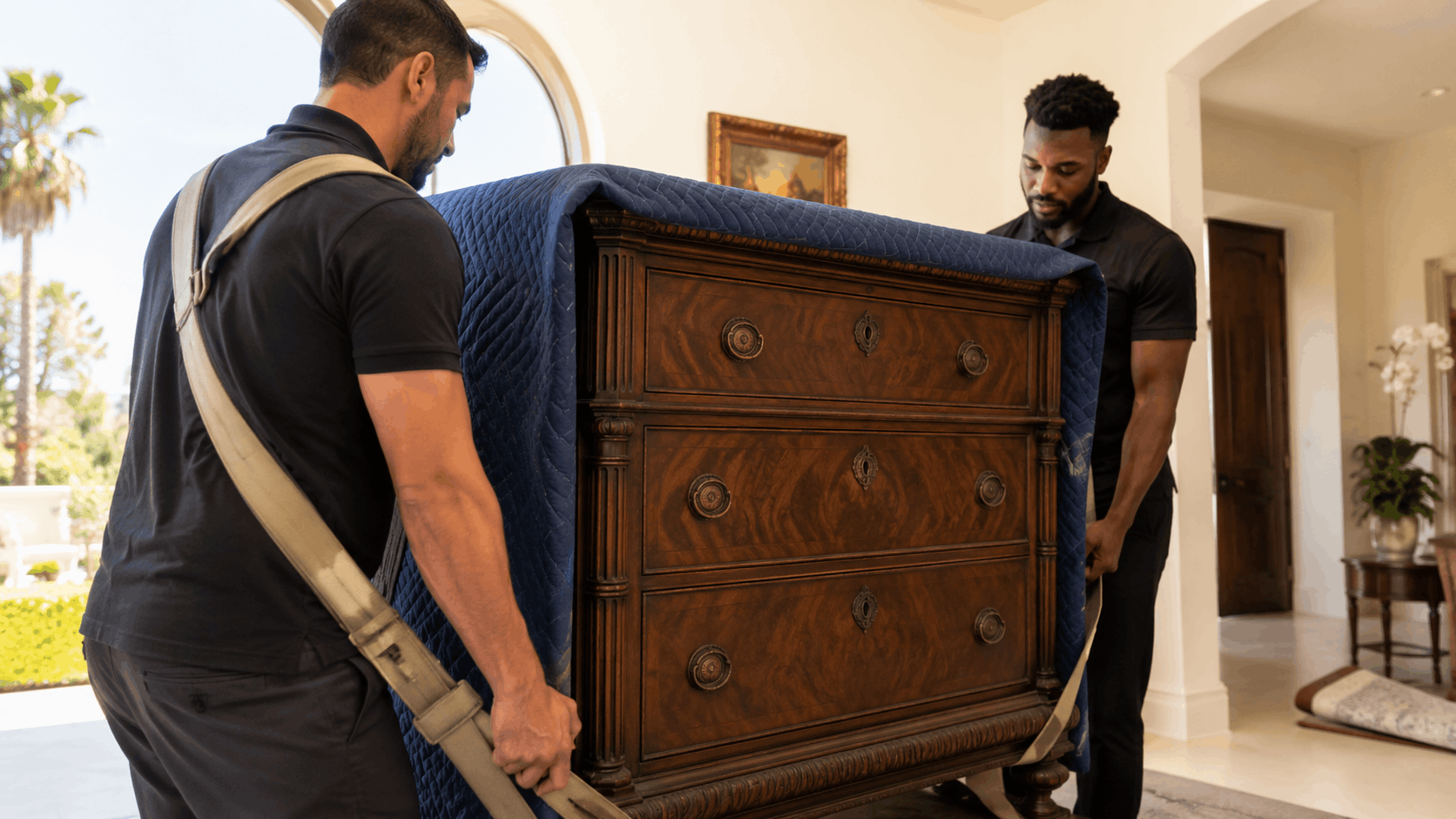
Heavy furniture takes more people and more time, and that shows up on the bill. A solid oak wardrobe or a cast-iron bed frame needs a larger crew and often specialized lifting straps to move safely without twisting a joint or scraping a finish.
Marble table moving is one of the trickiest jobs we handle. A marble top can weigh two or three hundred pounds on its own and cracks easily if it flexes. We separate the top from the base, crate or wrap it flat, and carry it upright with padded supports.
Material affects handling in less obvious ways too. Old veneer chips if you set a piece down wrong, and dried-out wood can split under pressure. Our crews adjust their approach based on what a piece is made of, not just how big it looks.
The heavier and more delicate the material, the more labor and protection the job needs. That is why a lightweight Windsor chair and a marble sideboard land in completely different price brackets even at the same address.
Stairs, Narrow Doorways, and Building Access
Access is where a lot of older LA homes surprise people. Many early-1900s houses in Pasadena and Angelino Heights have narrow staircases with tight turns at the landing. A stair carry fee often gets added when crews must haul heavy pieces up or down multiple flights.
Narrow doorway access is another common issue. Antique armoires and headboards were often built wider than modern doorways allow. Sometimes we remove a door from its hinges, and occasionally a piece has to come apart or go out through a window with rigging.
Walk-up buildings in Koreatown and parts of Hollywood add real labor time. Without an elevator, every trip up three flights burns minutes and muscle, and that time gets reflected in an hourly bill or built into a flat quote.
We always scout access before the move. Knowing about a spiral staircase or a locked service entrance ahead of time lets us bring the right crew size and equipment so nothing gets damaged in a rush.
Distance and Traffic Across the City
Cross-city moving in Los Angeles is as much about traffic as miles. A trip from Pasadena to Santa Monica looks short on a map, but the drive can eat two hours during a bad afternoon on the 10 or through downtown.
LA traffic moving cost matters most on hourly jobs. If a crew is billing by the hour and the 405 is crawling, that transit time adds up. We plan routes and timing to dodge the worst of it whenever possible.
We know the shortcuts. Getting from the Valley over to the coast, we choose our route based on the time of day, whether that means the 101 through Hollywood or dropping down Sepulveda to avoid a jammed 405. Our Los Angeles moving crews drive these roads every day.
For longer hauls, distance factors in more directly through fuel and travel fees. A move out to Malibu or down to Newport Beach carries a bit more transit cost than a trip across the same neighborhood.
Custom Crating and Specialty Materials
Custom crating is the biggest optional add-on for antique moves. When a piece is truly fragile or high in value, a built-to-fit wooden crate protects it far better than blankets alone. That crate adds $200 to $900 or more depending on size.
Mirrors, glass cabinet doors, and delicate carvings are the usual candidates. A large antique mirror can shatter from a single hard bump, so we build a crate lined with foam that holds it snug and flat during transport.
Specialty packing materials also raise the bill in small but real ways. Acid-free paper, custom foam corners, moisture barriers, and heavy-duty straps all cost more than standard supplies, and they matter for pieces that cannot be replaced.
Not every antique needs a crate. Part of our job is telling you honestly which pieces truly require one and which are safe with expert wrapping, so you are not paying for protection you do not need.
Need Help in Los Angeles?
Popeye Moving & Storage serves Los Angeles and all of Los Angeles County.
How Heritage Item Specialists Protect Antiques
The difference between a general mover and a heritage item specialist shows in the small habits. Antique protection is a hands-on craft built from wrapping, padding, and careful loading rather than speed. Here is how our crews keep fragile heirlooms safe.
Blanket Wrapping and Corner Protection
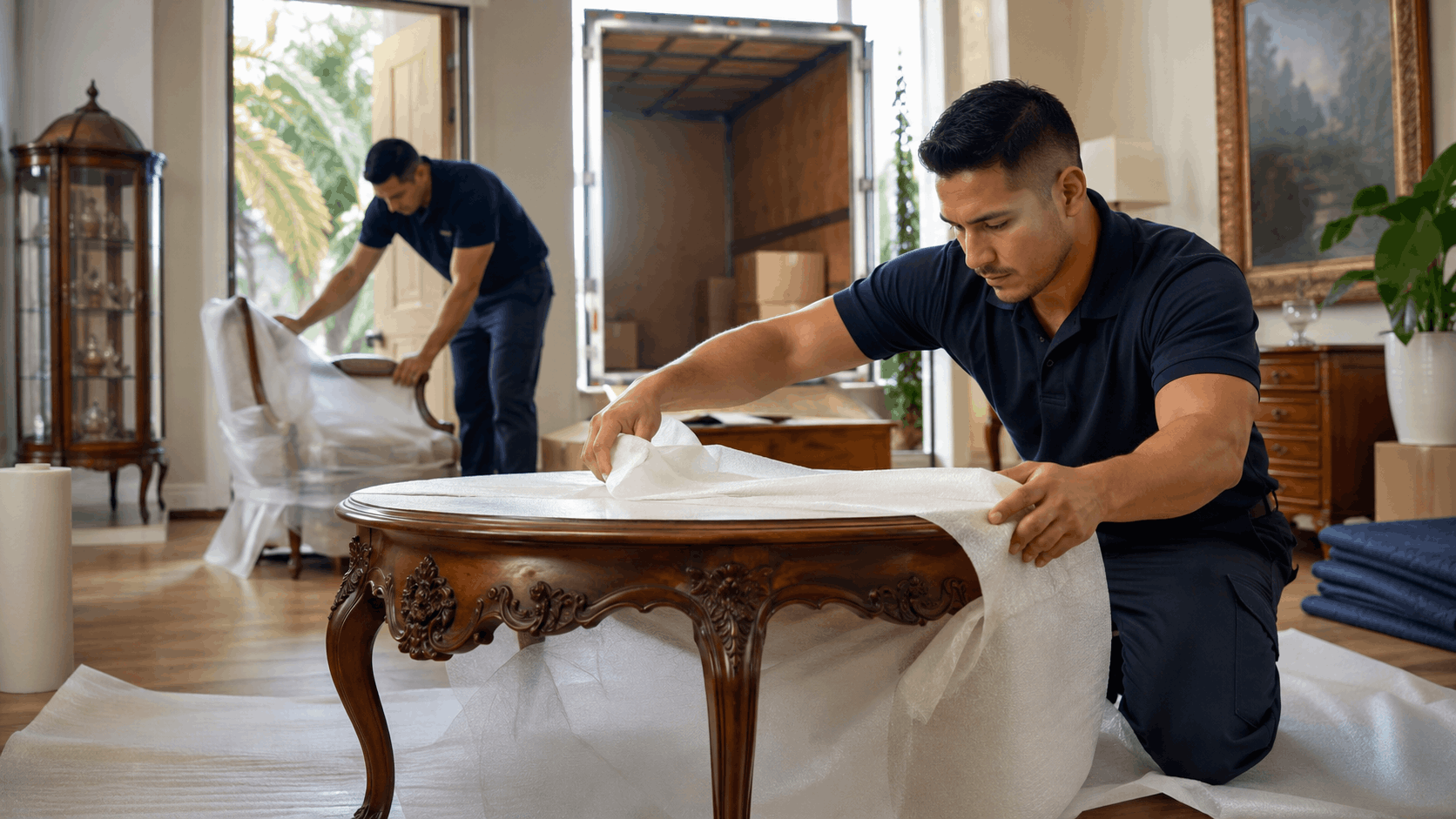
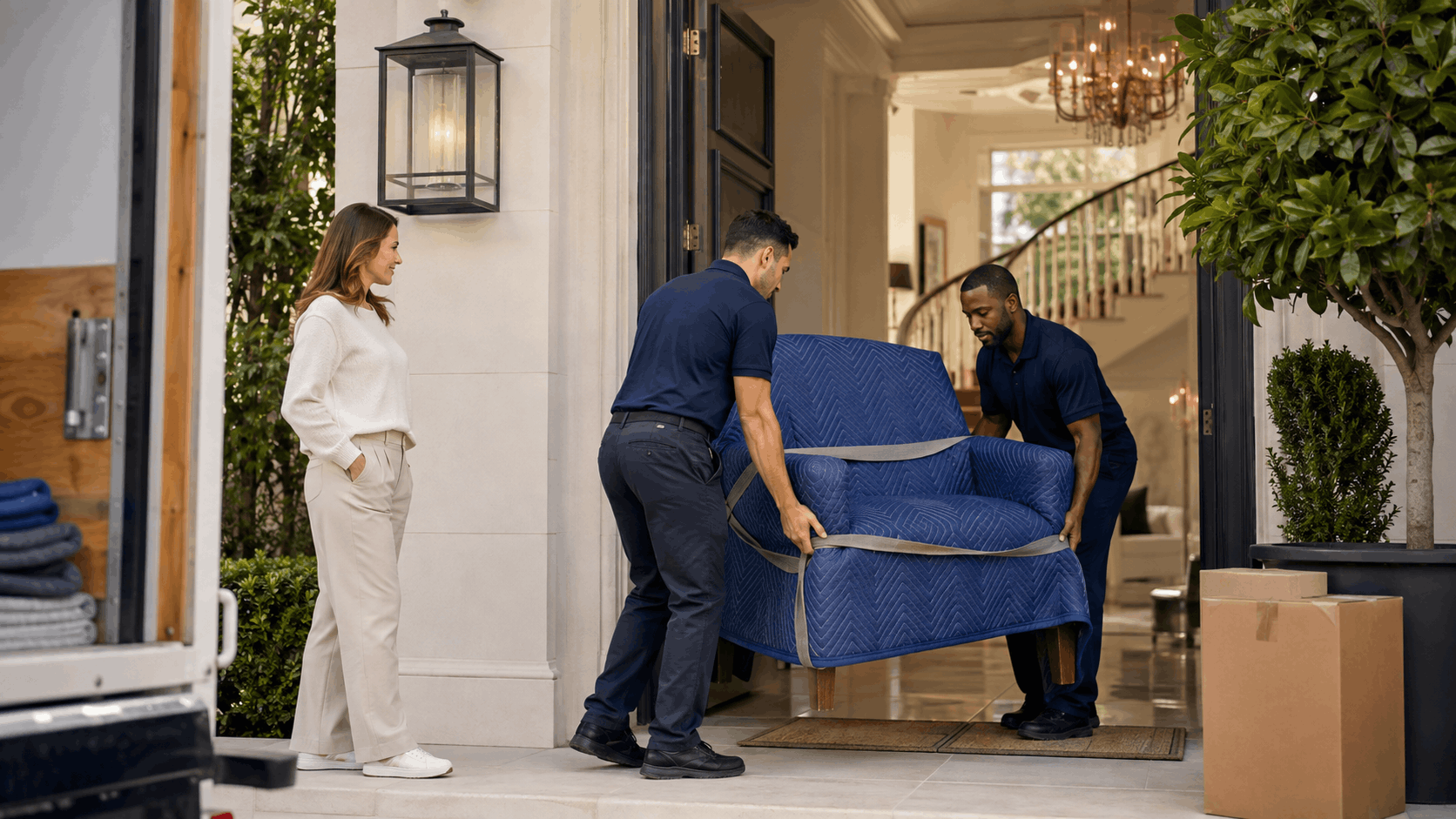
Blanket wrapping is the first line of defense for almost every antique. We use thick moving blankets, not thin pads, and wrap the entire surface so no bare wood touches another piece or the truck wall. The wrap gets secured with stretch film or straps that never press directly against the finish.
Corners take the most abuse during a move, so they get extra attention. We add foam corner guards to table edges, dresser tops, and picture frames because a dropped corner is where dents and chips almost always start.
Delicate finishes need a barrier before the blanket even goes on. For French-polished or lacquered surfaces, we lay soft paper or a felt layer against the wood first so nothing rubs and marks the finish during the ride.
This wrapping routine takes longer than tossing a pad over a piece, and that is the point. Careful padding prevents the scratches and dents that turn a valuable antique into a repair project.
Custom Crates for High-Value Pieces
A custom crate is the gold standard for high value furniture that cannot risk a bump. When a piece has glass, protruding carvings, or a fragile inlay, we build a wooden crate sized exactly to it with foam blocking that holds it still.
Mirrors and glass-front cabinets almost always get crated. Glass flexes and cracks with vibration, so a rigid crate with cushioned edges keeps it from shifting across a rough stretch of the 110.
Carved and gilded pieces benefit too. A crate protects delicate wood details and gold leaf from being crushed by nearby items or grazed by a strap. The crate also makes stacking safe, which matters on a full estate move.
Our crews measure each piece and build the crate to fit, rather than forcing an heirloom into a generic box. That extra step is what keeps museum-quality pieces intact from pickup to delivery.
Securing Items Inside the Truck
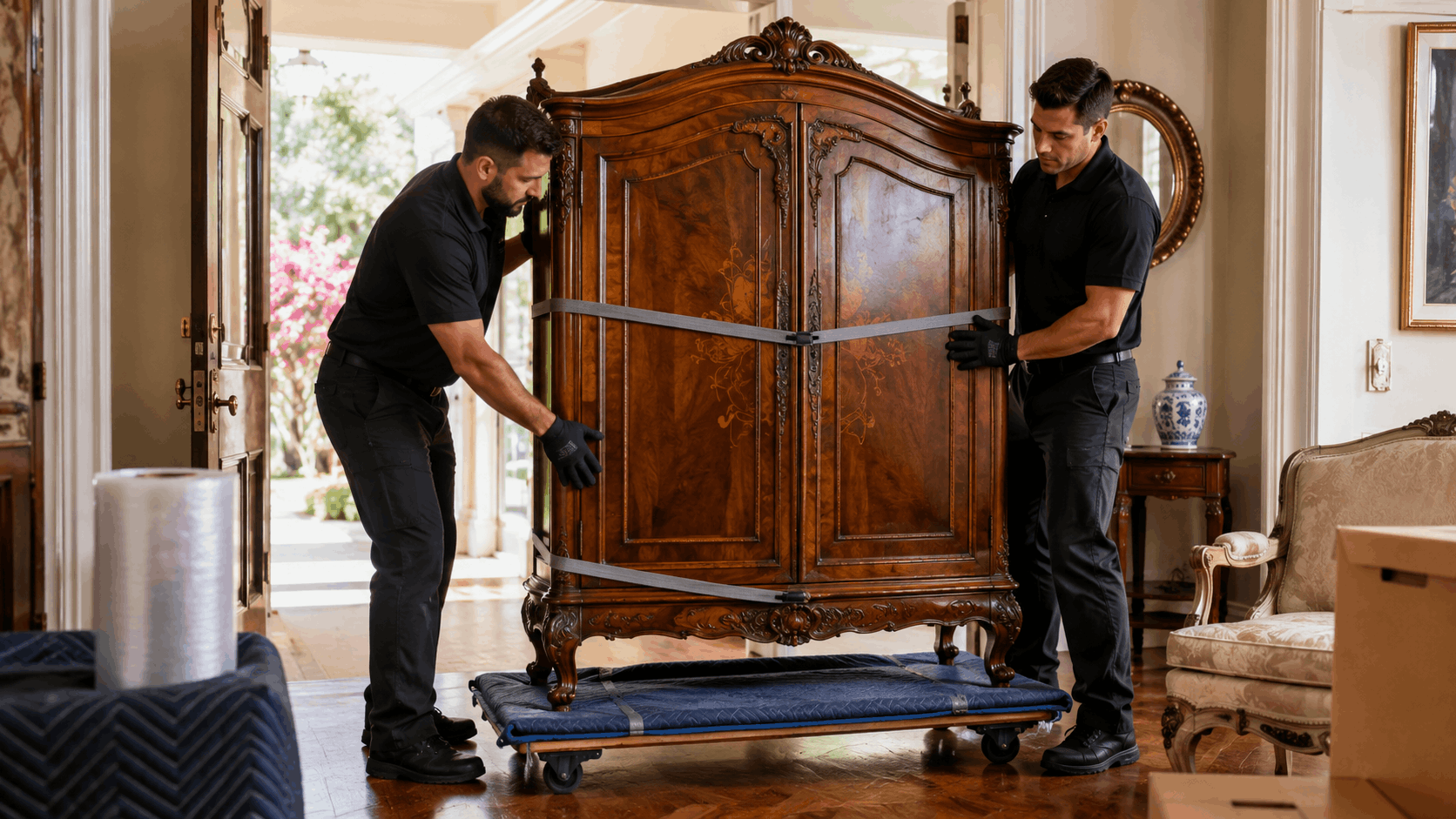
How a piece rides matters as much as how it is wrapped. Truck loading for antiques means strapping every item to the wall anchors so nothing slides when the truck brakes or turns on a hillside road.
Furniture strapping keeps heavy pieces upright and spaced apart. We leave padding between items so a marble base never grinds against a wooden chest, and we load the heaviest pieces low and against the walls for stability.
Spacing prevents the domino effect. If one piece shifts, we do not want it toppling into three others, so we build the load like a puzzle where everything braces its neighbor without touching bare surfaces.
Climate matters on hot LA days too. A truck can heat up fast in summer traffic, so we plan transport times and, for sensitive pieces, use moisture barriers to protect old wood from the temperature swing during a long crosstown haul.
Handling Fragile Finishes and Old Joints
Aged furniture has quirks that new furniture does not. A fragile finish like old shellac can lift or cloud if handled wrong, so our crews wear gloves and avoid pressing tape or film directly onto those surfaces.
Antique joinery is often loose after decades of use. A wobbly dovetail joint or a dried glue seam can pull apart if a piece is lifted from the wrong spot, so we always lift from the frame, never by a drawer, arm, or decorative element.
Old veneer is another weak point. Heat and moisture make it curl, and a hard knock chips it, so we keep veneered pieces padded and out of direct sun during loading and unloading.
When a joint already feels shaky, we sometimes recommend a small repair before the move rather than risk it failing in transit. Gentle handling and honest advice keep these old pieces holding together for another generation.
Moving Antiques in Older LA Neighborhoods
Every historic LA neighborhood brings its own puzzle. The homes that hold the best antiques are often the hardest to move them out of. Neighborhood moving experience is what keeps a heirloom safe through a tight 1920s staircase or a narrow beach alley.
Here are the real-world challenges we see across the city:
- Narrow Craftsman staircases in Highland Park and Pasadena
- Heavy doors and tile stairs in Hancock Park and Los Feliz
- Permit parking and tight alleys in Venice and Santa Monica
- Freight elevators and move-in windows in Downtown and Koreatown
Antique transport in these areas takes planning that a generic mover often skips.
Craftsman Homes in Highland Park and Pasadena
Craftsman home moving is a specialty of ours because these houses are everywhere near York Boulevard and around Bungalow Heaven. Built in the early 1900s, they feature narrow staircases with tight turns and built-in cabinetry that leaves little room to maneuver a large piece.
The charm of these homes is also the challenge. Low door headers, built-in bookcases, and steep porch steps mean we often plan the exit path before we even touch the furniture. A tall armoire may need to come out at an angle or be partially disassembled.
Highland Park streets can be tight too, with cars parked bumper to bumper on side streets off Figueroa. We position the truck carefully so the carry distance stays short and the piece spends as little time outdoors as possible.
Our familiarity with these blocks pays off. When we move a family heirloom near Bungalow Heaven in Pasadena, we already know the staircase quirks and parking realities before we arrive.
Spanish Revival Estates in Hancock Park and Los Feliz
Hancock Park moving comes with its own set of features. These grand Spanish Revival estates have heavy carved wood doors, tile staircases, and thick walls that make maneuvering large antiques slow and deliberate.
Tile stairs are beautiful but slick, especially when carrying a heavy marble console down them. We use extra grip and slower footing on these surfaces because a slip risks both the crew and the piece.
Los Feliz adds hillside access to the mix. Many homes sit on steep lots with long driveways or stairs from the street, so hillside access changes how we stage the truck and how many crew members we bring.
These estates often hold the most valuable antiques in the city. We treat them accordingly, mapping the safest path from the room to the truck and protecting the home's original tile, plaster, and woodwork along the way.
Beach Cottages and Parking Rules in Venice and Santa Monica
Coastal moves bring paperwork and salt air. A Venice moving permit is often required because many streets have permit-only parking, and the walk streets near the canals have no vehicle access at all.
Tight alleys are the norm behind Venice and Santa Monica cottages. We frequently stage a smaller shuttle vehicle to reach the front door, then transfer pieces to the main truck parked on a legal stretch nearby.
Salt air is the hidden threat to coastal furniture care. Moisture near the beach can dull finishes and encourage warping, so we keep antiques wrapped and sealed and minimize their exposure to open sea air during loading. Our Santa Monica moving crews handle these coastal conditions regularly.
Parking rules near the coast change block by block. We check the local restrictions ahead of time and pull permits where needed so the crew is not scrambling or risking a ticket on move day.
High-Rise Condos in Downtown LA and Koreatown
High-rise moves run on schedules. Most Downtown and Koreatown buildings require a freight elevator reservation and a loading dock booking, often limited to a two- or three-hour window.
Condo move rules vary by building. Some require certificates of insurance filed days in advance, elevator padding, and a specific service entrance, so we coordinate with building management before the move to lock in the details.
The freight elevator itself sets limits. A tall grandfather clock or an oversized armoire may not fit standing up, so we measure the elevator dimensions ahead of time and plan whether a piece needs to lie flat or come apart.
Missing a reserved window can mean rescheduling the whole move. We build the timeline around the building's rules so your antiques are protected and the crew is not stuck waiting for elevator access on the clock.
Insurance and Valuation for Priceless Pieces
Coverage is the part of an antique move people think about least until something goes wrong. Moving insurance for heirlooms works differently than most folks expect, and knowing your options protects you before the truck ever pulls up.
Released Value vs. Full Value Protection
Released value coverage is the basic, no-extra-cost option, and it pays only about sixty cents per pound. For an antique, that is almost meaningless. A hundred-pound heirloom worth $8,000 would pay out just $60 under released value.
Full value protection is what antiques deserve. Under this option, the mover is responsible for repairing, replacing, or reimbursing the actual value of a damaged item, not a per-pound figure. It costs more but matches the real worth of your pieces.
The gap between the two is enormous for heritage furniture. We walk every client through the difference so they choose coverage with eyes open rather than discovering the limit after a problem.
For truly high-value or one-of-a-kind pieces, we also discuss third-party or specialty policies that go beyond standard mover coverage. The goal is making sure the protection matches what the item would actually cost to replace.
Getting Antiques Appraised Before a Move
An antique appraisal sets the foundation for proper coverage. Without a written value, a claim becomes a guessing match, and you may not recover what a piece is truly worth.
A professional appraisal gives you a declared value to list on the moving paperwork. That number tells the mover and the insurer exactly what the item is worth, which sets the coverage level correctly from the start.
Appraisals matter most for rare or one-of-a-kind pieces. A mass-produced dresser may not need one, but a signed piece, an antique clock, or an inherited heirloom benefits from documented value before it travels. You can read general guidance on movers' liability from the Federal Motor Carrier Safety Administration.
We are happy to recommend qualified appraisers in the LA area. Getting this done a few weeks before the move gives you time to line up the right coverage without a last-minute rush.
Documenting Condition With Photos
Condition photos are the simplest protection you can give yourself. Before anything gets wrapped, take clear pictures of each piece from several angles, including any existing scratches or wear.
Pre-move documentation settles disputes fast. If a question comes up later, a time-stamped photo shows the exact condition before loading, which protects both you and the mover.
Focus your camera on the details. Photograph corners, legs, glass, and finished surfaces up close, since those are the spots most likely to show any change after transport.
We often take our own photos too as part of the process. A shared record of condition keeps everyone honest and makes any claim, if one is ever needed, quick and clear to resolve.
Need Help in Los Angeles?
Popeye Moving & Storage serves Los Angeles and all of Los Angeles County.
Storing Antique Furniture in Los Angeles
Sometimes heirlooms need a safe place to wait between homes. Antique storage in LA is not the same as tossing boxes in a standard unit, because old wood is sensitive to heat and humidity. Here is what to know before you store treasured pieces.
Why Climate Control Matters for Old Wood
A climate controlled unit is the only real choice for antique wood. LA summers push storage units well over one hundred degrees, and that heat dries out old wood until it cracks or splits along the grain.
Humidity swings do the opposite damage. When moisture rises, wood swells and veneer lifts, then it shrinks again when the air dries, and that back-and-forth loosens joints over time. Wood warping is the most common result of storing antiques in a plain unit.
Climate control holds a steady temperature and humidity year-round. That stability keeps old wood, veneer, and glued joints from moving, which preserves both the structure and the finish while the piece waits.
For anything valuable or irreplaceable, we never recommend a non-climate unit. The savings are small and the risk to an heirloom is far too high. Our storage solutions include climate-controlled options built for delicate pieces.
Short-Term vs. Long-Term Storage Costs
Storage pricing in LA depends on unit size and climate control. A climate-controlled unit for a few antiques typically runs $150 to $400 per month, while a larger space for a full collection costs more.
Short-term storage covers the gap during a move, often a few weeks while a new home is prepped. The monthly rate stays the same, and you pay only for the time you need.
Long term storage sometimes comes with a better monthly rate. When pieces need to sit for many months or years, we can discuss vaulted storage and longer commitments that lower the ongoing cost. Our vaulted storage keeps individual pieces sealed and separated.
The length of stay changes the best option. For a short bridge between homes, a standard climate unit works well, while a long stay may favor a sealed vault that limits handling and exposure.
Proper Placement and Padding in Storage
How a piece sits in storage decides whether it comes out intact. Storage padding should stay on antiques the entire time, not get pulled off once the unit door closes. Blankets and covers protect against dust and accidental bumps.
Furniture placement matters too. We keep pieces off the bare floor on pallets or blocks, leave space between items so air can move, and never stack heavy pieces on delicate ones.
Weight distribution prevents slow damage. A marble top laid flat with even support will not crack, while the same top leaned against a wall for months can bow and fail. We store each piece in the position that keeps it stable.
Good storage habits are the same care we use during a move, just extended over time. Proper wrapping, spacing, and placement keep an antique looking the same on the day it leaves storage as it did going in.
How to Get an Accurate Antique Moving Quote
A vague phone estimate rarely holds up for antique work. The best moving quote comes from a real look at your pieces and your building. Here is how to get an estimate you can trust, plus warning signs to watch for.
- Ask for an in-home or video survey, not a guess over the phone
- Confirm the crew's experience with antiques and crating
- Get the coverage options in writing
- Watch for suspiciously low numbers with no detail
In-Home and Video Surveys
An in-home survey is the most accurate way to price an antique move. A walkthrough lets us see each piece, measure doorways and stairs, and note the exact access challenges before we commit to a number.
A video estimate works well when an on-site visit is hard to schedule. You walk us through the home on a call, showing each piece and the path out, and we build a quote from what we see on screen.
Either survey catches the details that change the price. A tight staircase, a marble top, or a locked service entrance all get spotted during a proper walkthrough rather than becoming a surprise on move day.
We prefer to survey any job with valuable antiques. Estimate accuracy protects both sides, so the price you are quoted is the price the move actually costs. You can request a survey through our contact page.
Questions to Ask Before Booking
The right mover questions reveal a lot fast. Ask how long the company has moved antiques in LA and whether the crew is trained in crating and fragile handling specifically, not just general moving.
Your booking checklist should also cover coverage. Ask which valuation options they offer, whether full value protection is available, and how a claim would work if a piece were damaged.
Get specifics on crating and materials. Ask whether they build custom crates in-house, what padding they use on finishes, and how they secure pieces in the truck for the drive across the city.
A confident, experienced mover answers these clearly and without dodging. Vague or annoyed responses are a sign to keep looking for a crew that truly handles heritage items.
Red Flags That Signal a Lowball Quote
A lowball estimate almost always hides something. If a quote comes in far below every other bid, ask what is missing, because someone is often leaving out crating, stairs, or proper coverage to win the job.
Hidden fees are the usual trap. Watch for charges that appear on move day for stairs, long carries, or fuel that were never mentioned in the original quote. A real estimate spells these out up front.
No insurance is a hard stop. Any company unwilling to discuss valuation coverage or provide a certificate of insurance for a building should not handle your antiques. The Better Business Bureau is a good place to check a mover's record.
A quote with no survey and no detail is the biggest warning of all. Priceless pieces deserve a mover who takes the time to look, measure, and explain every line of the price.
Why Popeye Moving & Storage Handles Heritage Items Right
Moving irreplaceable pieces takes more than a truck and a couple of strong backs. It takes people who have done it hundreds of times across this specific city. Here is what sets our team apart for heritage work.
- Years of hands-on experience with LA antiques
- Local knowledge of every route from the Valley to the coast
- Trained crews and the right protective equipment
- Honest quotes with real surveys and clear coverage
Years of Experience With LA Antiques
We are experienced movers who have carried fragile pieces through some of the trickiest homes in Los Angeles. From Craftsman bungalows in Highland Park to high-rise condos downtown, our antique moving history covers the full range of the city's housing.
That track record teaches lessons no manual can. We have learned which staircases need a piece disassembled, which finishes react to tape, and which buildings require paperwork days ahead of the move.
Experience also means fewer surprises for you. When our crew arrives, they have likely seen a home like yours before and already know how to protect both the piece and the property.
Families trust us with heirlooms that cannot be replaced. We take that trust seriously and treat every piece as if it were our own grandmother's armoire heading across town.
Knowing Every Route From the Valley to the Coast
Local routes make a real difference on an antique move. We know when the 101 through Hollywood slows to a crawl, when the 405 backs up near the Getty, and which surface streets keep a fragile load moving smoothly.
LA driving knowledge protects the furniture, not just the schedule. A smoother route with fewer hard stops and rough patches means less vibration on a marble top or a crated mirror during the drive.
Getting from the Valley over to Santa Monica or down to Redondo Beach, we pick the path that fits the time of day and the fragility of the load. That is the benefit of a crew that drives these roads daily.
We also plan parking and staging with local rules in mind. Knowing the permit zones and tight streets ahead of time keeps move day calm instead of chaotic.
Trained Crews and the Right Equipment
A trained crew is the heart of a safe antique move. Our movers learn proper wrapping, custom crating, and safe lifting for delicate pieces, so they know to lift from the frame and never by a fragile drawer or arm.
The right moving equipment backs up that training. We bring thick blankets, foam corner guards, custom crating materials, lifting straps, and padded dollies built for heavy and awkward pieces.
For the toughest jobs, we bring specialty tools too. Rigging gear, door-removal kits, and measuring tools let us solve access problems that would stop a less-prepared crew. Our senior moving services often involve treasured heirlooms handled with this same care.
Skill and gear together are what keep a heritage piece safe from pickup to delivery. That combination is what heritage movers in LA need, and it is what our team brings to every job.
Need Help in Los Angeles?
Popeye Moving & Storage serves Los Angeles and all of Los Angeles County.
Final Thoughts
Moving an antique across Los Angeles comes down to care, planning, and honest pricing. A single heritage piece typically runs $150 to $600, while a full estate can climb into the thousands, and the right survey turns those ranges into a firm number you can trust.
The pieces that matter most deserve a crew that knows the difference between a marble top and a mass-produced table, and between a smooth route and a rough one. That is the care we bring to every heirloom, in every neighborhood, across the city.
If you have an antique or a full collection to move, reach out to Popeye Moving & Storage Co. for a walkthrough and a clear, detailed quote. Call our team or visit our contact page to schedule a consultation and protect your heritage pieces the right way.
Frequently Asked Questions
How much does it cost to move antique furniture in LA?
A single antique item usually costs $150 to $600 for a local move, depending on size, weight, and stairs. Full collections or estate moves run from $2,500 to $12,000 and up based on volume and how many fragile pieces need crating. Distance, building access, and custom crates shift the price most, so an in-home or video survey gives the most accurate figure for your pieces.
Do antique movers charge extra for stairs?
Yes, most movers add a stair-carry fee when heavy antiques must go up or down multiple flights. Older LA homes in Pasadena, Highland Park, and Koreatown often have narrow staircases with tight turns that add real labor time. Walk-up buildings without elevators cost more since every trip burns time and crew. We always ask about stairs before quoting so the price you hear reflects the actual access.
Is custom crating worth the added cost?
For fragile or high-value pieces, a custom crate is usually worth it. Mirrors, glass-front cabinets, gilded frames, and delicate carvings need a built-to-fit wooden crate that holds them snug and flat during transport. Crating adds $200 to $900 per piece, but it prevents cracks and chips that could cost far more to repair. Sturdy pieces with no glass often travel safely with expert blanket wrapping instead.
How are antiques protected during a move?
Our crews start with thick blanket wrapping and foam corner guards on every edge, plus a soft barrier against delicate finishes. High-value pieces get custom crates. Inside the truck, we strap each item to wall anchors, space pieces apart with padding, and load heavy items low for stability. We always lift from the frame, never by a fragile drawer or arm, to protect old joints and veneer.
What kind of insurance covers antique furniture?
Two main options exist. Released value coverage is free but pays only about sixty cents per pound, which is far too little for antiques. Full value protection makes the mover responsible for repairing, replacing, or reimbursing the actual value of a damaged piece. For irreplaceable items, we also discuss declared value on the paperwork and specialty third-party policies so coverage matches what the piece is truly worth.
Should antiques be appraised before moving?
For rare or one-of-a-kind pieces, yes. A written appraisal gives you a declared value that sets the correct coverage level and settles any future claim quickly. Mass-produced furniture may not need one, but signed pieces, antique clocks, and inherited heirlooms benefit from documented value before the move. Schedule the appraisal a few weeks ahead so you have time to arrange the right protection without a rush.
Can antiques be stored safely in Los Angeles?
Yes, in a climate-controlled unit. LA heat and humidity swings crack and warp old wood in a standard unit, so climate control holds a steady temperature and moisture level year-round. Pieces should stay wrapped, sit off the bare floor, and be spaced apart so air moves freely. Climate-controlled and vaulted storage costs roughly $150 to $400 per month depending on size and length of stay.
How far in advance should a heritage move be booked?
Book two to four weeks ahead for most antique moves so we have time for a survey, crating materials, and any building paperwork. During busy season from May through September, and around the end of each month, schedules fill faster, so a month or more of lead time is smart. High-rise moves also need elevator and dock reservations that often require advance booking with building management.
Do movers handle marble tops and glass pieces?
Yes, and they need special handling. Marble tops can weigh two or three hundred pounds and crack if they flex, so we separate the top from the base and carry it upright with padded supports. Glass pieces and mirrors get custom crates lined with foam because vibration alone can shatter them. Separating, crating, and careful loading keep these heavy and fragile parts intact across the city.
How do I get an accurate quote for my antiques?
Request an in-home or video survey rather than a phone guess. A walkthrough lets us see each piece, measure doorways and stairs, and note access challenges so the quote reflects the real job. Ask about the crew's antique experience, crating, and coverage while you are at it. Watch out for suspiciously low bids with no detail, since they often hide fees for stairs, crating, or missing insurance.
Frequently Asked Questions
- How much does it cost to move antique furniture in LA?
- A single antique item usually costs $150 to $600 for a local move, depending on size, weight, and stairs. Full collections or estate moves run from $2,500 to $12,000 and up based on volume and how many fragile pieces need crating. Distance, building access, and custom crates shift the price most, so an in-home or video survey gives the most accurate figure for your pieces.
- Do antique movers charge extra for stairs?
- Yes, most movers add a stair-carry fee when heavy antiques must go up or down multiple flights. Older LA homes in Pasadena, Highland Park, and Koreatown often have narrow staircases with tight turns that add real labor time. Walk-up buildings without elevators cost more since every trip burns time and crew. We always ask about stairs before quoting so the price you hear reflects the actual access.
- Is custom crating worth the added cost?
- For fragile or high-value pieces, a custom crate is usually worth it. Mirrors, glass-front cabinets, gilded frames, and delicate carvings need a built-to-fit wooden crate that holds them snug and flat during transport. Crating adds $200 to $900 per piece, but it prevents cracks and chips that could cost far more to repair. Sturdy pieces with no glass often travel safely with expert blanket wrapping instead.
- How are antiques protected during a move?
- Our crews start with thick blanket wrapping and foam corner guards on every edge, plus a soft barrier against delicate finishes. High-value pieces get custom crates. Inside the truck, we strap each item to wall anchors, space pieces apart with padding, and load heavy items low for stability. We always lift from the frame, never by a fragile drawer or arm, to protect old joints and veneer.
- What kind of insurance covers antique furniture?
- Two main options exist. Released value coverage is free but pays only about sixty cents per pound, which is far too little for antiques. Full value protection makes the mover responsible for repairing, replacing, or reimbursing the actual value of a damaged piece. For irreplaceable items, we also discuss declared value on the paperwork and specialty third-party policies so coverage matches what the piece is truly worth.
- Should antiques be appraised before moving?
- For rare or one-of-a-kind pieces, yes. A written appraisal gives you a declared value that sets the correct coverage level and settles any future claim quickly. Mass-produced furniture may not need one, but signed pieces, antique clocks, and inherited heirlooms benefit from documented value before the move. Schedule the appraisal a few weeks ahead so you have time to arrange the right protection without a rush.
- Can antiques be stored safely in Los Angeles?
- Yes, in a climate-controlled unit. LA heat and humidity swings crack and warp old wood in a standard unit, so climate control holds a steady temperature and moisture level year-round. Pieces should stay wrapped, sit off the bare floor, and be spaced apart so air moves freely. Climate-controlled and vaulted storage costs roughly $150 to $400 per month depending on size and length of stay.
- How far in advance should a heritage move be booked?
- Book two to four weeks ahead for most antique moves so we have time for a survey, crating materials, and any building paperwork. During busy season from May through September, and around the end of each month, schedules fill faster, so a month or more of lead time is smart. High-rise moves also need elevator and dock reservations that often require advance booking with building management.
- Do movers handle marble tops and glass pieces?
- Yes, and they need special handling. Marble tops can weigh two or three hundred pounds and crack if they flex, so we separate the top from the base and carry it upright with padded supports. Glass pieces and mirrors get custom crates lined with foam because vibration alone can shatter them. Separating, crating, and careful loading keep these heavy and fragile parts intact across the city.
- How do I get an accurate quote for my antiques?
- Request an in-home or video survey rather than a phone guess. A walkthrough lets us see each piece, measure doorways and stairs, and note access challenges so the quote reflects the real job. Ask about the crew's antique experience, crating, and coverage while you are at it. Watch out for suspiciously low bids with no detail, since they often hide fees for stairs, crating, or missing insurance.
P
Popeye Moving & Storage Co. Team Team
Licensed moving and storage professionals serving Los Angeles and Los Angeles County.
Licensed in California · License #PUC: CAL T 189749 | DOT: 1472924 | MC: 498816C
Why trust Popeye Moving & Storage?
Founded in 1994, Popeye Moving & Storage is a licensed and insured moving and storage service serving Los Angeles and Los Angeles County. All content is reviewed by our licensed technicians.

Need Help in Los Angeles?
Popeye Moving & Storage serves Los Angeles and all of Los Angeles County.
Related Articles
Cost Guides
Crane-Assisted Moving in Los Angeles: When Furniture Goes Over the Balcony and What It Costs
A complete guide to crane-assisted moving in Los Angeles: how balcony lifts work, real cost ranges, LADOT permits, prep steps, and safety for oversized furniture.
Cost Guides
Moving Cost by Home Size in LA: 1,200 vs 2,500 vs 4,000+ Sq Ft Real Ranges With Crew and Truck Counts
Real LA moving cost ranges by home size, with honest crew and truck counts for 1,200, 2,500, and 4,000+ sq ft homes, plus tips to lower your bill.

Cost Guides
What Vaulted Storage Costs in Los Angeles - and Why It Beats a Self-Storage Unit for Furniture
Vaulted storage in LA runs $75-$150 per vault monthly and protects furniture better than a self-storage unit. See real costs, hidden fees, and when a vault wins.