Seasonal
Wildfire-Season Readiness: Pre-Staging Documents and Valuables With a Mover You Can Call
Key Takeaways
- Santa Ana winds from September through December push fires fast through hillside areas, so prep before red flag warnings appear.
- Build a grab-and-go document kit with identity papers, insurance policies, property records, and medical and pet documents.
- Rank valuables by replaceability: irreplaceable items first, hard-to-replace second, insured items last.
- Pre-stage large belongings to storage away from fire zones weeks before peak season since crews and units fill up fast.
- Use waterproof bins, fire-resistant bags, and color-coded priority labels, and stage boxes near an easy exit.
- Sign up for NotifyLA and Ready LA County alerts and review insurance coverage before fire season starts.
- Booking a mover early beats calling during a fire, when road closures and busy crews limit what can be saved.
- Popeye Moving & Storage Co. knows hillside routes in Laurel Canyon, Mandeville Canyon, and off Mulholland Drive for short-notice pickups.
In This Article
The smell of smoke drifting over the hills is something most Los Angeles residents know too well. One minute the sky is blue, and the next a plume rises over the Santa Monica Mountains or the foothills near Sylmar. By the time the wind shifts, the smell is in your clothes and your phone is buzzing with an alert.
When that happens, minutes matter. Evacuation orders can arrive with almost no warning, and families end up grabbing whatever is closest instead of what actually matters. That is how irreplaceable photos, legal papers, and heirlooms get left behind while people scramble to load the car.
Why Wildfire Season Hits Los Angeles Homeowners So Fast?
Wildfire season in Los Angeles moves faster than most people expect. A fire that starts as a roadside spark can become a hillside emergency within an hour. The mix of dry brush, steep terrain, and strong winds turns small ignitions into fast-moving threats.
Here is why early prep matters before a red flag warning even shows up:
- Fires climb hillsides quickly and jump roads that block escape routes.
- Los Angeles evacuation orders often follow the fire, not the forecast.
- Narrow canyon streets clog with traffic the moment people leave at once.
- Once a red flag warning is issued, conditions can change in minutes.
Waiting until the smoke arrives means packing under pressure. Pre-staging removes that scramble and gives families a head start.
The Santa Ana Wind Pattern and Peak Risk Months
The Santa Ana winds are the reason fires spread so fast here. These dry, warm winds blow from the inland deserts toward the coast, usually between September and December. They pull moisture out of the brush and push flames downhill at high speed.
Peak fire season months line up with these wind events. Late summer heat dries out the vegetation, and then the first strong Santa Ana blows through hillside areas like the Santa Monica Mountains and the ridges above Sylmar. That combination is what makes autumn the most dangerous stretch of the year.
Residents often get a warning window of a day or two before a major wind event. Forecasters call out red flag conditions, and the National Weather Service posts alerts. That short window is exactly when pre-staged valuables and a booked mover pay off.
The trouble is that a warning window is not the same as an evacuation window. Winds can shift a fire's direction in minutes, so the two-day forecast rarely translates into two days of packing time. Families who prepare during the calm before the wind stay ahead of it.
High-Risk Neighborhoods From Pacific Palisades to Sylmar
Some LA neighborhoods face fire threats year after year. Pacific Palisades, Bel Air, and Topanga Canyon sit against steep, brush-covered slopes that carry flames fast. The foothills near Sylmar and Sunland-Tujunga deal with the same repeat risk on the Valley side.
Terrain is a big part of the problem. Homes tucked into a high fire hazard zone often sit at the end of winding, single-lane roads. When a fire moves in, those same roads become the only way out, and they fill quickly.
Access cuts both ways. The narrow streets that make canyon living beautiful also slow down fire crews and moving trucks. That is why local knowledge of routes through areas like Malibu and the canyons matters so much during an emergency.
Communities like Brentwood and Holmby Hills also border hillside terrain that burns. Knowing which streets connect and which dead-end can be the difference between a smooth move-out and getting stuck.
How Little Time Evacuation Orders Really Give You
People often picture a calm, orderly evacuation with hours of notice. The reality is different. A mandatory evacuation order can arrive with only minutes to a few hours of lead time, depending on wind and location.
In a fast-moving hillside fire, the evacuation notice time can be brutally short. Fire officials may go door to door because the situation changed too quickly for a scheduled warning. By then, the goal is simply to get people out safely.
That short window is why last-minute packing fails. Nobody thinks clearly with smoke in the air and a deadline measured in minutes. Trying to find a passport or a hard drive in that moment usually ends with items left behind.
Pre-staging flips the script. When the important boxes are already packed and near the door, an evacuation order becomes a load-and-go event instead of a frantic search. That is the whole point of preparing early.
The Cost of Losing Irreplaceable Items
Insurance can replace a couch, a TV, or a set of dishes. It cannot replace your grandmother's wedding photos or a signed family Bible. That difference is the heart of good fire-season planning.
Irreplaceable valuables include original documents, printed photos, and family heirlooms with no digital or store-bought copy. Once they burn, they are gone for good. No policy check makes up for that loss.
Framing pre-staging around replaceability helps families focus. Insured items can wait, while the one-of-a-kind pieces deserve early attention. A quick sort now saves heartbreak later.
Our team has helped families move heirloom furniture and art out of hillside homes days before threats peaked. Those calls almost always end the same way, with relief that the pieces were already safe when the wind picked up.
Get Your Free Quote
Tell us about your move and we'll get back to you fast.
Building Your Grab-and-Go Document Kit
A document kit is the first project every LA family should tackle before fire season. This is the folder or bin that holds the papers that are slow, costly, or nearly impossible to replace. Gathering it once means you never have to hunt for it again.
Good emergency prep starts with important papers because they anchor everything else. Insurance claims, temporary housing, and even medical care all move faster when your documents are in one place. Build the kit now, while there is no smoke on the horizon.
Identity and Legal Papers You Cannot Skip
Start with the papers that prove who you are. Passports, birth certificates, Social Security cards, and marriage licenses belong in the kit. So do estate documents like wills, trusts, and power of attorney forms.
Originals matter for many of these identity documents. A replacement passport or birth certificate can take weeks and a trip to a government office. During a displacement, that delay makes an already hard situation worse.
Store these legal papers in a sealed, waterproof folder inside your grab-and-go kit. Keep them together so nothing gets separated in the rush. A single labeled pouch beats loose papers scattered across a drawer.
For families with recent estate changes, keep the newest signed versions on top. Outdated documents can create confusion later. A quick review each summer keeps the kit current and accurate.
Property, Insurance, and Financial Records
Your home deed, mortgage papers, and insurance policy make up the second group. These property records prove ownership and coverage when you need to file a claim. Without them, a claim can stall at the worst possible time.
Include recent statements for bank and investment accounts as well. A short printout or a saved digital copy speeds up access if you need funds while displaced. Add a copy of your insurance policy declarations page so limits and contacts are easy to find.
These records shorten the road back to normal after a fire. Adjusters ask for documentation, and having it ready cuts weeks off the process. Families who kept their policy handy tend to reopen claims faster.
Keep a simple one-page summary listing account numbers and policy numbers. Store it with the papers and in your cloud backup. That summary becomes a map to everything else when stress is high.
Medical, Pet, and Family Records
Health information belongs in the kit too. Copies of prescriptions, a short medical history, and a list of current medications help during displacement. If someone in the family has a chronic condition, these medical records keep care on track.
Pet documents matter more than people expect. Vaccination records and proof of ownership let you check into shelters and boarding facilities that require them. Many emergency shelters ask for this paperwork before they take in animals.
Family records round out the group. School enrollment papers, immunization records for kids, and contact sheets for doctors all help when routines break. Keeping them together avoids frantic phone calls later.
Store medical and pet papers in their own labeled sleeve inside the kit. That way a caregiver or family member can grab exactly what they need. Clear labels save time when more than one person is helping.
Digital Backups and Fireproof Storage Options
Paper burns, so every document deserves a digital copy. Scan or photograph each item and save it to encrypted cloud storage. That digital backup means the information survives even if the originals do not.
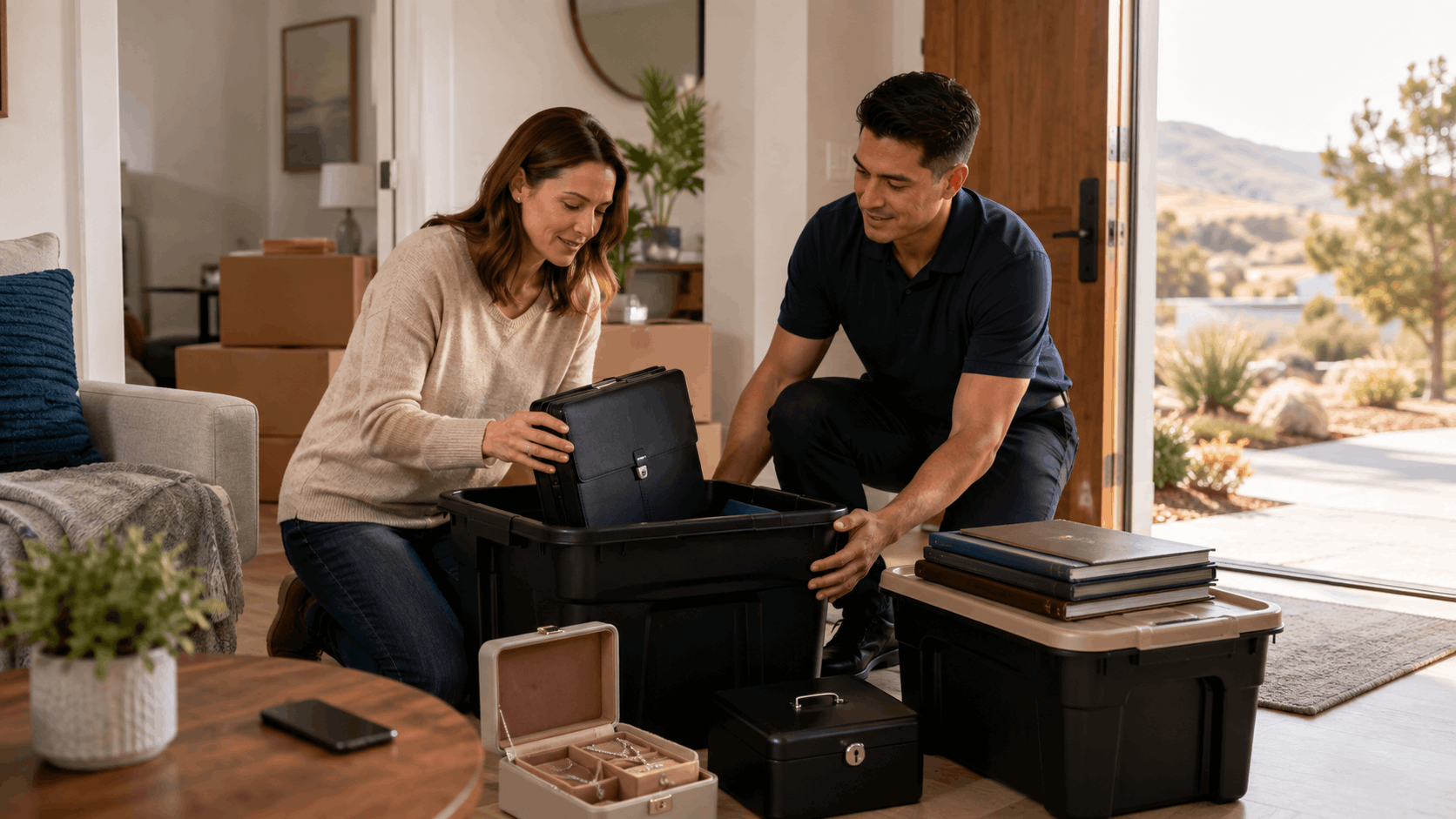
For the physical papers, a fireproof safe or a portable lockbox adds protection. A small, grab-and-go fireproof bag is even better for evacuation because you can carry it out in seconds. Pick one large enough for your core documents.
Keep one copy off-site as insurance against total loss. That might be a trusted relative's home, a bank safe deposit box, or a storage unit away from fire zones. Redundancy is what makes the plan reliable.
Test your backup once a season. Open the cloud folder, confirm the files load, and update anything that changed. A backup you never check is a backup you cannot trust.
Need Help in Los Angeles?
Popeye Moving & Storage serves Los Angeles and all of Los Angeles County.
Choosing Which Valuables to Pre-Stage
Not everything can leave in the first load. The goal of pre-staging is deciding which valuables deserve early packing and a spot near the exit. Sorting now means faster, smarter choices later.
Balance sentimental worth against dollar value as you plan priority items. Some pieces matter because of memories, others because of cost, and a few because of both. Here is how to think through it:
- Group small high-value items into one secure container you can grab fast.
- Tag irreplaceable keepsakes so movers know they leave first.
- Stage electronics and work files for quick disconnect near the door.
- Rank everything by how hard it would be to replace.
Jewelry, Cash, and Small High-Value Items
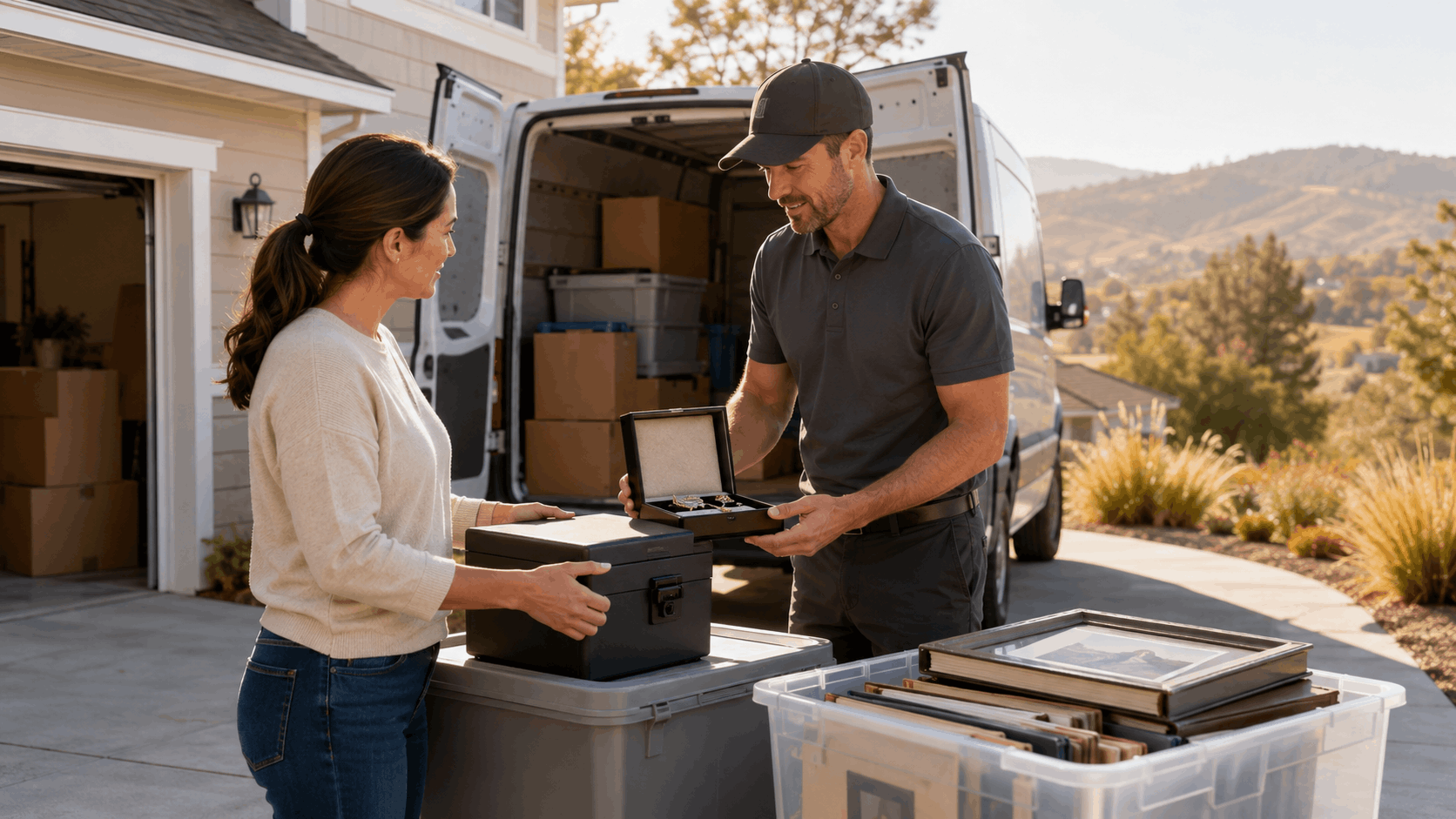
Small valuables are easy to grab and easy to forget. Gather jewelry, cash, watches, and collectible coins into one secure, labeled container. A locking box or a discreet zip pouch works well.
Keep this container low-profile. A plain box draws less attention than an obvious jewelry case, which matters if it sits in a car or storage. The point is to make it easy for you to find and hard for others to notice.
Store the container somewhere you can reach in seconds. A closet shelf near the exit or a bedroom drawer you pass on the way out both work. Practice grabbing it so the motion is automatic under stress.
List the contents on a card kept with your documents. If the box is ever lost or damaged, that list supports an insurance claim. It also reminds you what should be inside when you repack.
Photos, Art, and Irreplaceable Keepsakes
Family photos are the items people regret losing most. Framed prints, albums, and loose photographs cannot be replaced once burned. Gather them into a padded box and give it a priority tag.
Artwork and heirlooms need similar care. Wrap framed pieces in padding and stand them on edge rather than flat. For fragile or high-value art, our specialty moving crews handle the packing so nothing gets scratched or cracked.
Keepsakes with no market value still deserve a spot on the list. A child's baby book or a handwritten letter matters more than most furniture. Tag these boxes clearly so movers load them first.
Consider scanning photos into your cloud backup as a second layer. Even if a physical album leaves in the first load, digital copies protect the images. That way one careless moment does not erase decades of memories.
Electronics, Hard Drives, and Work Files
Electronics hold both value and irreplaceable data. Laptops, tablets, and external hard drives often store years of photos, files, and financial records. Stage them for quick disconnect so you can grab them fast.
Home-based workers should treat business records the same way. Client files, tax documents, and project drives can be hard to rebuild. Back them up to the cloud and keep a physical copy ready to travel.
Coil cords and store chargers with each device in a labeled bag. Fumbling for a power cable wastes time during an evacuation. A ready-to-go tech pouch keeps everything in one grab.
Place the electronics staging area near the door with your other priority boxes. Keep laptops shut down or in sleep so you can move quickly. The less you have to think about, the faster you leave.
Ranking Items by Replaceability
A simple tier system takes the guesswork out of packing order. Put irreplaceable items first, hard-to-replace items second, and insured items last. This priority packing order matches the time you actually have.
Tier one covers documents, photos, heirlooms, and hard drives with no backup. These leave in the first load, no exceptions. If a fire moves fast, this is what you protect.
Tier two includes items that cost money and time to replace but are not one of a kind. Certain electronics, tools, or musical instruments fall here. A piano, for example, is worth a call to our piano moving team for safe handling.
Tier three is everything insurance can cover, like furniture and appliances. These stay until movers can return or wait for a scheduled pre-staging trip. Sorting by replaceability tiers keeps the important things moving first.
How a Local Mover Fits Into Your Evacuation Plan
A local mover is more than a truck on moving day. During fire season, the right mover becomes part of your evacuation plan. The difference between waiting until the last minute and having a mover on call is the difference between saving a few boxes and saving a household.
Popeye Moving supports LA residents before and during fire threats. We pre-stage larger belongings, run short-notice crews, and hold valuables in storage away from the flames. Booking early is what makes all of that possible.
Pre-Staging Larger Belongings Before Warnings Arrive
Some valuables are too big for a grab bag. Antique furniture, art collections, and heavy heirlooms need a truck and trained hands. We move these bulky pieces to storage ahead of peak fire weeks so they are safe before any warning.
Pre-staging belongings takes the pressure off the family. Instead of trying to load a dresser during an evacuation, the piece is already out of the fire zone. That leaves more room in the car for people and pets.
Our crews serve hillside homes across the Westside and the Valley. We help families in Holmby Hills and the canyons move collections out early. Furniture moving done in advance beats furniture moving during a fire every time.
Scheduling a pre-staging trip in early fall is a smart move. It gets the biggest items handled before Santa Ana season peaks. When the winds arrive, you are already ahead.
Short-Notice Crews and Access to Hillside Streets
Some situations do not allow weeks of planning. That is why we keep short-notice moving crews ready during high-risk stretches. When a red flag day hits, a fast-response team can make a real difference.
Local knowledge is what sets these crews apart. Our drivers know the tight turns in Laurel Canyon, the narrow stretches of Mandeville Canyon, and the side roads off Mulholland Drive. That familiarity keeps a truck moving where an outsider would get stuck.
Hillside access is a real challenge for large vehicles. Blind curves, steep grades, and limited parking all slow a move down. Crews who drive these roads regularly plan around the tight spots instead of discovering them mid-move.
For families who need help fast, our last minute moving service exists for exactly these moments. We would rather come early, but we are ready when the call comes late.
Climate-Controlled Storage Away From Fire Zones
Pre-staging only works if there is a safe place to put things. Our climate-controlled storage sits away from high fire hazard areas. That distance keeps documents and valuables out of harm's way while the threat passes.
Climate control also protects sensitive items. Photos, electronics, and wood furniture hold up better in a stable environment. Heat and humidity swings damage delicate pieces over time, so steady conditions matter.
We track inventory so you always know what is stored and where. Our storage solutions include organized tracking that makes retrieval simple. When the danger clears, getting your items back is straightforward.
Secure storage gives families a place to breathe. Knowing the heirlooms and hard drives are safe lets you focus on getting people out. That is the quiet value of holding valuables off-site.
Why Calling Early Beats Calling During a Fire
The hardest lesson of fire season is that help gets scarce fast. Once evacuation orders hit, road closures cut off access and every mover in the area is slammed. Trucks cannot reach homes on closed roads, no matter how ready the crew is.
Booking a pre-staging move in advance protects more of your property. When the schedule is set weeks out, the work happens calmly and completely. There is time to pack carefully and load everything on the list.
Calling during a fire limits what can be saved. Crews rush, roads block, and some homes become unreachable. The families who fare best are the ones who booked early and moved the big items before the smoke.
Our advice is simple. Book early, before the season peaks, so a truck and crew are locked in. You can reach our team to set up a pre-staging plan long before any warning arrives.
Packing and Labeling for a Fast, Safe Move
Good packing methods keep pre-staged items safe in transit and in storage. The right containers and clear labeling turn a stressful move into a quick one. A safe move starts with how you pack the boxes.
Here are the habits that make loading day fast and organized:
- Use sealed, waterproof bins for anything that must stay dry.
- Color-code boxes so movers know what leaves first.
- Photograph belongings for a home inventory before packing.
- Stage finished boxes near an easy exit for quick loading.
Waterproof and Fire-Resistant Containers
Cardboard is a poor choice for valuables during fire season. It soaks up water from firefighting efforts and offers no heat protection. Sealed plastic bins keep contents dry and hold up far better in a rushed move.
For documents and small valuables, add fire-resistant bags inside the bins. These bags give an extra layer of protection if items must stay behind briefly. Waterproof bins plus fire-resistant bags cover both water and heat risks.
Choose bins with locking lids so nothing spills during transport. Clear bins let you confirm contents at a glance, while opaque bins keep valuables private. Pick the style that fits what is inside.
Label each bin on the side, not just the top, so it reads even when stacked. A quick glance should tell anyone what is inside and how urgent it is. Clear containers plus clear labels equal fast loading.
Color-Coded Labels and Priority Tags
A color system tells movers the loading order without a long conversation. Red for first out, yellow for second, green for last works well. Color-coded labels remove confusion when the clock is running.
Priority tags do the same job for individual pieces. A bright tag on a framed photo or a document bin signals that it leaves first. Movers can then load by color and tag instead of asking about each item.
Write the contents on each label too. Listing what is inside speeds up insurance claims later and helps you find things in storage. A box marked "family photos and albums" is easy to locate months down the road.
Keep a master list that matches your color code. That sheet becomes a quick reference for what was loaded and where it went. Pair it with your inventory for a complete record.
Creating a Home Inventory With Photos
A home inventory is one of the most useful fire-season tasks. Walk through each room and photograph your belongings, including close-ups of valuable items. These insurance photos prove what you owned if you ever file a claim.
Open drawers and closets as you go. Capture electronics, jewelry, furniture, and collections. The more detail you record, the smoother a claim goes if the worst happens.
Save the inventory to encrypted cloud storage so it survives any fire. Add a short note on brand, model, or purchase date where you can. That extra detail helps adjusters value items accurately.
Update the inventory once a year, ideally in early summer. New purchases and gifts add up over time. A current record protects you far better than an outdated one.
Staging Boxes Near an Easy Exit
Where you place packed boxes matters as much as how you pack them. Set your staging area in a garage or an entry closet near the door. That location makes for quick loading when time is short.
Keep the highest-priority boxes closest to the exit. The first-out red boxes should be the easiest to reach. Arrange them so one trip carries the most important items.
Leave walkways clear around the staging area. Tripping over clutter during an evacuation slows everyone down and risks injury. A clean path keeps the load-out fast and safe.
Check the staging area each red flag day to confirm nothing shifted. Boxes get moved and closets get rearranged over a season. A quick look keeps your plan ready to go.
Need Help in Los Angeles?
Popeye Moving & Storage serves Los Angeles and all of Los Angeles County.
Coordinating With Insurance, HOAs, and Local Agencies
Preparation is not only about boxes. Good documentation and communication with insurance, your HOA, and local agencies protect you during fire season. Knowing the LA-specific resources ahead of time keeps the plan running when pressure hits.
These groups all play a part in a smooth evacuation. Alerts warn you early, insurance funds your recovery, and HOA rules shape your move-out day. Line them up before the season, not during it.
Signing Up for Alerts From LAFD and Ready LA County
Early warning is the trigger for your whole pre-staging plan. Sign up for Ready LA County and the NotifyLA alert system. These services send evacuation notices straight to your phone.
NotifyLA is the City of Los Angeles emergency notification tool. It sends texts, calls, and emails about active threats in your area. Registering takes a few minutes and pays off when seconds count.
Ready LA County covers the wider county with alerts and preparation guidance. Together with local fire updates, these systems give you the earliest possible heads-up. That warning is your cue to call your mover and check your grab bags.
Add a weather source to the mix as well. The National Weather Service Los Angeles office posts red flag warnings before wind events. Watching those alerts helps you act before an evacuation order lands.
Reviewing Coverage Before the Season Starts
Insurance surprises are worst during a disaster. Review your homeowners insurance and, for renters, your renters policy before fire season begins. Confirm that fire coverage and relocation costs are actually included.
Many policies offer additional living expense coverage. This helps pay for temporary housing if you cannot return home. Check the limits so you know what to expect if you are displaced.
Document your valuables in advance to support any future claim. Your home inventory and item lists do most of this work. Pair them with receipts or appraisals for high-value pieces.
If your coverage looks thin, talk to your agent before the winds arrive. Adjusting a policy takes time that you will not have during a fire. Early review keeps you protected when it matters.
HOA Rules for Brentwood and Hillside Communities
Many hillside communities have HOA rules that affect move-out days. Parking limits, gate access, and truck restrictions all shape how a pre-staging move works. Neighborhoods like Brentwood and Bel Air often have specific requirements.
Defensible space rules matter too. HOAs and the fire department expect brush cleared around homes, and blocked access roads can create problems on a move day. Knowing these rules helps you plan the truck's route and parking.
Check with your HOA about access for a moving truck before booking. Some communities require advance notice or a permit for large vehicles. Sorting this out early avoids a delay when the crew arrives.
Our team works with HOA requirements across the Westside regularly. We handle local residential moving in gated and hillside communities, so we plan around access rules from the start. That coordination keeps move-out days smooth.
Keeping Contact Lists and Movers on One Sheet
When networks fail, a printed sheet becomes your lifeline. Keep one page with your insurance, mover, family, and agency contacts. This contact list works even when the power and cell service do not.
List phone numbers, policy numbers, and account details in one spot. Add your mover's number so you can call for a pre-staging pickup fast. Emergency contacts for family and neighbors round out the sheet.
Store a copy in your grab bag and another with your documents. A digital version in the cloud adds a backup. Paper first, though, since it never needs a charge.
Review the sheet each summer and update anything that changed. Numbers and policies shift over the year. A current sheet keeps everyone reachable when it counts.
A Season-Long Readiness Routine for LA Families
Readiness works best as a habit, not a scramble. A simple routine spread across the year keeps your fire season prep current. This readiness routine turns a stressful topic into a short checklist you repeat.
The plan runs from early summer through the height of fire season and beyond. Each stage has its own focus, so nothing piles up at once. Follow it and you stay ahead of the winds every year.
Early Summer: Gather and Scan Everything
June and July are the calm before the risk. Use these months to build your document kit and finish your home inventory. Summer prep done early means nothing is rushed later.
Scan every document and save the files to the cloud. Document scanning now protects the information even if originals are lost. Confirm each file opens and reads clearly before you move on.
Do a family walkthrough of the whole plan. Show everyone where the grab bags live and which boxes leave first. A shared understanding keeps everyone calm during a real event.
Order any supplies you are missing during this window. Waterproof bins, fire-resistant bags, and labels are easy to grab now. Our moving supplies delivery can bring what you need to the door.
Peak Season: Pre-Stage and Book Storage
September through November is the highest-risk stretch. This is when to move valuables to storage and lock in a mover slot. Peak fire season rewards families who acted before it arrived.
Book storage early because units fill up fast once threats rise. Reserving space in advance keeps a spot ready for your documents and valuables. Waiting until a warning often means no availability.
Schedule a pre-staging trip for the biggest items. Furniture, art, and collections belong in storage before the winds peak. Getting them out early clears space and reduces the load during any evacuation.
Confirm your mover slot and contact details during this stage. A quick call to reserve a crew keeps help ready. When conditions worsen, you already have a plan in motion.
On a Red Flag Day: Final Checks and Grab Bags
A red flag warning means it is time for final checks. Fill the car with fuel so you can leave without stopping. A full tank removes one delay from the day.
Confirm your grab bags are packed and by the door. Documents, small valuables, medications, and pet papers should all be inside. A red flag day is not the time to hunt for anything.
Check that your mover is on call if you need a fast pickup. A short text or phone call confirms availability. Knowing help is ready keeps your options open.
Walk the staging area one more time. Confirm the priority boxes are in place and the path is clear. Small checks now prevent scrambling if an order comes.
After the Threat Passes: Restock and Review
Recovery is part of the routine too. Once the threat clears, return items from storage and refill any supplies you used. A quick restock keeps you ready for the next event.
Do a post-fire review of what worked and what did not. Maybe a box was too heavy or a label was unclear. Small fixes now make the next season smoother.
Update your document kit and inventory with any changes. New purchases, expired papers, and moved items all need attention. A current plan is a reliable plan.
Thank the people who helped and note who to call again. Your mover, neighbors, and family all played a part. Keeping those relationships strong makes the whole system work better next time.
Need Help in Los Angeles?
Popeye Moving & Storage serves Los Angeles and all of Los Angeles County.
Final Thoughts
Wildfire season readiness comes down to preparing before the smoke arrives. A grab-and-go document kit, pre-staged valuables, and a mover you can call turn a chaotic evacuation into a controlled one. The families who plan early are the ones who lose the least.
Los Angeles hillside living is worth protecting, and a little preparation goes a long way. Sort your papers, rank your valuables, and book storage before the Santa Ana winds peak. When you have a plan, an evacuation order becomes a load-and-go moment instead of a scramble.
Our team at Popeye Moving & Storage Co. helps LA residents pre-stage documents, valuables, and larger belongings ahead of fire season. We know the canyon roads, the hillside HOAs, and the storage options that sit away from fire zones. Contact us or call to set up a pre-staging plan before the next red flag warning, and keep what matters most out of harm's way.
Frequently Asked Questions
What documents should be pre-staged first for wildfire season?
Start with identity papers like passports, birth certificates, and Social Security cards. Add your insurance policy and property records such as the home deed and mortgage papers. These items are slow to replace and speed up claims and temporary housing after a fire. Store them together in a waterproof folder and back them up to the cloud so nothing needs gathering later.
How much notice do Los Angeles residents get before an evacuation?
Notice varies widely depending on wind and location. In a fast-moving hillside fire, a mandatory evacuation order can arrive with only minutes to a couple of hours of lead time. Sometimes officials go door to door because conditions changed too quickly for a scheduled alert. That short window is exactly why early prep and pre-staging matter so much for LA families.
Can a mover help before a fire actually starts?
Yes, and that is the best time to call. Popeye Moving & Storage Co. pre-stages belongings and moves valuables to storage ahead of peak fire weeks. We handle furniture, art, and collections that are too big for a grab bag. Booking a pre-staging trip in early fall gets the largest items out of the fire zone before any warning arrives.
Where should valuables be stored during fire season?
Climate-controlled storage located away from high fire hazard zones is the safest holding option. The distance keeps items out of harm's way, and stable conditions protect photos, electronics, and wood furniture. Our storage includes inventory tracking so you always know what is stored and where. When the threat passes, getting your belongings back is quick and organized.
How do I protect documents if I only have minutes to leave?
A pre-packed grab bag is the answer. Keep your core documents, small valuables, and medications in a fire-resistant bag by the door so you can grab it in seconds. Back everything up to encrypted cloud storage as well. With both in place, nothing needs gathering at the last second, and your information survives even if originals are lost.
Does insurance cover moving and storing valuables during a fire threat?
Some policies include additional living expense or relocation coverage that can help with these costs. Coverage varies, so review your homeowners or renters policy before the season starts. Confirm the limits and what qualifies, and document your valuables in advance to support any claim. Talking to your agent early gives you time to adjust coverage if it falls short.
Which LA neighborhoods face the highest wildfire risk?
Pacific Palisades, Topanga Canyon, and Bel Air sit against steep, brush-covered slopes that carry flames fast. The Sylmar and Sunland-Tujunga foothills face the same repeat risk on the Valley side. These areas often have narrow, winding roads that slow evacuations. If you live in one of these high fire hazard zones, early pre-staging is worth the effort.
How early should I book a mover for pre-staging?
Book weeks ahead of peak season, ideally in late summer. Crews and storage units fill up fast once fire threats rise across LA. Reserving early locks in a truck and a storage spot before demand spikes. It also gives you time to pack carefully instead of rushing, which protects more of your property.
What is the best way to store a home inventory?
Photograph every room and your belongings, including close-ups of valuable items. Save the inventory to encrypted cloud storage so it survives any fire. Add notes on brand, model, or purchase date where you can to help with claims. Keep a printed backup copy with your documents as well, since cloud access can fail during an emergency.
Can movers reach homes on narrow hillside streets during fire season?
Experienced local crews can. Our drivers know the tight turns in Laurel Canyon, the narrow stretches of Mandeville Canyon, and the side roads off Mulholland Drive. That familiarity keeps a truck moving where an unfamiliar driver would get stuck. Booking early is still smart, since road closures during an active fire can block access no matter how skilled the crew.
Frequently Asked Questions
- What documents should be pre-staged first for wildfire season?
- Start with identity papers like passports, birth certificates, and Social Security cards. Add your insurance policy and property records such as the home deed and mortgage papers. These items are slow to replace and speed up claims and temporary housing after a fire. Store them together in a waterproof folder and back them up to the cloud so nothing needs gathering later.
- How much notice do Los Angeles residents get before an evacuation?
- Notice varies widely depending on wind and location. In a fast-moving hillside fire, a mandatory evacuation order can arrive with only minutes to a couple of hours of lead time. Sometimes officials go door to door because conditions changed too quickly for a scheduled alert. That short window is exactly why early prep and pre-staging matter so much for LA families.
- Can a mover help before a fire actually starts?
- Yes, and that is the best time to call. Popeye Moving & Storage Co. pre-stages belongings and moves valuables to storage ahead of peak fire weeks. We handle furniture, art, and collections that are too big for a grab bag. Booking a pre-staging trip in early fall gets the largest items out of the fire zone before any warning arrives.
- Where should valuables be stored during fire season?
- Climate-controlled storage located away from high fire hazard zones is the safest holding option. The distance keeps items out of harm's way, and stable conditions protect photos, electronics, and wood furniture. Our storage includes inventory tracking so you always know what is stored and where. When the threat passes, getting your belongings back is quick and organized.
- How do I protect documents if I only have minutes to leave?
- A pre-packed grab bag is the answer. Keep your core documents, small valuables, and medications in a fire-resistant bag by the door so you can grab it in seconds. Back everything up to encrypted cloud storage as well. With both in place, nothing needs gathering at the last second, and your information survives even if originals are lost.
- Does insurance cover moving and storing valuables during a fire threat?
- Some policies include additional living expense or relocation coverage that can help with these costs. Coverage varies, so review your homeowners or renters policy before the season starts. Confirm the limits and what qualifies, and document your valuables in advance to support any claim. Talking to your agent early gives you time to adjust coverage if it falls short.
- Which LA neighborhoods face the highest wildfire risk?
- Pacific Palisades, Topanga Canyon, and Bel Air sit against steep, brush-covered slopes that carry flames fast. The Sylmar and Sunland-Tujunga foothills face the same repeat risk on the Valley side. These areas often have narrow, winding roads that slow evacuations. If you live in one of these high fire hazard zones, early pre-staging is worth the effort.
- How early should I book a mover for pre-staging?
- Book weeks ahead of peak season, ideally in late summer. Crews and storage units fill up fast once fire threats rise across LA. Reserving early locks in a truck and a storage spot before demand spikes. It also gives you time to pack carefully instead of rushing, which protects more of your property.
- What is the best way to store a home inventory?
- Photograph every room and your belongings, including close-ups of valuable items. Save the inventory to encrypted cloud storage so it survives any fire. Add notes on brand, model, or purchase date where you can to help with claims. Keep a printed backup copy with your documents as well, since cloud access can fail during an emergency.
- Can movers reach homes on narrow hillside streets during fire season?
- Experienced local crews can. Our drivers know the tight turns in Laurel Canyon, the narrow stretches of Mandeville Canyon, and the side roads off Mulholland Drive. That familiarity keeps a truck moving where an unfamiliar driver would get stuck. Booking early is still smart, since road closures during an active fire can block access no matter how skilled the crew.
P
Popeye Moving & Storage Co. Team Team
Licensed moving and storage professionals serving Los Angeles and Los Angeles County.
Licensed in California · License #PUC: CAL T 189749 | DOT: 1472924 | MC: 498816C
Why trust Popeye Moving & Storage?
Founded in 1994, Popeye Moving & Storage is a licensed and insured moving and storage service serving Los Angeles and Los Angeles County. All content is reviewed by our licensed technicians.

Need Help in Los Angeles?
Popeye Moving & Storage serves Los Angeles and all of Los Angeles County.
Related Articles
Tips & Advice
7 Signs You Should Hire Professional Movers Instead of a DIY Move
Not sure whether to rent a truck or hire pros? Here are seven signs that your Los Angeles move is better left to professional movers—from hillside access to building rules.
Seasonal
Storage Near LMU and UCLA - Student Summer Storage With Pickup From the Curb
Curbside summer storage near LMU and UCLA lets students skip shipping fees and truck rentals. Learn how pickup, storage, pricing, and fall delivery work.
Cost Guides
Vaulted Mover Storage vs Self-Storage in LA: Handling, Inventory, and the Loading-Labor Math Nobody Does
Compare vaulted mover storage and self-storage in LA on handling, inventory, and the loading-labor math most people skip before choosing where to store.