Tips & Advice
Cheviot Hills Movers: Westside Estate Property Service

Key Takeaways
- Cheviot Hills estate moves need a local team that knows the narrow streets off Motor Avenue, older estate layouts, and traffic around Pico and Overland.
- Full-service packing, piano and art handling, climate-controlled storage, and door-to-door unpacking cover the needs of a large Westside home.
- A large estate move typically costs $6,000 to $25,000 or more, driven by home size, stairs, long carries, packing materials, and specialty items.
- Book six to eight weeks ahead in peak summer season; a full estate move usually spans three to five days across pack, load, transport, and unpack.
- Many Cheviot Hills streets require an LADOT no-parking permit, and nearby condos need elevator reservations and move-in windows arranged in advance.
- Downsizing and senior transitions call for early sorting into keep, donate, sell, and store piles plus patient, respectful handling.
- Choose a mover with a valid CPUC license, full valuation coverage, in-house crews, and real Westside reviews mentioning local streets and estate-size jobs.
In This Article
A family we worked with last spring had lived in their Cheviot Hills estate near Rancho Park for over thirty years. When the home finally sold, they faced a house full of memories, a grand piano in the front room, and a driveway too steep for a full-size moving truck. That is the reality of selling and leaving a large Westside property. The move is rarely simple.
Big homes in this neighborhood come with narrow streets, older layouts, and belongings that took decades to gather. Moving out means more than boxing up dishes. It means protecting antiques, coordinating with escrow, and figuring out where a moving truck can even park along Motor Avenue.

Why Cheviot Hills Estate Moves Need a Local Team
Moving out of a large home here is not the same as moving from a flat apartment in Mid-City. The neighborhood has its own quirks that catch out-of-area crews off guard. A truck that fits fine in the Valley may struggle on the curving roads below Motor Avenue.
Experienced Cheviot Hills movers know these blocks by heart. They plan for the tight corners, the older estates, and the traffic patterns that shape any Westside estate move. Working with a local moving company means fewer delays and fewer damaged walls.
- Curving hillside streets that limit truck size and parking
- 1930s to 1950s homes with grand staircases and narrow doorways
- Gridlock near Pico and Overland during commute hours
- High-value furniture and art that needs custom protection
- Permit and access rules that vary block to block
Narrow Streets and Hillside Access Near Motor Avenue
The roads that branch off Motor Avenue and Manning Avenue were laid out long before anyone drove a 26-foot moving truck. They curve, they narrow, and some of them climb sharply. A driver unfamiliar with these streets can waste an hour just finding a spot to stage the truck.
Truck placement matters more here than people expect. If the truck cannot park close to the front door, the crew faces a long carry, and that adds hours and cost. Our team scouts the address ahead of time to decide where the truck goes and whether we need a smaller shuttle vehicle for the final approach.
Parking permits become part of the plan on these hillside streets. Many blocks have residential permit zones or simply do not have room for a large vehicle to sit legally for a full day. We handle the truck access details early so moving day does not stall over a parking ticket or a blocked neighbor.
For homes with steep driveways, we sometimes stage furniture at the top of the drive and carry pieces down in stages. It takes planning and the right dolly setup. A crew that has done this on these specific streets moves faster and protects both the home and the belongings better than one seeing the terrain for the first time.
Older Estate Homes With Grand Staircases and Custom Layouts
Many Cheviot Hills estate homes were built between the 1930s and 1950s in Spanish and Traditional styles. You see them all around Rancho Park, with tile roofs, arched doorways, and sweeping staircases. They are beautiful, but they were not designed with modern furniture removal in mind.
A grand staircase looks stunning and turns a sofa move into a puzzle. Curved railings, tight landings, and narrow turns mean large pieces often have to be tipped, rotated, or partly disassembled. Our crews measure doorways and stairwells before touching a single item so nothing gets stuck halfway.
Custom furniture adds another layer. These homes often hold built-to-fit armoires, oversized dining tables, and heavy case goods that were assembled inside the room. Some pieces have to come apart to leave the way they came in. We plan disassembly and reassembly as part of the estate move rather than improvising on the spot.
Older layouts also mean unexpected obstacles like plaster walls that chip easily and antique light fixtures hanging low over stairs. We pad railings, protect walls, and route heavy items carefully. Knowing how these estate homes are built lets our team move faster while keeping the property intact for the new owners.
Traffic Timing Around Pico and Overland
Anyone who lives here knows the crawl near Pico Boulevard and Overland Avenue during morning and evening rush. That gridlock directly affects how a move day runs. A truck stuck in traffic burns hours that homeowners often pay for.
Our local crews plan around it. We schedule loading to finish before the afternoon jam builds and time the drive to the new home outside peak windows when possible. On a busy Westside move, starting early can shave real cost off the final bill.
Traffic also shapes multi-trip moves. If a large estate needs more than one truck run, we sequence those trips to dodge the worst of the Pico and Overland congestion. A crew that only knows the freeways will lose time that a neighborhood team saves.
Timing matters even more near events at nearby venues or during school drop-off and pickup around the local campuses. We factor those local rhythms into the schedule. It is a small thing that keeps a big move on track.
Get Your Free Quote
Tell us about your move and we'll get back to you fast.
Services Popeye Moving Offers for Westside Estates
A large Cheviot Hills property needs more than a truck and a few movers. Estate moving services reach from careful packing of fragile heirlooms to storage during escrow. We handle each part so homeowners are not stitching together three different vendors.
Below is a quick look at the core services and what each one actually involves for a Westside estate.
| Service | What It Covers | Best For |
|---|---|---|
| Full-Service Packing | Boxing art, china, chandeliers, and antiques with protective materials | High-value estate contents |
| Specialty Handling | Pianos, large mirrors, and gallery pieces through tight spaces | Grand pianos and fine art |
| Storage | Climate-controlled short and long-term storage with inventory | Owners in escrow or downsizing |
| Transport and Unpacking | Loading, driving, unloading, and furniture placement | Full door-to-door service |
Full-Service Packing for High-Value Items
Estate homes are full of things that break if packed wrong. Art, china sets, crystal, and chandeliers all need more than newspaper and a cardboard box. Our full-service packing team brings materials made for fragile items.
For paintings and mirrors, we use custom crating, corner protectors, and mirror cartons that guard against pressure and impact. China and glassware get individual wrapping, cell dividers, and clear labeling so nothing shifts in transit. Antiques often get blanket wrap plus a rigid outer layer for the pieces most at risk.
Chandeliers deserve special mention. They tangle, they chip, and their arms bend if handled loosely. We remove them carefully, wrap each arm, and box the crystals separately so they arrive ready to rehang rather than in pieces.
The goal with high-value packing is simple. Every fragile item should leave the old estate and arrive at the new home in the same condition. That takes the right supplies, patient hands, and a crew that has packed hundreds of these households.
Piano, Art, and Specialty Item Handling
A grand piano is one of the hardest things to move out of an older estate. It is heavy, awkward, and often sits in a room with a narrow doorway or a staircase in the path. Our piano moving crew uses piano boards, straps, and skilled lifting to get it out safely.
Large mirrors and framed art call for the same care. We measure the piece and the exit route, then plan the angle and the wrap. Sometimes a gallery wall of art needs to be packed one frame at a time, each in its own protective sleeve or crate.
Tight estate doorways and curving staircases are where specialty skill shows. A crew that rushes a piano down a Spanish-style staircase risks the instrument and the plaster. Our team slows down, uses the right equipment, and protects both the item and the home at every step.
Specialty items also include things like heavy statuary, oversized wine collections, and delicate collectibles. Each gets a handling plan before the truck arrives. Our specialty moving service exists for exactly these pieces that a standard move cannot handle well.
Short-Term and Long-Term Storage Options
Sometimes the new home is not ready when the old one closes. Escrow timing rarely lines up perfectly, and renovations run long. Our climate-controlled storage gives homeowners a safe place to hold belongings in between.
Climate control matters for estate contents. Antiques, art, wood furniture, and electronics all suffer in heat and humidity. A regulated space keeps those pieces stable so a two-month wait does not damage a fifty-year-old heirloom.
Before anything goes into storage, our team inventories each item. Homeowners get a record of what was stored and where. That inventory makes retrieval simple and gives peace during a downsizing move when the details blur together.
We offer both short-term holds during escrow and long-term storage for owners who are downsizing and not sure where certain pieces will land. Explore the full range of storage solutions to match the timeline of the sale.
Loading, Transport, and Unpacking at the New Home
The move does not end when the truck is loaded. Our door-to-door process carries through to the new home, where the real work of settling in begins. We treat loading, transport, and unpacking as one connected job.
Loading is done in an order that protects fragile items and keeps furniture stable during the drive. Heavy pieces anchor the load, and delicate boxes ride where they will not get crushed. On the Westside, we time transport around traffic so the truck arrives when the crew is ready to unload.
At the new home, we place furniture where the homeowner wants it, not just inside the front door. Beds get assembled, sofas get positioned, and heavy items land in their final spots. That saves owners from wrestling a dresser across the room later.
Our unpacking services take it further by opening boxes, placing items, and hauling away the empty cartons. For a large estate, that turns a week of exhausting unpacking into a finished home in a day or two. See our full residential moving options for the complete door-to-door picture.

Need Help in Los Angeles?
Popeye Moving & Storage serves Los Angeles and all of Los Angeles County.
How Much a Cheviot Hills Estate Move Costs
Homeowners always want a real number, and they deserve one. An estate move price in Cheviot Hills depends on the size of the home, the amount of packing, and the specialty items involved. Below are honest ranges based on the moves we run.
These figures give a starting point. The moving cost for any given home shifts with the details, which we cover in the sections that follow.
| Home Size | Typical Move Cost Range | Notes |
|---|---|---|
| 3-bedroom estate | $3,000 - $6,000 | Local move, standard packing |
| 4 to 5-bedroom estate | $6,000 - $12,000 | Full-service packing, some specialty items |
| Large estate with piano and art | $12,000 - $25,000+ | Crating, specialty handling, storage |
Hourly Rates Versus Flat-Rate Estate Quotes
Local moves often price by the hour, with a crew rate that covers the movers and the truck. Hourly rates work well for smaller homes where the scope is predictable. A three-person crew might run in a common Westside range, and the clock stops when the last box lands.
For a large estate, a flat-rate quote often makes more sense. A flat rate gives one price for the whole move, which protects homeowners from surprise hours if the job runs long. It also pushes the mover to plan carefully since the number is locked.
The right choice depends on the home. A tidy, well-organized move may cost less by the hour. A sprawling estate with packing, a piano, and a long carry usually favors a flat rate so the homeowner knows the total upfront.
We walk homeowners through both options during the moving quote. The goal is a price structure that fits the actual job, not a one-size number that leaves either side guessing.
What Adds to the Bill on Westside Moves
Several factors push an estate move price higher, and knowing them helps owners budget. A long carry from a distant truck spot is one of the biggest. When the truck cannot park close, every trip to the door takes longer and adds labor.
Stairs are another cost driver. Those grand staircases in Cheviot Hills estates slow down heavy furniture and require extra hands. A home with two flights and heavy case goods costs more to move than a single-level home of the same size.
Packing materials add up on a high-value household. Crating for art, mirror boxes, and extra padding for antiques all carry a real cost. Specialty items like a grand piano or a large chandelier each add a line to the bill because they need dedicated crew and equipment.
None of these should be a surprise on moving day. A good mover names every cost driver during the estimate. That way the final number matches the quote instead of ballooning once the work starts.
Getting an Accurate In-Home Estimate
The best way to get a solid number is an in-home estimate. A phone quote can only guess. When our team walks the property, we see the staircases, the specialty items, and the truck access all at once.
During the walk-through, we note fragile pieces, measure tight doorways, and check where the truck can park. We ask what stays, what goes, and what needs storage. That detail turns a rough guess into a firm plan.
An in-home visit lets us offer a binding quote for many estate moves. A binding quote means the price does not change unless the scope changes. That protects homeowners from the surprise charges that plague rushed estimates.
We recommend scheduling the walk-through several weeks ahead for a large home. It gives time to plan packing, order materials, and reserve the right crew size. Reach out through our contact page to set one up.
Planning the Timeline for a Large Home Move
A big estate move does not happen in a single afternoon. It unfolds over days, and the planning starts weeks before. Understanding the moving timeline helps owners book early and avoid the stress of a rushed job.
Below we break down how far ahead to book, what a realistic estate move schedule looks like, and how to line the move up with a home sale.
How Early to Book During Peak Season
Summer is the busiest stretch for movers across the Westside. From June through August, calendars fill fast, and the end of every month brings a rush as leases and escrows close. For a large estate during peak season, we suggest booking six to eight weeks ahead.
That booking window gives room to schedule pack days, reserve the right crew, and arrange any permits. Wait too long and the ideal dates may already be taken. Summer moves in particular need early commitment.
Off-season moves offer more flexibility. In the fall and winter, three to four weeks of lead time often suffices for a large home. Even then, earlier is better when the move involves packing and specialty items.
The last week of any month is the tightest. If a closing date lands there, book as soon as the sale is firm. Locking the crew early beats scrambling for a mover when everyone else needs one too.
A Realistic Day-by-Day Estate Move Schedule
A full estate move usually spans several days. For a large Cheviot Hills home, we often plan two pack days before the load day. The crew works room by room, boxing and labeling everything so load day runs smoothly.
Pack days handle the fragile and time-consuming items first, like art, china, and the contents of built-ins. By the end of packing, the home is boxed and staged near the exits. That prep makes the next step far faster.
Load day is when the truck fills. A large crew moves furniture and boxes in a planned order, protecting the home as they go. For a big estate, loading can take most of a day on its own.
Transport and unloading follow, often the same day for a local move or the next day for a larger job. Unpacking then spreads across one to two more days depending on how much the homeowner wants done. All told, a full estate move commonly runs three to five days.
Coordinating With Escrow and Closing Dates
Westside real estate moves fast, and closing dates drive the whole schedule. The move usually needs to happen right around when the sale closes and keys change hands. That timing takes coordination.
We work backward from the closing date to set pack and load days. If escrow closes on a Friday, we might pack Wednesday and Thursday and load Friday morning. Building in a small buffer protects against last-minute escrow delays.
Sometimes the sale of the old home and the purchase of the new one do not align. That gap is where storage comes in, holding belongings until the new place is ready. We plan for that possibility from the start.
Communication with the escrow officer and real estate agent keeps everyone in sync. When the mover knows the closing timeline, the move day lands where it should. That coordination is part of what a local team brings to a Westside estate transition.

Handling HOA Rules and Building Permits
Cheviot Hills and the nearby Westside communities each have their own rules about moving. Some require parking permits, others have HOA restrictions, and condos near the area enforce move-in windows. Handling moving regulations ahead of time keeps the day from stalling.
Here is what tends to come up and how our team manages it.
Street Parking and City of LA Permits
On many Cheviot Hills streets, a large moving truck cannot legally sit all day without a temporary no-parking permit. The City of Los Angeles issues these through LADOT. The permit reserves curb space so the truck has a spot right by the home.
A LADOT permit takes a few days to arrange, so it cannot wait until moving morning. We identify whether a block needs one during the walk-through. For tight streets off Motor Avenue, reserving that space often saves hours of long carry.
The permit process involves posting no-parking signs in advance so neighbors know to clear the curb. Skipping this step risks a blocked truck and a delayed start. You can review the city's own guidance on temporary parking permits through the LADOT website.
Our team handles the permit application for estate moves that need one. It is one less thing for a homeowner already juggling a sale and a move. We factor the permit into the plan so the truck parks legally and close to the door.
Rules for Nearby Condo and Gated Communities
Some Westside residents move into condos near Century City or gated enclaves nearby. These buildings almost always have move-in rules. Elevator reservations, loading dock times, and approved move-in windows are common.
A condo move often requires booking the freight elevator for a set block of time. Miss the window and the move may have to wait for another day. We confirm these details with building management before the move so the crew arrives ready.
Gated communities add their own layer. Security gates, guest access lists, and interior speed limits all shape how the truck reaches the unit. We coordinate access ahead so the crew is not stuck at a gate with a loaded truck.
Many buildings also require proof of the mover's insurance before allowing entry. A licensed, insured company clears that hurdle easily. We provide certificates of insurance to building managers as part of the standard process.
Protecting Property During the Move
High-value estate homes deserve protection during a move, both the one being left and the one being entered. Floors, walls, and railings all take abuse if a crew is careless. We set up protection before any furniture moves.
Floor runners go down over hardwood and tile to guard against scratches and dirt. On carpet, we lay protective film in the high-traffic paths. These runners let heavy items roll through without marking the surface.
Door jamb padding protects the frames as large pieces squeeze through. Those older Cheviot Hills doorways are narrow, and an unpadded frame chips fast. We wrap jambs and corners in the tight spots.
Railing protection matters on those grand staircases. We pad banisters and newel posts so a sliding sofa does not gouge the wood. This property protection keeps both homes intact and is standard on every estate move we run.
Need Help in Los Angeles?
Popeye Moving & Storage serves Los Angeles and all of Los Angeles County.
Downsizing and Estate Transitions on the Westside
Not every estate move is a simple relocation. Some families are downsizing, some are settling an inherited home, and some are helping a parent leave the house they raised a family in. These estate transitions need a patient, thoughtful approach.
- Sorting belongings into keep, donate, sell, and store piles
- Gentle handling for seniors leaving a longtime family home
- Coordination with estate sale and cleanout companies
- Storage for items that do not fit the new place yet
- A pace that respects the emotions of leaving a home
Sorting Belongings Before Moving Day
A large estate holds decades of accumulated belongings, and not all of it moves to the new home. Sorting early keeps moving day manageable. We suggest starting weeks ahead with a simple four-way system.
Everything falls into keep, donate, sell, or store. Walking room by room with those four categories in mind makes decisions faster. It also shrinks the volume that actually needs to be packed and moved, which lowers the cost.
Donating in-good-condition furniture and household goods clears space and helps others. Local charities often pick up larger items. Setting those aside early keeps them out of the moving truck and off the final bill.
The store pile covers pieces that do not fit the new home yet but the family is not ready to part with. Those go into climate-controlled storage. A clear sort before moving day turns a chaotic clear-out into an orderly plan.
Helping Seniors Move From a Family Home
Moving a longtime resident out of a family home is emotional work, not just physical. Someone leaving a Cheviot Hills house after forty years is saying goodbye to a lifetime of memories. Our crews move at a pace that respects that.
Patient service means listening, not rushing. We give seniors time to sort keepsakes and make decisions without pressure. A calm, respectful crew makes a hard day easier for the whole family.
Careful handling of treasured items matters even more here. Family photos, heirloom furniture, and lifelong collections carry meaning far beyond their value. We treat each piece as if it were irreplaceable, because to that family it is.
Our senior moving service is built around this kind of gentle, patient support. It combines the physical skill of an estate move with the sensitivity these transitions deserve.
Coordinating With Estate Sale Companies
When a home sells, families often hold an estate sale to clear items the new home cannot hold. That process runs alongside the move, and the two need to work together. We coordinate with estate sale and cleanout companies to keep it smooth.
Timing is the tricky part. The estate sale usually happens after the family removes what they are keeping. We schedule our move to pull out the keep items first, leaving the rest for the sale company to price and sell.
After the sale, cleanout crews handle whatever remains so the home is empty for the new owner. We hand off the property in a clear state so that final step goes quickly. Everyone stays in their lane and the home closes on schedule.
Good coordination prevents the common mess where movers, sellers, and cleanout crews trip over each other. A local team that has run these transitions knows how to sequence them. That experience keeps a stressful estate transition on track.
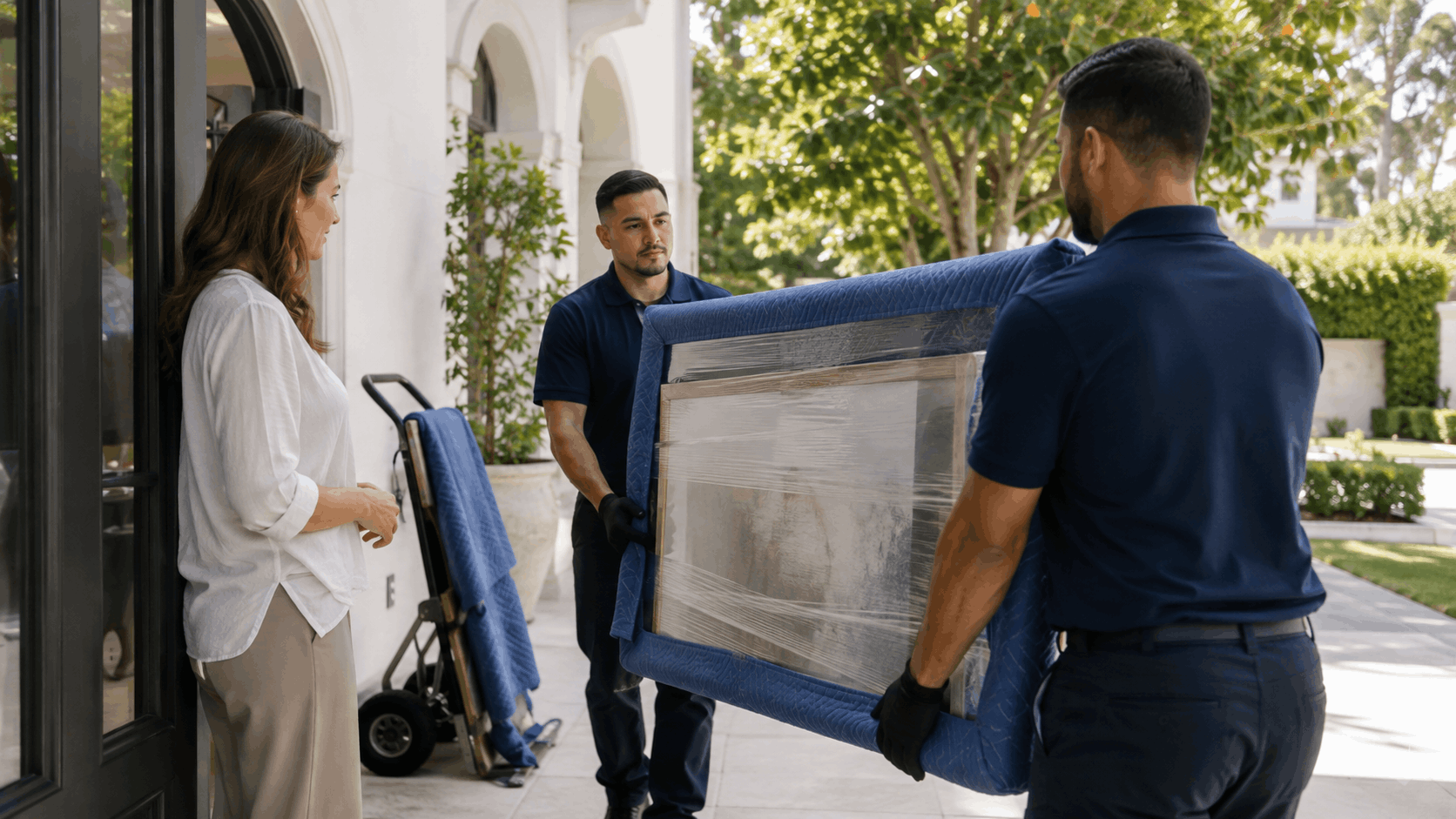
Choosing the Right Cheviot Hills Moving Company
Trusting a high-value estate to a mover takes homework. The wrong choice risks damaged heirlooms and surprise fees. Here is a checklist for choosing movers who can handle a Westside estate the right way.
- Verify CPUC licensing and proper insurance coverage
- Read reviews that mention local streets and estate-size jobs
- Ask about crew size, subcontracting, and possible fees
- Confirm they offer valuation coverage, not just basic liability
- Choose a team that knows the Cheviot Hills area firsthand
Checking Licensing and Insurance
In California, household movers must be licensed by the California Public Utilities Commission. A CPUC license number shows the company operates legally and meets state standards. Any legitimate mover displays it and will share it on request.
Insurance and valuation coverage protect the belongings during the move. Valuation is the mover's level of responsibility for lost or damaged items. Basic coverage pays little per pound, while full valuation covers the actual worth of an item.
For an estate full of art and antiques, full valuation coverage is worth the added cost. It means a damaged heirloom is covered for its real value, not a token amount. We explain the coverage options clearly before the move.
Homeowners can verify a mover's license through the state. The CPUC website lets you check that a company is registered and in good standing. For interstate moves, the federal Protect Your Move resource offers more guidance.
Reading Reviews From Real Westside Neighbors
Reviews tell the real story of a mover's reputation. Generic five-star praise means little on its own. The reviews worth reading mention specific streets, neighborhoods, and the size of the job.
Look for comments from Westside neighbors describing an estate move near Rancho Park or a home off Motor Avenue. Those local references show the crew has actually worked this area. They carry more weight than a vague thumbs-up.
Estate-size jobs deserve special attention in reviews. A mover praised for a studio apartment may not have the experience for a large home with a piano and antiques. Seek out reviews that describe big moves handled well.
Ask the mover for local references too. A company confident in its work will point to past estate clients in the area. That track record tells you more than any advertisement about how they treat a high-value home.
Questions to Ask Before Signing a Contract
Before signing a moving contract, ask direct questions. How many crew members will work the move? A large estate needs enough hands to finish in the planned time. An undersized crew stretches the job and can raise hourly costs.
Ask whether the company uses its own employees or subcontracts the work. Subcontracting means strangers handling the belongings, with less accountability. We use trained in-house crews for estate moves so the same standard applies throughout.
Pin down the fees. Ask about charges for stairs, long carries, packing materials, and specialty items so nothing surprises you later. A clear quote lists these upfront, and any honest mover will explain them without dodging.
Finally, confirm the timeline and what happens if a date shifts due to escrow. Knowing the mover's flexibility protects the plan. These questions filter out the weak choices and point toward a company you can trust with your home.
Need Help in Los Angeles?
Popeye Moving & Storage serves Los Angeles and all of Los Angeles County.
Final Thoughts
Moving out of a large Cheviot Hills estate is a big job, but it does not have to be overwhelming. The right local team knows the narrow streets off Motor Avenue, the older estate layouts near Rancho Park, and the traffic around Pico and Overland. That knowledge turns a complicated move into a planned one.
From full-service packing and piano handling to storage during escrow and gentle senior moves, the pieces fit together when one experienced team manages them. Book early, get an in-home estimate, and choose a licensed, insured mover with real local references.
Our crews at Popeye Moving & Storage Co. work these Westside streets every week. If a Cheviot Hills estate move is ahead, reach out through our contact page or call to schedule a walk-through and consultation. We are glad to help plan a move that protects both the home and everything in it.
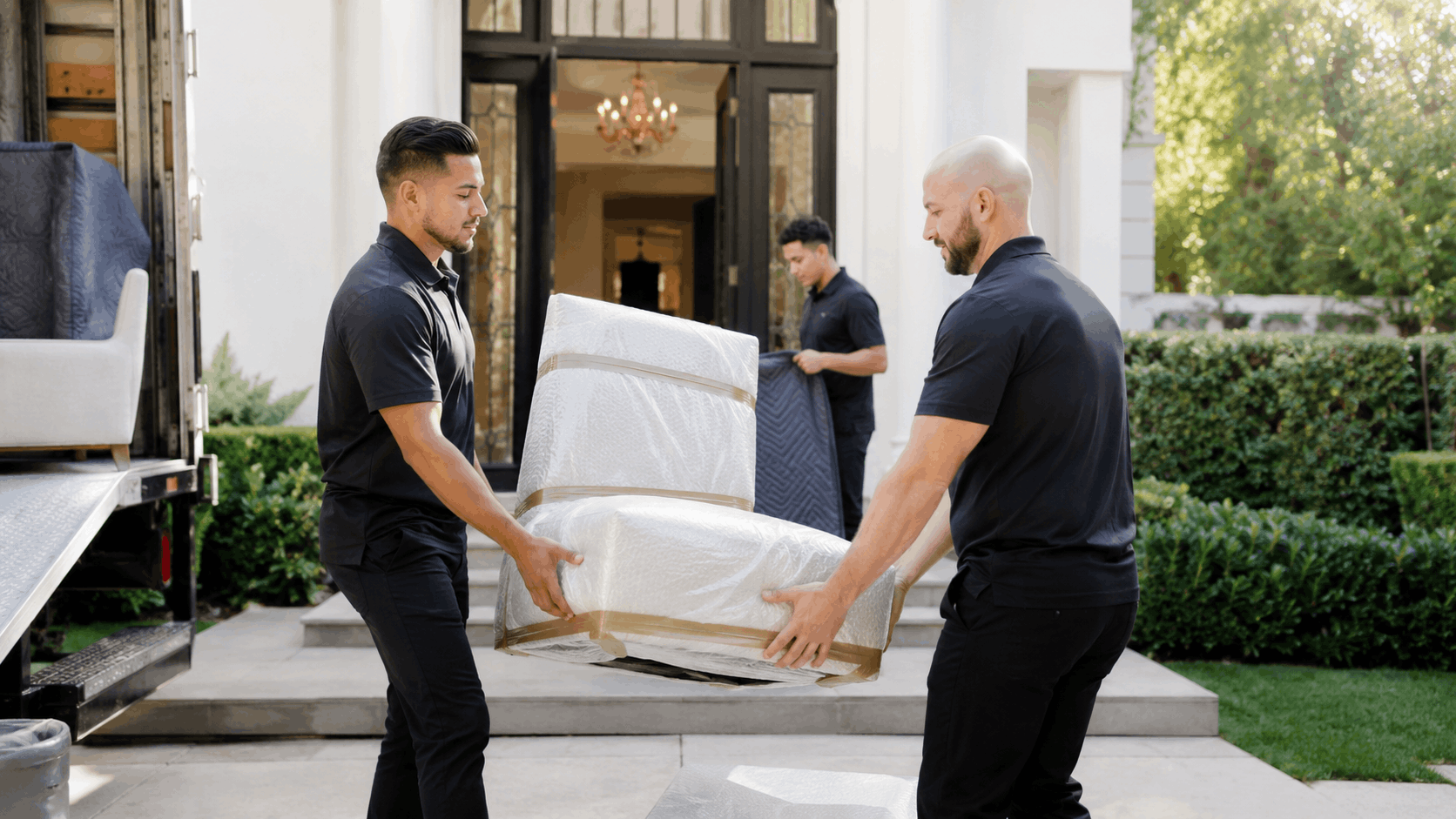
Frequently Asked Questions
How much does it cost to move a large home in Cheviot Hills?
A large estate move here typically runs from $6,000 to $25,000 or more. A four to five-bedroom home with standard packing lands in the middle of that range. Homes with a grand piano, fine art, crating, and storage reach the higher end. The main cost drivers are home size, amount of packing, stairs, long carries, and specialty items. An in-home estimate gives the most accurate figure.
How far in advance should someone book an estate move?
For a large home, book six to eight weeks ahead during the busy summer season and month-end rush. That window secures the right crew and pack days. In the fall and winter, three to four weeks of lead time often works. If a move ties to an escrow closing date, book as soon as the sale is firm, since the tightest dates fill fastest.
Can movers handle a grand piano and antiques?
Yes. Our specialty crew moves grand pianos using piano boards, straps, and careful lifting through tight doorways and staircases. Antiques, fine art, and heirlooms get custom packing with crating, corner protectors, and blanket wrap. Chandeliers come down and get packed arm by arm. Each fragile piece gets a handling plan before the truck arrives so it leaves and arrives in the same condition.
Do movers need a parking permit for Cheviot Hills streets?
Often yes, especially on narrow streets off Motor Avenue where a large truck cannot legally park all day. A temporary no-parking permit from LADOT reserves curb space near the home. The permit takes a few days to arrange and requires posting signs in advance. Our team identifies whether a block needs one during the walk-through and handles the application as part of the move plan.
How long does a full estate move take?
A full estate move usually spans three to five days. For a large Cheviot Hills home, that often means two pack days, one load day, and one to two days of transport and unpacking. Bigger homes with heavy packing or specialty items may run longer. The exact timeline depends on home size, the amount of packing, and how much unpacking the homeowner wants done.
Is storage available if the new home is not ready?
Yes. When escrow timing or renovations leave a gap, we offer climate-controlled storage for both short and long-term needs. Belongings are inventoried before storage so retrieval is simple. Climate control protects antiques, art, and wood furniture from heat and humidity. This option is common during a downsizing move or when the sale of the old home closes before the new place is ready.
What insurance protects belongings during the move?
Two coverage levels apply. Released value is basic protection included at no extra cost, but it pays only a small amount per pound for a damaged item. Full valuation coverage protects an item for its actual worth and is worth the added cost for an estate full of art and antiques. We explain both options clearly before the move so homeowners choose the right level of protection.
Do movers help with packing and unpacking?
Yes. Our full-service packing team boxes everything at the old home, from china and art to the contents of built-ins, using materials made for fragile items. At the new home, our unpacking service opens boxes, places items, assembles furniture, and hauls away empty cartons. For a large estate, this turns a week of exhausting work into a finished home in a day or two.
Can a move be coordinated with an escrow closing date?
Yes, and it is standard on Westside estate moves. We work backward from the closing date to schedule pack and load days, building in a buffer for any escrow delays. If the old home closes before the new one is ready, storage bridges the gap. Staying in touch with the escrow officer and real estate agent keeps the move day lined up with the sale.
What areas near Cheviot Hills does the team serve?
Our crews regularly work across the Westside, including West Los Angeles, Rancho Park, Culver City, and Century City. We also serve Santa Monica, Brentwood, Beverly Hills, and Marina Del Rey. These neighborhoods share similar streets, older estates, and permit needs, and our team knows how each one moves.
Frequently Asked Questions
- How much does it cost to move a large home in Cheviot Hills?
- A large estate move here typically runs from $6,000 to $25,000 or more. A four to five-bedroom home with standard packing lands in the middle of that range. Homes with a grand piano, fine art, crating, and storage reach the higher end. The main cost drivers are home size, amount of packing, stairs, long carries, and specialty items. An in-home estimate gives the most accurate figure.
- How far in advance should someone book an estate move?
- For a large home, book six to eight weeks ahead during the busy summer season and month-end rush. That window secures the right crew and pack days. In the fall and winter, three to four weeks of lead time often works. If a move ties to an escrow closing date, book as soon as the sale is firm, since the tightest dates fill fastest.
- Can movers handle a grand piano and antiques?
- Yes. Our specialty crew moves grand pianos using piano boards, straps, and careful lifting through tight doorways and staircases. Antiques, fine art, and heirlooms get custom packing with crating, corner protectors, and blanket wrap. Chandeliers come down and get packed arm by arm. Each fragile piece gets a handling plan before the truck arrives so it leaves and arrives in the same condition.
- Do movers need a parking permit for Cheviot Hills streets?
- Often yes, especially on narrow streets off Motor Avenue where a large truck cannot legally park all day. A temporary no-parking permit from LADOT reserves curb space near the home. The permit takes a few days to arrange and requires posting signs in advance. Our team identifies whether a block needs one during the walk-through and handles the application as part of the move plan.
- How long does a full estate move take?
- A full estate move usually spans three to five days. For a large Cheviot Hills home, that often means two pack days, one load day, and one to two days of transport and unpacking. Bigger homes with heavy packing or specialty items may run longer. The exact timeline depends on home size, the amount of packing, and how much unpacking the homeowner wants done.
- Is storage available if the new home is not ready?
- Yes. When escrow timing or renovations leave a gap, we offer climate-controlled storage for both short and long-term needs. Belongings are inventoried before storage so retrieval is simple. Climate control protects antiques, art, and wood furniture from heat and humidity. This option is common during a downsizing move or when the sale of the old home closes before the new place is ready.
- What insurance protects belongings during the move?
- Two coverage levels apply. Released value is basic protection included at no extra cost, but it pays only a small amount per pound for a damaged item. Full valuation coverage protects an item for its actual worth and is worth the added cost for an estate full of art and antiques. We explain both options clearly before the move so homeowners choose the right level of protection.
- Do movers help with packing and unpacking?
- Yes. Our full-service packing team boxes everything at the old home, from china and art to the contents of built-ins, using materials made for fragile items. At the new home, our unpacking service opens boxes, places items, assembles furniture, and hauls away empty cartons. For a large estate, this turns a week of exhausting work into a finished home in a day or two.
- Can a move be coordinated with an escrow closing date?
- Yes, and it is standard on Westside estate moves. We work backward from the closing date to schedule pack and load days, building in a buffer for any escrow delays. If the old home closes before the new one is ready, storage bridges the gap. Staying in touch with the escrow officer and real estate agent keeps the move day lined up with the sale.
- What areas near Cheviot Hills does the team serve?
- Our crews regularly work across the Westside, including West Los Angeles , Rancho Park, Culver City, and Century City. We also serve Santa Monica , Brentwood , Beverly Hills, and Marina Del Rey. These neighborhoods share similar streets, older estates, and permit needs, and our team knows how each one moves.
P
Popeye Moving & Storage Co. Team Team
Licensed moving and storage professionals serving Los Angeles and Los Angeles County.
Licensed in California · License #PUC: CAL T 189749 | DOT: 1472924 | MC: 498816C
Why trust Popeye Moving & Storage?
Founded in 1994, Popeye Moving & Storage is a licensed and insured moving and storage service serving Los Angeles and Los Angeles County. All content is reviewed by our licensed technicians.

Need Help in Los Angeles?
Popeye Moving & Storage serves Los Angeles and all of Los Angeles County.
Related Articles

How-To Guides
Working With Estate Managers and Household Staff: Service-Entrance Protocol on Westside Properties
A local guide to working with estate managers and household staff, service-entrance protocol, and access rules on high-end Westside Los Angeles properties.
How-To Guides
Holmby Hills Movers: Compound and Estate Property Specialists
A complete guide to moving Holmby Hills estates and compounds, covering planning, specialty packing, logistics, security, storage, and costs from local specialists.
Tips & Advice
Santa Monica Movers North of Montana: Coastal Estate Service
A local expert guide to estate moving north of Montana Avenue in Santa Monica, covering coastal conditions, fragile crating, neighborhood logistics, storage, and permits.