How-To Guides
Trade Show and Pop-Up Logistics in LA: Booth Transport, Storage Between Events, and Convention Timing
Key Takeaways
- LA trade show logistics demand local knowledge of docks, marshalling yards, union labor rules, and freeway traffic on the 110, 10, and 101.
- Safe booth transport relies on custom crating, blanket wrap, the right truck size, and load-in timed to the venue's dock schedule.
- Climate-controlled storage between events protects graphics and electronics, while inventory tracking and labeling prevent lost components.
- Storage near Vernon, Commerce, or the Arts District keeps booths minutes from downtown venues for fast, low-cost redeployment.
- Book transport three to six weeks ahead during peak convention weeks and build traffic buffers into every load-in schedule.
- Pop-ups in districts like Melrose, Abbot Kinney, and Silver Lake need same-day delivery and careful curbside access planning.
- Confirm transit and storage coverage, document booth condition with photos, and use specialty handling for heavy or high-value items.
- Using one provider for transport and storage keeps inventory consistent and simplifies back-to-back, multi-venue show schedules.
In This Article
It is 6 a.m. on a Tuesday, and an exhibitor is parked on Figueroa Street watching the clock. Their load-in window at the LA Convention Center opens in 40 minutes, the 110 is already backing up, and their custom booth is sitting in a truck three blocks away with nowhere to unload. This scene plays out more often than most brands expect, and it usually comes down to one thing: logistics planning that did not account for how LA actually works.
Trade shows and pop-up events in Los Angeles run on tight schedules, strict venue rules, and traffic patterns that punish anyone who guesses. A booth that took months to design can be delayed, damaged, or hit with overtime labor fees because of a single missed dock time. The margin for error is thin, and the cost of getting it wrong is high.
Why Trade Show Logistics in LA Are Different?
Moving a booth in Los Angeles is not like moving one in a smaller market. The traffic, the venue rules, and the sheer number of events all stack up against you at once. LA trade show logistics reward local knowledge and punish assumptions made from a spreadsheet.
Exhibitor challenges here fall into a few repeating patterns:
- Load-in windows are short and often overlap with other exhibitors fighting for the same dock
- Union labor rules at major venues control who touches what and when
- Freeway congestion can turn a 20-minute drive into 90 minutes with no warning
- Multiple convention centers run shows the same week, tightening truck and crew availability
Local crews who work these venues weekly already know the choke points. That familiarity is the difference between a smooth load-in and a truck circling downtown while the clock runs.
Traffic and Timing Around Downtown Venues
The LA Convention Center sits right in the middle of downtown, wedged between the 110 and the 10. During morning load-in hours, 110 freeway traffic backs up from the 10 interchange all the way past the 4th Street exits. A truck that leaves a Vernon warehouse at 7 a.m. can easily lose an hour before it even reaches Pico Boulevard.
Surface streets around the venue are no relief either. Figueroa, Pico, and Cherry Street fill with rideshare drops, event staff, and other exhibitor trucks all trying to reach the same marshalling area. When a Lakers or Clippers game overlaps at the nearby arena, parking and traffic in the whole district lock up fast.
We plan every downtown delivery backward from the dock time, not forward from the warehouse. That means building in an extra 45 to 60 minutes of buffer during peak hours and staging trucks close to the venue the night before when the schedule allows. A booth that arrives 30 minutes early has options; one that arrives 10 minutes late may lose its slot entirely.
Timing also matters for load-out. After a show closes, hundreds of exhibitors hit the docks at once, and a poorly timed teardown can leave a crew waiting hours for dock access. Knowing when to stage and when to hold makes a real difference in labor cost.
Venue Rules and Union Labor Requirements
Most large LA venues use a marshalling yard system, where trucks check in at an off-site lot and get called to the dock in order. Exhibitors who show up directly at the loading dock without checking in first get turned away. This surprises first-time exhibitors almost every single time.
Union labor rules add another layer. At many convention centers, only certain workers can operate forklifts, move freight past a set point, or handle rigging for heavy displays. An exhibitor's own crew may be limited to hand-carrying small items, and violating those rules can shut a booth setup down mid-install.
Loading dock rules also cover truck height, weight limits, and how long a vehicle can occupy a bay. Bring the wrong truck size and it may not fit the dock or clear the height bar into the marshalling yard. We confirm these details with the show's official freight handler before a single crate leaves storage.
Our approach is to read the exhibitor kit line by line before the event. Those kits spell out dock schedules, labor jurisdiction, and material handling fees. Missing a detail in that packet is one of the most common and expensive mistakes exhibitors make.
The Crowded Event Calendar Across the City
Los Angeles runs one of the busiest event calendars in the country. The LA Convention Center, Pasadena Convention Center, and Long Beach Convention Center often host major shows the same week, and that competition ripples through the entire logistics market.
When several large shows run back-to-back, trucks and labor crews get booked out weeks ahead. A brand that waits until the last minute to arrange transport during a busy trade week may find nothing available at any price. Delivery slots at the docks fill the same way.
Overlapping shows also mean short turnaround windows for brands running multiple events. A company might exhibit in Long Beach one week and downtown the next, with barely enough time to inspect and repack between them. That kind of schedule leaves no room for a truck breakdown or a missed dock time.
We watch the citywide calendar closely so clients do not get caught off guard. Knowing which weeks are jammed lets us reserve trucks and crews early and plan realistic transitions between venues.
Get Your Free Quote
Tell us about your move and we'll get back to you fast.
Booth Transport: Getting Your Display There Safely
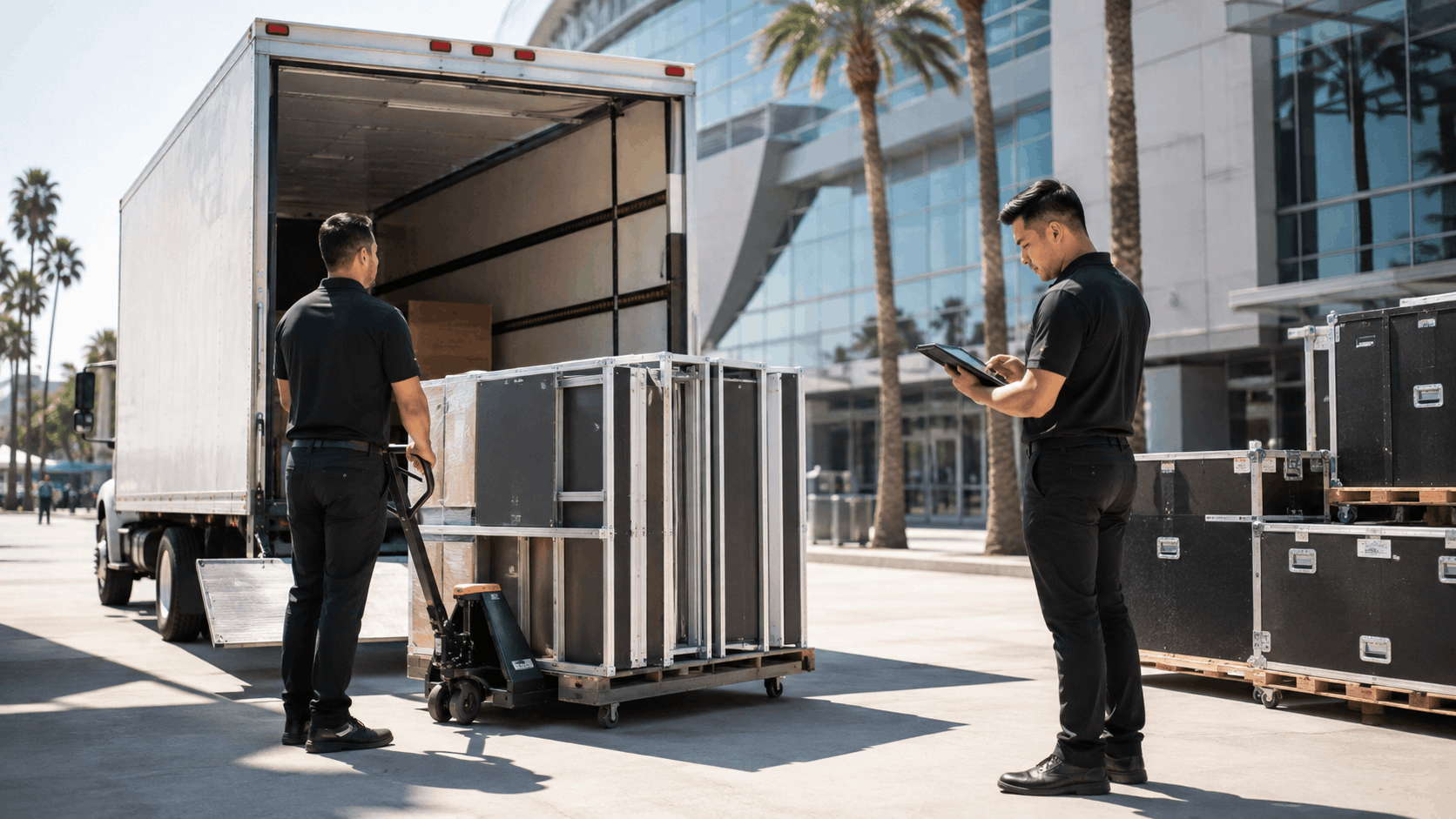
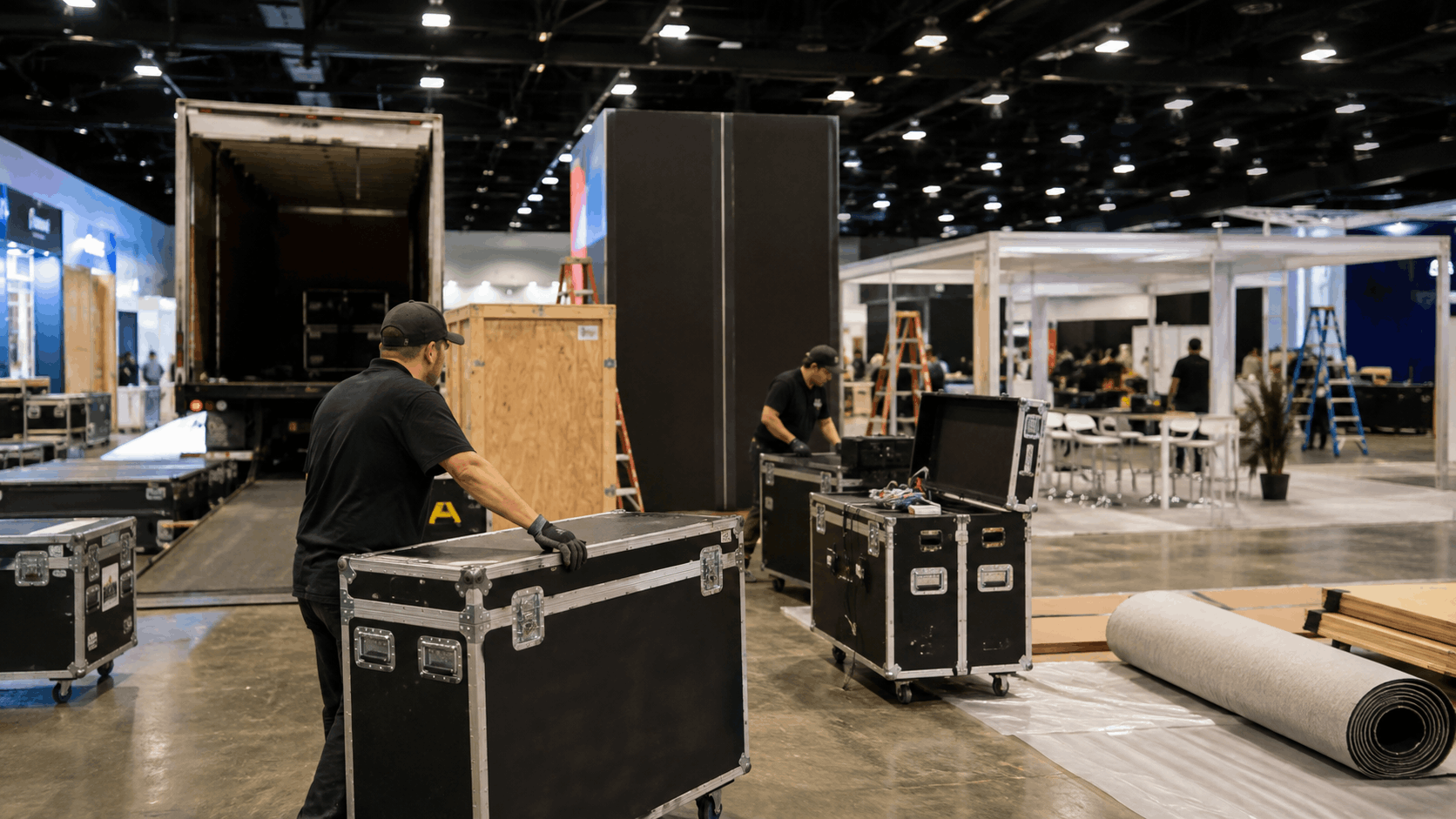
Booth transport is more than tossing crates in a truck and driving downtown. Display shipping involves careful crating, the right vehicle, and coordinated load-in that respects the venue's rules. Our specialty moving team handles displays that most general movers will not touch.
Here is what safe booth transport usually includes:
- Custom crating for fragile panels, screens, and signage
- Blanket wrap and padding for anything that could scratch or dent
- Truck sizing matched to booth volume and dock access
- Coordinated load-in and load-out timed to the venue schedule
Each of these steps protects an investment that often runs into the tens of thousands of dollars. Skipping any one of them is where damage claims usually start.
Crating and Padding Fragile Displays
Modular booth panels, backlit graphics, and large monitors are the items that break most often in transit. Custom crating built to the exact dimensions of each piece keeps them from shifting, which is where cracks and dents come from. A generic box leaves gaps, and gaps mean movement.
For banners and fabric graphics, we roll rather than fold to avoid permanent creases that show under booth lighting. Blanket wrap protects finished surfaces on wood and laminate structures, and corner guards keep edges from chipping against other freight. Our packing and crating services build the protection around each item instead of forcing items into a standard container.
Electronics need their own approach. Monitors and screens travel in foam-lined crates with anti-static protection, and cables get labeled and bagged separately so setup goes faster on the show floor. A cracked screen discovered at load-in can sink an entire booth presentation.
We also photograph each item as it is packed. That record helps with fast reassembly and gives everyone a clear condition report if a damage claim ever comes up later.
Choosing the Right Truck Size for Your Booth
Matching truck size to booth inventory sounds simple until a 26-foot truck cannot clear the height bar at a downtown marshalling yard. Bigger is not always better in LA. The right truck fits both the freight and the venue's access rules.
A small tabletop display and a few crates might fit in a cargo van or a 16-foot box truck. A full island booth with structures, flooring, and product inventory may need a 26-foot truck or more. We calculate cubic footage first, then confirm the truck can physically reach and fit the assigned dock.
Oversized trucks struggle near downtown docks where turning radius is tight and low clearances are common. Some venues push large trailers to specific gates or restrict them to certain hours. Sending a trailer that cannot maneuver the site wastes the whole load-in window.
For pop-ups and smaller activations, a right-sized vehicle also helps with the curbside loading that dense districts demand. There is no point bringing a semi to a storefront on Abbot Kinney where it cannot legally stop.
Load-In and Load-Out Coordination
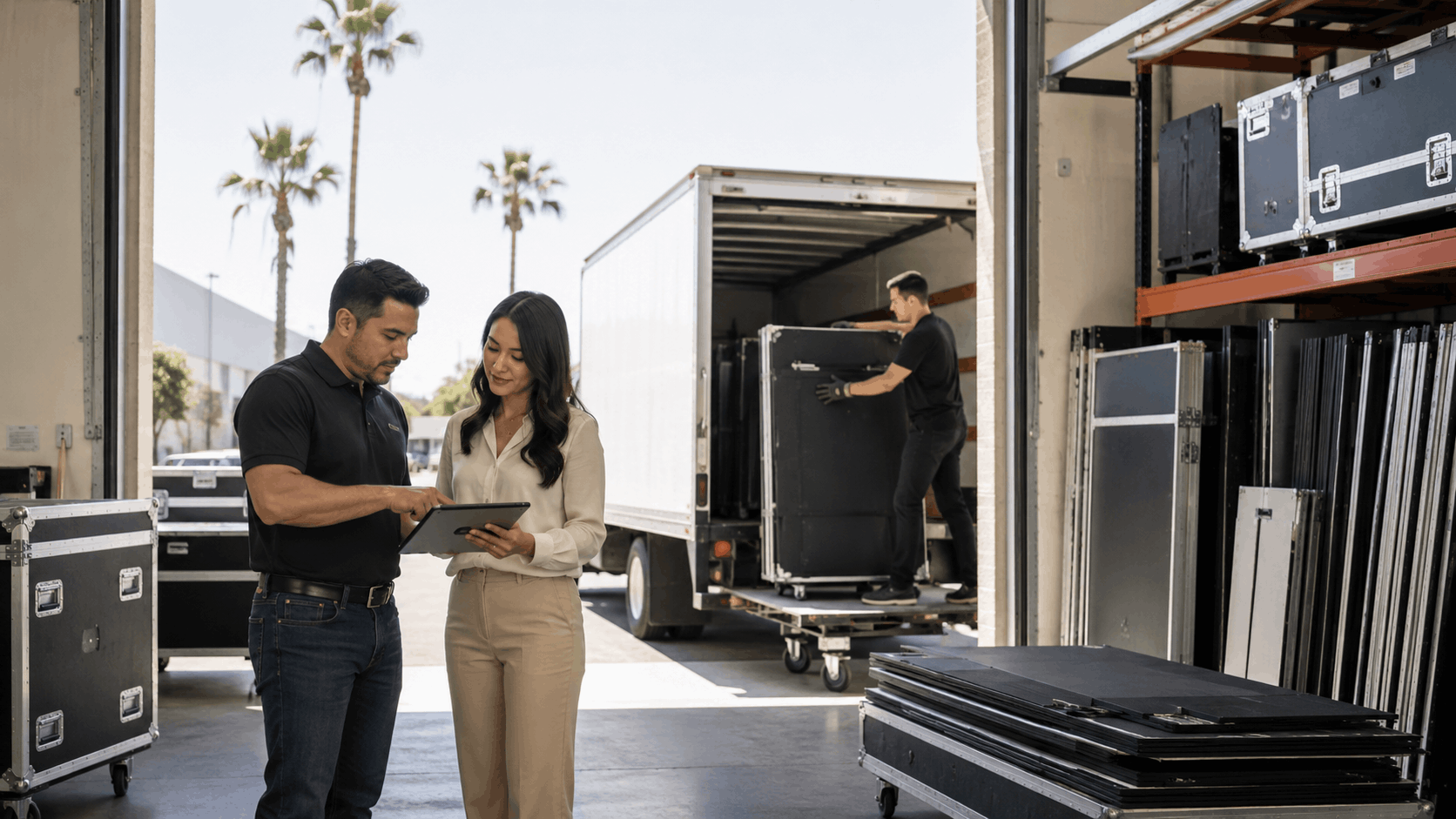
The load-in window is the fixed block of time an exhibitor gets to bring freight in and set up. Miss it and the next slot may be hours away or the next day. We build the entire delivery plan around hitting that window with time to spare.
Dock check-in is the first hurdle. At marshalling-yard venues, the truck checks in, waits for a call, and only then moves to the dock. We stage trucks early so they are near the front of the line when doors open, which shaves hours off waiting time.
Load-out and teardown carry their own pressure. When a show ends, overtime labor charges kick in fast if a crew runs past scheduled hours. A well-drilled teardown plan, with crates staged and labeled, gets a booth broken down and loaded before those charges pile up.
We coordinate directly with the venue's freight desk on both ends. That keeps our timing lined up with the official schedule and avoids the last-minute scramble that costs exhibitors money.
Routes and Access Near Major LA Venues
Every major venue has its own approach quirks. At the LA Convention Center, we favor the South Hall access off Venice and Figueroa during off-peak hours to dodge the worst 110 backups. Timing the arrival to the dock call, not the freeway, is what matters.
The Pasadena Convention Center sits in a walkable downtown grid where surface street timing and limited truck parking drive the plan. Coming in from the 210 and staging near Pasadena before the load-in window keeps trucks out of the tight residential blocks nearby. We know which streets allow truck stops and which do not.
The Long Beach Convention Center offers better dock access than downtown but brings its own port-area traffic and event overlap. Approaches off the 710 and Shoreline Drive work best, and staging near the Long Beach area keeps redeployment quick for back-to-back shows.
Knowing these routes cold is what separates a crew that has worked LA venues for years from one reading a map for the first time. The right approach saves hours and protects the booth from a rushed, sloppy load-in.
Need Help in Los Angeles?
Popeye Moving & Storage serves Los Angeles and all of Los Angeles County.
Storage Between Events: Keeping Your Booth Show-Ready
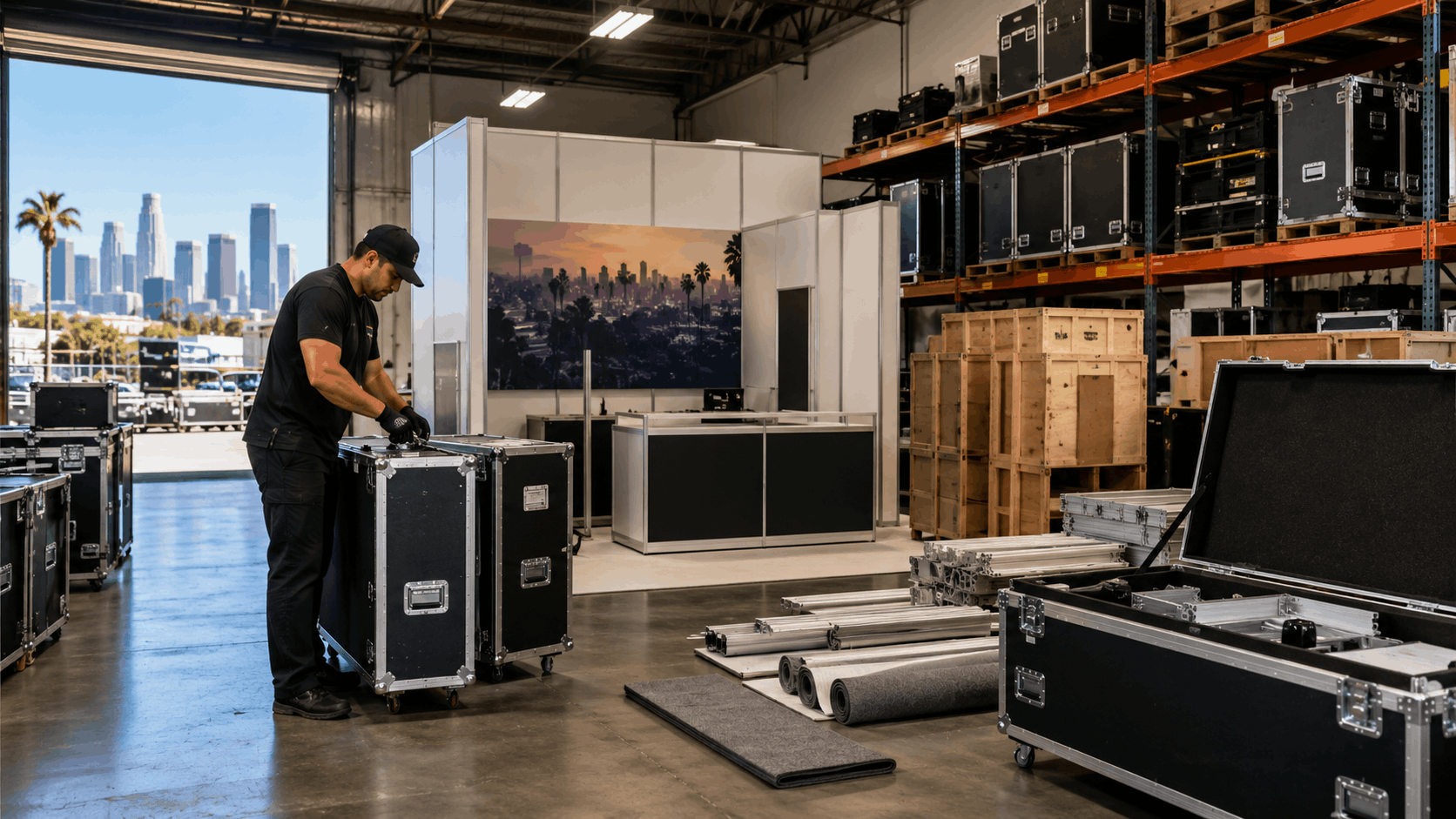
Shipping a booth back to a home base after every show wastes money and adds risk. Storage between events keeps everything close, protected, and ready to redeploy. Good booth storage is about keeping displays show-ready, not just stacking crates in a warehouse.
The right storage setup should offer:
- Climate control to protect graphics and electronics
- Organized inventory tracking and clear component labeling
- Flexible short-term and long-term options
- A location close to the venues where the brand exhibits
Our storage solutions are built with exhibitors and pop-up brands in mind, not just household goods.
Climate-Controlled Storage for Sensitive Materials
LA weather swings more than people expect. Inland warehouses without climate control can hit triple digits in summer, and that heat warps laminate panels, curls printed graphics, and stresses electronics. A booth that went into storage looking sharp can come out with peeling edges.
Humidity is the other quiet threat. Fabric graphics and printed banners can develop mildew or discoloration in damp, uncontrolled spaces. Climate-controlled storage holds temperature and humidity steady so graphics protection stays intact between shows.
Electronics are especially sensitive. Monitors, LED walls, and control hardware do not do well through repeated heat cycles. Keeping them in a stable environment extends their life and cuts down on failures right before a show opens.
We recommend climate control for any booth with printed graphics, wood or laminate structures, or electronics. The added cost is small next to the price of reprinting graphics or replacing a damaged screen.
Inventory Tracking and Booth Component Labeling
Nothing derails a load-in like arriving at the venue and realizing a crate of shelving or a set of connectors got left behind. Inventory tracking prevents that. Every crate and component gets logged when it enters storage and checked again when it leaves.
Clear component labeling makes reassembly faster too. When each panel, base, and hardware bag is marked and tied to a packing map, a crew can rebuild a booth without guesswork. That speed matters when the load-in window is only a few hours.
We maintain a running inventory log for stored booths so clients always know exactly what is on hand. Before a redeployment, we cross-check the list against the show's floor plan to confirm nothing is missing. Our commercial storage options keep booth components organized between events.
This system also helps track wear over time. When a panel gets scuffed or a part goes missing, the log flags it early so there is time to repair or replace before the next show.
Short-Term vs Long-Term Storage Options
Storage needs vary a lot depending on how often a brand exhibits. A company running monthly pop-ups needs short-term storage with easy in-and-out access. A brand with two or three big shows a year is better served by long-term storage that holds the booth safely for months at a stretch.
Short-term storage works like a home base between frequent activations. The booth comes in, gets inspected and repacked, and heads back out within days or weeks. Quick access and flexible scheduling matter most here.
Long-term storage suits seasonal or annual show cycles. Our long-term storage options keep a booth protected through the off-season so it is ready when the next event comes around. Climate control matters even more over these longer stretches.
Many brands use a mix of both. We help clients right-size their storage plan so they are not paying for long-term space they do not need or scrambling for short-term room during a busy stretch.
Storage Locations Close to LA Show Venues
Where a booth is stored affects how fast it can redeploy. Storage near the industrial neighborhoods of Vernon and Commerce puts a booth minutes from the downtown convention district. A short haul means less traffic exposure and lower transport cost.
A Vernon warehouse location works well for downtown shows because the run to the LA Convention Center avoids the worst freeway stretches. Commerce offers similar proximity with easy access to the 5 and 710 for shows in Long Beach or the surrounding area.
Arts District storage adds another advantage for brands doing pop-ups and activations in central LA. Being close to central and west LA neighborhoods keeps same-day setups realistic. Short distances make tight timing achievable.
The closer the storage sits to the venues a brand uses most, the more control it has over timing. We factor venue proximity into every storage recommendation so redeployment stays fast and predictable.
Convention Timing: Planning Around LA's Show Schedule
Convention timing is where good logistics plans either hold up or fall apart. The show schedule, peak season demand, and LA traffic all have to be worked into a single plan. Getting the timing right protects both the budget and the booth.
Planning around LA's calendar means booking early, padding for traffic, and coordinating carefully when shows stack up. Each piece deserves its own attention.
Booking Delivery Slots Weeks in Advance
During busy convention months, delivery slots and dock times get claimed fast. Exhibitors who wait until the final week often find that trucks and crews are already committed to other shows. Advance booking is the safest path.
We recommend reserving transport at least three to four weeks ahead for a standard show, and six weeks or more during peak convention weeks. That lead time secures the truck, the crew, and a realistic delivery slot at the venue's marshalling yard.
Late booking risks more than higher prices. It can mean missing the assigned dock time entirely, which pushes setup to a scramble and can cost a prime spot in the load-in order. The earlier the plan is locked, the more options stay open.
For brands with recurring shows, we set up a booking calendar tied to their event schedule. Reserving well ahead removes the annual last-minute panic that so many exhibitors know too well.
Peak Seasons and High-Demand Weeks
Certain weeks in LA are simply harder for logistics. Major trade weeks and back-to-back conventions at the LA, Pasadena, and Long Beach centers pull trucks and labor crews thin across the whole region. Peak convention season tightens everything.
Spring and fall tend to carry the heaviest trade show traffic in the city, though specific industries have their own busy stretches. When two or three large shows overlap, even well-established movers run near capacity. Prices climb and availability shrinks.
We track these high-demand periods so clients can plan around them. Sometimes that means booking earlier, and sometimes it means adjusting a transport schedule by a day to avoid the worst crunch.
Knowing the rhythm of the city's calendar is what keeps a booth on schedule during the busiest trade weeks. It is local knowledge that no national booking system captures well.
Building Buffer Time for LA Traffic Delays
Anyone who drives LA knows the freeways do not follow a schedule. The 101, 10, and 110 can flow one morning and lock solid the next. A logistics plan without a traffic buffer is a plan waiting to fail.
We build extra time into every load-in schedule to absorb freeway backups. For a downtown delivery during morning rush, that can mean leaving the warehouse 60 to 90 minutes earlier than the drive time alone would suggest. Arriving early costs nothing; arriving late can cost the slot.
The 101 through the interchange and the 10 approaching downtown are especially unpredictable during morning load-in hours. Accidents or lane closures can add 30 minutes without warning. A buffer turns those surprises into non-events.
Staging trucks near the venue the night before is another tool we use for critical shows. When the schedule is tight and the stakes are high, removing the freeway from the equation entirely is the safest move.
Coordinating Multi-Venue and Back-to-Back Shows
Brands running back-to-back shows across LA face the toughest timing challenge. A booth might close in Long Beach on a Sunday and need to open in downtown or Pasadena days later. That transition has to be planned to the hour.
Multi-venue coordination starts with mapping the full sequence: teardown, transport, storage or direct transfer, and setup at the next site. We identify where the timing is tightest and build the plan around those pressure points. Our commercial moving team handles these transitions regularly.
Sometimes the booth goes straight from one venue to the next. Other times a short storage stop for inspection and repack makes sense, especially if a component needs repair. We choose the path that keeps the schedule intact.
The goal with back-to-back shows is zero downtime and zero surprises. Careful sequencing and early booking make consecutive events across the city manageable instead of chaotic.
Pop-Up Retail Logistics for LA Brands
Pop-up logistics run on a different clock than trade shows. A retail pop-up or brand activation often has a tighter timeline, a smaller footprint, and a storefront location instead of a convention dock. The needs shift accordingly.
Pop-ups mix fixtures, merchandise, and signage, and they usually land in busy neighborhoods where parking and access are the real challenge. Our retail moving experience carries directly over to pop-up work.
Fast Setup and Same-Day Delivery Needs
Pop-ups on Melrose, Abbot Kinney, and around The Grove often run on short leases and even shorter setup windows. A brand may get access to a space for only a few days, which means same-day delivery and fast setup are the norm, not the exception.
These timelines leave no room for delay. When a pop-up opens Friday and the space is only available Thursday afternoon, everything has to land and go up in a single window. We plan these deliveries to the hour and staff them to move fast.
Abbot Kinney in particular brings tight streets and limited loading zones, so timing the delivery to a quiet part of the day matters. Melrose and The Grove area carry heavy foot and vehicle traffic that can block a truck for a long time if the timing is wrong.
We scout access and timing before the delivery day so the crew arrives ready. Fast setup depends on knowing exactly where to park, how to reach the space, and what order to bring items in.
Handling Fixtures, Merchandise, and Signage
A pop-up moves a wider mix of items than a trade show booth. Display racks, shelving, and fixtures share the truck with boxed product inventory and branded signage. Each type needs its own handling.
Fixtures like racks and shelving get padded and secured so finishes stay clean, since scratched display furniture undercuts the whole look. Merchandise transport calls for careful boxing and, for some products, climate consideration so nothing arrives damaged or spoiled.
Signage and printed graphics travel rolled or crated to avoid creases and cracks, the same way we handle trade show banners. Getting signage to the site in perfect shape matters because it sets the brand tone the moment a customer walks up.
We keep these categories organized in the truck and in the setup sequence. Fixtures go up first, then merchandise gets stocked, then signage finishes the space. That order keeps a fast setup from turning into a jumble.
Parking and Curbside Access in Busy Districts
The hardest part of many pop-ups is not the move itself but finding a legal place to unload. Curbside loading in dense districts takes planning. Downtown, Silver Lake, and Beverly Hills each present their own parking headaches.
In Downtown and along the busier stretches, loading zones are scarce and metered spots fill early. We identify the nearest legal loading option ahead of time and time the delivery to when the curb is most likely open.
Silver Lake parking is famously tight, with narrow streets and permit zones that trip up out-of-town crews. Beverly Hills, including areas near the Flats, enforces loading and parking rules strictly, so an unplanned truck stop can draw a ticket fast.
Knowing these local rules keeps a pop-up delivery smooth and citation-free. We handle the parking and access puzzle so the brand can focus on the activation itself, whether it is in Culver City or the heart of the Westside.
Need Help in Los Angeles?
Popeye Moving & Storage serves Los Angeles and all of Los Angeles County.
Insurance, Handling, and Protecting Valuable Displays
A custom booth or activation setup represents a serious investment. Protecting it through transport and storage means the right insurance, careful handling, and solid documentation. Display insurance and proper handling are what stand between a brand and a costly loss.
The protection side of logistics comes down to a few things worth asking about:
- What coverage applies during transit and while in storage
- How booth condition is documented before and after each move
- How heavy or high-value items get specialty handling
What Coverage Exhibitors Should Ask About
Not all coverage is the same, and exhibitors should ask pointed questions before signing anything. Transit coverage protects the booth while it is on the truck, and storage insurance protects it while it sits between shows. Both matter for a booth that spends time in each.
The main questions to ask are what is covered, at what value, and what the deductible looks like. Some policies cover replacement value while others only cover a fraction based on weight. That difference is huge for lightweight but expensive items like LED walls.
Exhibitors should also confirm whether coverage stays in place during load-in and load-out, when handling risk is highest. Gaps in coverage during those windows are common and easy to miss. We walk clients through the options so they understand exactly what protection they have.
The Federal Motor Carrier Safety Administration offers helpful background on carrier liability and what movers are required to provide. Reviewing that guidance on protecting your move helps exhibitors ask smarter questions.
Documenting Booth Condition Before and After
A clear condition report protects everyone. Photographing and logging the state of each booth component before it ships gives a baseline to compare against later. If something arrives damaged, there is proof of how it left.
We photograph items as they are packed and again during load-out. Time-stamped images and a written log make damage claims straightforward instead of a dispute over who is at fault. Fair documentation benefits both the brand and the mover.
This record also helps track a booth's wear over many shows. Small dents and scuffs add up, and having a history makes it easier to decide when a component needs refurbishing or replacement. It turns guesswork into a clear timeline.
For high-value booths, we recommend a formal condition report signed off at both ends of each move. It takes a few extra minutes and can save a great deal of trouble if a claim ever arises.
Specialty Handling for Heavy or High-Value Items
Some booth items need more than standard care. Large screens, custom-built structures, and sensitive electronics call for specialty handling with the right equipment and trained crew. Treating these like ordinary freight is how expensive mistakes happen.
Large LED walls and monitors travel in purpose-built crates and get loaded with care to avoid pressure on the panels. Heavy custom structures may need rigging, straps, and a crew that knows how to distribute weight so nothing shifts in transit.
High-value items also warrant extra attention at the dock. Our crews stage and move these pieces deliberately rather than rushing them through a crowded load-in. A moment of care at the dock prevents a shattered screen on the show floor. Our specialty handling experience with delicate, heavy items carries directly into booth work.
The trade show industry has plenty of guidance on protecting displays, and groups like the event marketing community regularly cover best practices worth following. Careful handling is what keeps a booth investment intact show after show.
How Popeye Moving & Storage Co. Supports LA Exhibitors
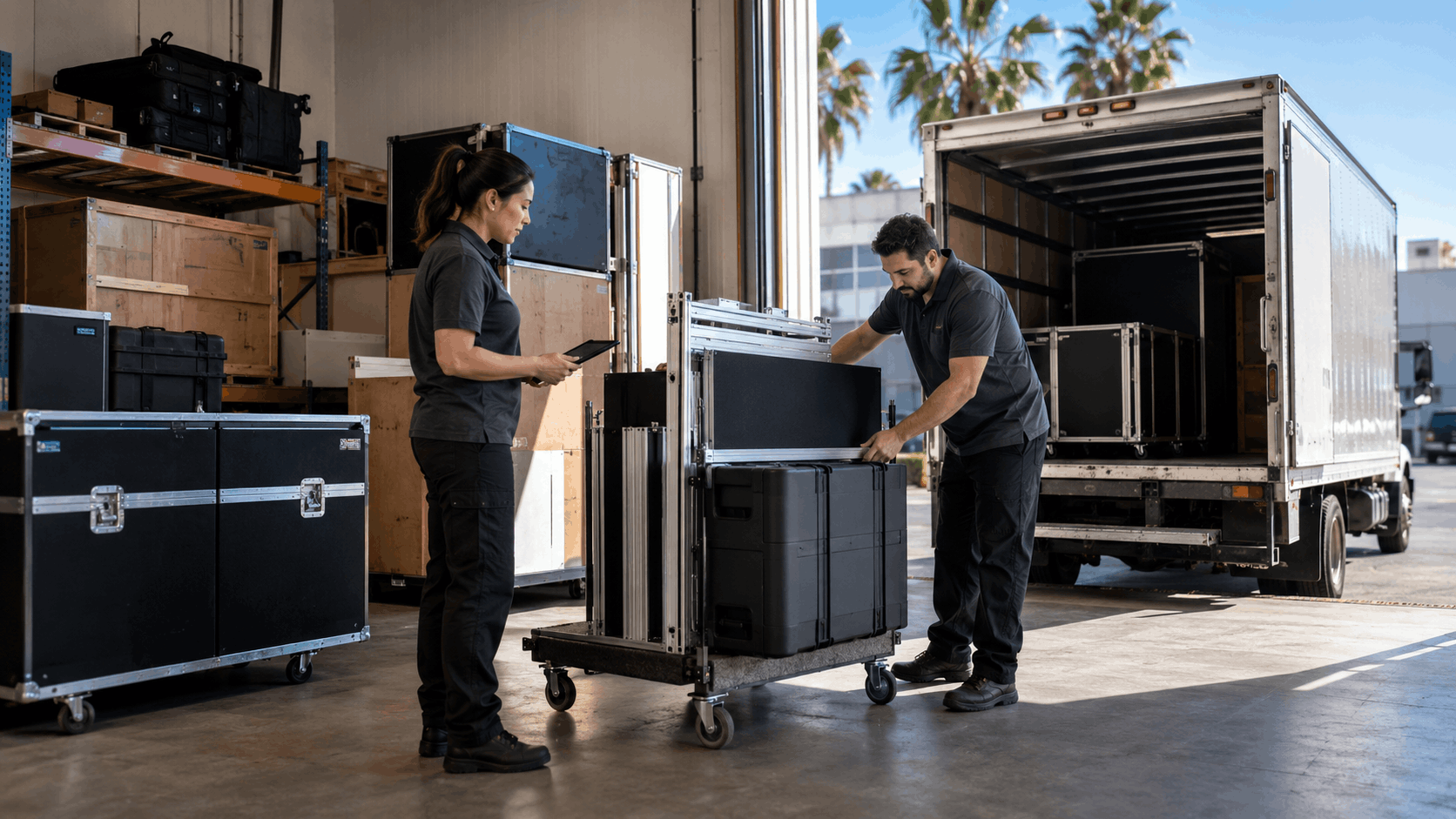
Popeye Moving has spent years moving booths and pop-ups across Los Angeles. Our LA exhibitor support combines local route knowledge, in-house storage, and flexible scheduling built around how the city's events actually run. The trade show services we offer are shaped by real experience at these venues.
What sets our approach apart for exhibitors:
- Local crews who know the venues, docks, and routes firsthand
- Transport and storage handled under one roof
- Scheduling that flexes with tight and changing convention windows
Local Crews Who Know LA Venues and Routes
Our crews work LA venues regularly, so they already know the marshalling yard systems, dock schedules, and labor rules at the major convention centers. That venue knowledge means fewer surprises and faster load-ins. A crew that has done it before does not waste the window learning the site.
They also know the routes cold. Which approach to the LA Convention Center avoids the worst 110 backups, how to reach the Pasadena docks without getting stuck on residential streets, and the best way into Long Beach off the 710. Local crews turn traffic knowledge into on-time delivery.
This familiarity extends across the region, from downtown to Santa Monica and the beach cities. Wherever a show or activation lands, our team has likely worked nearby and knows the access quirks.
That day-to-day experience in the city is something a national carrier simply cannot match. It is the difference between a plan that looks good on paper and one that holds up on a jammed Tuesday morning.
Combined Transport and Storage Under One Roof
Using one provider for both transport and storage removes a lot of friction. The same team that delivers a booth can store it between events and redeploy it for the next show. There is no handoff, no lost crate, and no finger-pointing when something goes wrong.
A single provider also keeps the inventory log consistent from storage to truck to venue. What went into storage is exactly what shows up at the dock, tracked the whole way. That continuity prevents the missing-component problems that plague brands juggling multiple vendors.
It saves money too. Coordinating one contract for transport and storage is simpler than stitching together separate services, and short hauls from our storage locations cut transport cost. Brands running frequent events feel that savings quickly.
For companies moving offices or expanding while running events, our office and business moving services fit alongside booth logistics under the same roof.
Flexible Scheduling for Tight Convention Windows
LA events change fast. A dock time shifts, a show adds a day, or a pop-up lease moves up. Flexible scheduling is how we keep booths on track when the plan moves. We build in room to adapt rather than locking into a rigid timeline.
Our team plans around show dates and stays ready for last-minute changes that are common with LA events. When a convention window tightens or an activation date jumps, we adjust the crew and truck plan to match. That responsiveness matters when the calendar is unforgiving.
We also handle rush and short-notice needs, drawing on the same speed our last-minute moving team uses. A pop-up that comes together in a few days can still get proper handling.
The point is to make the logistics bend to the event, not the other way around. Brands should be able to focus on their show while we handle the moving parts around it.
Need Help in Los Angeles?
Popeye Moving & Storage serves Los Angeles and all of Los Angeles County.
Final Thoughts
Trade show and pop-up logistics in LA come down to three things done well: safe booth transport, dependable storage between events, and timing that respects the city's traffic and packed calendar. Get those right and a booth arrives intact, on schedule, and ready to perform. Get them wrong and the costs stack up fast.
Local knowledge is what ties it all together. Knowing the docks, the routes, the peak weeks, and the neighborhood parking rules turns a stressful load-in into a routine one. That experience is exactly what our team brings to every LA exhibitor and pop-up brand.
If a show or activation is on the calendar, reach out to Popeye Moving & Storage Co. for a consultation. We will map the transport, storage, and timing so the next event runs without the last-minute scramble. Call or contact our team today to plan ahead.
Frequently Asked Questions
How far in advance should exhibitors book booth transport in LA?
We recommend booking three to four weeks ahead for a standard show and six weeks or more during peak convention weeks. Early booking secures the truck, the crew, and a realistic delivery slot at the venue's marshalling yard. Late booking risks missing dock times entirely and paying higher rush rates. For brands with recurring shows, setting up a booking calendar tied to event dates removes the annual scramble completely.
How much does trade show booth transport cost in LA?
Cost depends on booth size, distance from storage to venue, labor hours, and timing. A small tabletop display runs far less than a full island booth needing a 26-foot truck and a large crew. Peak convention weeks push prices higher because trucks and labor are in demand. Overtime charges during load-out add up if teardown runs long. Storage close to the venue helps keep transport costs down through shorter hauls.
Can a booth be stored between events instead of shipped back?
Yes, and it usually makes more sense. Storing a booth locally in Vernon, Commerce, or the Arts District keeps it minutes from downtown venues and avoids repeated long-haul shipping costs. Between shows we inspect, repack, and hold everything in climate-controlled space so graphics and electronics stay protected. When the next show comes up, the booth redeploys fast with a full inventory check. It is cheaper and lower-risk than shipping back and forth.
Do movers handle load-in and load-out at the LA Convention Center?
Yes. We coordinate directly with the venue's freight desk and marshalling yard so trucks check in on time and reach the dock in order. Our crews know the venue's dock schedules and union labor rules, which keeps setup and teardown compliant and smooth. We stage trucks early to avoid long waits and plan teardown to beat overtime labor charges. That coordination is where most exhibitor headaches get avoided.
What is the best time to schedule load-in around LA traffic?
Early morning before rush hour or midday after the morning peak both work better than the 7 to 9 a.m. window when the 110, 10, and 101 lock up. That said, the venue's assigned dock time usually drives the schedule, not the freeway. When the dock time falls during heavy traffic, we build in a 45 to 90 minute buffer or stage the truck near the venue the night before to remove the freeway risk entirely.
How are fragile booth displays protected during transport?
Fragile items get custom crating built to their exact dimensions so nothing shifts in transit. Graphics and banners roll instead of fold to avoid creases, and monitors travel in foam-lined, anti-static crates. Blanket wrap and corner guards protect finished surfaces on structures and panels. We also photograph each item as it is packed, which speeds reassembly and creates a clear condition record in case a damage claim ever comes up.
Is climate-controlled storage needed for booth materials in LA?
For most booths, yes. LA's inland warehouses can hit triple digits in summer, and that heat warps laminate, curls printed graphics, and stresses electronics. Humidity can cause mildew on fabric graphics. Climate-controlled storage holds temperature and humidity steady so displays stay show-ready. It matters most for booths with printed graphics, wood or laminate structures, or electronics, and even more over long-term storage stretches.
Can the same team handle both trade show booths and pop-up shops?
Yes. The skills overlap closely: careful crating, right-sized trucks, tight scheduling, and knowledge of local access rules. Trade show booths involve venue docks and union labor, while pop-ups involve storefront curbside loading in busy districts like Melrose or Abbot Kinney. Our team handles both, adjusting the approach to fit the event type. Using one provider for booths and pop-ups keeps inventory and scheduling consistent across all of a brand's events.
What happens if a display is damaged during transport?
First, the condition report and packing photos establish how the item left, which makes the claim fair and fast. Transit coverage then applies based on the policy in place, so it helps to confirm coverage levels before shipping. We document the damage at delivery and work through the claims process with the client directly. Understanding the coverage and deductible ahead of time prevents surprises if something does go wrong.
How does timing work for back-to-back shows across LA?
We map the full sequence first: teardown at one venue, transport, an optional storage stop for inspection or repair, and setup at the next site. Sometimes the booth goes straight from one venue to the next, and sometimes a short storage stop makes more sense. We identify the tightest points in the schedule and book trucks and crews early around them. The goal is zero downtime and no surprises between consecutive events.
Frequently Asked Questions
- How far in advance should exhibitors book booth transport in LA?
- We recommend booking three to four weeks ahead for a standard show and six weeks or more during peak convention weeks. Early booking secures the truck, the crew, and a realistic delivery slot at the venue's marshalling yard. Late booking risks missing dock times entirely and paying higher rush rates. For brands with recurring shows, setting up a booking calendar tied to event dates removes the annual scramble completely.
- How much does trade show booth transport cost in LA?
- Cost depends on booth size, distance from storage to venue, labor hours, and timing. A small tabletop display runs far less than a full island booth needing a 26-foot truck and a large crew. Peak convention weeks push prices higher because trucks and labor are in demand. Overtime charges during load-out add up if teardown runs long. Storage close to the venue helps keep transport costs down through shorter hauls.
- Can a booth be stored between events instead of shipped back?
- Yes, and it usually makes more sense. Storing a booth locally in Vernon, Commerce, or the Arts District keeps it minutes from downtown venues and avoids repeated long-haul shipping costs. Between shows we inspect, repack, and hold everything in climate-controlled space so graphics and electronics stay protected. When the next show comes up, the booth redeploys fast with a full inventory check. It is cheaper and lower-risk than shipping back and forth.
- Do movers handle load-in and load-out at the LA Convention Center?
- Yes. We coordinate directly with the venue's freight desk and marshalling yard so trucks check in on time and reach the dock in order. Our crews know the venue's dock schedules and union labor rules, which keeps setup and teardown compliant and smooth. We stage trucks early to avoid long waits and plan teardown to beat overtime labor charges. That coordination is where most exhibitor headaches get avoided.
- What is the best time to schedule load-in around LA traffic?
- Early morning before rush hour or midday after the morning peak both work better than the 7 to 9 a.m. window when the 110, 10, and 101 lock up. That said, the venue's assigned dock time usually drives the schedule, not the freeway. When the dock time falls during heavy traffic, we build in a 45 to 90 minute buffer or stage the truck near the venue the night before to remove the freeway risk entirely.
- How are fragile booth displays protected during transport?
- Fragile items get custom crating built to their exact dimensions so nothing shifts in transit. Graphics and banners roll instead of fold to avoid creases, and monitors travel in foam-lined, anti-static crates. Blanket wrap and corner guards protect finished surfaces on structures and panels. We also photograph each item as it is packed, which speeds reassembly and creates a clear condition record in case a damage claim ever comes up.
- Is climate-controlled storage needed for booth materials in LA?
- For most booths, yes. LA's inland warehouses can hit triple digits in summer, and that heat warps laminate, curls printed graphics, and stresses electronics. Humidity can cause mildew on fabric graphics. Climate-controlled storage holds temperature and humidity steady so displays stay show-ready. It matters most for booths with printed graphics, wood or laminate structures, or electronics, and even more over long-term storage stretches.
- Can the same team handle both trade show booths and pop-up shops?
- Yes. The skills overlap closely: careful crating, right-sized trucks, tight scheduling, and knowledge of local access rules. Trade show booths involve venue docks and union labor, while pop-ups involve storefront curbside loading in busy districts like Melrose or Abbot Kinney. Our team handles both, adjusting the approach to fit the event type. Using one provider for booths and pop-ups keeps inventory and scheduling consistent across all of a brand's events.
- What happens if a display is damaged during transport?
- First, the condition report and packing photos establish how the item left, which makes the claim fair and fast. Transit coverage then applies based on the policy in place, so it helps to confirm coverage levels before shipping. We document the damage at delivery and work through the claims process with the client directly. Understanding the coverage and deductible ahead of time prevents surprises if something does go wrong.
- How does timing work for back-to-back shows across LA?
- We map the full sequence first: teardown at one venue, transport, an optional storage stop for inspection or repair, and setup at the next site. Sometimes the booth goes straight from one venue to the next, and sometimes a short storage stop makes more sense. We identify the tightest points in the schedule and book trucks and crews early around them. The goal is zero downtime and no surprises between consecutive events.
P
Popeye Moving & Storage Co. Team Team
Licensed moving and storage professionals serving Los Angeles and Los Angeles County.
Licensed in California · License #CAL T 189749 | USDOT 1472924 | MC 498816C
Why trust Popeye Moving & Storage?
Founded in 1994, Popeye Moving & Storage is a licensed and insured moving and storage service serving Los Angeles and Los Angeles County. All content is reviewed by our licensed technicians.

Need Help in Los Angeles?
Popeye Moving & Storage serves Los Angeles and all of Los Angeles County.
Related Articles
How-To Guides
Between-Leases Storage in LA - The Week-to-Month Playbook With Pickup and Redelivery
Caught between leases in LA? Learn how week-to-month storage with pickup and redelivery bridges the gap, plus LA parking rules, costs, and packing tips.
How-To Guides
Office Furniture Storage Between Leases: Decommission Today, Refurnish the Next Space Later
Learn how LA businesses store office furniture between leases, decommission the old space, and refurnish later - with costs, timing, and expert tips from Popeye Moving.
Tips & Advice
Storage for Santa Monica and Brentwood Households: Where Westside Furniture Actually Goes Between Homes
A local guide to furniture storage for Santa Monica and Brentwood households, covering storage types, costs, coastal climate risks, and how Westside families bridge the gap between homes.