Cost Guides
Why Mover Location Changes Your Bill - The 405-Adjacent Advantage on Westside Hourly Jobs
Key Takeaways
- The advertised hourly rate is only one part of a moving bill; drive time, travel fees, and add-ons make up the rest.
- California's maximum rate tariff sets double drive time on local moves, which grows larger the farther a crew travels.
- A mover based near the 405 reaches Westside neighborhoods fast, cutting drive time and lowering the total.
- Inland Empire crews often add over a hundred dollars in travel cost compared to a local Westside crew at the same rate.
- Coastal parking permits, older walk-up buildings, and HOA dock rules can add billable hours if not planned for.
- Compare movers on total cost, not just the base rate, and always verify their CAL-T license number.
- Moving midweek, off-season, and outside rush hour shortens the paid clock and lowers the final bill.
- Packing ahead, reserving parking, and choosing a nearby crew are the fastest ways to reduce hourly costs.
In This Article
A Santa Monica resident recently called our office frustrated. She had booked a mover advertising a low hourly moving rate, thinking she found a bargain for her one-bedroom near Wilshire and 14th Street. When the invoice arrived, the total was almost double what she expected.
The reason was simple. The crew drove in from the far Inland Empire, and California rules let them bill the round trip as double drive time. Half her bill was paid before a single box left her apartment.
How Hourly Moving Bills Actually Add Up in Los Angeles
Most people see one number when they shop for movers: the per-hour price. That figure is only the starting point. The real Los Angeles moving cost comes from stacking several parts on top of that rate, and the final number often surprises people who did not ask the right questions.
Here is a rough breakdown of where the money in a typical Westside hourly job actually goes. The percentages shift by company and distance, but the shape stays similar.
| Bill Component | What It Covers | Share of Total |
|---|---|---|
| Base hourly labor | Crew time loading, carrying, and unloading | 55-70% |
| Drive time / double drive time | Travel between locations, billed per state tariff rules | 10-25% |
| Travel fee | One-time charge for reaching the job from the yard | 5-10% |
| Materials and add-ons | Tape, shrink wrap, boxes, stairs, long carries | 5-15% |
The Base Hourly Rate vs. the Total Bill
The base hourly rate is the number movers put in their ads. It usually reads something like $120 per hour for two movers and a truck, or $160 for three movers. That figure covers the crew working on your belongings, and nothing else.
The final moving bill is a different animal. It adds drive time, travel fees, materials, and any special charges for stairs or long walks. A job advertised at $120 per hour can land at an effective rate closer to $170 once every line is counted.
We tell every customer to ask for an all-in estimate, not just the headline rate. A crew that quotes a low base but a large travel fee is not cheaper than one with a slightly higher rate and no add-ons. The math only makes sense when you see the whole picture before the job starts.
This is why comparing two quotes on the base number alone leads people astray. The rate is a piece of the puzzle, not the answer. Reading the full estimate is the only way to know what you will actually pay at the curb.
Double Drive Time and California Law
California has a specific rule that trips up first-time movers. The Bureau of Household Goods and Services requires licensed movers to charge double drive time on local moves. That means the travel time between your old place and your new place gets billed twice.
The logic is that the truck has to make a round trip to serve you, so California's maximum rate tariff lets carriers double the one-way drive time as a standard method. If the drive from pickup to drop-off takes 30 minutes, you are billed for 60 minutes of drive time.
For a short Westside hop, say Brentwood to Santa Monica, double drive time is small and manageable. But when the crew starts its day far from your neighborhood, that same rule stretches the number. The farther the truck travels within the job, the more double drive time inflates the invoice.
Every legitimate mover in the state follows this rule, so it is not a red flag on its own. What matters is how much drive time exists in the first place. A local crew keeps those minutes low, and that is where location earns its keep.
Extra Fees That Surprise Westside Customers
Beyond labor and drive time, several add-ons quietly grow the total. A travel fee covers the trip from the mover's yard to your door, and it is often a flat charge tied to distance. Crews based far from the Westside set this fee higher because their trucks burn more road to reach you.
Then come the situational charges. A long carry charge applies when the truck cannot park close to your unit and movers walk your items a long distance. Stair fees show up in walk-up buildings, and fuel surcharges get tacked on by some companies as a percentage of the bill.
Coastal Westside jobs see these fees more often than most. Narrow streets in Venice and tight garages in Marina del Rey force trucks to park far, which triggers long carries. Older buildings near Wilshire add stair fees when the elevator is small or broken.
None of these charges are dishonest by themselves. The problem is when a mover hides them below a cheap advertised rate. We spell out every possible add-on during the estimate so the number you hear is the number you pay.
Get Your Free Quote
Tell us about your move and we'll get back to you fast.
Why a Mover's Home Base Shows Up on Your Invoice
Where a moving company parks its trucks overnight has a direct effect on your bill. The crew does not start earning at your door. They start their clock, in one way or another, from the yard where the truck lives.
A distant base means more road time baked into your job before anyone touches a box. A close base means the truck reaches you fast and spends its hours on actual work. That difference is the heart of the mover location conversation.
The Clock Starts Before the Truck Reaches Your Door
Many customers assume billing begins when the crew arrives. In practice, travel time billing often follows a portal to portal model, where the clock covers the trip from the yard to the job and back again. Even when a company uses a flat travel fee instead, that fee still reflects the distance the truck must cover.
Say a crew leaves a yard 40 minutes away from your Palms apartment. That drive costs money whether it shows up as a travel fee or as billed minutes. A crew leaving a yard 12 minutes away simply carries less of that cost into your estimate.
This is why we always answer the question of where our trucks start honestly. Customers deserve to know how the travel time charge connects to our location. When the yard is near the 405, the portal to portal math stays friendly.
The takeaway is that geography is money in this business. A close home base is not a marketing slogan. It is fewer paid minutes on the road and more of your budget going toward the actual move.
Crews Based in the Inland Empire vs. Westside
Picture two companies bidding on the same Santa Monica job. One is an Inland Empire mover based in San Bernardino or Fontana. The other is a Westside based mover parked near the 405. Both quote a similar hourly rate.
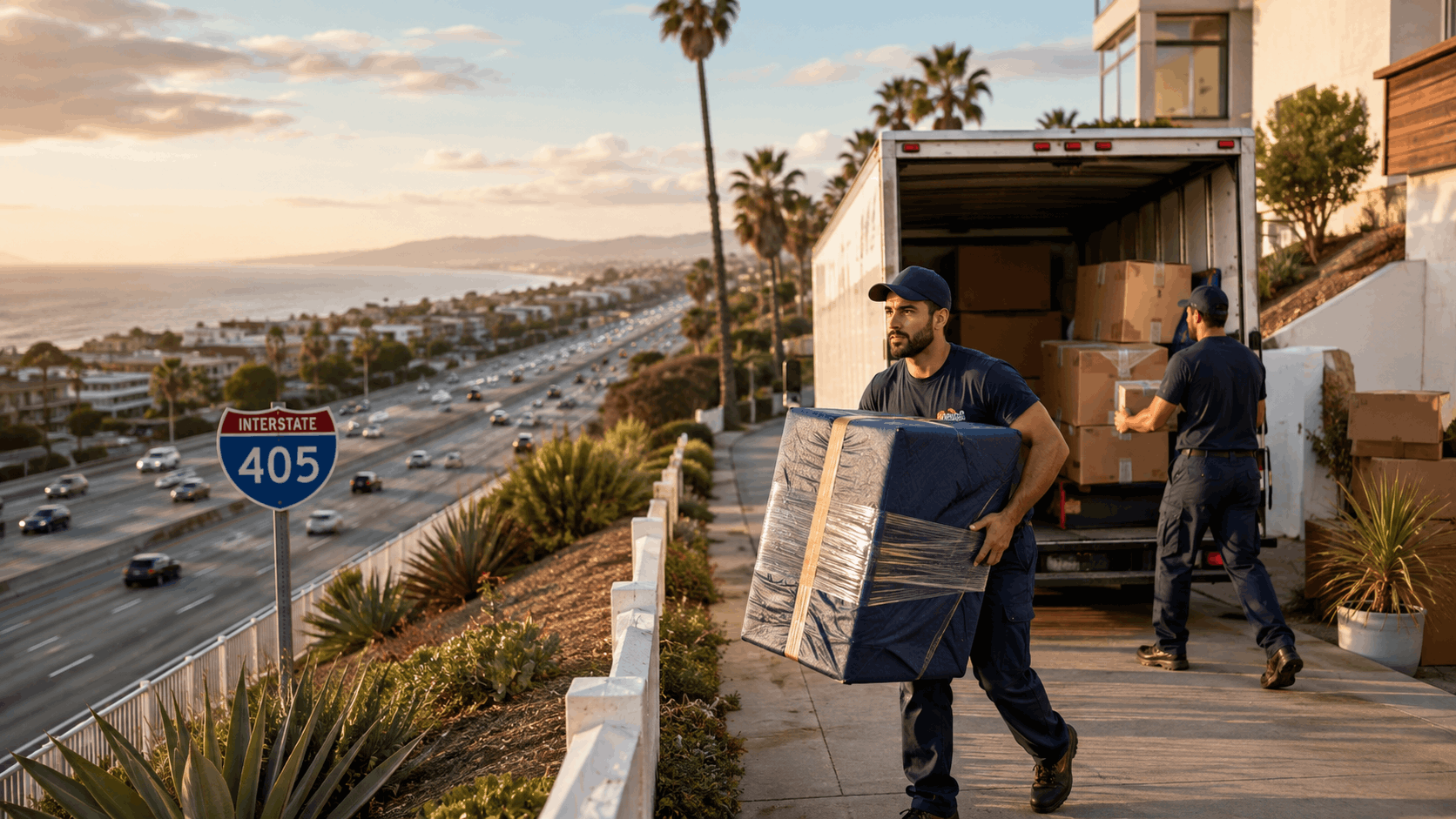
The Inland Empire crew has to drive 50 to 70 miles just to reach the coast. That trip can eat 90 minutes each way in traffic, and the round trip shapes their travel fee and double drive time. Before they lift a single box, an hour or more of cost is already loaded onto your job.
The Westside crew rolls in from a few miles away. Their travel fee is smaller, their drive time within the job is shorter, and their double drive time stays low. Same rate, very different final number.
We have watched customers save real money simply by choosing a crew that lives near the work. For a typical Westside apartment, the gap between a far base and a close one can run over a hundred dollars. That is money that buys you nothing extra.
Traffic Windows and Wasted Billable Hours
LA traffic turns distance into a bigger problem than the map suggests. A crew driving in from the far Valley or the 10 during morning rush can sit in traffic for an hour just to reach your street. If any of that time is billable, you pay for it.
The 405, the 10, and the 101 all clog hard between 7 and 10 in the morning and again from 3 to 7 in the evening. A distant crew often hits both windows in a single job, once coming and once going. Those wasted billable hours add up fast.
A local crew dodges most of that. Short hops between Westside neighborhoods avoid the worst freeway stretches, so the hours you pay for are hours spent working. The truck is at your curb, not idling near the Sepulveda Pass interchange.
This is the quiet advantage of hiring close to home. It is not just about the length of the drive. It is about staying off the freeways that turn a short trip into a long, expensive crawl.
Need Help in Los Angeles?
Popeye Moving & Storage serves Los Angeles and all of Los Angeles County.
The 405-Adjacent Advantage for Westside Moves
Sitting near the 405 freeway corridor gives a mover a real cost edge across the Westside. The geography is not an accident. It puts nearly every coastal and hillside neighborhood within a short, predictable drive.
Here is what a 405-adjacent base actually buys a customer on the Westside:
- Shorter drive time within the job, which lowers double drive time
- A smaller travel fee because the yard is close to the work
- Fewer hours lost to freeway congestion during rush windows
- Faster response for last-minute and same-week bookings
- More jobs completed in a day, which keeps rates competitive
Fast Access to Santa Monica, Brentwood, and West LA
The 405 runs straight through the western edge of the city, feeding into Santa Monica, Brentwood, and West LA. A base near this corridor reaches all three in minutes rather than an hour. That access trims drive time and keeps the hourly clock lower on every job.
For a Santa Monica move near Montana Avenue or the numbered streets, a close crew is on-site before a distant one has cleared the pass. Our teams handle these routes daily, so we know which surface streets beat the freeway at any given hour. That local read shaves minutes that would otherwise land on your bill.
Brentwood jobs benefit the same way. A quick jump off the 405 puts a crew at homes near San Vicente or Sunset without a long haul. Our work across Brentwood moving projects keeps drive time short and predictable.
West LA sits right in the sweet spot of this corridor. Whether the job is an apartment near Sawtelle or an office off Olympic, proximity to the freeway means the truck spends its time on your belongings. We cover these routes through our West Los Angeles moving service every week.
Serving Culver City, Mar Vista, and Palms Without the Trek
The southern Westside pockets often get overlooked by movers who set up shop far away. Culver City, Mar Vista, and Palms sit just off the 405 and 10 interchange, which makes them easy to reach from a 405-adjacent base. A close crew serves them without a long freeway haul.
Culver City movers who live nearby know the quirks of the area, from the tight streets near downtown Culver to the newer developments around the studios. That familiarity keeps jobs moving. Our Culver City moving crews route around the worst of the 10 congestion as a matter of habit.
Mar Vista and Palms share a similar layout of older duplexes and mid-size apartment buildings. These jobs reward a crew that arrives fresh and ready, not one worn down by a 60-mile drive. Short travel keeps both the labor and the drive-time lines on your invoice small.
Because these neighborhoods hug the freeway junction, a nearby mover reaches them in the same window it takes to reach the coast. That consistency is hard to match from the Inland Empire or the far Valley. Distance simply cannot compete with proximity here.
Reaching the Sepulveda Pass and Westwood Quickly
The Sepulveda Pass connects the Westside to the Valley through the 405, and it is one of the busiest stretches of road in the country. A base positioned near the southern end of the pass reaches Westwood, the UCLA area, and Bel Air without fighting the full length of the climb.
Westwood moving jobs come with their own challenges, from student turnover near campus to high-rise buildings along Wilshire. A crew that reaches the area fast has more time to handle those hurdles inside the billed hours. Being close to the pass means less of the day is lost to that notorious bottleneck.
Bel Air and the hillside homes above Westwood need careful, unhurried work. A crew that arrives without a grueling commute behind them brings more focus to narrow driveways and long walkways. Proximity to the pass keeps those jobs on schedule even during busy hours.
We treat the Sepulveda Pass as a known factor, not a surprise. Our teams time their runs to avoid the worst of it and lean on surface routes when the freeway locks up. That planning protects your hourly total on every Westwood-area job.
Where Popeye Moving & Storage Fits Into the Westside Map
Popeye Moving and Storage works from a Los Angeles base built around the Westside. Our position lets our crews reach the coast, the hills, and the southern pockets quickly, which keeps hourly jobs efficient and honest.
Here is how our local footprint serves customers across the area:
- Short, predictable routes to every major Westside neighborhood
- Crews who drive these streets daily and know the traffic patterns
- Storage close to the coast that trims extra round trips
- Clear drive-time disclosure before any job begins
Our Service Coverage Across the Westside
Our teams cover the Westside from Venice up to Beverly Hills and everything between. On any given day, our trucks run to Santa Monica, Marina del Rey, Culver City, Brentwood, and West LA. The routes stay short because we plan around the neighborhoods we serve most.
Venice movers face narrow streets and heavy foot traffic, and our crews handle those coastal blocks with the right equipment and parking know-how. Just inland, our Marina del Rey moving teams deal with dock rules and high-rise access as a matter of routine.
Beverly Hills moving jobs demand care and discretion, from the Flats to the estates above Sunset. We cover these addresses with crews that respect building rules and tight timelines. Our range across residential moving projects spans apartments, condos, and large family homes.
Because we live where we work, our drive times stay consistent. That steadiness is what keeps our hourly billing fair. A customer in Palms gets the same short-route advantage as one in Santa Monica.
How We Keep Hourly Jobs Honest
Transparent hourly billing is the standard we hold ourselves to. Before a crew is booked, we walk the customer through the base rate, the expected drive time, and any add-ons their building might trigger. No one should be guessing about the final number.
We disclose double drive time up front because it is the law and because customers deserve to understand it. When we estimate a job, we show how the short distances on the Westside keep that line small. There are no games buried under the advertised rate.
Honest movers in LA are the ones who tell you where the crew starts its day. We answer that question plainly and tie it to your travel fee. Our local residential moving service is built around this clarity.
When the job is done, the invoice matches the estimate unless the scope changed. If a customer adds a stop or packs less than planned, we explain the difference on the spot. That is how trust gets built, one clear bill at a time.
Storage That Cuts Down on Round Trips
Sometimes a move does not line up cleanly. A closing gets delayed, a new place is not ready, or a customer wants to stage a home before furniture arrives. Storage close to the Westside solves this without extra billable trips across town.
Our Los Angeles storage keeps belongings near the coast, so when the new place is ready, the second leg of the move is short. A crew loads out of a nearby facility instead of driving in from a distant warehouse. That proximity keeps the drive-time line low on the delivery trip.
For customers between homes or downsizing, our storage solutions bridge the gap without piling on cost. The moving and storage combination under one roof means fewer handoffs and less time on the road.
Designers and homeowners staging a remodel also lean on this setup. Items can rest safely nearby and land at the property on the right day. Short storage-to-door runs protect the budget on every staged delivery.
Neighborhood Conditions That Change Your Moving Time
Freeways are only half the story. Once a crew reaches your block, the street-level realities of Westside buildings decide how many hours the job takes. Knowing these conditions ahead of time helps customers plan and avoid surprises.
Westside parking, building access, and HOA rules all move the clock. A move that looks simple on paper can stretch when a truck has to park two blocks away or wait for a loading dock. Local knowledge is what keeps those hours in check.
Parking Permits Near Santa Monica and Venice
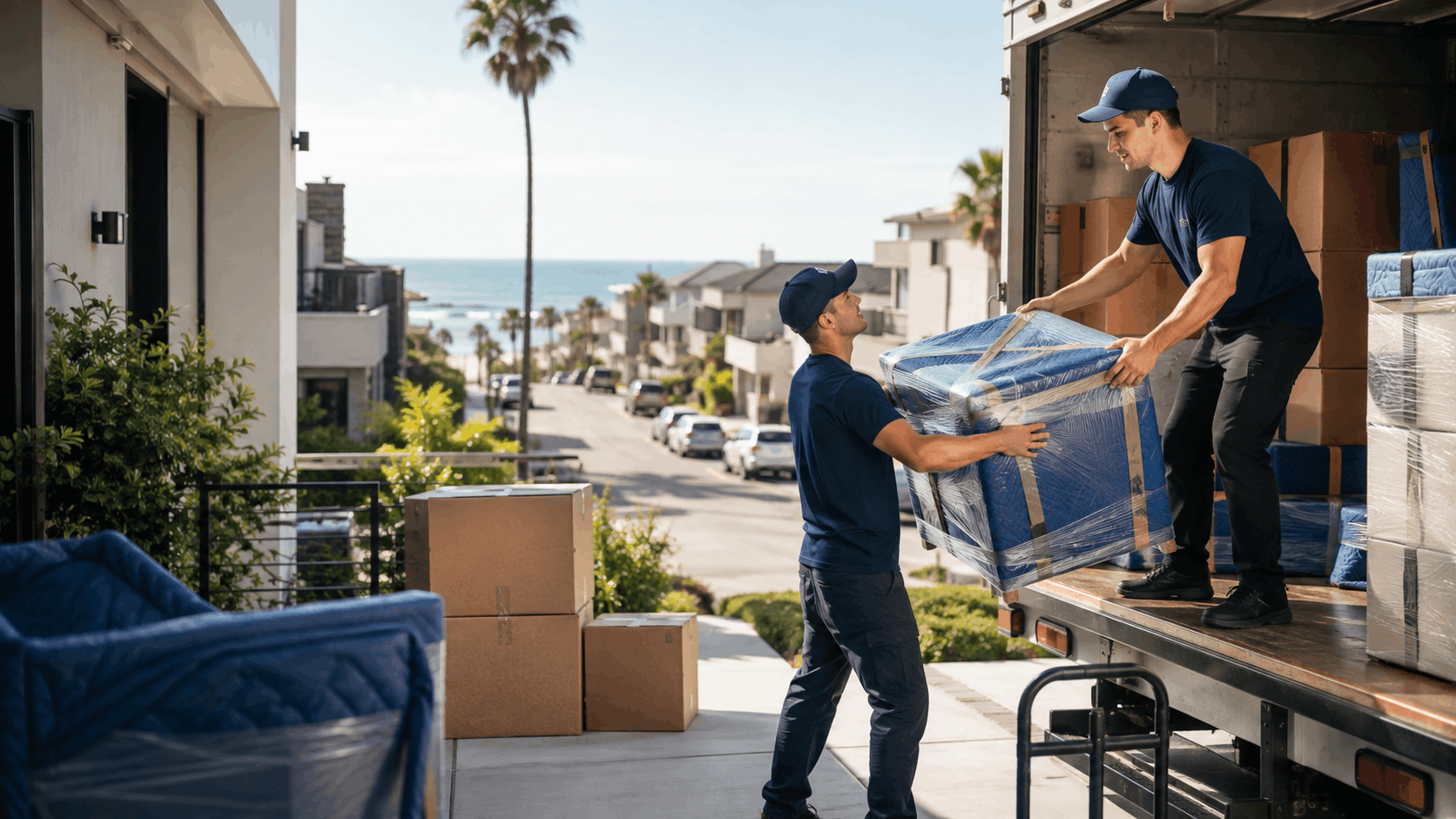
Coastal streets run on preferential parking zones, and a Santa Monica parking permit rule can decide where a truck lands. Many blocks near the beach reserve spaces for residents, which pushes moving trucks to the far end of the street. That distance turns into a long carry on your bill.
Santa Monica offers temporary permits for moving trucks in some zones, but they take advance planning. We help customers sort out the paperwork so the truck can park close to the door. A reserved curb space near the entrance can save an hour of walking on a big job.
Venice moving jobs face even tighter streets, especially in the walk-street neighborhoods near the canals. Trucks often cannot get close, and the carry distance grows. Knowing which alleys and side streets work best is the difference between a smooth job and a slow one.
We scout parking during the estimate whenever possible. That way the crew arrives with a plan instead of circling the block. Solving parking early keeps the labor hours focused on the actual move.
Older Apartments Along Wilshire and Westwood
The Wilshire corridor and Westwood are full of older apartment buildings with charm and challenges. Many have narrow elevators built decades ago, and some are walk-ups with no elevator at all. Both stretch the labor hours on a move.
A small elevator forces the crew to make more trips with smaller loads. A couch or a wardrobe that will not fit means carrying it down the stairs instead. Walk-up moving in a third-floor Wilshire apartment can add an hour or more compared to a ground-floor unit.
Our crews come prepared for these buildings because we work them constantly. We bring the right straps, dollies, and protective pads to move heavy items through tight spaces safely. Knowing a building's layout before arrival lets us plan the fastest safe path.
Customers in these older buildings can help by measuring their largest pieces ahead of time. If a bed frame or bookshelf needs to come apart, we handle it, but knowing in advance keeps the job moving. Preparation shaves hours off walk-up jobs.
HOA and Loading Dock Rules in Marina del Rey and Playa Vista
Newer communities in Marina del Rey and Playa Vista run tight building rules. A Marina del Rey HOA often requires a certificate of insurance from the mover before the job, plus a reserved move-in window. Miss the paperwork and the building can turn the crew away at the door.
Loading docks in these communities usually need scheduling in advance. Playa Vista moving rules frequently limit moves to certain hours and require dock reservations. A crew that shows up without a booked slot may sit idle, and idle time still runs the clock.
We handle the certificate of insurance and dock scheduling as part of our prep. Our office coordinates with building management so the paperwork is done before the truck rolls. That legwork keeps the crew working instead of waiting in the lobby.
These rules exist to protect shared spaces, and we respect them fully. Coming in prepared means the move flows without friction. It also protects your hourly total from time lost to red tape.
Need Help in Los Angeles?
Popeye Moving & Storage serves Los Angeles and all of Los Angeles County.
How to Compare Movers on More Than the Hourly Rate
The advertised rate is the worst way to compare movers. To judge the true cost, customers need to read past the headline number and look at the full estimate. A little questioning up front reveals which quote is actually cheaper.
Use this checklist when you compare moving quotes so the hourly rate comparison reflects reality:
- Ask where the crew starts and ends its day
- Confirm how drive time and double drive time are billed
- Check for minimums, fuel surcharges, and truck fees
- Verify the mover's CAL-T license number
- Read reviews from customers in your own neighborhood
Questions to Ask About Travel and Drive Time
The most useful drive time question is simple: where does the truck start its day? The answer tells you how much travel cost is baked into the job. A yard 50 miles away means a higher travel fee and more double drive time than a yard nearby.
Next, ask exactly how drive time is charged. Some movers bill portal to portal, others use a flat travel fee, and the double drive time rule applies to the trip between your two addresses. Getting these moving quote questions answered up front prevents sticker shock.
Also ask whether there is a minimum charge and how it interacts with drive time. A two-hour minimum plus a big travel fee can make a short move surprisingly pricey. Knowing the structure lets you compare apples to apples.
A mover who answers these questions clearly is one you can trust. Vague or dodgy replies are a warning sign. We welcome these questions because our short Westside routes make the answers easy.
Reading the Fine Print on Minimums and Fees
The fine print is where the real cost hides. A moving minimum of two or three hours is standard, but it matters most on small jobs. If your studio move only needs 90 minutes of work, a two-hour minimum still bills you for two.
Fuel surcharges are another line to watch. Some companies add a percentage to the total to cover gas, which grows the bill without adding value. Others fold fuel into the rate, so the advertised number is closer to the truth.
Truck fees, equipment charges, and materials markups also live in the fine print. Ask for a written estimate that lists every possible charge. A mover who cannot or will not put it in writing is a mover to avoid.
We put everything on paper before the job. Customers see the minimum, any fees, and the materials pricing in one place. That clarity is how a fair quote should look.
Checking Licensing and Local Reviews
Every legal household mover in California carries a CAL-T number issued by the state. You can verify it through the Bureau of Household Goods and Services website. A mover without a valid CAL-T number is operating illegally and offers you no protection.
For interstate moves, check the federal side too. The FMCSA Protect Your Move site lets you confirm a mover's federal registration. Licensed movers in Los Angeles will share these numbers without hesitation.
Reviews from your own area tell you how a crew performs on jobs like yours. Look for feedback from Santa Monica, Culver City, or Westwood customers, not just a star average. Local reviews reveal how a mover handles Westside parking, elevators, and HOA rules.
Read a mix of recent reviews to spot patterns. A few complaints are normal, but repeated notes about surprise fees or slow crews are a red flag. Our record across the Westside speaks to the routes and buildings we handle every day.
Timing Your Westside Move to Lower the Bill
When you move matters almost as much as who you hire. Smart scheduling shortens the paid clock by dodging traffic and busy seasons. A few timing choices can cut a real amount off the final total.
The best time to move in LA depends on beating both the freeways and the calendar. A well-planned Westside moving schedule keeps the crew working instead of idling. Here is how to time it right.
Beating the 405 and 10 Rush Hours
The 405 rush hour is brutal, and it shapes how long a move takes. Starting a job at 8 in the morning often means the crew fights traffic just to reach you. A start time of 8 to 9 gets the loading done while roads are clear, then the drive to the new place beats the evening crush.
Afternoon moves risk hitting the 3 to 7 pm slowdown on both the 405 and the 10. If the drive-time portion of your job lands in that window, the clock runs longer. Timing the drive between addresses for a mid-morning or early-afternoon lull keeps it short.
We plan start times around these patterns as a matter of routine. For a Santa Monica to Culver City move, we know which hour keeps the surface streets and freeway ramps flowing. That planning protects the drive-time line on your bill.
An early start also gives the crew a full working window before evening traffic returns. Longer jobs finish before the roads lock up. That rhythm keeps a big move on schedule and on budget.
Midweek and Off-Season Savings
An off-season move costs less because demand drops. Summer, the end of the month, and weekends are the busiest windows, and rates tighten when trucks are booked solid. Moving in fall, winter, or early spring gives you more room to negotiate and better crew availability.
Midweek moving is the other lever. Tuesday through Thursday sees far less demand than Friday through Sunday. Booking those days often means easier scheduling and a crew that is not rushing between back-to-back jobs.
Students near UCLA and Santa Monica College drive a spike in late summer and early fall. Moving outside those peaks avoids the crunch. A mid-October Tuesday move faces less competition for trucks than a late-August Saturday.
We help customers pick dates that balance their needs with the calendar. If your timeline is flexible, we point you toward the windows that save money. A little flexibility on the date goes a long way.
Prepping So the Clock Runs Shorter
The single biggest thing customers control is how ready they are when the crew arrives. A solid moving prep checklist keeps billable hours down. Boxes should be packed, sealed, and labeled before the truck shows up.
Disassemble what you can ahead of time, or ask us to handle it as a planned step. Clear pathways, stack boxes near the door, and empty dressers so they are light to carry. Every minute the crew spends waiting or packing is a minute you pay for.
Reserve parking early, especially on coastal streets with permit zones. A truck that parks at the door instead of down the block saves a long carry. If your building needs a certificate of insurance or a dock slot, arrange it before move day.
For customers who would rather not pack at all, our full service packing team handles it efficiently. Either way, a prepared home lets the crew move fast. That is how you reduce moving hours without cutting corners.
Need Help in Los Angeles?
Popeye Moving & Storage serves Los Angeles and all of Los Angeles County.
Final Thoughts
The advertised hourly rate is only the beginning of a moving bill. Drive time, double drive time, travel fees, and building conditions all shape the final number. A mover's location near the 405 keeps those extra costs small across the Westside.
Choosing a crew that lives where you live means shorter drives, less traffic, and more honest hours. That is the 405-adjacent advantage in a nutshell. It shows up as real savings on the invoice.
Popeye Moving and Storage works the Westside every day, from Venice to Beverly Hills. To get a clear, all-in estimate with drive time spelled out, contact our team or call for a consultation. We will show you exactly what your move will cost before we ever start the clock.
Frequently Asked Questions
Does a mover's location really change my moving bill?
Yes, and often by more than people expect. A crew based far away, like the Inland Empire, adds a larger travel fee and more double drive time to your hourly total before any box is loaded. A 405-adjacent base keeps those drive-time lines small because the truck reaches your Westside address quickly. On a typical apartment move, the difference can top a hundred dollars.
What is double drive time and why am I charged for it?
Double drive time is a California rule under the state's maximum rate tariff for local moves. It lets licensed movers bill the travel time between your old and new address at twice the one-way amount, since the truck must make a round trip. Every legal mover follows it, so it is not a red flag. What matters is keeping that drive time short, which a nearby crew does naturally.
How much does an hourly move cost on the Westside?
Rates in Los Angeles typically run about $110 to $140 per hour for a two-person crew and truck, and $150 to $190 for three movers. The final total depends on drive time, travel fees, stairs, long carries, and how prepared the home is. A studio might finish in three hours, while a larger home can run all day. Always ask for an all-in estimate.
Is drive time from the mover's warehouse billed to me?
In most cases, yes, either as billed minutes under a portal to portal model or as a flat travel fee tied to distance. That is exactly why asking where the crew starts its day matters so much. A yard close to the Westside means less of that cost lands on your invoice. A distant yard pushes the travel charge higher before work begins.
How long does a typical Santa Monica or West LA move take?
A one-bedroom apartment usually takes three to five hours with a two-person crew, depending on stairs and parking. A two-bedroom often runs five to seven hours, and a larger home can fill a full day. Coastal parking and older walk-up buildings add time. Packing ahead and reserving a curb space near the door keeps the job on the shorter end.
Do I need a parking permit for the moving truck?
In many Westside areas, yes. Santa Monica and Venice have preferential parking zones where a temporary moving permit lets the truck park close to your door. Without one, the truck may end up down the block, which triggers a long carry charge. We help customers arrange these permits during the estimate so the crew parks near the entrance.
What is a two-hour minimum and does it apply to me?
A two-hour minimum means you are billed for at least two hours of labor even if the job finishes faster. Most Los Angeles movers use a minimum of two or three hours. A small studio move that takes 90 minutes still hits the minimum. On the Westside, most moves run past two hours anyway, so the minimum rarely changes the total on larger jobs.
How can I lower my hourly moving bill?
Pick a crew based near your neighborhood to cut drive time. Move midweek and in the off-season for lower demand. Pack and label your boxes, disassemble furniture, and clear pathways before the crew arrives. Reserve parking close to the door to avoid long carries. Each of these steps trims billable hours, and choosing a 405-adjacent mover keeps the travel cost down.
Does Popeye Moving & Storage cover my Westside neighborhood?
Almost certainly. Our crews work the Westside daily, from Venice and Marina del Rey to Culver City, Santa Monica, Brentwood, West LA, Westwood, and Beverly Hills. Our Los Angeles base near the 405 keeps routes short, which protects your drive-time costs. If you are unsure whether we reach your street, reach out and we will confirm your service area right away.
How do I verify a mover is licensed in California?
Every legal household mover in the state carries a CAL-T number from the Bureau of Household Goods and Services. You can look it up through the Bureau of Household Goods and Services website. For interstate moves, check the mover's federal registration on the FMCSA Protect Your Move site. A licensed mover in Los Angeles will share these numbers freely, so treat any hesitation as a warning sign.
Frequently Asked Questions
- Does a mover's location really change my moving bill?
- Yes, and often by more than people expect. A crew based far away, like the Inland Empire, adds a larger travel fee and more double drive time to your hourly total before any box is loaded. A 405-adjacent base keeps those drive-time lines small because the truck reaches your Westside address quickly. On a typical apartment move, the difference can top a hundred dollars.
- What is double drive time and why am I charged for it?
- Double drive time is a California rule under the state's maximum rate tariff for local moves. It lets licensed movers bill the travel time between your old and new address at twice the one-way amount, since the truck must make a round trip. Every legal mover follows it, so it is not a red flag. What matters is keeping that drive time short, which a nearby crew does naturally.
- How much does an hourly move cost on the Westside?
- Rates in Los Angeles typically run about $110 to $140 per hour for a two-person crew and truck, and $150 to $190 for three movers. The final total depends on drive time, travel fees, stairs, long carries, and how prepared the home is. A studio might finish in three hours, while a larger home can run all day. Always ask for an all-in estimate.
- Is drive time from the mover's warehouse billed to me?
- In most cases, yes, either as billed minutes under a portal to portal model or as a flat travel fee tied to distance. That is exactly why asking where the crew starts its day matters so much. A yard close to the Westside means less of that cost lands on your invoice. A distant yard pushes the travel charge higher before work begins.
- How long does a typical Santa Monica or West LA move take?
- A one-bedroom apartment usually takes three to five hours with a two-person crew, depending on stairs and parking. A two-bedroom often runs five to seven hours, and a larger home can fill a full day. Coastal parking and older walk-up buildings add time. Packing ahead and reserving a curb space near the door keeps the job on the shorter end.
- Do I need a parking permit for the moving truck?
- In many Westside areas, yes. Santa Monica and Venice have preferential parking zones where a temporary moving permit lets the truck park close to your door. Without one, the truck may end up down the block, which triggers a long carry charge. We help customers arrange these permits during the estimate so the crew parks near the entrance.
- What is a two-hour minimum and does it apply to me?
- A two-hour minimum means you are billed for at least two hours of labor even if the job finishes faster. Most Los Angeles movers use a minimum of two or three hours. A small studio move that takes 90 minutes still hits the minimum. On the Westside, most moves run past two hours anyway, so the minimum rarely changes the total on larger jobs.
- How can I lower my hourly moving bill?
- Pick a crew based near your neighborhood to cut drive time. Move midweek and in the off-season for lower demand. Pack and label your boxes, disassemble furniture, and clear pathways before the crew arrives. Reserve parking close to the door to avoid long carries. Each of these steps trims billable hours, and choosing a 405-adjacent mover keeps the travel cost down.
- Does Popeye Moving & Storage cover my Westside neighborhood?
- Almost certainly. Our crews work the Westside daily, from Venice and Marina del Rey to Culver City, Santa Monica, Brentwood, West LA, Westwood, and Beverly Hills. Our Los Angeles base near the 405 keeps routes short, which protects your drive-time costs. If you are unsure whether we reach your street, reach out and we will confirm your service area right away.
- How do I verify a mover is licensed in California?
- Every legal household mover in the state carries a CAL-T number from the Bureau of Household Goods and Services. You can look it up through the Bureau of Household Goods and Services website. For interstate moves, check the mover's federal registration on the FMCSA Protect Your Move site. A licensed mover in Los Angeles will share these numbers freely, so treat any hesitation as a warning sign.
P
Popeye Moving & Storage Co. Team Team
Licensed moving and storage professionals serving Los Angeles and Los Angeles County.
Licensed in California · License #PUC: CAL T 189749 | DOT: 1472924 | MC: 498816C
Why trust Popeye Moving & Storage?
Founded in 1994, Popeye Moving & Storage is a licensed and insured moving and storage service serving Los Angeles and Los Angeles County. All content is reviewed by our licensed technicians.

Need Help in Los Angeles?
Popeye Moving & Storage serves Los Angeles and all of Los Angeles County.
Related Articles
Cost Guides
Brentwood Movers: Mansion Move Pricing and Insurance Requirements
A clear guide to Brentwood mansion move pricing, valuation and insurance requirements, HOA rules, and timelines for large estate relocations across West LA.
Cost Guides
Commercial Office Relocation in LA: What 10,000 sqft Actually Costs to Move
A clear breakdown of what a 10,000 sqft commercial office relocation actually costs to move in LA, including labor, trucks, hidden fees, and ways to save.
Cost Guides
Hourly vs Flat Rate Moving in LA: Which Costs Less and When
Compare hourly vs flat rate moving in LA with real price ranges, example moves, and local tips so you can pick the cheaper option for your situation.