Cost Guides
Storage Pricing by Vault Count: How Many Vaults a 1, 2, and 4-Bedroom Home Actually Fills
Key Takeaways
- A storage vault is a standard wooden box holding roughly 175 to 250 cubic feet, and you pay by the number of vaults you use rather than by square feet.
- A one-bedroom home typically fills one to two vaults, with bikes, Pelotons, and seasonal gear pushing the count to two.
- A two-bedroom home usually fills three to four vaults, and garages, patios, and outdoor gear are the most commonly forgotten items.
- A four-bedroom home spans six to ten or more vaults, with specialty items like pianos, art, and appliances adding space.
- A single vault in Los Angeles runs about 75 to 120 dollars per month, and longer contract terms lower the rate.
- Vault storage usually costs less than an oversized self-storage unit but trades daily drive-up access for scheduled retrieval and a small access fee.
- You can estimate your own vault count with a room-by-room walkthrough, then confirm it with an in-home or virtual survey.
- Closets, attics, garages, and undercounted boxes are the top reasons people underestimate their vault needs.
In This Article
A family in Silver Lake stands in their two-car garage, staring at a wall of boxes, a disassembled bed frame, and a kayak that has not touched water in three years. They are moving into a smaller rental during a remodel, and the storage company just asked a question they cannot answer: "How many vaults do you need?" Blank stares. Nobody thinks in vaults.
It happens the same way in Sherman Oaks every week. Folks measure their lives in bedrooms and garages, not cubic feet, so guessing how much storage they need feels like a shot in the dark. The good news is that vault counts follow fairly predictable patterns once you know what fits inside one.

What a Storage Vault Actually Is?
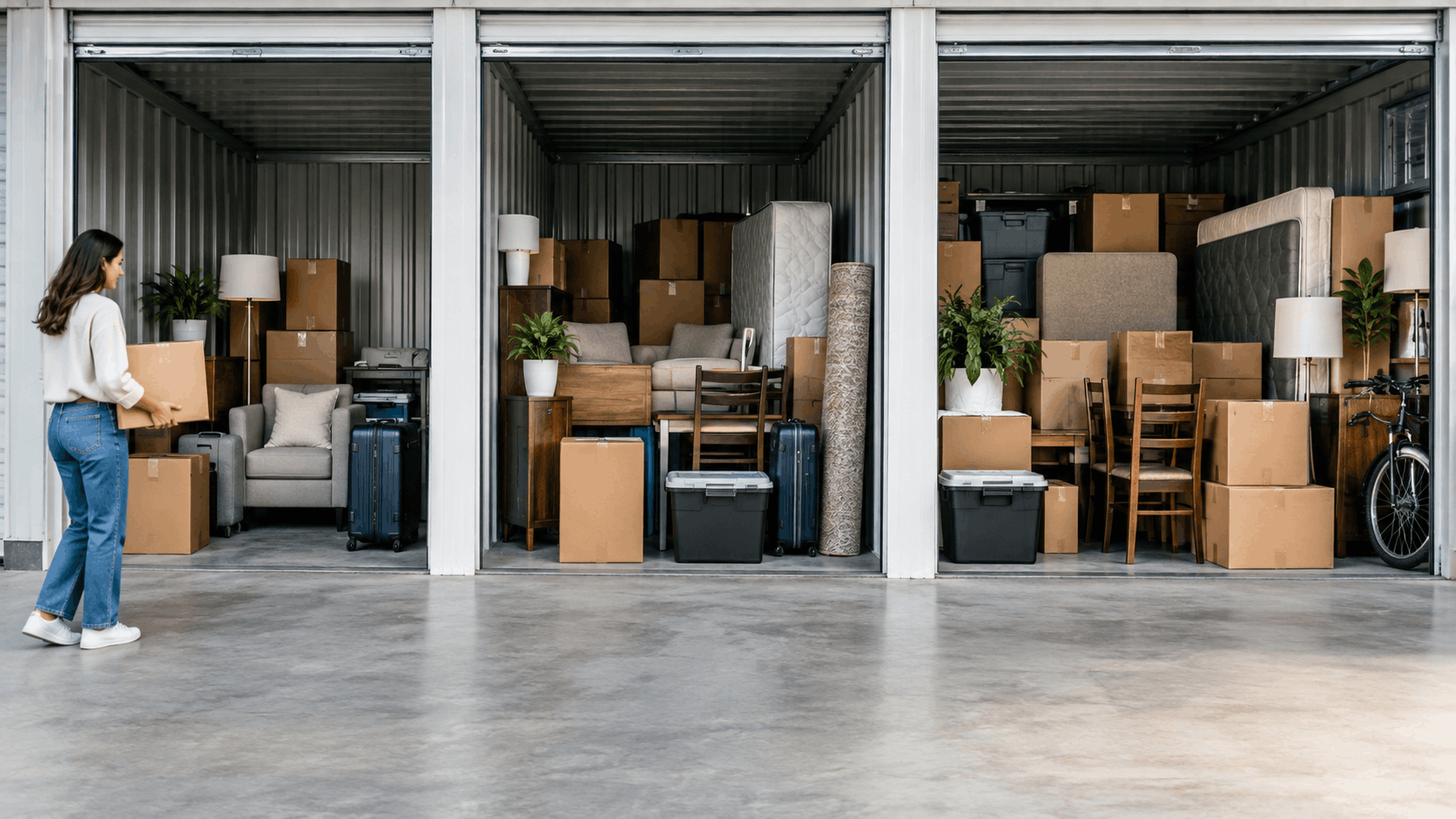
A storage vault is a large wooden box that holds a set chunk of your belongings. Instead of renting an empty room and paying for air, you pay for the number of vaults your things fill. It is a simple idea that keeps pricing honest.
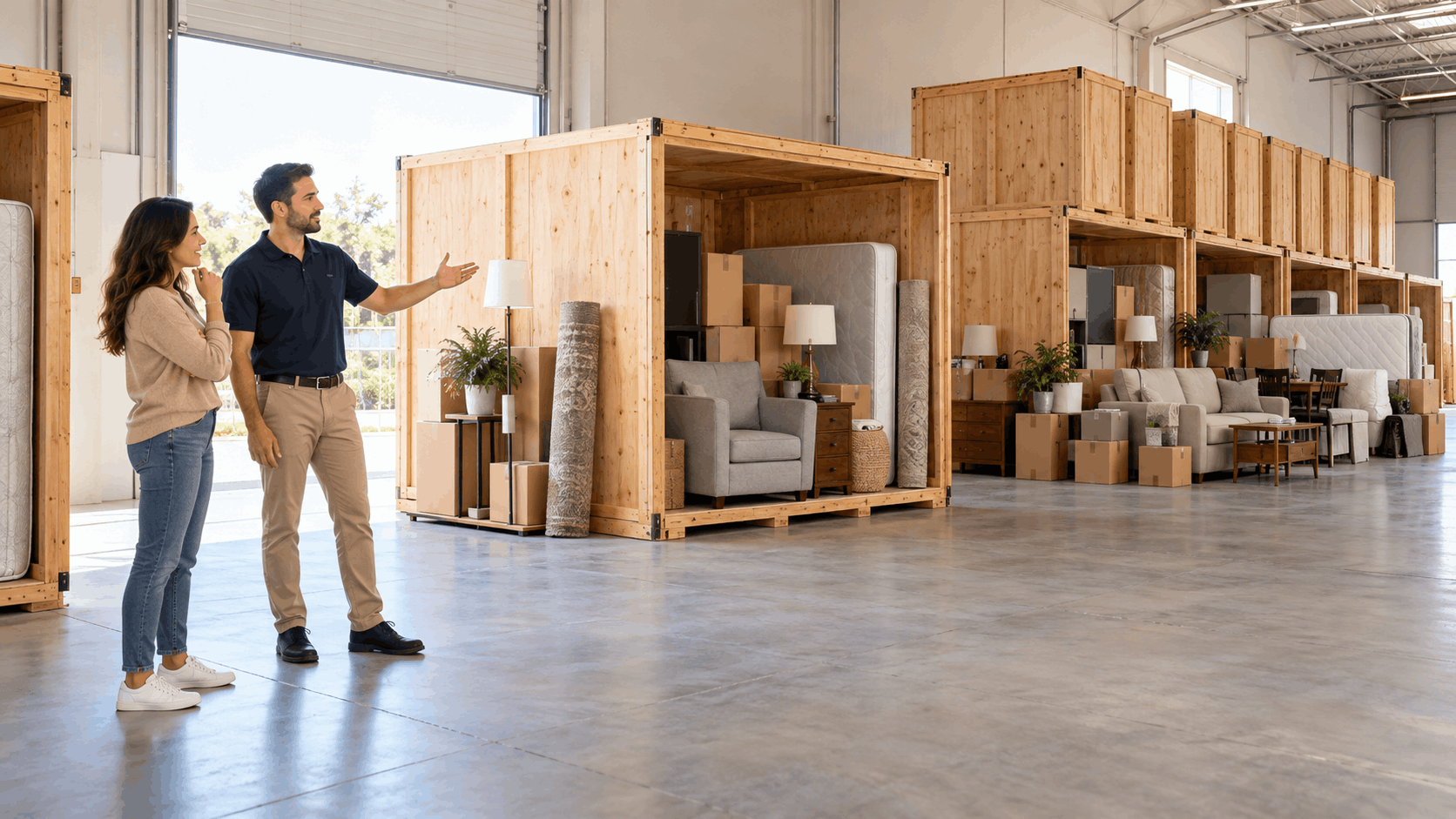
Most people picture a metal roll-up unit off a hallway. Vault storage works differently. Your items get loaded into a wood storage container at your home or at the warehouse, then that sealed vault gets stacked and stored. You are billed by how many of those boxes you use.
The Standard Vault Size and Cubic Footage
A standard storage vault runs about 5 feet wide, 7 feet tall, and 5 feet deep. That works out to roughly 175 to 250 cubic feet of usable space depending on the design. Picture a large closet or a small walk-in pantry and you are close.
Those vault dimensions matter because they set a fixed unit of measure. When a company says a home fills three vaults, they mean three of these identical wood boxes packed to the top. It removes the guesswork of "is this a 5x10 or a 5x15 unit?"
Cubic feet is the honest way to think about storage. A single vault swallows a queen mattress set, a dresser, several nightstands, and a stack of medium boxes with room to spare. Once you know the cubic footage, mapping your furniture onto vault counts becomes far easier.
Because every vault is the same size, estimates get more accurate. Two movers can look at a bedroom and agree it takes a vault and a half without arguing over floor space. That consistency is a big reason vault systems stay popular for household storage in Los Angeles.
Vaults vs. Self-Storage Units
A self-storage unit is the drive-up option most people know. You rent a room, you get a key, and you haul your own stuff in and out whenever you like. It offers freedom but also puts all the labor and the loading strategy on you.
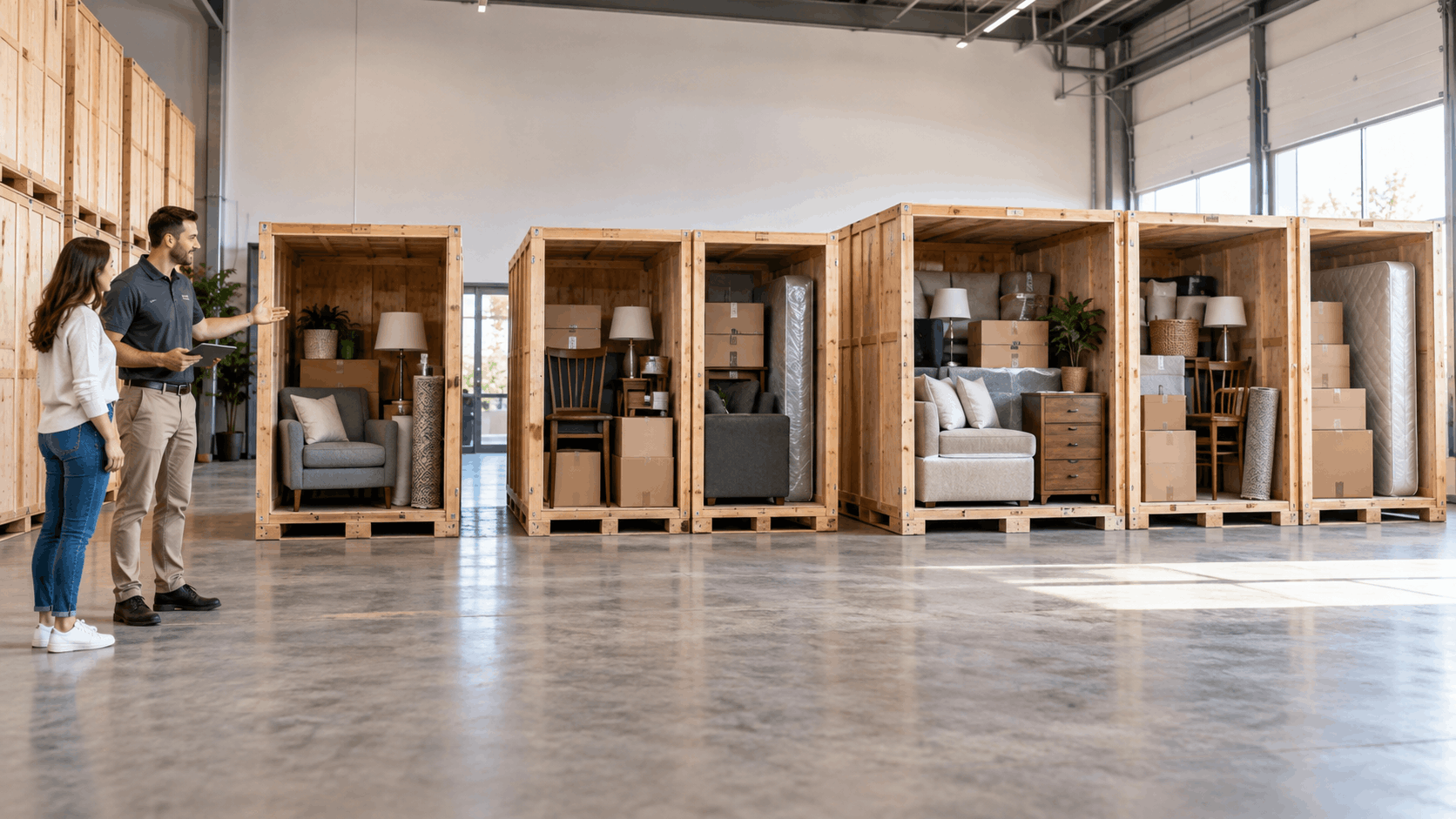
Palletized storage flips that model. A crew loads your belongings into vaults, seals them, and stacks them in a warehouse on pallets or racks. You trade daily access for tighter packing, protection from dust, and a crew that knows how to fit more into less space.
For a busy Los Angeles household, the trade-off usually comes down to how often you need your things. If you are storing a home during a nine-month remodel, palletized vault storage is cheaper and safer. If you run a side business and grab inventory weekly, a self-storage unit might fit better.
There is also a security angle. A vault sits sealed inside a warehouse, not behind a thin metal door on a public row. For long-term storage of furniture, keepsakes, and seasonal gear, that closed system tends to win on both cost and protection.
Why Vault Count Drives the Price
Storage pricing built around vaults keeps the monthly bill predictable. You are charged per vault, so if your home fills three, you pay for three. There is no rounding up to an oversized room because that was the only size left.
Compare that to renting a self-storage unit that is 30 percent too big. You end up paying for empty square footage month after month. Vault billing charges you for what you actually use, which is why the numbers tend to come in lower for the same amount of goods.
The monthly storage cost also stays stable because the crew packs efficiently. Professional loading squeezes items together in ways most homeowners cannot match on their own. Fewer vaults means a smaller bill, so there is a built-in reason to pack tight.
Our team explains all of this up front through our storage solutions so there are no surprises. Once you know your vault count, you can multiply it out and see your monthly rate before anything gets loaded.
Get Your Free Quote
Tell us about your move and we'll get back to you fast.
How Many Vaults a 1-Bedroom Home Fills
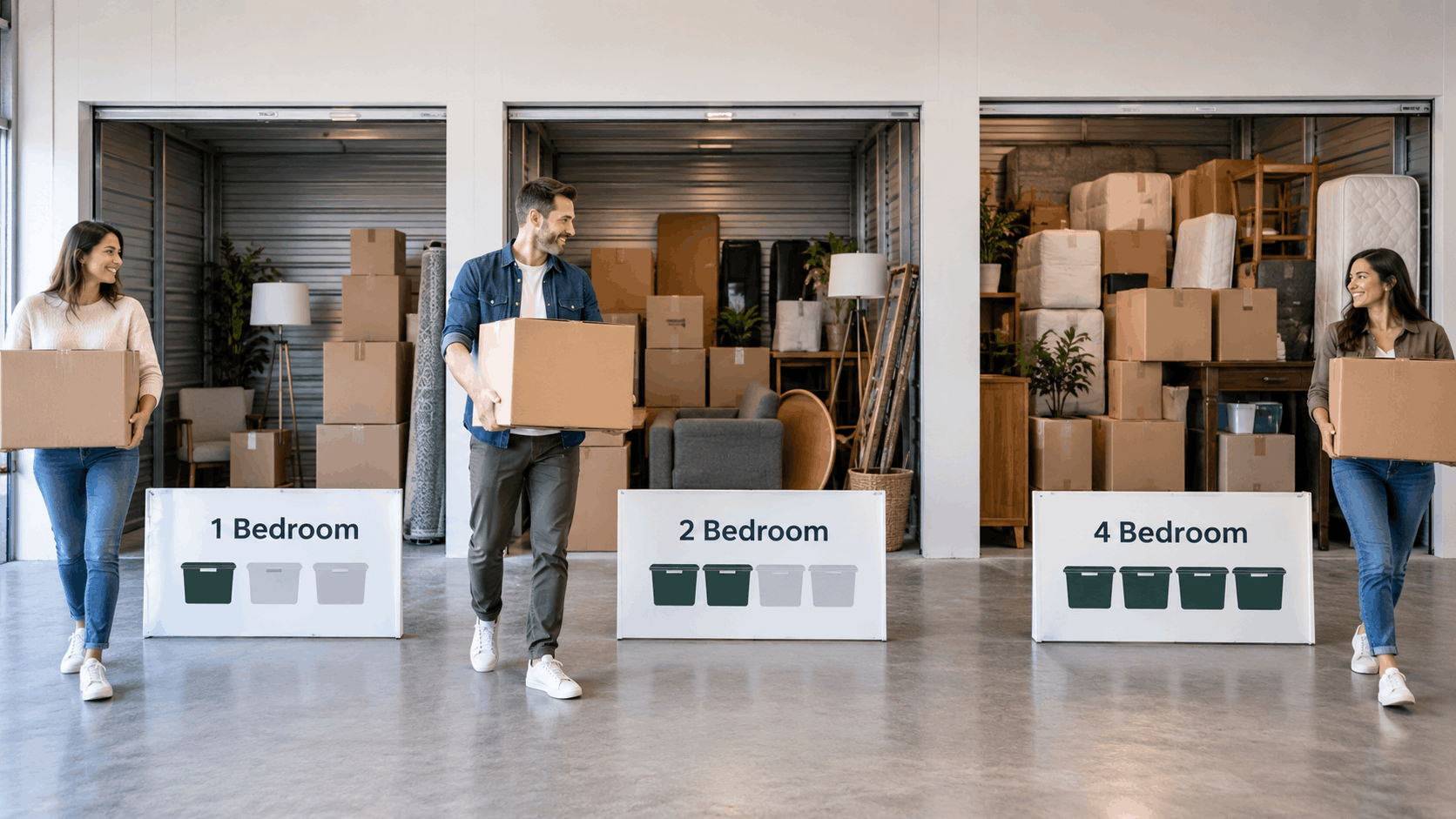
One-bedroom apartments across Los Angeles pack a surprising amount of life into a small footprint. From a Koreatown high-rise to a Downtown loft, the vault count for these homes stays fairly tight. Most fill one to two vaults.
The exact number depends on how much furniture you own and how many hobbies live in your closets. Below is a quick look at what drives 1-bedroom storage and apartment storage vaults.
| Home Type | Typical Vault Count | What Fits |
|---|---|---|
| Studio | 1 vault | Bed, small sofa, dresser, 10-15 boxes |
| 1-bedroom apartment | 1 to 2 vaults | Bedroom set, living room, kitchen goods, 20-30 boxes |
| 1-bedroom with home office | 2 vaults | Above plus desk, shelving, extra boxes |
Typical Vault Count for a 1-Bedroom
A standard one-bedroom fills one to two vaults in most cases. The first vault usually takes the bedroom furniture and a stack of boxes. The second absorbs the living room, kitchen items, and anything from a closet or balcony.
Think about what lives in a small apartment. A queen bed, a dresser, a nightstand, a couch, a coffee table, a TV stand, and 20 to 30 boxes. That collection lands right around a vault and a half for the average renter.
Minimalists who own less often squeeze into a single vault. If your bedroom set is compact and you keep boxes to a dozen, one vault does the job. The vault count climbs only when furniture gets bulky or the box pile grows past 30.
Getting an accurate count matters most at this size because one extra vault is a bigger percentage jump. Going from one to two vaults doubles the bill, so tight packing pays off. A crew that knows how to load a small apartment can often keep you at one and a half instead of two.
Studio and Small Condo Examples in Koreatown and DTLA
Koreatown is full of compact units where every square foot is spoken for. Tenants there often store during lease gaps or while hunting for a bigger place. A typical K-town studio near Wilshire fills a single vault, sometimes with room left.
Downtown LA condos tell a similar story. A loft near the Arts District or South Park might have soaring ceilings but a modest furniture footprint. Those Downtown LA condo owners usually land at one to two vaults, and the tall ceilings do not add storage since the furniture stays the same.
Parking shapes the whole job in these areas. Loading a vault outside a Koreatown tower means coordinating a loading zone or a short window in an alley. Our crews scout the block ahead of time so the truck is not circling while your neighbors honk.
For renters moving out of these dense pockets, we often pair storage with a local residential move. It keeps the whole process under one roof instead of juggling two vendors on a tight timeline.
What Pushes a 1-Bedroom to an Extra Vault
Bulky items are what tip a one-bedroom from one vault to two. A Peloton, a road bike, or a full set of golf clubs eats space fast. Add a surfboard or a couple of kayaks and you have earned an extra vault.
Seasonal gear is another culprit. Skis, snowboards, holiday decorations, and camping equipment pile up even in small apartments. LA renters tend to underestimate how much of this lives in a hall closet or under the bed.
Fitness equipment is the most common surprise. A single Peloton plus a rack of weights and a folding treadmill can claim a quarter of a vault on its own. These awkward shapes do not stack well, so they force the count up.
Furniture that does not break down also matters. A solid wood armoire or an oversized sectional cannot be flattened, so it holds space a mattress would fold around. When we spot these during an estimate, we flag the likely extra vault right away.
Need Help in Los Angeles?
Popeye Moving & Storage serves Los Angeles and all of Los Angeles County.
How Many Vaults a 2-Bedroom Home Fills
Two-bedroom homes and townhomes carry a lot more than double a one-bedroom. Between two full bedrooms, a shared living space, and usually a garage, the belongings add up. Most fill three to four vaults.
Mid-size homes in Northeast LA and the Valley are the sweet spot for this range. The table below shows how 2-bedroom storage and townhome storage vaults typically break down.
| Home Type | Typical Vault Count | What Fits |
|---|---|---|
| 2-bedroom apartment | 2 to 3 vaults | Two bedroom sets, living room, kitchen, 30-40 boxes |
| 2-bedroom townhome | 3 to 4 vaults | Above plus garage items, patio gear, extra storage |
| 2-bedroom house with garage | 4 vaults | Full home plus tools, bikes, outdoor furniture |
Typical Vault Count for a 2-Bedroom
The usual vault range for a two-bedroom runs three to four. Two vaults handle the bedrooms, the third takes the living and dining rooms, and the fourth mops up the kitchen, garage, and closets. Homes without a garage often stay at three.
Each bedroom tends to claim close to a full vault once you count the bed, dresser, nightstands, and boxes of clothes. A shared living room with a sectional, media console, bookshelves, and a dining set fills most of another. The math adds up quickly.
Kitchens are deceptive. Small appliances, cookware, dishes, and pantry goods pack into more boxes than people expect. Those boxes are dense and heavy, and they usually round out a vault that already holds living room pieces.
Where a home lands in the three-to-four range depends on garages and hobbies. A tidy townhome with no outdoor space often stops at three vaults. A house with a full garage and a patio easily reaches four, sometimes creeping toward five.
Family Homes in Highland Park and Eagle Rock
Highland Park is full of older craftsman homes with heavy, well-built furniture. Solid oak dining tables, built-in china cabinets, and dense bookshelves weigh more and hold their shape. Those homes often push toward the top of the two-bedroom range.
Eagle Rock tells the same story just up the road. The bungalows near Colorado Boulevard have decades of family belongings tucked into basements, attics, and detached garages. We regularly load four vaults out of what looks like a modest two-bedroom.
Older homes also come with narrow doorways and steep porch steps. Getting a heavy craftsman dresser out of a 1920s bungalow takes technique, padding, and sometimes a door removal. Our crews plan for these quirks before the truck arrives.
Families in these Northeast LA pockets tend to store during renovations, which are common as buyers update century-old houses. When that happens, we often bundle storage with full service packing so the crew wraps and boxes everything to fit more per vault.
Garages, Patios, and Outdoor Gear
Garage storage is the number one thing people forget to count. Tool chests, workbenches, bins of hardware, and a lawnmower can fill most of a vault on their own. In the Valley heat, garages become catch-all rooms that hide a lot of volume.
Outdoor furniture adds up fast too. A patio set with a table, chairs, an umbrella, and a couple of loungers claims real space. Add a grill, a fire pit, and a stack of planters and you have another partial vault.
Sports and yard gear round it out. Bicycles, a wheelbarrow, coolers, and coils of hose all take odd shapes that do not nest well. These awkward items are exactly why a two-bedroom house with a busy garage hits four vaults instead of three.
When we walk a home for an estimate, we always ask to see the garage and yard. People give us a bedroom count and forget the whole outdoor half of their belongings. Counting those areas up front keeps the final vault total from surprising anyone.
How Many Vaults a 4-Bedroom Home Fills
Four-bedroom homes cover a huge range, from a modest tract house to a sprawling estate. That is why the vault count spreads so wide. Most fill six to ten vaults, with larger homes going higher.
Neighborhoods like Sherman Oaks and Brentwood show the top of this range clearly. The table below outlines 4-bedroom storage and large home storage vaults.
| Home Type | Typical Vault Count | What Fits |
|---|---|---|
| Standard 4-bedroom house | 6 to 7 vaults | Four bedroom sets, living areas, kitchen, garage, 60-80 boxes |
| 4-bedroom with office and playroom | 7 to 9 vaults | Above plus office, playroom, extra furniture |
| Large 4-bedroom estate | 9 to 12 vaults | Full home plus specialty items, formal dining, outdoor sets |
Typical Vault Count for a 4-Bedroom
The broad vault range for a large home sits between six and ten. Four bedrooms alone claim four to five vaults. Living areas, a formal dining room, a kitchen, and a garage push the total higher.
The number varies so much because four-bedroom homes vary so much. A young family in a 1,800-square-foot house owns far less than an established household in a 3,500-square-foot property. Same bedroom count, very different vault estimate.
How full the rooms are matters more than the room count at this size. A sparsely furnished home might land at six vaults. A house packed with heavy furniture, a full garage, and years of accumulated belongings can reach ten or twelve.
This is why an in-person or video walkthrough matters most for large homes. Guessing wrong by two vaults on a one-bedroom is minor. Guessing wrong on a four-bedroom can mean a truck runs short of space on moving day, which nobody wants.
Larger Homes in Sherman Oaks and Brentwood
Sherman Oaks homes south of Ventura Boulevard tend to sit on bigger lots with more rooms to fill. Home offices, playrooms, and bonus rooms add furniture that a standard four-bedroom count misses. These properties often land at eight or nine vaults.
Brentwood raises the bar again. The larger homes off Sunset and up in the canyons carry formal living rooms, libraries, and multiple sitting areas. We routinely load ten or more vaults from these Brentwood homes during a remodel or a sale.
Both areas share a pattern of extra rooms beyond the bedrooms. A dedicated office holds a heavy desk, filing cabinets, and shelves of books. A playroom holds bulky toys, a train table, and storage bins that fill space no one accounts for.
These bigger jobs also involve longer driveways and gated entries. Our crews plan the truck approach for hillside Sherman Oaks streets and Brentwood's private roads so nothing slows the load. Local knowledge keeps a ten-vault job from turning into a two-day ordeal.
Specialty Items: Pianos, Art, and Appliances
Larger homes almost always hold at least one oversized item. A grand piano, a wine fridge, or a large armoire needs careful handling and often its own space. These pieces raise both the vault count and the care required.
Piano storage is the classic example. An upright takes real room, and a baby grand needs disassembly of the legs and pedals plus heavy padding. Our team handles these through dedicated piano moving so the instrument stays protected in the vault.
Fine art and mirrors demand custom crating. A large framed piece cannot be tossed in with boxes, so we build wood crates that protect the corners and glass. Those crates take vault space but keep valuable pieces from getting damaged in storage.
Appliance storage adds up in bigger homes too. A second refrigerator, a chest freezer, and a washer-dryer set claim a fair chunk of a vault. When several of these show up, we plan an extra vault so heavy items are not stacked in a way that risks the goods below.
Whole-Home Storage During Renovations
Storing an entire large home during a remodel is one of the most common reasons people need many vaults at once. A full four-bedroom renovation might put eight to twelve vaults into storage for six months or more. The count stacks up as every room empties out.
Renovation storage works best when the whole home leaves together. Packing everything in one coordinated push means the crew loads vaults efficiently and labels them by room. When the remodel finishes, the same team delivers and unpacks in reverse.
The Silver Lake and Sherman Oaks remodels we handle often run longer than planned. Permit delays and backordered materials stretch a three-month job into six. For these, our long-term storage keeps the monthly rate lower the longer you stay.
Whole-home jobs also benefit from an inventory list tied to each vault. Knowing that the kitchen lives in vaults four and five means you can pull just those if the contractor finishes that room first. That kind of tracking is where a professional vault system earns its keep.
What Storage by Vault Count Costs in Los Angeles
Storage cost in Los Angeles depends on how many vaults you use and how long you keep them. Per-vault pricing keeps the math simple. Once you know your count, you can estimate the monthly bill in under a minute.
Rates move with location, access needs, and contract length. Here is how vault pricing tends to shake out across the city.
Monthly Pricing per Vault
In Los Angeles, a single storage vault typically runs about 75 to 120 dollars per month. The exact figure depends on the facility and how long you commit. That per-vault price is the building block for every home size.
Run the math for a one-bedroom and you are looking at roughly 75 to 240 dollars a month for one or two vaults. A two-bedroom at three to four vaults lands around 225 to 480 dollars. Those ranges hold for most households we serve.
A four-bedroom home spreads across a wider band. Six to ten vaults puts the monthly rate somewhere between 450 and 1,200 dollars. Estate-level homes with specialty crating can run higher, but that is the exception, not the rule.
These numbers beat renting an oversized self-storage room for the same goods in most cases. Because you pay per vault instead of per empty room, you are not covering wasted square footage. That difference adds up over a long storage term.
Access Fees and Pickup Charges
The main trade-off with vault storage is access. Because your items sit stacked in a warehouse, retrieving them takes scheduling. Most facilities charge a modest access fee to pull a vault and let you go through it.
A pickup charge covers the crew and truck when you want items delivered rather than picked up yourself. This differs from a self-storage unit, where owners drive up and grab things anytime for no extra fee. Vault storage trades that convenience for lower monthly rates and tighter security.
For most people storing during a move or remodel, access is infrequent. You load in, wait out the project, and unload at the end. If you know you will need items often, we talk through it up front so the fees do not catch you off guard.
We keep our fee structure clear from the first quote. You will know the access fee and any pickup charge before you sign, so there are no line items that appear later. Ask about it during your consultation and we will lay it out.
Long-Term Discounts and Contract Terms
Longer commitments almost always lower the monthly rate. A month-to-month plan costs more per vault than a six-month or twelve-month term. If your remodel or transition has a known end date, locking in a longer term saves money.
Before signing any storage contract, ask a few things. What is the monthly rate at each term length? Is there a minimum commitment? What happens if you need to end early or extend past the original date?
Also ask how the long-term discount applies. Some facilities discount the whole term up front, others reduce the rate after a set number of months. Knowing the structure helps you compare quotes honestly.
We build flexibility into our storage agreements because LA projects rarely finish on schedule. If your remodel drags, you should not get penalized for keeping vaults an extra month. Clear terms upfront prevent the classic storage horror stories.
Need Help in Los Angeles?
Popeye Moving & Storage serves Los Angeles and all of Los Angeles County.
How to Estimate Your Own Vault Count
You can get a solid estimate of your storage needs before anyone visits. A little counting goes a long way toward an accurate vault total. Here is a practical method you can run through in an afternoon.
The goal is a rough number you can trust, not a perfect one. Treat this as a vault calculator you run in your head, then confirm it with a professional estimate.
Room-by-Room Walkthrough
Start with a room inventory. Walk each room and jot down the major furniture and roughly how many boxes it will produce. A bedroom with a bed, dresser, and 10 boxes is close to a full vault.
Use a simple rule of thumb. A furnished bedroom is about one vault. A living room with a sectional and media pieces is another. A kitchen packed into boxes is roughly half to three-quarters of a vault.
Build a storage checklist as you go so nothing gets missed. List the bedrooms, living room, dining room, kitchen, garage, patio, and every closet. Assign a rough vault fraction to each, then add them up.
Round your total up, not down. If your count lands at 3.4 vaults, plan for 4. It is far easier to leave a bit of room in a vault than to discover on loading day that you are short.
In-Home vs. Virtual Estimates
An in-home estimate is the most accurate way to count vaults. A crew member walks your home, opens closets, checks the garage, and gives a firm number. For large homes, this on-site survey is worth the time.
A virtual survey works over video call. You walk your phone through each room while our estimator counts along. For a busy LA schedule or a compact apartment, this option saves an appointment and still lands close.
Which one fits depends on your home size and time. A studio or one-bedroom often does fine with a virtual survey. A four-bedroom with a full garage and specialty items benefits from an in-home estimate where nothing hides from view.
Either way, be thorough during the walkthrough. Open every closet, mention the attic, and point out anything oversized. The more the estimator sees, the tighter your vault count and your final price.
Common Ways People Underestimate
The biggest way people underestimate storage is forgetting closets. Coats, linens, shoes, and stored bins add up to several boxes per closet. Multiply that across a home and you have missed most of a vault.
Attics and crawl spaces hide clutter too. Holiday decorations, old furniture, and boxes of keepsakes live up there out of sight and out of mind. When we pull those down during a job, they often add a vault nobody planned for.
Garages are the classic blind spot, as covered earlier. People give a bedroom count and skip the entire garage, which can hold a vault or more of tools and gear. Always count it.
Boxes themselves get undercounted. Folks picture their furniture but forget how many boxes a full kitchen or a bookshelf produces. When in doubt, assume more boxes than you think, because hidden clutter almost always tips the scale upward.
How Popeye Moving & Storage Handles Vault Storage in LA
Our team has loaded vaults from hillside homes in Silver Lake to beach bungalows in Venice. The process is built to protect your belongings and keep the vault count as low as honestly possible. Here is how it works.
From packing to parking to the warehouse, every step is planned around Los Angeles conditions. That local experience is what keeps a storage job smooth instead of stressful.
Packing and Loading Vaults the Right Way
Professional packing is what fits more into each vault. We pad and wrap furniture, disassemble what breaks down, and box loose items into uniform sizes that stack tight. Tighter packing means fewer vaults and a lower bill.
Vault loading follows a plan, not guesswork. Heavy, sturdy pieces go on the bottom. Fragile and oddly shaped items get placed to fill gaps without pressure. Every layer is padded so nothing shifts during transport or stacking.
We wrap wood furniture to guard against scratches and moisture. Mattresses go in covers, glass and mirrors get crated, and electronics are boxed with padding. This care is why items come out of long-term storage looking the way they went in.
Good packing also protects the vault count estimate. When our crew loads efficiently, a home that might have taken five vaults with sloppy packing often fits in four. That saved vault lowers the monthly rate for the entire storage term.
Navigating Tight Streets and Parking Rules
Silver Lake streets twist up steep hills with barely room for a truck. We scout these approaches ahead of time and sometimes shuttle items to a larger vehicle at the bottom. That planning keeps the load moving instead of stalling on a narrow bend.
Venice parking is its own puzzle. The walk streets near the canals have no vehicle access at all, and permit rules change block to block. Our crews know where to stage the truck and how to handle the longer carry without damaging your things.
Permits matter across the city. Some blocks require a temporary parking permit for a moving truck, and the local council district office handles those. We help arrange them so you are not fined or forced to double-park during the load.
This street-level knowledge is the difference between a half-day job and a full-day headache. We have worked these neighborhoods for years, so the truck ends up where it needs to be. You can read more about our service areas across Los Angeles.
Climate and Security at the Storage Facility
LA heat and dust are hard on stored belongings. Our climate storage options keep temperature and humidity steady so wood does not crack and electronics stay safe. That matters most for pianos, art, and anything with glue or veneer.
Dust control keeps your vaults clean over a long term. Sealed wood containers block the fine grit that drifts through open self-storage rows. When you unpack after months of storage, your furniture is not covered in a film of Valley dust.
A secure facility keeps stored goods protected from theft. Vaults sit sealed inside a monitored warehouse, not behind a public roll-up door. Access is logged and controlled, so only staff move your vault until you request it.
Together, climate and security are why vault storage suits long projects. Whether you store during a remodel or between homes, your belongings stay in the same condition they left in. That reliability is what our storage service is built on.
Need Help in Los Angeles?
Popeye Moving & Storage serves Los Angeles and all of Los Angeles County.
Final Thoughts
Vault counts follow clear patterns once you know them. A one-bedroom fills one to two vaults, a two-bedroom fills three to four, and a four-bedroom spreads across six to ten or more. Your specific number comes down to furniture, garages, and hidden clutter.
Pricing follows the count, which keeps your monthly bill predictable. When you pay per vault instead of per empty room, you cover only what you actually store. For most Los Angeles households, that saves real money over a long term.
The smartest move is a quick estimate before you commit. Count your rooms, add your closets and garage, then confirm with a professional walkthrough. That way the vault count on your quote matches what actually shows up on loading day.
Frequently Asked Questions
How many vaults does a 1-bedroom apartment usually need?
A one-bedroom apartment usually fills one to two vaults. A minimalist with a compact bedroom set and a dozen boxes often fits in a single vault. Renters with a full living room, a home office, or bulky gear like a Peloton and a bike typically need two. Fitness equipment and seasonal items are the most common reasons the count climbs from one to two.
How many vaults fit a 4-bedroom house?
A four-bedroom house typically fills six to ten vaults, though large estates can reach twelve. The range is so wide because four-bedroom homes vary greatly in size and how full the rooms are. A modest tract home with light furniture might use six, while a Brentwood or Sherman Oaks property with offices, playrooms, and specialty items easily hits ten or more. An in-person estimate gives the most accurate number.
How much does one storage vault cost per month in Los Angeles?
In Los Angeles, a single storage vault generally runs about 75 to 120 dollars per month. The exact rate depends on the facility, your access needs, and how long you commit. Longer terms lower the per-vault price, so a twelve-month plan costs less monthly than month-to-month storage. Ask for the rate at each term length so you can compare quotes accurately before you sign.
Are vaults cheaper than renting a self-storage unit?
For most households storing long term, vaults come out cheaper. You pay per vault instead of per empty room, so you are not covering wasted square footage. Professional packing also fits your goods into fewer vaults than you would manage in a rented unit. The trade-off is access, since a self-storage unit lets you drive up anytime while vaults require scheduling and a small access fee.
Can someone add or remove vaults after storage starts?
Yes, vault counts can be adjusted after storage begins. If you find you need more space, we can load and add vaults to your account. If you remove items and free up a vault, your monthly rate drops accordingly. Adding or pulling vaults may involve a labor or access fee for the crew time, so ask about those charges when you set up your storage plan.
How do I access my items once they are in a vault?
Accessing your items means scheduling a time with the facility. Because vaults sit stacked in a warehouse, staff pull your vault so you can go through it. Most facilities charge a modest access fee for this. If you want items delivered instead, a crew and truck can bring them to you for a pickup charge. Plan ahead if you know you will need frequent access.
What items should not go into a storage vault?
Avoid storing anything hazardous, perishable, or living. That means no gasoline, propane, paint, cleaning chemicals, or aerosols. Skip food, plants, and anything that can rot or attract pests. Keep valuables like cash, important documents, and irreplaceable jewelry with you rather than in storage. Firearms and ammunition also have restrictions. When in doubt, ask our team what is allowed before loading day.
How long does it take to load a full home into vaults?
Timeframes depend on home size. A one-bedroom usually loads in two to four hours. A two-bedroom takes about half a day. A four-bedroom home often runs a full day, and large estates with specialty items can stretch to two days. Professional packing before loading day speeds everything up, so we often handle packing first and reserve loading day for the vaults themselves.
Does the vault size handle oversized furniture like sofas or pianos?
Yes, standard vaults handle most oversized furniture. Sectionals often get separated into pieces, and large sofas fit standing on end. Upright pianos fit in a vault with heavy padding. Baby grand pianos need leg removal and careful handling, and very large items may claim extra vault space. Our specialty crews assess these pieces during the estimate and plan the right number of vaults around them.
How accurate is a virtual estimate for vault count?
A virtual estimate is quite accurate when the walkthrough is thorough. On a video call, our estimator counts furniture and boxes room by room and lands close to the true vault count. Accuracy drops only when closets, attics, or garages get skipped, so we ask to see every space. For compact apartments, virtual surveys are nearly as reliable as in-home visits. Large homes benefit more from an on-site look.
Whatever your home size, knowing your vault count up front keeps storage affordable and stress-free. Our team can walk your home in person or over video, give you an honest number, and lock in a rate that fits your project. Contact Popeye Moving & Storage today for a free consultation and a clear vault estimate for your Los Angeles home. For more on how the process works, see our vaulted storage service.
For general guidance on comparing storage options, the Federal Trade Commission and the FMCSA Protect Your Move program offer helpful consumer tips. You can also review moving and storage standards through the American Trucking Associations Moving and Storage Conference.
Frequently Asked Questions
- How many vaults does a 1-bedroom apartment usually need?
- A one-bedroom apartment usually fills one to two vaults. A minimalist with a compact bedroom set and a dozen boxes often fits in a single vault. Renters with a full living room, a home office, or bulky gear like a Peloton and a bike typically need two. Fitness equipment and seasonal items are the most common reasons the count climbs from one to two.
- How many vaults fit a 4-bedroom house?
- A four-bedroom house typically fills six to ten vaults, though large estates can reach twelve. The range is so wide because four-bedroom homes vary greatly in size and how full the rooms are. A modest tract home with light furniture might use six, while a Brentwood or Sherman Oaks property with offices, playrooms, and specialty items easily hits ten or more. An in-person estimate gives the most accurate number.
- How much does one storage vault cost per month in Los Angeles?
- In Los Angeles, a single storage vault generally runs about 75 to 120 dollars per month. The exact rate depends on the facility, your access needs, and how long you commit. Longer terms lower the per-vault price, so a twelve-month plan costs less monthly than month-to-month storage. Ask for the rate at each term length so you can compare quotes accurately before you sign.
- Are vaults cheaper than renting a self-storage unit?
- For most households storing long term, vaults come out cheaper. You pay per vault instead of per empty room, so you are not covering wasted square footage. Professional packing also fits your goods into fewer vaults than you would manage in a rented unit. The trade-off is access, since a self-storage unit lets you drive up anytime while vaults require scheduling and a small access fee.
- Can someone add or remove vaults after storage starts?
- Yes, vault counts can be adjusted after storage begins. If you find you need more space, we can load and add vaults to your account. If you remove items and free up a vault, your monthly rate drops accordingly. Adding or pulling vaults may involve a labor or access fee for the crew time, so ask about those charges when you set up your storage plan.
- How do I access my items once they are in a vault?
- Accessing your items means scheduling a time with the facility. Because vaults sit stacked in a warehouse, staff pull your vault so you can go through it. Most facilities charge a modest access fee for this. If you want items delivered instead, a crew and truck can bring them to you for a pickup charge. Plan ahead if you know you will need frequent access.
- What items should not go into a storage vault?
- Avoid storing anything hazardous, perishable, or living. That means no gasoline, propane, paint, cleaning chemicals, or aerosols. Skip food, plants, and anything that can rot or attract pests. Keep valuables like cash, important documents, and irreplaceable jewelry with you rather than in storage. Firearms and ammunition also have restrictions. When in doubt, ask our team what is allowed before loading day.
- How long does it take to load a full home into vaults?
- Timeframes depend on home size. A one-bedroom usually loads in two to four hours. A two-bedroom takes about half a day. A four-bedroom home often runs a full day, and large estates with specialty items can stretch to two days. Professional packing before loading day speeds everything up, so we often handle packing first and reserve loading day for the vaults themselves.
- Does the vault size handle oversized furniture like sofas or pianos?
- Yes, standard vaults handle most oversized furniture. Sectionals often get separated into pieces, and large sofas fit standing on end. Upright pianos fit in a vault with heavy padding. Baby grand pianos need leg removal and careful handling, and very large items may claim extra vault space. Our specialty crews assess these pieces during the estimate and plan the right number of vaults around them.
- How accurate is a virtual estimate for vault count?
- A virtual estimate is quite accurate when the walkthrough is thorough. On a video call, our estimator counts furniture and boxes room by room and lands close to the true vault count. Accuracy drops only when closets, attics, or garages get skipped, so we ask to see every space. For compact apartments, virtual surveys are nearly as reliable as in-home visits. Large homes benefit more from an on-site look. Whatever your home size, knowing your vault count up front keeps storage affordable and stress-free. Our team can walk your home in person or over video, give you an honest number, and lock
P
Popeye Moving & Storage Co. Team Team
Licensed moving and storage professionals serving Los Angeles and Los Angeles County.
Licensed in California · License #PUC: CAL T 189749 | DOT: 1472924 | MC: 498816C
Why trust Popeye Moving & Storage?
Founded in 1994, Popeye Moving & Storage is a licensed and insured moving and storage service serving Los Angeles and Los Angeles County. All content is reviewed by our licensed technicians.

Need Help in Los Angeles?
Popeye Moving & Storage serves Los Angeles and all of Los Angeles County.
Related Articles
Cost Guides
Beverly Hills Moving Cost: 4-Bedroom Estate Move Pricing Breakdown
A clear pricing breakdown for a 4-bedroom estate move in Beverly Hills, covering cost ranges, local fees, packing, storage, and how to compare quotes.
Tips & Advice
Storage for Professional Stagers: Inventory in Vaults, Staged Homes on Schedule
How LA professional stagers use vault storage, inventory tracking, and smart scheduling to protect furniture and keep staged homes ready on time.
Cost Guides
Vaulted Storage vs Self-Storage in LA: Why Full-Service Storage Saves You Money
Vaulted full-service storage vs self-storage in LA: see the real costs, hidden fees, and why more Angelenos are switching to vault storage with Popeye Moving.