Tips & Advice
Packing for Storage vs Packing for Moving: The Differences That Matter at Month Three
Key Takeaways
- A move is measured in hours while storage is measured in months, so the materials and methods must change accordingly.
- Double-wall boxes and quality heat-rated tape prevent the box collapse and seam failures that show up around month three.
- Shrink wrap traps moisture against wood and leather in storage, so use breathable furniture pads and cotton covers for long stays.
- Pack clothes clean and dry, skip plastic trash bags, and use moisture absorbers to stop the month-three musty smell.
- Label at least three sides of each box with durable labels and keep a numbered inventory or phone photos to find items later.
- Load storage units with heavy boxes on the bottom, items raised on pallets, and gaps for airflow to fight moisture.
- The Los Angeles climate ranges from coastal humidity to valley heat, so climate-controlled units protect sensitive belongings.
- Combining moving and storage in one plan means packing once to storage standards, saving money and preventing repack damage.
In This Article
A customer in Silver Lake called us last spring after opening a storage unit she had not touched in three months. The boxes near the bottom had caved in. Her winter coats smelled like a damp basement, and a wooden dresser had a faint white bloom of mold along one leg. Nothing had moved an inch since the day it went in, yet half of it looked worse than the day she packed it.
That call is one of the most common we hear at Popeye Moving & Storage Co. People assume that packing is packing. They wrap things the way they would for a quick drive across town, then store those same items for months and expect them to come out fine. The problem is that packing for storage and packing for a move are two different jobs with two different goals.
This guide breaks down every difference that shows up around month three. You will learn which boxes hold up, why shrink wrap ruins furniture in storage, how the Los Angeles climate works against your belongings, and how to pack once the right way when items go into storage now and a new home later.
Why Packing for Storage and Packing for a Move Are Not the Same Job?
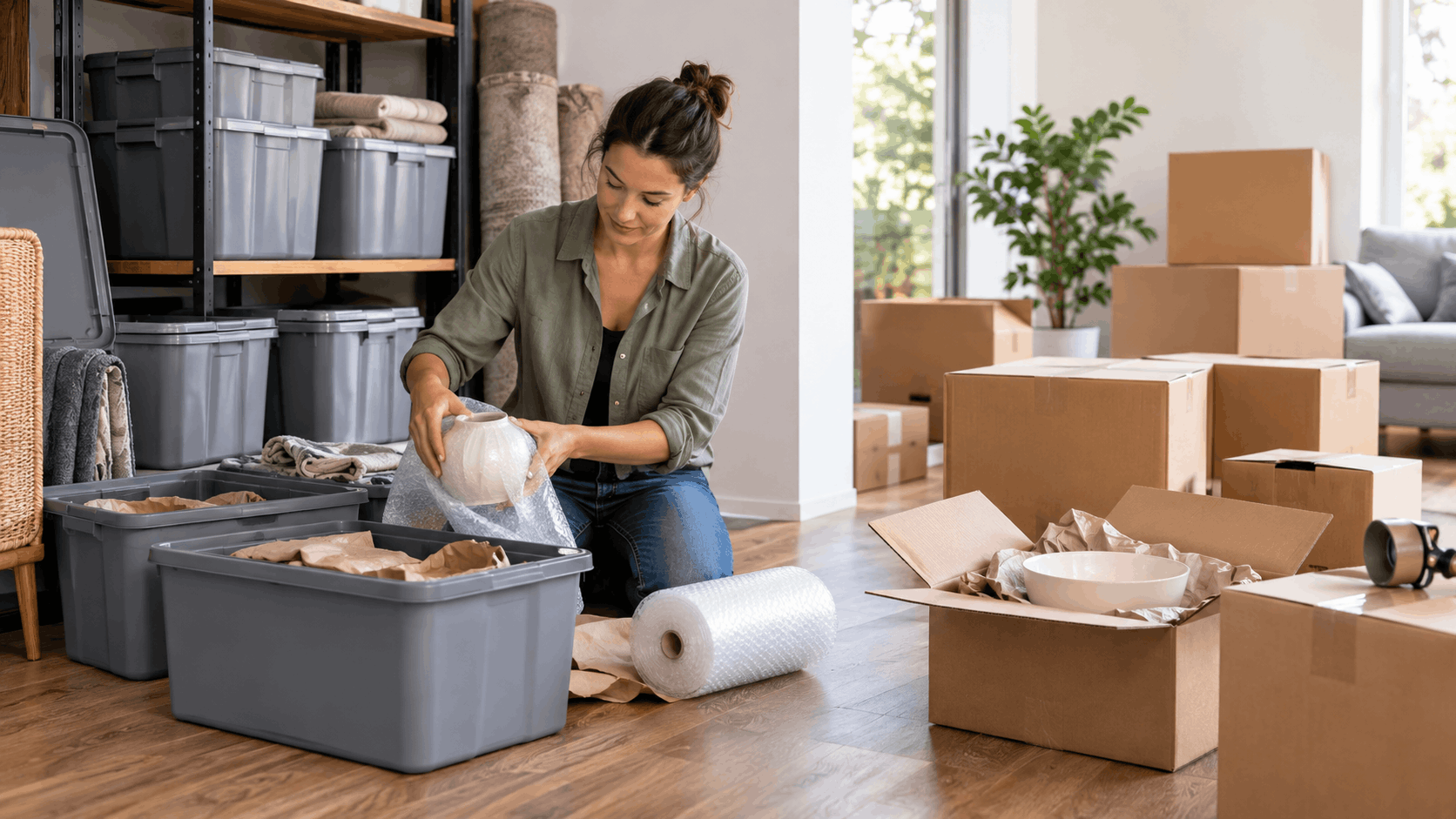
A move is measured in hours or days. A storage stay is measured in months. That single fact changes the materials you buy, the methods you use, and the way you think about protecting your things.
When we pack a home for a same-day move to a new place, the goal is simple. Get everything there in one piece within a few hours. Packing for storage is a longer game. Items sit still, untouched, through heat cycles and shifting humidity, and small weaknesses that never matter on a short drive turn into real damage.
The Timeline Changes Everything
A box that survives a two-hour drive to a new apartment near Sunset Junction can fail after ninety days in a warm unit. On the drive, the box only has to hold its shape long enough to get carried in and set down. Time is not part of the equation. In storage, time is the main character.
Over weeks and months, weak cardboard slowly absorbs moisture from the air. The fibers soften, the walls bow, and a box that felt solid on packing day loses its structure. Cheap tape is worse. The adhesive dries out or slides in the heat, and seams pop open on their own.
The packing timeline is the real difference between a move and a store. We tell customers to picture the box not as it looks today, but as it will look after sitting in the dark for a full season. Box failure almost never happens on day one. It happens quietly around month two or three, when no one is watching.
That is why we pack differently the moment someone says the word storage. Same items, same house, but a completely different set of choices because those items have to hold up over a long stretch instead of a short trip.
Movement Damage vs Sitting Damage
There are two kinds of damage, and most people only plan for one. The first is transit damage. Things break because they get jostled, tipped, and bounced in a truck. Glasses knock together, furniture shifts, and unsupported items crack.
The second kind is storage damage. Things break from sitting still too long. Moisture collects, mold grows, adhesives fail, and stacked weight slowly crushes whatever sits at the bottom. Nothing moved, yet the damage is real.
Packing for a move focuses on cushioning against motion. You pad, you brace, you fill empty space so nothing rattles. Packing for long-term storage focuses on survival while still. You control moisture, you distribute weight for the long haul, and you let items breathe.
The moving vs storage difference comes down to which enemy you are fighting. On a move, the enemy is motion. In storage, the enemy is time and the climate around your things. A smart pack accounts for both when items ride in a truck and then sit for months.
The Los Angeles Climate Factor
Los Angeles is not one climate. It is many small ones stacked into a single city, and each one treats stored belongings differently over time. A short move never touches this problem, but months of storage exposes it fully.
Near the Westside and coastal areas like Santa Monica and Marina del Rey, morning humidity rolls in off the water. That moisture works its way into cardboard, fabric, and wood over weeks. Homes and units closer to the ocean deal with damp air that inland neighborhoods never feel the same way.
Inland and valley areas bring the opposite problem. Summer heat in places like Burbank and the east side can push a non-climate unit well past comfortable temperatures, which stresses electronics, warps records, and dries out wood. Then the dry Santa Ana winds sweep through in fall, swinging humidity levels fast.
The Los Angeles climate means humidity storage planning is part of every long store we handle. We think about where the unit sits, how the air moves, and what the season will do to your things over the next several months, not just the next few hours.
Get Your Free Quote
Tell us about your move and we'll get back to you fast.
Boxes and Materials: What Holds Up After Three Months
Materials are where a smart storage pack and a quick moving pack split apart. The wrong box or the wrong tape shows its weakness right around month three, long after the mover has driven away.
We stock and recommend storage-grade materials for a reason. The gap in cost between cheap and quality supplies is small. The gap in results after ninety days is huge.
Standard Moving Boxes vs Heavy-Duty Storage Boxes
Standard single-wall corrugated boxes are fine for a short move. They carry books, kitchenware, and clothes across town without trouble, then get unpacked and recycled within days. Their job is short and their walls hold up long enough to finish it.
Storage is a different demand. Double-wall boxes have two layers of corrugated cardboard, which resist crushing when boxes stack on top of each other for months. That extra wall also slows moisture and holds shape far longer in a humid unit.
We have opened units where the top boxes looked perfect and the bottom single-wall boxes were flattened to half their height. The weight never changed. Time and gravity did the damage slowly. Double-wall boxes at the base of a stack prevent that collapse.
For any store past a few weeks, we push customers toward heavier boxes on the bottom layers at minimum. It costs a little more up front and saves the contents that would otherwise get crushed by month three.
Plastic Bins for Long-Term Storage
Sealed plastic storage bins beat cardboard in several storage situations. They do not absorb moisture from the air, they resist pests, and they stack cleanly without softening over time. For long-term storage in a humid part of the city, they are often the better call.
There is a trade-off, though. Airtight containers trap whatever is inside them, including moisture. If clothes or linens go in even slightly damp, that moisture has nowhere to go and turns into mildew and odor by the time you open the bin.
The rule we give people is simple. Only seal a plastic bin if what goes inside is fully clean and bone dry. Toss in a moisture absorber for extra safety, and never trap anything that was folded away with a hint of sweat or beach air still in it.
For electronics, documents, and photos, sealed bins with a desiccant packet offer strong protection against the swings in Los Angeles humidity. For a quick move, none of this matters. For a long store, it decides whether your things survive.
Tape, Wrap, and the Materials That Fail Over Time
Cheap packing tape is the quiet killer of stored boxes. In a warm unit, low-grade adhesive loses its grip. Seams peel open on their own, box flaps rise, and the whole box loses its structure without anyone touching it.
We use quality pressure-sensitive packing tape rated to hold in heat, and we run several passes across the bottom of storage boxes rather than a single strip. That bottom seam carries all the weight, and it is where cheap tape fails first.
Newspaper is another common mistake. The ink transfers onto dishes, glass, and fabric after weeks pressed together in a dark box. Customers open a box at month three to find gray smudges on their good china. For a store, we use acid-free paper and clean packing paper that will not stain or break down.
Bubble wrap and foam hold up fine, but avoid rubber bands and adhesive labels stuck directly on furniture. Rubber degrades and sticks to finishes, and label glue bakes on in the heat. Small material choices like these separate a clean unpack from a frustrating one.
Where to Source Materials Around Los Angeles
Buying random used boxes off resale apps is tempting, and it can backfire during a long store. You have no idea how old that cardboard is, whether it sat in a damp garage, or if it already carries pest eggs or a musty smell. Reused boxes that are fine for a fast move often fail under months of stacked weight.
Our team supplies proper storage-grade materials sized for the job, from double-wall boxes to dish packs, wardrobe boxes, and moisture absorbers. We can deliver packing supplies across Los Angeles so you are not driving all over town collecting mismatched cartons. Learn more about our moving supplies delivery options.
If you would rather hand the whole job off, our full service packing crews bring everything and pack to storage standards from the start. That matters most when items head into a unit for a season or longer.
The right storage materials cost a bit more than the bargain-bin route. Weighed against replacing a warped table or a box of ruined photos, they are the cheaper choice every time.

Need Help in Los Angeles?
Popeye Moving & Storage serves Los Angeles and all of Los Angeles County.
Protecting Furniture: A Short Trip vs a Long Rest
Furniture wrapped for a move can be unwrapped the same day. Furniture in storage needs to breathe and stay clean for months. The methods that protect a couch for a two-hour ride can actively harm it over a long store.
This is one of the areas where good intentions cause the most damage. People wrap tightly to protect against scratches, then unknowingly seal in the exact conditions that grow mold.
Why Plastic Shrink Wrap Hurts Furniture in Storage
Shrink wrap works great for moving furniture. It holds drawers shut, keeps cushions clean, and guards against scuffs during the short window between the old home and the new one. On a move, it comes off within hours.
In storage, that same tight plastic becomes a trap. Wood and leather need to release moisture, and shrink wrap seals it against the surface. As temperatures swing in a Los Angeles unit, condensation forms under the plastic with nowhere to escape.
By month three, that trapped moisture turns into furniture mold, white mildew blooms, and warping. We have pulled shrink wrap off stored leather sofas to find them tacky and spotted, and off wood dressers to find the finish clouded and lifted. It looked protected the whole time.
The lesson is that shrink wrap protects against motion, not time. For anything going into storage for weeks or more, tight plastic does more harm than good on natural materials.
Furniture Pads and Breathable Covers
For a long rest, we use furniture pads and moving blankets instead of plastic. These heavy quilted covers guard against dings and dust while still letting air move through, so wood can breathe and moisture does not build up against the surface.
Cotton or canvas covers work well for upholstered pieces and mattresses in storage. They keep dust off without sealing the item airtight. A mattress in a breathable cover comes out fresh, while one sealed in plastic for months often comes out smelling sour.
We secure moving blankets with stretch bands or twill ties rather than tape stuck to the furniture itself. That holds the padding in place without leaving adhesive residue baked onto the finish. Small detail, big difference over a long store.
When furniture rides in a truck and then sits in a unit, we often wrap it two ways. Padding for the drive, then a breathable setup once it is placed in the unit. That covers both the motion of transit and the stillness of storage.
Disassembly That Prevents Long-Term Stress
Taking furniture apart matters more for storage than for a move. A bed frame or table left assembled carries stacked weight on its joints for months, and those joints slowly loosen and stress under a load they were never meant to hold that long.
We break down bed frames, table legs, and shelving before a long store. Disassembled pieces lie flat, stack safely, and free up floor space so the unit stays organized and airflow stays open. Reassembly later goes faster when the parts were taken apart with care.
Hardware storage is where people lose time and sanity. We bag every set of screws, bolts, and brackets, label the bag for the piece it belongs to, and tape it to the underside of the item or keep all bags in one marked box. Nothing is worse than reassembling a bed at month four and hunting for missing bolts.
For heavy or high-value pieces, professional furniture disassembly protects both the furniture and your back. Our crews handle this daily across the city as part of our packing and storage solutions.
Fragile Items and Electronics Over the Long Haul
Glassware and televisions that ride safely in a truck can still crack or corrode in storage. Packing fragile items and electronics changes when they sit through heat cycles for months instead of a quick trip across town.
The forces at work are different. On a move, the threat is impact. In storage, the threats are settling weight, temperature swings, and slow chemical breakdown inside the items themselves.
Dishes and Glassware: Padding That Lasts
Dish packing for storage starts with packing plates vertically, on edge, like records in a crate. Plates stacked flat crack under their own weight over time, while plates on edge distribute pressure and survive the long haul far better.
Full cell padding is what separates a safe store from a shattered one. Every glass gets wrapped and every gap gets filled so nothing can shift. In a stacked unit, boxes settle over weeks, and any empty space inside a box lets contents move and knock together as the settling happens.
We use dish pack boxes with double walls and dividers for glassware protection on longer stores. The dividers hold each piece in its own cell so settling pressure never turns into contact between two fragile items.
The difference shows at month three. A well-padded dish box opens with everything intact. A loosely packed one that survived the drive fine opens with cracked stems and chipped rims, all from slow settling no one saw happen.
Electronics and Heat Damage
Los Angeles heat is hard on electronics in storage. A non-climate unit in the valley can bake through summer afternoons, and that heat damages screens, degrades batteries, and softens the adhesives that hold devices together. A short move never subjects gear to that kind of sustained temperature.
Batteries are the biggest risk. Heat causes them to swell, leak, and corrode over months, which can ruin the device around them. We recommend removing batteries from remotes, cameras, and small electronics before a long store, and storing them separately.
For TV storage, original boxes with the molded foam inserts are the best protection because they were built for that exact screen. If the box is gone, we crate flat panels upright with rigid padding, never flat, since pressure on a lying screen cracks the panel over time.
For anything expensive or heat-sensitive, a climate unit is worth the extra cost. Electronics heat damage is slow and invisible until you plug the device in months later and nothing turns on.
Photos, Documents, and Media
Humidity is the enemy of photos and paper over months. Prints stick together, ink runs, and pages curl and yellow. A hot garage or a non-climate unit is the worst place to keep anything you want to preserve for the long term.
For document storage, we use sealed plastic bins with desiccant packets to hold humidity steady. Important papers go in acid-free folders so the paper itself does not break down against acidic cardboard over time.
Photo preservation works the same way. Store prints in acid-free sleeves or boxes, keep them off the floor, and away from exterior walls where temperature swings and moisture concentrate. Old photos are irreplaceable, and they are exactly what people find ruined at month three.
For film, tapes, and hard drives, heat is just as damaging as moisture. We steer customers with valuable media toward climate-aware storage rather than a spare room or garage that runs hot all summer.
Clothing, Fabric, and the Month-Three Musty Smell
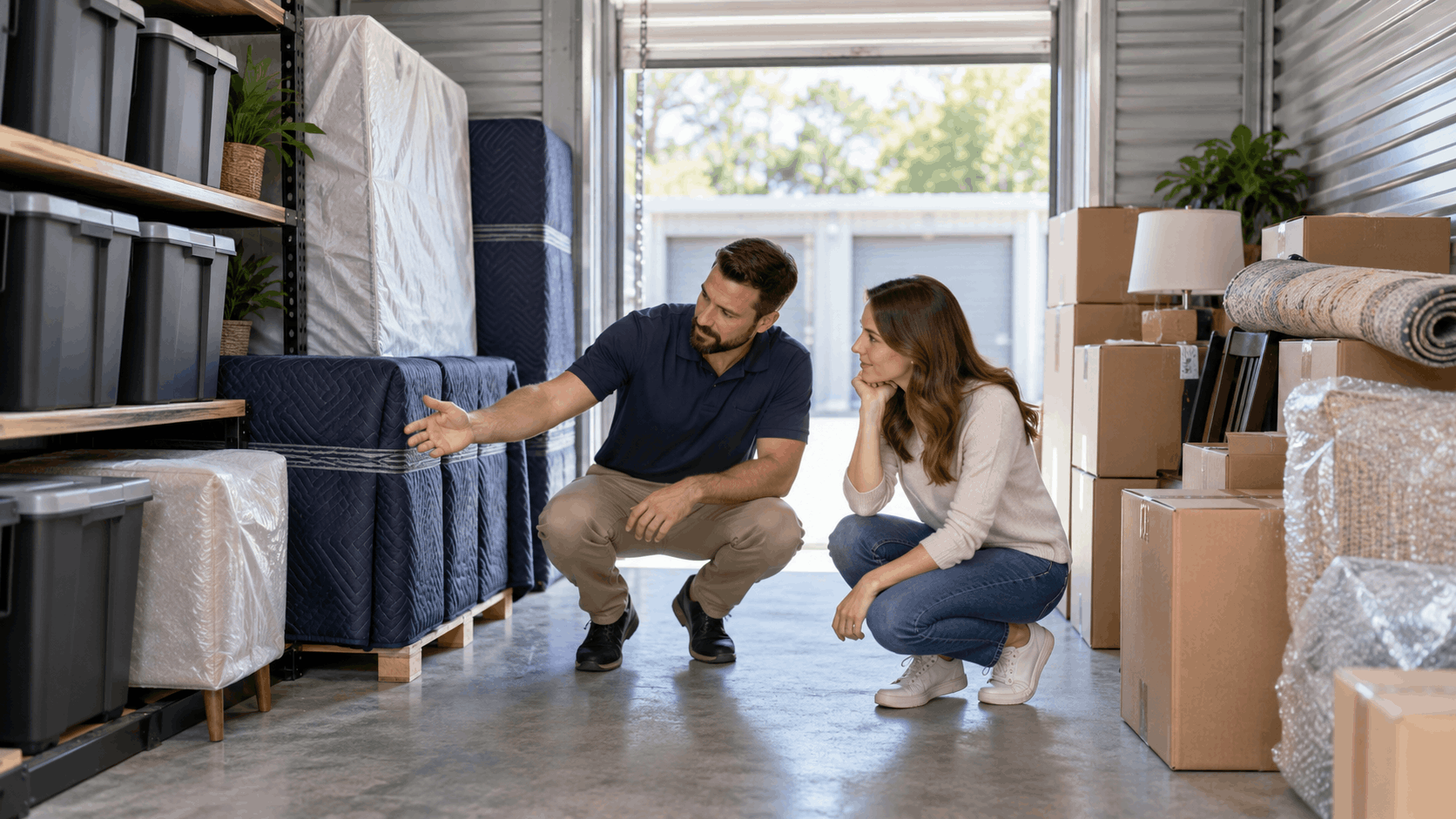
One of the most common calls we get is about the smell and stains that appear months into storage. That musty smell is not bad luck. It comes from how the fabric was packed, and it is completely preventable.
Clothing storage and fabric storage follow different rules than packing clothes for a quick move. On a move, clothes go from closet to box to closet within days. In storage, they sit sealed in the dark through months of shifting humidity.
Why Cardboard Wardrobe Boxes Need Prep for Storage
Wardrobe boxes are great for a move. Clothes hang right on the built-in bar, stay wrinkle-free, and move straight into the new closet the same day. For a short trip, they need almost no prep.
For a long store, wardrobe boxes need extra attention. Cardboard absorbs moisture from the air, so a wardrobe box in a humid unit can leave clothes smelling damp by month three. The clothing itself must be clean and fully dry before it goes in.
We add moisture absorbers inside wardrobe boxes used for storage and keep them off the floor and away from walls. That controls the humidity that would otherwise settle into the fabric over weeks in the dark.
For the longest stores, we sometimes move hanging clothes into sealed containers with desiccant instead of leaving them in cardboard the whole time. The right container depends on how long the clothing packing needs to last and how humid the unit runs.
Vacuum Bags: Helpful or Harmful?
Vacuum bags save real space, and for the right items they are a smart storage tool. Synthetic blankets, comforters, and pillows compress well and come back fine, which frees up room in a smaller unit.
Natural fibers are a different story. Wool, silk, down, and leather need loft and air. Compress them for months in a vacuum bag and the fibers crush permanently, leaving sweaters flat and down jackets lifeless. Space saving storage is not worth ruining good pieces.
Vacuum bags also trap whatever odor and moisture are present when you seal them. If a garment went in with a faint smell, that smell concentrates and sours over months instead of airing out. Only vacuum-seal clean, dry, synthetic items.
Our rule is to use vacuum bags for bulky synthetic bedding and skip them for anything natural or delicate. For those pieces, breathable storage protects the fibers far better over a long store.
Fighting Moisture, Mildew, and Pests
Mildew prevention starts before anything gets packed. Every item goes in clean and completely dry, because body oils, food residue, and sweat feed mildew and attract pests during a long store. That stain you barely notice on packing day becomes a permanent set-in mark by month three.
Moisture absorbers like silica gel packs and larger desiccant tubs make a real difference in a Los Angeles unit. We place them inside boxes and around the unit to pull humidity out of the air before it reaches the fabric.
Plastic garbage bags are a trap people reach for constantly. They seal in sweat and warmth, which grows mildew and draws pests looking for a warm nest. Never store clothes long-term in plastic trash bags.
Cedar blocks and airtight containers with desiccant help keep moths and other pests away from wool and natural fibers. Clean items, controlled moisture, and breathable or sealed-and-dry containers are what beat the month-three musty smell.
Need Help in Los Angeles?
Popeye Moving & Storage serves Los Angeles and all of Los Angeles County.
Labeling and Inventory: Finding Things at Month Three
For a move, you unpack within days and memory works fine. You know the blue box has the kitchen stuff because you packed it yesterday. For storage, three months later you cannot remember what went where, and the guessing game begins.
A moving inventory and a labeling system are the difference between finding what you need in two minutes and opening fifteen boxes. Storage organization is a step a fast move never truly requires.
Labels That Survive Heat and Time
Marker written straight on tape fades and peels in a warm unit. The tape lifts, the ink lightens, and by month three you are squinting at a smudge trying to guess what is inside. Cheap labeling fails the same way cheap tape does.
We use durable printed or heavy adhesive labels rated to hold in heat, applied to clean cardboard rather than over tape. That keeps the label readable and stuck down for the full length of the store.
Labels go on at least three sides of each box, never just the top. In a stacked unit, the top of most boxes is hidden, so side labels let you read a box without pulling the whole stack apart.
We also color-code by room or category when a store is large. A quick glance tells you which zone a box belongs to, which speeds up both finding items and eventually unpacking them at the new place.
Building a Simple Inventory List
A numbered box list turns a wall of identical boxes into a searchable system. We number each box, then write a short contents note next to that number on a master list or phone note. Box 14 might read winter clothes and extra blankets.
Phone photos make storage inventory even easier. Snap a picture of each box open before sealing it, and the photo becomes a visual record of exactly what is inside. Months later, you scroll instead of unpacking.
Box numbering also protects against loss. If something goes missing, a numbered inventory tells you exactly what should be there. It is the same method our crews use on larger jobs to keep track of every carton.
The whole system takes a few extra minutes on packing day and saves hours at month three. For a move you unpack immediately, so you can skip it. For storage, it is one of the best time investments you can make.
Packing an Access Path
Storage layout is planning a normal move never needs. When everything gets unpacked in a few days, order does not matter. When items sit for months and you may need to grab a few things, a smart layout saves you from digging.
We place items likely to be needed sooner near the front of the unit. Seasonal clothes, holiday decorations, and tools you might come back for stay accessible, while deep storage items go to the back.
Leaving a narrow walkway down the center of a larger unit means you can reach the back without unstacking the front. Access planning like this feels obvious once you have crawled over boxes to reach one item, and pointless until then.
We map this out with customers before loading. A few minutes of planning where things go turns a frustrating dig into a quick in-and-out trip whenever you need to visit the unit.
Loading the Unit vs Loading the Truck
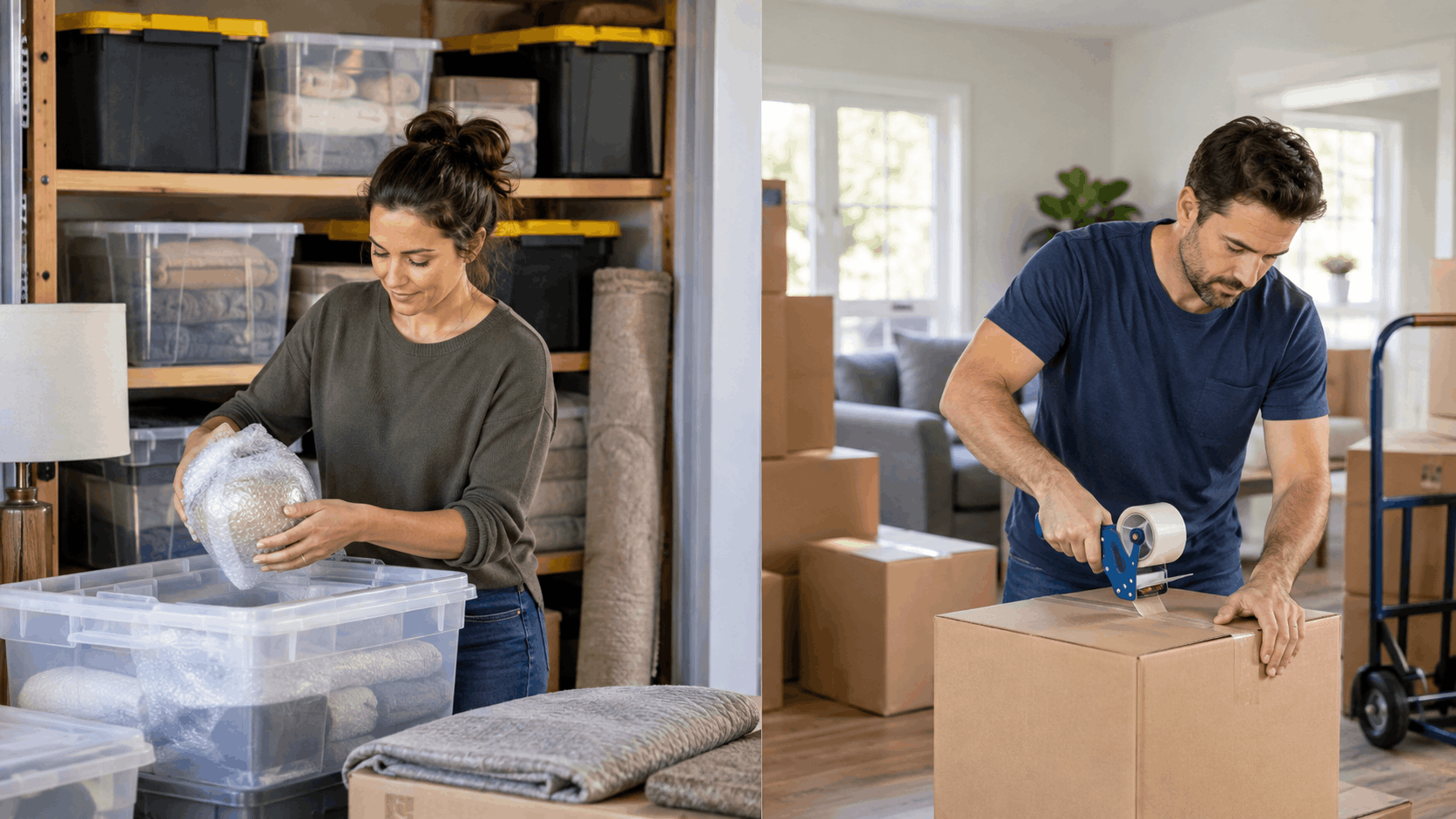
How items sit in a storage unit for months differs from how they ride in a truck for an hour. Truck loading fights motion. Storage unit loading fights time, weight, and still air. The stacking rules change accordingly.
| Factor | Loading a Truck (hours) | Loading a Storage Unit (months) |
|---|---|---|
| Main threat | Motion and shifting | Settling weight and moisture |
| Stacking | Tight and braced to stop movement | Weight-rated, heavy on bottom, room to breathe |
| Floor contact | Fine, ride is short | Raised on pallets to protect from moisture |
| Airflow | Not a concern | Gaps left for air to circulate |
| Wrapping | Tight plastic acceptable | Breathable covers only |
Weight Distribution for Long-Term Stacks
Heavy on the bottom, light on top is the rule for both, but it matters far more in storage. A stack that holds fine for a short drive can slowly crush the lower boxes over three months as gravity works without pause.
We put double-wall boxes and heavy items at the base of every long-term stack. Books, dishes, and tools go low. Linens, lampshades, and light goods go high, so nothing fragile carries a load it cannot handle over time.
Weight distribution also keeps stacks from leaning and toppling. A top-heavy tower that survives a careful ride can shift and collapse when a unit is bumped or when lower boxes soften slightly from humidity.
We keep stacks to a safe height so the bottom boxes never carry more than they can bear for months. In a truck you stack to the ceiling to save trips. In a unit you stack for the long haul.
Leaving Room for Airflow
Airflow is the storage detail that has no truck equivalent. In a moving truck, packed tight is good because tight means no movement. In a storage unit, packed too tight traps moisture against your things and grows mold.
We raise boxes and furniture off the floor on pallets or boards. Concrete floors pull moisture up, and anything sitting directly on them absorbs that dampness over weeks. A few inches of clearance keeps the base of the load dry.
We also leave gaps between the load and the walls. Air needs a path to move so humidity does not collect in still pockets. Boxes shoved against an exterior wall are the first to develop that musty smell and mildew.
Those small gaps for airflow storage are why a professionally loaded unit smells fresh at month three while a tightly packed one smells damp. The load looks a little less full and performs far better over time.
Choosing the Right Unit Near You
The right unit depends on where you are and what you are storing. Our team helps Los Angeles residents across the city pick a size and type that fits a long store, from folks in Culver City to Highland Park to anyone living near the 10 and 405 corridors.
For heat-sensitive or moisture-sensitive items, we point people toward a climate unit. Electronics, wood furniture, photos, and leather all last far longer in controlled conditions than in a standard unit that bakes through a valley summer.
Size matters too. A unit that is too small forces overstacking with no airflow, while the right size leaves room to raise, space, and access your things. We size the unit to how you will actually load it for a long store.
Our long term storage options are built for exactly these month-plus stays. We match the unit to your items, your neighborhood climate, and how often you expect to visit.
How Popeye Moving & Storage Co. Handles Both Jobs in Los Angeles
Our local team approaches packing differently depending on whether items go straight to a new home or into months of storage. Years of work across every corner of Los Angeles taught us that the two jobs demand different materials, methods, and planning.
As Los Angeles movers, we do not treat packing as one-size-fits-all. The first question we ask shapes the entire plan, and it has nothing to do with how many rooms you have.
Our Packing Assessment Before the Job
Before any job, we ask how long your items will be stored. The answer changes everything from box grade to wrapping to unit type. Packing for a same-week move and packing for a six-month store are two separate plans.
During the packing assessment, we walk the home and flag items that need special care for a long store. Wood furniture, electronics, photos, and natural-fiber clothing all get storage-specific handling that a quick move would skip.
This moving consultation also covers your climate and access. A hillside home in a humid coastal pocket gets a different plan than a dry inland apartment. We match the approach to your actual conditions, not a generic checklist.
That upfront conversation prevents the month-three surprises. When we know the timeline, we pack for it from the first box, so nothing gets a moving-grade pack when it needs storage-grade protection.
Serving Neighborhoods Across the City
We have packed homes in Sherman Oaks where valley heat makes climate storage the obvious call, apartments near Koreatown with tight access and elevators, and hillside homes in Echo Park with narrow streets and long carries. Each neighborhood brings its own quirks.
Coastal work near Brentwood and the Westside means planning around humidity that inland crews rarely think about. Fabric and wood need extra moisture control there, even for shorter stores.
Older homes in areas like Highland Park and parts of Pasadena often have limited storage space at home, so residents lean on offsite units and need proper long-term packing to match. We know these access and climate patterns because we drive these streets every week.
Whether you are near the beach, in the valley, or up in the hills, our crews adjust to the conditions of your specific neighborhood. Local knowledge is what keeps stored belongings safe across such a varied city.
Combining Moving and Storage in One Plan
Many customers store now and move to a new home later. A common example is a sale that closes before the new place is ready. Instead of packing twice, we pack once the right way so items are storage-safe from the start and ready to move again when the time comes.
This combined moving and storage approach saves money and prevents damage. Repacking is where things get scratched, dropped, and rushed. Packing once to storage standards means the same boxes that survive months in a unit also survive the final move to your new place.
We coordinate the whole timeline, from the first pack to the store to the eventual delivery. Our packing services and storage services work together so you deal with one team the whole way through.
For anyone caught between homes anywhere in Los Angeles, this one-plan approach removes the biggest headaches. Pack once, store safely, move once more, done.

Need Help in Los Angeles?
Popeye Moving & Storage serves Los Angeles and all of Los Angeles County.
Final Thoughts
Packing for a move and packing for storage share a name and almost nothing else. A move asks your things to survive a few hours of motion. Storage asks them to survive months of stillness, heat, and shifting humidity, and that longer test is where cheap boxes, tight plastic, and skipped prep all fail around month three.
The fixes are straightforward. Double-wall boxes and quality tape, breathable furniture covers, clean and dry fabric, moisture absorbers, durable labels, and a unit loaded with room to breathe. Get those right and you open your unit at month three to find everything exactly as you left it.
If you have items headed into a Los Angeles storage unit, or you are caught between homes and need to store now and move later, our team can pack it the right way from the start. Contact Popeye Moving & Storage Co. for a consultation and a quote, and let us build a plan that holds up long past month three.
Frequently Asked Questions
What is the main difference between packing for storage and packing for a move?
A move only needs to survive transit, which is a matter of hours or days, so the focus is cushioning against motion. Storage packing plans for months of stillness, heat, and moisture. That means stronger boxes, breathable furniture covers, moisture control, and careful loading with airflow. The materials and methods change because the enemy shifts from movement to time and climate.
Why do my boxes fall apart after three months in storage?
Several things fail together around month three. Cheap single-wall boxes absorb humidity and soften, low-grade tape loses its grip in the heat and seams pop open, and stacked weight slowly crushes the lower boxes over time. None of this shows on packing day. It builds quietly over weeks. Double-wall boxes, quality tape, and smart weight distribution prevent most of it.
Should I use plastic bins or cardboard boxes for long-term storage?
Both work when used correctly. Sealed plastic bins resist moisture and pests and stack cleanly, which suits humid parts of Los Angeles, but they trap moisture if items go in even slightly damp. Double-wall cardboard breathes better but needs a drier environment. For a long store, use bins with desiccant for sensitive items and quality cardboard for the rest, always packing clean and dry.
Do I need a climate-controlled unit in Los Angeles?
Some items strongly benefit from it. Electronics, wood and leather furniture, photos, documents, film, and natural-fiber clothing all suffer in a standard unit that bakes through a valley summer or sits in coastal humidity. Everyday items like plastic goods, tools, and sturdy furniture usually store fine without it. If you are keeping anything heat- or moisture-sensitive for months, climate control is worth the cost.
How do I keep my clothes from smelling musty in storage?
Start with clean, fully dry clothes, since sweat and residue feed mildew. Use breathable containers or wardrobe boxes rather than plastic trash bags that trap moisture. Add moisture absorbers like silica gel or desiccant tubs, and keep boxes off the floor and away from walls. For natural fibers, skip vacuum bags. Those steps stop the month-three musty smell before it starts.
Is it safe to shrink-wrap furniture for months?
No, not for wood or leather. Shrink wrap is fine for a short move, but over months it traps moisture against the surface as temperatures swing, causing mold, mildew, and warping by month three. Use furniture pads, moving blankets, or breathable cotton covers instead so air can circulate and the material can release moisture. Breathable covers protect against dust and dings without sealing in damage.
How should I label boxes so I can find things later?
Use durable adhesive or printed labels applied to clean cardboard, not marker on tape that fades and peels in heat. Label at least three sides of each box so you can read it in a stack. Keep a numbered inventory list or snap phone photos of each box before sealing it. Those systems let you find items months later without opening everything.
Can Popeye Moving & Storage Co. pack and store my items in one trip?
Yes. We handle combined moving and storage jobs across Los Angeles regularly. We pack once to storage standards, move your items into the right unit, and deliver them to your new home when you are ready. Packing once the correct way saves money and prevents the damage that comes from repacking. One team manages the whole timeline from first box to final delivery.
What items should never go into long-term storage?
Never store perishable food, which draws pests and rots. Skip flammables and hazardous materials like propane, paint, gasoline, and aerosols. Sensitive documents such as passports, wills, and originals you may need should stay with you rather than in a unit. Living plants and anything wet or damp also do not belong in storage. These items need different handling for safety and preservation.
How much does professional packing for storage cost in Los Angeles?
Pricing depends on the size of your home, the volume of items, the materials needed, and whether you want full-service packing or supplies only. Storage-grade materials cost a little more than standard moving supplies because they hold up over months. The best way to get an accurate number is a walkthrough. Reach out to our team for a free quote built around your specific job and timeline.
Frequently Asked Questions
- What is the main difference between packing for storage and packing for a move?
- A move only needs to survive transit, which is a matter of hours or days, so the focus is cushioning against motion. Storage packing plans for months of stillness, heat, and moisture. That means stronger boxes, breathable furniture covers, moisture control, and careful loading with airflow. The materials and methods change because the enemy shifts from movement to time and climate.
- Why do my boxes fall apart after three months in storage?
- Several things fail together around month three. Cheap single-wall boxes absorb humidity and soften, low-grade tape loses its grip in the heat and seams pop open, and stacked weight slowly crushes the lower boxes over time. None of this shows on packing day. It builds quietly over weeks. Double-wall boxes, quality tape, and smart weight distribution prevent most of it.
- Should I use plastic bins or cardboard boxes for long-term storage?
- Both work when used correctly. Sealed plastic bins resist moisture and pests and stack cleanly, which suits humid parts of Los Angeles, but they trap moisture if items go in even slightly damp. Double-wall cardboard breathes better but needs a drier environment. For a long store, use bins with desiccant for sensitive items and quality cardboard for the rest, always packing clean and dry.
- Do I need a climate-controlled unit in Los Angeles?
- Some items strongly benefit from it. Electronics, wood and leather furniture, photos, documents, film, and natural-fiber clothing all suffer in a standard unit that bakes through a valley summer or sits in coastal humidity. Everyday items like plastic goods, tools, and sturdy furniture usually store fine without it. If you are keeping anything heat- or moisture-sensitive for months, climate control is worth the cost.
- How do I keep my clothes from smelling musty in storage?
- Start with clean, fully dry clothes, since sweat and residue feed mildew. Use breathable containers or wardrobe boxes rather than plastic trash bags that trap moisture. Add moisture absorbers like silica gel or desiccant tubs, and keep boxes off the floor and away from walls. For natural fibers, skip vacuum bags. Those steps stop the month-three musty smell before it starts.
- Is it safe to shrink-wrap furniture for months?
- No, not for wood or leather. Shrink wrap is fine for a short move, but over months it traps moisture against the surface as temperatures swing, causing mold, mildew, and warping by month three. Use furniture pads, moving blankets, or breathable cotton covers instead so air can circulate and the material can release moisture. Breathable covers protect against dust and dings without sealing in damage.
- How should I label boxes so I can find things later?
- Use durable adhesive or printed labels applied to clean cardboard, not marker on tape that fades and peels in heat. Label at least three sides of each box so you can read it in a stack. Keep a numbered inventory list or snap phone photos of each box before sealing it. Those systems let you find items months later without opening everything.
- Can Popeye Moving & Storage Co. pack and store my items in one trip?
- Yes. We handle combined moving and storage jobs across Los Angeles regularly. We pack once to storage standards, move your items into the right unit, and deliver them to your new home when you are ready. Packing once the correct way saves money and prevents the damage that comes from repacking. One team manages the whole timeline from first box to final delivery.
- What items should never go into long-term storage?
- Never store perishable food, which draws pests and rots. Skip flammables and hazardous materials like propane, paint, gasoline, and aerosols. Sensitive documents such as passports, wills, and originals you may need should stay with you rather than in a unit. Living plants and anything wet or damp also do not belong in storage. These items need different handling for safety and preservation.
- How much does professional packing for storage cost in Los Angeles?
- Pricing depends on the size of your home, the volume of items, the materials needed, and whether you want full-service packing or supplies only. Storage-grade materials cost a little more than standard moving supplies because they hold up over months. The best way to get an accurate number is a walkthrough. Reach out to our team for a free quote built around your specific job and timeline.
P
Popeye Moving & Storage Co. Team Team
Licensed moving and storage professionals serving Los Angeles and Los Angeles County.
Licensed in California · License #PUC: CAL T 189749 | DOT: 1472924 | MC: 498816C
Why trust Popeye Moving & Storage?
Founded in 1994, Popeye Moving & Storage is a licensed and insured moving and storage service serving Los Angeles and Los Angeles County. All content is reviewed by our licensed technicians.

Need Help in Los Angeles?
Popeye Moving & Storage serves Los Angeles and all of Los Angeles County.
Related Articles
Tips & Advice
Staging Storage for LA Home Sellers: Clearing Rooms Fast and Getting Everything Back After Close
How LA home sellers use staging storage to clear rooms fast before an open house, keep belongings safe during the sale, and get everything back after close.
Tips & Advice
Storage for Santa Monica and Brentwood Households: Where Westside Furniture Actually Goes Between Homes
A local guide to furniture storage for Santa Monica and Brentwood households, covering storage types, costs, coastal climate risks, and how Westside families bridge the gap between homes.
Tips & Advice
Storage While House-Hunting in LA: Moving Out Decisively Without Buying Under Pressure
Sold your LA home before finding the next one? Learn how short-term storage lets house-hunters slow down, shop wisely, and move once without buying under pressure.