Seasonal
Snow-Season Gear and Holiday Storage: The Seasonal Swap for Space-Tight Westside Homes
Key Takeaways
- Older Mar Vista bungalows and newer Santa Monica condos both lack the closet, garage, and attic space to hold snow gear and holiday decor at once.
- Clean, dry, and label ski gear before storing it so it comes back rust-free and trip-ready for Mammoth and Big Bear.
- Use divided bins and tissue wrap for fragile ornaments, and wind string lights on cardboard or spools to avoid yearly tangles.
- Free up home space with overhead garage racks, wall systems, under-bed bins, and stackable closet-top containers.
- Rent an off-site unit when your garage stays cluttered and closets will not close; a 5x5 or 5x10 usually fits combined seasonal items.
- Coastal Westside homes benefit from climate-controlled storage to protect metal gear and down jackets from salt air and humidity.
- Share one unit across both seasons, right-size to avoid empty space, and donate unused gear to keep costs down.
- Popeye Moving & Storage offers pickup, storage, and return across the Westside from Venice to Brentwood, timed around ski and holiday deadlines.
In This Article
It is 5 a.m. on a Friday, and a family in Mar Vista is tearing apart the hall closet looking for one ski boot. The Mammoth reservation starts tomorrow, the car is half-packed, and the missing boot is somewhere behind three bins of last year's holiday lights. Anyone who lives on the Westside with a two-day head start on a mountain trip knows this scene by heart.
The problem is not the gear. It is the space. Homes near Santa Monica, Palms, and Brentwood were not built with room for skis, snowboards, sleds, and boxes of ornaments all at once. When winter trips and holiday decorating happen in the same few months, two big piles of stuff fight for the same tiny closet.
Why Westside Homes Struggle With Seasonal Storage?
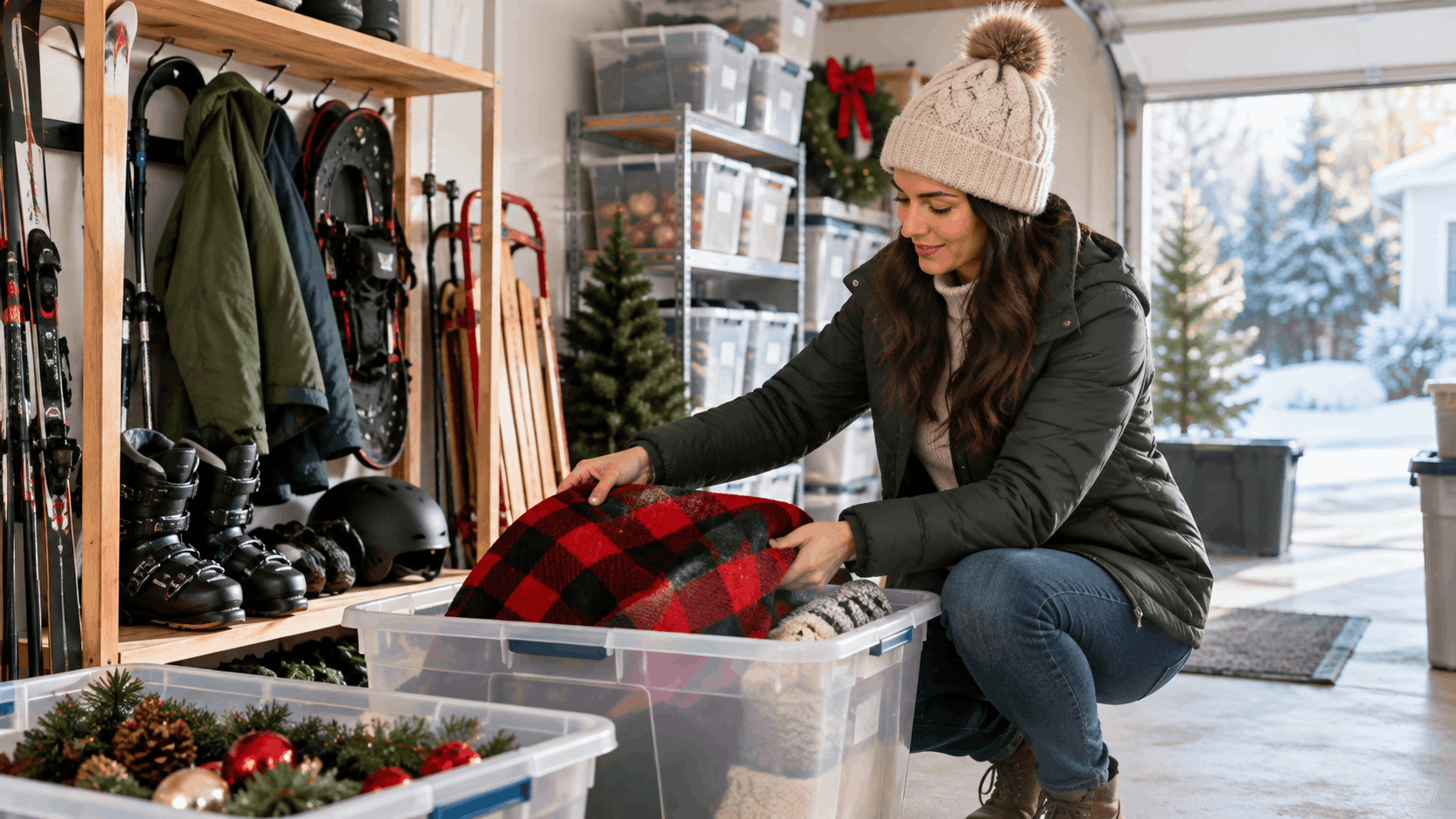
Seasonal storage is one of the most common headaches we hear about across the Westside. The homes here are charming, but many of them are short on square footage. When you mix bulky snow gear with weeks of holiday decorating, space-tight Westside homes hit a wall fast.
Older bungalows and newer condos each have their own version of the problem. One has tiny closets, the other has no garage or attic at all. Both leave residents scrambling for a place to put things they only use a few months a year.
Small Closets in Older Mar Vista and Palms Bungalows
A lot of the homes near Venice Boulevard and Palms went up in the 1940s and 1950s. They were built for a simpler kind of life, with one small hall closet and a bedroom closet barely deep enough for a row of coats. Nobody was planning for a family of four's worth of ski boots and snowboards.
That tight closet space becomes a real problem when winter rolls in. A Mar Vista bungalow closet that already holds clothes, linens, and vacuum cleaners has no room left for a rack of skis or four bins of ornaments. Families end up stacking gear in corners of the living room or on top of dressers.
We see the same story on streets around Grand View and Beethoven. The homes are lovely, but storage was an afterthought when they were framed. Owners who want to keep the original character often do not want to gut a wall just to add shelving.
The result is a yearly juggling act. Snow gear comes out, holiday boxes need a home, and the closet simply cannot hold both. That is the core of the space crunch in these older Westside neighborhoods.
Condos and Apartments Near Santa Monica and Brentwood
Newer units tell a different version of the same story. Condos along Wilshire and apartments near Montana Avenue often skip the garage and attic entirely. A resident might have a nice unit and still have nowhere to stash a sled or a box of glass ornaments.
Condo storage in these buildings usually means one small assigned locker in a shared garage, if that. Those lockers fill up quickly with suitcases, tools, and old furniture. There is rarely room left for a full season of gear rotation.
Santa Monica apartments near the beach face an added challenge. Parking is tight, driveways are narrow or nonexistent, and hauling bulky items up an elevator is its own project. Many renters near the Wilshire and Montana area reach a point where off-site storage is the only real answer.
For folks in Brentwood, the trade-off is similar. Beautiful buildings, limited private storage, and a strong need to keep hallways and living rooms clear. An outside unit takes the pressure off without cluttering a home they love.
The Twice-a-Year Gear Rotation Problem
Here is the cycle that trips up so many families. Snow gear comes out of hiding in late fall, right as holiday boxes need to come down for decorating. The two seasons collide at the exact same moment.
In December, a family might have a tree up, lights strung, and ski bags packed by the front door all at once. Every flat surface is covered. The gear rotation never quite lines up, so both piles are out at the same time instead of trading places.
Then January hits. The tree comes down, but the ski trips keep coming through March. Now the holiday bins are back in storage while the snow gear stays in rotation, and the garage still looks like a warehouse.
A smart seasonal swap solves this by giving each set of items a real home during its off-season. Snow gear rests somewhere safe in summer, and decorations rest somewhere safe the rest of the year. The goal is one clean handoff instead of a months-long pileup.
Get Your Free Quote
Tell us about your move and we'll get back to you fast.
Sorting Snow-Season Gear Before You Store It
Good snow gear storage starts before anything goes into a bin. Gear that gets tossed away wet and dirty comes back rusty, moldy, or worn out. A little prep at the end of the season saves money and hassle when the next Mammoth or Big Bear trip rolls around.
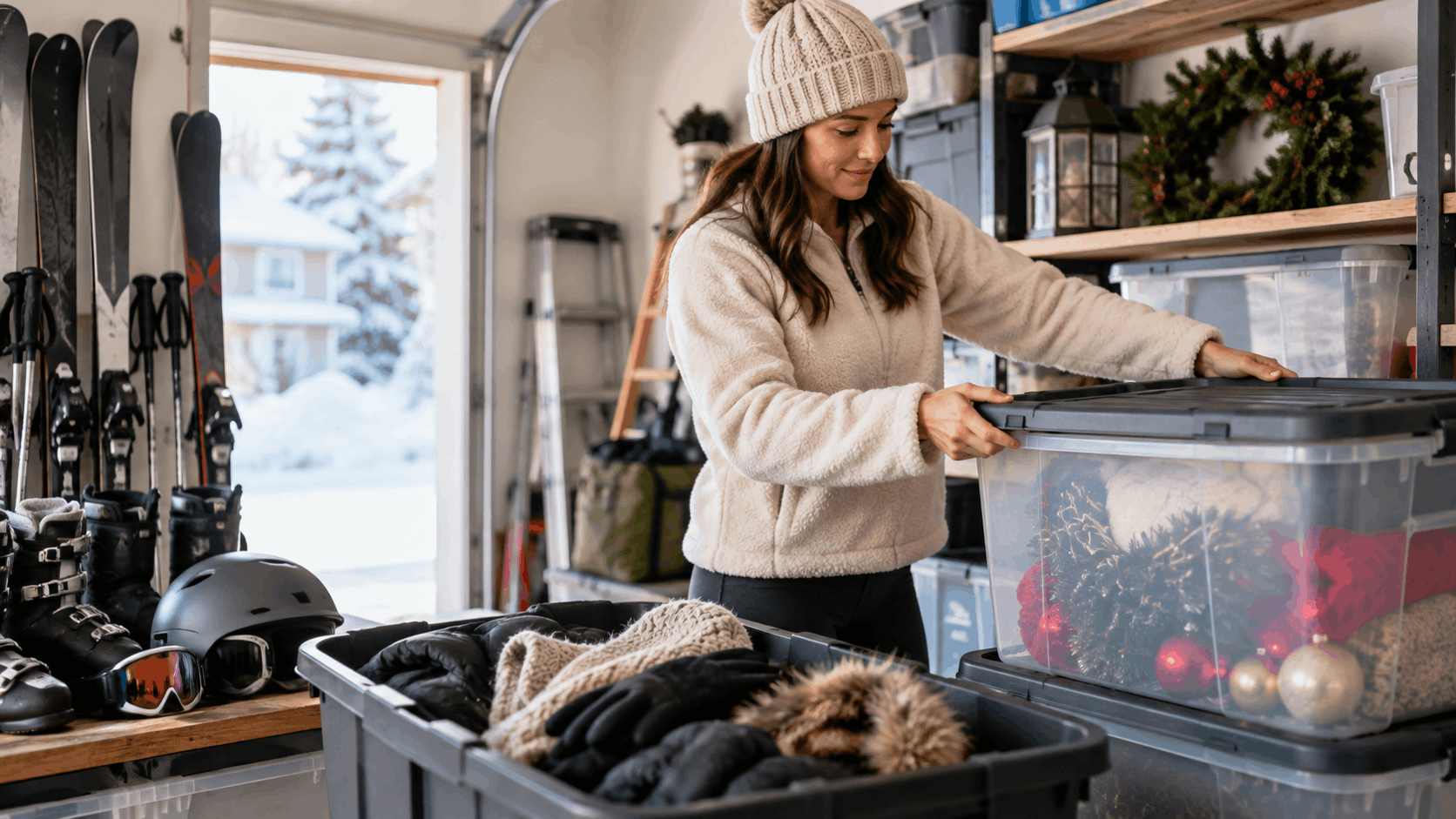
Ski storage and winter equipment care follow a simple pattern: clean, dry, protect, and label. Spend an afternoon on it and your gear stays trip-ready for years.
Cleaning and Drying Skis, Boards, and Boots
Start with the edges. Wipe down ski and snowboard edges with a dry cloth to pull off snow, salt, and grit from the slopes. Any moisture left on metal edges turns into rust over a long summer in storage.
Ski maintenance also means checking the bases for damage before you pack them away. A quick wax job on the base before storage keeps it from drying out. Store skis and boards in a dry spot, standing upright or laid flat, never leaning against a damp garage wall.
Boot drying is the step people skip most often. Sweat and melted snow sit inside boot liners, and if you seal them up wet, they come out smelling terrible and growing mildew. Pull the liners out if you can, and let everything air dry fully for a day or two.
Once boots are bone dry, buckle them loosely to hold their shape and store them out of direct sunlight. Loose buckling keeps the plastic from warping over the off-season. Dry, clean, and shaped gear is gear that lasts.
Packing Cold-Weather Clothing and Jackets
Down jackets, ski pants, gloves, and thermal layers need to breathe in storage. The mistake we see most is sealing them in airtight plastic bags. Trapped moisture leads to musty smells and can flatten the loft in down insulation.
For clothing storage, breathable bins or fabric containers work far better. They let a little air move so moisture does not build up on the fabric. This matters more near the coast, where humidity creeps into everything.
Wash and fully dry all winter apparel before it goes away. Body oils and food stains attract moths and pests over months in a bin. A clean jacket packed dry comes out fresh and ready for the next trip.
Fold bulky jackets loosely instead of cramming them tight. Down needs room to keep its shape and warmth. If space is really tight, our full-service packing team can help sort and box winter apparel the right way.
Storing Sleds, Chains, and Bulky Trip Items
Tire chains are a classic Westside problem. Nobody needs them in Culver City, but you cannot drive the 405 up to the mountains without them in a storm. So they sit in the trunk or a garage corner, tangled and rusting.
Wipe chains dry and store them in a small sealed bin with a rag to soak up moisture. That keeps rust off the links so they are ready when the highway requires them. Label the bin clearly so it is easy to grab on the way out.
Sleds and other bulky gear eat up garage space fast, especially in homes with narrow Westside driveways. Hang sleds on wall hooks or slide them flat under a shelf. Getting them off the floor frees up room to actually park a car.
Bulky gear storage is where an off-site unit really earns its keep. Items you use two or three months a year do not need to hog your garage all summer. A small unit holds chains, sleds, and gear bags out of the way until the next storm.
Labeling So Gear Is Ready for the Next Drive Up the 405
Early mountain trips mean loading the car at 4 or 5 in the morning. Nobody wants to open five unmarked bins in the dark looking for gloves. Clear labels turn a frantic search into a quick grab.
Labeling bins by category is the simplest system that works. One bin for boots, one for outerwear, one for chains and safety gear. Write the contents on two sides so you can read it no matter how the bin is stacked.
Color coding helps too. Blue lids for snow gear, red lids for holiday decor keeps the two seasons from getting mixed up. When you are moving fast, a quick glance tells you exactly which bin to pull.
For quick access, keep the bins you grab first near the front of any storage space. Boots and jackets go up front, backup gear goes deeper. A little planning here saves twenty minutes of digging before every trip.
Need Help in Los Angeles?
Popeye Moving & Storage serves Los Angeles and all of Los Angeles County.
Packing and Storing Holiday Decorations the Right Way
Holiday storage is where a lot of good decorations go to die. Ornaments crack, lights knot up, and wreaths get crushed flat. A few smart packing habits keep everything ready to use when the season comes back around.
Decoration storage really comes down to protecting fragile pieces and keeping large items compact. Do it right once and your setup is easy for years.
Protecting Fragile Ornaments and Glassware
Glass ornaments and heirloom pieces need real protection, not a loose pile in a shoebox. Divided bins with individual cells keep each ornament from banging into its neighbors. These are cheap and stack neatly for the off-season.
For wrapping fragile ornaments, use tissue paper or acid-free paper around each glass piece. Avoid newspaper on light-colored or painted ornaments, since the ink can rub off and stain them. A soft wrap plus a divided cell is nearly bulletproof.
Heirloom pieces deserve extra care. Wrap them, place them in the center of the bin away from the edges, and mark that bin as fragile. Store it somewhere it will not get crushed under heavier boxes.
Keep ornament bins off the garage floor and out of high-heat spots. Heat can warp plastic and fade delicate finishes over a long summer. A stable, dry shelf or a climate-controlled unit keeps your favorites looking new.
Untangling and Coiling String Lights
Nothing kills holiday momentum like a knotted ball of string lights. The fix starts the moment you take them down, not next December. Coil each strand as you remove it instead of yanking it into a heap.
A simple trick is to wrap each strand around a piece of stiff cardboard. Cut a notch on each end to hold the plug and the tail in place. That flat card slides neatly into a bin and keeps the strand tangle-free.
Empty spools and cord reels work even better for longer runs of lights. Wind the strand on, and it unwinds clean the next year. This kind of cord storage takes a few extra minutes but saves an hour of untangling later.
Group your light bins by where the lights go: indoor, tree, and outdoor. Label each one so you are not testing strands to figure out which is which. A little order here makes decorating night far less stressful.
Storing Artificial Trees and Wreaths
An artificial tree is bulky and awkward, and the original box usually falls apart after a year. A dedicated tree bag or a rolling tree storage container holds the tree compact and dust-free. The rolling versions are a gift for anyone with tight closet space.
For artificial tree storage, break the tree into its sections and compress the branches gently before bagging. A snug bag keeps dust and pests out over the long off-season. It also makes the tree far easier to carry and stack.
Wreaths crush easily if you just toss them on a shelf. A hard-sided wreath box protects the shape and keeps the greenery from flattening. These boxes stack, which saves space in a small storage area.
Large decorations like trees and wreaths are the items most Westside homes have no room for in the off-season. When they are eating up a whole closet, moving them to a storage solution off-site is often the easiest call.
Making the Seasonal Swap Work in Tight Spaces
Space-saving is the whole game in a small home. The seasonal swap only works when both snow gear and holiday boxes have somewhere real to live during their off-seasons. That takes a mix of smart home storage and honest decisions about what to keep close.
The good news is that most homes have unused space hiding in plain sight. A few upgrades open up room you did not know you had.
Vertical Storage and Overhead Racks
Garages waste a lot of space up high. Overhead racks mounted to ceiling joists turn dead air above your car into real storage. This is one of the best upgrades for garages in Culver City and West LA where floor space is scarce.
Ceiling racks hold bins of holiday decor and off-season gear well out of the way. You still walk under them and park below them. Just keep heavy items balanced and follow the weight limits so the rack stays secure.
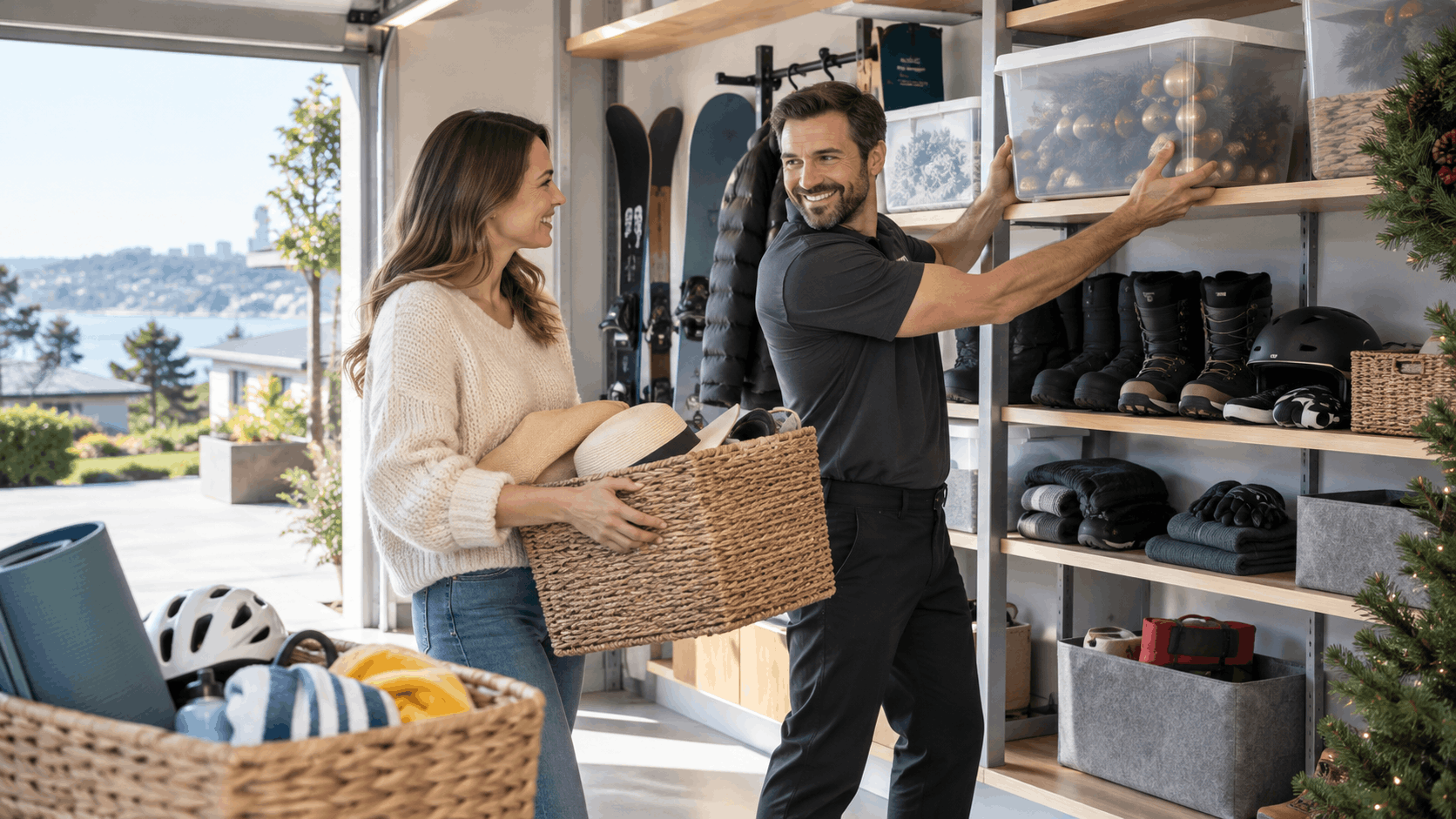
Wall systems add vertical storage at eye level and below. Pegboards, hooks, and rails hold skis, sleds, and gear bags along a wall instead of on the floor. This clears the ground so the garage actually functions as a garage.
Combining overhead racks with wall systems can double a garage's usable capacity. Bins go up top, gear hangs on the walls, and the middle stays open. For families who ski and decorate, this setup handles both seasons at home.
Under-Bed and Closet-Top Bins
Small apartments near the beach rarely have a garage, so the storage has to hide inside the home. Under-bed storage is the most overlooked spot in any bedroom. Flat, low-profile bins slide under most bed frames and hold jackets, gloves, and folded gear.
Look for under-bed bins with wheels and a lid. They roll out easily and keep dust off the contents. A single bed can hide two or three bins of seasonal items that would otherwise clog a closet.
The top shelf of a closet is another spot people ignore. Stackable bins sized to fit that shelf turn wasted height into storage. Put the lightest, least-used items up there so reaching them is not a chore.
Uniform bins stack better and use space more fully than random boxes. Matching containers also make a closet look tidy instead of chaotic. In a tight Santa Monica apartment, that order matters as much as the space it saves.
Deciding What Stays Home and What Goes Off-Site
Not everything deserves prime real estate in a small home. The simplest rule is to sort items by how often you actually use them. Weekly items stay handy, seasonal items can move to the edges or off-site.
Snow gear and holiday decor are textbook off-site candidates. You touch them a few months a year at most. Keeping them at home all year means paying for that space in comfort and clutter.
Walk through your gear and split it into three piles: use often, use seasonally, and rarely touch. The rarely-touched pile is your first target for off-site storage or donation. This kind of decluttering makes the whole swap easier every year.
Once you know your seasonal volume, an off-site unit becomes a clean solution. Our long-term storage options hold gear and decor safely so your home stays livable. You free up closets without throwing anything away.
When to Rent an Off-Site Storage Unit
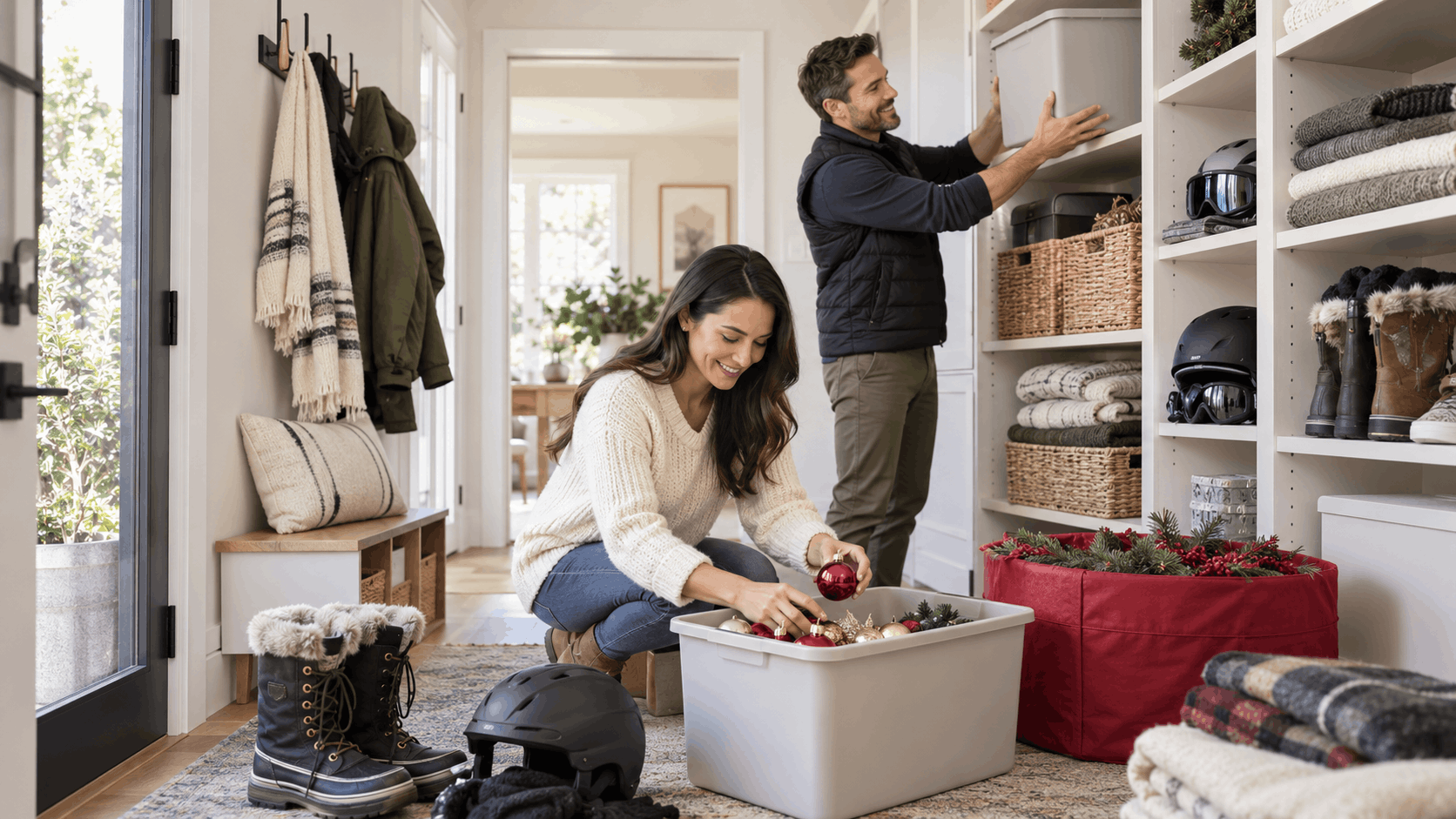
There is a point where a Westside home simply runs out of room. When the garage is jammed and the closets will not close, an off-site unit stops being a luxury and becomes the practical fix. Storage unit rental is common here for exactly this reason.
Off-site storage works especially well for seasonal items. You do not need daily access, so a nearby Los Angeles storage unit handles gear and decor without cluttering your living space.
Signs Your Home Has Run Out of Room
The clearest signal is a cluttered garage you can no longer park in. When your car lives on the street because gear and boxes fill the garage, the home has hit its limit. That is the moment most families start looking at outside storage.
Closets that will not close are another obvious sign. If you have to shove the door and lean on it, you have more stuff than space. Stacking bins in hallways or bedroom corners points to the same storage need.
Watch for items migrating into living areas too. When holiday bins sit in the dining room in July, or ski bags block a bedroom in summer, the house is over capacity. Seasonal gear should not be underfoot in the off-season.
If any of this sounds familiar, an off-site unit is worth pricing out. It moves the rarely-used items out so your home breathes again. Most people are surprised how much space they get back.
Choosing the Right Unit Size for Seasonal Items
You do not need a huge unit for seasonal storage. A 5x5 unit, roughly the size of a large closet, holds a solid amount of holiday decor and a set of ski gear. That is often enough for a couple or a small family.
A 5x10 unit, about the size of a walk-in closet, adds room for a full family's gear, multiple tree bags, and extra bins. This is the sweet spot for many Westside households. It handles both seasons without wasted space.
Storage cost tracks unit size closely, so right-sizing matters. Renting a 10x10 for a few bins wastes money every month. Measure your actual pile of items before you pick a unit.
If you are unsure, our team can look at your gear and decor and suggest a size. We would rather help you rent the right unit than oversell you on space you will not fill. That honest sizing keeps your bill fair.
Climate Considerations for Coastal Westside Homes
Homes near the coast deal with salt air and steady humidity year-round. That moisture is rough on metal ski edges, boot buckles, and tire chains. It can also creep into fabric and leave a musty smell in jackets and decor.
Climate-controlled storage holds steady temperature and lower humidity. For gear with metal parts or delicate fabrics, that stable environment prevents rust and mildew. Coastal humidity is exactly the problem these units are built to solve.
The Environmental Protection Agency notes that keeping indoor humidity in check helps prevent mold growth on stored goods. That guidance applies to a storage unit just as much as a home. Controlled conditions protect the things you paid good money for.
For anyone near Venice, Marina del Rey, or the Santa Monica beachfront, this matters more than it does inland. If your gear and decor include anything with metal or down insulation, controlled storage is worth the small premium. It pays off the first time your boots come out rust-free.
How Popeye Moving & Storage Co. Handles Seasonal Storage in LA
Our team handles the whole seasonal cycle for Westside families. We can pick up gear and decor from your home, store it safely, and bring it back when the season turns. That saves you from hauling bulky items yourself.
Popeye Moving & Storage covers the Westside from Venice to Brentwood and beyond. We know the narrow driveways, the tight parking, and the walk-up condos in these neighborhoods. That local knowledge makes pickup and return smooth.
Our storage options range from short-term to vaulted storage for items that need extra protection. You choose what fits your gear and your budget. We keep everything organized so your return delivery is quick.
The goal is simple: your home stays clear, and your gear stays ready. When the mountains call or the holidays arrive, we bring your items back on schedule. It is Los Angeles storage service built around how Westside families actually live.
Need Help in Los Angeles?
Popeye Moving & Storage serves Los Angeles and all of Los Angeles County.
Getting Gear and Decor Moved Without the Stress
Moving seasonal items to storage is easy to underestimate. Skis are long and awkward, and ornaments are fragile. Doing it wrong means scratched gear or a bin of broken glass. A little planning around storage transport keeps everything intact.
The two biggest challenges are getting bulky gear out of tight spots and protecting fragile boxes on the road. Packing help from people who do this daily makes both go faster.
Loading Bulky Gear From Tight Westside Driveways
Narrow driveways are a way of life on the Westside. Homes near Santa Monica and Mar Vista often have a single-car driveway or none at all. Loading a truck means working around parked cars and tight street parking.
The trick is to stage everything at the curb before the truck arrives. Group gear by size so the heavy, bulky pieces load first. That cuts down the time the truck sits in a spot where parking is scarce.
Long items like skis and sleds need care coming through doorways and down steps. Padding on the ends prevents dings on walls and on the gear itself. Two people moving a loaded gear bag beats one person forcing it alone.
Our crews plan the route from closet to truck before lifting a thing. In neighborhoods like Santa Monica, that planning around parking and access saves real time. We handle the loading so you do not have to wrestle it yourself.
Protecting Fragile Holiday Boxes in Transit
Holiday boxes take a beating on the road if they are not packed right. Ornaments shift, lids pop, and things break between the house and the unit. Fragile transport starts with solid boxes and good padding.
Fill empty space inside each bin so nothing rattles around. Crumpled paper or towels around fragile items absorbs the bumps of a drive across town. A full, snug box holds its shape better than a half-empty one.
Stacking order matters in the truck. Heavy bins go on the bottom, fragile ornament boxes ride on top. Never let a heavy box sit on a bin of glassware, no matter how tempting the space looks.
For truly delicate or heirloom pieces, our packing and crating team can build custom protection. Proper box protection means your decorations arrive at the unit exactly as they left. That is the whole point of moving them carefully.
Scheduling Around Winter and Holiday Deadlines
Timing the swap is half the battle. You want snow gear out before your first trip and holiday decor home before you start decorating. Missing those windows leads to the last-minute scramble everyone wants to avoid.
Plan your gear pickup for late spring, once ski season winds down. Schedule the return for late fall, ahead of the first storm on the mountain forecast. That way your gear is home and ready before you need it.
Holiday decor runs on the opposite calendar. Bring the bins home in late November, return them to storage in January. Booking those dates early beats the December rush when everyone wants the same slots.
Our team helps set a schedule around your ski and holiday plans. Seasonal timing works best when it is booked ahead, not the night before a trip. We hold your dates so the swap happens on your terms.
Keeping Costs Down on Seasonal Storage
Storage cost worries a lot of families, and it should not. Done right, seasonal storage is one of the cheaper ways to reclaim space in a pricey Westside home. A few habits keep budget storage truly affordable.
The savings come from sharing space, sizing correctly, and storing only what you actually use. Small choices add up to real seasonal savings over the year.
Sharing a Unit for Gear and Decorations
Snow gear and holiday decor are used at opposite ends of a small window, so they can share one unit. When ski gear is in storage over summer, the decor sits right beside it. When decor comes out in December, gear is already home.
A shared unit means you pay for one space instead of two. That single monthly bill covers both seasons of stuff. For most families, one 5x10 unit handles the combined load with room to spare.
Organize the shared unit so each season's items stay grouped. Snow gear on one side, holiday bins on the other, with a clear aisle between. That cost saving does not have to mean a jumbled mess.
Sharing also cuts the number of pickup and return trips. One swap covers both seasons if you plan the timing well. Fewer trips means lower cost and less hassle for you.
Right-Sizing to Avoid Paying for Empty Space
Paying for empty space is the most common storage mistake. People guess big and rent a unit twice the size they need. Every empty cubic foot is money out the door each month.
Right-sizing starts with an honest inventory. Stack your bins and gear in your garage and measure the footprint. That real number tells you which unit size actually fits your life.
Vertical stacking inside the unit lets you rent smaller. Bins stack high, and gear hangs or leans along the walls. A well-packed 5x5 often holds what a poorly-packed 5x10 would.
The best storage value comes from matching the unit to your true volume. Our team is happy to eyeball your gear and steer you to the right size. We would rather earn a repeat customer than oversell one month.
Selling or Donating What You No Longer Use
The cheapest item to store is the one you get rid of. Before paying to store anything, sort out gear you have outgrown or never use. Old boots, kids' outgrown gear, and duplicate decor are easy to clear.
Decluttering before storage shrinks your unit size and your bill. Every item you release is one less thing paying rent in a unit. It also makes finding what you need far faster.
Local donation spots on the Westside make this easy. Organizations like Goodwill take gently used jackets, gear, and decor that others can enjoy. Someone gets warm gear, and you get back space and money.
Make this a yearly ritual during the swap. Each season, pull anything you did not touch and pass it on or sell it. A leaner pile keeps seasonal savings coming year after year.
Need Help in Los Angeles?
Popeye Moving & Storage serves Los Angeles and all of Los Angeles County.
Final Thoughts
The seasonal swap does not have to be a yearly fight with your closet. With a little prep, snow gear and holiday decor can each have a real home during their off-season. Clean and label your gear, pack decorations with care, and use every hidden storage spot in your home.
When a space-tight Westside home runs out of room, an off-site unit takes the pressure off without forcing you to part with anything. Right-size it, share it across seasons, and clear out what you no longer use to keep the cost low.
Our team at Popeye Moving & Storage helps Westside families from Venice to Brentwood handle the whole cycle, from pickup to storage to return. Reach out through our contact page or give us a call to set up a seasonal storage plan that fits your home and your schedule.
Frequently Asked Questions
How should skis and snowboards be stored during the off-season?
Clean the edges and bases to remove salt and grit, then dry everything fully to prevent rust. A light wax on the base keeps it from drying out. Store skis and boards in a dry, temperature-stable space, either standing upright or laid flat. Keep them off damp garage floors and away from direct sunlight so the materials hold up.
What size storage unit do I need for holiday decorations and ski gear?
A 5x5 unit, about the size of a large closet, fits a modest set of decorations plus one or two people's ski gear. For a full family with multiple gear sets, tree bags, and extra bins, a 5x10 unit gives more room without overpaying. Measure your stacked pile first so you rent the size that matches your real volume.
Do coastal Westside homes need climate-controlled storage?
Homes near the coast deal with salt air and steady humidity that can rust metal ski edges and cause mildew on fabric. Climate-controlled storage holds steady temperature and lower humidity, which protects gear with metal parts and delicate down insulation. If your items include anything that can rust or grow mold, the small extra cost is worth it near Venice, Marina del Rey, or Santa Monica.
How much does seasonal storage cost in Los Angeles?
Small units on the Westside generally start around the price of a 5x5 space and climb with size and climate control. A 5x5 or 5x10 usually covers combined seasonal gear and decor for most families. Sharing one unit across both seasons and right-sizing keeps the monthly bill low. Contact our team for a quote based on your actual gear and location.
Can Popeye Moving & Storage Co. pick up items from my home?
Yes. Our team offers pickup across the Westside, from Venice and Santa Monica to Culver City and Brentwood. We handle bulky gear and fragile decor, load it carefully around tight driveways and street parking, and store it safely. When the season turns, we bring your items back to your door on the schedule you set.
How do I keep holiday lights from tangling in storage?
Wrap each strand around a piece of stiff cardboard with a notch cut on each end to hold the plug and tail. Empty spools or cord reels work even better for longer runs. Coil each strand as you take it down rather than pulling it into a heap. Then group and label the light bins by indoor, tree, and outdoor use.
What is the best way to store an artificial Christmas tree?
Break the tree into its sections and gently compress the branches, then place it in a dedicated tree bag or a rolling tree storage container. A snug bag keeps dust and pests out over the off-season and makes the tree easier to carry. The rolling versions are ideal for tight closets since they slide instead of needing to be lifted.
How often can I access my stored seasonal items?
Access depends on the storage option you choose, and we set it up around how you use your gear. Many families only need access a few times a year, before ski trips and around the holidays. If you expect to grab items more often, let us know so we can arrange easy, timely access to your unit.
Should I store winter jackets in plastic bags?
Airtight plastic bags trap moisture, which can leave a musty smell and flatten the loft in down insulation. Breathable bins or fabric containers work better because they let a little air move. Always wash and fully dry jackets before storage so oils and stains do not attract pests. This keeps your winter apparel fresh and warm for the next trip.
When is the best time to swap gear in and out of storage?
Move snow gear into storage in late spring after ski season ends, and bring it home in late fall before the first mountain storm. Holiday decor runs the opposite way: home in late November, back to storage in January. Booking these swap dates early avoids the December rush and keeps your home clear during each off-season.
Frequently Asked Questions
- How should skis and snowboards be stored during the off-season?
- Clean the edges and bases to remove salt and grit, then dry everything fully to prevent rust. A light wax on the base keeps it from drying out. Store skis and boards in a dry, temperature-stable space, either standing upright or laid flat. Keep them off damp garage floors and away from direct sunlight so the materials hold up.
- What size storage unit do I need for holiday decorations and ski gear?
- A 5x5 unit, about the size of a large closet, fits a modest set of decorations plus one or two people's ski gear. For a full family with multiple gear sets, tree bags, and extra bins, a 5x10 unit gives more room without overpaying. Measure your stacked pile first so you rent the size that matches your real volume.
- Do coastal Westside homes need climate-controlled storage?
- Homes near the coast deal with salt air and steady humidity that can rust metal ski edges and cause mildew on fabric. Climate-controlled storage holds steady temperature and lower humidity, which protects gear with metal parts and delicate down insulation. If your items include anything that can rust or grow mold, the small extra cost is worth it near Venice, Marina del Rey, or Santa Monica.
- How much does seasonal storage cost in Los Angeles?
- Small units on the Westside generally start around the price of a 5x5 space and climb with size and climate control. A 5x5 or 5x10 usually covers combined seasonal gear and decor for most families. Sharing one unit across both seasons and right-sizing keeps the monthly bill low. Contact our team for a quote based on your actual gear and location.
- Can Popeye Moving & Storage Co. pick up items from my home?
- Yes. Our team offers pickup across the Westside, from Venice and Santa Monica to Culver City and Brentwood. We handle bulky gear and fragile decor, load it carefully around tight driveways and street parking, and store it safely. When the season turns, we bring your items back to your door on the schedule you set.
- How do I keep holiday lights from tangling in storage?
- Wrap each strand around a piece of stiff cardboard with a notch cut on each end to hold the plug and tail. Empty spools or cord reels work even better for longer runs. Coil each strand as you take it down rather than pulling it into a heap. Then group and label the light bins by indoor, tree, and outdoor use.
- What is the best way to store an artificial Christmas tree?
- Break the tree into its sections and gently compress the branches, then place it in a dedicated tree bag or a rolling tree storage container. A snug bag keeps dust and pests out over the off-season and makes the tree easier to carry. The rolling versions are ideal for tight closets since they slide instead of needing to be lifted.
- How often can I access my stored seasonal items?
- Access depends on the storage option you choose, and we set it up around how you use your gear. Many families only need access a few times a year, before ski trips and around the holidays. If you expect to grab items more often, let us know so we can arrange easy, timely access to your unit.
- Should I store winter jackets in plastic bags?
- Airtight plastic bags trap moisture, which can leave a musty smell and flatten the loft in down insulation. Breathable bins or fabric containers work better because they let a little air move. Always wash and fully dry jackets before storage so oils and stains do not attract pests. This keeps your winter apparel fresh and warm for the next trip.
- When is the best time to swap gear in and out of storage?
- Move snow gear into storage in late spring after ski season ends, and bring it home in late fall before the first mountain storm. Holiday decor runs the opposite way: home in late November, back to storage in January. Booking these swap dates early avoids the December rush and keeps your home clear during each off-season.
P
Popeye Moving & Storage Co. Team Team
Licensed moving and storage professionals serving Los Angeles and Los Angeles County.
Licensed in California · License #PUC: CAL T 189749 | DOT: 1472924 | MC: 498816C
Why trust Popeye Moving & Storage?
Founded in 1994, Popeye Moving & Storage is a licensed and insured moving and storage service serving Los Angeles and Los Angeles County. All content is reviewed by our licensed technicians.

Need Help in Los Angeles?
Popeye Moving & Storage serves Los Angeles and all of Los Angeles County.
Related Articles

Tips & Advice
Storage for Playa Vista Apartment Dwellers: Seasonal Gear, Bikes, and the Second-Bedroom Problem
A local guide for Playa Vista renters on storing seasonal gear, bikes, and clearing out the second bedroom with smart off-site storage options.
Tips & Advice
Storage for Santa Monica and Brentwood Households: Where Westside Furniture Actually Goes Between Homes
A local guide to furniture storage for Santa Monica and Brentwood households, covering storage types, costs, coastal climate risks, and how Westside families bridge the gap between homes.
Seasonal
Swapping Storage Contents: Rotating Seasonal Items In and Out of Your Vaults
Learn how rotating seasonal items in and out of a storage vault keeps your LA home clutter-free year-round, with packing tips, swap schedules, and local moving help.