Tips & Advice
Newlywed Household Mergers: Storing the Duplicate Everything Until Decisions Settle

Key Takeaways
- Merging two furnished homes leaves couples with double of nearly everything, from sofas and dining tables to toasters and dish sets.
- Storing duplicates and sentimental items buys time to make calm decisions instead of rushing sales that lead to regret.
- Use a four-pile sort - keep, store, sell, donate - and default to storing any piece that sparks a real disagreement.
- Match unit size to your pile: 5x10 for apartment doubles, 10x10 or 10x15 for a full second household, 10x20 for merging two houses.
- Climate control matters for wood, electronics, and photos during hot valley summers in areas like Van Nuys and Woodland Hills.
- Popeye Moving offers combined two-home pickups, protective wrapping, and flexible month-to-month storage across LA.
- Live in the new home a few weeks before choosing which furniture stays, then sell or donate the extras.
- Storing less by sorting and disassembling furniture up front means a smaller, cheaper unit and a lower monthly bill.
In This Article
Two people fall in love, get married, and then stand in the middle of a living room staring at two couches, two toasters, and two beds. It happens in apartments across Los Angeles every weekend. One partner brings a full kitchen from a Silver Lake one-bedroom, the other hauls in a bedroom set from a Culver City duplex, and suddenly the new place looks like a furniture showroom that got hit by a small tornado.
The instinct is to make fast calls. Sell one couch, toss the extra blender, argue over whose dining table stays. But quick decisions during a move often lead to regret a few months later, when someone realizes they gave away the one chair they actually loved.
Storing the duplicate everything until decisions settle buys a couple time to think clearly. It removes the pressure to fight during one of the happiest and most chaotic stretches of a new marriage. Below, our team walks through how to sort, store, and slowly decide what stays - and how a local storage plan makes the whole merge easier.

Why Two Households Create So Much Duplicate Stuff?
When two adults who each ran their own home decide to combine everything, the math gets ugly fast. A household merger means two of nearly every category of item, from beds to bottle openers. Most couples underestimate just how much doubles up until the boxes are stacked to the ceiling.
Holding items in storage beats rushing to sell or toss because the new home has not shown its true shape yet. You do not know how much closet space you have, whether both dressers fit, or if that second sofa works in the den. Storage gives you room to decide instead of guessing under pressure.
The Furniture Pile-Up Nobody Warns You About
The big pieces are where the duplicate furniture problem gets real. Two sofas, two bed frames, two mattresses, two dining tables, and often two coffee tables show up on day one. A couple merging two furnished one-bedrooms can easily end up with a dozen large furniture items competing for the same floor space.
Then come the dressers. Each person usually has one or two, so a merged bedroom might have four dressers and two nightstands vying for wall space. Add a pair of bookshelves, a couple of desks, and maybe two TV stands, and the room fills up before anyone unpacks a single box.
Dining tables cause the biggest standoffs. Both may be nice, but a small dining nook near Echo Park only fits one. Rather than sell the loser on the spot, storing both lets the couple see which one the room actually wants once the dust clears.
We see this every week during residential moves. The couches almost never both fit, but couples rarely know which to keep until they live in the space. That is exactly why a short storage stay makes sense instead of a hasty sale.
Kitchen and Small Appliance Overload
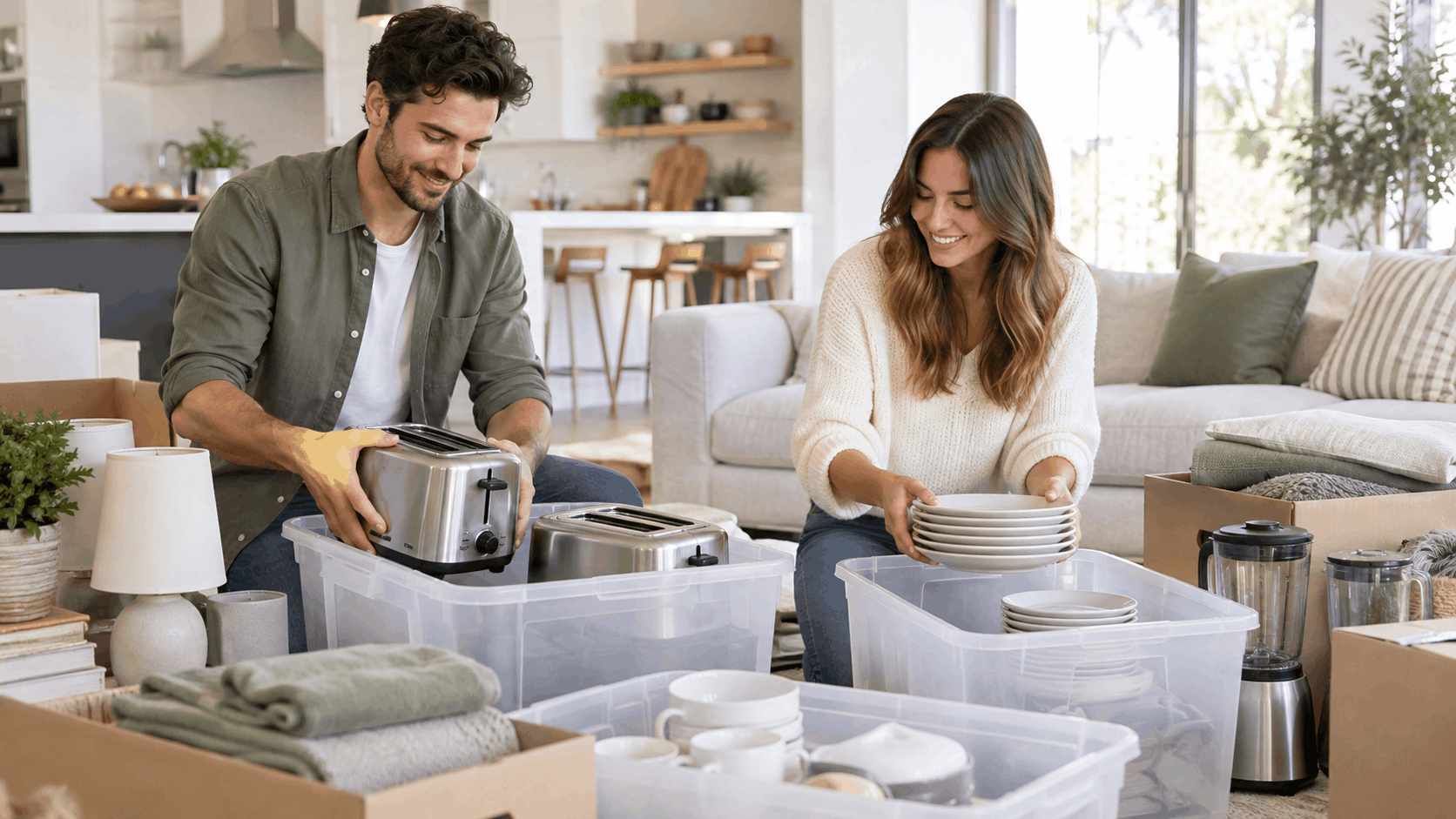
The kitchen is where duplicates multiply the fastest. Two toasters, two coffee makers, two blenders, two microwaves, and two full sets of pots and pans is the norm. None of it is huge on its own, but stacked together it swallows every cabinet in a tight LA apartment.
Small appliances are sneaky. A couple might not realize they own two air fryers, two rice cookers, and three sets of measuring cups until they line them up on the counter. In a Koreatown galley kitchen with barely any storage, there is simply no room for the extras.
Then there are the dish sets. Two complete sets of plates, bowls, mugs, and glasses often means service for sixteen when a couple needs service for eight. The overflow has to go somewhere, and cramming it into an already packed kitchen just creates daily frustration.
Boxing up the kitchen duplicates and storing them keeps the counters clear while the couple figures out which coffee maker they actually reach for each morning. There is no rush to give away a nice blender that might turn out to be the better one.
Sentimental Items Both People Want to Keep
Not every duplicate is a plain appliance. Heirlooms, framed art, wedding gifts, and family furniture carry real emotional weight. A grandmother's dresser or a father's old desk is not something a new spouse can casually ask their partner to sell.
These sentimental items are where early marriage arguments start. One person loves a bold painting, the other cannot picture it on the wall. Forcing a decision in week one can turn a small disagreement into a lasting sore spot.
Storing the heirlooms and art removes that pressure entirely. Both pieces stay safe and available, and nobody has to feel like they lost a piece of their history to make room. The couple can revisit the choice later with cooler heads.
Our team handles a lot of delicate, meaningful pieces through our specialty moving service. Wrapping and storing a fragile heirloom the right way means it survives the wait until the couple decides where it belongs.
Why Waiting to Decide Saves Money and Regret
Fast decisions during a move are almost always emotional, not practical. Under the stress of a moving day, people dump good furniture just to make the truck fit. Weeks later they are shopping to replace the exact thing they gave away.
Delayed decisions cost less in the long run. Replacing a solid wood dresser or a quality sofa runs hundreds of dollars, while a month or two of storage costs a fraction of that. The math favors patience almost every time.
Storage gives breathing room during a stretch that already has enough moving parts. Instead of arguing over what to keep while carrying boxes, the couple sets the extras aside and returns to the question when life is calm. That single change prevents a lot of regret.
We have had couples thank us months later for talking them out of a rushed yard sale. The pieces they almost dumped turned out to be the keepers once they lived in the new place.
Get Your Free Quote
Tell us about your move and we'll get back to you fast.
Sorting Belongings Before Anything Goes Into Storage
Storage works best when a couple stores what matters and lets go of true junk. Sorting belongings before loading the truck keeps the unit smaller and the bill lower. A simple system helps two people work through a mountain of stuff without turning it into a fight.
The goal of storage prep is clarity. Every item lands in one of a few clear piles so nothing goes into the unit by accident. Declutter first, and the whole merge gets easier and cheaper.
The Four-Pile Method for Newlyweds
The four-pile method keeps things simple: keep, store, sell, and donate. Keep is for daily-use items that go straight to the new home. Store is for duplicates and undecided pieces that need more time.
Sell covers items in good shape that clearly have no place, like a third microwave or an extra desk. Donate is for worn or dated items that are not worth the effort of selling. Working room by room keeps the piles manageable instead of overwhelming.
The trick to avoiding fights is to declutter one category at a time, not one partner's stuff at a time. Sort all the kitchen gear together, then all the bedroom furniture, so it never feels like one person is being asked to give up more. Neutral ground keeps the peace.
When a piece sparks a real debate, it goes in the store pile by default. That single rule ends most arguments on the spot, because nothing gets lost - it just waits.
Deciding What to Store Versus What to Use Now
Daily use items are the things a couple touches every day: the coffee maker they both like, the bed they will sleep in, the couch they will actually sit on. Those go to the new home first. Everything else can wait in storage.
A good way to choose is to set up a bare-bones shared home first. Pick one of each thing - one sofa, one table, one set of pots - and live with it for a few weeks. The gaps and pain points show up quickly.
Maybe the chosen table is too small for the dinners you host, or the kept couch feels wrong in the living room. Because the alternates sit safely in storage, swapping them in is easy. This test-drive approach beats guessing on moving day.
Our storage solutions make this back-and-forth simple. Couples can hold the extras nearby and pull pieces out as their shared home setup takes shape.
Handling Disagreements Without Losing the Furniture
Both partners loving different couches is one of the most common merge standoffs we see. One favors a big sectional, the other a sleek mid-century piece. There is rarely a clear winner in the abstract.
The compromise is not to pick right away. Store both couches and let the new place cast the deciding vote. Once furniture is arranged, one usually fits the room and the light far better than the other.
This approach turns a values clash into a practical question. Instead of "whose taste wins," it becomes "which piece works here." That shift takes the emotion out of furniture decisions and makes the choice feel fair.
The same logic works for dining tables, dressers, and rugs. When both partners feel strongly, storing both keeps the peace and lets the home settle the matter a few weeks down the road.
Making an Inventory List Before Loading Boxes
An inventory list is the thing couples skip and later regret. Before boxes go in the truck, photograph each item and write it down. A phone camera and a simple note app are enough to start.
A basic spreadsheet works even better for storage tracking. List each box or piece, a short description, and which room it came from. Number the boxes and match the numbers to the spreadsheet so you always know what is inside.
The payoff comes months later when you need the winter dishes or a specific lamp. Instead of digging through the whole unit, you check the list and grab the right box. It turns a scavenger hunt into a two-minute trip.
The list also protects against forgetting. Couples routinely lose track of what they stored, then buy a duplicate of something already sitting in the unit. A clear inventory prevents that waste.

Need Help in Los Angeles?
Popeye Moving & Storage serves Los Angeles and all of Los Angeles County.
Choosing the Right Storage Unit Size in Los Angeles
Matching the storage unit size to your pile of duplicates keeps the cost right. Too big and you pay for empty air. Too small and you are stacking boxes in the hallway again.
Los Angeles storage comes in a handful of standard sizes. Here is a quick guide to what each one holds so couples can plan before they book.
| Unit Size | Roughly Fits | Good For |
|---|---|---|
| 5x10 | Mattress, small sofa, 10-15 boxes | Apartment doubles |
| 10x10 | One-bedroom's worth of furniture | A full second household |
| 10x15 | Large one-bedroom or small two-bedroom | Bigger apartment merges |
| 10x20 | Full house of furniture and boxes | Merging two houses |
5x10 Units for Small Apartment Doubles
A 5x10 storage unit is the size of a small bedroom. It holds a mattress, a small sofa, a dresser, and a stack of 10 to 15 boxes. For couples who each had a compact apartment, this small unit often covers the duplicates.
This size fits well for pairs in Koreatown or Echo Park who are not dealing with much oversized furniture. The extra toaster, the second dish set, and one spare couch slide right in. It is the most budget-friendly option for a light merge.
The limit shows up fast if you have big pieces. A sectional or a king mattress plus a full bedroom set will overflow a 5x10. When in doubt, our team can eyeball your pile and tell you if this size holds up.
For a modest apartment merge, a 5x10 keeps the monthly cost low while still clearing the clutter. It is enough room to wait out the decision without paying for space you do not need.
10x10 and 10x15 for a Full Second Household
A 10x10 storage unit holds roughly an entire one-bedroom apartment's worth of goods. That is a sofa, a bed, a dining set, a dresser, and a good stack of boxes. For most couples merging two apartments, this medium unit is the sweet spot.
The 10x15 steps up to hold a large one-bedroom or a small two-bedroom. If one partner had a roomy place packed with duplicate furniture and appliances, the extra footage matters. It leaves room to store without cramming.
These mid-size units handle the classic merge where both people had real furniture, not just a futon and a milk crate. Two full households of extras usually land in this range. It is the size we recommend most often for newlyweds.
Couples in areas like Silver Lake, Los Feliz, or the Miracle Mile tend to fall here. Our team can help match the pile to a Los Angeles unit that fits without waste.
10x20 for Couples Merging Two Houses
A 10x20 storage unit is the size of a one-car garage. It swallows a full house of furniture, appliances, and boxes with room to spare. Couples merging two actual homes, not apartments, usually need this large unit.
Think of a pair in Sherman Oaks or Mar Vista who each owned a house with a garage full of tools, patio sets, and holiday decor. Two of those adds up to a mountain. A 10x20 gives it a home while they sort things out.
This size also suits couples with big-ticket duplicates like two sectionals, two dining sets, and two full bedroom suites. It holds the overflow without forcing rushed decisions on any single piece. That breathing room is the whole point.
When the pile is this big, our crew often runs a combined move to load it all in one coordinated day. Fewer trips means a lower bill and less chaos during the merge.
Climate-Controlled Options for the LA Heat
Los Angeles summers are mild near the coast but brutal in the valleys. Climate-controlled storage matters most for wood furniture, electronics, and photos when temps climb in Van Nuys or Woodland Hills. Heat and swings warp wood and cook sensitive gear.
Solid wood tables and dressers can crack or split when a unit bakes all afternoon. Electronics like TVs and speakers do not love extreme heat either. Old photos and important papers curl and fade in the same conditions.
If your duplicates are mostly metal shelving and plastic bins, a standard unit is usually fine. But heirloom wood, leather couches, and electronics do better with climate control during valley summers. The small extra cost protects pieces worth far more.
The local climate varies a lot across the region, so the right call depends on where your unit sits and what you are storing. Our team can advise based on your specific items.
How Popeye Moving & Storage Co. Handles Newlywed Merges
Merging two homes across LA takes planning, and our local team does this all the time. From two-home pickups to safe packing and flexible storage, we handle the whole merge. Here is how the process works.
Popeye Moving offers storage services built for couples who need time to decide. We move and store duplicate belongings across Los Angeles so nothing gets rushed or lost.
- Two-home pickup in one trip. We collect from both partners' places and route everything in a single coordinated day.
- Professional packing and wrapping. Furniture gets blanket-wrapped and mattresses get covered before anything moves.
- Wide neighborhood coverage. From Silver Lake to the Westside, our routes reach most of the city.
- Month-to-month storage. No long lock-in while the couple figures out what stays.
Combining Two Moves Into One Coordinated Day
The messiest part of a merge is that the stuff starts in two different places. Our team runs a combined move that picks up from both homes on the same day. One crew, one truck, one plan.
We map the route ahead of time so the coordinated pickup flows in order. The truck hits the first home, then the second, then splits the load between the new place and the storage unit. That routing keeps the day tight and the labor hours down.
Daily-use items head straight to the shared home while the duplicates go to storage. Nothing gets double-handled or dropped at the wrong address. The couple ends the day with the new place livable and the extras safely stored.
This single-day approach saves money compared to booking two separate moves. It also spares the couple the stress of coordinating movers on two different dates. One call, one day, done.
Packing and Wrapping Duplicate Furniture Safely
Items headed for months in storage need real protection, not a quick toss in the truck. Our packing service blanket-wraps every piece of duplicate furniture. Wrapped legs and corners survive stacking without scratches.
Mattresses go into covers so they stay clean and dry through the whole stay. Sofas get wrapped to keep dust and moisture off the fabric. Tables and dressers are padded so nothing rubs or dents during the wait.
Fragile pieces get extra care through our packing and crating options. Mirrors, glass tabletops, and art get boxed or crated so they do not chip in storage. Furniture wrapping done right means the pieces come out looking the way they went in.
Long-term storage is different from a quick move, and we pack for it. The goal is furniture that survives four or six months untouched and still looks great when it finally rolls into the new home.
Serving Neighborhoods From Silver Lake to the Westside
We know the local moving routes because we drive them daily. The 101 corridor, the 10 through the Westside, and the surface streets around Culver City are part of our regular map. That knowledge keeps merge days on schedule.
Our crews handle pickups from Silver Lake and Los Feliz over to Santa Monica and Culver City's Sunkist Park and beyond. We know which streets get tight and where parking a truck takes planning. That saves time on the actual move.
The Westside brings its own challenges with narrow apartment access and permit parking. We plan around it so the crew is not circling the block with a loaded truck. Local know-how turns a stressful day into a smooth one.
Whether a couple is combining places near Echo Park or moving pieces to a West Los Angeles apartment, we cover the ground. Wide coverage means one team handles the whole merge.
Flexible Storage Terms While Decisions Settle
The biggest worry couples have is getting locked into a long storage contract. Our month-to-month storage removes that fear. You keep the unit exactly as long as you need and no longer.
Some couples settle their decisions in a month, others take half a year. Flexible terms mean you are never paying for storage after you have made your calls. When you are ready to clear the unit, you just tell us.
This setup fits the merge process perfectly. Decisions about furniture cannot be rushed, and neither should the storage that supports them. Our long-term storage stays open-ended for couples who need more time.
No pressure, no penalty for keeping the unit an extra month. The whole point is to give newlyweds room to decide at their own pace.

Packing Duplicates the Right Way for Long-Term Storage
Packing for storage is different from packing for a quick hop across town. Items may sit for months, so they need to survive without a check-in. Good boxes, clear labels, and smart stacking make that possible.
Long-term storage rewards a little extra effort up front. Do it right and everything comes out clean, findable, and undamaged. Here is how our team approaches it.
Labeling So You Can Find Things Later
Labeling boxes is what separates a usable unit from a frustrating one. Number every box and tie the number to your inventory list. Then you can find any item without opening a dozen wrong boxes.
Color codes speed things up even more. Use one color of tape or marker per category - blue for kitchen, red for bedroom, green for keepsakes. A glance tells you which zone a box belongs to.
Write the number and category on more than one side of each box. When boxes are stacked, you cannot always see the top. Labels on the sides mean you can read them without unstacking the whole tower.
This storage organization pays off the first time you need one specific thing. Instead of a search party, you check the list, find box 14, and walk right to it. A few minutes of labeling saves hours later.
Protecting Wood, Electronics, and Glass
LA's humidity swings and dust are hard on stored goods. Wrapping furniture in moving blankets keeps wood safe from scratches and moisture. Bare wood left uncovered can dry out or pick up marks over months.
Protecting electronics takes a bit more thought. Wrap TVs and screens in blankets and store them upright, not flat under heavy boxes. Original boxes are ideal if you kept them, but padded wrapping works well too.
Glass and mirrors need firm protection. Pad them, box them, and mark them fragile so nobody stacks weight on top. Standing them on edge rather than laying them flat cuts the risk of cracks.
Dust is the quiet enemy in any unit. Covering upholstered pieces and electronics keeps a layer of grime from settling in over a long stay. A little wrapping now means less cleaning when the pieces come home.
Stacking a Unit So It Stays Accessible
A packed unit is useless if you cannot reach the back. Leave a walkway down the middle so you can get to any item without unloading everything. Stacking storage the smart way keeps the whole unit accessible.
Put the items you might need sooner near the front. Seasonal clothes, a specific lamp, or a kitchen gadget you are still deciding on should be easy to grab. Bury only the pieces you are sure you will not touch for months.
Heavy items go on the bottom, lighter boxes on top. That keeps towers stable and protects fragile things from being crushed. A collapsed stack in a dark unit is a bad surprise.
Think of the unit like a tiny room you visit occasionally, not a sealed vault. Planning for return trips makes those trips quick instead of a wrestling match with your own belongings.
Disassembling Beds and Tables to Save Space
Big furniture eats space when it stays assembled. Taking apart bed frames and removing table legs lets pieces lie flat and stack. Disassembly can shrink a bulky item down to a fraction of its footprint.
The key is not losing the hardware. Bag every bolt, screw, and bracket, then tape the bag to the piece it came from. A missing set of bolts can turn reassembly into a hardware-store trip and a headache.
Label the parts if a piece is complex. Numbering table legs or marking which rail goes where saves guesswork when you put it back together. Our crew does this routinely so nothing gets mixed up.
Flat, disassembled furniture also lets you fit a two-house merge into a smaller unit. That saves money every single month the unit is rented. Space saved is money saved.
Need Help in Los Angeles?
Popeye Moving & Storage serves Los Angeles and all of Los Angeles County.
Deciding What to Keep After the Dust Settles
Storage is the pause, not the answer. Weeks or months later, the couple makes the final calls on keep or sell. By then the new home has shown its true shape, and the choices are far clearer.
Final decisions go smoother when nobody is rushed. Living in the space first, then selling and donating the extras, leaves only the keepers. Here is how to work through it.
Living in the New Home Before You Choose
A trial period in the shared home reveals everything. After a few weeks, you know which couch you actually sit on and which table fits the dining nook. Guesswork on moving day gets replaced with real experience.
You learn how you use the space. Maybe you host dinners and need the bigger table, or maybe you eat on the couch and the small one is fine. The home teaches you what it wants.
Because the alternates wait in storage, testing is low-risk. If the kept sofa feels wrong, you swap in the stored one and see if it works better. That flexibility is the whole reason for storing both.
Give it a month at least before making calls. First impressions during a chaotic move-in are not reliable. Time in the space produces decisions you will not second-guess.
Selling the Extras Locally
Once the keepers are chosen, the duplicates can go. Selling furniture locally recovers some cash and clears the unit. Facebook Marketplace, OfferUp, and neighborhood buy-sell groups move furniture fast in LA.
A yard sale works for the smaller stuff. Extra dishes, small appliances, and decor sell well at a Saturday sale in most LA neighborhoods. Group the items and price them to move.
Quality pieces do better listed individually with good photos. A solid dining set or a nice dresser can fetch real money from a local buyer. The inventory photos you took at packing time make listings quick.
Local resale keeps the process simple since buyers pick items up. You are not shipping anything, just handing off from the unit or the curb. It turns extras into cash with little effort.
Donating What Nobody Needs
Some duplicates are not worth selling. Worn or dated pieces are better donated than dumped. Groups like Goodwill and other local charities take usable furniture and household goods.
Many donation centers offer pickup for larger items. That means the couch or dresser can leave straight from your storage unit without you renting a truck. Scheduling a haul-away saves a lot of hassle.
Donating furniture also comes with a possible tax deduction. Keep the receipt from the charity for your records. It is a small bonus for clearing out what you no longer need.
If a piece is truly broken, donation is not the answer, but for anything still usable it is a clean exit. Someone else gets a good couch and your unit gets emptier.
Moving the Keepers Out of Storage
Once the extras are sold or donated, only the keepers remain. The final delivery trip brings them from storage to the new home. This is the last leg of the merge.
Our team handles the storage move-out just like a small move. We load the kept pieces, drive them over, and place them where they go. The unit gets emptied and the couple closes it out.
Because you decided calmly, this delivery brings only pieces you are sure about. No second-guessing, no regret. The home fills up with the right furniture, chosen on your own timeline.
With month-to-month storage, you close the unit the day it is empty and stop paying. The merge that started with two of everything ends with one clean, settled home.
Budgeting for Storage During a Household Merge
Storage cost is easy to plan once you know the pieces. Monthly rates, move fees, and rental length all factor into the moving budget. Here are realistic numbers for the Los Angeles market.
The good news is that storing duplicates during a merge is usually a short-term expense. A few hundred dollars over a couple of months often prevents far pricier replacement purchases later.
Typical Monthly Storage Rates in LA
Storage rates in Los Angeles vary by size and location. A 5x10 unit often runs around $90 to $160 a month. A 10x10 typically lands between $180 and $300, and a 10x20 can run $300 to $450 or more.
Climate control adds to the monthly cost, often 20 to 50 percent depending on the facility. For heirloom wood and electronics, that upcharge is usually worth it during valley summers. For metal and plastic, a standard unit keeps the bill lower.
Location shifts the price too. Units closer to the Westside and coastal areas tend to cost more than those inland. Facility features and demand also move the numbers around.
These ranges give a starting point, but a quick call gets you an exact quote for your pile. Our team can size the unit and confirm the monthly rate up front.
Move-In and Move-Out Fees to Expect
Beyond rent, budget for getting items in and out. Moving fees cover the crew and truck for loading the unit and later unloading it. A combined move that fills the unit in one day keeps this labor cost efficient.
Labor is usually charged hourly with a crew of two or three movers. A typical apartment merge might run a few hours of loading on the front end. The move-out trip to the new home is often shorter.
Packing supplies and wrapping may add to the total if you want the crew to handle it. Blankets, mattress covers, and boxes protect your goods but factor into the budget. Many couples find the protection worth the cost for long stays.
Our local residential moving team can quote both the move-in and move-out so there are no surprises. Knowing both ends up front makes the whole merge easier to plan.
How Long Couples Usually Rent a Unit
Most couples keep a storage unit somewhere between one and six months during a merge. Some settle their decisions fast and clear the unit in four to six weeks. Others take a full season to be sure.
The storage timeframe depends on how quickly the new home reveals what fits. Couples who set up a bare-bones space and test it decide sooner. Those juggling busy jobs and wedding follow-ups often take longer.
Two to three months is the most common rental length we see. That gives enough time to live in the space, host a few gatherings, and know which pieces work. It rarely needs to drag past six months.
Month-to-month terms mean you only pay for the time you use. There is no penalty for wrapping up early or extending a bit. The unit flexes with your decision pace.
Saving Money by Storing Less
The cheapest storage is the storage you skip. Sorting hard before you load means a smaller, cheaper unit. Every duplicate you sell or donate up front is one you do not pay to store.
Aggressive decluttering can drop a couple from a 10x15 to a 10x10, saving real money each month. If the choice on a piece is obvious, handle it before the move rather than storing it out of habit. Store only what genuinely needs the pause.
Disassembling beds and tables also shrinks the space needed. Flat-packed furniture fits a smaller unit than bulky assembled pieces. That is another lever to save on storage.
The pattern is simple: fewer stored duplicates means a smaller unit and a lower bill. Sort well, store smart, and the whole merge costs less. Our team can help you decide what truly needs storing.
Need Help in Los Angeles?
Popeye Moving & Storage serves Los Angeles and all of Los Angeles County.
Final Thoughts
Merging two homes does not have to mean a fight over every couch and toaster. Storing the duplicate everything buys the time to decide calmly, once the new place shows what actually fits. That pause prevents rushed sales, saved regret, and a lot of early-marriage tension.
Sort first, store the undecided pieces, live in the space, then make your final calls. With the right unit size and a solid packing job, everything comes out clean and findable when the dust settles.
Popeye Moving & Storage Co. handles the whole merge across Los Angeles, from two-home pickups to flexible month-to-month storage. Contact our team for a consultation and let us make your household merger easier from the first box to the last delivery.

Frequently Asked Questions
What should newlyweds store instead of tossing right away?
Store the duplicates and any sentimental items until you settle into the shared home. That means extra sofas, second dining tables, spare appliances, and heirlooms both partners want to keep. Rushing to toss these during a move often leads to regret and costly replacements. Storing them removes the pressure to decide under stress and lets the new home reveal which pieces actually fit and work.
How much does storage cost for a household merge in Los Angeles?
Rates vary by size and location. A 5x10 unit runs roughly $90 to $160 a month, a 10x10 lands around $180 to $300, and a 10x20 can reach $300 to $450 or more. Climate control adds 20 to 50 percent. Coastal and Westside facilities cost more than inland ones. Add move-in and move-out labor to your budget. A quick call gets you an exact quote for your pile.
What size storage unit fits a full second apartment?
A 10x10 unit holds roughly an entire one-bedroom apartment's worth of furniture, including a sofa, bed, dining set, dresser, and boxes. If the apartment was larger or packed with duplicate furniture, step up to a 10x15. These medium units suit most couples merging two apartments. Our team can eyeball your pile and confirm the right size so you do not pay for empty space or run short.
Do stored items need climate control in LA?
It depends on what you store and where the unit sits. Coastal LA stays mild, but valley areas like Van Nuys and Woodland Hills get hot. Solid wood furniture, leather, electronics, and old photos do better with climate control during valley summers, since heat and humidity swings warp wood and damage sensitive gear. Metal shelving and plastic bins are usually fine in a standard unit.
How long do couples usually keep a storage unit?
Most couples rent for one to six months during a merge, with two to three months being the most common. Some settle their decisions in four to six weeks by setting up a bare-bones home and testing it. Others take a full season while juggling busy schedules. Month-to-month terms mean you only pay for the time you actually use, with no penalty for finishing early or extending.
Can Popeye Moving pick up from two different homes in one day?
Yes. Our combined move collects from both partners' homes on the same day with one crew and one truck. We map the route ahead of time, hit each home in order, then split the load between the new place and the storage unit. Daily-use items go to the shared home while duplicates head to storage. This single-day approach saves money and spares you from coordinating two separate move dates.
How do couples avoid arguing over which furniture to keep?
Store both pieces and let the new home decide. When both partners love different couches or tables, do not force a choice on moving day. Put both in storage, live in the space for a few weeks, and see which one fits the room and the light better. This turns a clash over taste into a simple practical question and takes the emotion out of the decision.
What is the best way to label boxes for storage?
Number every box and tie the number to a simple inventory list or spreadsheet. Add color codes by category, like blue for kitchen and red for bedroom, using colored tape or markers. Write the number and category on more than one side so you can read labels even when boxes are stacked. This lets you find any single item without digging through the whole unit later.
Can furniture be disassembled before storage?
Yes, and it saves a lot of space. Bed frames come apart and table legs unscrew, letting pieces lie flat and stack. Bag all the bolts, screws, and brackets, then tape the bag to the piece it belongs to so nothing gets lost. For complex items, label the parts. Our crew handles disassembly routinely, which can shrink a two-house merge into a smaller, cheaper unit.
What areas of Los Angeles does Popeye Moving serve?
We cover most of the city and surrounding areas, from Silver Lake and Los Feliz to Santa Monica, Culver City, and the greater Westside. Our crews know the 101 corridor, the 10 freeway, and the surface streets around each neighborhood. We also serve Burbank, Pasadena, Sherman Oaks, and coastal spots like Redondo Beach and Malibu. Reach out with your two addresses and we will confirm coverage and routing.
Frequently Asked Questions
- What should newlyweds store instead of tossing right away?
- Store the duplicates and any sentimental items until you settle into the shared home. That means extra sofas, second dining tables, spare appliances, and heirlooms both partners want to keep. Rushing to toss these during a move often leads to regret and costly replacements. Storing them removes the pressure to decide under stress and lets the new home reveal which pieces actually fit and work.
- How much does storage cost for a household merge in Los Angeles?
- Rates vary by size and location. A 5x10 unit runs roughly $90 to $160 a month, a 10x10 lands around $180 to $300, and a 10x20 can reach $300 to $450 or more. Climate control adds 20 to 50 percent. Coastal and Westside facilities cost more than inland ones. Add move-in and move-out labor to your budget. A quick call gets you an exact quote for your pile.
- What size storage unit fits a full second apartment?
- A 10x10 unit holds roughly an entire one-bedroom apartment's worth of furniture, including a sofa, bed, dining set, dresser, and boxes. If the apartment was larger or packed with duplicate furniture, step up to a 10x15. These medium units suit most couples merging two apartments. Our team can eyeball your pile and confirm the right size so you do not pay for empty space or run short.
- Do stored items need climate control in LA?
- It depends on what you store and where the unit sits. Coastal LA stays mild, but valley areas like Van Nuys and Woodland Hills get hot. Solid wood furniture, leather, electronics, and old photos do better with climate control during valley summers, since heat and humidity swings warp wood and damage sensitive gear. Metal shelving and plastic bins are usually fine in a standard unit.
- How long do couples usually keep a storage unit?
- Most couples rent for one to six months during a merge, with two to three months being the most common. Some settle their decisions in four to six weeks by setting up a bare-bones home and testing it. Others take a full season while juggling busy schedules. Month-to-month terms mean you only pay for the time you actually use, with no penalty for finishing early or extending.
- Can Popeye Moving pick up from two different homes in one day?
- Yes. Our combined move collects from both partners' homes on the same day with one crew and one truck. We map the route ahead of time, hit each home in order, then split the load between the new place and the storage unit. Daily-use items go to the shared home while duplicates head to storage. This single-day approach saves money and spares you from coordinating two separate move dates.
- How do couples avoid arguing over which furniture to keep?
- Store both pieces and let the new home decide. When both partners love different couches or tables, do not force a choice on moving day. Put both in storage, live in the space for a few weeks, and see which one fits the room and the light better. This turns a clash over taste into a simple practical question and takes the emotion out of the decision.
- What is the best way to label boxes for storage?
- Number every box and tie the number to a simple inventory list or spreadsheet. Add color codes by category, like blue for kitchen and red for bedroom, using colored tape or markers. Write the number and category on more than one side so you can read labels even when boxes are stacked. This lets you find any single item without digging through the whole unit later.
- Can furniture be disassembled before storage?
- Yes, and it saves a lot of space. Bed frames come apart and table legs unscrew, letting pieces lie flat and stack. Bag all the bolts, screws, and brackets, then tape the bag to the piece it belongs to so nothing gets lost. For complex items, label the parts. Our crew handles disassembly routinely, which can shrink a two-house merge into a smaller, cheaper unit.
- What areas of Los Angeles does Popeye Moving serve?
- We cover most of the city and surrounding areas, from Silver Lake and Los Feliz to Santa Monica, Culver City, and the greater Westside. Our crews know the 101 corridor, the 10 freeway, and the surface streets around each neighborhood. We also serve Burbank, Pasadena, Sherman Oaks, and coastal spots like Redondo Beach and Malibu. Reach out with your two addresses and we will confirm coverage and routing.
P
Popeye Moving & Storage Co. Team Team
Licensed moving and storage professionals serving Los Angeles and Los Angeles County.
Licensed in California · License #PUC: CAL T 189749 | DOT: 1472924 | MC: 498816C
Why trust Popeye Moving & Storage?
Founded in 1994, Popeye Moving & Storage is a licensed and insured moving and storage service serving Los Angeles and Los Angeles County. All content is reviewed by our licensed technicians.

Need Help in Los Angeles?
Popeye Moving & Storage serves Los Angeles and all of Los Angeles County.
Related Articles
Tips & Advice
Staging Storage for LA Home Sellers: Clearing Rooms Fast and Getting Everything Back After Close
How LA home sellers use staging storage to clear rooms fast before an open house, keep belongings safe during the sale, and get everything back after close.

Tips & Advice
Storage During a Divorce or Household Split: Neutral-Ground Storage While Decisions Get Made
Neutral-ground storage gives Los Angeles couples a fair, safe place to keep shared belongings during a divorce or household split. Learn setups, access rules, costs, and legal tips.
Tips & Advice
Storage During Probate: Holding a Parent's Household Intact While the Family Decides
How storage during probate helps Los Angeles families hold a late parent's household intact, protect belongings, and decide together without pressure from the court clock.