How-To Guides
Separating Households Fast: Splitting One LA Home Into Two With Minimal Friction
Key Takeaways
- Plan the split before packing: set two move-out dates on one calendar, build a written inventory, and color-code labels for two addresses.
- Use the take-turns method and a signed division list to divide shared furniture and belongings fairly and fast.
- One truck with two stops (a split load) costs far less than booking two separate moves across LA.
- Time moves around LA traffic on the 101, 405, 10, and 110, plus parking permits and building elevator reservations.
- Short-term storage bridges the gap when one new place is not ready on moving day.
- Set up utilities early through LADWP and SoCalGas, file USPS change of address, and update IDs within days of the move.
- Book movers two to four weeks ahead, especially for month-end and summer dates, to lock in a crew and a better rate.
- A neutral, experienced crew keeps conflict low and the day moving during a stressful household separation.
In This Article
Two people share a home near Echo Park. The lease is ending, the relationship is changing, and now one house has to become two. Furniture that was bought together, kitchen gear that piled up over years, and a moving clock ticking faster than anyone wants - that is the reality of separating households in Los Angeles.
Our team at Popeye Moving & Storage Co. has run hundreds of these moves across the city. We have loaded a single truck in Silver Lake and dropped half the boxes in Highland Park and the other half out in the Valley on the same afternoon. It takes planning, clear labels, and a crew that stays neutral while two people sort out who gets what.

Why Splitting a Household in Los Angeles Feels So Hard?
Separating households is never just a moving job. It mixes emotion, money, and logistics into one tight window. On top of that, a Los Angeles move adds traffic, parking rules, and a housing crunch that most other cities do not deal with.
Dividing a home means two people making dozens of decisions at once, often while feeling raw. Here are the biggest reasons it feels harder in LA specifically:
- Rentals get snapped up fast, so timelines shrink
- Parking and permit rules change block by block
- Traffic on the 101 and 405 eats into every move window
- Shared items carry memories that slow every choice
The Emotional Load Behind Every Box
When two people split a home, every drawer holds a decision. A stressful move gets slower when each item comes with a memory or a small argument about who paid for it. We have watched a simple bookshelf turn into a twenty-minute standoff.
Emotions do not just slow packing. They cloud judgment about what to keep, what to toss, and what is even worth moving across town. People hold onto things they will never use again, then run out of time for the stuff that matters.
A neutral moving crew changes that dynamic. Our team does not have a stake in who gets the couch, so we keep the day moving. We handle the lifting and loading while the two people focus on decisions, not on doing everything themselves.
During a household separation, that outside calm is worth a lot. When tension rises, a crew that stays steady and professional keeps the whole day from stalling. We have seen a tense move-out finish two hours early just because nobody had to argue about logistics.
LA's Tight Housing Market Adds Pressure
Finding one rental in LA is hard. Finding two at the same time, on a short deadline, is a real challenge. Areas like Silver Lake, Highland Park, and much of the Valley see units listed and leased within days.
That tight LA housing market forces quick rental timelines. One person might land a place in Echo Park that is ready next week, while the other is still searching. Move dates rarely line up neatly.
Overlapping deadlines create a squeeze. Sometimes one person has to be out before the other has a new address locked in. That gap is where storage and careful scheduling save the day.
We plan around these realities every week. When a rental timeline shifts at the last minute, our crew adjusts the load order and holds boxes in short-term storage so nobody is stuck living out of a car. Flexibility matters more here than almost anywhere else.
Traffic, Parking, and Building Rules That Slow Things Down
A move that would take four hours in a small town can stretch all day in LA. Gridlock on the 101 and 405 turns a cross-town drop into a slog if the timing is wrong. We plan routes to dodge the worst of it.
Parking permits are their own headache. Many streets in Koreatown, West Hollywood, and Hollywood require reserved loading zones or you risk tickets and blocked trucks. The city building department and local council offices handle these permits, and they take lead time.
Apartment buildings add more rules. Elevator reservations, approved move hours, and certificate-of-insurance requirements are common in mid-rise and high-rise buildings. Miss a reservation window and the whole day can slip.
Our team knows these LA traffic and parking patterns from years on the road. We build the schedule around them so the truck arrives when the loading zone is open and the elevator is booked. That prep keeps an LA move from turning into a parking-ticket nightmare.
Get Your Free Quote
Tell us about your move and we'll get back to you fast.
Planning the Split Before Anyone Packs a Box
The best split moves start weeks before packing tape comes out. Good move planning keeps a two households job from turning into a chaotic scramble. A little structure up front saves hours and prevents fights later.
A solid moving checklist for a split covers dates, inventory, labels, and budget. Here is what belongs on that list from day one:
- Two move-out dates on one shared calendar
- A written inventory of shared and personal items
- Clear labels tying each box to one of two addresses
- A realistic budget for two moves happening close together
Setting Two Move-Out Dates and One Timeline
Two people rarely leave on the same day. One might move out Friday while the other stays through the weekend to clean and hand back keys. A shared calendar keeps both moves from colliding.
Start by writing down each person's hard deadlines. Lease end dates, new-place ready dates, and any overlap all go on one visible timeline. When both people can see the whole picture, planning gets easier.
Build backward from the tightest deadline. If one person must be out by the 30th, packing for that address needs to finish days earlier. The other move can follow once the first load is delivered.
We help clients map this out during the first call. Our crew slots each move-out date into a single plan so one truck can serve both stops without wasted trips. That coordination is where a two-way move gets fast instead of frantic.
Making a Shared Inventory List
Most arguments during a split come from unclear ownership. A written home inventory cuts those fights short. When everything is listed on paper, dividing belongings becomes a checklist instead of a debate.
Walk through the home room by room and write down every item of value. Note who brought it, who paid, or whether it was bought together. Photos next to the list help settle any confusion later.
Group items into three buckets: clearly one person's, clearly the other's, and shared. The shared pile is where a fair method matters most. Getting the list done early gives both people time to think, not react.
This inventory doubles as a moving document. Our crew uses it to confirm what goes on the truck and which address each item is headed to. A clear list means fewer questions on move day and a smoother handoff.
Deciding What Goes to Each New Address
Once the inventory is set, each item needs a destination. Color-coded labels make this simple. Assign one color per address and tag every box and piece of furniture before the truck arrives.
Room tags help too. A box marked "blue - kitchen" tells the crew exactly where it belongs and which home it goes to. No guessing, no digging through boxes at the wrong address.
Set up a labeling station near the front door. Keep colored tape, markers, and printed room tags in one spot so packing stays consistent. When two destinations are in play, consistency prevents the wrong box from landing in the wrong home.
Our packers follow this system on every split job. We match the colors to the addresses on the manifest so packing and labeling stay tight from the first box to the last. Clear labels are the difference between a two-hour unload and a four-hour mess.
Budgeting for Two Moves at Once
A split move usually costs more than a single move because there are two destinations and more coordination. Still, splitting one load across two stops is cheaper than booking two separate moves. Knowing the range up front avoids sticker shock.
For a typical two-bedroom home split across LA neighborhoods, expect a range of roughly 1,200 to 2,800 dollars depending on load size and stops. A larger home with heavy furniture and a Valley-to-Westside drive lands higher. Short distances and lighter loads land lower.
Extra costs to plan for include packing supplies, parking permits, and any short-term storage. If one place is not ready, a storage unit for a few weeks adds a modest monthly fee. Build a small cushion into the split move budget for surprises.
We give clear quotes before any work starts. Our team breaks down the moving cost by load, distance, and stops so both people know what they are splitting. No hidden fees, no surprise charges on move day.
Need Help in Los Angeles?
Popeye Moving & Storage serves Los Angeles and all of Los Angeles County.
Dividing Furniture and Belongings Without a Fight
Splitting shared property is where most household separations get tense. A fair split comes down to method, not mood. With a simple system, dividing furniture and everyday items goes faster and calmer.
The trick is deciding the rules before touching the stuff. Once both people agree on how to divide shared items, the choices get easier and the day moves along.
The Take-Turns Method for Shared Items
The cleanest way to split jointly owned things is to take turns. One person picks an item, then the other picks, back and forth until everything is claimed. It feels fair because both people have equal say.
Flip a coin to decide who goes first. That small step removes the argument over order. From there, the alternating picks keep things balanced without anyone feeling cheated.
For items nobody strongly wants, set them aside for the sell, donate, or store pile. Splitting belongings works best when people only fight over what they truly care about. Everything else moves quickly.
We have seen the take-turns method turn a dreaded task into a fast one. When both people know the rules, they stop second-guessing and start deciding. A whole living room of shared items can get divided in under an hour.
Handling Big Pieces Like Sofas and Beds
Large furniture is where cost meets emotion. A sofa, bed, or dining table takes crew time and truck space to move. Sometimes moving it makes sense, and sometimes replacing it is cheaper.
Ask two questions about each big piece: is it worth the cost to move, and does someone really want it? A worn couch might cost more to haul across town than to replace. A solid wood bed frame is usually worth keeping.
Measure doorways and elevators at both new addresses before deciding. A big sectional that fit the old Highland Park apartment might not clear the stairwell at the new place. Knowing that early avoids a wasted trip.
Our crew handles heavy furniture moving every day, including pianos and other bulky specialty pieces. We disassemble beds and large tables so they move safely and fit through tight LA doorways. If a piece is not worth moving, we can help route it to donation instead.
Splitting Kitchen, Tools, and Everyday Gear
The small stuff adds up fast. Kitchen items, tools, cleaning gear, and linens fill more boxes than people expect. A room-by-room approach keeps this from turning into a pile of confusion.
Start in the kitchen since it holds the most shared household goods. Split matching sets where it makes sense, and duplicate what both homes need, like a basic pot, a pan, and utensils. Nobody should move into a new place with no way to cook.
Move to tools, garage gear, and cleaning supplies next. These often get ignored until the last hour, then cause a scramble. Divide them along the way instead of leaving them for move day.
Keep a running box of shared basics each person will need on night one. A few plates, a towel, and a phone charger in a clearly marked box means both people can function the first night without unpacking everything. Small planning like this makes a split feel manageable.
What to Sell, Donate, or Store
A split is a good time to shed what nobody wants. Decluttering before the move means less to pack, less to haul, and lower cost. Items that go unclaimed after the take-turns round are prime candidates.
Los Angeles has plenty of donation spots. Goodwill Southern California and local Habitat for Humanity ReStore locations take furniture and household goods. Many offer pickup for larger pieces, which saves a trip.
Storage makes sense when an item matters but there is no room yet. If one person is between places or downsizing, a unit holds furniture until the next home is ready. It beats forcing a bad fit into a small apartment.
We can route unwanted items to donation and move the keepers into secure storage during the same job. That way the split move handles keep, donate, and store in one pass. Less clutter means a faster, cheaper day.
How Our Los Angeles Team Handles Two-Destination Moves
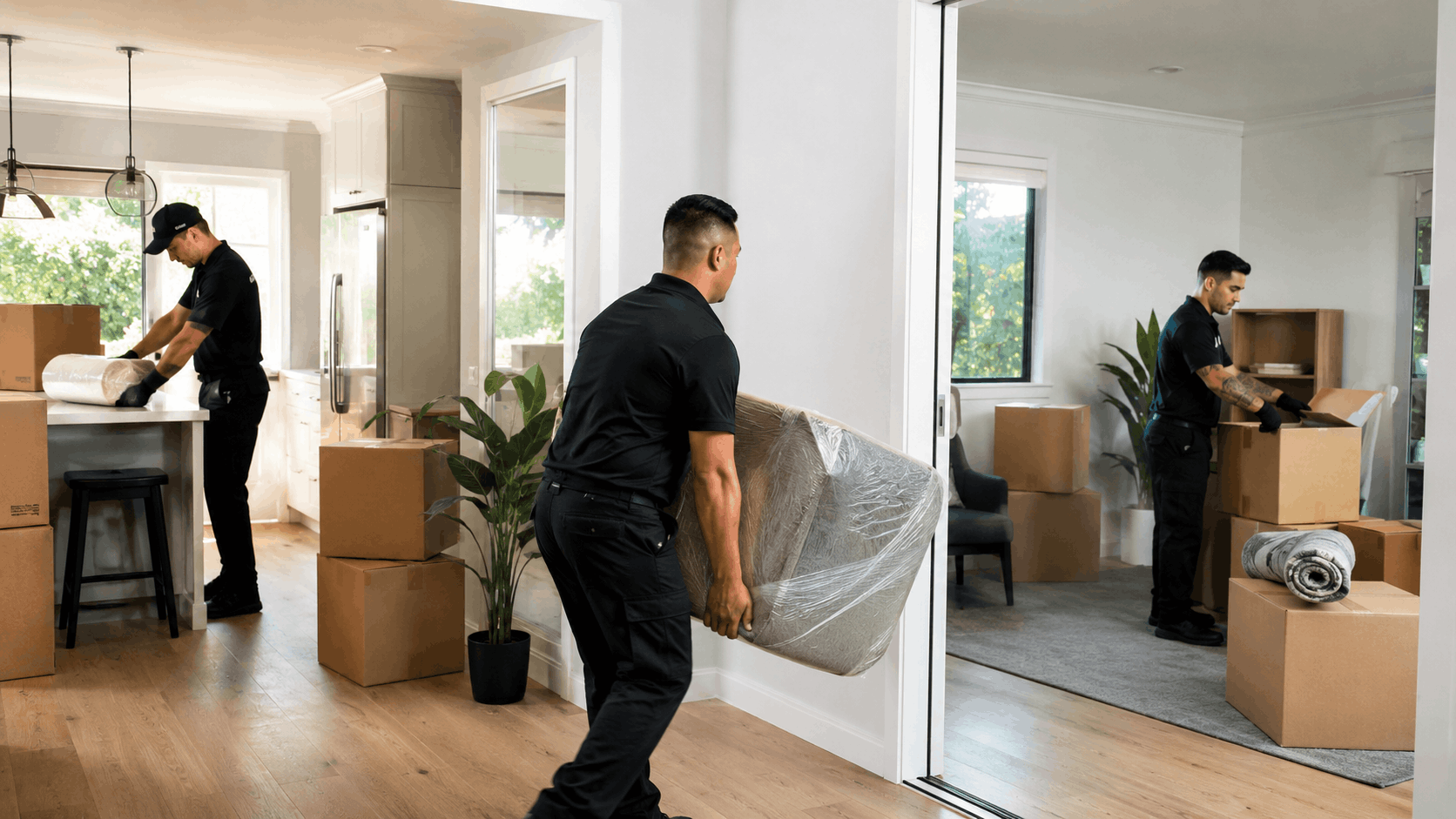
A two-destination move is our specialty on household splits. Instead of booking two separate jobs, our LA movers run one crew and one truck to two addresses. It saves money and cuts the total time in half compared to back-to-back single moves.
The system works because we plan the load and the route around both stops. Here is how our moving service handles the split from truck to doorstep.
One Truck, Two Stops
A split load means one truck carries both households' items, organized by destination. We load the second stop's boxes first, deep in the truck, and the first stop's items last so they come off first. That order keeps each unload clean.
Running one truck two stops beats two separate trucks on cost. There is one crew, one fuel bill, and one dispatch fee instead of two. For most split moves across LA, this is the cheapest way to get both people settled.
It also saves time. Rather than a crew driving back to the warehouse and starting over, they roll from the first address straight to the second. A cross-town split that could take two days often wraps in one.
We have run this setup from Santa Monica to Pasadena and everywhere between. The local residential moving crew keeps each household's load walled off in the truck so nothing gets mixed. Clear separation is what makes the split load work.
Mapping Routes Across LA Neighborhoods
Route planning makes or breaks a two-stop move. A drive from Echo Park to Santa Monica at the wrong hour can double the travel time. Our dispatchers map the order of stops to beat the worst traffic.
We think about which address to serve first based on distance and congestion. Hitting a Westside drop before the afternoon crush on the 10 saves an hour. Ending in Pasadena after the morning rush on the 110 avoids gridlock.
Local knowledge matters here. We know which surface streets move faster than the freeway at certain hours and where trucks get stuck. That moving logistics experience comes from years of driving these exact routes.
Every split job gets a custom route plan. Whether the stops are in Culver City and Highland Park or Santa Monica and Burbank, we sequence them to keep the truck moving. Smart routing is how a two-destination move stays fast in a slow-traffic city.
Packing and Labeling for Two Homes
Packing for a split needs a tight system so nothing lands at the wrong address. We use the color-coded labels set during planning and match them to the manifest. Every box has a color and a room tag before it hits the truck.
Our packers keep each household's boxes staged separately in the home. That way loading follows a clear order and the crew never guesses which box goes where. The labels do the talking.
Fragile and shared keepsakes get extra care. We wrap and crate breakables and note them on the list so both people know where their valuables are. Nothing gets lost in the shuffle of a two-home move.
If clients want, our full-service packing team handles the whole job. We pack, label, and sort both households so the two people can focus on decisions, not boxes. A clean packing system is the backbone of a smooth split.
Short-Term Storage Between Moves
Sometimes one new place is not ready on move day. A lease might start a week late, or a repair might hold up move-in. Short-term storage bridges that gap so the move still happens on schedule.
We load the delayed household's items into secure storage and deliver later when the place is ready. The other household moves in on time. Nobody has to rush a bad decision because of a timing mismatch.
Storage also helps when one person is downsizing and needs to sort later. Items sit safe until there is time and space to deal with them. Access is easy when the schedule clears up.
Our vaulted storage keeps furniture and boxes clean and protected between moves. For split households in LA's tight rental market, this flexibility is often what makes a fast separation possible. It removes the pressure of perfect timing.

Need Help in Los Angeles?
Popeye Moving & Storage serves Los Angeles and all of Los Angeles County.
Timing the Move Around LA Realities
Move timing in Los Angeles is its own skill. The same job can take four hours or eight depending on when the truck rolls and where it parks. Good Los Angeles logistics work with the city's rhythms instead of against them.
Traffic, permits, building rules, and even the weather all shape the moving schedule. Getting each one right keeps a split move fast.
Best Days and Hours to Move in the City
The best time to move in LA is off-peak. Starting early, around 7 or 8 in the morning, gets the truck loaded before traffic builds. Midweek days like Tuesday through Thursday beat the weekend crush.
Freeway timing matters most on cross-town split moves. The 10 and 110 clog hard during rush hours, so we aim to be between stops during the mid-morning or early-afternoon lull. Avoiding traffic on those routes can save an hour or more.
Month-end and the first few days are the busiest for movers because leases turn over. Those dates book up fast and cost more. If the split can happen mid-month, both people usually save money and get better crew availability.
We help clients pick dates and windows that dodge the worst congestion. Our dispatchers know when each freeway stalls and plan around it. Timing the move right is half the battle in a city this size.
Parking Permits and Street Rules by Neighborhood
Parking rules change block by block in LA. Dense areas like Koreatown and West Hollywood often need a reserved loading zone so the truck has a legal spot. Without one, the crew hauls boxes farther and risks tickets.
Temporary no-parking permits come from the city and take lead time to arrange. Some neighborhoods require several business days of notice. We flag which addresses need permits early so nothing holds up move day.
Street sweeping and permit-parking zones add another layer. A truck parked on the wrong side during sweeping hours gets ticketed fast. We check the local rules for each block before the move.
Our team handles the moving permit process where it is needed. We know the street parking rules across LA neighborhoods and set up loading zones so the truck sits close to the door. That access keeps the move quick.
Working Around Apartment and HOA Move Windows
Many LA buildings limit when moves can happen. High-rises downtown and HOA communities often set approved move hours, usually weekdays between 9 and 5. Miss the window and the move waits.
Elevator reservations are common in mid-rise and high-rise buildings. The building manager blocks off a service elevator for a set time, and moves have to fit that slot. We book these ahead so the crew is not stuck waiting.
HOA move rules can also require a certificate of insurance naming the building. We provide these documents so there is no last-minute scramble at the front desk. Buildings take these rules seriously.
We coordinate with property managers before move day on every high-rise or HOA job. Confirming elevator times and move windows up front keeps a split move on schedule. One missed reservation can push a whole day, so we lock it down early.
Seasonal Heat and Its Effect on Moving Day
Late-summer heat in the Valley is no joke. Neighborhoods like Van Nuys and Sherman Oaks can hit triple digits in August and September. That heat shapes how we plan a summer move.
We start hot-weather moves early to beat the afternoon peak. A 7 a.m. load means the heavy lifting finishes before the worst heat hits. Crew safety and item protection both improve with an early start.
Heat affects belongings too. Candles, electronics, and some furniture can suffer in a hot truck or a baking driveway. We protect sensitive items and keep the truck moving so nothing sits in the sun.
Hydration and pacing keep the crew sharp on hot days. A rushed, overheated move leads to mistakes and injuries. We plan the day so a summer split move stays safe and steady even when the Valley is scorching.
Setting Up Two Separate Households Quickly
The move is only half the job. Getting two new places livable fast is what makes a split feel finished. New household setup covers utilities, mail, furniture gaps, and helping the whole family settle.
Here is a quick reference for the setup tasks each new address needs:
| Task | Provider or Method | Timing |
|---|---|---|
| Electric and water | LADWP | Set up 1-2 weeks before |
| Gas | SoCalGas | Set up 1-2 weeks before |
| Internet | Spectrum, AT&T, or Frontier | Schedule install early |
| Mail forwarding | USPS change of address | File a few days before |
| ID and license | California DMV | Within 10 days of move |
Splitting Utilities and Accounts
Two homes mean two sets of utility accounts. In most of LA, that means a LADWP transfer or new setup for electric and water at each address. Start these one to two weeks before move day so nothing gets cut off.
Gas comes through SoCalGas across the region. Internet options vary by neighborhood and include Spectrum, AT&T, and Frontier. Schedule the internet install early since appointment slots fill up fast.
Decide who keeps any shared accounts and who opens new ones. Splitting a joint utility account cleanly avoids billing confusion later. Close the old shared address account once both people are out.
Set up each service under the right name at the right address from the start. Getting utility setup done early means both new places have power, water, and internet on day one. Nobody wants to move in to a dark, cold home.
Updating Addresses and Mail
Both people need a change of address filed with USPS. Online forwarding takes a few minutes and reroutes mail to the correct new home. File it a few days before the move so nothing gets lost.
Mail forwarding is temporary, so update the address directly with banks, employers, and subscriptions too. A forwarding order buys time but is not permanent. Use the forwarding period to switch each account over.
Do not forget IDs and official records. California requires a driver's license address update within ten days of moving. Voter registration and vehicle records should follow.
Make a short list of every place that mails or bills each person. Working through it during the first week prevents missed bills and lost packages. A little effort here keeps both new households running smooth.
Furnishing a Second Place on Short Notice
After dividing shared furniture, one place often has gaps. One person keeps the couch, the other needs one. Furnishing a second household fast takes a priority list and a budget.
Focus on the basics first: a bed, a table, seating, and lamps. These make a place livable right away. Decor and extras can wait until the dust settles.
LA has plenty of quick options. Local resale shops, marketplace listings, and same-day delivery from big-box stores fill gaps fast. Donation pickups and buy-nothing groups can furnish a place for very little.
If items are in storage from an earlier downsizing, we can deliver them once the second place is ready. Pairing a move with stored furniture often fills a new home faster than shopping. The goal is a functional space, not a finished one, in the first week.
Getting Kids and Pets Comfortable in Each Home
A split is hardest on kids and pets. Moving with kids goes smoother when each child has familiar things at both homes. Set up their beds and favorite items first at each address.
Two homes means two comfortable spaces for a child. Keeping some duplicate basics, like a nightlight or a favorite blanket, at each place helps them settle. Consistency in both homes eases the change.
Moving with pets takes patience too. Keep pets in a quiet room on move day so they are not underfoot or scared. Set up their food, water, and bed early at the new place so they have a safe corner.
Give both kids and pets a few days to adjust before expecting normal. Familiar routines, favorite spots, and calm energy help both homes feel settled fast. When the humans are calm, the whole family follows.

Need Help in Los Angeles?
Popeye Moving & Storage serves Los Angeles and all of Los Angeles County.
Avoiding the Common Mistakes That Slow a Split Down
A few common moving mistakes turn a quick split into a drawn-out mess. Most are easy to avoid with a little foresight. Here are the errors we see most often on a household split and how to sidestep them.
Waiting Too Long to Book a Mover
Booking late is the top mistake on LA splits. Good crews and trucks fill up, especially at month-end when leases turn over. Wait too long and the only options left are the wrong ones.
Moving availability tightens fast during summer and the first and last week of any month. A split move needs a crew that can handle two stops, and those book earliest. Last-minute callers often get stuck with a rushed job or no crew at all.
Even a last-minute move is possible with the right team, but planning ahead is always cheaper and calmer. Booking early locks in the date, the crew, and a better rate. It also gives time to plan the split properly.
Reach out as soon as move dates are even rough. We can hold a slot and adjust details later. Booking movers early is the single easiest way to keep a split on track.
Skipping Written Agreements on Who Gets What
Verbal deals fall apart on move day. Without a written record, dividing property turns into a fresh argument as the truck waits. That delay costs time and money.
A simple written list of who gets what settles disputes before they start. Both people sign off during planning, so move day has no surprises. The crew loads by the list, not by whoever speaks loudest.
Move disputes often erupt over small items nobody expected to fight about. A clear agreement covers the shared pile so there is nothing left to argue. Paper beats memory every time.
We always ask clients to finalize the division before move day. When the list is set and signed, our crew works fast and neutral. A clear agreement is the best defense against a chaotic move.
Underestimating How Much Stuff There Is
People always own more than they think. Closets, garages, and cabinets hide loads of items that only show up during packing. That surprise volume affects truck size and cost.
Underestimating belongings leads to a truck that is too small. When the truck fills before the home empties, the crew makes a second trip, which adds hours and fees. A good estimate up front prevents that.
For a split, the volume gets split too, but the total is still often larger than either person guesses. We do a walk-through or a detailed inventory to size the right truck. That estimate keeps the move on budget.
Sort and declutter before move day to shrink the load. Less stuff means a smaller truck and a faster move. Being honest about how much there is saves money and time.
Forgetting About Fragile and Sentimental Items
Fragile and sentimental items get overlooked until the last hour, then get rushed. Broken heirlooms and damaged valuables are the worst move-day surprises. These items deserve care from the start.
Shared keepsakes need a clear owner and careful handling. Decide who keeps what during planning so there is no tug-of-war over a family photo album. Then pack it safely.
We wrap and crate breakables like dishes, art, and glass so they survive the drive. Fragile items get noted on the manifest and loaded with extra padding. Nothing rides loose in the truck.
For anything truly valuable, our packing and crating service builds custom protection. Sentimental belongings get the same care as high-value ones. Protecting these items is where careful movers earn their keep.
Final Thoughts
Splitting one LA home into two is never easy, but it does not have to be a war. With a plan, a clear inventory, and a neutral crew, a household separation can happen fast and calm. The keys are booking early, labeling clearly, and letting an experienced team handle the heavy work.
Our crew at Popeye Moving & Storage Co. has coordinated these two-destination moves across Silver Lake, Highland Park, Santa Monica, Pasadena, and the whole Valley. We know the traffic, the permits, and the building rules that trip people up. Most of all, we keep the day moving so both people can focus on their fresh start.
If two people need to split one home into two, our team is ready to plan the whole thing. Contact Popeye Moving & Storage Co. for a consultation and a clear quote. Call us and let a neutral, experienced crew handle the split with less friction and less stress.

Frequently Asked Questions
- How fast can a household in LA be split into two homes?
- With both new addresses ready, a household separation can happen in a single day once booked. From the first call to move-in usually takes one to two weeks in LA, mostly due to securing two rentals and any permits. If dates are locked and the inventory is sorted early, our crew can load and deliver to both addresses on the same day.
- How much does a two-destination move cost in Los Angeles?
- A typical two-bedroom split across LA neighborhoods runs roughly 1,200 to 2,800 dollars. The price depends on load size, the distance between stops, and whether packing or storage is added. A split load with one truck and two stops costs far less than booking two separate moves. We give a clear, itemized quote before any work begins.
- Can one moving crew deliver to two different addresses?
- Yes. A split load is our specialty on household separations. One crew loads both households' items in a set order, delivers to the first address, then drives to the second. This saves the cost of two separate jobs and cuts the total time. Clear labels keep each home's boxes separate so nothing lands at the wrong stop.
- What if one new place is not ready on moving day?
- Short-term storage bridges the gap. We load the delayed household's items into a secure unit and deliver once the place is ready. The other household still moves in on schedule. This flexibility is common in LA's tight rental market, where move-in dates do not always line up. It removes the pressure of perfect timing.
- How do people fairly divide shared furniture?
- The take-turns method works best. Flip a coin to decide who picks first, then alternate choices until everything shared is claimed. Pairing this with a written inventory list settles most disputes before move day. Items nobody wants go to the sell, donate, or store pile. Deciding the rules up front keeps the process fair and fast.
- Do movers help with packing during a household split?
- Yes. Our full-service packing team packs, labels, and sorts both households using color-coded tags matched to each address. This keeps every box headed to the right home and frees both people to focus on decisions instead of boxes. We also wrap and crate fragile and sentimental items so valuables stay protected during a two-home move.
- How far in advance should a split move be booked?
- Book two to four weeks ahead when possible, and earlier for month-end or summer dates. Those windows fill fast in LA because leases turn over then. Booking early locks in the crew, the date, and a better rate. Last-minute moves are possible with the right team, but planning ahead is always cheaper and calmer.
- What paperwork or permits are needed for a move in LA?
- Dense neighborhoods like Koreatown and West Hollywood often need a temporary no-parking permit to reserve a loading zone. Many buildings require elevator reservations, approved move hours, and a certificate of insurance. We handle the permit process and coordinate with property managers ahead of time so nothing holds up the truck on move day.
- Can belongings be stored if one person is between homes?
- Yes. Storage units hold furniture and boxes safely until the next home is ready. This helps when someone is downsizing or between places during a split. Access is easy when the schedule clears up, and we can deliver stored items once the new address is set. Our vaulted storage keeps everything clean and protected.
- How can conflict on moving day be kept to a minimum?
- Clear labeling, a signed division list, and letting a neutral crew handle the load do most of the work. When both people agree in writing who gets what and every box is tagged, there is nothing left to argue about on move day. Our crew stays professional and keeps the day moving so both people focus on their fresh start.
P
Popeye Moving & Storage Co. Team Team
Licensed moving and storage professionals serving Los Angeles and Los Angeles County.
Licensed in California · License #CAL T 189749 | USDOT 1472924 | MC 498816C
Why trust Popeye Moving & Storage?
Founded in 1994, Popeye Moving & Storage is a licensed and insured moving and storage service serving Los Angeles and Los Angeles County. All content is reviewed by our licensed technicians.

Need Help in Los Angeles?
Popeye Moving & Storage serves Los Angeles and all of Los Angeles County.
Related Articles
How-To Guides
Hancock Park Movers: Historic Home Crating and Heritage Property Service
A local guide to moving historic Hancock Park homes, covering custom crating, heritage property care, timing, costs, storage, and how to choose the right LA mover.
How-To Guides
Los Feliz Movers: Hillside Home and Narrow Street Logistics
A local guide to moving into Los Feliz hillside homes, covering narrow streets, permits, equipment, storage, and how Popeye Moving handles tough hillside jobs.
Tips & Advice
Storage for Santa Monica and Brentwood Households: Where Westside Furniture Actually Goes Between Homes
A local guide to furniture storage for Santa Monica and Brentwood households, covering storage types, costs, coastal climate risks, and how Westside families bridge the gap between homes.