Tips & Advice
Santa Monica Moving Restrictions: Beach City Specific Rules
Key Takeaways
- Santa Monica is its own city with a separate municipal code, so its parking and moving rules differ from the City of Los Angeles.
- A temporary no-parking permit reserves curb space for the truck and should be filed three to seven business days ahead so signs get posted in time.
- Permits commonly run in the rough range of 50 to 200 dollars depending on curb length and location.
- Metered zones, preferential parking blocks, street sweeping, and tow-away windows near the Pier and Promenade can lead to tickets or a tow.
- Beachfront buildings often require booked elevator time, a certificate of insurance, move-in fees, and refundable damage deposits.
- Narrow Ocean Park streets and rear alleys often call for smaller trucks or shuttle vans, and salt air and sand mean extra furniture protection.
- Weekday mid-morning moves avoid weekend crowds, June gloom fog, and farmers market street closures on Arizona Avenue and Main Street.
- Booking early matters most for summer and month-end moves when demand and prices peak.
In This Article
A family we helped last spring rented a bright apartment two blocks from the Santa Monica Pier. They rolled up on a Saturday morning, dropped the ramp, and started carrying boxes. Twenty minutes later a parking officer was writing a ticket for the truck sitting in a metered zone with no permit. By the time the move ended, they had two citations and a very stressful load-in.
That story plays out all the time near the beach. Santa Monica runs its own rules, and they are stricter than most people expect. The curb space, the meters, the building elevators, and even the fog can all trip up a move if nobody plans ahead.
Why Santa Monica Has Stricter Moving Rules Than Most LA Cities
People assume Santa Monica is just another part of Los Angeles. It is not. It sits inside LA County, but it governs itself with separate laws, its own police, and its own parking enforcement.
That independence shapes everything about a move here. The city packs a lot of people, cars, and tourists into a small beachfront footprint. To keep traffic flowing, officials enforce parking and truck rules harder than most neighboring areas.
- Santa Monica is a separate city with its own municipal code
- Beachfront density leaves little room for large trucks
- Tourism drives heavier parking enforcement year-round
- Certain neighborhoods carry the tightest restrictions
Santa Monica Is Its Own City With Its Own Rules
Santa Monica has its own city council, its own building department, and its own set of city ordinances. When a rule applies here, it comes from the Santa Monica municipal code, not the City of Los Angeles. That means a permit or parking rule you followed in another part of town may not match what applies near Ocean Avenue.
The building department handles construction permits, occupancy rules, and some access questions for larger properties. For anything tied to moving, residents usually deal with the parking and public works offices. These are the folks who issue temporary no-parking permits and manage curb space.
Residents can find official information on the city's own website rather than a general LA County page. The official City of Santa Monica site lists permit forms, fees, and contact numbers. Checking the source first saves a lot of guesswork.
We tell every customer the same thing. Confirm the rule with Santa Monica directly, because beach city rules do not always match what applies a few miles inland. A five-minute check can prevent a ticket that costs a lot more.
How Tourism and Density Shape Enforcement
Millions of visitors flow through Santa Monica every year. The Pier, the beach, and the Third Street Promenade pull huge crowds, especially on weekends and holidays. All those people mean packed sidewalks, full parking lots, and officers watching the curb closely.
Parking enforcement here is active and consistent. A moving truck blocking a lane near the Promenade or Ocean Avenue gets noticed fast. Officers do not have much patience for vehicles that slow foot traffic in tourist zones.
Density makes it worse. Many blocks near the beach have narrow lanes, limited curb space, and constant turnover of cars looking for parking. A big truck sitting there for hours creates a real bottleneck, and the city treats it that way.
Because of this, timing and permits matter more here than almost anywhere else in the region. We plan beach moves around crowd patterns so trucks are not fighting tourists for the same street. That single habit prevents most of the trouble people run into.
Neighborhoods Where Rules Hit Hardest
Some parts of Santa Monica are tougher than others. Ocean Park, in the south end near Main Street, has tight blocks, rear alleys, and heavy foot traffic. Trucks often cannot park close to the door, which slows the whole day.
North of Montana is a quieter residential area, but it comes with its own headaches. Many blocks are permit-only for residents, and enforcement is steady. A moving truck without the right paperwork can draw a ticket even on a calm side street.
Downtown Santa Monica is the densest zone of all. Between the Promenade, the offices, and the high-rise apartments, curb space is scarce and meters are everywhere. Moves here almost always need advance planning and a reserved spot.
Our crews know these areas block by block. When someone books a move in the Wilshire Montana area, we already know the access quirks before the truck rolls out. That local knowledge keeps beach city moves from turning into all-day struggles.
Get Your Free Quote
Tell us about your move and we'll get back to you fast.
Moving Truck Parking Permits in Santa Monica
The single biggest way to avoid trouble is a temporary no-parking permit. It lets movers reserve curb space in front of the building for the day. Without one, the truck competes with every tourist and resident for a spot.
The process is not hard, but it takes lead time. Signs have to be posted before the move so the reserved space is legally enforceable. Skip that step and the whole permit means nothing.
- Apply through Santa Monica for a temporary no-parking permit
- Expect fees plus per-sign or per-foot charges in some cases
- Apply days ahead so signs get posted in time
- Busy streets almost always need a reserved spot
How to Reserve Curb Space With a Temporary Permit
A temporary no-parking permit reserves a stretch of curb for your moving truck. You apply through the city's Public Works or parking office, depending on the current process. The application asks for the address, the dates, and the length of curb you need.
Once approved, the city or an authorized crew posts no-parking signs along the reserved space. These signs must go up ahead of time, usually a day or more before the move. That posting window is what gives the reservation legal weight.
On moving day, any car parked in the reserved zone after the signs went up can be cited or towed. That is exactly why the timing matters so much. A last-minute permit does no good if the signs are not up in time.
We often handle this step for customers so nothing falls through the cracks. Getting the permit filed early means the curb is clear when the truck arrives. That alone can save an hour of hauling boxes from down the block.
Permit Costs and How Far Ahead to Apply
Costs vary, but plan for a permit fee that commonly runs somewhere in the range of a few dollars per foot of curb plus a base processing charge. Many Santa Monica moving permits land in the rough range of 50 to 200 dollars depending on the length and location. Always confirm the current amount with the city, since fees change.
Lead time is the part people underestimate. We recommend applying at least three to seven business days before the move. That window gives the city time to approve the request and get signs posted.
Posting the signs early is what makes the reservation stick. If the signs go up too late, cars may already be parked legally in the spot. Officers will not tow a car that parked before the signs appeared.
For summer or month-end moves, apply on the earlier side. Demand is higher, and city offices get busier. Building in extra days keeps the permit from becoming a last-minute scramble.
Streets Where Permits Are Almost Required
Some streets in Santa Monica practically demand a reserved spot. Ocean Avenue runs right along the bluffs and stays busy with tourists and traffic all day. Finding open curb space there for a truck is close to impossible without a permit.
Main Street through Ocean Park is another tough one. Shops, restaurants, and foot traffic keep every space filled. A moving truck idling in a travel lane there will hold up cars and draw attention fast.
Wilshire Boulevard carries heavy through-traffic and has strict rules on stopping during peak hours. Blocking a lane on Wilshire during a tow-away window is asking for a citation. A reserved permit spot on a side street is often the smarter play.
On these corridors, we almost always recommend a temporary no-parking permit. It removes the guesswork and keeps the crew moving. Paying for a permit is far cheaper than paying for tickets and lost time.

Need Help in Los Angeles?
Popeye Moving & Storage serves Los Angeles and all of Los Angeles County.
Parking and Loading Zone Limits Near the Beach
Even with a permit plan, the day-to-day parking rules near the beach can bite. Metered zones, resident-only blocks, and time limits all affect how long a truck can sit. Knowing these rules ahead of time keeps a move on schedule.
The closer you get to the Pier and Promenade, the tighter the limits. Meters, short parking windows, and sweeping schedules all pile up. A little planning prevents a lot of tickets.
Preferential Parking Zones and Resident Permits
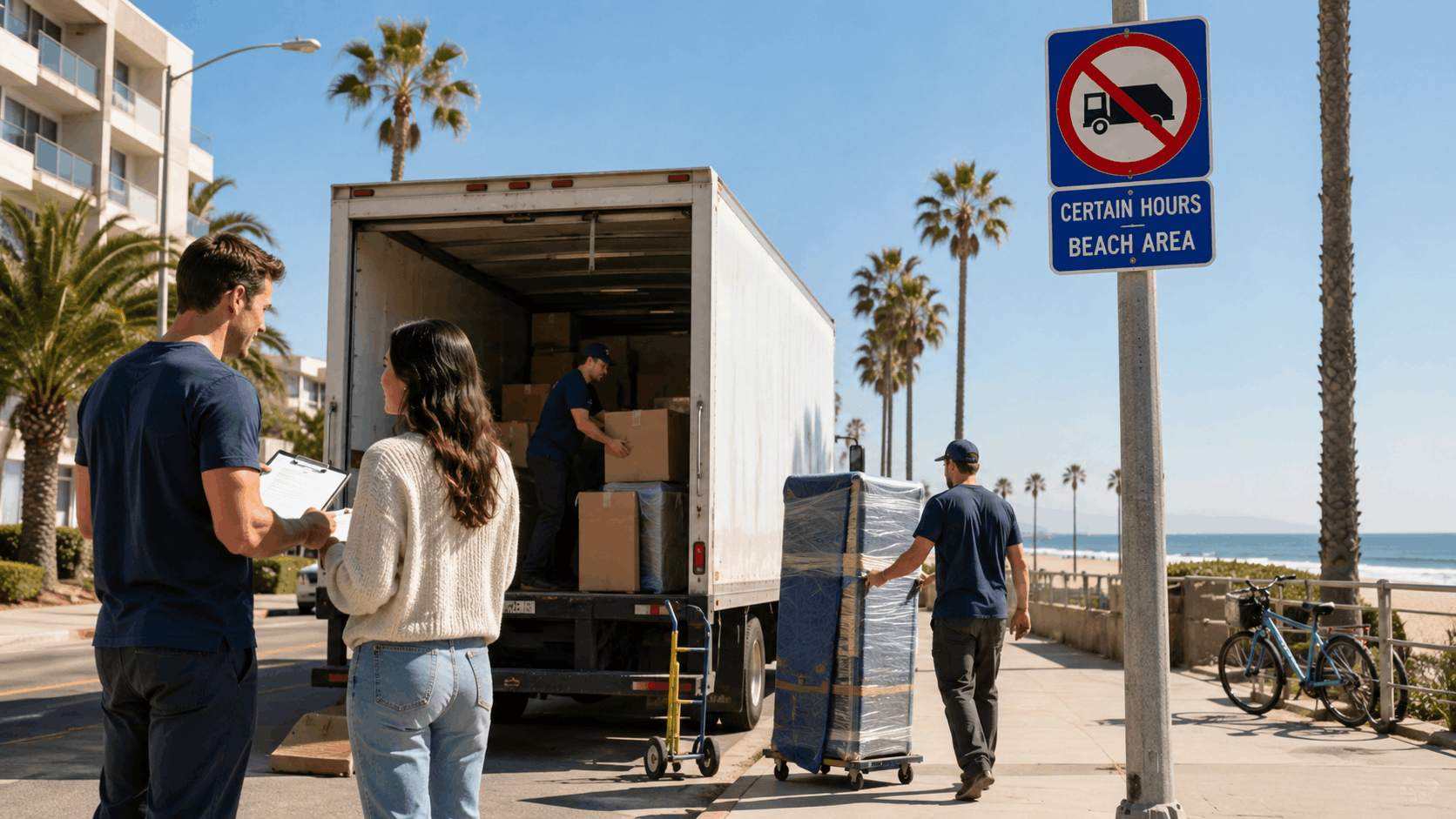
Many Santa Monica blocks are preferential parking zones. That means only cars with a resident permit can park there beyond a short posted limit. These zones are common North of Montana and in quieter residential pockets.
A moving truck without a resident permit can only sit for the posted grace period, often an hour or two. After that, the truck is subject to a ticket. On a full day move, that window disappears fast.
Some residents can request a temporary guest or contractor pass from the city. That option depends on the zone and current rules. It is worth asking the city before assuming a truck can simply park all day.
The cleaner fix is a temporary no-parking permit that overrides the guessing. We line this up in advance for moves in permit-only areas. That way the truck has a legal home for the whole load-in.
Metered Spots and Time Restrictions
Near the Pier and the Third Street Promenade, metered parking rules everything. Meters often carry short limits, sometimes just one or two hours. That is nowhere near enough time for a full apartment move.
Feeding a meter for a big truck also gets expensive and risky. Officers patrol these blocks constantly because turnover matters in tourist zones. An expired meter on a moving truck is an easy ticket.
Time limits are the real problem, not just the cost. Even if you pay, once the posted limit passes, the truck is out of compliance. A four-hour move simply does not fit a two-hour meter.
For metered areas, a reserved permit spot is almost always the answer. It replaces the meter limit with a legal, all-day reservation. We plan for this on any downtown or near-Pier move.
Street Sweeping and Tow-Away Windows
Street sweeping schedules can wreck a moving day if ignored. Many Santa Monica blocks post sweeping hours one or two mornings a week. Park a truck there during sweeping and you risk a ticket or a tow.
Tow-away windows are the other trap. Major corridors like Wilshire ban stopping during rush hours to keep traffic moving. A truck parked in a tow-away zone during those hours can be gone before the crew notices.
These rules are posted on the curb signs, but people rushing to load often miss them. We always read the signs on both sides of the street before parking. That habit has saved plenty of moves from a costly mistake.
Checking sweeping and tow hours is part of our pre-move walkthrough. When we book a local residential move near the beach, we map the parking rules first. That keeps the truck legal from the first box to the last.
Building and HOA Rules for Beachfront Apartments and Condos
Getting the truck parked is only half the battle. Many Santa Monica buildings have their own move-in rules on top of the city rules. Elevators, insurance, and move-in windows all come into play.
High-rises near Ocean Avenue and downtown are the strictest. They protect shared spaces and control traffic through the lobby. Skipping their requirements can get a move stopped at the door.
- Book elevator time in advance for high-rise buildings
- Provide a certificate of insurance before the move date
- Budget for move-in fees and refundable deposits
- Confirm allowed move-in hours with building management
Elevator Reservations and Move-In Windows
Many condo towers and apartment high-rises near Ocean Avenue require a booked elevator time. Only one move can use the service elevator at a time. If you show up without a reservation, you may wait or get turned away.
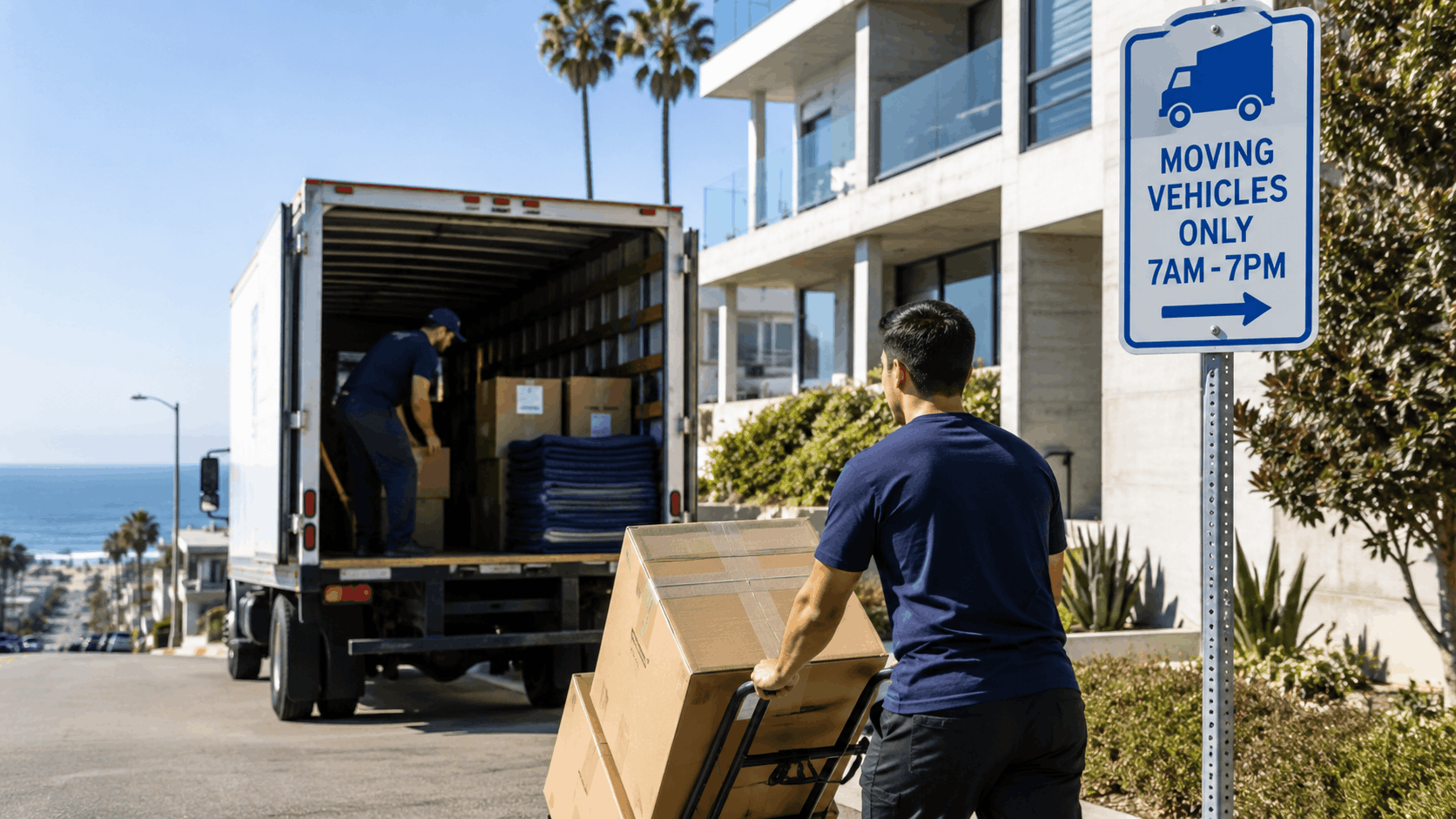
Move-in windows are often limited to weekday daytime hours. Some buildings ban moves on evenings, Sundays, or holidays entirely. Those limits protect residents from noise and lobby traffic.
The service elevator usually gets padded blankets installed for the move. That protects the walls and the cab from damage. Booking the slot reserves both the elevator and that protection.
We confirm elevator rules with building management before the move date. Knowing the exact window lets us size the crew to finish in time. That prevents the truck from sitting past its permit or the building's cutoff.
Certificate of Insurance Requirements
Most Santa Monica buildings ask movers for a certificate of insurance, or COI. It proves the moving company carries liability coverage. If something gets damaged in the lobby or elevator, the building wants protection.
The COI usually names the building or HOA as an additional insured for the day. Management sets the coverage amounts they require. Those details need to match, or the building may reject it.
Getting a COI right takes a little lead time. We need the building's exact name, address, and required limits before we issue it. Rushing this on moving day can hold up the whole load-in.
As a licensed and insured company, we provide COIs regularly for beach city buildings. Customers send us the building's requirements, and we handle the paperwork. That keeps the front desk happy and the move on track.
Move-In Fees and Deposits Common in Local Buildings
Many Santa Monica buildings charge a move-in fee. This is a non-refundable charge that often runs somewhere in the range of 100 to 500 dollars. It covers wear and tear on shared spaces.
A refundable damage deposit is also common. This can range from a few hundred dollars up to 1,000 or more in luxury towers. You get it back if the elevator and hallways come through clean.
Renters and owners should confirm these amounts early. They are easy to forget when budgeting for a move. A surprise fee on move-in day is never fun.
We remind customers to ask management about fees and deposits during planning. Careful protection of walls and floors helps the deposit come back in full. Our crews pad tight corners and elevator thresholds for exactly that reason.
Need Help in Los Angeles?
Popeye Moving & Storage serves Los Angeles and all of Los Angeles County.
Beach City Challenges That Slow Down Moving Day
Santa Monica adds challenges you will not find inland. Narrow streets, rear alleys, sand, salt air, and morning fog all shape how a move goes. Planning around them keeps the day smooth.
These are not small details near the coast. A wrong truck size or a foggy morning can add hours. We plan for the beach environment on every job here.
Narrow Streets and Alley Loading in Ocean Park
Ocean Park has some of the tightest blocks in the city. Many homes and small buildings sit on narrow streets with cars parked on both sides. A full-size moving truck often cannot fit or turn safely.
Rear alley access is common in this neighborhood. Some buildings expect loading from the alley rather than the street. Those alleys are narrow and can be blocked by trash bins or other vehicles.
For these blocks, a smaller truck or a shuttle van is often the answer. The crew loads the main truck a short distance away, then shuttles items to the door. It takes more steps but avoids getting stuck.
We scout Ocean Park streets before assigning a truck. If a block is too tight, we bring the right equipment from the start. That planning keeps a residential move from stalling in a narrow alley.
Sand, Salt Air, and Protecting Furniture
Coastal moisture is real, and it affects a move. Salt air can leave a film on furniture and speed up rust on metal parts. Blowing sand can scratch wood and work into upholstery.
On breezy beach days, items left open on the sidewalk collect grit fast. Wood surfaces and fabric are the most at risk. A little sand in the wrong spot can leave a permanent scratch.
We wrap furniture in pads and plastic to keep salt air and sand out. Sensitive pieces get extra protection before they leave the door. Good packing and crating matters even more near the coast.
Speed helps too. The less time an item sits exposed on a beach block, the better. Our crews load quickly and keep pieces covered until they are safely in the truck.
Morning Fog and Weekend Traffic Timing
June gloom is a Santa Monica classic. Thick morning fog rolls in during late spring and early summer. It can slow driving and make early load-ins damp and gray.
The fog usually burns off by mid-morning or midday. That makes a late-morning start smart during gloom season. It gives roads time to clear and drops the moisture risk.
Weekend traffic is the bigger scheduling problem. Beach crowds jam Lincoln Boulevard and PCH on sunny Saturdays and Sundays. A truck can lose serious time just crawling toward the coast.
We schedule beach moves around these patterns whenever possible. A weekday start beats fighting PCH traffic and packed streets. Timing the drive is as important as timing the load.
Best Days and Times to Move in Santa Monica
Timing can make or break a Santa Monica move. The right day avoids tourist crowds, farmers markets, and events. The wrong one puts a truck in the middle of chaos.
The best window is usually a weekday mid-morning. It dodges beach traffic, meter turnover, and market closures. A little planning here saves hours.
- Pick a weekday over a weekend when possible
- Start mid-morning after fog clears and rush hour ends
- Avoid farmers market days on Arizona Avenue and Main Street
- Book early for summer and month-end moves
Avoiding Weekend and Holiday Crowds
Weekends bring the beach crowds. Saturday and Sunday fill the streets near the Pier, the Promenade, and the sand. Parking gets scarce and traffic slows to a crawl.
Holidays are even worse. Memorial Day through Labor Day weekends pack the coast with visitors. A move on one of those days fights for every inch of curb.
A weekday mid-morning move avoids most of that. Rush hour has passed, and the tourist rush has not peaked. Streets are calmer, and the crew can work without dodging crowds.
We steer customers toward weekday slots for beach moves. When the timing works, the whole day goes faster. Fewer cars and fewer people mean fewer delays.
Working Around the Farmers Markets and Events
Santa Monica's farmers markets close streets on set days. The Wednesday and Saturday markets around Arizona Avenue draw big crowds and street closures downtown. The Sunday market on Main Street in Ocean Park does the same.
Those closures block access and eat up nearby parking. A truck trying to reach a building on a market morning may find the street shut. That can force a long carry or a rescheduled load-in.
Events pile on more challenges. Beach festivals, races, and Pier events can close roads with little warning. Checking the city calendar before booking avoids a nasty surprise.
We check market days and events before setting a move date. Steering around them keeps the truck close to the door. It is a simple check that prevents a big headache.
Seasonal Timing and Rental Turnover Months
Summer is the busiest moving season by far. Leases turn over, students move, and the weather stays clear. That demand raises prices and fills mover calendars fast.
Month-end is the other crunch. Most leases start on the first, so the last few days of any month get slammed. A month-end move in July is the hardest slot to book.
If the timing is flexible, a midweek, mid-month move is cheaper and easier. There is less competition for trucks and crews. Rates often drop when demand cools.
For summer or month-end moves, book several weeks ahead. Early booking locks in the date and the permit lead time. We fill the popular slots quickly, so planning ahead pays off.

Need Help in Los Angeles?
Popeye Moving & Storage serves Los Angeles and all of Los Angeles County.
How Our Team Handles Santa Monica Moves the Right Way
Every beach move comes down to planning. At Popeye Moving and Storage, we treat Santa Monica moves as their own kind of job. Based in Los Angeles, our team knows the beach city rules and the blocks behind them.
We are not guessing at the permits or the parking. We handle these moves regularly and plan around the local quirks. That is what keeps a Santa Monica move on schedule.
Site Walkthroughs and Permit Planning
Before the move date, we look at the access. That means checking street width, parking rules, and building requirements. A walkthrough or a detailed address review shows us what the crew will face.
Permit planning starts early. If a temporary no-parking permit makes sense, we file it with enough lead time for signs to post. That way the curb is reserved when the truck arrives.
We also confirm building rules during planning. Elevator windows, COI requirements, and move-in hours all get sorted ahead of time. Nothing about the day should be a surprise.
This upfront work is where beach moves are won. A move planned well on paper runs smooth on the street. Our Santa Monica movers build that plan before the truck ever loads.
Right-Sized Trucks for Tight Beach Blocks
Truck size matters more near the coast than almost anywhere. A big rig cannot fit down a narrow Ocean Park street or a tight alley. Bringing the wrong truck wastes the whole morning.
We match the truck to the block. For tight streets, we use a smaller truck that can maneuver and park closer. That cuts the carry distance and speeds the load.
When a street simply cannot handle a truck, we run a shuttle. The crew loads the main truck nearby, then shuttles items in a smaller van. It is the cleanest way to serve tight beach blocks.
This flexibility is a big part of how we work in Santa Monica. Right-sized equipment keeps the truck legal and the crew efficient. It also protects the neighborhood from a truck blocking traffic.
Storage Options for Timing Gaps
Move dates do not always line up. Sometimes a lease ends before the new one starts. A gap of a few days or weeks can leave belongings with nowhere to go.
Short-term storage fills that gap. We offer storage solutions in the Los Angeles area for exactly these situations. Items stay safe until the new place is ready.
This is common for beach moves with delayed lease starts. Rather than rush or double-move, customers store their goods and finish the move later. It takes the pressure off the calendar.
We coordinate the storage with the move so it is one smooth handoff. The crew loads, stores, and delivers when the time is right. That flexibility helps when Santa Monica timing gets tricky.
Final Thoughts
Santa Monica moves are not hard once you know the rules. The city runs its own show, so the permits, parking, and building requirements all deserve a look before the truck rolls. Plan the curb space, check the meters and sweeping hours, and confirm the building's move-in rules.
Timing does the rest. A weekday mid-morning move around fog and market days beats fighting weekend crowds. With the right truck and a little prep, a beach move goes smoothly.
Our team handles all of this every week across the coast. If you have a Santa Monica move coming up, contact Popeye Moving and Storage for a consultation. We will map the permits, parking, and access so your moving day stays calm from start to finish.
Frequently Asked Questions
- Do movers need a permit to park a truck in Santa Monica?
- Often yes, especially near the beach, downtown, or on busy corridors. A temporary no-parking permit reserves curb space so the truck has a legal spot for the day. You apply through the city's Public Works or parking office, and signs must be posted ahead of time. On permit-only residential blocks and metered zones, reserving space is the safest way to avoid tickets or a tow.
- How much does a Santa Monica moving truck permit cost?
- Fees vary by length of curb and location, but many temporary no-parking permits land in the rough range of 50 to 200 dollars. Some charges are based on the number of signs or feet of curb reserved. Apply at least three to seven business days ahead so the city can approve it and post signs in time. Always confirm the current fee with the city, since amounts change.
- Can a large moving truck fit on Ocean Park streets?
- Not always. Many Ocean Park blocks are narrow with cars parked on both sides, and some buildings load from tight rear alleys. In those cases a smaller truck or a shuttle van works better. We load the main truck nearby and shuttle items to the door. Checking the street before the move date lets us bring the right equipment instead of getting stuck.
- What is a certificate of insurance and why do buildings ask for it?
- A certificate of insurance, or COI, proves the moving company carries liability coverage. Buildings and HOAs ask for it to protect shared spaces like lobbies and elevators. The COI often names the building as an additional insured for the day. We need the building's exact name, address, and required coverage limits ahead of time so we can issue it before the move.
- Are there time limits on when I can move into a Santa Monica apartment?
- Many buildings limit moves to weekday daytime hours and require a booked elevator slot. Some ban moves on evenings, Sundays, or holidays. High-rises near Ocean Avenue and downtown are the strictest. Confirm the allowed move-in window and elevator hours with building management during planning, so the crew can finish inside the building's cutoff and your parking permit window.
- What days should I avoid moving near the Pier or Promenade?
- Avoid weekends and holidays, when beach crowds pack the streets and parking. Also steer clear of farmers market days on Arizona Avenue downtown and Main Street in Ocean Park, since those close streets and limit access. A weekday mid-morning move is usually the smoothest. Check the city event calendar too, since festivals and races can close roads with little notice.
- Will street sweeping or tow-away hours affect my move?
- Yes. Many blocks post street sweeping hours one or two mornings a week, and a truck parked there can be ticketed or towed. Major corridors like Wilshire have tow-away windows during rush hours. We read the curb signs on both sides of the street before parking. Planning around sweeping and tow hours keeps the truck legal all day.
- Does salt air or fog really damage furniture during a move?
- Coastal moisture and blowing sand can affect items near the beach. Salt air can leave a film and speed rust on metal, while sand can scratch wood and work into upholstery. We wrap furniture in pads and plastic and keep pieces covered until they are in the truck. Loading quickly and limiting exposure on the sidewalk protects your belongings.
- How far ahead should I book a Santa Monica move?
- Book at least a few weeks ahead for most moves, and earlier for summer or month-end dates. Those slots fill fast because leases turn over and demand spikes. Early booking also gives time to file a parking permit and post signs. If your dates are flexible, a midweek, mid-month move is easier to book and often cheaper.
- Does Popeye Moving & Storage handle permits and parking setup?
- Yes. We plan permits, parking, and building access before the move date. That includes filing a temporary no-parking permit with enough lead time for signs, confirming elevator windows, and providing a certificate of insurance. We also match truck size to tight beach blocks and offer short-term storage for timing gaps. Reach out and we will map the whole plan for your Santa Monica move.
P
Popeye Moving & Storage Co. Team Team
Licensed moving and storage professionals serving Los Angeles and Los Angeles County.
Licensed in California · License #CAL T 189749 | USDOT 1472924 | MC 498816C
Why trust Popeye Moving & Storage?
Founded in 1994, Popeye Moving & Storage is a licensed and insured moving and storage service serving Los Angeles and Los Angeles County. All content is reviewed by our licensed technicians.

Need Help in Los Angeles?
Popeye Moving & Storage serves Los Angeles and all of Los Angeles County.
Related Articles
How-To Guides
Moving to Santa Monica: Parking Rules, Street Restrictions, and Building Access
Everything new Santa Monica residents need to know about permit parking zones, moving truck restrictions, building elevator rules, and city permits before moving day.

Cost Guides
Santa Monica Move Cost: Beach Cities Premium Pricing Explained
Santa Monica moving costs run higher than inland LA for real reasons. Learn what drives beach city pricing, typical cost ranges, hidden fees, and how to save.
Tips & Advice
Storage for Santa Monica and Brentwood Households: Where Westside Furniture Actually Goes Between Homes
A local guide to furniture storage for Santa Monica and Brentwood households, covering storage types, costs, coastal climate risks, and how Westside families bridge the gap between homes.