Santa Monica Move Cost: Beach Cities Premium Pricing Explained

Planning a Move? Contact Us Now
Free estimates. Licensed and insured movers.
Get Your Free Quote
Tell us about your move. We'll be in touch soon.
Key Takeaways
- Santa Monica moves cost more due to tight streets, parking permits, and higher westside labor, fuel, and insurance costs.
- Local apartment moves typically run $600 to $1,900, while single-family homes range from $1,900 to $5,000 or more.
- Neighborhoods differ - Ocean Park has narrow alleys, Downtown has elevator rules, and Sunset Park requires parking permits.
- Winter and mid-week, mid-month dates offer the lowest rates, while summer and end-of-month bookings cost the most.
- Watch for long carry, shuttle, specialty item, and minimum hour fees, and ask for every charge in writing up front.
- Decluttering, self-packing simple items, booking early, and getting an in-home or video estimate all lower the bill.
- Choose a licensed mover with a CAL-T number, proper insurance, strong reviews, and real Santa Monica street experience.
- Long-distance moves out of Santa Monica are priced by weight and mileage, not hourly, so an accurate inventory matters.
In This Article
A family moving from a two-bedroom apartment near Van Nuys got a quote for their next place in Ocean Park. The number was almost double what their friends paid for a similar move in the San Fernando Valley. They called our office confused, wondering if someone had padded the bill.
We hear this every week. The gap between a Santa Monica moving cost and an inland Los Angeles move is real, and it catches people off guard. The good news is that the extra cost is not random. It comes from specific, predictable conditions tied to the beach city itself.
Why Santa Monica Moves Cost More Than Inland Los Angeles
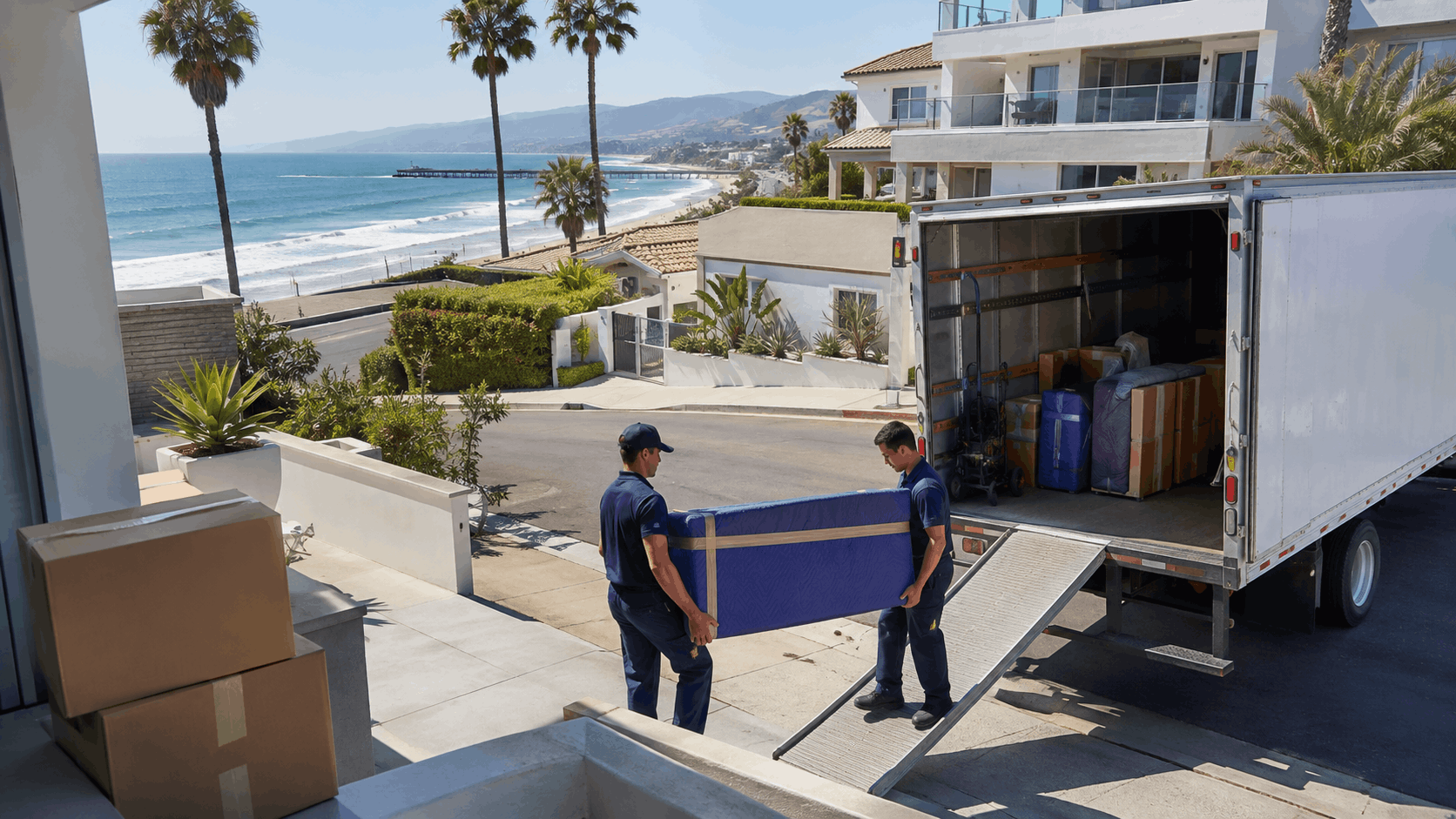
The beach city premium is not a made-up markup. It reflects the actual conditions our crews face on the ground in Santa Monica. Narrow streets, strict city rules, and higher westside operating costs all feed into the final Santa Monica moving cost.
Here are the main reasons a Santa Monica moving quote runs higher than an inland move:
- Trucks cannot always park close to the door, which adds carry time
- The city requires parking permits for many moving trucks
- Labor, fuel, and insurance cost more on the westside
- Older buildings and tight lots slow down the crew
- High demand near the beach keeps rates firm year-round
Once a resident sees where the money goes, the numbers make more sense. These costs are steady and easy to plan for when you know what to expect.
Tight Streets and Limited Truck Access
Anyone who has driven the blocks near Ocean Park or Montana Avenue knows how narrow they get. Many streets were laid out decades ago for far smaller vehicles. A 26-foot moving truck often cannot fit or turn without help.
When a full-size truck cannot reach the front door, our crew uses a smaller shuttle vehicle to ferry items back and forth. That shuttle service takes extra time and sometimes a second driver. Both add to the hourly total on a beach city move.
Truck access is the single biggest hidden driver of cost near the coast. On streets around Montana Avenue, we often park a block or more away and carry items the rest of the way. Longer carry distances mean more trips, more labor hours, and a higher bill.
Our team scouts the route before moving day whenever possible. Knowing which corner a truck can actually turn, and where a shuttle makes sense, keeps the move efficient and the cost lower than it would be otherwise.
Parking Permits and City Regulations
Santa Monica takes its curb space seriously. Many blocks require a parking permit for a moving truck, and the city rules are enforced. A truck sitting in a no parking zone near the Third Street Promenade can draw a ticket.
Getting a temporary parking permit takes advance planning. The city needs notice, and the paperwork has to line up with the move date. When that step is skipped, the crew wastes time hunting for legal parking or risks fines that get passed along.
Downtown blocks near the Promenade have heavy meter enforcement and short loading windows. Our office handles the permit process for clients so the truck has a legal, reserved spot on moving day. That coordination is part of what a westside mover builds into the quote.
Residents can check the city's own guidance on temporary parking through the City of Santa Monica website. Planning the permit early avoids delays and keeps the meter running on the move, not on the search for a spot.
Higher Cost of Living Reflected in Local Rates
Everything costs more on the westside, and moving is no exception. Crews that work Santa Monica, Brentwood, and the coast face higher fuel prices and steeper insurance premiums than crews working inland. Those costs show up in the hourly rates.
Skilled movers on the westside also earn more, because the cost of living demands it. A well-trained moving crew that shows up on time and handles fragile beach-home decor is worth the rate. Cheap labor tends to cost more in damage and delays.
Compare that to a move in the San Fernando Valley, where parking is easy and operating costs run lower. The same size job can price out 20 to 40 percent higher on the coast. The westside labor cost is baked into the local rate structure.
Our pricing reflects real conditions, not guesswork. When residents understand that the rate covers trained crews, proper insurance, and coastal logistics, the number stops feeling like a surprise.
Get Your Free Quote
Tell us about your move. We'll be in touch soon.
What Drives the Price of a Santa Monica Move
A moving quote is built from a handful of moving price factors. Home size, access, distance, and packing all feed the total. Knowing the moving cost breakdown helps residents see exactly where their money goes.
Santa Monica movers price local jobs by the hour, then add for materials and special conditions. Here is a simple look at the main drivers:
| Price Factor | Typical Impact on Cost |
|---|---|
| Home size and rooms | Sets crew size and total hours |
| Stairs and carry distance | Adds labor hours |
| Distance and travel | Adds travel and double drive time |
| Packing and materials | Adds flat or hourly charges |
Home Size and Number of Rooms
The size of the home sets the foundation for the whole quote. A studio apartment near Wilshire Boulevard needs a small crew and a few hours. A four-bedroom house needs more movers, a bigger truck, and a longer day.
A studio or one-bedroom near Downtown usually runs with a two-person crew. Expect three to five hours of work depending on stairs and packing. That keeps the total on the lower end of the Santa Monica range.
Larger homes in Sunset Park often need a three or four-person crew. More hands actually lowers the per-item cost because the job finishes sooner. Crew size and total hours move together, so the right team matters.
When we estimate a home, we count rooms, heavy furniture, and how much is already boxed. A packed, decluttered home moves more efficiently than one still full of loose items. That directly shapes the hours we quote.
Stairs, Elevators, and Carry Distance
Beach-adjacent buildings love their stairs. Many walk-up units near the sand have no elevator, so every box travels by foot. That adds labor time and pushes the hourly total up.
Buildings with elevators are easier, but not always cheaper. Some charge an elevator fee or limit moving hours to certain windows. A slow shared elevator can add an hour to what should be a short job.
Long carry is the other factor. When the truck parks far from the unit, the crew logs extra distance on every trip. On tight coastal blocks, a long carry can add a real chunk to the final bill.
We measure these conditions during the estimate so nothing is a surprise. Our residential moving team plans crew size around stairs and carry distance to keep the clock moving in the client's favor.
Distance and Travel Fees
A local move within Santa Monica is short on miles but still carries a travel fee. California law includes a double drive time rule for local moves. That means the drive between the old and new home is billed at double the one-way time.
The rule sounds odd until you see the logic. It covers the truck's trip to the origin and back to the yard after the job. Every licensed California mover applies it, so residents should expect it on a local move.
Longer hauls out of the area are priced differently, which we cover below. Within the city, the double drive time is usually small, adding maybe 30 to 60 minutes to the bill. A move from Ocean Park to North of Montana still counts as local.
Our office explains the travel fee up front so it never lands as a shock. Transparent billing on drive time is part of a fair Santa Monica quote.
Packing Services and Materials
Packing is where costs can swing the most. A full-pack service, where the crew boxes everything, adds hours and materials. Boxes, tape, paper, and bubble wrap all carry a cost.
Beach homes tend to hold fragile items - framed art, glass, ceramics, and coastal decor. These need proper wrapping and sometimes custom crates. Specialty crating protects the piece but adds to the total.
Many residents split the difference. They pack their own books and clothes and let us handle the fragile items. Our packing and crating service covers everything from a few delicate pieces to a full-home pack.
Good packing saves money in the end. Broken items and last-minute box runs cost more than doing it right the first time. We supply materials so nothing stalls on moving day.
Need Help in Los Angeles?
Popeye Moving & Storage serves Los Angeles and all of Los Angeles County.
Typical Santa Monica Moving Cost Ranges
Real numbers help residents budget with confidence. These moving cost ranges reflect what we see for common jobs across the city. The Santa Monica move price depends on size, access, and packing, but these figures give a solid starting point.
The averages below assume standard access and no unusual delays:
| Move Type | Crew and Hours | Typical Cost Range |
|---|---|---|
| One-bedroom apartment | 2 movers, 3-5 hrs | $600 - $1,100 |
| Two-bedroom condo | 3 movers, 5-7 hrs | $1,100 - $1,900 |
| Three-bedroom home | 3-4 movers, 7-9 hrs | $1,900 - $3,200 |
| Four-bedroom home | 4 movers, 9-12 hrs | $3,200 - $5,000+ |
Apartment and Condo Moves
Apartment and condo moves are the most frequent jobs we run in Santa Monica. A one-bedroom near Downtown usually lands between $600 and $1,100 for a local move. That covers a two-person crew and a standard truck.
A two-bedroom condo along Ocean Avenue runs higher, often $1,100 to $1,900. High-rise condos add elevator reservations and loading dock rules that stretch the timeline. The apartment move cost climbs with each floor and every reserved elevator slot.
Packing changes these numbers. A fully packed unit moves in the ranges above. An unpacked one can add several hours of labor and materials to the condo move total.
We give apartment clients a clear estimate based on floor, elevator, and carry distance. Knowing those details up front keeps the one-bedroom or two-bedroom quote honest.
Single-Family Home Moves
Houses take more crew and more hours than apartments. A three-bedroom home move cost usually falls between $1,900 and $3,200. That assumes a three or four-person crew working a full day.
Homes North of Montana often have more square footage and heavier furniture. A four-bedroom in that area can run $3,200 to $5,000 or more. Larger crews finish sooner, which helps hold the cost down per hour.
Older homes bring their own quirks - steep steps, tight driveways, and narrow doorways. These slow the crew and add labor time to the home move cost. We factor them into the estimate before the truck arrives.
Our team handles single-family moves across Sunset Park and North of Montana every month. That local track record helps us quote hours accurately for each specific property.
Long-Distance and Out-of-Area Moves
Moves leaving Santa Monica for another city or state work differently. Instead of hourly billing, a long distance move is priced by weight and mileage. The heavier the shipment and the farther it goes, the higher the cost.
Weight based pricing means an accurate inventory matters. A honest estimate keeps the final number close to the quote. Our long distance moving team weighs the load and locks in a fair rate.
An interstate move also involves federal rules and tracking. A move from Santa Monica to Arizona or beyond needs proper paperwork and a licensed carrier. We handle the logistics so the shipment arrives on schedule.
For California-only long hauls, we offer California long distance service priced by distance and load size. That keeps out-of-area moves predictable from door to door.
Neighborhood-Specific Challenges in Santa Monica
Every part of Santa Monica moves a little differently. The moving challenges near the beach are not the same as those in a quiet residential zone. Knowing the Santa Monica neighborhoods helps us plan local access and avoid delays.
Here is how the main areas break down.
Ocean Park and the Beach-Adjacent Blocks
Ocean Park sits right up against the sand, and it shows on moving day. The alleys are narrow, and permit parking rules cover many blocks. A big truck often has to squeeze into an alley or park on a side street.
Beach traffic makes timing tricky. On a sunny weekend, foot traffic and beachgoers clog the streets near the coast. That slows the truck and stretches the carry from curb to door.
Alley access is often the best route in Ocean Park. Our crews know which alleys allow a truck and which force a shuttle. That local knowledge saves time on tight beach-adjacent blocks.
We schedule Ocean Park moves early in the day when possible. Beating the beach crowd keeps the job moving and the hours in check.
Downtown Santa Monica and High-Rise Buildings
Downtown is a different world of loading docks and elevator rules. A high-rise move near Wilshire or the Promenade often requires an elevator reservation. Building management sets the window, and missing it can delay the whole move.
Loading docks have their own rules too. Some buildings limit truck size or require certificates of insurance filed in advance. We coordinate with building staff before the date to clear these hurdles.
Elevator reservations matter because a shared elevator slows everything down. Reserving a dedicated elevator keeps the crew flowing without waiting on residents. That single step can save an hour or more on a downtown job.
Our office handles the building paperwork and elevator booking for clients. Businesses moving downtown can also lean on our Wilshire Montana commercial moving team for office relocations.
North of Montana and Older Homes
North of Montana is known for larger, older single-family homes. Many sit on lots with tight driveways and mature landscaping. Getting a truck close to the door is not always simple near San Vicente Boulevard.
Older homes often have steep front steps and narrow interior stairs. These features add labor time as the crew maneuvers furniture carefully. A heavy dresser down a narrow staircase takes patience and extra hands.
Driveways in the area can be short or steep. When a truck cannot pull in, the carry distance grows. We plan crew size around these conditions so the job stays on schedule.
Our familiarity with North of Montana streets pays off on moving day. Knowing where to stage the truck along San Vicente saves both time and money for the homeowner.
Sunset Park and Residential Permit Zones
Sunset Park is a family neighborhood with strict residential permit parking. Many blocks require a permit to park during the day. A moving truck without the right permit risks a ticket or a tow.
Advance planning is the fix. We arrange the temporary permit before the move so the truck has a legal spot. Skipping that step leads to delays while the crew looks for parking.
Moving day planning in Sunset Park means confirming the permit zone and reserving curb space early. The city enforces these zones consistently. A little prep keeps the move smooth and ticket-free.
Our team maps the permit parking zone for each Sunset Park client. That planning is part of what makes a local mover worth the rate.

Seasonal Timing and How It Affects Cost
When a resident moves matters almost as much as where. The moving season swings rates up and down across the year. Choosing off-peak dates and cheaper moving days can trim a real amount off the bill.
Here is how timing affects Santa Monica pricing:
| Timing | Demand | Cost Effect |
|---|---|---|
| Summer (Jun-Aug) | Very high | Highest rates |
| Winter (Dec-Feb) | Low | Lowest rates |
| Weekdays | Moderate | Lower than weekends |
| End of month | High | Books early, higher |
Summer Peak Season Near the Beach
Summer is the busiest stretch for any beach city mover. From June through August, demand spikes as leases turn over and families move before school. Rates run at their highest during these months.
Tourist traffic makes it worse. The Pacific Coast Highway and beach-area streets clog with visitors all summer. That slows trucks and adds time to every coastal move.
Lease turnovers pile onto the same dates. Many Santa Monica leases end in summer, so everyone competes for the same crews. Booking early is the only way to lock a good slot at a fair rate.
If a summer move is unavoidable, we suggest a weekday and an early start. Both help dodge the worst of the peak season crowds and traffic.
Winter and Weekday Savings
Winter is the quiet season on the coast, and prices drop with demand. A move in December or January often costs noticeably less than one in July. A weekday move saves even more.
Coastal weather rarely disrupts a winter move here. Santa Monica winters are mild, and rain days are few. Movers can work almost any date without weather delays.
Mid-week moves beat weekend rates across the board. Tuesday through Thursday are the calmest days for crews and traffic. An off-season discount plus a weekday can stack real savings.
We encourage flexible residents to aim for a winter weekday. Better crew availability and lower rates make it the smartest time to move.
End-of-Month and Holiday Demand Spikes
The first and last few days of every month book solid. Leases usually start on the first, so the end of the month is a rush. That booking demand pushes rates up and fills the calendar early.
Holiday weekends do the same. Long weekends give people time off to move, so crews fill up. Memorial Day, Labor Day, and similar dates carry higher rates.
Mid-month dates are the sweet spot. Around the 10th through the 20th, demand eases and crews open up. An end of month move costs more simply because everyone wants it.
If timing is flexible, we steer clients toward mid-month weekdays. That single choice can lower the quote without changing anything else about the move.
Need Help in Los Angeles?
Popeye Moving & Storage serves Los Angeles and all of Los Angeles County.
Hidden Fees and How to Avoid Surprise Charges
Nobody likes a surprise on the final invoice. Hidden moving fees are the main reason people distrust movers. We believe in moving quote transparency, so here is what to watch for and how to avoid surprise charges.
Common extra charges on a beach city move include:
- Long carry fees when the truck parks far away
- Shuttle fees for tight coastal streets
- Specialty item charges for pianos and safes
- Bulky item handling for oversized furniture
- Minimum hour and travel time billing
A clear estimate up front stops most of these from becoming surprises. Ask any mover to list every possible fee before signing.
Long Carry and Shuttle Fees
A long carry fee applies when items travel a long distance from truck to door. On coastal blocks where parking is far, this fee shows up often. The greater the truck distance, the more the crew charges for the extra effort.
Shuttle fees come into play on streets a big truck cannot reach. A smaller shuttle vehicle ferries items to the main truck. That second vehicle and extra handling add to the total.
These fees are legitimate, but they should never be a surprise. A good mover flags a likely long carry or shuttle during the estimate. That way the client budgets for it ahead of time.
We measure carry distance during our survey and tell clients if a shuttle is needed. Honest disclosure beats a shocking line item on the invoice.
Bulky and Specialty Item Charges
Some items need special handling and cost extra. Pianos, safes, and oversized furniture take more crew and equipment. A specialty item fee covers the added labor and risk.
Beach homes often hold surfboards, large art, and bulky patio pieces. These awkward items slow the crew and sometimes need custom padding. Oversized furniture through a narrow beach doorway is real work.
Piano moving is its own skill. A grand piano needs trained movers and the right dollies to avoid damage. Our piano moving pros handle these safely so nothing gets scratched or dropped.
We ask about bulky items during the estimate so the fee is clear early. Listing a safe or piano up front keeps the final bill honest.
Minimum Hours and Travel Time Fees
Most movers set a minimum number of hours for a local job. A two or three-hour minimum is standard, even for a small move. Residents should know this before booking a small studio move.
Travel time is billed too, usually as the double drive time we covered earlier. This travel time fee covers the truck's trip to and from the job. It is a normal part of California moving billing rules.
Trouble starts when these rules are not explained. A client expecting a one-hour bill is upset by a three-hour minimum plus travel. Clear billing rules prevent that friction.
Our office spells out minimum hours and travel time before the move. No client should learn the billing rules from the final invoice.

How to Save Money on a Santa Monica Move
A beach city move costs more, but residents can still trim the bill. These moving budget tips come straight from jobs we run every week. A little prep goes a long way toward an affordable Santa Monica move.
The goal is to save on moving without cutting corners on safety or care.
Declutter Before Moving Day
Less stuff means a shorter, cheaper move. Every box the crew does not carry saves labor time. Decluttering is the single best way to reduce load and lower the hours.
Sort through closets, the garage, and storage before booking. Sell what has value and set aside the rest. A smaller load may even let us use a smaller truck.
Donation drop off keeps unwanted items out of the move entirely. Local charities take furniture and household goods. Fewer items on the truck means a shorter day and a smaller bill.
We tell every client to declutter first, even though it means a lighter job for us. Honest advice builds trust, and it genuinely saves people money.
Pack Yourself Where It Makes Sense
Self packing cuts labor hours if done right. Books, clothes, linens, and kitchenware are easy to box yourself. DIY packing on these items lowers the total meaningfully.
Some things are worth professional packing. Fragile beach-home pieces - glass art, mirrors, ceramics - break easily without proper wrapping. Fragile packing by trained hands prevents costly damage.
The smart move is to split the work. Pack the simple stuff and let us handle the delicate items and specialty crating. That balance keeps costs down while protecting what matters.
We supply boxes and materials for clients who want to pack ahead. Our moving supplies delivery gets everything to the door before packing starts.
Book Early and Choose Off-Peak Dates
Early booking locks in better rates and crews. Popular dates fill weeks ahead, especially in summer. Booking early means more choice and often a lower price.
Flexible dates unlock the best deals. If a resident can move on a winter weekday, the off-peak rates drop the bill. Mid-month is cheaper than the end of the month.
Availability tightens near the first and last of the month. Waiting until the last minute limits options and raises the cost. Planning ahead beats scrambling for any open crew.
We reward early planners with better slots and steady pricing. The sooner a client books, the more we can do to keep the quote low.
Get a Clear In-Home or Video Estimate
A real estimate is the best defense against overpaying. A phone quote without a survey guesses at the load and often misses details. That leads to surprise charges on moving day.
An in-home or video survey shows the mover exactly what to expect. We see the stairs, the carry distance, and the specialty items. That produces an accurate quote a client can trust.
A video survey is simple and easy. A resident walks through the home on their phone while we take notes. From the survey we have what we need for a firm estimate.
We offer both in-home and video estimates at no cost. A clear survey up front protects the client from a padded final bill.
Need Help in Los Angeles?
Popeye Moving & Storage serves Los Angeles and all of Los Angeles County.
Choosing the Right Local Mover for a Beach City Move
The right mover makes a beach city move smooth instead of stressful. Local movers who know Santa Monica save time and money. Here is what to look for in a Santa Monica moving company.
Local Experience with Beach City Access
A mover who knows the streets works more efficiently. Beach city access takes real experience with narrow alleys, permit zones, and building rules. That knowledge shows up as fewer wasted hours.
Popeye Moving has worked Santa Monica for years, from Ocean Park to North of Montana. We know which streets fit a full truck and which need a shuttle. That local experience keeps the clock working for the client.
Familiarity with the permit process matters too. We arrange truck parking permits so the crew is not hunting for a legal spot. Small details like that add up to a lower final cost.
Our crews have handled hundreds of moves across the westside, from Santa Monica to Culver City and beyond. That track record means fewer surprises on moving day.
Licensing, Insurance, and Reviews
Never hire a mover without checking credentials. In California, look for a CAL-T number that shows the company is registered with the state. A licensed and insured mover protects the client if something goes wrong.
Valuation coverage is not the same as insurance. Basic coverage pays only a small amount per pound. Ask about full-value protection for high-value beach-home items.
Reviews tell the real story. Read moving reviews across several platforms, not just one. Look for patterns in how a company handles problems, not just praise.
Residents can verify a mover's authority through the Bureau of Household Goods and Services and check federal carriers through the FMCSA Protect Your Move resource. Confirming credentials takes minutes and prevents big headaches.
Full-Service Options and Storage
The best movers offer more than a truck and crew. A full service move includes packing, moving, and unpacking. That saves the client time and reduces the risk of damage.
Storage matters when lease dates do not line up. Santa Monica move-out and move-in dates rarely match perfectly. Short-term storage bridges the gap between homes.
Popeye Moving offers both moving and storage under one roof. Our storage solutions hold belongings safely until the new place is ready. That flexibility takes the pressure off a tight timeline.
Combining packing, moving, and storage with one company keeps things simple. One point of contact handles the whole move from start to finish.
Final Thoughts
The Santa Monica beach city premium is real, but it is not a mystery. Tight streets, parking permits, higher westside costs, and neighborhood quirks all shape the price. Once residents see the breakdown, a fair quote makes sense.
Smart timing, decluttering, and a clear estimate can trim the bill without cutting corners. The right local mover who knows Ocean Park alleys and Sunset Park permit zones saves both time and money. That local knowledge is worth the rate.
Popeye Moving & Storage Co. has moved families across Santa Monica and the westside for years. For an honest, detailed quote on a beach city move, contact our team or call for a free consultation. We will walk through the numbers so there are no surprises on moving day.
Frequently Asked Questions
- How much does it cost to move within Santa Monica?
- A local move within Santa Monica usually runs $600 to $1,900, depending on home size. A one-bedroom with a two-person crew often falls between $600 and $1,100. A two-bedroom condo runs closer to $1,100 to $1,900. Hourly rates, stairs, parking, and packing all affect the total. An accurate estimate gives the clearest number for a specific home.
- Why is moving to Santa Monica more expensive than other LA areas?
- Santa Monica costs more because of limited truck access, city parking permits, and higher westside operating costs. Narrow streets near Ocean Park and Montana Avenue often force shuttle trucks or long carries. Labor, fuel, and insurance run higher on the coast than in the San Fernando Valley. These conditions are steady and predictable, not random markups added to the bill.
- Do movers need a parking permit in Santa Monica?
- Many Santa Monica blocks require a temporary parking permit for a moving truck, especially near Downtown and in Sunset Park permit zones. The city enforces these rules, and a truck in a no parking zone can draw a ticket. A good local mover arranges the permit in advance so the truck has a legal, reserved spot. Skipping this step causes delays and extra cost on moving day.
- How far in advance should residents book a Santa Monica mover?
- Book at least two to four weeks ahead for most moves. During peak summer months or around the end of the month, book four to six weeks out. Popular dates fill early, so early booking secures better crews and rates. Off-peak winter weekdays offer more flexibility, but planning ahead still lands the best price and time slot.
- What is the cheapest time of year to move in Santa Monica?
- Winter, roughly December through February, is the cheapest season. Demand drops, and mild coastal weather rarely disrupts a move. Mid-week days, Tuesday through Thursday, cost less than weekends year-round. Combining a winter weekday with a mid-month date, around the 10th through the 20th, stacks the biggest savings. Flexible timing is the easiest way to lower the bill.
- Are there extra fees for beach-adjacent or high-rise buildings?
- Yes, coastal and high-rise moves often carry extra fees. A long carry fee applies when the truck parks far from the door. A shuttle fee covers a smaller vehicle on tight streets. High-rise buildings may charge elevator fees or require reservations. A clear estimate should list any likely fee up front so nothing surprises the client on the invoice.
- How much does packing service add to a Santa Monica move?
- Partial packing of fragile items usually adds $200 to $600 depending on the number of pieces. A full-pack service, where the crew boxes the entire home, can add $500 to $2,000 or more based on home size. Materials like boxes and specialty crates add to that. Splitting the work by self-packing simple items keeps the added cost lower.
- Can movers help with short-term storage between homes?
- Yes, short-term storage bridges the gap when move-out and move-in dates do not line up. Popeye Moving offers secure storage solutions that hold belongings until the new place is ready. This is common in Santa Monica, where lease dates rarely match perfectly. One company handling both the move and storage keeps the process simple with a single point of contact.
- How are long-distance moves out of Santa Monica priced?
- Long-distance and interstate moves are priced by weight and mileage instead of hourly. The heavier the shipment and the farther it travels, the higher the cost. An accurate inventory keeps the final price close to the quote. These moves also involve federal rules and tracking, so a licensed carrier handles the paperwork and logistics for an out-of-area move.
- What should a resident do to get an accurate moving quote?
- Request an in-home or video estimate rather than a phone guess. A survey lets the mover see stairs, carry distance, specialty items, and access conditions. That produces an accurate quote with fewer surprises. A resident should also ask for every possible fee to be listed in writing. Clear, detailed estimates protect against overpaying on moving day.
Popeye Moving & Storage Co. Team Team
Licensed moving and storage professionals serving Los Angeles and Los Angeles County.
Licensed in California · License #CAL T 189749 | USDOT 1472924 | MC 498816C
Why trust Popeye Moving & Storage?
Founded in 1994, Popeye Moving & Storage is a licensed and insured moving and storage service serving Los Angeles and Los Angeles County. All content is reviewed by our licensed technicians.
Need Help in Los Angeles?
Popeye Moving & Storage serves Los Angeles and all of Los Angeles County.
Related Articles

Beverly Hills Moving Cost: 4-Bedroom Estate Move Pricing Breakdown
A clear pricing breakdown for a 4-bedroom estate move in Beverly Hills, covering cost ranges, local fees, packing, storage, and how to compare quotes.

DTLA High-Rise Move Cost: Studio vs 1BR vs 2BR Pricing
A full breakdown of DTLA high-rise move costs by unit type, with real studio, 1BR, and 2BR price ranges plus the Downtown factors that shift your final bill.
Manhattan Beach Movers: Beach Cities Premium Service Pricing
A clear breakdown of Manhattan Beach premium moving pricing, what drives cost in the Beach Cities, seasonal timing, add-ons, and how to plan a smooth, fairly priced move.