Tips & Advice
Local Move vs Long-Distance Move LA: When Each Definition Applies
Key Takeaways
- A local move usually stays within about 50 miles and inside LA County, billed by the hour.
- Any move that crosses a state line is a long-distance interstate move under federal rules, no matter the mileage.
- Long in-state hauls like LA to San Francisco or San Diego count as long-distance despite staying in California.
- Local moves are priced by crew size and hours, while long-distance moves are priced by weight, mileage, and inventory.
- In-state moves need a state CAL-T permit number, and interstate moves need a federal USDOT number - verify both before booking.
- Book local moves 2-4 weeks ahead and long-distance moves 6-8 weeks ahead, adding a buffer for summer and month-end.
- Long-distance moves need heavier-duty packing and better labeling because items are handled more and may enter storage.
- A quick mileage check between origin and destination settles most local-versus-long-distance questions before you request a quote.
In This Article
A family in Silver Lake recently called our team with a simple question that turned out to be not so simple. They were moving to Pasadena and had no idea whether that counted as a local move or a long-distance one. The answer changes the price, the paperwork, and how far ahead they need to book.
This confusion happens every week across Los Angeles. Someone hops from Echo Park to Culver City and assumes it is a big deal, while another person drives from Santa Monica to San Diego and thinks it is just a longer local job. The definitions matter, and getting them right saves money and stress.

What Counts as a Local Move in Los Angeles?
Most people picture a local move as anything that stays close to home, but movers and California regulators use clearer lines. In general, a local move is one that stays within a set mileage limit and does not cross state boundaries. For Los Angeles residents, that usually means a move that stays inside the county and under a common distance benchmark.
California regulators care about mileage because it affects how a move gets billed and who oversees it. A short hop between two LA neighborhoods almost always qualifies as local. Here are the common markers movers use:
- The move stays within roughly 50 miles of the origin point.
- Both addresses sit inside Los Angeles County.
- The job gets billed by the hour rather than by weight.
- The move stays inside California and does not cross state lines.
When a move meets these markers, our team treats it as a standard local residential move with hourly pricing and same-day service.
The 50-Mile Rule and How It Works in LA
The 50-mile rule is the most common industry benchmark for a local move. If both the pickup and delivery addresses fall within about 50 miles of each other, movers usually classify the job as local. This benchmark drives how the move is priced and scheduled.
Take a move from Echo Park to Culver City as an example. That drive runs roughly 10 to 12 miles depending on the route, well under the 50-mile mark. A job like that is a clear local move, billed by the hour with a crew sized to the home.
The rule holds even for cross-town moves that feel long because of traffic. Driving from Highland Park to West LA might eat up an hour on the 110 and the 10, but the actual mileage stays under the threshold. Time in traffic does not push a move into long-distance territory - only distance does.
Because the 50-mile rule is a benchmark rather than a hard law, some movers set their own cutoffs slightly higher or lower. Our team confirms the exact mileage during the quote so customers know upfront how their move gets classified. That removes surprises when the final bill arrives.
Staying Inside County Lines
A move that stays entirely within LA County almost always counts as local. Los Angeles County covers a huge area, from the beach cities down south to the San Fernando Valley up north. Most everyday moves happen within these county lines.
Think about a move along the 101 corridor, like Studio City to Hollywood, or a run along the 405 from West LA to the South Bay. Both origin and destination sit inside the county, which keeps the job in the local category. The freeway route matters for scheduling, not for classification.
Neighborhoods like Highland Park, Silver Lake, and West LA all fall inside the same county umbrella. A move between any two of them stays local under both the mileage and county-line tests. That means hourly billing and California state oversight rather than federal rules.
The county-line test does have edges. A move from the far north Valley to a southern beach city can approach or pass the 50-mile mark even while staying in the county. In those cases, our team looks at both mileage and county lines together to land on the right category.
Common Local Move Examples Across LA Neighborhoods
Sometimes the easiest way to spot a local move is to compare it to familiar routes. Most apartment and house moves across LA neighborhoods fit the local definition without any question. Seeing a few examples helps readers match their own situation.
A move from Sherman Oaks to Studio City is a textbook local job. So is shifting from a Downtown loft to a Los Feliz apartment, or from a Brentwood house to a Santa Monica condo. Each stays short, inside the county, and under the mileage line.
Apartment moves make up a big share of local work in LA. A renter leaving a Koreatown building for a place in Echo Park is doing a local apartment move, even with stairs and tight parking in the mix. The distance keeps it local; the building details just shape the crew size and time.
House moves within a single area, like a family relocating a few miles inside Pasadena, also land squarely in the local category. If a reader can drive between the two homes in under an hour without leaving the county, odds are strong the move is local. When in doubt, a quick mileage check settles it.
Get Your Free Quote
Tell us about your move and we'll get back to you fast.
What Counts as a Long-Distance Move
A long-distance move covers anything that travels far beyond the local threshold or crosses a state line. These jobs follow different rules, use different pricing, and need more lead time. The distinction is not just about distance - it is about which laws apply.
There are two main flavors of long-distance move. One crosses state lines and becomes an interstate move under federal law. The other stays inside California but travels far enough to be treated as long-distance. Here is how to tell them apart:
- Interstate moves leave California and fall under federal rules.
- Long in-state moves stay in California but travel hundreds of miles.
- Both are usually priced by weight and distance, not by the hour.
- Both need more planning than a local move.
Our long-distance moving team handles both types, with the right licensing for each.
Interstate Moves That Leave California
Any move that crosses a state line is an interstate move, no matter the mileage. A move from LA to Phoenix or LA to Las Vegas counts, even though both cities sit relatively close. The moment the truck leaves California, federal rules take over.
Interstate moves fall under the Federal Motor Carrier Safety Administration, which sets the standards movers must follow. These rules cover estimates, paperwork, and how a mover handles claims. That is why crossing state lines always changes the category, regardless of how short the drive feels.
An LA-to-Las Vegas move runs under 300 miles, yet it is still an interstate move with weight-based pricing. The same logic applies to an LA-to-Phoenix relocation. Our interstate moving service is set up to meet these federal requirements from the first quote to final delivery.
Because state lines trigger federal oversight, customers should confirm their mover holds proper federal credentials for these jobs. A mover licensed only for in-state work should not be crossing state lines. Checking this early protects belongings and keeps the move legal.
Long In-State Moves Beyond LA County
Not every long-distance move leaves California. A move from LA to San Francisco or LA to Sacramento stays inside the state but covers 350 to 400 miles. Distance like that pushes the job well past the local threshold.
These long in-state moves usually get billed by weight and mileage rather than by the hour. A haul from LA to the Bay Area involves overnight driving, route planning, and inventory tracking. That is a different operation than a cross-town local job.
California oversees these long-haul in-state moves through its own state agency rather than the federal government. Even though the move never leaves California, the long distance changes how it is priced and scheduled. Our California long-distance service covers these statewide routes.
The practical takeaway is that staying in California does not automatically make a move local. A trip up the 5 to Sacramento is a long haul by any measure. The county-line test only holds for moves that stay inside LA County; once a move travels statewide, it enters long-distance territory.
When Mileage Pushes a Move Into Long-Distance
Some moves sit right at the tipping point where distance changes the category. A move from Santa Monica to San Diego is a good example. It stays in California and never crosses a state line, but the roughly 120-mile drive puts it past the local benchmark.
Once a move clears the 50-mile mark by a wide margin, movers usually shift it to long-distance pricing. The exact tipping point varies by company, but a 100-plus mile move rarely gets billed by the hour. The distance simply makes hourly rates impractical.
Santa Monica to San Diego shows how mileage alone can reclassify a move. Both cities are in California, yet the drive is long enough that weight-and-distance pricing makes more sense. Our team looks at total mileage to decide where a borderline move lands.
For customers, the lesson is to watch the odometer, not just the map. A move that feels regional can still count as long-distance once the miles add up. A quick mileage estimate during the quote reveals which side of the line a move sits on.

Need Help in Los Angeles?
Popeye Moving & Storage serves Los Angeles and all of Los Angeles County.
How Pricing Differs Between Local and Long-Distance Moves
The biggest practical difference between the two move types shows up in the bill. Local moves and long-distance moves use completely different pricing models. Knowing which model applies helps customers budget with confidence.
Local jobs are billed by the hour, while long-distance jobs are billed by weight and mileage. The table below sums up how the two moving cost structures compare:
| Factor | Local Move | Long-Distance Move |
|---|---|---|
| Pricing model | Hourly rate | Weight plus mileage |
| Typical range | $100-$200 per hour | $2,000-$8,000+ per job |
| Main cost drivers | Crew size, hours, access | Weight, distance, inventory |
| Estimate type | Hourly quote | Binding or non-binding |
| Oversight | California state | Federal or state |
Hourly Rates for Local Moves
Local moves are almost always charged by the hour plus the size of the crew. A larger crew costs more per hour but finishes faster, which often balances out on the final bill. The clock usually starts when the crew arrives and stops when the last box is unloaded.
For a typical LA apartment move, two or three movers might run in the range of $100 to $150 per hour. A two-bedroom in Silver Lake or Los Feliz often takes four to six hours with a crew that size. That puts many apartment moves in a predictable cost window.
Larger homes need bigger crews and more hours. A three- or four-bedroom house in Pasadena or Brentwood might call for four movers and a full day of work. The hourly rate climbs with crew size, but the extra hands cut the total time on site.
Access matters too. A ground-floor unit with easy parking loads faster than a third-floor walk-up on a narrow street. Our team factors in stairs, elevator wait times, and parking distance when estimating hours so the hourly quote reflects the real job.
Weight and Distance Pricing for Long-Distance Moves
Long-distance moves ditch the hourly clock in favor of weight-based pricing. The mover weighs the loaded truck, subtracts the empty weight, and charges based on the shipment's total pounds. Mileage and inventory then factor into the final number.
This model means a heavier household costs more to move across a long distance. A packed four-bedroom home weighs far more than a studio, so it costs more to haul from LA to Sacramento. The distance and the weight work together to set the price.
Estimates come in two forms. A binding estimate locks in a price based on the inventory, so the number does not change unless the inventory does. A non-binding estimate gives a projection that can shift once the truck is weighed, so customers should understand which type they are signing.
We recommend a binding estimate for most long-distance customers because it removes guesswork. A clear inventory list leads to an accurate weight projection and a firm price. That protects the customer from a surprise charge after the truck hits the scale.
Hidden Costs LA Movers Should Watch For
Both move types can carry extra fees that catch customers off guard. Stairs, long carries, and parking challenges all add to the cost. LA's geography makes some of these fees common in specific neighborhoods.
Long carries show up often in hillside areas like the Hollywood Hills, where the truck cannot park close to the door. When movers have to haul items a long distance from the truck, a long-carry fee may apply. Steep driveways and shared stairwells add time and cost.
Parking permits are another line item in dense areas. Tight streets in Venice or Koreatown may require a permit to reserve curb space for the truck. Without one, the crew might have to park far away, which triggers a long carry and slows the whole job.
Stair fees, bulky-item charges for pianos or safes, and shuttle fees for large trucks that cannot reach narrow streets can all appear. Our team flags these possible extra fees during the quote so nothing surprises the customer on move day. Asking about them upfront keeps the budget accurate.
Rules and Regulations That Apply to Each Move Type
Beyond price, the two move types answer to different agencies. Local and long-distance moves in California follow separate licensing and legal rules. Knowing which agency oversees a move helps customers hire the right mover.
The oversight depends on whether the move stays in California or crosses a state line. Here is the short version of the moving regulations that apply:
- In-state moves fall under the Bureau of Household Goods and Services.
- Interstate moves fall under federal agencies.
- Each requires a different license number.
- Proper insurance and valuation coverage apply to both.
State Rules for California Local Moves
The Bureau of Household Goods and Services oversees moves that stay inside the state. This includes local LA moves and long in-state hauls. The Bureau sets standards for pricing, paperwork, and consumer protection on these jobs.
A mover licensed for in-state work holds a CAL-T number issued by the Bureau of Household Goods and Services. This number shows the company is registered and permitted to move household goods within California. LA customers can ask for it before booking any local move.
You can verify a CAL-T number through the Bureau of Household Goods and Services website to confirm a mover is properly registered. A valid number means the company meets state requirements for insurance and operation. No CAL-T number is a warning sign for any in-state move.
The Bureau also sets rules on how movers write estimates and handle disputes for in-state jobs. These protections give customers a path to resolve problems if something goes wrong. Hiring a CAL-T-licensed mover keeps a local move inside that safety net.
Federal Rules for Interstate Moves
Once a move crosses a state line, federal rules take over. The Federal Motor Carrier Safety Administration, or FMCSA, oversees interstate household moves. These rules differ from the state rules that govern local jobs.
Interstate movers must carry a USDOT number issued by the federal government. This number identifies the carrier and ties it to safety and insurance records. Customers can look it up before hiring a mover for any move leaving California.
The FMCSA Protect Your Move site lets customers check a mover's USDOT number and complaint history. Reviewing this before booking reveals whether a company is licensed and in good standing. It is a quick step that prevents big problems.
Federal rules also require interstate movers to provide specific documents, including a written estimate and a rights-and-responsibilities booklet. Checking that a mover follows these steps signals a legitimate operation. A mover that skips this paperwork should raise concern.
How to Verify a Mover's License Before Booking
Confirming a mover's credentials takes only a few minutes and prevents serious headaches. The steps differ slightly by move type, but the goal is the same: hire a licensed mover with proper insurance. A little checking upfront pays off.
For a local or in-state move, ask for the CAL-T number and verify it with the Bureau of Household Goods and Services. For an interstate move, ask for the USDOT number and check it with the FMCSA. A licensed mover will share these numbers without hesitation.
Insurance is the next thing to confirm. A legitimate mover carries liability coverage and offers valuation options for your belongings. Ask what coverage comes standard and what upgrades are available before signing anything.
Watch for red flags along the way. A mover with no license number, a demand for a large cash deposit, or no physical address deserves caution. Our team shares our credentials openly so customers can book with confidence, whether the job is across town or across state lines.

Planning Timelines for Local vs Long-Distance Moves
How far ahead someone should plan depends heavily on the move type. Local and long-distance moves need very different lead times. LA traffic and scheduling realities stretch these windows further.
Booking early protects the preferred date, especially during busy seasons. The table below shows typical planning windows for each move type:
| Move Type | Recommended Booking | Busy Season Buffer |
|---|---|---|
| Local LA move | 2-4 weeks ahead | 4-6 weeks ahead |
| Long in-state move | 4-6 weeks ahead | 6-8 weeks ahead |
| Interstate move | 6-8 weeks ahead | 8-12 weeks ahead |
Booking Windows for a Local LA Move
A local LA move usually needs two to four weeks of lead time. That window gives our team room to schedule the right crew and truck. It also lets customers line up packing and utilities.
Timing gets tighter near the end of the month. Leases in areas like West Hollywood often turn over on the first, so the last weekend of the month books up fast. Customers moving on those dates should reserve as early as possible.
Summer adds another layer of demand. June through August is peak moving season across LA, and popular weekend slots fill weeks in advance. A local move that could book on short notice in winter may need a month of lead time in July.
For customers with a tight schedule, our last-minute moving service covers urgent local jobs when they come up. Even so, booking ahead always gives more choice of dates and times. Early planning keeps the preferred slot open.
Lead Time for Long-Distance Moves
Long-distance moves need a longer runway. An interstate or long in-state move usually calls for six to eight weeks of planning. That time covers the survey, the estimate, and the route scheduling.
Delivery windows are a big reason for the longer lead time. Long-distance shipments often travel on a delivery spread, meaning the arrival date falls within a range rather than a single day. The mover balances multiple shipments along the route.
Customers should ask about the delivery window early so they can plan around it. A move from LA to Sacramento might deliver within a two- or three-day spread. Knowing that range helps customers arrange time off and temporary lodging if needed.
Booking a long-distance move early also secures better date options during peak season. Summer strains long-haul capacity just like local demand. Reserving eight to twelve weeks out during busy months gives the most flexibility on both pickup and delivery.
How LA Traffic and Parking Affect Move Day
LA traffic shapes move day for both local and long-distance jobs. Freeways like the 10 and the 110 crawl during rush hours, which affects when crews can move efficiently. Smart scheduling works around these patterns.
Our team often starts moves early to beat the worst traffic. A crew heading from Downtown to the Westside benefits from getting on the road before the morning crush. Timing the drive well saves hours over the course of a move.
Parking is the other big move-day factor. Dense areas like Downtown, Koreatown, and Venice offer little curb space for a large truck. Reserving parking or securing a permit ahead of time keeps the crew close to the door.
For long-distance moves, the truck may need to stage in a spot with room to load fully before the long haul begins. Narrow streets sometimes call for a smaller shuttle to reach the home. Planning these details in advance keeps move day on schedule no matter the move type.
Need Help in Los Angeles?
Popeye Moving & Storage serves Los Angeles and all of Los Angeles County.
Packing and Protection Differences by Move Type
Packing needs change a lot between a quick local hop and a long haul. Items that travel a short distance face far less handling than those crossing several states. Matching the packing to the move protects belongings and controls cost.
Lighter Packing for Short Local Moves
Local moves allow simpler packing because items spend little time in transit. A load that travels 10 miles gets handled once at each end and rides on the truck for under an hour. That reduces the risk of shifting and damage.
For a short local move, sturdy boxes and basic padding usually do the job. Furniture can be wrapped in moving blankets rather than fully crated. This keeps packing time and material costs down.
Quick loading matters most on hourly local jobs, since packing well speeds the crew. Grouping boxes by room and keeping them sealed lets movers load and unload faster. That lowers the hours on the clock and the final bill.
Our packing tips for local moves focus on efficiency. Label boxes clearly by room, keep pathways clear, and stack similar items together. Customers who want a hand can add our full-service packing for a faster, smoother local move.
Heavier-Duty Packing for Long Hauls
Long-distance moves demand tougher packing. Items get loaded, driven for hundreds of miles, and sometimes moved into storage along the way. Every extra step raises the chance of shifting, so stronger materials matter.
Double-walled boxes, extra padding, and dish packs protect fragile items over long trips. Furniture often needs full wrapping or custom crating rather than a single blanket. The goal is to guard against vibration and repeated handling.
Labeling becomes more important on long hauls too. When a shipment sits on a truck with other loads or waits in storage, clear labels keep everything organized. Detailed labeling helps the crew match items to the right room at delivery.
For valuable or delicate items, professional crating is worth the cost. Our packing and crating team uses heavier materials for long-distance loads. That extra protection keeps belongings safe across the miles.
Protecting Furniture in LA's Heat and Storage
LA heat adds a wrinkle to furniture protection. Summer temperatures in the San Fernando Valley regularly climb into the 90s and beyond. Heat can warp wood, soften glue, and fade upholstery if items sit unprotected.
Wrapping furniture properly guards against heat exposure during loading and transit. Blankets and padding shield surfaces from sun and from bumps along the way. Keeping items out of direct sun during loading also helps.
Storage adds another factor. Furniture that waits in storage between homes or ahead of a long-distance delivery needs a clean, protected space. Climate-controlled options guard sensitive items against heat and humidity over time.
Our storage solutions keep belongings safe between moves. Whether furniture waits a week or several months, proper wrapping and the right storage environment prevent heat damage. That protection matters most during LA's long, hot summers.
How Popeye Moving & Storage Co. Handles Both Move Types
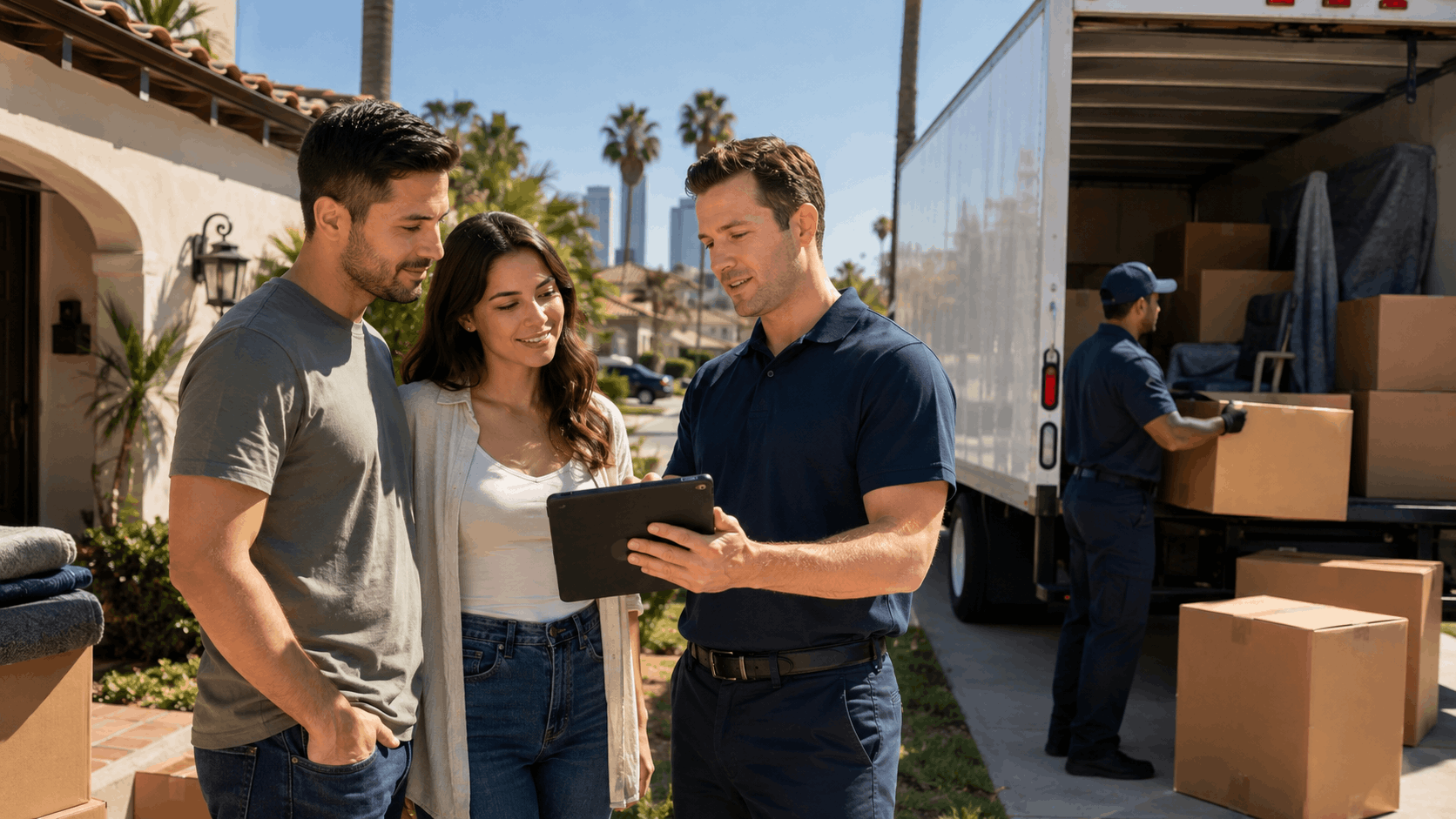
Our team works across Los Angeles every day, so we handle local and long-distance moves side by side. The approach shifts with the job, but the goal stays constant: protect belongings and keep the schedule tight. Here is how we manage each type.
- Local moves get hourly pricing and right-sized crews.
- Long-distance moves get route planning and inventory tracking.
- Storage bridges the gap between homes when needed.
- Every move gets a clear estimate upfront.
Popeye Moving builds its moving services around the realities of each LA neighborhood.
Local Move Services Across LA Neighborhoods
Local work makes up a large share of what we do across LA. We move families and renters through areas like Los Feliz, Brentwood, and Silver Lake week after week. That daily experience shapes how we plan each job.
Tight streets and apartment buildings are part of the routine here. A narrow street in Los Feliz or a walk-up in Silver Lake calls for careful truck placement and crew planning. We scout access ahead of time so move day runs smoothly.
Beach-side and Westside jobs bring their own challenges. Our team handles moves through Culver City and Santa Monica, where parking and building rules vary block by block. Knowing these details keeps local moves efficient.
Because we drive these neighborhoods constantly, we know which streets need permits and which buildings have loading rules. That local knowledge cuts wasted time on move day. It also helps us give accurate hourly quotes on our local moving service.
Long-Distance Coordination and Delivery
Long-distance jobs need tight coordination from start to finish. Our team plans the route, tracks the inventory, and sets a delivery window before the truck leaves LA. That planning keeps the shipment on schedule across the miles.
Inventory tracking protects belongings on a long haul. Each item gets logged so nothing goes missing between pickup and delivery. Customers get a clear list they can check against at the destination.
Route planning matters for both interstate and in-state long hauls. Whether a move heads to Las Vegas or up to the Bay Area, we map the drive and delivery timing in advance. Our corporate long-distance service also supports business relocations that leave the region.
Delivery coordination closes the loop. We keep customers updated on arrival timing so they can plan around the delivery window. Clear communication makes a long-distance move feel manageable rather than uncertain.
Storage Options Between Moves
Sometimes a move has a gap between homes. A closing date might slip, or a long-distance delivery might need to wait. Storage bridges that gap and keeps belongings safe in the meantime.
Our short-term storage suits customers between homes for a few days or weeks. Items stay wrapped and secure until the new place is ready. That flexibility takes pressure off tight timelines.
Long-term storage works for customers who need months of space. Our long-term storage keeps furniture and boxes protected over extended periods. It is a common choice during drawn-out long-distance moves.
Storage also pairs well with long-distance delivery scheduling. If a delivery window falls before the customer is ready, belongings can wait in storage until the move-in date. That keeps the whole process on the customer's timeline.
Need Help in Los Angeles?
Popeye Moving & Storage serves Los Angeles and all of Los Angeles County.
How to Decide Which Move Definition Fits Your Situation
Figuring out a move type before requesting a quote saves time and confusion. A few simple questions reveal the category almost every time. Working through them helps a reader land on the right move type.
Questions to Ask Before Booking
Start with distance and geography. Does the move cross a state line? If yes, it is an interstate move under federal rules, no matter the mileage.
If the move stays in California, check the mileage next. Is the drive under about 50 miles and inside LA County? If so, it is almost certainly a local move billed by the hour.
Then weigh the distance if the move stays in-state but travels far. A haul of 100-plus miles usually counts as long-distance even without crossing a state line. These three questions sort most moves quickly.
Writing down the origin and destination addresses makes this easy. A quick mileage check between them settles the local-versus-long-distance question. From there, a customer knows which pricing model and timeline to expect when booking.
When a Move Falls in a Gray Area
Some moves sit in a borderline zone. A move from LA to Ventura County is a common example. It stays in California and is not very far, but it crosses out of LA County and can approach the mileage threshold.
In gray-area cases, movers look at total mileage and time to decide. A shorter borderline move might still be billed hourly, while a longer one shifts to distance-based pricing. The exact call depends on the miles involved.
Ventura County moves often land near the local-to-long-distance line. Our team measures the actual distance and explains which category applies before booking. That keeps the pricing model clear from the start.
The best move for any borderline case is to ask directly. A mover can classify the job based on the real addresses rather than a guess. Getting this settled early prevents billing surprises later.
Getting an Accurate Quote for Your Move Type
An accurate quote starts with a proper survey. For larger moves, an in-home or virtual survey lets the mover see the inventory and access. That detail leads to a correct estimate for both local and long-distance jobs.
For a local move, the survey helps set the crew size and projected hours. Seeing stairs, parking, and the volume of items sharpens the hourly quote. It reduces the chance of running over the estimated time.
For a long-distance move, the survey drives the weight and inventory estimate. A clear inventory supports a binding estimate that locks in the price. That protects the customer from surprise charges after the truck is weighed.
A virtual survey works well for busy customers who cannot schedule an in-home visit. Either way, the more the mover sees, the more accurate the moving quote. Our team offers both options so customers get a reliable estimate for their move type. Reach out through our contact page to set one up.
Final Thoughts
The line between a local move and a long-distance move comes down to distance, county lines, and state boundaries. A short hop inside LA County is local and billed by the hour. A long haul or any state-line crossing is long-distance, billed by weight and mileage.
Knowing the category upfront shapes the price, the paperwork, and the planning timeline. Local moves book a few weeks out; long-distance moves need more lead time and heavier packing. A quick mileage check usually settles which one applies.
Whether the move is across Silver Lake or across state lines, our team is ready to help. Contact Popeye Moving & Storage Co. in Los Angeles for a clear estimate and honest advice on your move type. Call or reach out today to book a consultation and get started.
Frequently Asked Questions
- How many miles makes a move long-distance in California?
- The common benchmark is 50 miles. A move under that distance is usually local and billed by the hour, while a move well beyond it shifts to long-distance pricing. The exact cutoff can vary by mover, and a move over 100 miles almost always counts as long-distance. Any move that crosses a state line is long-distance no matter the mileage, even short trips to Las Vegas.
- Is a move within LA County always considered local?
- Most within-county moves are local, but not every one. LA County covers a large area, so a move from the far north Valley to a southern beach city can approach or pass the 50-mile mark. In those cases, movers look at both mileage and county lines together. A typical cross-town move inside the county, like Silver Lake to Culver City, stays firmly local.
- Why are local moves charged by the hour?
- Local moves are short, so time is the main cost driver rather than distance or weight. The hourly model charges for crew size and the hours worked, usually from arrival to the final unload. Factors like stairs, parking distance, and the amount of items affect the total. A well-packed, easy-access home moves faster, which keeps the hourly bill lower.
- How are long-distance move costs calculated?
- Long-distance moves are priced by weight, mileage, and inventory rather than by the hour. The mover weighs the loaded truck, subtracts the empty weight, and charges based on the shipment's pounds plus the distance traveled. A heavier or larger household costs more to move. A binding estimate based on a clear inventory locks in the price so it does not change unexpectedly.
- Do I need different insurance for a long-distance move?
- Both move types include basic liability coverage, but valuation options matter more on long hauls. Long-distance interstate moves offer released-value and full-value protection choices under federal rules. Because belongings travel farther and get handled more, upgrading valuation coverage is worth considering. Ask your mover what standard coverage includes and what upgrades are available before signing the paperwork.
- How far ahead should I book a move in LA?
- Book a local LA move two to four weeks ahead, and stretch that to four to six weeks near month-end or during summer. Long-distance and interstate moves need more lead time, usually six to eight weeks, and up to twelve weeks in peak season. Early booking secures the preferred date and gives more choice of pickup and delivery windows.
- Is a move from LA to San Diego local or long-distance?
- An LA to San Diego move is long-distance. Even though it stays in California and never crosses a state line, the roughly 120-mile drive puts it well past the 50-mile local benchmark. That distance means weight-and-mileage pricing rather than an hourly rate. It falls under California state oversight as a long in-state move.
- Can the same company handle both move types?
- Yes, a properly credentialed mover can handle both local and long-distance jobs. The company needs a CAL-T number for in-state moves and a USDOT number for interstate moves. A mover with both sets of credentials can move a customer across town or across state lines. Our team holds the proper licensing to cover local and long-distance moves alike.
- What paperwork should I request before hiring a mover?
- Ask for a written estimate, the mover's license number, and an inventory sheet. For an in-state move, request the CAL-T number; for an interstate move, request the USDOT number. Confirm the estimate type, binding or non-binding, and get proof of insurance. A legitimate mover shares these documents openly, so hesitation on any of them is a warning sign.
- Do storage costs differ between move types?
- Storage needs and costs can differ by move type. Local customers often need short-term storage for a few days between homes when closing dates slip. Long-distance customers may need storage while waiting on a delivery window or during a drawn-out relocation. Costs depend on the space required and the length of stay, so short-term and long-term rates vary accordingly.
P
Popeye Moving & Storage Co. Team Team
Licensed moving and storage professionals serving Los Angeles and Los Angeles County.
Licensed in California · License #CAL T 189749 | USDOT 1472924 | MC 498816C
Why trust Popeye Moving & Storage?
Founded in 1994, Popeye Moving & Storage is a licensed and insured moving and storage service serving Los Angeles and Los Angeles County. All content is reviewed by our licensed technicians.

Need Help in Los Angeles?
Popeye Moving & Storage serves Los Angeles and all of Los Angeles County.
Related Articles

Tips & Advice
Hidden Hills Movers: Estate Property and Privacy-First Moving
A local expert guide to estate and privacy-first moving in Hidden Hills - covering gated access, discreet service, custom crating, storage, costs, and how to hire the right mover.

Tips & Advice
Movers in Playa del Rey and Del Rey - Your Neighborhood Moving Company on Centinela
A local guide to moving in Playa del Rey and Del Rey from a Centinela-based crew: costs, parking, bluff stairs, building rules, and how to plan your move.
Tips & Advice
Storage Near the 405 in West LA: What's Actually Available and Why a Mover-Run Warehouse Beats the Roll-Up Units
A clear guide to storage near the 405 in West LA, comparing roll-up self-storage units with a mover-run warehouse on cost, safety, and hassle for local movers.