How-To Guides
How Professionals Protect Hardwood, Marble, and Door Frames - Full-Protection Standards on Westside Homes
Key Takeaways
- Westside homes mix high-value finishes like white oak and imported marble with tight older layouts, so surface protection needs matched materials, not generic blankets.
- Hardwood floors get a layered system: Ram Board and runners for foot traffic, neoprene mats for heavy point loads, and grit control to stop scratches.
- Marble travels upright on A-frames or support boards because it cracks under its own weight when laid flat, and it must stay dry to avoid etching and stains.
- Door frames get removable jamb protectors and foam wrapping, and crews remove doors on their hinges to gain clearance in tight older homes.
- A single scratch can cost hundreds to thousands to repair, far more than the protection materials that prevent it.
- A pre-move walkthrough, mapped carry path, and HOA coordination prevent most damage before any box moves.
- Coastal humidity and winter rains call for extra mats, moisture control, and climate-aware storage for wood and stone.
- Popeye Moving applies a standard protection setup on every Westside job, from Brentwood to Santa Monica and beyond.
In This Article
A Brentwood homeowner called us last spring in a panic. She had just finished installing wide-plank white oak floors throughout her home off Bundy Drive, and her move-in date was two weeks away. Her question was simple: how do you move a full house of furniture across new floors without leaving a single scratch?
It is a fair worry. Westside homes carry some of the most expensive finishes in Los Angeles, and one careless drag of a dolly can turn a beautiful floor into a costly repair. The good news is that professional crews follow a layered protection system built for exactly these materials.
Why Floor and Surface Protection Matters More on the Westside
The Westside is a mix of two things that make surface protection a real concern: high-value finishes and tight older homes. You might move a modern Pacific Palisades build with heated marble floors one week and a 1925 Spanish bungalow near Montana Avenue the next. Both need protection, but for very different reasons.
Generic moving blankets tossed on the ground do not cut it here. Proper Westside home protection means matching the right materials to the right surfaces, from hardwood floors to imported stone. Skip that step and you invite moving damage that costs far more than the move itself.
- High material value: Many Westside floors and counters cost more per square foot than the furniture sitting on them.
- Tight layouts: Older homes have narrow halls, sharp turns, and original woodwork that dents easily.
- Coastal climate: Humidity and winter rain add moisture risks that inland homes rarely face.
The Kinds of Finishes Found in Brentwood and Pacific Palisades Homes
Walk into a newer home in Brentwood or the Palisades and you will often find wide-plank white oak floors running through the main living spaces. These planks are wide, soft compared to older species, and finished with matte oils that show every scuff. A single scratch stands out because the finish is smooth and low-sheen.
Imported marble is everywhere in these homes too. Kitchen islands wrapped in Calacatta, bathroom vanities in Carrara, and entry floors in polished stone that came from quarries in Italy. These slabs are heavy, brittle at the edges, and nearly impossible to match if a piece chips.
Custom door frames and stained casings round out the picture. Many homeowners pay cabinet-grade prices for trim work that was stained on site to match their floors. When we handle a move in Brentwood, we treat every one of these finishes as if it cannot be replaced, because in many cases it truly cannot.
Repair costs on these materials run high. Refinishing white oak, sourcing matching marble, or restaining a custom casing all require specialists who charge premium rates. Prevention is always the cheaper path.
Older Santa Monica and Mar Vista Homes With Narrow Doorways
The 1920s Spanish and craftsman homes near Montana Avenue tell a different story. These homes were built when furniture was smaller and doorways were narrower. A wide sofa or a modern sectional often has just an inch of clearance through the original openings.
Mar Vista's mid-century homes share the same challenge. Tight halls, low ceilings in spots, and built-in nooks that were never meant for oversized modern pieces. Squeezing a king mattress or a large armoire through these spaces takes planning, not brute force.
The original woodwork in these Santa Monica homes is often irreplaceable. Door casings, baseboards, and archways carry decades of character and original paint layers. One gouge means a repair that rarely matches the surrounding trim.
That is why narrow doorways in older homes get extra padding and a slower, measured approach. We measure openings before anything large moves, wrap the jambs, and sometimes remove doors entirely to buy an extra inch or two of clearance.
What a Single Scratch Actually Costs to Repair
Homeowners often underestimate repair costs until they get a quote. Spot-repairing a scratched hardwood floor might run a few hundred dollars, but that assumes the patch blends in. With matte white oak, blending is hard, and many owners end up refinishing an entire room.
Full floor refinishing cost ranges from roughly 3 to 8 dollars per square foot in Los Angeles, and more for wide-plank or specialty oils. A single living room can climb past 2,000 dollars fast. That is a big price for one dragged dolly.
Marble repair is worse. A chipped edge might be filled for a few hundred dollars, but a cracked slab often means replacing the whole piece. Sourcing, templating, and installing a new marble counter can run several thousand dollars, and matching veining is never guaranteed.
Door casing repair sits in the middle. A dented jamb might cost 200 to 600 dollars to patch and repaint, more if the trim is custom-stained. Add it all up and the math is simple: real protection materials cost a fraction of a single repair.
Get Your Free Quote
Tell us about your move and we'll get back to you fast.
How Hardwood Floors Get Protected During a Move
Hardwood floor protection is a layered system, not a single product. Foot traffic, dolly wheels, and heavy furniture each create a different threat, so each gets its own defense. The order the materials go down matters just as much as the materials themselves.
Good floor runners and rigid board cover the walking paths, while cushioning mats handle the heavy point loads. Following these moving standards keeps a floor looking the same after the truck leaves as it did before the first box moved.
| Material | Where It Goes | What It Stops |
|---|---|---|
| Ram Board | Main walking paths | Scuffs, dents, dropped items |
| Adhesive-free runners | Halls and turns | Foot traffic scratches |
| Neoprene mats | Under heavy items | Point-load pressure |
| Corner and edge pads | Doorways and turns | Impact dents |
Ram Board and Floor Runners That Handle Foot Traffic
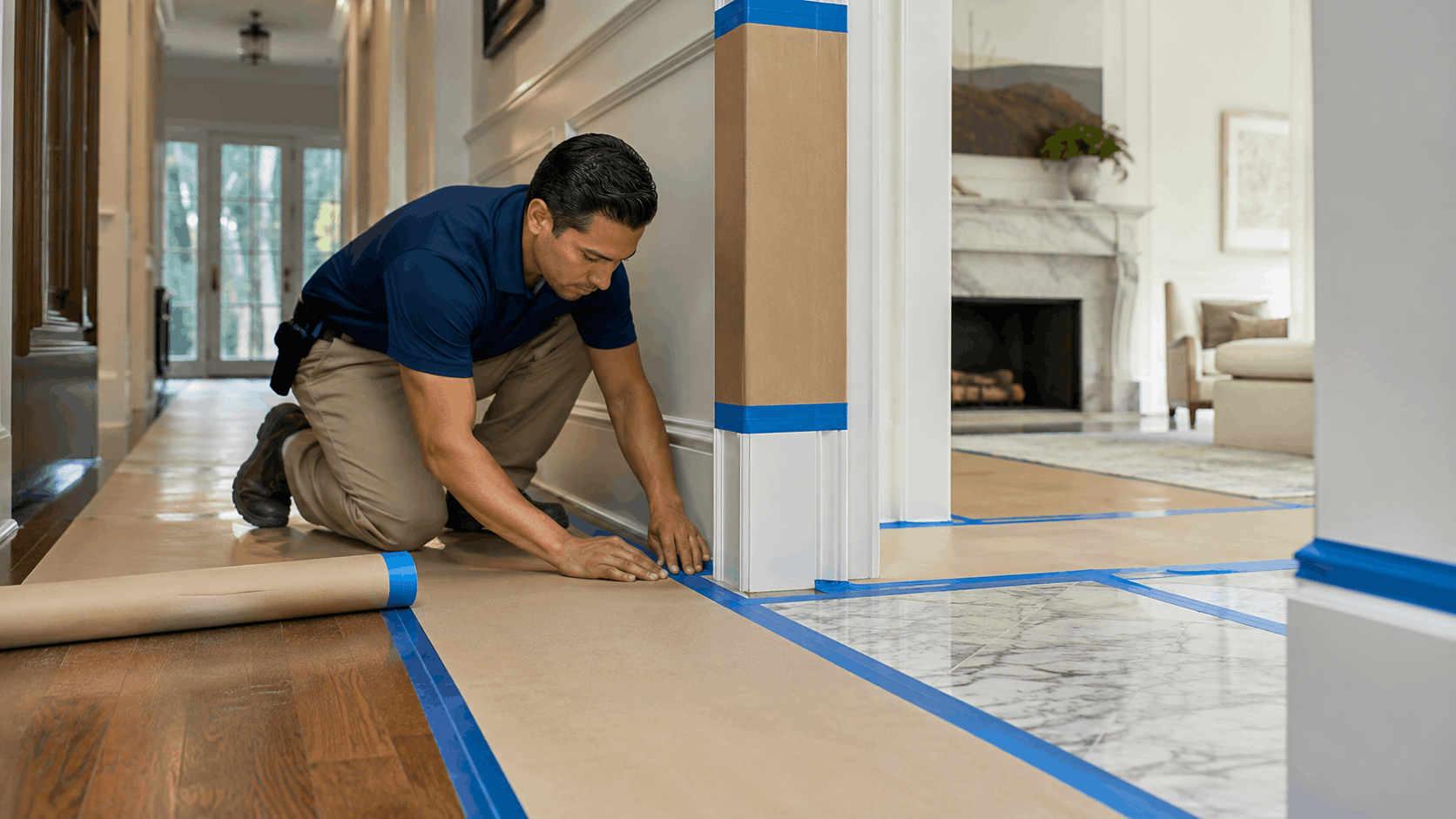
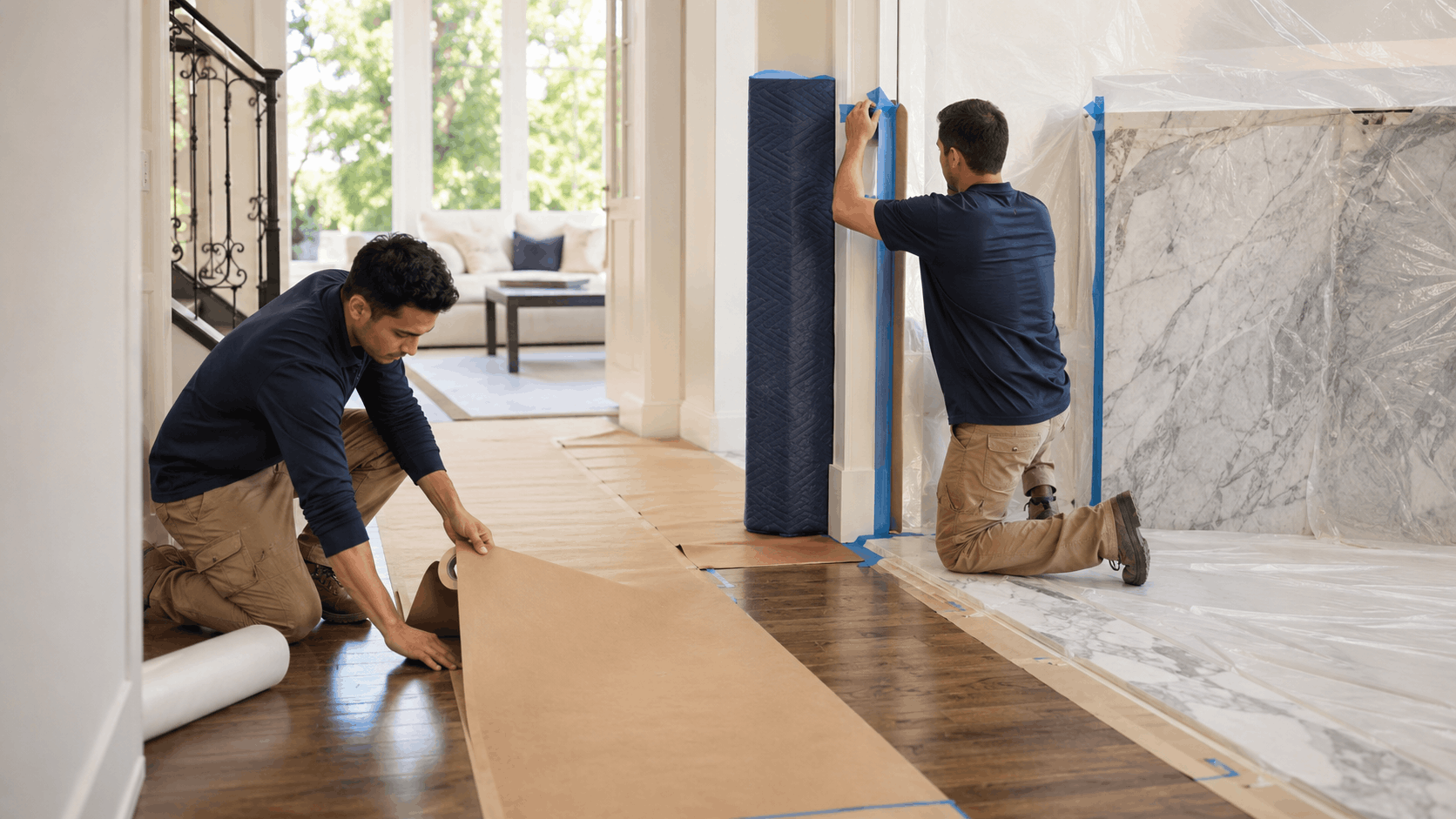
Ram Board is a heavy-duty floor paper that rolls out across the main paths a crew will walk all day. It is thick enough to absorb a dropped tool and firm enough that dolly wheels roll over it without digging in. On a full house move, this board is the base layer under everything else.
On top of or alongside the board, we lay adhesive-free floor runners along halls and high-traffic lanes. These grip the floor without glue, so nothing lifts the finish when it comes up at the end of the day. That matters most on oil-finished white oak, where even mild adhesive can leave a mark.
When taping is needed, we tape board to board, never board to the floor finish. Painter's-grade low-tack tape holds seams together without touching the wood. This keeps walking paths covered edge to edge with no gaps where grit can sneak through.
The goal is a continuous protected lane from the front door to every room. Crews should never have to step on bare hardwood during the carry. When the paths are set up right, a floor sees hundreds of trips and shows nothing when the paper comes up.
Neoprene Mats and Cushioning Under Heavy Items
Foot traffic is one threat, but heavy furniture creates a different one: point loads. A piano leg, a safe corner, or a loaded dresser concentrates hundreds of pounds onto a few small contact points. That pressure can dent hardwood even through a blanket.
Rubber-backed neoprene mats spread that weight out and cushion it. We set heavy items down onto these mats rather than directly on the floor or thin padding. For a piano move, this cushioning is non-negotiable given how much weight rides on each caster.
Dolly wheels get attention too. The right wheels are soft and clean, and they roll over Ram Board rather than bare wood. A hard wheel with grit stuck in it is one of the fastest ways to score a long scratch across a room.
Combining mats, proper wheels, and rigid board under the carry path means the floor never takes a concentrated hit. Weight stays spread out and cushioned from the truck ramp to the final resting spot.
Keeping Grit and Debris Off the Surface
The biggest enemy of a hardwood floor during a move is not a big object. It is a single grain of sand. Trapped under a dolly wheel or a shoe, one piece of grit acts like sandpaper and can score a scratch the full length of a walking path.
Westside homes track in plenty of it. Driveways, garden paths, and coastal breezes carry fine grit into entryways constantly. Homes near the beach in Marina Del Rey and the sandy blocks of Venice see this every single day.
Before protection goes down, crews sweep and clean the paths. We control tracked-in dirt at the door with mats and clean footwear, and we sweep again if the day runs long. Debris control is a running job, not a one-time step.
This grit control is why the floor paper matters so much. Even if a grain slips in, the board takes the abrasion instead of the finish. Clean paths plus a protective layer is what keeps scratch prevention working all day.
Rainy Season Precautions for Westside Moves
Winter rains near the coast change everything. From roughly December through March, storms roll in off the ocean and turn driveways and yards into mud. That water and mud rides right into a home on shoes and dolly wheels.
Moisture is a hardwood floor's enemy. Standing water can cup planks or dull a finish, and mud grinds grit into every step. During wet months we double up on entry mats and keep the ramp and path covered against runoff.
We also add absorbent runners near the door and swap them out as they soak through. Crews wipe wheels and boots at the threshold so nothing wet crosses onto the protected paths. Coastal weather demands this extra moisture protection.
Hillside homes above Sunset add another wrinkle, since steep, wet driveways make footing tricky and drips harder to control. Planning for the rainy season keeps a winter move as clean as a dry summer one.
Need Help in Los Angeles?
Popeye Moving & Storage serves Los Angeles and all of Los Angeles County.
Protecting Marble, Stone, and Delicate Surfaces
Marble protection works differently than wood protection. Stone does not scratch the way a floor does, but it chips, cracks, and stains in ways that are often permanent. Stone countertops and delicate surfaces call for their own handling rules.
The main risks are impact at the edges, cracking under the wrong support, and staining from anything acidic or wet. Crews guard against all three with padding, proper transport, and clean barrier materials.
Padding and Corner Guards for Marble Counters
Marble countertops take the most damage at their corners and edges. That is where a passing box or a dolly handle catches, and a sharp corner chips off in an instant. Foam corner guards wrap those vulnerable points before anything moves nearby.
We also pad the flat surfaces with thick blankets when there is any chance of contact. On a kitchen move, the counter often becomes a staging zone by accident, so we block that by keeping tools and boxes off the stone entirely.
Setting objects directly on marble is a habit we avoid on every job. Even a set-down toolbox can scratch a polished surface or chip an edge on the way down. Foam padding and a clear no-contact rule keep counters safe.
For built-in counters that stay in place, the protection is about shielding them from the traffic flowing past. For counters or vanities being moved, the padding wraps the whole piece before it leaves the wall.
Moving Marble Slabs and Tabletops Safely
Marble has a secret weakness: it cracks under its own weight when laid flat. A large slab or tabletop carried horizontally can snap right down the middle from the stress. That is why stone always travels upright.
Crews use A-frames to transport marble slabs on edge, where the stone supports its own weight safely. The A-frame holds the piece vertical and padded during the carry and the truck ride. This is standard stone handling for anything large.
For tabletops and smaller pieces, support boards keep the stone rigid and backed during transport. We strap the piece to the board so it cannot flex, then move it upright whenever possible. Flexing is what starts a crack.
Heavy stone pieces often need our specialty moving approach with extra hands and lifting straps. Rushing a slab or laying it flat to save time is how movers break pieces that cost thousands to replace.
Preventing Stains and Etching on Porous Stone
Marble is porous, which means it drinks up liquids and reacts to acids. A splash of coffee, wine, or citrus can etch a dull mark into a polished surface that no cleaning will remove. Even water left sitting can leave a ring.
During a move, crews keep stone clean and dry at all times. We never rest a damp blanket or a wet box on marble, and we wipe up any moisture right away. Stone etching happens fast, so prevention is about constant awareness.
The barrier materials matter too. We use clean, non-reactive padding against the stone, never anything that could bleed color or hold moisture against the surface. The wrong material pressed against wet marble can transfer a stain.
Porous surfaces reward careful handling. Keep them dry, keep acids away, and use the right barriers, and the stone arrives looking exactly as it left. That is the standard for every delicate surface we handle.
Full-Protection Standards for Door Frames and Casings
Doorways take the most abuse in any move. Every large item has to pass through them, and the edges of the jamb sit exactly where a heavy piece swings and pivots. Door frame protection is one of the first things a good crew sets up.
Jamb padding and trim protection guard the wood and drywall from dents, scrapes, and gouges. On older Westside homes with original casings, this step protects finishes that cannot be bought again.
Jamb Protectors and Foam Wrapping
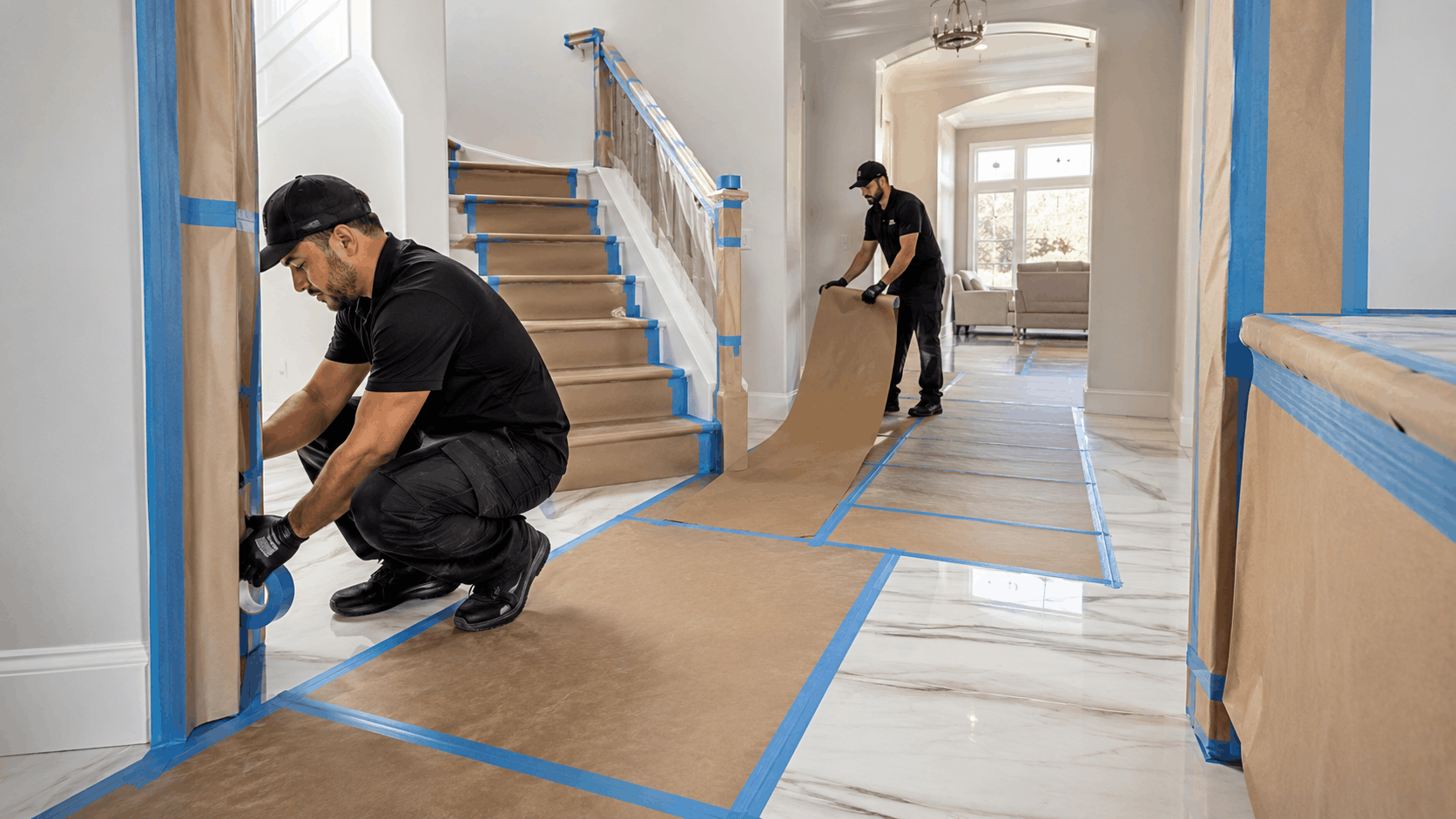
Removable jamb protectors slip over the strike side of a doorway, which is the edge that takes the most hits. These guards cover the vertical trim where a sofa arm or a dresser corner is most likely to catch. They go on every doorway along the carry path.
Foam wrapping adds a second cushion around jambs and corners that see heavy contact. We tape the foam to itself, not to the trim, so nothing pulls paint or leaves adhesive marks when it comes off. Clean removal is part of the standard.
The point is to build a padded tunnel through each opening. Furniture can brush the padding all day and the wood underneath never feels it. Doorway padding turns the tightest part of a move into a low-risk zone.
On modern homes with tall, painted door frames, this padding also protects flat paint from scuffs that show badly. On older homes, it shields decades-old finishes that would be impossible to match.
Protecting Original Trim in Older Westside Homes
Homes near Venice and West LA often have original casings that are one of a kind. The trim was milled and stained generations ago, and no hardware store carries a match. A gouge in this wood is a permanent scar unless a skilled finisher can blend it.
That is why we give original trim extra care and slow the pace down. Before any large item goes through, we measure the opening and the piece to know whether it fits. Guessing is how trim gets damaged.
Measuring doorways ahead of time also tells us when a door needs to come off or an item needs to tilt. When we handle a job in West Los Angeles, this planning step prevents the forced squeeze that dents old woodwork.
Original trim in a 1920s home is part of what makes it valuable. We treat it that way, wrapping and measuring so the character stays intact after everything is loaded.
Removing Doors When Space Is Tight
Sometimes an extra inch is the difference between a smooth carry and a damaged frame. When clearance is that tight, crews take the door off its hinges to open up the full width of the frame. That inch or two often lets a large piece through cleanly.
Hinge removal is quick when done right. We tap the hinge pins out, lift the door free, and set it aside padded and out of the traffic lane. The frame is then fully open for the widest items.
Every removed door gets labeled so it goes back exactly where it came from. Hinges and pins stay bagged and tagged with the door, so reassembly is fast and correct. Nothing gets mixed up on a multi-door job.
Removed doors are stored flat or upright against a protected wall, never left where they could fall or get stepped on. Taking a door off is often the safest way to protect both the door and the furniture.
Corner and Wall Protection Near Doorways
The spots right around a doorway get hit almost as often as the frame itself. Wall corners, the edge of a hallway, and the first step of a staircase all sit in the path of a pivoting piece. These are the most common contact points in any move.
We pad outside wall corners with foam or corner guards wherever a carry route turns. A sharp drywall corner dents easily and a scuffed one shows every mark. Corner protection catches the hit before the wall does.
Stair edges get special attention because heavy items ride close to them on the way up or down. The nosing of each step and the wall alongside the stairs get padded when large pieces are involved. Wall padding here prevents both dents and dragged scuffs.
Mapping these hot spots before the move means they are all covered before the first heavy piece leaves the truck. Doorways, corners, and stairs together form the high-risk zone, and full protection covers all of it.

The Tools and Materials Behind Full-Protection Moves
A protected move depends on the gear the crew brings through the door. The difference between a clean move and a damaged home often comes down to whether the truck carries the right protection supplies. Knowing what to look for helps homeowners judge a mover before booking.
Professional equipment ranges from simple quilted blankets to specialty carts and lifting straps. The right moving materials show up on the truck ready to use, not bought last minute or skipped to save money.
Moving Blankets, Shrink Wrap, and Padding
Quilted moving blankets are the workhorse of any move. They wrap furniture, shield finishes, and cushion corners against impact. A well-stocked crew carries dozens of them, not a handful, so every piece gets covered.
Shrink wrap holds blankets in place and keeps drawers and doors from swinging open. Used right, it secures padding around a piece without touching the wood directly. Our packing and crating team uses it as an outer layer, not against bare finishes.
Wrapping wood the wrong way traps moisture. Plastic sealed tight against a wood surface can cause it to sweat, especially in coastal humidity. That is why blankets go against the wood first, with wrap on the outside to hold everything snug.
Furniture padding also protects the home itself. A padded dresser cannot gouge a wall on the way past, so good wrapping guards both the item and the house at the same time.
Air Dollies, Sliders, and Lifting Straps
The right lifting gear keeps weight off the floor and out of the crew's straining hands. Lifting straps let two people carry a heavy dresser with control, reducing the chance of a drop that damages both the item and the floor.
Furniture sliders let heavy pieces glide instead of drag. On a hardwood floor, a slider spreads and reduces the pressure so nothing scores the finish. They also make tight turns easier without lifting fully.
Air dollies and padded four-wheel dollies move the heaviest loads with the weight spread across soft wheels. For safes, large stone pieces, and pianos, this gear reduces point pressure on hardwood that would otherwise dent under the load.
Good tools protect people too. A crew that is not overloaded makes fewer mistakes, and fewer mistakes means fewer scratches, drops, and dented frames throughout the day.
What Cheap Moves Skip and Why It Costs You
Low-cost movers cut corners in predictable places, and floors are usually first. They skip Ram Board, use one thin blanket where three are needed, and roll hard dollies straight across bare hardwood. The savings vanish the moment a repair bill arrives.
Cheap crews also rush doorways. Without jamb guards or measuring, they force pieces through and gouge the trim. On an older home with original casings, that shortcut can cost more than the entire move saved.
Warning signs are easy to spot if you know them. Ask what floor protection they bring, whether they use A-frames for stone, and how they pad door frames. A vague answer or a shrug tells you they cut corners and pass the damage risk to you.
Full protection is not a luxury add-on. It is the baseline that keeps a move from turning into a repair project. Paying a little more for a crew that carries the right gear is far cheaper than fixing what a bargain move breaks.
Need Help in Los Angeles?
Popeye Moving & Storage serves Los Angeles and all of Los Angeles County.
How Crews Plan Protection Before Moving Day
Most damage is prevented before a single box moves. A proper pre-move walkthrough and clear move planning catch the risks early, so the crew arrives with a plan instead of improvising. Planning is where damage prevention really starts.
- Survey the finishes: Note every hardwood floor, stone counter, and delicate surface in advance.
- Map the path: Plan the shortest safe route from truck to room.
- Confirm access: Sort out parking, elevators, and building rules before the day.
The In-Home Walkthrough and Surface Survey
A good walkthrough starts with a slow lap through the home. We note where the delicate finishes are, from white oak floors to marble islands to original trim. Each one gets flagged so protection is ready when the crew arrives.
The survey also catches the tricky spots. Tight turns, low archways, narrow stairs, and heavy items that need special handling all get listed. Knowing these ahead of time shapes how much material and how many hands the job needs.
We measure the largest pieces against the tightest openings during this survey. That tells us in advance whether a door comes off or an item tilts through. No surprises on moving day means no forced squeezes.
This surface survey becomes the protection plan. It decides where Ram Board goes, which doorways get padded, and which pieces need A-frames or extra crew. A move built on a real walkthrough runs smoother and safer.
Mapping the Carry Path From Truck to Room
The carry path is the route every item travels from the truck to its final spot. We plan the shortest safe version of it, which means fewer steps across delicate floors and fewer turns near fragile trim. A short path is a low-risk path.
Westside streets complicate this. Narrow streets in the Palisades and packed blocks near Montana Avenue make truck parking a real challenge. We scout where the truck can sit legally and close enough to keep the carry short.
Some hillside homes only have street access far below the front door. Long or steep paths get extra runners and mats along the whole route. The plan accounts for every foot the crew will walk with weight in hand.
Mapping the path also sets the order of the move. Large pieces that need the most clearance go first while the paths are clearest. A planned route keeps the whole day flowing without backtracking across protected floors.
Handling HOA Rules and Building Access on the Westside
Condo buildings near Wilshire and in Marina Del Rey come with their own rules. Many require elevator pads, a reserved freight elevator, and a specific time window for moves. Miss those and the building can turn a crew away at the door.
We coordinate with property managers ahead of the move. That means booking the elevator, confirming loading dock access, and getting any certificate of insurance the HOA requires. This paperwork gets handled before moving day, not during it.
Elevator pads protect the building's finishes just like our padding protects the home. We hang them before loading and follow the building's rules on cart use and hallway protection. Respecting HOA rules keeps the move on schedule.
Buildings along Wilshire often have tight time windows during business hours. We plan the crew size and load order to finish inside that window. Good building access planning prevents the delays that rush a move and cause damage.
What to Expect When Popeye Moving Protects Your Home
These standards are not theory for us. Popeye Moving applies them on real Westside jobs every week, from new builds to century-old bungalows. As one of the local Los Angeles movers that specializes in high-value homes, home protection service is built into how we work.
Here is what the process looks like and where our team goes across the Westside.
Serving Brentwood, Santa Monica, and Beyond
Our service area covers the Westside neighborhoods where finishes and access both run demanding. We work Brentwood, Santa Monica, Pacific Palisades, Mar Vista, Venice, West LA, Culver City, and the beach communities down the coast.
We know the local conditions that shape a move here. Coastal humidity near the water, sandy grit in beach-adjacent homes, and steep hillside driveways above Sunset all change how we protect a home. Local knowledge is what makes the plan fit the property.
As experienced local residential movers, we have driven the narrow streets off Montana Avenue and the tight blocks of Venice enough to plan parking and paths in advance. That familiarity saves time and prevents last-minute scrambles.
From a modern Palisades build to an original craftsman in Culver City, the protection standards stay the same. We match the materials to the home in front of us.
Our Standard Protection Setup on Every Job
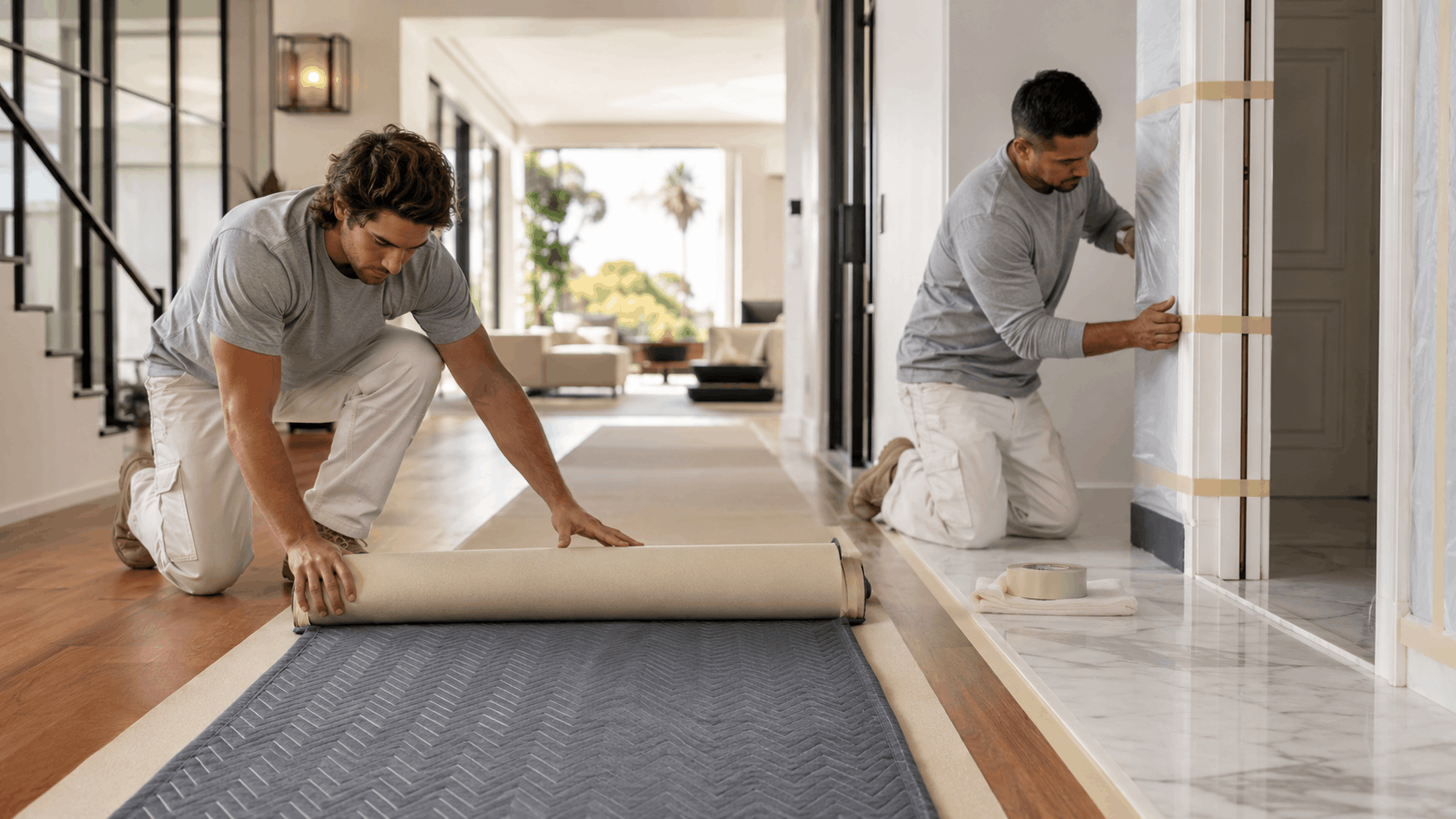
Before any lifting starts, our crew sets up the full protection package. Ram Board and runners go down along every carry path, and neoprene mats stage under the spots where heavy items will land. Nothing heavy moves until the floors are covered.
Doorways along the route get jamb protectors and foam wrapping. Wall corners and stair edges near the path get padded next. Stone counters and delicate surfaces get corner guards and blankets before the traffic starts flowing.
Furniture then gets blanketed and wrapped at the source, so nothing travels exposed. This standard process is the default, not an upgrade you have to ask for. Every job starts the same way regardless of size.
Setting clear expectations matters to us. Customers know the floors, stone, and doorways are covered before the first box moves. That is what a full-protection move on moving day should look like.
Storage Options for Marble and Wood Pieces
Sometimes pieces need to sit between moves, and stone and wood are picky about where they wait. Both react to humidity, which runs high near the coast. Climate-aware storage keeps them stable while they are out of the home.
Our storage solutions include humidity-controlled options that protect wood from swelling and cracking. Marble and stone stay padded and upright in storage, just as they travel, so nothing chips or cracks while stored.
Humidity control matters most for fine furniture and antiques. Wood that sits in a damp, uncontrolled space can warp or split over weeks. Controlled conditions keep the moisture level steady and the pieces safe.
For designers and homeowners staging a remodel, our designer receiving and consolidation service holds delicate pieces until the home is ready. Stone and wood stay protected from the truck to storage to the final placement.
Need Help in Los Angeles?
Popeye Moving & Storage serves Los Angeles and all of Los Angeles County.
Final Thoughts
Protecting hardwood, marble, and door frames is not about a single blanket or a lucky day. It is a layered system of the right materials, careful planning, and a crew that respects what cannot be replaced. On Westside homes with high-value finishes and tight older layouts, that system is what keeps a move clean.
Prevention always costs less than repair. A room of refinished floors or a cracked marble slab dwarfs the price of doing the move right the first time. The standards in this guide are how professionals keep your home looking the same after the truck leaves.
If you are planning a move in Brentwood, Santa Monica, or anywhere across the Westside, our team is ready to protect your home. Call Popeye Moving or contact us for a consultation and a clear protection plan built for your finishes.
Frequently Asked Questions
How do movers protect hardwood floors during a move?
Professional crews use a layered approach. Ram Board covers the main walking paths, adhesive-free floor runners protect halls and turns, and neoprene mats go under heavy items to spread point loads. Crews sweep away grit that could scratch, use soft clean dolly wheels, and never step on bare hardwood during the carry. Tape only goes board to board, never on the finish, so nothing lifts when protection comes up.
Can marble countertops be moved without cracking?
Yes, when handled correctly. Marble cracks under its own weight if laid flat, so slabs and tabletops travel upright on A-frames or strapped to rigid support boards. Corners get foam guards, flat surfaces get thick padding, and crews avoid setting anything directly on the stone. Keeping the piece vertical and supported prevents the flexing that starts a crack. Rushing or laying stone flat is how movers break costly pieces.
Do movers protect door frames and trim?
Good crews protect every doorway on the carry path. Removable jamb protectors cover the strike side, and foam wrapping cushions corners that heavy items brush against. Tape holds foam to itself, never to the trim, so no adhesive marks or peeled paint are left behind. When clearance is tight, crews take doors off their hinges, label them, and store them safely to gain the extra inch large furniture needs.
What does it cost to repair a scratched hardwood floor?
A small spot repair might run a few hundred dollars, but blending a patch into matte white oak is hard, so many owners refinish the whole room. Full refinishing in Los Angeles runs roughly 3 to 8 dollars per square foot, and more for wide-plank or specialty oil finishes. A single living room can pass 2,000 dollars. Proper protection materials cost a small fraction of that repair.
How much extra does full-protection service add to a move?
With a reputable crew, real protection is usually included, not a separate charge. Pricing depends on home size, the number of delicate finishes, stair or elevator access, and how much material the paths require. A larger or more finish-heavy home takes more board, padding, and time. The cost of protection is always small next to a single floor refinish or marble replacement, so good movers build it in.
Do older Westside homes need special moving care?
They do. Homes near Montana Avenue in Santa Monica and throughout Venice have narrow doorways, tight halls, and original trim that cannot be matched. Crews measure openings against large pieces before moving them, add extra jamb padding, and often remove doors to gain clearance. The pace slows down to protect irreplaceable woodwork. These older layouts need more planning than modern homes with wide, standard-size openings.
How are moves handled in condo buildings with HOA rules?
Condo buildings near Wilshire and in Marina Del Rey often require elevator pads, a reserved freight elevator, a certificate of insurance, and a set time window. We coordinate all of it with the property manager before moving day. Pads go up before loading, and the crew size and load order are planned to finish inside the building's window. Handling the paperwork early prevents delays that rush a move.
Does rainy weather affect floor protection?
Yes. Westside winter storms from December through March bring water and mud into homes on shoes and wheels. Standing water can cup hardwood and mud grinds grit into every step. During wet months crews double up entry mats, cover the ramp and path against runoff, use absorbent runners near the door, and wipe wheels and boots at the threshold. Hillside driveways get extra attention for footing and drips.
Can marble and wood pieces be stored safely between moves?
Yes, with climate-aware storage. Wood swells and cracks in damp conditions, which run high near the coast, so humidity-controlled storage keeps it stable. Marble and stone stay padded and upright in storage just as they travel, so nothing chips or cracks. Fine furniture and antiques benefit most from controlled conditions over long periods. This keeps delicate pieces safe from the truck to storage to their final placement.
What should I look for when hiring movers to protect my home?
Ask specific questions. A crew that follows real standards will describe the Ram Board, runners, and mats they bring, explain A-frames for stone, and detail how they pad door frames and remove doors. They offer an in-home walkthrough and plan the carry path and building access in advance. Vague answers, no floor protection on the truck, or a rushed attitude are signs a mover cuts corners and passes the damage risk to you.
Frequently Asked Questions
- How do movers protect hardwood floors during a move?
- Professional crews use a layered approach. Ram Board covers the main walking paths, adhesive-free floor runners protect halls and turns, and neoprene mats go under heavy items to spread point loads. Crews sweep away grit that could scratch, use soft clean dolly wheels, and never step on bare hardwood during the carry. Tape only goes board to board, never on the finish, so nothing lifts when protection comes up.
- Can marble countertops be moved without cracking?
- Yes, when handled correctly. Marble cracks under its own weight if laid flat, so slabs and tabletops travel upright on A-frames or strapped to rigid support boards. Corners get foam guards, flat surfaces get thick padding, and crews avoid setting anything directly on the stone. Keeping the piece vertical and supported prevents the flexing that starts a crack. Rushing or laying stone flat is how movers break costly pieces.
- Do movers protect door frames and trim?
- Good crews protect every doorway on the carry path. Removable jamb protectors cover the strike side, and foam wrapping cushions corners that heavy items brush against. Tape holds foam to itself, never to the trim, so no adhesive marks or peeled paint are left behind. When clearance is tight, crews take doors off their hinges, label them, and store them safely to gain the extra inch large furniture needs.
- What does it cost to repair a scratched hardwood floor?
- A small spot repair might run a few hundred dollars, but blending a patch into matte white oak is hard, so many owners refinish the whole room. Full refinishing in Los Angeles runs roughly 3 to 8 dollars per square foot, and more for wide-plank or specialty oil finishes. A single living room can pass 2,000 dollars. Proper protection materials cost a small fraction of that repair.
- How much extra does full-protection service add to a move?
- With a reputable crew, real protection is usually included, not a separate charge. Pricing depends on home size, the number of delicate finishes, stair or elevator access, and how much material the paths require. A larger or more finish-heavy home takes more board, padding, and time. The cost of protection is always small next to a single floor refinish or marble replacement, so good movers build it in.
- Do older Westside homes need special moving care?
- They do. Homes near Montana Avenue in Santa Monica and throughout Venice have narrow doorways, tight halls, and original trim that cannot be matched. Crews measure openings against large pieces before moving them, add extra jamb padding, and often remove doors to gain clearance. The pace slows down to protect irreplaceable woodwork. These older layouts need more planning than modern homes with wide, standard-size openings.
- How are moves handled in condo buildings with HOA rules?
- Condo buildings near Wilshire and in Marina Del Rey often require elevator pads, a reserved freight elevator, a certificate of insurance, and a set time window. We coordinate all of it with the property manager before moving day. Pads go up before loading, and the crew size and load order are planned to finish inside the building's window. Handling the paperwork early prevents delays that rush a move.
- Does rainy weather affect floor protection?
- Yes. Westside winter storms from December through March bring water and mud into homes on shoes and wheels. Standing water can cup hardwood and mud grinds grit into every step. During wet months crews double up entry mats, cover the ramp and path against runoff, use absorbent runners near the door, and wipe wheels and boots at the threshold. Hillside driveways get extra attention for footing and drips.
- Can marble and wood pieces be stored safely between moves?
- Yes, with climate-aware storage. Wood swells and cracks in damp conditions, which run high near the coast, so humidity-controlled storage keeps it stable. Marble and stone stay padded and upright in storage just as they travel, so nothing chips or cracks. Fine furniture and antiques benefit most from controlled conditions over long periods. This keeps delicate pieces safe from the truck to storage to their final placement.
- What should I look for when hiring movers to protect my home?
- Ask specific questions. A crew that follows real standards will describe the Ram Board, runners, and mats they bring, explain A-frames for stone, and detail how they pad door frames and remove doors. They offer an in-home walkthrough and plan the carry path and building access in advance. Vague answers, no floor protection on the truck, or a rushed attitude are signs a mover cuts corners and passes the damage risk to you.
P
Popeye Moving & Storage Co. Team Team
Licensed moving and storage professionals serving Los Angeles and Los Angeles County.
Licensed in California · License #PUC: CAL T 189749 | DOT: 1472924 | MC: 498816C
Why trust Popeye Moving & Storage?
Founded in 1994, Popeye Moving & Storage is a licensed and insured moving and storage service serving Los Angeles and Los Angeles County. All content is reviewed by our licensed technicians.

Need Help in Los Angeles?
Popeye Moving & Storage serves Los Angeles and all of Los Angeles County.
Related Articles

How-To Guides
Working With Estate Managers and Household Staff: Service-Entrance Protocol on Westside Properties
A local guide to working with estate managers and household staff, service-entrance protocol, and access rules on high-end Westside Los Angeles properties.

How-To Guides
Hancock Park Movers: Historic Home Crating and Heritage Property Service
A local guide to moving historic Hancock Park homes, covering custom crating, heritage property care, timing, costs, storage, and how to choose the right LA mover.

Tips & Advice
Storage for Santa Monica and Brentwood Households: Where Westside Furniture Actually Goes Between Homes
A local guide to furniture storage for Santa Monica and Brentwood households, covering storage types, costs, coastal climate risks, and how Westside families bridge the gap between homes.