How-To Guides
How a Vaulted Warehouse Works: Sealed Vaults, Inventory Tags, and Why Items Are Handled Less
Key Takeaways
- Vaulted storage packs your belongings into sealed wood containers stored inside a secured warehouse, unlike open-shelf or self-storage units.
- A standard vault holds about 250 cubic feet, or roughly one furnished room to a room and a half.
- Sealed vaults shield items from dust, pests, and moisture, while the warehouse adds fire systems and restricted access.
- Numbered inventory tags tie every box and piece of furniture to a master list and vault location for fast, accurate retrieval.
- Load-once, forklift-moved vaults mean your items are handled far less, which lowers the risk of scratches and damage.
- LA's coastal humidity and Valley heat make interior vault storage a steadier, safer choice than outdoor units.
- You can request a full vault delivery or a single tagged item, with condition reviewed against the intake sheet.
- Choose a storage partner that provides a written inventory, clear access policies, and monitored, sealed vaults.
In This Article
A family in Silver Lake sells their house, closes on a new place in Westchester, and then hits the gap that catches almost everyone: the new home is not ready for six weeks. Their furniture, their books, and their grandmother's dresser need somewhere safe to sit while they wait. That in-between stretch is where a lot of belongings get scratched, dusted, or lost.
Vaulted warehouse storage exists to solve exactly that problem. Instead of stacking your things on open shelves or cramming them into a rented metal unit, movers pack everything into a sealed wood container, tag each piece, and store the whole vault untouched until you want it back.
What a Vaulted Warehouse Actually Is
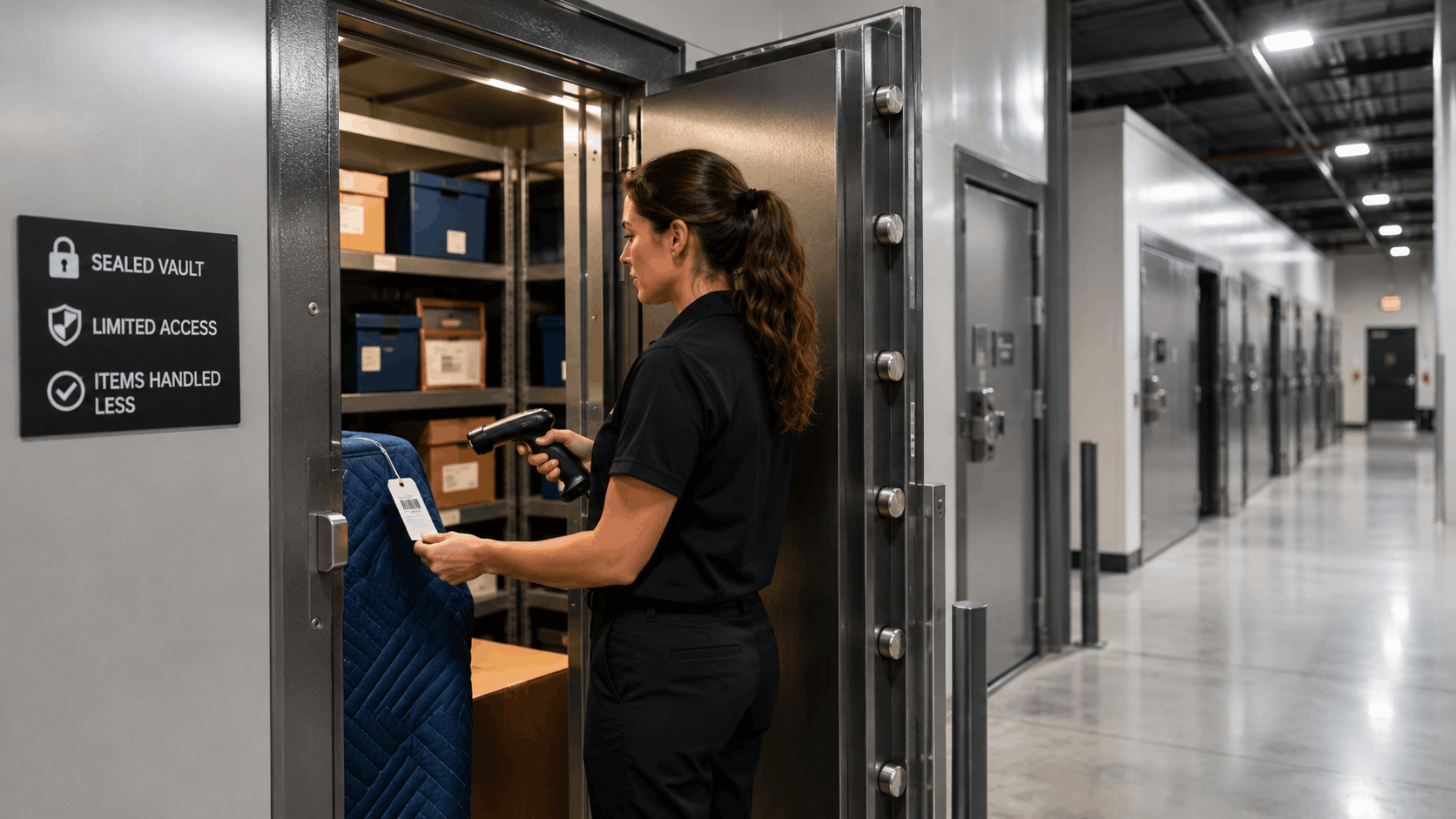
Most people picture storage as a garage-style unit with a roll-up door. A vaulted warehouse works in a completely different way. Your items go into a large wood box called a storage vault, and that box lives inside a secured building alongside hundreds of others.
The whole point of a vaulted warehouse is containment. Once your things are loaded and the lid goes on, the vault stays closed. Nobody walks through it, nobody stacks other people's boxes on top of your dresser, and dust does not settle on your couch week after week. Container storage keeps your load as one contained unit from the day it is packed to the day it comes back.
The Difference Between Vaulted and Self-Storage
With self-storage, you rent a metal room and you hold the key. You drive over, roll up the door, and add or remove whatever you want. That freedom sounds nice, but it comes with trade-offs. Every open door lets in dust, heat, and sometimes pests, and your things sit exposed on the floor of a unit that anyone with a truck can pull up to.
A sealed vault system flips that model. Trained crews load your items once, seal the container, and store it inside a monitored warehouse. You do not walk in and out, which means your belongings are handled far less and exposed to the outside air far less often.
In a storage unit comparison, self-storage wins on casual daily access, while vaulted storage wins on protection and organization. If you plan to grab things every weekend, a unit makes sense. If you want your household furniture safe and untouched for weeks or months, a vault is the better fit.
Climate is another difference. A self-storage unit shares walls with the outdoors and swings with the weather. A vault sits deep inside a warehouse where temperatures stay far steadier, which matters a lot in Los Angeles between coastal damp and inland heat.
What a Single Vault Holds
A standard wood storage vault runs around 5 feet by 7 feet by 7 feet, which works out to roughly 250 cubic feet of usable space. That vault size is a well-tested industry standard, so crews know exactly how to pack it for stability.
As a rough guide, one vault holds the contents of a furnished room to a room and a half. A one-bedroom apartment in Mid-City usually fills two to three vaults. A three-bedroom house in the Valley often needs five to seven.
The cubic feet matter because they drive both your cost and your packing plan. Larger loads simply mean more vaults, each one loaded, tagged, and stored the same careful way.
When our crews estimate your job, they count rooms, large furniture, and box totals to predict vault count before pickup day. That way you know the scope and the price before anything leaves your home.
Why LA Households Choose Vaulted Storage
Families near Silver Lake and Westchester call us for the same reasons over and over. A sale closes before a purchase, a lease ends before a new one starts, or a renovation pushes everyone out of the house for a couple of months.
Los Angeles storage also gets chosen for space. Homes here often have small garages and no basements, so there is simply nowhere to park a household of furniture during a project. Moving storage bridges that gap without cluttering a relative's place.
Renovations are a big driver on the Westside and in older neighborhoods like Bungalow Heaven in Pasadena, where 1920s homes get updated room by room. Homeowners store the whole house, let the contractors work, then bring it all back. Our vaulted storage service is built around exactly that pattern.
Job relocations add another group. Someone takes a new role, needs to be out of their current place fast, and does not yet have a landing spot. A vault holds everything safely while they sort out the next home.
Get Your Free Quote
Tell us about your move and we'll get back to you fast.
How Sealed Vaults Protect Your Belongings
The protection in vaulted storage comes from the box itself and the building around it. A sealed vault is not just a wood crate. It is a designed container that shields your load from the three things that ruin stored items: dust, pests, and movement.
Once a wood vault is closed, your things stop being exposed. That single fact is why protected storage inside a vault beats an open shelf or a shared room for anything you actually care about.
The Anatomy of a Wood Storage Vault
A plywood vault is built from thick panels framed for strength. The floor sits on skids so a forklift can slide underneath, and the walls rise straight up to form a clean box with a fitted lid on top.
The design is stackable by intent. Warehouse crews stack loaded vaults several high, and the frame carries that weight without pressing down on the contents inside. Your couch never feels the vault sitting above it.
Because each vault is a closed unit, the load inside stays self-contained. Nothing from a neighboring vault can shift into yours, and your items cannot spill into the aisle. That containment is the whole reason a stackable vault system stays so organized.
The wood also breathes better than sealed metal, which helps avoid the trapped condensation that plagues some containers. It is a simple, proven design that movers have relied on for decades.
Sealing Out Dust, Pests, and Moisture
Warehouses generate dust. Forklifts move, doors open, and fine particles float through the air all day. In an open unit, that dust settles right onto your furniture. Inside a sealed vault, your load is covered before the lid ever closes, so dust protection is built into the process.
Pest prevention works the same way. A closed vault gives rodents and insects no easy path to your fabric and paper goods. Combined with a clean, monitored warehouse, that sealing keeps the common storage pests away from your things.
Moisture control matters a lot in Los Angeles. The marine layer pushes damp air across the Westside many mornings, and inland heat drives humidity swings elsewhere. A vault deep inside a warehouse sees far gentler moisture changes than a curbside metal unit ever would.
For sensitive loads, our crews add extra wrapping and can advise on moisture-absorbing materials. The goal is a stable, dry environment around wood, leather, and electronics for the entire storage period.
How Items Are Padded and Loaded Inside
Good vault packing starts with wrapping. Crews cover furniture in moving blankets and secure them with stretch wrap so corners, legs, and finished surfaces are protected before anything goes into the box.
Furniture padding does two jobs. It guards against scratches, and it fills space so nothing can slide. A well-loaded vault is packed tight, with heavy pieces low and lighter boxes stacked above them.
The tight-packing method stops shifting during handling and forklift moves. When a vault is snug, items do not rattle against each other even as the container gets lifted and set onto a rack. Loose loads are where damage happens, so our crews fill every gap.
For fragile and high-value pieces, we use dedicated packing and crating services before the items ever reach the vault. Mirrors, art, and glass get custom protection so they travel and store safely.
Fire and Access Controls in the Warehouse
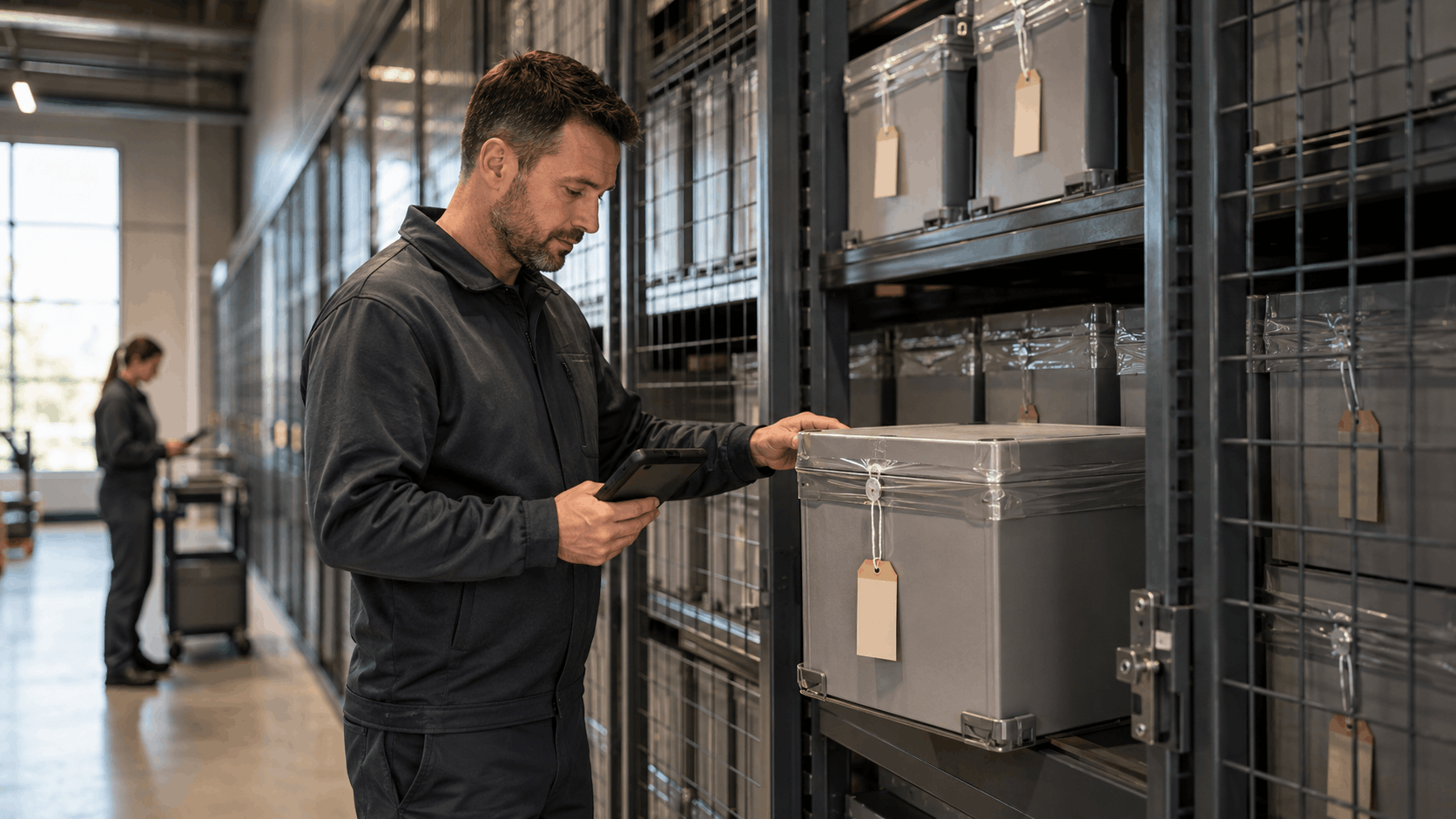
The vault protects your load, and the warehouse protects the vaults. A proper storage facility runs sprinkler systems and fire detection so a problem gets caught and controlled quickly.
Warehouse security includes restricted access. Only trained staff move through the storage area, which keeps random foot traffic away from your sealed vault. That limited access is part of why items stay in better shape than in a public self-storage row.
Monitoring rounds out the fire protection and security picture. Cameras, controlled entry, and staffed hours mean the building is watched, not left open to anyone with a gate code. For guidance on choosing a reputable mover and facility, the FMCSA Protect Your Move resource is a solid reference.
Together, these controls give your stored belongings a safe home. The vault handles dust and pests, and the building handles fire risk and unauthorized access.
Need Help in Los Angeles?
Popeye Moving & Storage serves Los Angeles and all of Los Angeles County.
Inventory Tags and How Every Item Is Tracked
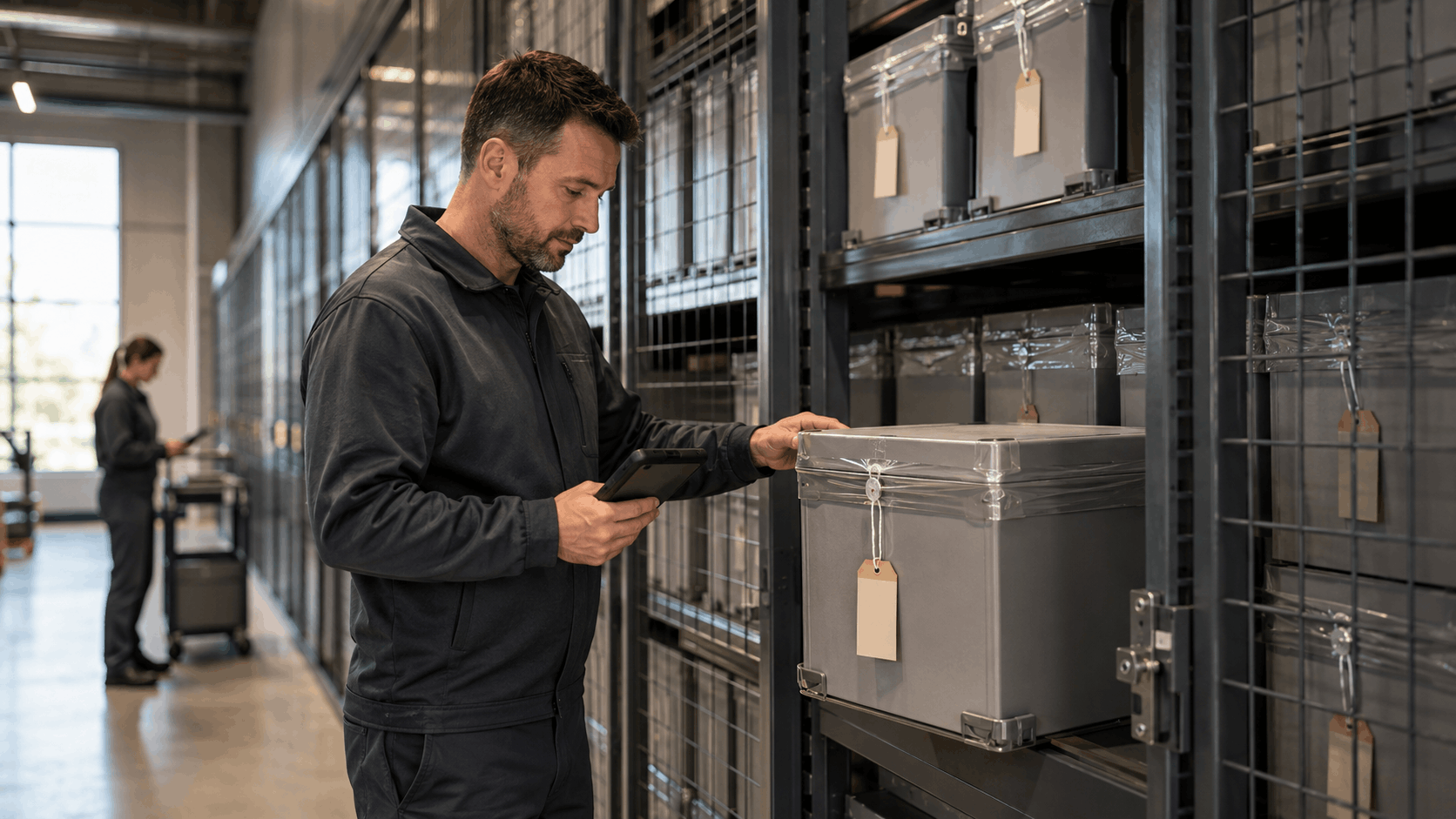
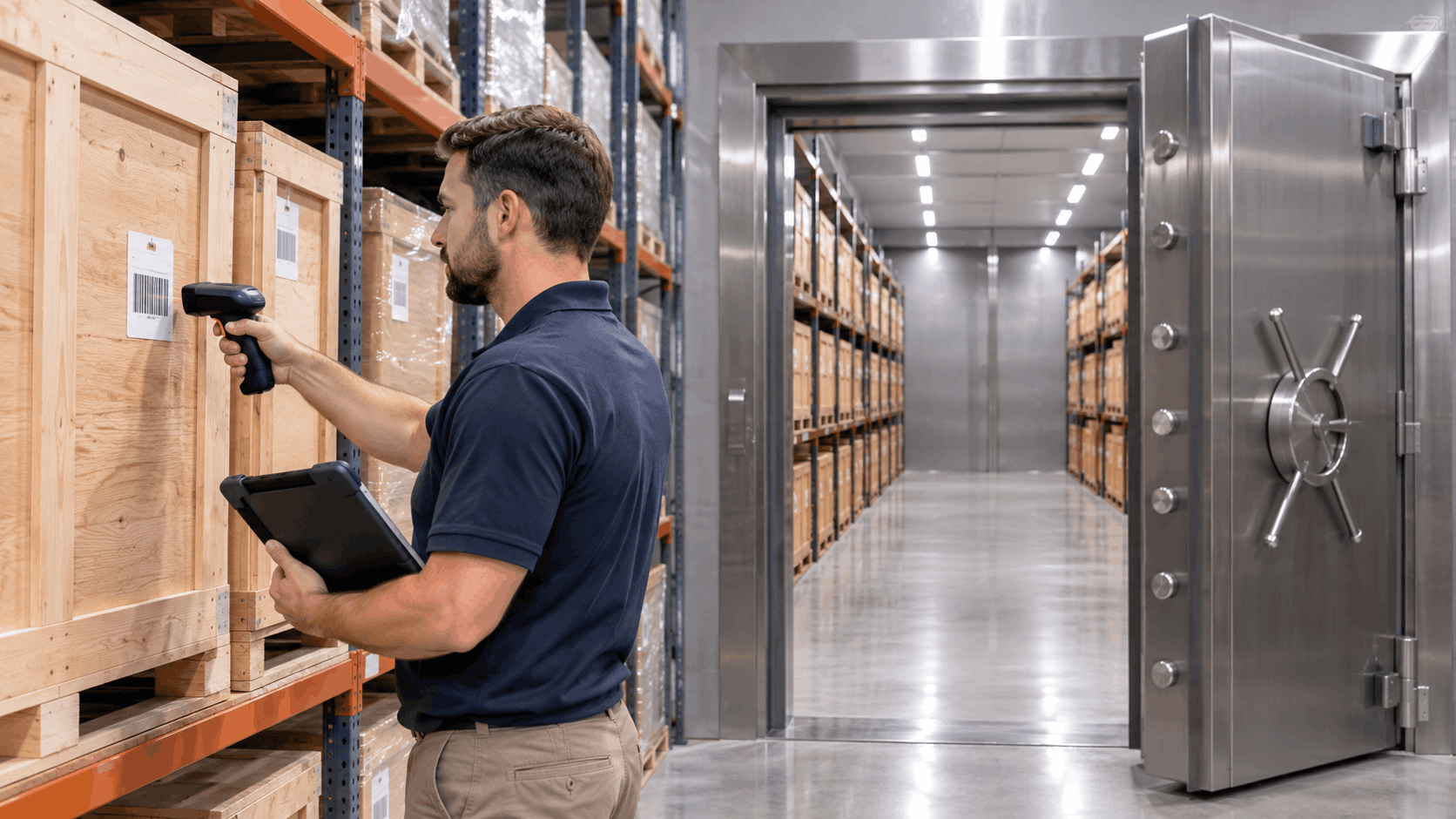
A vault full of boxes is only useful if you can find what is inside it later. That is where inventory tags come in. Before anything is loaded, each item gets logged onto a master list so nothing gets lost.
This tracking is what separates professional vaulted storage from tossing your things into a unit and hoping for the best. Storage inventory turns a wall of identical wood boxes into an organized, searchable system.
The Numbered Tag System Explained
Every box and every piece of furniture gets a unique numbered sticker. That number ties directly to a line on the master inventory list, so item 47 on the sheet is the same item 47 on the tag stuck to your nightstand.
Numbered tags remove guesswork. Instead of describing "the brown chair," everyone refers to a number, which stays accurate even when you own three brown chairs. Crews call it out as they load, and it goes straight onto the list.
The inventory list becomes the official record of what entered storage. When your vault comes back, the same numbers get checked off, and any missing tag is obvious right away.
This system also speeds up partial pulls. If you only need item 47 later, the tag number leads a crew straight to it without opening every box in the vault.
Condition Notes and the Bingo Sheet
Alongside the number, crews record the condition of each item at intake. Movers often call this the inventory sheet or the bingo sheet because of its grid of item lines and coded notes.
The condition report uses short codes for things like scratches, dents, or worn spots that already existed before pickup. That record protects both you and the movers, since it shows the state of every piece the day it went in.
These notes matter most at delivery. If a question comes up about a mark on a table, the intake sheet shows whether that mark was there from day one or not.
Our crews go over the sheet with you at pickup so you can see and confirm the notes. A clear record at the start prevents disputes at the end.
Matching Tags to Vault Locations
Once items are tagged and loaded, each vault gets its own number too. The tags inside link to that vault number, and the vault number links to a spot in the warehouse.
This warehouse mapping is how a crew finds your things fast. The office pulls up your record, sees which vault holds item 47, and knows the exact rack and row where that vault sits.
The vault location system scales cleanly. A building can hold hundreds of vaults, and the mapping means none of them get misplaced or confused with another customer's load.
For anyone storing a full household long term, this organization is what keeps a months-long stay stress-free. You can request one item or the whole vault and the location record guides the retrieval.
Getting a Copy of Your Inventory
You should never store items without your own copy of the inventory. After intake, we provide the inventory record so you know exactly what is in storage and in what condition.
That inventory copy is useful for insurance. If you carry a renters or homeowners policy, or valuation coverage through the mover, the list documents what you own and its recorded condition.
Keep your storage records somewhere easy to reach. When you schedule delivery, that same document guides the check-out so both sides confirm everything matches.
The Federal Trade Commission's moving guidance also recommends keeping written records of your belongings, which lines up exactly with how a good inventory system works.
Why Items Are Handled Less in a Vaulted System
Here is the quiet advantage of vaulted storage that most people never think about: your things get touched far fewer times. Less handling is the single biggest reason vaulted loads come back in better shape.
Every time a person picks up your chair, sets it down, and moves it again, there is a small chance of a scratch or ding. Single-touch storage cuts most of those chances out of the process entirely.
Load Once, Store Sealed
In a vaulted system, crews load your items into the vault one time at the warehouse dock. Then the lid seals and the vault goes onto a rack, where it stays untouched until you ask for it back.
That single load is the whole idea. Compare it to shelf storage, where items get carried in, placed, sometimes shifted for other loads, and carried out again. Every one of those extra moves is a handling step you avoid with sealed storage.
Because the vault does not open during storage, nothing inside gets disturbed. Your load stays exactly as the crew packed it, tight and padded, for the full storage period.
When delivery day comes, the sealed vault travels back and gets unloaded once at your new home. Two loads total, and nothing in between.
Fewer Touches Means Fewer Scratches
Furniture damage almost always happens during handling, not during storage. A table sitting still in a padded vault is safe. A table being carried across a warehouse floor for the fifth time is at risk.
Handling risk stacks up with each move. Open storage systems can touch your items many times as loads come and go around them. A vault holds your things in one contained unit that gets moved as a whole, not piece by piece.
That difference shows up in the results. Loads that stay sealed in a vault see far fewer of the scuffs, chips, and corner dings that come from repeated hand carries.
For fragile items especially, fewer touches means fewer chances for a drop. That is why we always recommend vaulted storage for households with wood furniture, framed art, or delicate pieces.
Forklift Moves Instead of Hand Carries
Inside the warehouse, full vaults move by forklift, not by hand. A crew slides the forks under the vault skids and lifts the entire loaded box to its rack spot in one smooth move.
Forklift storage means your individual items never get carried around the building. The whole vault travels as one sealed unit, so the couch, boxes, and lamps inside all move together without being touched.
This vault handling approach is faster and safer. It removes the repeated lifting that wears on both movers and furniture, and it keeps your load stable throughout.
The result is a storage system built around minimal contact with your belongings. Load once, seal, forklift to the rack, and forklift back out when it is time to go home.
The Intake Process at a Los Angeles Warehouse
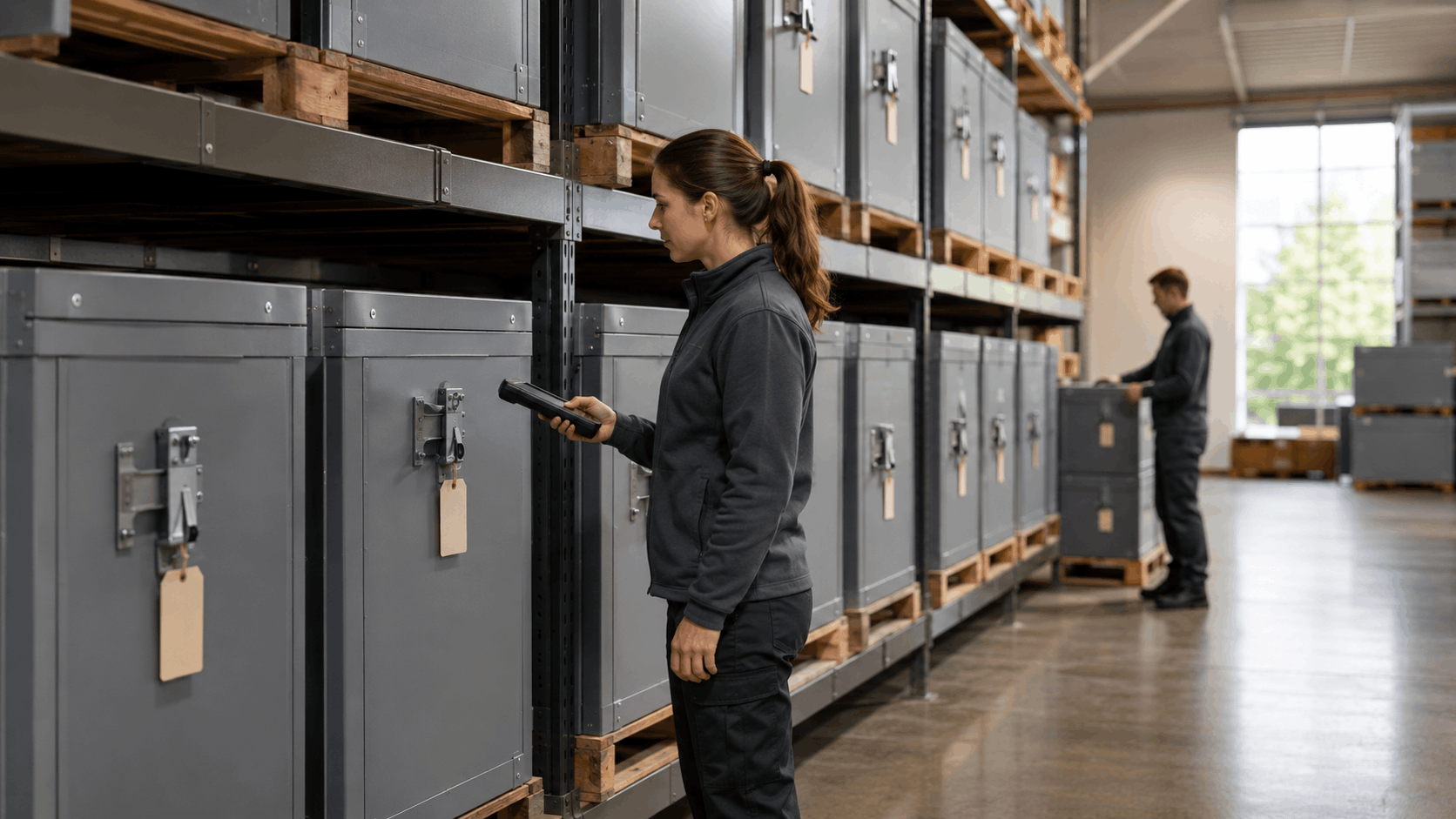
From pickup to sealed vault, the intake process follows a clear order. Knowing the steps helps you plan your day and understand where your things are at each stage.
Here is how storage intake works when our crews handle a warehouse storage job across the LA area:
- Crews arrive, protect the home, and wrap your furniture.
- Items are loaded and driven to the warehouse.
- Goods transfer from truck to the assigned vault at the dock.
- The vault is tagged, sealed, and placed on a rack.
Pickup Day and Truck Loading
On pickup day, our moving crew arrives with blankets, wrap, and dollies. They lay down floor protection and pad door frames before anything moves, whether the home is a hillside place in the San Fernando Valley or an apartment in Mid-City.
Each item gets wrapped and tagged as it is prepared. Truck loading follows a plan, with heavy furniture staged first and boxes organized so the transfer to vaults goes smoothly at the warehouse.
The crew works room by room so nothing gets missed and the inventory sheet stays accurate. By the time the truck is loaded, every piece already carries its numbered tag.
For tight timelines, our last minute moving team can often handle quick-turnaround pickups when a closing date moves up unexpectedly.
Transfer From Truck to Vault
Back at the warehouse, the truck backs up to the loading dock. Crews move your items from the truck into the vault assigned to your job, following the same padding and tight-packing method that prevents shifting.
The dock transfer is a controlled step done indoors, out of the weather. Items go straight from the truck into the vault, so they spend minimal time exposed.
During vault loading, the crew confirms each tag against the inventory list. That double-check makes sure every item that left your home is accounted for as it enters storage.
Larger households simply fill more vaults, each one loaded and verified the same way. Our full storage solutions cover everything from a single vault to a whole house.
Sealing and Storing the Vault
Once a vault is full, the crew fits the lid and seals it. Vault sealing closes off your load from dust, pests, and any outside contact for the rest of the storage period.
The vault gets its number recorded against your inventory, tying the tags inside to a searchable location. That link is what lets us find your things quickly later.
Then comes warehouse placement. The forklift lifts the sealed vault to its rack spot, and the location is logged. From that point, your load sits still and protected until you schedule delivery.
The whole intake, from wrapped item to sealed vault on a rack, is designed to touch your belongings as few times as possible.
Traffic and Timing Around LA
LA traffic shapes every moving schedule. A pickup in Westchester near LAX can run into 405 backups, and a Mid-City job can get tangled in the 10 during rush hour.
We plan pickups to start early, often before 8 a.m., so crews beat the worst congestion. Mid-morning and mid-afternoon windows also help avoid the heaviest freeway crush.
For Westside and beach-area jobs, we route around known choke points like the 405 through the Sepulveda Pass. Our teams serve areas from Santa Monica to Culver City and know the local timing well.
Good scheduling keeps your items moving efficiently and gets the vault sealed and stored the same day whenever possible.
Need Help in Los Angeles?
Popeye Moving & Storage serves Los Angeles and all of Los Angeles County.
Climate Concerns Specific to Los Angeles Storage
Los Angeles is not one climate. It is coastal damp on the Westside, dry heat in the Valley, and everything in between. Climate storage planning has to account for whichever zone your belongings come from.
Vaulted storage helps because the vault sits deep inside a warehouse, buffered from the daily swings. Still, knowing the local conditions helps you pack and protect the right items.
Coastal Humidity Near the Westside
The marine layer rolls in most mornings near Santa Monica and Venice, leaving damp air that lingers until midday. That coastal humidity works on wood and fabric, encouraging warping and musty smells if items are stored poorly.
For loads coming from the Westside, we pay extra attention to wrapping wood furniture and sealing fabric pieces. A vault deep in a warehouse sees gentler moisture than a curbside unit, which already helps a lot.
Leather and upholstered items benefit from breathable covers rather than trapping plastic. Our crews choose materials that guard against damp without sealing in moisture.
If your home sits close to the water in Marina Del Rey or Venice, mention it when you book so we can plan the right protection for the marine layer conditions.
Summer Heat in the Valley
Inland, the story flips. Summer heat near Van Nuys and North Hollywood pushes valley temperatures past 100 degrees on the worst days, and a metal self-storage unit can bake in that sun.
A vault inside a warehouse stays far cooler than an outdoor unit exposed to direct sun. That steadier temperature protects candles, electronics, and anything that warps or melts in heat.
We schedule Valley pickups for early hours in summer to keep items out of the hottest part of the day during loading. It is a small step that spares your goods the peak heat.
For heat-sensitive belongings, ask about placement and any added protection when you plan your storage. Steady indoor temperatures do most of the work.
Protecting Wood, Electronics, and Artwork
Some items need more care than others. Wood furniture reacts to both damp and heat, so it gets wrapped in blankets and kept snug to avoid movement and finish damage.
Electronics storage calls for padding and, when possible, original boxes. Screens and circuit boards do better in stable temperatures, which the interior of a warehouse provides better than an outdoor unit.
Artwork storage deserves custom crating. Framed pieces, mirrors, and canvases get corner protection and rigid crates through our full service packing so they store flat and safe.
When you tell us what you are storing, we match the protection to the item. Wood, electronics, and art each get the handling their material needs.
Retrieving and Delivering Your Stored Items
Getting your things back should be as organized as putting them in. Item retrieval in a vaulted system uses the same tags and records that logged everything at intake.
Whether you want the entire vault or a single box, the process stays clean because the inventory points a crew straight to what you need.
Requesting a Full Delivery
When your new home is ready, you schedule a full vault delivery. We pull your sealed vaults, load them onto a truck, and deliver everything to the new address.
Redelivery mirrors the original move in reverse. Crews unload, unwrap, and place your furniture room by room, checking tags against the inventory as they go.
For households moving into a new place across town, this is often paired with our local residential moving service so pickup, storage, and delivery run as one job.
Scheduling a few days ahead helps us route around LA traffic and get a full crew to your door at the right time.
Pulling a Single Item or Box
Sometimes you only need one thing during storage, like a box of documents or a seasonal item. Partial access lets us open your vault at the warehouse and pull that single tagged item.
Single item retrieval leans on the numbered tags. You reference the item number from your inventory copy, and the crew locates it without disturbing the rest of the load.
Partial pulls usually need scheduling and may carry a handling fee, since it means opening and resealing the vault. We explain any fees up front when you request access.
This option keeps a long storage stay flexible. You do not have to unload everything just to reach one box.
Check-Out and Condition Review
At delivery, the inventory sheet comes back out for check-out. Crews and the customer review each tag number to confirm everything that went in comes back out.
The condition review compares items against the intake notes. If a piece was marked with an existing scratch at pickup, that note is right there to reference.
This final match is your protection. It confirms the count and the condition, and it gives you a clear record if you ever need to file a claim.
Once both sides agree the delivery is complete, the job closes with your belongings back home and accounted for.
Choosing the Right Storage Partner in LA
Not every storage company runs the same. When you pick a storage provider in Los Angeles, the details of tagging, access, and security tell you whether your belongings will be treated right.
A good partner explains the process before you commit. Here is how to evaluate any option, and what our team brings to LA households.
Questions to Ask Before Storing
Start with the inventory. Ask whether every item gets a numbered tag and whether you receive a written copy. A company that cannot produce a clear inventory is a company that can lose your things.
Ask about access. Storage questions should cover how you request a single item, how much notice is needed, and what storage fees apply for partial pulls or redelivery.
Ask about the vaults and the building. Find out the vault size, how vaults are sealed, and what fire and security systems protect the warehouse. Clear answers signal a professional operation.
Finally, ask about billing. Understand the monthly rate, any minimums, and how long-term rates work if your stay stretches out. For long stays, our long term storage options are built to keep costs predictable.
Red Flags to Watch For
The biggest warning sign is no written inventory. If a company loads your things without tagging and logging them, you have no record and no easy way to prove what you stored.
Unclear access policies are another red flag. Storage warning signs include vague answers about how to reach your items, surprise fees, or a refusal to explain the retrieval process.
Watch for facilities that will not describe their security or fire systems. A serious operation is proud to explain how it protects your load and keeps inventory records straight.
Also be cautious of quotes with no site visit or item count. Accurate pricing comes from knowing your load, not guessing at it.
How Our Team Serves the LA Area
Popeye Moving & Storage handles vaulted storage for households across Los Angeles, from the Westside to the Valley to Pasadena. Our crews pack, tag, and store your belongings with the same care every time.
As experienced Los Angeles movers, we know the neighborhoods, the freeways, and the local climate that affects stored goods. That local knowledge shows up in how we schedule and protect your load.
We provide a written inventory, sealed vaults, and a monitored warehouse, so your things stay tracked and protected the whole time. From Pasadena bungalows to Westchester condos, we treat every load like it is our own.
Whether you need storage between homes, during a renovation, or through a relocation, our team walks you through the process start to finish.
Need Help in Los Angeles?
Popeye Moving & Storage serves Los Angeles and all of Los Angeles County.
Final Thoughts
Vaulted warehouse storage protects your belongings through three simple ideas: sealed vaults that shut out dust and pests, inventory tags that track every item, and a load-once system that keeps handling to a minimum. Those three together are why vaulted loads come back in better shape than open-shelf or self-storage options.
If your family is caught in the gap between homes or heading into a renovation, a vault gives your furniture a safe, organized place to wait. Contact Popeye Moving & Storage today for a storage consultation, and let our LA team give you a clear plan and an honest quote. Call us or reach out through our contact page to get started.
Frequently Asked Questions
What is a vaulted warehouse?
A vaulted warehouse stores your belongings inside sealed wood containers called vaults, which sit on racks inside a secured building. Movers load each vault once, tag every item, seal the container, and store it untouched until you request it back. The vault protects your load from dust and pests, while the warehouse adds fire systems and restricted access for full protection.
How much does vaulted storage cost in Los Angeles?
Vaulted storage in Los Angeles generally runs about 75 to 150 dollars per vault per month, depending on the company and any added services. Your total depends on how many vaults you need, your storage length, and whether you request partial access. Getting an accurate item count before pickup gives you the clearest price. Contact our team for a specific quote based on your load.
How big is a single storage vault?
A standard storage vault measures roughly 5 feet by 7 feet by 7 feet, giving about 250 cubic feet of usable space. That holds around one furnished room to a room and a half. A one-bedroom apartment usually fills two to three vaults, while a three-bedroom home often needs five to seven. We estimate vault count by counting rooms, furniture, and boxes.
Are my items safe from pests and dust?
Yes. Once your items are wrapped and the vault lid is sealed, dust cannot settle on your furniture and pests have no easy path inside. The closed container keeps your load contained, and a clean, monitored warehouse adds another layer of protection. This sealing is a major reason vaulted storage protects belongings better than open shelves or a rented self-storage unit.
Can I access my items while they are stored?
Yes, through partial access. Using your inventory copy, you reference the tag number of the item you need, and our crew opens your vault at the warehouse to pull it. Partial pulls usually require scheduling ahead and may include a handling fee, since the vault must be opened and resealed. We explain any fees clearly when you request access.
How does the inventory tag system work?
Every box and piece of furniture gets a unique numbered sticker before it enters a vault. That number ties to a line on a master inventory list, which also records each item's condition at intake. The vault gets its own number linked to a warehouse location. This lets crews find any item fast and confirm every piece at delivery against the same list.
Is vaulted storage climate controlled?
Vaults sit deep inside a warehouse, which stays far steadier than an outdoor self-storage unit exposed to sun and marine-layer damp. That interior buffers your goods from LA's coastal humidity and Valley summer heat. For sensitive items like wood, electronics, and art, we add wrapping and can advise on extra protection. Ask about placement and options when you book to match your load's needs.
How long can items stay in a vault?
Items can stay for as short as a few weeks or as long as several years. Short-term storage suits gaps between homes or renovations, while long-term storage works for relocations or extended absences. Billing is usually monthly, and long-term rates often bring the cost down. Whatever your timeline, your sealed vault stays protected and tracked the entire period.
What happens if an item is damaged?
At intake, crews record each item's condition on the inventory sheet, noting any existing marks. At delivery, that same sheet is reviewed to compare the item's condition against the original notes. If new damage occurred and you carry valuation coverage or insurance, the documented record supports your claim. Keeping your inventory copy makes the process clear and straightforward.
How do I schedule pickup or delivery with Popeye Moving & Storage Co.?
Call our office or reach out through our contact page to book. We gather details about your load, your neighborhood, and your timeline, then schedule a pickup that works around LA traffic. When your new home is ready, you request full delivery or a partial pull, and we route a crew to bring your sealed vault back. Booking a few days ahead helps us plan the best window.
Frequently Asked Questions
- What is a vaulted warehouse?
- A vaulted warehouse stores your belongings inside sealed wood containers called vaults, which sit on racks inside a secured building. Movers load each vault once, tag every item, seal the container, and store it untouched until you request it back. The vault protects your load from dust and pests, while the warehouse adds fire systems and restricted access for full protection.
- How much does vaulted storage cost in Los Angeles?
- Vaulted storage in Los Angeles generally runs about 75 to 150 dollars per vault per month, depending on the company and any added services. Your total depends on how many vaults you need, your storage length, and whether you request partial access. Getting an accurate item count before pickup gives you the clearest price. Contact our team for a specific quote based on your load.
- How big is a single storage vault?
- A standard storage vault measures roughly 5 feet by 7 feet by 7 feet, giving about 250 cubic feet of usable space. That holds around one furnished room to a room and a half. A one-bedroom apartment usually fills two to three vaults, while a three-bedroom home often needs five to seven. We estimate vault count by counting rooms, furniture, and boxes.
- Are my items safe from pests and dust?
- Yes. Once your items are wrapped and the vault lid is sealed, dust cannot settle on your furniture and pests have no easy path inside. The closed container keeps your load contained, and a clean, monitored warehouse adds another layer of protection. This sealing is a major reason vaulted storage protects belongings better than open shelves or a rented self-storage unit.
- Can I access my items while they are stored?
- Yes, through partial access. Using your inventory copy, you reference the tag number of the item you need, and our crew opens your vault at the warehouse to pull it. Partial pulls usually require scheduling ahead and may include a handling fee, since the vault must be opened and resealed. We explain any fees clearly when you request access.
- How does the inventory tag system work?
- Every box and piece of furniture gets a unique numbered sticker before it enters a vault. That number ties to a line on a master inventory list, which also records each item's condition at intake. The vault gets its own number linked to a warehouse location. This lets crews find any item fast and confirm every piece at delivery against the same list.
- Is vaulted storage climate controlled?
- Vaults sit deep inside a warehouse, which stays far steadier than an outdoor self-storage unit exposed to sun and marine-layer damp. That interior buffers your goods from LA's coastal humidity and Valley summer heat. For sensitive items like wood, electronics, and art, we add wrapping and can advise on extra protection. Ask about placement and options when you book to match your load's needs.
- How long can items stay in a vault?
- Items can stay for as short as a few weeks or as long as several years. Short-term storage suits gaps between homes or renovations, while long-term storage works for relocations or extended absences. Billing is usually monthly, and long-term rates often bring the cost down. Whatever your timeline, your sealed vault stays protected and tracked the entire period.
- What happens if an item is damaged?
- At intake, crews record each item's condition on the inventory sheet, noting any existing marks. At delivery, that same sheet is reviewed to compare the item's condition against the original notes. If new damage occurred and you carry valuation coverage or insurance, the documented record supports your claim. Keeping your inventory copy makes the process clear and straightforward.
- How do I schedule pickup or delivery with Popeye Moving & Storage Co.?
- Call our office or reach out through our contact page to book. We gather details about your load, your neighborhood, and your timeline, then schedule a pickup that works around LA traffic. When your new home is ready, you request full delivery or a partial pull, and we route a crew to bring your sealed vault back. Booking a few days ahead helps us plan the best window.
P
Popeye Moving & Storage Co. Team Team
Licensed moving and storage professionals serving Los Angeles and Los Angeles County.
Licensed in California · License #PUC: CAL T 189749 | DOT: 1472924 | MC: 498816C
Why trust Popeye Moving & Storage?
Founded in 1994, Popeye Moving & Storage is a licensed and insured moving and storage service serving Los Angeles and Los Angeles County. All content is reviewed by our licensed technicians.

Need Help in Los Angeles?
Popeye Moving & Storage serves Los Angeles and all of Los Angeles County.
Related Articles
How-To Guides
Contents Storage During an LA Remodel: Pack-Out, Vaulted Hold, and Redelivery Room by Room
A complete guide to contents storage during an LA remodel: how pack-out, vaulted hold, and room-by-room redelivery protect your belongings from demolition to final walkthrough.
How-To Guides
Accessing Your Things in Vaulted Storage: How Appointment Retrieval Works and the Honest Trade-Off vs 24/7 Units
How appointment retrieval works for vaulted storage in Los Angeles, plus an honest comparison against 24/7 drive-up units on access, cost, and protection.
Cost Guides
What Vaulted Storage Billing Includes - Wrapping, Inventory, and the Line Items Self-Storage Never Shows
A clear breakdown of what vaulted storage billing includes - wrapping, inventory, handling, and coverage - and why self-storage quotes never show these line items upfront.