How-To Guides
Pacific Palisades Movers: Bluff and Cliffside Home Logistics
Key Takeaways
- Streets like Posetano Road and Revello Drive in Castellammare cannot handle 26-foot trucks, so shuttle vehicles and staging plans are standard on bluff jobs.
- Long carries of 80 to 150 feet down exterior staircases can add 30 to 50 percent to the cost of a Palisades move compared to a flat-street home.
- An on-site or video survey is non-negotiable for cliffside homes - phone quotes routinely miss shuttle, stair, and long carry costs.
- Temporary no-parking permits through LADOT need one to two weeks of lead time and 24 to 72 hours of street posting before move day.
- Highlands HOA communities like the Summit require certificates of insurance, scheduled gate access, and weekday move windows.
- Crews schedule heavy carries for dry midday hours because the marine layer leaves bluff staircases slick until late morning.
- Full value protection beats the default 60-cents-per-pound coverage on any stair-heavy or hoist-involved move.
- Climate-controlled vaulted storage protects salt-air-exposed furniture during Palisades rebuilds, with phased redelivery as rooms become livable.
In This Article
Last spring, a family on Via de las Olas stood in their driveway and watched a 26-foot moving truck attempt the turn onto their street three times before giving up. The driver had quoted the job over the phone, never visited the property, and had no plan for the single-loaded street that hugs the bluff above Pacific Coast Highway. By noon, the family was calling around for a company that actually knew the Palisades.
Scenes like that play out every month along the bluffs, from the switchbacks of Castellammare to the gated streets of the Highlands. Bluff and cliffside homes demand a different moving playbook - smaller shuttle vehicles, longer carries, weather-aware scheduling, and permits that flat-street moves never need. A standard quote built for an Alphabet Streets bungalow simply does not fit a home perched 80 feet of exterior stairs below the road.
Why Bluff and Cliffside Moves in Pacific Palisades Are Different?
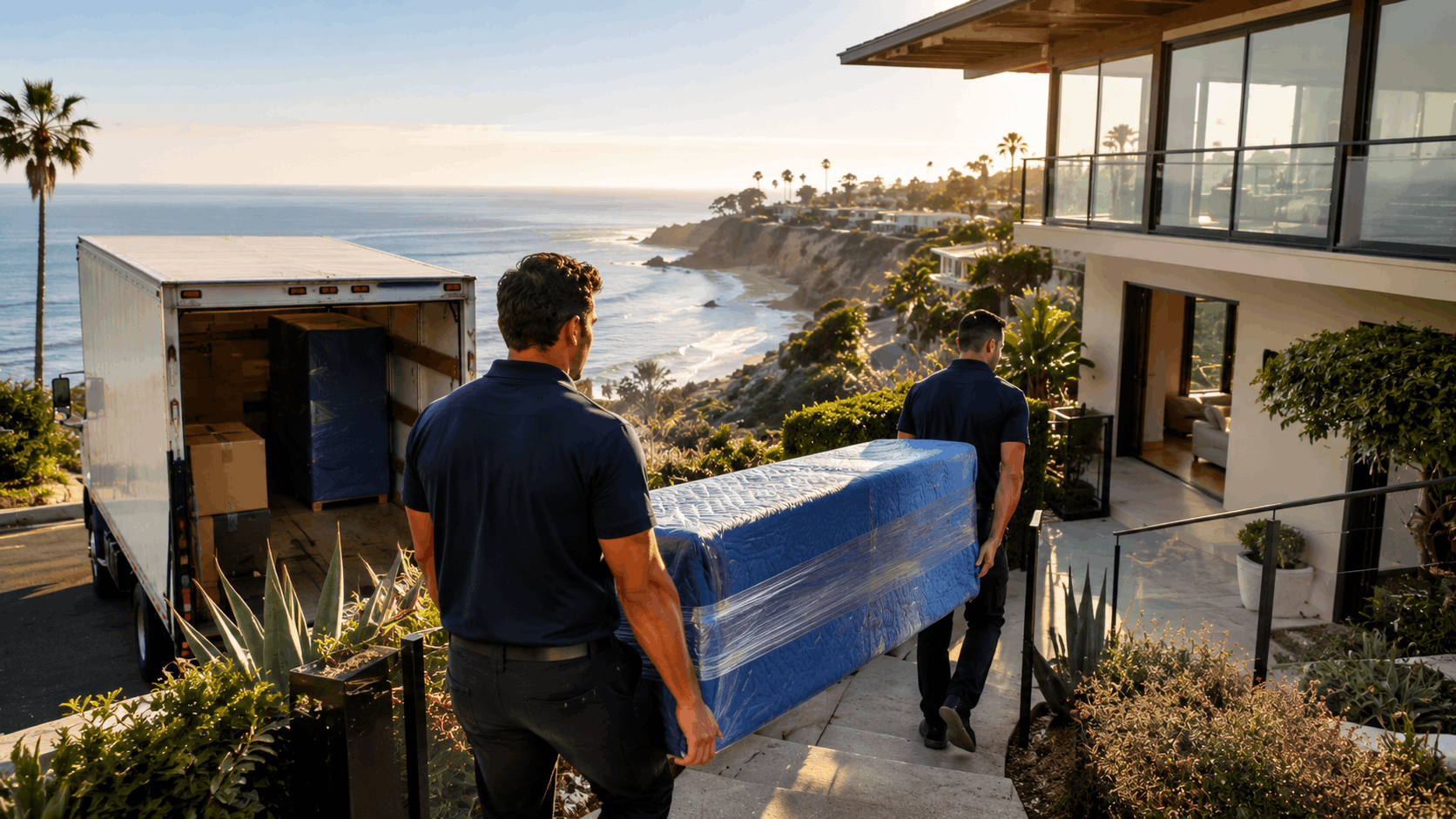
Pacific Palisades movers face a combination of terrain, street geometry, and coastal weather that almost no other Los Angeles neighborhood matches. The bluffs rise sharply above PCH, and the streets that serve them were laid out in the 1920s for cars far smaller than a modern moving truck. Bluffside moving challenges start before the crew even touches a box.
Cliffside home access often involves a street the big truck cannot reach, an exterior staircase the furniture must travel, and a marine layer that leaves everything slick until mid-morning. Each of those factors adds labor hours, and a phone quote that ignores them will be wrong by 30 to 50 percent. The table below shows how the most common access conditions change a job.
| Access Condition | Typical Impact | How It Changes the Job |
|---|---|---|
| Street too narrow for 26-foot truck | Shuttle vehicle required | Adds 2-4 hours and a shuttle fee |
| Carry over 75 feet from truck to door | Long carry charge | Adds labor hours and 1-2 crew members |
| Exterior staircases or terraced yard | Stair fee, rigging gear | Slower pace, extra protection materials |
| Grade above 15 percent | Smaller truck, parking brakes chocked | Route and staging plan required |
| Morning marine layer | Slick steps and driveways | Heavy items scheduled for midday |
Steep Grades, Switchbacks, and Streets a 26-Foot Truck Cannot Handle
Posetano Road and Revello Drive in Castellammare are the two streets our dispatchers flag first on any Palisades booking. Both stack in tight switchbacks above PCH near the Getty Villa, with hairpin turns that a 26-foot box truck physically cannot complete. Several corners there have less than 30 feet of turning clearance, while a full-size truck needs closer to 45.
Grades matter just as much as width. Once a street climbs past a 15 percent grade, truck selection changes - a loaded 26-footer struggles to hold position on that slope, and the rear ramp angle becomes unsafe for dollies. On streets like these, we send a 16-foot truck or cargo van and stage the big rig down on Sunset or near Castellammare Drive.
Truck access problems also hide in plain sight off Sunset Boulevard. Several hairpin turns between Sunset and the upper bluff streets look passable on a map but have parked cars, retaining walls, or low utility lines that cut usable width in half. That is why our team drives the route before move day, every time, on every narrow-street job.
Long Carries, Staircases, and Multi-Level Hillside Floor Plans
A long carry fee covers the extra labor when the truck cannot park near the door. On flat streets, the carry might be 20 feet. On a bluff home below Via de las Olas or above Posetano, crews routinely carry items 80 to 150 feet, often down exterior staircases with multiple landings and turns.
Those distances change the math on labor hours fast. A dresser that takes 90 seconds to load on a flat driveway can take eight to ten minutes when it travels 120 feet of stairs with two carriers rotating grips at each landing. Multiply that across 200 items and a one-day move becomes a day and a half.
Hillside home layout adds another wrinkle. Many cliffside Palisades homes are split-level designs where the entry sits at street level and bedrooms step down the slope, so furniture routing inside the house involves interior stairs, low ceilings on landings, and balcony doors that become the only viable exit for large pieces. Our estimators map the exit path for every oversized item before the crew arrives, because discovering a sofa will not clear a stairwell at 2 p.m. on move day is expensive.
Coastal Weather, Marine Layer, and Slope Conditions That Affect Timing
The marine layer is not just a gray sky - it is a real scheduling factor on the bluffs. From May through August, morning fog leaves steep driveways, painted steps, and shaded tile walkways slick until 10 or 11 a.m. The National Weather Service Los Angeles office tracks these patterns daily, and our dispatch checks them before any bluff job.
Winter brings a different concern: slope conditions after rain. Soil near the Via de las Olas bluff edge saturates quickly, and terraced yards can shed water across walkways for days after a storm. We will not roll a 600-pound piano across a soft, wet terrace, period.
The practical answer is sequencing. Our crews schedule the heaviest carries for dry midday hours, handle boxes and lighter items in the morning fog window, and build weather delays into the written plan rather than treating them as surprises. That sequencing alone prevents most of the injuries and damage claims that plague hillside moves.
Get Your Free Quote
Tell us about your move and we'll get back to you fast.
Neighborhood-by-Neighborhood: What Movers Face Across the Palisades
Pacific Palisades neighborhoods vary enormously in access difficulty, and a quote that treats Castellammare like the Alphabet Streets will miss badly. Our crews have worked every pocket of the 90272 zip code, and the differences between them drive everything from crew size to truck choice. The breakdown below reflects real jobs, not guesses.
| Neighborhood | Access Difficulty | Most Common Requirement |
|---|---|---|
| Castellammare / Paseo Miramar | Severe | Shuttle vehicle, hand carries, staging on Castellammare Drive |
| Via de las Olas / Huntington Palisades bluff edge | High | Parking permits, neighbor coordination |
| Palisades Highlands / The Summit | Moderate | HOA scheduling, certificate of insurance |
| Marquez Knolls | Moderate | Steep driveway protocols, smaller trucks |
| Rustic Canyon | High | Narrow canyon streets, long carries |
| Alphabet Streets / The Village | Low | Standard truck access |
Castellammare and Paseo Miramar: The Toughest Streets in the Palisades
Nothing else in West LA compares to the stacked switchbacks above PCH in the Getty Villa area. Streets like Posetano, Revello, and Stretto Way climb the bluff in tiers, and Paseo Miramar adds its own long, narrow ribbon up toward the trailhead. Several homes here sit on pedestrian-only stair streets where no vehicle of any size can reach the front door.
For these addresses, shuttle service is not optional. We stage the full-size truck on Castellammare Drive or a wide pullout near Sunset, then ferry loads up in a cargo van or hand-carry items from the staging point. A typical Castellammare three-bedroom involves 300 to 500 individual stair trips spread across a five or six person crew.
One job near Stretto Way last year required carrying every item down 64 steps to a van parked two streets below. The clients had received a phone quote from another company for a single eight-hour day - the real job took fourteen crew-hours more than that quote allowed. An honest survey would have caught it.
Via de las Olas and the Huntington Palisades Bluff Edge
Via de las Olas runs along the bluff edge overlooking PCH, and bluff edge homes here come with two recurring problems: parking restrictions near the overlook and a single-loaded street with no turnaround for a large truck. Visitors park along the overlook constantly, especially on weekends, which can swallow the curb space a crew needs.
The Huntington Palisades side is gentler in grade but tight in geometry. Streets like Alma Real and Toyopa carry steady traffic to the Palisades Recreation Center, and double-parking a truck there without a plan invites both tickets and angry neighbors. We post temporary no-parking signs in advance and confirm the posting held before the truck leaves our yard.
Neighbor coordination matters most on these single-loaded blocks. A truck parked on Via de las Olas blocks the only lane in one direction, so our foreman knocks on doors, exchanges phone numbers, and moves the vehicle on request rather than holding the street hostage. That courtesy has kept us welcome on these streets for years.
Palisades Highlands, the Summit, and HOA-Controlled Streets
The Highlands communities off Palisades Drive run on rules, and Palisades Highlands HOA boards enforce them. The Summit, Palisades Country Estates, and the Enclave all control gate access, and most require movers to schedule arrival windows in advance. Show up unannounced and the gate guard will turn the truck around.
Gated community moves here usually require a certificate of insurance naming the association before move day. Associations like the Summit typically ask for proof of general liability and workers compensation coverage, and some want it on file 48 to 72 hours ahead. Our office handles those COI requests directly with property managers so clients do not chase paperwork.
Move-in time windows are the other constraint. Several Highlands associations limit moves to weekday hours, often 8 a.m. to 5 p.m., and prohibit weekend moves entirely. We build the day-of plan around those windows, because a crew locked out at 5:01 p.m. with a half-empty truck is a problem nobody wants.
Marquez Knolls and Rustic Canyon: Hillside Homes Off the Bluff
Hillside logistics extend well beyond the literal cliffs. Marquez Knolls climbs steadily above Marquez Avenue, and streets like Lachman Lane and Edgar Street feature steep driveways that drop or climb sharply from the curb. A loaded dolly on a 20 percent driveway grade needs two handlers and wheel control, not one person and momentum.
Rustic Canyon presents the opposite problem: dense tree canopy, narrow canyon streets, and historic lots with long private walkways. Streets near Latimer Road and Hillside Lane often force the same shuttle-and-carry approach we use in Castellammare, even though the neighborhood sits nowhere near the bluff edge. Low-hanging sycamore limbs have stopped more than one tall truck cold here.
The lesson for homeowners in both areas is simple: request the same access survey a cliffside home gets. Our local residential moving team treats any Palisades address with a steep driveway or canyon street as a hillside job until the survey proves otherwise.
Pre-Move Site Surveys: How the Team Plans a Cliffside Job
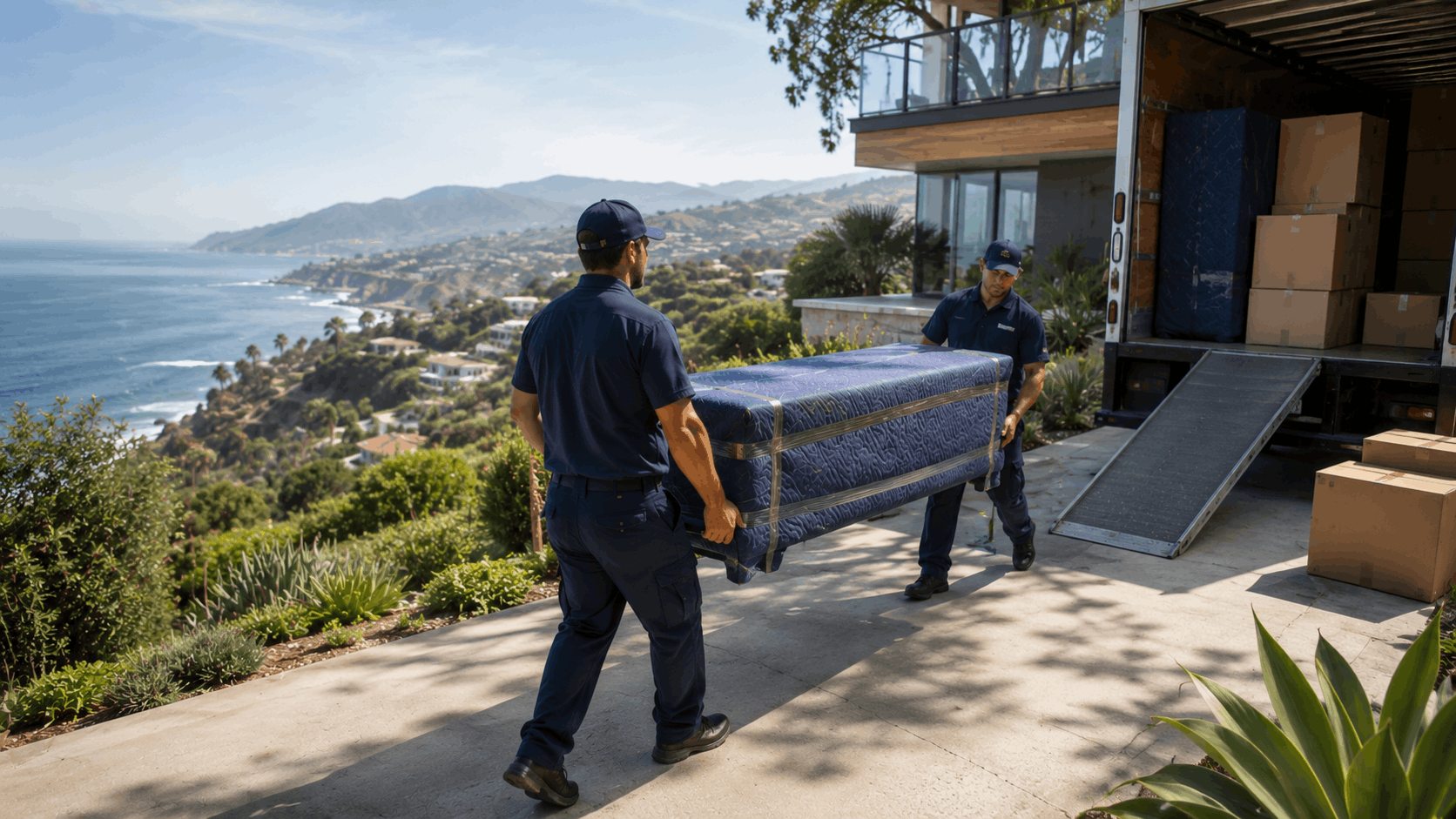
A phone quote works fine for a flat two-bedroom in the Village. It fails for a bluff home, because the variables that drive cost - truck access, carry distance, stair counts, staging options - cannot be described accurately over the phone. A proper moving site survey takes 45 to 90 minutes on the property and produces a written access assessment.
Here is what a Popeye Moving & Storage on-site estimate covers at a bluff property:
- Street width, grade, and turning clearance at every corner on the approach route
- Legal staging options if the truck cannot reach the driveway
- Carry distance from staging point to front door, measured, not estimated
- Stair counts, landing dimensions, and railing heights on exterior staircases
- Doorway, hallway, and stairwell measurements against the largest furniture pieces
- HOA, gate, and permit requirements specific to the address
- Weather and traffic factors that shape the start time
Measuring Truck Access, Turning Radius, and Staging Zones
The survey starts on the street, not in the house. Our estimator drives the approach from Sunset Boulevard exactly as the truck will, checking turning radius at each corner with the dimensions of the planned vehicle in mind. A 26-foot truck needs roughly 45 feet of clear arc to make a 90-degree turn, and many Castellammare corners offer 28 to 32.
Truck clearance is more than width. Low utility lines cross several upper bluff streets at heights under 13 feet, and overhanging trees on Rustic Canyon streets can scrape a box truck roof. The estimator notes every vertical obstruction along the route so dispatch can pick a vehicle that fits.
If the truck cannot reach the home, the estimator identifies the staging area - a legal, level spot where the big truck parks while a shuttle runs loads up the hill. Common staging points include wide stretches of Castellammare Drive, pullouts on Temescal Canyon Road, and curb space on Sunset secured with a parking permit. The staging plan goes into the written quote so there are no debates on move day.
Inventory Walkthroughs for Oversized and High-Value Items
Inside the home, the estimator builds a moving inventory room by room, flagging anything oversized, fragile, or high-value. Grand pianos, stone dining tables, oversized art, wine collections, and built-in cabinetry all get measured and photographed. These items decide crew size and equipment more than total box count does.
Doorway measurements happen during this walkthrough, not on move day. The estimator measures every doorway, stair landing, hallway pinch point, and balcony rail along each large item's exit path. A 90-inch sofa and a 34-inch stairwell turn is a problem better discovered three weeks early.
Oversized furniture sometimes needs disassembly or a balcony exit, and both get planned in advance. If a sectional must come over a rail, the survey notes the rail height, the drop distance, and the rigging required. Clients receive that plan in writing, including any crating recommendations from our packing and crating department.
Building the Day-Of Plan: Crew Size, Equipment, and Timing
Survey findings translate directly into a written move day plan. A flat-street three-bedroom might run with three movers and one truck; the same home on the bluff typically gets a four to six person crew, a shuttle vehicle, stair rollers, and extra floor protection. Crew size is the single biggest lever on hillside jobs, because long carries exhaust people fast.
Moving equipment gets listed on the plan too: powered stair climbers for appliances, piano boards, shoulder dollies, soft rigging straps, and Masonite for floor runs. Nothing gets improvised on a cliff. If the survey says a hoist is possible, the rigging gear rides on the truck whether or not the crew expects to need it.
Timing rounds out the plan. We set start times around the marine layer, school traffic near Palisades Charter High on Temescal Canyon, and any HOA move windows in the Highlands. A typical bluff plan loads boxes from 8 to 10 a.m., runs heavy items from 10 a.m. to 2 p.m. when surfaces are dry, and finishes light items in the afternoon.
Need Help in Los Angeles?
Popeye Moving & Storage serves Los Angeles and all of Los Angeles County.
Specialized Equipment and Techniques for Steep-Access Homes
Hillside moving equipment is what separates a crew that can quote a bluff job from a crew that can finish one. The gear is not exotic, but it is specific, and most standard moving crews do not carry it. Below is the equipment our Palisades teams use most, explained in plain language.
Shuttle Vehicles and Smaller Box Trucks for Tight Streets
The shuttle method is the workhorse of Castellammare and upper Paseo Miramar moves. The full-size truck parks at a legal staging point - often on Sunset, Temescal Canyon Road, or Castellammare Drive - and a 16-foot box truck or high-roof cargo van ferries loads up streets the big rig cannot reach. Each shuttle round trip takes 20 to 40 minutes depending on distance and carry time at the house.
Shuttle service adds cost, but it is far cheaper than the alternatives. Forcing a large truck up a marginal street risks scraped retaining walls, a stuck vehicle blocking the only road out, and damage claims that dwarf any shuttle fee. We have been called twice to rescue other companies' trucks wedged on Revello Drive, and both times the client paid for a tow before the move could continue.
Tight street access also shapes how the shuttle gets loaded. Items load in reverse-delivery order so the crew at the staging truck can pack the big rig efficiently, and fragile items ride secured in the van rather than hand-carried down stairs. A good shuttle plan keeps both vehicles working at once instead of one crew waiting on the other.
Stair Climbers, Ramps, and Rigging for Exterior Staircases
A powered stair climber dolly is a battery-driven hand truck with tracked or stepped wheels that walks heavy items down stairs under motor control. For refrigerators, washers, gun safes, and wine fridges, it replaces the dangerous two-man stair drag with a controlled descent one step at a time. Appliance moving on a 60-step exterior staircase is simply not safe without one.
Modular aluminum ramps solve a quieter problem: uneven hardscape. Palisades terraces are full of flagstone paths, single-step grade changes, and decomposed granite walkways that stop a loaded dolly cold. Crews lay ramp sections over these breaks so wheels roll instead of furniture being lifted and re-lifted thirty times.
Soft rigging covers the spots no wheel can go. Heavy-duty lifting straps and shoulder harnesses let a four-person team lower a piece down a terraced yard in controlled stages, with two handlers above managing descent and two below guiding the load. It looks slow, and it is - and that is the point on a slope.
Hoisting and Balcony Lifts When Stairs Are Not an Option
Some pieces will never make the interior stairs of a split-level cliffside home. Oversized sofas, armoires, sleeper sectionals, and large mattress sets often entered through a slider during construction staging and have no path out except over a balcony rail. Balcony hoisting is the answer, and done right it is routine rather than dramatic.
A controlled furniture lift starts with rigging anchored to structural points, never to the rail itself. The item gets wrapped, strapped in a cradle of lifting slings, and lowered by two handlers above while two below receive it on a padded landing zone. For drops beyond about 15 feet or items over roughly 400 pounds, we evaluate a material lift or crane alternative instead of a manual hoist.
Approvals come first. HOA properties in the Highlands often require advance written permission for any hoist over common areas, and a hoist over a public sidewalk or street can require city authorization. Our office confirms property approvals during the survey phase, because rigging a hoist and then waiting on a property manager wastes a full crew's afternoon.
Floor, Rail, and Landscape Protection on Sloped Properties
Floor protection on a bluff home starts outside the front door. Crews lay Masonite runners over interior hardwood and stone, but they also pad exterior stair rails, wrap newel posts, and protect tile stair treads where a dropped corner would chip an irreplaceable Malibu tile. Carpet shield film goes down on any soft flooring along the carry path.
Property protection extends to the landscaping, which on Palisades lots is often worth as much as the furniture. Terraced beds, mature bougainvillea, and succulent borders line most bluff walkways, and a careless carry crushes them. Crews flag tight planting areas with cones and route loads around them rather than through them.
Drip irrigation lines deserve special mention because they cause the most claims industry-wide on hillside jobs. Quarter-inch drip tubing runs along nearly every Palisades walkway edge, invisible under mulch, and a dolly wheel slices it instantly. Our foremen walk the carry path with the homeowner before loading starts and mark every line they can find.
Permits, Parking, and Coordination With the City and Neighbors
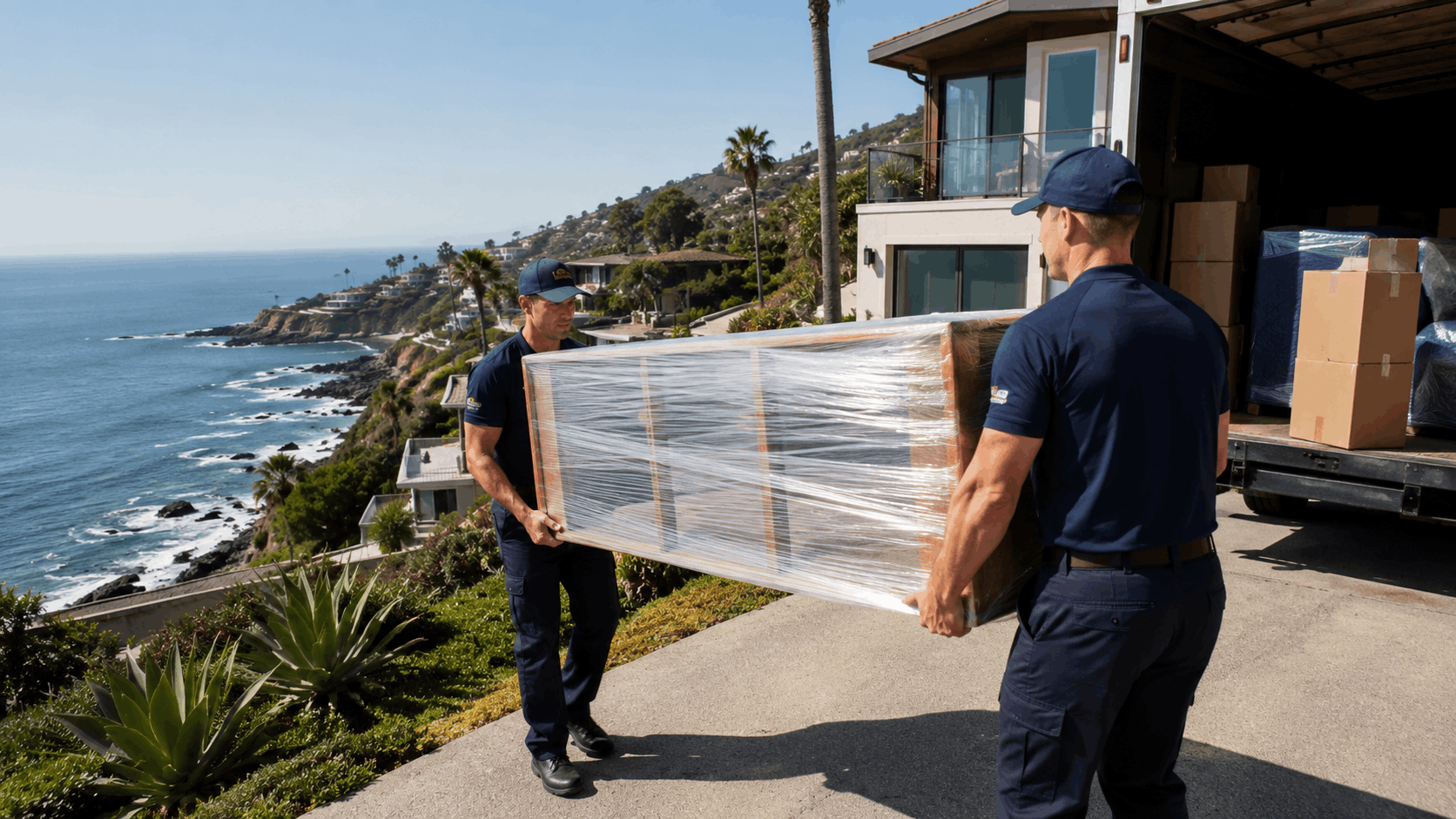
The paperwork side of a bluff move matters as much as the muscle. Moving permits in Los Angeles, oversized vehicle rules, and neighbor relations all decide whether a crew works a smooth ten-hour day or loses three hours to a parking enforcement officer and a blocked lane. We handle this layer for clients because we have been through it hundreds of times.
Temporary No-Parking Permits and LADOT Requirements
A temporary no parking permit reserves curb space for the moving truck on streets where open parking is unreliable - which describes most of the bluff. Near the Via de las Olas overlook, on Alma Real by the Recreation Center, and along narrow Castellammare streets, a permit is often the only way to guarantee the truck a legal spot. The City of Los Angeles issues these through LADOT.
Timing is the part people get wrong. Applications should go in at least one to two weeks before the move, and street posting requirements typically call for signs to be up 24 to 72 hours in advance so existing parkers have legal notice. A sign posted the morning of the move does not authorize towing, which makes it nearly useless.
Our office files these applications as part of the booking on any street the survey flags. Clients who book elsewhere should ask point blank who is pulling the permit, because the answer "you do not need one" on a single-loaded bluff street is usually wrong. The permit fee is small compared to a crew double-parked and feeding a meter maid all day.
Oversized Vehicle Restrictions Near PCH and Sunset Boulevard
Oversized vehicle restrictions limit truck weight and length on several hillside streets in and around the Palisades, and posted limits are enforced. Some upper bluff streets carry weight limits that exclude a fully loaded 26-foot truck entirely, which forces the shuttle plan regardless of whether the truck could physically make the turns. The survey checks posted restrictions along the full route.
PCH access adds a state layer. Pacific Coast Highway is a Caltrans facility, and stopping or staging a commercial truck on its shoulder near the Castellammare ramps is both illegal and dangerous. Caltrans rules govern that corridor, so our staging plans keep trucks on city streets with legal curb access instead.
Route planning happens before the truck leaves our yard, not behind the wheel. Dispatch maps the approach - usually Sunset from the 405, or PCH to Temescal Canyon or Chautauqua - and confirms the vehicle on the job complies with every posted limit on the route. Coming from our facility, the same care applies to clients moving between the Palisades and Santa Monica or Malibu, where canyon and coastal restrictions follow similar rules.
Working With Neighbors on Single-Lane and Shared Driveways
Neighbor notification is cheap insurance on streets like Revello Drive, where a parked truck blocks the only lane. We recommend - and on tough streets we handle - written notice to adjacent homes 48 hours before the move, with the date, hours, and a phone number for the crew foreman. Most neighbors are gracious when asked; almost none are gracious when surprised.
Single-lane streets require active management during the move. Our foreman keeps one lane passable whenever physically possible, stations a spotter when the truck must briefly block the road, and moves the vehicle immediately for any resident or emergency vehicle. On Revello, that means loading in short bursts with planned pull-asides rather than parking dead center for six hours.
Shared driveway situations come up constantly in the Huntington Palisades and Marquez Knolls, where flag lots and paired driveways are common. The fix is a five-minute conversation before move day: confirm which hours the neighbor needs access, agree on where the shuttle van can sit, and trade phone numbers. Crews that skip this conversation end up shuffling vehicles all day and billing the client for the lost time.
Protecting High-Value Items on Steep Terrain
Bluff homes in the Palisades hold a disproportionate share of pianos, fine art, wine collections, and designer furnishings, and steep terrain multiplies the risk to all of them. High-value moving on a cliffside lot is a packing problem first and a carrying problem second. Here is how we protect the items that cannot be replaced.
Custom Crating for Art, Mirrors, and Glass Walls
Blanket wrapping protects most furniture fine on a flat move, but custom crating wins once an item faces 100-plus feet of exterior stairs. A blanket-wrapped mirror survives a bump against a truck wall; it does not survive a corner strike on a stair rail during a long descent in fog. For framed art over about 40 inches, glass tabletops, and large mirrors, a crate is the right call on any bluff job.
Custom wood crates run roughly $150 to $600 per item depending on size and whether foam-lined interiors are needed, and large or unusual pieces can run higher. Lead time matters: crates are built before move day, so the request needs to land during the survey, not the night before. Our full service packing team builds crates in-house, which keeps lead times to a few days for most pieces.
Glass protection extends beyond art. Many bluff homes feature glass railing panels, oversized sliders, and glass-walled view rooms, and a long furniture carry passes within inches of all of it. Crews pad or board vulnerable glass along the carry path before the first heavy item moves, because a single cracked view panel can cost more than the entire move.
Piano and Heavy Stone Moves on Multi-Level Lots
Grand pianos and terraced lots are a demanding combination. The instrument comes apart first - legs, lyre, and lid removed - then gets strapped to a piano board, a padded skid built for exactly this purpose. On stairs, a four-person carry team controls the board with two handlers below and two above, descending one tread at a time with planned rest points at each landing.
Weight thresholds trigger extra crew automatically on our jobs. Anything over roughly 400 pounds on exterior stairs gets a minimum four-person team, and items over 700 pounds - concert grands, large stone slabs - get five or six plus rigging. Stone slab moving adds edge protection and skid plates, because stone fails suddenly at its edges rather than flexing like wood.
Heavy item handling on terraces also means checking what is under the crew's feet. A flagstone path that holds foot traffic fine can shift under 900 combined pounds of piano and movers, so crews probe and plank questionable surfaces first. Our dedicated piano moving crews have carried grands down Castellammare stair streets that most companies would refuse outright.
Valuation Coverage and Insurance for Cliffside Jobs
Every licensed mover includes released value protection by default, and clients should know how thin it is: 60 cents per pound per item. A 40-pound painting worth $20,000 would be covered for $24 under released value. The FMCSA's Protect Your Move resources explain these two coverage levels in detail.
Full value protection is the meaningful option, especially on high-risk access jobs. Under full value protection, the mover repairs, replaces, or pays current value for any item damaged in its care, based on a declared value for the shipment. On a bluff move with long stair carries and a hoist, the small premium for full value protection is the easiest yes a homeowner will give all month.
Documentation makes claims painless if anything happens. Before move day, photograph high-value items, gather appraisals or receipts for anything over a few thousand dollars, and list those items on the declared value paperwork by name. Moving insurance disputes almost always come down to what was documented before the truck arrived, not after.
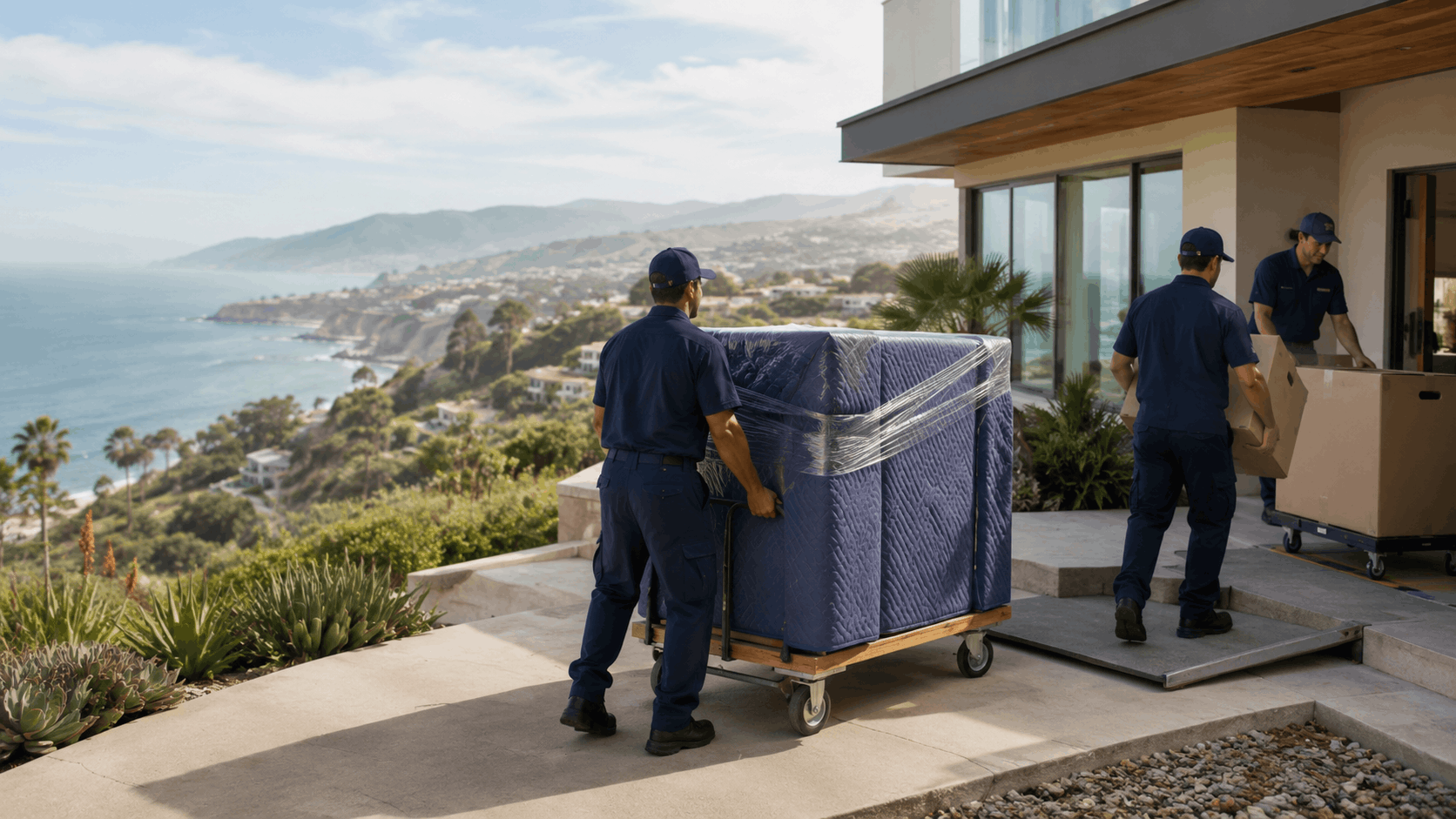
Need Help in Los Angeles?
Popeye Moving & Storage serves Los Angeles and all of Los Angeles County.
Storage Solutions During Palisades Rebuilds and Renovations
The Palisades is in a rebuilding era, and many families need their belongings safely stored for months or years while construction proceeds. Moving and storage in Los Angeles has to flex around permit timelines, contractor schedules, and escrow gaps that rarely line up cleanly. Storage is no longer an afterthought on Palisades moves - for many clients it is the centerpiece of the plan.
Short-Term Storage Between Escrow Closings and Rebuild Phases
The escrow gap is the most common storage trigger we see: the old home closes on the 15th and the new home is not available until the 30th, or a rebuild slips a phase and the rental lease ends anyway. Short-term storage bridges that gap without forcing a rushed double move. Month-to-month terms at the Popeye Moving & Storage facility mean nobody pays for a year when they need six weeks.
Vaulted storage is how the inventory stays organized through the gap. Belongings load into sealed wooden vaults at the home, each vault gets inventoried and labeled, and the vaults stack in our warehouse untouched until delivery. Nothing gets rehandled in between, which is where most storage damage happens at facilities that shuffle loose items.
For rebuild clients, storage often runs in phases that mirror construction. Furniture and household goods go into vaulted storage at demo, stay through framing and finish work, and return in stages as rooms complete. The inventory list from day one makes those partial pulls fast and accurate.
Climate Considerations for Stored Furniture From Coastal Homes
Furniture coming out of a bluff home has spent years in salt air, and salt air damage does not stop when the piece goes into a box. Salt-laden moisture trapped in wood, upholstery, and metal hardware keeps working in an unconditioned storage unit, corroding hinges and lifting veneer. Climate-controlled storage holds temperature and humidity steady, which stops that process cold.
Wood furniture, pianos, guitars, and electronics are the most vulnerable categories. A grand piano stored eighteen months in a standard drive-up unit near the coast often comes out needing soundboard work; the same piano in conditioned storage comes out needing a tuning. The cost difference between the two storage types is trivial against that repair bill.
For long construction timelines, our long-term storage program adds periodic inventory checks and re-padding where needed. Clients rebuilding over two or three years are not just parking boxes - they are preserving the contents of a home, and the facility conditions should reflect that.
Phased Delivery Back to the Palisades When Construction Wraps
Rebuild move-in rarely happens in one day, because rebuilt homes rarely finish in one piece. Phased delivery means scheduling partial loads as rooms become livable - bedrooms and kitchen first, then living areas, then garage and patio items as final inspections clear. Vaulted storage makes this practical, since specific vaults can be pulled without disturbing the rest.
Contractor coordination decides whether those deliveries go smoothly. We talk directly with the general contractor about site access, which entrance is usable, where flooring is cured enough for traffic, and which days the street is consumed by concrete pumps or crane work. On active rebuild streets, two crews fighting for the same curb wastes everyone's day.
Rebuild streets across the Palisades currently carry heavy construction traffic, and delivery timing has to respect that reality. We schedule around contractor work hours, confirm street access the day before, and keep delivery windows tight so the truck is not idling where a framing crew needs to stage lumber. Clients juggling a rebuild have enough to manage without refereeing their movers and their builder.
What a Bluff or Cliffside Move Costs in Pacific Palisades
Honest numbers help more than vague reassurance, so here are real ranges. Moving costs in Pacific Palisades vary more by access than by square footage, which surprises people used to flat-street quotes. Two identical three-bedroom homes - one in the Alphabet Streets, one below Via de las Olas - can differ by thousands of dollars for the same furniture.
Typical Price Ranges by Home Size and Access Difficulty
For a local move with standard access, current hourly rates in West LA generally run $180 to $280 per hour for a three or four person crew with a truck. A flat-access three-bedroom in the Village typically lands between $2,500 and $4,500 all-in. Those are the baseline numbers every other figure builds on.
Hillside moving prices climb from there based on access. The same three-bedroom on a bluff street with shuttle service, long carries, and exterior stairs commonly runs 30 to 50 percent more - roughly $3,500 to $7,000 - because the job consumes more crew-hours and more equipment. A severe-access Castellammare home with a stair street and a piano can exceed $8,000, and an honest estimator will say so up front.
Flat rate moving versus hourly billing is worth discussing during the survey. Hourly billing is fair on predictable jobs but exposes clients to overruns on hillside work, while a flat rate built from a thorough survey shifts that risk to the mover. We quote most bluff jobs flat after an on-site assessment, because we would rather own the estimate than argue about it at hour eleven.
Access Fees Explained: Shuttle, Long Carry, Stairs, and Hoisting
A shuttle fee covers the smaller vehicle and the extra handling when the main truck cannot reach the home, and it typically runs $300 to $800 on Palisades jobs depending on distance and trips. The fee exists because every item gets handled twice - once into the shuttle, once into the truck. On flat Village streets the big truck parks at the curb, so the fee never appears.
A long carry charge applies once the distance from truck to door passes a threshold, commonly 75 feet, and usually adds $75 to $200 per additional 50-foot increment or its equivalent in labor hours. A stair fee works the same way - often $50 to $150 per flight beyond the first, or it is simply absorbed into a larger crew and longer hours on a flat-rate quote. Both fees translate one thing: time.
Hoisting is priced per item because each hoist is its own small rigging project. A standard balcony hoist for a sofa or armoire typically adds $200 to $500, while complex lifts requiring mechanical equipment run more. Whatever the line items, every fee should appear on the written quote after the survey - a surcharge that first appears on move day is a sign the company never really assessed the job.
How to Get an Accurate Quote and Avoid Move-Day Surprises
The single best protection is refusing to accept a phone-only quote for a hillside home. Insist on an in-person survey or, at minimum, a live video survey where the estimator sees the street, the stairs, the staging options, and the biggest furniture pieces. Five minutes of video of the approach from Sunset tells an experienced estimator more than thirty minutes of phone description.
Get the access plan in writing along with the price. The written quote should name the staging location, the shuttle vehicle, the crew size, and every access fee with its trigger condition spelled out. If a company will not commit those details to paper, it has not actually planned the job.
Confirm whether the moving quote is a binding estimate before signing. A binding estimate fixes the price for the listed inventory and access conditions; a non-binding estimate is a guess that can grow. Reading reviews that mention your specific neighborhood - search the company name plus "Castellammare" or "Palisades" - tells you quickly whether they have actually worked these streets.
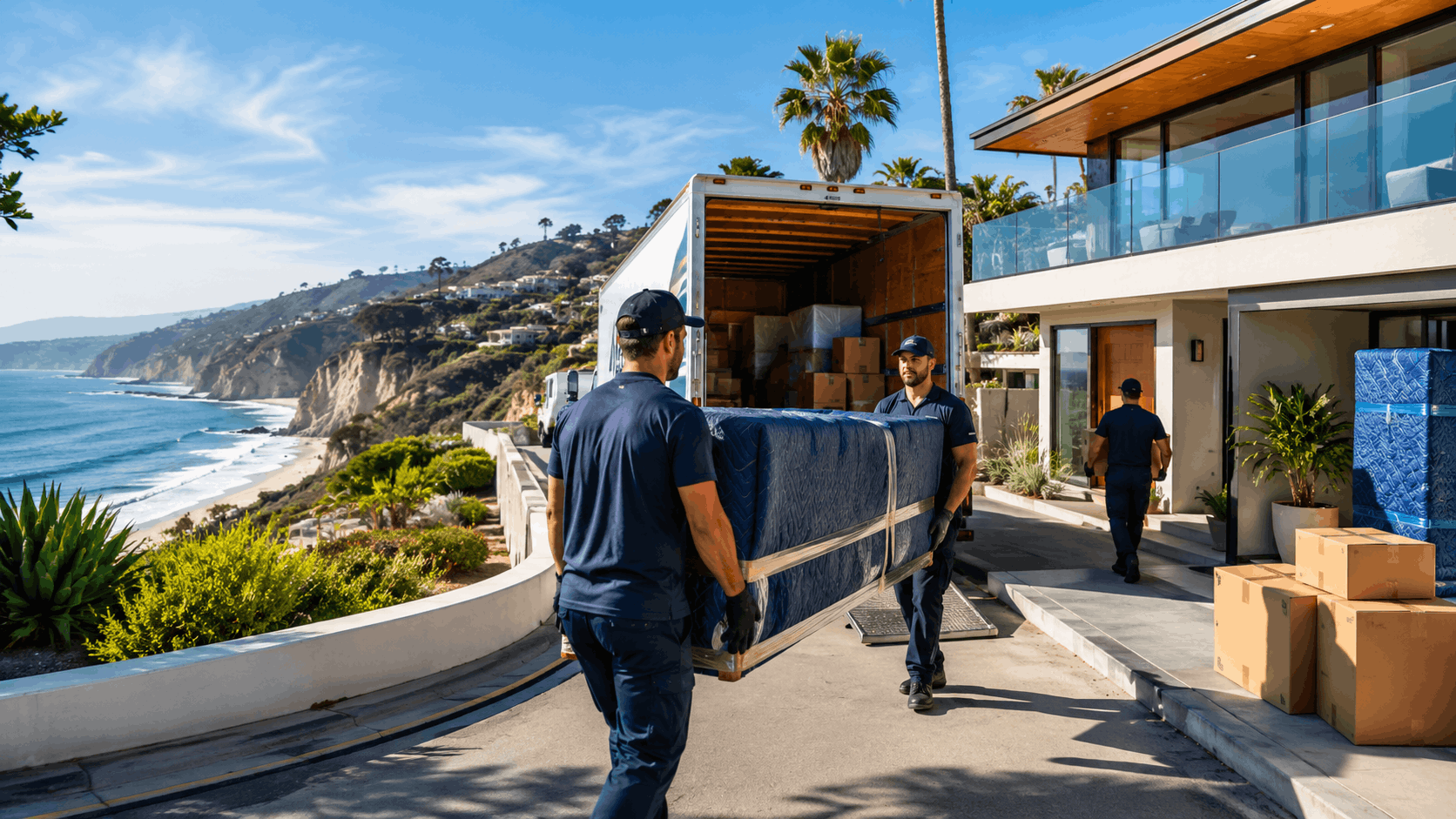
How to Prepare Your Bluff Home Before the Crew Arrives
Homeowner prep on a hillside property directly cuts the bill, because every obstacle the crew does not have to work around saves billable minutes hundreds of times over. This moving preparation checklist is specific to bluff and hillside homes, built from what slows our crews down most often. Here are the highest-value hillside home moving tips, condensed:
- Trim plants and clear all walkways, stairs, and landings on the carry path
- Hose off slick algae on shaded steps two days ahead so surfaces dry
- Test every gate code and prop or unlock gates on move morning
- Confirm the parking permit posted and the curb is actually clear
- Notify the HOA gate and neighbors at least 48 hours out
- Secure pets away from open doors and gates for the full day
- Label first-off boxes and point out priority heavy items to the foreman
Clearing Walkways, Stairs, and Gate Access Points
Walkway clearance is the cheapest prep with the biggest payoff. Overgrown bougainvillea along stair rails snags blanket-wrapped furniture and bare arms alike, so trim it back a week before the move - the thorns on a Palisades bougainvillea hedge can shred a sofa wrap in one pass. Clear potted plants, hoses, doormats, and kids' equipment off every landing on the carry path.
Stair safety on north-facing steps deserves specific attention. Shaded concrete and tile grow a film of algae in the marine layer months that turns dangerously slick with morning moisture. Hose and scrub those steps two or three days ahead so they are fully dry by move day, and tell the foreman about any step that stays slippery regardless.
Gate access failures waste shocking amounts of crew time. Test every gate code and remote the week before, replace dead keypad batteries, and leave side gates unlocked or propped on move morning. A crew of five waiting eight minutes for someone to find a gate clicker costs real money, and it happens on more jobs than anyone would guess.
Reserving Parking and Confirming Permits the Week Before
Seven days out, confirm the permit status with whoever filed it. The temporary no-parking application should already be approved, and this is the week to verify the posting date and physically check that signs go up on schedule. If signs are missing 48 hours before the move on a street that requires them, call the mover immediately - there may still be time to fix it.
Parking reservation also has a low-tech component: the household's own cars. Where legal, park family vehicles in the exact curb space the truck or shuttle needs starting the night before, then pull them out when the crew arrives. On streets near the Via de las Olas overlook where weekend visitors swarm, this trick alone has saved clients an hour of move-day scrambling.
HOA notification closes the loop for Highlands addresses. Three to five days out, confirm the gate has the moving company on its access list, the certificate of insurance is on file with the association, and the approved move window matches the crew's scheduled arrival. A two-minute call to the Summit gatehouse beats a truck stuck outside it at 8 a.m.
Packing Priorities for Items the Crew Should Handle First
Heavy items go down the hill early, and homeowners can set the crew up for that. Legs are freshest in the first hours, and on bluff jobs the surfaces are driest from late morning through early afternoon - so the piano, the stone table, and the appliances should be staged, emptied, and ready when the heavy-carry window opens. Defrost the refrigerator the day before and empty every dresser the crew will carry on stairs.
Packing order on the homeowner side should mirror the crew's plan. Finish all boxes the night before, because a crew billing hourly while the family tapes boxes is the most expensive packing service ever invented. Keep box weight under 40 pounds for anything traveling exterior stairs, even if the box could hold more.
Labeling boxes for first-off delivery makes the destination end faster too. Mark a small set of boxes - bedding, bathroom basics, kitchen essentials, chargers - with bright tape and tell the foreman they load last so they come off first. On a phased rebuild delivery, that same labeling system is what makes partial pulls from storage quick and accurate.
Need Help in Los Angeles?
Popeye Moving & Storage serves Los Angeles and all of Los Angeles County.
Final Thoughts
Bluff and cliffside homes are what make the Palisades the Palisades, and they deserve movers who plan for the terrain instead of discovering it on move day. The pattern in everything above is the same: survey first, plan in writing, bring the right vehicles and gear, handle the permits and neighbors, and sequence the work around the coastal weather. None of it is complicated - it just requires actually doing it.
Popeye Moving & Storage Co. has worked these streets for years, from the stair streets of Castellammare to the gated communities off Palisades Drive, and our residential moving teams treat every hillside address as the unique access problem it is. If a bluff move, a rebuild storage plan, or a phased return to the Palisades is on the horizon, contact our team for an on-site survey and a written quote that accounts for every stair, switchback, and shuttle trip. The right plan costs nothing extra - it just has to exist before the truck does.
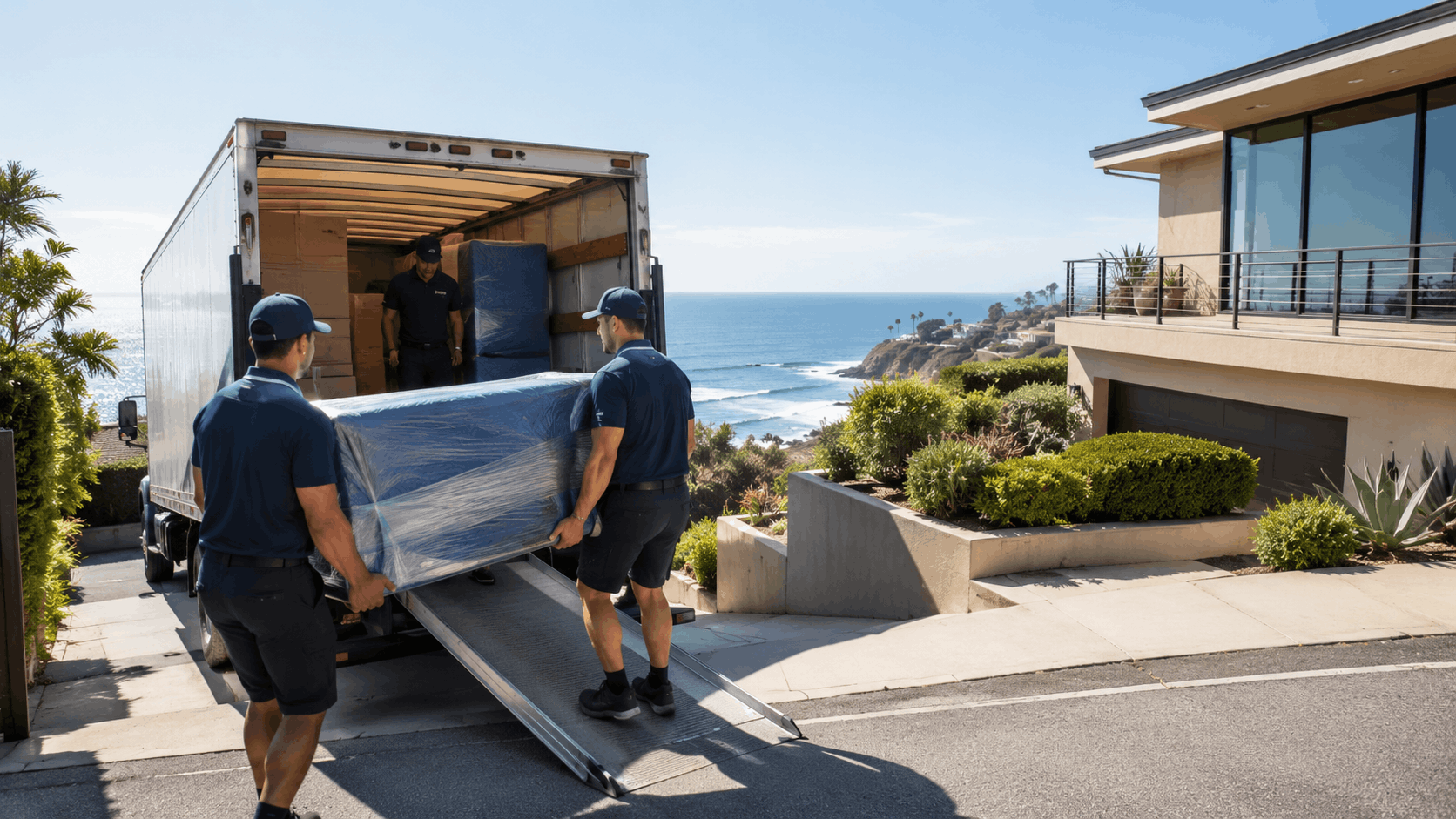
Frequently Asked Questions
These are the Pacific Palisades movers questions our office hears most often about bluff and cliffside jobs. The short answers below reflect real local conditions, not generic FAQ filler.
Can a full-size moving truck reach homes in Castellammare?
Usually not. The switchbacks on Posetano Road, Revello Drive, and the streets above Paseo Miramar are too tight and too steep for a 26-foot truck, and some homes sit on pedestrian-only stair streets. For most Castellammare addresses, the large truck stages on Castellammare Drive or near Sunset while a 16-foot truck or cargo van shuttles loads. The pre-move survey confirms exactly which vehicles the street allows before move day.
How much extra does a bluffside move cost compared to a flat-street move?
Plan on 30 to 50 percent more for the same home size, and sometimes higher for severe-access streets. The difference comes from specific line items: a shuttle fee of roughly $300 to $800, long carry charges once the distance passes about 75 feet, stair fees for exterior flights, and a larger crew working more hours. A written quote after an on-site survey should itemize every one of these fees in advance.
Do I need a parking permit for my move in Pacific Palisades?
On narrow or high-demand streets - near the Via de las Olas overlook, around the Recreation Center, and throughout Castellammare - a temporary no-parking permit from LADOT is often the only way to guarantee legal truck space. Applications should go in one to two weeks ahead, and signs must post 24 to 72 hours before the move to be enforceable. Popeye Moving & Storage handles the application for clients on flagged streets.
How long does a typical cliffside home move take?
Expect 1.5 to 2 times longer than a comparable flat-access move. A flat three-bedroom that loads in six hours often takes nine to twelve on the bluff, because shuttle round trips, 80 to 150 foot stair carries, and slick-surface delays all add time. Severe-access homes in Castellammare sometimes run a day and a half. The survey produces a realistic timeline so nobody is guessing on move morning.
What happens if it rains or the marine layer makes the stairs slick?
The crew adjusts the sequence rather than forcing unsafe carries. Light items and boxes move during damp morning hours, heavy pieces wait for dry midday surfaces, and non-slip runners and rail padding go down on questionable steps. In genuine rain, heavy stair work pauses or reschedules - a delayed piano costs an hour, while a dropped one costs thousands. Weather contingencies are written into the move plan from the start.
Can movers hoist furniture over a balcony if it will not fit through the door?
Yes, and on split-level cliffside homes it is fairly common. The team rigs lifting straps to structural anchor points, wraps the piece, and lowers it in a controlled descent with handlers above and below. Hoists work well for sofas, armoires, and mattresses up to roughly 400 pounds and 15 feet of drop. HOA properties usually require advance written approval, which our office secures during the survey phase.
Do Palisades Highlands HOAs require anything special from movers?
Most do. Associations like the Summit typically require a certificate of insurance naming the HOA, filed 48 to 72 hours before the move, plus a scheduled gate arrival and a weekday move window, often 8 a.m. to 5 p.m. Some communities also require protection of common areas along the route. Popeye Moving & Storage submits COIs and coordinates gate access directly with property managers so clients skip the paperwork chase.
Is storage available while my Palisades home is being rebuilt or renovated?
Yes. The Popeye Moving & Storage facility offers month-to-month short-term storage for escrow gaps and long-term vaulted storage for multi-year rebuilds. Climate-controlled options protect wood furniture, pianos, and electronics that carry salt-air moisture out of coastal homes. When construction wraps, phased redelivery brings items back room by room, coordinated with the general contractor so deliveries never collide with construction crews on rebuild streets.
How far in advance should I book movers for a bluff home?
Three to six weeks for standard dates, and longer for summer weekends and end-of-month moves, which fill first. Bluff jobs need lead time that flat moves do not: an on-site survey, a possible LADOT permit with its posting window, HOA insurance certificates, and any custom crating, which takes several days to build. Booking early turns all of those steps into routine paperwork instead of a scramble.
What insurance coverage should I choose for a high-risk access move?
Choose full value protection on any bluff or stair-heavy job. Released value coverage, included by default, pays only 60 cents per pound per item - $24 on a 40-pound painting worth thousands. Full value protection repairs, replaces, or pays current value based on the shipment's declared value, so declare honestly and document high-value pieces with photos and appraisals before move day. On long exterior carries, the upgrade is well worth it.
Frequently Asked Questions
- Can a full-size moving truck reach homes in Castellammare?
- Usually not. The switchbacks on Posetano Road, Revello Drive, and the streets above Paseo Miramar are too tight and too steep for a 26-foot truck, and some homes sit on pedestrian-only stair streets. For most Castellammare addresses, the large truck stages on Castellammare Drive or near Sunset while a 16-foot truck or cargo van shuttles loads. The pre-move survey confirms exactly which vehicles the street allows before move day.
- How much extra does a bluffside move cost compared to a flat-street move?
- Plan on 30 to 50 percent more for the same home size, and sometimes higher for severe-access streets. The difference comes from specific line items: a shuttle fee of roughly $300 to $800, long carry charges once the distance passes about 75 feet, stair fees for exterior flights, and a larger crew working more hours. A written quote after an on-site survey should itemize every one of these fees in advance.
- Do I need a parking permit for my move in Pacific Palisades?
- On narrow or high-demand streets - near the Via de las Olas overlook, around the Recreation Center, and throughout Castellammare - a temporary no-parking permit from LADOT is often the only way to guarantee legal truck space. Applications should go in one to two weeks ahead, and signs must post 24 to 72 hours before the move to be enforceable. Popeye Moving & Storage handles the application for clients on flagged streets.
- How long does a typical cliffside home move take?
- Expect 1.5 to 2 times longer than a comparable flat-access move. A flat three-bedroom that loads in six hours often takes nine to twelve on the bluff, because shuttle round trips, 80 to 150 foot stair carries, and slick-surface delays all add time. Severe-access homes in Castellammare sometimes run a day and a half. The survey produces a realistic timeline so nobody is guessing on move morning.
- What happens if it rains or the marine layer makes the stairs slick?
- The crew adjusts the sequence rather than forcing unsafe carries. Light items and boxes move during damp morning hours, heavy pieces wait for dry midday surfaces, and non-slip runners and rail padding go down on questionable steps. In genuine rain, heavy stair work pauses or reschedules - a delayed piano costs an hour, while a dropped one costs thousands. Weather contingencies are written into the move plan from the start.
- Can movers hoist furniture over a balcony if it will not fit through the door?
- Yes, and on split-level cliffside homes it is fairly common. The team rigs lifting straps to structural anchor points, wraps the piece, and lowers it in a controlled descent with handlers above and below. Hoists work well for sofas, armoires, and mattresses up to roughly 400 pounds and 15 feet of drop. HOA properties usually require advance written approval, which our office secures during the survey phase.
- Do Palisades Highlands HOAs require anything special from movers?
- Most do. Associations like the Summit typically require a certificate of insurance naming the HOA, filed 48 to 72 hours before the move, plus a scheduled gate arrival and a weekday move window, often 8 a.m. to 5 p.m. Some communities also require protection of common areas along the route. Popeye Moving & Storage submits COIs and coordinates gate access directly with property managers so clients skip the paperwork chase.
- Is storage available while my Palisades home is being rebuilt or renovated?
- Yes. The Popeye Moving & Storage facility offers month-to-month short-term storage for escrow gaps and long-term vaulted storage for multi-year rebuilds. Climate-controlled options protect wood furniture, pianos, and electronics that carry salt-air moisture out of coastal homes. When construction wraps, phased redelivery brings items back room by room, coordinated with the general contractor so deliveries never collide with construction crews on rebuild streets.
- How far in advance should I book movers for a bluff home?
- Three to six weeks for standard dates, and longer for summer weekends and end-of-month moves, which fill first. Bluff jobs need lead time that flat moves do not: an on-site survey, a possible LADOT permit with its posting window, HOA insurance certificates, and any custom crating, which takes several days to build. Booking early turns all of those steps into routine paperwork instead of a scramble.
- What insurance coverage should I choose for a high-risk access move?
- Choose full value protection on any bluff or stair-heavy job. Released value coverage, included by default, pays only 60 cents per pound per item - $24 on a 40-pound painting worth thousands. Full value protection repairs, replaces, or pays current value based on the shipment's declared value, so declare honestly and document high-value pieces with photos and appraisals before move day. On long exterior carries, the upgrade is well worth it.
P
Popeye Moving & Storage Co. Team Team
Licensed moving and storage professionals serving Los Angeles and Los Angeles County.
Licensed in California · License #PUC: CAL T 189749 | DOT: 1472924 | MC: 498816C
Why trust Popeye Moving & Storage?
Founded in 1994, Popeye Moving & Storage is a licensed and insured moving and storage service serving Los Angeles and Los Angeles County. All content is reviewed by our licensed technicians.

Need Help in Los Angeles?
Popeye Moving & Storage serves Los Angeles and all of Los Angeles County.
Related Articles
How-To Guides
Bel Air Movers: Gated Community Logistics and Custom Estate Service
A local expert guide to moving in Bel Air, covering gated entry logistics, canyon road challenges, estate handling, storage, and how to choose the right movers.
How-To Guides
Hillside Move Logistics: Why Some LA Streets Need Smaller Trucks
Hillside move logistics in LA require smaller trucks, special permits, and careful planning. Learn why canyon streets demand a different approach and how Popeye Moving handles it.
How-To Guides
Holmby Hills Movers: Compound and Estate Property Specialists
A complete guide to moving Holmby Hills estates and compounds, covering planning, specialty packing, logistics, security, storage, and costs from local specialists.