How-To Guides
El Segundo and the LAX Corridor: Aerospace-Adjacent Office Park Relocations
Key Takeaways
- El Segundo and the LAX corridor cluster aerospace, defense, tech, and media firms thanks to airport access and a deep engineering talent pool.
- Aerospace-adjacent moves differ from standard office moves due to sensitive equipment, security clearance rules, and near-zero tolerance for downtime.
- Planning should start 8 to 12 weeks out, with property manager coordination, insurance certificates, and IT scheduling built into the timeline.
- Corridor move costs range from about $3,000 for small offices to $75,000 or more for large, equipment-heavy relocations.
- Servers and specialty gear need sequenced teardown, anti-static handling, custom crating, valuation coverage, and barcode asset tracking.
- Local conditions like LAX traffic, the coastal marine layer, and El Segundo permit rules all shape when and how a move should happen.
- Popeye Moving & Storage Co. serves El Segundo, Hawthorne, Manhattan Beach, and the wider South Bay with packing, storage, and IT relocation.
In This Article
Picture a mid-size aerospace supplier packing up its offices just off Rosecrans Avenue on a Friday afternoon. Test benches sit half-wrapped in moving blankets. Server racks blink in a corner while the IT crew waits for the go-ahead to power down. The clock is ticking because the lease on the new building starts Monday, and the production line cannot afford to sit idle.
Scenes like this play out across El Segundo and the LAX corridor almost every week. This pocket of the South Bay has one of the densest clusters of aerospace, defense, tech, and media firms in the country. When those companies grow, shrink, or chase a better lease, they move - and moving here is nothing like a standard office shuffle across town.
Why Companies Cluster Around El Segundo and the LAX Corridor
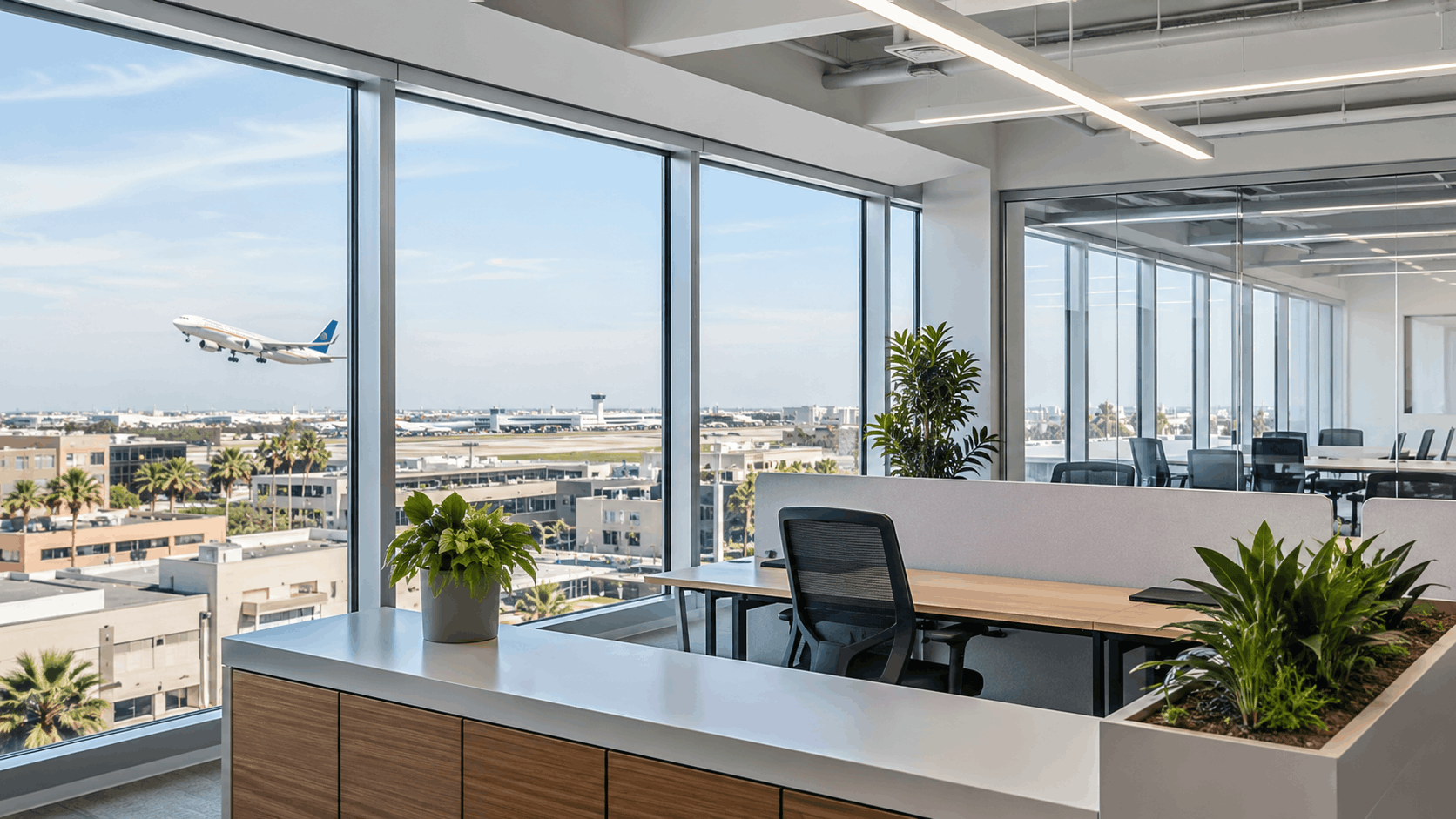
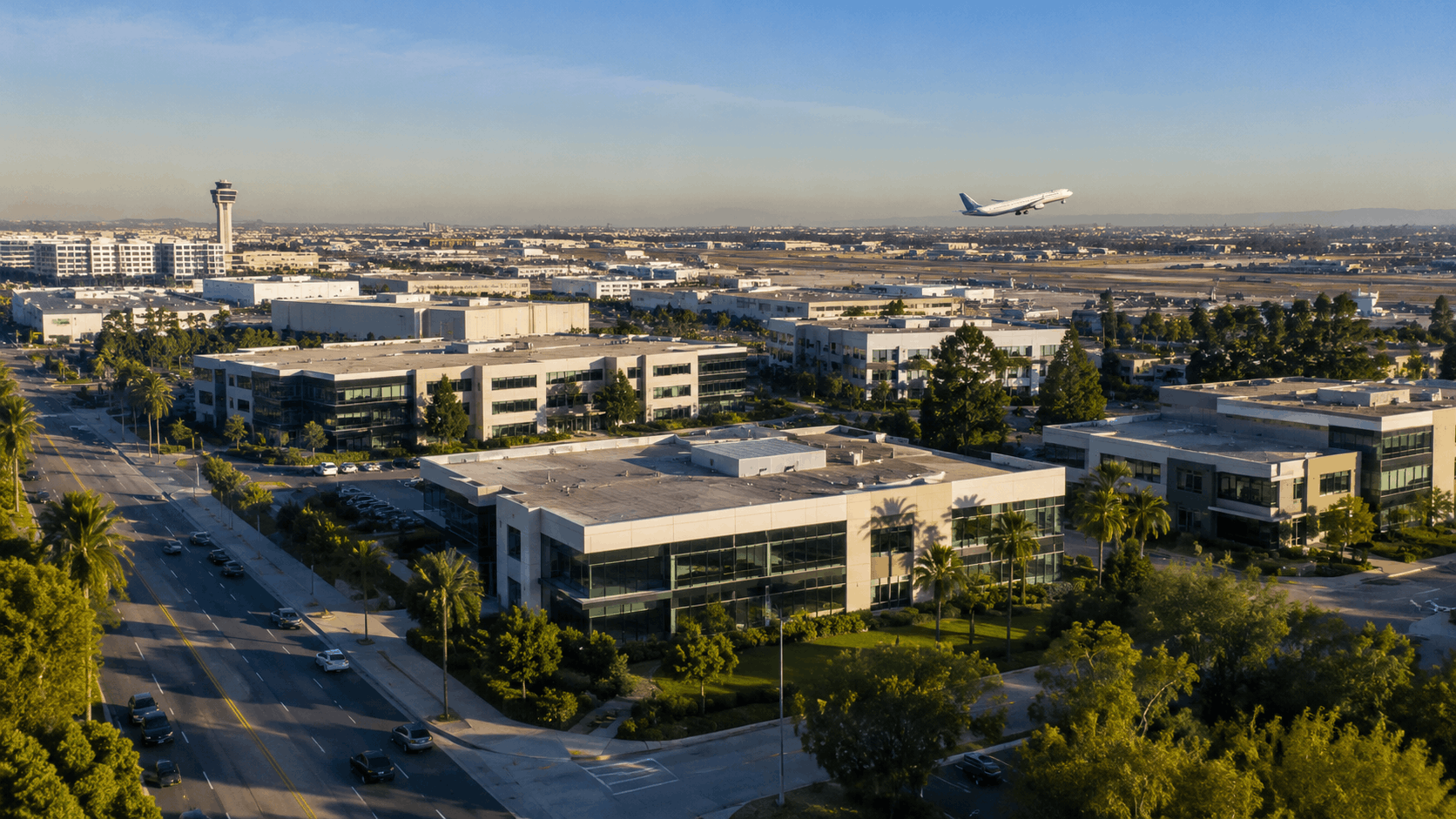
El Segundo sits in a rare spot. It is wedged between the Pacific, LAX, and the 405 Freeway, giving firms fast access to air travel, ports, and the rest of Los Angeles. That geography turned a small beach city into one of Southern California's busiest business hubs.
The aerospace corridor stretches along El Segundo Boulevard and Rosecrans Avenue, spilling into Hawthorne and Manhattan Beach. Here is what keeps drawing companies in:
- LAX proximity - executives and clients fly in and out within minutes
- A deep pool of engineering talent already living in the South Bay
- Modern El Segundo office parks built for lab, R&D, and clean-room use
- Freeway access to the 105, 405, and 110 for suppliers and freight
- A business-friendly city that has courted tech and defense firms for decades
That mix creates constant churn. As leases end and companies expand, relocations happen year-round, and few of them are simple point-A-to-point-B office moves.
The Aerospace Legacy Along Rosecrans and El Segundo Boulevard
El Segundo's aerospace roots run deep. Northrop Grumman, Raytheon, Boeing, and the Aerospace Corporation have all planted major operations along El Segundo Boulevard and the surrounding blocks. These giants shaped the entire local office market around their needs.
Where the big primes go, suppliers follow. Rosecrans Avenue became a spine for smaller aerospace suppliers - machine shops, avionics firms, composite makers, and testing labs that feed parts and services to the larger contractors. Being close cut delivery times and made face-to-face coordination easy.
Over the decades, this built out a stock of buildings designed for industrial and technical work, not just cubicle farms. Many have reinforced floors, high ceilings, and heavy power capacity meant for machinery. That legacy still defines what a move looks like today, because the gear inside these offices is rarely just desks and filing cabinets.
When one of these aerospace suppliers relocates, the job often involves calibrated instruments, cleanroom equipment, and hardware that cannot simply be tossed on a dolly. Our commercial moving team plans around those realities from the first walkthrough.
Office Park Zones Near Continental Park and the Plaza
The corridor is not one big blob of buildings. It breaks into distinct office park clusters, each with its own tenant mix and loading logistics. Knowing these zones helps a company pick the right move window and route.
Continental Park near Rosecrans and Sepulveda is one of the largest. It blends mid-rise office towers, retail, and dining, which means shared driveways and tight dock scheduling during business hours. Tenants here range from aerospace back-offices to financial and legal firms.
Plaza El Segundo and the surrounding retail-heavy zone add another wrinkle, since shopper traffic competes with moving trucks for space. Campus El Segundo, closer to the eastern edge, offers newer creative and tech-oriented buildings with more open floor plans. Each of these zones has different parking, dock, and elevator rules that shape a move.
Because tenants move in and out of these parks so often, property managers run tight schedules. A company that books its freight elevator early avoids the frustration of showing up to a dock already claimed by another tenant's move.
How LAX Access Drives Tenant Demand
Being minutes from LAX is the single biggest draw for many firms here. Aerospace and defense companies host clients, auditors, and partners who fly in constantly. A short hop from the terminal to a Continental Park conference room is a real selling point.
Sepulveda Boulevard and Aviation Boulevard act as the main arteries feeding the airport and the office parks. That constant connectivity keeps tenant demand high, which in turn keeps lease rates competitive and turnover brisk. Companies chase the best space, and when they find it, they move fast.
This is also why relocations happen so often in the corridor. A firm might outgrow a suite in two or three years, or consolidate several teams into one building near the airport. The convenience that makes the area attractive also makes it a place where offices are always in motion.
For movers, that airport adjacency is a double-edged sword. The same access that tenants love brings heavy traffic that has to be planned around, a point we cover in detail later in this guide.
The Rise of Tech and Media Firms Sharing the Corridor
El Segundo earned the nickname "Silicon Beach South" for a reason. Over the past decade, tech firms and creative offices have moved into former aerospace buildings, drawn by the same access and talent pool. Media companies, gaming studios, and startups now share blocks with defense contractors.
This adaptive reuse changes what a move looks like. A gaming studio moving into a converted aerospace building brings rows of high-end workstations, editing suites, and dense server setups instead of milling machines. The building may be industrial, but the contents are digital and delicate.
The mix also means moves happen on faster, less predictable timelines. Tech firms scale up quickly and often need office and business moving handled on short notice. That pushes movers to stay flexible and ready for both heavy industrial gear and sensitive electronics.
What ties it all together is the need for careful handling. Whether the tenant builds satellites or streams video, their equipment is expensive and time is money. That shared reality shapes every corridor relocation.
Get Your Free Quote
Tell us about your move and we'll get back to you fast.
What Makes Aerospace-Adjacent Office Moves Different
A specialty office move in this corridor is a different animal from a typical downtown relocation. The equipment is heavier, the security rules are stricter, and the tolerance for downtime is close to zero. Getting it wrong can mean broken instruments or a stalled production line.
Our crews treat an aerospace relocation as an engineering problem, not just a lifting job. Below are the four factors that most often separate these moves from the routine.
Handling Sensitive and High-Value Equipment
Aerospace-adjacent offices are full of high-value equipment that does not travel well. Think coordinate measuring machines, spectrum analyzers, optical benches, and calibrated test instruments worth six figures each. A single hard bump can knock them out of tolerance.
Server racks are another common load. These need to be powered down in the right order, secured against vibration, and kept upright during transport. Loose cabling and unsecured rails cause damage that does not show up until the system is booted back up in the new building.
Lab instruments often demand custom crating built around their exact shape. Our packing and crating team builds foam-lined, shock-absorbing crates for delicate gear so it arrives calibrated and ready to run. We photograph and document each piece before it moves.
The goal is simple: what leaves the old building working should arrive working. That takes trained hands, the right materials, and a plan for every item, not a rushed grab-and-go.
Security Clearance and Chain-of-Custody Concerns
Some firms in the corridor handle controlled materials tied to defense contracts. For these clients, a move is not just about logistics - it is about maintaining documented chain of custody every step of the way. Nothing can go untracked.
That often means crews must pass background checks before they set foot in a secured area. Certain rooms may require an escort, and some items cannot leave sight of a company representative. We coordinate these requirements with the client's security officer well before moving day.
Documentation matters here more than almost anywhere else. Each controlled item gets logged when it is picked up, tracked in transit, and signed for at delivery. That paper trail protects both the client and the moving crew.
For firms subject to federal handling rules, understanding the basics of controlled unclassified information helps everyone stay aligned. The National Archives CUI program outlines how sensitive materials should be safeguarded, and we plan moves to respect those standards.
Freight Elevators and Loading Dock Access in Multi-Story Parks
Most corridor office parks are mid-rise buildings with shared loading docks and freight elevators. Access to these is rarely open all day. Property managers assign move windows, and a crew that misses its slot can lose hours waiting.
Freight elevators have weight limits and size constraints that affect how equipment gets moved. A server rack or large crate may need to be broken down or angled carefully to fit. We measure elevator dimensions during the walkthrough so nothing gets stuck on moving day.
Loading dock scheduling is its own puzzle in busy parks like Continental Park. Multiple tenants may share a single dock, so timing has to be locked in early. We confirm dock reservations with building management and build the schedule around them.
Building access rules also cover things like floor protection, after-hours entry codes, and where trucks can stage. Sorting all of this out ahead of time keeps the move flowing instead of stalling at the door.
Minimizing Downtime for Round-the-Clock Operations
Many corridor firms run continuous operations. A defense supplier with production deadlines or a media company with live services cannot pause for a two-day move. Downtime costs real money and can breach client commitments.
That is why after-hours moving and weekend relocation are so common here. We schedule the heavy lifting for nights and weekends so teams can work Friday and be up and running Monday. Business continuity drives the entire timeline.
Phased moves also help. Instead of shutting everything down at once, we move departments in stages so critical functions stay online. IT often gets moved first or last, depending on which approach keeps systems available longest.
The point is to fit the move around the business, not force the business to stop for the move. A good plan makes the relocation almost invisible to daily operations.

Need Help in Los Angeles?
Popeye Moving & Storage serves Los Angeles and all of Los Angeles County.
Planning an Office Relocation in the LAX Corridor
Good corridor logistics start weeks before the first box is packed. Office relocation planning here has more moving parts than a standard job because of property manager rules, IT coordination, and airport-area traffic. A clear moving timeline keeps everyone on track.
Here is how a typical mid-size corridor move breaks down over the planning window:
| Timeframe | Main Tasks |
|---|---|
| 8-12 weeks out | Book mover, confirm new lease, start asset inventory |
| 6-8 weeks out | Coordinate with property managers, submit insurance certificates |
| 4-6 weeks out | Plan IT teardown, order supplies, finalize floor plan |
| 2-4 weeks out | Label assets, confirm dock and elevator windows |
| Move week | Execute phased move, reconnect IT, verify inventory |
Building a Realistic Timeline (8 to 12 Weeks Out)
For a mid-size office of 50 to 150 people, planning should start 8 to 12 weeks out. That window gives time to book a mover, lock in the new lease, and begin the asset inventory before the rush sets in. Starting late is the most common cause of a chaotic move.
In the first weeks, the focus is on decisions: what moves, what gets replaced, and what gets stored or disposed of. A planning checklist keeps these choices from piling up at the last minute. We help clients build that list during the initial walkthrough.
The middle weeks handle coordination - property managers, IT teams, and vendors all need lead time. The final weeks are for execution details like labeling and confirming windows. Spreading the work this way avoids a frantic final week.
Larger offices or those with heavy lab equipment may need the full 12 weeks or more. When custom crating and security clearances enter the picture, extra runway is worth the effort.
Coordinating With Property Managers and HOAs
Nearly every office park in the corridor requires coordination with a property manager before a move. They set the move window, often restricting big jobs to evenings or weekends to avoid disrupting other tenants. Booking that window early is the first hurdle.
Most managers also require a certificate of insurance naming the building owner as additionally insured. These certificates take a few days to process, so we submit them well ahead of the move date. Showing up without one usually means being turned away at the dock.
Some parks add rules about floor protection, noise, and elevator padding. Continental Park and similar mixed-use zones can be strict because retail and office tenants share space. We review each building's requirements during planning so there are no surprises.
Getting the property manager on board early smooths the whole process. They control the dock, the elevator, and the access codes, so a good working relationship keeps the move on schedule.
Inventory, Labeling, and IT Disconnect Scheduling
A solid asset inventory is the backbone of any organized move. Every desk, monitor, server, and instrument gets logged before it moves. This list doubles as a check-off sheet at the new building so nothing goes missing.
A color-coded labeling system speeds up delivery. Each department or room gets a color, and matching signs go up in the new space so crews know exactly where each item lands. This cuts hours off the setup and reduces confusion.
IT disconnect scheduling deserves special attention. Servers and network gear need to be shut down in the right sequence, photographed, and labeled by cable and port. Coordinating this with the client's IT team prevents the dreaded scramble of unlabeled wires at the new office.
We work alongside internal IT staff to time the teardown and setup so systems come back online fast. When labeling and inventory are done right, the new office feels familiar from the first morning.
Traffic and Route Planning Around Sepulveda and the 105
Route planning in this corridor is its own skill. LAX-area traffic on Sepulveda Boulevard and around the terminals can turn a short drive into an hour-long crawl. A smart route saves fuel, time, and crew fatigue.
The 105 Freeway offers a fast east-west option, and Aviation Boulevard often runs smoother than Sepulveda during peak hours. We map truck routes based on the time of day and the specific pickup and drop-off points. Local knowledge makes a real difference here.
Timing matters as much as the route. Morning airport rushes and evening commutes both clog the main arteries, so we schedule truck runs around them. Mid-morning and early afternoon windows often move fastest.
For companies moving between the corridor and other South Bay cities, we plan the full journey. Whether the destination is Hawthorne or the beach cities, the route is chosen to dodge the worst bottlenecks.
How Popeye Moving & Storage Co. Supports Corridor Relocations
Our team has handled office moves throughout El Segundo and the wider South Bay for years. We built our corridor services around the real problems these firms face - delicate gear, tight windows, and no room for downtime. As commercial movers, we plan for the whole job, not just the drive.
Here is a quick look at how our El Segundo movers support each part of a corridor relocation:
| Service | How It Helps a Corridor Move |
|---|---|
| Commercial packing | Full-office packing plus custom crates for delicate gear |
| Storage solutions | Bridges gaps when lease dates do not line up |
| Furniture handling | Cubicle teardown and rebuild in the new floor plan |
| IT and specialty | Careful server, lab, and instrument relocation |
Commercial Packing and Crating Services
Packing an aerospace-adjacent office takes more than boxes and tape. Delicate instruments and electronics need custom crating built to their exact dimensions. We construct foam-lined, shock-resistant crates that hold sensitive gear steady in transit.
For whole-office jobs, our commercial packing service handles everything from workstations to file rooms. We pack systematically, room by room, so unpacking follows the same logic. That order speeds up the reset at the new building.
Office packing also covers the small things that get overlooked - cables, hardware, and personal desk items. We label and group these so nothing disappears between buildings. Clients often tell us the packing stage is where a move is won or lost.
When the move is done, our unpacking services get the new space functional fast. Crews unpack, place, and clear away materials so teams can get back to work.
Short-Term and Long-Term Storage Options
Lease dates rarely line up perfectly. A company may leave its old building weeks before the new one is ready. Short-term storage bridges that gap so operations do not stall waiting on a build-out.
Our warehouse storage keeps furniture, equipment, and records safe and inventoried while the new space is prepared. Everything is logged, so retrieving specific items later is quick. This flexibility takes pressure off tight lease timing.
For firms downsizing or holding equipment between projects, long-term storage makes sense. Our commercial business storage options scale to the amount of space a company actually needs. There is no reason to cram a warehouse's worth of gear into a new office.
Storage also helps with phased moves. Items not needed right away can wait in storage while the essentials go in first. That keeps the new office uncluttered during the critical opening days.
Furniture Disassembly, Reassembly, and Space Setup
Cubicles, workstations, and modular systems rarely fit through a doorway assembled. Our crews handle furniture disassembly at the old office and workstation reassembly at the new one. We keep hardware bagged and labeled so nothing goes missing.
Cubicle setup follows the new floor plan exactly. We work from the client's layout so desks, panels, and power runs land in the right spots. Getting this right the first time avoids costly rework later.
Conference rooms, break areas, and reception spaces all get set up too. The goal is a space that functions on day one, not one that needs a week of shuffling furniture. We place items where staff expect to find them.
For firms with specialty furniture or heavy fixtures, our specialty moving crews bring the right tools and experience. Nothing gets forced or improvised.
Serving El Segundo and the Wider South Bay
Our coverage runs across the whole corridor and beyond. We serve El Segundo businesses along with firms in Hawthorne, Manhattan Beach, and the rest of the South Bay. Local roots mean we know these streets and buildings well.
As South Bay movers, we handle jobs in Manhattan Beach near Polliwog Park and across Hawthorne's industrial zones. Each city has its own permit rules and traffic quirks, and we plan around them.
We also cover the beach cities and inland South Bay communities that feed the corridor. Companies moving between these areas get one team managing the whole trip. That continuity avoids the handoff problems that plague multi-vendor moves.
Whether a firm is expanding within El Segundo or relocating from a neighboring city, we bring the same care and planning. The corridor is our home turf.

Costs and Budgeting for a Corridor Office Move
Office moving cost is one of the first questions every company asks. The honest answer is that it depends on several factors, but clear ranges help a company build a commercial move budget. We break down the drivers so there are no surprises on the invoice.
Here is a general look at what a corridor move might run by office size:
| Office Size | Approximate Range | Typical Timeline |
|---|---|---|
| Small (under 25 staff) | $3,000 - $8,000 | 1-2 days |
| Mid-size (25-100 staff) | $8,000 - $25,000 | 2-4 days |
| Large (100+ staff) | $25,000 - $75,000+ | 1-2 weeks phased |
What Drives the Price of a Commercial Move
Several cost factors shape the final price of a commercial move. Square footage is the starting point, since more space usually means more items and more labor hours. But it is far from the only factor.
Equipment weight and fragility matter a lot in this corridor. Heavy machinery, server racks, and calibrated instruments take more crew, more equipment, and more crating than standard desks. A lab-heavy office costs more to move than an open cubicle floor of the same size.
Floor level and building access also affect price. A ground-floor suite with a wide dock moves faster than a fifth-floor office with a shared freight elevator and a booked dock. Long carries from truck to door add hours too.
Distance and timing round out the picture. After-hours and weekend moves cost more, and so do jobs requiring background-checked crews. We factor all of this into an upfront estimate so the budget holds.
Typical Price Ranges by Office Size
The table above gives rough price ranges, but a few notes help set expectations. A small office move in the corridor often lands in the $3,000 to $8,000 range for a straightforward job with standard furniture. Add specialty gear and that climbs.
Mid-size offices, the most common in the corridor, generally run $8,000 to $25,000. The wide spread reflects how much the equipment and access vary between firms. A tech office with dense IT costs more than a light administrative floor.
Large moves with heavy lab or production equipment can exceed $75,000, especially when phased over a week or more. These moving estimates always depend on the specifics. That is why we base every quote on an actual look at the space.
These figures are starting points, not fixed prices. The right way to pin down a number is a walkthrough, which we cover below.
Hidden Costs to Watch Out For
The base moving fee is not always the whole story. Hidden costs can catch companies off guard if they do not plan ahead. Knowing them in advance keeps the budget honest.
After-hours fees are common in the corridor because so many moves happen at night or on weekends. Elevator reservations and dock fees charged by property managers can add up too. These are building costs, not mover costs, but they hit the same budget.
Insurance riders are another line item. Some buildings require extra coverage that raises the certificate cost. Disposal charges for old furniture, e-waste, or debris also add up if not planned for.
We flag all of these during planning so nothing appears as a surprise. A clear estimate should account for the whole picture, not just the truck and crew.
How to Get an Accurate Quote
A phone estimate for a corridor move is almost always a guess. These jobs have too many variables - equipment, access, security, and timing - to price sight unseen. An on-site walkthrough is the only reliable way to get an accurate quote.
During the walkthrough, we measure elevators, check dock access, and inventory the heavy or delicate items. We ask about security rules and operating hours. That detail lets us build a moving estimate that actually matches the job.
The walkthrough also helps the client. Seeing the plan laid out surfaces questions early, when they are easy to solve. It turns a vague number into a real budget the finance team can trust.
Any company planning a corridor move should insist on this step. To schedule one, reach out through our contact page and we will set up a visit.
Need Help in Los Angeles?
Popeye Moving & Storage serves Los Angeles and all of Los Angeles County.
Protecting Data, IT, and Specialty Assets During the Move
For most corridor firms, the technology is the business. An IT relocation gone wrong can cost far more than the move itself. Data protection and specialty asset handling sit at the center of every plan we build.
The following steps keep servers, networks, and sensitive gear safe from teardown to reconnection.
Server, Network, and Data Center Relocation
A server relocation starts with a clean, orderly shutdown. Systems come down in sequence, and every cable and port gets labeled and photographed. This record makes reconnection fast and accurate at the new site.
During a data center move, racks are secured against vibration and kept upright the entire way. Network hardware travels in padded, anti-static packaging. We coordinate closely with the client's IT team so the teardown and rebuild match their standards.
At the new building, we place equipment according to the IT plan and support reconnection. The goal is systems back online with minimal delay. For firms running critical services, we schedule this phase for the lowest-impact window.
Small missteps here cause big headaches, so we treat network hardware with the same care as any high-value instrument. Careful handling now saves days of troubleshooting later.
Anti-Static and Climate-Sensitive Handling
Sensitive electronics fail from static and heat. Anti-static protection - grounded wraps, bags, and mats - shields circuit boards and drives during handling. This is standard practice for us on any IT-heavy corridor move.
Climate control matters for certain components. Optical gear, precision instruments, and some storage media react badly to temperature swings. We plan transport to keep these items within safe ranges, avoiding long stints in a hot truck.
Timing plays into this too. The corridor's coastal mornings can be damp, and afternoons can heat up, so we schedule sensitive loads for stable conditions. Small choices like this protect expensive, sensitive components.
Handling gear the right way is not glamorous, but it is what keeps equipment working. We build these precautions into the plan rather than treating them as afterthoughts.
Insurance, Liability, and Valuation Coverage
High-value assets deserve real coverage. Moving insurance comes in different forms, and understanding the options prevents a nasty surprise if something goes wrong. We walk clients through the choices before the move.
Valuation coverage lets a company declare the true worth of high-value gear so it is protected at full value, not a token per-pound rate. For a six-figure instrument, that difference is huge. We help clients document values ahead of time.
Liability terms vary by mover and by the level of coverage chosen. The Federal Motor Carrier Safety Administration explains the basics of mover liability and valuation, and its Protect Your Move resource is a solid primer for any business planning a relocation.
We match coverage to the real risk of each job. A lab full of calibrated instruments needs more protection than a floor of standard desks, and the plan reflects that.
Documentation and Asset Tracking
Asset tracking keeps nothing lost between buildings. We tag items with barcodes or labels and log them at pickup and delivery. That documentation is a safety net for both sides.
Barcode tagging speeds up the check-in at the new office. A quick scan confirms each item arrived, and any gap shows up immediately. For firms with strict inventory rules, this record is worth its weight.
Documentation also supports insurance and security requirements. If a controlled item needs chain-of-custody proof, the tracking log provides it. Everything is accounted for from start to finish.
Clients get a clear record of what moved and where it landed. That transparency builds trust and makes the first days in the new space far less stressful.

Local Conditions That Affect Moves in the LAX Corridor
Moving in this corridor means working around real local conditions. LAX traffic, coastal weather, and El Segundo's own rules all shape how and when a move should happen. Ground-level knowledge separates a smooth job from a stalled one.
Here is what our crews watch for every time we work the corridor.
Traffic Patterns Near LAX and Century Boulevard
Century Boulevard, the direct route into LAX, jams up hard during peak hours. Morning arrivals and evening departures both clog the airport approaches. A truck caught in that mess loses valuable time.
LAX traffic spikes on holiday weekends and during travel-heavy seasons. We check the calendar and avoid scheduling big moves around those peaks when possible. Timing the drive right can save an hour or more per run.
Sepulveda and Aviation feel the overflow too, so route choice matters as much as timing. We often route trucks along the 105 to skip the worst of the airport crush. Local experience tells us which streets flow at which hours.
Planning around these patterns is not optional here. A move scheduled without regard to airport traffic can run hours behind before lunch.
Coastal Fog and Morning Marine Layer Effects
The coast brings its own quirk: the marine layer. Coastal fog rolls in overnight and can linger past mid-morning, especially during the June Gloom stretch of late spring and early summer. That damp gray blanket slows early loading.
Wet surfaces make ramps and dock plates slick, so crews take extra care in foggy conditions. Sensitive electronics also do not love the damp air, which is another reason we time certain loads carefully. Rushing in the fog invites slips and damage.
Many corridor mornings start hazy and clear by mid-day. We often plan the delicate stages for after the marine layer lifts. That small adjustment keeps the crew safe and the gear dry.
Knowing the local weather rhythm is part of moving here well. The fog is predictable, so we plan for it rather than fight it.
Parking and Permit Rules in El Segundo
El Segundo has specific rules about where moving trucks can park and stage. Street parking near many office parks is limited, and blocking lanes can draw citations. Truck staging has to be arranged with the building and sometimes the city.
Larger jobs may require a permit from the El Segundo building department or coordination with the city for street use. These take lead time, so we handle them during planning. Skipping this step can shut a move down before it starts.
Loading zones fill up fast in mixed-use areas near retail. We reserve dock and staging space in advance so the truck has a spot when it arrives. That coordination avoids circling the block with a loaded truck.
Every city in the South Bay handles this a little differently. Because we work El Segundo constantly, we know the rules and build them into the schedule.
Ongoing Development and Construction Detours
The corridor is always under construction somewhere. New office and mixed-use projects, plus regional Metro line work, regularly reroute traffic. A route that worked last month may be closed today.
Construction detours around Aviation and the airport can add real time to a run. We check current road work before finalizing routes so trucks do not hit a surprise closure. Live traffic data helps, but local knowledge helps more.
Metro line construction in the broader area shifts lane patterns and adds congestion. We factor these into scheduling, especially for phased moves that run over several days. Conditions can change mid-week.
Staying current on corridor construction is part of the job. We adjust routes and timing as the roads change so the move keeps moving.
Need Help in Los Angeles?
Popeye Moving & Storage serves Los Angeles and all of Los Angeles County.
Final Thoughts
Relocating an aerospace-adjacent office in El Segundo and the LAX corridor takes more than a truck and a crew. It takes planning around delicate equipment, security rules, tight building windows, and airport traffic. Done right, the move barely interrupts the business.
Our team knows these streets, these office parks, and the firms that fill them. From custom crating to IT protection to storage that bridges lease gaps, we build each corridor move around the real problems these companies face. The goal is always the same: everything arrives working, and operations stay on track.
If your company is planning a move in El Segundo, Hawthorne, Manhattan Beach, or anywhere in the South Bay corridor, reach out to Popeye Moving & Storage Co. for a consultation. Call us or visit our contact page to schedule an on-site walkthrough and get an accurate quote.
Frequently Asked Questions
How long does an office relocation in El Segundo usually take?
Planning should start 8 to 12 weeks out, but the physical move varies by size. A small office of under 25 staff often finishes in one to two days. Mid-size offices take two to four days, and large offices with heavy equipment may run one to two weeks in phases. Starting early gives the smoothest result and avoids a rushed final week.
How much does a commercial move in the LAX corridor cost?
Costs depend on office size, equipment, floor level, and access. Small offices generally run $3,000 to $8,000, mid-size offices $8,000 to $25,000, and large offices $25,000 to $75,000 or more. Specialty gear, after-hours scheduling, and security requirements push prices higher. The most accurate figure comes from an on-site walkthrough rather than a phone estimate.
Can movers handle sensitive aerospace equipment?
Yes. Our crews build custom crates for calibrated instruments, test benches, and lab gear, using foam lining and shock protection. We apply anti-static handling for electronics and climate-aware transport for temperature-sensitive parts. Trained crews document and photograph each item, so what leaves the old building working arrives working at the new one.
Do office parks require insurance certificates before a move?
Most corridor office parks require a certificate of insurance naming the building owner as additionally insured before allowing a move. These take a few days to process, so we submit them well ahead of the date. Showing up without one usually means being turned away at the dock. We handle this coordination during the planning phase.
Can the move happen after hours or on weekends?
Yes, and it often should. Many corridor firms run continuous operations and cannot pause for a move. We schedule the heavy lifting for nights and weekends so teams work Friday and are running Monday. Phased moves also keep critical functions online while other departments relocate in stages.
What areas near El Segundo does Popeye Moving & Storage Co. serve?
We serve El Segundo and the wider South Bay, including Hawthorne, Manhattan Beach, Redondo Beach, Hermosa Beach, and the beach cities. We also cover inland communities feeding the corridor. One team manages the full trip, avoiding the handoff problems that come with multiple vendors on a single move.
Is storage available if lease dates do not overlap?
Yes. Short-term storage bridges the gap when a company leaves its old building before the new one is ready. Our warehouse storage keeps furniture and equipment safe and inventoried. Long-term storage suits firms downsizing or holding gear between projects. Storage also supports phased moves by holding items until the new space is ready.
How are servers and IT equipment protected during transport?
We shut systems down in sequence, then label and photograph every cable and port. Racks are secured against vibration and kept upright, and network hardware travels in anti-static, padded packaging. At the new site, we place equipment per the IT plan and support reconnection so systems come back online with minimal delay.
What is the best time of week to schedule a corridor move?
Weekends and evenings work best for keeping operations running and avoiding LAX traffic peaks. For weekday runs, mid-morning and early afternoon windows dodge the worst airport congestion. We also plan delicate loading for after the coastal marine layer lifts, since damp mornings slow early work and pose slip risks.
How far in advance should a company book a mover?
Booking 8 to 12 weeks ahead is wise for a mid-size corridor move, and larger jobs benefit from even more lead time. Busy seasons and end-of-quarter lease turnovers fill schedules fast. Early booking locks in the move window with property managers and gives time for insurance, permits, and IT coordination.
Frequently Asked Questions
- How long does an office relocation in El Segundo usually take?
- Planning should start 8 to 12 weeks out, but the physical move varies by size. A small office of under 25 staff often finishes in one to two days. Mid-size offices take two to four days, and large offices with heavy equipment may run one to two weeks in phases. Starting early gives the smoothest result and avoids a rushed final week.
- How much does a commercial move in the LAX corridor cost?
- Costs depend on office size, equipment, floor level, and access. Small offices generally run $3,000 to $8,000, mid-size offices $8,000 to $25,000, and large offices $25,000 to $75,000 or more. Specialty gear, after-hours scheduling, and security requirements push prices higher. The most accurate figure comes from an on-site walkthrough rather than a phone estimate.
- Can movers handle sensitive aerospace equipment?
- Yes. Our crews build custom crates for calibrated instruments, test benches, and lab gear, using foam lining and shock protection. We apply anti-static handling for electronics and climate-aware transport for temperature-sensitive parts. Trained crews document and photograph each item, so what leaves the old building working arrives working at the new one.
- Do office parks require insurance certificates before a move?
- Most corridor office parks require a certificate of insurance naming the building owner as additionally insured before allowing a move. These take a few days to process, so we submit them well ahead of the date. Showing up without one usually means being turned away at the dock. We handle this coordination during the planning phase.
- Can the move happen after hours or on weekends?
- Yes, and it often should. Many corridor firms run continuous operations and cannot pause for a move. We schedule the heavy lifting for nights and weekends so teams work Friday and are running Monday. Phased moves also keep critical functions online while other departments relocate in stages.
- What areas near El Segundo does Popeye Moving & Storage Co. serve?
- We serve El Segundo and the wider South Bay, including Hawthorne, Manhattan Beach, Redondo Beach, Hermosa Beach, and the beach cities. We also cover inland communities feeding the corridor. One team manages the full trip, avoiding the handoff problems that come with multiple vendors on a single move.
- Is storage available if lease dates do not overlap?
- Yes. Short-term storage bridges the gap when a company leaves its old building before the new one is ready. Our warehouse storage keeps furniture and equipment safe and inventoried. Long-term storage suits firms downsizing or holding gear between projects. Storage also supports phased moves by holding items until the new space is ready.
- How are servers and IT equipment protected during transport?
- We shut systems down in sequence, then label and photograph every cable and port. Racks are secured against vibration and kept upright, and network hardware travels in anti-static, padded packaging. At the new site, we place equipment per the IT plan and support reconnection so systems come back online with minimal delay.
- What is the best time of week to schedule a corridor move?
- Weekends and evenings work best for keeping operations running and avoiding LAX traffic peaks. For weekday runs, mid-morning and early afternoon windows dodge the worst airport congestion. We also plan delicate loading for after the coastal marine layer lifts, since damp mornings slow early work and pose slip risks.
- How far in advance should a company book a mover?
- Booking 8 to 12 weeks ahead is wise for a mid-size corridor move, and larger jobs benefit from even more lead time. Busy seasons and end-of-quarter lease turnovers fill schedules fast. Early booking locks in the move window with property managers and gives time for insurance, permits, and IT coordination.
P
Popeye Moving & Storage Co. Team Team
Licensed moving and storage professionals serving Los Angeles and Los Angeles County.
Licensed in California · License #PUC: CAL T 189749 | DOT: 1472924 | MC: 498816C
Why trust Popeye Moving & Storage?
Founded in 1994, Popeye Moving & Storage is a licensed and insured moving and storage service serving Los Angeles and Los Angeles County. All content is reviewed by our licensed technicians.

Need Help in Los Angeles?
Popeye Moving & Storage serves Los Angeles and all of Los Angeles County.
Related Articles

How-To Guides
Hancock Park Movers: Historic Home Crating and Heritage Property Service
A local guide to moving historic Hancock Park homes, covering custom crating, heritage property care, timing, costs, storage, and how to choose the right LA mover.

How-To Guides
Office Furniture Storage Between Leases: Decommission Today, Refurnish the Next Space Later
Learn how LA businesses store office furniture between leases, decommission the old space, and refurnish later - with costs, timing, and expert tips from Popeye Moving.

How-To Guides
Office Movers in Culver City and Playa Vista: Studio-Adjacent and Tech-Campus Moves
A local guide to office movers in Culver City and Playa Vista, covering studio security, tech-campus docks, IT gear, parking permits, storage, and cost.