How-To Guides
Office Movers in Culver City and Playa Vista: Studio-Adjacent and Tech-Campus Moves

Key Takeaways
- Studio-adjacent buildings near Sony Pictures and Amazon Studios require badges, escorts, and often restricted or after-hours moving times.
- Playa Vista tech campuses use shared loading docks and freight elevators that must be reserved through building management ahead of time.
- Book a local office crew six to eight weeks out for mid-size offices, and up to twelve weeks for large jobs with heavy IT gear.
- Culver City street moves may need parking permits, while Playa Vista runs on HOA-managed private roads coordinated through a management office.
- Servers, monitors, and editing bays need labeled cables, anti-static wrapping, and custom crating, with clear IT-team coordination for fast reconnection.
- Office move costs range from about $1,500 for a small suite to $12,000 and up for a full floor, driven by crew size, gear, and access.
- Short-term and climate-controlled storage bridges lease gaps and protects electronics and records during phased moves.
- Local route knowledge of Jefferson Boulevard, Centinela, and the 90 Freeway saves time and avoids surprises on move day.
In This Article
A growing product team on Bluff Creek Drive outgrew its space in eighteen months. The founders needed to move forty workstations, a server rack, and two editing bays across town without losing a single day of shipping code. That is the reality for a lot of teams around Culver City and Playa Vista right now, where studio work and tech growth keep pushing companies into bigger offices.
We move these kinds of offices every week, and the ones near Sony Pictures, Amazon Studios, and the Playa Vista tech corridor come with their own set of rules. Badge access, shared loading docks, private roads, and freeway timing all change how a move has to run. Get one detail wrong and a crew sits idle while the clock runs.
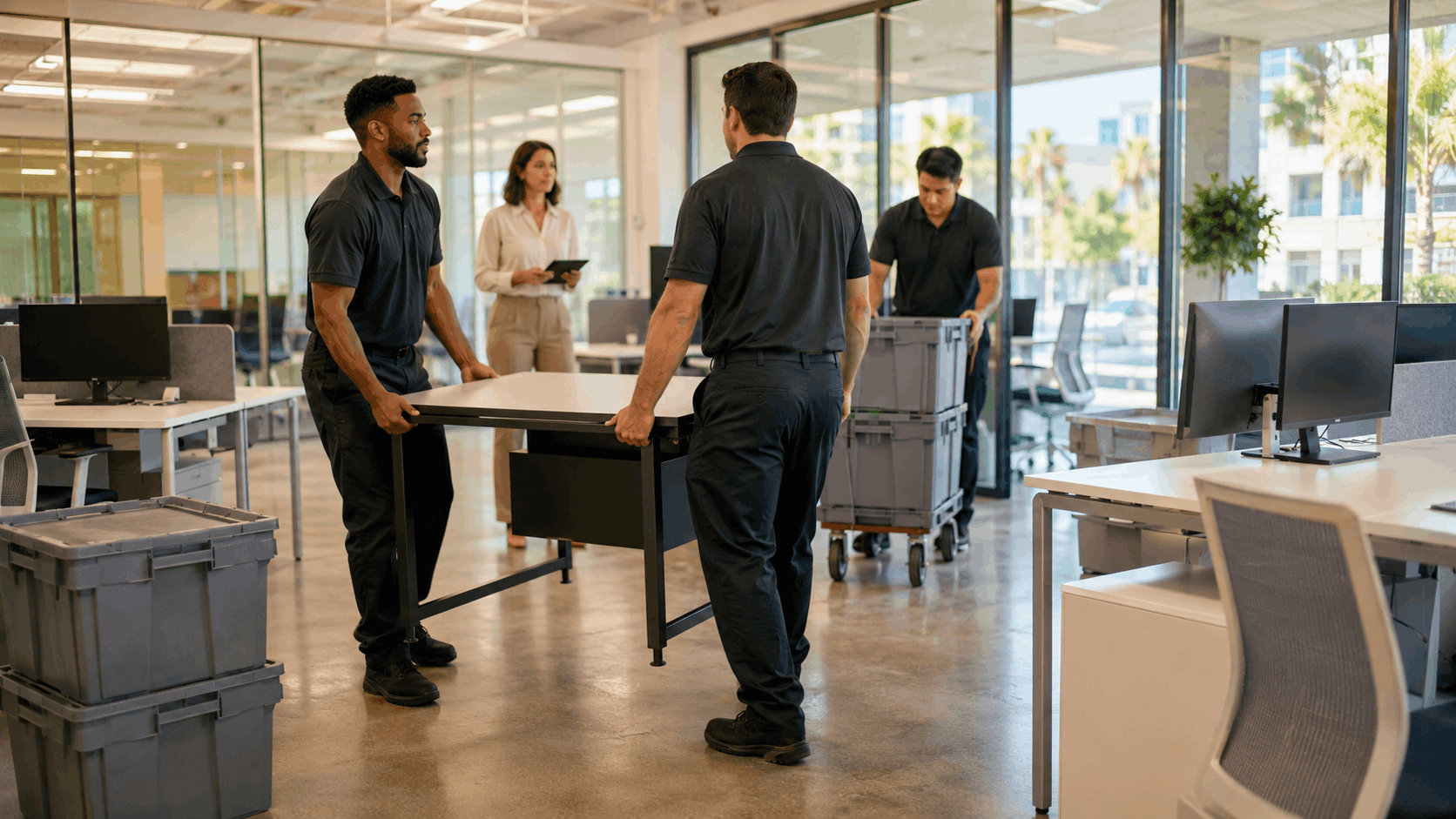
Why Office Moves Near Culver City and Playa Vista Are Different?
A standard office move might mean loading a truck in an open lot and driving across town. A Culver City office move rarely works that way. These buildings sit inside busy commercial districts with security desks, timed access, and neighbors who do not want a truck blocking their driveway.
A Playa Vista relocation adds another layer. Much of the area runs on private roads and shared parking structures managed by an HOA and a central office. The differences are not small, and they shape every hour of the job.
| Factor | Culver City | Playa Vista |
|---|---|---|
| Building type | Mix of older and newer commercial | Mostly newer campus buildings |
| Access control | Studio badges, escort rules | Shared docks, dock scheduling |
| Parking | Metered street, loading zones | Private garages, HOA streets |
| Traffic pressure | Washington and Jefferson | 90 Freeway and Centinela |
Studio-Adjacent Buildings and Their Security Rules
The offices along Washington Boulevard near Sony Pictures and Amazon Studios run tight security. Many require a badge for every person entering, and a crew of movers is no exception. We often submit driver names and license numbers days ahead so the front desk can clear the team.
Studio security also means escort requirements. A guard or building rep may walk the crew from the dock to the suite and back, which slows things down if it is not planned for. We build that extra time into the schedule so no one is surprised.
Restricted hours are common near the Sony Pictures lot. Some buildings will not allow large moves during production hours or peak business times. That pushes many jobs to early mornings, evenings, or weekends, which we plan around from the first call.
We also confirm dock and gate rules in writing before move day. A verbal yes from one person does not always hold up when a different guard is working the shift. Written approval keeps the crew moving instead of standing at a gate.
Tech-Campus Loading Docks in Playa Vista
The Playa Vista tech campus buildings near the Runway and Bluff Creek Drive usually share loading docks between multiple tenants. That means a company cannot just show up and unload whenever it wants. Dock time has to be reserved through building management, often in two- or three-hour blocks.
A freight elevator is almost always part of the equation in these buildings. Reserving it is a separate step from booking the dock, and the two have to line up. We coordinate both so the crew is not waiting on an elevator while paying for dock time.
Dock scheduling gets competitive during busy seasons. When several tenants move around the same quarter, the good time slots fill fast. Booking early gives a team the morning window instead of a late afternoon slot that runs into rush hour.
We also measure the freight elevator and dock clearance ahead of time. Some Playa Vista buildings have tight elevator dimensions that affect how we crate large items. Knowing this before the truck arrives saves hours of trial and error.
Traffic and Access on Local Routes
Anyone who works around here knows Jefferson Boulevard traffic backs up hard during commute hours. Add a moving truck to that mix and a short drive turns into a slow crawl. We plan routes to avoid the worst pinch points whenever possible.
Centinela Avenue and the 90 Freeway are the other pressure points. The 90 feeds a lot of Playa Vista traffic, and it clogs quickly near the Marina. Timing a move to miss the morning and evening peaks makes a real difference in how fast the job finishes.
Our crews often start early, before 7 a.m., to beat the worst of it. An early start also lines up well with the after-hours access many buildings require. It is a double win when the timing works out.
Route knowledge matters more than most people expect. Knowing which side streets around Culver City stay open and which garages have low clearance keeps a truck from getting stuck. That local detail is where an experienced crew earns its keep.
Building Age and Layout Quirks
Culver City has a mix of building ages. Some older buildings near downtown Culver have narrow stairwells and small elevators that were never built for a full office move. Those quirks force us to break loads into smaller pieces and plan more trips.
Playa Vista offices tend to be newer, with open floor plans and wide corridors. That sounds easier, and often it is, but open layouts can hide their own challenges. Long carries from the dock to the far corner of a floor add time that has to be budgeted for.
Office layout also affects how furniture comes apart. Older suites packed with private offices mean more doors, more corners, and more disassembly. Open plans mean more modular desks that need careful teardown and rebuild.
Good building access planning starts with a walkthrough. We look at door widths, elevator size, and the path from the truck to the suite. Mapping that route ahead of time is how we avoid a jam on move day. Our office and business moving team handles both building types every week.
Get Your Free Quote
Tell us about your move and we'll get back to you fast.
Planning a Smooth Office Relocation Timeline
A good office move timeline starts long before the trucks arrive. The teams that plan early move faster and cheaper than the ones scrambling at the last minute. Relocation planning is mostly about sequencing the right steps in the right order.
- Two to three months out: pick a mover and lock the date
- Six weeks out: confirm building rules and reserve elevators
- Two weeks out: order supplies and start labeling
- Move week: shut down systems and do final packing
How Early to Book a Local Crew
For a mid-size office of twenty to fifty people, we recommend booking office movers six to eight weeks out. That window gives everyone time to handle building paperwork and reserve the right equipment. It also locks in the crew size a job actually needs.
Peak seasons fill fast around here. The end of a quarter, the end of a lease cycle, and the summer months all bring a rush of commercial moves. Waiting until the last month often means fewer date choices and a tighter squeeze.
A booking timeline also gives room for a proper walkthrough. We like to see both the old and new spaces before quoting a firm number. Rushing that step leads to surprises, and surprises cost money on move day.
Larger jobs, like a full floor or a company with heavy IT gear, benefit from even more lead time. Ten to twelve weeks is not too early for a big relocation. Early planning is the cheapest insurance a move can buy.
Building a Move-Week Checklist
The final week is where a move plan meets reality. A clear move checklist keeps the team from missing steps under pressure. We hand clients a task list so nothing important slips through.
Labeling comes first. Every box, monitor, and piece of furniture gets tagged with its destination room or desk number. Good office packing labels mean the crew places items right the first time instead of guessing.
Systems shutdown is the other big move-week task. Phones, internet, and shared drives all need a clean handoff so they come back online quickly. We coordinate that timing with the client's IT contact and the new building's provider.
The last items to pack are the ones people use daily, like chargers, notebooks, and desk gear. We suggest a personal pack kit for each employee. That small step keeps the first day in the new office from turning into a scavenger hunt.
Coordinating With Property Managers
Property managers hold the keys to a smooth move, sometimes literally. Before move day we confirm elevator reservations, loading dock windows, and after-hours access with building staff at both ends. Skipping this step is how crews end up locked out.
A certificate of insurance is almost always required. Most Culver City and Playa Vista buildings will not let a truck near the dock without proof of coverage naming the building. We handle that paperwork so it lands on the manager's desk in time.
Elevator reservation is its own line item in many buildings. A freight elevator may be shared with other tenants, so a locked-in window matters. We book it early and confirm it again a few days before the move.
Communication with building staff keeps small issues from becoming big ones. A quick call to confirm the guard on duty knows about the move can save an hour at the gate. We treat property managers as part of the moving team.
Weekend and After-Hours Moves
A lot of studio and campus offices move on weekends or overnight. A weekend office move avoids disrupting production schedules and keeps business running during the week. For studio-adjacent teams, that timing is often required, not optional.
After-hours moving also dodges the worst traffic. A Saturday morning run down Jefferson Boulevard beats a Tuesday at 5 p.m. by a wide margin. The crew works faster when the streets and docks are quiet.
Weekend access does take extra coordination. Building security may need advance notice, and some garages lock down outside business hours. We confirm all of that so the crew is not stuck outside a dark building.
Overnight moves work well for offices that cannot lose a business day at all. The team packs after close, moves through the night, and sets up before the next morning. It costs a bit more but keeps operations running clean.

Need Help in Los Angeles?
Popeye Moving & Storage serves Los Angeles and all of Los Angeles County.
Parking Permits and Street Access in the Move Zone
Parking is where out-of-area movers get tripped up most. A moving truck permit and the right curb space can make or break the day. We know the street parking Culver City rules and the private-road quirks of Playa Vista.
- Confirm metered zone rules before booking curb space
- Check garage clearance heights in Playa Vista structures
- Arrange loading zone access with the city or building
- Plan truck staging when curb space is tight
Culver City Truck Parking Rules
Downtown Culver has plenty of metered zones near Culver Boulevard and Main Street. During business hours those spots fill quickly, and a 26-foot truck needs more room than a single meter allows. We plan for that instead of hoping for luck.
Culver City parking rules sometimes require a permit or a reserved loading zone for a large truck. The city building and permit department can issue temporary space when arranged ahead of time. We handle those requests so the truck has a legal spot.
A loading zone near the building entrance cuts the carry distance for the crew. Shorter carries mean faster loading and lower cost on an hourly job. It is worth the effort to lock one in.
When street space is truly tight, we stage the truck nearby and shuttle items in a smaller vehicle. That keeps the main truck legal while the crew keeps moving. Local knowledge of which blocks work saves real time here.
Playa Vista Private Roads and Garages
Playa Vista parking runs differently than most of Los Angeles. Many streets are HOA-managed private roads, so city permits do not apply the same way. We coordinate access through the Playa Vista management office instead.
Garage clearance is a real concern in these buildings. Many parking structures have low ceilings that a full-size moving truck cannot clear. We measure clearance ahead of time and bring the right vehicle for the space.
The management office often has its own rules for move-in and move-out. That can include approved hours, insurance requirements, and designated loading areas. We confirm all of it before the truck rolls.
Coordinating early with the HOA avoids fines and lockouts. A truck turned away at a private gate costs the whole crew time. Working within the community's rules keeps the move on schedule. For teams across the wider area, our West Los Angeles commercial moving crew knows these access rules well.
Reserving Space for Large Trucks
A 26-foot truck is the workhorse for most office moves, but it needs room to park and load. When curb space is tight near a Culver City building, we stage the big truck at a nearby legal spot. Then a shuttle vehicle runs loads to the door.
Truck staging takes planning, not improvisation. We scout the block ahead of time to find where a large truck can sit without blocking traffic. That scouting is part of the walkthrough we do before quoting.
Moving truck size also depends on the load and the building. A tight Playa Vista garage might call for two smaller trucks instead of one big one. We match the vehicle to the access, not the other way around.
Reserving space early is the difference between a smooth start and a stalled one. A crew standing around waiting for a spot burns money. We handle the parking logistics so the team can get right to work.
Moving IT Equipment and Tech Gear Safely
For tech and creative offices, IT equipment moving is the biggest worry. Servers, workstations, and editing bays are expensive and fragile. Server relocation done wrong can take a company offline for days, so we treat this gear with extra care.
Server Racks and Network Gear
A server rack move starts with a clean shutdown, coordinated with the IT team. Powering down in the right order protects data and hardware. We never yank a live rack, and we wait for the green light from IT.
Cable labeling is the step that saves the most time later. Every cable gets tagged before it comes out so the rack rebuilds exactly as it was. Skipping labels turns reconnection into a guessing game that stretches downtime.
Network equipment needs anti-static protection during transport. We use static-safe wrapping and padded crates for switches, routers, and rack-mounted gear. That protects the sensitive boards from damage in transit.
Rack-mounted equipment is heavy and awkward, so we secure it in purpose-built crates. Straps and padding keep components from shifting on the road. Careful handling here means the network comes back online fast at the new office.
Workstations and Monitors
Developer and designer desks often run dual or triple monitors. Each screen needs its own protection during a workstation move. We use monitor cartons sized to hold the screen snug with padding on every side.
Monitor packing is not the place to cut corners. A single scratched or cracked panel can cost hundreds to replace. Padded crates and proper cartons keep the screens safe over every bump on the 90 Freeway.
Desktop towers and docking stations get wrapped and boxed by desk. We keep each person's gear grouped together and labeled. That grouping speeds up setup so people find their own equipment at the new desk.
Cables and peripherals travel in labeled bags tied to each workstation. A tangled box of random cords slows down reconnection. Keeping gear organized by desk is how we get a floor back to work quickly.
Editing Bays and Production Equipment
Studio-adjacent offices near Sony Pictures often have editing bays full of sensitive gear. Color-grading monitors and audio hardware are calibrated and delicate. An editing bay move calls for custom crating and slow, careful handling.
Color-grading monitors in particular need padded, custom-fit crates. These screens are calibrated for precise color, and a hard knock can throw them off. We protect them like the high-value items they are.
Audio hardware and production equipment come with their own connectors and settings. We label and document setups so the room rebuilds correctly. Our specialty moving team handles this kind of sensitive gear regularly.
For the most fragile pieces, we build custom crates with foam inserts. That extra step keeps calibration and connectors safe in transit. It costs more than a standard box, but it protects gear worth far more.
Coordinating With Your IT Team
The smoothest tech moves happen when movers and IT staff split the work clearly. IT handles the shutdown, data backup, and reconnect steps. Our crew handles the physical packing, transport, and placement.
IT coordination starts in the planning phase, not on move day. We meet with the client's IT contact to map who does what and when. That planning keeps the two teams from stepping on each other.
Once the gear lands at the new office, IT takes over to reconnect equipment. Our labeling and grouping make that reconnection faster. A well-labeled move can have a floor back online in hours instead of days.
Clear roles also protect responsibility. IT owns the data side, and we own the physical side, so nothing falls through the cracks. That split is how a tech office moves without losing a business day.

Packing Office Furniture and Shared Spaces
Modern offices are full of furniture that has to come apart to move. Office furniture moving covers desks, conference rooms, and the lounges that fill campus-style workplaces. Desk disassembly and careful packing keep it all in one piece.
Sit-Stand Desks and Modular Systems
Sit-stand desks are everywhere in tech offices now. These adjustable desks have motors and wiring that need careful handling. We disassemble them properly instead of forcing them through a doorway.
Modular furniture and cubicle systems come apart in a set order. We photograph and label each piece so it rebuilds the same way. That documentation saves hours on the reassembly side.
The hardware for these systems is small and easy to lose. We bag and label every bracket, screw, and connector by desk. Missing one bracket can leave a desk wobbly, so we keep it all together.
Reassembly is part of the job, not an afterthought. Our crew rebuilds the desks and cubicles at the new office so people can work right away. A desk left in pieces is a desk no one can use.
Conference Rooms and AV Setups
Conference rooms hold some of the most fragile items in an office. Large displays, video bars, and glass tables all need special protection. A conference room move done carefully avoids expensive breakage.
Big wall displays and TVs travel in padded crates or flat-screen boxes. We wrap the screen face and secure it so it cannot shift. A cracked conference display is a costly and avoidable mistake.
AV equipment like video bars and control units gets labeled and boxed with its cables. Keeping the setup together speeds up the rebuild. The room should work the same way it did before the move.
Glass conference tables need extra care and often custom crating. We pad the edges and crate the tops flat to prevent cracks. Heavy glass and hard corners do not forgive rough handling.
Kitchens, Lounges, and Perk Areas
Campus-style offices come with kitchens, lounges, and perk areas full of extras. An office kitchen move includes appliances, coffee machines, and sometimes full-size fridges. We disconnect and secure appliances so they travel safely.
Lounge furniture like couches, bean bags, and game tables adds bulk. We wrap upholstered pieces to keep them clean during transport. Nobody wants a dirty couch showing up at the new office.
Game tables, from ping pong to foosball, often come apart for the move. We disassemble and pad the pieces, then rebuild them on-site. Getting the game room back is a small morale win after a move.
Appliances need to be drained and secured before they roll. A fridge or ice machine that leaks in the truck creates a mess and a hazard. We handle that prep so the move stays clean and dry.
Need Help in Los Angeles?
Popeye Moving & Storage serves Los Angeles and all of Los Angeles County.
Storage Options During a Phased Move
Not every office moves everything at once. Sometimes the new space is not ready, or a team moves in phases over weeks. Office storage bridges that gap, and moving and storage under one roof keeps things simple.
| Storage type | Best for | Typical use |
|---|---|---|
| Short-term | Lease gaps | Days to a few weeks |
| Climate-controlled | Electronics, records | Sensitive gear |
| Long-term | Extra furniture | Months or more |
Short-Term Storage Between Leases
Lease timing rarely lines up perfectly. When a new space is not ready on move day, short-term storage holds the furniture and gear until it is. That keeps a team from paying rent on two spaces just to store boxes.
A lease gap of a few days or weeks is common in office moves. We store the load securely and deliver it when the new office opens. That flexibility takes pressure off the lease negotiations.
Short-term storage also helps with phased moves. A team can move in stages, keeping later phases stored until each floor is ready. That staged approach keeps the office running during the switch.
Our commercial business storage handles both quick holds and longer stays. The load stays with one team from pickup to final delivery. That single chain of custody protects the gear.
Climate-Controlled Space for Sensitive Gear
Los Angeles heat is hard on electronics and paper. Climate-controlled storage keeps temperature and humidity steady so gear does not suffer. For servers, monitors, and records, that control matters.
Electronics storage in a hot, unregulated unit risks damage over time. Heat and moisture can warp components and degrade hardware. A climate-controlled space avoids that slow harm.
Paper records also need steady conditions. Humidity can curl and mold documents that a business is required to keep. Climate control protects the files a company cannot afford to lose.
For anything sensitive or valuable, we recommend the climate-controlled option. The small extra cost protects expensive gear and important records. It is cheap insurance against a big loss.
Inventory Tracking and Access
Storage only works if nothing goes missing. We log every item into storage with an inventory tracking system. That log tells the client exactly what is stored and where.
Inventory tracking also speeds up retrieval. When a team needs a specific desk or box from storage, we find it fast. No digging through a pile hoping to spot it.
Storage access is arranged so a client can get items when needed. We coordinate pickup and delivery windows that fit the move schedule. The gear comes out on the client's timeline, not ours.
A clear inventory protects everyone. It confirms what went in and what came out, so nothing gets lost in the shuffle. That accountability is part of a professional storage service.

What Office Moves Cost and How to Budget
Office move cost depends on a handful of factors, and honest ranges help a team plan. A moving quote should spell out what drives the price up or down. We would rather explain the math than hide it.
| Office size | Typical range | Main drivers |
|---|---|---|
| Small suite (5-15) | $1,500 - $4,000 | Crew size, access |
| Mid-size (20-50) | $4,000 - $12,000 | IT gear, furniture |
| Full floor (50+) | $12,000 and up | Volume, crating |
How Movers Price Commercial Jobs
Most commercial moving cost comes down to crew size and hours. Many jobs run on an hourly rate with a set crew and truck. Bigger offices need more movers, which raises the hourly total.
Some moves work better as a flat rate. When the scope is clear from a walkthrough, a flat number gives the client budget certainty. We recommend the pricing model that fits the job.
Office size and gear are the biggest cost drivers. A team of ten with basic desks costs far less than a team of forty with servers and editing bays. Specialty gear adds crating and handling time.
Access affects price too. Tight parking, long carries, and freight elevator waits all add hours. That is why we price after seeing the space, not before.
Hidden Costs to Watch For
Hidden moving fees are what surprise teams on the final bill. After-hours and weekend work often carry a premium. We flag that upfront so it is planned, not a shock.
Long carries add cost when the truck cannot park close. Every extra hundred feet the crew walks adds time. That is why parking planning saves money as well as hassle.
Elevator delays are another common drain. Waiting for a shared freight elevator can eat an hour or more on an hourly job. Reserving the elevator ahead avoids that waste.
Specialty crating for servers, glass, and editing gear costs more than standard boxing. It is worth every dollar for fragile items, but it should be in the quote. We list crating separately so nothing is buried.
Getting an Accurate On-Site Estimate
A phone quote is a guess. An on-site estimate is a real number. We walk both the current and new spaces to see exactly what a move involves.
A moving walkthrough shows us the furniture, gear, and access details a phone call misses. We spot the tight stairwell, the low garage, and the server rack that needs crating. Those details change the price.
Seeing both spaces matters. The new office might have its own access limits that affect the plan. Checking both ends gives a truer total.
The walkthrough is also when we plan the whole move, not just the price. We map parking, elevator timing, and crew size. That planning is why our estimates hold up on move day.
Choosing the Right Office Movers in the Area
Not every mover is built for office and tech work. Office movers Los Angeles teams vary a lot in experience. Picking commercial movers who know studio and campus jobs makes a real difference.
Questions to Ask Before Hiring
Before hiring movers, ask about insurance first. A crew should carry liability coverage and be able to provide a certificate of insurance for the building. No certificate often means no dock access.
Ask about experience with tech gear. Moving servers and editing bays is not the same as moving desks. A crew that has done it before knows the shutdown and crating steps.
Ask about building coordination too. A good office mover handles elevator reservations, dock scheduling, and permits. If they expect the client to do all of it, that is a warning sign.
Moving insurance protects the company's expensive gear. Confirm what coverage applies and whether extra valuation is available. Knowing this before the move prevents disputes later.
Why Local Route Knowledge Matters
Local movers who know Culver City and Playa Vista save time on every job. They know which streets around Washington Boulevard clog and which garages a big truck cannot enter. That route knowledge avoids surprises.
An out-of-area crew learns these lessons the hard way, on the clock. A truck stuck at a low garage or a blocked street burns hours. Familiar crews route around those problems automatically.
Local knowledge also covers building rules. Crews that work these buildings know the studio badge process and the Playa Vista management office. That familiarity keeps the move moving.
We drive these streets every week. That daily experience shows up in faster, smoother moves. It is the difference between a plan that works and one that stalls at a gate.
How Popeye Moving & Storage Co. Handles Office Jobs
At Popeye Moving, we start every office job with a planning call and a walkthrough of both spaces. That sets the crew size, the timeline, and the parking plan before move day. Good planning is where a smooth move begins.
Our team handles the full office relocation service, from packing to reassembly. We crate the IT gear, protect the AV setups, and rebuild the desks at the new office. The goal is a floor that works on day one.
We coordinate with property managers, IT teams, and building security so nothing gets missed. Certificates of insurance, elevator reservations, and dock windows all get handled. That coordination is part of the service.
We serve Culver City, Playa Vista, and the wider Los Angeles area. Whether it is a small suite or a full floor, we bring the same careful approach. You can contact our team to start planning an office move.

Need Help in Los Angeles?
Popeye Moving & Storage serves Los Angeles and all of Los Angeles County.
Final Thoughts
Office moves near Culver City and Playa Vista come with real challenges, from studio security to shared docks and private roads. Planning early, handling permits, protecting IT gear, and picking a crew that knows the streets are what keep a move on track. The teams that plan ahead move faster and cheaper.
Popeye Moving & Storage Co. handles studio-adjacent and tech-campus moves across Los Angeles. Our crew knows these buildings, these streets, and the gear that fills modern offices. Call us for a walkthrough and a real estimate, and let our team plan a move that keeps a business running.
Frequently Asked Questions
How long does an office move in Culver City take?
A small suite of five to fifteen people usually moves in a single day, often half a day. A mid-size office of twenty to fifty people can take one to two days with packing and setup. A full floor with heavy IT gear may run two to three days. Building access, parking, and specialty crating all affect the timeline, which is why we do a walkthrough first.
How much does a commercial move near Playa Vista cost?
A small office often runs $1,500 to $4,000, while a mid-size office lands around $4,000 to $12,000. A full floor with servers, editing bays, and custom crating can start at $12,000 and climb from there. The main cost drivers are crew size, IT gear, furniture volume, and access details like tight garages or shared docks. An on-site estimate gives the truest number.
Do movers need a permit to park on Culver City streets?
Often yes, especially for a 26-foot truck near downtown Culver on Culver Boulevard or Main Street. Metered zones and loading areas may require a temporary permit or reserved space from the city. We arrange those permits and loading zones ahead of the move so the truck has a legal spot. Playa Vista runs on private roads, so access there is coordinated through the management office instead.
Can offices move on weekends or after hours?
Yes, and many studio and campus offices prefer it. Weekend and after-hours moves avoid disrupting production schedules and business operations, and they dodge the worst Jefferson Boulevard and 90 Freeway traffic. Some studio-adjacent buildings actually require moves outside production hours. We plan the building access and security notice needed for evening and weekend jobs so the crew is never locked out.
How is IT and server equipment protected during a move?
Servers and network gear are shut down in the right order with the IT team, then all cables are labeled before removal. Equipment travels in anti-static wrapping and padded or custom crates to protect sensitive boards. Monitors go in fitted cartons, and editing bays get custom foam crating. We coordinate closely with the client's IT staff so gear comes back online fast at the new office.
What insurance should office movers carry?
A commercial mover should carry general liability coverage and be able to provide a certificate of insurance naming the building. Most Culver City and Playa Vista buildings will not allow dock access without it. Cargo coverage or added valuation protects the company's expensive gear during transport. Always confirm what coverage applies before move day so there are no disputes if something goes wrong.
How far in advance should a company book movers?
For a mid-size office, six to eight weeks out is a good target. That window allows time for a walkthrough, building paperwork, and equipment reservations. Larger jobs with heavy IT gear benefit from ten to twelve weeks. Peak seasons like quarter-end, lease cycles, and summer fill fast, so booking early locks in the best dates and crew.
Can movers store items if the new office is not ready?
Yes. Short-term storage bridges lease gaps when a new space is not ready on move day, holding furniture and gear for days or weeks. Climate-controlled storage keeps electronics and paper records safe from Los Angeles heat and humidity. We log everything with inventory tracking and arrange pickup and delivery on the client's schedule so nothing goes missing.
Do movers disassemble and reassemble office furniture?
Yes. Our crews handle sit-stand desks, modular cubicle systems, conference tables, and lounge furniture. We photograph and label pieces during disassembly, bag the hardware by desk, and rebuild everything at the new office. That way people can sit down and work on day one instead of staring at a pile of parts.
What areas near Culver City and Playa Vista does the team serve?
We serve Culver City, Playa Vista, Marina del Rey, Santa Monica, West Los Angeles, El Segundo, and the wider Los Angeles area. From studio-adjacent offices along Washington Boulevard to tech campuses near the Runway, our crew works these neighborhoods regularly. We also handle moves across greater Los Angeles for companies relocating farther out.
Frequently Asked Questions
- How long does an office move in Culver City take?
- A small suite of five to fifteen people usually moves in a single day, often half a day. A mid-size office of twenty to fifty people can take one to two days with packing and setup. A full floor with heavy IT gear may run two to three days. Building access, parking, and specialty crating all affect the timeline, which is why we do a walkthrough first.
- How much does a commercial move near Playa Vista cost?
- A small office often runs $1,500 to $4,000, while a mid-size office lands around $4,000 to $12,000. A full floor with servers, editing bays, and custom crating can start at $12,000 and climb from there. The main cost drivers are crew size, IT gear, furniture volume, and access details like tight garages or shared docks. An on-site estimate gives the truest number.
- Do movers need a permit to park on Culver City streets?
- Often yes, especially for a 26-foot truck near downtown Culver on Culver Boulevard or Main Street. Metered zones and loading areas may require a temporary permit or reserved space from the city. We arrange those permits and loading zones ahead of the move so the truck has a legal spot. Playa Vista runs on private roads, so access there is coordinated through the management office instead.
- Can offices move on weekends or after hours?
- Yes, and many studio and campus offices prefer it. Weekend and after-hours moves avoid disrupting production schedules and business operations, and they dodge the worst Jefferson Boulevard and 90 Freeway traffic. Some studio-adjacent buildings actually require moves outside production hours. We plan the building access and security notice needed for evening and weekend jobs so the crew is never locked out.
- How is IT and server equipment protected during a move?
- Servers and network gear are shut down in the right order with the IT team, then all cables are labeled before removal. Equipment travels in anti-static wrapping and padded or custom crates to protect sensitive boards. Monitors go in fitted cartons, and editing bays get custom foam crating. We coordinate closely with the client's IT staff so gear comes back online fast at the new office.
- What insurance should office movers carry?
- A commercial mover should carry general liability coverage and be able to provide a certificate of insurance naming the building. Most Culver City and Playa Vista buildings will not allow dock access without it. Cargo coverage or added valuation protects the company's expensive gear during transport. Always confirm what coverage applies before move day so there are no disputes if something goes wrong.
- How far in advance should a company book movers?
- For a mid-size office, six to eight weeks out is a good target. That window allows time for a walkthrough, building paperwork, and equipment reservations. Larger jobs with heavy IT gear benefit from ten to twelve weeks. Peak seasons like quarter-end, lease cycles, and summer fill fast, so booking early locks in the best dates and crew.
- Can movers store items if the new office is not ready?
- Yes. Short-term storage bridges lease gaps when a new space is not ready on move day, holding furniture and gear for days or weeks. Climate-controlled storage keeps electronics and paper records safe from Los Angeles heat and humidity. We log everything with inventory tracking and arrange pickup and delivery on the client's schedule so nothing goes missing.
- Do movers disassemble and reassemble office furniture?
- Yes. Our crews handle sit-stand desks, modular cubicle systems, conference tables, and lounge furniture. We photograph and label pieces during disassembly, bag the hardware by desk, and rebuild everything at the new office. That way people can sit down and work on day one instead of staring at a pile of parts.
- What areas near Culver City and Playa Vista does the team serve?
- We serve Culver City, Playa Vista, Marina del Rey, Santa Monica, West Los Angeles, El Segundo, and the wider Los Angeles area. From studio-adjacent offices along Washington Boulevard to tech campuses near the Runway, our crew works these neighborhoods regularly. We also handle moves across greater Los Angeles for companies relocating farther out.
P
Popeye Moving & Storage Co. Team Team
Licensed moving and storage professionals serving Los Angeles and Los Angeles County.
Licensed in California · License #PUC: CAL T 189749 | DOT: 1472924 | MC: 498816C
Why trust Popeye Moving & Storage?
Founded in 1994, Popeye Moving & Storage is a licensed and insured moving and storage service serving Los Angeles and Los Angeles County. All content is reviewed by our licensed technicians.

Need Help in Los Angeles?
Popeye Moving & Storage serves Los Angeles and all of Los Angeles County.
Related Articles

How-To Guides
Estate and Downsizing Moves in Brentwood and Westwood: Family-Home Transitions
A local guide to estate and downsizing moves in Brentwood and Westwood, covering planning, sorting, packing, storage, pricing, and choosing the right movers.

How-To Guides
Office Furniture Storage Between Leases: Decommission Today, Refurnish the Next Space Later
Learn how LA businesses store office furniture between leases, decommission the old space, and refurnish later - with costs, timing, and expert tips from Popeye Moving.
How-To Guides
Same-Day Movers Beverly Hills: How to Book Emergency Service Today
Need to move out of Beverly Hills fast? Learn how same-day movers work, what they cost, how to book emergency service within hours, and how to prepare.