How-To Guides
Estate and Downsizing Moves in Brentwood and Westwood: Family-Home Transitions
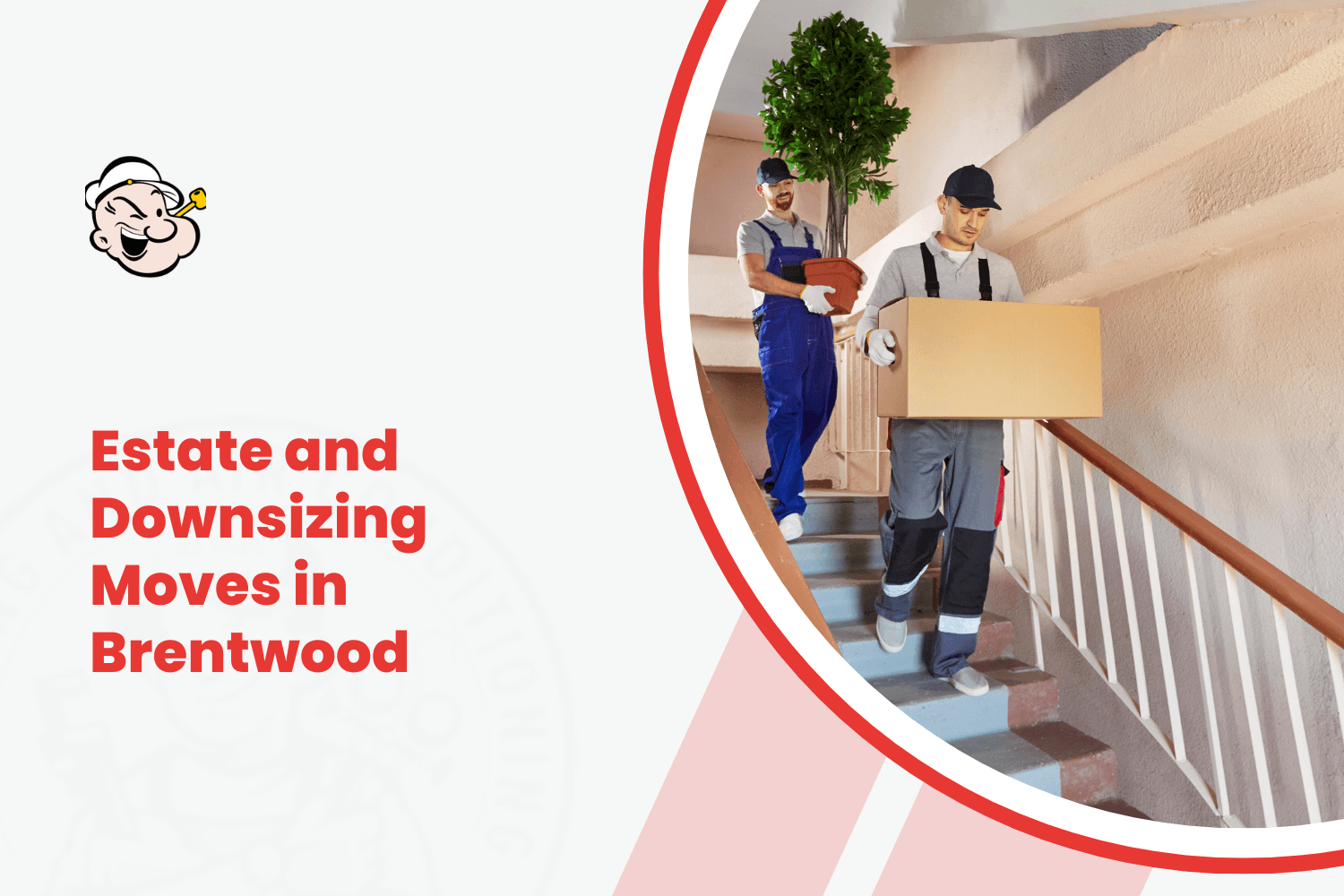
Key Takeaways
- Estate and downsizing moves involve sorting an entire household, not just transporting furniture, so plan for six to eight weeks.
- Older Brentwood homes near San Vicente have narrow stairs and tight driveways, while Westwood high-rises need elevator reservations and insurance certificates.
- Use the keep, sell, donate, toss system and measure the new space before deciding what furniture actually fits.
- Antiques, fine art, and pianos need appraisals and custom crating to protect their value during the move.
- Storage often bridges the gap during a home sale or when heirs in different cities receive items on separate dates.
- Local estate moves range from about $800 for a small condo to $12,000 or more for a large home with full packing.
- Verify a mover's Cal-T and USDOT licensing, read detailed reviews, and choose a crew that knows Westside parking and building rules.
- Coordinating movers with estate sale companies, realtors, and executors keeps the whole transition on schedule.
In This Article
A few months back, a family in Brentwood called our team on a Tuesday morning. Their mother had just moved into an assisted living community off Barrington Avenue, and the house she had lived in for 47 years was suddenly quiet. Three grown children, two of them flying in from out of state, stood in the living room trying to figure out where to even begin.
That scene plays out across Brentwood and Westwood more often than most people realize. A longtime family home holds decades of furniture, photos, art, and small objects that carry more meaning than money. Sorting through it all while managing grief, distance, and deadlines is its own kind of work.

What Makes Estate and Downsizing Moves Different in Brentwood and Westwood
An estate move is not a standard household move with a bigger truck. When someone downsizes out of a home held for decades, the job changes in ways that surprise most families the first time through.
Here is what sets these moves apart in Brentwood and Westwood:
- The volume is usually double what people expect, because closets and garages hide years of storage.
- Decisions have to be made about nearly every item, not just packed and moved.
- Multiple family members often weigh in, sometimes from different cities.
- Older homes and high-rise condos both bring physical access challenges.
- Emotions slow the pace, and that is normal and expected.
Once families understand these differences, planning gets easier. A downsizing move across Brentwood Westwood works best when the crew treats it as a project, not a single day.
Why These Moves Carry More Than Furniture
A family home is not just square footage. It is the place where holidays happened, where kids grew up, and where a parent kept every birthday card their grandchildren ever sent. Moving out of it stirs up feelings that a routine apartment move never touches.
That emotional weight changes the pace of the job. Families need time to open a box, look at old photos, and set things aside without a stopwatch running. Our crews have learned to build in room for those moments instead of rushing past them.
Sentimental items also require different handling. A chipped mug might be worthless on paper but priceless to a daughter who remembers her father drinking coffee from it every morning. We treat those pieces with the same care as fine china.
Because of all this, we tell families that patience saves money. A rushed estate move leads to mistakes, lost heirlooms, and arguments among relatives. A steady pace protects both the belongings and the people.
The Older Homes Near San Vicente and Sunset
Many Brentwood homes near San Vicente Boulevard were built in the 1940s through the 1960s. These older homes are beautiful, but they were not designed with modern moving trucks in mind. Narrow interior stairs and tight hallways slow every trip out to the truck.
Driveways add another wrinkle. A lot of properties along San Vicente and up toward Sunset have short, steep, or curved driveways where a 26-foot truck simply cannot fit. Our crews often shuttle items to a smaller vehicle staged on the street, which takes planning and permits.
Storage inside these homes tends to be dense. Built-in cabinets, walk-in attics, and basement rooms packed floor to ceiling mean the inventory is larger than the visible furniture suggests. We always walk the whole house, including the spots families forget about.
Knowing these quirks ahead of time keeps a move on schedule. When we plan around the real layout of an older Brentwood home, we avoid the surprises that stretch a one-day job into two.
Condo and High-Rise Rules Around Wilshire Corridor
Westwood tells a different story along the Wilshire Corridor. The high-rise towers there come with building rules that families rarely think about until move day arrives. Most require an elevator reservation booked days or weeks in advance.
Buildings also ask for a certificate of insurance from the moving company before crews are allowed on the property. This document names the building as covered and lists specific coverage amounts. We handle these requests all the time, but they need lead time to process.
Loading windows are common too. Many Wilshire Corridor buildings only allow moves during set hours, often 9 a.m. to 4 p.m. on weekdays, with no weekend moves at all. Miss the window and the move gets pushed to another day.
Our team calls the building manager early to confirm every requirement. Getting the elevator reservation, insurance certificate, and loading dock details locked down prevents the kind of delay that costs families both time and money.
Timing the Move Around Local Traffic
Anyone who lives on the Westside knows the 405 traffic can turn a short drive into an hour of crawling. That matters when a moving truck needs to reach a home by a set time. We plan arrivals to dodge the worst of it.
UCLA game days are their own beast. When the Bruins play at home, Westwood Village fills up and side streets near campus lock down with parking restrictions. We check the schedule before booking any Westwood move.
Westwood Village congestion also spikes during the school year and around events at the Hammer Museum or the Fox Theater. Trucks need loading zones, and those disappear fast when the neighborhood is busy.
Our fix is simple. We schedule truck arrivals for early morning, usually before 8 a.m., so crews beat both the 405 traffic and the Westwood Village crowds. Early starts also give a large estate move the full day it needs.
Get Your Free Quote
Tell us about your move and we'll get back to you fast.
How to Plan an Estate Move Step by Step
Good estate move planning turns a stressful project into a series of manageable steps. The families who handle these moves best start early and follow a moving timeline instead of scrambling at the last minute.
Here is a realistic schedule we share with clients:
| Timeframe | What to Focus On |
|---|---|
| 8 weeks out | Book movers, start room-by-room inventory |
| 6 weeks out | Sort keep, sell, donate, toss categories |
| 4 weeks out | Schedule estate sale, appraisals, donations |
| 2 weeks out | Confirm building rules, begin packing |
| 1 week out | Finish packing, label everything |
| Move day | Supervise loading, do a final walk-through |
Building a 6 to 8 Week Timeline
Most full estate moves need six to eight weeks from the first phone call to move day. That window gives families enough time to sort, sell, and pack without the panic that comes with a rushed job. Trying to do it all in a week almost always ends in regret.
We suggest breaking the moving timeline into weekly goals. One week is for the kitchen and dining room, the next for bedrooms, then the garage and attic. Small, defined tasks keep the project from feeling endless.
Planning also means booking help early. Estate sale companies, appraisers, and quality movers all get busy, especially in spring and summer. Locking in dates six weeks out protects the whole schedule.
Families who follow this pace tell us the move felt calm instead of chaotic. Good planning is the difference between a hard week and a hard month.
Making an Inventory of Every Room
A written home inventory is the backbone of any large estate move. Going room by room, we help families list what stays, what goes, and what needs special handling. Nothing gets lost or double-counted when it is written down.
We recommend a simple spreadsheet or even a notebook. Each room gets its own page, with columns for the item, its destination, and any notes about value or condition. Photos attached to each entry help settle questions later.
This inventory also feeds the moving estimate. When our team knows the true volume of a home, the quote is accurate instead of a guess. It doubles as a record for the executor and the family.
The room-by-room method keeps momentum going. Finishing one room and crossing it off gives families a sense of progress that carries them through the harder rooms.
Coordinating With Family Members Who Live Out of Town
Estate moves rarely involve one person. More often, three or four siblings scattered across the country all have a say in what happens to the family home. Family coordination becomes half the job.
We suggest one person acts as the point of contact for the movers. That keeps communication clear and stops crews from getting three different sets of instructions. The rest of the family can still weigh in, just through that one channel.
Heirlooms need special attention. When several relatives want the same dining set or painting, deciding early prevents move-day conflict. Some families use a rotating pick system, taking turns choosing items until everything is spoken for.
Video calls help distant relatives stay involved. Walking through the house on a phone lets an out-of-state sibling point to what they want without flying in. We have seen this simple step save families a lot of tension.
When to Bring in Professional Help
There comes a point in most estate moves where doing it alone stops making sense. When the volume is large, the timeline is tight, or the items are valuable, calling professional movers and estate help pays for itself.
Appraisers step in when a home holds art, antiques, or collectibles of uncertain value. Estate sale companies handle the selling of items the family does not want. Real estate agents time the property listing around the move.
Our senior moving specialists handle the physical and logistical side. We coordinate with these other professionals so their schedules line up instead of colliding.
The signal to call for help is usually stress. When a family feels overwhelmed by the size of the task, that is the moment to bring in people who do this every week. There is no prize for struggling through it alone.

Need Help in Los Angeles?
Popeye Moving & Storage serves Los Angeles and all of Los Angeles County.
Sorting, Keeping, and Letting Go of a Lifetime of Belongings
Decluttering a family home is the hardest part of downsizing belongings. Every drawer holds a decision, and decision fatigue is real. A clear system keeps families moving instead of stuck.
Here is how the four categories break down:
| Category | What Goes Here |
|---|---|
| Keep | Items moving to the new home or given to family |
| Sell | Valuables for estate sale, consignment, or auction |
| Donate | Usable goods for local charities |
| Toss | Broken, worn, or unusable items |
The Keep, Sell, Donate, Toss System
The four-category sorting system works because it is simple. Every item gets placed in one of four groups: keep, sell, donate, or toss. When a family sticks to it, the house empties in a steady, logical way.
The trick is to decide quickly and not revisit. Families get stuck when they pick up the same item three times without choosing. We tell them to trust the first instinct and move on.
Color-coded stickers help. A green dot means keep, red means toss, and so on. Crews can then sort the whole house by color without asking about every single object.
Start with the easy rooms to build confidence. A linen closet or garage usually holds clear-cut decisions, which warms families up for the harder emotional rooms later.
Handling Antiques, Art, and Valuables
Some items deserve a closer look before anything happens to them. Antiques and fine art can carry real value that a family might not recognize. An art appraisal protects against selling a treasure for pocket change.
We recommend a professional appraiser for anything old, signed, or unusual. Paintings, sculptures, oriental rugs, and furniture from known makers all fall into this group. A written appraisal also helps with estate documentation and insurance.
Once value is confirmed, protection becomes the focus. Our packing and crating team uses acid-free materials, custom padding, and climate-aware handling for these pieces. Fine art rides differently than a couch.
Never rush a valuable item into the toss or donate pile. We have seen families nearly discard antiques worth thousands. When in doubt, set it aside and get it looked at first.
Local Donation Spots Near Brentwood and Westwood
Plenty of usable goods come out of an estate move, and the Westside has good places to send them. Donations keep furniture and household items out of the landfill while helping the community.
Goodwill has locations serving the West LA area, and they accept furniture, clothing, and housewares. The Salvation Army offers pickup for larger items, which saves families a trip. Both provide receipts for tax purposes.
For higher-end pieces, consignment shops around Brentwood and Santa Monica take quality furniture and decor. Out of the Closet and local church thrift stores also welcome donations. These local charities put good items back into use.
We can coordinate donation pickups as part of the move. Loading a donation run onto the schedule means fewer trips and less stress for the family.
Deciding What Fits in a Smaller Space
Downsizing into a condo or care facility means most furniture will not make the trip. The single biggest mistake we see is measuring furniture but not the new space. Both numbers matter.
We tell families to get a floor plan of the new home with room dimensions. Then measure large pieces, doorways, and elevator openings. A beloved sofa is worthless if it cannot fit through the door of a Wilshire Corridor unit.
Scale down thoughtfully. A four-bedroom Brentwood house rarely fits into a two-bedroom condo, so choosing the pieces that matter most comes first. Function and sentiment both earn a spot; excess does not.
Tape out the new room sizes on the old floor before the move. Seeing exactly how much space a bed and dresser take up helps families make honest calls about what actually fits.
Packing and Protecting Fragile and Sentimental Items
Packing an estate is different from packing a starter apartment. The items are older, more fragile, and often irreplaceable. Good packing services make the difference between arriving intact and arriving in pieces.
Materials That Keep Belongings Safe
The right packing materials protect the things that matter most. For glassware and china, that means dish barrels, cell dividers, and plenty of packing paper. Newspaper leaves ink stains, so we skip it for delicate pieces.
Framed art and mirrors need corner protectors and flat, rigid cartons. Bubble wrap adds a cushion, but the frame needs a hard edge guard first. A single layer of paper is never enough for glass.
Furniture gets moving blankets and stretch wrap. Wood surfaces scratch easily, especially older antique finishes that cannot be refinished cheaply. Proper protection keeps those finishes intact.
We stock all of these materials and can deliver them ahead of a move through our moving supplies delivery. Having the right boxes on hand keeps packing from stalling.
Custom Crating for High-Value Pieces
Some items are too valuable or awkward for a standard box. That is where custom crating comes in. A piano, a marble sculpture, or an oversized oil painting each needs a crate built to its exact shape.
Pianos are their own challenge. A grand piano requires disassembly of the legs and pedals, then careful crating and specialized equipment. Our piano moving team handles these regularly across the Westside.
Large art and sculpture get wooden crates lined with foam. The piece cannot shift inside, and the crate protects it from impact during loading and transport. This is standard practice for anything headed a long distance.
Custom crating costs more than a cardboard box, but it costs far less than replacing a damaged heirloom. For truly high-value pieces, it is the only responsible choice.
Labeling So Nothing Gets Lost
In an estate move, boxes often head to several destinations at once. One sibling in Chicago, another in Portland, and the parent's new local unit all get shipments. Clear labeling and box tracking keep it straight.
We use a numbered system tied to the inventory list. Each box gets a number, a destination, and a short description of contents. The master list shows exactly what is in every box and where it goes.
Color coding adds another layer. Blue tape for the local unit, red for Chicago, green for Portland. Crews can then load the right truck without opening a single box.
Good labeling pays off at the unpacking stage too. Our unpacking services use those same labels to put boxes in the correct rooms at each destination.
How Popeye Moving & Storage Co. Handles Packing in the Area
Our packing service was built for exactly this kind of work. We have packed delicate estate items in Brentwood homes near San Vicente and in Westwood high-rises along Wilshire many times over.
Our crews are trained on antiques, fine art, and the fragile odds and ends that fill a longtime family home. We bring the materials, do the packing, and label everything against a master inventory.
For families who want to handle some packing themselves, we offer full-service packing or a partial option. Either way, the fragile and high-value pieces get professional handling.
We treat every home as if the items were our own family's. That approach matters most when the belongings carry decades of memory.

Storage Options When Not Everything Moves at Once
Estate moves rarely happen in a single clean day. Sorting takes time, homes go on the market, and heirs receive items on different dates. That is why storage becomes part of so many of these moves.
Short-Term Storage During a Home Sale
When a Brentwood home goes on the market, empty and staged shows far better than cluttered. Short-term storage lets families clear out furniture so a stager can work with a clean space. Buyers respond to that.
We move belongings into secure storage while the home is listed. Once escrow closes, items either ship to the family or head to the new home. The house stays camera-ready the whole time.
This approach also protects the belongings. Instead of pieces sitting in a home with strangers walking through it during open houses, they are locked in a monitored facility. Nothing gets bumped or lifted.
Home staging with the furniture removed often speeds up the sale. A faster sale means the whole estate process wraps sooner, which every family appreciates.
Climate Considerations for LA Storage
Los Angeles weather is easy on people but hard on stored belongings if you pick the wrong space. Heat builds up in uninsulated units, and the coastal humidity near the Westside adds moisture to the air.
Wood furniture can warp or crack in extreme heat. Fabric and upholstery grow mildew in humidity. Old photos and documents fade and stick together. Climate storage prevents all of this.
Our vaulted storage keeps items in a controlled environment. For estate pieces that must survive months of storage, that stable temperature and humidity protects the value.
Photos, art, and antiques especially need climate protection. A few months in a hot metal unit can undo a century of careful keeping. We steer families toward the right storage type for what they own.
Splitting Belongings Across Multiple Homes
Estate belongings often scatter to heirs in different cities. One shipment goes now, another waits until a relative is ready to receive it. Storage bridges those gaps.
We hold items in our facility and release them on the schedule each heir needs. A daughter in Seattle who is between homes can wait to receive her mother's dining set until she settles. The pieces stay safe in the meantime.
This works well with our interstate moving service. Items headed to multiple destinations can be stored, then shipped as each heir is ready to receive them.
Coordinating multiple destinations from one storage point keeps everything organized. The inventory list tracks which items go where, so nothing gets sent to the wrong city.
How Long Families Typically Need Storage
Most estate moves use storage for one to six months. The exact storage duration depends on how fast the home sells and how quickly heirs are ready to receive their items.
Short stays of a month or two are common during a home sale and escrow. Longer stays happen when the family needs more time to sort, or when a new home is still being finished or purchased.
Storage cost in the LA area runs roughly $100 to $400 a month depending on the volume and whether climate control is included. A full four-bedroom home stored in vaults sits toward the higher end.
For extended needs, our long-term storage option offers better monthly rates. We help families pick the term that matches their real timeline instead of overpaying.
Need Help in Los Angeles?
Popeye Moving & Storage serves Los Angeles and all of Los Angeles County.
Working With Estate Professionals and Family Advisors
Movers are one piece of a larger team during an estate transition. Estate attorneys, realtors, and estate sale companies all play a part. When everyone coordinates, the process runs smoothly.
| Professional | Their Role |
|---|---|
| Estate attorney | Legal guidance, executor duties, documentation |
| Realtor | Listing, staging, and selling the home |
| Estate sale company | Selling unwanted furniture and goods |
| Appraiser | Valuing art, antiques, and collectibles |
| Moving company | Packing, transport, and storage |
Coordinating With Estate Sale Companies
An estate sale and a move are two separate events that must line up. The estate sale clears out items the family does not want, usually held on-site over a weekend. The move handles what the family keeps.
The scheduling order matters. Most families hold the estate sale first, then move the remaining keep items afterward. That way the sale has a full house of goods to offer buyers.
We coordinate our move date to follow the sale. Once the estate sale company finishes and the leftover items are hauled off, our crew steps in to pack and move what remains.
Clear communication between both companies prevents overlap. Nobody wants a moving crew and a sale crowd in the same house on the same day. Lining up the two calendars keeps things calm.
Timing Around a Real Estate Listing
Selling a Brentwood or Westwood property adds fixed dates to the move. Staging, listing, showings, escrow, and closing all have to fit together with the move schedule. Timing them well saves money and stress.
Most families move belongings into storage before staging, then complete the final move after escrow closes. This keeps the home showing at its best during the listing period.
Escrow in California typically runs 30 to 45 days. Knowing the closing date lets us schedule the final move so items are not sitting in storage longer than needed.
We work with realtors all over the Westside and understand how these dates shift. Building flexibility into the plan means a delayed closing does not throw the whole move into chaos.
Legal and Executor Responsibilities
An executor carries real responsibility during an estate move. They must document what leaves the home and where it goes, especially when a will directs specific items to specific people. Good records protect everyone.
We suggest the executor keep a copy of the master inventory. Photographing valuable items before they move creates a clear record. This documentation matters if questions come up among heirs later.
The California Courts self-help site offers useful guidance on executor duties. Families can review it at the California Courts probate resources to understand their obligations.
When the estate involves probate, the attorney may need to approve certain distributions before items move. We coordinate our schedule around those legal steps so nothing moves before it should.
Building a Team That Communicates
The best estate moves happen when everyone talks to each other. The mover, the realtor, the estate sale company, and the family all need to be on the same page about dates and responsibilities.
We recommend one shared calendar or a group message thread. When the estate sale date changes, everyone sees it. When escrow shifts, the move adjusts. Team communication catches problems before they become emergencies.
Our project coordinators join these conversations. Having a single point of contact on our side means the family is not relaying messages between five different people.
Regular check-ins keep the coordination tight. A quick call each week during the busy stretch keeps the whole team aligned and the family reassured.

What These Moves Cost and How to Budget
Families always want to know the moving cost up front, and they deserve honest numbers. An estate move budget depends on several factors that we can explain clearly before any work begins.
What Drives the Price of an Estate Move
Several cost factors shape the final price. Volume is the biggest one, since a fuller home takes more crew hours and more truck space. A packed four-bedroom costs far more to move than a cleared-out two-bedroom.
Access matters too. Stairs, long carries from the truck to the door, and tight driveways all add labor time. The older Brentwood homes near San Vicente often have all three.
Packing adds to the pricing when the family wants full service. Wrapping china, crating art, and disassembling furniture takes skilled hours. Storage, if needed, adds a monthly line to the budget.
Distance affects the total as well. A local downsizing move stays lower, while shipping items to heirs across the country through long distance moving adds mileage and fuel costs.
Typical Price Ranges for Brentwood and Westwood Homes
For local estate and downsizing moves, here are realistic ranges. A small one-bedroom condo downsizing move usually runs $800 to $1,800. A two to three-bedroom home lands around $2,500 to $5,000 with some packing.
A large four or five-bedroom Brentwood estate with full packing and crating can reach $6,000 to $12,000 or more. Fine art, pianos, and custom crating push the price range higher.
These local moving cost figures assume the Westside. Add storage at $100 to $400 a month and any long-distance shipments on top. Every home is different, which is why estimates matter.
We give these numbers so families can plan, not to lock anyone into a figure. The only accurate price comes from seeing the actual home and its contents.
Getting an Accurate In-Home Estimate
A phone quote for a large estate move is a guess. We always recommend an in-home estimate for these jobs, because the volume and access details only show up when someone walks the house.
During the walk-through, we open closets, check the attic, and look at the driveway and stairs. We note the fragile items, the crating needs, and the parking situation. All of that shapes an honest quote.
The in-home visit also lets the family ask questions face to face. They can point out the heirlooms, explain the timeline, and get a feel for how our crew works. Trust matters on these jobs.
A written moving quote after the walk-through protects everyone. It spells out the scope, the services, and the price so there are no surprises on move day. You can request one through our contact page.
Ways to Keep Costs Reasonable
There are honest ways to save money on an estate move. Pre-sorting is the biggest one. The more the family sorts and sells before move day, the less volume our crew has to handle and pack.
Off-peak scheduling helps too. Moves on weekdays and mid-month cost less than weekend and end-of-month slots. Booking during the slower fall and winter months can lower the rate.
Doing some of the packing yourself trims the bill. Even packing books, linens, and non-fragile items leaves only the delicate pieces for our crew. That focused approach cuts labor hours.
Donating or selling large furniture the family does not need also reduces the move. Fewer heavy pieces means fewer crew hours and a smaller truck. We help families spot these savings during the estimate.
Choosing the Right Local Movers for a Family-Home Transition
Choosing movers for an estate move is a bigger decision than picking a truck. These jobs involve sentiment, valuables, and tight timelines, so the right local movers make all the difference.
Questions to Ask Before Hiring
Before hiring movers, ask about their license and insurance. In California, movers need a Cal-T number from the state, and interstate movers need a USDOT number. A legitimate company shares these without hesitation.
Ask specifically about estate move experience. Have they handled fine art, pianos, and antiques? Do they offer packing and storage? An estate move needs a company that does more than load a truck.
Ask how they handle valuable and fragile items. The answer should include crating, appraisals coordination, and proper materials. Vague answers are a warning sign.
Finally, ask about their insurance coverage options. Basic released-value coverage is minimal, so families with valuables usually want full-value protection. Understanding coverage before move day prevents heartache later.
Why Local Knowledge of the Westside Matters
A crew that knows the Westside saves time and stress. Brentwood parking rules, permit requirements, and the tight streets near San Vicente all trip up movers who work the area for the first time.
Westwood building access is another area where local knowledge pays off. Our crews already know which Wilshire Corridor buildings need certificates of insurance and how their loading windows work. That familiarity keeps moves on schedule.
Westside movers also know the traffic patterns. We route trucks to avoid the 405 backups and UCLA game-day gridlock in Westwood Village. Timing the arrival right can save an hour.
You can see how we serve the area on our Brentwood service page and across the broader West Los Angeles area. Local roots mean fewer surprises.
Reading Reviews and Checking Credentials
Reviews tell you how a company treats real families. Look for detailed reviews that mention estate or downsizing moves, not just generic praise. Patterns matter more than any single review.
Check credentials directly. The USDOT number can be verified on the federal FMCSA Protect Your Move site. That confirms the company is licensed and shows its safety record.
For California moves, the state licensing shows the mover is registered and insured. A company that hides its license number is one to avoid.
Read how a company responds to complaints, too. Every mover gets an occasional issue, but the response reveals character. A professional company owns its mistakes and makes them right.
How Popeye Moving & Storage Co. Serves These Neighborhoods
We have handled estate and downsizing moves across Brentwood, Westwood, and the greater Los Angeles Westside for years. Our crews know the older homes near Sunset and the high-rises along Wilshire equally well.
As Los Angeles movers, we offer packing, crating, storage, and coordination with estate professionals all under one roof. That means families work with one company instead of juggling five. Our local residential moving team handles the whole transition.
We treat these moves with the patience they deserve. There is no rushing a family through a lifetime of belongings, and we plan our schedule to allow the room these jobs need.
You can learn more about our team on our about page or explore all our moving services. We are here when a family is ready to talk through the options.

Need Help in Los Angeles?
Popeye Moving & Storage serves Los Angeles and all of Los Angeles County.
Final Thoughts
An estate or downsizing move is one of the harder transitions a family goes through. Between the emotion, the volume, and the logistics of Brentwood and Westwood homes, it helps to have a clear plan and a team that has done it before.
Start early, sort with a system, protect the fragile pieces, and lean on professionals who know the Westside. A move that felt overwhelming on day one becomes manageable when it is broken into steps.
When your family is ready to plan a family-home transition in Brentwood, Westwood, or anywhere across Los Angeles, our team at Popeye Moving & Storage Co. is here to help. Reach out through our contact page or call us for a consultation and an in-home estimate. We will walk your home, answer your questions, and build a plan that fits your timeline.
Frequently Asked Questions
What is the difference between an estate move and a downsizing move?
A downsizing move happens when someone moves from a larger home to a smaller one, keeping most of what fits. An estate move usually follows a death or a move into care and involves sorting an entire household, often distributing items among heirs and selling the rest. They overlap often, and both need careful sorting. We handle each with the same patient, room-by-room approach and coordinate with estate professionals as needed.
How much does an estate or downsizing move cost in Brentwood or Westwood?
Local downsizing moves for a small condo run roughly $800 to $1,800. A two to three-bedroom home lands around $2,500 to $5,000 with packing. A large four or five-bedroom Brentwood estate with full crating can reach $6,000 to $12,000 or more. Volume, stairs, packing, fine art, and storage all shift the total. An in-home estimate gives the most accurate number for your specific home.
How long does a full estate move usually take?
From the first phone call to move day, most full estate moves take six to eight weeks. That window covers inventory, sorting, selling, appraisals, and packing without rushing. The move itself may take one to three days depending on the size of the home and the amount of packing. Families who start early feel calm; those who wait feel the crunch. We help build a realistic timeline during the first visit.
Can movers help with packing and sorting, or only transport?
We offer both. Full-service packing means our crew brings materials and packs the entire home, including fragile china, art, and antiques. We also offer partial packing for families who want to handle the easy items themselves. While we do not run estate sales, we coordinate with estate sale companies and can help sort keep, sell, donate, and toss categories. Transport-only is available too if that is all a family needs.
What happens to items the family does not want to keep?
Items the family does not keep have several paths. Valuable pieces go to an estate sale, consignment shop, or auction. Usable goods head to local charities like Goodwill or the Salvation Army, which often pick up furniture. Broken or worn items get disposed of properly. We can coordinate donation pickups as part of the move so the family does not have to make extra trips across the Westside.
Do Westwood high-rise buildings have special moving rules?
Yes. Most Wilshire Corridor high-rises require an elevator reservation booked days ahead, a certificate of insurance naming the building, and set loading windows, often weekdays only from 9 a.m. to 4 p.m. Some restrict weekend moves entirely. Our team calls the building manager early to confirm every requirement and handle the paperwork. Getting these details locked down prevents a delay that could push the move to another day.
How are antiques and fine art protected during the move?
Antiques and fine art get an appraisal first when their value is unclear, which also helps with documentation and insurance. For the move, we use acid-free materials, custom padding, and hard corner guards. Oversized paintings, sculptures, and pianos get custom-built wooden crates lined with foam so nothing shifts. Climate-controlled storage protects these pieces if they need to wait. This careful handling is standard for every high-value item we move.
Is storage available if the new home is not ready yet?
Yes. Short-term storage bridges the gap when a new home or care facility is not ready. Families use it during home staging and escrow, or while heirs in different cities wait to receive shipments. Most estate moves use storage for one to six months. We offer both standard and climate-controlled vaulted storage, which protects wood, fabric, and photos from LA heat and coastal humidity during the wait.
How far in advance should a family book an estate move?
We recommend booking six to eight weeks ahead for a full estate move. That gives time to sort, sell, and pack without rushing, and it locks in your preferred move date. During the busy spring and summer season, book even earlier, since quality movers, estate sale companies, and appraisers all fill up. For smaller downsizing moves, three to four weeks is often enough, but earlier is always safer.
Can Popeye Moving & Storage Co. coordinate with an estate sale company?
Yes. We regularly work alongside estate sale companies, realtors, appraisers, and estate attorneys. We schedule our move to follow the estate sale so the sale has a full house of goods, then pack and move what the family keeps. We can join a shared calendar or group thread so everyone stays aligned on dates. One point of contact on our side keeps the coordination simple for the family.
Frequently Asked Questions
- What is the difference between an estate move and a downsizing move?
- A downsizing move happens when someone moves from a larger home to a smaller one, keeping most of what fits. An estate move usually follows a death or a move into care and involves sorting an entire household, often distributing items among heirs and selling the rest. They overlap often, and both need careful sorting. We handle each with the same patient, room-by-room approach and coordinate with estate professionals as needed.
- How much does an estate or downsizing move cost in Brentwood or Westwood?
- Local downsizing moves for a small condo run roughly $800 to $1,800. A two to three-bedroom home lands around $2,500 to $5,000 with packing. A large four or five-bedroom Brentwood estate with full crating can reach $6,000 to $12,000 or more. Volume, stairs, packing, fine art, and storage all shift the total. An in-home estimate gives the most accurate number for your specific home.
- How long does a full estate move usually take?
- From the first phone call to move day, most full estate moves take six to eight weeks. That window covers inventory, sorting, selling, appraisals, and packing without rushing. The move itself may take one to three days depending on the size of the home and the amount of packing. Families who start early feel calm; those who wait feel the crunch. We help build a realistic timeline during the first visit.
- Can movers help with packing and sorting, or only transport?
- We offer both. Full-service packing means our crew brings materials and packs the entire home, including fragile china, art, and antiques. We also offer partial packing for families who want to handle the easy items themselves. While we do not run estate sales, we coordinate with estate sale companies and can help sort keep, sell, donate, and toss categories. Transport-only is available too if that is all a family needs.
- What happens to items the family does not want to keep?
- Items the family does not keep have several paths. Valuable pieces go to an estate sale, consignment shop, or auction. Usable goods head to local charities like Goodwill or the Salvation Army, which often pick up furniture. Broken or worn items get disposed of properly. We can coordinate donation pickups as part of the move so the family does not have to make extra trips across the Westside.
- Do Westwood high-rise buildings have special moving rules?
- Yes. Most Wilshire Corridor high-rises require an elevator reservation booked days ahead, a certificate of insurance naming the building, and set loading windows, often weekdays only from 9 a.m. to 4 p.m. Some restrict weekend moves entirely. Our team calls the building manager early to confirm every requirement and handle the paperwork. Getting these details locked down prevents a delay that could push the move to another day.
- How are antiques and fine art protected during the move?
- Antiques and fine art get an appraisal first when their value is unclear, which also helps with documentation and insurance. For the move, we use acid-free materials, custom padding, and hard corner guards. Oversized paintings, sculptures, and pianos get custom-built wooden crates lined with foam so nothing shifts. Climate-controlled storage protects these pieces if they need to wait. This careful handling is standard for every high-value item we move.
- Is storage available if the new home is not ready yet?
- Yes. Short-term storage bridges the gap when a new home or care facility is not ready. Families use it during home staging and escrow, or while heirs in different cities wait to receive shipments. Most estate moves use storage for one to six months. We offer both standard and climate-controlled vaulted storage, which protects wood, fabric, and photos from LA heat and coastal humidity during the wait.
- How far in advance should a family book an estate move?
- We recommend booking six to eight weeks ahead for a full estate move. That gives time to sort, sell, and pack without rushing, and it locks in your preferred move date. During the busy spring and summer season, book even earlier, since quality movers, estate sale companies, and appraisers all fill up. For smaller downsizing moves, three to four weeks is often enough, but earlier is always safer.
- Can Popeye Moving & Storage Co. coordinate with an estate sale company?
- Yes. We regularly work alongside estate sale companies, realtors, appraisers, and estate attorneys. We schedule our move to follow the estate sale so the sale has a full house of goods, then pack and move what the family keeps. We can join a shared calendar or group thread so everyone stays aligned on dates. One point of contact on our side keeps the coordination simple for the family.
P
Popeye Moving & Storage Co. Team Team
Licensed moving and storage professionals serving Los Angeles and Los Angeles County.
Licensed in California · License #PUC: CAL T 189749 | DOT: 1472924 | MC: 498816C
Why trust Popeye Moving & Storage?
Founded in 1994, Popeye Moving & Storage is a licensed and insured moving and storage service serving Los Angeles and Los Angeles County. All content is reviewed by our licensed technicians.

Need Help in Los Angeles?
Popeye Moving & Storage serves Los Angeles and all of Los Angeles County.
Related Articles
How-To Guides
Bel Air Movers: Gated Community Logistics and Custom Estate Service
A local expert guide to moving in Bel Air, covering gated entry logistics, canyon road challenges, estate handling, storage, and how to choose the right movers.
How-To Guides
Downsizing Overflow Storage: Keeping the Maybe-Pile Without Keeping the Big House
Downsizing in LA gets stuck on the maybe-pile. Learn how overflow storage lets you shrink your home on schedule and decide on uncertain items later.
How-To Guides
Storage During a Probate-Free Estate Cleanout: The Sort-Later Strategy That Unblocks a Sale
How the sort-later storage method clears a probate-free estate home fast in Los Angeles, unblocking a quicker sale while families sort belongings on their own time.