Cost Guides
Manhattan Beach Movers: Beach Cities Premium Service Pricing
Key Takeaways
- Premium moving in Manhattan Beach includes full padding, floor protection, custom crating, and trained crews built for stairs and narrow walk streets.
- Local moves are billed hourly, with crew size, home size, stairs, and access driving the final cost.
- Cross-Beach-Cities moves stay hourly with added drive time, while long-distance moves use weight, mileage, or a flat rate.
- Summer, weekends, and end-of-month dates cost more; mid-week, mid-month, and off-peak winter dates save money.
- Add-ons like packing, piano moving, disassembly, and junk removal each carry their own price ranges.
- Avoid hidden fees by asking about minimums, travel time, and double-drive-time, and by reading the written estimate carefully.
- A walkthrough, decluttering first, and planning parking and HOA rules all lower the bill and prevent surprises.
In This Article
A young family pulls up to their new home on a quiet walk street near the Strand. The moving truck idles by the curb, the marine layer still hangs over the sand, and there is a steep set of stairs leading up to the front door. They love the house. What they did not plan for was how much careful work it takes to move furniture into a multi-level Manhattan Beach home with no driveway and tight parking on both sides.
That scene plays out all over the Beach Cities, and it is exactly why premium moving service exists here. The narrow lots, the salt air, the stairs, and the high-value furniture all call for crews who know what they are doing. Budget help that works fine in a flat suburban tract home can struggle on these coastal streets.
What Premium Moving Service Looks Like in Manhattan Beach?
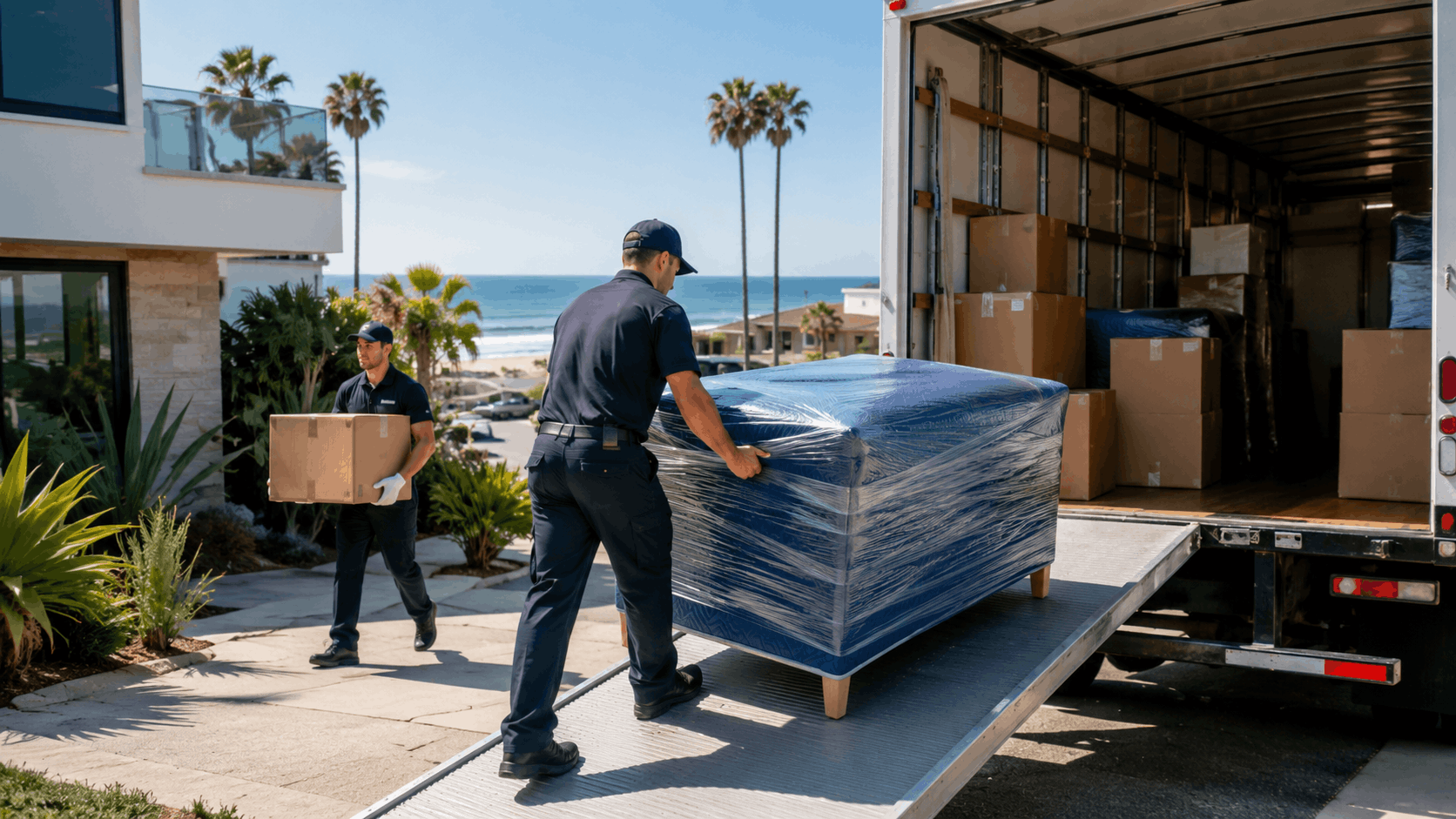
Premium moving service is about care, planning, and the right gear, not just bodies and a truck. A budget crew might get your boxes from point A to point B, but in the Beach Cities the details matter. Stairs, narrow walk streets, ocean-facing balconies, and expensive coastal furniture all need a higher level of handling.
Here is a quick look at how the two service levels compare on the jobs we run for Manhattan Beach movers across the Beach Cities.
| Feature | Budget Move | Premium Service |
|---|---|---|
| Furniture padding | Limited or extra cost | Full padding included |
| Stairs and walk streets | Often a struggle | Trained for it |
| Floor and wall protection | Rare | Standard on every job |
| High-value item handling | Basic | Custom crating available |
| Crew experience | Varies | Vetted, trained movers |
What you get with premium service usually includes:
- Full wrapping and padding for every piece of furniture
- Floor runners and door jamb guards to protect the home
- Crews who handle stairs and narrow access daily
- Proper equipment for heavy and awkward items
- Clear, written pricing with no day-of surprises
Full-Service vs. Basic Labor-Only Moves
A full-service move is the kind most Manhattan Beach families want when they are short on time. Our crew packs the home, wraps and loads everything, drives it, then unloads and unpacks at the new address. You point to where things go and we handle the rest, from the kitchen glassware to the master bedroom set.
A labor-only move is different. With labor-only, the client rents or owns the truck and hires the crew for muscle only, billed by the hour. This works for people who want to save money and are comfortable packing their own boxes and driving themselves. It is common for studio and one-bedroom moves within the South Bay.
The right choice depends on time, budget, and how much you want to handle yourself. A busy family moving into a four-bedroom in the Hill Section almost always benefits from a full-service move. A single renter moving from one El Porto apartment to another may do fine with labor-only help and a rented truck.
We talk through both options on every residential moving quote so clients pick the tier that fits. There is no point paying for full packing if you have already boxed everything yourself, and no sense going labor-only if you have a house full of fragile art.
Why Beach Cities Homes Need Extra Handling
Homes near the Strand sit on some of the narrowest lots in the South Bay. Many of these walk streets have no car access at all, so crews carry items by hand from the nearest parking spot. That extra carry distance adds time and calls for movers who can handle long, careful walks without rushing.
The Sand Section is full of multi-level homes built tall and narrow to fit small lots. Three and four-story layouts with tight switchback staircases are normal here. Moving a sectional sofa or a king mattress up those stairs takes skill, the right grip, and sometimes a hoist over a balcony.
Parking is its own challenge. On streets near the Strand and around downtown, there is rarely a clear spot right in front of the door. Our crews scout access ahead of time, plan the shortest safe carry route, and bring the gear to handle whatever the lot throws at them.
This is why we send experienced teams to the Beach Cities instead of whoever is available. A crew that has worked these Hermosa Beach and Manhattan Beach streets before knows the difference between a 20-foot carry and a 200-foot one, and they price and plan for it honestly.
Protecting High-Value Items and Coastal Furniture
Beach Cities homes often hold expensive pieces: gallery art, glass tables, designer furniture, and custom built-ins. These items need more than a single moving blanket. Custom crating builds a wooden box around fragile art, mirrors, and stone tops so they survive the trip and the stairs.
Coastal living adds another wrinkle. Salt air and fine sand get into everything near the beach, and they can scratch finishes or dull metal during a move. Our crews wrap pieces fully and keep them off open balconies and sandy walkways while loading.
Furniture protection starts with shrink wrap, padded blankets, and corner guards. For upholstered pieces we use clean wraps so nothing picks up dirt on the way out. Glass and marble get edge protection and a crate when the value warrants it.
Our packing and crating team handles these jobs every week. When a client owns a $10,000 dining table or a framed piece they cannot replace, the small cost of custom crating is far cheaper than a repair or a total loss.
What Our Crews Bring to Every Job
Every Popeye Moving truck rolls out stocked with the gear a Beach Cities move demands. That means four-wheel dollies, hand trucks, furniture sliders, and ramps for the truck gate. Trained movers know which tool fits which doorway and staircase.
Floor runners protect hardwood and tile inside the home. Door jamb covers keep narrow Sand Section entries from getting scuffed. Stair-friendly straps and shoulder dollies let two movers carry heavy pieces up tight staircases safely.
The team itself is the biggest part of the value. Our movers are vetted, trained, and used to coastal homes. They know how to read a tight walk street, plan a carry, and keep the clock moving without cutting corners on care.
We treat the right moving equipment as part of the price, not an add-on surprise. When a crew shows up ready for stairs, narrow lots, and fragile loads, the whole move runs faster and cleaner, which saves the client money on hourly time.
Get Your Free Quote
Tell us about your move and we'll get back to you fast.
How Manhattan Beach Moving Costs Are Calculated
Moving cost in the Beach Cities comes down to a handful of factors you can actually estimate. The size of the home, the number of stairs, the crew size, and the access all feed into the final number. Once you understand how a moving quote is built, the price stops feeling like a mystery.
Below we break down the main pieces that shape an hourly rate or a flat quote so readers can plan a realistic budget for their own move.
Hourly Crew Rates and Truck Fees
Most local moves in Manhattan Beach are billed by the hour. A two-person crew typically runs in the range of $130 to $170 per hour, a three-person crew around $180 to $230, and a four-person crew roughly $240 to $300. Rates shift with season and demand.
The right crew size depends on the home. A one-bedroom apartment usually needs two movers, while a three or four-bedroom house moves faster with three or four. A bigger crew costs more per hour but often finishes in fewer hours, which can lower the total bill.
Truck fees are usually a separate line. Many movers charge a flat truck fee or a travel fee that covers fuel and the drive to and from the yard. On a typical local move that truck fee lands somewhere between $50 and $150 depending on distance and truck size.
We walk clients through the math before they book so the hourly crew rate and truck fee are clear. A four-person crew that wraps a job in five hours can beat a two-person crew that takes nine, even at a higher hourly rate.
Home Size and Stairs in the Hill and Tree Sections
Home size is the biggest driver of total cost. A studio might take three to four hours, while a four-bedroom house can run a full day with a larger crew. More square footage means more boxes, more furniture, and more trips to the truck.
The Hill Section adds elevation and stairs to the equation. Many homes here sit above the street with long stairways up to the entry. Every flight a crew climbs slows the pace and adds labor time, which raises the price.
The Tree Section has its share of two-story homes and split-level layouts. Interior stairs between floors mean each large item gets carried up or down at least once. Beds, dressers, and sofas all take longer when stairs are involved.
When we quote homes in the Hill Section or Tree Section, we count stairs and note tight turns during the walkthrough. That detail lets us give an honest time estimate instead of a lowball number that balloons on moving day.
Packing Materials and Supply Costs
Packing materials add up faster than most people expect. Standard moving boxes run about $2 to $4 each, large boxes a bit more, and wardrobe boxes for hanging clothes around $15 to $20 apiece. A full house can need 40 to 100 boxes.
Tape, packing paper, and bubble wrap round out the supply list. A few rolls of tape, a couple bundles of paper, and a roll of bubble wrap can run $40 to $80 for an average home. Specialty wrap for mattresses and TVs costs a little extra.
Clients can buy their own supplies, have us deliver them, or fold them into a full packing service. We offer moving supplies delivery so the right boxes show up before packing day. That saves clients trips to the store and guesswork on how much they need.
Budgeting for materials up front keeps the final bill from surprising anyone. For a typical Manhattan Beach three-bedroom, plan on $150 to $350 in packing materials if you pack yourself, more if our crew handles all the wrapping.
Distance, Access, and Parking Near Downtown
The distance between the truck and your front door matters more than the mileage on a local move. A long carry from a walk street near the Strand to the nearest legal parking spot adds time. Crews bill that carry time just like any other labor.
Parking around Manhattan Beach Boulevard and downtown is tight, especially during business hours. Sometimes a permit or a reserved curb space is needed to park the truck close. We help clients sort out parking access before the move so the crew is not circling the block.
Permit needs vary by street and building. Some condo buildings near downtown require a reserved loading zone and proof of insurance on file. Sorting this out early avoids a parking ticket or a blocked truck on moving day.
When access is hard, we plan for it in the quote rather than spring it on the client later. Honest pricing means counting the carry distance and parking reality of each specific address, not pretending every move is curb-to-curb.

Need Help in Los Angeles?
Popeye Moving & Storage serves Los Angeles and all of Los Angeles County.
Local and Long-Distance Pricing Differences
Pricing changes a lot between a quick hop across town and a haul out of state. A short local move is billed by the hour, while a long-distance move usually runs on weight and mileage or a flat rate. Knowing which model applies helps readers budget right.
Here is how the pricing tends to break down across different move types in and out of the Beach Cities:
- Local move: Billed hourly, crew plus truck fee
- Cross-Beach-Cities move: Hourly with added drive time
- Long-distance move: Weight and mileage, or a flat rate
- Storage between homes: Monthly rate by space used
Moves Within Manhattan Beach and the South Bay
Short, in-town moves are the simplest to price. A move from one Manhattan Beach home to another, or over to El Porto, is billed by the hour from the time the crew arrives until the job is done. The clock and crew size set the cost.
Areas like Polliwog Park and the streets near it tend to have easier parking and driveways, which keeps carry time down. A move within these neighborhoods often finishes faster than a Sand Section job with stairs and walk streets. We price each by the actual access.
Most local South Bay moves fall in a predictable range. A one-bedroom might run $500 to $900, a two-bedroom $900 to $1,600, and a three-bedroom $1,600 to $3,000 depending on packing and stairs. These are ballpark figures we refine with a walkthrough.
Our local residential moving service covers the whole South Bay, from Manhattan Beach over to Hawthorne and El Segundo. Because we know these streets, our hourly estimates tend to land close to the final bill.
Moving Between Hermosa, Redondo, and Manhattan Beach
Plenty of clients move within the Beach Cities, shifting between Hermosa Beach, Redondo Beach, and Manhattan Beach as their needs change. These cross-town moves are still billed hourly, but drive time between the two homes gets added in. The distance is short, so the added time is modest.
A move from Manhattan Beach down to Redondo Beach might add 20 to 40 minutes of drive time each loaded trip. With one truckload, that is a single short drive. Larger homes that need two trips double that drive time.
Access on both ends drives the total more than the distance between towns. A flat Redondo condo on one end and a stair-heavy Hermosa walk street on the other can swing the hours a lot. We weigh both addresses when we quote.
Because all three towns sit within a few miles, these moves rarely cross into long-distance pricing. They stay hourly, which keeps them affordable for families upsizing or downsizing within the Beach Cities they already love.
Long-Distance and Out-of-State Pricing
Long-distance pricing works differently from a local hourly job. Once a move crosses a long enough distance or a state line, the cost is based on the weight of the shipment and the mileage. A heavier load and a farther destination both push the price up.
Many long hauls are quoted as a flat rate. A flat-rate quote locks in one price based on an inventory of your goods and the route. This gives clients a firm number up front instead of an hourly meter running for days.
Out-of-state moves also factor in fuel, tolls, and the driver's time on the road. The federal government regulates interstate movers, and clients can check a company's record through the FMCSA Protect Your Move site before booking.
Our long distance moving team handles moves out of Los Angeles to anywhere in the country. We build a detailed inventory so the long-distance pricing or flat-rate quote reflects the real load, not a guess.
Storage Options Between Homes
Sometimes a closing date slips or a remodel runs long, and a family needs a place to keep their things. Short-term storage bridges that gap. We hold goods in a secure facility and deliver them when the new home is ready.
Storage is usually billed monthly based on how much space the goods take up. A studio's worth of furniture costs far less than a full house. Climate-controlled and vaulted options cost a bit more but protect sensitive items from heat and humidity.
Short-term storage is common for Beach Cities clients waiting on an escrow to close. Long-term storage works for those moving abroad or holding a second set of furnishings. We match the option to the timeline and budget.
Our storage solutions include both short and long-term plans with clear monthly rates. When a move and a storage stay are combined, we coordinate both so goods are handled once and tracked the whole way.
Seasonal Timing and How It Affects Your Price
The calendar moves moving rates up and down more than most people realize. Peak moving season in the Beach Cities runs hot in summer, while off-peak months in winter open up better rates and dates. Smart booking timing can shave real money off the bill.
This table shows how demand and pricing tend to shift through the year for Manhattan Beach moves:
| Period | Demand | Pricing |
|---|---|---|
| June - August | Very high | Top rates, books fast |
| April - May | Moderate | Mid-range rates |
| September - October | Moderate | Mid-range rates |
| November - February | Low | Best off-peak rates |
| Weekends and month-end | High | Surcharge likely |
Summer Crowds and Higher Demand
Summer is the busiest stretch for movers across the South Bay. June through August fills up with families moving while school is out and college students shifting around. The demand for crews and trucks climbs, and so do rates.
Because so many people want the same summer dates, the calendar tightens fast. Popular Saturdays in July can book weeks ahead. Waiting until the last minute in peak season often means paying more or settling for a weekday you did not want.
Peak season also means crews are stretched thin across the region. Quality movers get reserved early, so the families who plan ahead get the best teams and times. Those who wait take what is left.
If a summer move is unavoidable, booking early is the way to lock in a fair rate and a good crew. We start filling our summer calendar months out, so the earlier a client calls, the more options they have.
Weekend, Holiday, and End-of-Month Surcharges
Day of the week changes the price too. Fridays, weekends, and holidays carry higher demand, so they often come with a surcharge. Saturday is the single most requested moving day, which is why it costs the most.
End-of-month dates pile on extra demand because so many leases turn over on the first. The last few days of any month book solid as renters race to vacate and move in. That crunch pushes prices up across the board.
Mid-week and mid-month moves are the quiet zone. A Tuesday or Wednesday move in the middle of the month often runs cheaper and gives clients first pick of crews. The savings can be meaningful on a larger job.
We point clients toward these lower-demand windows whenever their schedule allows. A short shift from a Saturday end-of-month move to a mid-week date can lower both the wait and the bill.
Coastal Weather and Parking Around Local Events
Beach Cities weather plays into timing in small but real ways. The morning marine layer hangs heavy near the coast, leaving walk streets and stairs damp early in the day. Crews work safely through it, but slick surfaces mean a careful, steady pace.
Summer beach traffic clogs the routes near the Strand and downtown by midday. Loading earlier in the morning often beats the worst of the crowds and the parking squeeze. We plan start times around known traffic patterns.
Local events change access on certain weekends. The Manhattan Beach Open volleyball tournament draws huge crowds and closes parking near the pier. A move scheduled during that event needs extra planning for truck access and carry routes.
We track the local event calendar so a client's move does not collide with a street closure or a packed beach day. Knowing the city means knowing which weekends to avoid for the easiest possible access.
Best Times to Book for a Lower Rate
The best value usually comes from booking off-peak and giving plenty of lead time. Late fall and winter months bring the lowest rates of the year. A move in November or January can cost noticeably less than the same move in July.
Booking lead time matters in every season. For peak summer dates, calling four to six weeks ahead is wise. For off-peak months, two to three weeks of lead time usually secures the date and crew you want.
Flexibility unlocks the best deals. A client who can move mid-week, mid-month, and outside summer has the most room to negotiate a lower rate. Even shifting a date by a few days can help.
We are happy to walk through the calendar with clients and find the cheapest workable window. A quick call about dates often turns up savings before the quote is even finalized.
Need Help in Los Angeles?
Popeye Moving & Storage serves Los Angeles and all of Los Angeles County.
Add-On Services and What They Cost
A premium move can include several add-on services beyond loading and driving. Packing, specialty item handling, furniture disassembly, and junk removal all carry their own price ranges. Knowing the cost of each helps clients build the move they actually want.
Full and Partial Packing Service
Full packing means our crew boxes the entire home, from the kitchen to the closets. It saves clients days of work and is the most-requested add-on for busy families. Full packing for a three-bedroom typically runs $600 to $1,500 in labor plus materials.
Partial packing covers just the tricky parts, usually the fragile items. Many clients pack their own clothes and books but have us wrap the dishes, glassware, and art. This trims the cost while still protecting the breakables.
The right choice depends on time and comfort. A family with a newborn and two jobs usually wants full packing. A retiree with a flexible schedule might handle most boxes and hire us only for the china cabinet.
Our full service packing team brings the boxes, paper, and wrap to the door. We also offer unpacking services on the other end so clients can settle in without a wall of boxes.
Specialty Items: Pianos, Safes, and Art
Some items need special handling and carry an added fee. Pianos, gun safes, large art, and antiques fall in this group. They are heavy, delicate, or both, and they show up often in Hill Section homes with custom furnishings.
Piano moving is a job for trained crews with the right straps, boards, and skid. An upright piano add-on usually runs $150 to $400, and a grand piano more, depending on stairs and access. The fee covers the gear and the extra hands.
Safes and heavy gym equipment carry similar fees based on weight and how many stairs are involved. A 700-pound safe on a third floor takes more crew and time than one in a garage. We price these by the real conditions.
Our piano moving and specialty moving teams handle these items every week. For valuable art, we add custom crating so the piece travels protected, which is well worth the modest extra cost.
Furniture Disassembly and Reassembly
Large furniture often has to come apart to clear narrow Sand Section doorways and stairs. Beds, sectionals, dining tables, and outdoor sets all break down for the trip. Our crew handles the disassembly as part of the labor time.
Reassembly at the new home puts everything back together. The crew rebuilds bed frames, reconnects sectional pieces, and resets table legs so the client does not face a pile of parts and hardware. We keep the screws bagged and labeled.
This work is usually billed within the hourly crew time rather than as a flat fee. A complex piece like a four-poster bed or a modular sectional adds time, but it keeps the items safe and fitting through tight spaces.
Outdoor furniture gets the same treatment. Patio sets and large umbrellas near the coast come apart for safe transport, then go back together at the new home. The crew handles the heavy and awkward pieces so the client does not have to.
Junk Removal and Donation Drop-Off
Moving is the perfect time to lighten the load, and we help with that. Junk removal hauls away the broken furniture, old mattresses, and clutter a client no longer wants. Paying to move items you plan to toss makes no sense.
Donation drop-off is a popular add-on. The crew sets aside usable furniture and household goods and drops them at a local charity on the way. The client clears space and helps the community at the same time.
These services are usually priced by volume or by the trip. A small load of junk costs less than a garage full. We give a clear estimate once we see what needs to go.
Combining junk removal and donation runs with the move saves the client separate trips and fees. Fewer items to load also trims the hourly bill, so the downsizing often pays for part of itself.
Avoiding Hidden Fees and Common Pricing Mistakes
The worst moving day surprises come from fees nobody mentioned at booking. Transparent pricing means every charge is on the quote in writing before the truck arrives. Knowing what to ask and what to read protects clients from the shocks that give the industry a bad name.
Questions to Ask Before You Book
A few smart questions up front reveal how a company prices. Ask about the move minimum, since many movers bill a minimum of two to four hours even on small jobs. Knowing the minimum keeps a quick move from feeling overpriced.
Ask how travel time is charged. Some companies bill for the drive from their yard to your home and back. In California, movers may charge double-drive-time, which counts the loaded drive between homes twice, so it pays to understand it.
Ask whether the quote includes the truck fee, materials, and any stair or long-carry charges. A clear yes or no on each item prevents add-ons from appearing later. Good movers answer these plainly.
We welcome these questions because honest answers build trust. Clients who understand the minimum, travel time, and double-drive-time rules know exactly what their move will cost before they sign anything.
Reading the Fine Print on Your Estimate
The estimate document holds the real story. A binding estimate locks in a price, while a non-binding one can change. Knowing which type you have tells you whether the final bill is fixed or an approximation.
Look for fuel charges, stair fees, and long-carry fees in the fine print. A long-carry fee kicks in when the truck cannot park close and the crew carries items a long distance, which is common on Strand walk streets. It should be spelled out, not hidden.
Check the hourly rate, the minimum, and how partial hours are billed. Some companies round up to the next full hour, others bill in 15-minute blocks. The difference adds up on a long job.
We put every line on our written estimate so there is nothing to discover on moving day. The California moving industry is regulated, and clients can review their rights through the Bureau of Household Goods and Services.
Insurance, Valuation, and Liability Coverage
Every licensed mover includes basic liability coverage, but it is thin. Basic coverage pays around 60 cents per pound per item. For a 50-pound TV that breaks, that is only $30, which does not replace it.
Full-value protection is the upgrade most Beach Cities clients want. With full-value protection, the mover repairs or replaces a damaged item at its actual value. It costs more, but it makes sense for homes full of high-value furniture and art.
The cost of full-value protection scales with the declared value of the shipment. A home with expensive pieces pays more for coverage, which is fair given what is at stake. We explain both options so clients choose with clear eyes.
For very high-value items, third-party moving insurance is another path. We help clients weigh basic liability against full-value protection and outside coverage so the level of protection matches the value of what they own.
Why a Cheap Quote Can Cost More
A lowball quote is tempting, but it often costs more in the end. Some companies quote a rock-bottom hourly rate, then send a slow or understaffed crew that runs the clock. The low rate times many hours beats a fair rate times few.
Cheap operators also cut corners on padding and care. Damaged furniture, scratched floors, and broken glass turn a bargain into an expensive repair bill. The Beach Cities homes most at risk are the ones with the nicest finishes.
Hidden fees often hide behind a cheap headline rate. Travel charges, stair fees, and fuel surcharges get added on the day, and the final bill lands well above the quote. The savings vanish.
We price honestly so the quote reflects the real job. A fair rate with a fast, careful crew and no surprise fees almost always beats a lowball quote that balloons on moving day.

Need Help in Los Angeles?
Popeye Moving & Storage serves Los Angeles and all of Los Angeles County.
How to Get the Most Value From Your Manhattan Beach Move
A few smart moves before the crew arrives can cut both cost and stress. The goal is to get premium care while keeping the hours and the bill down. These moving tips help clients save on moving day without sacrificing quality.
Declutter Before the Crew Arrives
The fastest way to lower a moving bill is to move less. Every box and piece of furniture takes time to wrap, carry, and load. Decluttering before the crew shows up means fewer hours on the clock.
Start weeks ahead by sorting what to keep, donate, and toss. Closets, garages, and storage areas hold the most to cut. A solid downsizing pass can drop a move from a full truck to a partial one.
Downsizing pays off twice. The move costs less, and the new home starts out less cluttered. For Beach Cities families upsizing or rightsizing, it is the single biggest lever on the final price.
We are happy to haul donations and junk on move day so the decluttering does not become its own chore. Less to move, more saved, and a cleaner start in the new home.
Plan for Parking and HOA Rules
Parking near downtown Manhattan Beach takes planning. Reserving curb space or a loading zone in front of the home lets the truck park close and cuts carry time. A parking permit may be needed on busy streets.
Condo and HOA buildings have their own move-in rules. Many require booking the elevator, padding the walls, and providing proof of the mover's insurance. Clearing these HOA rules ahead of time avoids a delay at the door.
Some buildings only allow moves during set hours or on certain days. Checking these limits before booking keeps the move date from clashing with building policy. A quick call to the HOA or property manager settles it.
We help clients sort parking and building rules during planning. Handling the permit and HOA paperwork early means the crew rolls in and gets to work instead of waiting on access.
Schedule a Walkthrough for an Accurate Quote
The most accurate quotes come from seeing the home. An in-home estimate or a video walkthrough lets us count the boxes, note the stairs, and spot the tight access. That detail tightens the estimate so the final bill matches.
A video walkthrough works well for busy clients. They walk through the home on a video call, showing each room and any tricky items. We build the quote from what we see, not from a vague phone description.
Walkthroughs catch the things that blow up a price later: the piano in the den, the third-floor master, the narrow walk street. Naming them up front means they are priced in, not sprung as surprises.
We offer both in-home and video walkthroughs to fit the client's schedule. The few minutes it takes saves money and prevents the moving-day shock of an estimate that did not match reality.
Why Locals Choose Popeye Moving & Storage Co.
Popeye Moving has worked the South Bay for years, and that experience shows on every job. Our crews know the walk streets near the Strand, the stairs in the Sand Section, and the parking around Manhattan Beach Boulevard. Local knowledge means fewer surprises and faster moves.
We price honestly and put every charge in writing. No lowball quotes, no surprise fees, no slow crews padding the clock. Clients get a fair rate and a team that treats their home and belongings with care.
As local movers, we serve the whole Beach Cities and beyond, from Santa Monica down to Rancho Palos Verdes. Our South Bay experience covers the streets, the buildings, and the seasonal patterns that shape a smooth move.
When neighbors ask who to call for a premium move done right, our name comes up because we deliver. The same crew that handles a Strand walk street can pack a four-bedroom in the Hill Section with equal care.
Final Thoughts
Premium moving service in Manhattan Beach is worth it because these homes demand it. The narrow lots, the stairs, the coastal furniture, and the tight parking all call for trained crews and the right gear. A budget move that skips the care often costs more in damage and slow hours.
Pricing comes down to home size, stairs, crew, access, timing, and add-ons. Booking off-peak, decluttering first, and getting a real walkthrough all lower the bill. Reading the fine print and asking the right questions keeps surprises off the final invoice.
For an honest quote and a crew that knows the Beach Cities, reach out to Popeye Moving & Storage Co. Contact our team for a consultation and a walkthrough, and let us plan a smooth, fairly priced move from start to finish.

Frequently Asked Questions
- How much does it cost to hire movers in Manhattan Beach?
- Local moves are billed hourly, with a two-person crew around $130 to $170 per hour and larger crews more. A one-bedroom often runs $500 to $900, a two-bedroom $900 to $1,600, and a three-bedroom $1,600 to $3,000, depending on stairs, packing, and access. A walkthrough gives the most accurate total for your specific home and belongings.
- What makes a premium move different from a basic move?
- A premium move includes full furniture padding, floor and wall protection, custom crating for art and glass, and trained crews used to coastal homes. Basic moves often skip the wrapping and protection to keep the rate low. In the Beach Cities, the extra care matters because of the stairs, narrow walk streets, and high-value furniture common in these homes.
- Do movers charge extra for stairs and tight parking?
- Yes. Long flights of stairs in Sand Section and Hill Section homes add labor time, and a long carry from a walk street to the nearest parking adds a long-carry charge. These should appear clearly on a written estimate, never as a moving-day surprise. We count stairs and measure access during the walkthrough so the quote reflects the real conditions.
- How far in advance should someone book a Beach Cities mover?
- For peak summer dates, June through August, book four to six weeks ahead since the calendar fills fast. For off-peak months like November through February, two to three weeks of lead time usually secures the date and crew you want. The earlier you call, the better the choice of dates and the more time to plan parking and access.
- Is it cheaper to move mid-week or on a weekday?
- Yes. Mid-week dates like Tuesday and Wednesday cost less than weekends because demand is lower. Mid-month dates also beat end-of-month, when lease turnovers crowd the calendar. A client who can move on a weekday in the middle of the month often gets a lower rate and first pick of the crew.
- Do movers provide packing supplies and boxes?
- We provide boxes, tape, paper, and specialty wrap, either delivered ahead of time or included in a full packing service. Supplies are usually billed separately if you pack yourself, with boxes around $2 to $4 each and wardrobe boxes $15 to $20. We can estimate how many boxes your home needs so you do not over-buy or run short.
- How does moving insurance and valuation work?
- Every licensed mover includes basic liability at about 60 cents per pound per item, which is limited. Full-value protection costs more but repairs or replaces damaged items at actual value, which suits homes with expensive furniture and art. For very high-value items, third-party insurance is another option. We explain each so you match coverage to what you own.
- Can movers handle pianos, safes, and large art?
- Yes. Our specialty crews move pianos, safes, gym equipment, and large art with the right straps, boards, and crating. These items carry an added fee based on weight and stairs, usually $150 to $400 for a piano and more for a grand. Valuable art gets custom crating so it travels fully protected through tight doorways and stairs.
- Does Popeye Moving offer storage between homes?
- Yes. We offer short-term and long-term storage for clients waiting on a closing, remodel, or overseas move. Storage is billed monthly based on the space your goods take up, with climate-controlled and vaulted options for sensitive items. When a move and storage are combined, we coordinate both so your belongings are handled once and tracked throughout.
- How do I get an accurate moving quote?
- Schedule an in-home or video walkthrough so we can count boxes, note stairs, and spot tight access. Share details like the number of floors, any specialty items, and parking conditions at both addresses. The more we see up front, the tighter the estimate and the fewer surprises on moving day. Reach out to our team to set up a walkthrough.
P
Popeye Moving & Storage Co. Team Team
Licensed moving and storage professionals serving Los Angeles and Los Angeles County.
Licensed in California · License #CAL T 189749 | USDOT 1472924 | MC 498816C
Why trust Popeye Moving & Storage?
Founded in 1994, Popeye Moving & Storage is a licensed and insured moving and storage service serving Los Angeles and Los Angeles County. All content is reviewed by our licensed technicians.

Need Help in Los Angeles?
Popeye Moving & Storage serves Los Angeles and all of Los Angeles County.
Related Articles

Cost Guides
Brentwood Movers: Mansion Move Pricing and Insurance Requirements
A clear guide to Brentwood mansion move pricing, valuation and insurance requirements, HOA rules, and timelines for large estate relocations across West LA.

How-To Guides
Malibu Movers: PCH Access, Wildfire Routing, and Beachfront Logistics
A local mover's guide to Malibu moves: PCH timing, wildfire-aware routing, beachfront and bluff logistics, gated community rules, packing, storage, and honest cost factors.

Cost Guides
Movers in Beverly Hills: COI Requirements and Estate Move Pricing
A local guide to COI requirements and estate move pricing in Beverly Hills, covering insurance limits, high-value item handling, and move day planning from Popeye Moving.