How-To Guides
Malibu Movers: PCH Access, Wildfire Routing, and Beachfront Logistics

Key Takeaways
- Malibu's 21-mile coastal layout, narrow streets, and fire-prone canyons make moves here unlike anywhere else in Los Angeles.
- Early weekday mornings on PCH avoid the heavy beach and commuter traffic near Surfrider and Zuma.
- Many narrow coastal streets cannot fit a 26-foot truck, so a smaller shuttle vehicle handles the last mile.
- Fire season from late summer through fall calls for backup canyon routes, buffer time, and possible rescheduling on Red Flag days.
- Beachfront and bluff homes need extra crew, tide timing, floor protection, and special equipment for sand and stairs.
- Gated communities like Malibu Colony and Serra Retreat require gate codes, set move-in hours, and a certificate of insurance.
- Coastal access adds labor time, so booking two to four weeks early and getting an in-home or virtual survey produces an accurate quote.
In This Article
The Reyes family closed on a Carbon Beach home in late September. The moving truck left our Los Angeles yard at dawn, but by the time it reached the Topanga curve on Pacific Coast Highway, traffic was already crawling past Surfrider. Smoke hung over the hills near Las Flores, and a Red Flag warning had just been posted for the afternoon. That single move involved tide charts, a gate code, a smaller shuttle truck, and a backup canyon route on standby.
Moving into Malibu is not like moving into a mid-city apartment. The roads are narrow, the homes sit on sand or cliffs, and fire season can rewrite a schedule in an hour. A crew has to think about traffic windows, beach access stairs, HOA paperwork, and where to park a 26-foot truck that simply will not fit on some streets.
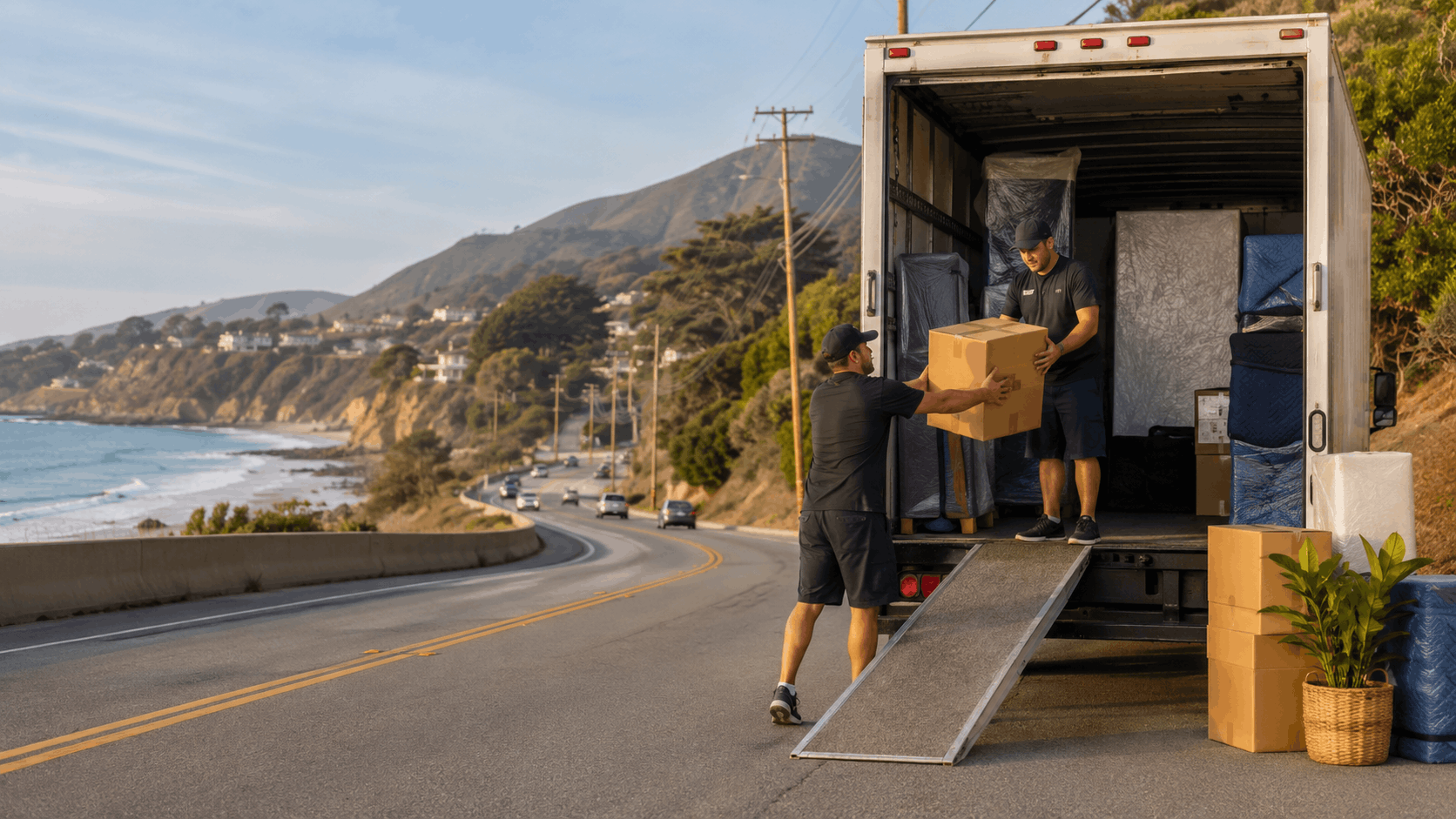
Why Moving in Malibu Is Different From the Rest of Los Angeles?
Most of Los Angeles sits on a grid. Trucks pull up, ramps drop, and crews carry boxes a short way to the door. Malibu throws that playbook out. The city stretches along one main road, climbs into fire-prone canyons, and drops onto beaches you reach by stairs.
That mix of geography changes how Malibu movers plan every step. A short carry in Culver City becomes a 200-foot walk across sand here. A quick drive on a normal street becomes a slow crawl on the Pacific Coast Highway during beach season. Coastal moving rewards crews who scout the route before the truck ever rolls.
- One long road, the PCH, links the whole city together
- Narrow side streets that often block large trucks
- Homes on sand, on bluffs, and up steep hillside drives
- Wildfire risk that can close roads with little warning
- Gated enclaves with their own rules and check-in steps
The 21-Mile Stretch and What It Means for Trucks
Malibu runs roughly 21 miles along the coast, from the Topanga line near the east end to the Ventura County border past Broad Beach. There is no shortcut across town. If a home sits near Zuma and the truck is staged near Las Tunas, the crew eats real travel time just getting between them.
That PCH layout forces careful truck staging. Our team maps where the big truck can safely park and where a smaller shuttle has to take over for the last mile. A move near Point Dume might stage the main truck in a wider pullout, then ferry loads down the narrow approach roads.
Travel time also stacks up during the day. A run that takes 25 minutes at 7 a.m. can balloon to an hour by noon on a summer Saturday. We build that drift into the schedule so a crew is never trapped on PCH with a half-loaded truck.
Because the city is so long and thin, we often split coverage between eastern and western jobs. Our pages for eastern Malibu and western Malibu reflect how differently those two ends behave on moving day.
Hillside Homes, Bluff Properties, and Beach Access
Malibu homes fall into three broad camps, and each one tests a crew in its own way. Hillside homes sit up winding canyon drives with tight switchbacks and limited turnarounds. A truck that fits the address on paper may still struggle to back down a single-lane drive.
Bluff properties perch above the water, often with the living space below the street and a stairway down to it. Crews carry furniture down and around tight landings, which adds time and demands extra hands. Wind off the ocean makes wrapped items act like sails, so handling large pieces takes planning.
Beach-access homes are the toughest of the three. The truck stops at the road, and the front door might be a long walkway or a flight of wooden stairs away. Carrying a sofa across soft sand is slow, heavy work that no ramp can fix.
Knowing which type of home a customer has shapes the whole crew size and equipment list. A four-person team that handles a flat Brentwood move might need six people and a shuttle for a bluff home above Carbon Beach.
How Popeye Moving & Storage Co. Plans Each Malibu Job
Every Malibu booking starts with a pre-move site visit or a detailed virtual walkthrough. We look at the driveway, the street width, the stairs, and where a truck can legally sit. Photos and a few measurements catch problems that would otherwise surprise the crew on the day.
From there we handle route mapping from our Los Angeles base out to the coast. We check current PCH conditions, plan a staging spot, and pick a backup canyon route in case the main road closes. That planning is why our residential moving jobs in Malibu rarely stall out.
We also confirm the home type and access early so the right gear loads onto the truck. Stair-climbing dollies, extra padding, plywood floor runners, and shuttle vehicles all get assigned before dispatch. Nothing gets left at the yard when the destination is an hour away.
The site visit is also when we flag HOA paperwork, gate codes, and tide timing. Sorting those details days ahead keeps the move on schedule and the crew off the clock waiting at a guard gate.
Get Your Free Quote
Tell us about your move and we'll get back to you fast.
PCH Access and Timing Your Move
The single biggest variable in a Malibu move is PCH traffic. The same address can take 30 minutes or two hours to reach depending on the day and hour. Smart moving day timing saves money because crews bill for time, not for sitting in a line of cars.
Pacific Coast Highway carries beachgoers, commuters, cyclists, and construction traffic all on the same lanes. We plan around its rhythms instead of fighting them. The table below shows the windows we recommend most often.
| Time Window | Traffic Level | Recommendation |
|---|---|---|
| Weekday 6 to 9 a.m. | Light to moderate | Best window for arrival and loading |
| Weekday 10 a.m. to 2 p.m. | Moderate | Good for interior work, plan drive time |
| Weekday 3 to 7 p.m. | Heavy commuter | Avoid long PCH runs |
| Weekend mornings | Building fast | Only if no other option |
| Weekend midday | Very heavy beach traffic | Avoid entirely |
Best Days and Hours to Move Along PCH
Weekday moving is the clear winner in Malibu. A crew that arrives between 6 and 9 a.m. on a Tuesday or Wednesday can unload most of a truck before traffic thickens. Mornings also stay cooler, which matters when carrying loads across open sand.
Weekends are a different animal. Beach traffic near Surfrider and Zuma Beach traffic can lock up PCH for miles by late morning. A move that should take five hours can stretch to eight when the crew gets stuck behind beach parking lines.
We steer customers toward midweek dates whenever their schedule allows. If a weekend is unavoidable, we start very early and aim to finish the heavy lifting before the sand fills up. The difference in stress and cost is real.
Holidays near the water are the worst of all. Memorial Day, Fourth of July, and Labor Day turn PCH into a parking lot, so we rarely book coastal moves on those dates.
Truck Size Limits and Parking on Narrow Coastal Streets
Plenty of Malibu streets simply cannot fit a 26-foot truck. Roads near Las Tunas and Big Rock are narrow, often have parked cars on both sides, and offer no room to turn around. Forcing a full-size truck onto them risks damage and blocked traffic.
Truck size limits are why we lean on shuttle vehicles. The main truck stages at a wider, legal spot, and a smaller box truck or van ferries items down to the home. It adds a step, but it keeps the move safe and avoids a stuck rig.
We figure out shuttle needs during the site visit, not on moving day. Measuring the street ahead of time means the right vehicle shows up the first time. That planning also keeps neighbors happy, since a blocked coastal road can spark complaints fast.
Some hillside drives are even tighter than the beach streets. In those cases the shuttle might be a small van that makes several trips up and down the canyon while the crew loads and unloads.
Permits and Coordination With the City of Malibu
Some moves need a parking or staging permit, especially when a truck must occupy part of a public road or a stretch of PCH shoulder. The City of Malibu and the California Department of Transportation, known as Caltrans, govern different parts of that road network.
We handle the permit coordination so customers do not have to chase paperwork. When a move requires blocking a lane or staging on a state right-of-way, we reach out to the right office well ahead of the date. That keeps the crew from getting ticketed or asked to move mid-load.
Permit timelines vary, so we start the process as soon as a date is set. A last-minute request can delay a move when an office needs several business days to respond. Booking early gives that paperwork room to clear.
For gated streets and private drives, the rules come from the community rather than the city. We sort out which authority applies before the truck rolls so there are no surprises at the curb.
Handling Slides, Closures, and Construction Delays
PCH closures are a fact of life in Malibu. Winter rains loosen the hillsides, and rockslides near Big Rock and Las Flores can shut lanes for hours or days. Roadwork crews also stage along the highway throughout the year.
We track current conditions the morning of every coastal move. The California Highway Patrol and Caltrans both post real-time updates, and we check them before dispatch. If a slide has the road down to one lane, we adjust the start time or the route.
Buffer time is built into every Malibu schedule for this reason. We would rather plan for a delay that never comes than get caught with a loaded truck and no way through. That cushion protects the customer from a rushed, sloppy job.
When a closure is total, we shift to the canyon backup routes covered in the next section. Knowing those alternates cold is part of working this coast every week.

Need Help in Los Angeles?
Popeye Moving & Storage serves Los Angeles and all of Los Angeles County.
Wildfire-Aware Routing and Move Scheduling
Fire season shapes Malibu moves more than any other factor besides traffic. The same canyons that make the views stunning also carry fire fast when conditions turn dry and windy. Wildfire routing is part of how we plan every coastal job from late summer on.
A crew working near Topanga or Kanan Dume needs to know two ways out at all times. We treat evacuation routes as part of the move plan, not an afterthought. Safety for the crew and the customer always comes before sticking to a schedule.
Fire Season Months and Red Flag Warning Days
Malibu's highest fire risk runs from late summer through fall, roughly August into December. Dry brush, low humidity, and Santa Ana winds line up during those months. That is the window when fire season moving demands the most caution.
The National Weather Service issues a Red Flag warning when conditions could spread fire quickly. On those days we may pause a move or shift the schedule for safety. No piece of furniture is worth putting a crew on a canyon road during a wind-driven fire.
We watch the forecast closely once a coastal date is booked in fall. If a Red Flag day lands on a move date, we talk to the customer early about options. Most people understand and appreciate the caution.
Customers can track conditions themselves through the National Weather Service. We encourage anyone moving in fall to keep an eye on warnings the week of their move.
Backup Routes Through Las Flores, Topanga, and Kanan Dume
When PCH or a primary road closes, the canyons become the way through. Topanga Canyon connects the east end of Malibu to the Valley. Kanan Dume Road links the central coast up to the 101 freeway, and Las Flores offers another climb out of the hills.
We keep all of these alternates in mind for every coastal move. If a fire or slide blocks the main approach, the crew already knows which canyon to take. That knowledge comes from driving these roads week after week, not from a map app alone.
Each canyon has its own quirks. Some are too narrow for a large truck, which is another reason we may use a shuttle. We match the backup route to the vehicle so the detour does not create a new problem.
Having a plan B and a plan C is why our coastal moves rarely get fully derailed. The road may change, but the move still gets done safely.
Emergency Storage During Evacuations
Sometimes a fire or evacuation order means a move simply cannot finish that day. When a home becomes inaccessible, we have a place for the belongings to go. Our storage solutions give customers a safe holding spot until it is safe to return.
Emergency storage takes the pressure off a stressful situation. Instead of a loaded truck stranded near a closed road, the goods move into a secure facility off the coast. The customer reschedules the final delivery once the area reopens.
We keep this option open for every Malibu booking during fire season. Knowing there is a backup plan helps families commit to a move date even when the forecast looks uncertain. Flexibility matters when the road can close without notice.
Our secure storage also helps people who must evacuate quickly and want valuables out of harm's way. We can stage a fast pickup and bring items to safety on short notice.
Protecting Belongings From Smoke and Ash
Even when a fire stays miles away, smoke and ash can travel into a home and onto belongings. Soft goods soak up smoke odor, and fine ash works into furniture seams. We plan wrapping with that risk in mind during fire season.
Sealed plastic wrapping and covered moving blankets keep smoke off upholstery and mattresses. For sensitive items, we use boxes with tight seals rather than open totes. Smoke protection is mostly about keeping air away from the surface.
Climate-protected storage adds another layer for items moved during smoky stretches. Keeping wrapped goods in a controlled space limits how much smell sets in. Electronics and artwork benefit most from that extra care.
If a customer's items pick up smoke despite our wrapping, we advise on cleaning and airing them out after delivery. Catching it early makes the odor far easier to remove.
Beachfront and Bluff Logistics
Beachfront moving is where Malibu earns its reputation as a tough place to work. The truck stops at the road, and the rest is on foot across sand, down stairs, and around tight corners. Bluff access can mean carrying a couch down a switchback stairway with the ocean below.
Homes along Carbon Beach and Broad Beach show how varied this work gets. Some have long private walkways, others have steep wooden stairs, and a few sit right where the tide reaches at high water. Each one calls for its own plan.
Carrying Items Across Sand and Down Stairways
A long beach walkway turns a normal carry into a workout. Soft sand swallows wheels, so dollies often do not help once the path leaves the pavement. Crews carry items by hand, which means more people and more trips.
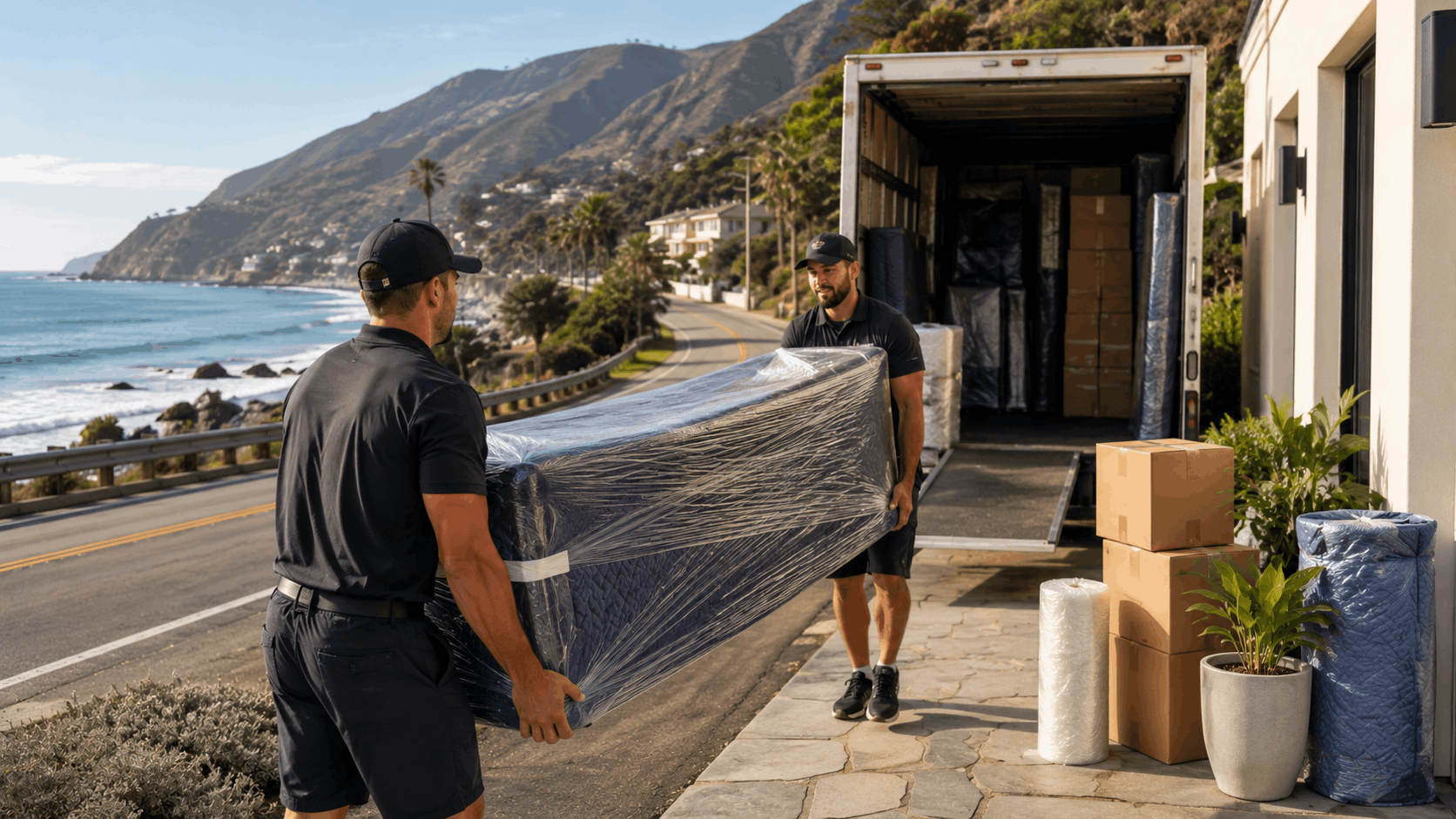
Stairways are the other beach challenge. Many Carbon Beach and Broad Beach homes sit below the road, reached by a flight of wooden steps. We use straps and team lifts to bring large pieces down safely without scraping walls or railings.
We plan crew size around the walkway and stair count. A home with 40 steps and a 150-foot sand path needs more hands than a flat condo. Getting that number right keeps the move from dragging into the evening.
Protecting the walkway matters too. We lay down runners on finished surfaces and watch for loose boards on older beach stairs. A careful pace beats a rushed one when the footing is uneven.
Tides, Erosion, and Working Around the Water
At some beachfront homes, the tide decides when crews can work. High tide can cover the only access path or push waves up against a stairway. We check tide timing before scheduling the carry so the crew is not racing the water.
Beach erosion changes access points over time. A path that worked last year may be washed out or dropped a few feet. Our site visit catches those changes so we bring the right gear, like portable ramps or extra padding.
We aim the heaviest carries for low or falling tide whenever possible. That gives the crew firm sand and a clear path. Planning around the ocean is just part of coastal moving here.
For homes right at the waterline, we sometimes split the work into a tide window of a few hours. It takes coordination, but it keeps both the crew and the customer's belongings dry and safe.
Moving Heavy and Oversized Items on the Coast
Pianos, large art, and heavy outdoor furniture test every coastal move. A grand piano down a beach stairway needs special skates, straps, and a trained crew. Our piano moving team handles those pieces with the right equipment instead of brute force.
Oversized items like sectional sofas and stone tables often will not fit a narrow stairway. In those cases we plan the route in advance, sometimes hoisting an item over a railing or routing it through a wider door. Measuring first prevents a stuck piece halfway down.
Outdoor furniture built for the coast tends to be heavy by design, so it resists wind and weather. Teak benches and concrete planters add real weight to a carry across sand. We bring dollies rated for that load and extra hands to share it.
For anything truly large, our specialty moving crew builds a custom plan. That might include disassembly, padding, and a slow staged carry. The goal is always to protect both the item and the home.
Protecting Floors and Finishes in High-End Homes
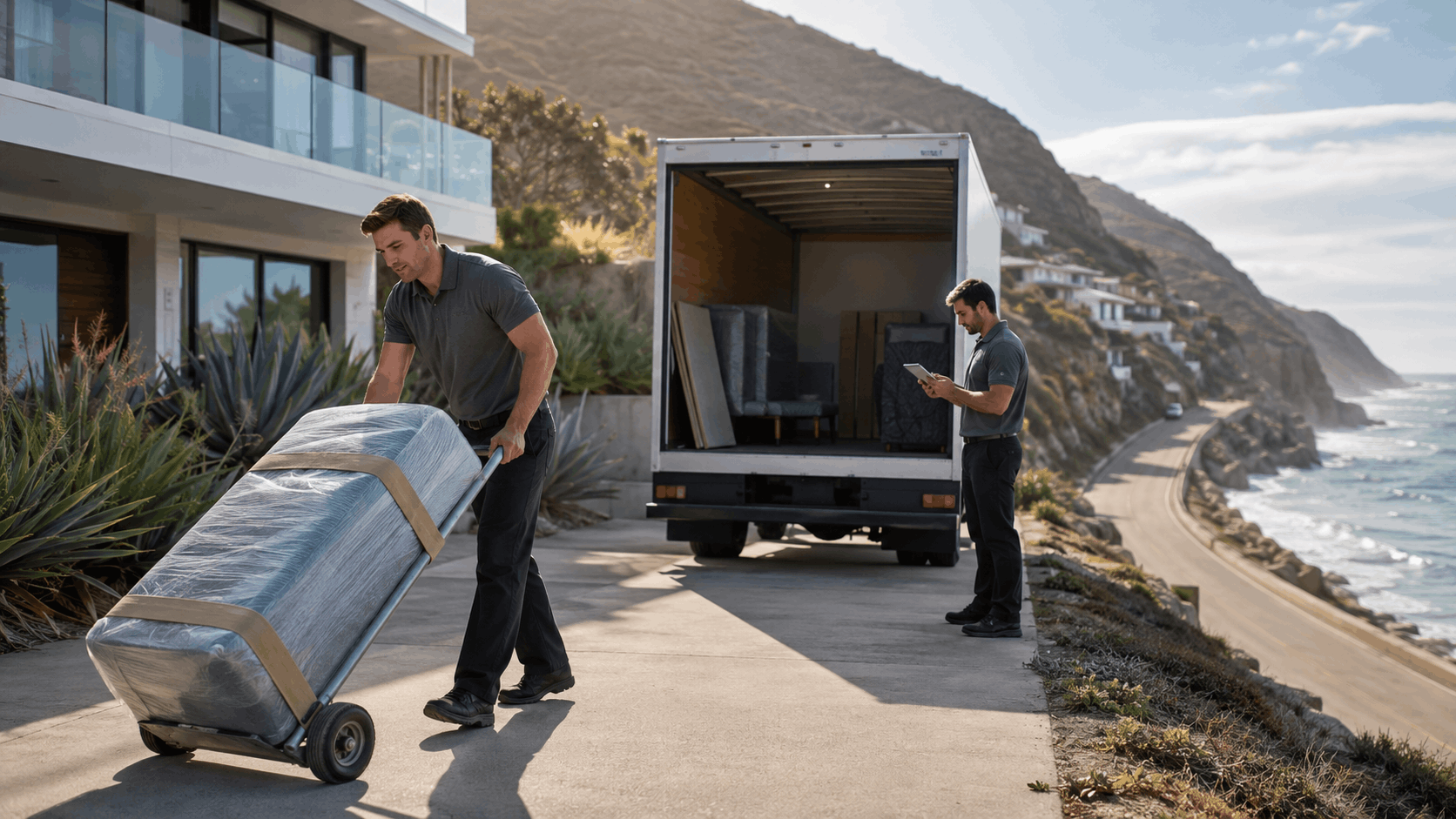
Malibu homes often feature wide-plank wood, natural stone, and custom finishes. One careless drag can leave a costly scratch. Floor protection is standard on every move into Malibu Colony and Point Dume properties.
We lay plywood runners over hardwood and stone in the main traffic paths. Corner guards go on doorframes and stair railings before the first box comes through. Sand on the soles of shoes is a real threat, so we keep entry mats and clean as we go.
High-end finishes near the water also pick up grit from the wind. We wipe down protected surfaces before and after to avoid grinding sand into a floor. Small habits like that keep luxury finishes looking new.
For homes with delicate features, we walk the path with the customer first. Agreeing on which routes to use and what to protect avoids any confusion once the heavy pieces start moving.
Need Help in Los Angeles?
Popeye Moving & Storage serves Los Angeles and all of Los Angeles County.
Gated Communities and HOA Rules in Malibu
Many of Malibu's most sought-after addresses sit behind gates. A gated community adds steps to a move that a public street never would. HOA moving rules can dictate the hours, the paperwork, and even the vehicles allowed inside.
We treat these requirements as part of the booking, not a moving-day surprise. Sorting them out early keeps the crew from waiting at a guard shack while a clock runs. Malibu Colony and a handful of other enclaves each have their own process.
Gate Access at Malibu Colony and Serra Retreat
Private enclaves like Malibu Colony and Serra Retreat control who comes through the gate. Most require a gate code, a guard check-in, or an approved vehicle on a list. Showing up without that clearance means a delay at the entrance.
We gather gate access details from the customer or property manager before the move. The truck plate, crew names, and arrival window often go on an approved list ahead of time. That lets the crew roll straight through instead of arguing with a guard.
Some communities limit how long a truck can sit inside or where it can park. We confirm those limits early so the staging plan fits within the rules. A shuttle may still be needed if the interior streets are tight.
Clear communication with the gate staff goes a long way. A polite, prepared crew with the right paperwork keeps the whole community on our side during a move.
HOA Move-In Windows and Insurance Requirements
Many Malibu HOAs allow moves only during set hours, often weekday business hours with no weekend or evening work. Missing that move-in window can mean rescheduling the whole job. We plan the timeline around those approved hours from the start.
A certificate of insurance is the other common request. The HOA wants proof that the moving company carries proper coverage before a truck enters. We provide that certificate naming the community as required, usually within a day or two of the request.
Some communities also ask for a damage deposit or a walkthrough of common areas before and after. We cooperate with those steps and document the condition of shared hallways and elevators. It protects both the customer and the crew.
Knowing each community's rules ahead of time keeps the move smooth. We ask the right questions during booking so nothing stalls at the gate or the front desk.
Coordinating With Property Managers Ahead of Time
For restricted communities, the property manager is the gatekeeper for paperwork. We reach out as soon as a date is set to start clearing requirements. That booking lead time matters most when a certificate of insurance or an approval form is involved.
We recommend customers loop us in with their property manager early. A quick three-way conversation sorts out hours, insurance, and gate access in one pass. It saves a flurry of last-minute calls the day before the move.
Some managers respond fast, others take several business days. Building that into the schedule keeps a move from slipping. We would rather have approval in hand a week early than chase it the night before.
This coordination is why we ask for community details at booking. The more we know up front, the less friction there is on moving day.
Packing and Storage Services for Malibu Homes
Coastal homes and seasonal residences have packing and storage needs you do not see inland. Salt air, valuable art, and part-time occupancy all shape the plan. Our packing services and storage options are built around how Malibu homes actually get used.
Whether someone lives at the beach full-time or visits for a season, the right prep protects their belongings. From custom crating to climate-controlled storage, the details add up.
Custom Crating for Art, Glass, and Surfboards
Malibu homes are full of items that standard boxes cannot protect. Original art, large glass panels, and surfboards all need a snug fit. Custom crating builds a wood enclosure sized to the exact piece.
Art crating in particular calls for care. We wrap the piece, float it inside the crate with padding, and seal it so it cannot shift in transit. That same method protects mirrors and glass tabletops common in coastal interiors.
Surfboards and other long, awkward items get crates that guard the rails and fins. A loose board in a truck is an easy thing to crack. Our packing and crating team builds the right box for each shape.
Crating costs more than boxing, but for irreplaceable pieces it is worth it. We help customers decide which items truly need a crate and which can travel padded.
Short-Term Storage for Seasonal Residents
Many Malibu homes belong to seasonal residents who come and go. Short-term storage bridges the gap between seasons or during a remodel. Belongings stay safe off-site until the home is ready again.
We offer flexible terms so a part-time resident is not locked into a long contract. Furniture from a closed-up second home can wait in storage through the off months. When the owner returns, we redeliver on schedule.
This option also helps during renovations, which are common in older beach homes. Clearing a space for contractors and storing the contents nearby keeps the project moving. We track inventory so nothing gets lost.
For owners juggling multiple properties, storage simplifies the whole picture. They store what they do not need now and call us when the season turns.
Climate Protection for Salt Air and Humidity
Salt air is hard on belongings. It corrodes metal, dulls finishes, and feeds mildew in humid stretches. Climate protection in storage guards furniture and electronics from that slow damage.
Controlled storage holds steady temperature and humidity. Wood furniture keeps its finish, and electronics avoid the moisture that ruins circuits. For coastal customers, that difference shows over months of storage.
We recommend protected storage for anything sensitive coming out of a beach home. Leather, upholstery, and instruments all hold up better in a controlled space. Our vaulted storage keeps items sealed and stable.
The salt and humidity that wear on a Malibu home do not stop at the storage door. Choosing the right environment is how we keep stored goods in the same shape they went in.
Need Help in Los Angeles?
Popeye Moving & Storage serves Los Angeles and all of Los Angeles County.
What a Malibu Move Costs and How to Plan a Budget
Malibu moving cost runs higher than a flat inland move, and the reasons are practical. Long carries, stairs, shuttle transfers, and travel time all add labor hours. A realistic moving budget accounts for those coastal factors instead of comparing to a city apartment.
We never quote a one-size price for Malibu because no two coastal homes are alike. Instead we explain the factors that drive the number so customers can plan with eyes open.
Why Coastal Access Affects Labor Time
Movers bill for time, and Malibu access eats time. A long carry across sand or 40 stairs to the door slows every trip between truck and home. What takes one trip at a curbside condo takes three at a beach home.
Shuttle transfers add another layer. Loading the main truck, then reloading a smaller shuttle, then unloading at the home means handling items twice. That step protects narrow streets but does add hours to the bill.
Stairs and bluff access also call for larger crews. More hands move heavy pieces safely, but more hands cost more per hour. We size the crew to finish in a reasonable day rather than drag a small team through a hard job.
We explain these factors during the estimate so the labor time makes sense. When customers understand why a coastal move costs more, the number feels fair instead of mysterious.
Seasonal Demand and Booking Early
Malibu schedules fill fast in summer and during fire season. Summer brings the most moves, and fall brings weather uncertainty that bunches dates together. Seasonal demand can leave little room for last-minute requests.
Early booking is the best way to lock a preferred date. Two to four weeks out is a good target, and more during peak months. The earlier we know, the better we can plan the route, crew, and any permits.
Last-minute moves are still possible, and we offer last minute moving help when plans change fast. Still, the best windows on PCH go to the customers who book ahead. Waiting often means a less ideal day or time.
Fire season adds another reason to plan early. Building in flexible dates protects against a Red Flag warning forcing a change. Early booking gives that flexibility room to work.
Getting an Accurate Quote From Popeye Moving & Storage Co.
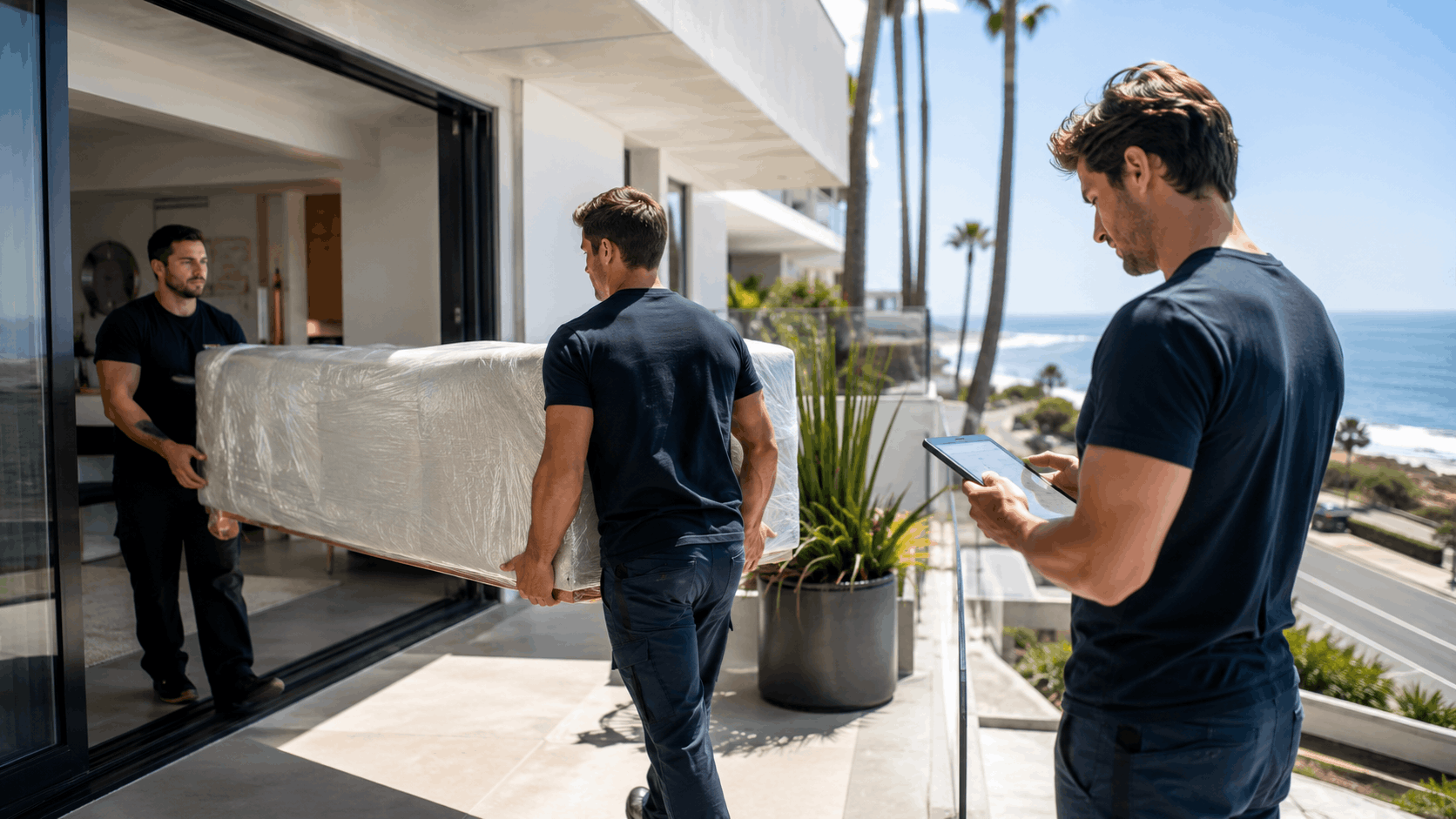
An accurate moving quote starts with seeing the home. We offer an in-home survey or a guided virtual walkthrough for Malibu addresses. Either way, we look at the access, the stairs, the street, and the items.
That survey lets us count the real factors that drive cost. We note the carry distance, shuttle need, crew size, and any crating. The result is a clear estimate instead of a guess that balloons on moving day.
We encourage every Malibu customer to take the survey seriously. Showing us the tricky access points and the special items helps the estimate match reality. Surprises on moving day usually trace back to something not shown in the survey.
Once we have the full picture, we walk through the estimate line by line. Customers leave knowing what they are paying for and why, which is how a coastal move should start.
Final Thoughts
A Malibu move rewards planning more than almost anywhere in Los Angeles. The long PCH stretch, the canyon fire risk, the beach stairs, and the gated enclaves all reward a crew that scouts ahead. With the right timing and the right gear, even a Carbon Beach delivery on a busy day goes smoothly.
Our team works this coast week in and week out, from Topanga to the Ventura County line. We know which streets block a big truck, which canyons offer a way out, and how the tide can shape a carry. That local knowledge is what keeps a coastal move on track.
When you are ready to plan a move into or out of Malibu, reach out to Popeye Moving & Storage Co. for a consultation. Call us or send a message through our contact page, and we will map out a plan built for your address and your timeline.
Frequently Asked Questions
- How early should someone book a Malibu move?
- We recommend booking two to four weeks ahead for most Malibu moves. During summer and fire season, give even more lead time because schedules fill quickly. Early booking lets us plan the route, size the crew, arrange any shuttle, and clear gate or HOA paperwork. It also leaves room to adjust if a Red Flag warning forces a date change. The sooner we know, the smoother the move.
- What is the best time of day to move along PCH?
- Early weekday mornings between 6 and 9 a.m. are best. Traffic on Pacific Coast Highway stays lighter before beachgoers and commuters fill the lanes. Starting early also means cooler temperatures for carrying loads across sand and stairs. We avoid weekend midday entirely because beach traffic near Surfrider and Zuma can lock the road for hours. A Tuesday or Wednesday morning is the ideal window.
- Can a full-size moving truck reach a beachfront home?
- Often it cannot. Many narrow coastal streets near Las Tunas and Big Rock will not fit a 26-foot truck, and they offer no room to turn around. In those cases we stage the main truck at a wider legal spot and use a smaller shuttle vehicle to reach the home. We measure the street during the site visit so the right vehicle shows up the first time, avoiding a stuck rig.
- What happens if a wildfire closes the road on moving day?
- Safety comes first, so we may pause or reschedule a move if conditions turn dangerous. When the main road closes, we use backup canyon routes through Topanga, Kanan Dume, or Las Flores when they are safe and passable. If the home becomes inaccessible, we offer emergency storage so belongings stay secure until the area reopens. We track conditions the morning of every coastal move and build buffer time into the schedule.
- Do gated communities in Malibu have special move rules?
- Yes. Enclaves like Malibu Colony and Serra Retreat usually require a gate code, guard check-in, or an approved vehicle list. Many HOAs also limit move-in hours to weekday business times and request a certificate of insurance before a truck enters. We gather these details at booking and coordinate with the property manager ahead of time. That clears the paperwork early so the crew is not stuck waiting at the gate.
- How are stairs and sand handled at beach homes?
- Crews carry items by hand across sand since dollies sink in soft ground, so we bring extra people for long walkways. For stairways, we use straps and team lifts to bring large pieces down safely without scraping railings. We lay runners on finished surfaces and watch for loose boards on older beach stairs. The crew size is matched to the stair count and carry distance found during the site visit.
- Does salt air damage stored furniture?
- Salt air and coastal humidity can corrode metal, dull finishes, and feed mildew over time. Climate-protected storage holds steady temperature and humidity so furniture, leather, and electronics stay safe. For anything sensitive coming out of a beach home, we recommend a controlled storage space rather than a standard unit. Our vaulted storage keeps items sealed and stable, which matters most over months of seasonal storage.
- Are permits required to park a moving truck on PCH?
- Sometimes. When a truck must occupy part of a public road or a state right-of-way along Pacific Coast Highway, a parking or staging permit may apply. The City of Malibu and Caltrans govern different parts of that network. We handle the coordination and start the process as soon as a date is set, since some offices need several business days to respond. Booking early gives that paperwork time to clear.
- Can valuables like art and pianos be moved safely?
- Yes. We build custom crates sized to original art, large glass, mirrors, and surfboards so they cannot shift in transit. Pianos get special skates, straps, and a trained crew, which matters on beach stairways and bluff access. Our specialty team plans the route in advance, including disassembly and padding for oversized pieces. For irreplaceable items, crating is the safest choice, and we help decide which pieces truly need it.
- Does Popeye Moving & Storage Co. serve all of Malibu?
- Yes. We serve the full 21-mile stretch from the Topanga line to the Ventura County border, including Point Dume, Broad Beach, Carbon Beach, Malibu Colony, and the canyon neighborhoods. Our crews work both eastern and western Malibu and know how differently each end behaves on moving day. From our Los Angeles base, we map every route to the coast, plan staging, and keep a backup canyon route ready.
P
Popeye Moving & Storage Co. Team Team
Licensed moving and storage professionals serving Los Angeles and Los Angeles County.
Licensed in California · License #CAL T 189749 | USDOT 1472924 | MC 498816C
Why trust Popeye Moving & Storage?
Founded in 1994, Popeye Moving & Storage is a licensed and insured moving and storage service serving Los Angeles and Los Angeles County. All content is reviewed by our licensed technicians.

Need Help in Los Angeles?
Popeye Moving & Storage serves Los Angeles and all of Los Angeles County.
Related Articles
How-To Guides
Bel Air Movers: Gated Community Logistics and Custom Estate Service
A local expert guide to moving in Bel Air, covering gated entry logistics, canyon road challenges, estate handling, storage, and how to choose the right movers.
How-To Guides
Hillside Move Logistics: Why Some LA Streets Need Smaller Trucks
Hillside move logistics in LA require smaller trucks, special permits, and careful planning. Learn why canyon streets demand a different approach and how Popeye Moving handles it.
How-To Guides
Pacific Palisades Movers: Bluff and Cliffside Home Logistics
How bluff and cliffside homes in Pacific Palisades change moving logistics - shuttle trucks, long carries, permits, costs, and how Popeye Moving & Storage plans these jobs.