How-To Guides
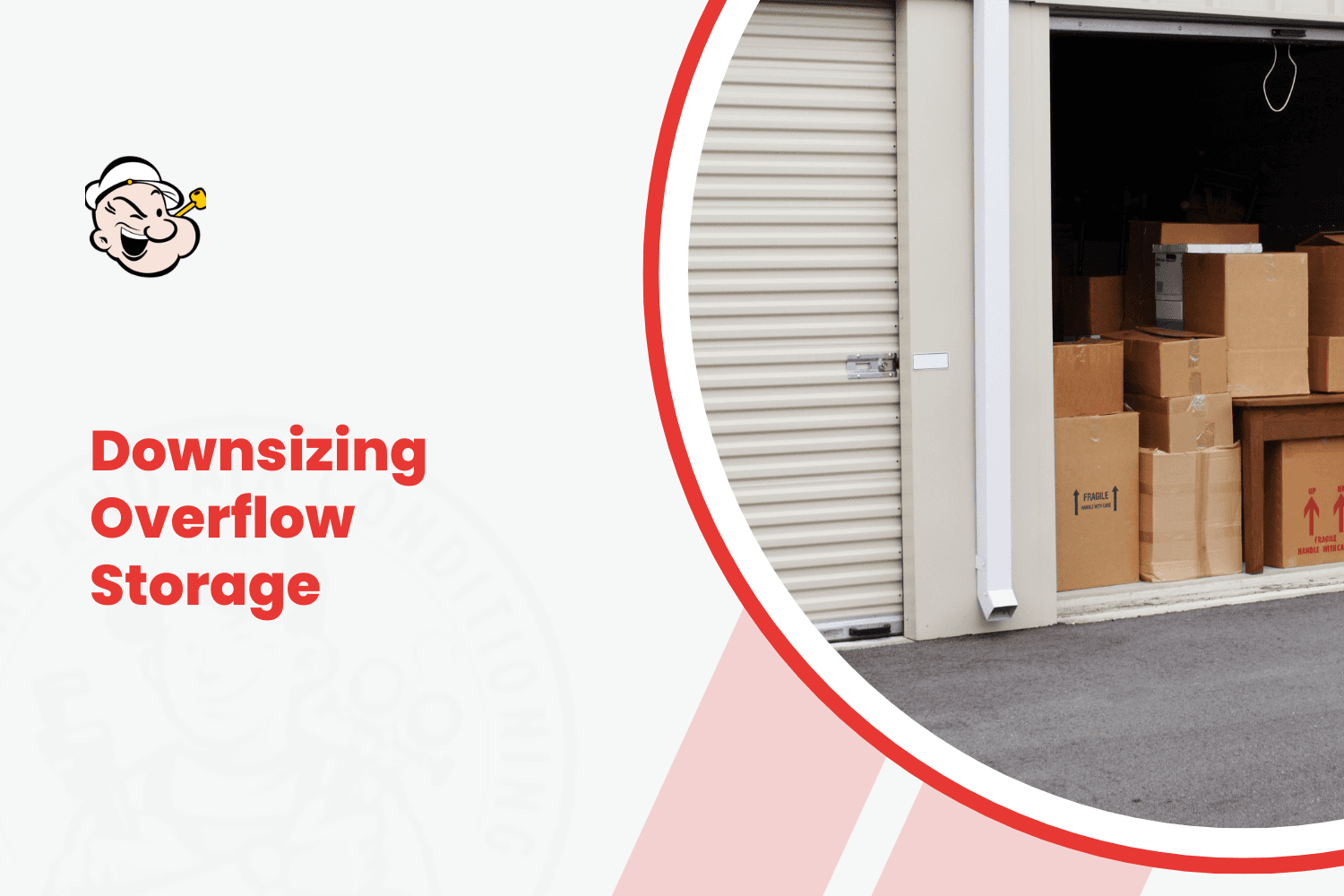
Downsizing Overflow Storage: Keeping the Maybe-Pile Without Keeping the Big House
Key Takeaways
- The maybe-pile of undecided items freezes most downsizing moves, and overflow storage removes that decision paralysis so families can move on schedule.
- Keeping an extra bedroom for boxes in areas like Encino can cost 800 to 1,200 dollars a month, while a storage unit runs 75 to 350 dollars.
- Use the three-bin method (keep, donate, maybe) with a timer per room, and cap the maybe-pile to a set unit size and monthly budget.
- Choose between self-storage and full-service, add climate control for photos and wood in Valley heat, and pick a 5x10 or 10x10 for most maybe-piles.
- Label and inventory every box, protect fragile heirlooms, and stack with aisles so the future sort-through is fast and painless.
- Set a 6 to 12 month deadline, plan a focused sort-through visit, and run the storage cost math to avoid the forever-storage trap.
- Plan around LA specifics like narrow streets in Los Feliz, condo COI and elevator rules, 405 and 101 traffic, and storage facilities on your route.
- Popeye Moving & Storage Co. handles packing, local moving, and flexible short or long-term storage across Los Angeles neighborhoods.
In This Article
A couple in Sherman Oaks called our office last spring. They had already found a smaller condo near Ventura Boulevard, signed the paperwork, and set a closing date. But two weeks before the move, they were still standing in a spare bedroom full of boxes they could not decide about. Grandma's china, a box of the kids' report cards, the camping gear nobody had touched since 2019. They loved the new place. They just could not figure out what to do with the maybe-pile.
That story plays out across the whole city. People want to shrink their footprint and save money, but every item asks a question they are not ready to answer. So they stall. And a stalled downsizing move often turns into no move at all.
Why the Maybe-Pile Stops Most Downsizing Moves
Downsizing sounds simple on paper. Move to a smaller place, cut the clutter, lower the costs. In practice, most people get stuck at the sorting stage. The undecided items pile up, and that pile quietly keeps folks locked in a house that is too big for how they live now.
The good news is that a storage solution removes the pressure. When people know their uncertain items have a safe place to wait, the decluttering process stops feeling like a series of painful goodbyes. Here is why the freeze happens and how storage breaks it:
- Every object carries a memory, a cost, or a maybe-I-will-need-it thought
- Tossing something can feel like tossing part of the past
- People fear regret more than they fear paying to keep things
- A single undecided room can hold up the entire move
What the Maybe-Pile Really Is
The maybe-pile is made up of items that are too meaningful or too uncertain to throw away, yet not needed in daily life. These are the things people set aside and promise to deal with later. Later rarely comes on its own.
Common examples include inherited furniture like a dining set from a parent, a rocking chair from a grandparent, or a bookshelf that has been in the family for decades. Then there are the keepsakes, such as boxes of the kids' art, old trophies, wedding albums, and letters. These sentimental items are hard to price and harder to release.
Seasonal gear rounds out the pile. Holiday decorations, ski equipment, camping tents, and beach umbrellas all take up space but only get used a few weeks a year. In a smaller condo near Studio City, there simply is not room for all of it in a closet.
Naming these categories helps. Once a family sees that most of the maybe-pile is sentimental items and seasonal gear, the sorting job feels less like a moral test and more like a space problem with a clear fix.
The Cost of Keeping a Big House for Boxes
Square footage in Los Angeles is expensive, and people often pay for it just to house boxes. In neighborhoods like Studio City and Encino, an extra bedroom used only for storage can cost real money every month when you break down the rent or mortgage by room.
Consider the math. A three-bedroom rental in Encino might run around 4,500 dollars a month. Divide that by the usable rooms and one spare bedroom can represent 800 to 1,200 dollars of monthly square footage cost. That is a room full of maybe-boxes eating up prime Los Angeles rent.
Now compare that to a storage unit. A 5x5 or 5x10 unit in the Valley often runs 75 to 200 dollars a month depending on size and climate control. A 10x10 room typically lands between 200 and 350 dollars. Even a larger unit costs far less than keeping an extra bedroom.
When the numbers sit side by side, the choice gets clearer. Paying a few hundred dollars for storage solutions beats paying thousands to keep a whole house sized around undecided items.
How Delayed Decisions Slow a Move
One undecided room can push a moving timeline back by weeks. We have watched it happen many times. The kitchen is packed, the bedrooms are ready, but the garage or the office full of maybes brings everything to a halt.
That delay ripples out. Movers get booked for a certain date, and if the home is not ready, the crew cannot load efficiently. A rushed or rescheduled load day adds cost and stress, and it can bump into a closing date on the new place.
Packing delays also stack up. When people reopen the same box three times without deciding, the hours add up fast. A move that should take two days can stretch into a week of half-finished rooms and mounting anxiety.
Closing dates rarely wait. If a family cannot vacate on time because of the maybe-pile, they risk penalties, overlap rent, or losing the new place entirely. Storage cuts that risk by giving the undecided items somewhere to go on moving day.
Why Storage Beats Rushed Choices
A short storage window lets people move on schedule and decide later with a clear head. There is a big difference between choosing under a deadline and choosing on a quiet Saturday months after the dust settles.
Short-term storage takes the pressure off the calendar. The move happens on time, the new home gets set up, and the maybe-pile waits safely until the family has energy to sort again. Moving decisions made in a panic often turn into regret.
We hear the regret stories often. People toss a box of photos or sell a table in the last-minute rush, then wish for months that they had kept it. Things given away in haste cannot be un-given.
Storage flips that risk. Nothing gets thrown out under duress. Later, with the move behind them and a calm mind, most families find the second round of decisions comes far more easily.
Get Your Free Quote
Tell us about your move and we'll get back to you fast.
Sorting Your Belongings Before the Move
Sorting belongings does not have to take weeks or wreck your emotions. A simple declutter system, run room by room with a timer, moves things along fast and cuts the guilt that slows people down.
The goal is speed with a safety net. You make quick calls, and anything you cannot decide goes to a holding spot instead of a landfill. That safety net is what lets people move quickly without fear.
The Three-Bin Method That Actually Works
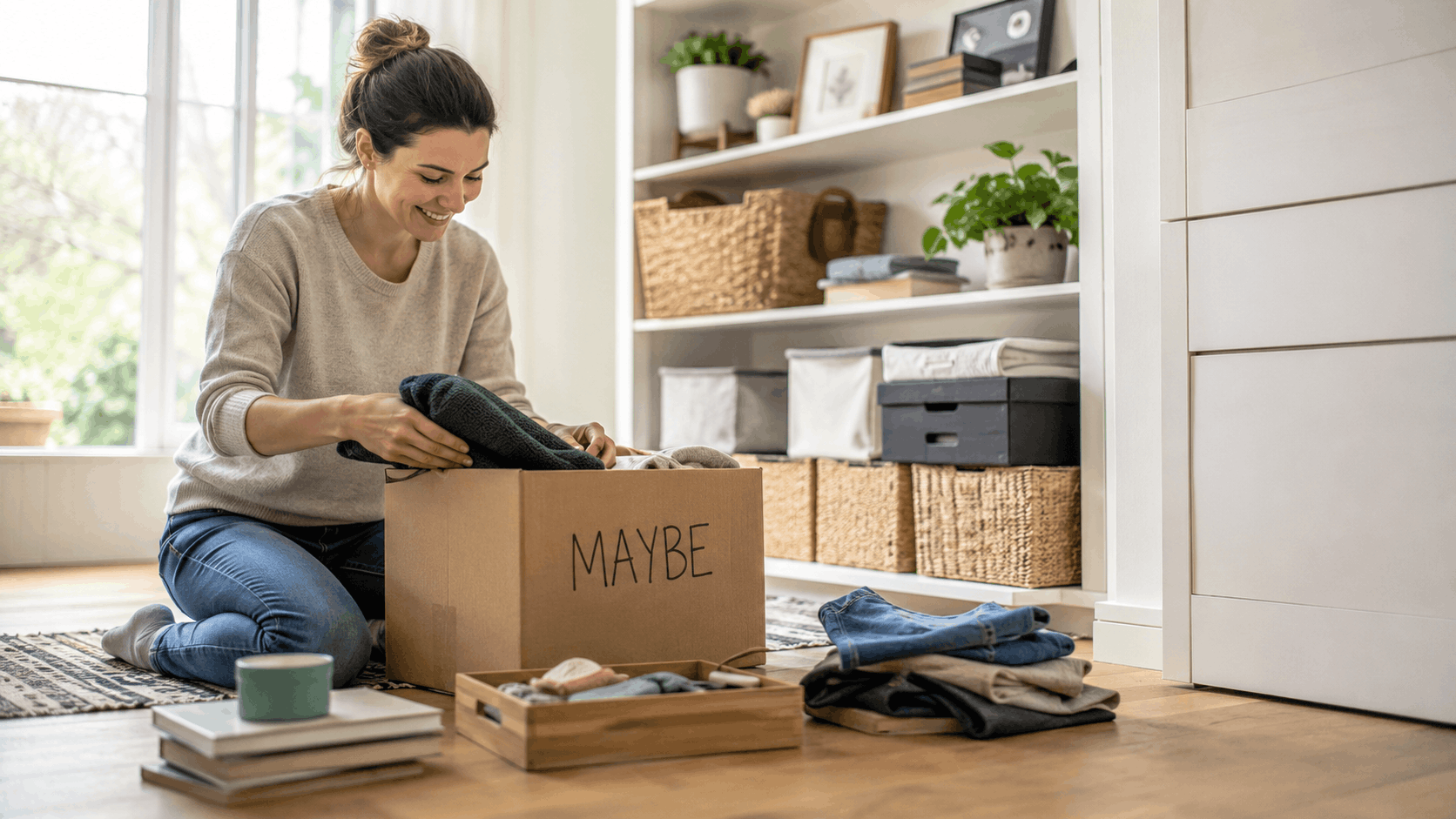
The three-bin method is the backbone of a fast sort. Set up three zones in every room: keep, donate, and maybe. Keep is for what fits and gets used in the new home. Donate is for what someone else can enjoy.
The maybe bin is for anything that stops you for more than a few seconds. Instead of standing there wrestling with a decision, drop it in maybe and keep moving. That single rule prevents the stalling that ruins most sorting sessions.
Set a time limit per room to avoid getting stuck. Give a bedroom 45 minutes, a garage 90 minutes, and a kitchen an hour. When the timer goes off, whatever is undecided goes straight to maybe. Room-by-room sorting with a clock keeps the whole project on track.
Work one room at a time and finish it before starting the next. A completed room gives a sense of progress and keeps the chaos contained, which matters when the moving date is close.
Setting a Size Limit for the Maybe-Pile
The maybe-pile needs a ceiling or it grows forever. The trick is to cap it at what fits inside a chosen storage unit size. If it does not fit, something has to move to keep or donate.
Pick a unit before you sort, or at least a target. A 5x10 unit holds a good number of boxes plus a few furniture pieces. Deciding on that size first forces honest choices during the sort.
Tie the cap to a monthly budget so the cost stays fixed. If a family decides they will spend 150 dollars a month on storage, that budget defines the unit size, and the unit size defines how much can go in the maybe-pile.
This budget cap keeps things realistic. It stops the maybe-pile from ballooning into a warehouse of items nobody will ever revisit, and it turns a fuzzy emotional problem into a clear space equation.
Handling Furniture and Large Items
Big pieces need a different approach than boxes. Before deciding to keep furniture, measure it against the rooms in the new home. A sectional that filled a Sherman Oaks living room may not fit a smaller condo layout at all.
Grab a tape measure and write down the length, width, and height of each large item. Then measure the new rooms and the doorways. Measuring furniture ahead of time saves the pain of hauling a piece across town only to find it will not fit through the door.
Sort large items into three paths: store, sell, or gift. Furniture storage makes sense for meaningful pieces you are not ready to part with, like an heirloom dresser. Sell items with resale value that clearly will not fit, and gift things to family who will use them.
For heavy or awkward pieces, our specialty moving crew can handle the lifting, whether a piece heads to the new home or into a storage unit. Getting the measuring done early makes the whole move smoother.
Where to Donate and Sell in Los Angeles
Los Angeles has plenty of good options for the donate bin. Goodwill locations, including the one near Sunset, take clothing, small furniture, and household goods. Many will provide a receipt for tax purposes.
For items with resale value, the resale shops around Silver Lake and Los Feliz buy vintage furniture, records, and clothing. Selling a few good pieces can even help cover a couple months of storage costs.
Pickup services save time when the donate pile is large. Groups like Habitat for Humanity ReStore and The Salvation Army offer scheduled pickups for furniture and appliances. The EPA offers guidance on donating and recycling goods if you want to keep items out of the landfill.
Schedule any donation pickup before moving day, not after. Pickup slots fill up, especially near the end of the month. Getting the donate items out early clears space and makes packing the keep and maybe piles far easier.
Need Help in Los Angeles?
Popeye Moving & Storage serves Los Angeles and all of Los Angeles County.
Choosing the Right Overflow Storage Setup
Overflow storage comes in different shapes, and picking the right one saves money and hassle. The main storage options split along a few lines: who does the loading, whether the unit is climate controlled, how big it is, and how close it sits to the new home.
Here is a quick comparison to frame the choices before we get into the details:
| Factor | Budget Option | Convenience Option |
|---|---|---|
| Loading | Self-storage, you load | Full-service, crew loads |
| Climate | Standard unit | Climate-controlled |
| Size | 5x5 to 5x10 | 10x10 or larger |
| Access | Drive to facility | Near new home or door delivery |
Self-Storage Versus Full-Service Storage
Self-storage means renting a unit and loading it yourself. You get a key or code, drive over with your boxes, and stack everything on your own schedule. It usually costs less per month, but it takes your time and muscle.
Full-service storage flips the work to the movers. A crew packs, picks up, and stores your items in a secured facility, then brings them back when you ask. You trade a higher cost for far less effort on your end.
The right pick depends on the situation. A younger family with a few boxes and a free weekend may do fine with self-storage. An empty-nester downsizing from a large home, or anyone short on time, often finds full-service worth every dollar.
Our team offers both approaches through our long-term storage and short-term options, so families can match the service to their budget and energy level.
When Climate Control Matters in LA
Valley heat is no joke. In areas like Van Nuys and Reseda, summer temperatures inside a standard metal storage unit can climb well past 100 degrees. That heat warps wood, melts candles, and cracks vinyl records.
Photos and paper suffer the most. Heat and humidity swings cause pictures to stick together, curl, and fade. Old letters and documents grow brittle. For irreplaceable items, climate-controlled storage is the safer call.
Climate control keeps the unit within a steady temperature range, usually between 55 and 80 degrees, and manages humidity. It costs more per month, often 25 to 50 percent above a standard unit, but it protects things that cannot be replaced.
Not everything needs it. Patio furniture, tools, and plastic bins of holiday decorations can live in a standard unit. Reserve climate-controlled space for wood furniture, electronics, photos, artwork, and heat damage-prone heirlooms.
Picking the Right Unit Size
Renting too much space wastes money, and renting too little means a second trip. A quick size guide helps. A 5x5 storage unit is about the size of a small closet and holds a dozen or so boxes plus a few small items.
A 5x10 unit fits the contents of a studio, roughly the boxes and furniture from one room. A 10x10 room holds the contents of a couple of rooms, including a sofa, mattress, and a stack of boxes. A 10x15 or 10x20 handles a full multi-bedroom home.
For most maybe-piles, a 5x10 or 10x10 does the job. That is enough for the sentimental boxes, a few furniture pieces, and seasonal gear without paying for empty air.
When in doubt, size down and pack smart. A well-organized 5x10 can hold more than a sloppy 10x10. Our estimators can help match your pile to a unit size before you commit to a monthly rate.
Access and Location Near Your New Home
Location shapes how often people actually use their unit. A facility close to the new home along a route you drive anyway, like the 101 or the 405, makes a quick visit easy. A unit across town gets ignored.
Think about your real habits. Most families visit a storage unit only a handful of times, usually to grab a seasonal item or during the final sort-through. Even so, a nearby unit removes the excuse to never go.
Check the access hours and gate policies too. Some facilities allow 24-hour access, while others close in the evening. If you plan to visit after work, confirm the hours match your schedule.
For families settling on the Westside, a unit near Culver City or Santa Monica keeps drive time short. For Valley moves, a spot off the 101 near Sherman Oaks or Studio City works well.
Packing the Maybe-Pile So You Can Actually Decide Later
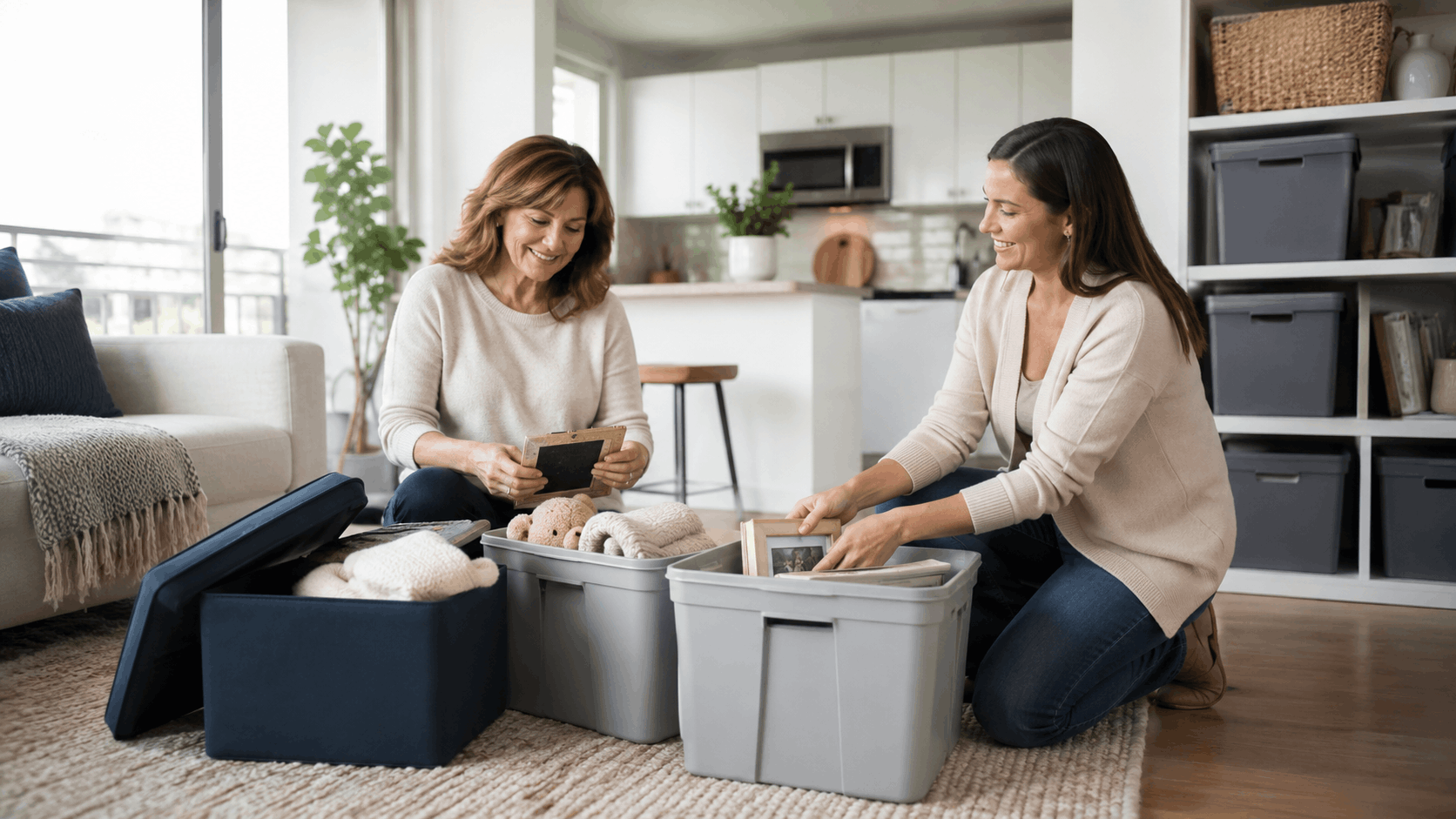
Good packing tips make future decisions easy. Bad packing turns the maybe-pile into a wall of mystery boxes nobody wants to open. The whole point of storing undecided items is to revisit them, so pack with that day in mind.
Labeling boxes and keeping a simple inventory changes everything. When people know what is in each box without opening it, the second sort goes fast and painless.
Labeling and Inventory Lists
Number every box and label the outside with the room it came from and a few main contents. A box marked "12 - Garage - camping gear, tent, lantern" tells the whole story at a glance.
Keep a matching box inventory on your phone. A simple notes app or spreadsheet listing each numbered box and what is inside works fine. This labeling system means you never have to dig through six boxes to find one item.
Photos help even more. Snap a quick picture of the open box before sealing it and attach it to the inventory entry. When the sort-through day arrives, a glance at the list tells you what to pull first.
This small effort at packing time pays off hugely later. Families who skip it end up reopening every box during the final sort, which is exactly the slow, frustrating slog storage was meant to avoid.
Protecting Fragile and Sentimental Items
Fragile packing protects the items you are most afraid to lose. Wrap photos in acid-free paper or sleeves and store them flat in sturdy boxes, never loose where they can bend or stick together.
Dishes and glassware need individual wrapping in packing paper, stacked plates on edge rather than flat. Heirlooms like a china set or a framed painting deserve extra padding and, when needed, a custom crate for the trip and the storage stay.
LA humidity swings can be rough on delicate items. Use plastic bins with tight lids for paper goods and add silica gel packets to fight moisture. For wood furniture, a breathable furniture blanket beats plastic, which can trap dampness.
Protecting heirlooms the right way means they come out of storage in the same shape they went in. Our full-service packing team uses proper materials for exactly this kind of long-term protection.
Stacking for Easy Access Later
How you stack the unit decides how easy the sort-through will be. Leave an aisle down the middle so you can reach the back without unloading the front. A packed-solid unit forces you to empty everything just to find one box.
Put the likely-keep items and things you may need sooner near the front. Seasonal gear you know you will grab, like holiday decorations, belongs where you can reach it fast. Deep maybe items can go toward the back.
Heavy boxes go on the bottom, lighter ones on top. Furniture stands against the walls, and you can slide boxes into open spaces like dresser drawers to use every inch. Good storage layout protects items and saves space.
Thinking about box stacking ahead of time means the unit works like a small, organized room rather than a black hole. When decision day comes, everything is reachable and the sort moves quickly.
How Our Team Packs and Moves the Overflow
Our crew handles the whole overflow process across Los Angeles, from packing the boxes to hauling them and loading the storage unit. We bring the supplies, including boxes, paper, bubble wrap, blankets, and tape, so families do not have to scramble for materials.
On packing day, the team wraps fragile and sentimental items with proper technique, labels boxes clearly, and builds an inventory as they go. This packing service saves days of work for a busy household mid-move.
Then the moving crew loads the truck and delivers everything to the storage unit or facility. We stack for access, leaving aisles and placing likely-keep items up front, so the future sort-through is simple.
Whether the job is a small condo in Studio City or a large family home in Encino, we scale the crew and truck size to fit. Families in local residential moving jobs get the same care whether items head to the new home or into overflow storage.

Setting a Deadline for the Maybe-Pile
Storage should be a pause, not a permanent home for clutter. Without a storage deadline, that monthly fee quietly runs for years, and the maybe-pile becomes a forgotten expense. A plan to revisit belongings on a schedule keeps things honest.
The idea is simple. Give yourself a fixed window to decide, then follow through with a real sort-through visit. That structure turns storage from a stalling tactic into a genuine step forward.
The 6 to 12 Month Rule
A 6 to 12 month review window works for most families. It gives enough time to settle into the new home and see what they actually miss, without dragging on so long that the pile is forgotten.
Six months is often enough after a straightforward downsizing. A year makes sense for larger moves or when an estate is involved and grief makes early decisions too hard. The 6 month rule gives a clear starting checkpoint.
Here is the honest signal to watch for. If a box has sat sealed and unopened for the whole storage review window, that is a strong sign the items inside are ready to be released. You did not need them, and you did not even look.
Set a calendar reminder the day you rent the unit. When the date arrives, it is time to visit and sort, not to quietly renew for another year without thinking.
Scheduling a Sort-Through Visit
Plan a single focused visit to the unit with clear goals. Block out a few hours, bring water, and go in knowing you will make final calls this time, not just look around and leave.
Bring a friend or family member. A second person keeps you moving, offers an honest opinion on sentimental items, and helps carry things. A little company makes the whole storage visit less heavy.
Bring a car with room for donations. The plan is to leave with fewer items than you arrived with. Use the box inventory to pull the unopened boxes first, since those are the easiest calls.
Work the sort-through with the same three-bin logic as before: keep and bring home, donate and load the car, or repack for a short final extension. Set a hard stop so the visit does not turn into another round of stalling.
Signs an Item Should Go
Some signals make the second-round decisions faster. The clearest one is not remembering you owned it. If you open a box and are surprised by what is inside, you have lived fine without it.
Duplicates are another easy call. Two blenders, three sets of dishes, or a spare of anything you already use daily can go. The new smaller home has no room for backups you will never reach for.
Damaged or outdated items are also decluttering signs pointing to the donate or toss pile. Broken electronics, worn furniture, and clothes that no longer fit have quietly become clutter, not keepsakes.
Letting go gets easier the second time. With the move behind you and a clear head, the items that truly matter stand out, and the rest reveal themselves as things you were only keeping out of habit.
Avoiding the Forever-Storage Trap
The forever-storage trap is real and expensive. People pay for years to keep items worth less than the accumulated rent. A little storage cost math shows why a deadline matters so much.
Say a unit runs 200 dollars a month. Over three years that is 7,200 dollars. If the boxes hold a few hundred dollars of replaceable goods and some sentimental items, the numbers stop making sense fast.
Sentimental value is real, and some things are worth keeping for life. The trap is not keeping meaningful items. It is paying month after month for boxes you never open and cannot even remember packing.
Run the math at your review date. Compare the yearly storage cost against what it would cost to replace the practical items inside. That honest comparison usually makes the decision for you.
Need Help in Los Angeles?
Popeye Moving & Storage serves Los Angeles and all of Los Angeles County.
Downsizing Challenges Specific to Los Angeles Homes
Los Angeles downsizing comes with local wrinkles that a national moving guide will not mention. Tight streets, strict building rules, brutal traffic, and scattered storage facilities all shape how a local moving day plays out.
Here is a quick look at the main local challenges and how to handle each one:
| Challenge | Where It Shows Up | How to Handle It |
|---|---|---|
| Narrow streets and parking | Los Feliz, Highland Park | Reserve parking, get a permit early |
| Building move-out rules | Downtown, Marina del Rey | Book elevator, provide COI |
| Traffic timing | 405 and 101 corridors | Move mid-morning on a weekday |
| Storage drive time | Valley vs Westside | Pick a facility on your route |
Parking and Narrow Streets in Older Neighborhoods
Older neighborhoods like Los Feliz and Highland Park have charm and narrow streets in equal measure. A large moving truck cannot always park right out front, and the hilly, tight roads make maneuvering slow.
Moving truck parking often needs planning. In many parts of the city, you can reserve curb space or get a temporary no-parking permit from the LA Department of Transportation. The LADOT website covers how temporary permits work.
Timing matters too. On narrow streets, an early start beats the afternoon when neighbors are home and every space is taken. We scout the route ahead of time on tricky jobs.
When a big truck simply cannot reach the door, our crew uses a smaller shuttle vehicle to carry items from the home to the truck. That keeps the move going even on the toughest streets in the older parts of town.
Apartment and Condo Move-Out Rules
Apartments and condos come with their own rulebook. Buildings in Downtown and Marina del Rey often require reserving the freight elevator in advance and moving only during set hours. Miss the reservation and the whole day can fall apart.
HOA move-out rules add another layer. Many communities require a certificate of insurance, or COI, from the moving company before allowing the crew inside. This document proves the movers carry liability coverage.
Our office handles COI requests as a normal part of condo moving jobs. We just need the building's requirements and management contact, and we send the paperwork over ahead of the move date.
Check with the building manager early, at least two weeks out. Confirm elevator hours, loading dock rules, and any deposit. Sorting this before the day avoids fines and last-minute scrambling.
Traffic Timing Between Old and New Homes
LA traffic can double the drive time between an old home and a new one. A move that crosses the 405 or runs along the 101 during rush hour turns a 20-minute hop into an hour of stop-and-go.
Plan the move around the traffic windows. The worst times are roughly 7 to 10 in the morning and 3 to 7 in the evening. A mid-morning start, around 9 or 10, often threads the needle between rush hours.
Weekdays beat weekends for local moves in many parts of the city, since weekend errands and events clog side streets. Move timing also affects heat, so a morning finish beats loading a truck in the afternoon sun.
We map the best window based on the specific old and new addresses. A move from the Valley to the Westside gets a different plan than a short hop within Pasadena.
Storage Facility Access Across the City
Where the storage facility sits changes the whole day. A Valley resident storing items on the Westside adds a long cross-town haul, while a facility near the new home keeps drive time short and costs lower.
Think about the whole route on moving day. The truck has to reach the old home, the new home, and the storage facility. Picking storage facility access that fits that triangle saves hours and fuel.
Westside storage works well for families landing in Santa Monica, Culver City, or Marina del Rey. Valley facilities near the 101 suit those settling in Sherman Oaks, Studio City, or Encino.
We help clients choose a facility that fits their route and their new home. A little planning here means fewer miles, less traffic, and a smoother handoff of the overflow boxes.

How Popeye Moving & Storage Co. Helps With the Whole Process
Popeye Moving handles every step of a downsizing move, from the first box to the last item in storage. Our moving and storage services fit together so families do not have to juggle multiple companies during an already busy time.
Here is how our services line up with the downsizing process:
| Service | What It Covers | Best For |
|---|---|---|
| Local moving | Packing, loading, transport | The move itself |
| Storage | Short and long-term units | The maybe-pile |
| Estimates | Volume and distance pricing | Planning and budgeting |
Local Moving and Loading Services
Our local movers cover neighborhoods across Los Angeles, from the Valley to the Westside to the beach cities. Crews handle packing, careful loading, and transport, treating each home with the attention it deserves.
We match the crew and truck size to the job. A one-bedroom condo move needs a smaller team and truck, while a large family home downsizing calls for a bigger crew and a full-size truck plus a shuttle when streets are tight.
Loading service is where experience shows. Proper loading protects furniture, prevents shifting in transit, and packs the truck efficiently so fewer trips are needed. Our crews load with both speed and care.
Whether the destination is a smaller home, a storage unit, or both, our team keeps the day organized. Families moving within areas like Burbank get local crews who know the streets and building rules.
Storage Options for the Maybe-Pile
Our storage service covers both short and longer timelines, which suits the maybe-pile perfectly. Families who need a few months while they settle in can use short-term storage, and those who need a year can extend without hassle.
Every stored item gets tracked with an inventory so nothing gets lost. When a family wants to retrieve a box or two, we can locate items quickly rather than making them dig through a packed unit.
Flexible storage timelines matter for undecided items. There is no pressure to commit to a fixed long-term contract when the whole point is to decide later. Families adjust the timeline as their plans firm up.
For businesses downsizing an office alongside a home, we also offer commercial and business storage. The same care and tracking apply whether the items are household or work-related.
Getting an Estimate and Planning Your Move
A moving estimate is based mainly on volume and distance. The more items and the farther the move, the higher the cost. Storage adds a monthly rate based on the unit size and whether it is climate controlled.
To get an accurate quote, gather a few details first. A rough count of rooms and large furniture, the old and new addresses, and any storage needs give us enough to work with. Photos of the home help too.
Move planning goes smoother when building rules and dates are known early. Note any elevator reservations, HOA requirements, or permit needs so we can build them into the plan from the start.
Reach out through our contact page for an estimate and a walkthrough of the process. We will map out the packing, the move, and the storage so the whole downsizing job feels manageable.
Need Help in Los Angeles?
Popeye Moving & Storage serves Los Angeles and all of Los Angeles County.
Final Thoughts
Downsizing does not have to mean losing the things that matter, and it does not have to stall over a pile of maybes. Overflow storage lets families move on schedule, shrink the house, and keep the undecided items safe until a calm day arrives to sort them.
The path is clear. Sort fast with the three-bin method, cap the maybe-pile to a budget and unit size, pack and label so future decisions are easy, and set a real 6 to 12 month deadline so storage stays a pause. Along the way, plan around LA's tight streets, building rules, and traffic.
When the time comes, our team can handle the packing, the move, and the storage so the whole thing feels manageable. Call Popeye Moving & Storage Co. for a consultation, and let us help keep the maybe-pile without keeping the big house.

Frequently Asked Questions
Below are answers to the questions we hear most often about downsizing and overflow storage in Los Angeles. This FAQ covers cost, timing, unit sizes, and the decisions that trip people up.
What is overflow storage during a downsizing move?
Overflow storage is a rented space for items that do not fit the new smaller home yet, or that a family is not ready to decide about. It holds sentimental items, seasonal gear, and extra furniture during the move. Its role is to ease the transition by letting people move on schedule without forcing a snap judgment on every belonging they own.
How much does a storage unit cost in Los Angeles?
In Los Angeles, a small 5x5 unit runs roughly 75 to 125 dollars a month, a 5x10 around 125 to 200, and a 10x10 about 200 to 350. Climate-controlled units cost 25 to 50 percent more. Location matters too, with Westside and central facilities often pricier than spots in the Valley. Unit size and climate control drive most of the price difference.
How long should I keep my maybe-pile in storage?
A 6 to 12 month window works for most families. Six months suits a straightforward downsizing, while a year fits larger moves or estate situations that need more time. That range gives you enough time to settle into the new home and see what you truly miss. Avoid open-ended storage, since unopened boxes and endless monthly fees add up fast.
What size storage unit do I need for a maybe-pile?
Most maybe-piles fit in a 5x10 or 10x10 unit. A 5x10 holds around 20 to 30 boxes plus a few small furniture pieces. A 10x10 handles the contents of two rooms, including a sofa and a mattress. Pack smart with good stacking to avoid renting more space than you need and overpaying month after month.
Do I need climate-controlled storage in LA?
Climate control is worth it for heat- and moisture-sensitive items. Valley heat in areas like Van Nuys can push standard units past 100 degrees, which warps wood and damages photos. Store artwork, wood furniture, electronics, records, and paper keepsakes in a climate-controlled unit. Tools, patio furniture, and plastic bins of decorations can safely stay in a standard unit and save you money.
Can movers pack and store my items for me?
Yes. Full-service moving and storage means a crew packs your belongings, transports them, and stores them in a secured facility, then returns them when you ask. Our team brings the supplies, wraps fragile items, builds an inventory, and loads the unit for easy access later. You trade a higher cost for far less time and effort, which suits busy or larger households well.
How do I decide what to keep versus store?
Use the three-bin method: keep, donate, and maybe. Keep what fits and gets used in the new home. Donate what someone else can enjoy. Send anything you cannot decide on to the maybe-pile for storage. If an item is a clear duplicate, damaged, or something you cannot picture in the new space, it goes to donate rather than into a storage unit.
What is the best time to move in Los Angeles?
Weekdays beat weekends for local LA moves, and a mid-morning start around 9 or 10 avoids the worst 405 and 101 rush hours. Mid-month scheduling is often cheaper and easier to book than the crowded end of the month. A morning finish also keeps the crew out of the afternoon heat, which matters during Valley summers.
How far in advance should I book movers and storage?
Book two to four weeks ahead for most moves, and four to six weeks during the busy summer season and end-of-month rush. If your building requires an elevator reservation or you need a street parking permit, plan even earlier. Early booking also gives time to arrange storage, gather COI paperwork, and choose a facility that fits your route.
What happens to items I never claim from storage?
At the end of your storage period, you can donate the items, sell them, or clear the unit through the facility. Scheduling a donation pickup handles the bulk in one trip. The main lesson is to set a deadline and act on it, since endless storage means paying month after month for things worth less than the accumulated rent.
Frequently Asked Questions
- What is overflow storage during a downsizing move?
- Overflow storage is a rented space for items that do not fit the new smaller home yet, or that a family is not ready to decide about. It holds sentimental items, seasonal gear, and extra furniture during the move. Its role is to ease the transition by letting people move on schedule without forcing a snap judgment on every belonging they own.
- How much does a storage unit cost in Los Angeles?
- In Los Angeles, a small 5x5 unit runs roughly 75 to 125 dollars a month, a 5x10 around 125 to 200, and a 10x10 about 200 to 350. Climate-controlled units cost 25 to 50 percent more. Location matters too, with Westside and central facilities often pricier than spots in the Valley. Unit size and climate control drive most of the price difference.
- How long should I keep my maybe-pile in storage?
- A 6 to 12 month window works for most families. Six months suits a straightforward downsizing, while a year fits larger moves or estate situations that need more time. That range gives you enough time to settle into the new home and see what you truly miss. Avoid open-ended storage, since unopened boxes and endless monthly fees add up fast.
- What size storage unit do I need for a maybe-pile?
- Most maybe-piles fit in a 5x10 or 10x10 unit. A 5x10 holds around 20 to 30 boxes plus a few small furniture pieces. A 10x10 handles the contents of two rooms, including a sofa and a mattress. Pack smart with good stacking to avoid renting more space than you need and overpaying month after month.
- Do I need climate-controlled storage in LA?
- Climate control is worth it for heat- and moisture-sensitive items. Valley heat in areas like Van Nuys can push standard units past 100 degrees, which warps wood and damages photos. Store artwork, wood furniture, electronics, records, and paper keepsakes in a climate-controlled unit. Tools, patio furniture, and plastic bins of decorations can safely stay in a standard unit and save you money.
- Can movers pack and store my items for me?
- Yes. Full-service moving and storage means a crew packs your belongings, transports them, and stores them in a secured facility, then returns them when you ask. Our team brings the supplies, wraps fragile items, builds an inventory, and loads the unit for easy access later. You trade a higher cost for far less time and effort, which suits busy or larger households well.
- How do I decide what to keep versus store?
- Use the three-bin method: keep, donate, and maybe. Keep what fits and gets used in the new home. Donate what someone else can enjoy. Send anything you cannot decide on to the maybe-pile for storage. If an item is a clear duplicate, damaged, or something you cannot picture in the new space, it goes to donate rather than into a storage unit.
- What is the best time to move in Los Angeles?
- Weekdays beat weekends for local LA moves, and a mid-morning start around 9 or 10 avoids the worst 405 and 101 rush hours. Mid-month scheduling is often cheaper and easier to book than the crowded end of the month. A morning finish also keeps the crew out of the afternoon heat, which matters during Valley summers.
- How far in advance should I book movers and storage?
- Book two to four weeks ahead for most moves, and four to six weeks during the busy summer season and end-of-month rush. If your building requires an elevator reservation or you need a street parking permit, plan even earlier. Early booking also gives time to arrange storage, gather COI paperwork, and choose a facility that fits your route.
- What happens to items I never claim from storage?
- At the end of your storage period, you can donate the items, sell them, or clear the unit through the facility. Scheduling a donation pickup handles the bulk in one trip. The main lesson is to set a deadline and act on it, since endless storage means paying month after month for things worth less than the accumulated rent.
P
Popeye Moving & Storage Co. Team Team
Licensed moving and storage professionals serving Los Angeles and Los Angeles County.
Licensed in California · License #PUC: CAL T 189749 | DOT: 1472924 | MC: 498816C
Why trust Popeye Moving & Storage?
Founded in 1994, Popeye Moving & Storage is a licensed and insured moving and storage service serving Los Angeles and Los Angeles County. All content is reviewed by our licensed technicians.

Need Help in Los Angeles?
Popeye Moving & Storage serves Los Angeles and all of Los Angeles County.
Related Articles
How-To Guides
Deployment Storage for Military Households Shipping Out of LA: Long-Hold Protocols and Power-of-Attorney Access
A complete guide to deployment storage for LA military households, covering long-hold protocols, climate control near the Port, power-of-attorney access, costs, and pickup logistics.
How-To Guides
How to Move Out of a Los Angeles Rent-Controlled Apartment Without Losing Your Deposit
Learn how to move out of an LA rent-controlled apartment without losing your security deposit - covering RSO rules, documentation, cleaning, and damage prevention.
Tips & Advice
Storage While House-Hunting in LA: Moving Out Decisively Without Buying Under Pressure
Sold your LA home before finding the next one? Learn how short-term storage lets house-hunters slow down, shop wisely, and move once without buying under pressure.