How Much Does a Three-Bedroom Move Cost in Bungalow Heaven?

Planning a Move? Contact Us Now
Free estimates. Licensed and insured movers.
Get Your Free Quote
Tell us about your move. We'll be in touch soon.
Key Takeaways
- Local moves run $150 to $200 per hour for a two-person crew and truck, and a three-bedroom home usually needs a larger crew and more hours; full-service packing runs $600 to $1,500.
- Front steps, porch turns, narrow original doorways and attic or garage contents add hours that never appear on an inventory, so the route often decides the time more than the box count.
- A moving vehicle 25 feet or less needs no Pasadena permit, while 26 feet or over does; applications go in 10 days prior and a traffic review is required for all requests.
- Popeye has insurance on file with the City of Pasadena, qualifying for the two working day permit minimum instead of the two weeks required of others.
- California intrastate default liability is up to $20,000 of actual cash value; the 60 cents per pound figure is only the rate basis, so full value protection is the responsible choice for antiques and art glass.
- The Not To Exceed price in the written Agreement caps the bill before anything is loaded, and a verbal quote is not binding.
- California bills local hourly moves on double drive time, charging travel between homes at twice the actual driving time, so start time and route matter.
- Popeye holds CAL T 189749, USDOT 1472924 and MC 498816C, is fully insured and BBB accredited with an A+ rating, and household moving in California is regulated by the BHGS, not the CPUC.
In This Article
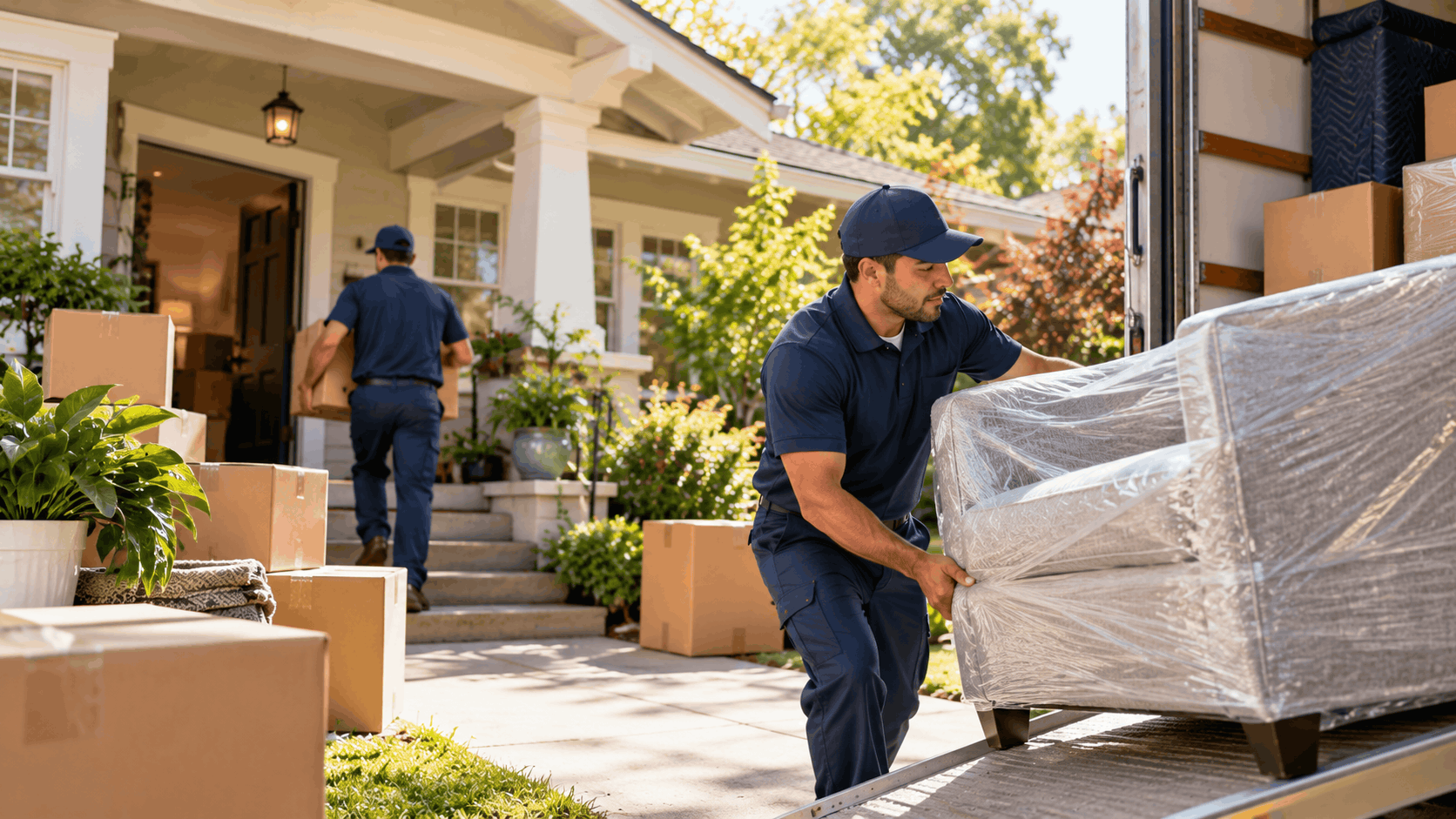
Picture a family carrying boxes down the front steps of a Craftsman bungalow near McDonald Park, pausing at the porch turn to angle a bookcase through a narrow original doorway. That scene plays out across Bungalow Heaven every moving season, and the first question is almost always the same: what will this cost? For a local move inside Pasadena, most households pay between $150 and $200 per hour for a two-person crew and truck, and full-service packing for a three-bedroom home runs $600 to $1,500.
A three-bedroom bungalow usually needs a larger crew and more hours than that base rate suggests, because the houses themselves add time. Front steps, porch turns, narrow doorways, and a permit question on larger trucks all move the number before anyone opens a box.
What a Three-Bedroom Move Actually Costs in Bungalow Heaven?
Bungalow Heaven sits in north-central Pasadena, roughly between Washington Boulevard, Orange Grove Boulevard, Lake Avenue, and Hill Avenue. It holds one of the largest concentrations of early twentieth century Craftsman bungalows in the region, and that housing stock shapes what a three-bedroom move costs here more than almost anything else.
A three-bedroom job inside Pasadena usually means a full day of work, a crew of several movers, careful wrapping of finished surfaces, and often some specialty handling for pianos or period light fixtures. Here are the typical area ranges you can use to plan.
| Service | Typical Range |
|---|---|
| Local residential moving (two-person crew and truck) | $150 to $200 per hour |
| Full-service packing (three-bedroom) | $600 to $1,500 |
| Unpacking | $50 to $75 per hour per crew member |
| Piano moving | $200 to $600 |
| Chandelier moving | $150 to $450 |
| Fine art and antique moving | $300 to $1,200+ |
| Custom crating | $150 to $800+ per crate |
| Furniture assembly and disassembly | $75 to $200 for standard items |
| Vaulted storage | $60 to $90 per vault per month |
These are typical market ranges for the Los Angeles area, not a fixed price from us. The final figure for your move depends on your home, your belongings, and the access at both ends.
The Typical Hourly Range for a Local Pasadena Move
Local residential moving runs $150 to $200 per hour for a two-person crew and truck. That base rate is the starting point, and it describes the smallest standard crew. A three-bedroom house almost always calls for more hands than two, because the volume of furniture and boxes is simply too much for a pair to clear in a reasonable day.
When the crew grows to three or four movers, the hourly rate rises but the total hours usually drop. More people carrying at once means the truck loads faster, so a bigger crew often finishes a large home for a similar or lower total than a small crew grinding through the same load. The math depends on the house and the inventory.
In a Bungalow Heaven home, crew size also matters for safety. Getting a heavy dresser down a flight of front steps and around a porch post needs two or three people controlling the piece, not one. A larger team handles those pinch points without rushing, which protects both the furniture and the original woodwork.
We size the crew to the job during the survey rather than guessing. For residential moving in older Pasadena housing, that assessment is what keeps the clock honest and the quote accurate.
Packing a Three-Bedroom Bungalow
Full-service packing for a three-bedroom home runs $600 to $1,500, and unpacking is charged at $50 to $75 per hour per crew member. Packing is priced separately from the move itself because it is a distinct labor and materials job, often done the day before the truck arrives.
Older bungalows change the packing picture in ways newer homes do not. Built-in cabinetry and window seats that stay with the house are full of dishes, linens, and keepsakes that need wrapping. Leaded and art glass in doors and windows is part of the house, but the loose decorative glass, framed art, and period ceramics inside need slow, deliberate protection.
That careful wrapping is where the hours in a packing job collect. A box of books is quick. A china cabinet full of a long-tenured owner's collected pieces is not, and these homes tend to hold decades of accumulation.
Many customers pack their own clothing and books and hire us for the fragile rooms. Our full-service packing team can handle the whole house or just the kitchen and the display pieces, whichever fits the budget.
What Pushes the Number Up or Down
The biggest cost drivers in a Bungalow Heaven move are not on the inventory sheet. Raised foundations mean a flight of front steps up to a deep porch. Low porch roofs and posts limit the angle a large piece can turn. Original front doors have narrow apertures. Every one of those features adds handling time that a box count alone will never show.
Attic and detached-garage contents push the number up too. Long-tenured households accumulate, and the things stored in a small-hatch attic or a rear garden shed are exactly what a quick walkthrough misses. When those spaces turn up full on moving day, the hours climb.
Truck choice can push the number the other way. A smaller vehicle may mean more trips, but on tight blocks it stages closer to the door and avoids the permit a larger truck triggers. In a house of this age, the route from the piece to the truck decides the time far more than the inventory does.
We factor all of this during the survey so the written price reflects the real job, not a generic three-bedroom average.
Get Your Free Quote
Tell us about your move. We'll be in touch soon.
Why Craftsman Bungalows Cost More to Move?
Bungalow Heaven was Pasadena's first landmark district, designated in November 1989, and it covers about 125 acres of early twentieth century Craftsman homes in ZIP 91104. That landmark status controls exterior alterations to the houses, not moving, so it does not restrict a move. What it tells a mover is that the housing is original, protected, and owned by people who care deeply about preserving it.
The physical design of these homes is what adds hours. A Craftsman bungalow was built for a different era of furniture and a different pace of life, and moving modern three-bedroom contents through it takes patience. Here is how the main features translate into time on the clock.
| Bungalow Feature | Effect on the Move |
|---|---|
| Raised foundation and front steps | Every piece lifted and controlled up or down a flight |
| Deep porch, low roof and posts | Limits the angle large items can turn |
| Narrow original front doors | Large furniture may need disassembly or a different route |
| Hardwood floors, art glass, period hardware | Extra finish protection and slower handling |
| Rear detached garage, narrow driveway | Tight loading position, longer carry |
Front Steps and the Porch Turn
Most Bungalow Heaven homes sit on raised foundations, so the front entrance starts with a flight of steps up to a deep porch. Every single item either goes up or comes down those steps, under control, which is slower and more physical than rolling a dolly across a flat threshold.
The porch turn is the part that surprises people. Low porch roofs and the posts that support them limit how far a crew can swing a long sofa or a tall armoire before the piece runs out of room. A bookcase that cleared the doorway may still need to be tipped and walked at an awkward angle to get past the post.
None of this shows up on an inventory. A sofa is a sofa on paper, whether it slides straight out a ground-floor apartment door or has to be maneuvered down steps and around a porch post. The feature is invisible until moving day, which is exactly why it has to be assessed in advance.
When we survey a bungalow, we count the front steps and study the porch turn before we quote. That is where a realistic hour estimate for these homes actually comes from.
Narrow Doors, Hardwood Floors and Period Hardware
Original front doors on these homes were built narrower than modern openings. A large sectional or a king mattress that would walk straight through a new build may need to be turned, tilted, or taken apart to clear a bungalow doorway. That decision is made at the door, and it adds handling time.
Original hardwood floors are both beautiful and vulnerable. A dragged furniture foot or a dropped box corner leaves a mark that a preservation-minded owner will notice immediately. Crews protect floors with runners and move pieces fully lifted rather than slid, which is slower but is the only responsible way to work in a restored home.
Leaded and art glass and period hardware damage easily and are often irreplaceable. Where glass is part of a door or a cabinet that moves with the household, it gets padded and routed with care. Period light fixtures and hardware get the same slow treatment.
All of that finish protection is real labor, and it is why a bungalow move reads differently on the clock than a move out of a modern condo. The care is the job here, not an add-on.
Rear Driveways and Detached Garages
Many bungalows have a detached garage at the rear, reached by a long, narrow driveway. That driveway is often the best place to load, because it brings the truck closer to a side or rear door than the street allows. It is also tight, and a full-size truck may not fit down it at all.
The rear garage itself is frequently a storage room in disguise, holding tools, boxes, and furniture that never made it back into the house. Clearing it is part of the move, and the narrow driveway means those items may travel a longer carry to reach the truck.
Working out the best route before the day is what keeps the hours down. Sometimes a side door offers a straighter path than the front steps. Sometimes the rear is the only sensible loading position despite the tight driveway. That decision is made during the survey, not improvised on moving morning.
On properties where no vehicle can reach the door at all, a shuttle from a smaller vehicle is the standard professional method, and it is priced at the estimate rather than sprung on you later.
Where the Contents Hide
The accurate quote depends on finding everything, and in these homes a lot hides. Detached garages, basements where they exist, attics reached by a small hatch or stair, and garden sheds hold contents that a quick living-room walkthrough never sees.
Long-tenured households make this worse in the best possible way. A family that has owned a Bungalow Heaven home for decades has filled every available space, and the attic alone can hold a room's worth of belongings behind a small ceiling hatch.
When those spaces are not counted, the move runs over. More volume means more hours, a bigger truck, or a second trip, and a quote built only on the obvious rooms will miss by a wide margin.
A proper survey opens those doors and climbs into those spaces. Covering the attic, the basement, the garage, and the shed is what turns a guess into a real written price for a three-bedroom bungalow.
Need Help in Los Angeles?
Popeye Moving & Storage serves Los Angeles and all of Los Angeles County.
Pasadena Moving Permits and How They Affect Your Price
Pasadena runs its own Department of Transportation parking division, and its moving vehicle rules are specific. They touch your price and your schedule directly, so they are worth getting exact. Here is how the pieces fit together.
| Permit Rule | Detail |
|---|---|
| Vehicle 25 feet or less | No permit required |
| Vehicle 26 feet or over | Permit required |
| Application window | 10 days prior, or expedited fee |
| Traffic review | Required for all moving vehicle requests |
| Mover with insurance on file | Minimum two working days for issuance |
| All others | Minimum two weeks |
| City closure | Closed every other Friday |
The 25-Foot and 26-Foot Vehicle Thresholds
Pasadena draws a clear line at vehicle length. A moving vehicle 25 feet long or less does not require a permit. A vehicle 26 feet in length or over does. The City recommends confirming vehicle size approval before renting or scheduling, so this is a question to settle early, not on moving morning.
That threshold creates a real choice. On Bungalow Heaven's blocks, a 25-foot or smaller vehicle sidesteps the permit entirely and also handles the tree canopy problem better. A larger truck carries more in one load but triggers the permit process and the traffic review.
The right call depends on the home and the inventory. A large three-bedroom with a lot of furniture may genuinely need the bigger truck despite the permit, while a tighter load fits a smaller vehicle that parks closer and skips the paperwork.
We weigh that trade-off during the survey and confirm vehicle length against both thresholds before the move is scheduled.
Application Windows and the Insurance-on-File Advantage
Permit applications must be submitted 10 days prior to the move date, or an expedited fee is added. A traffic review is required for every moving vehicle request, which is part of why the City asks for lead time.
Here is where using a registered mover pays off. Moving companies with insurance already on file with the City should allow a minimum of two working days for permit issuance. Everyone else should allow a minimum of two weeks. That gap is a concrete, scheduling advantage.
Popeye Moving and Storage has insurance on file with the City of Pasadena, so we qualify for the two working day minimum rather than the two-week wait. For a customer on a tight timeline, that is the difference between booking a date and missing one.
Confirm current permit fees and the exact review requirements with the Pasadena Parking Office, since those details can change and are set by the City.
No-Parking Signs and the Every-Other-Friday Closure
Temporary No Parking signs are bought from the Parking Office at 100 N. Garfield Avenue, Room N106. They must be posted at least 24 hours in advance and registered by phone with Parking Enforcement on (626) 744-6440, or they are not enforceable. That registration step is the one people forget, and without it the signs mean nothing if a neighbor's car is in the way.
Signs are charged per sign plus street usage fees per hour per space in non-metered areas. Confirm the current amounts with the Parking Office, because those figures are set by the City and change over time.
One scheduling quirk matters here: Pasadena is closed every other Friday, and off-Friday applications are processed the following working Monday. If your move date sits near one of those closures, the permit timeline shifts, so the application has to account for it.
Posting signs the full 24 hours ahead and registering them by phone is what guarantees a clear curb outside a Bungalow Heaven home on moving day, where parking is already tight.
Street Trees, Narrow Roads and the Right Truck Size
The streets of Bungalow Heaven are part of what makes the neighborhood lovely and part of what makes a move tricky. The mature canopy and the dense, parked-up blocks both feed directly into which truck fits, and that choice touches cost and the permit question at the same time.
The Mature Canopy and Vehicle Height
The district's mature street-tree canopy is central to its character, and it limits vehicle height on many blocks. A tall moving truck that clears fine on a wide boulevard can meet low branches turning onto a side street in this neighborhood.
The fix is simple and it happens before the day: check the route for low branches rather than discovering them at the corner. A crew that has driven these streets knows which blocks force a height problem and plans around them.
That planning often points toward a smaller vehicle. A 25-foot or shorter truck clears the canopy on blocks where a full-size truck would scrape, which removes the worry entirely.
Choosing the right vehicle in advance, rather than sending the biggest truck and hoping, is how these jobs stay on schedule in a neighborhood built for a smaller century.
Cars Parked Both Sides Narrow the Road
Across 125 acres of dense, well-loved housing, residents park on both sides of the street. That narrows the carriageway and shrinks the space a truck has to stop and stage near a given house.
A narrow roadway affects where the truck can sit relative to the front steps. The farther the truck has to park from the door, the longer every carry, and longer carries add up over a full three-bedroom load.
This is a large part of why establishing a loading position before the day matters so much. Sometimes the answer is a No Parking permit to clear a stretch of curb. Sometimes it is staging in the rear driveway instead of the street.
Knowing where the truck will actually sit is what lets us size the crew and estimate the carry honestly for a specific address.
When a Smaller Vehicle Saves Time and the Permit
Put the canopy and the parked cars together and a 25-foot or smaller vehicle is often the better tool on these blocks. It clears low branches, parks closer on a narrow street, and removes the permit requirement that a 26-foot or larger truck triggers.
The trade-off is trips. A smaller truck may need to shuttle a large three-bedroom load in more than one run, which can add time. Whether that trade-off favors the smaller vehicle depends on the volume of goods and the distance to the new home.
That decision belongs at the estimate, where the inventory, the access, and the destination are all known. On restricted-access properties, a shuttle from a smaller vehicle is the standard professional method, priced into the quote rather than treated as a surprise.
For a move that leaves Pasadena entirely, the same logic feeds into a California long distance plan, where staging the load correctly at origin sets up the whole trip.
Protecting High-Value Items and What the Mover Pays if Something Breaks
Valuation matters more in Bungalow Heaven than in most neighborhoods, because these homes are full of exactly the items the default coverage handles worst: antiques, art glass, and period furniture. Getting valuation right before the move is how a customer protects the pieces that make a restored bungalow what it is.
Two terms get confused constantly, so keep them separate. Released value is a liability limit. Full value protection is the paid alternative. Neither one is insurance in the strict sense, and understanding the difference is what keeps a customer from a nasty surprise after a loss.
The $20,000 Actual Cash Value Default
Under Maximum Rate Tariff 4 Item 136(2), unless the shipper expressly declares a value other than $20,000 for the shipment, the mover's maximum liability for lost and damaged articles is up to $20,000 of actual cash value. That is the California intrastate default, and it is what applies if a customer declares nothing.
The number that confuses people is the 60 cents per pound per article figure at Item 136(1). That is only the rate basis, the declared value the transportation rates are computed on. It is not the payout.
Both facts are true at once. The rate is calculated on the 60 cent basis, and the default maximum liability is up to $20,000 of actual cash value. Anyone who tells you the payout is 60 cents a pound is describing the rate math, not your protection.
Actual cash value means the depreciated value of the item, not what it would cost to replace. For ordinary goods that is often workable. For irreplaceable period pieces, it rarely is, which is where the next step comes in.
Full Value Protection for Period Pieces
The weight-based rate basis pays almost nothing on the things a bungalow is full of. An antique, a piece of art glass, or a solid period dresser weighs little relative to its worth, so a weight-based calculation returns a token amount against a real loss.
Full value protection is the responsible choice for these homes. It is the paid alternative that reflects what the pieces are actually worth rather than what they weigh, and it is the coverage that matches the contents of a restored Craftsman.
MAX 4 requires that each valuation option offered by the carrier be listed, with the carrier's charge and a space for the shipper to initial. A customer has a right to be offered better coverage than the 60 cent default and a right to decline it knowingly.
When we quote a Bungalow Heaven move, the valuation options appear on the Agreement so the customer can choose with the numbers in front of them. For fine art and antique moving, that choice is the most important one on the paperwork.
Declaring Items of Extraordinary Value
Items of extraordinary value such as antiques, art, and gold or silver articles should be separately described on the inventory with a value declared for each. A single line that says "household goods" does not protect a specific piece the way a named, valued entry does.
Money, jewelry, and important papers are best carried by the customer rather than shipped. Those items are small, high-value, and easy to keep with you, so there is no reason to put them on the truck at all.
Declaring extraordinary-value items ties directly into crating decisions. A fragile piece worth declaring separately is usually a piece worth protecting in a custom crate, so the valuation conversation and the crating conversation happen together.
Walking the home during the survey, we flag the pieces that need their own line on the inventory and talk through which ones belong in a crate before anything is wrapped.
Need Help in Los Angeles?
Popeye Moving & Storage serves Los Angeles and all of Los Angeles County.
Specialty Moving Costs: Pianos, Art and Custom Crating
Restored bungalows tend to hold the kind of items that do not travel with the general load. Pianos, period light fixtures, and fragile art need specialist handling, and they are priced separately from the hourly rate because they are separate jobs with their own equipment and technique.
Pianos and Chandeliers
Piano moving runs $200 to $600, and upright pianos cost less than grand pianos. A grand is heavier, more awkward, and often needs partial disassembly of the legs and lyre, which is why it sits at the higher end of that range.
Chandelier moving runs $150 to $450. Period light fixtures in these homes are frequently original, delicate, and wired in ways that need careful removal rather than a quick unhook.
The front steps and porch turn that complicate everything in a bungalow complicate pianos most of all. Getting an upright, let alone a grand, down a flight of steps and around a porch post is precisely the kind of job that justifies specialist piano moving crews and the right equipment.
The same goes for a chandelier moving job, where the fixture is fragile and the ceiling it hangs from is part of a protected home.
Fine Art, Antiques and Custom Crates
Fine art and antique moving runs $300 to $1,200 or more, and custom crating runs $150 to $800 or more per crate. The spread reflects how different these items are, from a single framed painting to a large antique mirror or a piece of leaded glass.
Custom crating earns its cost on the fragile pieces a bungalow tends to hold. Leaded or art glass panels, delicate period ceramics, and framed art all travel far more safely in a crate built to their dimensions than in a blanket and a box.
A crate immobilizes the piece, cushions it, and gives the crew a rigid, stackable unit to handle. For something irreplaceable moving down front steps and into a truck, that rigid protection is what prevents the loss valuation can never fully repair.
We build crates to the piece during the custom crating stage, which is why fragile items get measured during the survey rather than guessed at.
Furniture Disassembly and Supply Packages
Furniture assembly and disassembly runs $75 to $200 for standard items, and moving supply packages run $45 to $120. Both show up often on bungalow moves for the same reason: the doorways are narrow.
Disassembly is frequently the only way a large piece clears an original bungalow doorway or makes the porch turn. A bed frame, a sectional, or a wide dresser may come apart at the house, travel in pieces, and go back together at the new home.
That takes time and the right tools, which is why it is priced as its own line rather than folded silently into the hourly rate. Done properly, it protects both the furniture and the door frame.
Supply packages cover the boxes, paper, tape, and padding a move needs. Customers who pack themselves often buy a package and leave the fragile rooms to the crew, which is a common way to balance cost and care.
How Timing, Double Drive Time and Storage Change the Total
A few timing factors shape a local hourly bill, and storage is the answer for customers caught between a sale and a purchase. Each one changes either the cost or the schedule, so they belong in the plan from the start.
Double Drive Time on Local Moves
California bills local hourly moves on a double drive time convention. Travel time between origin and destination is charged at twice the actual driving time. It is a legitimate, regulated charge rather than a padding tactic, and it applies to local hourly moves statewide.
The practical effect is that the route and the start time matter. The 210 and the 134 both serve Pasadena, and how traffic sits on those freeways when the truck is traveling affects the driving time that then gets doubled.
A move scheduled to avoid the worst of the commute keeps that driving time, and therefore the doubled charge, lower. A midday departure on a clear route behaves very differently from a crawl during rush hour.
Explaining this up front is fairer than letting a customer meet it on the invoice. Where a specific current rate or calculation is in question, the tariff and the Bureau of Household Goods and Services are the sources to confirm it.
Events and Start Times
Pasadena hosts major events that can close streets across the city. When a closure sits between your origin and destination, or near your home, it reshapes the route and the driving time the whole bill depends on.
Start time compounds this. An early start usually means lighter traffic, a cleaner route, and a shorter doubled drive time. A late-morning start into heavy traffic does the opposite.
Checking the city's event schedule around your move date is worth the few minutes it takes. A known closure can be planned around once you know it is coming.
We confirm the schedule against known closures when we set the date, so a parade or a race day does not quietly inflate the clock.
Vaulted Storage if You Are Between Homes
Vaulted storage runs $60 to $90 per vault per month. For a customer whose new home is not ready, that bridges the gap without rushing the closing or the move-in.
We offer full-service vaulted storage at our own warehouse at 5509 1/2 S Centinela Ave, Los Angeles, CA 90066, in Mar Vista on the Westside. This is vaulted storage, not a self-storage unit, so the customer has no key, no individual unit, and no right of entry. Goods are handled by our crews.
The logistics are straightforward: goods are picked up and placed into vaults the same day, with no overnight hold on the truck. There is no minimum and no maximum storage term, so the arrangement fits a two-week gap or a long wait equally.
For customers planning around a delayed move-in, our vaulted storage keeps a three-bedroom household safe between homes. Collecting or depositing goods is by appointment, since the warehouse retrieves and opens the vault for you.
What a Proper Written Estimate Includes
The way a customer actually controls the final number is the written estimate, agreed before the truck is loaded. This is where the cost question gets its firm answer, so it is worth knowing what the paperwork should contain and what the warning signs look like.
The Not To Exceed Price Caps Your Bill
Under MAX 4, the Not To Exceed amount set out in the Agreement For Moving Services is the maximum total dollar amount a customer can be liable for. It covers the transportation and any additional services the customer orders, and it is agreed before any goods are moved or any services performed.
In plain terms, the customer is told a ceiling before the truck is loaded. The final bill cannot exceed that figure except through a Change Order For Services that the customer agrees to.
This is a right the customer has, not a courtesy the mover extends. Failing to include a Not To Exceed Price on required documentation has been cited by regulators as a violation.
For a three-bedroom bungalow, where access can add hours, that cap is the single most important protection on the paperwork. It is why a thorough survey comes first, so the ceiling is set accurately.
Why a Verbal Quote Is Not an Estimate
A verbal rate quotation, whether per hour or per hundred pounds, is not an estimate and is not binding. A number given over the phone with no look at the home is a guess, and it does not protect you.
A proper Agreement For Moving Services describes the shipment in enough detail to identify the articles and services in the Not To Exceed Price. It describes the transportation and accessorial services, including the number of helpers and packers, and it states the rates and charges with any minimums for hours, weights, packing materials, and per-pound valuation.
That list is checkable against whatever you have been sent. If the document you receive is missing those pieces, it is not a complete estimate.
California requires a written estimate. It does not require a binding estimate, so no one should tell you state law demands one. A binding estimate is available on interstate moves under federal rules, which is a separate matter from a local Pasadena job.
Red Flags That Signal a Problem
Several warning signs map to real rules rather than vague caution. Watch for no permit number or a refusal to provide one, cash-only demands, a refusal to give a written estimate or to inspect the home, and a quote given without any assessment.
Also watch for no Not To Exceed Price on the documents, no valuation options offered beyond the 60 cent default, and any suggestion that goods will be held until a higher figure is paid. Holding goods hostage for payment beyond the agreed amount is not a gray area.
There is also a booklet you are entitled to. The mover must furnish the informational material "Important Information for Persons Moving Household Goods (within California)" at the first in-person contact or when the Agreement is issued.
A mover who has not provided that booklet has missed a requirement, and a customer who has not received it is entitled to ask for it. Keeping the estimate, the Agreement, and the bill of lading strengthens any later claim.

Need Help in Los Angeles?
Popeye Moving & Storage serves Los Angeles and all of Los Angeles County.
How Popeye Moving and Storage Handles a Bungalow Heaven Move
Running a three-bedroom move in this district comes down to planning the job before the day and putting a firm price in writing. Here is how that works in practice.
The In-Home Survey and Route Planning
The survey is where a bungalow move is won or lost. Our crew confirms the number of front steps, the porch turn, and the front door apertures, then checks whether a side or rear door offers a better route.
We look at the rear driveway and detached garage access, and we open the spaces that hide contents: the attic reached by a small hatch or stair, the basement where one exists, and any garden shed. In a long-tenured household those spaces hold a real share of the load.
We flag any antiques, art, or art glass that need crating or separate valuation while we are walking the home. Catching those pieces during the survey is what lets us plan the crating and the declared values correctly.
Vehicle length is checked against both the 25-foot and 26-foot thresholds, so the truck choice is settled before the date is locked rather than discovered on a narrow block.
A Written Price Before Anything Is Loaded
Once the survey is done, the customer receives a written Agreement For Moving Services with a Not To Exceed figure that caps the bill. That number is set before the truck is loaded, so there are no open-ended surprises at the end of the day.
The valuation options are listed on that Agreement with the charge and a space to initial. For a home full of period pieces, that is where a customer chooses full value protection rather than leaving the antiques on the 60 cent rate basis.
Any change to the job after that point runs through a Change Order the customer agrees to. The ceiling only moves if the customer signs off on it.
That written price, agreed in advance, is the answer to the cost question for a specific home. The ranges in this guide are the planning figures; the Agreement is the real number.
Licensed, Insured and On File with Pasadena
Popeye Moving and Storage holds California household mover permit CAL T 189749, USDOT 1472924, and MC 498816C, and is fully insured. We are BBB accredited with an A+ rating.
We have insurance on file with the City of Pasadena, which qualifies us for the two working day permit minimum rather than the two-week wait others face. On a tight moving timeline in Bungalow Heaven, that lead time matters.
Household moving inside California is regulated by the Department of Consumer Affairs Bureau of Household Goods and Services, the BHGS. A customer can verify any mover's permit through the bureau before booking, which is the right time to check rather than after a problem.
Business hours for calls and scheduling are 6am to 9pm, seven days a week. Those are office hours, not warehouse access hours for stored goods.
Planning Your Bungalow Heaven Move
Every three-bedroom bungalow move starts with an in-home survey of the front steps, porch turn, doorways, rear driveway, and the attic and garage where the contents hide. From that we build a written Agreement with a Not To Exceed figure and listed valuation options, set before the truck is loaded.
To book a survey or ask about your specific home in Bungalow Heaven, call Popeye Moving and Storage at (310) 823-9510 or reach us through our contact page. We will confirm the truck size, the Pasadena permit timing, and the crating your period pieces need before your date is set.
Frequently Asked Questions
- How much does a three-bedroom move cost in Bungalow Heaven?
- Local residential moving runs $150 to $200 per hour for a two-person crew and truck, though a three-bedroom house usually needs a larger crew and more hours. Full-service packing for a three-bedroom runs $600 to $1,500 on top of the move. These are typical area ranges, not a quote. The final price is set in writing with a Not To Exceed figure before anything is loaded, based on your home and access.
- Do I need a moving permit in Bungalow Heaven?
- It depends on the truck. A moving vehicle 25 feet long or less does not require a permit, while a vehicle 26 feet in length or over does. The City of Pasadena recommends confirming vehicle size approval before renting or scheduling. A traffic review is required for all moving vehicle requests, so the application accounts for that regardless of which vehicle is used.
- How long does it take to get a Pasadena moving permit?
- Applications should be submitted 10 days prior to the move date, or an expedited fee is added. Movers with insurance already on file with the City should allow a minimum of two working days for issuance, while all others should allow a minimum of two weeks. Keep in mind that Pasadena is closed every other Friday, and off-Friday applications are processed the following working Monday.
- What is double drive time and will it be on my bill?
- California bills local hourly moves on a double drive time convention, charging travel between origin and destination at twice the actual driving time. It is a legitimate, regulated charge, not an extra padding fee. The 210 and the 134 serve Pasadena, so your start time and route affect the driving time that then gets doubled. An earlier start on a clear route keeps that charge lower.
- What happens if the mover damages my antiques or art glass?
- The default liability is up to $20,000 of actual cash value unless you declare a different value, under Maximum Rate Tariff 4 Item 136(2). The 60 cents per pound figure is only the rate basis, not the payout, and it pays little on antiques or art glass. Full value protection is the responsible choice for period pieces, and high-value items should be declared separately on the inventory with a value for each.
- How much does it cost to move a piano from a bungalow?
- Piano moving runs $200 to $600, with upright pianos costing less than grand pianos. In a Bungalow Heaven home, a flight of front steps and the porch turn mean specialist handling and the right equipment, which is why pianos are priced separately from the hourly rate. This is a typical range rather than a quote; the exact figure depends on the piano and the access at both homes.
- Does a verbal quote fix my moving price?
- No. A verbal rate quotation is not an estimate and is not binding. The number that actually caps your bill is the Not To Exceed figure in the written Agreement For Moving Services, agreed before any goods are moved. California requires a written estimate, so a proper document should describe the shipment, the services including helpers and packers, and the rates with any minimums and per-pound valuation.
- Can Popeye store my belongings if my new home is not ready?
- Yes. We offer full-service vaulted storage at our Mar Vista warehouse at 5509 1/2 S Centinela Ave for $60 to $90 per vault per month, with no minimum or maximum term. Goods are picked up and placed into vaults the same day, with no overnight hold on the truck. This is vaulted storage, so the customer does not have a key, an individual unit, or independent access; our crews handle the goods.
- How do I file a claim if something is lost or damaged?
- Under Maximum Rate Tariff 4 Item 92(14), a claim must be filed in writing within nine months after delivery. The mover must acknowledge the claim within 30 days and pay, decline, or make a firm settlement offer within 60 days. A claim cannot be denied solely because the lost or damaged goods were not noted at delivery. Complaints about a California household mover go to the BHGS, not the CPUC.
- Who regulates movers in Pasadena and how do I check a license?
- Household moving inside California is regulated by the Department of Consumer Affairs Bureau of Household Goods and Services, reachable on (916) 999-2041. It is not the CPUC, which no longer regulates movers. You can verify a mover's permit number, such as our CAL T 189749, through the bureau before you book, which is the safest time to check rather than after a problem arises.
Popeye Moving & Storage Co. Team Team
Licensed moving and storage professionals serving Los Angeles and Los Angeles County.
Licensed in California · License #CAL T 189749 | USDOT 1472924 | MC 498816C
Why trust Popeye Moving & Storage?
Founded in 1994, Popeye Moving & Storage is a licensed and insured moving and storage service serving Los Angeles and Los Angeles County. All content is reviewed by our licensed technicians.
Need Help in Los Angeles?
Popeye Moving & Storage serves Los Angeles and all of Los Angeles County.
Related Articles
Bel Air Move Cost: Mansion Move with COI and Insurance Requirements
A Bel Air mansion move takes more than a truck. Learn the real cost ranges, COI requirements, insurance options, and local logistics for moving a Bel Air estate.

Calabasas Move Cost: Gated Community Move with Estate Service
A complete guide to Calabasas gated community move cost, guard-gate access, white-glove estate service, local logistics, and ways to save on your move.

How Much Does Storage Cost in Bungalow Heaven, and What Drives the Number?
Vaulted storage near Bungalow Heaven runs $60 to $90 per vault per month. Here is what drives the number, how it differs from self-storage, and what the move adds.