Deep Narrow Lots in Bungalow Heaven and the Long Carry to the Curb

Key Takeaways
- Deep set-back lots, raised foundations with front steps, and the porch turn make the carry to the curb long and slow on Bungalow Heaven's Craftsman bungalows.
- On houses of this age the route decides the hours more than the inventory, and local moves are billed at $150 to $200 per hour for a two-person crew and truck as a typical area range.
- California caps your bill with a Not To Exceed price in the Agreement For Moving Services, agreed in writing before any goods are loaded.
- In Pasadena a vehicle 25 feet or less needs no permit, 26 feet or over does, a traffic review is required for all requests, and Popeye's insurance on file means a two working day permit minimum.
- The valuation default is up to $20,000 actual cash value; the 60 cents per pound figure is only the rate basis and pays almost nothing on antiques and art glass.
- Narrow original doors, leaded glass, and built-ins call for floor protection, disassembly of large pieces, and custom crating for fragile items on the long carry.
- Claims must be filed in writing within nine months of delivery, with mover acknowledgement in 30 days and a decision in 60 days.
- California movers are regulated by the Bureau of Household Goods and Services, not the CPUC; verify a permit such as Popeye's CAL T 189749 before booking.
In This Article
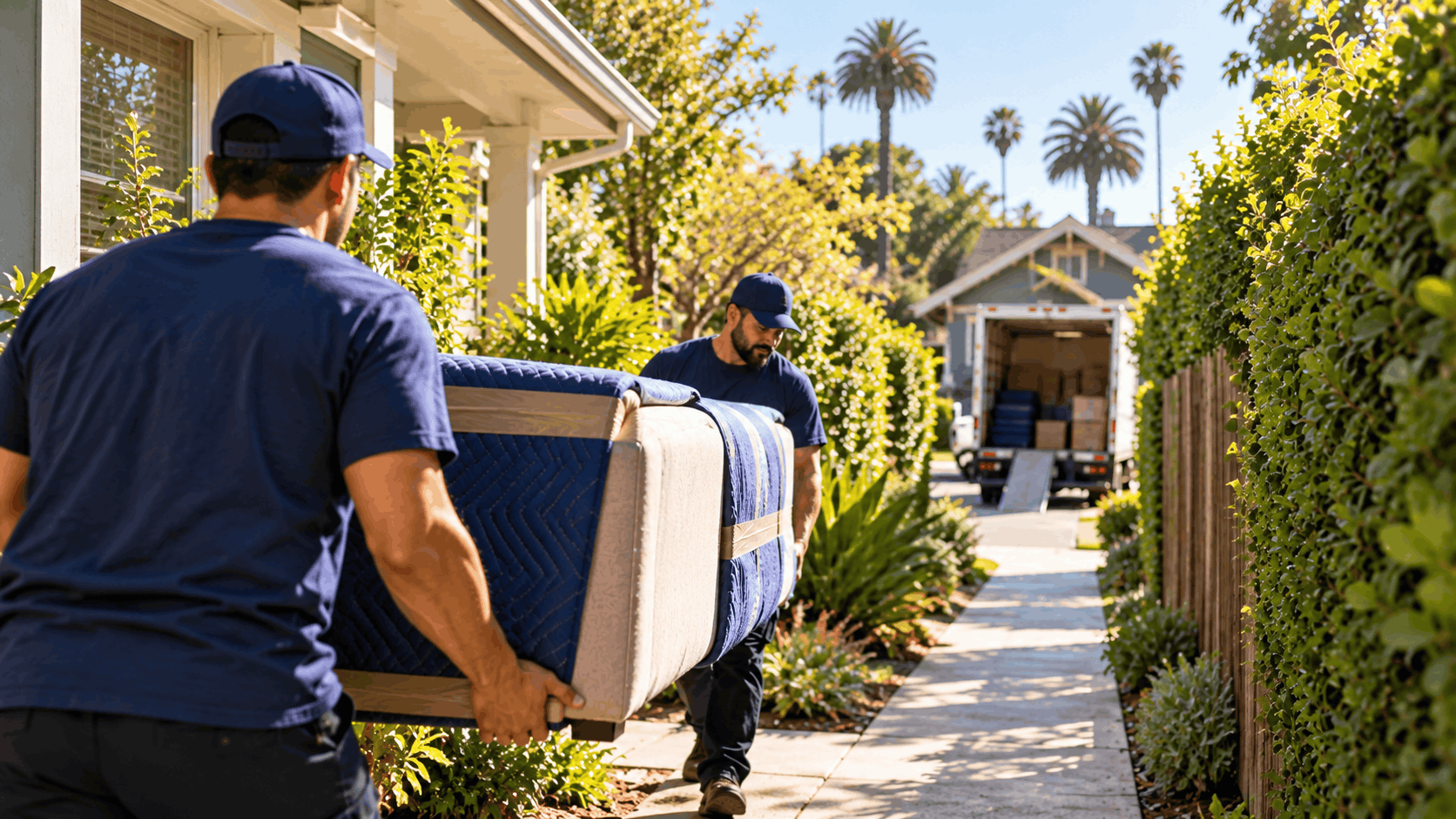
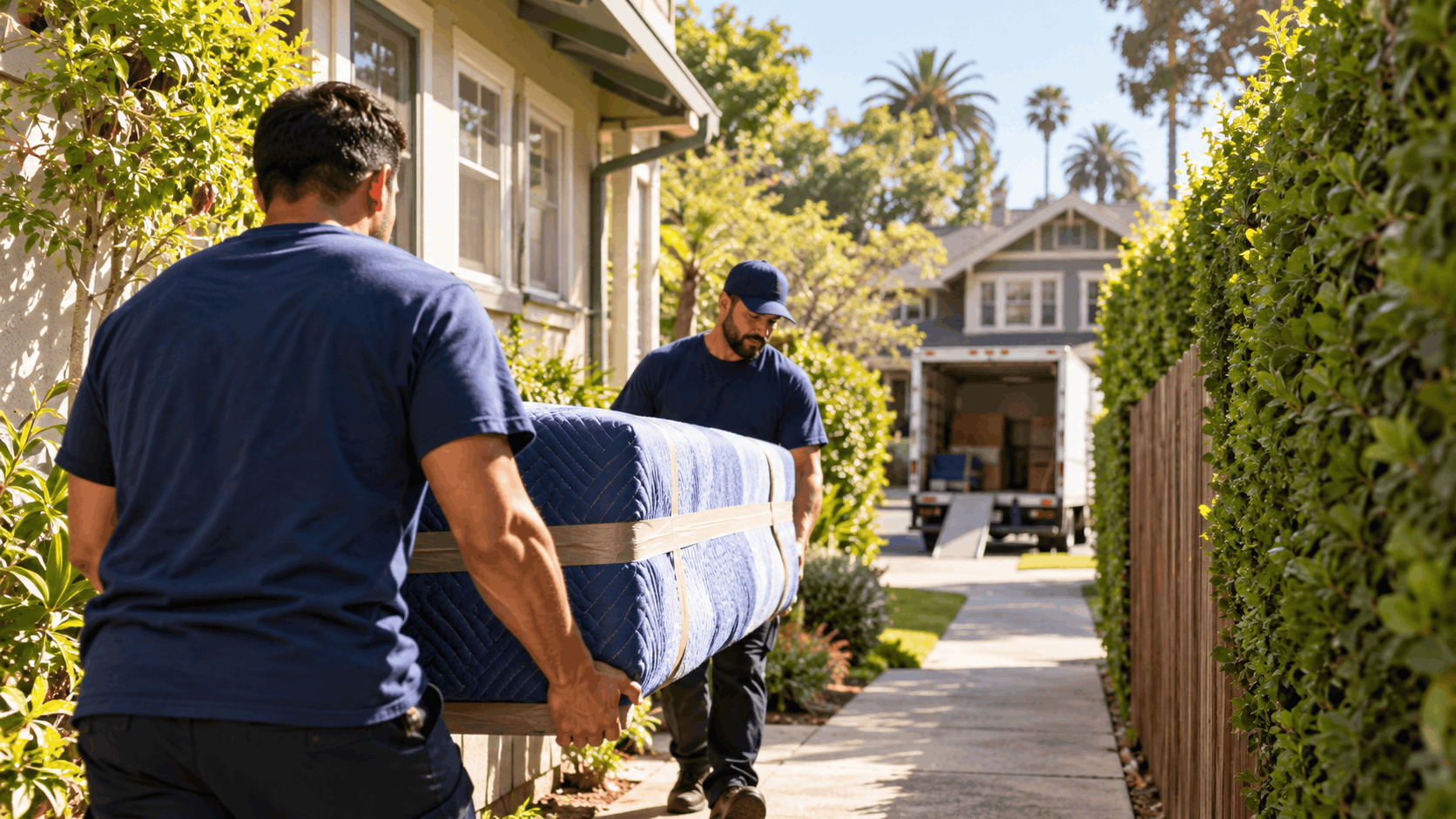
The truck sits at the curb on a quiet block between Washington Boulevard and Orange Grove Boulevard. The crew looks up a flight of front steps, across a deep porch, and through an original front door that was never built for a modern sofa. At the back of the lot, a detached garage waits at the end of a long narrow driveway. On a Bungalow Heaven move, the walk between the front door and the truck is the real work, and it is longer than almost anyone expects.
That distance has a name in the trade: the long carry. It is built into the way this district was laid out more than a century ago, with deep lots, set-back houses, and raised Craftsman foundations. The carry is invisible on an inventory sheet, yet it shapes the hours on the job and the final bill more than the furniture itself.
Why the Carry to the Curb Is Long on These Lots?
Bungalow Heaven holds one of the largest concentrations of early twentieth century Craftsman bungalows in the region. The district runs roughly between Washington Boulevard, Orange Grove Boulevard, Lake Avenue, and Hill Avenue, in ZIP 91104. The houses here were designed around a lot pattern that puts real distance between the living room and the street.
On deep narrow lots, the long carry is not a crew moving slowly. It is the direct result of how the original builders placed a Craftsman bungalow on its parcel. Understanding the cause helps a homeowner see why a modest load can still fill a workday.
Deep Lots, Set-Back Houses and the Walk to the Street
Homes between Washington and Orange Grove sit well back from the curb on deep lots. That set-back is part of the original design of the neighborhood, not a quirk of one or two properties. It gives the front yards and the porch depth that make these streets look the way they do.
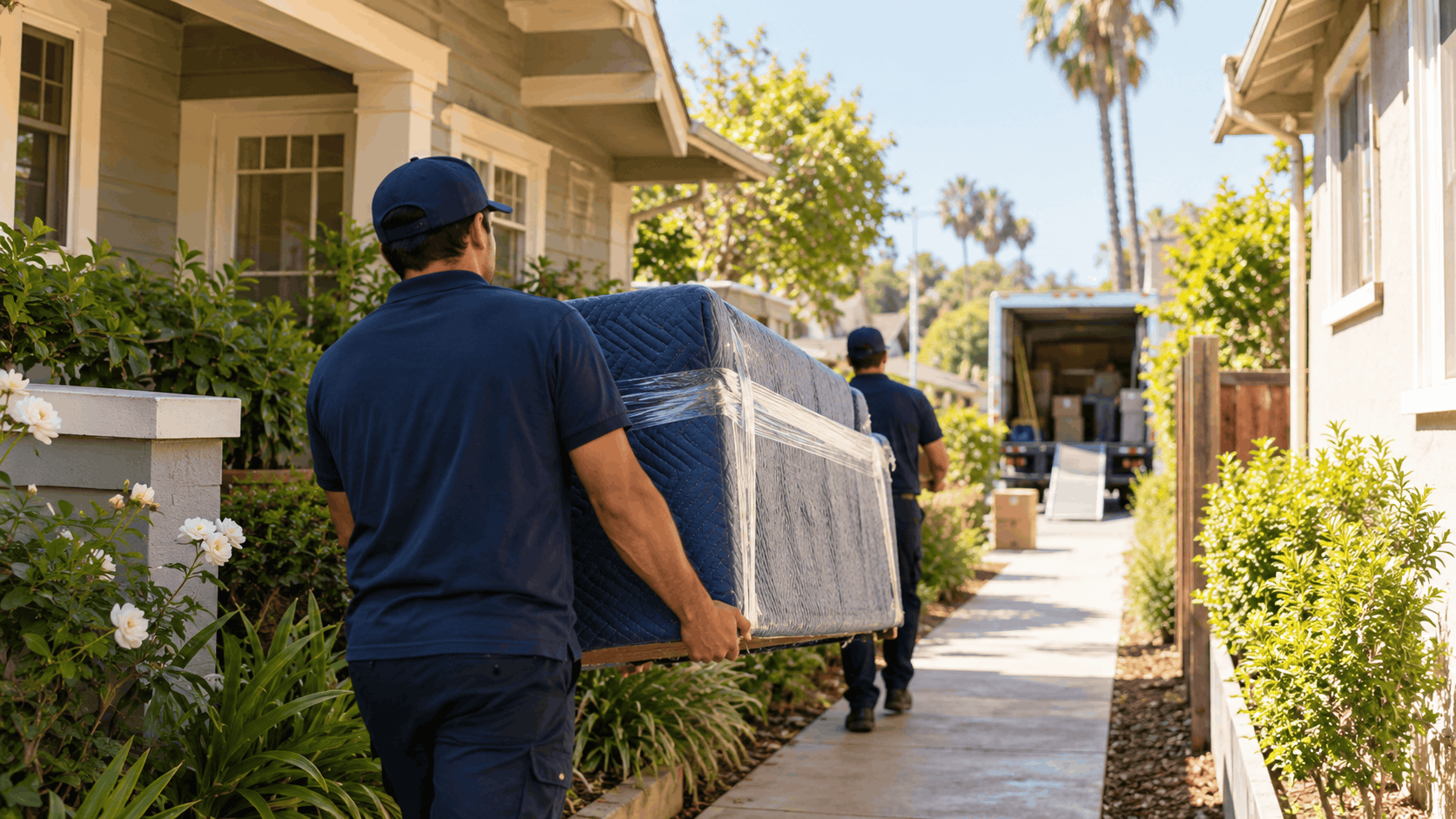
For a moving crew, that same set-back means every piece travels a genuine distance from the door to the truck. A sofa, a dresser, a dining table, and a hundred boxes all make that trip, one load at a time. Multiply the curb distance by the number of items, and the walk adds up fast.
This is the first thing we measure when we look at a job in the district. The further the house sits from the street, the more each trip costs in minutes. It is also why parking the truck in the right spot matters so much, which the Pasadena permit rules affect directly.
If you are planning a residential move on one of these blocks, our residential moving team treats the carry distance as a central part of the plan, not an afterthought on the day.
Raised Foundations, Front Steps and the Porch Turn
Craftsman bungalows almost always sit on raised foundations. That means a flight of front steps leads up to a deep porch before the crew even reaches the door. Those steps are not a minor detail; they are a slow point on every single trip.
The porch itself adds another challenge. Low porch roofs and posts limit the angle a large piece can be turned. A big armoire or a long sofa that would slide straight out of a modern house has to be angled, lifted, and walked carefully around the porch posts.
This porch turn is where large furniture most often stalls. A piece that measures fine on paper can still refuse to clear the turn at the top of the steps. Front steps and the porch turn are exactly the sort of thing that slows a job and never appears on an inventory list.
Because these features are invisible on paper, we count the steps and study the porch turn during the survey. Planning the angle in advance keeps the piece and the house safe, and keeps the clock from running on a problem that could have been solved beforehand.
Narrow Driveways and the Detached Rear Garage
Many bungalows in the district have a detached garage at the rear, reached by a long narrow driveway. That garage is often the practical loading position, since it sits closer to parts of the house and off the street. It is also a tight spot that not every vehicle can use.
Driveway width and length change where the truck can stop. A narrow driveway may not admit a full-size truck at all, which pushes the loading point back toward the curb and lengthens the carry. A driveway that is long but wide enough can shorten the walk considerably.
We check the rear access on every deep-lot job because it so often decides the loading plan. Sometimes the shorter path runs out the back to the garage, and sometimes the curb is still the only real option. Either way, the answer should be known before the day, not discovered when the truck arrives.
Where access is genuinely tight, a smaller vehicle or a shuttle is the professional method, priced into the estimate rather than improvised on site. Properties with no vehicle access at all are worked out on the phone before a date is set.
Narrow Door Apertures and Fragile Period Details
Original front doors on these bungalows have narrow apertures. They were built for the furniture of their era, not for oversized modern sectionals and king beds. The door opening alone can force a piece to be turned, tilted, or taken apart.
Inside, the house is full of details that stay put and demand care. Built-in cabinetry and window seats are part of the house and do not move. Original hardwood floors run under every carry, and leaded and art glass appears in windows and cabinet doors where a swinging piece could strike it.
Period hardware damages easily, and so do the original surfaces that give these homes their value. A crew working a long carry has to protect all of it while moving quickly enough to keep the job efficient. The route and the handling plan both come down to these fixed details.
When a piece will not clear a narrow door or the porch turn, disassembly becomes the sensible answer. Taking a bed frame or a large table apart to clear the opening protects the furniture, the door casing, and the finishes on the way out.
Get Your Free Quote
Tell us about your move. We'll be in touch soon.
How the Long Carry Affects Your Time and Your Bill
Local moves in California are billed by the hour, so anything that adds minutes to each trip adds to the bill. On a Bungalow Heaven lot, the carry distance and the front steps do exactly that. Here is how the hours build on one of these jobs.
The table below shows which features of a deep-lot bungalow drive the time, and why each one matters on a long carry.
| Feature | Why It Adds Time |
|---|---|
| Deep set-back lot | Longer walk from the door to the curb on every trip |
| Raised foundation and front steps | Each piece is carried up or down a flight of steps |
| Deep porch and porch turn | Large items must be angled around low posts and roofs |
| Narrow door apertures | Tilting, turning, or disassembly to clear the opening |
| Narrow rear driveway | Loading point may be pushed back to the curb |
| Street tree canopy | May limit vehicle size and the closest parking spot |
Why the Route Decides the Hours More Than the Inventory
In a house of this age, the route decides the time far more than the inventory does. Two homes can hold the same amount of furniture, yet one takes noticeably longer because of the steps and the porch turn. The load list alone never tells the whole story.
Every trip up the front steps and around the porch adds minutes, and those minutes repeat for every item. A crew that would breeze through a ground-floor condo spends real time on the same number of boxes here. The handling time is baked into the shape of the house.
This is why we focus the survey on the path and not just the pile. Knowing the carry distance, the step count, and the door widths lets us estimate the hours honestly. A modest load can still take a full workday when the route fights you at every turn.
Understanding the route also lets us stage the move well. Clearing a direct path, setting floor protection, and sequencing which pieces come out first all shave time off a long carry that would otherwise drag.
Double Drive Time on Local Pasadena Moves
California bills local hourly moves using a double drive time convention. That means the travel time between origin and destination is charged at twice the actual driving time. It is a legitimate, regulated part of how local moves are priced, not a padding tactic.
The 210 and the 134 both serve Pasadena, so the start time and the route genuinely affect the bill. A crew heading into the district during heavy traffic spends more actual driving time, and the double drive time convention reflects that. Timing the move to lighter traffic can help.
We explain this up front rather than leaving a customer to find it on the invoice. Knowing how double drive time works lets a homeowner plan a start time that keeps the driving portion reasonable. It is simply part of understanding a local Pasadena move.
Where a specific current rate or calculation is in question, the tariff and the Bureau of Household Goods and Services are the places to confirm it, rather than any figure we would publish here.
Typical Price Ranges for a Local Move in the Area
Cost is one of the first questions on any move, so here are the typical market ranges for the Los Angeles area. These are ranges you can expect, not a quote or a fixed price. The actual price for your move is set in writing before anything is loaded.
- Local residential moving: $150 to $200 per hour for a two-person crew and truck
- One-bedroom apartment local move: $350 to $650
- Furniture assembly and disassembly: $75 to $200 for standard items
On a deep-lot bungalow, the hourly figure matters because the carry adds hours. A one-bedroom home on a ground floor near the street sits at the lower end of its range, while the same contents behind a flight of steps and a long walk climb toward the higher end.
Whatever the hours work out to, the Not To Exceed figure is set in writing before loading begins. That ceiling is what actually protects your bill, and it is covered in full in the next section. For apartment dwellers moving within the area, our apartment moving service is priced the same way.
The Not To Exceed Price Protects You Before Loading
Under Maximum Rate Tariff 4, the Not To Exceed amount set out in the Agreement For Moving Services is the maximum total dollar amount you can be liable for. It covers the transportation of your household goods and any additional services you order, and it is agreed before any goods are moved.
This is a right you have, not a courtesy the mover extends. The final bill cannot exceed the Not To Exceed figure except through a Change Order For Services that you agree to. You are told the ceiling before the truck is loaded, and nothing can push the price past it without your sign-off.
On a long-carry job where the hours are harder to predict, the Not To Exceed figure is what gives a homeowner confidence. Even if the steps and the porch turn slow the day, the amount you can owe is capped at a number you agreed to in advance.
A mover who leaves the Not To Exceed Price off the paperwork has missed a requirement. If you do not see it on your Agreement For Moving Services, ask for it before you book.
Need Help in Los Angeles?
Popeye Moving & Storage serves Los Angeles and all of Los Angeles County.
Planning the Route Before Moving Day
The way to keep a long carry under control is to plan it, not discover it on the day. A proper survey of a Bungalow Heaven house covers the path, the access, and the places contents hide. Here is the pre-move checklist that makes the quote accurate and the day smooth.
In a house of this era, the access plan is the plan. Every one of these checks feeds directly into the hours, the vehicle choice, and the handling.
Counting Front Steps, Porch Depth and Door Width
The survey starts at the front of the house. We count the number of front steps, measure the porch depth and the porch turn, and measure the front door aperture. Each measurement is checked against the largest pieces of furniture that have to come out.
Counting steps sounds basic, but it sets the pace for the whole carry. A short stoop and a shallow porch are quick; a tall foundation with a deep porch and a tight turn are not. Knowing the count lets us estimate the handling time honestly.
The door aperture is the gatekeeper. If a sofa is wider than the opening, we know before the day whether it turns through, tilts through, or needs to come apart. Measuring against the actual furniture prevents the stuck-in-the-doorway scramble that eats time and risks damage.
These numbers also tell us whether a side or rear door is the smarter route for the biggest pieces, which is the next thing we check.
Finding the Better Door and the Rear Garage Route
The front door is not always the best way out. We check whether a side or rear door offers a shorter, straighter route, and we measure the driveway width and length to any rear garage. Sometimes the back of the house is the faster path.
Choosing the shorter path shortens the carry, and a shorter carry means fewer hours. If a rear driveway admits the truck or a shuttle close to a back door, large pieces may avoid the front steps and the porch turn entirely. That can change the shape of the whole day.
The driveway measurements decide what vehicle can use the rear position. A long driveway that is too narrow for a full truck may still work for a smaller vehicle, which is a normal part of planning access on a tight lot. We settle this during the survey, not on moving day.
Picking the right door and the right loading spot is one of the biggest levers on a deep-lot move. It is also one of the easiest to get wrong without a walkthrough.
Attics, Basements, Sheds and Where Contents Hide
Detached garages, basements where they exist, attics reached by a small hatch or stair, and garden sheds are where contents hide. A survey that only looks at the main rooms misses them, and a move that misses them runs long and over budget.
Long-tenured households in a district like this accumulate. Bungalow Heaven has many owners who have lived in their homes for decades, and decades of belongings end up in the attic, the shed, and the back of the garage. Those spaces have to be counted to quote accurately.
An attic reached by a narrow hatch or a steep stair is slow to empty, and that slowness has to be in the estimate. The same goes for a packed basement or a garden shed full of tools and seasonal items. A survey covering those spaces is what makes the quote match the day.
We ask to see every storage space during the walkthrough, even the ones a homeowner assumes are nearly empty. They rarely are, and surprises in those spaces are the most common reason a move runs past its estimate.
Street Trees, Narrow Roadways and Vehicle Size
The mature street canopy is part of what makes Bungalow Heaven look the way it does, and it limits vehicle height on many blocks. Low branches can stop a tall truck from reaching the closest parking spot, which lengthens the carry. We check the route for low branches ahead of time.
Residents parked on both sides of the street narrow the carriageway. A block that looks open on a map can be tight once cars line both curbs, and a large truck may not fit where you want it. Knowing this before the day lets us plan the parking and the signage.
A 25-foot or smaller vehicle is often the better tool on these streets. It clears more branches, fits more spots, and brings a real bonus with the City of Pasadena: a vehicle 25 feet or less does not require a moving permit, while 26 feet and over does.
Matching the vehicle to the block is a judgment we make during the survey, weighing the canopy, the roadway, and the permit thresholds together. The right size truck can shorten the carry and simplify the paperwork at the same time.
Pasadena Permit Rules for a Moving Truck at the Curb
When the truck has to sit at the curb on a deep lot, the City of Pasadena rules apply. Pasadena runs its own Department of Transportation parking division, and its rules differ from neighboring cities. Here they are exactly as the city runs them.
Getting these right matters because the carry distance often forces the truck to the curb, where a permit and signage come into play.
The 25-Foot and 26-Foot Length Thresholds
Moving vehicles 25 feet long or less do not require a permit in Pasadena. A vehicle 26 feet in length or over does require one. The City recommends confirming vehicle size approval before renting or scheduling, so the vehicle choice should be settled early.
This threshold connects straight back to the street tree canopy. A smaller vehicle that clears the low branches on a Bungalow Heaven block also stays under the 25-foot line and avoids the permit requirement entirely. Two problems solved with one choice.
For a deep-lot move where the truck will likely park at the curb, knowing the vehicle length in advance decides whether a permit is needed at all. We factor the thresholds into the vehicle selection so the paperwork matches the block.
When a larger truck is the right tool for the load, the permit becomes part of the plan rather than a last-minute scramble, which is where the timing rules come in.
Application Timing and the Two Working Day Advantage
Permit applications must be submitted 10 days prior to the move date, or an expedited fee is added. A traffic review is required for all moving vehicle requests in the city, so every application goes through that step.
Here is where a registered mover helps. Moving companies with insurance already on file with the City should allow a minimum of two working days for permit issuance, while all others should allow a minimum of two weeks. Popeye Moving and Storage has insurance on file with the City of Pasadena, so it qualifies for the two working day minimum.
That difference is a real advantage on a shorter timeline. A homeowner applying on their own faces the two-week minimum, while a mover already on file can often clear the permit in two working days.
One scheduling quirk to plan around: the City is closed every other Friday, and off-Friday applications are processed the following working Monday. We build that into the timing so the permit is ready when the truck arrives.
Posting and Registering Temporary No Parking Signs
Temporary No Parking signs are bought from the Parking Office at 100 N. Garfield Avenue, Room N106. They must be posted at least 24 hours in advance and registered by phone with Parking Enforcement on (626) 744-6440, or they are not enforceable. Posting them without registering gets you nothing.
The signs reserve the curb space directly in front of the house, which keeps the carry as short as possible. On a deep lot, having the truck right at the curb instead of half a block away can save a meaningful amount of time over a full move.
Signs are charged per sign plus street usage fees per hour per space in non-metered areas. Because those amounts change, confirm the current figures with the Parking Office directly rather than relying on a number from anywhere else.
We handle the posting and the registration as part of a Pasadena move so the space is reserved and enforceable on the day. A reserved curb is one of the simplest ways to shorten a long carry.
What the Landmark District Does and Does Not Control
Bungalow Heaven was the first landmark district in Pasadena, designated in November 1989, covering about 125 acres. The designation controls exterior changes to the houses rather than moving. It does not restrict a move, and no one should imply that it does.
What the landmark status signals is that the housing is original, protected, and owned by people actively invested in preserving it. These are homeowners who have chosen to live in and maintain century-old Craftsman bungalows. That tells a crew exactly what standard of care the work calls for.
A smaller core of the district was listed on the National Register on April 10, 2008. McDonald Park at 1000 East Mountain Street sits at the center of the neighborhood, and the Santa Catalina Branch Library at 999 East Washington Boulevard stands on its northern edge. These are landmarks worth knowing when planning access and timing.
Reputation travels quickly in a close, organized neighborhood like this one. A crew that protects the finishes and plans the route carefully is doing the kind of work these homeowners expect and talk about.
Need Help in Los Angeles?
Popeye Moving & Storage serves Los Angeles and all of Los Angeles County.
Protecting the House and the Finishes During a Long Carry
A long carry across original floors and through narrow doors raises the chance of damage simply because the path is used so many times. The protection a Craftsman interior needs is different from a modern house, and it has to match the route. Here is what the carry calls for.
Every trip is a chance to scuff a floor or clip a door casing, so the protection goes down before the first box moves.
Original Hardwood Floors on a Repeated Path
Every carry crosses original hardwood floors on the same path. Over the hours of a move, that single route sees dozens of trips, and the floor takes repeated traffic on exactly the same boards. On a long carry, that repetition is the real risk to the finish.
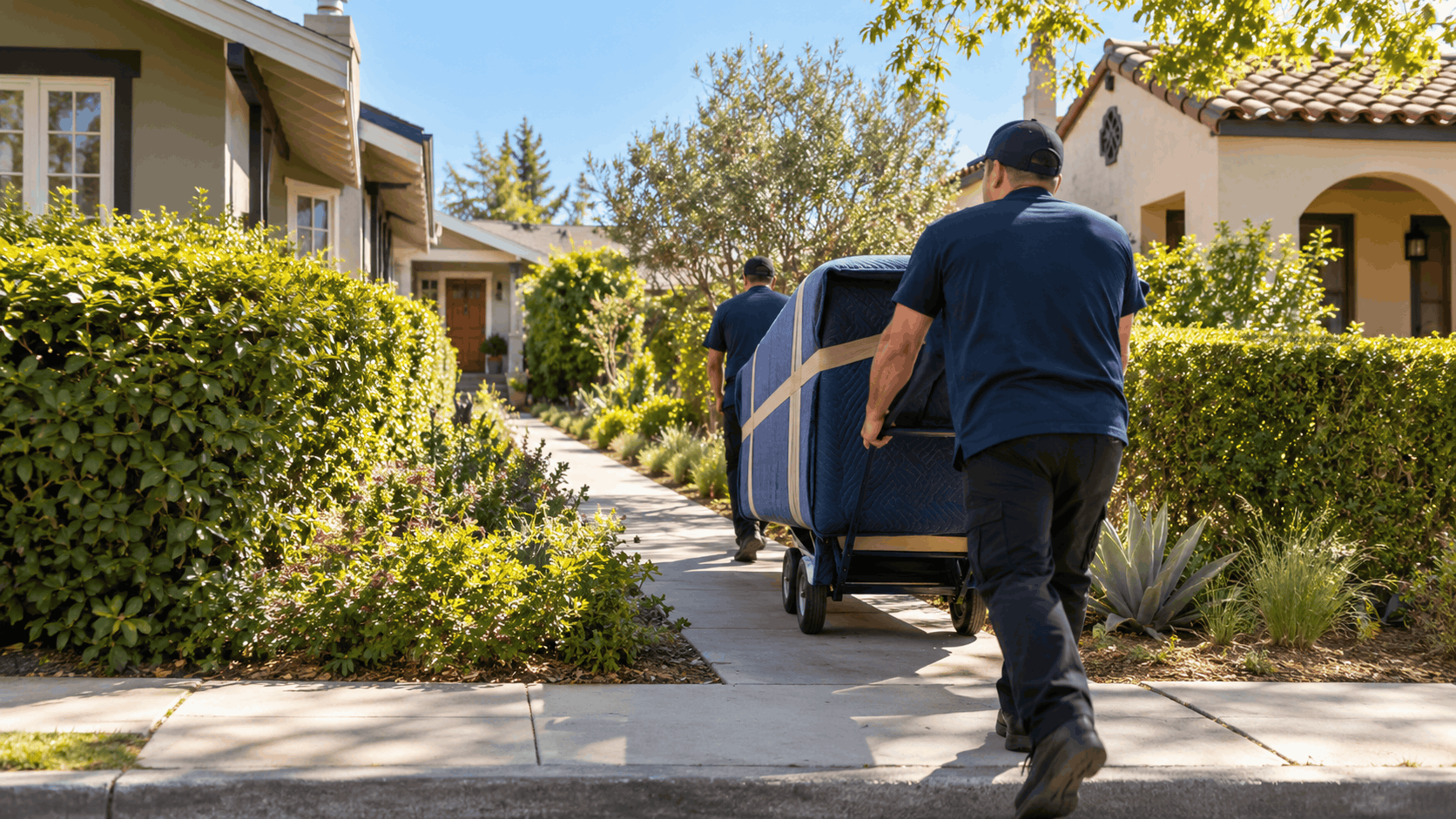
Runners and pads matter far more on a long carry than on a short one. A quick move out of a ground-floor condo barely touches the floor; a full day of trips across original hardwood in a bungalow needs the floor covered along the whole path. The longer the carry, the more the protection earns its place.
Original hardwood in a home of this age is often irreplaceable in kind, which is why we cover the route fully rather than hoping careful footing is enough. Runners handle the foot traffic and pads cushion the spots where pieces are set down and picked up.
Protecting the floor is not just courtesy; it is part of doing the job right in a district where the original finishes are a large part of the home's value.
Leaded Glass, Window Seats and Built-In Cabinetry
Leaded and art glass is common in these bungalows, set into windows and cabinet doors where a swinging piece of furniture could reach it. Built-in cabinetry and window seats stay with the house and sit in the exact spots a large item has to pass. The two are often inches apart.
Large pieces turned at a low porch or through a tight interior corner can swing into that glass or those built-ins. The arc of a long sofa or a tall dresser is wider than people expect, and a careless turn near a leaded window is how irreplaceable glass gets broken.
The handling care here is deliberate and slow at the pinch points. We plan the turns around the glass and the built-ins, pad the vulnerable surfaces, and position extra hands where a piece has to swing close to something fragile. That care takes time, and it is time well spent.
For genuinely fragile or valuable fixtures and pieces, our fine art and antique moving approach brings the extra handling these interiors demand.
Narrow Doors and the Case for Disassembly
Narrow door apertures and the porch turn make furniture assembly and disassembly worth it for large pieces. A bed frame, a large table, or a modular sectional that will not clear the opening in one piece comes apart cleanly, clears the door, and goes back together at the new home.
Taking a piece apart protects both the furniture and the house. Forcing an oversized item through a narrow original door risks the furniture, the door casing, and the finishes on both sides. Disassembly removes that risk and often speeds the carry, since smaller sections move faster down the steps.
The typical range for furniture assembly and disassembly for standard items is $75 to $200. That is a typical area range, not a quote, and it covers the kind of beds, tables, and shelving that commonly need breaking down to clear a Craftsman door.
We flag during the survey which pieces will need disassembly so the time and the hardware are planned for. Nothing gets forced through a door it was never going to fit.
Valuation on Antiques, Art Glass and Period Furniture
A long carry through tight spaces is exactly where the risk of damage is real, so valuation matters on a Bungalow Heaven move. The California rules here are specific, and the default is not what most people assume. Here is how your protection actually works.
These homes are full of antiques, period furniture, and art glass, which makes getting valuation right far more than a formality.
The $20,000 Actual Cash Value Default
Maximum Rate Tariff 4 Item 136(2) states that unless the shipper expressly declares a value other than $20,000 for the shipment, the mover's maximum liability for lost and damaged articles is up to $20,000 of actual cash value. That is the California intrastate default.
If you declare nothing, that $20,000 actual cash value figure is what applies to your shipment. It is a real level of protection, and it is important to know it is the floor you start from on a local move within the state, not the 60-cent figure many people have heard about.
Actual cash value means the depreciated value of the item, not its replacement cost. For a household of everyday furniture, the $20,000 default covers a great deal. For a home full of antiques and art glass, it is worth looking closely at whether that figure is enough.
Knowing the default lets a homeowner make a real decision about whether to declare more, which is the point of the valuation step.
Why 60 Cents a Pound Is the Rate Basis, Not the Payout
MAX 4 Item 136(1) states the transportation rates are based upon a declared value of 60 cents per pound per article. That figure is the rate basis, the number the transportation rates are computed on. It is not the payout, and it must never be read as what you would be paid for a damaged item.
This distinction matters enormously in Bungalow Heaven. The 60-cent weight-based basis pays almost nothing on antiques, art, period furniture, or art glass. A delicate art glass shade weighs very little, so a weight-based figure would value it at a few dollars, nowhere near what it is actually worth.
Both facts are true at once: 60 cents per pound is how the rate is calculated, and $20,000 actual cash value is the default liability. Content and conversations that treat the 60-cent figure as the payout get this wrong and shortchange the customer.
Because so much of this housing holds light but valuable pieces, the weight-based basis is the wrong measure for what is really at stake. That is why declaring value on the pieces that matter is the responsible approach.
Declaring Items of Extraordinary Value
Valuation is a liability limit, not insurance. Released value is the limit; full value protection is the paid alternative that pays based on what an item is worth rather than what it weighs. MAX 4 requires each valuation option to be listed with the carrier's charge and a space for the shipper to initial.
Items of extraordinary value, such as antiques, art, and art glass, should be separately described on the inventory with a value declared for each. In a Craftsman bungalow full of period pieces, that line-by-line declaration is how you make sure the valuable items are actually protected for what they are worth.
Money, jewelry, and important papers are best carried by the customer rather than shipped. Those items are small, easy to misplace in a move, and not suited to the back of a truck. Keeping them with you removes the risk entirely.
You have a right to be offered better coverage and a right to decline it knowingly. We list the options so the choice is yours, made with full information before anything is loaded.
Crating for Art Glass and Fragile Pieces
Custom crating protects fragile pieces for the long carry down the front steps and around the porch turn. A built crate holds a mirror, a leaded glass panel, or a delicate antique rigid and cushioned through every jolt of the carry, which is where fragile items are most at risk.
The typical range for custom crating is $150 to $800 or more per crate, and fine art and antique moving typically runs $300 to $1,200 or more. These are typical area ranges, not quotes. The exact figure depends on the piece, its size, and what the crate has to protect against.
On a deep-lot move, crating earns its cost precisely because the carry is long and the path is tight. A piece that would ride safely in a ground-floor move faces far more handling here, and a crate turns that handling into a non-event.
Our custom crating service is built for exactly the art glass and period pieces these homes contain. We recommend it for anything fragile and valuable that has to travel the long carry.
Need Help in Los Angeles?
Popeye Moving & Storage serves Los Angeles and all of Los Angeles County.
How Our Team Handles a Deep-Lot Bungalow Heaven Move
Here is how Popeye Moving and Storage works a move on these lots, from the survey through the written price to the day itself. The approach is built around the fact that the route, not the inventory, sets the pace on a deep-lot bungalow.
Every step is aimed at the same thing: a carry that is planned in advance so there are no surprises when the truck arrives.
The Survey That Covers Steps, Driveway and Hidden Spaces
The team surveys the front steps, the porch turn, and the door apertures before quoting. We measure the opening against the largest pieces and count the steps so the handling time is in the estimate from the start. The front of the house tells us most of what we need.
We also check the rear driveway and the detached garage to find the best loading position. If the back of the lot offers a shorter route, we plan for it; if the curb is the only option, we plan the permit and signage around it. The access decision is made before the day.
Then we look where contents hide: the attic, the basement if there is one, and the shed. Long-tenured households accumulate, and those spaces are where the quote goes wrong if they are skipped. Covering them is what makes the estimate match the real job.
The survey is the foundation of an accurate estimate on a deep-lot move. Getting the route and the hidden spaces right is how we get the time and the price right.
A Written Estimate and a Not To Exceed Price Before Loading
California requires a written estimate, and a verbal quote is not binding. An estimate you can hold and check is the real thing; a number given over the phone without a walkthrough is not. We put the estimate in writing so you can compare it against what you were shown.
The Agreement For Moving Services states the Not To Exceed figure before anything is loaded. That figure caps what you can owe, and the final bill cannot pass it except through a Change Order you agree to. On a long-carry job, that ceiling is the protection that matters most.
The written estimate also describes the shipment, the services, the number of helpers and packers, and the rates and charges, so you can see exactly what is included. Everything is spelled out before the truck shows up, not settled on the invoice afterward.
Valuation is part of that same written step, with the options listed for you to choose as covered above. One decision, made with full information, before any goods move.
Choosing the Right Vehicle and Handling the Pasadena Permit
The team matches the vehicle size to the block's tree canopy and to the 25-foot and 26-foot thresholds. A smaller truck that clears the low branches on a Bungalow Heaven street and stays under the 25-foot line solves the access and the permit question together.
Because Popeye has insurance on file with the City of Pasadena, it qualifies for the two working day permit minimum rather than the two weeks required of others. That keeps the paperwork from holding up a reasonable timeline on a Pasadena move.
When the load calls for a larger truck, we handle the permit application, the traffic review, and the temporary No Parking signs so the curb space is reserved and enforceable. The parking is sorted before the crew arrives.
Matching the vehicle to the block and handling the permit are two sides of the same plan. Both come out of the survey and both shorten the carry on the day.
Permit, Licensing and Who to Verify It With
Popeye Moving and Storage operates under CAL T 189749 for intrastate work and is fully insured. That permit is what makes a mover legal to operate in California, and it is a number you can check before you book rather than after a problem.
Household moves inside California are regulated by the Department of Consumer Affairs Bureau of Household Goods and Services, the BHGS, reachable on (916) 999-2041. The California Public Utilities Commission no longer regulates movers; that authority moved to BHGS on July 1, 2018. For a Pasadena move, BHGS is the regulator, not the CPUC.
You can verify any mover's permit status through BHGS before booking. The practical advice is simple: ask for the permit number, and check it before the move rather than after. A legal mover will give you the number without hesitation.
Keeping your estimate, your Agreement For Moving Services, and your bill of lading strengthens any claim you might need to make later. The paperwork is your record, so hold on to it.
Planning Your Bungalow Heaven Move With Us
Every deep-lot move in Bungalow Heaven starts with a survey of the steps, the porch turn, the door widths, the rear driveway, and the spaces where contents hide, followed by a written estimate with a Not To Exceed price before anything is loaded. That is how the carry gets planned instead of discovered.
To set up a walkthrough and get your move on the calendar, call Popeye Moving and Storage at (310) 823-9510 or reach us through our contact page. We will plan the route, match the truck to your block, and handle the Pasadena permit so the day runs clean.
Frequently Asked Questions
- What is a long carry on a Bungalow Heaven move?
- It is the real distance the crew walks each piece from your door, across a deep porch, and down a flight of front steps to the truck at the curb. Homes in the district sit well back on deep set-back lots, so that walk is longer than it looks. Every item makes the trip one load at a time, which is why the carry is a central part of planning the move.
- Does the long carry increase the cost of my move?
- Yes, it adds hours, because on a house of this age the route decides the time more than the inventory does. The typical local rate is $150 to $200 per hour for a two-person crew and truck, a typical area range rather than a quote. Steps and the porch turn add minutes to every trip, so a modest load can still take real time. The Not To Exceed figure is set in writing before loading, capping what you can owe.
- Do I need a permit for a moving truck in Bungalow Heaven?
- A moving vehicle 25 feet long or less does not require a permit in the City of Pasadena, while a vehicle 26 feet or over does. A traffic review is required for all moving vehicle requests regardless of size. Because the street tree canopy and both-sides parking can tighten these blocks, a smaller vehicle often makes sense and removes the permit requirement at the same time.
- How far in advance do I apply for a Pasadena moving permit?
- Applications must be submitted 10 days prior to the move date, or an expedited fee is added. Moving companies with insurance already on file with the City should allow a minimum of two working days for issuance, while all others should allow a minimum of two weeks. Popeye has insurance on file with the City of Pasadena, so it qualifies for the two working day minimum.
- Can the truck park at the rear garage instead of the curb?
- Often yes. Many bungalows have a detached garage at the rear reached by a long narrow driveway, and that is frequently the practical loading position, though it is a tight one. Driveway width and length decide whether a truck or a smaller shuttle can use it. The better path, front curb or rear garage, is decided during the survey rather than guessed on the day.
- Does Bungalow Heaven's landmark status restrict my move?
- No. The landmark designation controls exterior changes to the houses, not moving, so it does not restrict a move or add any approval step for relocating. What it does signal is that the housing is original and protected, owned by people invested in preserving it. That sets the standard for how carefully a crew should work, with full floor and finish protection throughout.
- What happens if my antiques are damaged on the carry?
- Unless you declare a higher value, the mover's maximum liability is up to $20,000 of actual cash value. The 60 cents per pound per article figure is only the rate basis the transportation rates are computed on, not the payout, and it pays almost nothing on light but valuable pieces. Items of extraordinary value should be declared separately on the inventory, with full value protection and custom crating considered for fragile antiques and art glass.
- How long do I have to file a claim after my move?
- A claim for loss or damage must be filed in writing with the mover within nine months after delivery, as shown on the shipping document. The mover must acknowledge a written claim within 30 days and must pay, decline, or make a firm compromise settlement offer within 60 days. Any suit must be filed within two years and one day from the date the mover gives written notice that it has disallowed the claim.
- Why is the carry longer here than in a newer neighborhood?
- The original Craftsman lots are deep, with the houses set back from the street on raised foundations. That means the crew faces a flight of front steps, a deep porch, a porch turn around low posts, and narrow original door apertures that newer homes simply do not have. The build era and the lot pattern are the cause, not the crew, and they are why the same load takes longer here.
- Who regulates movers and how do I verify a permit?
- Household moves inside California are regulated by the Bureau of Household Goods and Services, reachable on (916) 999-2041, not the CPUC, which stopped regulating movers in 2018. A customer can verify a mover's permit status through BHGS before booking. Popeye operates under CAL T 189749 for intrastate work and is fully insured, and you can check that number before you schedule rather than after.
Popeye Moving & Storage Co. Team Team
Licensed moving and storage professionals serving Los Angeles and Los Angeles County.
Licensed in California · License #CAL T 189749 | USDOT 1472924 | MC 498816C
Why trust Popeye Moving & Storage?
Founded in 1994, Popeye Moving & Storage is a licensed and insured moving and storage service serving Los Angeles and Los Angeles County. All content is reviewed by our licensed technicians.

Need Help in Los Angeles?
Popeye Moving & Storage serves Los Angeles and all of Los Angeles County.
Related Articles
The LA Mover's Truck Fleet Explained - Why Narrow-Street and Hillside Jobs Need the Right Size, Not the Biggest
Learn why the right-size moving truck beats the biggest one on LA's narrow streets and steep hillsides, and how Popeye Moving matches the fleet to your job.
Long Carry Fees in LA: What Movers Charge Past 75 Feet (And How to Avoid)
Learn what long carry fees are, how LA movers charge them past 75 feet, typical costs of $75-$300, and practical steps to reduce or avoid them entirely.
Moving in the LA Hills: What Steep Streets and Narrow Roads Mean for Your Move
Hillside moves in Los Angeles aren’t like flat-land moves. Here’s what to expect with steep streets, narrow roads, and limited truck access in neighborhoods from Hollywood to Brentwood.