Sherman Oaks Movers: Valley HOA and Hillside Property Logistics

Key Takeaways
- Sherman Oaks moves split into flatland Valley homes south of Ventura Boulevard and hillside properties near Mulholland Drive, each needing a different plan.
- Gated communities require advance approval, set move-in hours, a Certificate of Insurance, and often a refundable deposit before move day.
- Steep hillside homes on narrow roads often need a shuttle truck to carry items from the main truck to the door.
- Reserve legal truck parking early through permit zones or temporary no-parking signs from the City of Los Angeles.
- Short-term and climate-controlled storage bridge closing gaps and HOA approval delays common with hillside sales.
- Book four to six weeks ahead to allow time for HOA paperwork, gate reservations, and hillside site surveys.
- Local crews with proper licensing, insurance, and hillside training keep gated and steep-grade moves safe and on schedule.
In This Article
A young family pulls up to their new home off a quiet street near Mulholland Drive. The view is stunning, the driveway drops away at a steep angle, and the 26-foot moving truck idling at the curb clearly is not going to fit up that narrow road. Down in the flatlands south of Ventura Boulevard, another family waits at a gated community entrance while a guard checks whether their movers registered ahead of time. Both scenes play out in Sherman Oaks every week.
Moving here is not like moving in most other parts of the Valley. Between the hillside homes with their tight switchback roads and the gated communities with their own rulebooks, a move needs planning that goes well beyond loading boxes. Our team has driven these streets for years, and we have learned exactly where trucks get stuck and where boards ask for paperwork.

What Makes Moving in Sherman Oaks Different?
Sherman Oaks sits in a spot that mixes two very different worlds. You have the flat, tree-lined neighborhoods on the Valley floor, and then you have the hills that climb toward Mulholland Drive and Beverly Glen. Each side brings its own set of headaches on move day.
Most other Valley areas are mostly flat and open, so a full-size truck can pull right up. Sherman Oaks is not always that simple. Here are the challenges that come up most often:
- Steep hillside driveways that a large truck cannot climb
- Narrow, winding roads with blind curves and no shoulder
- Gated communities with strict move-in rules and required paperwork
- Tight cul-de-sacs and shared driveways where trucks block neighbors
- Long carry distances from the street to the front door
Our Sherman Oaks movers handle two main property types: flatland Valley homes and hillside properties. Each one calls for a different plan, different equipment, and sometimes a different size crew. Understanding which type you have is the first step toward a smooth day.
Flatland Valley Homes Versus Hillside Properties
The flat neighborhoods south of Ventura Boulevard are the easier of the two. Streets like those around Dickens and Kester tend to be wide enough for a full moving truck to park close to the house. Crews can run a straight path from the truck ramp to the front door, which keeps loading efficient and labor costs lower.
Hillside homes near Mulholland Drive and Beverly Glen are a different story. The roads twist, the driveways drop or climb sharply, and there is often nowhere to safely park a big rig. A house that looks close to the street on a map might actually sit far below or above it, connected by a long set of stairs.
These differences change everything about how we staff a move. Flatland moves might need a standard three-person crew and one truck. Hillside homes often need a larger crew, a smaller shuttle vehicle, and more time built into the schedule for the extra carrying.
When we plan a move, the first question is always which type of property we are working with. That answer shapes the truck size, the crew count, and the hillside logistics we put in place. Getting this right up front saves hours on move day.
Common Access Problems on Local Streets
Some streets in Sherman Oaks are famous among movers for being tricky. Longridge Avenue winds up into the hills with tight turns that leave no room for a large truck to maneuver. Valley Vista Boulevard has stretches where parked cars narrow the drivable lane down to a squeeze.
Truck access is the biggest hurdle on these roads. A 26-foot truck needs clearance to turn, back up, and set its ramp. On a narrow hillside street, that clearance simply does not exist, and forcing it risks damage to the truck, parked cars, or landscaping.
Cul-de-sacs and shared driveways add another layer. A truck parked across a shared drive can trap a neighbor's car for hours. We plan around these spots by staging the truck in a wider location nearby and shuttling items the rest of the way.
Knowing which streets cause trouble comes from experience, not a map app. Our crews have run moves on these exact roads, so we already know where a truck fits and where it does not. That local read saves a lot of guesswork on the day itself.
Weather and Seasonal Timing
The Valley floor gets brutally hot in summer. Temperatures near Ventura Boulevard can push past 100 degrees in July and August, which is hard on both the crew and heat-sensitive items like candles, electronics, and wood furniture. On those days, we start early to beat the worst of the Valley heat.
Winter rain brings its own problems, mostly on the hills. Hillside roads near Mulholland get slick, and steep driveways turn slippery, which slows carrying and raises the risk of a fall. We build extra time into rainy-day schedules and lay down traction mats on wet slopes.
Seasonal moving in Sherman Oaks means matching the plan to the weather. A summer flatland move and a winter hillside move need very different prep. We check the forecast in the days leading up and adjust arrival times when needed.
Timing the move around the season protects both the belongings and the people carrying them. A little planning around Valley heat or a rainy stretch keeps the day safe and on schedule. It is one of those details that separates a smooth move from a stressful one.
Why Local Experience Matters Here
A crew that has driven these streets knows things a newcomer never would. They know that a certain turn off Beverly Glen is too tight for a big truck. They know which flat streets near Los Angeles neighborhoods allow easy curbside parking.
Route planning is a big part of what local movers bring to the table. Getting a truck to a hillside home is not just about the destination, it is about the whole path there. We map out which roads to take and where to turn around before the truck ever leaves the yard.
Shuttle service planning is another area where experience pays off. Knowing where to stage the main truck and run a smaller shuttle means the difference between a four-hour move and an eight-hour one. We already know the good staging spots around Sherman Oaks.
All of this local knowledge adds up to fewer surprises. When the crew has been down your street before, they show up ready instead of scrambling. That is the real value of hiring movers who work these neighborhoods every day.
Get Your Free Quote
Tell us about your move. We'll be in touch soon.
What are The Valley HOA Moving Rules?
Gated communities in Sherman Oaks come with their own set of moving rules. These HOA moving rules exist to protect shared spaces and keep the community running smoothly during a move. Residents who ignore them can face fines, blocked gate access, or a lost deposit.
Most rules fall into a few buckets: allowed hours, required insurance, deposits, and gate registration. Knowing what your board expects before move-in approval saves a lot of last-minute stress. Here is a brief look at the common requirements:
| Requirement | What to Expect | Lead Time |
|---|---|---|
| Move-in hours | Weekday windows, often 8am to 5pm | Confirm 1-2 weeks ahead |
| Certificate of Insurance | Named HOA as certificate holder | 3-5 days before move |
| Security deposit | Refundable, $250 to $1,000 range | At approval |
| Gate registration | Truck and crew names, gate code | 2-3 days ahead |
Every community is a little different, so the safest move is to call the HOA office early. We help clients gather what they need and submit it on time.
Move-In and Move-Out Time Windows
Many Sherman Oaks gated communities limit moving to certain hours. A typical window runs from 8am to 5pm on weekdays, with moves on Sundays or holidays often banned outright. Some allow Saturday moves but with a shorter window.
HOA restrictions on hours matter more than people think. If a move runs long and pushes past the allowed cutoff, the crew may be forced to stop and finish another day. That means extra cost and a home half full of boxes overnight.
Communities with elevators, like some of the condo buildings near Ventura Boulevard, add elevator reservation rules. You often have to book the freight elevator in advance and pad it before use. Only one move can use it at a time, so slots fill up early.
We plan the day around these windows from the start. Knowing the cutoff time tells us how big a crew to send and when to arrive. Starting early inside a tight window is the surest way to finish before the doors close.
Certificates of Insurance HOAs Require
A Certificate of Insurance, or COI, is a document that proves the moving company carries liability coverage. HOA boards ask for it so they know they are protected if something in a common area gets damaged during the move. It names the HOA as a certificate holder.
Boards require a COI because shared spaces are their responsibility. A scratched lobby wall or a dinged elevator door can cost the association real money to repair. The COI gives them a way to recover those costs from the mover's insurance instead of the resident.
Getting a COI is simple when you work with an insured company. Our team issues one before move day with the exact language and coverage limits the HOA asks for. We just need the community's requirements a few days in advance.
Most boards want the COI in hand before they grant move-in approval. Waiting until the last minute can delay the whole move. We recommend requesting the certificate as soon as your move date is set so nothing holds things up.
Security Deposits and Damage Protection
Many gated communities require a refundable HOA deposit before a move. In Sherman Oaks, these run anywhere from $250 to $1,000 depending on the community. The deposit covers any damage to common areas during the move.
Common area protection is how you keep that deposit safe. Our crews lay floor runners in hallways and lobbies, pad door frames, and wrap elevator interiors. These steps prevent the scuffs and dings that boards look for during a post-move inspection.
Damage prevention starts before the first box moves. We walk the path from the truck to the unit and cover every surface the crew will touch. Corners, thresholds, and tight turns get extra padding since those are where accidents happen.
Getting the deposit back comes down to leaving the common areas as clean as we found them. When the crew protects everything properly, the inspection passes and the refund comes through. A careful move pays for itself when that check comes back.
Gate Access and Guest Registration
Gated communities need advance notice before a moving truck rolls up. Guard gates keep a log of who is coming, and an unregistered truck can sit outside for an hour waiting for clearance. That lost time still counts on the clock.
Guest registration usually means giving the HOA the moving company name, the crew, and the truck details a few days ahead. Some communities also issue a temporary gate code or a pass for the day. Getting these sorted early avoids a standoff at the gate.
Coordinating gate codes ahead of time keeps the day moving. We ask clients to confirm the code or check-in process before we arrive. If the community uses a call box, we make sure the guard has our arrival window on file.
Smooth gate access sets the tone for the whole move. When the truck rolls straight through, the crew starts on time and the day stays on schedule. It is a small step that prevents a frustrating start.

Need Help in Los Angeles?
Popeye Moving & Storage serves Los Angeles and all of Los Angeles County.
Hillside Property Logistics and Access Planning
Hillside moving in Sherman Oaks is a specialty all its own. When a home sits up a steep road or down a long driveway, the standard playbook goes out the window. Large trucks simply cannot reach many hillside front doors, so we plan around that reality.
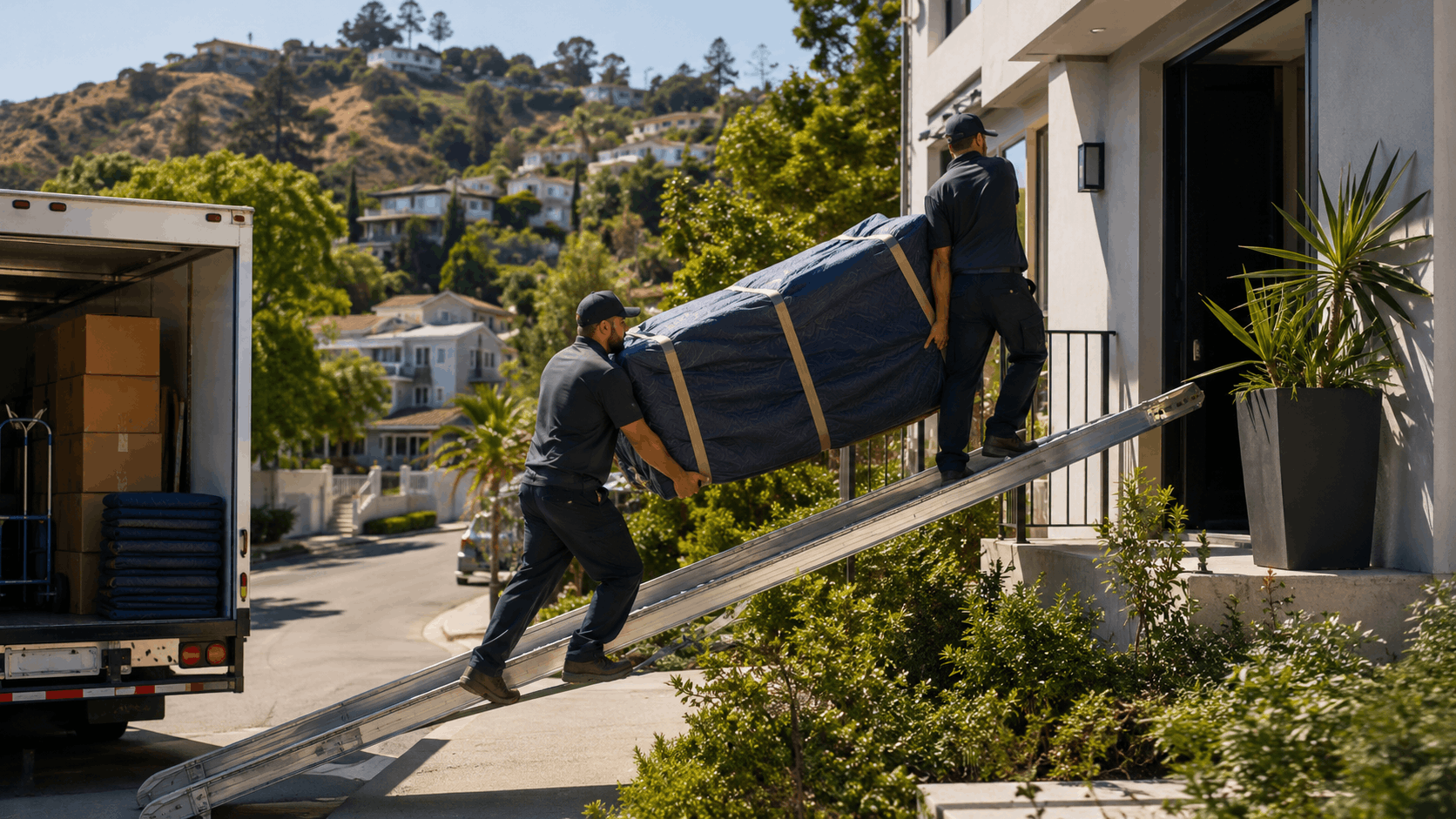
The core solution is a shuttle move. We park the main truck in a spot it can safely reach, then use a smaller vehicle to carry loads the rest of the way. Add in stairs, slopes, and heavy items, and hillside logistics take real planning.
A steep driveway that looks fine in a car photo can be a serious obstacle for a loaded truck. Our job is to figure out the safest path before move day, not while the truck is stuck halfway up a hill. Here is how the pieces fit together.
Shuttle Trucks for Narrow Roads
When a full-size truck cannot make it up a road, a shuttle truck takes over. This is a smaller vehicle that fits on tight streets near Fryman Canyon and Deervale Drive where a 26-footer would never turn around. It ferries items between the main truck and the home.
The process works in stages. We load the big truck at the staging spot, then transfer items to the shuttle for the trip up the narrow road. It takes a few extra runs, but it keeps the belongings safe and the neighbors' driveways clear.
Narrow road access is common in the hills above Sherman Oaks. Streets built decades ago were never meant for large trucks, and many have no room to pass. The shuttle solves this without risking a truck getting wedged on a blind curve.
We decide on a shuttle during the planning stage, not on the fly. A look at the road width and the driveway grade tells us whether a shuttle is needed. Building it into the plan keeps the extra cost predictable instead of a surprise.
Stairs, Slopes, and Long Carries
Many hillside homes sit at the top or bottom of a long flight of stairs. A long carry from the street to the door adds time and effort, especially with heavy furniture. Our crews plan the carry path and pace themselves to stay safe.
Stair moving takes technique and teamwork. Bulky pieces like sofas and dressers need two or more movers working in sync on a staircase. We use shoulder straps and dollies where they help, and we clear the path of anything that could cause a trip.
Hillside access with slopes changes how long a move takes. A flat carry might take a crew ten minutes per load, while a steep stair carry can double that. We factor this into both the timeline and the quote so there are no surprises.
Long carries also affect crew size. A home with a hundred feet of stairs from the road needs more hands than a flat property. Sending the right number of movers keeps the day moving and prevents anyone from getting worn down and careless.
Protecting Heavy and Fragile Items on Grades
Moving a piano down a steep driveway is not a job for guesswork. Piano moving on a grade calls for straps, ramps, and a crew that knows how to control the weight going downhill. We secure the instrument and move it slowly, never letting gravity take over.
Safes and other heavy items get the same careful treatment. On a steep grade, a heavy load wants to slide, so we use proper equipment and enough people to keep full control. Rushing a heavy item on a slope is how injuries and damage happen.
Fragile items like glass tabletops and framed art need protection from both drops and shifts. On uneven ground, a padded and crated piece rides far better than a loosely wrapped one. We crate the delicate pieces before they ever leave the house.
Our piano moving pros handle these steep-grade challenges regularly. The right gear and an experienced crew turn a risky carry into a controlled one. That is what protects both the item and the people moving it.
Pre-Move Site Surveys
A site survey is an on-site visit before move day to check the property. We measure the driveway, road width, stair count, and doorways. This access assessment tells us exactly what equipment and crew the move needs.
For hillside homes, a survey is worth the time. Photos and maps miss details like a low-hanging branch, a soft shoulder, or a gate that a truck cannot clear. Seeing it in person removes the guesswork.
Move planning gets sharper after a survey. We can decide whether a shuttle is needed, where to stage the truck, and how many movers to send. That plan becomes the blueprint for a smooth day.
Surveys also make quotes accurate. A move priced from a real look at the property rarely changes at the end. Clients get a number they can trust because we saw the challenge with our own eyes.
Street Parking and Permits Around Sherman Oaks
Getting a legal, close spot for the moving truck matters more than most people expect. On busy Valley streets, a truck parked in the wrong place can get ticketed or towed mid-move. Sorting out Sherman Oaks parking ahead of time keeps the day on track.
Some areas have permit districts, some have meters, and some allow temporary no-parking signs for moving trucks. Knowing which rules apply to your street is the first step. A little planning around moving truck parking saves both money and hassle.
Permit-Only and Metered Zones
Parts of Sherman Oaks near the Ventura Boulevard shopping areas fall under permit parking districts. These streets restrict parking to residents with permits, and a moving truck without one risks a ticket. Some blocks also have metered zones with time limits too short for a full move.
Securing a temporary spot in these zones takes advance work. The City of Los Angeles offers ways to reserve curb space for moving trucks, which we cover in the next section. Starting this process early is the safe bet.
Metered zones create their own problem. Feeding a meter for a six-hour move is impractical, and the time limit may force the truck to move partway through. A temporary permit removes that pressure.
We help clients figure out which zone their street falls under. Once we know the rules, we plan where to park and whether a permit is needed. That keeps the truck legal and close to the door.
Requesting Temporary No-Parking Signs
For large moving trucks, temporary no-parking signs are often the cleanest solution. The City of Los Angeles allows residents to request temporary postings that reserve curb space for a move. This reserves a spot right in front of the home.
The process runs through the city's transportation department. You apply for a temporary permit, and the signs go up a set number of days before the move. The Los Angeles Department of Transportation handles these requests and posts the timelines on its site.
Timing the request matters. The city needs lead time to process the permit and put up the signs, usually a couple of weeks. Applying late can leave the truck without a reserved spot on move day.
These signs are a lifesaver on crowded streets. Instead of circling the block or parking far away, the crew rolls straight into the reserved space. That shorter carry saves time and lowers the risk of damage.
Coordinating With Neighbors
On tight Sherman Oaks streets, a heads-up to neighbors goes a long way. Letting them know the move day and the truck's parking plan helps avoid blocked driveways and hard feelings. Most neighbors appreciate the courtesy.
Driveway access is a common flashpoint. A truck parked across a shared drive can trap a neighbor's car for the whole day. A short conversation ahead of time prevents that headache.
These move day tips cost nothing but save real trouble. A note in a mailbox or a knock on the door a few days before is usually enough. Neighbors who know the plan tend to work around it.
Good neighbor coordination also helps if the crew needs a little extra room. A neighbor who understands the situation might move their car or hold a spot. That goodwill makes a tight-street move much easier.
Peak Traffic Times to Avoid
Traffic around Sherman Oaks can crush a moving schedule if the timing is wrong. The 101 freeway and the 405 freeway both run near the area and back up badly during rush hour. A truck stuck in traffic burns clock and money.
Morning rush on the 405 through the Sepulveda Pass is especially rough. Afternoon traffic on the 101 near the interchange is not much better. We plan truck arrival to dodge these windows whenever possible.
Traffic timing shapes the whole day. Starting a move early, before the worst congestion, often means the crew arrives fresh and the roads are clear. Late starts risk running into the evening jam.
For moves between neighborhoods, we route around the busiest stretches. Knowing which surface streets bypass a freeway snarl keeps the truck moving. That local routing knowledge keeps the schedule intact.

Need Help in Los Angeles?
Popeye Moving & Storage serves Los Angeles and all of Los Angeles County.
Packing and Storage Options for Valley Residents
Not every Sherman Oaks move happens on a clean timeline. Sometimes a closing slips, an HOA approval drags, or the new place is not ready. Packing help and storage options fill those gaps and keep the move on track.
Our packing and crating services range from a few fragile items to a whole house. On the storage side, we offer short-term and climate-controlled units for whatever the situation calls for. Here is how each option fits a Valley move.
Full-Service and Partial Packing
Full-service packing means our team packs everything in the home, from the kitchen to the closets. We bring the boxes, wrap the fragile pieces, and label each carton by room. For busy Valley households, this saves days of work.
Partial packing covers just what you want help with. Many clients pack their own clothes and books but hand off the kitchen, artwork, and electronics. It is a flexible middle ground that fits a tighter budget.
Both options use quality packing supplies. Sturdy boxes, good tape, and proper padding protect items far better than grocery-store cartons. The right materials make a real difference for a hillside move with lots of carrying.
Choosing between full and partial packing comes down to time and budget. Households with a tight schedule usually go full-service, while those with more time save by doing part themselves. We help clients pick the mix that works for them.
Short-Term Storage Between Closings
Hillside home closings often do not line up perfectly. You might sell before you can move into the new place, leaving a closing gap of days or weeks. Short-term storage bridges that gap.
HOA approval delays create the same problem. If a gated community has not cleared your move-in yet, your belongings need somewhere safe to wait. A storage unit holds everything until the green light comes.
Our storage solutions handle these in-between periods cleanly. We can move items straight into storage, then deliver them when the new home is ready. That saves a second full move and extra handling.
Short-term storage takes the pressure off a tight timeline. Instead of forcing two dates to match, you get breathing room. It is one of the most useful tools for a Sherman Oaks move with moving parts.
Climate-Controlled Storage for Sensitive Items
Valley heat is hard on certain belongings. Fine art, electronics, and solid wood furniture can warp, crack, or fade in a hot, uncontrolled space. Climate-controlled storage keeps the temperature steady and protects them.
Wood furniture is especially at risk. Big swings between summer heat and cooler nights can loosen joints and split panels. A climate-controlled unit holds a stable range that keeps furniture sound.
Electronics and media also do better in controlled storage. Heat degrades screens, batteries, and stored data over time. For anything valuable or hard to replace, the extra protection is worth it.
Furniture protection is not just about temperature. We wrap and pad pieces before they go into storage so they stay safe from dust and scuffs too. That care matters most for items you plan to keep for years.
Specialty Item Handling
Sherman Oaks homes often hold items that need special care. Artwork, wine collections, and antiques cannot go in a standard box. These call for custom crating and careful handling.
Custom crating builds a protective box around a specific piece. A large painting or a mirror gets a wooden crate sized to fit, with padding inside. This shields it from bumps during a hillside carry or a long haul.
Wine collections need temperature and stability. Bottles jostled or overheated can spoil, so we pack and transport them with care. For serious collections, climate-controlled storage keeps them safe between homes.
Antique moving takes a gentle, practiced touch. Older pieces are often fragile and irreplaceable, so our crews wrap and secure them individually. Our specialty moving team handles these valuables with the attention they deserve.
Planning Your Move Day Timeline
A smooth Sherman Oaks move comes from a good timeline. Between HOA approvals and hillside surveys, there are steps that cannot be rushed at the last minute. Mapping out the weeks ahead keeps everything on track.
The moving timeline starts the moment you book. From there, paperwork, packing, and prep each have their place. Here is how the schedule usually unfolds when planning a move in the Valley.
Booking and HOA Approval Lead Times
Booking movers early is the single best thing you can do. Popular dates, especially weekends and month-ends, fill up early in Sherman Oaks. Reserving four to six weeks ahead gives the best shot at your preferred day.
HOA approval needs its own lead time. Boards may take a week or more to process paperwork, and gate reservations often need advance notice. Starting this as soon as your date is set avoids a last-minute scramble.
Advance planning also helps with hillside surveys. If your home needs a site visit to plan a shuttle, that has to happen before move day. Booking early leaves room for the survey and any adjustments.
The general rule is the more complex the move, the earlier to book. A flat, simple home has more flexibility. A hillside home in a gated community needs the longest runway to line everything up.
The Week Before the Move
The final week is when the plan comes together. Confirm the parking arrangement, whether that is a permit or a temporary no-parking sign. Make sure the reservation is in place and the signs are scheduled to go up.
Finish the last of the packing. Your moving checklist should be nearly complete by now, with only daily-use items left. Label the final boxes clearly so the crew knows where each one goes.
Lock down the gate access details. Confirm any codes, passes, or guard registration with the HOA. A call to the community office the week before catches any missed paperwork.
Pre-move prep also means setting aside essentials. Pack a bag with what you need for the first night so you are not digging through boxes. A little foresight makes the first evening in the new home much easier.
What Happens on Move Day
The move day process starts with the crew's arrival. The team checks in, and the lead does a walkthrough of the home with you. This crew walkthrough confirms what is going, what needs special care, and the plan for access.
Loading follows the plan set during the survey. On a flat home, the crew loads straight into the truck. On a hillside property, they load the shuttle first and transfer to the main truck at the staging spot.
Transport runs on the routes we mapped to dodge traffic. The truck heads to the new home while the crew stays in sync on timing. For local Valley moves, this leg is usually short.
Unloading reverses the process. The crew carries items in, places furniture where you want it, and clears out the packing debris. A final walkthrough makes sure nothing is missed before the team wraps up.
Handling Delays and Surprises
Even a well-planned move can hit a snag. A blocked street, a delayed gate code, or a neighbor's car in the way can slow things down. The trick is having a plan when it happens.
Move day delays call for prompt problem solving. If a truck cannot reach the door, we shift to a shuttle. If the gate code is wrong, we call the HOA office to sort it while the crew keeps working elsewhere.
A good contingency plan keeps small problems from becoming big ones. Our crews carry extra padding, straps, and equipment so a surprise obstacle does not stop the move. Experience means we have seen most of these hiccups before.
Staying calm and flexible is what keeps the day on track. A blocked driveway is annoying but solvable. With the right crew and a backup plan, the move still gets done.
Need Help in Los Angeles?
Popeye Moving & Storage serves Los Angeles and all of Los Angeles County.
How Popeye Moving & Storage Co. Serves Sherman Oaks
Our team has spent years moving families across the Valley and up into the hills. We know the streets, the gated communities, and the challenges that come with each. That local footing shapes how we handle every Sherman Oaks move.
Here is what sets our approach apart for Valley and hillside properties:
- Deep knowledge of local neighborhoods and streets
- Crews trained for hillside carries and shuttle moves
- Full HOA compliance with COIs and deposits handled
- Proper licensing and insurance on every job
- Accurate quotes based on real site conditions
Local Knowledge of Valley Neighborhoods
We work every corner of the area, from Chandler Estates on the flats to the hills above Mulholland Drive. Each Valley neighborhood has its own quirks, and we know them. That local expertise turns a tricky move into a routine one.
Knowing the neighborhoods means knowing the access. We know which flat streets take a full truck and which hillside roads need a shuttle. That read comes from years of driving these routes.
Our reach covers nearby areas too, including Calabasas and Burbank. The Valley connects in ways that matter for routing and timing. We use that knowledge to plan the smoothest path.
This familiarity shows up on move day. The crew arrives already knowing your street and its challenges. That preparation is what a local moving company brings that others cannot.
Trained Crews and Proper Equipment
Our crews train for the specific demands of Sherman Oaks moves. Hillside carries, stair work, and shuttle operation all take skill. A trained crew handles these safely instead of learning on the job.
The right moving equipment matters just as much. Dollies, straps, ramps, and padding all have their place on a hillside move. We bring the gear each job needs rather than making do.
HOA compliance is part of the training too. The crew knows how to lay floor runners, pad common areas, and follow community rules. That care protects your deposit and keeps the board happy.
Skilled crews with proper gear move more efficiently and safely. Fewer mistakes mean less damage and a shorter day. That combination is what makes a hillside or gated move go smoothly.
Licensing and Insurance
We operate as fully licensed movers with proper insurance coverage. That protects your belongings and satisfies HOA boards that require proof. It is the baseline for any move worth trusting.
Insured moving means your items are covered if something goes wrong. Reputable movers carry liability and cargo coverage. You can verify a company's license through the Federal Motor Carrier Safety Administration.
Moving documentation does double duty. It protects residents and gives HOA boards the paperwork they need to approve a move. We provide COIs and other documents on request.
Proper credentials give clients confidence. A licensed, insured mover has real accountability. That backing matters most when your valuables are on the truck.
Getting an Accurate Quote
A good moving quote starts with understanding the job. We look at access, stairs, distance, and any specialty items. Those factors shape the cost estimate more than square footage alone.
For hillside and gated moves, an in-home survey gives the most accurate number. Seeing the driveway, stairs, and road width removes the guesswork. That means a quote that holds up on move day.
Specialty items factor in too. A piano, a safe, or a large art collection adds equipment and time. We account for these up front so nothing surprises you at the end.
An honest estimate is one you can plan around. We would rather give a real number than a lowball that balloons later. Reach out through our contact page to start a quote.
Final Thoughts
Moving in Sherman Oaks takes more planning than a typical Valley move. Between hillside access, HOA rules, and tight-street parking, the details add up. Getting them right ahead of time is what makes the day go smoothly.
Our team knows these neighborhoods, from the flats south of Ventura Boulevard to the hills near Mulholland Drive. We handle the shuttles, the paperwork, and the heavy lifting so you do not have to worry. That local experience is the difference maker.
Whether you are moving into a gated community or a steep hillside home, we are ready to help. Call Popeye Moving & Storage Co. today for a consultation and an honest quote. Let our team plan a Sherman Oaks move that goes right from start to finish.

Frequently Asked Questions
- Do I need HOA approval before my Sherman Oaks move?
- Most gated communities in Sherman Oaks require advance approval before a move. That usually means submitting paperwork, reserving a time window, and sometimes paying a refundable deposit. Boards may also ask for a Certificate of Insurance naming the HOA. Start this process as soon as your date is set, since approvals can take a week or more. We help clients gather and submit what their community requires.
- What is a Certificate of Insurance and how do I get one?
- A Certificate of Insurance, or COI, is a document proving the moving company carries liability coverage. HOA boards require it to protect common areas like lobbies and elevators during your move. It names the HOA as a certificate holder with specific coverage limits. We issue a COI before move day using the exact language your community asks for. Just send us the requirements a few days ahead.
- How do movers reach homes on steep hillside streets?
- When a full-size truck cannot reach a hillside home, we use a shuttle truck. We park the main truck at a safe staging spot, then transfer items to a smaller vehicle that fits the narrow road. The shuttle makes several trips up and down until the move is complete. This keeps belongings safe and neighbors' driveways clear. We plan the shuttle during the site survey.
- How much does a Sherman Oaks move cost?
- Costs vary with the size and complexity of the move. A local move might run a few hundred dollars for a small home to several thousand for a large hillside property. Stairs, long carries, shuttle service, and specialty items like pianos raise the price. The most accurate number comes from an in-home survey. We give honest quotes based on the real conditions at your property.
- Can the truck park on my street during the move?
- It depends on your street's rules. Some Sherman Oaks areas have permit-only or metered parking near Ventura Boulevard. For guaranteed curb space, you can request temporary no-parking signs from the City of Los Angeles, applied for a couple of weeks ahead. On tight streets, letting neighbors know your plan helps avoid blocked driveways. We help clients sort out the best parking option.
- How far in advance should I book my move?
- Book four to six weeks ahead when possible, especially for weekend or month-end dates. Complex moves need the most lead time. HOA paperwork, gate reservations, and hillside surveys all take days to arrange. A gated or hillside home in Sherman Oaks needs the longest runway to line everything up. Booking early also gives the best chance at your preferred move date.
- Do you offer storage if my move-in date changes?
- Yes. We offer short-term storage for closing gaps and HOA approval delays, which are common with hillside home sales. We can move your items into storage, then deliver them when the new home is ready. For sensitive items like art and wood furniture, climate-controlled units protect against Valley heat. This flexibility takes the pressure off a tight or shifting timeline.
- Can you move pianos and heavy safes on hillside grades?
- Yes. Our crews handle pianos, safes, and other heavy items on steep driveways and stairs. We use straps, ramps, and enough movers to keep full control of the weight going downhill. Rushing a heavy load on a slope is how damage and injuries happen, so we move slowly and carefully. Our specialty team has the equipment and experience for these steep-grade challenges.
- What happens if there is a delay on move day?
- Delays happen, and we plan for them. If a street is blocked or a truck cannot reach the door, we switch to a shuttle. If a gate code is wrong, we call the HOA office while the crew keeps working. Our crews carry extra equipment for surprises. Experience means we have seen most of these hiccups before and know how to keep the move on track.
- Do you handle both local and long-distance Sherman Oaks moves?
- Yes. We handle local moves within the Valley and across greater Los Angeles, as well as longer relocations out of the area. Whether you are moving a few streets over or across the state, our team plans the route and handles the details. Our long distance moving service covers relocations beyond the local area with the same care.
Popeye Moving & Storage Co. Team Team
Licensed moving and storage professionals serving Los Angeles and Los Angeles County.
Licensed in California · License #CAL T 189749 | USDOT 1472924 | MC 498816C
Why trust Popeye Moving & Storage?
Founded in 1994, Popeye Moving & Storage is a licensed and insured moving and storage service serving Los Angeles and Los Angeles County. All content is reviewed by our licensed technicians.

Need Help in Los Angeles?
Popeye Moving & Storage serves Los Angeles and all of Los Angeles County.
Related Articles
Hillside Move Logistics: Why Some LA Streets Need Smaller Trucks
Hillside move logistics in LA require smaller trucks, special permits, and careful planning. Learn why canyon streets demand a different approach and how Popeye Moving handles it.
Holmby Hills Movers: Compound and Estate Property Moving
A complete guide to moving Holmby Hills estates and compounds, covering planning, specialty packing, logistics, security, storage, and costs from experienced local movers.

Los Feliz Movers: Hillside Home and Narrow Street Logistics
A local guide to moving into Los Feliz hillside homes, covering narrow streets, permits, equipment, storage, and how Popeye Moving handles tough hillside jobs.