The LA Mover's Truck Fleet Explained - Why Narrow-Street and Hillside Jobs Need the Right Size, Not the Biggest
Key Takeaways
- In Los Angeles, the right-size truck beats the biggest truck because fit determines whether the crew can reach your door.
- Long trucks struggle with turning radius, steep grades, and tight parking in canyon and older neighborhoods like Echo Park and Laurel Canyon.
- A smart fleet ranges from cargo vans for studios to 26-foot trucks for wide-street large homes, plus shuttle vehicles for impossible hillside access.
- Hillside moves need careful planning for switchbacks, long stair carries, limited turnarounds, and fire zone road rules.
- The wrong truck adds shuttle fees, long carries, parking tickets, and 2 to 4 hours of wasted time on an hourly move.
- Popeye Moving sizes trucks with a walkthrough, street scouting, truck-count decisions, and permit and timing planning before moving day.
- Prep steps like reserving parking, measuring entries, flagging low branches, and timing around traffic and street sweeping make moving day smoother.
- Book two to four weeks ahead, or four to six during busy season, especially if a permit or shuttle plan is needed.
In This Article
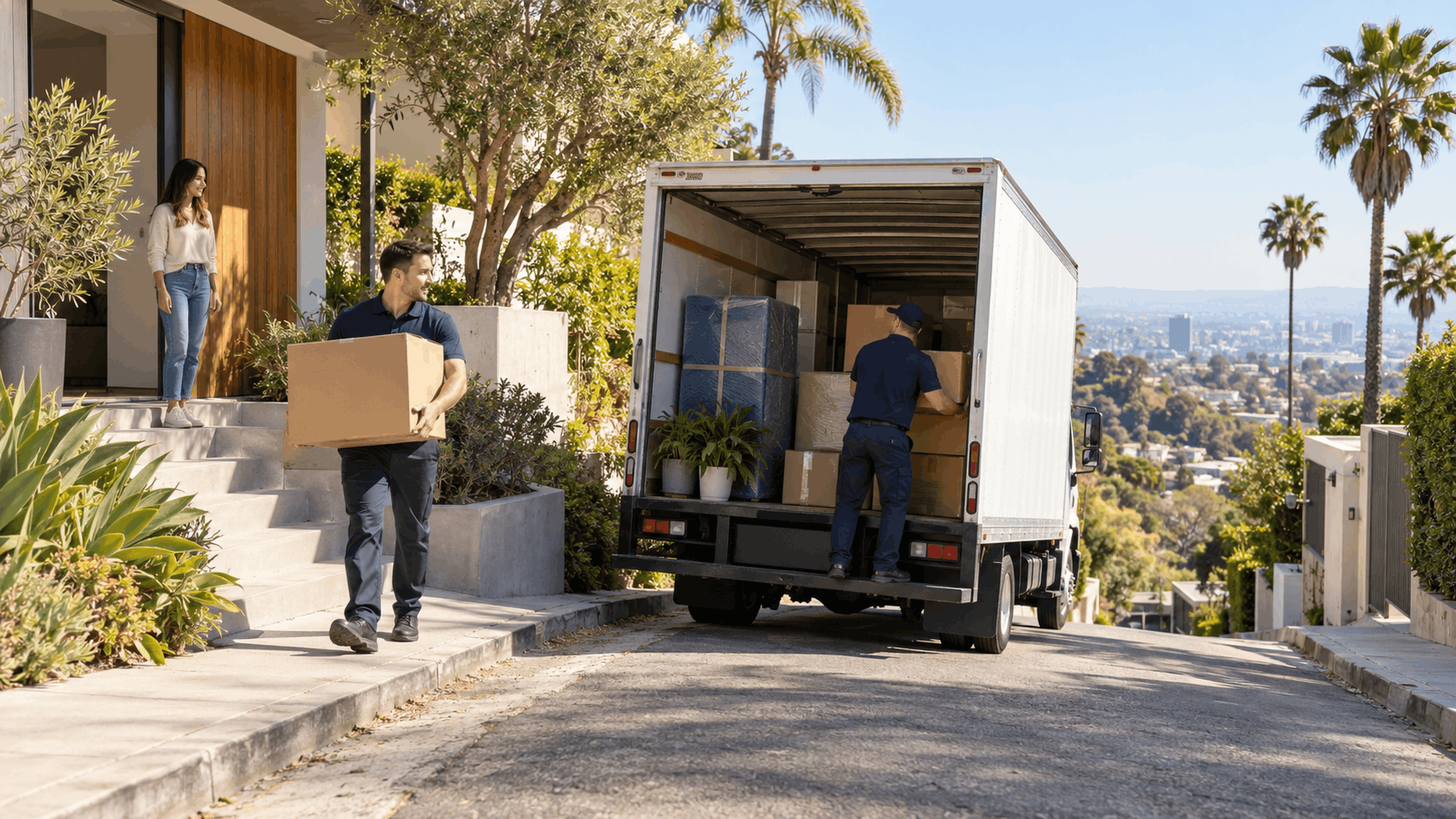
A 26-foot moving truck that noses onto a skinny Silver Lake street can get stuck almost at once. The driver could not clear a parked SUV on one side and a low retaining wall on the other. Neighbors came out. A one-way block turned into a slow-motion traffic jam. By the time the crew backed the rig out and swapped to a smaller truck, the family had lost almost two hours before a single box moved.
Scenes like this play out across Los Angeles every week, from the switchbacks of Laurel Canyon to the packed curbs of Echo Park. The lesson is simple. On many LA jobs, muscle does not win. Fit does. The right truck size beats the biggest truck almost every time when streets get tight and hills get steep.
Here is what our team at Popeye Moving & Storage Co. has learned after driving nearly every block in this city. In this guide, we break down how truck size affects your move, why hillside and narrow-street jobs need careful planning, and how matching the fleet to the job saves you money, time, and a lot of stress.
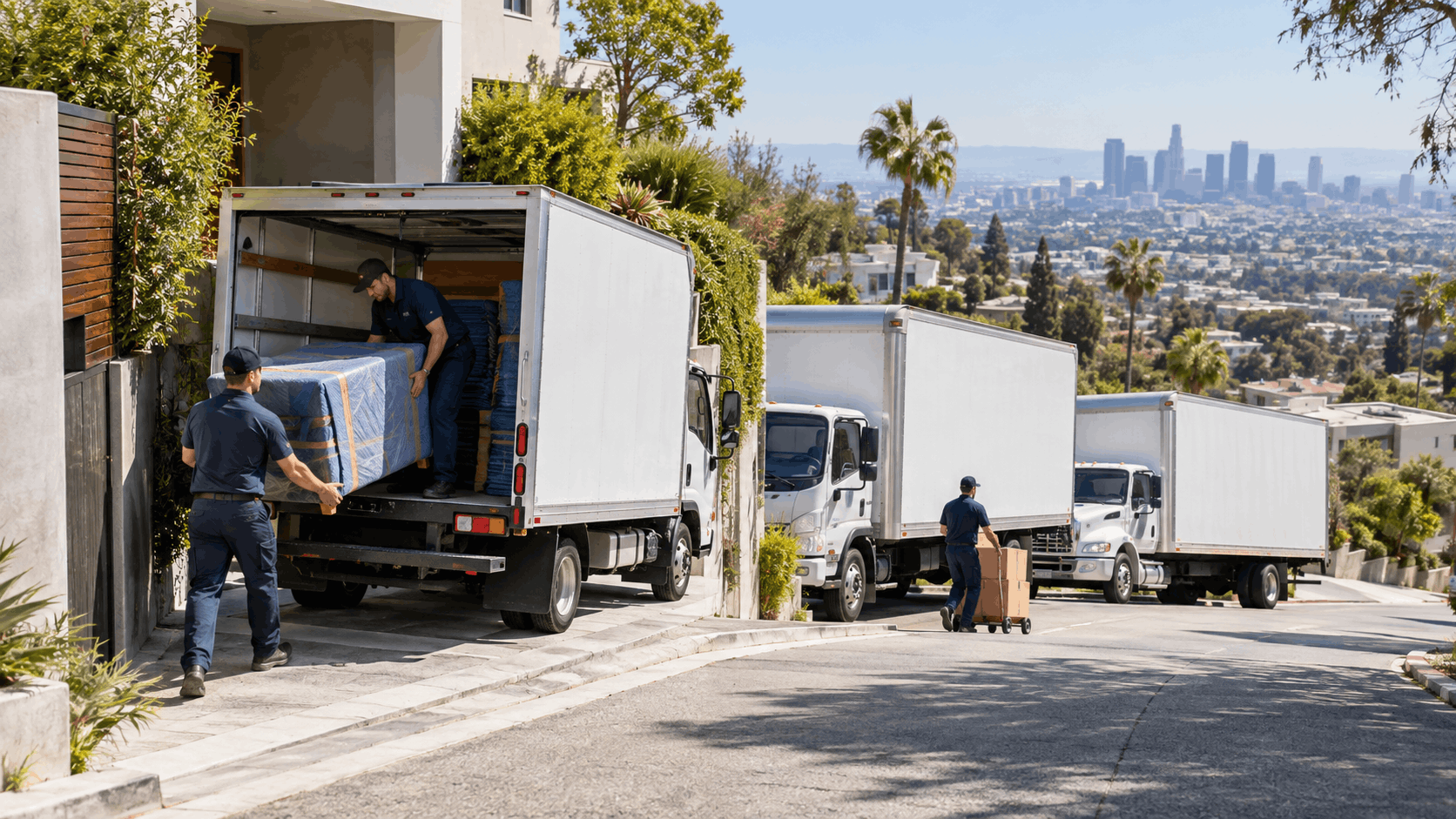
Why Bigger Trucks Fail on LA's Trickiest Streets?
Most people assume a bigger moving truck means a shorter move. On wide, flat streets, that logic holds. But across much of Los Angeles, the biggest truck creates more problems than it solves.
Narrow street moving in older parts of the city rewards trucks that can actually get to the front door. A rig that has to park three blocks away turns a smooth job into a marathon of long walks and wasted hours. The core idea our crews live by is that moving truck size should match the street, not the ego.
The Turning Radius Problem on Tight Corners
Turning radius is the space a truck needs to swing around a corner without hitting a curb, a car, or a wall. A long wheelbase makes that radius wider, and wide radius plus tight corner equals trouble. Neighborhoods like Echo Park and Beachwood Canyon are full of sharp intersections that were laid out long before big box trucks existed.
A 26-foot truck runs roughly 26 feet long with a tall box and a long wheelbase. It often needs a turning circle of 40 feet or more to make a clean corner. Squeeze that onto a 20-foot-wide street with cars parked on both sides, and the driver ends up doing a five-point turn while traffic backs up behind them.
Compare that to a 16-foot truck. Its shorter truck length means a much tighter turning radius, so it can round the same corner in one smooth motion. In the winding streets above Sunset, that difference decides whether a truck reaches the house at all.
We have watched oversized trucks give up on Beachwood Drive and reverse the whole way out. That is not a driver skill problem. It is basic geometry, and it is why we scout corners before we ever assign a truck to a hillside or canyon job.
Weight Limits and Steep Grade Risks
A loaded moving truck can weigh well over 20,000 pounds. Push that weight up a steep grade near Laurel Canyon or Mount Washington and the engine strains, the transmission works overtime, and the brakes take a beating on the way back down. Hillside moving punishes heavy trucks in ways flat-street moves never do.
Traction is the other issue. Many hillside driveways are short, steep, and finished in slick concrete or pavers. A fully loaded 26-foot truck trying to climb one can spin its wheels or, worse, slide backward. That is a safety risk for the crew and your property both.
Brake stress matters on the descent too. Long downhill runs with a heavy load can overheat brakes if the driver is not careful. Our team plans hillside routes to avoid the steepest grades and keeps loads sized so the truck stays in control the whole way.
This is why we often pick a lighter, smaller truck for homes perched above the canyons. A truck that can safely stop and start on a 15 percent grade is worth far more than one that holds more boxes but cannot get up the hill.
Parking and Street Access Headaches
Even if a big truck reaches your block, parking it legally is its own battle. Red curbs, bus zones, and no-parking stretches eat up the exact spots a large rig needs. Street access in dense LA neighborhoods is tight on a good day.
For bigger trucks on busy blocks, a LADOT parking permit for temporary no-parking is often the only way to hold curb space. These permits let you post signs and reserve a stretch of curb ahead of the move. Without one, a big truck may end up double-parked, blocking a lane, and collecting attention from parking enforcement.
You can find the temporary no-parking permit process through the Los Angeles Department of Transportation. We handle these permits for clients when a block calls for it, and we know which streets almost always require one.
A smaller truck sometimes sidesteps the whole problem. It fits into a normal parking space or a short driveway, so you skip the permit hassle entirely on some jobs. That flexibility is one more reason fit beats size.
Extra Fees and Wasted Time
When a truck cannot fit, the move does not stop. It just gets slower and more expensive. The crew starts hauling items a long distance to wherever the truck could park, and that long carry adds up.
A bad truck fit often triggers a shuttle fee, where a smaller vehicle ferries loads to the big truck parked blocks away. That means double handling of every item and extra labor hours. On an hourly move, the meter keeps running the entire time.
We have seen a poor truck choice add two to four hours to a job that should have taken half a day. On a crew billed by the hour, that can mean hundreds of dollars in avoidable moving cost. Multiply that across long carries, shuttle runs, and standing around while a driver hunts for parking, and the waste is real.
The fix is planning. When we size the truck correctly before moving day, those extra fees mostly disappear because the crew works from a spot near the door.
Get Your Free Quote
Tell us about your move. We'll be in touch soon.
The Truck Sizes in a Smart LA Fleet
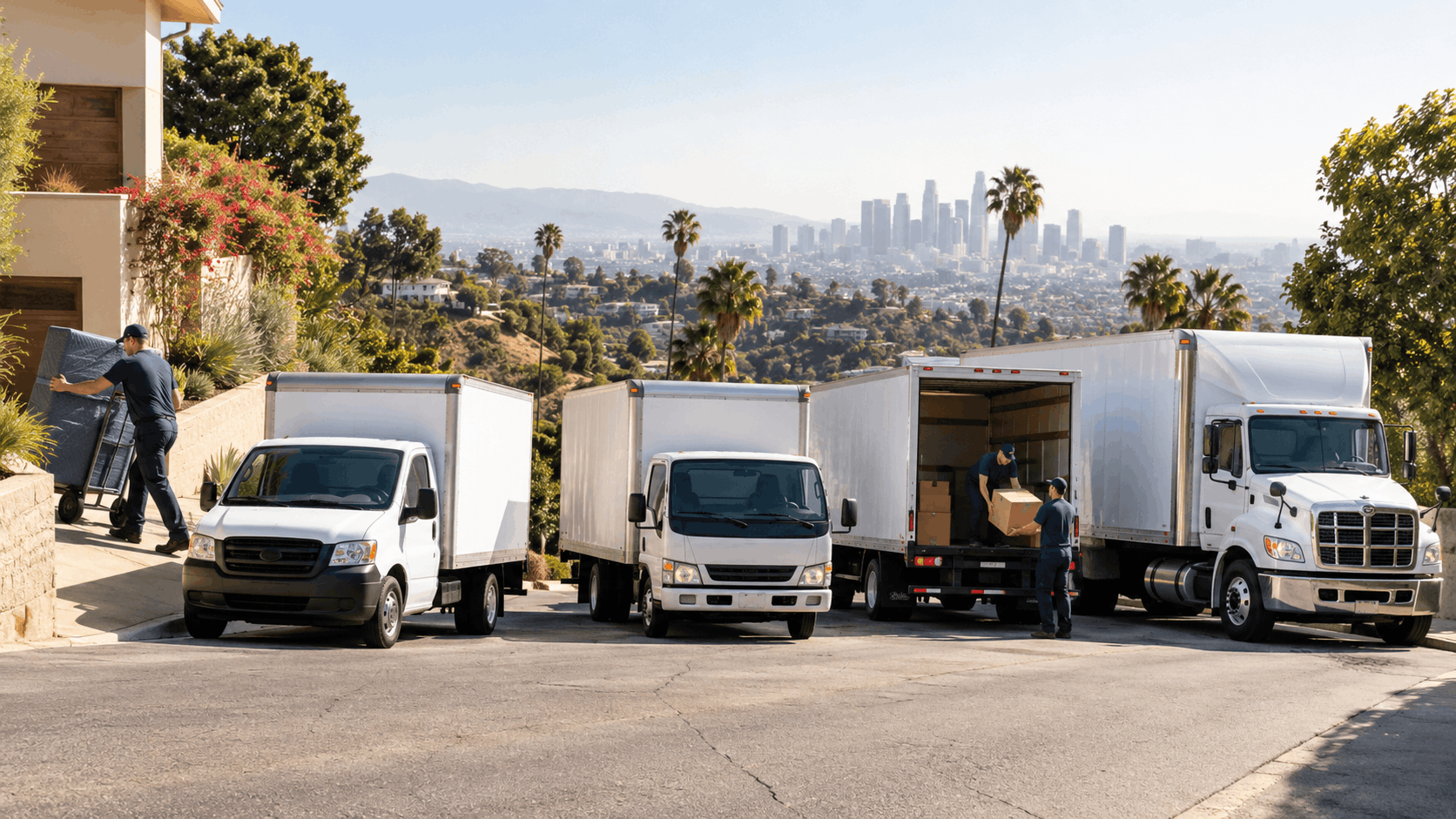
A good truck fleet is not about owning the biggest rigs. It is about having the right range so every job gets a match. Popeye Moving & Storage Co. runs everything from cargo vans to 26-foot trucks, plus shuttle vehicles for the hardest hillside access.
Here is how we think about moving truck sizes and cubic feet for LA homes. The goal is always to move your belongings in as few trips as possible while still fitting the street.
Cargo Vans and Small Trucks for Studio and One-Bedroom Jobs
A cargo van or a 10-to-16-foot truck is the sweet spot for small loads. Think studios and one-bedroom apartments in dense areas like Koreatown or West Hollywood where parking is brutal and streets are narrow. These vehicles slip into spots a bigger truck could never use.
A cargo van holds a studio's worth of furniture and boxes, roughly the contents of one small room plus a bed and a dresser. A 16-foot truck steps that up to a comfortable one-bedroom move, holding around 800 to 1,000 cubic feet. That covers a bed, a sofa, a dining set, and a stack of boxes with room to spare.
For a one-bedroom move in a tight building, the small truck often means the driver parks right at the loading door. No long carry, no shuttle, no permit drama. Our local residential moving crews use these smaller vehicles constantly across the flatter parts of central LA.
The trade-off is capacity. If you have a packed one-bedroom with heavy furniture and a full storage closet, a van may need two trips. We weigh that against the parking reality of your specific block before we decide.
Mid-Size 20-Foot Trucks for Family Homes
The 20-foot truck is our workhorse. It handles most two-bedroom and many three-bedroom homes, holding roughly 1,000 to 1,400 cubic feet of furniture and boxes. For a family move, it hits the balance between capacity and street friendliness.
This size fits a lot of LA. It can manage many older residential streets, standard driveways, and moderate corners that would trap a 26-foot rig. For a two-bedroom bungalow with a normal front approach, the 20-foot truck usually does the whole job in one load.
Where it struggles is the extreme stuff. The steepest canyon driveways and the narrowest one-way blocks can still be too much for a 20-foot truck. In those cases we drop down a size or switch to a shuttle plan.
Most family moves across neighborhoods like Culver City and mid-city LA ride comfortably in this truck. It is the size we reach for first when the street cooperates and the home is average in size.
26-Foot Trucks and When They Actually Make Sense
The 26-foot truck is the biggest in the fleet, holding around 1,600 to 1,800 cubic feet. That is enough for a large four-bedroom home in a single load. It saves trips, and trips cost time.
But it only shines on the right streets. Wide roads in parts of the San Fernando Valley, newer developments with generous curbs, and homes with long straight driveways are where a 26-foot truck earns its keep. On those jobs, one big truck beats two smaller ones on both time and cost.
The conditions matter. We use a 26-foot truck when the street is at least wide enough for two-way traffic with the truck parked, when corners are gentle, and when there is a legal place to leave it. A large home move on a flat, open block is the textbook case.
What we will not do is force a 26-foot truck onto a street that cannot take it just because the home is big. In those situations, we split the load or shuttle it. The truck size follows the street, always.
Shuttle Vehicles for Impossible Access
Some homes simply cannot be reached by any full-size moving truck. Hidden hillside houses off narrow lanes in the Hollywood Hills are a classic example. That is where a shuttle truck saves the day.
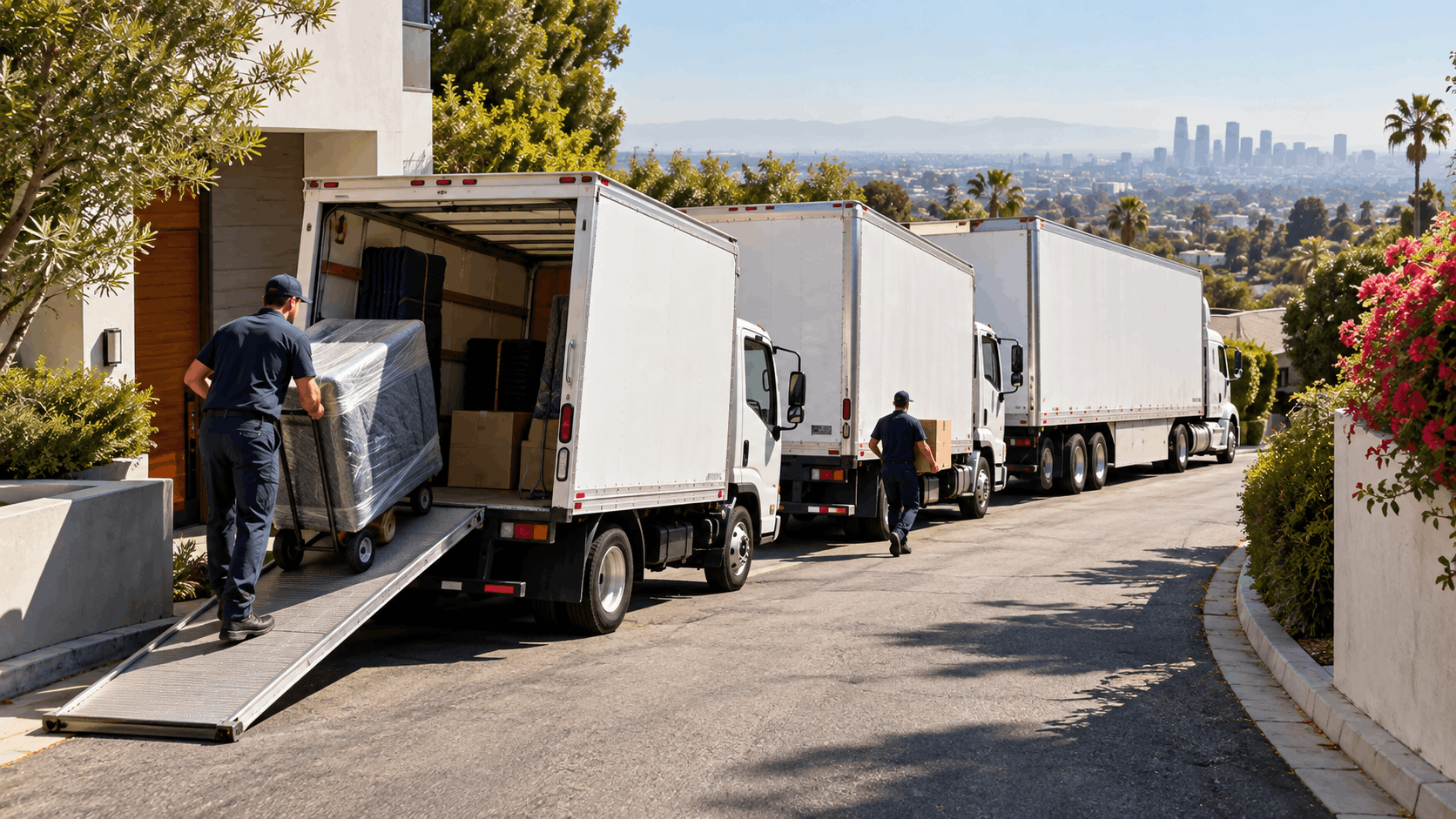
A shuttle is a small truck or van that runs between your door and a larger truck parked at a wider spot below. The big truck stays put where it can park legally, and the shuttle makes short runs up the hill. It is more handling, but it makes an otherwise impossible move possible.
Shuttle service shines for hillside access where switchbacks and dead ends rule out a long rig. We stage the large truck at a safe, legal spot, then send the nimble shuttle up to the house. The crew loads the shuttle, drives down, and transfers items into the main truck.
Yes, a shuttle adds labor and time to the job. But compared to a truck that gets stuck or a carry that runs a quarter mile downhill, it is usually the more efficient and safer option. We price it honestly so there are no surprises on moving day.
Need Help in Los Angeles?
Popeye Moving & Storage serves Los Angeles and all of Los Angeles County.
How Hillside Neighborhoods Change the Plan
LA's hillside communities are beautiful and brutal to move in. The same views that draw people up the canyon come with roads that were never built for freight. Hillside moving in the Los Angeles hills demands a different playbook than a flat move.
The right truck and the right crew size solve most of it. But you have to plan for the steep driveway, the tight road, and the long stairs before the truck ever rolls out.
Switchbacks and Narrow Roads in the Canyons
Roads like Nichols Canyon and Beachwood Drive twist through the hills in tight switchbacks. A switchback is a hairpin turn that doubles back on itself, and long trucks simply cannot make the swing. The rear of a 26-foot truck tracks far inside the front on a sharp turn, so it clips walls, curbs, and parked cars.
These narrow roads also lack shoulders. There is no room to pull over and let oncoming traffic pass, which means a stuck truck blocks everyone. Residents in these canyons know the frustration of a delivery truck jamming the road for twenty minutes.
Smaller trucks handle switchbacks far better because their shorter length tracks tighter through the turn. When even a small truck cannot make it, we bring in a shuttle. The shuttle handles the twisty top stretch while the main truck waits below.
Local knowledge matters here. We know which canyon roads a 16-foot truck can survive and which demand a shuttle from the start, so we build the plan around real conditions, not guesses.
Long Stairways and Downhill Carries
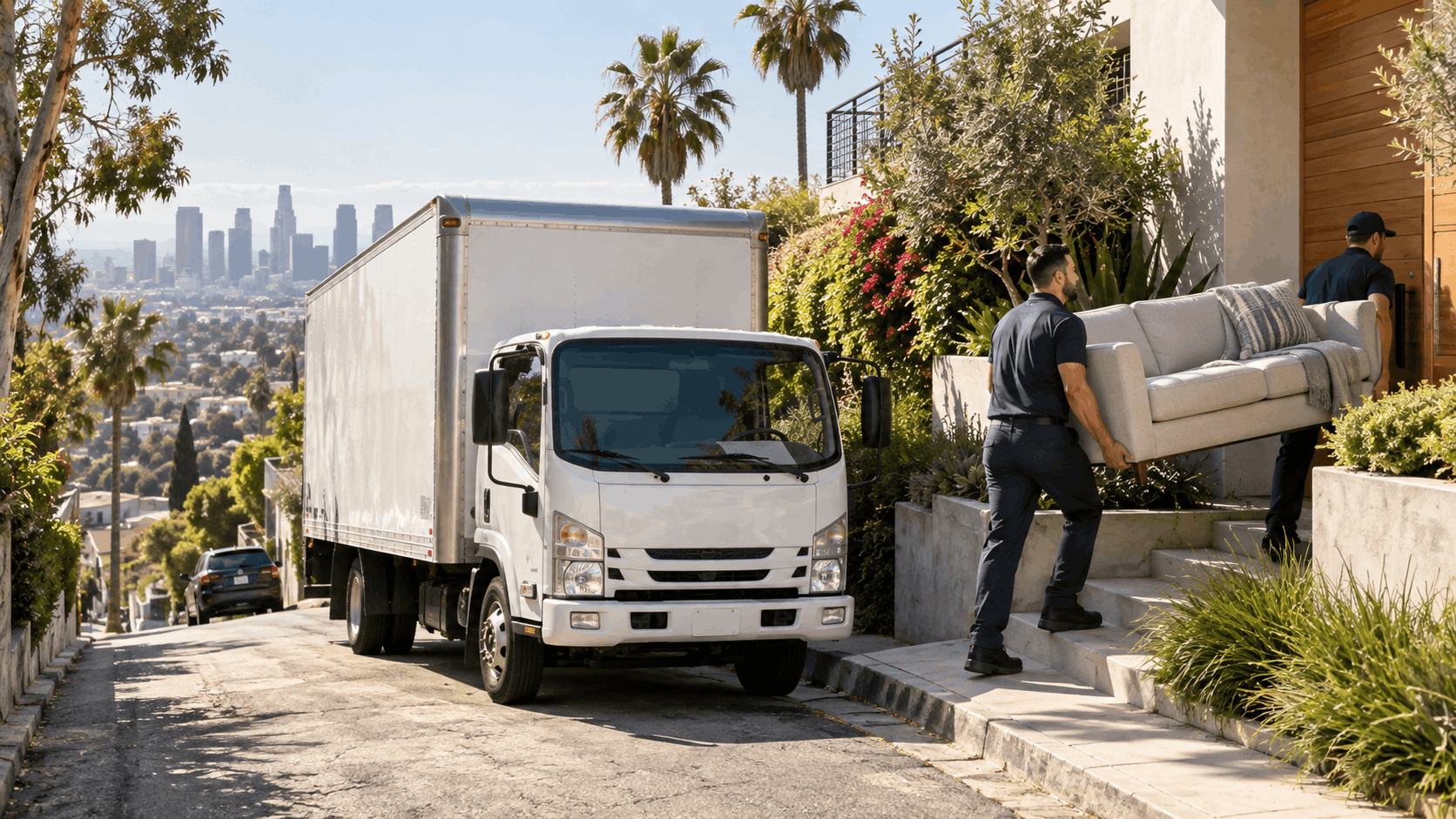
Stilt homes and hillside houses often sit far below or above the street. That means a long stair carry to reach the truck, sometimes 30, 50, or more steps. Mount Washington and Silver Lake are full of these homes where the front door is a staircase away from the curb.
Downhill carries add their own risk. Carrying a heavy dresser or a sofa down a long flight of outdoor stairs is hard on the body and hard on the furniture. It calls for more crew members so no one is overloaded and every item stays controlled.
We size the crew to the stairs, not just the home. A house with a big stair run gets extra movers so the carry stays safe and steady. We also bring gear like shoulder straps, furniture dollies, and padding built for stair work.
For fragile or heavy pieces, this is where planning pays off. A piano or a large armoire coming down a stilt-home staircase needs the right people and the right equipment, which is why we lean on our piano moving pros for those tough carries.
Limited Turnaround and Backing Space
Many hillside streets dead-end with almost no room to turn around. A big rig that drives to the end of a dead-end street may have no way to reverse out safely. We have seen trucks get truly trapped, needing a spotter and a very slow, careful back-out.
Backing space is scarce in the hills. Tiny turnarounds meant for passenger cars cannot handle a 26-foot truck's length. Trying to three-point-turn a long truck on a narrow hillside lane risks going over an edge or into a wall.
Choosing the right truck avoids the whole mess. A shorter truck can turn where a long one cannot, and a shuttle sidesteps the turnaround issue by keeping the big truck on a wide road below. We map the exit before the truck goes in.
The rule we follow is never to commit a truck to a spot it cannot back out of cleanly. A few minutes of scouting saves an hour of white-knuckle reversing on a cliffside street.
Fire Zone Road Rules and Access Windows
Much of the LA hills sits inside designated fire hazard zones. These areas have brush clearance rules and narrow fire-access lanes that must stay open for emergency vehicles. A moving truck parked wrong can block a fire lane, which is both dangerous and against the rules.
You can check whether a property falls in a hazard area through the California fire hazard severity zone maps. Knowing this ahead of time shapes how and where we stage the truck.
Timing matters in these zones too. On red-flag fire days and during high-wind events, access can tighten and parking on narrow lanes becomes riskier. We plan hillside moves around calmer windows when we can.
Our crews keep fire lanes clear and stage trucks where they never block emergency access. It keeps your neighbors safe and keeps the move on the right side of hillside rules.
Narrow-Street Moves in Older LA Neighborhoods
Not every tricky move is on a hill. Plenty of the hardest jobs are on flat but tight streets in older parts of the city. Narrow street layouts, parked cars everywhere, and skinny lanes create real headaches in these neighborhoods.
The right truck size prevents damage and keeps the move flowing. In older LA, that usually means going smaller and smarter, not bigger.
Packed Parking in Echo Park and Highland Park
Echo Park and Highland Park are famous for full curbs. Every spot is taken by early morning, and many blocks are one-way with barely room for two cars to pass. A big truck on curb parking here has nowhere to legally sit.
These older neighborhoods were built when most homes had one car, if any. Today the same streets hold two or three cars per household, so parking pressure is intense. A 26-foot truck often cannot find a legal spot within a block of the home.
Timing helps a lot. Moving early on a weekday morning, before residents leave for work, or mid-morning after the commute clears can open up curb space. We often start these moves at 7 or 8 a.m. to grab parking while we can.
A smaller truck fits the gaps that a big one cannot. On a jammed Highland Park block, a 16 or 20-foot truck may slide into a single open space near the door, which changes the whole job for the better.
Low Overhangs, Trees, and Power Lines
Older streets like those in Los Feliz are lined with mature trees. Beautiful, yes, but their low branches love to snag tall trucks. A 26-foot truck stands around 12 to 13 feet tall, and plenty of tree canopies and power lines hang lower than that.
Clearance is a real safety issue. Catching a power line with a truck box is dangerous and expensive. Scraping under low branches can damage the truck and rain debris on cars below.
We check tree clearance and overhead lines as part of scouting the route. If a street has a low canopy, we bring a shorter truck that clears it or find an approach that avoids the worst branches. A little planning keeps the truck and the trees both intact.
In leafy pockets of Los Feliz and old Hollywood, this is a routine check for us. We would rather size the truck to the tallest obstacle than gamble and clip a line.
Tight Driveways and Alley Access
Older bungalow blocks often have short, narrow driveways and rear alleys. Sometimes the alley is the best way in, letting the truck load near a back door away from the busy street. Alley access can turn a hard job into an easy one.
But alleys are tight. Many are barely one vehicle wide with trash bins and fences crowding the edges. A 26-foot truck usually cannot fit, while a 20-foot or smaller truck often can.
Short driveways matter too. A driveway that fits a small truck lets the crew load right at the door, skipping the street entirely. We look for these options in bungalow neighborhoods where the front street is too tight to work from.
When a mid-size truck can back down an alley or into a driveway, it usually wins the job. It gets the crew close to the home without fighting for street parking or blocking a lane.
Apartment and Duplex Loading Zones
Apartments and duplexes near West Hollywood and Koreatown often share a single driveway or a small loading zone. That space fills up early, and a big truck can block the whole building's access. Coordinating the loading zone is half the battle for an apartment move.
Many buildings have rules about when you can use the loading area and how long you can hold it. Some require reserving a freight elevator or a set time window. We check these details before booking the truck.
For busy blocks, a LADOT temporary no-parking permit can hold curb space right in front of the building. That secures the truck a spot instead of circling for parking. We arrange this when a location calls for it.
Smaller trucks fit tight loading zones better and clear out sooner, which keeps building managers and neighbors happy. Our teams handling moves across West Hollywood and the Sunset Strip plan around these shared spaces every week.
Need Help in Los Angeles?
Popeye Moving & Storage serves Los Angeles and all of Los Angeles County.
How Popeye Moving & Storage Co. Matches the Truck to Your Job
Getting the truck right starts long before moving day. Our process is built to size the truck to your home and your street, so nothing surprises us when the crew arrives. Good pre-move planning is what separates a smooth LA move from a chaotic one.
Here is how our team handles truck matching for Los Angeles moves. Every step gathers the details that decide which truck rolls up to your door.
The In-Person or Video Walkthrough
It starts with a walkthrough, either in person or over video. We look at every room, the furniture, and the volume of boxes to size the load. This tells us how many cubic feet we need to move.
During the access survey, we also check the front approach, the doorways, and any stairs. We note anything oversized like a piano, a big armoire, or a treadmill that needs special handling. These details shape both the truck and the crew size.
A video walkthrough works well for busy clients. You walk your phone through the home while we take notes and ask questions. It takes fifteen or twenty minutes and gives us most of what we need for an accurate moving quote.
The point is to remove guesswork. When we have seen the home and the access, the estimate reflects reality instead of a rough guess that balloons on moving day.
Scouting the Street and Access Route
The home is only half the picture. We also scout the street and the access route, checking width, grade, and parking. On hillside and canyon jobs, this step decides whether we bring a shuttle.
We measure street width against the truck we plan to use and look at the corners along the route. We check for red curbs, low branches, tight turns, and any spot that could trap a truck. Route planning like this catches problems before they cost you time.
Local knowledge speeds this up. Our crews have worked specific blocks in Echo Park, Silver Lake, Los Feliz, and the canyons, so we often already know a street's quirks. That experience means fewer surprises on the day.
When a route looks marginal, we plan a backup. A shuttle staging spot, an alternate parking area, or a smaller truck all stay ready so the job never grinds to a halt.
Choosing Truck Count Over Truck Size
Sometimes the smartest move is two smaller trucks instead of one giant one. On tight LA streets, two 16 or 20-foot trucks can often do what a single 26-foot truck cannot, because they fit the block. Truck count can beat truck size when access is the limit.
Two trucks also let two crews load at once in some layouts, which speeds the job. The trade-off is coordination and sometimes a bit more cost for the extra vehicle. We weigh that against the time lost fighting a truck that does not fit.
For a large home on a narrow street, splitting the load is frequently more efficient overall. Each truck parks close, the carries stay short, and no one hauls furniture a block downhill. The math often favors two trucks in these spots.
We lay out both options with honest numbers so you can choose. Efficiency on a tight LA block usually comes from the right truck count, not the biggest single vehicle.
Booking Permits and Timing Around Traffic
Once the truck plan is set, we handle the logistics. That includes pulling a LADOT parking permit when a block needs reserved curb space. We post the signs ahead of time so the spot is clear on moving day.
Timing is the other piece. We schedule around LA rush hours and street sweeping so the truck is not stuck in gridlock or ticketed at the curb. Morning starts usually beat afternoon traffic across most of the city.
We check street sweeping days for your block since a swept-side ticket is easy to avoid with good planning. Many older neighborhoods sweep once or twice a week on set days, and we build the schedule around them.
Realistic time windows keep the whole day on track. When permits, parking, and timing all line up, the crew works without interruption and the move finishes when we said it would.
Cost and Time Impact of the Right-Size Truck
All this planning comes down to two things you care about most: moving cost and moving time. The right-size truck saves both, often by a wide margin. Here is where the savings actually come from.
The wrong truck adds hours and fees at nearly every step. The right one keeps the hourly rate working for you instead of against you.
| Scenario | Wrong Truck (too big) | Right-Size Truck |
|---|---|---|
| Carry distance | Half block or more | At or near the door |
| Extra time added | 2 to 4 hours | None |
| Shuttle fee | Often required | Usually avoided |
| Parking tickets | $70 to $100+ risk | Avoided with permit |
| Property damage risk | High | Low |
Fewer Trips and Shorter Carries
Proper access cuts the walking distance for every single item. When the truck parks near the door, a short carry replaces a long slog. That alone can shave hours off a big move.
Trips matter just as much. A correctly sized truck that fits the street may finish in a single trip, while a truck that cannot fit forces shuttle runs back and forth. Each shuttle run is dead time on the clock.
We have seen a right-size truck save two to three hours on a family move simply by parking close. On an hourly job, that is a large chunk of the bill gone. Short carries and single trips are where the efficiency lives.
Fewer steps also means a fresher crew that works steadily all day. Movers who are not exhausted from long carries handle your things with more care and speed.
Avoiding Damage and Repair Costs
A truck that does not fit is a truck that hits things. Scraped parked cars, cracked driveways from overweight rigs, and dinged furniture from awkward long carries all cost real money. Damage cost can dwarf any savings from cramming everything into one big truck.
Cracked concrete is a common one. A fully loaded 26-foot truck on a thin hillside driveway can crack the slab, and driveway repair runs into the thousands. A lighter truck avoids that risk entirely.
Property protection is built into right-sizing. When the truck fits and the carry is short, there are fewer chances for something to go wrong. Fewer near-misses means fewer claims.
We carry proper insurance, but the best claim is the one that never happens. Sizing the truck to prevent damage protects your home and belongings from the start.
Skipping Tickets and Towing Fines
An oversized truck parked wrong is a magnet for parking enforcement. A parking ticket in LA can run $70 to $100 or more, and a truck blocking a lane or a red curb invites one. Those fines land on the day you least want extra costs.
Towing is the nightmare scenario. If a truck blocks a driveway or a fire lane, it can be tagged, and sorting that out mid-move is a disaster. A towing fine plus the lost time can wreck a schedule.
Proper permits and correct parking skip all of it. A LADOT temporary no-parking permit holds legal space so the truck sits where it belongs. We handle the permit so the truck stays ticket-free.
The right truck also fits legal spots more easily, cutting the odds of a violation in the first place. Between permits and smart sizing, tickets rarely enter the picture on our jobs.
Getting an Accurate Flat or Hourly Quote
Right-sizing leads to honest estimates. When we know the truck, the crew, and the access up front, the moving quote reflects the real job. No mystery fees appear halfway through the day.
Surprise charges usually come from bad planning. A shuttle nobody expected, extra hours from long carries, or a second trip all pad the final bill. Sizing the truck correctly removes most of those surprises.
The final price is driven by volume, distance, crew size, and access. When those are clear, we can quote a fair hourly rate or a binding price you can trust. You know what you are paying before the truck arrives.
Reach out through our contact page for an estimate that reflects your actual home and street, not a generic guess. That is how we keep quotes honest.
Need Help in Los Angeles?
Popeye Moving & Storage serves Los Angeles and all of Los Angeles County.
Tips for Prepping Your LA Home for the Truck
You can make moving day easier with a little prep. A few simple steps clear the way for the truck and speed up the whole move. Here is what we tell every LA client before we roll out.
These tips are specific to LA streets, where access is the biggest variable. Handle these and your move gets smoother.
Clear and Reserve Parking Ahead of Time
Curb space is gold in LA. If you can, reserve parking in front of your home the night before with cones or by parking your own cars there to hold the spot. That secures the truck a place near the door.
Talk to your neighbors too. A friendly heads-up asking them to leave a stretch of curb open for the morning goes a long way on tight blocks. Most people are happy to help if you ask in advance.
For busy streets, ask us about a permit. A LADOT temporary no-parking permit legally reserves curb space and posts official signs. On a jammed Echo Park or Koreatown block, it can be the difference between a close park and a long carry.
The earlier you lock down parking, the better. Curb space that is open at 7 a.m. is usually gone by 9, so plan the reservation the day before.
Measure Doorways, Gates, and Stairs
Tight entries slow a move if the crew is not ready for them. Measure your doorways, gates, and stairways so we know what we are working with. A simple checklist helps us bring the right gear.
Note the width of your front door, any side gates, and the narrowest hallway. Measure large furniture too, like sofas and dressers, so we know if anything needs to be turned or partly disassembled. These numbers prevent stuck-in-the-doorway moments.
Stairs deserve special attention. Count the steps and note whether they are indoor or outdoor, straight or switchback. Long stair runs mean we bring more crew and stair-specific gear.
Send us these measurements during the walkthrough. With doorway, gate, and stair details in hand, our crew shows up with the exact equipment your home needs.
Flag Low Branches and Tight Turns
You know your street better than anyone. Point out low branches, blind corners, and tight turns to the driver ahead of time. A short warning saves a scraped truck box or a snagged power line.
Tree-lined blocks in Los Feliz and the older parts of the city are full of low canopies. If your street has one, tell us so we can bring a shorter truck or plan the approach. Clearance issues are easy to dodge when we know in advance.
Blind corners matter on hillside streets. A hairpin turn or a curve with no sightline needs a spotter and a slow approach. Flagging it helps the driver plan the route safely.
Anything that could catch a tall truck is worth mentioning. Low wires, awnings, and overhanging branches all factor into which truck we send and how we drive it in.
Time the Move Around Traffic and Sweeping
Traffic and street sweeping can eat your moving day if you ignore them. Aim for a morning start to beat the worst LA gridlock. Early starts also grab parking before the block fills up.
Check your street sweeping schedule. Getting swept off the curb mid-move means a ticket and a scramble, so pick a day or side that avoids it. Many neighborhoods sweep on fixed weekdays you can plan around.
Avoid rush-hour hotspots for the truck's route. The 101 through Hollywood, the 405 on the Westside, and the surface streets near downtown all clog badly at peak times. We route around them when we schedule your window.
The best window is often 7 to 8 a.m. on a non-sweeping weekday. That combination gives you open parking, lighter traffic, and a full day of daylight to finish the job.
Final Thoughts
The biggest truck is rarely the right truck in Los Angeles. On the switchbacks of Laurel Canyon, the packed curbs of Echo Park, and the narrow bungalow blocks of Highland Park, fit beats size every time. The right-size truck reaches your door, avoids damage, dodges tickets, and keeps the clock honest.
Matching the fleet to the job takes local knowledge and real planning. That is what our team brings to every LA move, from a studio in Koreatown to a stilt home in Mount Washington. We size the truck to your home and your street, not to a one-size-fits-all rule.
Frequently Asked Questions
- What size moving truck do I need for a Los Angeles home?
- As a rough guide, a cargo van or 16-foot truck fits a studio or one-bedroom, a 20-foot truck handles most two to three-bedroom homes, and a 26-foot truck suits large four-bedroom homes. But street access can override home size in LA. A big home on a narrow canyon street may still call for a smaller truck or a shuttle, so we always match the truck to both the home and the block.
- Can a big moving truck reach my hillside home?
- Often not directly. Many hillside and canyon roads have switchbacks, dead ends, and tight turns that a 26-foot truck cannot manage. In those cases we use a smaller truck or a shuttle service, where a nimble vehicle ferries loads between your door and a larger truck parked on a wider road below. During scouting we decide which approach fits your specific hillside access before booking.
- Do I need a parking permit for a moving truck in LA?
- On many busy or narrow blocks, yes. A LADOT temporary no-parking permit lets you reserve and post signs for curb space so the truck has a legal, close spot on moving day. It helps most on packed streets in areas like Echo Park, Koreatown, and West Hollywood. We handle these permits for clients when a location calls for one, so you avoid circling for parking or risking a ticket.
- How much does a shuttle service add to my move?
- Shuttle cost depends on the distance between the main truck and your door, the number of runs needed, and the extra labor hours involved. It adds to the total because items get handled twice and the crew makes several short trips. Even so, on impossible-access hillside jobs a shuttle is usually cheaper and safer than a very long carry or a stuck truck. We quote the access fee up front with no surprises.
- What happens if the truck can't fit on my street?
- We plan for that before moving day. Backup options include sending a smaller truck that fits the block, running a shuttle from a wider street nearby, or arranging a longer carry with extra crew to keep it moving. Because we scout the route ahead of time, we rarely get caught off guard. The goal is always to get the truck as close to your door as the street safely allows.
- Is it cheaper to use one big truck or two small ones?
- It depends on the street. On a wide, open block, one 26-foot truck is usually cheaper and simpler for a large home. On a tight LA street, two smaller trucks often win because they fit near the door, keep carries short, and avoid shuttle fees. We compare both options with real numbers for your specific move so you can pick the better value.
- How far in advance should I book a mover in LA?
- For most moves, two to four weeks of lead time is a safe window. During busy season, roughly May through September and the end of any month, book four to six weeks out since crews and trucks fill up early. If you need a permit or a shuttle plan, earlier is better. For last-minute needs, we do our best to fit you in, but options narrow as the date approaches.
- What LA neighborhoods have the trickiest truck access?
- The canyon and hillside areas top the list: Laurel Canyon, Nichols Canyon, Beachwood Canyon, Mount Washington, and the Hollywood Hills. Older flat neighborhoods with narrow streets and packed parking are tough too, including Echo Park, Silver Lake, Highland Park, and Los Feliz. These areas often need smaller trucks, shuttles, or permits, which is why we scout them carefully before every job.
- Will a bigger truck damage my driveway or trees?
- It can. A fully loaded 26-foot truck is heavy enough to crack a thin hillside driveway, and its 12 to 13-foot height can snag low branches and power lines on tree-lined streets like those in Los Feliz. Right-sizing the truck to your property's clearance and driveway strength prevents these problems. We check weight and clearance during scouting so the truck we send fits safely.
- How does Popeye Moving & Storage Co. decide which truck to send?
- We start with a walkthrough, in person or by video, to measure your load and check doorways and stairs. Then we scout the street for width, grade, corners, and parking. Based on both, we pick the truck size, decide whether two trucks or a shuttle make more sense, and arrange any permits. This truck-matching process gets the right vehicle to your door and keeps the quote honest. Ready to plan a move that actually fits your LA street? Call Popeye Moving & Storage Co. or reach us through our contact page for a walkthrough and an honest estimate. Whether you are in a Koreatown apartment, a Silver Lake bungalow, or a hillside home above the canyons, our team will match the right truck to your residential move and get you settled without the stuck-truck drama.
Popeye Moving & Storage Co. Team Team
Licensed moving and storage professionals serving Los Angeles and Los Angeles County.
Licensed in California · License #CAL T 189749 | USDOT 1472924 | MC 498816C
Why trust Popeye Moving & Storage?
Founded in 1994, Popeye Moving & Storage is a licensed and insured moving and storage service serving Los Angeles and Los Angeles County. All content is reviewed by our licensed technicians.

Need Help in Los Angeles?
Popeye Moving & Storage serves Los Angeles and all of Los Angeles County.
Related Articles

Art and Antiques in Vaulted Storage - The Conditions Fine Pieces Actually Need
Learn the real temperature, humidity, light, and security conditions fine art and antiques need in vaulted storage, plus how LA weather affects your collection.
What Burbank Renters Need to Know Before Moving in Los Angeles
A local guide for Burbank renters covering parking permits, LA traffic timing, moving costs, packing, storage, utilities, and how to hire the right movers.
Hillside Move Logistics: Why Some LA Streets Need Smaller Trucks
Hillside move logistics in LA require smaller trucks, special permits, and careful planning. Learn why canyon streets demand a different approach and how Popeye Moving handles it.