Long Carry Fees in LA: What Movers Charge Past 75 Feet (And How to Avoid)
Key Takeaways
- A long carry fee applies when movers must carry items more than 75 feet from the truck to the home's entry point, with most LA movers charging $75-$300 depending on distance.
- Movers use either a flat-fee model ($75-$150) or a per-foot model ($1-$2 per foot past 75 feet) - ask which one your mover uses during the estimate.
- LA neighborhoods like Koreatown, Downtown LA, Silver Lake, Echo Park, and the Hollywood Hills trigger long carry fees most often due to building layouts, hillside terrain, and parking restrictions.
- An LADOT temporary no-parking permit costs $20-$30 and can eliminate the long carry fee by letting the truck park directly in front of your building.
- Long carry fees can stack with stair fees, elevator fees, and shuttle fees - combined surcharges can reach $300 or more in complex buildings.
- Shuttle truck service ($250-$500 per trip) is an alternative to long carries in canyon and hillside neighborhoods where the main truck cannot reach the home.
- Coordinating with your building manager to reserve the freight elevator and loading dock can cut carry distance dramatically.
- A transparent moving estimate should list carry distance, all surcharges as separate line items, and conditions under which fees may change - as required by California's household mover rules.
In This Article
Imagine opening a moving estimate for a one-bedroom apartment in a Koreatown high-rise and spotting a $200 line item labeled "long carry fee." Or picture getting a quote for a hillside bungalow in Silver Lake where the truck has to park 200 feet down the street because the road is too narrow to get any closer. That extra charge was not on your radar - and now it is inflating the cost of your move.
Long carry fees are one of the most misunderstood surcharges in the moving industry. They catch people off guard because most customers assume the price covers getting items from Point A to Point B, regardless of how far the movers have to walk. In a city like Los Angeles - with its towering apartment complexes, steep hillside neighborhoods, and notoriously limited street parking - these fees come up more often than you might expect.
Let's talk about what long carry fees are, how Los Angeles movers typically price them, which neighborhoods and building types trigger them most frequently, and - most importantly - practical steps to reduce or eliminate the charge entirely. Whether you are moving into a Downtown LA loft or out of a canyon home in Echo Park, this guide has the specifics you need.
What Is a Long Carry Fee and Why Do LA Movers Charge It?
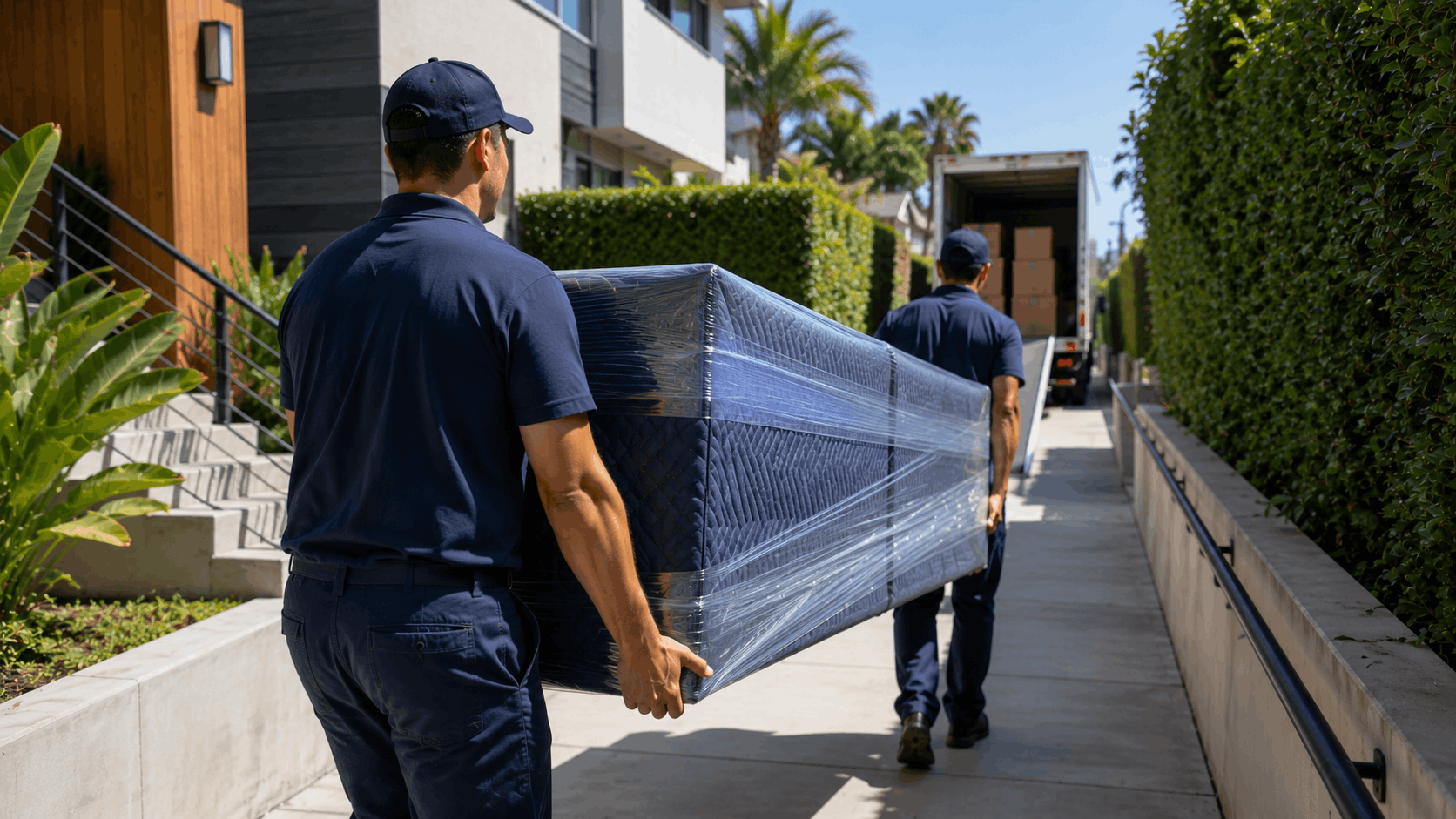
A long carry fee is an extra moving charge that applies when movers must carry furniture and boxes more than a standard distance - typically 75 feet - between the moving truck and the home's entry point. Think of it as a surcharge for the additional labor, time, and physical effort required when the truck simply cannot park close to the door.
This is not a fee movers invented to pad the bill. The long carry fee definition is straightforward: it compensates the crew for the real cost of walking farther with heavy items. Every extra foot adds minutes to the job, and those minutes add up, especially on a full household move. Among common moving surcharges, the long carry fee is one that customers can often control by planning ahead.
| Scenario | Typical Carry Distance | Long Carry Fee Likely? |
|---|---|---|
| Truck parked at curb, ground-floor unit | 20-50 feet | No |
| Truck in loading dock, unit on 15th floor via freight elevator | 100-200 feet | Yes |
| Street parking 150 feet from hillside home entrance | 150-250 feet | Yes |
| Gated complex, designated loading zone far from unit | 100-300 feet | Yes |
The 75-Foot Rule Most Moving Companies Follow
The 75-foot carry distance is the moving industry standard threshold. Most professional movers include the first 75 feet in the base price. Once the distance exceeds that mark, the long carry fee kicks in.
How do movers measure it? They walk the path from where the truck is parked to the closest entry point of the home or unit. This is not a straight-line measurement - it follows the actual walking route, including hallways, lobby corridors, and outdoor walkways. In a high-rise, the measurement typically runs from the loading dock or building entrance to the unit's front door.
At 75 feet, you are looking at roughly the length of five or six parked cars lined up bumper to bumper. In many LA apartment buildings, the distance from the loading area to a mid-building unit can easily double that.
Why the Fee Exists: Time, Labor, and Risk
The carry distance impact on a move is real and measurable. A crew carrying a heavy dresser 50 feet takes a fraction of the time compared to hauling the same piece 200 feet through a narrow hallway, around corners, and through a lobby. That longer carry can add 30 to 60 minutes to a single job - and for an hourly-rate move, that time adds up.
Moving labor costs increase with distance because fatigue sets in sooner. Tired movers move slower and are more prone to injuries and accidental damage. A long carry through a tight corridor with delicate items - like a chandelier or antique hutch - also raises the risk of property damage. The fee reflects all of these factors, not just the extra steps.
Get Your Free Quote
Tell us about your move. We'll be in touch soon.
How Much Do LA Movers Charge for Long Carries?
The long carry fee cost across Los Angeles varies depending on the mover, the distance involved, and the complexity of the path. Here is what to expect when reviewing a moving fee breakdown for an LA move:
- Flat-fee model: A one-time charge of $75 to $150, applied once the 75-foot threshold is exceeded.
- Per-foot model: A charge of $1 to $2 per additional foot past 75 feet, which scales with distance.
- Total range: Most customers pay between $75 and $300 in long carry fees, depending on the situation.
- High-complexity moves: In some Downtown LA or Hollywood Hills locations, fees can reach $300 or more when paired with other LA moving prices like stair or shuttle charges.
Flat Fee vs. Per-Foot Pricing Models
Some movers charge a fixed long carry fee, a set amount once the threshold is crossed. This is simpler to budget for, but it can work against you if the distance is only slightly over 75 feet. A flat $150 charge for an 80-foot carry feels steep.
Other companies use a per-foot moving charge. At $1 to $2 per foot past the 75-foot mark, you pay proportionally. If the truck parks 125 feet away, the fee might be $50 to $100 - less than a flat fee. But if the distance stretches to 250 feet, that per-foot model can run $175 to $350. Ask your mover which model they use during the estimate so you can plan accordingly.
Average Long Carry Costs Across Los Angeles
Across the greater LA area, the average moving fees for long carries land between $75 and $300. Straightforward moves - say, a Culver City apartment with a loading zone 90 feet from the unit - tend to fall on the lower end. Complex moves in hillside homes or sprawling condo complexes push toward the higher end.
Popeye Moving & Storage Co. provides transparent estimates so customers across LA never face surprise fees. When our team does an in-home estimate for a residential move, we walk the path from the truck to the door and give you an exact number. No guesswork, no day-of surprises.
When the Fee Gets Stacked with Other Surcharges
A long carry fee on its own is manageable. But it can stack with other moving surcharges, and that is where the total climbs. Here is a real-world example from a typical Koreatown high-rise move:
- Long carry fee (150 feet from loading dock to unit): $150
- Stair carry fee (one flight from parking garage to lobby): $75
- Elevator fee (freight elevator wait time): $50-$100
- Total surcharges: $275-$325
In buildings where the full-size truck does not fit at all, you might also face a shuttle truck fee on top of those charges. That is why knowing about moving surcharge stacking ahead of time matters. Ask your mover to list every possible fee during the estimate, and ask specifically about stair carry fees and elevator fees.
Need Help in Los Angeles?
Popeye Moving & Storage serves Los Angeles and all of Los Angeles County.
LA Neighborhoods and Buildings Where Long Carries Happen Most
Los Angeles is a city of extremes when it comes to access. Some neighborhoods have wide streets with driveways right at the front door. Others have winding roads, steep staircases, and buildings where the loading dock is a five-minute walk from the unit. Knowing which LA neighborhoods trigger long carry situations can help you prepare - and budget - before you sign with a mover.
High-Rise Apartments in Downtown LA and Koreatown
Buildings along Wilshire Boulevard and throughout the DTLA Arts District are notorious for long carries. Many of these towers have underground loading docks that require the crew to unload, ride a freight elevator, and then walk 100 feet or more down a corridor to reach the unit. Some buildings on 7th Street or Figueroa have loading bays that are shared with delivery services and retail tenants, creating wait times on top of distance.
Koreatown apartments - especially the newer luxury buildings near 6th and Western or along Olympic Boulevard - present similar challenges. Freight elevators are often booked in 2-hour windows, and the walk from the dock to a unit on the 20th floor can easily exceed 200 feet total. Our crew has worked hundreds of local residential moves in these buildings and knows exactly which ones require long carry planning.
Hillside Homes in Silver Lake, Echo Park, and the Hollywood Hills
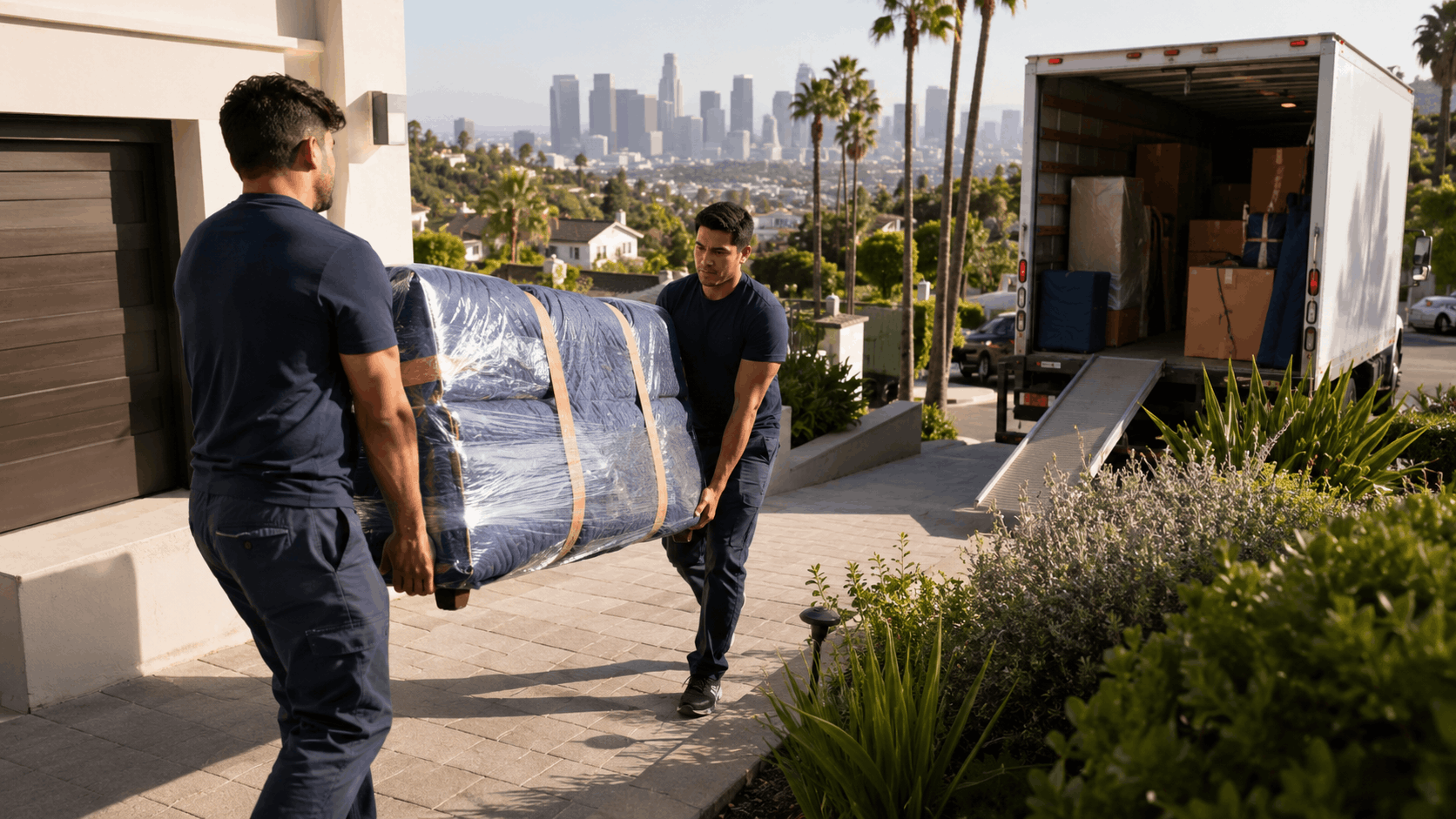
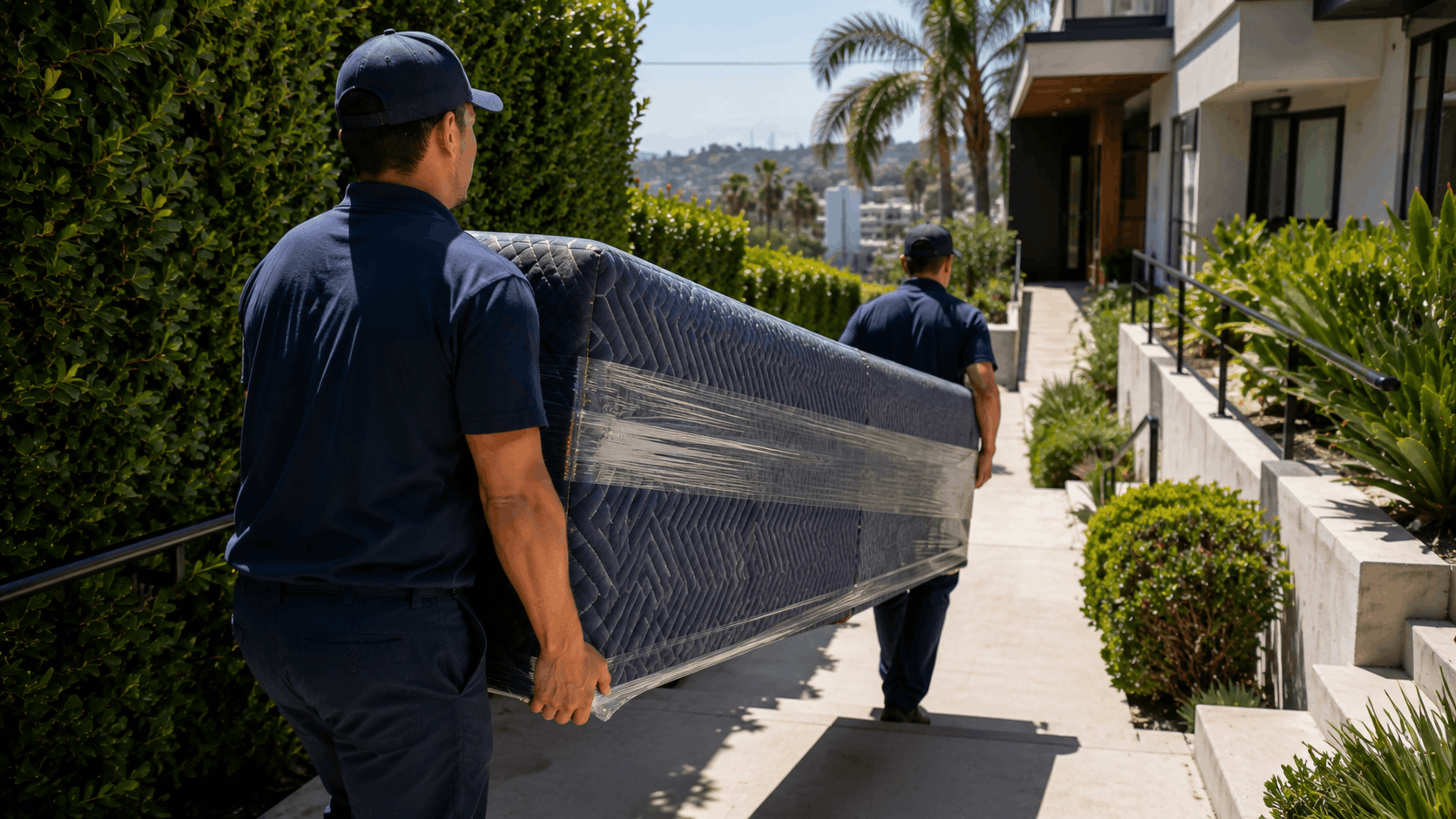
Hillside moving in LA is a different animal. Streets like Micheltorena in Silver Lake or Baxter Street in Echo Park are so steep and narrow that a full-size moving truck physically cannot make it up. The truck parks at the bottom, and the crew walks everything uphill - sometimes 150 to 250 feet, often up steep stairways carved into the hillside.
In the Hollywood Hills, addresses off Beachwood Drive or near Runyon Canyon can mean parking on a switchback and carrying items around blind curves. Silver Lake movers and Echo Park moving crews deal with this daily, but customers are often shocked by the distance when they see it measured out. If you live on a hillside, mention it during your estimate - it will affect the quote.
Gated Communities and HOA-Restricted Complexes
Large gated community complexes in Playa Vista, Westchester, and parts of the San Fernando Valley create long carry situations for a different reason: rules. HOA moving rules in LA often dictate that trucks must park in a specific loading area - sometimes hundreds of feet from the actual unit. Time restrictions add pressure too. Some HOAs only allow moves between 9 AM and 4 PM on weekdays.
Gated community moving fees can be hard to predict if you do not know the complex's layout. We recommend calling your HOA before the estimate and asking for a map of the approved loading zone. Share that with your mover so they can measure the distance accurately. Office and business moves in these complexes face similar restrictions.
How Movers Measure Long Carry Distance
The way movers measure carry distance can feel mysterious if you have never been through it before. The good news is that it is straightforward once you know what they are looking for. Reputable companies assess carry distance during the estimate phase - not after they show up and start unloading.
During the In-Home or Virtual Estimate
A quality moving estimate in LA includes a walkthrough - either in person or through a virtual moving survey via video call. The estimator will ask specific questions about your building: Where does the truck park? Is there a loading dock? How far is it from the dock or curb to your front door? Are there hallways, gates, or lobby areas to pass through?
Popeye Moving & Storage Co. assesses all of these details during the estimate. If the move involves a complex building, our estimator may request photos of the parking situation and lobby layout. For hillside homes, we sometimes use satellite imagery to check road width and grades before we even arrive. This is the kind of detail that separates a reliable estimate from a guess.
On Move Day: What Happens If the Distance Is Different
Move day surprises happen - a neighbor's moving truck is blocking the loading dock, a film crew has taken over the street parking, or the building suddenly has the freight elevator reserved for maintenance. These situations change the actual carry distance from what was estimated.
Honest companies communicate adjustments immediately. If the carry distance increases, the crew lead will explain the situation, show the customer the new path, and provide an updated fee before work continues. If you booked a last-minute move and did not have time for a full estimate, ask your mover how they handle day-of changes. Get that answer in writing if possible.
Practical Ways to Reduce or Avoid Long Carry Fees
Here is the part that saves you money. Long carry fees are not always avoidable - some buildings and locations make them inevitable. But in many cases, a little preparation can shorten the carry distance and reduce or eliminate the charge entirely. These steps work for moves anywhere across Los Angeles.
Reserve Parking and Loading Zones Ahead of Time
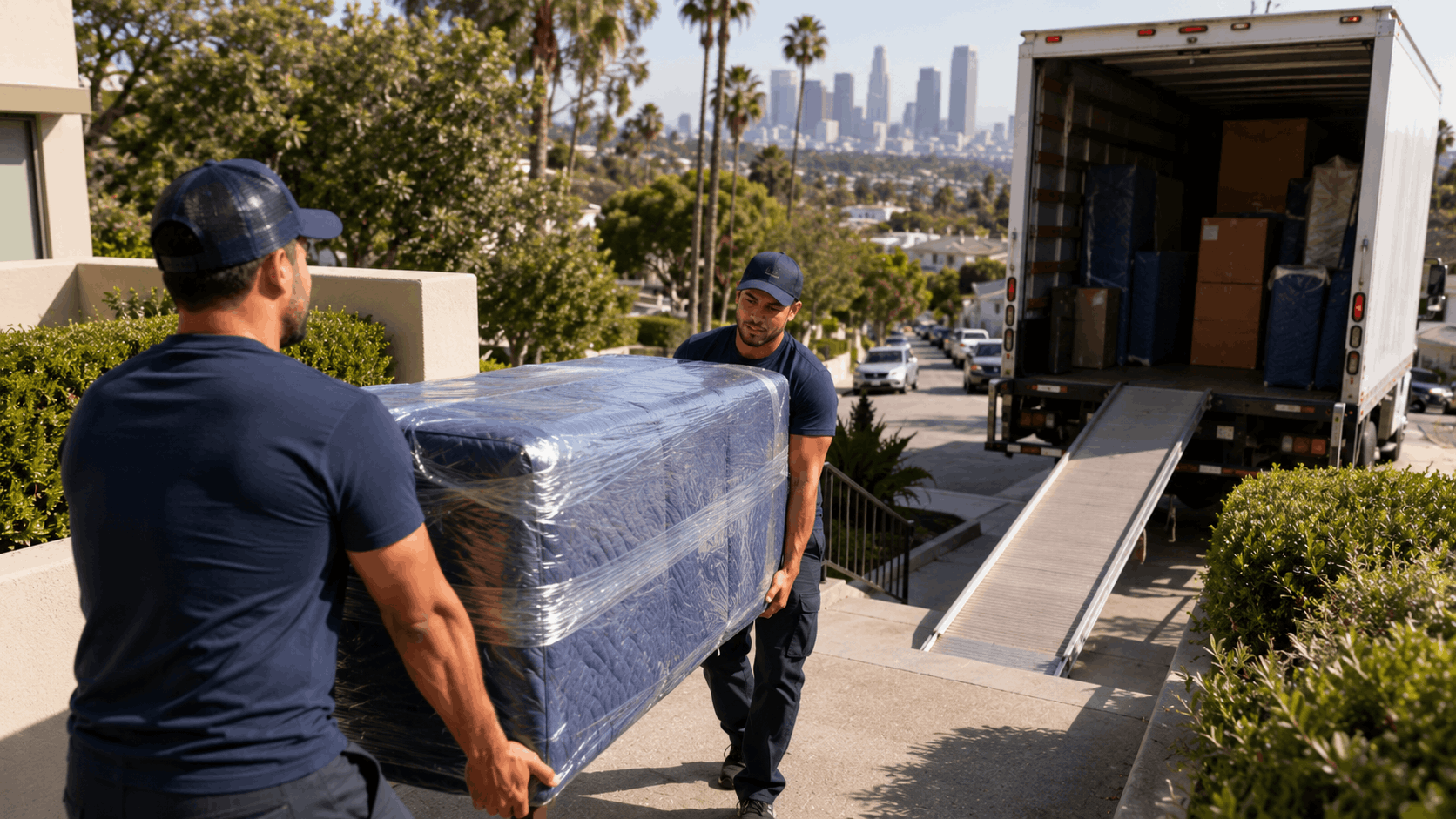
The single most effective way to avoid a long carry fee is getting the truck as close to your door as possible. In Los Angeles, you can apply for a temporary no-parking permit through LADOT (the Los Angeles Department of Transportation). This permit lets you post no-parking signs on the curb directly in front of your building for the day of your move.
The fee is set by LADOT and is non-refundable, and you should apply at least five working days in advance. Signs must be posted as LADOT's instructions specify. That permit can save far more than it costs in long carry fees - it is one of the best investments in any LA move. Streets in neighborhoods like Los Feliz, Koreatown, and Santa Monica fill up early, making this step especially valuable.
Coordinate with Your Building Manager Early
Call your building manager or property management office at least two weeks before the move. Ask these questions: Can we reserve the freight elevator? What are the loading dock hours? Are there any blackout dates or time restrictions? Does the building require a certificate of insurance from the mover?
In buildings with loading bays, securing a time slot means the truck can pull right up to the dock instead of double-parking on the street 200 feet away. Freight elevator reservation times vary - some buildings in DTLA allow only 3-hour blocks, while others in Burbank are more flexible. Either way, locking it in early cuts carry distance and prevents delays.
Choose the Right Moving Day and Time Window
The best time to move in LA - at least from a parking and access perspective - is early morning on a weekday, ideally Tuesday through Thursday. Street parking is more available before 8 AM, building lobbies are less crowded, and freight elevators have fewer competing reservations.
Mid-month moves also tend to have better conditions than first-of-the-month moves. In LA, the 1st and 15th of each month are the busiest moving days because of lease cycles. Parking near apartment complexes on those days is a nightmare. If you have flexibility, shifting your move to the 10th or the 20th can make the difference between a 30-foot carry and a 150-foot one.
Need Help in Los Angeles?
Popeye Moving & Storage serves Los Angeles and all of Los Angeles County.
Long Carry Fees vs. Shuttle Service: Which One Costs More?
When the truck cannot park close to your home, movers have two options: carry everything the long distance, or bring in a shuttle truck. Both come with extra costs, but the right choice depends on your specific location and how far the main truck has to park.
When a Shuttle Truck Makes More Sense
A shuttle is a smaller truck - usually a 16-footer - used to ferry items from the big rig parked on a main road to the home. In canyon neighborhoods like Laurel Canyon, Beachwood Canyon, and parts of Malibu, the roads are too narrow or too steep for a 26-foot moving truck. A shuttle becomes the only option.
Shuttle truck moving in LA is common in these areas. The crew loads items from the house into the shuttle, drives the shuttle down to the big truck, transfers everything, and then heads to the destination. It is time-consuming but sometimes safer and more practical than carrying a 300-pound armoire down a 200-foot hillside staircase. For specialty items like pianos or antiques, a shuttle often reduces the risk of damage.
Cost Comparison: Shuttle Fees vs. Long Carry Fees
Here is a side-by-side look at typical costs in Los Angeles:
- Long carry fee: $75-$300 (one-time charge based on distance)
- Shuttle truck fee: $250-$500 per trip (includes truck rental, fuel, and extra labor time)
If the carry distance is under 200 feet and the path is walkable, the long carry fee is almost always cheaper. But if the distance exceeds 250 feet - or the path involves steep, uneven terrain - a shuttle can actually save money by speeding up the move. A crew carrying items 300 feet per trip will take much longer than a shuttle making two short runs. Your mover should help you decide which option makes more financial sense based on the specific address. The Bureau of Household Goods and Services regulates in-state movers and requires them to provide accurate estimates that include these fees.
Questions to Ask Your Mover About Long Carry Fees Before Signing
Arming yourself with the right questions during the estimate process is the best way to prevent surprise charges. Here is what every LA customer should ask before signing a moving contract - and the red flags that suggest you should look elsewhere.
Red Flags in a Moving Estimate
If a mover does not ask about parking, building access, or floor level during the estimate, that is a warning sign. It means they either plan to charge you on move day when you have no leverage - or they do not know enough about LA's building landscape to give an accurate quote. Other red flags include:
- No mention of potential surcharges in the written estimate
- Fees described vaguely as "additional charges may apply"
- Refusal to do a virtual or in-person walkthrough
- No questions about elevator access, stairways, or HOA rules
Hidden moving fees hurt customers and damage the industry's reputation. Popeye Moving & Storage Co. handles every estimate with full transparency - we walk the route, measure the distance, and document every charge before you sign anything.
What a Transparent Quote Should Include
A proper moving quote lists the carry distance, any applicable surcharges as separate line items, and the conditions under which fees could change. For example: "Long carry fee: $150 (based on estimated 140-foot carry from loading dock to unit 1412). Fee may be adjusted if carry distance changes on move day due to parking availability."
California's household mover rules, administered by the Bureau of Household Goods and Services, require that in-state movers provide written estimates. According to the American Moving and Storage Association, consumers should always receive documentation of all charges before the move begins. If your mover will not put it in writing, keep looking. A transparent moving quote protects both the customer and the mover.
Need Help in Los Angeles?
Popeye Moving & Storage serves Los Angeles and all of Los Angeles County.
How Popeye Moving & Storage Co. Handles Long Carry Situations in LA
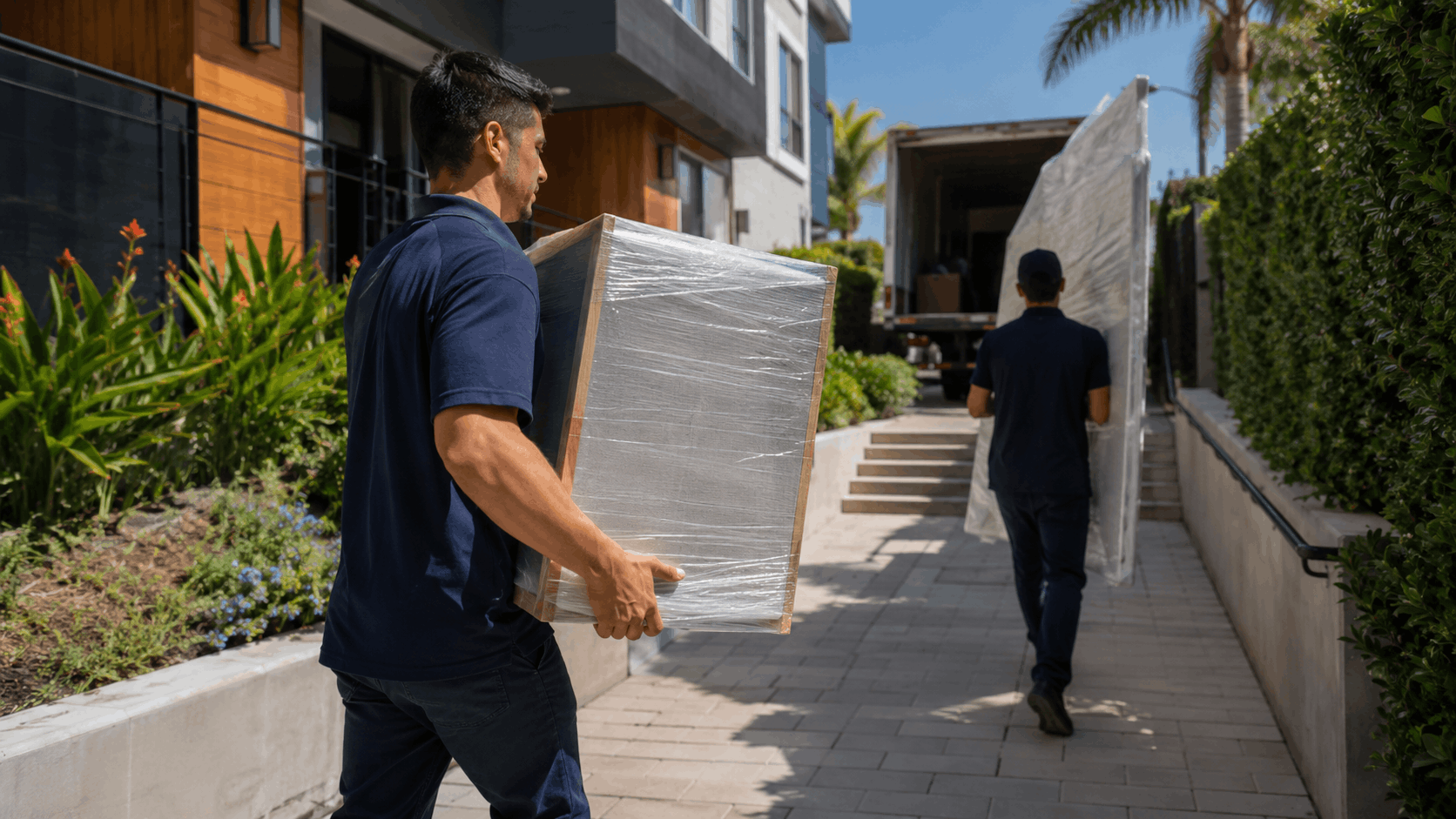
As a local Los Angeles moving company, we deal with long carry scenarios every single week. From high-rises on Wilshire to bungalows perched above Sunset Boulevard, our crew has carried furniture through just about every type of building and terrain this city has to offer. That experience makes a difference in how we estimate, plan, and execute moves across the greater LA area.
Local Knowledge That Saves Customers Money
Our team knows which buildings on Wilshire between Vermont and Western have the most accessible loading docks. We know that the freight elevator at certain Koreatown towers shuts down at 6 PM sharp. We know which Hollywood Hills streets above Franklin Avenue require shuttle trucks and which ones can just barely fit a 24-footer if you back in carefully.
This kind of LA moving expertise is not something you can get from a call center. It comes from years of working these streets. When we tell a customer in Marina Del Rey that their building usually allows dock access between 8 AM and noon, it is because we have moved people in and out of that building dozens of times. That local moving knowledge helps us give accurate quotes and helps customers avoid unnecessary fees.
Getting an Accurate Estimate from the Start
Customers can request a free moving estimate from Popeye Moving & Storage Co. by phone or online. To get the most accurate quote possible, have this information ready:
- Full building address (including unit number)
- Floor number and whether a freight elevator is available
- Photos of the parking area, loading dock, or street access
- Any HOA or building rules about moving hours
- Whether you need packing and crating services
The more detail you share upfront, the tighter the estimate will be. We serve the entire greater Los Angeles area - from Long Beach to Glendale and everywhere in between.
Final Thoughts
Long carry fees are a legitimate part of the moving business, but they should never catch you off guard. By learning how the 75-foot rule works, checking your building's access setup, and taking simple steps like reserving parking or coordinating with your property manager, you can control this cost instead of being surprised by it. Los Angeles has some of the most challenging building layouts and parking situations of any city in the country - but with the right preparation and the right mover, none of it has to derail your budget.
If you are planning a move anywhere in Los Angeles and want a straight answer about long carry fees and any other charges, reach out to Popeye Moving & Storage Co. for a free estimate. We will walk the route, measure the distance, and give you an honest number - before we lift a single box.
Frequently Asked Questions
- What is a long carry fee in moving?
- A long carry fee is a surcharge that moving companies apply when they must carry items more than 75 feet between the moving truck and the home's entry point. The fee covers the additional time, labor, and physical effort required to transport belongings over a longer-than-standard distance. Most professional movers in Los Angeles include the first 75 feet in their base rate, and the long carry fee only applies once that threshold is exceeded.
- How far is 75 feet in real-world terms?
- Seventy-five feet is roughly the length of two and a half standard city buses parked end to end, or about five to six car lengths. If you stand at a curb and look down the block, 75 feet is approximately the distance from one street tree to the next in most LA neighborhoods. Walking 75 feet at a normal pace takes about 15 to 20 seconds - but carrying a heavy couch that distance takes significantly longer.
- Do all moving companies in LA charge long carry fees?
- Most professional moving companies in Los Angeles do charge long carry fees, but their policies and thresholds vary. Some companies start the fee at 50 feet, while others use 100 feet as their cutoff. The pricing models differ too - flat fee versus per-foot charges. During the estimate process, always ask your mover what their specific threshold is and how they calculate the charge so there are no surprises on move day.
- Can I get a parking permit to avoid a long carry fee in Los Angeles?
- Yes. Through LADOT, you can apply for a temporary no-parking permit that allows you to post signs reserving curb space directly in front of your building on move day. The fee is set by LADOT and is non-refundable, and applications should be submitted at least five working days in advance. Signs must go up as LADOT's instructions specify. This is one of the most effective and affordable ways to shorten carry distance.
- Is a long carry fee the same as a stair carry fee?
- No, they are different charges. A long carry fee covers the horizontal distance between the truck and the home's entry point - the walking path across parking lots, hallways, and lobbies. A stair carry fee applies to vertical distance - the number of flights of stairs the crew must climb with your belongings. Both fees can apply to the same move, particularly in multi-story buildings without freight elevators or in hillside homes with external staircases.
- How much does a long carry fee usually cost in Los Angeles?
- In Los Angeles, long carry fees typically range from $75 to $300 depending on the distance and the mover's pricing model. Movers who charge a flat fee generally assess $75 to $150 once the threshold is exceeded. Those using a per-foot model charge $1 to $2 for each foot beyond 75 feet. Complex moves in high-rises or hillside homes tend to land at the higher end of this range due to longer distances and more difficult paths.
- What triggers a long carry fee in a high-rise apartment?
- In high-rise buildings, long carry fees are triggered by the total distance from the loading dock or truck parking area to the unit's front door. This includes the walk from the dock through the building lobby, the ride up the freight elevator, and the hallway distance on the unit's floor. Units at the far end of long corridors or in buildings with underground loading areas are frequent triggers for this fee in LA high-rises.
- Can I negotiate a long carry fee with my mover?
- The fee itself is typically non-negotiable because it reflects real labor and time costs that the crew absorbs. However, you can effectively reduce the charge by shortening the carry distance. Reserving a parking spot with an LADOT permit, securing loading dock access, and coordinating freight elevator times all shorten the path. These actions can lower or even eliminate the fee, which is a better strategy than trying to negotiate away a legitimate charge.
- Will my mover tell me about the long carry fee before move day?
- Reputable movers like Popeye Moving & Storage Co. disclose all potential fees during the estimate process. The estimator should ask about parking access, building layout, floor level, and elevator availability. If a moving company does not ask these questions during the quote - or if they avoid discussing potential surcharges - that is a red flag. California regulations require written estimates, and any potential long carry charges should be documented before you agree to the contract.
- What is the difference between a long carry fee and a shuttle fee?
- A long carry fee covers the extra labor of walking items a greater distance when the truck is parked far from the home but still accessible. A shuttle fee covers the cost of renting and operating a second, smaller truck when the main moving truck cannot physically reach the location - due to narrow streets, low-clearance bridges, or steep grades. Shuttle fees are significantly higher, typically $250 to $500, because they involve an additional vehicle and extra loading and unloading time.
Popeye Moving & Storage Co. Team Team
Licensed moving and storage professionals serving Los Angeles and Los Angeles County.
Licensed in California · License #CAL T 189749 | USDOT 1472924 | MC 498816C
Why trust Popeye Moving & Storage?
Founded in 1994, Popeye Moving & Storage is a licensed and insured moving and storage service serving Los Angeles and Los Angeles County. All content is reviewed by our licensed technicians.

Need Help in Los Angeles?
Popeye Moving & Storage serves Los Angeles and all of Los Angeles County.
Related Articles
How Much Do Movers Cost in Los Angeles in 2026? A Complete Price Breakdown
Wondering what movers charge in LA? From hourly local moves to white glove and piano moves, here's a clear breakdown of moving costs in Los Angeles County for 2026.

Moving from Silver Lake to the Valley: What the Price Difference Means for Your Move
Discover how much you can save monthly by moving from Silver Lake to Valley neighborhoods, plus moving costs and lifestyle changes to expect during your relocation.
7 Signs You Should Hire Professional Movers Instead of a DIY Move
Not sure whether to rent a truck or hire pros? Here are seven signs that your Los Angeles move is better left to professional movers, from hillside access to building rules.