Tips & Advice
Storage in Carlson Park, Culver City with Same-Day Driveway Pickup
Key Takeaways
- Popeye offers full-service vaulted storage with driveway pickup in Carlson Park, where flat streets and single-family driveways make loading simple.
- Vaulted storage means no key and no individual unit; crews handle the goods and access is by appointment, placing it under Commercial Code Division 7 rather than self-storage rules.
- Culver City allows a moving truck for one day and a POD for up to three days, with signs posted at least 48 hours ahead; many driveway lots need no permit at all.
- An on-site or video survey of the garage, loft and outbuildings is what makes a Carlson Park quote accurate, since that is where contents hide.
- The warehouse is climate controlled for temperature and humidity, with the specification confirmed per shipment; art, leather and fine wood benefit most.
- A move into storage carries a Not To Exceed price in writing and a $20,000 actual cash value default liability unless a higher value is declared.
- Intrastate claims must be filed within nine months, acknowledged in 30 days and answered in 60, and cannot be denied solely because damage was not noted at delivery.
- Popeye operates under CAL T 189749, is fully insured and BBB accredited with an A+ rating, and is regulated by the BHGS, not the CPUC.
In This Article
A Carlson Park family mid-remodel usually hits the same wall. The second-story addition is underway, the garage conversion has started, and suddenly there is a houseful of furniture with nowhere to go for three months. The question we hear most on these streets near Dr. Paul Carlson Memorial Park is simple: can someone pick everything up from the driveway and hold it safely until the dust settles?
Yes. Popeye Moving & Storage Co. offers full-service vaulted storage with pickup right from the driveway, which suits the flat residential grid between Motor Avenue, Overland and Braddock Drive well. A crew loads your belongings at the home, places them in wooden storage vaults, and keeps them at our own Mar Vista warehouse until you are ready to have them brought back.
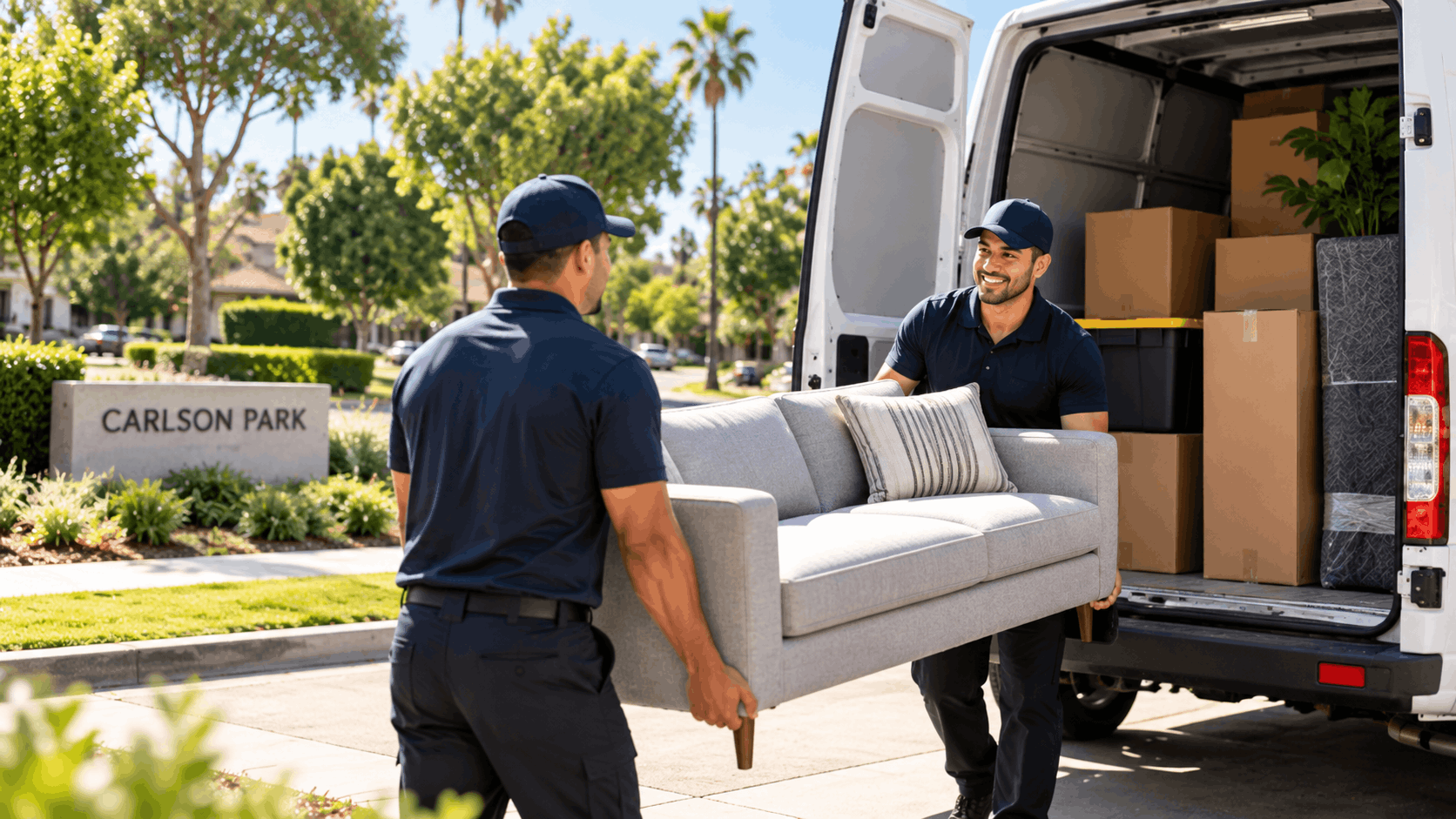
How Same-Day Driveway Pickup Works in Carlson Park?
Carlson Park, officially the Park East neighborhood of Culver City in ZIP code 90230, is one of the easier parts of the city to work in for a storage pickup. The streets form a flat grid around the park between Motor Avenue, Overland and Braddock Drive, lined with post-war single-family homes on modest lots. Most of these homes have a driveway and ordinary curb parking, which is exactly what makes driveway pickup straightforward.
Driveway pickup means a crew loads your belongings straight from the home into the truck, then transfers them into a wooden storage vault back at the warehouse. There is no loading dock to negotiate, no management office to clear, and no long carry across a complex. On many of these blocks a driveway means a street reservation is a convenience rather than a necessity. If you are weighing storage solutions during a move or a remodel, Carlson Park gives you a head start on access.
Why Carlson Park Driveways Make Pickup Simple
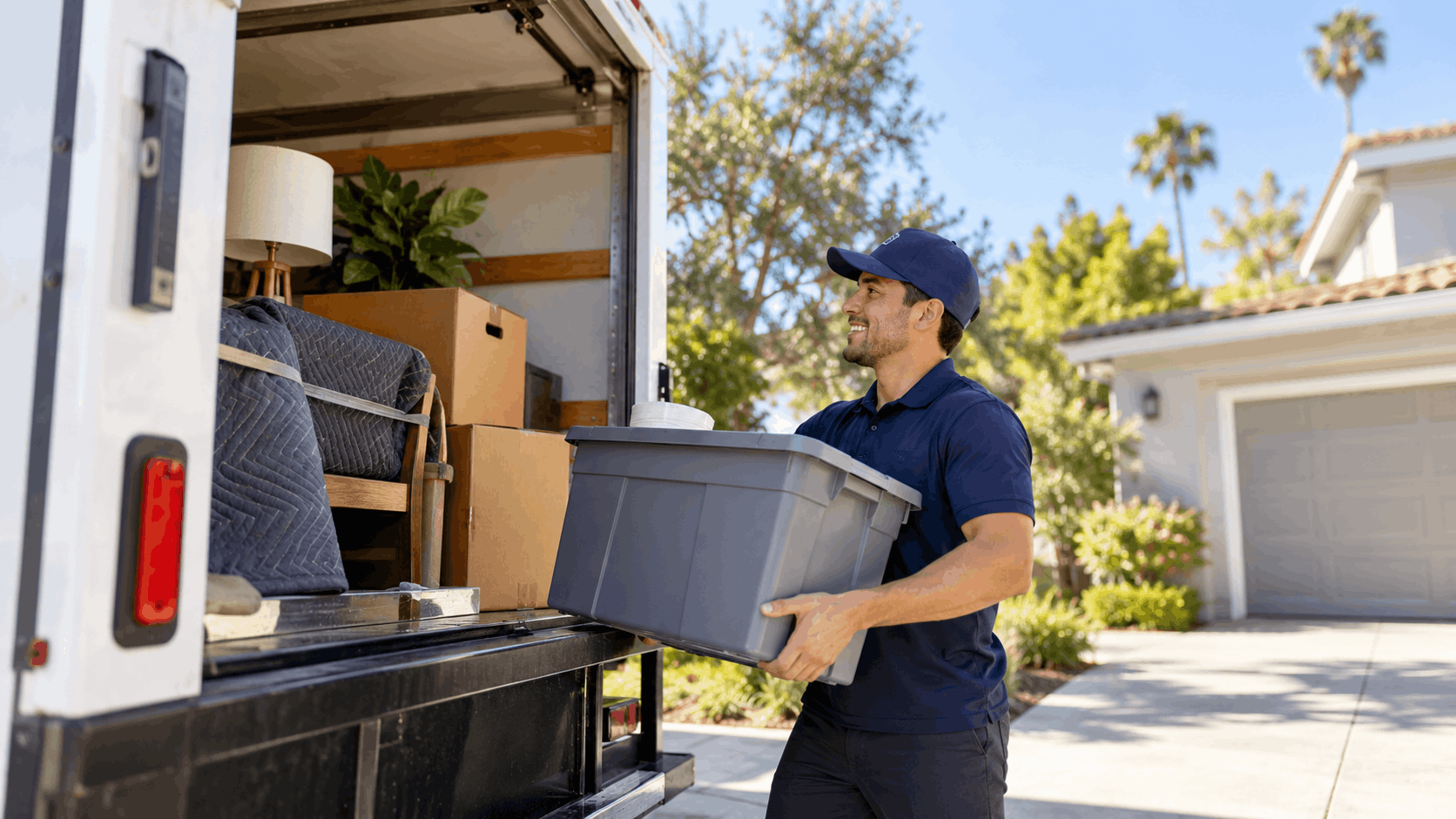
The housing stock here is post-war single-family, with detached and attached garages, driveways and mature street trees. That layout keeps the carry short. A crew can park on the driveway or at the curb and walk a short, direct path from the front door or garage to the truck, which is the fastest and safest way to load a home.
There is no loading dock, no elevator reservation, no certificate of insurance for a building, and no alley to work around. Those are the constraints that slow jobs in apartment buildings and office towers. Here, the main things to watch are street width and resident parking, both of which a permit solves when needed.
Short carry also protects your belongings. Fewer steps between the home and the truck means fewer handoffs, fewer corners to turn, and less exposure to weather. On a flat lot with a driveway, the crew can stage furniture in a logical order and load it once, rather than shuffling items across a long or awkward route.
Because the access is simple, the crew can spend their time on the work that matters: padding finished surfaces, protecting floors and doorways, and loading the vault so nothing shifts. That is where care shows up, and it is what Carlson Park owners tend to value over the lowest hourly rate.
What Happens Between Pickup and the Warehouse
Full-service vaulted storage follows a specific path. Your belongings are loaded once at the home, driven to the warehouse, and placed into a wooden storage vault. From that point the vault is handled as a single unit, moved by forklift inside the building rather than repacked or shuffled piece by piece.
Loading the vault once at the point of storage means your goods are touched fewer times than they would be in a self-storage cycle, where you cart items in and out yourself. The vault is sealed and stacked, and it stays that way until you ask for access or delivery back to a home.
This is a genuinely different model from renting a unit. With vaulted storage, the customer has no key, no individual unit and no right of entry. Popeye crews handle the goods, and the vault lives inside our Mar Vista warehouse rather than in a space you walk into.
That arrangement is the reason the service is professional rather than self-serve. The tradeoff is clear: you give up walk-in access, and in exchange your belongings are handled by trained crews, stored as a protected unit, and kept inside a building rather than in a drive-up locker.
Timing a Pickup Around School-Run Traffic
Carlson Park is a family neighborhood with well-regarded schools. Farragut Elementary sits at 10820 Farragut Drive, Culver City Middle at 4601 Elenda Street, and Culver City High at 4401 Elenda Street. Drop-off and pick-up traffic on the surrounding streets is a real scheduling factor, not a minor one.
During the morning and afternoon school runs, the streets fill with cars and the usable width narrows further. Trying to position a full-size truck in the middle of that is slower and more stressful for everyone. The simple fix is timing.
A mid-morning start, after the morning peak has cleared, is usually the efficient window on these blocks. It lets the crew position the truck cleanly, work without dodging school traffic, and keep the clock moving in your favor.
Because moves here bill on a double drive time convention for the local hourly portion, travel time is charged at twice the actual driving time. Starting after the peak keeps that travel segment honest and avoids paying for a crew sitting in avoidable congestion.
Get Your Free Quote
Tell us about your move and we'll get back to you fast.
Full-Service Vaulted Storage Explained
The word "storage" covers two very different things, and the difference decides which rules protect your belongings. Popeye runs vaulted warehouse storage, not self-storage units. Knowing which one you are using tells you what to expect for access, handling and legal protection.
With warehouse storage, your goods sit inside a building, handled by crews, with no individual space assigned to you. With self-storage, you rent a space, hold the key, and come and go as you like. Those are not two names for the same thing, and California law treats them differently.
Vaulted Storage Versus a Self-Storage Unit
In a self-storage unit, the customer has a key, a specific unit, and the right to drive up and enter whenever the facility is open. You load and unload your own belongings and you control the space. That arrangement falls under California's Self-Service Storage Facility Act.
Vaulted storage works the other way. Popeye crews handle the goods, there is no key and no individual unit, and the customer has no independent entry. Because Business and Professions Code section 21701(a) states plainly that a self-service storage facility is not a warehouse, and because we issue storage documentation rather than rent you a space you access, this service sits outside the self-storage rules entirely.
Instead, vaulted warehouse storage falls under Division 7 of the California Commercial Code. The distinction is not containers versus units. It turns on whether the customer has exclusive use and access to the space, and with vaulted storage they do not.
This matters for a practical reason. The lien, auction and access rules that apply to a rented self-storage unit do not apply to your vaulted goods. Our vaulted storage service is governed by the warehouse rules in the Commercial Code, which we cover later when we get to your protections.
What a Storage Vault Is and What Fits
A wooden storage vault is a sturdy container built from plywood on a reinforced plywood floor set on runners, with four-way forklift access so it can be moved as a unit. A common size runs roughly 7 feet by 5 feet by 7 feet 10 inches on the exterior, and vaults are often marketed around 250 to 274 cubic feet.
Treat that size as typical, not a standard. There is no ANSI, ASTM, ISO or federal specification governing household goods storage vault dimensions, and manufacturers build custom sizes to order. Any capacity figure is approximate, because the published numbers are exterior volumes and the usable interior is lower once you deduct the wall thickness.
Popeye runs the full range of vault sizes, from standard through oversized. That range matters when you are storing a mix of a family home, from a few rooms of furniture to the entire contents of a house in the middle of a remodel.
One practical note: international lift vans are a different product with their own approval regime, and they are not the same as storage vaults. When we talk about vaults here, we mean the wooden warehouse vaults used to hold household goods inside the building.
What Popeye Accepts and What It Does Not
Popeye accepts household goods, and also commercial and business storage alongside them. If a Carlson Park home office or a small Culver City business needs inventory, records or furniture held during a move, that fits within our commercial and business storage.
Specialist items are accepted too, including wine, fine art, pianos and chandeliers. These are the pieces people worry about most, and they are exactly the kind of items that benefit from crew handling and proper crating rather than a self-serve locker.
Vehicles are not accepted. That means no cars, no motorcycles, no boats and no RVs. If you need vehicle storage, this is not the service for it, and we would rather tell you that up front than have you plan around it.
There is no minimum and no maximum storage term. Whether you need goods held for a few weeks during a kitchen remodel or for a longer stretch between homes, the term flexes to your situation. For longer holds, our long-term storage works the same vaulted way.
Accessing Your Goods After They Are Stored
Because your belongings sit inside a sealed vault, access works differently than a drive-up unit. When you need something, the warehouse retrieves the vault and opens it, which is why an appointment is ordinary trade practice rather than a special request.
There is no statute, tariff or code that sets a required appointment or a notice period for this. It is simply how vaulted storage functions: the container has to be located, pulled with a forklift, and opened by crew before anyone can reach what is inside.
The Mar Vista warehouse business hours of 6am to 9pm, seven days a week, are for calls and scheduling. They are not customer walk-in access hours. You do not drop by and let yourself in, because there is no unit to let yourself into.
For most of our storage customers this is not a hurdle. The typical storage customer is between homes during a move, or is holding belongings without planning to touch them during the term. When access is needed, a quick call sets up a time for the crew to pull and open the vault.
Need Help in Los Angeles?
Popeye Moving & Storage serves Los Angeles and all of Los Angeles County.
Culver City Permits for a Storage Pickup
Carlson Park sits inside the City of Culver City, which is separate from Los Angeles and runs its own Public Works permit process. That matters, because the rules on these streets are set by Culver City, not by LA, and they differ from the city next door.
The permit covers a moving truck or a POD placed on a public street. Here is how the main rules break down for a Carlson Park address.
| Item | Culver City rule |
|---|---|
| Moving truck | Permitted for one day only |
| POD / storage container | Maximum of 3 days; no larger than 8 by 8 by 16 feet |
| Unattached trailers | Prohibited |
| Advance signs | Posted at least 48 hours in advance, minimum two |
| Space use fee | Charged per space per day, at the lower rate outside downtown |
| Meters | Extra fees apply to reserve metered spaces |
When You Actually Need a Permit Here
Many Carlson Park homes have a driveway, and that changes the permit math. If a full-size truck can sit on the driveway, a street reservation is often a convenience rather than a requirement. Not every job on these streets needs a permit.
The honest answer depends on your specific lot. If the driveway is clear and deep enough to hold the truck while the crew loads, you may not need to reserve curb space at all. If the driveway is short, occupied, or blocked by a converted rear structure, a curb reservation starts to make sense.
The real constraints on these blocks are street width and resident parking. When both sides of a street are parked up, the usable width narrows, and that is the situation a permit is built to solve by holding space for the truck.
Before we quote, we confirm driveway access and whether a full-size truck can actually sit on it. That single check often settles the permit question for a given address, which is why the permit position is confirmed per address rather than assumed for the whole neighborhood.
The Truck, POD and Sign Rules
Under Culver City rules, a moving truck is permitted for one day only. That fits a driveway pickup well, since loading a home and heading to the warehouse is a single-day job in most cases.
A POD or storage container gets a maximum of 3 days and must be no larger than 8 by 8 by 16 feet. Unattached trailers are prohibited on the street. If you are planning to drop a container and fill it over time, those limits shape how long it can legally sit out front.
Signs must be posted at least 48 hours in advance, with a minimum of two. That notice period is not a formality. It gives neighbors time to move their cars and keeps the reserved space clear when the truck or container arrives.
Posting late or skipping a sign is the most common way a reservation falls apart on the day. If the signs have not been up for the full 48 hours, the space may still be full of parked cars, which defeats the purpose of pulling the permit in the first place.
Fees and Where to Confirm Them
The space use fee is charged per space per day. Carlson Park sits outside downtown, so the lower rate applies here rather than the downtown rate. If you need to reserve metered spaces, expect extra fees on top for the meters.
We do not publish the current dollar amounts, because the city sets them and they change. The reliable move is to confirm current amounts directly with the City of Culver City Public Works before you book, so there are no surprises on the invoice.
If you would rather not deal with the permit at all, that is often the right call on a driveway lot. When the truck can sit on your driveway, the whole question goes away, and the pickup proceeds without a street reservation.
When a permit is genuinely needed, it is worth doing properly: pull it in time, post the signs for the full 48 hours, and keep the paperwork handy on the day. That is what keeps a Carlson Park pickup on schedule.
What Carlson Park Homes Store and Why
Storage here is not random. It follows the real rhythm of the neighborhood, where long-tenured family households, constant remodels and converted garages drive the same patterns again and again. Understanding why people store helps you plan your own move into storage.
Ownership is high and tenure is long in Carlson Park, with Culver City overall showing an owner-occupied rate of 54.6 percent. Owner households move less often but in larger jobs with more lead time, and they accumulate. That combination shapes almost every storage conversation we have on these streets.
Remodels and Second-Story Additions
Renovation, second-story additions and garage conversions are constant in Carlson Park. The post-war houses on modest lots are prime candidates for expansion, and owners who have lived here for years tend to invest in the home rather than leave.
That makes move-out-to-storage-and-back a recurring pattern rather than an exception. You empty the rooms being worked on, hold the contents while the crews build, and bring everything back when the work is done. Storage pairs naturally with that kind of project.
The timing of a remodel is rarely precise, which is why a storage term with no minimum and no maximum fits so well. If the second-story framing runs long, your goods stay put without a penalty for the extra weeks.
Pairing the move out and the move back with the same company keeps the chain simple. The crew that loaded your home into vaults is the crew that brings it back, and the inventory stays consistent from start to finish.
The Converted Garage Question
Garages in Carlson Park are typically detached at the rear, reached off a driveway. A large share of them have been converted into studios, offices, gyms or accessory dwelling units. That one fact changes a storage pickup in two ways.
First, it changes what is being moved. A converted garage is not holding boxes and tools anymore. It may be a furnished office or an ADU with its own contents, which means more to pack and more to account for in the estimate.
Second, it changes where a vehicle can stand. If the rear access has been built over, or the driveway is occupied by the converted structure's parking, the truck may not be able to pull all the way back. The crew needs to know this before the day, not on it.
So we ask about the garage rather than assuming a garage is a garage. Whether it is still storage, now an ADU, or something in between decides both the volume and the access plan for your pickup.
Where Estimates Go Wrong
Long-tenured family households accumulate, and the items that throw off an estimate are rarely in the main rooms. They live in the garage, the loft, the shed and the side return. Those are the spaces a quick phone estimate tends to skip.
A phone estimate goes wrong by hours precisely because of those areas. Someone describes four bedrooms and a living room over the phone, and the quote looks clean, until the crew opens a packed garage and a loft full of years of storage.
The fix is an on-site or video survey that actually covers the garage, loft and any outbuilding. Walking those spaces, or showing them on video, is what turns a rough guess into an accurate quote.
We would rather see the side return and the shed up front than surprise you with a higher number on pickup day. An accurate survey also sizes the storage correctly, so you are not paying for vault space you do not need or short on space you do.
Mature Trees and Street Width on the Route
Carlson Park has mature street trees, and the canopy over the carriageway limits vehicle height on some blocks. A full-size truck that fits one street may not clear low branches on the next, so the route matters.
Parked residents on both sides narrow the usable width as well. Between the canopy overhead and cars at the curb, a street that looks open on a map can be tight for a large truck in practice.
That is why we check the route for low branches ahead of pickup day rather than discovering them at the corner. Knowing the height clearance and the width in advance lets us bring the right vehicle and plan the approach.
On a block with heavy canopy, that might mean a specific parking position or approach direction. It is a small amount of planning that keeps the truck moving and avoids a stuck vehicle at an intersection.
Climate-Controlled Storage and What It Protects
Popeye's Mar Vista warehouse is climate controlled for both temperature and humidity. That is worth understanding properly, because the term means different things to different facilities, and which belongings actually benefit comes down to what the materials are made of.
We cover the general science below using published conservation references. Those are context for why conditions matter, not a published specification for this building. The specification at our warehouse is confirmed per shipment.
What Climate Control Means Here
The warehouse is climate controlled for temperature and humidity. That means the building actively manages both conditions rather than leaving your goods exposed to the full swing of outdoor weather.
The honest line is that "climate controlled" has no fixed industry definition. No code, standard or trade body fixes what temperature or humidity a facility must hold to use the term. So any claim about exact conditions should be a facility's own stated specification, with the range given.
For that reason, the specification is confirmed per shipment rather than published as a single number. What your particular goods need, and what the facility holds for them, is settled when the shipment is arranged.
This is the straight answer to a question customers ask constantly. Yes, the warehouse is climate controlled for temperature and humidity, and the precise figures are confirmed for your shipment rather than quoted off a web page that might go stale.
Which Belongings Benefit Most
Some belongings are far more sensitive to humidity swings than others. The Canadian Conservation Institute lists the object types most vulnerable as oil paintings and rigid paint layers on canvas, photographs and negatives, panel paintings with weak adhesion, veneer and marquetry, musical instruments, and fine furniture with inlays.
Leather and wood react strongly to conditions. On leather, the CCI notes that relative humidity above 65 percent promotes mold, darkening, stiffening and embrittlement, while RH below 30 percent causes loss of flexibility, brittleness and tears. These are real changes in the material, driven by the environment around it.
Wood behaves the same way. The National Park Service notes that high relative humidity above 65 percent causes swelling and warping, while low RH causes shrinkage, warping and cracking. A dining table, a veneered dresser or an inlaid cabinet is exactly the kind of piece that cares about a stable environment.
These are the categories a Carlson Park family is most likely to be storing without thinking about them: the piano, the framed art, the leather sofa, the inherited furniture. Our fine art and antique handling and piano moving are built for exactly these pieces.
Conservation Reference Ranges for Context
Published conservation references give a sense of what stable conditions look like. The National Park Service recommends 59 to 77 degrees Fahrenheit and relative humidity of 45 to 55 percent, and states that RH should not reach 65 percent because mold might develop.
The Smithsonian standard for exhibition and storage space is 45 percent RH plus or minus 8, and 70 degrees plus or minus 4. The Library of Congress gives 30 to 50 percent RH for photographs and warns that mold grows when RH exceeds 60 percent and temperature rises above 75 to 80 degrees.
These figures are reference points from conservation practice, not the storage trade, and they are not a statement of conditions at this warehouse. They are useful for understanding why humidity and temperature matter, and why a controlled building protects sensitive pieces better than an uncontrolled one.
The takeaway is simple. Stable, moderate conditions are kinder to paintings, photographs, leather and fine wood than wide swings, which is the whole point of storing those items in a controlled environment rather than a hot, uncontrolled locker.
Need Help in Los Angeles?
Popeye Moving & Storage serves Los Angeles and all of Los Angeles County.
Preparing Your Items for Storage
Good preparation is what makes goods come out of storage in the same shape they went in. The advice below is not opinion. Much of it tracks the federal household goods warehouse inspection standard and published conservation guidance, so it is inspectable rather than guesswork.
The crew handles a lot of this during a professional pack, but knowing the reasoning helps you prepare what you pack yourself, especially for a longer hold.
Protecting Furniture and Finished Surfaces
Finished surfaces should be protected by pads or wrap. The federal warehouse inspection form treats unprotected finished surfaces as a deficiency, which tells you how basic this step is. Pads guard against scuffs and pressure marks while a piece sits stacked in a vault.
Use breathable dust covers such as muslin or Tyvek rather than sealed plastic. Sealing furniture in polyethylene traps moisture against the surface, which is a containment response to active mold rather than a general storage method. Breathable covers let the piece sit without sweating inside the wrap.
Never force a misshapen object back into its original form. If something has warped or shifted, bending it back can crack or break it. Conservation guidance is to support the object as it is rather than fight it into a shape it no longer holds.
Our packing and crating team wraps and pads finished pieces as standard, and builds custom crates for the fragile and high-value items that need more than a pad.
Guarding Against Pests and Mold
Pests target specific materials, and knowing which helps you prepare. NPS guidance notes that carpet beetles attack leather, fur, feathers, wool and silk textiles. Clothes moths go after woolens, feather items, dolls and fabric wall hangings.
Powderpost beetles attack wood: frames, furniture, tool handles, paneling and crating. Silverfish consume paper and the glue and paste in older book bindings, and they prefer moist, warm conditions. Each pest has a menu, which is why controlling moisture and inspecting items before storage matters.
CCI advises prewashing fabrics used for packing and inspecting woolens and other keratinous items for pests before storage. Putting away a woolen blanket with moth eggs already in it starts a problem inside a sealed vault, so a check beforehand is cheap insurance.
Mold is a moisture story. Keeping items dry, using breathable covers and storing in a controlled environment all work against it. The conservation ranges above exist precisely because mold develops when humidity climbs too high for too long.
What Cannot Go Into Storage
Hazardous materials are refused, and this is federal law rather than company preference. Under 49 CFR 171.2(e), no person may accept a hazardous material for transportation unless it is properly classed, packaged and labeled, and an undeclared household hazard does not meet that bar.
That means no common household combustible liquids, corrosives, explosives or flammables. Paint thinner, propane cylinders, gasoline, pool chemicals and similar items stay out of the truck and the vault. A short pre-move check of the garage and shed prevents a problem on the day.
Gas and oil must be drained from motorized items such as mowers and trimmers before they go into storage. The federal warehouse inspection standard treats undrained motorized equipment as a deficiency, so this is a standard step, not an optional one.
Perishables and plants are refused too, driven by spoilage and pest attraction rather than fire rules. Food draws pests into a sealed vault, and plants cannot survive storage. Clear the kitchen and the houseplants out of the storage pile before pickup.
Valuation, Claims and Your Protections
A move into storage carries real legal protections, and they come from two different places: the rules for the move itself, and the rules for the storage period. Knowing both tells you exactly where you stand if something goes wrong.
A move that begins and ends within California is intrastate, governed by the Bureau of Household Goods and Services under the Household Movers Act and Maximum Rate Tariff 4. The storage that follows falls under the warehouse rules in Commercial Code Division 7. Here is how each one protects you.
The Not-To-Exceed Price on Pickup Day
Under Maximum Rate Tariff 4, the Not To Exceed amount is the maximum total dollar amount you can be charged for the move into storage. It is set out in the Agreement For Moving Services and agreed to before any goods are moved or any services performed.
In plain terms, you are told a ceiling before the truck is loaded. The final bill cannot exceed that ceiling except through a Change Order that you agree to. This is a right you hold, not a courtesy the mover extends.
A verbal rate quotation, whether per hour or per hundred pounds, is not an estimate and is not binding. California requires a written estimate. It does not require a binding one, so the Not To Exceed figure in writing is what actually caps your bill.
Failing to include a Not To Exceed price on the required documentation has been cited by regulators as a violation. If you do not see that figure on your paperwork, ask for it before anything is loaded.
Valuation and the $20,000 Default
Valuation is a liability limit, not insurance, and the California default is better than many customers assume. Under MAX 4 Item 136(2), unless you expressly declare a different value, the mover's maximum liability for lost and damaged articles is up to $20,000 of actual cash value.
The 60 cents per pound per article figure is only the rate basis, the declared value the transportation rates are computed on. It is not the payout. That distinction matters, because 60 cents a pound would pay almost nothing on a light, valuable item.
You have a right to be offered a higher valuation option and a right to decline it knowingly. Each valuation option the carrier offers must be listed with its charge and a space for you to initial. Full value protection is the paid alternative to the released value limit.
For items of extraordinary value such as antiques, art, and gold or silver pieces, describe them separately on the inventory with a value declared for each. Money, jewelry and important papers are best carried by you rather than shipped. For a family home full of accumulated worth, declaring the standout pieces is the smart move.
Coverage During Storage
Once your goods are in warehouse storage, a different standard applies. Under California Commercial Code section 7204(a), a warehouse is liable for loss or injury to goods caused by its failure to exercise the care that a reasonably careful person would exercise under similar circumstances.
That is ordinary negligence. It is not strict liability, and a warehouse is not an insurer of the goods. Unless otherwise agreed, the warehouse is not liable for damages that could not have been avoided by that reasonable care.
Section 7204(b) lets a storage agreement limit damages, but with limits that protect you. The limit does not apply to the warehouse's liability for converting your goods to its own use, and on your request the liability can be increased on part or all of the goods, with increased rates charged on the higher valuation.
There is no statutory floor on how low a limit can go and no required type size, so reading the storage agreement is the real protection here. Check the liability terms, and ask to raise them if the default does not match what you are storing.
Filing a Claim and the Deadlines
For the intrastate move, the claim windows come from MAX 4, and they are California rules, not federal-only ones. A written claim for loss or damage must be filed within nine months after delivery as shown on the shipping document.
The mover must acknowledge a written claim within 30 days, and must pay, decline, or make a firm compromise settlement offer within 60 days. If the claim is disallowed in writing, you have two years and one day from that written notice to file suit.
A claim cannot be denied solely because the lost or damaged goods were not noted at the time of delivery, under Business and Professions Code section 19265. So you are not out of luck if you discover damage after unpacking.
Keep your estimate, the Agreement For Moving Services and the bill of lading, because the single most common reason a consumer loses a dispute is that they cannot produce the paperwork. Complaints about a California household mover go to the Bureau of Household Goods and Services, not the CPUC, which no longer regulates movers.
Need Help in Los Angeles?
Popeye Moving & Storage serves Los Angeles and all of Los Angeles County.
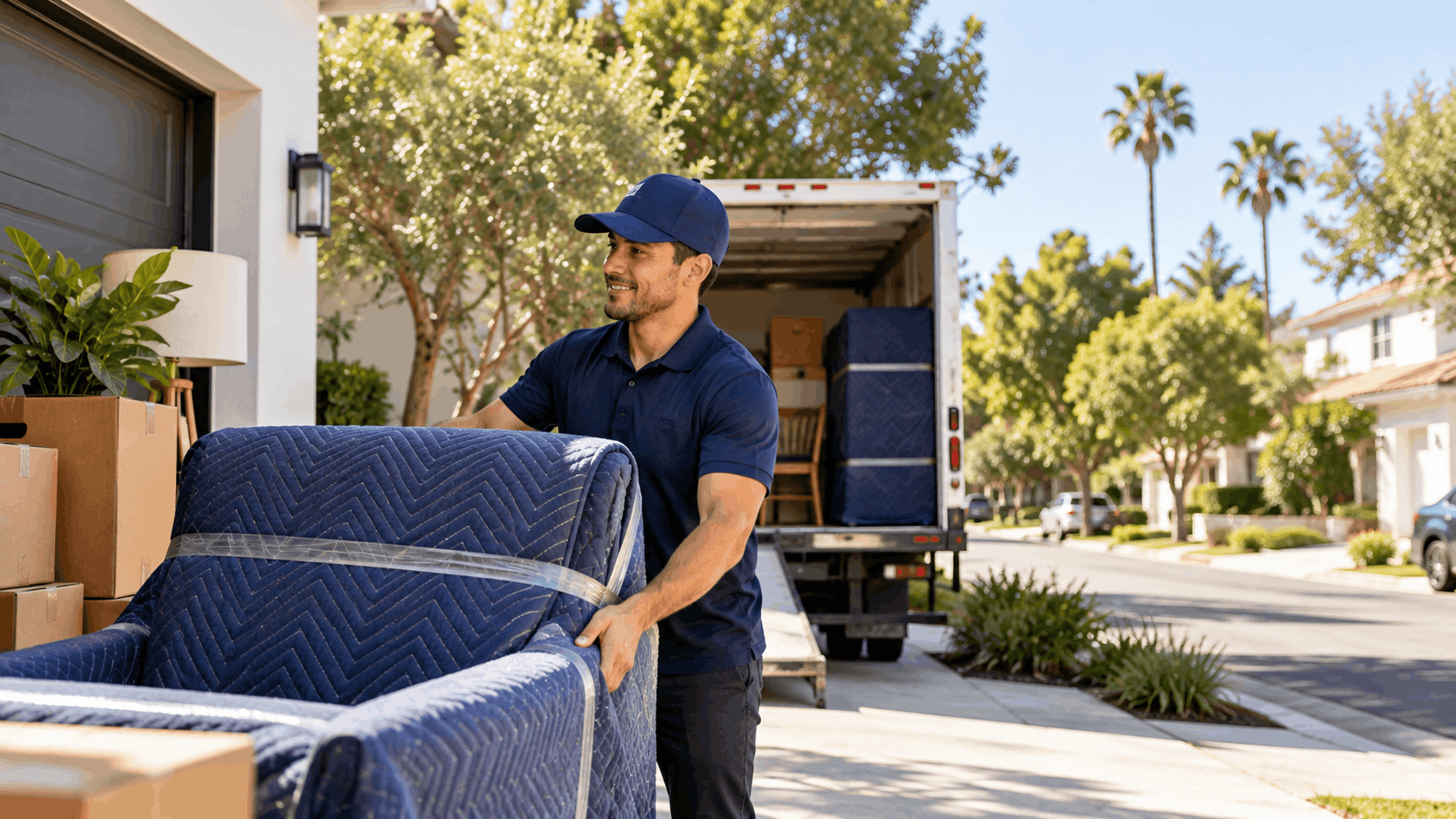
How Popeye Handles a Carlson Park Storage Pickup
Here is how the job actually runs, from the first survey to the warehouse. The process is built around getting the volume right, giving you a written price before work starts, and keeping your goods in a licensed, insured operation.
Everything below is how we work on these Culver City streets, drawing on the confirmed facts of the business rather than general promises.
The Survey and Written Price
The process starts with an on-site or video survey. Because the items that throw off a Carlson Park estimate live in the garage, loft and outbuildings, the survey covers those spaces specifically, not just the main rooms.
Walking the property, or seeing it on video, lets us size the vaults correctly and plan the access. We note driveway depth, whether a full-size truck can sit on it, the tree canopy and street width on the route, and whether the garage is still a garage.
From the survey we produce a written estimate with a Not To Exceed figure before any goods are moved. That gives you a ceiling on the cost of the move into storage, agreed in writing up front.
A proper estimate describes the shipment in enough detail to show what is included, lists the services and the number of helpers and packers, and states the rates and any minimums. You can check what you are sent against that list.
Licensing You Can Verify
Popeye operates under California household mover permit CAL T 189749 for intrastate work, and USDOT 1472924 and MC 498816C for interstate moves. We are fully insured. If your move crosses state lines, our interstate moving service runs under that federal authority.
Household moving inside California is regulated by the Bureau of Household Goods and Services, reachable on (916) 999-2041, not the CPUC. Authority moved to the bureau on July 1, 2018. You can verify a mover's license status through the bureau at bhgs.dca.ca.gov before you book.
Asking for the permit number and checking it before booking, rather than after a problem, is the simplest consumer protection there is. An operator without a valid permit is not just uninsured in practice, it is operating unlawfully.
Popeye is BBB accredited with an A+ rating. That, plus a verifiable permit, is what separates a licensed operation from a truck-and-a-phone-number that disappears when something goes wrong.
Where the Goods Are Stored
Your goods go to Popeye's own warehouse at 5509 1/2 S Centinela Ave, Los Angeles, CA 90066, in Mar Vista on the Westside. From Carlson Park that is a short run, which keeps the transit leg brief and the handling minimal.
Storage there is full-service vaulted, the model described throughout this guide. Crews handle the goods, the vaults are stored inside the building, and there is no individual unit or key for the customer.
Business hours are 6am to 9pm, seven days a week, including Sunday, for calls and scheduling. Those are not warehouse access hours for walk-ins, since access to vaulted goods is arranged by appointment so the crew can retrieve and open the container.
Because the warehouse is our own and close to Carlson Park, the move out and the eventual move back stay within one operation. The same team that vaulted your home brings it back when the remodel is done.
Booking a Carlson Park Storage Pickup
If a remodel or a move between homes has you needing belongings held, call Popeye Moving & Storage Co. to set up an on-site or video survey that covers the garage, loft and outbuildings, and to get a written Not To Exceed price before any goods are moved. We can be reached seven days a week, 6am to 9pm, for calls and scheduling. You can also reach our team through our contact page or review our full range of Westside service areas to confirm we cover your address.
Frequently Asked Questions
- Can you pick up from my driveway on the same day?
- Driveway and curb pickup is the standard method in Carlson Park, because the flat grid between Motor Avenue, Overland and Braddock Drive and the single-family driveways make loading straightforward. Whether we can do it the same day depends on current scheduling and the survey, since we need to size the job and plan access first. The first step is a quick call to check availability and set up an on-site or video survey.
- Do I get a key or can I visit my stored items?
- No. This is full-service vaulted storage, so there is no key and no individual unit. Your belongings sit inside a wooden vault that Popeye crews handle. When you need access, the warehouse retrieves the vault and opens it, so an appointment is arranged in advance. The Mar Vista warehouse hours are for calls and scheduling, not for walk-in access, because there is no space for you to let yourself into.
- Is there a minimum storage term?
- No. There is no minimum and no maximum storage term. You can hold goods for a few weeks during a kitchen remodel or for a much longer stretch between homes, and the term flexes to your situation. That flexibility suits Carlson Park well, since remodel and second-story timelines rarely land on an exact date and often run longer than first planned.
- Do I need a permit for the truck on my street?
- Often not. Many Carlson Park homes have a driveway, so if a full-size truck can sit on it, a street reservation is a convenience rather than a necessity. When a permit is needed, Culver City allows a moving truck for one day, with signs posted at least 48 hours in advance, minimum two. We confirm the permit position for your specific address rather than assuming it for the whole neighborhood.
- Is the warehouse climate controlled?
- Yes. The Mar Vista warehouse is climate controlled for both temperature and humidity, with the specification confirmed per shipment. "Climate controlled" has no fixed industry definition, since no code or trade body sets required temperature or humidity figures for the term. That is why we confirm the conditions for your particular shipment rather than publishing a single number that could mislead. Sensitive items like art, leather and fine wood benefit most from a controlled environment.
- What items can't go into storage?
- Hazardous materials are refused under federal law, including common household flammables, corrosives, explosives and combustible liquids such as gasoline, propane and paint thinner. Gas and oil must be drained from motorized equipment before it is stored. Perishables and plants are refused because of spoilage and pest attraction. Vehicles are not accepted either, so no cars, motorcycles, boats or RVs. A quick check of the garage and shed before pickup keeps these items out of the load.
- How is my stuff protected if something goes wrong?
- The move into storage carries a Not To Exceed price agreed in writing before anything is loaded, so the bill cannot exceed that ceiling except through a Change Order you approve. Valuation defaults to up to $20,000 of actual cash value unless you declare a different value, with full value protection available as a paid option. During storage, the warehouse is held to a reasonable standard of care under Commercial Code section 7204, which is ordinary negligence.
- How long do I have to file a claim?
- On an intrastate move, a written claim must be filed within nine months of delivery as shown on the shipping document. The mover must acknowledge the claim within 30 days and pay, decline or offer a settlement within 60 days. If the claim is disallowed in writing, you have two years and one day to file suit. A claim cannot be denied solely because the damage was not noted at the time of delivery, so inspect carefully even after delivery.
- Can you store business or commercial items too?
- Yes. Commercial and business storage is accepted alongside household goods, which suits a Carlson Park home office or a small Culver City business holding inventory, records or furniture during a move. Specialist items are accepted as well, including wine, fine art, pianos and chandeliers. These higher-value pieces are exactly the kind that benefit from crew handling and proper crating rather than a self-serve locker, and they are stored in the same vaulted way.
- Who regulates movers and storage in California?
- Household moving inside California is regulated by the Department of Consumer Affairs Bureau of Household Goods and Services, reachable on (916) 999-2041, not the CPUC. Authority transferred to the bureau on July 1, 2018. Popeye operates under CAL T 189749 for intrastate work, and you can verify a mover's license status and file complaints through the bureau at bhgs.dca.ca.gov. Checking the permit before booking is the simplest way to confirm you are dealing with a legal operator.
P
Popeye Moving & Storage Co. Team Team
Licensed moving and storage professionals serving Los Angeles and Los Angeles County.
Licensed in California · License #CAL T 189749 | USDOT 1472924 | MC 498816C
Why trust Popeye Moving & Storage?
Founded in 1994, Popeye Moving & Storage is a licensed and insured moving and storage service serving Los Angeles and Los Angeles County. All content is reviewed by our licensed technicians.

Need Help in Los Angeles?
Popeye Moving & Storage serves Los Angeles and all of Los Angeles County.
Related Articles
Tips & Advice
Staging Storage for LA Home Sellers: Clearing Rooms Fast and Getting Everything Back After Close
How LA home sellers use staging storage to clear rooms fast before an open house, keep belongings safe during the sale, and get everything back after close.
Tips & Advice
Storage for Culver City and Mar Vista: Remodel Overflow and ADU Construction Seasons
A local guide to storage during remodels and ADU construction in Culver City and Mar Vista, covering timing, unit sizes, packing, and Westside moving logistics.
Tips & Advice
Storage for Santa Monica and Brentwood Households: Where Westside Furniture Actually Goes Between Homes
A local guide to furniture storage for Santa Monica and Brentwood households, covering storage types, costs, coastal climate risks, and how Westside families bridge the gap between homes.