Movers in Encino with Same-Day Estate Service

Planning a Move? Contact Us Now
Free estimates. Licensed and insured movers.
Get Your Free Quote
Tell us about your move. We'll be in touch soon.
Key Takeaways
- Same-day estate service means goods are picked up and placed into vaults at the Mar Vista warehouse the same day, with no overnight hold on the truck.
- Encino estates north of Ventura are larger jobs where hours come from volume and handling across multiple floors and outbuildings, so an on-site survey beats a phone quote.
- Hillside homes south of Ventura toward Mulholland often need a shuttle from a smaller vehicle, which is standard practice priced at the estimate.
- Typical area ranges run $150 to $200 per hour for a two-person crew, white glove at $150 to $250 per hour, piano $200 to $600, and vaulted storage $60 to $90 per vault per month.
- Full value protection is the right coverage for art, antiques and wine, since the 60-cent per pound rate basis pays almost nothing; extraordinary items should be declared on the inventory.
- Encino is in the City of Los Angeles, so truck permits run through LADOT, with restriction signs on a five working day lead time and an oversize permit at $10.00 per day for up to three days.
- A written Not To Exceed figure is agreed before any goods are loaded on California moves, and the bill cannot exceed it except through an approved Change Order.
- Popeye holds CAL T 189749 for intrastate work, is fully insured and BBB accredited with an A+ rating, and is regulated by the BHGS, not the CPUC.
In This Article
Movers in Encino with same-day estate service pick up a full household and place it into vaulted storage the same day, with no overnight hold on the truck. Popeye Moving & Storage Co. handles large Encino estates, from the deep lots north of Ventura Boulevard to the hillside properties climbing toward Mulholland, and runs the goods straight to the vaulted warehouse in Mar Vista on the same working day.
Picture an estate manager on a gated property north of Ventura, coordinating a move out of a main house with a pool house, a guest suite and two storage rooms. The owner is traveling, the agent wants a written price before anyone touches a thing, and the whole load needs to go into storage because a remodel starts the following week. That is a volume job, not a quick one, and it rewards planning the access, the route and the storage all at once.

What Same-Day Estate Service Means in Encino?
A same-day estate service in Encino means the crew empties the property and places the belongings into vaults at our Mar Vista warehouse on the same working day, instead of leaving a loaded truck parked overnight. For an estate between homes or facing a renovation, that matters because the goods reach a controlled storage environment the same day they leave the house.
An Encino estate move is rarely a single-floor apartment. North of Ventura the homes are substantial, set on deep lots, often with more than one structure to clear. The work comes from the sheer volume of belongings and the care each item needs, which is why planning the vaulted storage placement up front keeps the day moving smoothly.
| Stage | What Happens | Timing |
|---|---|---|
| On-site survey | Full property walked, including outbuildings | Before the move date |
| Pickup | Crew loads the estate, protecting finishes | Move day |
| Transport | Goods driven to the Mar Vista warehouse | Same day |
| Vault placement | Loaded into vaults, no overnight hold on the truck | Same day |
Why Estate Moves Here Are Larger Jobs
Encino north of Ventura is mostly single-family homes, and they are larger than what you find in neighboring Sherman Oaks or Tarzana. These are post-war and later houses on deep lots, with gated estates and hillside properties south of Ventura adding scale rather than reducing it. A two-bedroom apartment move and a six-room estate are different animals, and the estate is where the hours stack up.
The reason is volume and handling, not distance. A home with multiple floors, a garage, a pool house, guest quarters and dedicated storage rooms holds far more than the room count suggests. Each room has to be inventoried, protected and carried, and that is slow, careful work regardless of how close the truck can park.
Then there are the secondary structures. A pool house full of furniture, a guest suite with its own bedroom set, a shed packed with tools and seasonal items, all add to the load. Estates here commonly hold pianos, oversized art and mirrors, antiques, safes, wine and libraries, and every one of those changes the plan for the day.
Because the hours come from what is inside rather than how far the truck travels, a phone estimate rarely captures the real job. The only reliable way to price a home like this is to walk every structure and count what is actually there, which is why our estimates start with a visit, not a guess.
Same-Day Pickup and Vault Placement
On an estate move with storage, we pick up the goods and place them into vaults at the Mar Vista warehouse on the same day. There is no overnight hold on the truck, so the belongings do not sit loaded on a vehicle through the night waiting for a warehouse to open the next morning.
For an estate client, that timing has two benefits. The first is security. Once the goods are in vaults inside the building, they are stored in a controlled space handled by our own crews rather than sitting in a parked truck on a street or in a yard. The second is predictability, because the whole move resolves within the day it starts.
The warehouse sits at 5509 1/2 S Centinela Ave in the Mar Vista area on the Westside. Running goods there the same day does mean the route from Encino matters, since the trip crosses the Sepulveda Pass, and we plan the start time around that. For clients considering storage, our vaulted storage service explains how the model works in detail.
Same-day placement also keeps the move and the storage as one coordinated job rather than two separate events days apart. The crew that loads the estate is the crew that places it into the vault, so the inventory stays tight and nothing changes hands in a parking lot overnight.
Who Usually Books an Estate Move
On estate jobs, the person who calls is often not the person moving. Owners book directly, but so do agents, business managers and estate managers acting on behalf of the household. The estate manager or business manager may be coordinating a move for a client who is away or simply too busy to run the logistics.
That changes how the job is set up. Access details, gate codes, crew names and arrival arrangements often need to pass through a third party, so we gather all of it before the date is confirmed. A well-run gated property expects the crew to be expected, with the right information already on file at the gate.
Expectations on these jobs are consistent. Callers want kept appointments, a written price before any work starts, protected floors and finishes, tidy uniformed crews and discretion throughout. None of that is unusual for an estate, and all of it is easier to deliver when the booking is set up carefully in advance.
Because the booking contact and the resident may be different people, clear communication matters even more than usual. We confirm who approves the written price, who signs documents, and who the crew reports to on the day, so there is no confusion once the truck arrives.
Get Your Free Quote
Tell us about your move. We'll be in touch soon.
Handling Gated Homes and Long Driveways North of Ventura
The defining feature of Encino north of Ventura Boulevard is scale. These are deep lots with long driveways, motor courts and gated estates, with houses set well back from the street. Long driveways and gated entrances change how a move is staged, and the access questions get answered before the truck is dispatched rather than discovered on the day.
Streets in this part of Encino run from the Valley floor near Ventura up toward the hills, with lines like Balboa Boulevard, White Oak Avenue and Hayvenhurst Avenue carrying through the area. A home near Encino Park on Ventura behaves differently from one tucked back on a deep residential lot, and the access plan reflects that.
Working From Inside the Property
On a deep lot with a long driveway, the truck can frequently work on private property rather than at the curb. That is a genuine advantage, because loading from a motor court or driveway keeps the carry short and avoids the street entirely. It can make a large move faster and cleaner than a tight street-side job.
The catch is getting the vehicle onto the property in the first place. The gate aperture decides whether a full-size truck can pass through at all, and gates on estates are often narrower than they look. A gate that comfortably admits a car may not clear a moving van, and that has to be known before dispatch.
Once inside, the driveway has to give the truck room to work. Turning room on a motor court, the surface underfoot and the path back out all matter. A beautiful but tightly curved driveway can trap a long vehicle, so we look at the whole approach, not just the gate.
When the full-size truck cannot get in, we plan around it rather than forcing it. That might mean staging a smaller vehicle to shuttle loads from the house to the truck at the street, which is standard practice on access-restricted properties and is built into the estimate.
What We Confirm Before Dispatch
Before a date is locked in, we establish the gate width, the driveway surface, the turning circle and the overhead clearance. Overhead clearance catches people out, because a gate arch, a low branch canopy or a carport can stop a full-size vehicle that would otherwise fit the gap. We ask about it directly.
The driveway surface matters too. A long driveway on a soft or decorative surface may not take the weight of a loaded truck, and some motor courts are built for cars rather than commercial vehicles. Knowing the surface in advance means the crew arrives with the right plan instead of improvising at the door.
We also confirm whether the crew can work from inside the property or whether the job has to run from the street. That single answer shapes the crew size, the equipment and the time estimate for the whole move. For a large home with gated access, it is the first thing we pin down.
All of this feeds the written estimate. When the access is understood up front, the price reflects the real job and the day runs to plan. When it is skipped, a crew can arrive to a gate they cannot clear, which is exactly the surprise an estate manager does not want.
Access and Crew Details Arranged in Advance
Gated properties require access arrangements and crew details to be set up ahead of time. Gate codes, call-ahead numbers, approved vehicle lists and crew names often have to be registered with a guard or a management office before the truck arrives. We handle that coordination during booking.
This fits the discretion that estate clients expect. A crew that is expected at the gate, arrives on time and knows exactly where to go reads as professional and controlled. Fumbling at a call box while a loaded schedule ticks away does not.
For owners and estate managers, the kept-appointment expectation starts at the gate. If the access is pre-arranged, the move begins the moment the crew pulls up rather than after a round of phone calls. On a volume job where every hour counts, that smooth start protects the whole day's timing.
We treat the access plan as part of the job, not an afterthought. The same attention that goes into protecting a piano goes into making sure the crew can get to it, which is why we settle the gate and crew details before the move date is confirmed.

Need Help in Los Angeles?
Popeye Moving & Storage serves Los Angeles and all of Los Angeles County.
Hillside Properties South of Ventura Toward Mulholland
South of Ventura, the streets climb toward Mulholland Drive, and the access picture changes completely. These are narrow, winding roads with switchbacks and limited turning room, where a full-size truck frequently cannot reach or turn. On these Encino hills streets, a shuttle service from a smaller vehicle is the professional method, planned and priced in advance, never an improvisation on the day.
Many of these homes are built down the slope, entered at street level with the living space below. That, combined with the canyon terrain, means the carry and the access both need to be understood before the crew arrives, so the hillside job is scoped carefully from the first call.
Why a Shuttle Is the Right Method Here
The streets climbing toward Mulholland have switchbacks, tight turning room and steep driveways, with houses built down the slope. A full-size moving truck often cannot physically reach or turn around on these roads, so trying to force it there is not an option. The workable method is a shuttle method using a smaller vehicle.
The shuttle runs loads between the house and a full-size truck staged where it can safely park. This is standard practice for hillside and restricted-access properties, not a workaround invented on the spot. It keeps the goods moving and protects both the crew and the vehicles on roads that were never built for commercial trucks.
Because the shuttle is the right tool for these streets, it is priced into the estimate from the start. There is no surprise charge for it on the day, because the access was assessed during the survey and the method was chosen deliberately. That transparency matters on a volume estate move where the hours add up.
Staging also takes thought. The smaller vehicle needs somewhere to work near the house, and the full-size truck needs a safe spot lower down or on a wider stretch. We work out where both can operate before the date is set, so the shuttle runs efficiently rather than fighting the terrain.
Houses Built Down the Slope
Many hillside homes are entered at street level, with the living space stepping down below the entrance. That means the floor count does not describe the actual carry distance. A house listed as one story at the street can have two or three levels dropping down the hill behind it.
With street-level entry and rooms below, the crew may be carrying furniture down interior stairs and then back up to the shuttle. The vertical distance and the number of exterior steps often matter more than how many floors the house has on paper. A big dining set three levels down is a very different carry from the same set on the ground floor.
This is why we ask about the internal layout and the exterior steps, not just the bedroom count. Two hillside homes with identical room counts can take very different amounts of time depending on how the house sits on the slope and how far the crew has to carry each piece.
Understanding the carry up front keeps the estimate honest and the schedule realistic. A home built down the slope needs a crew sized for the real handling, and knowing the layout in advance means we send the right number of people with the right equipment for the terrain.
Fire Season and Canyon Street Access
The hillside streets south of Ventura are brush-lined canyon streets with limited access routes. That matters for a move because conditions on these roads change with the seasons. Fire season, brush clearance work and winter run-off can all affect how and when a crew can reach a property.
During fire season in particular, road access and parking on narrow canyon roads can be constrained. Brush clearance operations and emergency readiness can change the working picture on a given street, and a single access route means there is little margin if something blocks it. A move plan has to account for that reality.
Winter run-off adds a different wrinkle. Rain on steep canyon roads affects surfaces, drainage and sometimes the condition of a driveway, which feeds back into whether the shuttle can work where planned. These are hillside conditions, not coastal ones, and they shape the schedule.
For all these reasons, a hillside schedule needs schedule slack built in. We do not pack a canyon move as tightly as a flat-lot job near Ventura, because the access can shift. Leaving room in the day means the crew can adapt without the whole move falling behind.
What It Costs to Move an Estate in Encino?
Estate moving in Encino is priced on the volume and handling of the home, and the figures below are typical ranges for the Los Angeles area rather than a quote for your home. The actual price is set in writing before anything is loaded, with a Not To Exceed figure on moves inside California. Use these typical price ranges to understand the estate moving cost picture, including the hourly rate on local work.
| Service | Typical Area Range |
|---|---|
| Local residential moving (two-person crew and truck) | $150 to $200 per hour |
| White glove moving | $150 to $250 per hour |
| Fine art and antique moving | $300 to $1,200+ |
| Piano moving | $200 to $600 |
| Chandelier moving | $150 to $450 |
| Custom crating | $150 to $800+ per crate |
| Full-service packing (three-bedroom) | $600 to $1,500 |
| Vaulted storage | $60 to $90 per vault per month |
Typical Local and Specialty Ranges
Local residential moving in this area runs $150 to $200 per hour for a two-person crew and truck. White glove moving, which applies to most estate work with fragile and high-value items, runs $150 to $250 per hour. Those are the base hourly ranges most estate jobs draw from, and they are typical area figures rather than a fixed Popeye price.
Specialty handling is priced on top of the move. Piano moving runs $200 to $600, with upright pianos costing less than grands. Chandelier moving runs $150 to $450, and fine art and antique moving runs $300 to $1,200 or more depending on the piece. Our piano moving service and fine art and antique moving cover how these items are handled.
Custom crating for art, mirrors and irreplaceable items runs $150 to $800 or more per crate, with the figure driven by the size and complexity of the piece. Full-service packing for a three-bedroom home runs $600 to $1,500, and an estate with more rooms sits above that. Packing is detailed in our full-service packing and custom crating pages.
These ranges are a planning guide, not a bid. The combination that applies to a given estate depends on what is in the house, which is why the written price comes after a survey rather than off a rate card.
What Drives the Hours on a Large Home
On an estate, the hours come from volume and handling, not from how close the truck parks. A home full of belongings across multiple floors and outbuildings simply takes time to pack, protect and carry. The access can be perfect and the job can still be long because there is so much to move.
Specialty items drive the hours further. Pianos, oversized art, mirrors, antiques, safes, wine and entire libraries each need individual attention, and some need crating or extra crew. A single safe or a grand piano can add meaningful time, and an estate often has several such pieces.
This is why an on-site survey beats a phone quote for these homes. A caller describing a five-bedroom house rarely mentions the wine collection, the two pianos, the garage full of equipment and the guest house. Walking the property surfaces all of it, so the estimate reflects the real work.
The survey also lets us plan the crew size and the equipment. A large home with many specialty pieces needs more people and more protective materials than a bare room count suggests, and getting that right up front keeps the move on schedule and the handling careful.
Double Drive Time and the Sepulveda Pass
California bills local hourly moves on a double drive time convention, which means travel time between the origin and the destination is charged at twice the actual driving time. This is a regulated part of the tariff, not an extra the mover adds, and it applies to local hourly work across the state.
For an Encino estate heading to storage, the route makes this real. The 101 Ventura Freeway runs through the Valley, and the 405 freeway over the Sepulveda Pass is the way to the Westside and the Mar Vista warehouse. The pass is slow and gets slower at peak times, so the driving time, and therefore the double drive time charge, swings with traffic.
Because of that, the start time and the route belong in the quote conversation. A move that loads early and crosses the pass before the worst of the traffic spends less time on the clock than one that hits the 405 mid-afternoon. We plan the timing deliberately for that reason.
None of this is hidden. Double drive time is a standard regulated charge, and explaining it up front is part of giving an honest estimate. When the route and start time are set thoughtfully, the clock works in the client's favor rather than against it.
Storage Pricing for Goods in Transit
Vaulted storage runs $60 to $90 per vault per month, which is a typical area range rather than a fixed quote. The number of vaults a home fills depends on the volume, so an estate going into storage during a remodel may use several, and the monthly figure scales with that.
There is no minimum and no maximum storage term. Goods can sit for a short gap between homes or stay for a long renovation, and the arrangement flexes to fit. That suits estate clients, whose storage needs range from a few weeks to many months depending on the project.
Because storage pairs naturally with an estate move, the total picture includes both the move and the monthly storage. We lay out both in the written price so there are no surprises when the first storage month comes around. Our long term storage page covers extended arrangements.
The per-vault pricing also means the cost tracks the actual volume stored. A smaller load that fills fewer vaults costs less per month than a full estate, so the figure reflects what is genuinely in storage rather than a flat facility fee.
Protecting High-Value Items With the Right Valuation
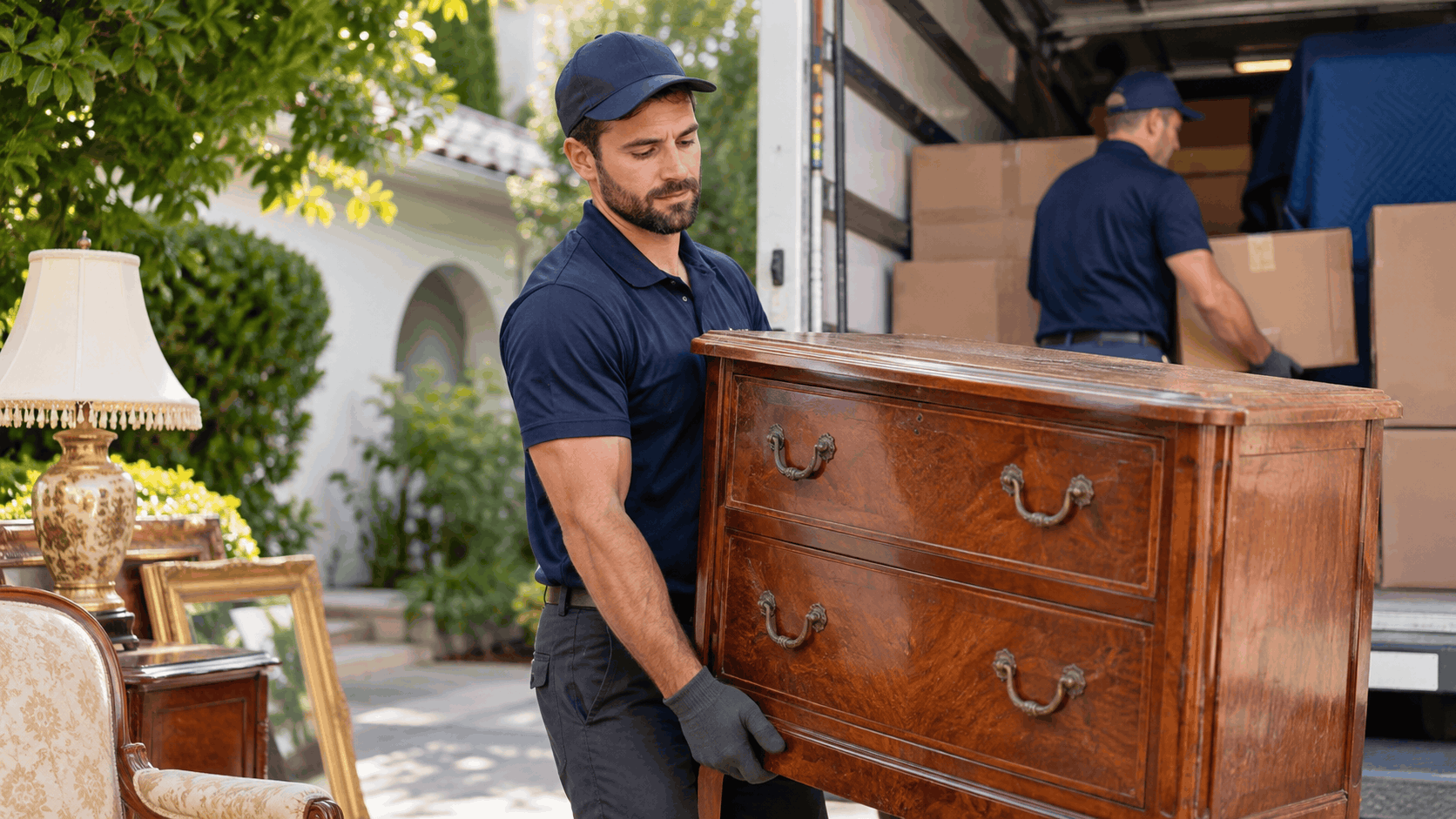
Homes full of art, antiques and wine need the right valuation on the move, because the default liability coverage pays almost nothing on those items. California intrastate moves have a specific set of rules here, and understanding the difference between actual cash value, the rate basis and full value protection is what keeps a valuable collection genuinely protected.
The $20,000 Default and the 60-Cent Rate Basis
Under Maximum Rate Tariff 4 Item 136(2), unless the shipper expressly declares a different value, the mover's maximum liability for lost and damaged articles is up to $20,000 of actual cash value. That is the California intrastate default, and it is what applies to a shipment where the customer declares nothing.
There is a second figure that often gets confused with the payout. Item 136(1) states the transportation rates are based upon a declared value of 60 cents per pound per article. This is the rate basis, the figure the rates are calculated on, not the amount the customer receives for a damaged item.
Both figures are true at the same time, and keeping them straight is what protects an estate. The 60 cents per pound is how the price is computed. The $20,000 actual cash value is the default liability ceiling if nothing else is declared. Treating the 60-cent basis as the payout would badly understate the protection and mislead the customer.
For a home with valuable pieces, neither default may be enough, which is where a declared value above $20,000 and full value protection come in. The tariff requires the mover to offer those options, and an estate is exactly the situation where they matter.
Why Released Value Is Not Insurance
Released value is a liability limit, not insurance. The 60-cent rate basis is a weight-based figure, and weight has almost nothing to do with the worth of a painting, an antique or a case of wine. A valuable piece that weighs little would recover almost nothing under that basis, which is why it is the wrong handling for an estate.
Full value protection is the paid alternative, and it works differently. Instead of paying by weight, it addresses the actual value of the goods, which is what matters when the items are art, antiques and collectibles rather than ordinary furniture. For a home full of high-value pieces, this is the coverage that fits.
The tariff requires each valuation option to be listed with the mover's charge and a space for the shipper to initial. That gives the customer the right to be offered better coverage and the right to decline it knowingly. On an estate, choosing the right option is a deliberate decision, not an afterthought.
Understanding that released value is a cap and not insurance is the single most useful thing an estate client can know before a move. It changes how the valuation section of the paperwork is handled, and it is why we walk through the options directly rather than letting the default stand by accident.
Declaring Antiques, Art, Wine and Safes
Items of extraordinary value, such as antiques, art, and gold or silver articles, should be separately described on the inventory with a value declared for each. This inventory declaration is how a high-value piece gets recognized as more than a generic line item, and it is standard practice for estate collections.
Listing each significant piece individually does two things. It documents what went onto the truck, and it establishes the declared value that governs the coverage. A collection logged piece by piece is far easier to protect and, if needed, to claim on, than one bundled into a single vague entry.
Some things are best not shipped at all. Money, jewelry and important papers are best carried by the customer rather than placed on the truck. These items are small, irreplaceable and easy to keep in hand, so the sensible approach is to transport them personally rather than hand them to the crew.
For an Encino estate with wine, fine art, safes and antiques, the valuation and inventory work is part of the preparation, not a formality at the door. We go through it during the survey and the paperwork so the right coverage is in place before anything is loaded.
Need Help in Los Angeles?
Popeye Moving & Storage serves Los Angeles and all of Los Angeles County.
Vaulted Storage at the Mar Vista Warehouse
Estate clients between homes or facing a remodel often pair the move with storage, and Popeye offers full-service vaulted warehouse storage at its own warehouse in Mar Vista. This is full-service storage, not a self-storage unit, and the difference shapes everything from access to the law that governs it.
How Full-Service Vaulted Storage Works
Storage is full-service vaulted storage only, at 5509 1/2 S Centinela Ave in Mar Vista. The customer has no key, no individual unit and no right of entry. The goods are handled entirely by Popeye crews, which is what makes this a managed service rather than a rented space.
A vault is loaded once at the origin and then moved as a unit by forklift. Because the belongings are packed into the vault at the house and the vault itself is the thing that gets moved around the warehouse, the goods are not repeatedly unpacked and repacked. They travel as a sealed unit.
This vaulted model is also what places the service under a specific legal regime. Because the customer has no key, no individual unit and no access, it falls outside the self-service storage rules and under the Commercial Code provisions that govern warehouse storage. That distinction is not academic here, it is the actual operating model.
For an estate, the managed approach means professionals handle the goods at every stage. The same crew sensibility that protects a piano on the move applies in the warehouse, because the items stay within one controlled system from the house to the vault.
What the Warehouse Accepts
The warehouse takes household and commercial goods, and it accepts specialist items that estates commonly hold: wine storage, fine art storage, pianos and chandeliers. These are exactly the pieces an Encino estate needs stored carefully, and they are part of what the facility is set up to take.
There is no minimum and no maximum storage term, so the arrangement suits both a short gap and a long renovation. What the warehouse does not accept is vehicles, so cars, motorcycles, boats and RVs are not part of this service. The focus is household and commercial goods plus the named specialty items.
Access to vaulted goods is by appointment access, because the warehouse has to retrieve and open the container for the customer. This is ordinary trade practice for vaulted storage, since the goods are not sitting in a unit the customer can walk into. An appointment lets the crew pull and open the right vault.
Commercial and business storage is handled alongside household goods, which suits estate clients who also run a business or need to store office contents during a transition. Our commercial and business storage page covers that side.
Remodels and Move-Out-and-Back Storage
Renovation is constant on Encino estates, so moving out to storage and back again is a recurring pattern. A homeowner remodeling a kitchen, refinishing floors or reworking a wing often needs the contents out of the way and then returned once the work is done, and vaulted storage fits that cycle cleanly.
Long-term storage with a proper inventory pairs naturally with an estate move for exactly this reason. The same careful listing that protects the goods on the move serves the storage period, so when the belongings come back, everything is accounted for. An estate's worth of contents needs that documentation.
The renovation timeline often shifts, which is why the no-minimum, no-maximum term matters. A remodel that was meant to take two months and runs to five does not create a storage problem, because the goods can stay as long as the project needs without a fixed end date forcing a decision.
When the work finishes, the move back is planned the same way as the move out, with the same attention to access on the gated or hillside property. The storage period becomes one phase in a larger project rather than a separate headache, which is how estate clients tend to want it handled.
Storage-in-Transit and When It Changes
Maximum Rate Tariff 4 defines storage-in-transit as storage of a shipment at the request of the consignor or consignee at one point between origin and destination for a period not to exceed 90 days. Inside that window, the move is still a regulated mover service, with the tariff protections attached.
Past 90 days, or where storage-in-transit was not requested, the goods fall under the warehouse's own storage contract rather than the mover's tariff. This is a meaningful line, because it determines which set of rules governs the goods, and it is worth understanding when storage stretches long.
One practical note on access: the warehouse business hours are for calls and scheduling, not for a customer to come and collect or deposit goods on a walk-in basis. Retrieval of vaulted goods is arranged by appointment, as the vaulted model requires.
For most estate clients, whether the storage sits inside storage-in-transit or runs longer is simply a matter of how long the remodel or the gap between homes takes. We set up the storage so the arrangement is clear, and the no-maximum term means a long project is handled without a cutoff forcing the goods out.
Parking Permits for a Truck in Encino
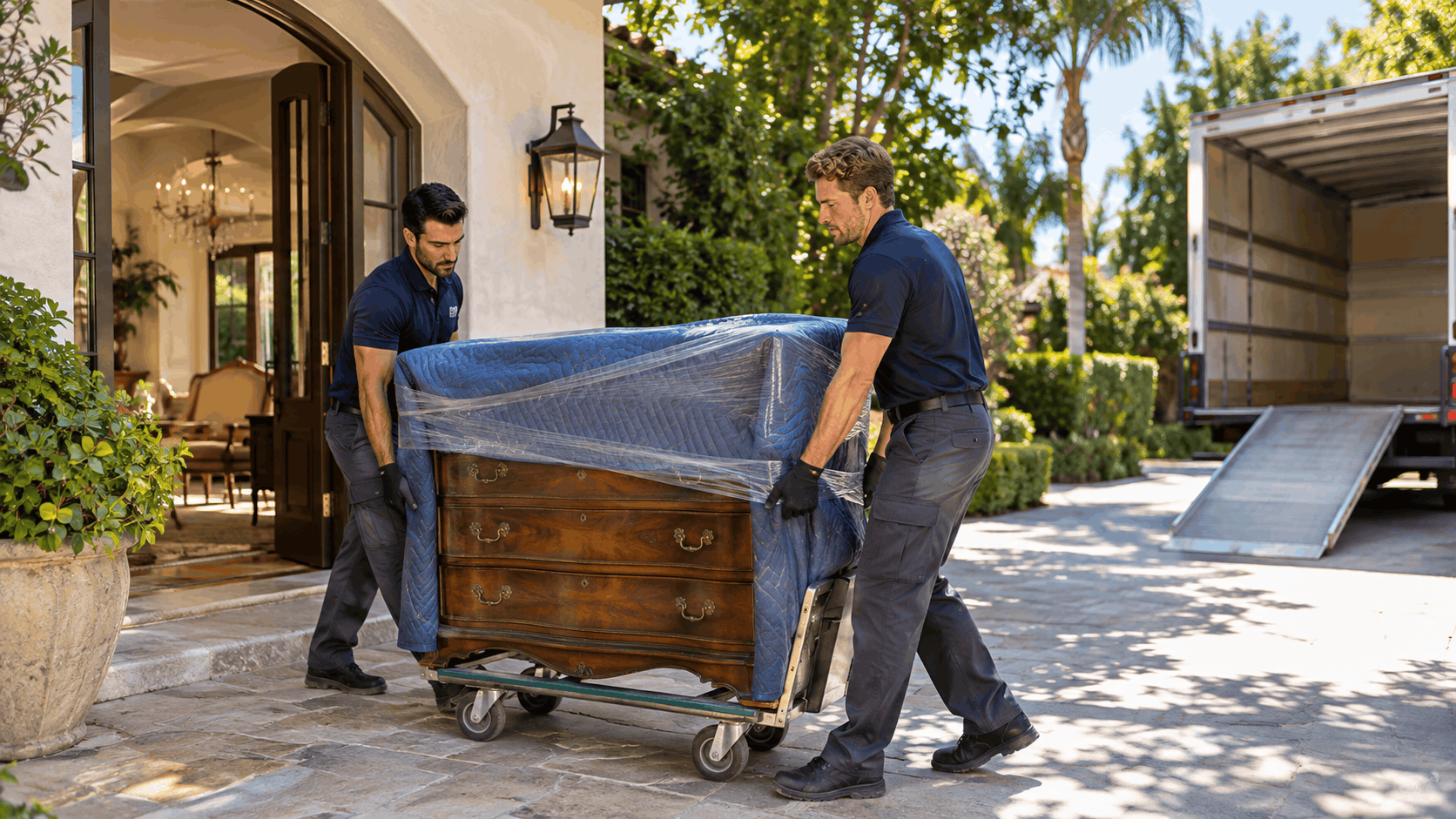
Encino is in the City of Los Angeles, so moving truck permits run through LADOT. For an estate move, a LADOT permit matters most where the truck has to work from the street rather than a private driveway, and along the Ventura corridor in particular. The two tools are temporary street parking signs and the oversize vehicle permit.
Temporary Parking Restriction Signs
LADOT temporary parking restriction signs reserve curb space for the move. The stated lead time is five working days, so the request has to go in well ahead of the move date rather than the day before. Planning the permit alongside the move date keeps the curb available when the truck arrives.
Applications are taken by phone through LADOT on (213) 485-2298, between 8AM and 12:30PM Monday to Friday, as well as online and in person at a DOT Public Service Center. There is a non-refundable fee for the signs. Because fees change, we direct customers to LADOT for the current amount rather than quoting a figure that may be out of date.
The signs do one specific thing: they reserve the curb space so the truck has a legal place to work. On a street with tight parking near Ventura, that reserved space can be the difference between a short carry and a long one, which is why the permit is worth arranging in advance.
For a home north of Ventura where the truck can work on private property, the signs may not be needed at all. The permit matters where the move runs from the street, so we assess that during the survey and arrange the signs only where they help.
Oversize Vehicle Permit and Overnight Rules
The oversize vehicle permit is published at $10.00 per day for up to three days. It legalizes the truck's size and its overnight parking, but it reserves no space. That is the key distinction: the oversize permit handles the vehicle's size, while the restriction signs handle the curb space.
The overnight rule is where the two intersect. Commercial trucks with a logo or longer than 22 feet may not park overnight on city streets. For an estate move with a full-size branded truck, that rule shapes where the vehicle can sit outside working hours, and the oversize permit is what addresses the size and overnight parking question.
On a same-day storage run, the overnight parking question often does not arise, because the goods go straight to the Mar Vista warehouse and there is no overnight hold on the truck. The vehicle is not left loaded on an Encino street overnight, which sidesteps the issue entirely.
Where a permit is needed, we handle the arrangement as part of the job. Fees change over time, so the current figures are confirmed with LADOT, but the mechanism, size legalized by the oversize permit and curb reserved by the signs, is how a truck works legally on a city street.
Loading Along the Ventura Corridor
Apartment and condominium buildings along the Ventura corridor have their own requirements on top of city permits. Many have service lifts and management offices that require a lift reservation, a certificate of insurance naming the owner and the management company, sometimes a deposit and set permitted hours for moves.
These building rules have to be sorted before the move, because a management office that needs an insurance certificate will not let the crew work without it. We establish which requirements a building has at the first call, so the certificate, the lift booking and any deposit are in place ahead of the date.
Ventura Boulevard itself carries steady traffic with limited curb space, so loading directly on the boulevard is often impractical. Many corridor moves load from a side street or through the building's own arrangement instead, which keeps the crew out of the traffic flow.
Not every Ventura building has a lift. Some are older walk-ups with no elevator at all, which changes the carry and the crew size. Knowing which type of building the move involves at the first call lets us plan the right approach, whether that is a reserved lift or a stair carry.
Valley Heat and Timing Your Estate Move
Summer temperatures in the southern San Fernando Valley run well above the coastal side of the hills, and that affects both the crew and the goods. Valley heat is an operational factor on a summer move, not a background detail, which is why an early start is the sensible method here rather than a scheduling preference.
Why Heat-Sensitive Items Can't Sit in a Closed Truck
Electronics, candles, artwork and anything heat-sensitive should not sit in a closed truck through a Valley afternoon. A closed trailer in the sun builds heat well beyond the outside air temperature, and for sensitive items that is a real risk to the goods, not just discomfort.
The reason Encino runs hot is geography. The Valley sits behind the hills that separate it from the coast, so it misses the ocean's moderating effect and heats up through the afternoon. A move that would be mild on the Westside can be genuinely hot in Encino on the same day.
For an estate full of heat-sensitive items, candles that can soften, electronics that dislike heat, and artwork that should stay cool, the afternoon is the time to avoid having goods sitting in a loaded truck. The handling plan accounts for that, especially on a long volume job.
This is another reason the same-day storage model helps. Goods that go straight to the Mar Vista warehouse spend less time baking in a parked truck than goods held overnight on a vehicle, which matters more in Encino's heat than it would nearer the coast.
Early Starts for Summer Moves
An early start is the sensible method for a summer Encino move. Starting in the cooler part of the day protects the crew through better crew pacing and keeps heat-sensitive goods out of the hottest hours. This is about safety and goods, not just preference, which is why we lean toward early loads in summer.
An early start also beats the worst of the traffic. The 405 and the 101 fill up through the day, so a move that loads early and heads out before the peak spends less time crawling on the freeway. On a same-day storage run to the Westside, that timing advantage is real.
Summer scheduling on an estate therefore tends to front-load the day. The crew gets the heavy carrying done while it is cooler, the truck gets onto the roads before they clog, and the goods reach storage without sitting through the afternoon heat. All three line up with an early start.
For a large home, where the load takes hours regardless, starting early also means the job finishes at a reasonable time rather than running into the hottest and most crowded part of the day. That protects both the schedule and the people doing the work.
Routing Across the Sepulveda Pass
The 405 and the Sepulveda Pass are the route from Encino to the Westside route and the Mar Vista warehouse. The pass is slow, and because local moves bill on double drive time, slow driving on the pass is expensive on the clock. Route and timing are planned together for that reason.
The driving time across the pass swings with the hour. A crossing before the morning build-up or outside the evening crush is much faster than one at peak, and since the time is doubled under the tariff, the difference compounds. Timing the run to miss the worst traffic saves real money.
Because the goods head to Mar Vista on the same day, the route and the start time are set as one decision. An early load that crosses the pass ahead of the traffic reaches the warehouse faster and cheaper than a mid-afternoon run, so we plan the departure around the pass rather than treating it as an afterthought.
For an estate client, this is simply part of a well-run move. The route to storage is known, the traffic pattern is known, and the start time is chosen to use both in the client's favor on a service that runs straight through to vault placement the same day.
Need Help in Los Angeles?
Popeye Moving & Storage serves Los Angeles and all of Los Angeles County.
How Popeye Handles an Encino Estate Move
An Encino estate move runs on a clear sequence: an on-site survey of the full property including every secondary structure, a written estimate with a Not To Exceed price agreed before any goods are loaded, and same-day placement into vaults at the Mar Vista warehouse. The licensing and insurance behind it are what make the process checkable.
The On-Site Survey
An on-site survey is the right approach for these homes. We walk the full contents, including the pool house, guest quarters and outbuildings, and we note the pianos, safes, art and wine that drive the handling. A big estate is impossible to price accurately over the phone, so the visit comes first.
The survey is where the secondary structures get caught. A caller focused on the main house easily forgets the guest suite's furniture, the garage's contents and the shed full of equipment. When those are not surveyed, the estimate is wrong and the day runs long, which is exactly what the visit prevents.
Walking the property also surfaces the access questions in one pass. We check the gate, the driveway, the turning room and the overhead clearance on a north-of-Ventura lot, or the shuttle staging and the carry on a hillside home. The survey ties the contents and the access into a single plan.
From that visit comes a realistic crew size, the right equipment and an accurate time estimate. For a home with multiple structures and specialty pieces, that detail is the difference between a smooth move and a day of surprises, which is why we insist on seeing the property before quoting.
The Written Price and the Not To Exceed Figure
On a move inside California, a written Not To Exceed figure is agreed before any goods are moved. This is the maximum total amount the customer can be liable for, and the final bill cannot exceed it except through a Change Order the customer agrees to before the extra work is done. It is a right the customer has, set out in the tariff.
California requires a written estimate, not a binding one. The protection that actually caps the bill is the Not To Exceed figure in writing, agreed up front. For an estate manager who wants a firm number before work starts, that written ceiling is the document that matters.
The customer also receives the required informational booklet, "Important Information for Persons Moving Household Goods (within California)," which the mover must furnish. Along with the estimate and the paperwork, it is part of a properly documented move, and keeping those documents strengthens any later claim.
Because the Not To Exceed figure is set before the truck is loaded, the client knows the ceiling going in. Any change to that figure happens through a Change Order the client approves, so the bill does not drift upward without agreement. That transparency suits the kept-promise expectation on estate work.
Licensing, Insurance and Permit Numbers
Popeye holds California household mover permit CAL T 189749 for intrastate work, and USDOT 1472924 and MC 498816C for interstate work. The company is fully insured and is BBB accredited with an A+ rating. These are facts a customer can check before booking rather than take on faith.
Household moving inside California is regulated by the Department of Consumer Affairs Bureau of Household Goods and Services, the BHGS, not the CPUC. Authority moved to the BHGS on July 1, 2018, so the bureau is the body that licenses movers and handles complaints. The Department of Consumer Affairs publishes that information.
A customer can verify a mover's permit before booking, and that is the practical advice: ask for the permit number and check it first, rather than after a problem. Popeye's intrastate permit is CAL T 189749, and it can be confirmed through the bureau. For interstate work, the federal authorities are published through the Federal Motor Carrier Safety Administration.
For the move itself, the right regime matters. A move from Encino to another California address is intrastate, governed by the Household Movers Act and Maximum Rate Tariff 4 under the BHGS. A move crossing a state line is interstate under federal rules. The same company holds both authorities, so the paperwork matches the move. More on the Los Angeles service area and residential moving is on those pages.
Planning Your Encino Estate Move
An Encino estate move works best when the survey, the written price and the storage are set up together before the truck rolls. Our team walks the full property, gives you a written Not To Exceed figure before anything is loaded, and places your goods into vaults at the Mar Vista warehouse the same day.
To book a survey or talk through a gated, hillside or multi-structure move, call Popeye Moving & Storage Co. at (310) 823-9510 or use our contact page. We will confirm access, route and storage so your move runs on schedule.
Frequently Asked Questions
- What does same-day estate service in Encino include?
- It means the crew clears the estate and places the belongings into vaults at the Mar Vista warehouse on the same working day, with no overnight hold on the truck. The service covers full estates, including secondary structures like pool houses, guest quarters, garages and storage rooms. The goods reach controlled vaulted storage the day they leave the house rather than sitting loaded on a vehicle overnight waiting for a warehouse to open.
- How much does an estate move in Encino cost?
- Typical area ranges are $150 to $200 per hour for a two-person crew and truck on local residential moving, and $150 to $250 per hour for white glove moving, which fits most estate work. Specialty items run on top: piano moving $200 to $600 and fine art $300 to $1,200 or more. These are typical ranges, not a quote. Your actual price comes as a written Not To Exceed figure agreed before anything is loaded.
- Can a full-size truck reach a hillside home south of Ventura?
- Often it cannot. The streets climbing toward Mulholland have switchbacks, limited turning room and steep driveways, so a full-size truck frequently cannot reach or turn there. On these roads, a shuttle from a smaller vehicle is the workable method, and it is priced at the estimate rather than improvised on the day. Access is qualified on the phone first, so properties with no vehicle access are identified before a date is confirmed.
- What protects my antiques and art during the move?
- Full value protection is the paid coverage that addresses the actual value of your goods, which is what high-value pieces need. The 60-cent per pound rate basis is a weight-based figure that pays almost nothing on art, antiques or wine, so it is the wrong handling for these homes. Items of extraordinary value should be separately described on the inventory with a value declared for each, and jewelry and important papers are best carried by you.
- Do I need a parking permit for the moving truck in Encino?
- Encino is in the City of Los Angeles, so permits run through LADOT. Temporary street parking restriction signs reserve curb space with a five working day lead time, applied for by phone on (213) 485-2298 between 8AM and 12:30PM Monday to Friday, online or in person, with a non-refundable fee. An oversize vehicle permit is published at $10.00 per day for up to three days. Fees change, so confirm current amounts with LADOT.
- How does the vaulted storage work and how much is it?
- Storage is full-service vaulted at the Mar Vista warehouse, where you have no key, no individual unit and no right of entry, and goods are handled by Popeye crews. A vault is loaded once at origin and moved as a unit by forklift. Typical area pricing runs $60 to $90 per vault per month, with no minimum and no maximum term. Access to stored goods is by appointment, because the warehouse retrieves and opens the vault for you.
- What happens if I file a claim for lost or damaged goods?
- Under Maximum Rate Tariff 4, a written claim must be filed within nine months after delivery as shown on the shipping document. The mover must acknowledge the written claim within 30 days and pay, decline or make a firm settlement offer within 60 days. A claim cannot be denied solely because the lost or damaged goods were not noted at the time of delivery. Keep your estimate, agreement and bill of lading, as they strengthen any claim.
- Should I schedule my move early in the day during summer?
- Yes. The southern San Fernando Valley runs well above the coastal side of the hills because it sits behind them and misses the ocean's cooling. An early start protects the crew and keeps heat-sensitive items like electronics, candles and artwork out of a closed truck through the afternoon. An early load also beats the worst of the 405 and Sepulveda Pass traffic on a same-day storage run to the Mar Vista warehouse.
- Who regulates movers in California and how do I check a license?
- The Department of Consumer Affairs Bureau of Household Goods and Services, the BHGS, regulates California household movers and is reachable on (916) 999-2041. It is not the CPUC, which stopped regulating movers in 2018. You can verify a mover's permit before booking through the bureau. Popeye operates under CAL T 189749 for intrastate work, with USDOT 1472924 and MC 498816C for interstate work, and is fully insured.
- Can an estate manager or agent book on behalf of the owner?
- Yes. Owners, agents, business managers and estate managers all book these moves, so the caller is often not the person moving. When that is the case, we confirm who approves the written price and who the crew reports to on the day. For gated properties, access and crew details are arranged in advance, so gate codes, approved vehicles and crew names are registered before the truck arrives and the move begins on time.
Popeye Moving & Storage Co. Team Team
Licensed moving and storage professionals serving Los Angeles and Los Angeles County.
Licensed in California · License #CAL T 189749 | USDOT 1472924 | MC 498816C
Why trust Popeye Moving & Storage?
Founded in 1994, Popeye Moving & Storage is a licensed and insured moving and storage service serving Los Angeles and Los Angeles County. All content is reviewed by our licensed technicians.
Need Help in Los Angeles?
Popeye Moving & Storage serves Los Angeles and all of Los Angeles County.
Related Articles
Movers in Koreatown with Same-Day Apartment Service
Same-day studio and one-bedroom moves in Koreatown, explained: building types, LADOT parking permits, double drive time costs, California protections and vaulted storage for lease gaps.
Movers in Mar Vista and Palms with Same-Day Service
How same-day moving and vaulted storage works in Mar Vista and Palms: pickup into our warehouse the same day, local pricing, street conditions, permits, and your protections.
Santa Monica Movers North of Montana: Coastal Estate Service
A local guide to estate moving north of Montana Avenue in Santa Monica, covering coastal conditions, fragile crating, neighborhood logistics, storage, and permits.