Specialty Moving in Media District, Burbank
Serving ZIP 91505, 91522
Studio, post house and production office moves along Olive, Alameda and Hollywood Way, booked around the shoot.
Popeye Moving & Storage has provided specialty moving to Media District, Burbank and the rest of Los Angeles County since 1994. License #CAL T 189749 | USDOT 1472924 | MC 498816C. Fully insured.

Get Your Free Quote
Free in-home and video estimates. No obligation.
BBB A+ Rated
Accredited Business with an A+ rating from the Better Business Bureau.
Licensed and insured
CAL T 189749 | USDOT 1472924 | MC 498816C, fully insured.
Open seven days
6 AM to 9 PM, seven days a week. Call (310) 823-9510.
Free estimates, binding price
Free in-home and video estimates, with a guaranteed binding price after a video survey.
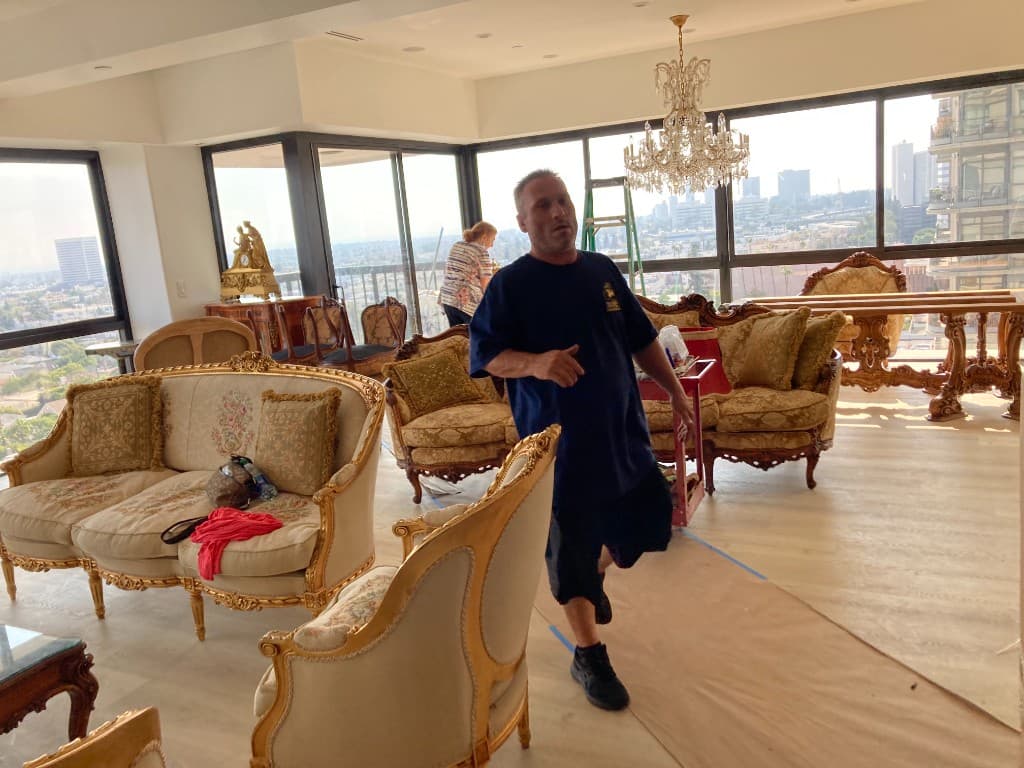
Top Specialty Moving in Media District
The Media District is Burbank's studio quarter, a specific plan area along Olive Avenue, Alameda Avenue, Riverside Drive and Hollywood Way around the Warner Bros., Disney and Burbank Studios lots. Popeye's work here is commercial and production moves timed around the schedule.
The Media District is a 544-acre specific plan area in southwest Burbank, bounded by Magnolia Park, South Keystone Street, the Los Angeles River and Toluca Lake, and threaded by Olive Avenue, Alameda Avenue, Riverside Drive and Hollywood Way with State Route 134 crossing it. Warner Bros. Studios, the Walt Disney Studios and The Burbank Studios sit inside it, surrounded by post-production, animation, sound, lighting and equipment businesses. It is not mainly residential, and Popeye's work here is commercial and production related: editing and color suites, servers and storage arrays, mixing gear, lighting and grip inventory, camera and lens cases, art department contents, archives, props, costumes and workstations.
Specialty Moving in Media District: What Changes Here
Specialty moving in the Media District covers piano moving, fine art and antique transport, chandelier removal and placement, white glove service, and furniture assembly. What makes this work different here is that the district is built around studio lots and production facilities rather than residences, so nearly every specialty move is commercial or production-related. Move windows are set by shooting, delivery or air dates rather than standard business hours. Equipment is inventoried from a walkthrough, access arrangements are confirmed with building management rather than tenants, and valuation decisions matter most for items that are light relative to their value. Each of those conditions changes how a specialty move is planned before anything is loaded.
Fine art valuation for light, high-value production assets
Fine art and antique moving in the Media District often sits alongside camera cases, lens sets and animation art department contents. All of these are light relative to their value, which means the weight-based default valuation basis pays very little if something is lost or damaged. Each piece should be listed on the inventory with a declared value before the move window opens, and full value protection should be discussed at the estimate, not after the crate is packed.
White glove sequencing inside converted industrial buildings
White glove moving in the district means working inside buildings that range from converted industrial space with freight lifts and roll-up doors to purpose-built facilities with proper docks. Some two-storey conversions have no lift at all. Floor runners, wall padding and the protection sequence for each piece must be planned against the actual building layout, confirmed with management rather than the tenant, before the crew arrives.
Piano and chandelier moves timed around production schedules
A piano or chandelier move inside a production facility or studio-adjacent office is scheduled around shooting, delivery or air dates, not around standard business hours. The move window is set by the production, which means overnight, weekend or hiatus timing is the norm rather than the exception. Confirming that window at the first call, alongside dock booking and freight lift dimensions, prevents a conflict with an active shoot.
Furniture assembly sequencing for phased production office moves
Furniture assembly and disassembly in a production office or post house is often phased so that workstations and editing suites come apart and go back together in a sequence that keeps systems running. Hardware is bagged and labelled to each piece, and complex items are photographed before disassembly. The sequence is agreed with the production manager or line producer before anything is touched, since continuity is the measure of a successful move here.
Local Issues
Common Specialty Moving Issues in Media District
Crating decisions rushed inside a production window
Fine art, antique furniture and animation art department contents moved during a tight production window are at risk when crating decisions are left until the move date. Custom crating takes lead time to build, and a piece that needs a crate but does not have one is either delayed or moved with less protection than it requires. Crating requirements should be confirmed at the walkthrough, not on the day.
Inventory incomplete before a specialty move begins
Prop collections, set dressing, plan chests and costume archives moving out of a Media District facility are often more numerous and varied than a tenant's initial description suggests. An inventory built from a walkthrough rather than a phone conversation catches pieces that need individual condition records, acid-free wrapping or declared values before the move window opens, and prevents disputes about condition afterward.
Security requirements not confirmed before specialty crew arrives
Studio lots and production facilities require crew details in advance, badging or escort, and vehicle checks at the gate. A specialty crew arriving for a piano, chandelier or white glove move without those arrangements confirmed can be turned away or held at the gate long enough to miss the agreed window. Access arrangements are confirmed with the facility, not assumed from the tenant.
Valuation not discussed before packing fragile or irreplaceable items
Camera cases, lens sets, animation originals and antique props are all light relative to their value. The weight-based default valuation basis pays very little on any of them. Under Maximum Rate Tariff 4, you have the right to be offered full value protection in writing before anything is loaded, with items of extraordinary value declared separately on the inventory. That conversation belongs at the estimate, not after a loss.
Street use permit lead time underestimated on arterial routes
Moving trucks parked on Hollywood Way, Olive Avenue or Alameda Avenue to service a specialty move may require a traffic control plan as part of the Burbank Public Works street use permit. Street use permits are valid up to five days, Monday through Friday, and a traffic control plan requirement adds lead time. Confirming whether a plan is needed early in the booking process prevents a permit gap on the move date.
Get Your Free Quote
Tell us about your move. We'll be in touch soon.
What we offer in Media District
Our Specialty Moving Services in Media District
Piano Moving in Media District
A piano is heavy, top-heavy or balanced on three legs, and easy to damage if it is lifted at the wrong point. We assess access at both addresses before quoting, so stairs, hillside driveways and tight turns are planned rather than improvised. Every California move gets a written price with a Not To Exceed figure before anything is loaded.
Learn more →Fine Art & Antique Moving in Media District
Art and antiques fail in ways ordinary furniture does not, so the work is documentation, crating, orientation and load planning rather than careful lifting alone. We record condition before anything is wrapped and make sure valuable pieces are listed with a declared value. Every California move gets a written price with a Not To Exceed figure before anything is loaded.
Learn more →Chandelier Moving in Media District
A chandelier is fragile, heavy and wired into the ceiling, which makes it one of the hardest pieces in a home to move. We plan the removal around your electrician, pack every crystal or glass element individually and crate the frame for transport. Every California move gets a written price with a Not To Exceed figure before anything is loaded.
Learn more →White Glove Moving in Media District
White glove means more preparation and more hands, not just more care. Floors, walls and door frames are covered before anything moves, each piece is wrapped for its finish, and furniture is placed where you want it rather than left in a room. We finish with a walkthrough so you can check condition before the crew leaves.
Learn more →Furniture Assembly & Disassembly in Media District
Bed frames, sectionals, wardrobe systems and large tables often have to come apart to leave one home and enter the next. We disassemble with the right tools, bag and label every piece of hardware and rebuild at the new address. Every California move gets a written price with a Not To Exceed figure before anything is loaded.
Learn more →What to Expect - Specialty Moving in Media District
- 1
Free estimate and access check
Call (310) 823-9510 for an in-home or video estimate. We note the piano type and check stairs, turns, doorways, lifts and driveways at both addresses.
- 2
Preparation
Floors and doorways are protected. A grand has its lid, lyre and legs removed and is strapped on a padded piano board; an upright is padded and secured on a dolly.
- 3
Transport
The piano is loaded and strapped so it cannot shift in the truck, then moved to the new address.
- 4
Reassembly and placement
The piano is reassembled and placed where you want it, away from vents, windows and direct sun if the room allows.
Ready to Get Started?
Licensed CAL T 189749 | USDOT 1472924 | MC 498816C, fully insured and BBB A+ accredited. Free in-home and video estimates. Open 6 AM to 9 PM, seven days a week.
Local Tips
Specialty Moving Tips for Media District Residents
Book the walkthrough before the production window is set, not after. An inventory built from a walkthrough determines crating needs, crew size and valuation decisions. Leaving any of those to the move date creates risk inside a schedule that cannot move.
Confirm freight lift dimensions, dock booking procedures and the building's insurance requirements with management in writing. Converted industrial buildings in the district vary widely, and the tenant's recollection of lift size or dock hours is not a reliable basis for planning a piano or white glove move.
Declare a value for each fine art piece, antique or irreplaceable production item separately on the inventory. The weight-based default pays very little on light, high-value goods. Full value protection must be offered to you in writing before anything is loaded.
Supply crew names, vehicle information and any required identification to the facility's security contact before the move date. Studio lots and production facilities run controlled access, and a specialty crew held at the gate can lose the agreed move window entirely.
For chandelier moves inside a production facility, coordinate the licensed electrician's schedule with the move window at the same time you book the crew. A chandelier cannot be moved until the wiring is disconnected, and a scheduling gap between the electrician and the crew wastes the window.
Need Specialty Moving in Media District? Get a Free Estimate.
What Customers Say About Our Specialty Moving in Media District
Real reviews from Media District and nearby Burbank neighborhoods.
“The shop inventory could not sit in a POD beside the Chandler Park curb. Commercial vault space kept the fixtures clean until the Chandler Park lease started.”
“I work nights and the unassigned yard slot 13 is loud at dawn. They texted from the the yard curb instead of knocking and still finished before my sleep window closed.”
“The cat tree was bolted through the unassigned yard slot 12 stud. They unscrewed it in the yard, bagged the lag bolts, and the carpet only showed the old holes.”
Specialty Moving in Media District - FAQs
If the truck uses the public right-of-way, Burbank Public Works handles the street use permit. The City lists these as valid up to five days, Monday through Friday, and depending on the use a traffic control plan may be required, which is realistic on the arterials around the studios and adds lead time. Many facilities load from their own dock instead. Popeye confirms the position for your address.
As a typical Los Angeles range, office moving runs $1,500 to $8,000+, and custom crating runs $150 to $800+ per crate. These are typical ranges, not a quote. The equipment list, crating, phasing and the agreed window all affect the price, which is set in writing before anything is moved.
Yes. Popeye offers free in-home and video estimates, and for a facility that means a walkthrough to build the equipment inventory, check the dock and freight lift, and plan the phases. A guaranteed binding price is available after a video survey.
Yes, that is how much of the work here is done. The window is agreed around your shooting, delivery or air dates. Popeye's office takes calls and scheduling 6 AM to 9 PM, seven days a week.
Access arrangements are agreed before the day: crew names supplied in advance, badging or escort, gate checks and any restricted areas. Crews carry ID, and Popeye does not discuss its clients or what it moves.
The default valuation basis is weight based, so light, expensive equipment is poorly covered by it. Ask about full value protection and declare high-value items separately on the inventory with a value for each, before anything is crated. Valuation is a liability limit, not insurance.
Each piece should be listed separately on the inventory with a value declared for it before the move begins. The default valuation basis is weight-based and pays very little on paintings, sculpture or antique furniture relative to their actual worth. You have the right to be offered full value protection in writing before anything is loaded, and that conversation should happen at the estimate stage, not on the day of the move.
Yes. Much of the specialty moving work in the Media District happens overnight, at weekends or during a hiatus, because the move window is set by the production schedule rather than by standard hours. Confirming the agreed window, dock access hours and any security or badging requirements at the first call is how the timing is locked in without disrupting an active shoot or delivery deadline.
Get the dock booking process, freight lift dimensions, access hours and the building's insurance requirements from management in writing, not from the tenant's recollection. Converted industrial buildings in the district vary widely, and some two-storey conversions have no lift at all. Knowing the actual access conditions before the estimate means the protection sequence and crew size are planned for the real building, not an assumed one.
Also serving