West Hollywood Moving Rules: Building and Street Access Restrictions
Key Takeaways
- West Hollywood's dense streets, older buildings, and rent-stabilized housing make advance planning more important than in most nearby cities.
- Most buildings require a freight elevator reservation, a certificate of insurance, and a refundable move deposit before movers can enter.
- Curb reservation or temporary no-parking permits are often the only way to legally park a truck, and they need one to two weeks of lead time.
- Moving is generally limited to weekday daytime hours because of the city noise ordinance and building-specific approved move days.
- Narrow streets in the Norma Triangle and near Fairfax often require a smaller shuttle truck instead of a full-size rig.
- Illegal parking risks fines and towing that can stall an entire move for hours.
- Popeye Moving & Storage coordinates COIs, elevator bookings, permits, and route planning so residents avoid access delays.
- Short-term storage bridges the gap when move-in and move-out dates or approved building days do not line up.
In This Article
It starts the same way most West Hollywood moves do. A resident pulls up to their new apartment near Santa Monica Boulevard, rental truck loaded, only to find there is nowhere to park and a building manager waiting with a clipboard full of rules. The elevator was not reserved. The moving company does not have a certificate of insurance on file. And the curb out front is a permit-only zone.
We have watched this scene play out hundreds of times across WeHo. The city runs on tight streets, older buildings, and management offices that take their move-in rules seriously. A move that would take three hours in a suburban cul-de-sac can turn into an all-day headache here if nobody planned ahead.
Why West Hollywood Has Strict Moving Rules?
West Hollywood packs a lot of people into a small footprint. Just under two square miles hold tens of thousands of residents, most of them in apartments and condos. That density is the real reason the West Hollywood moving rules feel tighter than in most nearby cities.
The city regulations exist to keep traffic moving, protect older buildings, and prevent one move from blocking an entire block. Here is what shapes them:
- Narrow corridors with almost no shoulder or extra lane space
- Mid-century buildings with small elevators and tight hallways
- Heavy demand for street parking around the clock
- Rent-stabilized housing with formal move-in and move-out steps
- A busy nightlife and event scene that clogs streets on weekends
Dense Streets and Limited Parking Around Santa Monica Boulevard
Santa Monica Boulevard is the spine of WeHo, and it rarely has an empty stretch of curb. Cars line both sides most hours of the day, and the traffic lanes stay busy from morning through late night. A 26-foot moving truck cannot simply idle in the right lane while crews carry boxes back and forth.
Fountain Avenue runs into the same problem. It is a heavily used shortcut between neighborhoods, so parking a truck there without a plan can back up traffic for blocks. Residents who live along these corridors learn early that a spot does not just appear on move day.
The side streets branching off Santa Monica Boulevard tend to fill with resident vehicles overnight. By the time a morning move begins, the closest legal parking may be a full block away. That distance adds time, labor, and the risk of damaged items being carried farther than they should be.
This is why we scout parking before every job in this area. Knowing where a truck can legally sit near a specific address saves the whole day from unraveling.
Older Apartment Buildings Near Fairfax and Melrose
The stretch between Fairfax and Melrose holds some of the most charming older apartment buildings in the city. Many were built in the 1940s through 1960s, and their character comes with real moving challenges. Small elevators and narrow stairwells were not designed for modern sectional couches or king-size mattresses.
Some of these buildings have no elevator at all, which means walk-ups to a third or fourth floor. Others have elevators so small that furniture has to be carried up the stairs anyway. We measure doorways, landings, and elevator cabs before scheduling crews so nobody is surprised on move day.
Management rules in these older properties can be strict. Owners protect their historic hallways and original details, so they often require floor coverings, corner guards, and approved move windows. Ignoring those requests can cost a resident their deposit or delay access entirely.
Our crews come equipped for these buildings with hoisting straps, furniture dollies sized for tight turns, and protective padding. When a piece will not fit through a stairwell, we know the alternatives before we ever pick it up.
City Codes and Rent-Stabilized Property Rules
A large share of WeHo housing is rent-stabilized, and that status affects more than rent. The municipal code shapes how landlords handle move-in and move-out inspections, deposit returns, and unit turnover. Both tenants and property managers have paperwork to complete around a move.
Rent-stabilized buildings often keep detailed records of unit condition. Movers who scuff a wall or crack a tile can trigger disputes over who pays. That is why documentation before and after a move protects everyone involved.
The city also enforces rules on how and when common areas can be used during a move. You can review current housing rules through the City of West Hollywood for the latest requirements. Reading them before move day helps avoid a last-minute scramble.
Our team has worked in enough of these buildings to know what managers expect. We treat every rent-stabilized unit like it will be inspected closely, because it usually will be.
Get Your Free Quote
Tell us about your move. We'll be in touch soon.
Building Access Rules for West Hollywood Apartments and Condos
Building access is where most WeHo moves get stuck. The city rules matter, but the individual building often has stricter ones. Before move day, a resident should sit down with their building manager and get every requirement in writing.
Ask about elevator reservations, insurance certificates, approved hours, deposits, and where the truck should park. Getting those answers early keeps the whole day on track.
Reserving Freight Elevators and Move-In Windows
Most mid-size and larger buildings require a freight elevator reservation. The management office blocks the elevator for your exclusive use during a set window, often two to four hours. Without that reservation, crews may have to wait while other residents share the same cab.
Move-in windows are frequently limited to weekdays, sometimes between 9 a.m. and 4 p.m. Weekend slots book up early or are not offered at all in some condo buildings. Residents who assume Saturday will work often find their building says no.
Reserving early is the safest move. We recommend confirming the elevator slot at least two weeks out, then having the crew arrive a little before the window opens so no time is wasted. For residential moves in these buildings, our local residential moving team coordinates the elevator timing directly with management.
When a move runs long, going past the reserved window can mean stopping mid-job. Building a realistic timeline around the reserved hours prevents that from happening.
Certificate of Insurance (COI) Requirements
Nearly every professional building in WeHo asks for a certificate of insurance before movers can enter. A COI is a document from the moving company's insurer that proves coverage for liability and property damage. Buildings want protection in case something in a shared hallway or elevator gets damaged.
The COI usually needs to name the building's management company and ownership as additional insured parties. It must list specific coverage amounts, often one million dollars in general liability. Each building sets its own wording, so the certificate has to match their exact request.
This is a common reason moves get delayed. A resident hires a mover who cannot produce a proper COI, and the building refuses access at the door. Requesting the certificate a week ahead gives time to fix any wording issues.
We handle COIs on nearly every job. Our office collects the building's requirements, issues the certificate correctly, and sends it to management before the crew arrives.
Loading Docks and Service Entrances
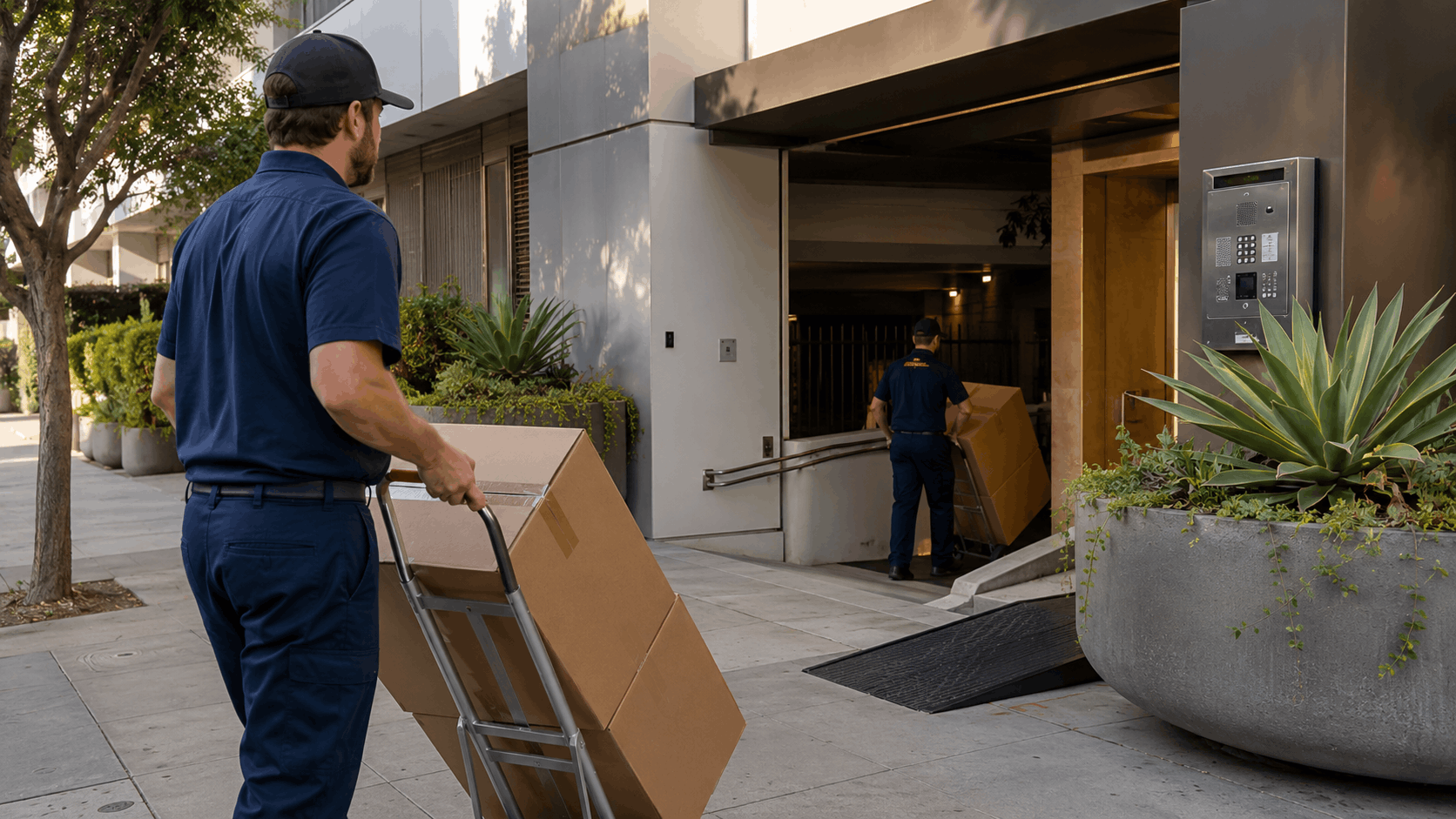
Larger condos, especially near Sunset Boulevard, direct movers to a service entrance rather than the front lobby. These buildings keep the main entrance clear for residents and guests. Movers use a back door, a loading dock, or a dedicated freight path instead.
Service entrances can be around the block from where a resident actually lives inside the building. That means longer carries and more coordination between the truck and the crew. Knowing the entrance location in advance changes how we stage the whole job.
Loading docks often have height limits or reserved time slots too. A tall truck may not clear a covered dock, which forces a switch to a shorter vehicle. We confirm dock dimensions before dispatching equipment.
Once we know the service entrance and dock rules, we plan the shortest safe path to the unit. That planning keeps carry times down and protects both the furniture and the building.
Move-In Deposits and Damage Protection
Many WeHo buildings charge a refundable move deposit, often several hundred dollars. The building holds it, inspects the common areas after the move, and returns it if nothing was damaged. Scratched floors or dinged elevator walls come out of that deposit.
Floor protection is usually required, not optional. Buildings want ram board, moving blankets, or masonite laid across lobby floors and hallways. Some also require padding inside the elevator cab.
Our crews carry floor runners, corner guards, and elevator pads on every job. We lay them down before the first box moves so the building has nothing to deduct. Protecting the property protects the resident's deposit.
Documentation matters here too. We note the condition of shared spaces before starting, so there is a clear record if any question comes up later.
Need Help in Los Angeles?
Popeye Moving & Storage serves Los Angeles and all of Los Angeles County.
Street Access and Parking Permits for Moving Trucks
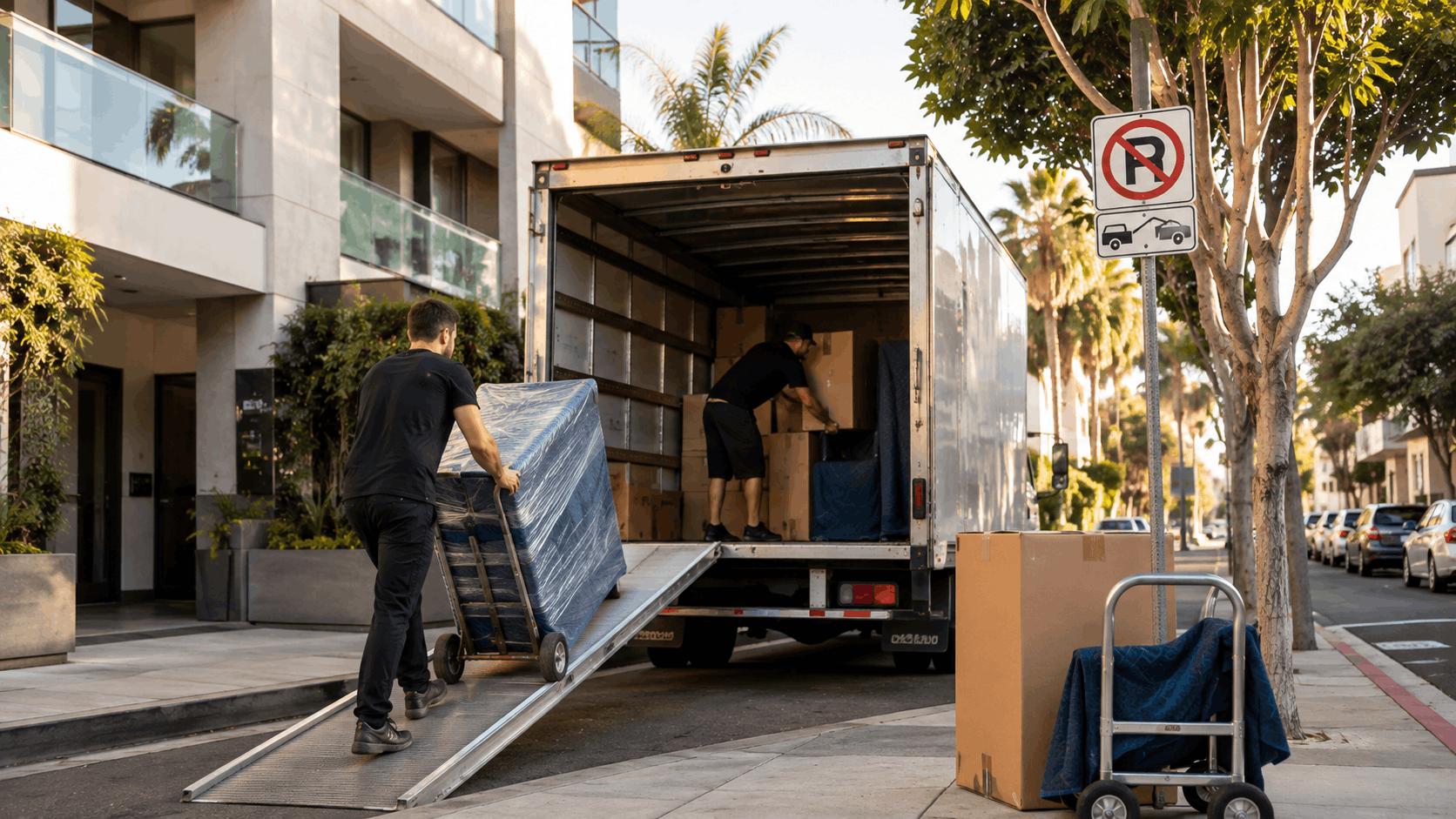
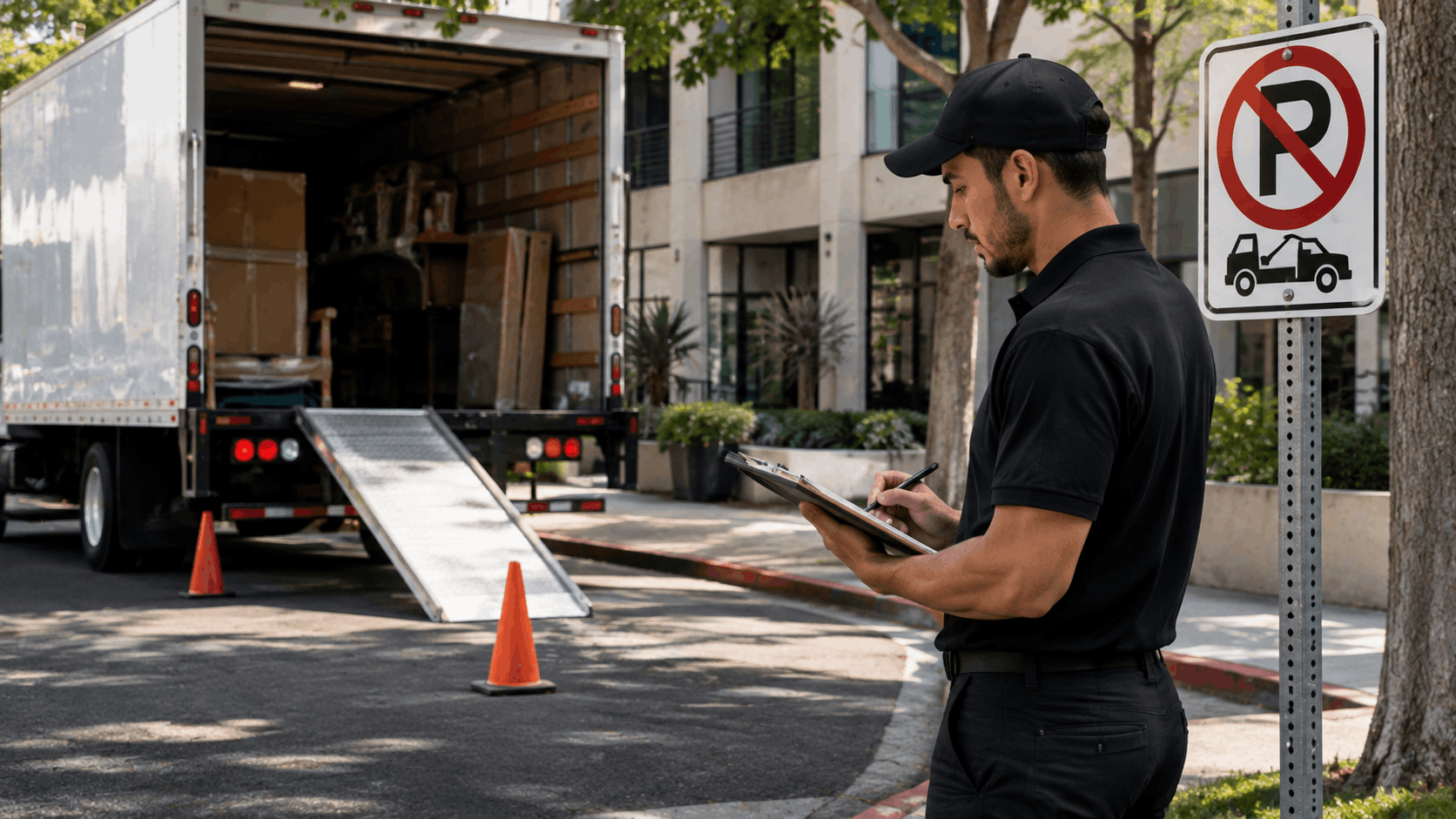
Getting a moving truck legally parked is often the hardest part of a WeHo move. Street parking is scarce, and much of it is permit-controlled. A moving truck permit or curb reservation can be the difference between a smooth day and a towed vehicle.
The city has a process for holding curb space, but it takes lead time. Residents who wait until the last minute usually cannot get it done.
Temporary No-Parking and Curb Reservation Permits
West Hollywood lets residents request temporary no-parking signs to reserve curb space for a move. The city posts the signs a set number of hours ahead of time, clearing that stretch of curb for the truck. This is the cleanest way to secure a spot near the door.
The no-parking permit reserves a specific length of curb, usually enough for one truck. On busy blocks near Santa Monica Boulevard, this can save an hour of carrying boxes from a distant spot. It also keeps the truck out of a traffic lane where it would draw tickets.
Signs have to be posted correctly and early enough to be enforceable. If a car is already parked before the signs go up, the timing rules determine whether it can be removed. Getting the paperwork right is what makes the reservation actually work.
We help residents figure out how much curb they need based on truck size. A shuttle truck needs less space than a full 26-foot rig, and that affects the permit request.
Permit Parking Zones Near Kings Road and Havenhurst
Streets like Kings Road and Havenhurst Drive sit inside residential permit parking zones. In these areas, only vehicles with a resident permit can park during posted hours. A moving truck without the right permit or a curb reservation is at risk the moment it stops.
These permit parking zones exist because the demand for spaces far outstrips supply. Residents guard their spots, and enforcement is active. A truck cannot count on finding an open, legal space in these blocks without prior arrangement.
For addresses in these zones, a temporary no-parking permit is usually the only reliable option. It carves out legal space where none would otherwise exist. We flag this early for anyone moving near Kings Road or Havenhurst.
Knowing the zone boundaries matters. A block that looks open may still be permit-restricted, and we check the signage rules before planning where the truck sits.
How Far in Advance to Apply
The permit application process is not instant. The city needs time to review the request and post signs at the reserved curb. Most residents should apply at least one to two weeks before move day.
Advance notice also protects against surprises. If the requested block has a conflict or an event nearby, applying early leaves room to adjust. A last-minute request may simply be denied.
We encourage clients to start this step as soon as they lock in a move date. The elevator reservation, the COI, and the parking permit should all be handled in the same early planning window. Doing them together avoids a scramble the night before.
Our office can walk residents through the timing so nothing falls through the cracks. The goal is signs posted and space reserved before the truck ever rolls in.
Fines and Towing Risks Without a Permit
Parking a moving truck illegally in WeHo is expensive. Parking fines add up, and a truck blocking a traffic lane on Santa Monica Boulevard is an easy target for enforcement. A single ticket can cost more than the permit would have.
Towing is the bigger risk. A truck parked in a permit zone or blocking a driveway can be towed, and getting a loaded moving truck out of an impound lot is a nightmare. That scenario can stall an entire move for hours.
Blocking traffic can also draw complaints from neighbors and pressure from enforcement to move immediately. That forces crews to stop mid-carry and relocate the truck. The delay costs time and money.
The California DMV publishes general parking and towing rules that apply statewide, and you can review them through the California DMV. In WeHo, the safest path is always a proper permit and a legal spot.
Time-of-Day and Day-of-Week Moving Restrictions
When a move can happen matters as much as where. West Hollywood limits moving hours to protect residents from noise, and buildings layer their own schedules on top of city rules. Picking the wrong time can mean complaints, blocked access, or a stalled truck.
Planning around allowed windows and traffic patterns keeps the day calm. Here is how the timing works.
Allowed Moving Hours and Quiet Times
Most moving activity in WeHo needs to happen during daytime hours. The city's noise ordinance restricts loud work early in the morning and late in the evening. Banging ramps, rolling dollies, and shouting crews all count as noise that neighbors can report.
Quiet hours typically start in the evening and run through early morning. That means a move should be well underway by mid-morning and wrapping up before dinner in most buildings. Starting at sunrise to beat traffic can backfire if it violates the ordinance.
The safest working window tends to fall between about 8 a.m. and 6 p.m. on weekdays. That range keeps crews inside both the city rules and most building schedules. We build move timelines around it.
When a job looks like it might run long, we plan for it upfront. Splitting a large move across the day or adding crew keeps it inside legal hours.
Weekend and Holiday Traffic Around the Sunset Strip
The Sunset Strip draws crowds, and weekends bring the heaviest traffic. Clubs, restaurants, and events fill the streets near Sunset Boulevard, especially Friday and Saturday nights. A move scheduled near that action can get boxed in.
Weekend traffic is not limited to nighttime. Daytime brunch crowds, shopping, and tourism keep the area busy well before evening. Trucks moving through this zone on a Saturday face slow going and scarce parking. For business moves in this corridor, our West Hollywood Sunset Strip commercial moving crews plan around these exact crowds.
Holidays make it worse. Event weekends, parades, and street closures can shut down access entirely on certain blocks. Checking the local event calendar before picking a move date avoids a nasty surprise.
When possible, we steer clients toward weekday moves in this area. Fewer crowds and open curbs make the whole job smoother and cheaper.
Building Management Move Schedules
City rules set the outer limits, but the building schedule often narrows them further. Many condo and apartment managers only allow moves on specific approved move days. A building might permit moves Monday through Friday and block them entirely on weekends.
These schedules protect residents and control elevator use. Some buildings assign move slots to avoid two households moving at once. Booking your window means claiming one of a limited number of slots.
Ignoring the building schedule is a sure way to get turned away at the door. We always confirm approved move days with management before locking in a date. If the building and the resident's preferred day do not match, we adjust early.
Coordinating city hours with building days is part of every WeHo job we plan. Lining them up removes one of the biggest sources of delay.

Need Help in Los Angeles?
Popeye Moving & Storage serves Los Angeles and all of Los Angeles County.
Neighborhood-Specific Challenges Across West Hollywood
WeHo changes character block by block. What works on a wide condo driveway near Doheny fails on a narrow residential street near the Norma Triangle. Knowing the West Hollywood neighborhoods and their street access quirks lets us plan each move around the real conditions.
Here is how access issues break down across the city.
West Hollywood West and the Norma Triangle
West Hollywood West and the Norma Triangle hold quieter, more residential streets. Single-family homes and small buildings line narrow roads that were never built for large trucks. A full-size rig can struggle to turn or park without blocking the whole street.
The Norma Triangle in particular has tight, angled streets and limited curb space. Neighbors park close, and there is little room to maneuver a big vehicle. A truck that fits fine on a boulevard becomes a problem here.
For these narrow streets, a smaller shuttle truck is often the answer. It reaches the door where a big rig cannot, and it shuttles loads to a larger truck staged nearby. That approach protects both the move and the neighbors' access.
We scout these blocks ahead of time to decide on the right vehicle. The wrong truck size can end a move before it starts.
The Eastside Near Fairfax and Genesee
The eastern edge of WeHo, near Fairfax and Genesee Avenue, is dense with apartment blocks. These streets see constant demand for parking, day and night. Finding open apartment parking near a specific building is a real challenge.
Residents here often circle for a space just to get home. Adding a moving truck to that mix without a curb reservation almost always means trouble. The truck ends up far from the door or parked somewhere it should not be.
This is another area where a temporary no-parking permit earns its cost. Reserving curb space near the building saves crews from long carries down crowded sidewalks. We push for that permit on Fairfax-area jobs.
The apartment buildings here also tend to be older, so stairwell and elevator limits stack onto the parking issue. Planning for both at once keeps the day moving.
High-Rise Condos Along Sunset and Doheny
Along Sunset Boulevard and Doheny Drive, WeHo turns vertical. High-rise condos here come with freight elevators, service entrances, and formal move rules. These buildings run more like commercial properties than casual apartments.
Elevator and dock coordination is the whole game in these towers. A move depends on a reserved freight elevator, a booked loading area, and a certificate of insurance on file. Miss one piece and the crew waits in the lobby.
These buildings also enforce strict floor protection and staff supervision. A building engineer may watch the move and hold the deposit until inspection. We treat these jobs with the same discipline as an office relocation.
Our experience in high-rise buildings near Doheny Drive means we know the rhythm. We book the elevator, file the COI, and stage the truck at the right entrance before the crew even loads a box.
How Popeye Moving & Storage Handles West Hollywood Moves
Rules only feel heavy when you face them alone. As local movers who work these streets every week, our team at Popeye Moving & Storage handles the permits, paperwork, and building coordination so residents do not have to. Here is what that looks like in practice.
Coordinating COIs and Elevator Bookings
Before move day, our office contacts the building management directly. We ask for their exact COI wording, then issue a certificate that names the right parties and coverage amounts. That certificate reaches management well ahead of the crew.
We handle the elevator booking in the same conversation. Our team confirms the freight elevator window, the approved move day, and any staff supervision the building requires. Everything gets locked in before the truck is dispatched.
This COI coordination removes a frequent cause of a stalled move. Buildings that would otherwise turn a mover away at the door already have our paperwork on file. The crew walks in cleared to work.
Doing this legwork upfront is what keeps a WeHo move on schedule. The resident never has to chase a certificate the night before.
Choosing the Right Truck Size for Tight Streets
Not every WeHo street can take a 26-foot truck. On narrow blocks in the Norma Triangle or crowded stretches near Fairfax, we bring a smaller shuttle truck instead. It reaches the door and ferries loads to a larger truck staged on a wider street.
Choosing truck size is a decision we make after scouting the address. We look at street width, parking, turn radius, and where a permit can hold curb space. That assessment shapes the whole plan.
The shuttle service adds a step, but it prevents far bigger problems. A truck that cannot fit or park stalls the entire move and risks tickets. Matching the vehicle to the street keeps things moving.
For long-distance loads, we can still use a shuttle to reach the door, then transfer to the over-the-road truck. Our long distance moving plans account for tight local access on both ends.
Storage Options for Timing Gaps
Move-in and move-out dates rarely line up perfectly. A lease might end days before the new unit opens, leaving belongings with nowhere to go. Short-term storage bridges that gap.
We offer secure storage for exactly these timing gaps. Furniture and boxes stay protected in our facility until the new place is ready. That flexibility takes the pressure off a tight closing or lease schedule.
Storage also helps when a building's approved move day does not match a resident's timeline. Items can wait safely rather than forcing a rushed, rule-breaking move. Our storage solutions cover both short-term and longer holds.
Everything stays inventoried and accessible. When the new unit is ready, we schedule delivery within the building's approved window.
Local Route Planning to Avoid Congestion
Getting a truck across WeHo means dodging predictable bottlenecks. La Cienega Boulevard and Santa Monica Boulevard back up at rush hour and around events. We plan routes that avoid the worst of them.
Route planning starts with the move time. A midday window avoids the morning and evening crush, while weekend jobs steer clear of Sunset Strip crowds. The path to the building is chosen to keep the truck out of gridlock.
We also factor in one-way streets, low clearances, and construction. A route that looks direct on a map may be blocked by a closure or too tight for the truck. Local knowledge catches these before they cost time.
This planning is why our WeHo moves tend to finish on schedule. Knowing which streets to avoid near La Cienega is half the battle.
Need Help in Los Angeles?
Popeye Moving & Storage serves Los Angeles and all of Los Angeles County.
A Move-Day Checklist for West Hollywood Residents
A little preparation turns a stressful WeHo move into a routine one. This moving checklist covers the move day prep that keeps everything compliant and on time. Work through it as soon as a move date is set.
Confirm Building Rules Two Weeks Ahead
Two weeks out, contact building management and ask the important questions. Find out the approved move days, elevator reservation process, allowed hours, and deposit amount. Get the answers in writing so there is no confusion later.
Ask specifically about the COI wording the building needs. Different managers require different coverage amounts and named parties. Passing that information to your mover early prevents a door-step denial.
Also confirm where the truck should park and which entrance to use. A service entrance or loading dock changes how the crew stages the job. Knowing it in advance shapes the whole plan.
Nailing down these building rules early is the single best move-planning step. Everything else builds on those answers.
Apply for Parking Permits Early
Secure a curb reservation or temporary no-parking permit as soon as the date is firm. The city needs lead time to review the request and post signs. Waiting too long can leave the truck with no legal spot.
Make sure the reserved curb space matches the truck size. A shuttle truck needs less room than a full rig, and the permit should reflect that. Getting the length right avoids a partial reservation.
Check that signs are posted and correct a day or two before the move. If a car is parked in the reserved space, the timing rules determine whether it can be cleared. Confirming early leaves time to fix any issue.
Reserving curb space is what keeps the truck close to the door. That short carry protects both the furniture and the schedule.
Plan for Weather and Seasonal Traffic
West Hollywood summers get hot, and afternoon heat is hard on both crews and belongings. Scheduling a summer move for the cooler morning hours helps, as long as it stays inside the noise ordinance. Water and shade breaks keep the crew safe.
Seasonal traffic matters too. Event season, Pride, and holiday weekends bring crowds and street closures near the Sunset Strip. Checking the local calendar before choosing a date avoids a blocked-off move.
Rain is rare but not impossible in winter. When it comes, floor protection and covered pathways matter even more for both the building and the furniture. We come prepared with extra padding and coverings.
Timing a move around weather and events is part of every plan we build. The right date makes the whole day easier.
Final Thoughts
Moving in West Hollywood rewards the people who plan ahead. Between building access rules, parking permits, allowed hours, and neighborhood quirks, the details add up. Handle them early and the day goes smoothly. Skip them and a simple move can turn into a towed truck and a lost deposit.
Our team has worked these streets from the Norma Triangle to the high-rises on Doheny. We know the buildings, the permit process, and the traffic patterns that trip people up. When you are ready to plan a WeHo move, contact Popeye Moving & Storage for a consultation and let our crew handle the rules for you.
Frequently Asked Questions
- Do I need a permit to park a moving truck in West Hollywood?
- In most cases, yes. Many WeHo streets are permit-controlled or too crowded to hold a spot on move day. A temporary no-parking or curb reservation permit from the city clears legal space for your truck. You request it through the city ahead of time, and they post signs at the reserved curb. This is especially important near Santa Monica Boulevard and in residential permit zones.
- How far in advance should I book my move in West Hollywood?
- Start at least two to three weeks ahead. That gives time to reserve the freight elevator, file the certificate of insurance with the building, and apply for a parking permit. The city needs one to two weeks to review a curb reservation and post signs. Booking movers early also secures your preferred date, which matters during busy summer and event seasons when good slots fill up early.
- What is a Certificate of Insurance and why do buildings ask for it?
- A Certificate of Insurance, or COI, is a document from the moving company's insurer proving liability and property damage coverage. WeHo buildings require it to protect their common areas, elevators, and hallways during a move. The COI usually names the building's management and ownership as additional insured and lists specific coverage amounts. Without a proper COI, many buildings will deny movers access at the door.
- What hours can I move in West Hollywood?
- Most moves must happen during daytime hours, roughly 8 a.m. to 6 p.m. on weekdays. The city's noise ordinance restricts loud activity early in the morning and late in the evening. On top of that, individual buildings set their own approved move days and time windows, often weekdays only. Always confirm both the city hours and your building's schedule before locking in a move time.
- Can a large moving truck fit on narrow WeHo streets?
- Not always. Streets in the Norma Triangle and West Hollywood West are narrow, and a full 26-foot truck can struggle to turn or park. In these areas we use a smaller shuttle truck that reaches the door, then ferries loads to a larger truck staged on a wider street nearby. We scout the address first to choose the right vehicle size.
- What happens if my truck blocks the street without a permit?
- You risk parking fines and towing. A truck blocking a traffic lane or parked in a permit zone is an easy target for enforcement. Tickets add up, and a loaded truck can be towed to an impound lot, which stalls the entire move for hours. A proper curb reservation permit and a legal spot avoid this problem completely.
- Do I need to reserve the elevator for my apartment move?
- In most mid-size and larger buildings, yes. Management blocks the freight elevator for your exclusive use during a set window, usually two to four hours. Without that reservation, your crew may have to share the elevator with other residents and lose time. Move-in windows are often limited to weekdays, so reserve the slot at least two weeks ahead of your date.
- Are move-in deposits refundable in West Hollywood buildings?
- Usually, yes. Many buildings charge a refundable move deposit, often several hundred dollars, and return it after inspecting the common areas. Scratched floors, dinged elevator walls, or damaged hallways can lead to deductions. Proper floor protection, corner guards, and elevator padding protect that deposit. Our crews lay these coverings before the first box moves, so the building has nothing to deduct.
- Does Popeye Moving & Storage handle permits and building paperwork?
- Yes. Our office contacts building management directly to get their exact COI wording, then issues the certificate and sends it before the crew arrives. We also confirm the freight elevator window and approved move day. For parking, we help residents figure out how much curb space to reserve and coordinate the timing. Handling this paperwork upfront keeps your move on schedule.
- Is short-term storage available if my move dates do not match?
- Yes. When a lease ends before the new unit opens, or the building's approved move day does not line up, our short-term storage covers the gap. Your furniture and boxes stay secure and inventoried in our facility until the new place is ready. When it is, we schedule delivery within the building's approved window. This flexibility takes the pressure off a tight closing schedule.
Popeye Moving & Storage Co. Team Team
Licensed moving and storage professionals serving Los Angeles and Los Angeles County.
Licensed in California · License #CAL T 189749 | USDOT 1472924 | MC 498816C
Why trust Popeye Moving & Storage?
Founded in 1994, Popeye Moving & Storage is a licensed and insured moving and storage service serving Los Angeles and Los Angeles County. All content is reviewed by our licensed technicians.

Need Help in Los Angeles?
Popeye Moving & Storage serves Los Angeles and all of Los Angeles County.
Related Articles
Moving to Santa Monica: Parking Rules, Street Restrictions, and Building Access
Everything new Santa Monica residents need to know about permit parking zones, moving truck restrictions, building elevator rules, and city permits before moving day.

Sunset Strip Movers: West Hollywood High-Rise Building Requirements
A local guide to moving into a Sunset Strip high-rise in West Hollywood, covering COI requirements, elevator bookings, parking permits, building rules, and how Popeye Moving handles it all.

West Hollywood Movers: Compact Unit and Narrow Building Access
A local guide to moving into West Hollywood's compact units and narrow buildings, covering measuring, stairwells, parking permits, elevator rules, and practical planning tips.